In Collaboration with Mr Paul Brookes of Wombwell Rainbows UK for Ekphrastic Poetry Challenge ~ 2023

anjum wasim dar's avatarPOETIC OCEANS

APRIL 2023 Day One

Poems Inspired by Artwork by Artists  

Beth Brooke , Aaron Bowker,Oormila Vijayakrishnan Prahlad, and Sara Fatima Mir

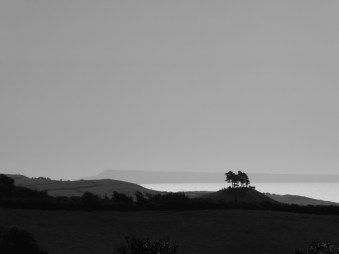
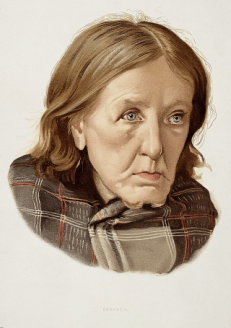
AB 1

Determined pillar
goal eyed traveller fearless
destined to succeed

BB 1

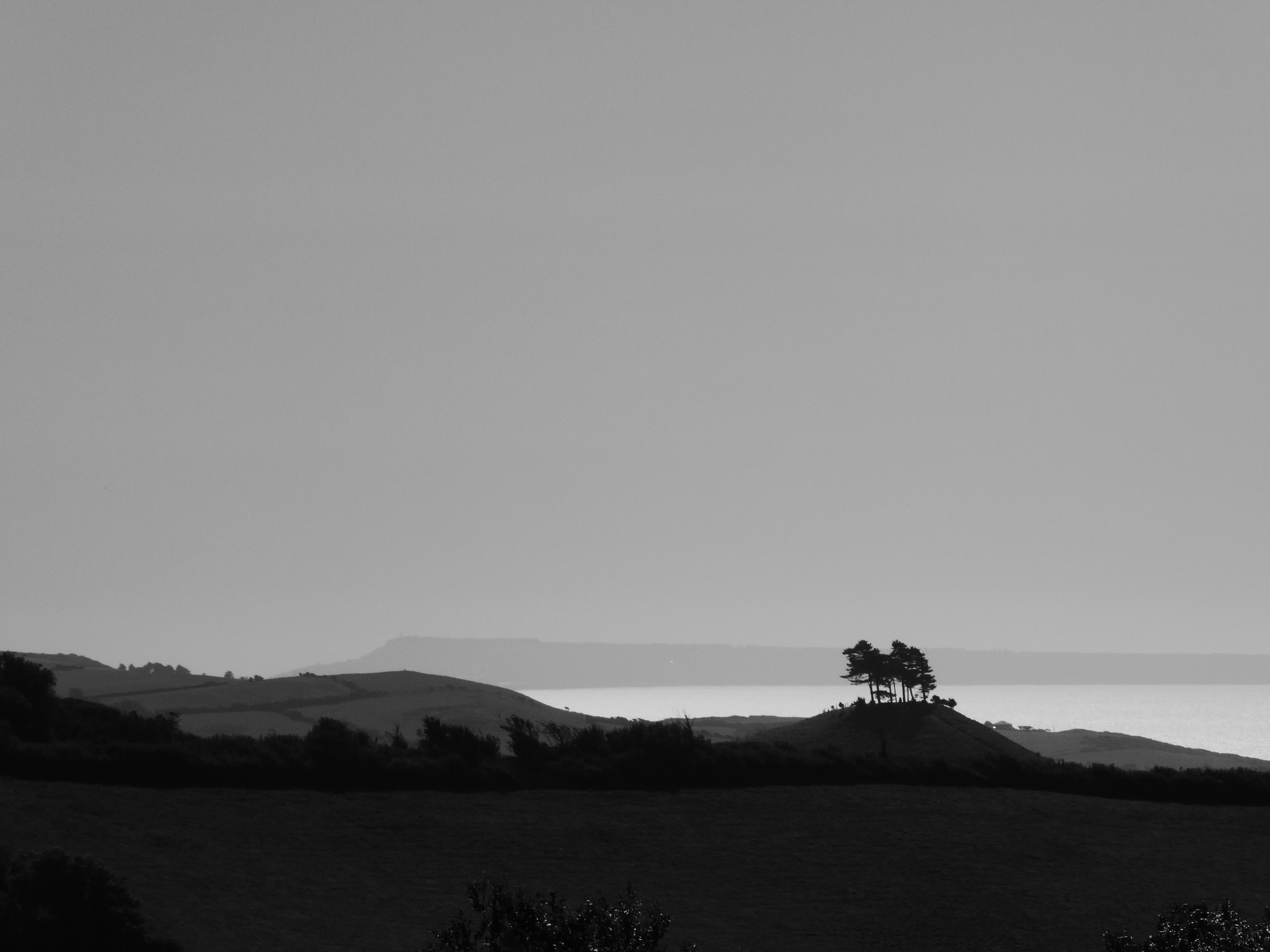
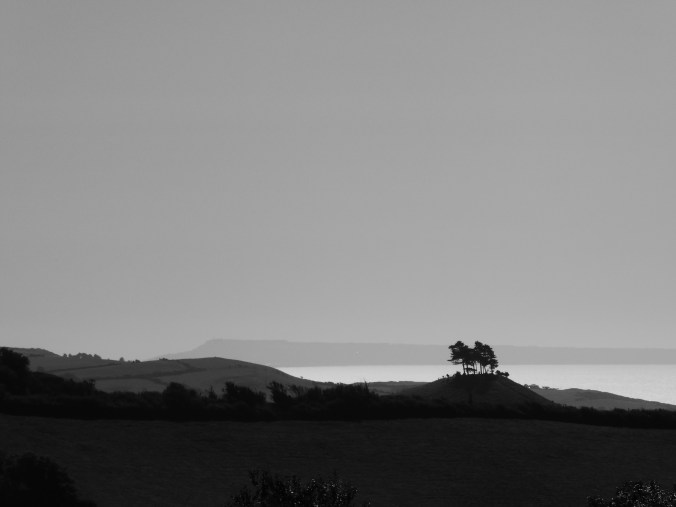
Is it the island of Lothair
on which poems wrote Trouvere
on which exists no portecochere
on which all is basalt-ware

just a legend of trees , a pair
found in the olden Khmer
mystery surrounds calm water
beware traveler beware.


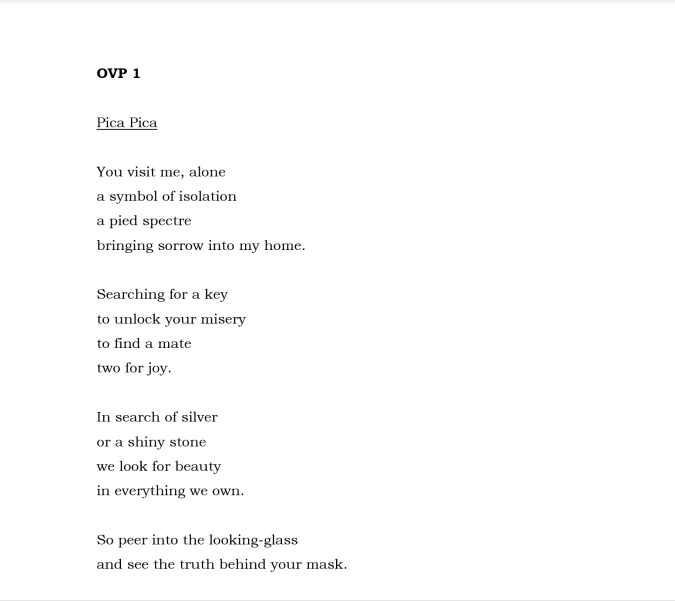
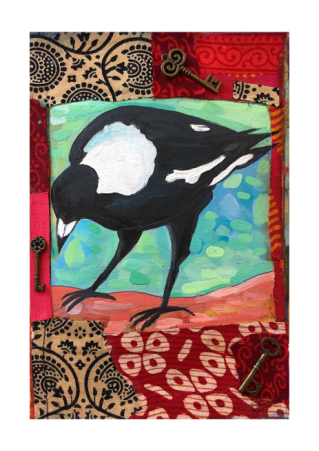
OVP-1

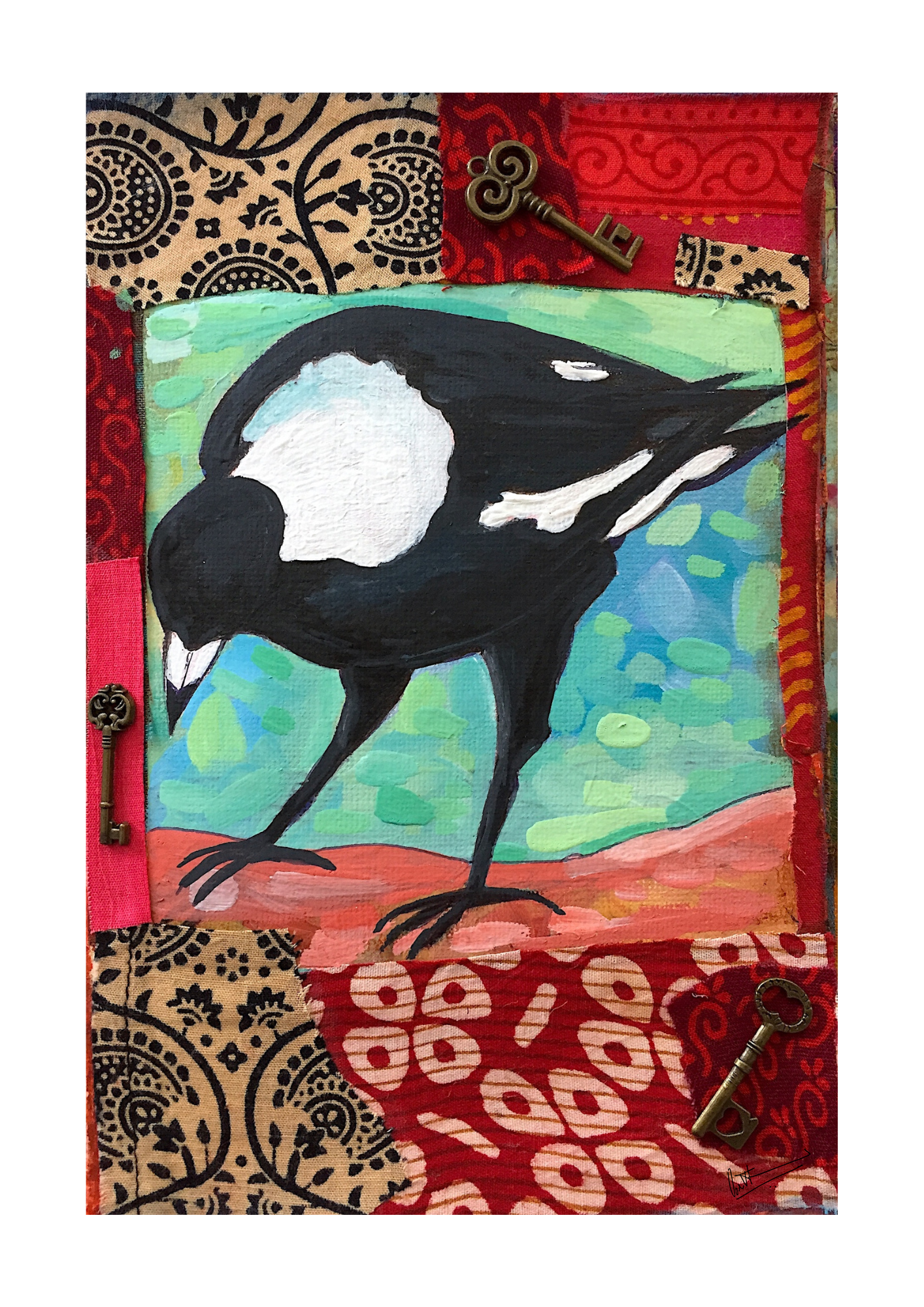
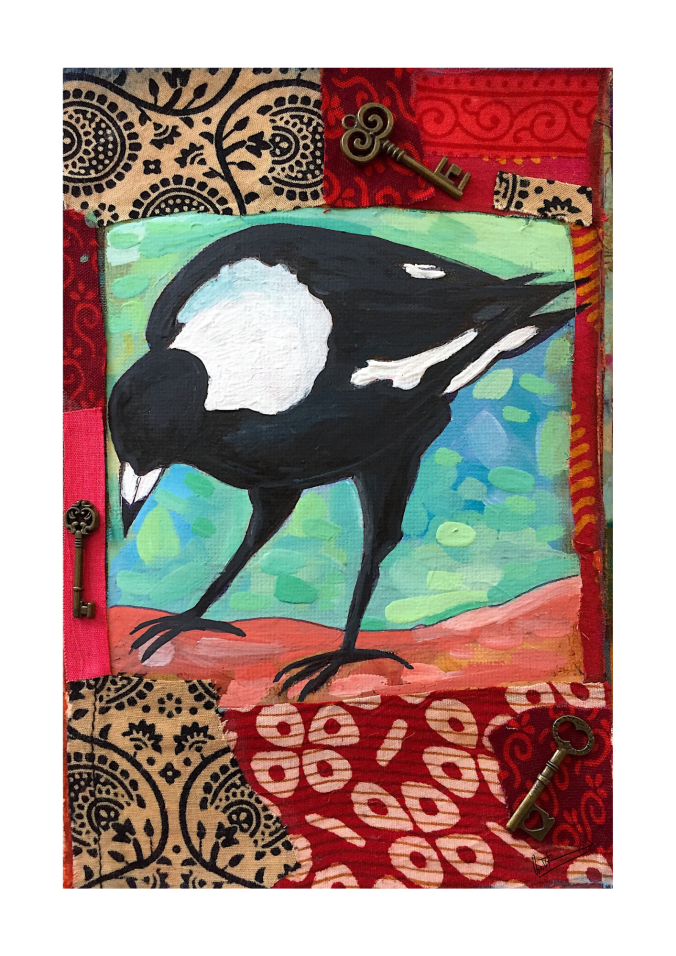
Is this bird from the time of Chou
pecking on dough
Or it has flown from Po
planning to fly to Vaud
where perchance it meets Zo
thirsty or not, to be sure
it is the cleverest bird
The black and white crow.

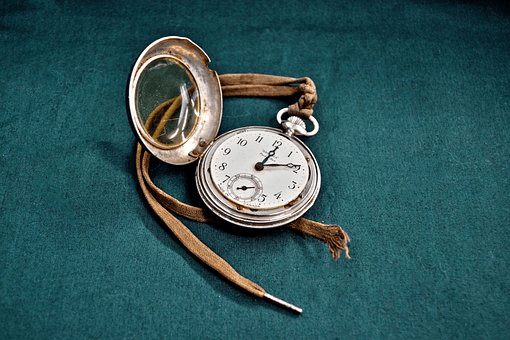
Sara FM -1

Who flew from far away Pohai
a miracle if from Alai
It is color divergent, sweeter
than Hungarian Tokay
envied by the magpie
delicate tender gold casefy

View original post 10 more words

Poetry: “Older” by Anthony Agbo

davidlonan1's avatarFevers of the Mind

Older

As a child, all she ever wanted was to travel around the world but as she gets older, she realizes that wishes weren't actually horses so she settled for the only place she could go without actually travel- Utopia Everything was perfect there, she was happy and fear was something she conquered over there but after each trip out of Utopia, it becomes sadder and scarier for her because she knows that just Alice in wonderland, she always have to return to the real world. When she was just a child, she expected the world to be perfect just as she imagined it. As she gets older, she doesn't know what she wants me what's she stands for anymore; and this scares her. Embarrassed by her fears, she made defensive scarecrows that scared away the things and people she loved. As she gets older, life sat her down and…

View original post 99 more words

2 poems from Michael Igoe: “Intermittent” & “Cast in Another Life”

davidlonan1's avatarFevers of the Mind

photo from pixabay

Intermittent

I'm sure the main distraction                                                                                                                           is the fan blades gentle whir.                                                                                                                       They always seem much faster                                                                                                                                                                if you stab your finger through.                                                                                                                                                                                                                                                                                                                                                                               Eventually in empty gray skies,                                                                                                                                                                                                                                                                                      it’s high time we show promise.                                                                                                                  At times we are warmer                                                                                                                other times in wet snow.                                                                                                                                                                         We were eating just a little,                                                                                                                                                                            but now we eat much more.                                                                                                                    The smells of cooked fish                                                                                                                    assaulting me after I wake.                                                                                                              It’s in the pan without a handle,                                                                                                                                assumed by a grip of her finger.                                                                                                              In the house like a cave                                                                                                                                              with a roof full of holes                                                                                                                                          time passes in a lullaby.                                                                                                                                                                                                                                                 We’re looking to regain                                                                                                                                                a mostly serious magic,                                                                                                                                          in all its sundry brands.    

Cast in Another Life

Things will never be better than the way they are now. We’ll see no better dizzy from the sun, than it’s panoramas. It has its impossible obligations, at high noon shirked and denied…

View original post 99 more words

Poetry Showcase: Stephen Kingsnorth (March 2023)

davidlonan1's avatarFevers of the Mind

All pieces previously published, though rights remain with the author.

Bio: Stephen Kingsnorth, retired to Wales, UK, from ministry in the Methodist Church due to Parkinson’s Disease, has had pieces published by on-line poetry sites, printed journals and anthologies.

His blog is at https://poetrykingsnorth.wordpress.com/

Lengths for Width

It lies beneath her surface sheen, the real disturbance of disease, dementia spread, synapse collapse, while outwardly she knows the rules - the courtesies to strangers shown, as even dares to hold her hand, mutters sweet nothings to her lobe. He daily comes from swimming baths, stiff exercise for sinew strength, some lengths of pool as butterfly, prior to residence - not home - the space where breast-stroke tackles width, that gap between her mind and his; from highest board, diving for love, through water for the flower God, his Lily, surface tension float. Tomorrow it will seem the same, unless more fumbles…

View original post 517 more words

Tautogram

Jane Dougherty's avatarJane Dougherty Writes

Paul Brookes chose the Tautogram for us to explore last week.

I didn’t like this form much, far too exclusive. I think I have quite a rich vocabulary, but this was a struggle. Pick any letter and there will be plenty of nouns, verbs, adverbs and adjectives that begin with it, but, unless you pick ‘t’, virtually no articles, conjunctions, prepositions or pronouns, and phrases need those too. Still, struggle or not, I’ve set myself the challenge of writing one of these for each letter of the alphabet, except the silly ones. Here is ‘s’ to begin with.

Sleep

Sleep settles,
soft sand sifting,
shifting sea-green, sea-blue, sea-purple swell,
salt-scented.
Sleep searches
submerged ship-dreams,
sheet-metaled, silver-plated scavenged stars,
sinking slowly seawards.
Somnus sips
subterranean silence.

Sea

Sea serpent stirs
subterranean sous-sols,
stony-eyed, sea-wracked,
sifting shipwrecks,
squirming, squid-infested,
scattering silver-glinting,
sequin-stitched, seraph-fish,
singing storm songs.

Stars

Stars stretch,
sky-filling,
sea-reflected shimmerings,

View original post 14 more words

Nigel Kent – Guest Feature

Patricia M Osborne's avatarPatricia M Osborne

Patricia’s Pen is delighted to welcome back poet, reviewer and blogger, Nigel Kent. This visit Nigel celebrates his latest collection Benchwarmers published by the wonderful Hedgehog Poetry Press. Without further ado it’s over to Nigel.

Benchwarmers

Nigel Kent

Thank you, Patricia for allowing me the space to talk about my latest pamphlet, Benchwarmers (Hedgehog Poetry Press, 2023), joint-winner of Hedgehog Poetry Press 2022 Wee Collection Challenge.

I have always been interested in poetry’s capacity to make a difference by enabling readers to make a connection with others. Consequently, many of the poems in my previous collections (Saudade, Unmuted, Psychopathogen) have attempted to share the significant in the lives of ordinary, unexceptional people. Benchwarmers is no different, except this time I have specifically focused on those at the margins of society: life’s outsiders, the disenfranchised, those who ‘lost life’s toss the moment they were…

View original post 283 more words

Book Review: Demitasse Fiction (One Minute Reads for Busy People) by Roberta Beach Jacobson reviewed by Jerome Berglund

davidlonan1's avatarFevers of the Mind

Tapas Plates:

the Sweet and the Savory in Roberta Beach Jacobson’s “Demitasse Fiction: One-Minute Reads for Busy People”

Alien Buddha Press, 2022, 61 pages, 5.5” x 8.5 ISBN 979-8377304104, $10.99 on Amazon

https://tinyurl.com/aua46bjc

Reviewed by Jerome Berglund

Possessing a highly original voice and enviable dynamic range spanning the full, impressive gamut of civilization from its most worldly urbane (pride marches, the jet set of society, La La Land) to superbly prosaic and folksy pastoral (encompassing agrarian antics, an unforgettable peacenik chance encountered, life slices from widest assortment of less represented or examined vocations and departments, including custodial, sales, stenography), whatever your personal preference be and tastes steer you, all can find many things to admire and savor in the light, extremely pleasurable, captivating and readable pages of Roberta Beach Jacobson’s debut – one may also discover her prolific writing published elsewhere in over ninety print anthologies! – short fiction…

View original post 675 more words

Poetry: “That One Time at the Taylor Swift Fever Concert” by Paula Hayes

davidlonan1's avatarFevers of the Mind

That One Time at the Taylor Swift Fever Concert

Fever concerts. You have seen the advertisement. Drenched and bathed in flickering candlelight calling up the ghost of her memory. She was supposed to be the one sitting beside me. Her short hair masking the natural curls. The rosy glow of her pointed chin. A painting, she could have been in another century. 

Fever concerts. Always in a secreted location. Are the tickets to a concert or are you purchasing a meeting with Vito Carleone? You don't know for sure. But you highly suspect for the price that you are on your way to making a deal in the backroom of a spaghetti warehouse.The checkered tablecloth. The basket of bread sticks. The flask of red wine. Or it could be an Olive Garden. Again, you are not sure of much these days. 

Fever concerts. In reality, when you arrive at…

View original post 909 more words

Poetry Showcase: Linda M. Crate (March 2023)

davidlonan1's avatarFevers of the Mind

photo from pixabay (Pheladii)

someone to hear me

i have been alone in crowded rooms,
faked a smile so well no one knew
the sadness that oozed in my veins;
people say that they'd notice their friends
depression don't understand that depression
isn't always cutting wrists, sobbing, or 
the inability to shower—

sometimes it's burying your feelings down so
as not to be a burden to anyone else,
sometimes it's needing constant reassurance
that you're loved because even if you should know sometimes you just can't; it is being a good swimmer yet still drowning because the emotions are too strong to fight off— with all due respect you don't notice all the little signs, i know because once i thought of how pretty it would be to view the sky from the bottom of a creek after i jumped off a bridge and no one even knew; love your…

View original post 807 more words

Wombwell Rainbow Book Interviews: Bob Beagrie on his “The Last Almanac”

Bob Beagrie (PhD)

lives in Middlesbrough. He has published numerous collections of poetry and several pamphlets, most recently: When We Wake We Think We’re Whalers from Eden (Stairwell Books 2021) And Then We Saw The Daughter of the Minotaur (The Black Light Engine Press 2020), Civil Insolencies (Smokestack 2019). A new collection ‘The Last Almanac’ was published in 2023 by Yaffle Press.

The Interview

1. Aside from its calendar design, how did you decide on the order of the poems in “The Last Almanac”?

As you can imagine it went through a fair few drafts and different arrangements. Originally the title was Everything Under the Sun. However, I have been teaching a few sessions on Ecopoetics as part of an undergraduate module and realised that many of the poems in the collection would fit that definition. Once I saw it in that light the title The Last Almanac came and with it the idea of reordering the collection as a calendar.

Q:1.2. Ecopoetics? How did the references to old celebrations such as “Imbolc” fit the idea of “Ecopoetics”

The references to the ancient festive days such as Imbolc, Beltane, Litha, Lammas, Mabon, Samhain, and Yule, is because they were intrinsically linked to the natural changes within the cycle of the year. The poems pick out and celebrate the often-subtle sensations of these changes. Ecopoetics attempts to challenge the anthropocentric, often urban vision, and foregrounds the natural environment, while acknowledging the historical human impact and its value as defined by capital. At the same time, it resists simply pastoralising the land as an idil. I think that is what’s going on in a lot of the poems, a kind of creative reconnection to particular times and places. Gerald Manley Hopkins’ notion of inscapes was also a key and recurring influence behind the collection.

Q:2. Each quarter of the book has a photo of the moon at a particular stage and a quote from a poet. What was the purpose behind this?

The four sections roughly equate to the seasons and the quotations from the poets introduce each seasonal theme, and foreshadow the emotive responses to the seasonal shifts. The four illustrations of the moon in its different phases simply signal the lunar calendar, which was (and still is in some cultures) the prevailing method of counting the passage of time, of outer and inner tides. I guess it’s another strategy of anchoring the poems into the waxing and waning of forces within the natural world, and paying attention to their psychological effects.

Q:3: How important is poetic form in this book, and in your poetry in general?

The Last Almanac contains some traditional forms, or adaptations of them, sonnets, and villanelle for instance, and a few poems draw upon the Tang Dynasty form of semantic and syntactic parallelism. Most are organic verse forms, inspired by Denise Levertov’s idea that ‘form is a revelation of content’. In some poems like ‘Dog Day‘ this is taken to quite an extreme level of fragmentation and disruption. Clare Hele, a French scholar, noted this approach in some of my earlier books and suggested it was ‘rewinding language’. I have harnessed this idea in quite a few of the poems in this collection.

Q:4: How did Hopkins motion of “inscape” work itself into the poems?

In Denise Levertov’s essay ‘Some Notes on Organic Form’ (1965) she says:

Gerard Manley Hopkins invented the word “inscape” to denote intrin¬sic form, the pattern of essential characteristics both in single objects and (what is more interesting) in objects in a state of relation to each other, and the word “instress” to denote the experiencing of the perception of inscape, the apperception of inscape. In thinking of the process of poetry as I know it, I extend the use of these words, which he seems to have used mainly in reference to sensory phenomena, to include intellec¬tual and emotional experience as well; I would speak of the inscape of an experience (which might be composed of any and all of these elements, including the sensory) or of the inscape of a sequence or constellation of experiences.”

Many of the poems in the collection begin with observation of a subject, whether that is a location or an animal or an experience, and build up accumulative details of the ‘thing’. Mary Oliver famously said, ‘Attention is the beginning of devotion”. Through the process of focused ‘apperception’ there is a point when the poem moves somewhere unexpected, it stops being about external description and enters the ‘semiotic’, where subject and object blur and unconscious psychically charged images emerge. This is an approach that the Deep Image Poets pioneered in the 1950s and 60s, which was inspired by Lorca’s Cante Jonda or Deep Song. Robert Bly pointed out the importance of what he referred to as “psychic leaps”, which subvert simple rational explanation and are produced by the unconscious imagination. One of the Deep Image poets Jerome Rothenberg claimed that;

The poem is the record of the movement from perception to vision.
Poetic form is the pattern of that movement through space and time .
The deep image is the content of vision emerging in the poem.
The vehicle of movement is freedom.”

I think the ‘freedom’ he is referring to is an ‘openness’ and a suspension of habitual modes of perception and is closely linked to Keats’ concept of ‘negative capability’.

Q:4.1. In what way is it linked to negative capability?

Keats refers to ‘negative capabilities’ as a state of openess and acceptance of uncertainties. It is intuitive approach rather than one based on rational or prescribed outcomes, and I think there is a vulnerability and tenderness that comes with it. The poems in The Last Almanac embody this tentative mode of enquiry and expression.

Q:5. Why are there so many references to the mouth, and the face and the senses associated with it, taste, smell, and so on?

I hadn’t realised that there was so many references to the he face and associated senses. I think it is probably an attempt at anchoring the poems into the physical experience of place and time, which then allows more abstract, emotional or conceptually based images and symbols to emerge.

Q:6. What’s the function of the natural world in “The Last Almanac”?

The natural world is central to The Last Almanac. From poems like ‘Watching Swallows at Ludworth Tower’, ‘Big Sea’, ‘Slendere’ and ‘Headland’ which are homages, even odes, to aspects of nature and its majesty. Others personify natural forces such as ‘Persephone’ and ‘Old Uncle Tay’. In ‘Rewilding’, which is about exploring the green corridors between industrial, retail and residential estates on a bike during lockdown, nature is shown pervading and reclaiming the urban landscape. It points out, like Ozymandius and some of John Clare’s poetry, that our sense of control over it is an anthropological ego-driven illusion.

Q:7: How did you design the poems for performance?

Part of my process in writing a poem is to focus on its oral and aural qualities, this often involves reciting it as I’m working through revisions and fine edits. Some of the poems have been performed to live audiences over the years, and subsequently reworked. Some, like ‘Seeding the Solstice’ ‘Persephone’, ‘Splendere’, ‘Old Uncle Tay’, ‘Everything Under the Sun’, ‘Holding Liquid’, ‘Film Poem’ and ‘Head of the Heathen’ have been recorded and had music and sound effects added as part of Project Lono, a poetry and music collaboration I am involved with. These can be listened to on Soundcloud and Bandcamp.

https://m.soundcloud.com/projectlono-1

https://projectlono.bandcamp.com/

Q:8. Why is the collection called The Last Almanac?

The arrangement of the poems, even though they cover many years of writing, into a calendar of days representing the passing of one year, seemed a useful and stimulating way of organising them, especially as so many are responding to different phases, seasons or events within the annual cycle. So it is playing off the idea of a farmer’s almanac. The concern for ecology and fears of extreme weather conditions, the undeniability of climate change also threaten the natural cycles and our response to them. I know it sounds somewhat dystopian but The Last Almanac foregrounds the fragility of our current situation. Only this week The Intergovernmental Panel on Climate Change issued a warning in their Synthesis Report that rising greenhouse gas emissions are pushing the world to the brink of irrevocable damage that only swift and drastic action can avert. This makes the poems in the collection a homage to nature but also an elegy.

Q:9. How important is a sense of place, perhaps a sense of “Northernness” in The Last Almanac?

Place, both in terms of specific location and in the broader sense of Northerness, and historical roots, is one of the key themes of the collection. Many of the poems are place specific, and draw on the principle of the Irish Dindsenchas (Lore of Places), in which the land is explored, and can be imaginatively reclaimed, through shared and intergenerational narratives, myths, legends and folklore. As well as poems about the rural landscapes of Northern England like Hardraw, Head of the Heathen, Kirkcarrion, Sheep Wash etch, and more urban-located poems, there are a fair few about places in Scotland. I have a deep connection to Scotland, my Great Grandfather came to Middlesbrough from Aberdeen to find work in the steel industry. But it’s more than that, I think the Northern English and the Scots have a complex, intermingled and shared history and often have more in common than with people in the South of England. Teesside has been part of Scotland on several occasions throughout history. Personally, I would be happy if the Scottish border was redrawn at the Humber.

Q:10. There is a delight in the long sentence in your poetry. The sentence can form a whole poem or one stanza. What is the attraction of the long sentence for you?

Yes there is, I am attracted to the long sentence as it seems to best illustrate the meandering and divergent way my thoughts emerge, each clause triggering another which might complement or offer a counterpoint or allows for an increase in focus on a particular image.  I remember my Mam once saying to me when I was quite young, “You’d argue with yourself” and I remember being surprised because, of course I would and do, all of the time, and I thought everyone did that as part of their internal monologue. Charles Olsen, in his essay ‘Projective Verse’ made the claim that when composing a poem “One perception must immediately and directly lead to a further perception”, which I see as a process of discovery through the awareness of how the mind moves around any particular subject. I find the long sentence, with its left, right and centre branching clauses, ideal in capturing this cognitive mapping.

Q:11. Having read the book what do you want the reader to leave with?

Tricky question. I’ve had some really lovely responses to it so far with people saying they found it beautiful, inspiring, joyous, uplifting but also quite dark, “like a tray of honey cakes” and Cait O’Neill Macullgh said that it is like “an answer to a question I didn’t realise I’d been carrying”.

Every reader will obviously take something different from it, and the poems will connect with different people in different ways, but I would hope that readers will take away a sense of authenticity and personal truth from the journey.