Wombwell Rainbow Interviews: Roger Stevens

Wombwell Rainbow Interviews

I am honoured and privileged that the following writers local, national and international have agreed to be interviewed by me. I gave the writers two options: an emailed list of questions or a more fluid interview via messenger.

The usual ground is covered about motivation, daily routines and work ethic, but some surprises too. Some of these poets you may know, others may be new to you. I hope you enjoy the experience as much as I do.

Roger Stevens

has published forty books for children. He is a National Poetry Day Ambassador, a founding member of the Able Writers scheme with Brian Moses and runs the award-winning website www.poetryzone.co.uk for children and teachers, which has just celebrated its 20th anniversary.  His book Apes to Zebras – an A to Z of shape poems (Bloomsbury) won the prestigious NSTB award. Recent books include I Am a Jigsaw; puzzling poems to baffle your brain (Bloomsbury); Moonstruck; an anthology of moon poems (Otter-Barry) and Be the Change; poems about sustainability (Macmillan). Roger spends his time between the Loire, in France, and Brighton, where he lives with his wife and a very shy dog called Jasper.

The Interview

1. When and why did you start writing poetry?

I can’t remember the first poem I wrote, but I was probably around 12 or 13. I was at secondary school. This would have been in the mid 1960s. I do remember making books of my poems. I would fill hard-covered exercise books with poems and then ask my cousin, who had a typewriter, to type out the best ones. At school we had two English teachers and I guess I was lucky as they were both brilliant. ‘Old Nick’, as we used to call him, looked stern and quite frightening with a shock of black hair, was a strict disciplinarian – woe betide anyone who answered him back – and taught us about classic and traditional poetry. We studied Shakespeare, Chaucer, Byron… he taught with a passion and made poetry exciting and understandable. ‘Flossie’ was more laid back. He was fun and interested in contemporary literature. It was in his lessons that I first met e. e .cummings, whom I still love. Later, the poems of Roger McGough, Brian Patten and Adrian Henri, published in The Mersey Sound in 1967, had a great influence on me. In a way they were Britain’s answer to America’s beat poets. They showed me that poems could be about anything – girlfriends, a visit to the chip shop, anything at all. Roger McGough is still one of my favourite poets. The other big influence in my teens was Bob Dylan. I was in a band (a beat group we called it back then) and he showed me that song lyrics could be so much more than rhymes about the moon and June. I always thought his lyrics were poetry, something recognised recently of course, by the Nobel Prize people.

1.1. Why do you still love e.e.cummings?

That’s a good question. I think I probably liked him as a teenager because I don’t think I’d ever read anything quite like him. I think it was his sheer audacity – writing WITHOUT USING CAPITAL LETTERS? Wow! Flossie also introduced the class to the novel Tristram Shandy by Laurence Stearn. Written in the mid 1700s – it was a novel way ahead of its time. As a teenager “experimental” writing, as I saw it then, was very appealing. After school I went to art college and became fascinated with all things avant garde. John Cage… the Fluxus school… and that was all reflected in my writing and poems at the time. None of which would be good enough to find a publisher now. And now, when I read ee cummings – it’s not just the cleverness of the style, the content means more too. Which, I guess, speaks to me as a grown-up.

1.2. What other poets do you like to read?

I write mainly for children, and so I read a lot of poetry written for children. My favourite is probably Roger McGough. He writes for children, of course, but also for adults. He writes poems that are accessible, that anyone can read. But that have so much more to them. He can do that thing where you read a poem and he tells you something that’s true – but that you’ve never thought of before. And you think – Ah yes! Of course. I love Billy Collins as well, for similar reasons. It’s a phrase you often see on the backs of poetry books – deceptively simple. But sums them both up. I like Simon Armitage, Carol Ann Duffy… and for children’s writing Michael Rosen. I’m currently reading Stephen Dobyns, a poet that I’ve only just discovered. And enjoying his writing very much.

2. What is your daily writing routine?

I don’t really have a daily routine. I keep a notebook with me at all times and write in that most days, whenever I think of something worth noting or see something that could inspire a poem. I have been known to wake up in the middle of the night to write in my notebook, too!  Now and again I’ll look back at my notes, dig out any ideas that still seem sensible and work at turning them into a poem or a piece of prose.

But usually writing comes in clusters, when I need to spend concentrated bouts on a particular project, for example if a publisher has commissioned a book from me. When I have a deadline ahead, I will set aside a few hours each day, usually in the mornings, to work exclusively on that book. My time won’t be spent only on writing, because projects often involve research. When Brian Moses and I wrote What Are We Fighting For? for Macmillan, it involved a lot of reading about the two world wars and researching the roles played by people and animals at home and abroad. For that book I spent several weeks working all day creating the 60 or so poems that were my contribution.

I am currently working on a ‘best of’ my poetry collection, but the poems for that are already written and so at the moment I spend an afternoon or two every week trying to choose the best hundred from the thousand or so poems that I’ve had published over the years.

I have two writing projects planned for next year. One is an autobiography which will document what life was like for me and my family in the 1950s onwards. I hope my grandchildren, grand nephews and nieces and those who come after them will find this interesting. I will probably self-publish this. I am also going to write an adult crime thriller, which I hope will interest a mainstream publisher. That definitely will involve a daily routine and I will probably sit down to write immediately after breakfast, take a short break for lunch and continue until mid afternoon. The joy of writing for a living is that you can create a routine that suits you – and you’re not tied to being in one place. I can write wherever I am and, in fact, when I’m working on a big project I find I like to be at our house in France, where distractions are fewer than in England, or even away from it all in our camper van, at home or abroad.

3. What was the motivation behind What Are We Fighting For?

Well, firstly I should explain that I have to write, or make music, or create art. I don’t why this is, but I do! So the main motivation for all my work comes from within. I have written novels and poetry since my teens and have always written songs and played in bands.

But in the late 1980s I had an idea for a children’s book, which proved commercially successful. It was published in 1993 by Penguin. That was The Howen. Another novel followed, Creeper, and writing for children seemed it could be a viable career. I was teaching at a primary school at the time.

It was not until poet Brian Moses visited my school that I thought about writing poems for children. His spirited performance and the workshop that he ran made me realise this was something I wanted to do. So I wrote some children’s poems, sent them to Brian and my first poem was published in an anthology, My First Has Gone Bonkers, in 1993. That was a good year for me. From then on I had lots of poems published in anthologies, I started visiting schools to perform and run workshops for children and teachers and in 2002 my first solo collection, I Did Not Eat the Goldfish, was published by Macmillan.

By then Brian and I had become good friends. We collaborated on a book which was published to coincide with the 2012 Olympic Games and then looked for another project we could share. The reason our Olympic Games book was so successful was because the Games were held in London and the whole sport thing was really topical. Publishers like to know there will be a market for a book.

We thought there would be a lot of publicity around the 100th anniversary of the start of the First World War which we could utilise and our publisher thought so too. Thus, What Are We Fighting For? was born. But it would be wrong to say our motivation was just to cash in on an event. That might have been where the idea for the book came from, but the motivation behind the poems was to convey the evils of this war while acknowledging the bravery of those who were forced to fight in it. Brian and I both had grandparents and parents who’d fought in the two world wars. As children we were keenly aware of the fallout from these conflicts.

There are, of course, some brilliant poets who served in and wrote of both these wars, but their poems are not always easily accessible for children. So we were also motivated by the desire to show the futility of war in a way that children could understand. We wanted to write poems about sadness but with humour and which gave hope for the future. I think we managed it. This was a difficult book to write – to get the tone right – and I also needed to do a lot of research, much more than for most books of poems. It’s a book I’m very proud of.

4. What do you think is the difference between writing for adults and writing for children?

They are the same in so many ways because one writes for the same reasons, no matter what the audience – to communicate ideas. There are some obvious differences, of course: When writing for children I don’t use swear words, sexual or overly violent imagery. The main differences, however, are content and place. I remember being a child quite clearly. This helps, but I was young some while ago! A children’s writer needs to enter the world of children in order to know what matters to them, what will grab them, what will mean something to them. Visiting schools, having children and grandchildren, talking to children helps me keep up to date with the zeitgeist. I also place my writing in a world that is familiar to children. Of course, a poem can be set in a forest and that context can be understood by both adults and children. But a poem about an office, for example, would not work in the same way.  Poems can be set in places that are unfamiliar to children, but the situation has to be manipulated to be meaningful to a young audience. It’s common sense really. What a children’s writer does not have to do, despite a common misconception, is to over simplify the vocabulary used. Children are generally good with words and actually enjoy learning new words. Sometimes you need to keep the syntax straightforward but, in general, when writing for both children and adults the most important thing is that what you’ve written will resonate with those you’ve written it for!

5. Have you any tips or advice for anyone wanting to write children’s poetry?

When writing, remember what I’ve said about relating to children and their world. And always try out your work on a child who will give you honest criticism. If it’s poems you’re writing and you’d like to have them published, probably the best way to start is to submit them for inclusion in anthologies.  But do your research first and find out what the editors are looking for. This year, I compiled Moonstruck for Otter-Barry Books, to celebrate the 50th anniversary of the first moon-landing. I was sent a lot of poems, as you can imagine.  I am constantly amazed at how many poems seem to have no relation whatsoever to the brief. I had to discard quite a few that were nothing to do with the moon! I always strive for variety. So submit long poems, short poems; haiku, ballads, rhyming poems; silly poems, sad poems, serious poems. Lastly, as an anthologist I search for originality. I was sent lots of poems about the moon being made of cheese and quite a few about the moon being like a balloon – they didn’t make it into the book. I would also suggest that would-be children’s poets read some modern children’s poetry, to get a feel for what children read nowadays, and what publishers publish.

6. Do you write for adults then?

Yes I do. I’ve one adult poetry collection published as a book and two others are available as e-books. I also have a novel e-book and I’m working on a new book at the moment, which I hope will be published in 2020. Next year I’m planning to write a crime novel for adults. I am a musician and singer/songwriter as well as a writer and have three albums on Irregular Records and this year (2019) made a jazz album. I perform in acoustic venues and folk clubs.

7. Have you any more books for children planned?

Yes! Over the years, I have had three novels and 35 of my own poetry books published, some solo collections, some collaborations and some anthologies, and my poems have appeared in about 400 books. I sometimes think about slowing down, had seven books published in the last two years – The Waggiest Tails (Otter-Barry ) with Brian Moses, The Same Inside (Macmillan) with Liz Brownlee and Matt Goodfellow, the award-winning Apes to Zebras (Bloomsbury), a book of shape poems, with Liz Brownlee and Sue Hardy-Dawson and The Poetry Zone – A Celebration of 20 years of Children’s Poetry (Troika) in 2018 and I Am a Jigsaw (Bloomsbury), Moonstruck (Otter-Barry) and Be the Change, Poems to Help You Save the World (Macmillan) with Liz Brownlee and Matt Goodfellow in 2019. So slowing down seems to be just an idea at the moment! I have only two books for children scheduled for next year – my ‘best-of’ collection, which hasn’t yet found a title, and a book of poems about robots. And I will continue to run The Poetry Zone (www.poetryzone.co.uk) where children can publish their own poetry. The thing about being a poet is that it’s sometimes challenging and can take up all your time, but it’s also incredibly rewarding and fun. So I find it difficult to call it work. And I don’t really want to stop – ever!

Wombwell Rainbow Interviews: Sanjeev Sethi

Wombwell Rainbow Interviews

I am honoured and privileged that the following writers local, national and international have agreed to be interviewed by me. I gave the writers two options: an emailed list of questions or a more fluid interview via messenger.
The usual ground is covered about motivation, daily routines and work ethic, but some surprises too. Some of these poets you may know, others may be new to you. I hope you enjoy the experience as much as I do.

Sanjeev Sevi This Summer
Sanjeev Sethi

is published in over 25 countries. He has more than 1200 poems printed or posted in venues around the world. Wrappings in Bespoke, is Winner of Full Fat Collection Competition-Deux organized by the Hedgehog Poetry Press UK. It’s his fourth book. It will be issued in 2020. He lives in Mumbai, India.

1. What inspired you to write poetry?

I was a lonely child and extremely sensitive. I recall the joy of reading poetry … whenever in my little mind I could make sense of poetic lines it would delight me no end.
I had this daybook where I used to indite. I have memories of my school magazine publishing my poems. As with a lot of poets I fell in love, or what I thought was love when I was thirteen or so. The bliss and baggage that comes with early love crept into my poems. I guess, there was enough inspiration in it.

2. Who introduced you to poetry?

No one in particular. It were circumstances that pushed me to seek comfort in poetry. And it did balm me and still does.

3. How aware were you of the dominating presence of older poets?

I was a cantonment kid and in that milieu there are no markers. Each of us searched and stumbled upon for what gave us the jollies. Very early in life I realized poetry was my thing.

4. What is your daily writing routine?

About six years ago I began an intense creative phase which continues unabated. In this phase I’ve no life outside of writing. All of me is engaged in writing and its auxiliary activity. I’m at my desk for almost 15 hours. If this seems drudge-like, it is not. I am in it out of choice. I luxuriate in it.

5. What motivates you to write?

I see poetry as an extension of myself. I seek it in most settings. Poems are my response to stimuli. They help me make sense of my situation. I wrestle for nuance by wrenching words and woes. Some poems dip into my emotional deposits, others document the demotic. The attempt is to arrest a moment of truth in a tasteful manner. In short, poetry is my engagement with existence.

6. What is your work ethic?

For me inditing is a meditative stance, so I give it all I have.

7. How do the writers you read when you were young influence you today?

Not in a direct way, not that I’m conscious of. The brain is a wok. We continue to pad it with all we peruse. I’m sure the churn must be creating something meaningful.

8. Who of today’s writers do you admire the most and why?

I have no favourites. I just read and read. A line here, an idea there, a beginning somewhere, a turn of phrase, a full poem sometimes, many poems by another. I keep flitting and flirting. I am not a loyalist. I am a slave of the poetic form, not of individuals who create it.

9.. Why do you write, as opposed to doing anything else?

I think a poem of mine will answer this somewhat:

Tuneful

When legit poets and their legally wedded
wives ask, “What do you actually do?” I
sense their agita. I understand when others
segue this with pleasantries and puff. At my
age, I catch on, some I choose not to. This
helps with the horizons.

Sanjeev Sethi

10. What would you say to someone who asked you “How do you become a writer?”

If someone has the need or nerve to ask such a question, I wouldn’t take the question or the questioner seriously just give an inane, meaningless answer with a smile.

11. Tell me about the writing projects you have on at the moment.?

I have just won the Full Fat Collection Competition–Deux organised by The Hedgehog Poetry Press UK so my next book, Wrappings in Bespoke will be out in 2020. Other than that I have a full plate. I have been submitting poems through the slush pile but with close to 600 acceptances worldwide, I think I need to slow down and concentrate on publishing a book a year. This is the broad plan but who knows how it will pan out?

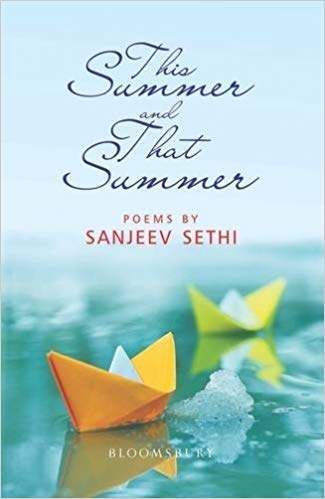
12. In anticipation of your new book let’s look at the previous one, This Summer and That Summer. What inspired it?

I guess I was ready for it. (Smiles). As you are aware a slim volume is a compilation of poems, I had a dekko at my file and chose 51 poems that spoke to me. A poetry book has a certain rhythm, a curve. I worked to get the correct meter. The aim was to include poems that were a departure from those in the earlier collections.

12.1. In what way were they a departure?

Stylistically speaking, in terms of language. One thing good about this form is that if one continues to evolve and hopefully I was, there is a richer texture to one’s response even on a familiar stretch. Life isn’t static. Each day has something new to offer. This Summer and That Summer captured that.

13. In Shangri-La you speak of “When words complete all incompletion”.  What did you mean by this?

Shangri-La, celebrates the art of poetry:  one advantage is that the fissures we create are filled up by poetry and its attendant virtues.

13.1. What “fissures” do we create?

To put it tersely, the aches of existence: they’re different for different people.

14.  Thank you for expanding my vocabulary. I had to look up words such as pourboire, accismus, cantonments, and maquillage. All contribute to the musicality of your poems. How important is it to you to use words not used in common parlance?

I am not on a mission mode, words fall into a poem. If to my mind and ears they flow, I let them pass. The test for me is workability. The poem must work. That’s all there is to it.

15. Final question, Sanjeev. Congratulations on winning the Hedgehog Full Fat Competition, due out next year. What inspired this new fourth collection?

Before I answer, I’ve to thank you for giving me this opportunity. I noticed your keen questioning and the interest with which you inquired about my work.

The answer is broadly the same as to what inspired, This Summer and That Summer or Nine Summers Later or Suddenly For Someone, my books before Wrappings in Bespoke.

Paul, once again, thank you for this platform.

Wombwell Rainbow Interviews: Michael Akuchie

Wombwell Rainbow Interviews

I am honoured and privileged that the following writers local, national and international have agreed to be interviewed by me. I gave the writers two options: an emailed list of questions or a more fluid interview via messenger.

The usual ground is covered about motivation, daily routines and work ethic, but some surprises too. Some of these poets you may know, others may be new to you. I hope you enjoy the experience as much as I do.

41.+Michael+Akuchie

Michael Akuchie

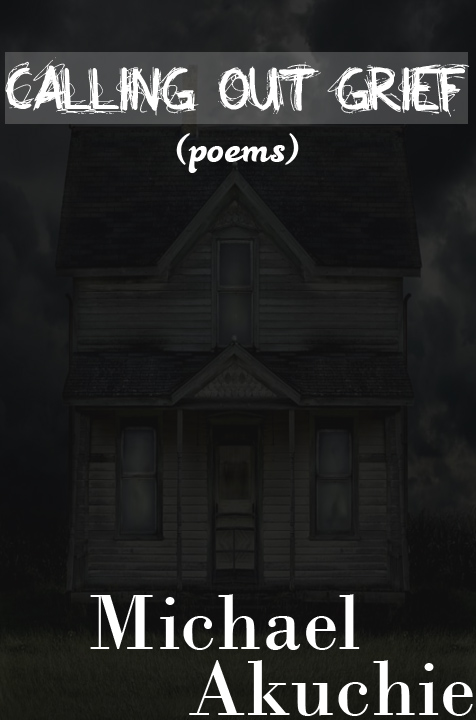
is an Igbo-Esan-born emerging poet currently studying English and Literature at the University of Benin, Nigeria. An Orison Anthology nominee, his poems have previously appeared on Collective Unrest, Impossible Task, Kreative Diadem, Kissing Dynamite, Anomaly, TERSE and elsewhere. He is on Twitter as @Michael_Akuchie. He is the author of a micro-chap, “Calling out Grief“, recently published by Ghost City Press. He is a Contributing Editor and Editorial Assistant at Barren Magazine and Nantygreens respectively

The Interview

1. When and why did you start writing poetry?

To answer this, I must return to my High School days. That was when I came across African poems in a copy of The West African Verse, an anthology of poetry authored by a number of stellar poets of West African Verse. Okogbule Wonodi’s “August Rain” did more than fascinate me. It urged me to try my own version & even though it has been many years ago, I still return to Wonodi’s poem. It has become a form of ritual, a kind of fellowship that only my body can appreciate. I read the works of T.S. Eliot, Shakespeare, Walt Whitman, Langston Hughes and a host of others. The way they all found infallible ways to mean so much in verse intrigued me and opened my eyes to the wonders of language & those who can operate it.

2. Who introduced you to poetry?

I did. I drew myself to this craft, to this endless churning upon churning of meaning of one’s existence through the aid of verse.

3. How aware are and were you of the dominating presence of older poets traditional and contemporary?

I was aware a lot. Art is an imitation of life. In some way or the other I have looked up to the established voices above me & craved a bit of their energy. I am merely an emerging voice that’s miles away from finding my true form or niche in the craft.

4. What is your daily writing routine?

Leila Chatti, a fine contemporary poet said that she strives to write two poems daily. I try to commit to this goal & produce two rough (or not so rough) drafts that I will workshop with some trusted friends afterwards. Sometimes life happens and I cannot keep to this daily demand but still, I find a way. I find a way.

5. What motivates you to write?

A lot of things and people. I read a lot of works from a large number of poets, both established and emerging. I subscribe to Poetry Foundation & The Academy of American Poets’ newsletters respectively. I am proud of a peculiar tribe of writer friends whose drive and energy always manage to rub off on me myself. I must thank Nome Emeka Patrick, Adedayo Agarau, Wale Ayinla for being a regular source for determination and persistence as regards writing poems and surviving.

6. What is your work ethic?

Ha-ha. I try my best to discipline my body and ensure that I commit two hours daily to my craft but social media can get in the way sometimes & I may fail to write. Still, the goal is be disciplined, to produce the drafts and stay off chat applications for that period. I wish it was that easy though.

7. How do the writers you read when you were young influence your work today?

They still have special places in the depth of my heart. From time to time I read their poems and feel a certain rush that words can’t exactly express. I belong to that feeling forever.

8. Whom of today’s writers do you admire the most and why?

This question scares me the most. There are a lot of names to call out so here’s my basic list: Romeo Oriogun, Sam Sax, Jennifer Chang, Pamilerin Jacob, Chelsea Dingman, Susan Leary, Anointing Obuh, JK Anowe, Logan February, Nome Patrick, Ade Agarau, Tiana Clark, Prince Bush, Laura M. Kaminski, Taiye Ojo, Itiola Jones and a lot more fabulous voices.

9. Why do you write, as opposed to doing anything else?

I was raised in an environment that had a lot of books around and I was curious enough to spend most of my childhood buried in between the lines of novels. I write to fulfil an inner ache, a quest to document all that I encounter in this life of too many complexities and uncertainties. Writing for me is therapy and every poem written is a step closer to an eventual happiness.

10. What would you say to someone who asked you “How do you become a writer?”

Read, damn it. Read like a madman. Read with a voracious appetite. Question the norms. Don’t be afraid of the system so much that you become unwilling to its flaws. Write too. A lot. Get involved in a circle of friends who are crazy about writing or form one yourself. Write. Share. Learn. Be humble. Grow. Be human.

11. Tell me about the writing projects you have on at the moment.

Ah, I have a finished chapbook manuscript that I have submitted to a set of presses. I’m hopeful but I’m aware of possible rejections so life goes on, I guess.

Wabi Sabi, a poem . . . and your next Wednesday Writing Prompt

Jamie Dedes's avatarJamie Dedes' THE POET BY DAY Webzine

Japanese tea house: reflects the wabi sabi aesthetic, Kenroku-n Garden Japanese tea house: reflects the Wabi Sabi aesthetic, Kenroku-en Garden

if only i knew
what the artist knows

about the great perfection
in imperfection

i would sip grace slowly
at the ragged edges of the creek

kiss the pitted
face of the moon

befriend the sea
though it can be a danger

embrace the thunder of a waterfall
as if its strains were a symphony

prostrate myself atop the rank dregs on the forest floor,
worshiping them as compost for fertile seeds
and the breeding ground for a million small lives

if i knew what the artist knows,
then i wouldn’t be afraid to die,
to leave everyone

i would be sure that some part of me
would remain present
and that one day you would join me
as the wind howling on its journey
or the bright moment of a flowering desert

if i knew what the artist knows,

View original post 619 more words

In Support of Dissident Poets and Poetry, Responses to last Wednesday’s Prompt sponsored by Poet-in-Exhile, Mbizo Chirasha

Jamie Dedes's avatarJamie Dedes' THE POET BY DAY Webzine


“In my works on African culture, I am not against races or tribes, but systems that betray Africa. People must stop being stooges and writers must write against second and third colonialistic winds.” Mbizo Chirasha in an interview with The Herald HERE.


We did something unusual with the last Wednesday Writing Prompt.  We asked poets to respond specifically to the situation of Zimbabwean Poet-in-Exile, Mbizo Chirasha. (Not all the poets actually responded on theme, but they did respond on related issues that concern them and so we included their poems in this collection.) The purpose of the theme is to help us create awareness of the plight of our fellow poets like Mbizo and other writers, artists and activists who are directly fighting authoritarianism, despotism and kleptocracy on the front lines and putting their general welfare and even their lives at risk in doing so. These are…

View original post 2,792 more words

Wombwell Rainbow Interviews: Kyla Houbolt

The Wombwell Rainbow's avatarThe Wombwell Rainbow

Wombwell Rainbow Interviews

I am honoured and privileged that the following writers local, national and international have agreed to be interviewed by me. I gave the writers two options: an emailed list of questions or a more fluid interview via messenger.

The usual ground is covered about motivation, daily routines and work ethic, but some surprises too. Some of these poets you may know, others may be new to you. I hope you enjoy the experience as much as I do.

kyla 2

Kyla Houbolt

writes mostly poetry. She has been writing since she was able to form words on a page; though her life has not been devoted to poetry, poetry has never let her leave it aside for long. She only began seeking publication in 2019, and most of her currently published work can be found on her Linktree. She is on Twitter @luaz_poet. She is a Best of the…

View original post 1,046 more words

Wombwell Rainbow Interviews: Kyla Houbolt

Wombwell Rainbow Interviews

I am honoured and privileged that the following writers local, national and international have agreed to be interviewed by me. I gave the writers two options: an emailed list of questions or a more fluid interview via messenger.

The usual ground is covered about motivation, daily routines and work ethic, but some surprises too. Some of these poets you may know, others may be new to you. I hope you enjoy the experience as much as I do.

kyla 2


Kyla Houbolt

writes mostly poetry. She has been writing since she was able to form words on a page; though her life has not been devoted to poetry, poetry has never let her leave it aside for long. She only began seeking publication in 2019, and most of her currently published work can be found on her Linktree. She is on Twitter @luaz_poet. She is a Best of the Net nominee, and a fuller biographical statement will be available soon on her author page at IceFloe Press.

The Interview

1. What inspired you to write poetry?

As I consider this question I send my memory back to my childhood which was immersed in music and I believe it must have been a wish to try to make music with words that got me started.

2. Who introduced you to poetry?

My mother read to us, lots of Longfellow, Edgar Guest, various collections of children’s verse. As well, we were a singing family. Hymns, folk songs, anthems in church (my parents were both trained in sacred music) — all imbued my awareness with pattern in language. I soaked in it. While I rebelled at an early age from the strictures of religious limitations, I retained the love of the sounds and of those patterns in the word field.

3. How aware were you of the dominating presence of older poets?

I don’t think I experienced it that way. It was more like, these are the people who knew and know “how to do this thing” and what exactly IS it that they are doing? At this stage I am very conscious of the predomination of white male western culture in the so-called canon, but even as a child I understood  the power of chant and song, of spoken word

4. What is your daily writing routine?

I don’t really have a routine. At times I will adopt one but they don’t survive long. For a while in the early months of this year I was writing ekphrastic micro poems every morning and that yielded some nice work, but generally what I do now is as soon as I feel the “poetry voice” start up inside, I start writing. Not all of that goes anywhere, lots of stillborn drafts! But that is the process that generates almost all of my poems.

5. What motivates you to write?

Oh, gee. I guess most basically it is that this is the way I feel I can offer something of value into this world.

6. What is your work ethic?

Hmm. I really don’t even like that concept to be honest; the notion of “work ethic” seems to have squelched a lot of creativity in recent decades. My ethic is to follow my inner heart voice and to be responsible and kind toward those around me as best I can.

7. How do the writers you read when you were young influence you today?

I honestly don’t know! I have taken in a great deal of poetry and verse in my life and it has all become a kind of large stew! Well, more a field, an ecosystem even…. I am influenced by what speaks to my heart and to my sense of dance and play, to my sense of justice…

8. Who of today’s writers do you admire the most and why?

Gary Snyder is always on top of this list. There is no list, however. There are too many whose writing I adore.

9. Why do you write, as opposed to doing anything else?

Oh! It’s the cheapest form of art. One only needs language to perform it.  Although these days it seems a computer comes in pretty handy.

10. What would you say to someone who asked you “How do you become a writer?”

I would say, keep questioning your desire! But if writing seems to keep calling you, then write. Put words together. Read what inspires and moves you. Talk to other writers about writing and reading. Those are the basics, I think. Find people who will read, or listen to, what you write. Pay attention to what communicates and what does not. Feel into whether you even care about that! Explore. Investigate. Pay attention.

11. Tell me about the writing projects you have on at the moment.

Oh, fun! Well, IceFloe Press is about to release a small collection of mine, titled Dawn’s Fool, which I am very excited about. Robert Kenter, the publisher, is a poet, a brilliant editor,  and also a visual artist and has done a glorious cover which reminds me of Kenneth Patchen. I am in love with that cover.

I also have a longer collection called Once in a Blue Earth that is being considered by a few presses and which I hope will find its publisher soon.

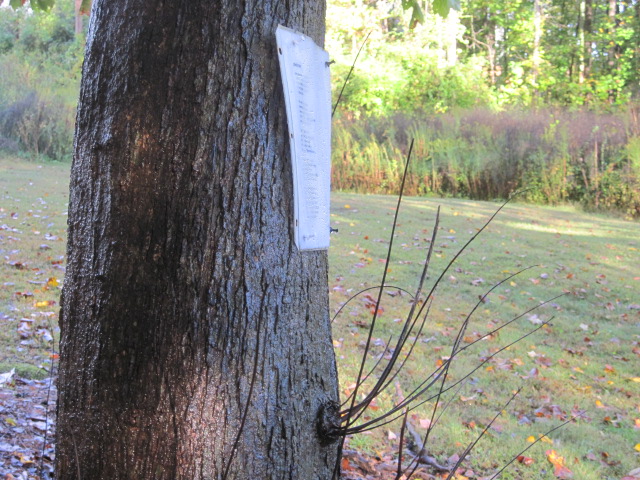
I have been taking poems and sticking them onto trees in a local walking park, a Greenway.  I have written some poems from that place and intend to weave those and some of the others together into a collection at some point. This is probably going to be the main project next year.

I also have just written a small suite — title poem is [options] and a subsequent six poems unpack and expand on it. It’s a bit odd! But I love it and hope eventually to pull it together into a pamphlet, illustrated, possibly even illustrated by me. Though my skills in that area are quite rusty. I also hope to place this suite  in a journal; it’s being considered right now.

And I very much want to find opportunities to read, and a way to record readings (I currently have no equipment that lets me record my voice.)  I used to greatly enjoy reading to groups but it’s been a while and currently I am not close to any venues for that. I intend to somehow build on the little local following  I have because of my Greenway poems in hope of creating some kind of reading venue. I always want to place poetry among those who don’t routinely encounter it, are not in the academic world for instance.  This Greenway Poetry Project seems to be accomplishing that nicely!

I would like to close by thanking the journals who have published my work this year or with whom it is forthcoming soon. They are, in no particular order:
The Hellebore, Neologism Poetry, Black Bough Poetry, Barren Magazine, Juke Joint Magazine, Kissing Dynamite, Burning House Press/The Arsonista, Mojave He[art] Journal, Parentheses, Crepe and Penn, Muskeg, Headline Poetry, Dovecote,
Nightingale & Sparrow, Back Patio Press, Silk & Smoke, Picaroon, goodbaad poetry,
Claw & Blossom, Cabinet of Heed, Detritus Online, Taco Bell Quarterly, Ghost City Review, Diametric, Re-Side, Broken Spine, Fictional Cafe.

Wombwell Rainbow Interviews: Rachel Mann

Wombwell Rainbow Interviews

I am honoured and privileged that the following writers local, national and international have agreed to be interviewed by me. I gave the writers two options: an emailed list of questions or a more fluid interview via messenger.

The usual ground is covered about motivation, daily routines and work ethic, but some surprises too. Some of these poets you may know, others may be new to you. I hope you enjoy the experience as much as I do.

Rachel Mann

(According to her website)

Born in 1970, Rachel Mann grew up in Worcestershire before studying Philosophy at university. In the mid-nineties, whilst working on a PhD, she was Teaching Fellow in the Philosophy Department at Lancaster before a sense of vocation led to a move to inner-city Manchester in church-related community work. She’s been based in and around Manchester pretty much ever since. In addition to her philosophy training, she holds qualifications in Theology, Creative Writing, and English Literature, including a PhD on Nineteenth-Century Women’s Poetry and the Bible.

She began writing poetry, liturgy and short stories in the late nineties as a result of major ill-health. She has also written feminist liturgical theology, cultural history and has been a regular contributor to The Church Times. She has published seven full-length books, including Dazzling Darkness (Wild Goose) and Fierce Imaginings (D.L.T.), as well as contributing to many others.

In addition she writes on music, particularly prog, folk and metal. She was Metal/Rock reviewer for manchestermusic.co.uk. She works freelance for magazines like Prog Magazine and The Quietus.

Ordained into the Church of England in 2005, Rachel is Rector of St Nicholas Burnage. Between October 2009 and September 2017 she was Poet-in-Residence and Minor Canon at Manchester Cathedral. During this period she acted as lead person for the Cathedral’s International Religious Poetry Competition and also helped establish the annual ‘Manchester Sermon’, a collaboration between Manchester Literature Festival and the Cathedral. Appointed an Honorary Canon of Manchester Cathedral in 2017, her poetry has been widely published. Some of her poems have been published by Carcanet Press in April 2018 as part of the New Poetries VII anthology. Her debut full-length poetry collection, A Kingdom of Love, was published by Carcanet in September 2019.

https://www.rachelmann.co.uk/

The Interview

1. What and why did you start writing poetry?

I began writing poetry seriously in the shadow of trauma, specifically my experience of serious illness in my twenties. I have to say that most of my poems from that time were rather earnest and pretty dreadful.

2. Who introduced you to poetry?

My first memory of poetry is drawn from primary school, when we recited bits of poems at school concerts and Nativity services. I think it was the rhythmic possibilities which struck me. A crucial moment came, as a teenager, when a teacher introduced me to Auden and Larkin. Through their poetry, I began to appreciate how poetry might addressany subject. My first poetry love, however, was Shakespeare. I adored acting as a kid and was fortunate to be introduced to Shakespeare very early.

3. What is your daily writing routine?

I’m very much an early-in-the-morning writer, especially when I have a major project in hand. I find my life is too often in perpetual motion, so there is something clarifying and astringent about early morning. It is the time when I feel fresh and there is a modicum of silence.

4. What motivates you to write?

I think I’m one of those people who need to write in order to discover what I think. Writing is a mode of surprise – it disrupts and expands the cosy paths which I’m inclined to follow. In the very least, it disrupts me when the writing is going well.

5. What is your work ethic?

I am someone who attempts to scribble something every day. Most of the time it’s rubbish, but I’ve become convinced that the only way to get beyond the rubbish
is through it. The discipline matters.

6. How do the writers you read when you were young influence your work today?

Oh my, I sometimes feel completely beholden to them. Indeed the older I become the more I’m dependent on them. So, for example, when I was a young undergrad and postgrad student I read enormous amounts of Wittgenstein and continental philosophy. I find their words and modes of speech appearing in my poems at the most unexpected moments.

7. Whom of today’s writers do you admire the most and why?

Poetry: Far too many to mention, but I adore Mimi Khalvati, whose grip on form is extraordinary, as well as Michael Symmons Roberts, who dares to speak the ’Transcendent’.Fiction: Recently, I’ve very much enjoyed Ben Myers’ studies in creepy northern oddness. For sheer Dickensian sprawl I look out for Donna Tartt’s new books.
Non-Fiction: I’ve found Thomas Waters’ Cursed Britain a salutary read. Its study of witchcraft in Britain between 1800 and the present day is by turns erudite, weird and challenging/.

8. Why do you write, as opposed to doing anything else?

Well, I do do other things. I feel my first identity is as an Anglican priest. However, like a lot of Anglican priests before me, my ‘vocation’ to write flows from my priestly vocation.
Both ‘vocations’ require attentiveness, stillness and listening, and an alertness to the
tricksiness and joy of language. If I were offering a less high faluting account of why
I write I guess it would be that I enjoy making things. Poems, literature and so on,
are part of a material and creative culture too. I’m addicted to craft.

9. What would you say to someone who asked you “How do you become a writer?”

Read, read, and read some more; write, write and write some more. The dynamic between reading widely and intensively and writing well is not incidental, it is essential. When it comes to writing specifically, keep writing through the chaff that inevitably appears and take seriously the critical comments of colleagues, editors and friends (even if one needs to push-back occasionally).

10. Tell me about the writing projects you have on at the moment.

I’m currently working – very slowly – on a new book of poems, as well as writing sketches for a novel. I have a new theology book coming together, which I hope to finish in the next six months. I’ve also just completed the manuscript for a second edition of my theological memoir, ‘Dazzling Darkness’.

Wombwell Rainbow Interviews: Isabelle Baafi

Wombwell Rainbow Interviews

I am honoured and privileged that the following writers local, national and international have agreed to be interviewed by me. I gave the writers two options: an emailed list of questions or a more fluid interview via messenger.

The usual ground is covered about motivation, daily routines and work ethic, but some surprises too. Some of these poets you may know, others may be new to you. I hope you enjoy the experience as much as I do.

Isabelle Baafi

Isabelle Baafi

(According to her website)

is a writer and poet. Her work has been published in The Caribbean Writer, Allegro, Moko Magazine, Kalahari Review and elsewhere. She was recently admitted to the London Library’s Emerging Writers Programme, and performed at the Battersea Arts Centre’s Homegrown Festival. In 2008, she was a Commended Foyle Young Poet. She is currently working on her debut poetry collection.

Home

The Interview

  1. What inspired you to write poetry?

I’ve been writing my whole life – mostly stories, but also songs, letters, diary entries… The shift from fiction to poetry was a natural one, when I felt the urge to communicate truths that a linear narrative couldn’t contain, or that were too difficult to say in plain English.

  1. Who introduced you to poetry?

I didn’t read poetry until secondary school. The AQA anthologies opened up a whole new world for me. Carol Ann Duffy, Simon Armitage, Seamus Heaney, Imtiaz Dharker, John Agard – those were the poets that had the strongest impression on me back then. At the time, my favourite poem was “Blessing” by Imtiaz Dharker. A perfect poem, still.

  1. How aware were you of the dominating presence of older poets?

Apart from Shakespeare, I knew very little about poetry from before the 20th century. However, one day I came across the poem “High Waving Heather” by Emily Bronte, and it gripped me. A simple poem, but a gorgeous one. The first poem I ever wrote was in response to it. I was fourteen at the time.

  1. What is your daily writing routine?

I don’t write every day. I write 2-3 days a week, during the weekend. During those days, I try to spend some time reading and analysing poetry, so that I’m learning as much as I’m practicing.

  1. What motivates you to write?

The internal questions and desires that never leave me. The need to say things for which I can’t find the words. The beauty of words. The fun of writing. And, as corny as it sounds, the hope that my writing will one day impact others for the better.

  1. What is your work ethic?

Don’t wait for inspiration, just write – and (sooner or later) the words will come.

  1. How do the writers you read when you were young influence you today?

To be honest, I am more influenced by literary traditions that were not studied, or made prominent, in school. Specifically, the oral traditions of the African diaspora, and biblical forms of storytelling, such as the incorporation of parables and the prophetic. My poems often seem to overflow with voices, and yet that’s never been a conscious choice.

  1. Who of today’s writers do you admire the most and why?

Danez Smith is an incredible writer. Their work is bold, rich and so important. I am also constantly returning to the work of Ocean Vuong, Safia Elhillo, Warsan Shire and Safiya Sinclair. Each of them are masters at what they do. And I will rave about Shivanee Ramlochan to anyone who will listen. The way that she disrupts and confronts language is so irreverent and powerful.

  1. Why do you write, as opposed to doing anything else?

Writing is how I communicate with the world. It’s how I understand the world and myself. For me, any life without writing would be unthinkable.

  1. What would you say to someone who asked you “How do you become a writer?”

Start by telling your own story. What have you learned thus far? What battles have you lost, drawn, won? What journey are you on, and what will happen when you reach your destination? No matter how small you think your life is, your story is important.

  1. Tell me about the writing projects you have on at the moment

I’m currently writing towards a pamphlet on intimacy, and a full length collection, which is still in its embryonic state. I will hopefully finish the pamphlet next summer.

Wombwell Rainbow Interviews: Mbizo Chirasa

Wombwell Rainbow Interviews

I am honoured and privileged that the following writers local, national and international have agreed to be interviewed by me. I gave the writers two options: an emailed list of questions or a more fluid interview via messenger.
The usual ground is covered about motivation, daily routines and work ethic, but some surprises too. Some of these poets you may know, others may be new to you. I hope you enjoy the experience as much as I do.

MBIZOBOOK

Mbizo Chirasha

is the Poet in Residence at the Fictional Café (International publishing and literary digital space). 2019 Sotambe Festival Live Literature Hub and Poetry Café Curator. 2019 African Fellow for the International Human Rights Art Festival( ihraf.org) , Essays Contributor to Monk Art and Soul Magazine in United Kingdom .Arts Features Writer at the International Cultural Weekly .His Profiles , Interview and Poems are featured on poesis.si ,in Slovenia. Founder and Chief Editor of WOMAWORDS LITERARY PRESS. Founder and Curator of the Brave Voices Poetry Journal. Co-Editor of Street Voices Poetry triluangal collection( English , African Languages and Germany) intiated by Andreas Weiland in Germany. Poetry Contributor to AtunisPoetry.com in Belgium. African Contributor to DemerPress International Poetry Book Series in Netherlands. African Contributor to the World Poetry Almanac Poetry Series in Mongolia. His latest 2019 collection of experimental poetry A LETTER TO THE PRESIDENT was released by Mwanaka Media and Publishing and is both in print, on Amazon.com and at is featured at African Books Collective. Mbizo Chirasha is the Originator of the Zimbabwe We Want Poetry Campaign. Founder and Creative Director of Girl Child Talent Festival and GirlChildCreativity Project. 2003 Young Literary Arts Delegate to the Goteborg International Book Fair Sweden (SIDA AFRICAN PAVILION) .2009 Poet in Residence of the International Conference of African Culture and Development (ICACD) in Ghana. Global Peace Chain Ambassador. 2009 Fellow to the inaugural UNESCO- Africa Photo- Novel Publishers and Writers Training in Tanzania. 2015 Artist in Residence of the Shunguna Mutitima International Film and Arts Festival in Livingstone, Zambia. A globally certified literary arts influencer, Writer in Residence and Recipient of the EU-Horn of Africa Defend Defenders Protection Fund Grant, Recipient of the Pen Deutschland Exiled Writer Grant. He is an Arts for Peace and Human Rights Catalyst, the Literary Arts Projects Curator, Poet, Writer, publicist is published in more 200 spaces in print and online.

The Interview

1. When and why did you start writing poetry?

My life has been accompanied by sound, rhythm and words . The sound of bleating goats, night hooting owls, distant tinkling drums , ancestral praise poetry at traditional ceremonies , church hymns and village songs. I was born between stitches, gun shot claps and howling winter winds during the guerrilla war of liberation in Zimbabwe . My birth was an exclamation mark of a freedom nation in making , my birthcry was   a signal to the birth of country coming out of a bloody epoch , the second chimurenga . Iam a child of war and a grandchild of psalms. I read novels ,prominent ones at 7 African Literature in Karanga , English , European and American Literature . My father was a great storyteller , his father was a healer , his grandfather who is my great great grand father VaRatsauka was a griot and a Chiefs Adviser . Storytelling , Poetry and griotism is my DNA.

2. Who introduced you to poetry?

Poetry is my DNA .It is creative spiritual , it evolves around ancestors and their descendants . It is talent and it is God given . Of course I am an ardent reader . I read great African Poets including Soyinka , Marechera , Senghor , Neto , Chipasula and Mpanje . I also read Metaphysical Poets , Renaissance poets , Jacobian , Victorian and more epochical genres . Of course I am a Performer , my country is rich in spoken word, griotism, perfomance and dub poetry . I am in the second generation of Dubpoets in my country   and in Africa and in the global community . We are inspired everyday from birth and it is by our choice to grow and cultivate the gifts God gave us .

3. How aware are and were you of the dominating presence of older poets traditional and contemporary?

I am aware and we need to compliment the good they do, the road they have travelled and correct the mistakes of the past by walking a straight ,perfect and good road as well as not to sell out the literary revolution to political epochs who scatters or gobbles the artistic consciousness from us , we need to be steadfast , faithful and dedicated to literary revolution duty.

4. What is your daily writing routine?

I say to writers and poets , do not idle go your writing studio.  I read anything everyday , I ferment what ever for days . I read 10 novels per every 3 months, I read poetry everyday , assess manuscripts everyday, write something once in one week, short fiction,  poem , an essay or other . I edit and revisit my old works everyday . I do social media influencing of my work and for others . I write a blog article everyday . I read and learn from other writers   big or small .I salute what other writers are doing .

5. What motivates you to write?

Life, people,  nature, politics, societal strive, words,  paradox and contradictions as well as gatherings , sometimes human behaviour gives more flesh to write about . Actually . I am motivated by everyone and almost anything .

6. What is your work ethic?

Avoid frustration and rejection to control your delivery, presentation and writing life, be steadfast, be initiative, be resilient, find your writing style and voice , work hard, do it for no one will do it for you, keep away social partners from the working studio, writing is a full life and full kingdom . Understand global writing trends, global cultural diplomacy and relations. Be above your game, be true, seek wisdom and flexible but careful.

7. How do the writers you read when you were young influence your work today?

They offered me the combative mind of finding my self, understanding the world view. Acquiring knowledge on cultures ,genres , history and epochs . Yes today I sift in what I read and I cultivate that into a new style that is growing me, my audience and
my thoughts . Its good to read others and to be read .

8. Whom of today’s writers do you admire the most and why?

Yes I like Chimamanda , Ben Okri , Tsitsi Dangarembwa and many other classics. I can’t forget stories by Chris Abani , Zacks Mda and many other great writers of our time . Zack’s Mda writes societal realities in a very shrewd and unique comical way. His story “Ways of a Dying” is a worthy read. Chimamanda is a highly sort after storyteller, telling the African story with the African character in a diasporian setting, unique. Dangarembwa relays a narrative on the plight of the African women and girls, Nervous Conditions is a classic. Ben Okiri’s Famished Road is a blockbuster and is the African Harry Potter.

The list is long.

9. Why do you write, as opposed to doing anything else?

We write to heal , to teach , to learn , we heal scars of nationalism, wounds of our people and troubles of our societies through the metaphors we write , we tell and inform society of good and bad, our writings can bring war or peace but in this matter we write
justice and peace as opposed to political tyranny , bad governance and violence . We write to change the vagaries of the past , to transform the madness of today and bring a sparkling clean future for the young generation .

10. What would you say to someone who asked you “How do you become a writer?”

Writing to me is a revolution , I was revolutionized consciously to understand my artistic poetry and writing gift .Its a great gift to know your talent but its both a gift and a blessing to know or to be aware of your gift and use it handsomely . We meet trials and tribulations in the journey ,otherwise parents , marital partners ,friends and community do not approve or might want to scatter our dreams and choices but resilience is the key.

11. Tell me about the writing projects you have on at the moment.

In 2020 I will running four literary arts publishing platforms , two
international writers exchange programs , publishing three poetry
collections by Brave Voices adapted from the miombo publishing and
brave voices poetry journal and of course my own Collection of
another experimental offing . I can’t reveal everything.

INTERNATIONAL AND DIGITAL REFERENCES PROFILE
MBIZO CHIRASHA is (ihraf.org) 2019 International Fellow of the
International Human Rights Arts Festival New York. Author of A Letter
to the President,
http://www.africanbookscollective.com/books/a-letter-to-the-president
( a collection of experimental poetry)in Zimbabwe . Essays contributor
for the MONK art and soul Magazinehttp://monk.gallery/category/essays/
in United Kingdom. Features Writer at Cultural Weekly( an
International online journal ,
https://www.culturalweekly.com/poetivism-new-art-resistance-zimbabwe/.Co-Editor
of the STREET VOICE a German Africa Poetry collection,
http://www.street-voice.de/SV7/SVissue7.html in Germany, Co-Editor of
Silent Voices, https://www.obooko.com/free-poetry-collections/silent-voices-adedoyin
( a tribute to Chinua Achebe) Contributor Atunis Galatika, African
Contributor to Atunis Poetry Anthologies in Belgium published and
edited by Agron Shele
,https://atunispoetry.com/2019/07/28/mbizo-chirasha-zimbabwe-2/.African
Contributor to Demer Press International Poetry Collection Series
(Table of Words , The Bridge , Flowers of the Present and Flowers
from Seven Seas) Edited by Hannie Rouweler Netherlands,
http://www.hannierouweler.eu/category/demer-press/. Author at ACE
WORLD , an online Magazine in Nigeria,
https://www.aceworld.com.ng/2019/08/poetry-two-poems-by-mbizo-chiraza.html
. Chief Editor of WOMAWORDS LITERARY PRESS,
https://womawordsliterarypress.home.blog/2019/08/07/liberatedpen-liberated-voices-journal/.
Curator of the BRAVE VOICES POETRY
JOURNAL,https://miombopublishing.wordpress.com/2019/07/05/africa-is-a-poetry-republic-brave-voices-poetry-journal-65/
.Contributor to Diogen Plus Magazine in Turkey,
http://diogenplus.weebly.com/mbizo-chirasha.html. Resident Curator of
100 Thousand Poets for Peace-Zimbabwe , 100tpc.org/Zimbabwe and the
Originator of Zimbabwe We Want Poetry Movement. Founder of
GirlChildCreativity Project (Amplifying girl child voices through
literary activism). Featured in the POIESISI Slovenia International
literature Press, https://www.poiesis.si/, Slovenia. International
poetry site, Better than Starbucks in Untied States
-https://anthonywatkins.wixsite.com/btsdec2017. The GAPA Blog in
United States, pa.org/2017/11/21/gapa-meets-poem-mbizo-chirasha/.The
Nation Press in Kenya
,https://www.nation.co.ke/lifestyle/artculture/BY-THE-BOOK-Mbizo-Chirasha-/1954194-4295122-h3nhojz/index.html.
Black StarNews in United States of America ,
http://www.blackstarnews.com/education/education/the-international-human-rights-art-festival-highlights-poet.
The global artist portal ,
http://www.spla.pro/ficha.persona.mbizo-chirasha.34232.html. The
Herald in Zimbabwe,
https://www.herald.co.zw/chirasha-poet-par-excellence/. Badilisha
Poetry exchange , http://badilishapoetry.com/mbizo-chirasha/.
The Standard News Paper in Zimbabwe, \

Folktales inspire my works — Chirasha


. The Zimbabwean Pressin Zimbabwe,
https://www.thezimbabwean.co/2011/04/harares-poet-of-hope/.African
Contributor of the International Gallerie 2019 in India,
https://www.gallerie.net/about-us/., Contributor of the World Poetry
Almanac series,
https://openlibrary.org/authors/OL816823A/WORLD_POETRY_ALMANAC .
2018Recipient of Global Literary Influencer Certificate of Merit by
Directorio Mundial de Escritores through Academia Mundial de
Literatura, Historia, Arte y Cultura
http://directoriomundial.allimo.org/Mbizo-Chirasha/. 2017 Recipient of PEN
Deutschland Exiled Writer Grant.2017 Recipient of the EU-Horn of
Africa Defend Human Rights Defenders Protection Fund.
Social Media Literary Activism Curator-