Bio:
Dr. Patrick Lodge
currently lives in Yorkshire but is an Irish citizen with family roots in Wales. His work has been published, anthologised and translated in several countries and has read, by invitation, at poetry festivals in England, Scotland, Ireland, Kosovo and Italy.
Patrick has been successful in several international poetry competitions and was commended in the 2018 Gregory O’Donoghue International Competition and shortlisted for the 2018 and 2020 Leeds Poetry Peace Prize and the Poetry On The Lake Poetry Competition 2019. He won the Blackwater Poetry Festival Competition in 2018, Red House Poets Poetry Competition in 2019, the Trim Festival Poetry Competition and the Manchester Cathedral Poetry Competition in 2020. In 2021 he won the Poetry On The Lake short story competition. In 2022 he was highly commended for the Francis Ledwidge International Poetry competition. In 2023/24 he was runner-up in the Wirral Open Poetry Competition and the Prole Laureate competition as well as long-listed in the Cheltenham Poetry Festival competition and shortlisted in the Drawn to the Light Press competition, October 2025.
He reviews for several poetry magazines and has judged international poetry competitions.
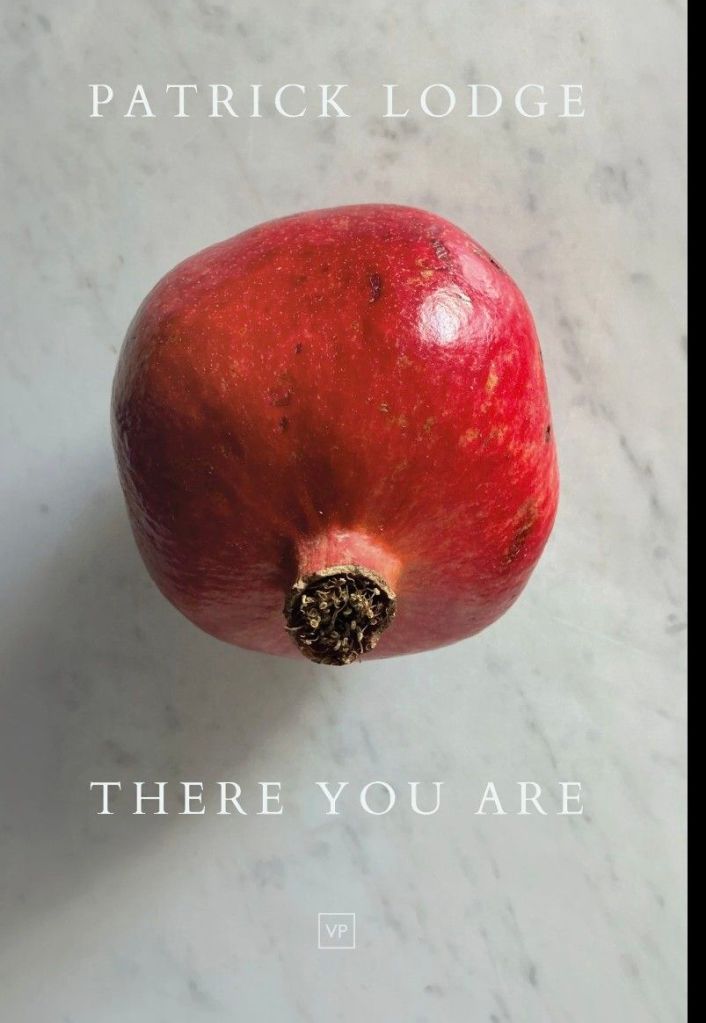
His collections, An Anniversary of Flight, Shenanigans and Remarkable Occurrences were published by Valley Press. A poem from the final book was put to music and performed at the 2017 Leeds Lieder Festival. His fourth collection, entitled There You Are, was published by Valley Press on St Brigid’s Day (Feb 1) 2026.
Q:1. When and why did you start writing poetry?
I started writing poetry I was in my teens. My first poem was published when I was 18. I had a number of poems published in the house magazine of the Birmingham Arts Lab – Arts Labs were part of the alternative scene in the late 60s (I think the first had set up in London in 1967). The magazine was typed (badly) and photocopied (badly) and stapled (badly). I was going to school outside Cardiff then and can’t remember how I knew about the Birmingham Arts Lab. I still have the magazines I was published in and have to say that the poems were awful – I look at them sometimes to remind me how not to write poems. I started writing in the late 60s while I was still in school and I was an ex-mod/almost Hippy. I guess there was an element of writing poetry because it fitted in with the scene I was part of but looking back I think the base motivation was the same as now – it was a way in which I could express things (albeit then, badly) that seemed important to me.
Q:2. Who introduced you to poetry?
I was studying for A levels at the time and English was one of them so I was introduced to poetry as part of the syllabus. It was, however, a rather stuffy syllabus and my major influences then were my peers on the English course. We were all self-appointed rebels and were reading off-syllabus material like the Beat poets, the Mersey poets and listening to Dylan (Bob) and the Acid Rock coming out of California – posing like crazy! The Penguin Modern Poetry series was a godsend as it gave you cheap access to several poets at once. I still have The Mersey Sound edition (#10) and the Ginsberg, Corso and Ferlinghetti edition (#5). I all seemed so subversive and so “zeitgeisty”. Another early influence was Alvarez’s “The New Poetry” which gave access to a huge number of British and US poets. Several of my friends then were into Art and played music and I guess that poetry was a means for me to join in as I didn’t paint or play.
Q:3. How aware are and were you of the dominating presence of older poets traditional and contemporary?
I noted above the Alvarez collection which included Berryman, Fuller, Hughes, Lowell MacCaig, Plath, Sexton, Larkin and RS Thomas, to name some of them. In effect this introduce me to older poets both traditional and somewhat contemporary – and the English syllabus went further back! – but I was too ignorant really to see them as part of a canon of poetry or of certain ‘movements’ within poetry. The poets I really related to then – Adrian Henri, Roger McGough, Brian Patten, Greg Corso, Allen Ginsberg, Lawrence Ferlinghetti, Thom Gunn (though he was, I think, in the Alvarez anthology) to name some – I saw as rebels against the ‘establishment’ of poetry though I would have been hard put to identify what the establishment of poetry really was (though the striking of poses was very much a part of the teen scene I was part of and none of this was a cogent and informed critique). I did have a ‘eureka’ moment in the A level class where we studied Wordsworth and utterly dismissed him as irrelevant until our English teacher spent a lesson working with us on the Lyrical Ballads and by the end had convinced us of how radical Wordsworth actually was as a poet in the early days.
Q:3.1. What was relatable to you in the poetry of Adrian Henri, Roger McGough, Brian Patten, Greg Corso, Allen Ginsberg, Lawrence Ferlinghetti, Thom Gunn?
It would have been a combination of where I was at the time and aspects of the poetry itself. When I first became acquainted with these poets it was the mid to late 1960s and I was 16/17/18 years of age – so you had the Swinging 60s (I was a Mod then increasingly, by the time I was in the 6th Form, Hippy in my tribal tastes) and more importantly for me (I studied American History/Culture at University and then lectured in American History/Culture) you had the whole 60s scene in America with Civil Rights, anti-Vietnam War demonstrations, Rock music (especially the West Coast Acid rock bands) and increasingly exciting films which picked up the zeitgeist – and the whole Counterculture scene in general. There was a huge sense of possibility and of things on the cusp of major change, of freedom to be. As a teenager I was more interested in the pose I would guess – ‘thrilling to the Brando-like things that we’d say’ as Joni Mitchell sang – but in music, art, poetry, film novels I was undoubtedly attracted to expressions of possibility that explored boundaries and then moved beyond them. Wholly conventional in my own life – studying A levels at a Welsh Grammar School – I could imaginatively transcend it all through association with rebel poets and rock bands. As Dylan sang, the battle outside was ‘ragin’ and would soon shake your windows and rattle your walls, For the times they are a ‘changin’’. Looking back at this it seems very naive indeed – a Robert Crumb cartoon of c1971 had two hippies ‘truckin” down the street and one says “what happened to the Revolution, man?” – the other replies, ‘we lost’. However, at the time it was immensely exciting. Into that you had Ginsberg’s ‘America’ and ‘Howl’ – one of the ‘wiggy prophets come back’ as Ferlinghetti described him. You had Gunn writing about bikers and being ‘on the move’. The same with the Mersey poets whose association with Liverpool was enough to commend them then. These poets seemed subversive to me though I would have had little sense then of how they all came together within the canon of poetry.
In terms of the poetry itself it is difficult to think back honestly to that time but I think what attracted me to them was the subject matter they chose to write about and the way they wrote about it. The Mersey poets, for example, wrote in ordinary English about toasters, bus-conductors, dolly birds and other ordinary things that, through the poetry, they rendered more significant. What they wrote about was immediately relevant and accessible (I was studying Pope’s ‘The Rape of the Lock’ in class!). They made poetry out of anything and stretched its boundaries. Like with Ginsberg and the Beats there was an immediacy about the writing – the writing seemed raw, their emotions raw and honest. They seemed to have no truck with the conventions of writing and used poetry to express intense personal feelings and did it with what seemed to me at the time (I listened to a lot of Jazz at the time) to be free improvisation and a command of the rhythm of the words. Their views on sex, drugs and the life lived on the edge seemed very attractive to a Sixth former looking to escape! Of course I would have had little sense then that other poets before them had done pretty much the same in different ways nor would I have recognised the craft involved in seeming spontaneous and alive. It’s fair to say I don’t really read them much if at all now – though Gary Snyder still has a hold on me.
Q:3.1.1. Why does Gary Snyder still have a hold on you, and not the others?
I came to him much, much later – in my current phase of writing poetry. There is a stillness, a philosophical coherence and a complete integrity to his work across the decades which attracts me very much.
Q:4. How did you decide on the order of the poems in your latest book?
The first thing to say is that it is not, nor ever should be, random and is never arbitrary. I think you need to have several perspectives at work – an overall one of how the collection will flow from beginning to end – so it looks to have what Lloyd Frankenberg called ‘premeditated spontaneity’ – and, at the same time, how groups of poems will work together. By ‘work together’ I mean in terms of subject matter, emotional load, style and structure – there may be an argument for keeping any reader entirely on edge as to what comes next and maintaining interest by jarring conjunctions but I’m not convinced. I do think that surprise is a key element for both writer and reader – as Robert Frost wrote, ‘no surprise for the writer, no surprise for the reader’. There is also a search for a unity within a collection – Robert Lowell said that all of one’s poetry is in a sense one poem but any collection has many parts and I would hope that the unity ensures that the reader is aware this is a collection by one poet and not an anthology – this while recognising that one is allowed to experiment and look for ‘surprise’.
In this particular collection – which is quite long – I did try originally to order the poems singly. I used the technique we all use of printing out the poems and laying them out of a (large) table and moving them around. I found this quite difficult if not impossible – nothing spoke to me sufficiently persuasively to say ‘this is the order’. The final part – the Tarot sequence – clearly ordered itself as it is based on a common spread of the Tarot cards. Given that I would have at least one section I thought of organising the poems into several boxes. Thus the first part explores my Celtic background in Ireland and Wales – the whole collection starts with a poem that says ‘I don’t know who am or where I am from’, a theme of a search for a homeplace which continues throughout. I travel a lot (but don’t write travel poems per se and recall Durrell’s comment that travel is the best form of introspection) and so included the Hebridean poem sequence in this Celtic section. I spend a lot of time in Greece as well so the Greek section fell easily into place. I suppose the third section is more of a miscellany though apart from the Titanic group – commissioned for a Salmon Press anthology – there are linked themes of climate change, fauna and the environment. When I came to organise the collection – given that the writing had taken place over 4/5 years – I was surprised to see that my preoccupations were fairly consistent; this was less so in subject matter than in a pursuit of identity and a sense of place, where one could be content and call it ‘home’.
Q:5. What is your daily writing routine?
I don’t really have a daily writing regime if you mean sitting at a desk at a regular time for a specified period. I do try though to do poetry ‘stuff’ every day. I review for several magazines so there is a lot of reading, note-taking, research and writing of reviews. Thom Gunn said if you find you can’t write at any time, then review – I think I know what he was getting at, the process of close engagement with another text is a powerful shaper of one’s own craft and desire to write. Linked to that is another daily activity which is to read – I read poetry and poetry-related books for pleasure every day outside of books to review – not alone there, ’tis advice given by many poets. If you mean by ‘writing regime’ what is my creative process then that varies but has common features. To some extent it depends on the impetus for the poem – some poems need more work around them than others but all require a constant iterative process, a coming back to the scribbles to improve – I guess a bit like Brailsford’s ‘marginal gains’ approach to cycling improvement at Ineos – to make the written words on the page as close as you can get to the purity of the original quickening of the original idea, the original possibility.
Auden is often quoted (though it was Paul Valéry I think originally) as saying a poem was never finished only abandoned but you have to work very hard to get to the point where you are happy to abandon it. The worst thing I hear at Open Mics is ‘here is a poem I wrote this afternoon on the bus’. And, of course, there is the issue of constantly looking for the absolutely correct word. I’ve no doubt that there is always the absolutely correct word and one must work hard to try and find it but Eliot wrote to his editor once that ‘after a time one loses the original feeling of the impulse and then it is no longer safe to alter. It is time to close the chapter’. Robert Lowell once wrote that ‘the whole problem of writing poetry is to bring it back to what you really feel and that takes an awful lot of manoeuvring’ – a perfect recognition of the tensions between inspiration and craft, of the idea and the hard work.
In terms of a daily regime I think it fair to say that, if I am working on a poem then it is always at the back of my mind. I swim and cycle daily and, as I’m sure many others would agree, it is often during these activities that solutions to problems in an ongoing poem emerge. So if you are on a roll then the poem is always with you looking for the midwife.
Q:6.What motivates you to write?
I can answer this simply (I think). When I first started writing poetry as a teenager (remembering as I said earlier that much of it was awful) it was because I could not express what I wanted to say in other ways. That still is the major motivation for me but now, as I have had work published, have won competitions and count many poets as my friends, I think also there is the sense that I am a poet and that sense sits well on me – it enables me to express what I want to say with more confidence and self-awareness as a poet and that is a strong motivation for the doing of it. Sylvia Plath wrote in 1962 that she wrote ‘not in compensation (or) out of sorrow but from an overflow, a surplus of joy’. I get that in terms of the joy of actually creating something that you feel has worked, as do, hopefully, others whose opinion you value. I disagree only in the sense that I suspect I do write sometimes in compensation and sometimes out of sorrow. At the very least I write to discover a sense of ‘home’ in which I can be comfortable – a simple statement that, I suspect, embraces a lot of stuff.
Q:7. How important is form across all your collections?
I could say that I don’t have much interest in form – as the artist Wei Wu Wei said, there’s a danger of worshipping the teapot instead of drinking the tea! – but that would not be entirely true. I have experimented with some set forms in all of my collections but they have mostly been experiments, deliberate attempts to write in a form without much feel for the relationship of form and ‘subject’. The clearest exception is where I wrote sonnets – in all cases I chose the sonnet form because I was dealing with strong emotions and felt the form would prevent the poem going off on its own in a tsunami of what Bukowski called ash-can thumping.
So you could say that I write in free verse and that would be true though it understates completely the craft applied. I am always concerned that the shape of the poem on the page is wholly appropriate for the poem – its tone, subject, emotional heft are all expressed in the poem and are complemented by the form. So this would manifest in stanzas, line lengths, enjambment, rhythm which, I guess, you might see as craft rather than form but I tend to see it as a totality. How the final poem looks and ‘feels’ is very important to me – I don’t think it is finished unless everything about it contributes fully.
Q:8. How do the writers you read when you were young influence your work today?
I’m not sure they do in any meaningful way. Reading poets at any time is, as I’ve intimated, very important for someone writing poetry. It is helpful to see how a poem works, how form in its widest sense is used and, in a wider sense still, how poetry is able to embrace so many ‘topics’. But I don’t think I have ever thought to consciously imitate a particular poet from any time in my writing life; there may be unconscious influence but if so this is often picked up in the rewritings as inauthentic. I think other poets open you up to the possibilities of poetry and stamp down paths in the long grass that you can follow or not.
Q9: What would you say to someone who asked you “How do you become a writer?”
Born and made! I guess I incline towards Robert Graves’ idea that “to be a poet is a condition, not a profession,” – by which I think he meant that poets are born rather than made. This might seem elitist and precious but I think that what Graves meant was that in creating poetry you have to have two elements: firstly, what he called “the unforeseen fusion in (the) mind of apparently contradictory emotional ideas” which reminds me of Heaney’s idea that there is a ‘quickening’ when the broad notion of the possibility of a poem appears; and, secondly, the actual hard work in getting it to a stage when it can be ‘abandoned’. Graves saw the first aspect as akin to rubbing Aladdin’s lamp as the idea appears but then the poet has to present this idea, has to use their learned and developed craft to turn this almost magical, pure idea into a poem that communicates effectively – not just the originating idea but in a manner which allows for the poem to have a life of its own that any reader can extract some meaning from. When I was a teenager and beginning to write I was very taken by the Beats and, particularly, by Kerouac’s views on writing. He was convinced that writers are made but what he called genius writers are born. Again, a bit off putting but I think that the core of what he meant lay in his conception of genius – a word which stems from a Latin word meaning, essentially, to beget, to create something original. I think Kerouac would answer your question with another – “Do you mean writers of talent or writers of originality?”. There are many writers of talent who have learned and, to some extent, mastered their craft but there are very few geniuses, writers of originality which, in terms of poetry, expand the whole sense of what poetry can achieve, can speak of, can encompass, of what words might say. We have seen a proliferation of creative writing classes/degrees and these do create, usually, writers of talent and, occasionally, writers of genius but I recall Bukowski’s advice to a young poet: ” stay the hell out of writing classes and find out what’s happening around the corner”.
Q:10. How can you tell when a poem is finished?
The easy answer would be to mention Valéry ‘s dictum that a poem is never finished, only abandoned. There is some truth in this. Even with poems that are published in collections I find myself tweaking and adjusting – maybe because the experience of reading to an audience gives a different perspective though this raises a question about whether poems are written to be read or listened to. I guess most poets are looking for as perfect a poem as they can write which may be a path to madness if an unremitting focus on seeking perfection in one poem prevents a poet moving on to engage with other inspirations. I think I mentioned in an earlier response Eliot’s view that you simply have to stop tinkering at some point.
Maybe you can compare what is happening where you write to a deadline – a commissioned work or a competition entry – to where you write simply to get the best poem you can. It’s the latter process that most poet’s will be grappling with. I guess there is a point reached – informed by your own experience of writing and, indeed, reading poetry – where you know that you have gone as far as you can go with a poem. You can put it to one side and return to it later, keep teasing it out over time. I’ve found workshopping a poem to be useful too – another perspective helps identify problems with a poem that the poet’s proximity ( and emotional and professional commitment) to it sometimes hides. It’s a kind of blindness I guess.
Q:11. When you produce a new collection what in it do you see as a development from your previous collections?
A difficult question to answer. Insofar as each collection seeks to express where I am/was at the particular time of writing the poems the development is in my own perspectives. What develops across all four of my collections with Valley Press is the sense of me as a poet engaging through poetry with the world I’m in – in its broadest sense. The kind of subject matter remains broadly similar – I travel a lot and many poems reflect this but not as travel poetry, rather (as I think I mentioned elsewhere) in terms of Lawrence Durrell’s epigraph which I used in my first collection that travel is the best form of introspection. The title of the current collection doesn’t stray too much from this idea with its quotation from Confucius to remember that wherever you go, there you are.
Q:12. How do you use history in your poetry collections?
Intriguing. I studied History (American) at University and spent 30+ years lecturing in History (American) so my consciousness is very much shaped by a sense of the relationship between past and present and the essential continuity that exists. As William Faulkner put it, “the past isn’t dead. It isn’t even past”. I listened to the Poetry Society annual lecture a couple of years ago and the marvellous poet Valzhyna Mort said that “poetry tells us how history feels”.
I cannot travel anywhere without researching some understanding of the place and its histories and this interplay emerges constantly in the poetry. Let me give you some examples two from the current collection and one from the third:
• “Bougainvillea in the Shadows” – I was sitting in a village called Haraki on Rhodes under a huge Bougainvillea bush and got to thinking why it was called that and researching the history of it. It is an amazing story and the original poem out of it was focused on Jeanne Baret but it didn’t work too well but out of it came Bougainvillea in the Shadow – a kind of love poem to Jeanne and my muse
• “Listen” – I read a book called ‘Goodbye To A River” written in the 1950s and about a canoe trip down a Texas river that was to be drowned to make a dam. One footnote mentioned John Davis a settler in 1857 who built the first cabin with a wood floor in the area but lost his wife soon after. It seemed to say so much about American westward expansion, human arrogance and the inevitable comeuppance – universal themes I think.
• ‘Remarkable Occurrences” was my third book and half of it is a sequence about Captain James Cook’s first voyage. I had visited Australia and New Zealand several times and it was coming up to the 250th anniversary of the voyage. The sequence is not linear nor does it focus on Cook (there actually isn’t a poem about him) but looks , I suppose, at the meanings of the voyage, the meta voyage, through people and events of it. Informed by history but going beyond it.
Q:13. What does place does landscape have in your work?
I’m not a landscape poet but have a real affinity for place and landscape. I cycle a lot and love the sense of moving fast(ish) through a landscape that constantly changes each trip. It has more and more inclined me to seeing the fragility of it all but also the robustness of the natural world. I noticed when putting together this collection that several poems might be considered ‘ecological’ in their impetus though this was never consciously aimed at. I like to draw out larger themes in my poetry but root them in the tangible, the specific, the real, and landscape is great for this. It requires close observation but allows for infinite speculation. One of the greatest landscape poets – in a sense in which I recognise it and value it – was Seamus Heaney who used the landscape for much wider perspectives on cultural identity, selfhood and history with passion and commitment.
Q:14. How does language use shape your poetry?
Dylan Thomas said ‘love the words’. Poetry is all about words – there isn’t anything else. I delight in words and the search for precisely the correct word in a given poem. Words don’t shape the poetry as such but poems don’t work without the right word – as Dylan T said “there must be no compromise, there is always only the right word: use it”. I once went to an exhibition of his manuscripts and there were several about “Do not go Gentle…” – what struck me was the list after list of words leading out from one in the poem as Dylan looked for that absolutely right word. A poem that flowed magisterially was the product of bloody hard work. Of course Sylvia Plath was a great fan of thesauruses – her own sold for quite a lot at auction. She wrote that she would “rather live with (it) on a desert isle than a bible” though she recognised that she might be seen as a fraud in using one so openly. It didn’t matter though because every poet searches for that right word and riffs consciously or unconsciously until it is identified. Of course there are digital means available now – you can look up a synonym instantly and swap into a poem with a simple click. Again the technology is less important than finding that ‘right word’. This transcends issues of whether poets should use simple or complex vocabulary – a non-issue in my view. “The best words in the best order” as some poet wrote!
Q:15. How important is narrative as opposed to imagery in your poems?
I try to avoid narrating poems and prefer to give a feel to a poem and its meanings through use of imagery. It makes for much more interesting poems. Sometimes the early drafts of a poem might incline to narrative but this is quickly moved on from – I see it more as an ordering than a narrative.
Q:16. Tell me about the writing projects you have on at the moment.
My fourth collection was published in February and I’m wholly involved with promoting that and organising its launch (June 5 at the Poetry Pharmacy in York). I have one or two poems on the go at the moment and continue to review poetry books for magazines but no set projects. I was working with the Time and Tide Bell project ( https://www.timeandtidebell.org) which involved visiting each bell and writing a poem about it. I’ve stalled this for the moment as mobility issues meant it was difficult to get to the bells. Two poems from the project are included in ‘There You Are’.

