Wombwell Rainbow Interviews: Shaindel Beers

Wombwell Rainbow Interviews

I am honoured and privileged that the following writers local, national and international have agreed to be interviewed by me. I gave the writers two options: an emailed list of questions or a more fluid interview via messenger.

The usual ground is covered about motivation, daily routines and work ethic, but some surprises too. Some of these poets you may know, others may be new to you. I hope you enjoy the experience as much as I do.

Shaindel Beers

is author of the poetry collections A Brief History of Time (Salt Publishing, 2009), The Children’s War and Other Poems (Salt, 2013), and Secure Your Own Mask (White Pine Press, 2018). Her poetry, fiction, and creative nonfiction has appeared in numerous journals and anthologies. She is currently an instructor of English at Blue Mountain Community College in Pendleton, Oregon, in eastern Oregon’s high desert, and serves as poetry editor of Contrary. 

Yiu can buy a signed copy of her latest book directly from her:  http://shaindelbeers.com  You can also purchase her books on Amazon, B&N, etc.

The Interview

When and why did you start writing poetry?

I think that most writers probably start as kids because everyone finds their art that helps them process things. Some people paint, some people dance, some people write. Poetry was the least structured and most free, so I think it chose me. My first poem I wrote, not for an assignment, was at about age ten when my cousin shot my dog. I was really distraught, and that was the way I channeled it. It was a poem with the refrain “And the cold wind blows.”

Who introduced you to poetry?

I read the regular “kids’ poetry” we all find in our elementary school readers, but I think my greatest discovery was finding my mom’s college textbooks of The Victorian Era Poets , and a volume of Byron, Keats, and Shelley. Those are what I would consider my first poetry idols, and I’m forever indebted to the Romantics, especially.

How are you “indebted”?

I learned to really value nature and nature imagery in my poetry. The egalitarian bent of their works spoke to me, and the view of the poet as the spokesman for the Everyman. I think we can look at a lot of poets who influenced us and see the wisdom of the Romantics in that. Who hasn’t gone hiking or seen a breathtaking spot in nature and thought of Wordsworth?

What is your daily writing routine?

I actually don’t have one. I do try to write whenever my students are writing. So, if I’m teaching poetry and give students a poetry prompt, I write with them. If I’m teaching fiction and give them a fiction prompt, I write with them. Otherwise, I just write whenever I can, especially if I have an idea that feels like I must get it down on paper.

What motivates you to write?

I think Robert Frost put it best when he said, “Poetry is when an emotion has found its thought and the thought has found words.” Sometimes you just feel something, and poetry is the only way to channel that.

How do the writers you read when you were young influence your work today?

I think they gave me an intellectual curiosity, especially about nature. They taught me to look at the world closely, to notice a single lady bug on a Queen Anne’s Lace to listen to the sound of a river rushing around a bend and burbling over rocks. They taught me how to really see the world.

Which writers gave you this “intellectual curiosity”?

You can look at the beginning of William Blake’s “Auguries of Innocence,” and it’s all there:

To see a World in a Grain of Sand
And a Heaven in a Wild Flower
Hold Infinity in the palm of your hand
And Eternity in an hour

Or any of the details in Wordsworth’s “Lines Composed a Few Miles Above Tintern Abbey”:

Five years have past; five summers, with the length
Of five long winters! and again I hear
These waters, rolling from their mountain-springs
With a soft inland murmur.—

I don’t think you can read those poems and not want to go out and explore nature on your own…

Whom of today’s writers do you admire the most and why?

There are so many. Jenn Givhan’s work continues to blow me away. I’ve read all of her poetry, but I have to admit I haven’t read her fiction yet. I have her novel, Trinity Sight, on its way to me now and can’t wait to read it. I love her blending of her Latinx culture and myth, her personal life. It’s so powerful. I can’t wait to see what she does with sci-fi.

I continue to be amazed by Kelly Sundberg and Alice Anderson, who both wrote memoirs that were, for me, in some ways life-changing. Kelly’s honest, complex treatment of an abusive marriage was so powerful, and the beauty of language that Alice wrote in her memoir will always stay with me. I think it’s easy to feel like you have a “big story” and forget about the beauty of language, but each word in Alice’s memoir was like the finest brush stroke on a painting.

Why do you write, as opposed to doing anything else?

I still enjoy other arts. I sing with a local chorale, and I’m learning to do fiber arts with loom knitting. I think it’s unfair to assume that artists don’t work in various media. Writing is among the easiest arts for anyone to try because you don’t really need any “tools,” like you do with visual arts or instrumental music, but I do think we should all take part in as many artistic endeavours as we can to discover what we enjoy and what we feel drawn to.

What would you say to someone who asked you “How do you become a writer?”

I really feel like there is only one piece of advice. You have to read. Read everything in your chosen genre that you can get your hands on, and then read everything in your non-fiction interests, whatever those may be because those are your passions, and they’ll find their way into your work, so you’ll want to know everything about them you can. If your interest is nature — read nature books, science journals, etc. If your interest is history, read history and biographies. That’s the only way you can do a deep dive into your work.

Tell me about the writing projects you have on at the moment.

I recently took Kathy Fish’s Fast Flash Workshop, which was AMAZING, so I’ve been working on sending out those short stories. I tend to switch back and forth between genres. Since the big push to get my third (poetry) book out there and spend time promoting it, I wanted to switch gears and work on fiction for a while. I’ve been working with an editor on one piece, and she’s had such insightful questions for me. I hope to really hone this particular story into something special and can’t wait to see what it becomes!

Gods, ruins and street life: photos from 2019

Alex Cochrane's avataradcochrane

From Kolkata streets to the Shropshire hills, from watching gods to warships: a selection of my photos taken during 2019.

View original post 113 more words

Wombwell Rainbow Interviews: Yvonne Reddick

Wombwell Rainbow Interviews

I am honoured and privileged that the following writers local, national and international have agreed to be interviewed by me. I gave the writers two options: an emailed list of questions or a more fluid interview via messenger.
The usual ground is covered about motivation, daily routines and work ethic, but some surprises too. Some of these poets you may know, others may be new to you. I hope you enjoy the experience as much as I do.

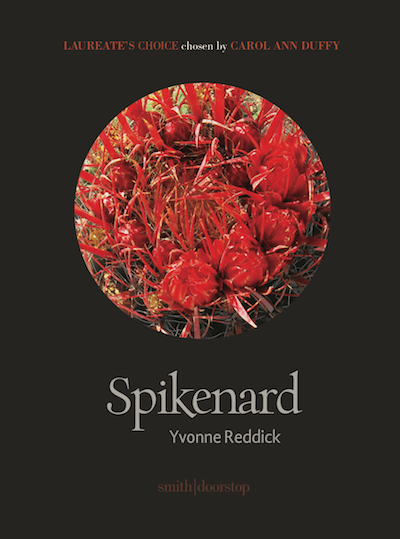
Reddick_Cover_Web
Yvonne Reddick

is a poet, editor and scholar. Her work appears in newspapers and magazines such as The Guardian Review, Poetry Ireland Review and PN Review. She has received a Northern Writer’s Award (2016), the Mslexia magazine women’s poetry pamphlet prize (2017), a Hawthornden Fellowship (2017), a commendation in the National Poetry Competition, the Poetry Society’s inaugural Peggy Poole Award (2018), and first prize in Ambit’s poetry competition (2019). Her poetry pamphlet Spikenard is published in the Laureate’s Choice series. She is an editor at Magma and co-edited Issue 75 in 2019. Her latest book is Ted Hughes: Environmentalist and Ecopoet.

The Interview

1. What inspired you to write poetry?

I was lucky enough to be surrounded by rhymes and stories when I was growing up – playground chants, school songs, tall tales. My parents read me Hiawatha, an epic poem, and The Hobbit, an epic containing plenty of poetry. I still have rhymes that I wrote while I was at primary school, complete with spelling mistakes!

2. Who introduced you to poetry?

My English teacher at secondary school in Kuwait was a huge influence. She was wonderful. I can’t have been more than 9 or 10 when we read ‘The Early Purges’ by Seamus Heaney. It certainly made an impression on me! Much later, at university, Peter Manson and David Morley encouraged me to keep writing.

3. How aware were you of the dominating presence of older poets?

As a teenager, I was very aware of the authors anthologised in Alvarez’s The New Poetry. My father had a copy of the revised edition, brimming with notes in his schoolboy scrawl. The poetry wasn’t particularly ‘new’, and Plath and Sexton were long dead by the time I read the anthology. My Dad also had the facsimile edition of Eliot’s drafts of The Waste Land, in which Ezra Pound writes what every poet fears their mentor will tell them: ‘B—ll—s.’

The only truly contemporary poet I read in detail at school was Carol Ann Duffy. Mean Time manages to be both philosophical and devastatingly witty, and I expect that a generation of women poets have found Duffy’s work enabling.

4. What is your daily writing routine?

I normally write on the TransPennine Express, from my workplace in Preston to my home in Manchester. I’m getting better at setting aside dedicated writing time, and often write in the evenings.

5. What motivates you to write?

I’ll usually get started with a line, a title or an idea. Sometimes it’s the momentum of a long sequence. I spend a long time redrafting, and will do so in meticulous detail. I begin to feel stressed and out of sorts if I go for too long without writing – being creative does wonders for my wellbeing.

6. What is your work ethic?

Protestant on Sundays and non-existent on holiday.

7. How do the writers you read when you were young influence you today?

Richard Adams’s Watership Down has a lot to answer for. I read it at primary school, and I don’t think I’ll ever stop wanting to read environmental writing. I published a book about Ted Hughes’s environmentalism two years ago, so The New Poetry can claim responsibility for a lasting interest!

8. Who of today’s writers do you admire the most and why?

That’s difficult, as there are so many I admire! Karen McCarthy Woolf’s collections are beautifully crafted – the balance between the personal and the universal is very carefully struck, and the formal devices she uses in Seasonal Disturbances have a virtuoso brilliance. Isabel Galleymore’s first collection contains highly distinctive environmental poetry, and I’ve just had the pleasure of reading her first academic book.

I always show my undergraduates work by Pascale Petit and Vahni Capildeo, who have remarkably perceptive ways of looking at animals. Sandeep Parmar and Fiona Benson interpret myths from fresh angles, making them stunningly contemporary – I like to share their poems with the students. When the undergraduates are studying the sonnet, they get Zaffar Kunial’s ‘The Lyric Eye’ and ‘The Swear Box’ by Michael Donaghy. I suppose the poetry I share with people is a good indicator of what I admire!

9. Why do you write, as opposed to doing anything else?

I’m terrible at drawing and I don’t know how to make films!

10. What would you say to someone who asked you “How do you become a writer?”

First, read as much of the good stuff as you can lay your hands on. Then, find a writing group, a writing course, or some friends who write. They’ll be able to give you feedback and keep you motivated. If you want to be a poet, start sending work out to magazines, build up a track record, then see if you can get a pamphlet out… then maybe a collection…

11. Tell me about the writing projects you have on at the moment.

I’ve just finished editing Magma’s 75th issue, on the theme of loss. I received thousands – literally thousands – of excellent poems, and I’m helping Magma to arrange readings for the poets published in the issue. I’ve been running writing workshops for people who have been bereaved, and will start some new ones at Lancashire’s NHS Recovery College in January.
I’m slowly pulling my poems together into sequences, and am trying to work with longer, more experimental forms. Climate change, and my ancestors’ work in fossil fuel industries from coal to oil, are huge preoccupations for me at the moment.

Magma – Loss Issue:

Magma 75

Ted Hughes: Environmentalist and Ecopoet:
https://www.palgrave.com/gb/book/9783319591766

Launch of ‘this hall of several tortures’, by reuben woolley

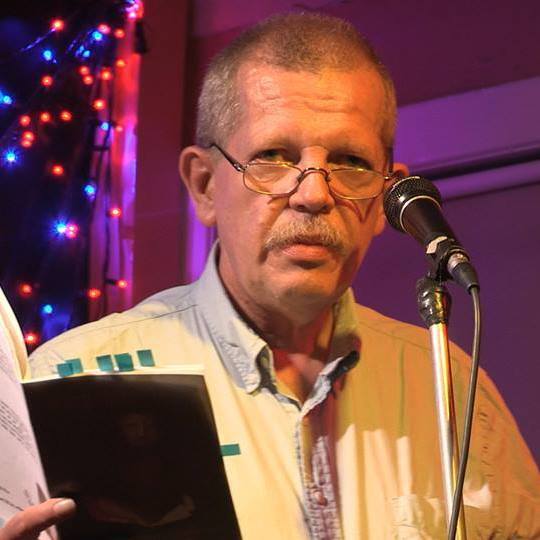
In celebration of the life of Reuben Woolley here’s a link to him reading from his last collection.

reubenwoolley's avatarreubenwoolley

View original post

A Sad Day: Rest in Peace Reuben Woolley, your voice will never be silenced; link to Paul Brookes interview with Reuben

Jamie Dedes's avatarJamie Dedes' THE POET BY DAY Webzine

U.K Poet, Reuben Whoolley U.K Poet, Reuben Woolley bares witness

December 2, 2019: In honor of a valued poet, this a reblog of this 2017 post on Reuben and HERE is the link to Paul Brookes’ interview. 

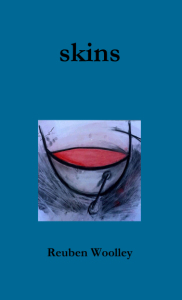
Reuben Woolley’s poetry is minimalist, sinuous on the page – or sometimes scattered like landmines waiting to explode. I find his work addictive and his latest book UntitledSkins (Hesterglock Pess, 2016) is going to be a gift to myself next month. Proceeds from sales go to CalAid.

Reuben’s poems, while exquisitely trimmed of all excess, are still rich with imagery and emotion.

Stylistically, I’m reminded of e.e.cummings.

Yes! I like the way he writes. More importantly, I’m glad Reuben chose to use his deft pen and kind heart to bring more awareness to the darkness in humanity, hanging our dirty laundry out to be seen and not denied. He tells the hard truth. If you are not devastated then you have grown numb to the…

View original post 467 more words

I am shocked and deeply saddened to report the death on 1st December of Reuben Woolley. In tribute I repost his interview with me a poem of his and links to reviews of his outstanding work. Through his amazing site I Am Not A Silent Poet he was a great promoter of poetry and its importance in the world. I will miss him dearly. Condolences to his family and friends. Added a link to his Youtube site that has many marvellous readings of his poetry.

https://thewombwellrainbow.com/2018/09/08/wombwell-rainbow-interviews-reuben-woolley/

https://thewombwellrainbow.com/2018/12/29/a-cold-soil-waiting-by-reuben-woolley/

https://thewombwellrainbow.com/2017/12/06/broken-stories-by-reuben-woolley/

https://thewombwellrainbow.com/2019/08/06/wombwell-rainbow-book-interviews-hall-of-several-tortures-by-reuben-woolley/

https://thewombwellrainbow.com/2018/01/27/excellent-artistry-in-words-and-pictures-for-holocaust-memorial-day/

https://www.youtube.com/channel/UCb-7kQgRxuaDxINMCjMz2cg

Very grateful to Mauve Perle Tahat this months guest editor with Burning House Press for featuring two of my poems.

2 poems by Paul Brookes https://burninghousepress.com/2019/11/24/2-poems-by-paul-brookes/ via @thearsonista

Wombwell Rainbow Interviews: Dr. Kate Fox

Wombwell Rainbow Interviews

I am honoured and privileged that the following writers local, national and international have agreed to be interviewed by me. I gave the writers two options: an emailed list of questions or a more fluid interview via messenger.
The usual ground is covered about motivation, daily routines and work ethic, but some surprises too. Some of these poets you may know, others may be new to you. I hope you enjoy the experience as much as I do.

I politely asked her for permission to use the images and biography on her website but got no reply.

Dr. Kate Fox


The Interview

1. What were the circumstances under which you began to write poetry

Being very young & liking the sounds of words & the patterns they could make.

2. Who introduced you to poetry?

My Mum read things like The Lady of Shallot out loud. She used the write light verse herself, though never mentioned it when she was alive. She wasn’t generally encouraging of what I did though as any praise was seen as encouraging you to get “too big for your boots”.

3. How aware were you of the dominating presence of older poets?
I don’t understand the question. When do you mean? I was introduced to poetry at about the age of 8…

4. I understand. To expand on the question what other older poets did your mum introduce to you, read aloud to you?

That one poem was it I think. Possibly some others in an old fashioned Household Compendium Book. Then I was given as gifts things like Kit Wright’s poems & AA Milne.

5. Poets often use the first poems they hear as models for their early work. How did this work for you?

Lots of playful rhyming poems…

4. How important is playing and experimenting with words to the work you do now?

It IS the work I do now

5. What is your daily writing routine?

It’s not always daily. I might have a gig or a workshop or a meeting. I tend to write in the afternoons once the admin’s been done, the dog walked & lunch eaten. The place where I get the most bubbling-up urge to just write something is often at a reading whilst hearing other poets. Not always the most practical place to actually write.

Other poets spoken images and words motivate you to write. What else motivates you?

6. The urge to say something I can’t say elsewhere. Anger, fear, confusion at a massive irony.

7. What do you mean by “massive irony”?

Usually a gap between rhetoric & reality. For example, the government talking about the country all being in austerity together but then there being much less money given to Northern councils.

8. Poetry as pointing out and emphasising these disparities in
society?

Exactly. Showing up the evasions and gaps in official or commercial discourse.

9. What poets you read when younger encouraged you to see the role of the poet as radical and campaigning?

Your question assumes there were some.

10. Or not. If there weren’t any that’s fine, too. Motivation can emerge from other areas of life too.

I’m quite interested in questions. I think all of your questions assume something. (That someone introduced me to poetry, that I knew about “dominating older” poets, that first models of poems influenced what I do now. etc).  Being asked a series of leading, assumptions questions like this reminds me that what I most value about poetry is the poetry that doesn’t assume things. That asks genuinely open questions. I’ve trained as a journalist, a counsellor and an ethnographer, so that open but active listening is important to me. My poetry doesn’t always do it but I’d like it to. If your questions are getting to get to what I think poetry is, it’s almost the opposite of your questions. It’s the rupture that is me getting a bit fed up with it and pointing it out to you. It’s the subsequent risk and release. And the freedom to say-you’ve taken up enough of my time now (a precious hour). I have other things to do. I love poetry’s brevity. How it doesn’t assume people have a whole hour to spare.

11. I apologise for wasting your hour, Kate.

It’s not a waste of an hour but I’m surprised you assumed I’d have so much time to spare at such short notice. Rather than a “flowing” chat, it’s been some leading questions, full of assumptions. The opposite of conversation or dialogue. But your questions really have sparked off my realisation about what poetry is to me. Happy for you to publish this. But now I have to go get ready to do a gig tonight.


Honoured and privileged to have my poem “Her Forgetting Him Part II” in this anthology created in aid of the Alzheimer’s Society in the talented company of writers such as Steve Denehan and Ian Enters. Thankyou Mel Wardle Woodend.


https://www.amazon.co.uk/One-Hundred-Memories-Alzheimers-Society/dp/1999962591/ref=sr_1_1?keywords=One+hUNDRED+Memories&qid=1574796815&sr=8-1

Wombwell Rainbow Interviews: Barbara Hickson

Wombwell Rainbow Interviews

I am honoured and privileged that the following writers local, national and international have agreed to be interviewed by me. I gave the writers two options: an emailed list of questions or a more fluid interview via messenger.

The usual ground is covered about motivation, daily routines and work ethic, but some surprises too. Some of these poets you may know, others may be new to you. I hope you enjoy the experience as much as I do.

Barbara Hickson

Barbara Hickson

lives in Lancaster and has an MA (Distinction) in Poetry from Manchester Metropolitan University.

Her poems have appeared widely in magazines, anthologies and on-line journals, and been displayed beside the River Kent as part of 2018 Kendal Poetry Festival’s guerrilla poetry initiative. She has been placed and commended in several competitions including Magma Editors’ Choice (2015/16 and 2018/19) and The Plough Prize (2017).

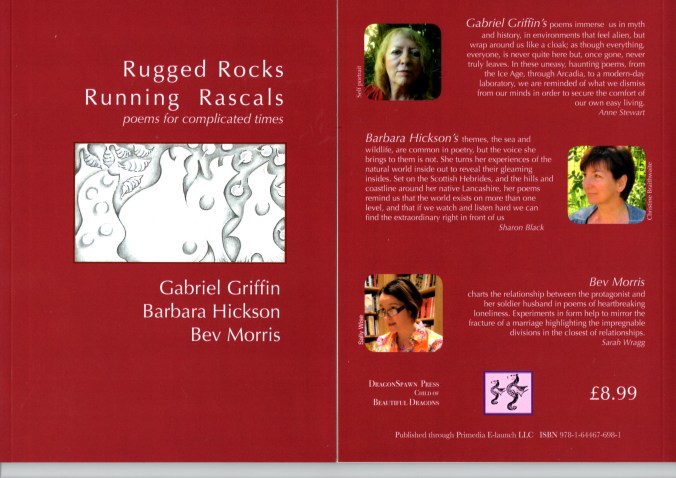
In 2019 she had twelve poems published in a shared collection entitled Rugged Rocks Running Rascals – poems for complicated times, published by DragonSpawn Press.

She is involved with several poetry groups including the Brewery Poets, and acts as the main contact point for the Poetry Society’s Lancaster Stanza group.

The Interview

1. What inspired you to write poetry?

I’ve always loved poetry and used to write poems as a teenager.  When I started work, poetry faded into the background until, in my thirties, I embarked on an OU Diploma in French.  In one of the modules, we studied poems by Paul Verlaine and Jacques Prévert.  I was hooked again!  I followed the Diploma with a full B.A. (Hons) degree in Literature during which we studied a wide range of poets, from the Romantics to the Beats, from Shakespeare to Okigbo.  I loved it, and when I’d completed the degree course, I started writing poems again.

2. Who introduced you to poetry?

Initially it was school teachers and university course tutors.   However, I remember that at Lancaster Litfest 2011, I paid up for a full day of poetry readings.  Kei Miller, Paul Batchelor, Jacob Polley, Helen Mort, Philip Gross and Jen Hadfield were reading.  I was so revved up by it all that when I saw an advertisement for the local Stanza Group, I contacted the rep, Elizabeth Burns, and asked if I could go along to the meetings.  Elizabeth replied encouragingly, and that’s when I really began to take my writing seriously.

3.   How aware were you of the dominating presence of older poets?

Perhaps I did set poets such as Seamus Heaney, Ted Hughes and Philip Larkin on a pedestal when I was younger, but throughout my Literature degree we studied a range of poets, so I wasn’t really aware of the older generation’s dominance.  Still, I suppose it wasn’t until I immersed myself in poetry and began attending workshops and readings that I discovered the vast array of excellent young poets out there.

4. What is your daily writing routine?

I haven’t got a routine and don’t particularly want one.   However, I do find that writing first thing in the morning, or late at night seems to produce the best results, as does writing outdoors.  Going for a long walk on my own often leads to a poem, or the idea for one.

5. What motivates you to write?

All sorts of things: an idea, a startling image, a memory.  If I go through a period where I can’t write for some reason, I begin to get annoyed with myself.  Then something will flick a switch inside me and I’m away again.

I do find it difficult to ‘write to order’, though some of my poems have arisen from workshop ‘kicker lines’ or prompts.   I’m open to any stimulus that works!

6. What is your work ethic?

Whatever I do, I do it to the very best of my ability.   I set goals: short-term, medium-term and long-term.  And when I commit to something, I commit completely.

7. How do the writers you read when you were young influence you today?

I’m not aware that they do.  I can still enjoy reading them, and recite some of John Betjeman’s poems off by heart, but I don’t feel their influence on the way I write.

8. Who of today’s writers do you admire the most and why?

The contemporary poets whose work I particularly admire include Jean Sprackland, John Glenday, Esther Morgan and Roselle Angwin.  There are countless others, of course, and much depends on my mood when I’m reading.  But those are the poets I keep going back to — the ones I re-read when I’m lacking inspiration and whose poetry puts me in the right frame of mind to start writing again.  I admire their clarity of thought and expression, their precise imagery, their lyricism. They write the sort of poems I wish I’d written!

9. Why do you write?

Writing poetry enriches my life.  Outwardly, I’m an outdoorsy, active person and writing provides balance: it’s creative and cathartic and offers a mode of expression that satisfies my inner self.  The need to write seems entirely natural to me.   I like the way carrying out research for poems leads me into new and interesting areas and teaches me things I didn’t know before.  And, as an added bonus, immersing myself in the poetry scene has opened up a whole new network of friends.

10. What would you say to someone who asked you ‘How do you become a writer?’

First of all, read widely.  Find poets whose work you love and analyse their poems.  Perhaps sign up for evening classes in Creative Writing then, as you gain confidence, start attending workshops and poetry readings.  Join your local Stanza group.  Above all, write!

11. Tell me about the writing projects you have on at the moment.

In August 2019 ‘Rugged Rocks, Running Rascals – poems for complicated times’ was published by DragonSpawn Press.  It’s a shared collection with Gabriel Griffin and Bev Morris in which we each have twelve poems.  I’m keen to read at as many events as possible in order to promote it.

I’m also fine-tuning the manuscript of my own debut collection.  The portfolio module for my M.A. degree comprised a full poetry collection and my priority for 2020 is to seek a publisher for it.

Also on my to-do list for 2020 is the construction of a web site.  I’m not interested in blogging, but I can see the value of having my own web site, so that’s something that I’ll be exploring later next year.