Wombwell Rainbow Interviews: Kate Garrett

Wombwell Rainbow Interviews

I am honoured and privileged that the following writers local, national and international have agreed to be interviewed by me. I gave the writers two options: an emailed list of questions or a more fluid interview via messenger.
The usual ground is covered about motivation, daily routines and work ethic, but some surprises too. Some of these poets you may know, others may be new to you. I hope you enjoy the experience as much as I do.

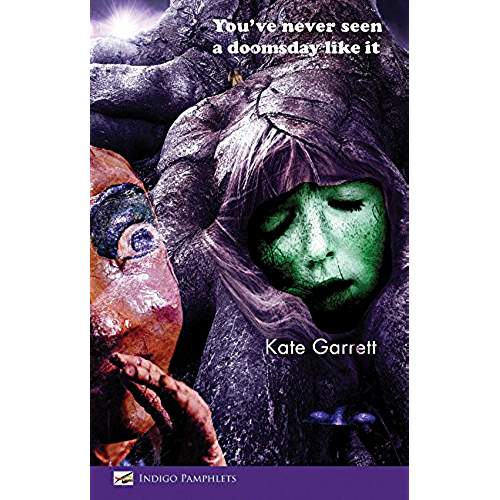
614j8KruZ7L._AC_US500_QL65_

Kate Garrett

Kate Garrett is the founding/managing editor of Three Drops from a Cauldron, Picaroon Poetry, Lonesome October Lit, and Bonnie’s Crew, and her own writing is widely published online and in print. Her poetry has been nominated for the Pushcart Prize and Best of the Net, and longlisted for a Saboteur Award. She is the author of several pamphlets, most recently Land and Sea and Turning, published by CWP Collective Press in August 2018. Born and raised in rural southern Ohio, Kate moved to the UK in 1999, where she still lives in Sheffield with her husband, five children, and a sleepy cat. Find out more at http://www.kategarrettwrites.co.uk; follow her on Twitter /Instagram @mskateybelle
Links to books:
The Density of Salt http://www.indigodreams.co.uk/kate-garrett/4591581784
You’ve never seen a doomsday like it http://www.indigodreams.co.uk/kate-garrett-doomsday/4593922000
Land and Sea and Turning https://www.cwpcollectivepress.com/bookstore-1/land-and-sea-and-turning-by-kate-garrett
The Interview

1. What were the circumstances under which you began to write poetry?

Well, I’d been writing stories since I was very small (around three years old), I started with drawing little booklets with simple sentences about Care Bears and My Little Pony, branching out into fantasy and ghost stories as I grew… but poetry came into my life when I was in 7th grade (I went to school in the States) and we read ‘The Highwayman’ by Alfred Noyes. This poem moved me – it was history, ghosts, full of strong emotions – and taught me poetry could tell a story as much as any prose fiction book, and I was hooked. In my teens I discovered Sharon Olds, the Beat Generation, Walt Whitman, Sylvia Plath, and became obsessed with writing poetry myself. My home life was a mess, and it made me feel that misery could be transformed or transcended, art and creativity were my way out of dark times. I very vividly remember the absolute compulsion to write poems – I used to sit on the floor under the window in my Algebra II class in my junior year of high school because there was a shortage of chairs and desks, scribbling poems (that sadly no longer exist), and subsequently not learning a single thing about maths… my friend – who I am still in contact with thanks to social media – said to me “you’re going to be one of those people who writes poems for people in the street for $5”, which hasn’t happened yet but I have read poetry out loud in the street… anyway I passed the algebra class with a D. I’m surprised I managed to do as well as that – I’m still convinced the teacher passed me just to get rid of me.


2. Who introduced you to poetry?

Well initially it was my 7th and 8th grade English teacher, Mrs Chambers. Obviously as a small child I knew poetry like Shel Silverstein and The Owl and the Pussycat by Edward Lear, etc, but Mrs Chambers was the one who gave us ‘The Highwayman’. My interest grew from there.

3. How aware were you of the dominating presence of older poets?

I don’t think I’ve ever taken much notice of poets’ ages. I’ve heard older poets say younger ones are the dominant group… and to be honest, I’m 38, neither old nor young, so I really don’t know. I just enjoy reading poetry – whether the writer is 16 or 96 (and I know I’ve read great work from both ends of that spectrum, in fact I’ve published it – those are genuine ages of poets I’ve published).

4. What is your daily writing routine?

Where poetry is concerned, I just have to write when I can – with 5 kids, journals to edit, and health problems, it can be tricky to stick to a routine. I would love to write every day, but it isn’t always possible. I try to make notes for new pieces at least four days out of seven. I might manage to sit at the laptop and write new full drafts / finished poems once a week if I’m lucky.
5. What motivates you to write?

It’s just a constant urge to create that’s always been there. Even when I was growing up in an abusive household, when I was living in a bedsit and working two jobs, when I was in domestic violence situations… I had to write, and I did write. The world and being human in it motivate me to write. Being published is lovely, and was a childhood dream, but I know I would write – have written – things even if no one ever reads them. I’ve been writing for 35 years, writing poetry for 26 of those, and I’ve only been published for 6 of those.

6. What is your work ethic?

I’d say I have a pretty strong work ethic, but again, because I am juggling writing with editing and raising children, I don’t always get to focus on my own work as much as I’d like.

7. How do the writers you read when you were young influence you today?

Well, when I’m being horror-y, I have to thank two books from my childhood for the way they scared me – Scary Stories to Tell in the Dark, and Baleful Beasts and Eerie Creatures. I still have the urge to unsettle readers, because I think it’s the best feeling and I want to be a writer who gives other readers a chill. Then I was influenced in my teens by Jack Kerouac, Sharon Olds, Sylvia Plath, Anne Sexton, who are very different in terms of styles, but they brought real emotion and/or experiences to their work, and I still try to be true to myself in mine when writing about personal things. In the case of Sharon Olds, I like the restraint in poems like ‘The Clasp’ – https://www.poemhunter.com/best-poems/sharon-olds/the-clasp/  – you can really feel the subject matter, but there’s no judgement or sentimentality, it’s just a statement, a story. And when I’m writing about topics such as trauma, or motherhood, or whatever, I don’t want to tell the reader how to feel, I just want the thing to be said, and in an artful way.

8. Who of today’s writers do you admire the most and why?

First of all, Chris Jones, one of the Longbarrow Press poets (though he is published widely elsewhere). He was my tutor on my creative writing degree at Sheffield Hallam, and is still a writer friend now, even though I don’t see him very often. I’ll tell everyone who will listen – his poetry is wonderful, well-crafted and sensitive and insightful, and he’s just a good person. He gets on with things, he’s like a zen master of writing. If it wasn’t for Chris I wouldn’t be doing the things I do, and I certainly wouldn’t be published. But I come into contact with so many writers every day, and I admire them all for different reasons. Anyone who gets up, writes, and sends their work into the world – either to be considered by editors, or hustling with self-publishing, whether it’s open mic, doing readings, recording their work, competing in slams – any of it, I admire that effort.

As for famous people, I am forever in awe of Lawrence Ferlinghetti – the man is 99 years old and still writing, and running his press (City Lights Books), and he is a true legend.

9. Why do you write?

To discover more about whatever is on my mind, whether it’s personal, historical, an imagined scenario. Writing helps me figure things out (or causes more questions… which leads to more poems). And of course, I write because my brain won’t let me not write. And I also write to connect with others who might be interested in or have feelings about the same things.

10. What would you say to someone who asked you “How do you become a writer?”

You have to love writing. And you need a thick skin because rejection is a part of the process if you want to be published by people who aren’t yourself. But you can self-publish too, if that’s your thing. It’s just a lot of not giving up on the dream, really.

11. Tell me about the writing projects you have on at the moment.

I’ve recently finished a 12 poem sequence / mini chapbook called She looks just like you, which is very much rooted in my personal experience, but written through the lens of an elf or changeling in the human world. It’s currently under consideration, so fingers crossed it finds a home.

I’ve also just finished a four-part poem called ‘The fifth & final’ which will be published as a Stickleback – which are these cool little micro collections being produced at Hedgehog Poetry Press – in February. This poem is about blending my beliefs (Christian and pagan), magic, the cross-quarter seasons (Beltane, Lughnasadh, Samhain and Imbolc), and it sort of mythologises my youngest daughter Bonnie’s conception, gestation, and birth.

It is also part of the full-length collection I’m halfway through writing, The saint of milk and flames, which is currently without a publisher (but that’s fine, because I’m still working on it). It’s my first full collection, mostly poetry about faith and doubt, Christianity and paganism, belonging and outsiders, motherhood, mortality (which crops up in everything I do, I’m kind of a death poet), and there’s a lot of fire in it – hence the title, which refers to Brigid, who is of course both a pagan goddess and a Christian saint, and associated with fire and poetry, as well as being the patron saint of newborn babies, and midwives, and milk maids. This is all very much how it feels to be writing these poems – heat and urgency; followed by soothing and nurturing.


Wombwell Rainbow Interviews: Marie Lightman

Wombwell Rainbow Interviews

I am honoured and privileged that the following writers local, national and international have agreed to be interviewed by me. I gave the writers two options: an emailed list of questions or a more fluid interview via messenger.
The usual ground is covered about motivation, daily routines and work ethic, but some surprises too. Some of these poets you may know, others may be new to you. I hope you enjoy the experience as much as I do.

wp_ss_20181005_0001

https://thewriterscafemagazine.wordpress.com/2018/09/16/the-writerscafe-magazine-issue-12-truths-and-lies/

Marie Lightman

Marie Lightman is a poet and writer. With poems appearing in Lonesome October Lit, The Ofi Press, The Linnet’s Wings and has been published in The Rat’s Ass Review’s Love & Ensuing Madness and StepAway Magazine. Her first pamphlet “Shutters” is due out with Indigo Dreams Publishing in 2018. She hosts the spoken word night Babble Gum and is editor of The Writers’ Cafe Magazine. She is also three times British Othello Champion and has recently started gigging stand-up comedy.

1. What inspired you to write poetry?

I have been the admin of the local NaPoWriMo group for 6 years, adding the official prompts every day and for the first two years was not writing anything myself. My friend Jenni Pascoe suggested I had a go. I started writing poems. I found the 52 group very supportive and inspirational and it was during this time that I had my first poem published by I am Not a Silent Poet.

2. Who introduced you to poetry?

I was surrounded by books as a child. My parents had an eclectic taste and I read everything I could get my hands on, some of it highly unsuitable. I remember dipping my nose into TS Eliot and John Donne and had a children’s poetry compendium, which included some of Edward Lear’s poetry.

3. How aware were you of the dominating presence of older poets?

I tend not to notice things like this. I have found only inspiration and support from other writers and have been lucky to meet JH Prynne and Marjorie Perloff, both in interesting circumstances.

4. What is your daily writing routine?

It is sporadic. Poems find me, not the other way around. Two lines may pop into my head, circle around in the air, find some other words and ideas, which eventually find themselves onto paper.

5. What motivates you to write?

Psychology: how people think. Archaeology: I picture prehistoric scenes and try to recreate them. Interesting facts: such as, there is a link between Feng Shui, magic squares and a tortoise. Sudden realisations of beauty: such as how at twilight flowers seem to glow. Dark beauty: mud-puddling butterflies, feeding on blood.

6. What is your work ethic?

I work well to prompts and callouts. Having a deadline to follow appeals to my competitive nature. I have found the Facebook group The Deadline Poets’ Society useful, inspiring me to submit poems every month. You need to have poems to submit, so that in turn inspires me to write poems. Well that’s the theory, anyway.

7. How do the writers you read when you were young influence you today?

As a child I liked adventure and fantasy books. Tom’s Midnight Garden was a favourite. I think my poems include mystery and intrigue. I have always been struck by strong starting images/ideas in books, such as when Winston Smith, in George Orwell’s 1984 steps over a dead body on the first page, which illustrates that life is not valued in that world. I have always loved how the first line in Daphne du Maurier’s Rebecca is “Last night I dreamed I went to Manderley again”. It immediately sweeps you off. Poems like novels need to instantly capture you in a net.

8. Who of today’s writers do you admire the most  and why?

Antony Owen’s Nagasaki Elder is on my bedside table. I greatly admire how he tackles subjects such as world peace and creates a beautiful space from which we can look at these subjects, which we naturally shy away from in, a stark and powerful way.

9.Why do you write?

I used to say my main ambition in life, was to create something that portrayed the beautiful of everything around me. Maybe I am still striving for this. I partly also believe in leaving something behind when I am gone, even if it’s just for my family. I also write because words come into my head and they want to be put somewhere.

10. What would you say to someone who asked you “How do you become a writer?”

Read other people’s writing. Make a list of everything you are interested in. Then write questions about those things and then write about those subjects. Look at what you have written and cut it down. You are now a writer!

11.Tell me about the writing projects you have on at the moment.

I am the editor of The Writers’ Cafe Magazine, which has monthly themed callouts. I am working on ouija board themed poems, for Grant Tarbard’s anthology. I am excited to have my first pamphlet “Shutters” being published by the wonderful Indigo Dreams Publishing, due out in the next few months.

Wombwell Rainbow Interviews:  James Dennis Casey IV

Wombwell Rainbow Interviews

I am honoured and privileged that the following writers local, national and international have agreed to be interviewed by me. I gave the writers two options: an emailed list of questions or a more fluid interview via messenger.
The usual ground is covered about motivation, daily routines and work ethic, but some surprises too. Some of these poets you may know, others may be new to you. I hope you enjoy the experience as much as I do.

James Dennis Casey IV

James D. Casey IV is a southern poet with roots in Louisiana & Mississippi. He currently resides in Illinois with his Beautiful Muse, their retarded dog, and two black cats. Mr. Casey has authored five books of poetry, and his most recent title is Isomorphic released September 24, 2018, through Cajun Mutt Press. His work has also been published extensively by literary magazines and small press venues including Outlaw Poetry, Beatnik Cowboy, The Rye Whiskey Review, Dope Fiend Daily, Under The Bleachers, Zombie Logic Review, Horror Sleaze Trash, Pink Litter, Spillwords Press, and several others internationally. Mr. Casey mainly spends his days writing poetry, but also enjoys practicing magick, and cooking Cajun cuisine. Links to his books and other projects can be found here: https://­cajunpoetjames.wordpr­ess.com/

Drunk on Metaphors
cajunpoetjames.wordpress.com

The Interview

  1. What inspired you to write poetry?

It was a few things that happened to me throughout my life, then some things that hit me all in the same year. I started writing at a young age, but I didn’t begin to take it seriously until I broke my neck and back in 2009. Then my Mom passed away of cancer, and a good friend of mine overdosed and died on my living room couch. I had a lot of down time and was severely depressed so I was writing really heavily every day, and I decided to submit some work to a few places. After I had a few publications under my belt I decided to go through all the back-log of poems I had written over the span of 20 years or so and publish a book. Now here we are, five books later, and it’s the love of my life. If I didn’t have writing I don’t know where I’d be today, probably dead.

2. Who introduced you to poetry?

It was something I kind of stumbled upon on my own. My Mom was an avid reader, but she wasn’t really into poetry, though she used to take me to the local library with her when I was young. I remember running across a book by Robert Frost, and that sparked my interest. As I got older I started reading a lot of the beatnik generation poetry, and that’s what really made me want to become a writer. I love Bukowski, Ginsberg, Kerouac, Burroughs, but especially Buk. His work just resonated with me on a level nothing else could.

3. What was it about Frost that sparked your interest?

I’d never read poetry before his work, and I fell in love with it. I even wrote one titled Fire & Ice not too long ago that was a nod to his poem with the same title. He was the first rhyming poet I remember reading, and it was so musical to me, that’s what drew me in. Since then I’ve steered away from the rhyming end of the spectrum when it comes to writing, and it’s still something I enjoy now and then, but I’m not a big fan of it like I was in my youth. After reading more free verse and other unstructured styles of writing that’s where I found my true love for the craft. But it was Frost’s musical way with words that sparked my interest.

4. How would you describe the level at which Buk resonates with you?

He has a way of slipping in between sleaze and beauty with an ease and style all his own that I’ve never seen anyone else able to achieve quite like he does. I dig that. He can speak to me on so many different levels. My favorite poems by him are from two completely opposite ends of beauty and sleaze as well. One is The Roach Hotel and the other is The Laughing Heart. It’s incredible the amount of ability he has to write in such a no filter way. He can express human emotion like no other writer I’ve read, and I love him for it.

5. What is your daily writing routine?

I have two different routines when it comes to writing. Sometimes I’ll wake up early, make some coffee, put on some tunes and have a mellow day just pecking out a few poems. Other times I’ll wake up late, start drinking booze, and chain smoke while I’m violently clacking away at the keys for hours without a single break. But both methods usually produce several poems, and I do write every single day. Even on days where I feel a bit mentally blocked I’ll force myself to sit down and write. It may not be any good, but I do it just so my head doesn’t explode. There’s always so much going on up in my grey matter that it feels like it will sometimes anyway. Writing has always been a therapeutic tool for me.

6. Is therapy the only motivation to write?

No, I write for several different reasons. If I need to get something off my chest, express myself in various ways, for creative or artistic purposes, personal goals, love, hate, all forms of passion whether it’s good or bad, and I find that most times writing is the only way I can say some of the things I need or want to say in the way I intend them to be said. Poetry is language in its most distilled form, and it’s easier for me to communicate that way most of the time.

7. What Is your work ethic?

Well I do admit, writing is definitely a full-time job for me, even though not a very profitable one. Especially doing it all on my own. Self promotion can be a bitch sometimes, but I put 100% of myself into everything I do. I also run Cajun Mutt Press, initially I started it to publish my own books, and now I’m publishing other writer’s work. I put 100% into that as well, and I love doing it. We have 5 titles published so far, two of which are mine, and we just started in early August.

8. How do the writers you read when you were young influence you today?

I feel like I’m part of the old Beatnik Poetry scene, even though it’s in the past and there’s a new generation of poets at the helm. They still influence me now that I’m older. Sometimes I feel like I was born into the wrong generation because it’s so different and more complicated now. Even poetry, you can read from the old greats and see that things were different – better in a way – and now things are on a totally different level. There’s still some of the same stuff going on in poetry, but it’s magnified into a whole new creature. The writers I read in my youth, and still to this day, influenced me to concentrate on simpler things in life. I try not to get caught up in the hype of today’s bullshit and just live in the now of my own reality, because everyone’s reality is subjective. That is how they influence me today.

9. Who of today’s writers do you admire the most and why?

There are a lot of great writers out there today, and I’m a big fan of a lot of the stuff I’ve been seeing on Facebook and other social media platforms. If I was to name them all the list would be ten feet long, but there are a few I can name from the top of my list of poets/writers that I admire. Ron Whitehead, I love his style of Kentucky Gonzo Poetry. John Patrick Robbins, not only a great outlaw writer but also a dedicated Mad Editor to more than one venue – The Rye Whiskey Review being my favorite. Ryan Quinn Flanagan, that man is one of the most prolific poets I’ve ever had the pleasure of running across. K.W. Peery, I love how he integrates blues and outlaw history into his work. There are several more, but like I said the list is ten feet long. These are just a handful of my favorite current writers that also happen to be friends of mine.

10. Why do you write?

I don’t really have a choice in the matter. I’m a writer, that’s what we do, we write. If I didn’t write every day I think my head would explode, it’s as simple yet complicated as that.

11. What would you say to someone who asked you “How do you become a writer?”

I think you know if you’re a writer, I’ve always known. No matter how many degrees you earn or brevity you claim, good writing isn’t something you can teach. It has to be learned by personal experience. I’ve been writing for many years, but I’m no master of the craft by any means, and it gets to me when people say they are. Especially young writers with a degree from somewhere and a cocky attitude about it. Some of the best writers I know weren’t taught, they learned on their own. So to “become” a writer I guess you kind of need to already be one, and know it, in the first place.

12. Tell me about the writing projects you have on at the moment.

I have several irons in the fire right now. Also, I just published a book that will be the first in a series I plan on doing titled Owls in Hot Rods with Pink Elephants and Dead Bats. That one came out on August 2nd, and I just published another book of poetry September 24th titled Isomorphic. They’re both through my own publishing company, Cajun Mutt Press. I’ve also published a few other writers’ work, and have a couple of books in progress from myself and various others. So I’ve been pretty busy in that department, but I love doing it. We also have a featured writer spot we do twice a week on Wednesday and Friday. If anyone reading this is interested they can look us up on Facebook for details.

Wombwell Rainbow Interviews: Dan Raphael

Wombwell Rainbow Interviews

I am honoured and privileged that the following writers local, national and international have agreed to be interviewed by me. I gave the writers two options: an emailed list of questions or a more fluid interview via messenger.
The usual ground is covered about motivation, daily routines and work ethic, but some surprises too. Some of these poets you may know, others may be new to you. I hope you enjoy the experience as much as I do.
Dan

Dan Raphael

Raphael, Poet
6735 se 78th    Portland OR 97206      danraphaelpoet@gmail.com

503-777-0406
Books
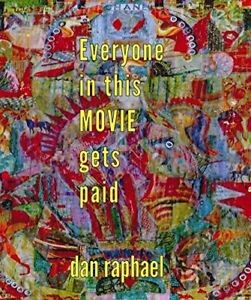
Everyone in This Movie Gets Paid [Last Word Books, Olympia WA, ‘16]
The State I’m In [Nine Muses, Winston OR, ‘12]
Impulse and Warp:  The Selected 20th Century Poems  [Wordcraft of Oregon,
LaGrande, ‘10]
Bop Grit Storm Café [Xexoxial Editions, West Lima WI, ‘08]
Breath Test (Nine Muses, Winston OR, ’06)
Showing Light a Good time (Jazz Police Books, LaGrande OR, ‘01)
Children of the Blue Supermarket, CD with Rich Halley (sax) & Carson Halley
(drums). [Pine Eagle Music, Portland, ‘11]
Plus 12 earlier collections from 8 different presses

Magazines, Web Sites and Anthologies
Caliban,   Exquisite Corpse,   Central Park,   Nebula Awards 31,   Big Bridge,
Raven Chronicles,   Tinfish,    Otoliths,   Rattapallax,   Unlikely Stories,    Basalt,
The Temple,   Hubbub,   Make it True,   Cordite,   Phantom Drift.   Mississippi Mud,   Asylum,   Plazm,   Urvox,   Short Fuse,   Skidrow Penthouse,   Fireweed,    Pageboy, Shattered Wig,   Curly Mind,  Alive at the Center,   Lost & Found Times,   Pemmican,   Snakeskin,  In Between Hangovers,   Pacific Northwestern Spiritual Poetry.
Plus work in around 200 other places.

Education
Western Washington U, MA in literature
Bowling Green State U, MFA in poetry
Cornell U, BA in English

Performance
Wordstock, Portland Jazz Festival, Artquake, Reed College, Center for the Performing Arts,
Portland Community College, Powell’s, Spare Room, Broadway Books, Cafe Lena,
Portland Poetry Festival, KBOO, KPSU   (all in Portland)
Bumbershoot, Elliot Bay Books, Cascadia Poetry Festival, Richard Hugo House, Red Sky
Poetry Theatre, Seattle Poetry Festival, RASP, Subtext, Title Wave  (all in Seattle)
Eastern Oregon U (LaGrande), Fishtrap (Enterprise), Tsunami Books (Eugene), Southern
Oregon U (Ashland), Cascadia Poetry Festival (Nanaimo BC), Bookpeople (Moscow ID),
Walla Walla Poetry Party (Walla Walla.), Get Lit! (Spokane), Whatcom Poetry Series
(Bellingham), Doe Bay Resort (Orcas}, Penofin Jazz Festival (Potter Valley CA).
Also in Portland I performed over two years as the  poet in Salon des Refuse, a monthly jazz
multi-media ensemble led by Rob Schepps..

Recognition
Residencies at Playa at Summer Lake, March ’15, April ‘16
M Journal contest, 1st place in poetry, ‘06
Rhysling Award, short poem, ‘95

Other Work
Hosted I Love Mondays, a monthly poetry reading in a downtown book store, for 13 years.
Organized Poetland, with 80 readers in 8 venues across 8 hours in ’09. For that day, the mayor of Portland changed the city’s name to Poetland.
Edited and produced 26 Books—26 chapbooks of 26 pages by Oregon and Washington poets.
Edited and produced NRG magazine for 17 years and 34 issues.
Worked 32 years for Oregon DMV, including 12 years as office manager and 2 years as public information officer.
The Interview

1. When did you start writing poetry?

Wrote my first poem junior year of high school. Being a poor kid, either of whose parents graduated high school, it seemed a little miraculous to me. Also at this time i was going to a local coffeehouse, hearing folks reading ferlinghetti, gindberg, et al, and joined in on that activity. not reading my own stuff however.

2. Whose stuff did you read?

at the coffeehouses, ginsberg, ferlinghetti, kerouac, patchen and yevtushenko.. wasn’t reading much other poetry outside of high school texts. sophomore year of college i discovered walt whitman.

2.1 What was is about their poetry that appealed to you?

the vitality and passion, ferlinghetti’s humor, ginsberg’s rage (at that time hadn’t yet read song of myself), patchen’s visions and sweetness. overall, the more accessible, vernacular language

3. Aspects that you work to show in your own writing?

I don’t “want” things for my writing. My main task as poet is to let the words that come out be what they are. as i’ve said a few times, language can’t write or type, so depends on me, & the unavoidable spin/tint my brain and world context add to e flow.

4. What is your daily writing routine?

don’t really have one. do try to look over recent, still be worked on poems every day, tend to dip in and out of them. never know when i’m going to write one. when i did a couple artist residencies i wrote something new every morning. i’ve frequently written poems after movies, after or during concerts or readings. as i’m struck and able.

5. What strikes you to write?

may sound too obvious, but poems start with a phrase or two in my head, so i start to right, sometimes repeating that phrase over and over til i get to computer or paper.

6. What brings out the phrase that brings the poem?

sometimes itll be an artistic event like a movie, concert, or reading (though usually the sparking phrase has nothing to do with that movie or concert,) sometimes the spark just comes, a quiet moment, unusual colors..

7. Who of today’s writers do you admire the most and why?

I hardly read any poetry. Living poets I like most are Alice Notley, Ron Silliman, and people I have some associaiton with–Jake Berry, Ivan Arguelles, Jennifer Coleman. In prose Don DeLillo, Arundhati Roy, Rebecca Solnit, Mohsin Hamid, a fine sci fi trilogy by M. John Harrison. Of course there are more names in  both areas.One of the biggest attractants for me is creativity, thnigs I’d never thought of before. also  new ways and perspectives on somewhat familiar topics (solnit), or insights into places i know little about (Roy.)

8. What would you say to someone who asked you “How do you become a writer?”

imagine it’s different for every one. you need to want to be a writer, enjoy writing. read a lot–not just volume but variety, see what’s old what’s new. write a lot. share your work. i went through an MFA program which was great for providing time and focus for writing.

11.   Tell me about a project you are involved with at the moment.

The Closer You Get to Nowhere, my 20th book, should be out this winter from Last Word Press. This 50 page book is all poems written in the six weeks i spent (two visits) at Playa at Summer Lake. A full size manuscript, Manything, is currently in 3 presses heaps for consideration.. And every Wednesday i write and record a current events poems for the KBOO Evening News.
not that tech savvy, but here’s a link to the last published book, Everyone in This Movie Gets Paid, also from Last Word Books
http://www.lastwordpress.com/product/everyone-movie-gets-paid


Wombwell Rainbow Interviews: Vessislava Savova

Wombwell Rainbow Interviews

I am honoured and privileged that the following writers local, national and international have agreed to be interviewed by me. I gave the writers two options: an emailed list of questions or a more fluid interview via messenger.
The usual ground is covered about motivation, daily routines and work ethic, but some surprises too. Some of these poets you may know, others may be new to you. I hope you enjoy the experience as much as I do.
Vessis Slava

Vessislava Savova

Vessislava Savova was born in Sofia, Bulgaria. She has got four books published and is a part of many Bulgarian and international anthologies. Her awarded and honorable mentioned writings and visual arts have been published in international magazines in nine languages.
She is an editor of five books in Bulgarian and one in English language. Four books of Bulgarian authors have been translated into English by her, two of which have been published by Hammer&Anvil Publishing House in the USA.
Personal blog: http://vessislava.blogspot.com/
Facebook: https://www.facebook.com/vessislava.savova
Twitter: https://twitter.com/vessislava_vls

The Interview

1. What inspired you  to write poetry?

First of all, I should tell you that I write haiku and tanka. I found myself inspired by the challenge to say much with just a few words. Of course, it was a long way till I started doing it right but it was another challenge.

2. Who introduced you to poetry?

I was mesmerized by Basho and Buson – their lives and poetry. Then, I realized that contemporary poets keep writing that poetry and moreover – they do it in another languages, not only in Japanese. I also admired all the translators thanks to whom I got familiar with this stunning poetry form. The person whom I owe much is Maya Lyiubenova, the best Bulgarian haiku writer. Alas, she passed away but she will never be forgotten.

3. How aware were you of the dominating presence of older poets?

It was even scary to dare write and at the beginning I only read them what in fact helped me a lot.

4. What is your daily writing routine?

From 2015 till 2017 I kept a haiku diary – I summarized the day in three lines what appeared to be even useful to me when looking back at it. Presently I only enjoy the moments and am grateful for each precious moment that I am gifted with. Yes, they say that haiku is a gift and the role of the poet is just to capture it.

5. What motivates you to write?

Everything around me that attracts my attention or probably it’s better to say – I find time to stop and realize it.

6. What is your work ethic?

It is easy now with all those groups on Facebook where we are in close connection with each other and stay on the right path – no plagiarism, no breaking the rules or at least, not before learning them well enough to afford it.

7. How do the writers you read when you were young influence you today?

It has been the same since I first read them – total respect.

8. Who of today’s writers do you admire the most and why?

I would not dare mention any names because I would miss somebody but the thing which makes me admire them is the attitude to the words … even to the single letter. There are not many but enough poets who are able to do it.

9. Why do you write?

To be honest, I do not know. It is an impulse and I follow it.

10. What would you say to someone who asked you “How do you become a writer?”

I would ask him or her – do you think I am such? The most important thing for a writer is to be a good reader.

11. Tell me about the writing projects you have on at the moment.

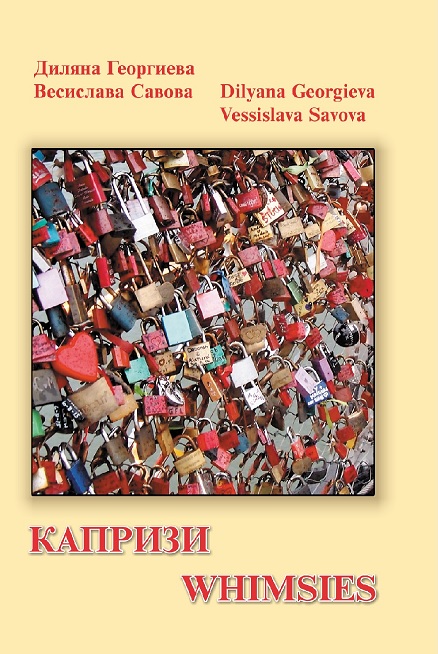
My co-author Dilyana Georgieva and I finished up a work on our latest project – a collection of rengay poems Whimsies – in March and now we are busy promoting it around Bulgaria and online, all over the world.
Note: Everything about rengay can be found here – http://www.graceguts.com/essays/rengay-an-introduction

Wombwell Rainbow Interviews: Kate Noakes

Wombwell Rainbow Interviews

I am honoured and privileged that the following writers local, national and international have agreed to be interviewed by me. I gave the writers two options: an emailed list of questions or a more fluid interview via messenger.
The usual ground is covered about motivation, daily routines and work ethic, but some surprises too. Some of these poets you may know, others may be new to you. I hope you enjoy the experience as much as I do.
516AttCHZvL._AC_US500_QL65_

Kate Noakes

Kate Noakes’ most recent collection is Paris, Stage Left (Eyewear, 2017). The Filthy Quiet is forthcoming from Parthian in spring 2019. She is an elected member of the Welsh Academy of Letters and her website (www.boomslangpoetry.blogspot.com) is archived by the National Library of Wales. She lives in London, where she acts as a trustee to the literature advocacy charity Spread the Word.

The Interview

1. What inspired you to write poetry?

As a question of origins, that’s a tricky one to answer. I suspect it was an overwhelming need to say something about something important, at least to me, and in a form that turned out to be economical and a poem rather than an essay. And this has continued to happen on a frequent basis over the last twenty five or so years, or that’s what I try to do, more or less successfully.

2. Who introduced you to poetry?

Dylan Thomas. Sure, there were plenty of other dead white men on the syllabus in school – I had the benefit of a rather good, if dated, poetic education there. But Dylan is absorbed from birth if you are Welsh, and he taught me about the possibilities of the English language, it’s playfulness and invention.

3. How aware were you of the dominating presence of older poets?

As a youngster – very. I don’t think I knew there were any actual, living breathing poets until I was quite grown up. Thankfully they don’t dominate today, even if everything is flipped around and it seems you are no-one writing anything interesting unless you are very young. I am offended by the present ageism in poetry – young this prize, new poets (meaning young) that prize. I have many friends, who, like me, did not start writing seriously for publication until they were much older. But we are considered old farts and know nothing about life, or good writing, or performance.

4. What is your daily writing routine?

Walk the dog then straight into the studio. Two poems before lunch. No, seriously I don’t have a poetry writing routine. The Muse, lord bless her, can’t be scheduled like that. Some mornings I wake up with an idea, which I might think about for weeks, months or years before it finds it’s right expression and form. Other days, I might have a line, not necessarily the first one. At other times a phrase might just pop into my head. I can’t explain it. It just depends on what I’m thinking about. Anyone who tells you whole poems just arrive is probably lying. Reading other people is the best way of getting going on one’s own work, I find. It puts you in the zone.

5. What motivates you to write?

A certain degree of arrogance that I have something worth saying and that other people might enjoy reading or hearing it. Plus the confidence of studied craft. In other words that I can write well.

6. What is your work ethic?

I’d like to say hard. I certainly work hard when I am actually writing – best words, check facts, do research etc. But writing poetry is not a constant daily activity for me, although journaling and note making is. I’m a definite believer in the write something every day school of being though, even if I frequently break the rules.

7. How do the writers you read when you were young influence you today?

Apart from Dylan, hardly at all, other than by the very fact that they wrote, and showed that it was possible.

8. Who of today’s writers do you admire the most and why?

The list of poets I admire is long– but here’s a few I am grateful for:

Seamus Heaney for precision of language, and finding meaning in sometimes unpromising material,

Gillian Clarke for showing how any aspect of life can be one’s subject, and for sitting on my shoulder still, telling me when I’m doing well and when not (she was my MPhil tutor, lucky me),

Carol Ann Duffy for telling me that all a poem needs is one really good image, and for writing ‘brilliant!’ on one of my early poems,

Philip Gross for dealing with complex emotional subject matter,

Jane Draycott for capturing the Thames on the page,

Robin Robertson for myth and mystery in subject and language,

Pascale Petit for her excellent blend of the personal and the natural world,

I could go on and on, but that’ll do for today.

9. Why do you write?

Cliché warning – because if I didn’t I wouldn’t be me. If I go too long without writing I start to feel that there is something distinctly wrong with my life. It’s more than a vague ennui, much more existentially threatening than that.

10. What would you say to someone who asked you “How do you become a writer?”

READ, READ, READ and then READ some more. Anyone who wants to be a poet these days needs a very good knowledge of the canon and contemporary poetry. You have to know from where and in what milieu you are writing. Then write, edit, study craft, get feedback etc. repeat, and don’t be too quick to think it’s ready for submission. And grow a very thick skin because rejection is going to be frequent. Don’t take it personally: it’s the work, not you.

11. Tell me about the writing projects you have on at the moment.

I have just put my next book to bed, as it were. Meaning, it has gone to the printers and will be out in spring 2019. It’s called The Filthy Quiet and is being published by the lovely Parthian. So I’ve been doing all the non writing things like proof reading, finding art work, getting blurbs, and having a new author photo taken. Now I’m organising the launch and asking for readings for next year.

I’ve also been working on the manuscript for the book after that. I’ve sorted out two to three years’ worth of poems into ones that I think are pretty decent and form some kind of cohesive whole. I have sent it to a couple of publishers over the summer and am awaiting their responses. Fingers crossed, but we are talking about publication in 2021 at the earliest, realistically. Yes, it takes that long.

Poems come and go as usual, spurred on by the need to take something to my fortnightly workshop group – a good discipline, which I recommend. I am also writing a commissioned non fiction book, a first for me. I am enjoying the research, but I’m going to keep the rest of the details under my hat for now.

Wombwell Rainbow Interviews: Daniel J. Flore III

Wombwell Rainbow Interviews

I am honoured and privileged that the following writers local, national and international have agreed to be interviewed by me. I gave the writers two options: an emailed list of questions or a more fluid interview via messenger.
The usual ground is covered about motivation, daily routines and work ethic, but some surprises too. Some of these poets you may know, others may be new to you. I hope you enjoy the experience as much as I do.
42730887_10213358563743022_721988924490121216_n

Daniel J. Flore III

Daniel J. Flore III is the author of 3 collections of poetry- Lapping Water, Humbled Wise Men Christmas Haikus, and Home and other places I’ve yet to see. All three are from GenZ Publishing and available on Amazon.

The Interview

1. What were the circumstances under which you began to write poetry?

I started writing poetry in lieu of paying attention during Geometry and English class in high school.

2. Who introduced you to poetry?

My very first introduction to poetry was learning about Edgar Allan Poe in grade school.

3. How aware were you of the dominating presence of older poets?

I’ve encountered a lot of egos in poetry which was intimidating at first but I did have some mentors who helped me a great deal and were genuinely good people too.

4. What is your daily writing routine?

Some days I do a full to do list of everything in my writing I’d like to get done, other days I find that too constricting and I just see what happens and what I come up with.

5. What motivates you to write?

Emotions, anything I find interesting or different.

6. What is your work ethic?

I’m a workaholic actually. Poetry is hard work and can be exhausting.I try hard to get a good poem or a good recitation. So my work ethic is pretty strong.

7. How do the writers you read when you were young influence you today?

They are huge. They’re my heroes. People like Salinger, Hemingway, Kerouac. Their work stays with me and continues to inspire me.

8. Who of today’s writers do you admire the most and why?

Jeff Weddle, Jenn Zedd, Tom Riordan, Paul Brookes, KW Peery, Mary Deweese, to name a few. These are people that keep me interested. It’s so easy in contemporary poetry to just tune out from boredom. At least for me it is. But these poets and some others continue to impress me and keep me awed.

9. Why do you write?

To create the best poetry I can.

10. What would you say to someone who asked you “How do you become a writer?”

Write something really original down,  as soon as you do that you don’t need to become a writer, you are one.

11. Tell me about the writing projects you have on at the moment.
My latest poetry collection, Home And Other Places I’ve Yet To See, was just released by  GenZ Publishing. I have been recording a lot of poems and a couple more collections (Pink Marigold Rays, 2019) and (The Meaning of a Sigh, poems of the U.S.A. 2020) are  forthcoming  from GenZ Publishing. I will be hitting the bookstores again soon too,  to do some readings.

Wombwell Rainbow Interviews: Matt Duggan

Wombwell Rainbow Interviews

I am honoured and privileged that the following poets, local, national and international have agreed to be interviewed by me. I gave the writers two options: an emailed list of questions or a more fluid interview via messenger.
The usual ground is covered about motivation, daily routines and work ethic, but some surprises too. Some of these poets you may know, others may be new to you. I hope you enjoy the experience as much as I do.

Matt Duggan

Matt was born in 1971 and lives in Bristol in the U.K. with his partner Kelly his poems have appeared in many journals across the world such as Osiris Poetry Journal, Ink, Sweat, and Tears, The Blue Nib, Into the Void, The Journal, The Dawntreader, Midnight Lane Boutique, Anti—Heroin Chic Journal, The High Window, A Restricted View from Under the Hedge, Ghost City Review, Laldy Literary Journal, L’ Ephemere Review, Carillion, Lakeview International Literary Journal, Levure Litteraire, erbacce journal, The Stray Branch, Prole, Black Light Engine Room, Militant Thistles, Matt won the Erbacce Prize for Poetry in 2015 with his first full collection of poems Dystopia 38.10 and became one of five core members at Erbacce-Press. In 2017 Matt won the Into the Void Poetry Prize with his poem Elegy for Magdalene, and read his work across the east – coast of the U.S.A. with readings at the prestigious Cambridge Public Library Poetry Series in Boston, a guest poet appearance at The Parkside Lounge and Sip This in New York, and also read at his first U.S. book launch in Philadelphia. Matt has two new chapbooks available One Million Tiny Cuts (Clare Song Birds Publishing House) and A Season in Another World (Thirty West Publishing House) plus a small limited edition booklet The Feeding ( Rum Do Press) Venice and London. He has also read his work at Poetry on the Lake Festival in Orta, Italy, the Poetry Café in London, in Paxos in Greece, and at various venues across the U.K. he runs and hosts his own poetry events and was highly commended in the Road to Clevedon Pier Poetry Anthology Competition, his second full collection Woodworm (Hedgehog Poetry Press) is due in Spring 2019.

The Interview

1. What were the circumstances under which you began to write poetry?

I started writing poetry and prose when I was a young boy, the first poem I wrote won the best poem in my class at the age of twelve, I also remembered the time that we’d have to read a play in class and I’d end up reading four or five of the main characters from the play. I suppose the first real poems were written for the affections of young girls, from then it just progressed, almost like an obsession that I had to keep writing. I then started becoming political and writing about Thatcherism  and neo-politics and I never really wanted to be put myself into a category as a political poet that solely writes about protest and politics, but I think today and what surrounds us it’s necessary.

2. Who introduced you to poetry?

Who introduced me, well, that would be a good teacher at my local school called Mr Ford who used different ways to teach us about poetry, I became fascinated with the world of poetry and poets and he would tell us stories about Dylan Thomas, Thomas Chatterton, Verlaine, and many others, he brought the poems and the poet’s life into his teachings and had most classes absolutely transfixed, I just wish I could go back and thank him.
It was around this time that I started writing a lot of material and sending them out to journals, of which 80% were rejected, but I do remember getting my first hand written acceptance in 94 / 96 from a lovely editor by the name of Jenne Conne who edited a magazine called ‘Connections’ based in London.  I still have that very letter which I do look at from time to time, she inspired me to continue writing and I just wish I could of thanked her.

3. How aware were you of the dominating presence of older poets?

Very aware, over the years I devoured large collections of  Ted Hughes, Shelley, Auden, Keats, Homer, Coleridge, Ashberry, Ginsberg, but I never really involved myself in the local scene at that time it was much later when I felt that I gained enough confidence to read in front of an audience, and sometimes, I do wish I took the plunge earlier.

4. What is your daily writing routine?

I don’t really have one but I have stuck to a few rules that I can’t break. I only write with a pencil and notepad and I never use any mobile devices apart from writing up the final drafts of poems onto a computer. I always write from the hours 3am to 6am and have around five notepads full of lines, themes, and half written poems that I work through when I have the time.

5. What motivates you to write?

Lots of reasons what motivates me from highlighting certain aspects of life that people generally don’t know about, such as media, history, politics, right wing propaganda, for me it’s about telling the truth about experience to the more day to day mundane. I also write to overcome feelings, and to face truths.  I try to operate on an open canvas and I suppose most things that I encounter on a daily basis can motivate me in some way to write, it could be a snippet from a conversation, a scene in a street, or a more imaginative image to conjure with, for me, poetry is everywhere.

6. What is your work ethic?

I have a very strong work ethic that I need to be constantly busy from reading submissions, reading competition entries, doing interviews for the erbacce journal, organising events to support and promote other poets in my hometown of Bristol, and my own writing which I’m concentrating more on these days. I do try to immerse myself in too much work which feeds me even more, it’s a little like getting rejections from journals I seem to feed on this, and hit back with something that they will in the end accept, I enjoy this a bit too much at times to be honest.

7. How do the writers you read when you were young influence you today?

The writers that I read when I was growing up were writing about social inequality, rise of fascism, corporate takeovers, so I suppose it never really never went away and in that way they have influenced me to keep at it, to keep telling the truth, to challenge and to be honest with yourself , so I would say they have had a huge influence on my progress into the poetry world, there were also several writers who just didn’t do it for me and I remember reading all the Liverpool poets as I’d always liked Brian Patten work it just spoke to me as an adolescent, yet others in that same group did nothing for me then, and they still don’t.

8. Who of today’s writers do you admire the most and why?

This is a hard one as I read a lot of collections and it can change from month to month, but I would say Tony Harrison especially for his poem V and A Cold Coming I remember watching V on Channel 4 which had such a huge effect on me as a young boy, this was someone who was saying what I was thinking, and it was on T.V. plus a favourite of mine of his is The Gaze of the Gorgon I still pick up that collection and can never put it down,  I suppose because of the truth behind the poems, poetry for me is about telling the truth and being honest, a poem should make you think and should make you re – read the poem. The last Harrison book I picked up was Laureate’s Block and the title poem is simply sublime, I’d advise anyone thinking of entering into the poetry world to read this collection, other writers I admire are Andre Naffis- Sahely his debut collection The Promised Land for its themes on travel, displacement and disposable cities, his control of a poem is a delight to read as is Maria Castra Dominguez collection A Face in the Crowd, which is such a magical and beautiful experience. I’d also say Thomas McColl, Penny Rimbaud’s collection America, and How! (1973-2012) which I read while travelling across the U.S. recently I loved the poems and the bio which states ‘ He did not study at Oxford, he does not have a dog, a wife, a flat in North London or a house in Buckinghamshire. He has been a writer throughout his life.’ Brilliant! Also Simon Darragh,  and I’ve also just started re-reading John Tottenham’s The Inertia Variations it’s the best collection of poems written on the themes of sloth, inertia, and laziness, you’ll ever likely to find.

9. Why do you write?

I can’t remember a time when I didn’t write I suppose there are many reasons why I write sometimes it’s just for a little fun with silly puns and quirky poems of which I’ll never read out or would add to any collection, also, when I feel emotionally charged about a certain theme or subject it almost takes over my life, mind, and body, and becomes like an addiction until its finally finished, and then I get grumpy and very moody when I’m not writing.

10. What would you say to someone who asked you “How do you become a writer?”

Firstly I’d advise them to live life and maybe travel the world, live on a mountain, swim with dolphins, take notes, live with different cultures and experience as much of life as possible before putting pen to paper and especially read as many poetry collections as possible before finding a voice and then submit, submit, submit, and don’t be put off by bullies and editors who think that they know best, always be firm and believe in what you write and don’t take any shit from anyone.

11. Tell me about the writing projects you have on at the moment.

I’ve just finished two articles about my recent readings in the U.S.A which will be published in A Restricted View from Under the Hedge, and The Journal. I had two new chapbooks published  this year One Million Tiny Cuts

http://www.claresongbirdspub.com/shop/poetry/

and A Season in Another World

http://www.thirtywestph.com/shop/aseasoninanotherworld

also  involved with the upcoming 70th NHS anthology for erbacce-press.
I’m also working on two new commissions with publishers, and  editing the final draft of ‘Brexit and Bandages’ journal, also, my second full collection of poems Woodworm (Hedgehog Poetry Press) which I’m so excited about will be published in Spring 2019. And I’ve also been asked to judge a new poetry competition called Songs of Lenin and McCarthy, based on protest poems in the form of songs by Lennon and McCartney.

Wombwell Rainbow Interviews: Jennie Farley 

Wombwell Rainbow Interviews

I am honoured and privileged that the following writers local, national and international have agreed to be interviewed by me. I gave the writers two options: an emailed list of questions or a more fluid interview via messenger.
The usual ground is covered about motivation, daily routines and work ethic, but some surprises too. Some of these poets you may know, others may be new to you. I hope you enjoy the experience as much as I do.

4634818251_272x426

Jennie Farley

Jennie Farley is a published poet, workshop leader and teacher. Her poetry has featured in many magazines including Under the Radar, New Welsh Review, The Interpreter’s House, Prole, Artemis, Lunar Poetry, and online journals Amaryllis, Atrium. Ink Sweat & Tears, Three Drops from a Cauldron, Riggwelter, Clear Poetry, The Blue Pages … She has performed her work at Cheltenham Literature Festival, Cheltenham Poetry Festival, Swindon Poetry Festival, Cheltenham Everyman Theatre, Berkeley Square Poetry Review (Bristol) and local venues. She founded and runs NewBohemians@CharltonKings an ‘iconic arts club’ providing music, performance, poetry and workshops, and has held workshops at Cheltenham Literature Festival, University of Gloucestershire, Cheltenham Everyman Theatre and schools. Her full collection My Grandmother Skating was published by Indigo Dreams Publishing 2016) followed by Hex (IDP 2018)

The Interview

1.  What inspired you  to write poetry?

Aged about six I made little booklets of poems and drawings of bunnies and pretty flowers tied up with coloured ribbon inspired by the Flower Fairy Alphabet and Margaret Tarrant picture postcards. Aged 12 I wrote a gory pastiche of Edmund Spenser’s Faerie Queen. In my late teens I was inspired by the angst of Sylvia Plath, until I discovered the wonderful surrealism of Selima Hill.

2.   Who introduced you to poetry?

As a young journalist I interviewed  the writer Alan Garner​ of  the award-winning​ The Owl Service who encouraged me to write poetry, introducing me to the poetry of R.S. Thomas, The Mabinogian,  Robert Graves ​The White Goddess, the Golden Bough …

3.   How aware were you of the dominating presence of older poets?

I was aware especially of Emily Dickinson’s original and intriguing work which I have since studied, of Seamus Heaney, Ted Hughes, Philip Larkin, W.H. Auden, Elizabeth Bishop, Sylvia Plath, Selima Hill … and various poets in translation.

4.   What is your daily writing routine?

Checking and replying to emails, checking my list of imminent writing jobs i.e. events to organise, flyers to send out, feedback requested on colleagues’ poems …  I wait for my poems to come to me! I keep a notebook with me at all times to jot down ideas which often come from the strangest places, on the bus, overheard snippets of conversation, during a  country walk … I work on the poems as and when, treading carefully at first, and when I’m sure I’ve something worth keeping transferring notes to computer where I carefully edit which usually takes ages – until I feel I have ‘got it right’. Sometimes I send poems as drafts to a trusted poetry friend for comments .

5.   What motivates you to write?

I like getting my thoughts down so that I can see what I am trying to say. I was not overly ambitious until my poetry friend suggested I sent my poems out to magazines etc. Getting one or two poems published encouraged me to work towards a collection which I duly sent to a publisher, and to my absolute delight was accepted  (​My Grandmother Skating, Indigo Dreams Publishing 2016) followed by​ Hex (IDP 2018).

6.   What is your work ethic?

I don’t want to seem precious about this, but I feel I should spend time working at something I enjoy and for which I have a certain talent. Also, I enjoy teaching creative writing, passing on my enthusiasm for poetry and often learning from my students – especially the refreshing ideas of children.

7.   How do the writers you read when you were young influence you today?

When young I was an avid reader of anything I could find in our rather restricted library, but as a writer-to-be I was certainly influenced by Grimm’s wonderfully dark and magical tales. Also the narrative quality of the Brontes, especially ​Wuthering Heights,
​ and the excitement of R.L. Stevenson’s ​Treasure Island and ​Kidnapped
​ (I loved to imagine myself chasing over the heather with Alan Breck!) Oh, and the creative imagination of Kenneth Grahame’s ​The Wind in the Willows.

8.   Who of today’s writers do you admire the most and why?

The late Angela Carter, especially ​The Bloody Chamber for its vivid Gothic depravity and feminist twist, poets – Caroline Bird’s explosive, surreal poetry full of surprises, Michael Symmons Roberts, especially ​Drysalter for moving, metaphysical poems that read like psalms, John Burnside, especially ​Black Cat Bone for strange, unnerving, almost mythical poems telling of longing and loneliness …

9.   Why do you write?

I have no true answer to this! I find it difficult and stressful but the wonderful satisfaction of having brought a poem to fruition is worth it.  Also it’s the fun of exploring an idea through from the first few words.

10.    What would you say to someone who asked you “How do you become a writer?”

I would say, Keep practising, read, read, read, and always keep a Writer’s Notebook.

11.   Tell me about the writing projects you have on at the moment.

I can’t bear not to have some project on the go (even if it doesn’t work out). At the moment I am working toward a pamphlet of 25 poems ​The Gymslip Girls about my days at boarding school which seemed to me completely ​surreal!
​ Also a collaboration with a printmaker friend ​The Fossil House inspired by my old Cotswold Stone cottage with its sea urchin fossils embedded in the walls, her prints and my responses in poetry. And of course any new poems which may pop up in my head!

Wombwell Rainbow Interviews: Mike Farren

Wombwell Rainbow Interviews

I am honoured and privileged that the following writers local, national and international have agreed to be interviewed by me. I gave the writers two options: an emailed list of questions or a more fluid interview via messenger.
The usual ground is covered about motivation, daily routines and work ethic, but some surprises too. Some of these poets you may know, others may be new to you. I hope you enjoy the experience as much as I do.

42640655_1432007186943989_2021621624255545344_n

Mike Farren

Mike Farren is an editor in academic publishing from Shipley, Bradford. His poems have appeared or are forthcoming in journals and anthologies, including The Interpreter’s House, The High Window, Strix, Riggwelter and Valley Press’s Anthology of Yorkshire Poetry. His debut pamphlet, ‘Pierrot and his Mother’ was published by Templar Poetry in 2017 and in 2018 he was one of the ‘canto’ winners for Poem of the North. He is a member of Beehive Poets and Wharfedale Poets, publishes under the Ings Poetry imprint and co-hosts the Rhubarb open mic in Shipley.

Website: http://­www.mikefarren.co.uk/

Twitter: @mikefarren

MikeFarren
mikefarren.co.uk

The Interview

  1. When and why did you start to write poetry?

I have written poetry for almost as long as I can remember but I can date when I ‘really’ started writing to two specific things in 2014. The first was that I visited a friend in London for the weekend and went to see Dennis Severs’ house (https://­www.dennissevershouse­.co.uk/) in the East End. When I came home, I had to write about this and was so pleased with the result that I wanted to carry on writing.

Dennis Severs’ House – 18 Folgate Street
dennissevershouse.co.uk

The second thing was that I went to my first ever workshop, at the Ilkley Literature Festival, with Kim Moore. Apparently, what I wrote made Kim cry. I thought that if I could produce that effect (on such an excellent poet) with an early attempt, I really wanted to keep going!

1.1. Looking at your link they try to convey the Eighteenth Century as an immersive experience for all five senses.

That’s right. There was a real sense that the 18th century was tugging at you and doing strange things with time. I wanted to convey that feeling.

1.2 “Strange things with time?”

time assuming “a granular form”. It was as if the house had stopped time from flowing and you could begin to notice it as dust or grit trapped in corners or spiders’ webs.

Click to access ­18_folgate_street.pdf

1.3 Very visceral..Do you try to appeal.to all five senses when you write?

That’s an interesting question. I think that I’m always aware of them. I’m probably most concerned with the emotional effect but I realise that the way to get to the emotions is through the senses.
2. Who introduced you to poetry?

My father had no particular notion of poetry but he loved words and wordplay, so I think he pre-disposed me to it. My slightly older next-door neighbour introduced me to music in which the lyrics were significant – Bob Dylan, Joni Mitchell, Jagger/Richards (at their best)… From there on, it was more formal thing of studying English at school and reading texts by Donne and Marvell, Keats, Eliot and in particular, Yeats.
However, until the change I mentioned in 2014, I had only been vaguely aware of modern – let alone contemporary – poetry, so it was finally encountering some practising, mostly younger, poets – Kim Moore, Helen Mort – and starting to go to Beehive Poets in Bradford that introduced me to the contemporary scene.

3. Is Yeats a domineering influence?

I don’t think I write at all like him – at least, not these days. I have probably also reined back on the self-mythologising and I don’t have a cause that’s the equivalent of Irish independence for him. However, I probably aspire to his mixture of the emotional and the intellectual and his ability to move between the everyday and the mythic.

In that case, yes, though Irish mythology is a resource for him elsewhere. It’s difficult to use specifically classical references without seeming too exclusive. I rarely do so, but I like to try to get the notion that the inner world or the humdrum world are connected to something more universal.

4. What is your daily writing routine?

I wish I had one! I like to have a notebook by my bed because I think I get most ideas (not always good ones!) when I’m just about to sleep or just waking up.
When I am able to find time actually to write, I usually set aside an hour or so and try to get down a draft based on some of those ideas. This can be rough – often just prose. Sometimes, though, I notice that there’s a thread of rhyme or that phrases are coming out with a consistent rhythm and I take this to point towards the form the poem wants to take.
Apart from the notebook, I usually work straight to computer. Drafting is fairly incremental – I tend to read things out and see how they sound, then change odd words or line breaks to make them sound better. I only occasionally re-start from scratch – when a poem clearly isn’t working but the idea won’t leave me alone.
I do want to develop a more rigorous, regular routine, but I’m afraid that’s a work in progress at the moment.

5. Is a stray phrase your motivation to write, or do other things move you to do so?

It certainly can be a stray phrase. I also write a lot about what might seem like insignificant memories but are actually moments that can bear the weight of other things that are in the background – relationships, emotional states or even impressions of political moods.
As I have become involved in groups and have attempted to get my work into more journals and anthologies, I have also had more occasion to write on defined topics. I can begin with a topic that seems to mean little to me but, through research and spending time considering the subject, come up with something that I might be reasonably satisfied with.

6. What is your work ethic?

For poetry, it’s probably different from everything else. In the day jobs I have done and continue to do, it has always been important to put in the hours, concentrate on the task in hand, prioritise, give due regard to deadlines etc. Some of this has also been true when I have attempted to write prose. With poetry, you can only get so far – but no further – by applying those principles. Having time to write is important but forcing things when you have that time can be counter-productive, leading to frustration and self-doubt (above even the levels that are normal for a poet). Once you’re onto something, I think you do, though, need to be immersed in it – the ideas, but also the rhythm, sound and shape of the thing.

7. How do the writers you read when you were young influence you today?

The things that I loved about writers I read when I was young were probably story, musicality and communication. I tried for a time to write fiction and realised I just wasn’t good at handling big story arcs, so with poetry I like to try to imply a story – to give the reader the means to extrapolate from the little I actually have space to say in a poem. Musicality is a work in progress: I rarely use established forms like iambic pentameter these days, but there’s the Ezra Pound thing: “compose in the sequence of the musical phrase, not in sequence of a metronome”. This is so subjective that it’s hard to know if you’re succeeding, but I always have it in mind. As for communication, I have always liked writers who seem genuinely to want to communicate with the reader, even if it means crediting that reader with the ability to fill in the gaps and make connections beyond the obvious.

8. Who of today’s writers do you admire the most and why?

I just did an interview (me as interviewer) with a poet friend where we discussed the impossibility of giving an answer to that question that you wouldn’t be almost instantly embarrassed by! One of my sources of embarrassment is that I probably have quite a parochial perspective. The one poet who goes against that is probably Sharon Olds. Stag’s Leap was one of the books I was reading around the time of my 2014 ‘conversion’. I think she has a kind of magisterial quality that makes you aware you’re in the presence of someone who really knows what they’re doing with poetry.
Another significant book from that time was Michael Symmons Roberts’ Drysalter. I think I loved the sense of being able to achieve such a massive variety within such a tight constraint (150 poems of 15 lines each).
Established poets I admire are Sean O’Brien for the kind of imagination that can work from the small detail to the big political currents of our times; and Don Paterson, for sheer craftsmanship. There’s also Carol Ann Duffy and Simon Armitage for their ability to communicate.
A generation down from that, the poets I admire are mostly female – Helen Mort for technique, Liz Berry for the distinctiveness of her voice and Kim Moore and Clare Shaw for their courage and visionary qualities – but there’s also Kei Miller, for his ability to straddle written and spoken spheres,
The poet I have enjoyed most over the last few years, though, has probably been Michael Donaghy. Having been dead for 14 years, I’m not sure if he counts as one of “today’s writers” but as far as I’m concerned, he had everything.

9. What would you say to someone who asked you “How do you become a writer?”

Read! Do it actively. Identify the writers who speak to something in you and try to work out how they achieve it. Also do it passively. Get the rhythms of good poetry (or prose) into your muscle memory. And write. My description of my approach above might sound a little undisciplined but I have to admit that I didn’t start getting better as a writer until I started practising.

9.1 Poetry as a craft.

Very much so. We’re kind of back to Yeats and his “Irish poets, learn your trade / Sing whatever is well-made”.

10. I agree.
Finally tell me about the writing projects you have on at the moment.

I have recently finished putting together a collection. The core of it is a sequence of poems that are mostly far from obviously political in themselves but that I hope will be able to build a cumulative political sense. I am looking for a publisher at the moment.
Secondly, I have written a sequence for music, on the subject of the moon. I am working with composer Keely Hodgson, who previously worked with poet Laura Potts on her North and Mourning sequence. The idea is that we will put on some performances with a soprano and a piano trio.
I have a vague idea of trying to curate a sequence of poems – translations or poems written in response – from different writers to coincide with the 200th anniversary of Baudelaire’s birth in 2021. This is still fairly embryonic.
Finally, I have done some small-scale publishing of my own, putting together anthologies and collections for friends. I am currently looking to take this further, in collaboration with a few other people from the West Yorkshire poetry scene. We hope to launch this within the next month or so.