Wombwell Rainbow Interviews: Greg Santos

Wombwell Rainbow Interviews 

I am honoured and privileged that the following writers local, national and international have agreed to be interviewed by me. I gave the writers two options: an emailed list of questions or a more fluid interview via messenger.
The usual ground is covered about motivation, daily routines and work ethic, but some surprises too. Some of these poets you may know, others may be new to you. I hope you enjoy the experience as much as I do.
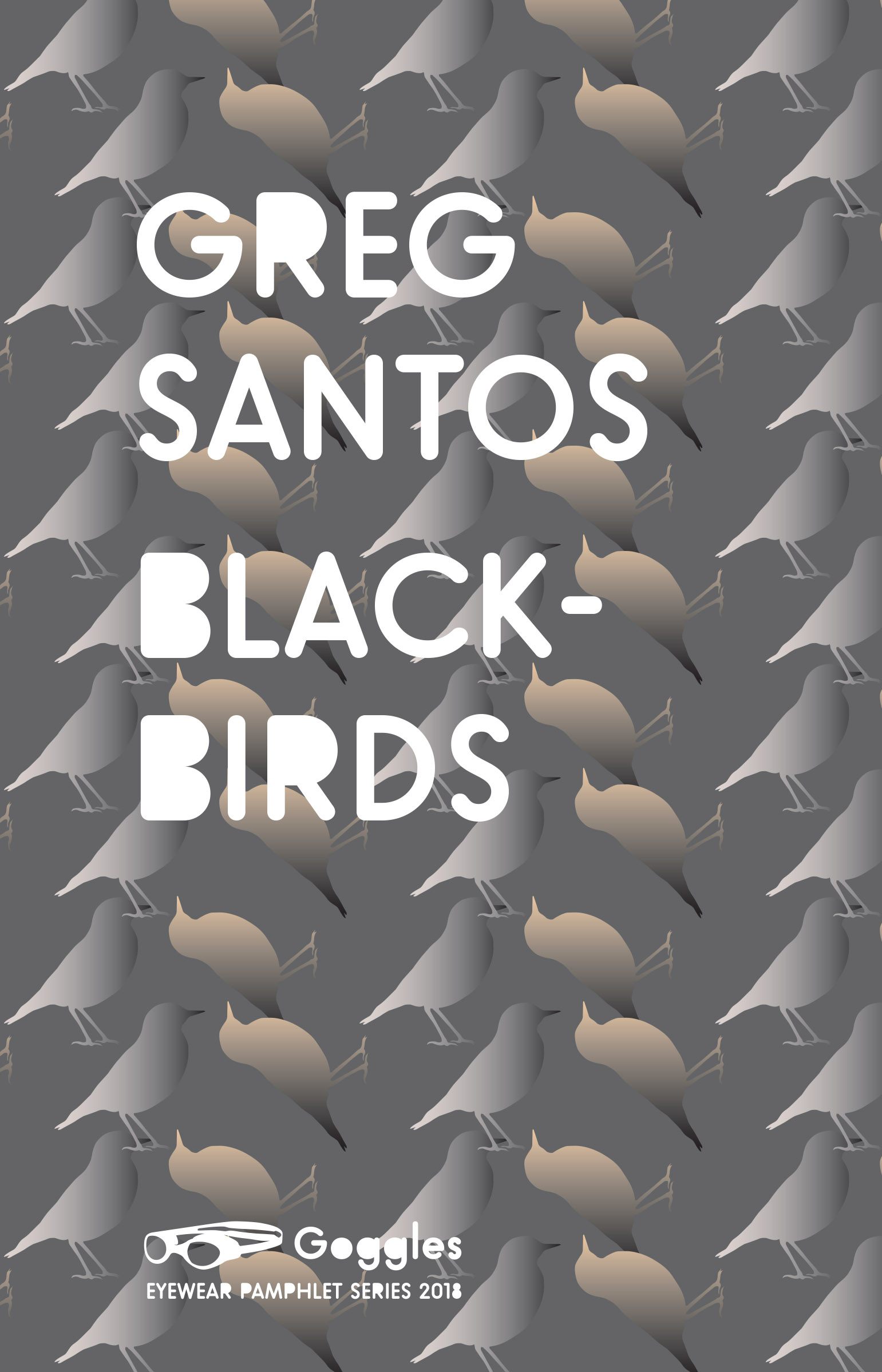
Black-Birds by Greg Santos

Greg Santos
 
is the author of Blackbirds (Eyewear Publishing, 2018), Rabbit Punch! (DC Books, 2014) and The Emperor’s Sofa (DC Books, 2010). He holds an MFA in Creative Writing from The New School. His writing has been featured in publications such as The Walrus, Queen’s Quarterly, Geist, Vallum, Cha: An Asian Literary Journal, McSweeney’s Internet Tendency, The Best American Poetry Blog, and World Literature Today. He regularly works with at-risk communities and teaches at the Thomas More Institute. He is the poetry editor of carte blanche and lives with his family in Montreal.My website is: https://gregsantos.me/
I can be followed on social media on Facebook (https://www.facebook.com/gspoet/) and Twitter (https://twitter.com/moondoggyspad).

The Interview

Wombwell Rainbow Interviews
 
1. What inspired you to write poetry?
 
I started writing poetry when I was a teenager, long before I even really knew what I was doing. I would jot stuff down into a journal when I was traveling with my parents. I liked the idea of capturing moments in time. Eventually I kept a journal more regularly and those scribbled thoughts, ideas, and song lyrics became my first poems.
 
2. Who introduced you to poetry?
 
I can’t specifically recall who introduced me to poetry or what age I was. I do remember learning about poets in high school, like Emily Dickinson and e.e. cummings. One of the first songs/poems I wrote in high school was inspired by cummings’ poem “anyone lived in a pretty how town” and I even wrote a blues-inspired song after Faulkner’s As I Lay Dying.
 
3. How aware were you of the dominating presence of older poets?
 
In college, I devoured writing by The Beat Generation and at one point I remember (embarrassingly) trying to emulate Dylan Thomas when reciting a poem out loud. I was starting to experiment with incorporating popular culture and humour in my writing and a professor of mine encouraged me to read Frank O’Hara’s poetry, which lead me to discover The New York School’s works and my mind was blown! I particularly owe a great debt to the writing of Kenneth Koch and his approach to teaching creative writing to youth, as I regularly work with diverse communities, including at-risk youth. I am very aware of the voices of poets that came before me and always feel that my writing is in conversation with them.
 
4. What is your daily writing routine?
 
I didn’t always keep a regular writing routine and would write whenever I had a free moment, often at night when my wife and kids were asleep. This fall, I’ve set aside my afternoons for writing and editing. It’s been relatively successful and I’m quite happy with the change and the results.
 
5. What motivates you to write?
 
The world around me motives my writing. The daily wonder in my children’s eyes. My wife’s thirst for learning and her joy spending time in nature is contagious. There’s a motto that I have added to my own business cards, which is “Live a Life Poetic.” I try to live with that saying in mind on a daily basis. I’ve always been a sensitive person, and so I try to be open to the magic of the world around us. Of course, poetry itself is one of my main inspirations. I’m unabashedly a poetry nerd: I love reading other people’s poetry, reading about poetry, discussing poetics, and spreading my enthusiasm about the art form to whoever will listen. Poetry is my vocation.
 
6. What is your work ethic?
 
Like I mentioned in one of your previous questions, I have recently scheduled regular time in the afternoons to work on my own writing projects. This doesn’t mean writing exclusively. I feel that editing is just as important as writing. So is reading and researching. Even when I’m not writing, I’m soaking everything in like a human sponge. I’m constantly in awe of other writers and I love to see what my peers are working on. Once I digest it all, I still find myself surprised by what comes out in my own work. It’s all very exciting to me!
 
7. How do the writers you read when you were young influence you today?
 
When I’m stuck, I still like to go back to the many writers who have influenced me. It’s like visiting with old friends. There are some that I’m not as close to as I once was, but it’s still nice to catch up. Then there are those friendships that pick up again from right where we left off. I love going back to Kenneth Koch, Frank O’Hara, John Ashbery, Paul Violi, Michael Ondaatje, James Tate, Elizabeth Bishop, Lydia Davis, Mary Ruefle, Dean Young, Stuart Ross, Mark Strand, A.R. Ammons, Jorge Luis Borges, and Italo Calvino, among many others.
 
8. Who of today’s writers do you admire the most and why?
 
Oh my goodness, there are so many writers that I respect for so many different reasons. Sometimes it’s their hustle and commitment to their art. Others, I admire for their encouragement and support of one another. Of course, there are my peers who are just killing it out there and writing amazing pieces of literature. Some of these writers that immediately come to mind include Leah Umansky, Phoebe Wang, Cora Siré, Heather O’Neill, Tara Skurtu, Gillian Sze, Stuart Ross, Ashley Opheim, Tess Liem, Joshua Levy, Gabino Iglesias, Larissa Andrusyshyn, Sarah Kay, Najwa Zebian, Branka Petrovic, Harriet Alida Lye, Matt Haig, Guillaume Morissette, Marcela Huerta, Klara du Plessis, Faisal Mohyuddin, Lauren Turner, and Robin Richardson.
 
9. Why do you write?
 
Some like to say “publish or perish.” Yes, the publishing part is nice, of course. I, however, prefer to say “create or croak.” I am interested in the process of writing. The joy of the act of writing and of play is very important to me. When I was younger, I always said that I would be in a creative field and I often started working on screenplays, stories, and comics, but would often leave those projects unfinished. On the other hand, I was able to finish my poems. Once that happened regularly, I couldn’t stop. It was and continues to be a compulsion. When I completed my first book, The Emperor’s Sofa, I was amazed. I made this work of art – with plenty of help along the way – but it was out there in the world. I still feel very grateful to have had a book published, let alone more than one, and to have the opportunity to move others with words. We always tell our daughter that when she plays a song on the piano for her friends and family, it is a gift that she is sharing and something to be proud of. I feel that poetry is my gift and I have a deep sense of satisfaction and pride for that creative accomplishment.
 
10. What would you say to someone who asked you “How do you become a writer?”
 
Read. Write. Re-read. Re-write. Be persistent. Reach out for help. Let others help you. Help others along the way. Always believe in your writing.
 
11. Tell me about the writing projects you have on at the moment.
 
I’m currently working on a couple of projects at the same time. One of my manuscripts-in-progress is inspired by the life and art of Canadian modernist painter, Anne Savage. She was a member of the Beaver Hall Group, who were Montreal-based contemporaries of the iconic Canadian landscape painters, The Group of Seven. My childhood home was the same home that Savage lived in for the majority of her life and I’ve been writing persona poems and ekphrastic poems from her and some of her family members’ point of view.My other project is somewhat of a continuation of the writing found in my newest Eyewear Publishing poetry pamphlet, Blackbirds. The themes in Blackbirds touch on parenthood, identity, and ancestry much more so than in my previous books. It put me in a much more vulnerable space and I wasn’t sure how it would be received. But seeing how positively readers have been responding to Blackbirds, I’m in the process of putting together a manuscript that builds on these themes in greater depth and I’m hoping for it to become a new full-length collection. 
 

Wombwell Rainbow Interviews: Mark Fiddes

Wombwell Rainbow Interviews 

I am honoured and privileged that the following writers local, national and international have agreed to be interviewed by me. I gave the writers two options: an emailed list of questions or a more fluid interview via messenger.
The usual ground is covered about motivation, daily routines and work ethic, but some surprises too. Some of these poets you may know, others may be new to you. I hope you enjoy the experience as much as I do.

51NRdZBNUFL._AC_US500_QL65_


Mark Fiddes
 
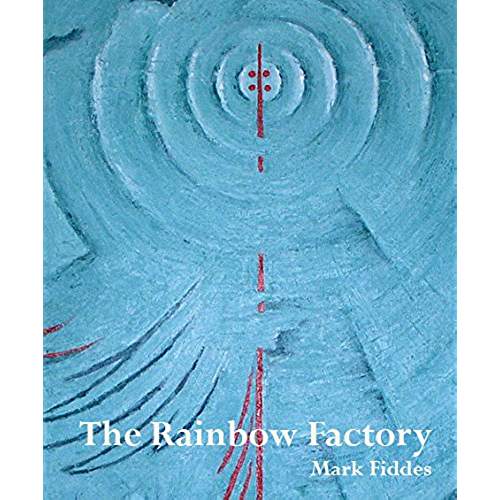
Mark’s first full collection ‘The Rainbow Factory’ was launched at Keats House by Templar (publishers of his award-winning pamphlet ‘The Chelsea Flower Show Massacre’).
He’s won the Ruskin Poetry Prize, Ireland’s Dromineer Festival Prize and was runner up in the Bridport Poetry Prize and Poetry Society Stanza Prize. His work been published in The Irish Times, London Magazine, Magma, The Independent and POEM International among many others. Normally resident in London, he’s working temporarily in the UAE.
 
Mark performs his poetry at iambapoet.com
 
 
The Interview
 
Wombwell Rainbow Interviews
 
1. What inspired you  to write poetry?

Growing up near a slow, dirty river – The Nene in Northamptonshire. As a lad I’d go out for day-long walks and want to return with something more in my head than a memory. So poetry at first was a way of putting together the pieces. I then left poetry writing (not reading) alone for many years until a number of jarring events meant I needed to piece together the fragments once again – a Weltanschauung that reflected more connection to the world.
 
2. Who introduced you to poetry?

My Dad used to illustrate pocket sized poetry samplers for the novelist JR Carr who had his own mini-press in Kettering which published Clare, Blake and Keats. I think you can still get them. Anyway, I’d read these and wonder at the worlds they created. I was also lucky enough to have that inspirational teacher who figures in the lives of so many of us. Mine was called Danny Hickling. He made Chaucer a riot, Shakespeare a visionary and even Dryden turned into a philosopher.

3. How aware were you of the dominating presence of older poets?

Aside from a few dour and pin-striped men on the TV, not really aware. Then punk came along and changed everything. I started reading Rimbaud and Verlaine and the Beats. It was that sort of tatterdemalion Romanticism, I guess, that all revolutions need. Then at college at actually got to meet a few of them, like Ginsberg. Although I was supposed to be studying Philosophy, I spent most of my book money on Heaney and Hughes. Later, I got to work in Washington, DC as a journalist which introduced me to wonders of the American poets like Bishop and Sexton. They seemed to write with such directness and clarity.
 
4. What is your daily writing routine?

Wake at 6.30. Coffee. Write for an hour and a half. Go to work. Reserve half a day at the weekend for consolidation.
 
5. What motivates you to write?

Wonder sometimes, if I’m lucky. Other times, it’s the need to explain something to myself or to find out what I really think. Poetry is like a tool that I hope gets sharper with use. Poems I write out of anger – and I must have written 100 about Trump – end up in the bin. Poems I write to please other people always sound like birthday cards.
 
6. What is your work ethic?

I’m pretty disciplined. In my other life I work as a creative director with deadlines every day. This helps. Although I’m as distracted by coffee and cake as the next poet.
 
7. How do the writers you read when you were young influence you today?

They feel more like friends than writers. I sometimes feel my own poems are conversations with them. But if we’re talking children’s writing, there’s an equally strong influence from the illustrators too. For me Edward Ardizzone was able to conjour up private worlds with a few cross-hatches of his pen, whether accompanying the poems of Walter de la Mare or Dylan Thomas.
 
8. Who of today’s writers do you admire the most and why?
 
John Glenday has a special appeal for me, not just because most of my family are Scots!
There’s a warmth in his work and a power in his economy. Like Heaney, he’s a writer who’s always “reaching out” if that makes sense. I’m a big fan of Ada Limon and the fluidity of her imagery, her mysterious truth-telling. I’ve recently discovered the stark sensuality of Louise Glück. Could have done with her earlier on. Another poet who deserves a much wider audience in the UK is Zeina Hashem Beck from Lebanon with whom I’ve read several times over the past year. She’s fierce and tender and her new style of duets in English and Arabic are the best way to understand some of the issues of identity and memory in the Middle East at this troubled time.

9. What would you say to someone who asked you “How do you become a writer?”

I would first ask if they were a reader.
 
10. Tell me about the writing projects you have on at the moment.

I’m working on my second collection. At the moment. It’s called ‘How to be Quiet’ as much as a reaction to social media as the populist frenzy which has supplanted what we knew of as democracy. These are poems about friendships and love and belonging. Nobody dies, except me – almost – and my Mum who as a teacher and book lover all her life was a huge influence. There’s more on celebrity, work and the issues that bamboozle us daily. And an Ode just to keep my hand in.My job has taken me overseas so I’m Brexiled for the moment. But it’s brought me into contact with a number of poets exiled from real conflict zones like Palestine and Syria. Run by Zeina Hashem Beck, we have a monthly open mic called Punch Poetry that brings together voices from all over the Middle East and Asia. I’m still learning so much.


Wombwell Rainbow Interviews: Joe Williams

Wombwell Rainbow Interviews

I am honoured and privileged that the following writers local, national and international have agreed to be interviewed by me. I gave the writers two options: an emailed list of questions or a more fluid interview via messenger.
The usual ground is covered about motivation, daily routines and work ethic, but some surprises too. Some of these poets you may know, others may be new to you. I hope you enjoy the experience as much as I do.

46981235_516726158841467_3578384498384961536_n

Joe Williams

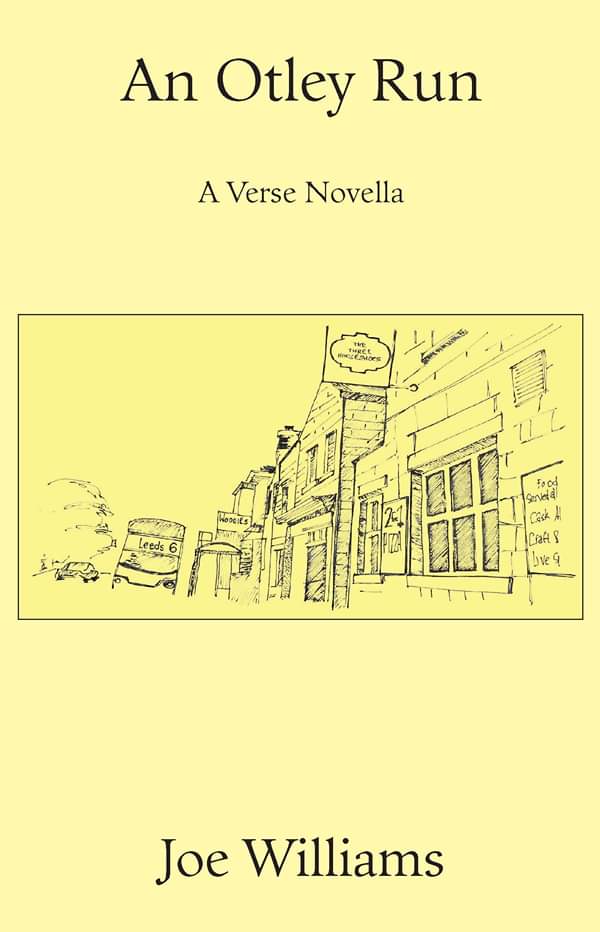
is a former starving musician who transformed into a starving writer and poet in 2015, entirely by mistake. He lives in Leeds and appears regularly at events in Yorkshire and beyond. He has been published in numerous anthologies, and in magazines online and in print. His debut poetry pamphlet, ‘Killing the Piano’, was published by Half Moon Books in 2017, followed by the verse novella ‘An Otley Run’ in 2018. He won the prestigious Open Mic Competition at Ilkley Literature Festival in 2017 and was runner-up the following year.

The Interview

1. When and why did you start writing poetry?

It was very much an accident. Back in 2014 I decided, for no particular reason, to try writing a haiku every day, and posted them on Facebook. I got quite into it and ended up doing 50 haiku in 50 days. I stopped doing them daily then, but still did them in bursts, and set up a Facebook page called Haiku Hole where I could share them. Early in 2015 I saw a poster in the Chemic Tavern in Leeds, advertising Word Club, their monthly poetry night with open mic, so I decided to give that a go. I really enjoyed it, and discovered a whole world of local poets and poetry events that I hadn’t known about before. From there I got the bug and started performing more regularly, and writing different types of poetry, inspired by the wonderful poets I saw at those nights. It all spiralled from there.

2. Who introduced you to poetry?

I don’t think I really was introduced to it until I started going to all the events. I’d done the usual stuff in school, and I have a background in music so I was used to songwriting, but I feel that’s quite a different discipline, and poetry wasn’t really on my radar as either a writer or a reader. That first time I went to Word Club – and I didn’t get up on stage that time, I just watched – was a huge moment of discovery for me, seeing what contemporary poetry was really about, and what could be done with it. I’ll always remember the line-up of guests from that night – Joanna Sedgwick, Winston Plowes, and Gaia Holmes. Three fantastic but very different writers. The quality of the open mic was very inspiring too.

2.1 How did you know about Haiku?

I remember that from school, the 5-7-5 Westernised version of haiku. I didn’t particularly think about it as being poetry.
2.2 Inspired by the poets you heard what different kinds of poetry did you write?

Some of the earliest poems I did still used the haiku form, but I strung them together in a longer sequence. I wrote a few rhythmic rhyming pieces too. That felt natural to me because of my music work. After that I started doing some pieces that used a fixed syllable structure – not necessarily a recognised form, just patterns I’d created and worked within. I learnt a lot from those techniques, which helped me to then go on to writing free verse without over-writing or rambling, keeping things tight and quite minimal. I still tend to write with a rhythm or a beat in my head, though it might not always be obvious to a reader.
3. How aware are and were you of the dominating presence of older poets traditional and contemporary?

I don’t pay much attention to them, and know little about them. I’m more interested in the local and grass roots scene. I don’t dismiss the older or more well-known poets, but I don’t seek them out either.

4. What is your daily writing routine?

I’m very bad at routine, and not just with writing. I try to do something related to writing every day, but that isn’t necessarily writing, or editing, it might be submitting work for publication, promoting events, getting work out on social media, that type of thing. When I have a specific piece of writing I want to work on I usually get away from my computer to avoid distractions. Usually that means going to the pub, but it’s just for work of course!

5. What motivates you to write?

I’m mainly motivated by ideas. Something might pop into my head, a thought or a line, or I might thank of a “what if” scenario based on something I’ve heard or observed. Sometimes I write to prompts or themes, but then it’s still usually about finding the interesting idea, trying to dig into the prompt and find an angle that isn’t the obvious one. Original and creative ideas are often under-rated and under-used in poetry, in my opinion.

6. Who of today’s writers do you admire the most and why?

The very best, for me, are those who can combine strong writing, which works on the page, with the ability to deliver it live in a performance. It doesn’t have to be an overtly performance-orientat­ed poet, and in most cases it isn’t, it’s someone who can deliver their lines in a way that gets to your heart or soul. I can think of dozens, and especially in Leeds and Yorkshire we’re blessed with many of them, but here are a few examples: Gill Lambert, Louise Fazackerley, Toria Garbutt, Sandra Burnett, Steve Pottinger, Cecilia Knapp, Vicky Foster… that’s just the tip of the iceberg

7. Why do you write, as opposed to doing anything else?

When I started doing the haiku I’d been away from the music business for a few years. I think one of the reasons I got into it was because I was missing having a creative outlet, and probably didn’t realise how much that had been lacking in my life. I’ve always written bits and pieces but it was only the absence of the music that made me start taking it seriously. I’m not sure if that really answers the question, but it’s the only explanation I have!

8. What would you say to someone who asked you “How do you become a writer?”

For poets especially, I’d strongly recommend getting out to open mic nights and other events, get to know the other writers in your area. For prose writers it can be a bit more difficult because the open mics tend to be poetry-focused, or sometimes poetry-only, but there are lots of different events around and you’re bound to be able to find out that you like and that suits you. It’s good to be part of the writing community, which in my experience is very supportive. Learn from other people, read their work, read a wide variety of published writers, literary magazines. Absorb as much as you can, and keep writing, keep editing, keep improving.
9.  Tell me about the writing projects you have on at the moment.

My second book ‘An Otley Run’ – a verse novella about a pub crawl – has just been published by Half Moon Books, and we’ll be launching it at the Original Oak in Leeds on 2 December, so at the moment I’m mainly focused on that and arranging gigs and promo stuff for next year. If anyone has events they’d like me to read at, please get in touch! Beyond that, I’m working on a collection of short stories, and have a long-running idea about doing a poetry pamphlet themed around sport, so I expect one of those will be my next book. Who knows what the future will bring though? One thing I’ve learned as a writer is that you can never be entirely sure what’s going to come up next.

http://www.joewilliams.co.u­k and http://www.anotleyrun.com


Wombwell Rainbow Interviews: Graham Mort

Wombwell Rainbow Interviews

I am honoured and privileged that the following writers local, national and international have agreed to be interviewed by me. I gave the writers two options: an emailed list of questions or a more fluid interview via messenger.
The usual ground is covered about motivation, daily routines and work ethic, but some surprises too. Some of these poets you may know, others may be new to you. I hope you enjoy the experience as much as I do.

black-shiver-moss

Graham Mort

is Professor of Creative Writing and Transcultural Literature at Lancaster University and an Extraordinary Professor at the University of the Western Cape, South Africa. He has worked on projects across sub-Saharan Africa and in Kurdistan and is currently helping to develop new writing initiatives in Trinidad. Visibility: New & Selected Poems, appeared from Seren in 2007, when he was also winner of the Bridport short story prize. A book of stories, Touch, was published by Seren in 2010 and won the Edge Hill Prize the following year. Terroir, a collection of short fiction, appeared in 2015 and was long-listed for the Edge Hill Prize. Black Shiver Moss, a new book of poems, was published by Seren in 2017.

The Interview

1. What were the circumstances under which you began to write poetry?

I was still at school and my father had bought a big old Underwood typewriter. I started to play about on that. I had terrible handwriting, so writing manually was agonising. I had a poem published in the school magazine and that was when the idea of writing took hold, I think. I’d written it pretty much as an exercise, but I was excited to see it in print. I started to experiment on the typewriter and by the time I was sixteen I’d put together a short collection of poems. This was in a terraced house in working class neighbourhood in North Manchester. But, actually, that terrace was full of talent, including some really accomplished musicians, my father amongst them. So, it wasn’t so strange to be interested in poetry; working class communities were much more diverse than people realise, despite the lack of formal education.

2. Who introduced you to poetry?

We didn’t really have any poetry books in the house when I grew up, just Palgrave’s Golden Treasury. Then we were studying an anthology called ‘Nine Modern Poets’ at school, which began to hook me. My older brother had gone to University to study English and he brought home boxes of books including poetry. He encouraged me to read the poetry that he’d become interested in. I won some school prizes and they came as poetry books, as well. So, I guess the idea of poetry approached me from a number of directions at more or less the same time. And that was also the time I started listening seriously to music, tuning in to pirate radio stations late at night with an old valve radio, so there was a real sense that my world was expanding, that there was much more out there.

3. How aware were you of the dominating presence of older poets?

I vividly remember listening to Dylan Thomas’s Under Milkwood on the radio with Richard Burton narrating as my mother was ironing and a coal fire burned in the grate. Years later, I walked into the house one day to hear a voice with an accent rather like my own saying ‘The pig lay on the barrow, dead.’ It was Ted Hughes’s voice and was an absolute epiphany that poetry could be so down-to-earth – plain diction spoken with a Northern accent – and yet unmistakably poetry. It’s hard to overestimate what effect that simultaneous revelation had on me. Then my brother took me to hear RS Thomas and Glyn Hughes reading in Manchester and I was magnetised by their presence. I was also collecting the novels of DH Lawrence who wrote so passionately about working class experience, so it wasn’t just poetry in isolation. I was reading everything I could lay my hands on by the time I was sixteen ¬ – I found Lawrence’s poems later, though they often seem overlooked these days.

4. What is your daily writing routine?

It depends what I’m working on. I can be pretty disciplined when it comes to prose writing, but when it comes to poetry, I have no particular pattern. Alternating between poetry and prose can be difficult since they seem to occupy slightly different aspects of the imagination, so there can be periods where poetry is set aside in favour of prose writing or academic writing. But I believe that the mind is always active in relation to poetry. Returning to poems in progress after doing other things a can bring a greater sense of recognition and clarity, a new orientation. And, of course, the waste paper bin if the beneficiary of some of that!

5. What motivates you to write?

I think that my motivation changes, depending on circumstance or what I’m reading. It seems to oscillate between moments of indignation about injustice in the world and moments of sheer sensory pleasure in language and the experiences that language recalls and invents. I always feel that there are two states of being: one where you’re not writing poetry, and one when you are. When you are there’s a heightened sense of purpose and pleasure that can approach intoxication or obsession. And there is the aura that a poem casts so that a real experience or a moment of linguistic epiphany seems to anticipate the poem that will arise from it; after that you try to live inside the work as it develops through all its drafts and iterations.

6. What is your work ethic?

I suppose the sense that not to write would be a kind of surrender. Writing is a form of resistance and a form of affirmation at the same time. It’s a way of being alive that one invests in and that investment can be both tyrannical and liberating. I wonder what value I would place on actual experience if it wasn’t susceptible to the transformations of language.

7. How do the writers you read when you were young influence you today?

There’s something odd about now being as old or even older than the writers one admired when young. I still really admire DH Lawrence’s work because he told part of my own story and he believed in a sense of living touch, that life was both profoundly sensual and sacred and that the life of the intellect was both necessary and limited in its realisations. I still feel enthralled by Sylvia Plath, Robert Frost, Edward Thomas, Seamus Heaney, Ted Hughes and RS Thomas – mainly male poets in those days of course. Now there are so many brilliant women poets. The writers that I admired when younger seem to merge with the new writers that I’m constantly encountering.

8. Who of today’s writers do you admire the most and why?

Well, that’s an ongoing project of encounter. I’ve just returned from South Africa and found some wonderful poets there, Antjie Krog and Kobus Moolman, amongst many others. Then I fell over new poems by Zaffar Kunial, and Jean Sprackland and Kathleen Jamie on my return. It’s not a very systematic sense of admiration, more an omnivorous one. I found a poem by Simon Richey, ‘The Book’, in Poetry Review a few years ago and I really love that poem and what it says about the act of reading and discovery and meaning. It was as if I’d found the poem there in print and at the edge of my own imagination. I think the poets you encounter later in life have a different kind of status than the early reading, when it wasn’t just poets, but poetry itself that seemed so necessary and wonderful.

9. Why do you write?

Because of life and the way we have to live it until it’s over; the way it fills us and then drains from us. Life and its connections that seem so attainable and rich at times and also so incomprehensible and out of reach at others. And it’s not just the sadness and entropy of life that compels attention, but the way that a kind of brilliance of energy fills us at times. We try to reach for it and realise it through language, and then language seems to become even more extraordinary as a tool of engagement with all that lies within us, between us and beyond us.

10. What would you say to someone who asked you “How do you become a writer?”

I’d probably say I didn’t really know, except for some people writing becomes the only way they can make their way through life experience. I teach Creative Writing at Lancaster University and see a really wide range of students coming to us. Some are very young but many are more mature students who’ve taken time out of their careers to try their hand at writing. I’d say, ‘Never write anything you don’t care about, however misguided and difficult that seems. Trust your own experience and make it matter.’

11. Tell me about the writing projects you have on at the moment.

I’m trying to finish a novel that’s been haunting me for about twenty years and that I need to get out from under. Then a new book of stories which feels almost complete in structure but needs revision. And, despite wondering whether I’d ever write poetry again, a new collection of poems is shaping up, though I want to give that as much time as I can. After all, there is always that sense that there might never be another!

Graham Mort, November 2018.


Wombwell Rainbow Interviews: Martin Malone

Wombwell Rainbow Interviews

I am honoured and privileged that the following writers local, national and international have agreed to be interviewed by me. I gave the writers two options: an emailed list of questions or a more fluid interview via messenger.
The usual ground is covered about motivation, daily routines and work ethic, but some surprises too. Some of these poets you may know, others may be new to you. I hope you enjoy the experience as much as I do.

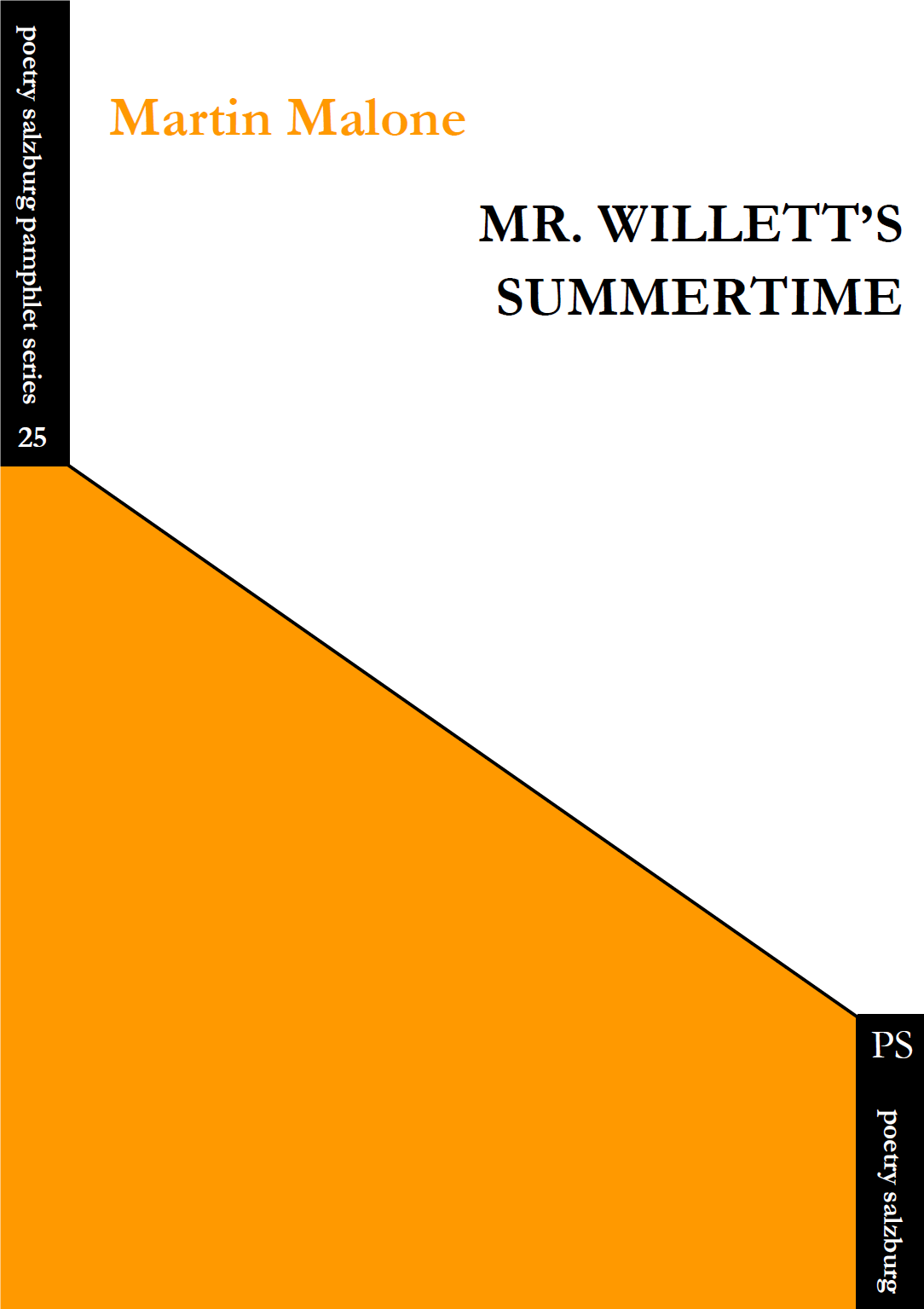
Mr. Willett's Summertime

Martin Malone

lives in north-east Scotland. He has published two poetry collections: The Waiting Hillside (Templar, 2011) and Cur (Shoestring, 2015). His Great War-related third collection, The Unreturning is forthcoming. In addition, he has published three pamphlets: 17 Landscapes (Bluegate Books), Prodigals (The Black Light Engine Room) and Mr. Willett’s Summertime (Poetry Salzburg). Poems from these and his other work have been published in a variety of journals; such as Stand, Strix, Poetry Ireland Review, Acumen, Agenda, Poetry Salzburg Review, Long Poem Magazine, Magma, The Moth, Gutter, Butcher’s Dog, Under The Radar, Lighthouse and Bare Fiction. He reviews for The Interpreter’s House, Stand, Causeway/ Cabhsair and Poetry Ireland Review. An Associate Teaching Fellow in Creative Writing at Aberdeen University, he has a PhD in poetry from Sheffield University.

The Interview

1. What inspired you to write poetry?

You know I really can’t recall now. Something I always say to my students is that, after painting the tally on the cave wall, I think the very next thing humans do is try to physically construct their thoughts and poetry is the readiest reckoner there is for that. I’m not trying to be glib. I think almost everyone is in love enough, or grieving a loss enough, at some point in their lives to turn to getting their thoughts down on paper in what can best be described as a poem. This struck me, when 6-months after my father’s death, I came across some writing by my mother in which she was dealing with her grief and which could be best-recognised as poetry. My mother left school at 15, she’s not educated in the traditions of ‘the Muse’ but its elemental template produced poetry in her at a moment of extremity. So, I think the ‘inspiration to write poetry’ is pretty much hard-wired into us all.

Beyond that, I was always – and remain – a weird kid whose aspirations were skewed in this direction, somehow. So, I always wrote stuff, as many of us do in our teens. And, like most of us, I stopped. My particular reasons for doing so were possibly tied up in the same issues of permission that get so over-performed these days on social media. In my case, here was I, a working-class kid from the north-east, the first of my family to go to university and studying – of all things – English Literature. Faced with ‘the canon’, I simply took my ball home and drifted towards what appeared to be more egalitarian artforms: specifically, rock and pop. For 20-years, I detoured around bands, music production, song-writing, singing, gigging and the like. Until I found myself, at 42, feeling the law of diminishing dignity kick in, suddenly stumbling across the complicated epiphany of fatherhood on Uffington Hill, and emotionally ready to write poetry. So, I did.

2. Who introduced you to poetry?

First, the Catholic Masses I was dragged to 3-4 times a week, then Dad’s Irish and C&W records. Thirdly, school and two great teachers I had at English Martyrs Comprehensive in Hartlepool during the 1970s. Gerry Brean was a great wee fella from Belfast who taught me ‘O’ Level English Literature and who I would love to have a pint with now if I could track him down. If only to thank him for taking us all to see The Clash. Secondly, Bob Lewis, who taught me at A-level. He had a brilliant back-story, an arch sense of humour, warned me about Tony Blair from the get-go and who I did once track down, to a home for retired teachers in Bishop Auckland. I took him my first collection. Tragically, he’d had a stroke and all his language would then allow him was a broad smile and the words, ‘Yabba-Dabba-Dooh!’ Life has a sadness you can’t invent sometimes.

3. How aware were you of the dominating presence of older poets?

Awareness is a state that’s all-too-often retro-fitted to make ourselves look smarter than we are. I suppose, like most of my generation (certainly the few of us working-class kids who made it as far as university), I just accepted what was put in front of me and said ‘Thank you’ for some great poetry. This was the late-70s/ early 80s, debates about canonicity, cultural hegemony and the end of Leavisite hierarchies were only just beginning in this country, really. It’d be self-serving and disingenuous to pretend that I was ‘hip’ to the sort of conversations we take as read these days. What I will say is that Nine Modern Poets nurtured a love for poetry and introduced me to some fucking good stuff. And when I got to university, Liverpool had a very traditional English Literature degree. I read Beowulf in the original Anglo-Saxon, for goodness sake. But absolutely none of it went to waste. And, overall, I like older poets. When I interviewed for my MA at MMU I told them: ‘Well I’m alright up until about 1925 but after that, you’ll have to educate me’. And they did. I’ve seen some outrageously high-handed and censorious social media posts these past few years, attacking people for daring to have the genuine preferences they have, rather than falling in behind the latest current consensus on what we ought to be liking. People can no more help their age, gender and cultural inheritance than they can their sexuality, intersectionality or skin colour. We’d do well to remember that. Many agendas are rightfully (underlined, italicized and in bold) having their moment, but I fear that many folk who presume to speak for them are utterly misusing this moment (all-too often for their own short-term gains). It ought to grieve us: firstly, because they’re seeking to replace a wrong-headed culture with another wrong-headed culture, secondly because change must come but not like this, sweet Jesus, not like this! Send us a way forward other than this petti-fogging shit-storm of tedious social media performance. It’s so co-opted and middle-class. We tend to connive in what we deplore, in order to deplore in what we connive. Many of the people who embody the issues others purport to speak for are still voiceless, by dint of social inequality and the evils of rampant capitalism above all else. If that viewpoint damns me in the eyes of the current ‘scene’, then so be it. I’ll away to their gulag. If it’s problematical, then good! Part of poetry’s function is to stick in the craw, not to nurture some bogus notion of a ‘career’ and harvest consensus in the form of social media ‘likes’.

4. What is your daily writing routine?

Don’t have one. Not through mere hobbyism, lack of discipline or work ethic but sheer opportunity. For all my education and cultural mobility, I still face the sort of life-economising my father did: I have to work full-time for a living, look after my wee son, live in as harmonious a manner with my rapidly dying planet as I can, and look after my ageing mother as best as I may also. I write when I can and afford myself a wry laugh at this state of affairs.

5. What motivates you to write?

Well, that hard-wired human thing I alluded to earlier and the same sort of weirdness which motivated me as a kid. It’s a mixed blessing really. But I’ll be doing it until the day I die.

6. What is your work ethic?

See my earlier answer. I hope I’ve modelled a fierce work ethic when it comes to writing, editing and teaching against the backdrop of need for full-time employment elsewhere, in order to put food on the table. But who knows, really? I’ve not had to go down the pit or work in a shipyard like my Dad. However, you cut it, I’m lucky in that.

7. How do the writers you read when you were young influence you today?

Well, it’s akin to the music you love when you’re young, isn’t it? That Camus quote which Scott Walker uses on the cover of ‘Scott 4’: “A man’s work is nothing but this slow trek to rediscover, through the detours of art, those two or three great and simple images in whose presence his heart first opened.”
Their influence, then, is lingering: Ted Hughes, R.S. Thomas, Wilfred Owen, Gerard Manley-Hopkins, Thomas Hardy, D.H. Lawrence, Seamus Heaney. As well, interestingly, as Jane Austen, George Eliot and an amazing Victorian novelist called Margaret Oliphant, who bequeathed me an aspirational model of work in the face of insurmountable domestic odds. Then, there’s Shakespeare. There’s always Shakespeare… And a huge list of inspirational songwriters and bands. How could they not exert an intricate complex of lingering influences? I mean, my most recently published poem is about sitting around in Liverpool waiting for an REM tour to come to town.
8. Who of today’s writers do you admire the most and why?

Many of them might be novelists, actually. I love John Irving, who has much to teach poets. I think James Hawes entertainingly chronicles where it all turned to shit back in the nineties and noughties. I respect where my old mate, Peter Mills, is trying to take writing about rock music. For all we have our personal differences, I think Kim Moore’s poem ‘My Sort’ says something important, and importantly inconvenient, about the white working-class. I have a number of friends whose work I massively respect: Roy Marshall, Keith Hutson, Richard Skinner, Neil Young, Chuck Lauder, Christopher James, Dawn Gorman, Virginia Astley, Hilda Sheehan, Carole Bromley, Sharon Black, Robin Houghton. All of whom are labouring away quietly, in possession of no little talent, and enriching the scene significantly without picking up any of the baubles used by the publishing industry as its selling tools. But once you start with this it becomes a bit of a list. There a lot of good and under-rated people out there who deserve more attention. In terms of ‘famous folk’, Patterson is pretty good, Simon Armitage is, well, a bit of a genius really, as is Robin Robertson. Niall Campbell is the real deal, as is Zaff Kunial, Dan O’Brien and Kei Miller. I am a huge fan of both Frances Leviston and Vona Groarke, among others. I’m a sucker for Irish poetry, adore Heaney, Muldoon, Derek Mahon and Michael Longley. I’m always conscious of who I might be leaving out when asked questions like this. The poetry commonwealth is rich isn’t it? I’ve not even got beyond these shores yet…. As to ‘why’, we’ve just not got the space here to answer that one.

9. Why do you write?

There is absolutely no logical reason for my doing so, just an inescapable necessity that always outruns me. Frankly, it’s a pain in the ass, at times but I certainly wouldn’t change it. Writing, when it’s going well, makes you bombproof. Even when it’s not going well, it’s good. As Ted Kooser points out, when you’re writing a poem, there’s one less scoundrel in the world.

10. What would you say to someone who asked you “How do you become a writer?”

I’m pretty sure you know if before you turn your thoughts to ‘how’. If it’s the other way around, then… well, I’d not presume to say it doesn’t work but it would work in a way I can’t fully comprehend. The advice I was always given as a sound-engineer was Just don’t do it, it’s a nightmare. Given that, if you still want to do it then you’ve a chance of making it work. If you’ve not the leg up of nepotistic advantage (as in all walks of life, there’s a lot of it about), then the same advice holds for writing also. I could talk about things like ‘always keep your eyes open, notice things, maintain your openness to new ideas, viewpoints etc’. Or suggest daily writing exercises, workshops, courses, reading lists. But, really, there are loads of ‘How-To-Be’ books out there. Go buy some of them.

11. Tell me about the writing projects you have on at the moment.

Well, I am being ultra-patient in trying to place my latest collection – which has been written for 18-months – with the specific publisher I’d like it to come out with. Beyond that, I’m simply using the interim as bonus time to start sketching out directions for my fourth and fifth collections and accumulating some new material, as and when it appears. I did a wonderful month’s residency at Sumburgh Head lighthouse on Shetland back in April and the handful of poems I got written there are coming out as a Stickleback micro-pamphlet with Hedgehog Press some time next year. As I say, I find myself with a pair of new collections on the go: The Trick of Stars which is just a steady accumulation of material I like, and a more thematically linked set of poems to do with my time in bands and as a fan of rock n’ roll. Away from poetry, I continue to write a fair few reviews for journals like Poetry Ireland and Stand, I’m putting together a bid for a Leverhulme Fellowship in order to write a book about the influence of Punk and Post-punk on what could loosely be described as the ‘Armitage generation’ of poets, and I’m hoping to find time to complete my critical monograph on Great War poetry, Lighted by Troy’s Last Shadow. If I get through all of that, it’ll be time for a rest…and maybe a novel.
Wombwell Rainbow Interviews: Kola Tubosun

Wombwell Rainbow Interviews

I am honoured and privileged that the following writers local, national and international have agreed to be interviewed by me. I gave the writers two options: an emailed list of questions or a more fluid interview via messenger.
The usual ground is covered about motivation, daily routines and work ethic, but some surprises too. Some of these poets you may know, others may be new to you. I hope you enjoy the experience as much as I do.

EBH Cover

Kola Tubosun

PembrokePoster


The Interview


When and why did you start writing poetry?


I remember the first poem I wrote: a sappy patriotic sonnet about Nigeria, in 1996, for a poetry competition in my penultimate high school year. I didn’t win. It was a vacuous poem, with overly simplistic aspirations, but it was my first attempt at the form, so I was really proud of it. I had just discovered a book about English poetry from a neighbour who was studying English at the university. I found Shakespeare, and the Sonnet, to be really riveting. A few days later, I wrote another poem, in another form, about slavery. Also very platitudinal, but quite structural: couplets and all. I was really enchanted by formal structures, because that was my first entry point.
My father had The Complete Works of Shakespeare in the house, along with many other books, literary, romance, educational, and other texts, in both Yorùbá and English. I mention him often because it’s interesting to not have paid that much attention to poetry until a neighbour lent me his English poetry textbook, many years after I no longer lived with my father. He was a poet himself, my father, but he wrote (and recorded and produced records) in Yorùbá. So, while I already had sufficient intimation with poetry, oral poetry, oral Yorùbá poetry, my encounter with English and my intention to write it came much later.
So, I started writing because I loved what Shakespeare and Marlowe and Wordsworth, Donne etc did with words on the page through structural forms. I wanted to be like them. I wanted to rhyme and make music with text. I wanted to impress my elderly neighbour, who didn’t write much outside of the confines of school, to show that one didn’t need to be in the university to be a poet. It was also then that I chose the university he attended, as my future institution, but I wanted to make sure that I had a collection of poems before getting in. I had the fantasy of walking into my first poetry class with poems of my own (perhaps in hope that I be allowed to graduate early for having already mastered the form. Youth is for dreaming, you see).


How aware were and are you of the dominating influence of older poets?


As usual, this will be answered in two parts: Yorùbá and English. The tradition of Yorùbá poetry under which I was raised was very strong. I was on the frontline to this, so to speak. My father had a record company that produced some indigenous Yorùbá poets, the first time that was being done since the invention of electronic documenting systems. Their work straddled both traditional and contemporary styles. Traditional because these were poets, chanters, and performers whose audience had hitherto been live crowds within the country. Contemporary because the vinyl and cassette had then offered a means to connect their work to the modern world, and it did. So while my father became a type of medium and curator for these movements, I was there merely as a witness, soaking it all in, and it would influence me a lot much later, in a lot of different ways.
But I assume your question was regarding English language masters. Shakespeare and the earlier structural poets I alluded to earlier were very strong and immediate influences. Much later, I would read about Wọlé Ṣóyínká whose work, at the time, was defined by its inaccessibility. There was also Christopher Okigbo, JP. Clark, and many other Nigerian and African poets whom we had to read to get into the university, and while we were there. I found it very hard to relate to many of these Nigerian/African writers at the time, a problem I now relate to the language medium. Either my competence in English wasn’t yet strong at the time or they were creating ideas from local idioms and images which didn’t successfully or elegantly pass through in English.
The work were often tough to get through, often obscurantist, and yet very large in our imagination. But I couldn’t relate with them much. They didn’t have the joy I found in the literatures written in the first language, English or Yorùbá. Not all, but many. It was in this middle point that neither satisfied as deeply as local language work would have nor inspired as much as native English writers would have. This would get better, much later, with writers like Níyì Ọ̀ṣúndáre who managed to bridge the divide and localize and domesticate English, so to speak. Akeem Lasisi, a Nigerian writer, is another one like this, and a few more. But at the time, I never understood what made African poetry in English any special, any better than serrated pain on the page. 


What is your writing routine?


It depends, usually, on what is being written. With essays and other long forms, I prefer early morning or late nights. Get the words out, let them marinade, and return to them later for editing. I have a four-year-old so this is also very pragmatic.
With poetry, it doesn’t much matter except that they be set down as soon as the inspiration comes. There is a common curse among writers that ensures that a writing material isn’t nearby when an idea floats by. My mobile phone has helped mitigate this. Get the sentence out into any text app. Work on it later when I get on the computer. Sometimes I just send it to myself as an email.
I used to write longhand, on paper, but I’ve stopped trying to fight the inexorable march of civilization.


What motivates you to write?


Like every writer, I want to be heard and read. As a non-commissioned historian, I also want to document what I see, what animates me, what interests me, for others’ pleasures and inspiration, and for my own future self, because memory is unreliable over time. I live in Nigeria where history has been degraded both as a school subject and as a concept in civil society. I write to help preserve and enhance collective memory. Much of my essays and long-form journalism have stemmed from this impulse.
I started a travel blog in 2009 as a way to document my travel adventures in the United States. Over time, it became a space for documenting my own frustrations, triumphs, and other journeys. But it is a record of time, of my personal evolution both as a writer and as a citizen. I wrote my collection of poetry Edwardsville by Heart to interrogate America and my own memory of living there. I wrote it to claim my space in the world as a writer, and an African (a Yorùbá man) unbound by any particular limitations on subject or geography or language. On some level, I also wrote it to put the town on the literary map. New York and London have got enough air time.
I write because I have to, and because I can, and because readers exist to whom these words might mean something.


How do the writers you read when you were young influence you today?


It will be a tough task for the writer to pinpoint his own influences, mostly because we are too close to the subject and are thus not impartial nor even always accurate. I can trace my love for rhyming to Shakespeare, for instance, but I haven’t always rhymed in my work. I could trace my love for travel writing to Mark Twain or Jack Kerouac or Daniel Fágúnwà whom I read or Ọlábísí Àjàlá whom I only heard about, but there are obvious divergences. I was influenced a lot by Yorùbá oral poetry, but I haven’t published much in the language. So it’s safe to assume (or hope) that the influences on one’s work have transmuted into one’s own voice such that we can’t tell when one ends and the other begins.


Who of today’s writers do you admire the most and why?


I can speak instead of particular books I have read in the last couple of years which made strong impressions on me: The Idiot by Elif Batuman, for instance, is one, for her skill in carrying a fairly mundane plot (or lack thereof) through an engaging style that sustained the attention of both the nerdy linguistic and creative parts of my brain.
Then there is Akwaeke Emezi’s Freshwater, which gives a new, modern, and fascinating insight into the concept of Ogbanje/Àbíkú, which earlier African writing masters have addressed in a far less involved and archaeological way. I also just recently read J.P. Clark’s America Their America, which I highly recommend as an important work on African travel writing and just delightful literature. It hasn’t got as much respect as it deserved. I usually like to add in Surely You’re Joking Mr. Feynman!as well, though it’s not a contemporary book. It is one book I read again every couple of years, for its beautiful tour of the mischief and genius of the world’s most famous theoretical physicist.
Lọlá Shónẹ́yìn is a contemporary writer I admire for her gut and grit. She runs two annual literary festivals and a bookstore in Nigeria, while being a poet and novelist herself, and has provided opportunities for many upcoming writers. Yẹ́misí Aríbisálà is also worth mentioning, and reading, here, for her understated brilliance. Get her book Longthroat Memoirs, which gives a delightful insight into the Nigerian gastronomic imagination. Third would be Nnedi Okorafor, for her seemingly boundless energy, and for showing the delightful possibilities of African science fiction.


Why do you write, as opposed to doing anything else?


I do many things else, actually. I just write, nevertheless, because I make better sense of the world that way. 

What would you say to someone who asked you “How do you become a writer?”


I’ll say that if you find yourself being very curious and imaginative, being unsatisfied with neat answers and explanations, often looking to mentally create alternative endings to real life scenarios, or to dig into answers for further questions, or to document what you see, feel, and experience for others’ or your own benefit, you might already be a writer. What makes you become one is what you do with that impulse. Often, the right answer is that you just write.


Tell me about the writing projects you have on at the moment.


While in the shower in Catalonia a few days ago, I got an idea to begin work on a manuscript about a time of my life from 2004-2010 and surrounding years and related tumults with personal, societal, and national significance. I don’t know if I will write it or whether I will write it soon, or whether it will be poetry or prose, but the seed has been sown, and I know what the book is going to be titled.
I also have a manuscript of interviews with some of my favourite African and non-African writers. Need to sit down someday to complete work on it, so others can read it as a contribution to the documentation of contemporary thought around creative writing on the continent.
And, of course, there are a number of unnamed and uncompleted manuscripts around my computer, waiting to be returned to, given the right atmosphere and motivation. I was recently shortlisted for a prestigious writing scholarship, (https://milesmorlandfoundation.com/morland-writing-scholarships-shortlist-2018/) the outcome of which will, really, determine the next eighteen months of my writing life.

3 spooky seasonal pieces published by The Octopus Review

Wombwell Rainbow Interviews: Gwil James Thomas

Wombwell Rainbow Interviews 

I am honoured and privileged that the following writers local, national and international have agreed to be interviewed by me. I gave the writers two options: an emailed list of questions or a more fluid interview via messenger.
The usual ground is covered about motivation, daily routines and work ethic, but some surprises too. Some of these poets you may know, others may be new to you. I hope you enjoy the experience as much as I do

Gwil James Thomas

is a poet and writer originally from Bristol, England but is currently living in San Sebastián, in Northern Spain. His work can be found widely in print and online in places such as 3AM, Empty Mirror, Outlaw Poetry, Expat Press, Punk Lit Press and Midnight Lane Boutique, amongst others. His poetry and fiction has also appeared in the following anthologies:Push: The Best of The First 10 Issues (East London Press).
Handjob Zine Anthology (Hi-Vis Press).
Sunny Side Down: A Charles Bukowski Tribute (Patchouli Press).His poetry chapbooks are as follows:Gwil vs Machine (Paper & Ink).
Hidden Icons & Secret Menus (Analog Submission Press).
Romance, Renegades & Riots – a split chapbook with the poet John D Robinson (Analog Submission Press).He is also the author of a published, but hard to find novel.Captains of Sinking Ships (Kenton).  He is the author of the short story collection Halfway to Nowhere (Strange Days Books) which was translated via the publisher and is currently only available in Greek! He has also read poetry alongside the likes of Joseph Ridgwell, Jamie Thrasivoulou, Susana Medina, Miggy Angel and Martin Appleby

The Interview 

Wombwell Rainbow Interviews
 
1. What inspired you to write poetry? 

I think that I was always a closet poet. I started off writing fiction and still do, but it took me a while to get into poetry. The first time that I felt inspired to write poetry was after writing lyrics for a band that I was in. I was/am a terrible musician, the band was a punk sort of lo-fi band, which was fitting for my musical ability. Despite that, we were unexpectedly signed and I remember being asked questions about my lyrics. I hadn’t really thought that much about it. The lyrics certainly weren’t stories – nor were they poetry, but they were naturally closer to poetry. I then realised the connection between music and poetry. Although storytelling was fun, I saw that poetry could be drawn from so many sources and took so many different forms. That initial inspiration stayed with me. Now, I might mentally see a poem as a song, a photo, or a painting, a conversation, or a vignette, or just something totally abstract. Ultimately of course, it ends up as words, or deleted – but the process is still what inspires me, it can come from anywhere and it tends to go in a way that it wants.

2. Who introduced you to poetry?

I’m not too sure. The reason I’m being vague is that when it was first introduced to me I couldn’t have cared less for it. My introduction was either through my nan – she was the only other person in my family who’d been truly interested in poetry and prose, or through a teacher. I’ve got a hazy memory of an English teacher trying to shove some sonnet down our throats in school. Not that anyone in that class including myself was taking any notice. I just thought poetry was pretentious, boring and weird. There was no way back then I’d have believed that it was a route that my adult self would go down. Not that I had any concrete aspirations either, like most it seemed in that class.

3. How aware were you of the dominating presence of older poets?

Most of the long gone and great poets felt far too distant for them to have much of a dominating presence on me. I suppose the exception of this would be Dylan Thomas. My nan had a few stories about him and when she’d lived in Swansea back in the day. But those were more about the mythologising of him, rather than his work.

4. What is your daily writing routine?

I don’t write everyday and I wouldn’t want to either. Writing is something that’s love/hate with me. I’ll typically write for five nights a week sometimes six. Usually this commences at about half nine-ish and finishes sometime around one. I’ll put on some music normally something without lyrics – classical, jazz, or some weird ambient shit. If there’s a cool beer, or several in the fridge, they’ll get cracked open, if not then that’s fine. I have weird sleeping patterns and usually one day a week I’ll go to bed early and wake up early too and write to the sunrise with a strong coffee. There’s a reason that these times are good for writing and that’s isolation. I can never write in the afternoons, it’s not even a social thing per se. Poets and writers need more in there life than writing 24/7. Sometimes not writing can be more productive than sitting down at the machine –  go outside, find a bar, read, practice five finger fillet, go for a walk in the mountains, take up a new hobby, live a little, get into some strange situations, if nothing else you’ll incubate ideas.

5. What motivates you to write?

A little recognition is nice, as is being able to hold something in your hands for the first time, watching it come together from nothing. But I’d say my biggest motivator is, not writing. If I go without it for long enough I’ll start to really hunger for it, as mentioned above. It’s a delicate balance, but as with many things it’s the distance between the temple walls that make the temple great.

6. What is your work ethic?

Work ethic? I’m not sure what that means in terms of poetry and/or the small press. I can work to deadlines if I choose to take them. Other than that I don’t like taking orders, giving them, or working to schedules. Try turning this into a ‘job’ and you might have some productivity, but ultimately it’ll most likely leave you disenfranchised and delusional. Which is sad really. Of course, there’s bigger names in the small press and smaller ones – but it’s still the small press and we’re all essentially in the same pond. Most people outside it don’t even know it exists. It’s this little known secret and that’s cool. Don’t get me wrong there’s some incredible talent in this pond. There are also some that deserve wider recognition and maybe the masses aren’t ready yet. There’s little to no money in this and I’m not one of the fantasists that thinks that submitting work to sites, blogs, zines, magazines, contests, or attending readings is a business. Nor do I suffer from the Van Gogh syndrome for that matter. Writing offers me a lot and the small press has been a great outlet. Of course, I wouldn’t turn my nose up at anyone paying me a salary, but being a full time poet would probably be best done by finding some other way, or source to fund it. If I had to say there was some game plan, that’d be much closer to it – or ‘the dream’. If that doesn’t happen (which don’t get me wrong I’m not holding my breath on it either) then this life is good enough for me.
 
7. How do the writers you read when you were young influence you today?

John Fante was by far my greatest influence. Despite being a fiction writer I loved the way that his words flowed like poetry. Poetry was still fairly alien to me when I first came across Fante, but his poetic style would definitely influence me. I had a novel published called Captains of Sinking Ships, that’s long since disappeared. It was a first novel in many ways, but I’d enjoyed writing it. There were many scenes and themes in that that’d be revisited and recur in my writing in both my own poetry and fiction. Many lines of that book were arguably poetry too, the epilogue for example is totally a poem. I got into poetry not long after reading Fante too.After that there was Dostoyevsky, McCarthy, Woolf, Orwell, Dan Fante, Kafka, Billy Childish, Calvino, Thomas, Carver and of course my link to the Fante’s was through Bukowski. He had a huge influence on me, like  90% of the writers in the small press.

8. Who of today’s writers do you admire the most and why?

I’m into a few contemporary mainstream writers and poets, but the ones that I admire the most are in the small press. Following on from my last answer, I first read Bukowski at around nineteen and started digging about for more information on the small press. Some of the first names I came across were Joseph Ridgwell and Hosho Mcreesh and was blown away by their work. They are tremendous writers and poets, but moreover they changed my perspective of what I thought the small press was at that time. Their books were hard to find and normally so limited that it was likely that you wouldn’t get hold of one. If you happened to come across one for sale second hand they tended to go for quite a bit too. Not only that but their books were more beautiful than any PDF could ever dream of becoming. At first, I considered that with the internet the small press had largely become a place where writers sent out work to every blog, or site that they could. Not in a negative sense, but I just thought that this was what it had felt like. However, Ridgwell and Mcreesh’s work was the opposite of that online world. These books were collectable and again given the fact that you might not be able to get hold of one, a publication could almost become legendary. Like hearing about a certain novel, or chapbook, but frustratingly or wondrously never being able to read it. I felt really inspired by this and as a writer I still try to publish my work primarily in print and if it’s featured in print I’ll leave it there for those reasons. But at the same time, part of me says don’t be too precious about it. It certainly works for some, but there’s also so many great names in the small press online. Names that I’d never have been able to get into properly, had I not been able to see a sizeable amount of their work online for free. I’ve had a lot of work featured online and I don’t want to get into online and print conversation in a polarising way, but it’s something that I’m on the fence with. Not only that, this answer would become even more lengthy if I truly went into it! So beyond Mcreesh and Ridgwell the following are writers/poets that I admire these days that would fall into both those camps, people like:
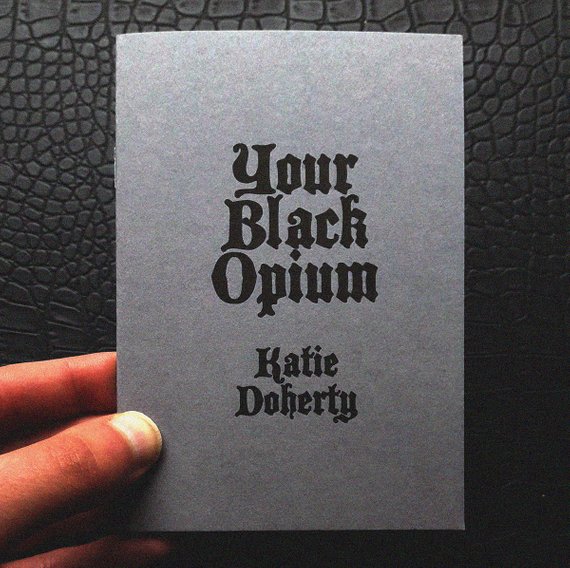
Jared Carnie, John D Robinson, JJ Campbell, Scott Wozniak, Marc Bruseke, Adrian Manning, Katie Doherty, Sam Pink, Martin Appleby, India Laplace, Dave Matthes, Ian Cusack, Ryan Quinn Flanagan, Jamie Thrasivoulou, Jim Gibson, Miggy Angel and Rob Plath.

9. Why do you write?

I’m still trying to work that out. But since it arrived in my life a decade ago, it hasn’t shown any signs of leaving. 

10. What would you say to someone who asked you “How do you become a writer?”

Realise that there’s probably going to be some sacrifice, or compromise somewhere down the line, if not starvation. Everyone’s path is different, but the choice of writer comes with its highs and lows. But once you get past that you’ll know whether this is for you and if it is then it’s a beautiful journey that’ll leave you experiencing things in a way that others never will. It’s a great fight. Don’t be discouraged by doing readings, it’s perfect way for testing out new material. Write for yourself and don’t let anyone try and discourage you, ever.

11. Tell me about the writing projects you have on at the moment.
 
I’ve got a forthcoming poetry chapbook Writing Beer, Drinking Poetry that’ll be published via Concrete Meat press and another planned poetry chapbook with Holy & Intoxicated Press. Both of which should be out next year.I’ve also got fiction and poetry coming out in the upcoming issues of Glove, Razur Cuts and Paper & Ink. I’ve been fortunate enough to be a regular contributor to the three of those print  publications. They’re cheap and sell out quick and are full of quality work, by many of the writers and poets I’ve mentioned in this interview.I’ve also got a novel which I’m trimming the fat on, which will be ready when its ready and a short story collection that’s near completion.Maybe in 2019 I’lll finally take the plunge with a website and/or a social media account… maybe. 

Wombwell Rainbow Interviews: Jack Grady

Wombwell Rainbow Interviews

I am honoured and privileged that the following writers local, national and international have agreed to be interviewed by me. I gave the writers two options: an emailed list of questions or a more fluid interview via messenger.

The usual ground is covered about motivation, daily routines and work ethic, but some surprises too. Some of these poets you may know, others may be new to you. I hope you enjoy the experience as much as I do.

Jack Grady

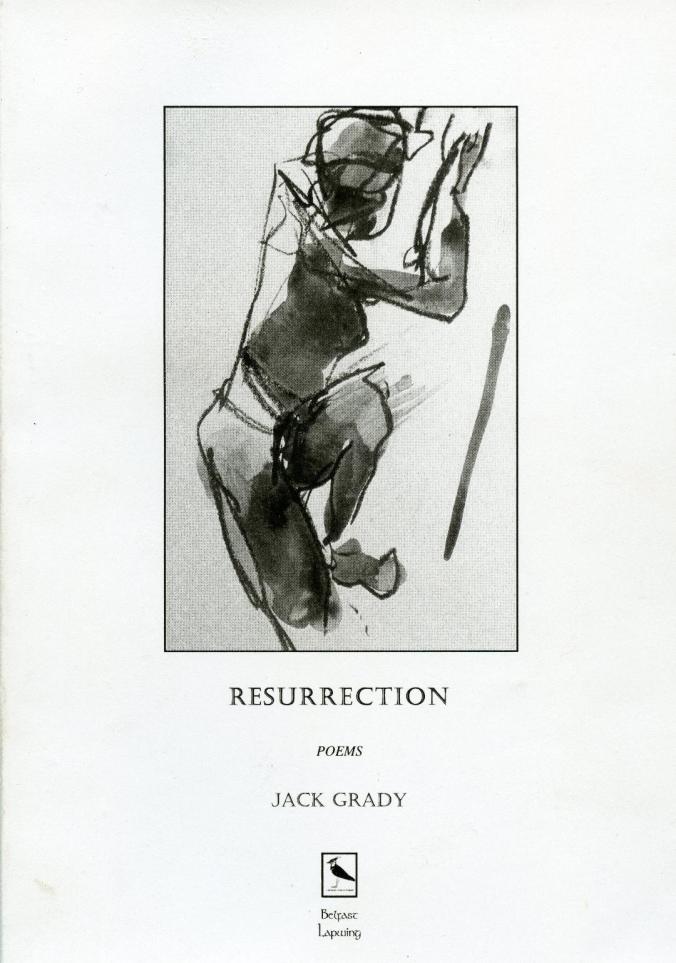
American-born Jack Grady is a past winner of the Worcester County Poetry Contest (Massachusetts, USA). A dual Irish and American citizen, he now resides permanently in Ireland.  A founder member of the Irish-based Ox Mountain Poets, his poetry has been widely published and has appeared either online or in print in Live Encounters Poetry and Writing; Crannóg; Poet Lore; A New Ulster; The Worcester Review; North West Words; Mauvaise Graine; Outburst Magazine; The Runt; The Galway Review; Algebra of Owls; The Irish Literary Times; Skylight 47; The Ekphrastic Review; Dodging the Rain; Mediterranean Poetry; and in the anthologies And Agamemnon Dead:  An Anthology of Twenty First Century Irish Poetry; A New Ulster’s Voices for Peace; Poetry Anthology Centenary Voices April 2016; 21 Poems, 21 Reasons for Choosing Jeremy Corbyn; A New Ulster’s Poetry Day Ireland Anthology 2017; Poesia a Sul 1; and 300K: Une anthologie de poésie sur l’espèce humaine.  He read in Morocco at the 3rd annual Festival International Poésie Marrakech, as the poet invited by its committee to represent Ireland, and he was invited to represent Ireland at the 3rd annual Poesia a Sul, in Olhão, Portugal.  His poetry collection, Resurrection, was published in Belfast by Lapwing Publications in October 2017 and was nominated for the T.S. Eliot Prize. 

The Interview


1. What inspired you to write poetry?

Brother Gerard, headmaster and English teacher at St. John’s High School in Shrewsbury, MA., USA ( a university preparatory school which Frank O’Hara also attended, long before me, of course). Brother Gerard told the class that the sonnet was the most difficult form to write, that is, if you follow the exact rules.  For some reason, I took that as a challenge, and wrote one poem in the Shakespearean form and another in the Petrarchan form (though, being inspired by French writers I was reading, I referred to it as a sonnet in the style of Pierre de Ronsard).I continued to write poems in older forms (and even language style) until I first read Allen Ginsburg’s Howl.  What a fantastic discovery that was!  I was liberated.  Nothing was sacrosanct.  Nothing was forbidden. I then wrote a Beat-style poem called Pigsty of Desire (long since wisely lost and forgotten), and then wrote a number of others in that style.  A friend of mine said Howl ‘was like buying pornography…It’s been called the birth scream of the Best Generation.’ And, indeed, it freed me from the limitations of pre-free-verse poetry.


2. Who introduced you to poetry?

That one I can’t answer. I imagine that it was one of my teachers in primary/elementary school, but I didn’t really take any notice of poetry until I attended St. John’s.

3. How aware were you of the dominating presence of older poets?

To me at the time, all the established poets were older than me. It only seemed natural that they would be the dominant ones.

4. What is your daily writing routine?

I like to start working as soon as I get up in the morning.  First, have a cup of coffee, but breakfast might have to wait a while, especially if inspiration immediately hits me. On the weekends, I get up quite early in order to get as much writing done before I have to do the usual weekend chores.  When I am free to work later in the day or at night, I often use that time in revising my poems. I also make sure I squeeze in some time to read the work of other poets as well, and I usually have one book of prose (sometimes fiction, sometimes factual, usually related to history) going on at the same time.

5. What motivates you to write?

The work of other poets, history, war or rather anti-war (I am a war veteran and am much opposed to war), old-time jazz, visual art, death, love, loss, empathy for all creatures great and small, and nature, or Gaia (particularly relating to the oneness of life and all things).

6. What is your work ethic?

Basically, it is to be diligent in applying myself to my craft as much as time allows and not to procrastinate. I also ensure that I work hard at revision.  Few poems, if any, are perfect at the first writing, and only a very small percentage get by with a few drafts.  In my case, I won’t hesitate to do a hundred or more revisions on a work until I am satisfied with it.

7. How do the writers you read when you were young influence you today?

Not so much. Every once in a while, I still turn to poets like Anne Sexton and Robert Bly, and to Seamus Heaney, whose work reinvigorated me, helped in my poetic resurrection; but, mostly, it is to poets that I have read more recently.One poet from the past who still inspires me, though, particularly with regard to any politically-related poems I write, is Kenneth Patchen.  He remains my poetic conscience.

8. Who of today’s writers do you admire the most and why?

There are so many of today’s poets I admire, including Adam Zagajewski, Nikola Madzirov, Tishani Doshi, Marvin Bell, David Lehman, and Guy Goffette, to name just a few of the many poets whose work I admire. I can also name innumerable Irish and British poets whose work I much admire, but the list would get too long. And then to explain why I admire each one would require a book in itself, and I wouldn’t want to leave anyone out.  So, I will choose one poet who has most impressed me over the past couple of years. It is a sort of tossup between Adam Zagajewski and Nikola Madzirov, but I’ll go with the younger of the two.Macedonian poet, Nikola Madzirov, is one of the best foreign-language poets writing today. The influence of history has had a major impact on his work, as it also has on mine. He is from a part of Europe which has endured centuries of conflict and destruction, even relatively recently. But he also knows that he cannot/should not be bound by history. He seeks an escape from his roots, from all that conflict and hatred that still lingers, if not simmers, in the Balkans.‘History,’ Madzirov says, ‘is the first border I have to cross.’  Just as in the Balkans, Ireland has a similar history, and the Irish also need to liberate themselves from the divisive borders of history. Know the history, but don’t be ruled by it. Madzirov’s spirit is a travelling one, one that goes beyond the limitations of religion, nation states, and ideology, to seek and find the oneness of being, the oneness of us all. I see in his imagery the influence of Transtromer. Madzirov’s poetry is full of startling images but is succinct.  He has a knack for finding that elusive Deep Image, the sort of image that all of us seek as a way to say so much, so many different things, with minimal words, with a single image. As a fellow poet who loves Madzirov’s work once told me ‘he makes me think’.

9. Why do you write?

Some spirit inside prods me. Call it a Muse. I am happy when I am writing, when I am producing work that I like, that I think is good (and I am not an easy critic on myself). If I don’t write at all, I am miserable. Writing is an essential part of me. Also, I think that, with all the depressing problems in the world today, poetry keeps me going, keeps my ship afloat. Poetry is my helmsman.

10. What would you say to someone who asked you “How do you become a writer?”

Read, read, read, and then try your hand at writing. But always read loads of other writers. Then, join a writers’ group, if there is one nearby, or start a writers’ group yourself. And don’t just read your work to each other.  Provide feedback to each other. Learn to accept criticism, get a thick skin; otherwise, you will shrink inside yourself and give up when you receive your first rejection letter.
 
11. Tell me about the writing projects you have on at the moment.

Well, one is a collection like my recent one, Resurrection, which will include poems on a variety of subjects, though some themes may dominate.  The other project originally started out as a sequence of poems; however, it has since expanded to the point that it will be an entire collection in itself, and it deals with one particular subject, a person who lived in the eighteenth century. The poems are written or will be written in her voice and those of other characters in her tragic story. The idea of putting these voices from the past into poetry was inspired by Edgar Lee Master’s Spoon River Anthology, Yves Bonnefoy’s Pierre écrite, Mary Madec’s Demeter Does Not Remember, and Susan Ludvigson’s Trinity.

Writing good comedy is an art, as is its delivery on stage.

I often enjoy listening to stand up comedy on TV, video or live. I admire the skill of weaving the stories so one joke pops up later in a different story unexpectedly. Or the twists and turns from one sentence to another. 

Another great skill is its delivery to a waiting audience. One or two of the following interviews will be with comedians.