Wombwell Rainbow Interviews: Gopal Lahiri

Wombwell Rainbow Interviews

I am honoured and privileged that the following writers local, national and international have agreed to be interviewed by me. I gave the writers two options: an emailed list of questions or a more fluid interview via messenger.
The usual ground is covered about motivation, daily routines and work ethic, but some surprises too. Some of these poets you may know, others may be new to you. I hope you enjoy the experience as much as I do.

Gopal Lahiri

was born and grew up in Kolkata. He has done his post-graduates in Geology from Presidency College, Kolkata and travelled across India and abroad in view of his job assignments. He currently lives in Kolkata.

He is a bilingual poet, writer, editor, critic and translator and widely published in Bengali and English language. He has had seven collections of poems in Bengali and nine collections of poems in English. His English collections are as follows and most of them can be viewed in Amazon/Lulu publications also,

Silent Steps (Cyberwit, Allahabad), Living Inside (Authorspress, New Delhi), Tidal Interlude (Shambhabi, Kolkata), Cities: Two Perspectives (Authorspress, New Delhi), Return To Solitude, Hawakal Kolkata) and Four Books (Flicker of Hope, Sandstone Corridor, Give You Back and Light and Shadow, Lulu Publications, USA)

Anthology appearances (among others) include National Treasures, Indus Valley, The Silence within, Indo-Australian Anthology, Homebound, The Dance of the Peacock, Illuminations. His works have featured in printed journals like Indian Literature, Taj Mahal Review, Tranquil, Triveni, Beyond the Rainbow, Ethos, CLRI, and Haiku Journal and in electronic publications Arts and Letters, Underground Window, Muse India, Setu, Dead Snake, Tuck Magazine, Debug, Eastlit, InkSweatTears, Kolkata Review, Madras Courier and Coldnoon Diaries.

He is also an experienced book reviewer both in English and Bengali and his Bengali poem and review has been published amongst others in the prestigious Desh weekly and The Telegraph Kolkata in the eighties and nineties. He is currently in the panel of reviewers of Indian Literature of Sahitya Akademi, (Print journal), Muse India and Setu online journals.

His translation works in Bengali Not Just Milk and Honey, (published by NBT, India), a collection of short stories of Israel is widely acclaimed.

He has jointly edited the anthology of poems: Scaling Heights and is the recipient of the Poet of the year award in Destiny Poets, UK, 2016 and also received featured poet award in Poetry In A Cup, USA, 2004 and a winner of Haiku in Poetry.com, USA, 2004.

41eOnNrmGrL._AC_US500_QL65_

The Interview

1. What inspired you to write poetry?

I got the influence of nature early on and I still love that. It means so much in my poems. I am happier writing about my childhood. But yes, I don’t think I could live without it, the childhood memory. The people and the surrounds are there who create the sound and silence. I observe, listen and inhale the atoms and molecules of life. This portal into the past is unlocked by poetry alone.

We know that poetry is the place where language performs. It’s hard to resist from finding patterns, from making something that connects and progresses from randomness. It’s what satisfies us when we really be able to make coherence and order, however tenuous, out of the disparate lines or images and evolve a poem. I create my own space inside in a closet where my personal and emotional experience are in search of breakthrough. Poetry is not always an end to itself but an echo of life and I follow that. I think there is space for both loose inspiration and informed engagement.

2. Who introduced you to poetry?

I fell in love with poetry during my school days and could understand that no other form is as nuanced as poetry. The aroma of poems flies me even now directly to the poetry classes where my teachers used to explain the meaning of poetry. The seed of interest was sown then. Social media was not there. Later I joined some poetry groups and started breathing poetry. The scents of poems evoked primal experience and aromas were the links that hold together all of us

3. How aware were you of the dominating presence of older poets?

Tagore is a towering figure in Indian literature especially in Bengali writings if I may say so. Poems, novels, essays, song, paintings and what not where Tagore isn’t there and one is stunned to get a feel. When I began to write poems, I looked to Tagore. But yes, I read Tagore and that is that and it is presumptuous to talk about the influence of Tagore. There were a few other poets who inspired me. I was wild about Byron in my early days. It doesn’t come in a moment. Later I took to Eliot, Pond, Dylan Thomas, Browning, Emily Dickenson, Sylvia Plath, Pablo Neruda, Langston Hughes, Philip Larkins, Dom Moraes, Nissim Ezekiel and a few others.

When I look back, I realise that poetry is a place in where many poets come and inspire me all at once. That’s always drawn me to my existence. It still does.

I love to watch and listen to the people in realms of beautiful earth, how the world is and how the world ought to be. Surely it’s not an extension of dreams but multitude of thoughts and given the opportunity, words and letters can create texture and rhythm and I feel that’s poetry.

4. What is your daily writing routine?

It’s certainly not ten to five job. I prefer night time to write and yes on my desk almost on a regular basis if I stay at home. I do travel a lot and the airport lounges, lobby, hotel rooms, even on a park bench are the places where I scribble on a piece of paper or type it in my cell notes. It gives a feeling of lightness, a sense of living to which I belong.

5. What motivates you to write?

In my thoughts, Poetry is a picturesque journey and I borrow the moments of pure soaring beauty from my surroundings to hit against the most ordinary in life. Then expand the bounds of connections that give us life. All these processes invite me to enjoy and It is good to recollect that we need one another, my soul and poetry.
I want to take my readers on a wonderful walk where a little rain is a downpour, where silence is a part of our essence, where a solitary mind is a chorus.

6. What is your work ethic?

It’s only hard work. Yes, I do set some values and try to follow that in search of truth in my poetry. Poetry is a journey and it’s a trip that leads me to wonder about how, ultimately we can get the most of our existences as conscious beings in the world. A part of me usually is there in my poems but not in all poems.

7. How do the writers you read when you were young influence you today?

Perhaps their influences are filtered through the lens of time for a sense of timelessness to be placed right beside on the contemporary plane.

8. Who of today’s writers do you admire the most and why?

Vikram Seth. He is an Indian poet and novelist. Golden Gate and A Suitable Boy are the two landmark modern classics. But I love his vibrant and lyrical poems more due to their musicality and the topics that they touched upon.

9. Why do you write?

Poetry is life. It is like a habit, it comes out seamlessly. I know I have to write. I believe it’s destiny. In my opinion, poetry can’t be hurried and the dominant sound is its quietness, its gentle collapse, its own unhurried music, its unsung harmonies. All my poems do not overtly address any crisis, nor any inventive desperation but the underlying suffering is palpable.

10. What would you say to someone who asked you “How do you become a writer?”

It’s difficult to answer in one go but may be a combination of many activities. It’s that mix of defiance, inclination and passion for poetry that makes me what I am today. Poetry is a part of my heart- a source of love, desire, pain and rage. We all know poetry can heal wounds too. There is no denying that it packs in a lot of emotions and needs to be celebrated at the end.

11. Tell me about the writing projects you have on at the moment.

My collection of Haiku and short poems has been published recently. I’m working further on new and a selected bunch of published poems, but it will take a while before the book will be ready for publication. Perhaps editing an anthology of poems will also be on my next agenda but nothing has been firmed up.
@gopallahiri hi

Wombwell Rainbow Interviews: Lisa Kiew

Wombwell Rainbow Interviews

I am honoured and privileged that the following writers local, national and international have agreed to be interviewed by me. I gave the writers two options: an emailed list of questions or a more fluid interview via messenger.
The usual ground is covered about motivation, daily routines and work ethic, but some surprises too. Some of these poets you may know, others may be new to you. I hope you enjoy the experience as much as I do.

Unquiet

Lisa Kiew

A chinese-malaysian living in London, L Kiew earns her living as an accountant. She holds a MSc in Creative Writing and Literary Studies from Edinburgh University. In 2017 she took part in the Poetry School/London Parks and Gardens Trusts Mixed Borders Poets Residency Scheme and the Toast Poetry mentoring programme. She was shortlisted for 2017 Primers mentoring and publication scheme. Her poems have been published in Butcher’s Dog, Ink Sweat and Tears, Lighthouse, Obsessed with Pipework, Tears in the Fence, The Scores and The North among other magazines and websites. Her debut pamphlet is coming out with Offord Road Books in 2019.
Her website is here: http://www.lhhkiew.co.uk/
Full details about her forthcoming pamphlet: https://www.offordroadbooks.co.uk/the-unquiet

The Interview

1. What inspired you to write poetry?

I’ve always been excited by the many possibilities of poetry, how it has open and closed forms, and how it is oral as well as written. I’m also inspired by the thin line between reader and poet. I especially love poetries that welcome in and make the reader a co-creator of meanings.

2. Who introduced you to poetry?

I studied poetry at school like many people. I was also lucky to have access to good town libraries and so made happy discoveries among their stacks.

3. How aware were you of the dominating presence of older poets?

The school syllabus was certainly dominated by the dead and the white back then.  It was harder to find those other voices and the internet and social media have made it easier to access poetry beyond the big publishers. We have a lot more diversity and I don’t think any generation dominates in the same way as it could even ten years ago.

4. What is your daily writing routine?

I get up early to read and write for an hour before I go to work. Sometimes it’s more reading than writing, and sometimes the other way around.

5. What motivates you to write?

Anything and everything! Words and phrases snag in my ears or in my eyes.  It can feel like an itch I need to scratch away at on paper.

6. What is your work ethic?

I like to keep at it. But it can be hard to fit writing around the rest of your life, especially if the day job is demanding a lot.

7. How do the writers you read when you were young influence you today?

I was influenced by Sylvia Plath and by Imagist and Surrealist poetry. I’m still interested in fragmentation and dispersion, breaking down and splintering apart the norms of language. I like the way small concrete details can take us to surprising places in our heads.

8. Who of today’s writers do you admire the most and why?

There are so many poets that I admire; I really admire what I think of as Northern American writers’ more conversational style and playfulness. I am really enjoying Heather Christle, Franny Choi, Victoria Chang and Yaya Yao. In the UK Hannah Lowe, Sarah Howe, Mary-Jean Chan and Jennifer Wong are helping me to think about my mixed cultural heritage. Singaporean poet Alvin Pang inspired me to explore different kinds of Englishes in my writing. Amy Macauley is prompting me to think more about performance and moving beyond the page.

9. Why do you write?

It’s one of the ways I think about the world. As a mixed-race woman and a migrant, I am always being forced to see myself through others’ eyes, by casual comments, what’s written and shown in the media. Poetry is one of the ways I reclaim my experience and represent it back. Being multilingual, I am fascinated by language and with poetry, I can pull and play across languages, registers and vocabularies.

10. What would you say to someone who asked you “How do you become a writer?”

I’d always say start by reading. It helps you find your voice, as well as showing you what there is to write in dialogue with and to write in rejection of.

11. Tell me about the writing projects you have on at the moment.

My pamphlet, The Unquiet, comes out with Offord Road Books in February 2019 https://www.offordroadbooks.co.uk/the-unquiet
I’m currently working on a project exploring the language used about non-native plant and animal species; it seems to be the time to think about belonging or not, and what that means for both humans and the other lifeforms we share this planet with.


Wombwell Rainbow Interviews: Lianne Futia 

Wombwell Rainbow Interviews
I am honoured and privileged that the following writers local, national and international have agreed to be interviewed by me. I gave the writers two options: an emailed list of questions or a more fluid interview via messenger.
The usual ground is covered about motivation, daily routines and work ethic, but some surprises too. Some of these poets you may know, others may be new to you. I hope you enjoy the experience as much as I do.

Lianne Futia

Lianne is a spoken word poet from North Wales who is fearless in tackling an eclectic mix of subjects, from the size of men’s waists to the degradation of women in the porn industry; there is no subject out of bounds. Whatever subject matter she takes her pen to, she does so with heart, truth, unapologetic wit, astute observational humour and a rawness that draws you in and binds you to her words…

Lianne was born and raised in North Wales by her single parent mother. As
the eldest of five children, she knows the hardship of being last in the bath on
bath night and the delights of corporation pop and sandwich paste butties.
Growing up on a council estate saw her embrace the calamity of a working
class upbringing, which armed her with the wit, passion and grittiness that she
brings to her writing. She writes with a strong working-class voice that proudly
resonates with audiences because of its astute emotional intelligence and a moving authenticity that people cannot help but connect with.
As well as being a writer and spoken word artist, Lianne is a qualified post
compulsory English teacher and she is currently studying an MA in Writing at
Liverpool John Moore’s University. But before any of that, Lianne is a mum. As a mother of four children, ranging from stroppy teen to tantrum throwing five year old, her experiences feature vividly in her work with a brutal honesty about the moments of triumph and disaster in being mum (and she is confident that there is always far more of the latter). Her honesty about motherhood gives hope to mothers everywhere that they’re not the only ones who have thought about running away at least a hundred times before breakfast. Lianne is currently working on a vibrant collection of contemporary, rhythmic poetry about pregnancy, motherhood, relationships after children and losing yourself in the madness of motherhood. It is raw, funny and often heart wrenching. It is impossible not to relate to the emotions it conveys. Lianne is aiming to complete this collection by the end of 2019.

Lianne is also currently working on a moving collection of memoirs interlaced with rhythmic poetry about her working-class childhood. It is emotionally charged with moments of drama, chaos, pain and laughter. This collection will near completion at the beginning of 2020.

Lianne writes memoirs and evocative traditional poetry laced with imagery and the ability to transport the senses, but she truly comes into her own when performing her almost lyrical, rhythmic spoken word poetry where her frank realism and often dark humour cuts to the core, emotionally shocks and inspires empowerment in equal measures. Since starting her spoken word journey Lianne has gathered a following after her many appearances at Voicebox – Spoken Word where she has performed on open mic alongside poets such as Sabrina Benhaim, Rudy Francisco and the formerYoung People’s Poet Laureate for Wales 2013-2016, Martin Daws. To watch some of Lianne’s performances you can find her on YouTube -https://www.youtube.com/results?search_query=lianne+futia
or visit her website where there are also links to her social media.
http://www.liannefutiapoet.com

The Interview

1. What inspired you to write poetry?

In truth, I can’t really answer that because I have been writing poetry since I was about ten years old, maybe younger, and I don’t remember how or why or where it came from, it just happened. I wonder if we had perhaps looked at poetry in school, though I can’t recall if that was the case. I don’t really even remember the first poem I wrote, but once I started it became my safe place if things were tough in life. These days I write poetry because it is intrinsic to my existence, it is instinctive, a compulsion if you like. It’s still my safe place, but also my happy place these days.

2. Who introduced you to poetry?

Again, much like the first response, I don’t really recall who first introduced me to it in my younger days, but I suspect it was probably following a task in primary school. I do recall reading Maya Angelou’s poetry later on in high school and feeling something stir deep within; an instant connection with the rhythm of it and the strong, female voice that bellowed from it and after that I started to write a lot more. Come to think of it there was also the poetry of T.S Eliot during my A levels, which spoke to me in a way that I had never felt before. It made me look at life beyond the surface level of things and showed me there was a more abstract way to navigate the world, people and feelings.

I stopped writing for a while when my children were very young because having had the first three children within three years of each other my focus in life shifted solely onto their care. I didn’t realise it at the time, but I was losing a little of who I was by ignoring that inner call to write and there was a growing void in my life. Then my art teacher from high school found some of my poetry when she was clearing her belongings from the school in preparation for her retirement. She kept hold of it for a while and then around two years ago she took the trouble of returning it to me. I had left it at the school around sixteen years earlier and forgotten it even existed. When she returned it to me, I read it over and over and then there was a strange moment of clarity; poetry was what I had always loved, and its absence was the growing void, the emptiness. And so, I began to write again, with a fierceness that I’d never had before. As corny as it may sound, I felt the pieces of me slowly come back together. So, I suppose she re-introduced me to poetry and I’ll be ever grateful to her for that.

Not long after I started writing again, I also started going to Voicebox – Spoken Word in Wrexham and reading my poetry on open mic. The first time was nerve wracking, but I think I was so elated to find my way back to writing that I felt it was a case of all or nothing, and I am so glad I did. Voicebox has been an amazing part of my life ever since and I have met some amazing creatives and have a place where my writing can come alive to an immediate audience, which has helped me find my place in the world of poetry – as a spoken word writer/performer. So, all in all I suppose my art teacher bringing back my poems reignited something and inspired me to start writing again, and the people I have met at Voicebox inspire me to continue.
3. How aware were you of the dominating presence of older poets?

Aside from those I‘ve already mentioned, I wasn’t aware of older poets at all when I was really young and starting to write poetry. Poetry wasn’t something that played a part in my family life growing up. In fact, nobody I knew wrote, read or had any interest in poetry, so apart from what I read in school I had no knowledge of other poets. These days I have a keen interest in the work of Sylvia Plath because its energy and conviction is like a visual representation of the madness, imagination, brilliance and chaos of every writers’ mind, in my opinion anyway.
4. What is your daily writing routine?

As a mother of four and currently studying an MA I don’t really have a daily writing routine as such because life is often rather demanding, so I have to work around many commitments. However, I do try to write something, even if it’s just two sentences, every day. It’s not something I can sit and force though, it just happens when an idea starts to germinate, or feelings niggle away at me, which is usually when I’m too busy to sit and write or when my hands are in the sink washing dishes. When that happens, I either scribble it on anything to hand or I grab my phone and quickly record those thoughts, words, rhymes, whatever it is that’s festering in me. I return to those scribbles and recordings as soon as I can to try to make them into something tangible, if I can. Often, they don’t become more than a collection of abstract, fragmented ideas, but there’s always the chance that they could become something wonderful one day, so I try to never let even the smallest flicker of an idea escape me. I suppose I am ever writing in my head, always.
5. What motivates you to write?

Those niggles that I mentioned in the previous answer, they motivate me. Well, motivate is the wrong choice of word really, they force me, compel me to write. It’s like an itch that I have to scratch, or it won’t go away. I suppose that sounds negative, it isn’t meant to be. It’s just something that I can’t ignore, it’s in me and has been since I can remember. I must write it or those tiny thoughts and tiny feelings bubble away and become uncomfortable. I don’t write for money (though of course it would be nice) and I don’t write because I necessarily want my work to be read or published (though again that would be bloody amazing). I write because I don’t know what else to do with the words that pop into my head at 3am. I write because writing is my place of belonging and the thing that keeps the pieces of me together.
6. What is your work ethic?

I have a very strong work ethic. Growing up as the eldest of five in a single parent family with very little money, I decided very early on in life that I wanted to work my way out of the benefits system and make my mum proud (bless me), so I have studied none stop since. As I mentioned, I’m currently studying my MA at the moment and it’s quite possible that I may continue onto a doctorate after that, but please don’t tell my husband as he’s had to put up with my high stress levels enough while I have been studying the MA and the PGCE I did two years prior.

I think having children has also strengthened my work ethic because I want my children to see that hard work, resilience and passion can achieve things, and if nothing else can give you a sense of purpose. They watch me during times of stress when I have deadlines to meet, they hear me rehearsing for performances in the distance, and sometimes mum is too busy to spend time with them, but they also know that mum is working hard to follow my heart and dreams, which is something I can only hope that they do too, that’s why I work hard.
7. How do the writers you read when you were young influence you today?

I have already mentioned Maya Angelou, but to answer this question I need to mention her again because it is her rhythm that sticks with me the most from the things I read in youth. Perhaps it is the reason that when I write I have a natural tendency towards rhythmic forms. I remember reading her poem Phenomenal Woman for the first time as a teen and feeling the beat of it moving through me for days after. Now in my own writing I don’t begin a poem with a fixed form or rhythm in mind, but it seems to organically develop anyway, and I can’t help but think that comes from the influence of Angelou’s poetry. It feels natural to write with rhythm and rhyme and I think this works really well for me given that I write predominantly for spoken word performance, which lends itself to rhythm.


8. Who of today’s writers do you admire the most and why?

I’m a big fan of Holly McNish. She writes with a lightness of touch that is both humorous and moving at the same time. I suppose it has that relatable nature to it. Likewise, Cat Moran is one of my favourites too. Like McNish, she is witty and raw, which is something that I aim for in my own writing.

I also enjoy the work of Kate Tempest, Margaret Atwood, and Jeanette Winterson, the list could go on, there are too many to mention. They are all very different writers, but the one thing they have in common is the strong female perspective, which I admire and aspire to.

9. Why do you write?

I write for the same reason that I eat or breathe, because I have to. That’s a pretty dramatic answer, but in truth writing really is something that I need in order to exist as a complete, functioning person. During those years that I didn’t write, as I spoke of earlier, I was incomplete, an emptiness was swallowing me. So, in order to avoid being sucked into that void, to keep the pieces of me together, I need to write. And it’s fun, albeit sometimes a lonely, self-indulgent pursuit.
10. What would you say to someone who asked you “How do you become a writer?”

I’m not sure, I’ll tell you when I’ve earned that title. No seriously, that’s a difficult one for me to answer because I am divided in my own thoughts about “becoming” a writer. If by writer you are talking about a career, I don’t feel I can call myself a writer yet because I’m not published, I’m not well known, I’m not making a living from it, so I can’t offer advice on it as a career. But, I suppose if you want to make a living from writing then like any other profession, you must learn your craft either through self-study, a course, a writing group perhaps, you must practice enough to make mistakes and discover your strengths, and then you must keep going, keep writing, work hard. Be resilient and enjoy it.
However, and this is where I struggle, if you mean writer in terms of it being part of you that compels you to take pen to page, then I don’t think you “become” a writer; you are either born to it, or you’re not. If you’re not though, that doesn’t mean you can’t do it. It’s like singing, some people are born with a raw talent and others refine what voice they have because they want it badly enough. Writing is the same and if you want it badly enough keep at it, but don’t forget to enjoy the process too.
11.Tell me about the writing projects you have on at the moment.

I am currently working on a collection of memoirs interlaced with contemporary poetry. It is about my working-class upbringing, which was sometimes turbulent, chaotic, traumatic even at times, but it was wonderful none the less. My memoirs will be raw, unapologetically honest and sprinkled with humour and sadness in equal measure. The work will celebrate the working-class voice, female strength and the ability to rise triumphantly from the dirt that life sometimes tries to bury you under. It is called Shaping the Cloth; Memoirs of the Madness that Made Me and I am aiming for its completion by the beginning of 2020.

I am also working on a collection of contemporary poems about pregnancy, motherhood and relationships after children because after having four of my own, I feel I am well placed to navigate my way through those experiences. It is poignantly personal, but it will resonate with women (and men) everywhere and like my memoirs it is raw, heartfelt, witty and will be written in my distinct rhythmic style. The collection is called A Mother Was Born.

I am always working on new material for spoken word events and in 2019 I will be performing at Focus Wales Festival for the second year running. I will also be popping up at various other events throughout 2019, which you can find details on by visiting my webpage http://www.liannefutiapoet.com or you can find me, Lianne Futia, on Facebook, Instagram and Twitter.

Many Thanks
Lianne X


Wombwell Rainbow Interviews: Glory Sasikala 

Wombwell Rainbow Interviews

I am honoured and privileged that the following writers local, national and international have agreed to be interviewed by me. I gave the writers two options: an emailed list of questions or a more fluid interview via messenger.
The usual ground is covered about motivation, daily routines and work ethic, but some surprises too. Some of these poets you may know, others may be new to you. I hope you enjoy the experience as much as I do.

47235951_347302832753573_445079936101777408_n

Glory Sasikala

(Born: January 6th, 1964) is a poet and writer residing currently in Chennai, Tamilnadu. She was born in Kolkota and did her schooling there. Her husband, who was a bank manager with Canara Bank, died tragically in a road accident in 2008. She has two children, a daughter-in-law, and a grandson.

The Interview

1. What were the circumstances under which you began to write poetry?

I was about 5 or 6 years old when we were taught the poem ‘Boats Sail On The River’ by Christina Georgina Rossetti in school and asked to learn it by heart. This poem is a deceptively simple one and it appeals to children because of the visual images it creates—of boats and rainbows and clouds. I was captivated by the imagery, and I felt I could write poems like that too. So I wrote a poem choosing as topic the discussion that was going on in my family at that time—a rather profound discussion about whether God really existed and how religions differed. I had my own opinions about the subject, and this I now used to write my first poem, titled ‘Our God Is The Best’. The poem was a conversation between two birds who argued about whose God was the best. They finally decide that all Gods are good. When I showed the poem to my father, he was much impressed and he made copies of it and gave it to all our relatives and friends. My father encouraged me to write poetry. I wrote nature poems mainly. People would come over to our house to hear me recite, and as a child, I felt special. But all this changed when my father died when I was 10 years old. I could not go on without his encouragement, and I was also teased at this time for my limited vocabulary. However, I could not stop writing as it came naturally to me. I continued to write, but I did not show my work to anyone. It was only after I took up literature as my subject in college that I was able to evaluate my own work, and I realized it was good. What I needed to work on was my vocabulary and information and skills. At this point, I started exhibiting my work again, and I also reached out to likeminded people and communities, which helped me grow as a poet and writer.

2. Who introduced you to poetry?

Not sure if it’s still prevalent in schools today across India, but during my time we had the Radiant Reader series as English textbook. Book 1 for Class 1, and so on till Class 10. And these textbooks featured a range of prose and poetry in each, carefully selected to appeal to a particular age group. And so, my introduction to poetry was through my textbooks. I don’t remember my first Radiant Reader, but I do recall that we had ‘Someone’ by Walter de la Mare in Class 2 and I was so very fascinated by this poem. I think the fascination was that there was no answer to the question. I really, really wanted to know who had knocked.
My father was from Burma, which had been under the British rule at that time. He and his 6 sisters and 2 cousins had formed a music band. His mother had wanted him to become a Catholic priest, but that did not work out. He sang very well, and what was more, he could play all musical instruments. His favourite instrument was the Hawaiin guitar. He had, for a while, remained a rather distant figure in my life because of his constant transfers to other cities and travel, and also because of my being the youngest in the family and so very small. But as I turned five, his attention was suddenly caught by the fact that I was, well, different. I liked the English language, I liked arguing, I had an opinion about everything, and I liked to learn. He started writing out lyrics in a notebook, making me learn them by heart, and then making me sing along as he played his guitar. Some of the earliest songs I sang were Knock knock (Tears of rain… (Mary Hopkins), Oh! Susanna! (I come from Alabama with my banjo on my knee…).

3. How aware were you of the dominating presence of older poets?

Most children of my generation will recall The Radiant Reader with nostalgia as it was prepared with careful consideration of the choicest prose and poems suited to each age group. I can still recall most of the poems by heart. I read ‘Some One’ by Walter de la Mare when I was in Class 2, and it stays with me. Then, of course, there was ‘Boats Sail on the Rivers’ by Christina Georgina Rosetti, which actually set me writing poetry for the rest of my life. The day ‘Daffodils’ (William Wordsworth) was taught in class, there was such excitement and full attendance. We loved dancing with the daffodils. And then there were ‘Elegy on the Death of a Mad Dog’ by Oliver Goldsmith, The Brook by Lord Tennyson, and so many more! My father was a huge fan of Edward FitzGerald’s ‘Rubaiyat of Omar Khayyam,’ and that’s been passed down to me.
Some of my favorite poets remain Robert Browning, Tennyson, Samuel Taylor Coleridge, Thomas Campbell, Milton, Shelley, Keats and others.


4. What is your daily writing routine?

I generally wake up at around 8 in the morning and am ready to face the day by 9 am, having had my morning cuppa. I make myself a good breakfast, and then am on the Internet for a while, especially on facebook. After that I alternate between making GloMag and writing. Then I walk for an hour or more, and then I have my bath and lunch and go and bring back my grandson from school. While he’s there, I clean up the house and then I take him out to play for a while. My son comes to pick him up by 7 pm, after which I do some shopping, post on the GloMag group on Facebook, and have my dinner. After dinner, I continue writing till maybe midnight, or sometimes well past midnight. I generally go to sleep very late, which is compensated by my waking up very late too.


5. What motivates you to write?

I write as easily as I breathe. I can’t stop writing because it comes that easily and naturally to me.
I’ve always been very vocal and opinionated, and my family was quite fascinated by my talkativeness. But in school all we were expected to do was learn lessons by heart. Creativity was reserved for the composition class. I discovered that I could write quite by accident, but once I did, it was the most exhilarating feeling ever. And then too, once I started writing, my father took a deep interest in it and encouraged me no end. He got me a diary in which I could jot down my thoughts. He introduced me to different genres of writing. I had written a play by the time I was eight years old, and a whole lot of poems. My father also made me read a lot of literature that was way beyond my years. I was only ten years old when he died. After his death, my sister took over monitoring my reading habits. She got me to read classics a lot. Later on, I took English literature as my subject in college. A strange thing would happen as I was exposed to the richness of the language. My mind would suddenly go into a creative mode, and I would be writing most prolifically. Most of my notebooks had a line drawn a little above the bottom of the page, and I jotted down my thoughts there. It was a kind of madness that prevailed or maybe exposure to the richness of the language opened up a different part of my brain.
And then, I got married at the age of 21, and believe it or not, I completely forgot I could write. I got so engrossed in raising my children and taking care of my family, and I had two babies to take care of. This impasse went on from 1985 – the year I got married – to 1994, when my daughter was two years old. Watching an Oprah Winfrey show one day, the topic being ‘how to discover your destiny’ and the expert said, all you had to do was ask a question, “what is the one thing I cannot fail at”. And sitting there, with my baby in my lap, I automatically answered, “writing”. And since then, I’ve not looked back. I ask myself that question so many times in a day, and the answer has consistently been ‘writing’. It’s an on-going journey.

6. What is your work ethic?

My work ethic is that I create from my heart and only what I believe in. I never say anything that I don’t mean. I also prefer the apt word to the grandiose one. I feel a word can have so many synonyms but there’s a subtle difference between each one, and what is suitable for one occasion may not be suitable for another. I find I’m not able to compromise on that. Something rankles in my mind till I go, “That’s it! That’s the word I want!”
I also believe that all genres of creativity are just communication. I also define communication differently. I believe that if something I’m saying does not get across to my listener, then I’m not communicating; I’m not sharing the right things with the right person. As such, getting my message across remains my responsibility, not that of my audience.
I also try not to put out negative vibes into the world. Readers take from my writings and I want them to take what will rejuvenate them and help them in any small or big way.

7. How do the writers you read when you were young influence you today?

I think what you read and experience when you’re young is what stays with you. It’s the foundation on which you build. I have this innate love for the English Language, and I’ve been blessed with very good teachers. I still follow the Wren and Martin format when it comes to writing prose, whether it’s writing a novel or a short story or an anecdote or other genres. That’s my foundation. I’m also much influenced by the classics. Having majored in English Literature, I am that blessed soul who got to read the works of some of the most creative minds.
In poetry, I’m most influenced by the famous Tamil poet, Kannadasan, and I try to emulate him. I fall short because of the sheer range of his genius. In English, I’m a huge fan of Lord Tennyson, and he’s been the biggest influence.
When it comes to prose, I think I’ve been most influenced by ‘To Kill A Mocking Bird’ by Harper Lee. The book is a single story and the reader is led gently through it, with every single chapter appearing to be a separate story or incident, with a definitive ending.
I try to follow that.
Another book that’s had a definite effect on both my writing and my personality is Godfather by Mario Puzo.

8. Who of today’s writers do you admire the most and why?

This is a hard question for me to answer because I’ve hardly read for pleasure in a while, and when I do, I tend to go back to authors whom I trust and have read before. As such, I can’t boast of having read much of the new works. I work as a language editor for scientific research as well as humanities. It’s a must that I read and edit 80 MS doc pages per day. That apart, there’s GloMag, which again, is a lot of reading. By the end of the day, honestly, I don’t want to look at some more written words for pleasure. I’d much rather go for a walk.
That said, however, I have read works by Vikram Seth, Salman Rushdie and Arundhati Roy, and I like all three, although Vikram Seth is my favorite. The language is simple and almost musical. I also like reading Chetan Bhagat books, again a very interactive style of writing. I haven’t had much of a chance to explore English and American writing except as part of my work (which is extensive) and would not like to comment.
All said and done, I’d conclude that my most favourite writers, and the ones I admire the most, are the writers on GloMag for obvious reasons.

9. Why do you write?

I write because I have no option but to write. I don’t know how to stop writing.  It’s been something I’ve been doing all my life, sometimes – most times – my only comfort. I write to create, vent, weep, pray, introspect, and everything else between.

10.  What would you say to someone who asked you “How do you become a writer?

To someone who asks me how to become a writer, I would say be a dreamer. Lie down and relax, close your eyes and dream. Because you dream only about things that fascinate you, and what fascinates you will fascinate the world.
Read a lot, pay as much, or more, attention to grammar. I truly believe language is more important than what you have to say. Add to your vocabulary all the time, and most importantly, don’t connect your writing to fame or fortune. Write only because you have something to say.

11. Tell me about the writing projects you have on at the moment.

I’ve been trying to bring out an e-book of my poems for a while now, but I’ve shelved it to concentrate on writing a novel, the first draft of which will hopefully be done by December. I am also serializing another novel on Setu Mag, an international online magazine. I would like to serialize another one somewhere else. That apart, I continue to edit and publish GloMag.

Onto Writing Comedy Wombwell Rainbow Interviews: Ian Woodrow

F WORD WARNING 

Wombwell Rainbow Interviews

I am honoured and privileged that the following writers local, national and international have agreed to be interviewed by me. I gave the writers two options: an emailed list of questions or a more fluid interview via messenger.
The usual ground is covered about motivation, daily routines and work ethic, but some surprises too. Some of these fiction writers you may know, others may be new to you. I hope you enjoy the experience as much as I do.
 

Ian Woodrow
 
I got into comedy when I lived in Manchester in the early 2000s. I was a contemporary of the likes of Jason Manford and Sarah Millican. They went on to fill stadiums while I went on to live in Wakefield. I didn’t perform onstage for a while after moving here for a new job, though I did perform comedy in the virtual world of Second Life for a while, which was quite fun. Then, about four years ago I got invited to see a mate from Manchester (Tony Kinsella, aka Bolshy Bard, who was performing with Bard Company) do Jackanory one time. Halima, who runs Jackanory, got wind I’d done comedy before so asked me to do a slot at an upcoming show which I was happy to accept. Since then I’ve done Jackanory a few more times, plus a couple of benefit gigs at The Red Shed, and some other general open mic nights around Wakey. Then, just over a year ago, I started my own comedy open mic night, Jockularity, which runs at Jolly Boys Real ale Cafe in the town and is Wakefield’s only monthly comedy night. I also do a comedy cooking blog, It’s Not Big, But It Is Clever, which is another outlet for my humour (though it is a serious cooking blog with actual recipes that work), but that’s taken a bit of a back seat of late as I’ve been not writing standup material at home of an evening instead of not writing blog updates.
During the day I’m a Clinical Scientist in the NHS, so as well as being a smart arse doing comedy in my spare time, I also pretend to be a smart arse for a living. As far as comedy goes, family commitments mean I’ve no ambition, nor have I the time, to go any further afield for gigs. I may have the odd foray somewhere not too far away, like Leeds maybe in the not too distant future. Links
My comedy night, Jockularity, is on Facebook https://www.facebook.com/JockularityWakey/ and Twitter @JockularityWfMy cooking blog can be found here: https://swearyfood.blogspot.com/This is a flyer for Jockularity
This is me performing at the Red Shed last year as part of We Shall Overcome
The Interview 
 
1. What inspired you to  start performing comedy?
 
My wife and I bought our first house in Swinton, near Manchester, and a local pub started doing a comedy night. They had some top headline acts but also some open spots on and I thought “i could do that”. I spoke to the guy running it, a comedian and actor called Toby Hadoke, and he arranged to get me an open spot at his weekly gig called XS Malarkey, which is often voted one of the best nights in the country. I largely died on my arse (to use the comedy vernacular), but the few laughs I did get were like heroin and I was hooked.
 
2. Who introduced you to comedy?

Toby, as mentioned above, and some of the other people who ran gigs around Manchester at that time. Besides that, the standup that got on TV in the 80s and 90s was a huge influence in giving me the kind of mind that comes up with one liners and wisecracks. The earliest comedians I remember that truly spoke to me were Billy Connolly and Dave Allen. Jasper Carrot’s style of satirical material from his show in the 80s had a big effect. Jo brand I always loved, Jack Dee, Ben Elton, Alexei Sayle, Joan Rivers, the list is endless. The Newton quote about shoulders of giants rings very true, except even with that greatness to stand on, I’m still fucking severely myopic.
 
3. How aware were you of the dominating presence of bigger acts?

There was a lovely camaraderie within the comedy circuit at the time. In the green room it’s quite egalitarian, so just hanging out with the bigger names was somehow calming.
 
4. What is your daily writing routine?

Dreadful. I’m incredibly lazy. I see that I’ve got a gig coming up (which mounts to the monthly open mic night I run in Wakefield at the moment) and try to produce a few minutes of topical material from recent news stories. I post one liners to Facebook when they occur to me and I try to use some of these in hammering out a routine
 
5. What motivates you to write?

It might be a bit of a cliché, but seeing what’s happening around me. The world and home political situation at the moment is so completely crazy, a lot of material  almost writes itself. In fact, there’s so much of the news that is so utterly bonkers that it wouldn’t make something like The Thick of It because it would have been deemed too ridiculous.
 
6. What is your work ethic?

Shoddy at best. I’m trying to form good habits and write more prolifically, spurred on by submitting material to radio shows like Newsjack on R4, but it’s a steep and slippery entropy slope to climb up. I’m a lazy fucker
 
7. How did the comedy you saw when you were young influence you today?

I’ve already mentioned a lot of the sort of thing that gave me my sense of humour. In terms of written work, Hitch Hikers Guide was a major milestone, showing me it was possible to use science to make people laugh. On film there was Laurel and Hardy, The Marx Brothers, Carry On films, Monty Python, The Airplane series. On TV there was Fawlty Towers, Not the Nine O’Clock News, Spitting Image and of course The Young Ones.
 
8. Who of today’s comedians do you admire the most and why?

I’ll lose my seat at the table of the liberal elite if I don’t say Stewart Lee. That he keeps getting primetime work is a testament to him, and also shows it’s possible to be intellectual, funny and (relatively) popular. I don’t get out much to see stand-up, but it does seem that TV is saturated with comics on panel shows, mostly white males, and largely interchangeable. I do like Katherine Ryan, Frankie Boyle, Kevin Bridges and even Jimmy Carr. Armando Ianucci is also a comedy genius and I’ve got a bit of a man-crush on Adam Hills. And, yes, I realise they are, bar one, white males, but only one of them is English and one of them is disabled.
 
9. Why do you do comedy?

It’s all about the laughs. I’m not crusading to change people’s minds about issues with a finely honed knob gag about Nigel Farage or Boris Johnson. Sure, they are dicks, but me saying that in a different, but more amusing, way isn’t going to change make you think differently about them.
 
10. What would you say to someone who asked you “How do you become a comedian?”

I’d say, to appropriate a corporate slogan, just do it. Find a local open mic night and give it a go. I’d also say don’t do it unprepared and don’t so it drunk. Write a routine, but make sure it’s original and practice it for days, if not weeks, before the show. Don’t rattle off a barrage Hicks, Kay, Lee or (God forbid) Manning material, find your own voice.

11. Tell me about the writing projects you have on at the moment.

Well, as I said above, I’m fucking lazy. I’ve got long-standing attempts at a sitcom, a couple of novels and a few sketches that will almost certainly never see the light of day, at least not before I retire. I’m on the periphery of the Wakefield spoken word circuit (and met some utterly wonderful people as a result) and I’ve been fleetingly tempted to write some poetry, but it’s not really my style. I could turn a finely crafted piece of satirical verse on the current status of the UK political situation, or I could just call jacob Rees Mogg a wanker. I know which would get the bigger laugh.


Wombwell Rainbow Interviews: Yvonne Ugarte

Wombwell Rainbow Interviews

I am honoured and privileged that the following writers local, national and international have agreed to be interviewed by me. I gave the writers two options: an emailed list of questions or a more fluid interview via messenger.
The usual ground is covered about motivation, daily routines and work ethic, but some surprises too. Some of these poets you may know, others may be new to you. I hope you enjoy the experience as much as I do.

https://m.facebook.com/video_redirect/?src=https%3A%2F%2Fvideo-lht6-1.xx.fbcdn.net%2Fv%2Ft42.3356-2%2F33098246_1732000920221960_3409161120316029802_n.mp4%2Fvideo-1543450508.mp4%3F_nc_cat%3D105%26vabr%3D1326201%26_nc_ht%3Dvideo-lht6-1.xx%26oh%3D1e0b24e97b099d19a2750bb8a4c2c778%26oe%3D5C012830%26dl%3D1&source=messaging&id=484616205360230&refid=12&__tn__=F

Yvonne Ugarte

I am 59 years young and work part time in a local primary school. I am a performance poet and do quite a lot of the open mic sessions in and around Leeds. I have also headlined twice …one in Pudsey and one in Wakefield.

I am one of the ‘four environmental poets’ who have performed in the Piece Hall in Halifax and also, earlier this month, in Harrogate. Been in several anthologies.

I’ve been on radio several times and am due to go on Drystone Radio in February with the host David Driver.

Plus I do main events in narrative verse for the school I work in
E.g. Fire of London and The Plague ..Plus the odd bit of ventriloquism.

‘Our journey with Emil’ was a community project from earlier this year 2018 with regards to Life, Loss, Learning and Legacy. It is about our personal journey with our son who passed away just before his second birthday. His dad..my ex husband..had never cried since we first lost him in 1998 .

At the end of the video I recite a poem that I wrote in Martin House Children’s Hospice where we were after he’d passed away.
They must’ve been HIS words, telling me that he was okay as there is absolutely no way..in the grief stricken state I was in..that I could have composed something as beautiful as it is.
One thing I do know is that love lives beyond goodbye.

The Interview

1. When and why did you start writing poetry?

I wrote my first poem at the age of five. I love words….I was brought up in care so this was a way of expressing what I was feeling.

Still use words for that reason now lol.
2. Who introduced you to poetry at age five?

Nobody. Just put words together…It was about a pixie. Lol

Little Pixie..Little pixie
Playing in the grass
The morning dew must seem to you a magic looking glass

3. How aware are and were you of the dominating presence of older poets traditional and contemporary?

I went to a grammar school where English literature piqued by interest in poetry. Wordsworth…Keats..­.Byron etc. Later, I immersed myself in the works of Oscar Wilde.

4. What is your daily writing routine?

If I feel it, I write it. Sometimes getting up at 4am to scribble something down !

4.1 What makes you feel it?

Emotion. Anger…sadness…de­spair…

Joy…hope…

4.2 At what?

Loss and pain …I lost my little boy to meningitis.
Anger and sadness..went to Auschwitz and Birkenau earlier this year. Despair and hope for the plight of our planet..the incredible creatures we share it with and the plastic pollution that’s choking our world Joy at hearing a birdsong..or see the buds of promise on the trees when Spring appears

5. How do the writers you read when you were young influence you today?

Their words ignited a spark inside me…I felt their passion and emotions. I do not write in the same way as any of them but I’m sure I was I influenced greatly by them over the years since my craft was developing.

Also, I was encouraged to take my writing further by my former English teacher when I was only fifteen. She saw something in my words.

5.1 Oscar Wilde, particularly?

Definitely…his wit and quotes are legendary, even used by many today. His stories and poetry have never been rivalled in my opinion.

5.2 How do you reckon he’s influenced you today?

I do try to put wit into some of my writing…he was not afraid to step.out of the box when it came to his use of words and I like to think i do likewise. He was a literary genius who was greatly maligned. He famously said EACH MAN KILLS THE THING HE LOVES but it was love that killed him. The Ballad of Reading Jail says it all.

6. Who of today’s writers do you admire the most and why?

Kate Tempest
Kevin Gilday
Phil Pearce
Too many to name!

6.1 What do those three bring to you?

Grit. Reality. Human angle. Humour and anger.

7.. Why do you write, as opposed to doing anything else?

I see it as an extension of me..as essential as the air I breathe. I am also a songwriter and great admirer of the late great Bowie whose lyrics and music really inspired me too.

There are enough restraints and expectations in the every day lives we live. No flowers grow on the path of normality.

8. What would you say to someone who asked you “How do you become a writer?”

Wait for the emotion. Your words cannot be forced. Then let each one unfurl like a flower on your page.

9. Tell me about the writing projects you have on at the moment.

I am being interviewed at home on the 13th December as one of my poems about the NHS has been selected for the digital archive to celebrate their 70 years ! They need to know what inspired me to write it.
Secondly, I am collating some of my poetry with a view to finding a publisher ! I self published a collection back in my twenties and sold all my copies. I used to give recitals at Townswomens’ Guilds etc.
Thirdly, I have some songs ready to be tweaked lol.
I co wrote a charity single three years ago which was launched at the White Rose to raise money for resources to send to Swaziland where the two children our school sponsors come from.
Another song I co wrote was performed at Leeds Town Hall in front of 1800 people and the Lord Mayor of Leeds.
I am 60 next year but no chance of me slowing down. Ha ha.

Thank you so much for giving me the opportunity to talk about what words mean to me.


Wombwell Rainbow Interviews: Julie Irigaray

Wombwell Rainbow Interviews

I am honoured and privileged that the following writers local, national and international have agreed to be interviewed by me. I gave the writers two options: an emailed list of questions or a more fluid interview via messenger.
The usual ground is covered about motivation, daily routines and work ethic, but some surprises too. Some of these poets you may know, others may be new to you. I hope you enjoy the experience as much as I do.

wp_ss_20181127_0001

Julie Irigaray

My poems appeared across the UK, the US, Ireland, Canada and Mexico. I was selected as one of the 50 Best New British and Irish Poets 2018 (Eyewear Publishing) and won third prize in the 2018 Winchester Writers’ Festival Poetry Competition. I was also shortlisted for The New Poets Prize 2018, the Mairtin Crawford Award 2018 and The London Magazine Poetry Prize 2016.

The Interview

1. When and why did you start writing poetry?

I started writing poetry aged fifteen after discovering the work of Arthur Rimbaud. I had hated poetry until then as the French way to teach poetry in school is very uninspiring: you just learn poems by heart and recite them standing in front of the class. I found Rimbaud’s work still relevant a century later and his language very powerful. I only started writing poetry in English four years ago after reading a biography of Sylvia Plath. I had already considered writing in English a couple of months earlier but didn’t allow myself to do so as a non-native English speaker. Plath’s poetry was very stimulating and I finally dared writing in English just for my pleasure before considering submitting my work to publications.

1.1 In what way was Plath’s poetry stimulating?

First, as a non-native English speaker, I found her work more challenging than the other modern poets I was reading. I think this is due to her peculiar use of the language in terms of vocabulary and metaphors. I was also attracted to the rhythm of her poems – a very distinctive feature of her work. She drew my attention to pace and pattern in poetry. I also admired her ability to master fixed form and free verse with such talent. But what I love the most about Plath is that she had a voice, or “duende” as Lorca called it. No matter whether or not you like her poetry, you cannot deny that something is going on and that she did it differently. I like the idea of poets having strong distinctive personas.

2. How aware are and were you of the dominating presence of older poets traditional and contemporary?

I was studying English in university at the time so I had some knowledge of “the classics” of American, British and Irish poetry. But of course I hadn’t read them in school so I was less aware of any English poetic tradition. I see it as both an advantage and a disadvantage: I had to work harder to “acquire” this legacy, yet on the other hand I wasn’t burdened by it. Additionally, I was familiar with other literary traditions and had access to poetry in other languages, which is another way to improve your craft.

As for contemporary poetry, I was rather ignorant of what was going on apart from the “big names” like Seamus Heaney or Derek Mahon. I spent a whole year compensating for my lack of knowledge by subscribing to literary magazines and reading as much contemporary poetry as I could, although it wasn’t easy to access and I couldn’t attend events or workshops because I was living in Italy.

2.1 How do the “other literary traditions in other languages” differ from the “English tradition”?

In the case of French poetry, rhythm and metrics are radically different from English. I remember my American teacher in Paris trying really hard to make us understand that poetry which doesn’t rhyme is still poetry (!) and that rhythm plays a more important part in English poetry. We really struggled to get when words were stressed or unstressed, what an iambic pentameter or blank verse were. In French poetry, a line is defined by syllables instead of stresses (the alexandrine meter, an hexameter…) The natural English pattern  is difficult to spot for a foreign ear. Traditional French poetry is also rather stricter in terms of forms (no wonder why they invented the villanelle and the sestina!). There is definitely more emphasis on musicality and rhymes than in the English tradition, but I suppose it is specific to Romance languages. For example, the traditional French sonnet should be irreproachable in terms of pattern (12 syllables with ideally a caesura in the middle), rhyme scheme (and with elaborated rhymes), form, and other musical devices (assonances and alliterations).

3. What is your daily writing routine?

I try to write prose for an hour “to warm myself up” before poetry, but to be honest I’m not respecting this routine these days… I have a huge batch of poems which need to be edited so I’m focusing on this at the moment. Normally I’m not as strict about how often or for how long I should write poetry each day but I have been very late so I need to catch up now!

4. What motivates you to write?

I believe I write for the sheer pleasure it gives me. The creative process, and talking about poetry as we are doing now, give me joy. Of course I also write when I don’t want to, or about things which depress me, but the initial impulse remains selfish pleasure. It’s physical, I can’t really explain why, but I have the urge to do it because I have no other choice.

5. What is your work ethic?

I try to have a strong work ethic with habits. I dedicate at least an hour or two per day to writing, but this schedule can become flexible if I need more time to work on a piece or if I’m not at all in the mood for writing. I naturally consider reading as an integrate part of being a writer, so I allocate some time to this activity. I don’t limit myself to poetry or literature as other subjects can generate a poem – my interests span from history to visual arts, religion to languages… I’m pretty open to anything.

6. How do the writers you read when you were young influence you today?

I was more influenced by novelists when I was young. My favourite novels as a teenager were those with a strong imagery, a rich vocabulary and a refined style, like Patrick Süskind’s “The Perfume”, Jeffrey Eugenides’s “Virgin Suicides” and “Middlesex”, or Carole Martinez’s “The Threads of the Heart”. Beyond the plot, these authors created a whole world thanks to their inventive use of the language and its richness. I’m very sensitive to metaphors and the use of symbols, so these influences probably found their way into my poetry.

7. Who of today’s writers do you admire the most and why?

Novelists I particularly admire include Zadie Smith and Elif Shafak. I like Zadie Smith’s style and the way she talks abouy human relations, especially between men and women. Elif Shafak’s novels always raise essential questions and their narratives are often close to tales. Both authors write about cultures I am not familiar with and this is also an essential part of what attracts me. I forgot to say that I’m jealous of Rachel Cusk’s prose style: I wish mine were as sophisticated! And her novels are almost philosophical.

I can only make a brief list of my favourite contemporary poets: Liz Berry, Kate Tempest, Paul Stephenson, Andrew McMillan, Malika Booker, Mary Jean Chan, Rakhshan Rizwan, to name just a few. I admire poets for their craft, the way they tackle universal subjects in a different way, their personal use of the language and imagery.

8. What would you say to someone who asked you “How do you become a writer?”

Don’t give up. Keep writing no matter what. Don’t hesitate to analyse and “copy” the writers you admire to understand why they are good. Be resilient: you might face rejection a hundred times being accepted somewhere, but it’s worth it. Being a successful writer is all about perseverance. Yet learn from your rejections: if editors systematically reject the same piece, work on it.

10. Tell me about the writing projects you have on at the moment.

Right now I’m editing around thirty poems I have completely neglected these past few months and it takes a lot of time. I was shortlisted twice for a pamphlet and poetry collection competitions this year so it might be a good time to assemble a pamphlet, bit I’m not sure I have poems that are strong enough, yet.. I’ll probably attend some workshops and writers groups first to get some feedback and guidance as this project might be a bit premature!


Wombwell Rainbow Interviews: p.a. morbid

Wombwell Rainbow Interviews

I am honoured and privileged that the following writers local, national and international have agreed to be interviewed by me. I gave the writers two options: an emailed list of questions or a more fluid interview via messenger.
The usual ground is covered about motivation, daily routines and work ethic, but some surprises too. Some of these poets you may know, others may be new to you. I hope you enjoy the experience as much as I do.

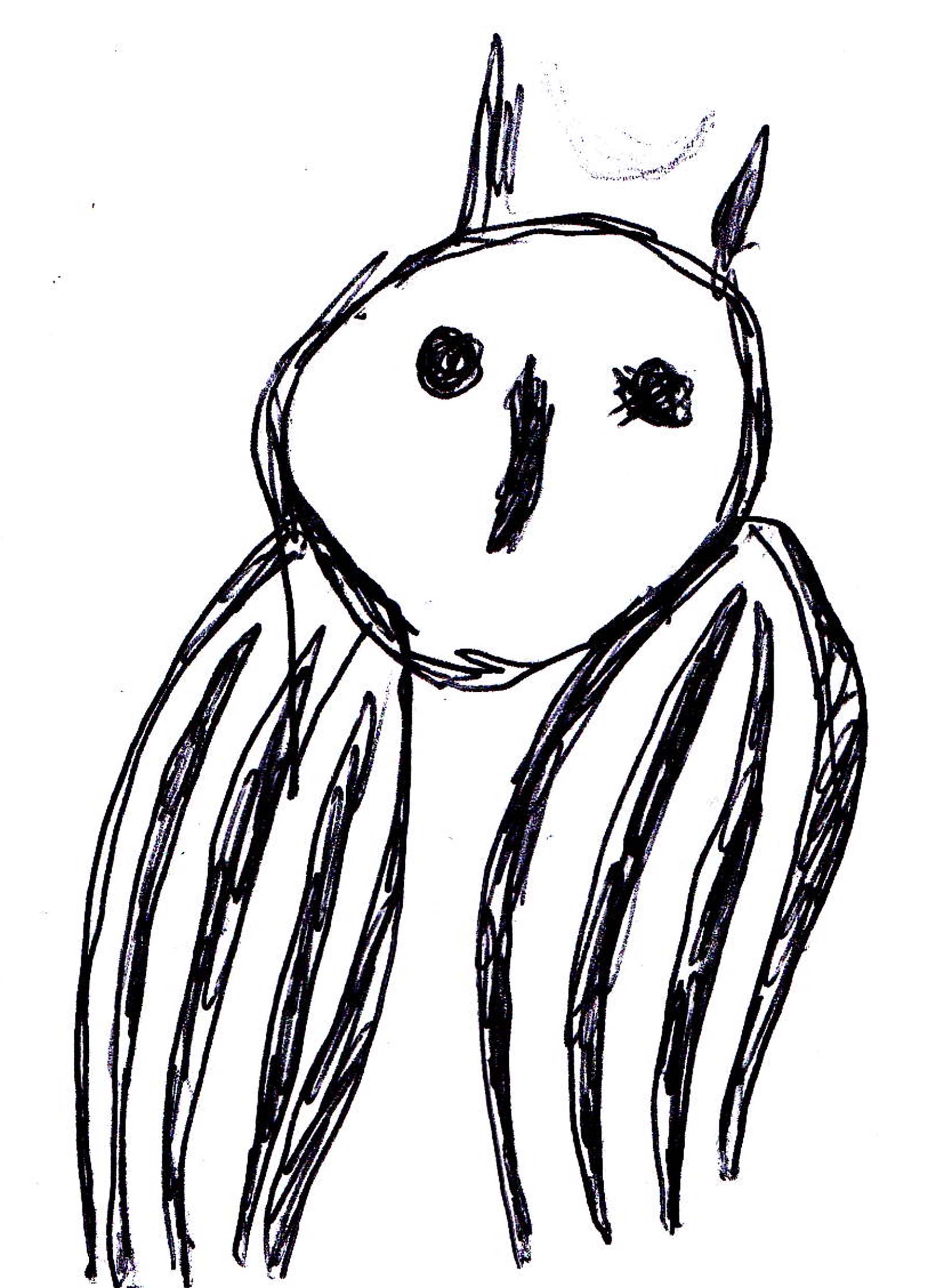
owl

p.a. morbid

I’m a poet, Noise/Dark ambient musician, painter, local historian, as well as Editor of The Black Light Engine Room.

The Interview

1. What inspired you to write poetry?

I wrote my first proper poem in September 1983 and it was inspired by my love of Tolkien and seeing The Stranglers playing Midnight Summer Dream on The Tube. I was a massive Tolkien fan at the time, which affected my writing ha ha. I didn’t read much poetry at the time, or much of anything but Tolkien and Sci-fi.
Obviously my writing has changed a lot since then, as have the things that inspire me.

2. Who introduced you to poetry?
No one. There was a lot of poetry in Tolkien, and I was part of a little punky-goth gang that lived in the suburbs of Middlesbrough and we were all into reading and writing poetry. I can’t remember doing poetry in school, though my early teenage years are a bit of a depressive blur…

3. How aware were you of the dominating presence of older poets?
I must say I’ve never felt any dominating presence from older poets. I mean, they’re there, some of them have influenced my writing, and historically some of them have cast very long shadows over the way we perceive the history of poetry, but as a presence in my life they’re negligible.

4. What is your daily writing routine?
I don’t have a writing routine. I have an a6 pad with me all the time I’m at home, and I carry an a6 in the side pocket of my trousers whenever I’m out, so whenever inspiration strikes I’m ready! I understand the need to push the Muse a little though, which I do mostly in my prose writing, but my poetry has a tendency to emerge if and whenever its ready. I’ll go weeks without writing any poetry (or months as was the case between April and August this year). Reading a fair bit of contemporary poetry I’m not convinced that writing to order is a good thing, as a lot of what I read is bland. Obviously this is a personal view, from a poet who’s got a very niche style, but I do see it as a problem. Not that I’d tell anyone not to write. Writing is good for the soul, and whether it’s just a record of a memory, or as a means of catharsis, it’s a brilliant tool.
I do, however, think a lot about my prose/non-fiction writing. I usually walk to town every day, and in my role as Historian of Middlesbrough, I’m constantly walking round and looking things. Walking is really good for working out the kinks in a story, or simply running through routines.
When I’m at home I like to read, when not editing, so I’m sometimes more caught up in someone else’s story.

5. What motivates you to write?
With my poetry I’ve a tendency to go with the inspiration of the moment, and this can be anything from the light on damps pavements to  birds flocking. My poetry is very precise, and usually focused on a single moment. They’re also, usually, very short, which means I can cram more into each publication than your usual poet! I also suffer from regular bouts of depression and insomnia, so I’ve tried writing about that. The poetry world is a good place to talk about these sometimes difficult subjects, not least because a good number of us have suffered from them in the past. Not sleeping well does have an effect on how I see the world, and how that comes out in my writing. At times its not particularly pleasant, while others it’s like I’m experiencing the world anew, and there’s so much more to it than when I’m feeling better.

6. What is your work ethic?
Well, I’ve been running The Black Light Engine Room as a regular live event practically every month (except Aug & Dec) since May 2010, which is also when I started publishing The Black Light Engine Room magazine for the first time. So I spend a good chunk of each year editing chapbooks, organising events and trying to get my own work out there. I’ve published 36 chapbooks and 15 issues of the magazine since 2010.
I’m a local historian too, so I spend a lot of time trying to track down relevant information, doing volunteer work and giving walks, talks etc. This aspect of my work really appeals to my obsessive streak, as I’m constantly trying to ferret out obscure titbits for future use. Middlesbrough has an interesting history – as most places do – and I’m especially interested in the artistic/literary side – which have been neglected by our local historians, who are all a bit straight-laced (though lovely). And as with the press, live night, its all part of a concentrated effort to raise Middlesbrough’s profile above it being known a shithole with nothing going on.

7. How do the writers you read when you were young influence you today?
Tolkien definitely made me want to write, gave me a love of language, and I still have a massive soft spot for him. The Penguin Book of Contemporary Verse, which I discovered in 1985, had a massive effect on me, as it was where I first read Sylvia Plath & Ted Hughes, whose style of writing really impacted on mine. I still read those two, though with the exception of Birthday Letters, only early Hughes. At the time I was very into writing epics – Crow, The Hollow Men were influences, but I’ve grown out of that, thank fuck!
In the 90s I discovered a number of poets who were to have a big influence on me. Hans Favery, a Dutch writer whose poems were obscure, strange but weirdly beautiful all at once. Tu Fu, classical Chinese writer (in translation by David Hinton). Sam Hamill, an American whose poems veer between sharp description to terse political statements. He also, like his mentor Kenneth Rexroth, produced lots of books of translation, as well as essays on the art of writing etc. Lovely man & always ready to answer questions from an English Fan Boy!
Three of the biggest influences on me as a writer weren’t poets, perversely enough. These were J.G. Ballard, Angela Carter and Aleister Crowley. Crowley was a poet, but not a very good one ha ha. It was his mystical, inspired verse that really got to me at the time. Those descriptions of alternate worlds, either in the aether or the inside of his head were/are so moving.

8. Who of today’s writers do you admire the most and why?
I can’t say I admire any poets as such. Love, yes. There is one living poet I do look up to, though, and that’s Jim Burns. He writes poetry which is funny, moving, and despite its simplicity, just amazing. He’s been publishing since the early 60s, edited a few mags and is still writing and publishing in his early 80s! I’ve published him twice and had the pleasure of meeting him after a year or so of emails & not only was he exactly as he comes across in his mails & poetry he read “Easter In Stockport” one of my favourite ever poems! He’s also got an encyclopaedic knowledge of British poetry over the years and is a brilliant reviewer. We sat and talk for two hours the morning after he read at The Black Light Engine Room & it was one of the best 2 hours I’d spent ever!

http://www.pennilesspress.co.uk/poetry/ptpjim_burns.htm

The Black Light Engine Room  is on youtube, just type in the name.

9. Why do you write?
For the same reason I paint & make horrible music. I have no choice in the matter. If I don’t write – either my journal, a bit of poetry, lyrics, prose, then I don’t feel right.

10. What would you say to someone who asked you “How do you become a writer?”
Just write. Read. Think about what you’re writing. Write. Read more etc etc

11. Tell me about the writing projects you have on at the moment.
At the moment I’ve just finished putting together the first book from The Black Light Engine Room, which is a split between me and Harry Gallagher. We’re looking at reading round the country to promote that from February on & if anyone reading this wants to put us on, please get in touch!
I’m also getting close to the end of my first novel, which is a gothic-psychogeographical thing set in Middlesbrough. I’m also working on a lot of flash fiction, including a collection called “down-time” which deals with alcohol abuse & obsession, both of which I’ve had problems with in the past.
I’m also working on a small Local History booklets, which I’m hoping to have out early in the New Year.

“Stream Toward Unconsciousness” . . . and other poems in response to the last Wednesday Writing Prompt

Glad to have my consciousness streamed by this prompt.

Jamie Dedes's avatarJamie Dedes' THE POET BY DAY Webzine

“Sometimes you see a man in a restaurant reading while eating — a very commn sight. He gives you the impression of being a very busy man, with no time even for eating.  You wonder whether he eats or reads. One may say that he does both. In fact, he does neither, he enjoys neither. He is strained and disturbed in mind and he does not enjoy what he does at the moment, does not live in the present moment, but unconsciously and foolsihly tries to escape from life.”  What the Buddha Taught, Walpola Rahula


These are the responses to the last Wednesday Writing Prompt, In March, Flowering, November 21, which challenges our poets to dip their pens into stream of consciousness, a narrative style that gives the impression of the mind at work. I think Buddhists might be inclined to call this “monkey mind,” a…

View original post 2,256 more words

Wombwell Rainbow Interviews: Sarah L Dixon

Wombwell Rainbow Interviews

I am honoured and privileged that the following writers local, national and international have agreed to be interviewed by me. I gave the writers two options: an emailed list of questions or a more fluid interview via messenger.
The usual ground is covered about motivation, daily routines and work ethic, but some surprises too. Some of these poets you may know, others may be new to you. I hope you enjoy the experience as much as I do.

45796413_204896540387762_8441096546216312832_n

Sarah L Dixon

lived in Chorlton for 12 years. She moved in May 2017 and is currently based in Linthwaite, Huddersfield and tours as The Quiet Compere.

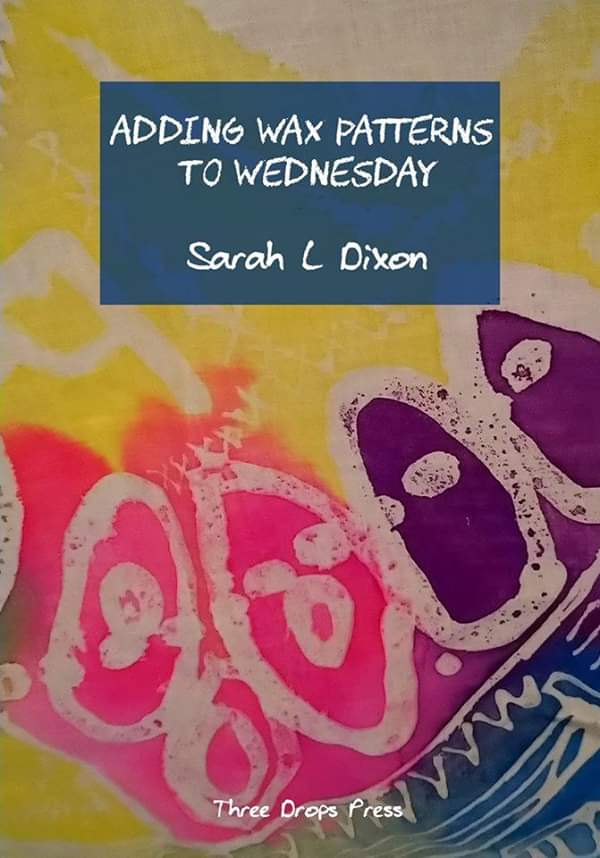
Sarah has most recently been published in Marble, Confluence, The Interpreter’s House, The Lake, Obsessed with Pipework, Troubadour and Curlew. She had a poem published on a beer-mat and her pamphlet, The sky is cracked was released by the same press in November 2017 (Half Moon). Sarah’s second book, ‘Adding was patterns to Wednesday’ is due out late in 2018 with Three Drops Press

Sarah’s inspiration comes from many places, including pubs and music, being by and in water and adventures with her eight-year-old, Frank. She is still attempting to write better poetry than Frank did aged 4!

Frank’s line, aged 4, was “Is your heart in a cage so it doesn’t fly away?”

http://­thequietcompere.co.uk­/

The Quiet Compere | is Sarah L Dixon
thequietcompere.co.uk

The Interview

When did you start writing poetry?

Hi Paul, I wrote poetry as a teenager to make sense of the world. I left it for a bit and came back after failing the first year of a science degree, getting lab assistant job in NHS and completing OU degree while working full time. Degree was in social science and economics. Last two years was economics diploma and lots of hand-drawn graphs and tables. After this tight way of writing and proving I wanted to go back to freer creative writing and found a ten week subsidised course with the NHS run by Philip Davenport. I then found a Writing for Pleasure Course at Cheadle Library hosted by librarian, Mary Bland. When I wanted more constructive feedback I moved on to Wordsmiths run by copland smith

2. How aware were you of the dominating presence of older poets?

I worked with medical and surgical consultants in PA roles and was often picked on at school. I got used to letting things go over my head. I treat everyone as equal and in a way that means you also judge yourself as equal so do not get intimidated. One of the reasons I decided to tour as The Quiet Compere was to give people who might not get guest spots a chance to read. One of my first decisions was that every performer would get the same length set and the same fee. This was important to me.

3. What is your daily writing routine?

Honestly, I don’t have one. I occasionally challenge myself with month long daily prompt workshops. I enrolled on Wendy Pratt’s online Wild Within workshop in August and am joining this group again for Season of Mists in October. I run a writing workshop at a local pub on a Monday which gives me time to write (and we alternate between prompts and critique). I find I am more likely write poems in snatched minutes or they wake me up at 6am demanding to be written. If I have hours stretching out where I could write it doesn’t usually happen. I had a time after my first book came out where I was occasionally writing but hardly liked anything I wrote for about nine months. Wendy’s workshop and a week in Whitby by myself helped me get back to somewhere where I liked my writing. I have an eight year old and we use the mile walk to school and back to play with words and ideas. The other day we were inventing words and sometimes Frank asks me questions like ‘where do the shadows go at night?’ that prompt me to write poetry later. Always have notebook with me.

4. What motivates you to write?

Anger, sadness, reminscence, nature, being in and by water, my son, Frank (by the way he sees the world and the questions he asks me about things.)Writing is one way to make sense of things or tie them down to make them easier to face and process.

5. What is your work ethic?

Work ethic? Not sure. Try to keep enough time and space to not suffer from recurrent tonsillitis. Between school runs and day job and freelance things. I run on adrenaline so I suppose the question should really be Do you stop enough? I write when the words wake me or come and don’t worry too much when they don’t for a while. Not sure I have answered this question…

6. How do the writers you read when you were young influence you today?

James Herbert, Dean Koontz, Stephen King, Richard Layman. Short sentences to build tension. Darkness and seventeen years in NHS admin roles including Oncology and Post Mortem secretary all feeds into this. Magical realism too. When something just doesn’t feel quite right. Roald Dahl, Dr Seuss, Wind in the Willows, Alice in wonderland, (Quentin Blake illustrations) – all darkness but with a sense of play too. I read The Iron Man and The Hobbit voraciously in my reading space on the top stair. Poetry wise we had to read Larkin at school and it took me a long time to come back to an appreciation of him. First few poets I remember reading and enjoying: Shakespeare, Christina Rossetti, Roger McGough. Brian Patten is a more recent and happy discovery.

7. Who of today’s writers do you admire the most and why?

Clare Shaw – just everything about her. She is the only person who makes me go fan girl. Her words, her accent, her delivery, her height, the way she is with the audience – everything, really. Ciaran Hodgers – such understated, gentle delivery of important issues delivered in a way that convinces. Wendy Pratt, poetry of nature and loss and hope. Loving her online workshops too. Angela Readman and Joanne Key for their explorations of darknesses. I could list hundreds but will leave it at these.

8. Why do you write?

To make sense of people, places, situations. Because my mind makes me notice and record the details, to communicate. To explain how I feel, how I see. To play.

9. What would you say to someone who asked you “How do you become a writer?”

I would say to get feedback and listen to critique, explore things you might not usually write about, accept challenges (I recently wrote a poem for an endangered bird – birds had only been incidental in my poems until then) and challenge yourself. Find people you trust to tell you if you can do better and be honest about what doesn’t work. Online groups are good if you can’t always get to workshops in the real world. Know there will be writer’s block and the words will probably come back, just live so you have things to write about. Read a lot. Listen to poets tell you their poems online or at readings. Work out what you like and don’t like and why.

10. And finally, Sarah, tell me about the writing projects you have on at the moment.

I was a volunteer manager and helper for six days at Poetry Swindon. I had a guest spot and hosted there on National Poetry Day. I have a book coming out, ‘Adding wax patterns to Wednesday’ with Three Drops Press with a launch on 30th November. I have a vague theme of inbetweens for my next book and have enrolled on Wendy Pratt course ‘Season of Mists’ with the theme of change and a prompt a say for October. I also have poems coming out in Endangered birds, Play and Outsiders anthologies in the next month.