Wombwell Rainbow Interviews: Ella Frears

Wombwell Rainbow Interviews

I am honoured and privileged that the following writers local, national and international have agreed to be interviewed by me. I gave the writers two options: an emailed list of questions or a more fluid interview via messenger.

The usual ground is covered about motivation, daily routines and work ethic, but some surprises too. Some of these poets you may know, others may be new to you. I hope you enjoy the experience as much as I do.

Passivity, Electricity, Acclivity

Ella Frears

is a poet, visual artist and curator living and working in south-east London. She has had poetry published in various publications including Poetry London, Ambit, The Rialto, Poetry Daily, POEM, and the Moth among othersHer debut pamphlet Passivity, Electricity, Acclivity is out with Goldsmiths Press (available via Burley Fisher Books). Ella was shortlisted for the Manchester Poetry Prize 2017.

Ella is a trustee and editor for Magma Poetry. She was awarded a fully funded scholarship for the MA in Creative Writing at Royal Holloway University 2016 and was awarded a place on the prestigious Jerwood/Arvon mentoring scheme.

In 2014, she was shortlisted for Young Poet Laureate for London with Spread the Word. She was also shortlisted twice for the Jane Martin Poetry Prize from Cambridge University and for the Bridport Poetry Prize 2015.

Ella has completed residencies for the National Trust, Tate Britain, SPUD (the Observatory) and most recently was poet in residence at Royal Holloway University physics department writing about the Cassini Space Mission for which she curated a multi-media ‘funeral’ event at Bold Tendencies, Peckham, on the night the spacecraft tumbled out of orbit (15th Sept 2017).

In April 2017, Ella curated an eight-day exhibition at Newlyn Art Gallery: RESISTANCE – A Short Guide to Self-Improvement as part of their Palace of Culture season which, alongside works commissioned from female filmmakers and poets, included a programme of live events, readings, workshops and talks.
She performs regularly across London and further afield including Kings Place, the Free Word Centre and the RSL. Ella was also guest speaker/poet on a panel at WoW (Women of the World) Festival at the South Bank Centre. She guest lectures at Falmouth University and University East London in Fine Art, and Creative Writing.

Her collaborative installation with artist Ben Sanderson, The Six Pillars of Modernism, was on show at Tate St.Ives, Oct 2017 – July 2018. She is currently one of four poets shortlisted for an Arts Foundation Fellowship 2019.

http://www.ellafrears.co.uk/

The Interview

  1. What inspired you to write poetry?

In my second year of my BA at Goldsmiths we had to choose between poetry and prose. I chose poetry. The class was taught by Eva Salzman who swore a lot, was passionate and fierce. She showed us lots of brilliant poems by contemporary poets then beat us at pool in the pub after. We wrote strange, raw (probably not very good) poems that year and I fell in love with it.

  1. Who introduced you to poetry?

My parents were never that interested in poetry, but they did get me to memorise the Jabberwocky aged 4 (it’s still the only poem I can recite). I had a very bad English teacher in secondary school who almost turned me off language entirely. At sixth form college however the teaching was great. Our A level English Lit teacher, Jackie, read us Plath’s ‘Daddy’ at the beginning of every class – she was brilliant.

  1. How aware were you of the dominating presence of older poets?

I’ve had a lot of support and encouragement from older poets. I never felt shut out or intimidated – although I’m aware that’s not the case for everyone. Grants, scholarships and mentoring were so vital while I was waitressing full time – they helped me keep writing. With the poetry community being so small, you end up meeting – or at least being in the same room as – your heroes quite early on. I only have positive feelings about these encounters.

  1. What is your daily writing routine?

I’m self employed and work from home so it’s a bit erratic. I don’t tend to get dressed – it feels like a waste of clothes. I’m pretty sure my neighbours/postman think I’m depressed. I drink a lot of tea.

I read until I feel ready to write. On good writing days I’ll write through lunch until the evening without stopping. On bad days I’ll tidy, make elaborate lunches that take ages to prepare and scroll endlessly through twitter.

If I’m working on a particular project or residency things tend to get a bit chaotic about a week before the deadline. I have to remember to leave the house occasionally.

  1. What motivates you to write?

I guess I feel compelled to write and I’m not totally sure why. I’m less good at finishing poems though – so I need regular deadlines to motivate me to finish.

  1. What is your work ethic?

I enjoy my work. I also need a certain amount of projects, residencies etc to make rent. So I work hard and sometimes it feels great and sometimes it’s a bit of a struggle. Mostly I love it.

  1. How do the writers you read when you were young influence you today?

I was deeply affected by the women writers I read when I was younger – Sylvia Plath, Toni Morrison, Jean Rhys… I think there were ideas or phrases that stuck in my head and that reappear in my work again and again in various guises.

  1. Who of today’s writers do you admire the most and why?

There are so many! I’m really excited by the things being written today. If I listed as many as I could now, I’d almost certainly miss someone vital, so I wont. But contemporary poetry is in a great place at the moment with more marginalised voices being recognised and celebrated than before- and that’s never a bad thing. More of that please!

I also edit Magma Poetry magazine so I get to see a lot of work by new, often unpublished writers all the time. There’s so, so much good stuff going on.

  1. Why do you write, as opposed to doing anything else?

I’m also a visual artist – although my visual arts practice often involves text.

I don’t know why writing is my thing – maybe it won’t always be. Right now, I love it.

  1. What would you say to someone who asked you “How do you become a writer?”

Write!

  1. Tell me about the writing projects you have on at the moment.

I’m just finishing a year-long project with Tate St Ives writing poems about the St Ives Modernists (Hepworth, Nicholson, Heron, et al.). They’ll be on display in the galleries this year.

I’m also writing some poems and planning an event about Cornish Path Moss (an at risk species endemic to Cornwall) for conservation organisation Back from the Brink.

There’s an exciting project in its early stages with Photographer Toby Glanville, who I worked with last year during a residency for K6 Gallery in Southampton.

I’m co-editing the current issue of Magma (on the theme of ‘Changeling’) with brilliant poet Richard Scott which will be launched in March/April this year.

And alongside these, very slowly, I’m finishing my first collection.

Strength To Be Human, a taster of a remarkable series of podcasts on creativity by Mark Anthony Rossi. Highly recommended.

Episode  2: What is Strength to be Human? https://www.podbean.com/media/share/pb-mjqpy-a3ff8d?fbclid=IwAR20uBaEGpeyBt_MSZpkm_GNAHcKfBQOWojlYnjk8cigiIgqNqQY8XVWqEA#.XFtjQoG9SSR.twitter

Wombwell Rainbow Interviews: EM STRANG

Wombwell Rainbow Interviews

I am honoured and privileged that the following writers local, national and international have agreed to be interviewed by me. I gave the writers two options: an emailed list of questions or a more fluid interview via messenger.

The usual ground is covered about motivation, daily routines and work ethic, but some surprises too. Some of these poets you may know, others may be new to you. I hope you enjoy the experience as much as I do.

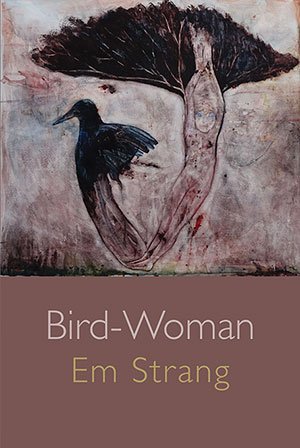
Em+Strang++Bird-Woman

EM STRANG

Em is a poet and Open Book lead reader. She also facilitates workshops in Embodied Poetry, looking at the relationship between psychology, somatic experience and creative practice. Her writing preoccupations are with ‘nature’, spirituality and the relationship between the human and nonhuman. Em’s work has been published widely in anthologies and journals, was shortlisted for the 2014 Bridport Prize and selected for the Forward Anthology 2017. Bird-Woman, her first full collection, was published by Shearsman in October 2016. Bird-Woman was shortlisted for the Seamus Heaney Best First Collection Prize and won the 2017 Saltire Poetry Book of the Year Award. Her second collection, Horse-Man, will be published in September 2019.

The Interview

  1. When and why did you begin to write poetry?

I began writing poetry age 16. At least, that’s when I began writing ‘in earnest’, and oh boy, some of it was really earnest! At the time, it was a refuge for me; a way of processing stuff with words and images; and a means (along with other intoxicants) of escaping reality. It was also a gateway into the minds and lives of others – reading other poets’ work made me feel part of a community of people who thought and felt like I did. To the outside world, though, poetry was my own private realm. I almost never shared what I wrote – that wasn’t important to me at the time. I got hooked quickly and haven’t stopped making poems since.

  1. Who introduced you to poetry?

School teachers. In particular, an English teacher called Mr Craddock in secondary school. He lit the fire of poetry in me and then derided my attempts to write it. I’ve never forgotten the ascerbic remarks he made about my first batch of poems. It took me years to pluck up the courage to share my work after that.

  1. How aware were and are you of the dominating presence of older poets?

When I began writing poetry, I suppose I was aware, in that I looked up to older (and dead) poets and admired their work. I remember feeling glad that they’d written such great poems and it inspired me to keep going. I did pedestal them, though, for sure, and sometimes I’d whine that there was no way I was ever going to write like them. Nowadays, I’m glad I don’t write like anyone else. I don’t experience older poets (or dead ones) as dominating; I’m just getting on and doing what I do. The comparison game is one of endless suffering.

  1. What is your daily writing routine?

I don’t have a daily writing practice. Actually, that’s not strictly true. I write in my journal every morning, but it’s generally not poetry and it’s only for 5 minutes. The only daily practice I have which I’m incredibly disciplined about is meditation, prayer, journaling and yoga. If poems come, that’s a bonus.

However, not having a daily writing practice is a new development in my creative life: from about age twenty until my early forties, I got up at 6am every morning without fail and wrote for an hour and a half. Once children came along, that was sometimes interrupted, but I stuck to this routine like glue for more than two decades.

  1. What motivates you to write?
  • A desire to dig beneath the surface of everyday life.
  • An utter delight in the feel and sound and imagery of words.
  • A search for the sacred and the divine.
  • A poem’s ‘demand’ to be written down.
  1. What is your work ethic?

Never force a poem. Write when you’re inspired to write. Commit to your work wholeheartedly. Show up at the page when you know you have to. Never beat yourself up about ‘not writing enough’. Never over-congratulate yourself on producing multiple, award-winning tomes. Just write, but only if you love it, not because you’ve got tangled up in the identity trap of ‘I am a poet’. Having said that, I had to go through that, so maybe it’s a kind of rite of passage?

  1. How do the writers you read when you were young influence you today?

I think they influence me enormously. I still love the poets I loved as a young woman – Walt Whitman, R.S. Thomas, Tomas Tranströmer, Raymond Carver, Elizabeth Bishop, Rumi – and I think their diverse mixture of pared back clarity, spiritual exuberance and psychological insight are all evident in my work.

  1. Who of today’s writers do you admire the most and why?

Alice Oswald because her poems are alive in a somatic sense – I receive them bodily. I love her risk-taking and playfulness, her incredible ear and the way in which she uses myth to explore the human condition.

Mourid Barghouti because of the powerful simplicity, poignancy and directness of his writing, and the fact that he has never given up.

Nikola Madzirov because I adore the unmistakable flavour of Eastern European writing – a kind of pure, hardcore plum brandy. Again, it’s the ‘cleanness’ of the language that I’m drawn to; nothing is extraneous.

  1. Why do you write?

To thrive.

  1. What would you say to someone who asked you “How do you become a writer?”

I’d say forget about ‘becoming a writer’ and become a human being who writes and reads a lot. I’d say read books that make you come alive and write stuff for fun. I’d say play and allow yourself to say whatever you want, no holds barred.

11. Tell me about the writing projects you have on at the moment.

I’m currently in the final editing phase of my second poetry collection, Horse-Man, which is coming out with Shearsman in September 2019.

I’m also punting my first, very short novel, Quinn, around various publishing houses.

I’m working on a new, long, narrative poem about identity, which I think has quite a lot to do with the Divine Mother.

I’ve a non-fiction book on the backburner, The Contemplative Mind: Poetry in the Making, as I don’t have time for it at the moment.


On Fiction Wombwell Interviews: Janet Dean Knight

On Fiction Wombwell Rainbow Interviews

I am honoured and privileged that the following writers local, national and international have agreed to be interviewed by me. I gave the writers two options: an emailed list of questions or a more fluid interview via messenger.

The usual ground is covered about motivation, daily routines and work ethic, but some surprises too. Some of these poets you may know, others may be new to you. I hope you enjoy the experience as much as I do.

peacemaker

Janet Dean Knight

Born and raised in a coalmining village, Janet draws on her experience and family history to tell compelling stories about the past that resonate with current issues, particularly in the lives of women and working class communities. Janet writes strong characters and engaging plots about the past which help her readers to think more deeply about what matters now. Her writing is challenging yet respectful, passionate and accessible.

Based in York, UK Janet is part of a vibrant literary network. She is a regular participant in the York Literature Festival and gives talks about her work to reading and writing groups.

You can find out more at www.jdeanknight.com and on The Peacemaker FB page  https://www.facebook.com/janetdeanknight/ Follow her on Twitter @jdeanknight and Instagram: jdeanknight

The Interview

  1. What inspired you to write fiction?

After a long time writing little else but poetry, I finally started writing fiction to capture the stories my mother told me about her family. This is what inspired me to start writing my first novel in my late 50s. I now write more prose – short stories and flash fiction – as well as plays, and I am inspired by whatever floats into my head, as well as a lot of current political issues.

  1. Who introduced you to fiction?

Where does fiction start? Prudence and Priscilla my first picture book about two cats who owned a hat shop, I guess my mother bought that. I liked books from a young age and was given abridged versions of classics and things like What Katy Did. But my Dad was a reader and when I went to secondary school he started passing on books to me. From about twelve I was finding things for myself.

  1. How aware were you of the dominating presence of older writers?

I never defined myself as a writer until I was myself ‘older’ and now the world seems full of younger writers. When I was young, all writers seemed over 40 at least, though I’m not sure if they were. I think one of the reasons we all loved Sylvia Plath was because she never got to grow old.

  1. What is your daily writing routine?

I’ve only just retired from working in the public sector to write full time, so I’ve never had a daily routine, I’ve written in the spaces – on trains, on holiday, early in the morning if I couldn’t get back to sleep because my head was full of ideas. February 2019 is the first month I have not had a diary full of appointments since I was last on maternity leave in 1994, so I’m learning about daily writing routines. At the moment, I write something every day, even if it’s only the answers to a questionnaire.

  1. What motivates you to write?

Deadlines work, so a publishing deadline was good. I like competitions and magazine deadlines because I think even if I don’t win or get published I will have written something new. I’m also motivated if I have a good idea or something becomes clear where I was stuck – but I have to get it down quickly or it might get pushed out by more mundane thoughts.

  1. What is your work ethic?

Do things that matter – it applies to everything.

  1. How do the writers you read when you were young influence you today?

I hear Robert Frost and Denise Levertov when I write poetry – two very different voices, and JD Salinger with a Yorkshire accent is what I’m aiming for in prose, but failing, I’m sure!

  1. Who of today’s writers do you admire the most and why?

Margaret Atwood is a brilliant storyteller and poet and can write in all genres, and she is so generous with her advice and wisdom, she doesn’t hide away. Sarah Waters is the writer I would like to be, so a long way to go. I love her historical research, her subversion of plots, her evocation of place and her quirky characters.

  1. Why do you write?

I think for me writing is almost like spiritual practice, meditation. I feel better writing than not, it’s about my well being as much as anything, but also I like to communicate.

  1. What would you say to someone who asked you “How do you become a writer?”

Write. Send out your work, take the rejection and send it again. Put it out there yourself. Network and share with other writers. Don’t expect everybody to love what you do. Read as much as you can and reflect on it.

  1. Tell me about the writing projects you have on at the moment.

My debut novel The Peacemaker is published by Top Hat Books on 29th March 2019. I am launching it at York Literature Festival on 28th March at the Quaker Meeting House at 5.30pm. It’s a free event, with books on sale. The Peacemaker is a moving story of a young woman’s struggle to make peace with her father on the eve of the Second World War. It is set between a fictionalised Barnsley and Rosedale in the North York Moors. I hope to be promoting the book in Yorkshire and beyond all year.

Then, I’ve just started a sequel, provisionally called How Can I Dance? which is set in 1963 in a South Yorkshire pit village and it explores a woman who has a chance to recapture her youth as the world is changing around her.

I’m also preparing a short play for the next round of Script Factor in York on the 11th March. This is a showcase for five short plays on which the audience votes for their favourite. I entered for the first time last year and made it to the final, so now I’m hooked!

With Clara Challoner Walker I run writing courses called Awakening The Writer Within which are aimed at helping people who have an idea for some writing to get it down and make something of it. We have a spring retreat in France at the end of April, which is our seventh of this type, and three new half day workshops in the North York Moors in June, July and September.

Wombwell Rainbow Interviews: Nadia de Vries

Wombwell Rainbow Interviews

I am honoured and privileged that the following writers local, national and international have agreed to be interviewed by me. I gave the writers two options: an emailed list of questions or a more fluid interview via messenger.

The usual ground is covered about motivation, daily routines and work ethic, but some surprises too. Some of these poets you may know, others may be new to you. I hope you enjoy the experience as much as I do.

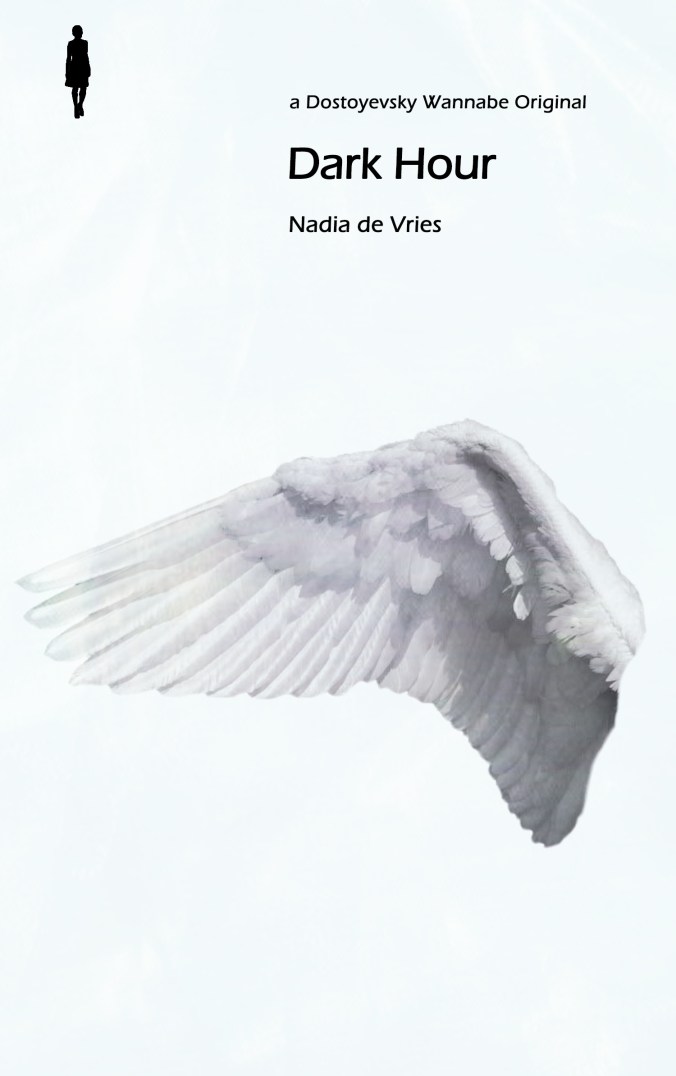
Dark Hour

Nadia de Vries

is the author of Dark Hour (Dostoyevsky Wannabe, 2018). She lives in Amsterdam, the Netherlands.

www.nadiadevries.com

The Interview

  1. When and why did you begin to write poetry?

I kept a poetry blog between the ages of 12 and 15. My interest exacerbated into a literary studies degree when I was 20, and I haven’t stopped writing since.

  1. Who introduced you to poetry?

Google, Alfred Tennyson, and Annie M.G. Schmidt.

  1. How aware were and are you of the dominating presence of older poets?

Not at all, I see young writers all around me.

  1. What is your daily writing routine?

“Daily” is not the right word but I like coffee, walking, and thinking (in that order) before I write.

  1. What motivates you to write?

Conversations with friends, reading work that excites me.

  1. What is your work ethic?

I don’t appraise myself/others based on labor or production more generally. I’m also hesitant to call my writing “work” because I feel that’d be a way of detaching myself from it, while I want to claim full responsibility.

  1. How do the writers you read when you were young influence you today?

I think I’m still young and also impressionable by nature, so I’m influenced by new stuff all the time.

  1. Who of today’s writers inspire you the most and why?

Recent books that I adore include: Who Is Mary Sue? by Sophie Collins, Fondue by A.K. Blakemore, A Handbook of Disappointed Fate by Anne Boyer, and Waitress in Fall by Kristín Ómarsdóttir (trans. Vala Thorodds), all published in 2018.

  1. Why do you write?

50% enthusiasm 50% masochism

  1. What would you say to someone who asked you “How do you become a writer?”

Buy me a drink.

  1. Tell me about the writing projects you have on at the moment.

I’m currently finishing my first Dutch book (Kleinzeer) which will come out with Uitgeverij Pluim in the spring. I’m also working on two new poetry manuscripts and I’m due to finish my dissertation at the University of Amsterdam this coming year.

Wombwell Rainbow Interviews: Mike James

Wombwell Rainbow Interviews

I am honoured and privileged that the following writers local, national and international have agreed to be interviewed by me. I gave the writers two options: an emailed list of questions or a more fluid interview via messenger.

The usual ground is covered about motivation, daily routines and work ethic, but some surprises too. Some of these poets you may know, others may be new to you. I hope you enjoy the experience as much as I do.

mikeJames

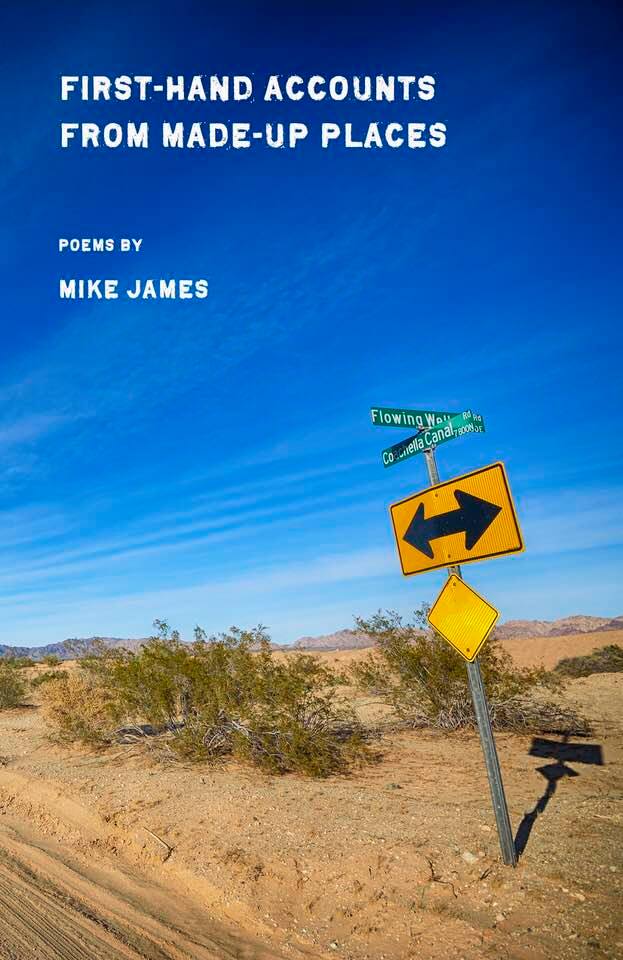
Mike James

is the author of twelve poetry collections. His most recent books include: First-Hand Accounts from Made-Up Places (Stubborn Mule, 2018), Crows in the Jukebox (Bottom Dog, 2017), My Favorite Houseguest (FutureCycle, 2017), and Peddler’s Blues (Main Street Rag, 2016.) His work has appeared in over 100 magazines throughout the country in such places as Birmingham Poetry Review, Soundings East, and  Laurel Review. He has also been active as an editor for the Kentucky Review, Autumn House Press, and his own Yellow Pepper Press. After years spent in South Carolina, Missouri, Pennsylvania, Georgia, and North Carolina he now makes his home just outside of Nashville, Tennessee with his large family and a large assortment of cats.

https://stubbornmulepress.bigcartel.com/product/first-hand-accounts-from-made-up-places

https://www.mikejamespoetry.com/

The Interview

  1. When and why did you start writing poetry?

I actually came to poetry in high school through an interest in politics. I’ve always been a  political junky and I remember reading the great speeches of the past and being enthralled by the rhetoric. The interest in rhetoric led me into an interest in language, which led to poetry. Most of this happened when I was 14 and 15. I love that Pound quote, “I knew at 15 pretty much what I wanted to do.” That’s exactly how I feel.  I’ve spent part of almost every day for the last 33 years writing poetry and reading poetry and thinking about both. I’ve held a lot of jobs over that time, but they have all been secondary.  I’m just a poet.

2.  How aware are and were you of the dominating presence of older poets traditional and contemporary?

I became aware of contemporary poets very early and I became aware of the tradition they operated in very quickly. As a young poet in the late 1980’s I went through a lot of different phases, but I always did the same thing in regards to my education. Whenever I fell in love with any major contemporary poet of the time (James Dickey, Adrienne Rich, John Ashbery, W.S. Merwin, Jean Valentine, etc.) I would read their poetry and then interviews about their poetry. Any time they mentioned a poet as being good or influential I tried to find work by that poet. Self-education is the only type of education I’m aware of. That path has led me to some discoveries (Stephen Jonas, Jim Brodey, Alfred Starr Hamilton) well outside of the cannon.  I still read pretty much the same way although now I’m less inclined to hunt down primary influences and more inclined to just accept new contemporary work without looking for historical precedents.

4. What is your daily writing routine?

My main focus is to always make sure that I schedule some time every day. During the week, I normally either write very early in the morning or late at night. On the weekends, my schedule is just some time during the day. It often involves a walk or a drive.

5. What motivates you to write?

I really love to write and I think I enjoy writing more now than I ever have. I’m very focused on whatever I can discover while I’m writing. Outside of, maybe, the form I’m using I very seldom have a pre-conceived idea. I begin with a very vague idea and, maybe, with what Valery called, “the given line.” Bly used to talk about good poetry as having a “leap.” By that, he meant that poetry should take the writer and the reader to some unexpected place. I write a lot of bad poems which I discard or save parts of. I don’t really worry about the bad ones because I know that lots of times when I writing poorly it’s because I’m doing practice work for what will come later or else I’m doing draft versions on subjects I’m not ready to address.

6. How do the writers you read when you were young influence you today?

Probably work ethic and expansiveness. I read Tennessee Williams as a teenager and he talked about how he wrote every morning, hungover or not, inspired or not. That idea of just showing up really stayed with me.

Also, the poets I really enjoyed when young and still enjoy today are ones who were not afraid to change and go in another direction at any time. There’s a big difference between early and late Robert Lowell. And you can say the same thing about plenty of other poets like Rich, Merwin, Bly, Carson, Yeats, Auden, Spicer, Dickey, and Ginsberg.

  1. Whom of today’s writers do you admire the most and why?

There are so many. My favorite living poet is W.S. Merwin. I admire him for the breadth and consistency of his work, as well as the length of his career.  My latest book is dedicated to the poet Joan Colby, who has certainly written numerous stunning and varied poems throughout her long career. A short list of the contemporaries I admire would include: John Dorsey, Daniel Crocker, Jennifer Bartlett, Jordan Rice, Megan Volpert, Rebecca Schumejda, Jericho Brown, Jeffery Beam, Roy Bentley, Anne Carson, Sparrow, Jeff Alfier, Shawn Pavey, Stephen Roger Powers, and CA Conrad.

I look for poets who not only show a high skill level, but who also are willing to push subject matter into new areas.

8.1. Could you expand on what you mean by “new areas”

Sure.  John Dorsey often writes about the disaffected. Daniel Crocker writes about both being bi-polar and bisexual. Anne Carson often merges concepts of poetry and prose, as does CA Conrad. Jordan Rice writes about being transgender. Stephen Roger Powers has a sequence of poems about Dolly Parton. Sparrow writes satirical pieces which read like stand-up comedy.

9. What would you say to someone who asked you “How do you become a writer?”

I always quote the old Saul Bellow line, “A writer is just a reader moved to emulate.”  To me it’s very simple. Read all the time. Write all the time. Listen to criticism from smart people. Don’t get too attached to anything you write. Understand writing is a process AND a job. Know that hard work pays off.  And know that sometimes you work hard and the end result is still no good. When that happens, be willing to begin again.

10. Tell me about the writing projects you have on at the moment.

I’m always working. Right now, I have a few different projects. I have a book of prose poems I’m about to send out. I also have a sort of miscellany or sampler I’m working on. After 12 books there are lots of things that didn’t fit into other collections, as well as lots of new work. Finally, I have a book length erasure poem that I’m tinkering with. I’ve published a few erasures in magazines, but this isn’t like anything else I’ve done. It’s definitely something completely new.

Wombwell Rainbow Interviews: Lyn Coffin

Wombwell Rainbow Interviews

I am honoured and privileged that the following writers local, national and international have agreed to be interviewed by me. I gave the writers two options: an emailed list of questions or a more fluid interview via messenger.

The usual ground is covered about motivation, daily routines and work ethic, but some surprises too. Some of these poets you may know, others may be new to you. I hope you enjoy the experience as much as I do.


Lyn Coffin

author of poetry, fiction, drama and translation has published more than thirty volumes of poetry and prose, most notably The First Honeymoon (Iron Twine Press), a collection of her short fiction, and her poetic translation of Shota Rustaveli’s 12th century epic (Poezia Press.) Lyn has twice been a Wordsworth Poet in Seattle. Her poetry has won an National Endowment for the Humanities award and a Michigan Council for the Arts grant. Individual poems have won various awards, including the Jeanne Lohmann Poetry Award and first prize in StAnza’s Scottish International Poetry Festival Muriel Sparks’ competition (2018).

Lyn’s poetry was part of the International Poetry Festival in Soria, Spain (8/2017).
This Green Life, her New and Collected Poems was featured at the 2018 Soria International Poetry Festival, which also celebrated the publishing of the collection in Spanish (Pregunta).

Lyn has had short plays produced on and off Broadway, Malaysia, Boston and Seattle. Her translation (along with Nato Alkhazashvili) of Dato Barbakadze’s “Still Life with Snow” won a translation award from the Georgian Ministry of Culture and Monument Protection.

Lyn’s fiction has been praised by Joyce Carol Oates and Alice Fulton, among others.

“Falling off the Scaffold has, in a sense, no characters at all, only the projected personaes of two people unknown to each other; yet it respects the contours of reality and gives us, in a most unusual form, a story about illusion and self-deception.”
– Joyce Carol Oates, from her Introduction to Best American Short Stories

“Coffin’s fiction shows evidence of an original and delightful intelligence. Her lively and memorable characters speak as if they are possessed by forces slightly beyond their control, in voices brimming with wit, intelligence, cunning, and love. The structure of her stories unfolds with such grace that one forgets the skill it takes to produce such ‘effortless’ architecture.”

– Alice Fulton, Winner: American Academy of Arts and Letters Award in Literature

She has taught at several American Universities, (Michigan, Detroit, Washington), as well as in Malaysia and Georgia (Ilya University). She has also taught translation and Creative Writing at The Shota Rustaveli Institute in Tbilisi. She helped launch the 1st official Mexican Book Fair in Toluca, (8/2015) and lectured at the American University in Cairo in (3/2016). Widely praised translations include Standing on Earth, by Mohsen Emadi, (PhonemeMedia Press), translated from Iranian, with the author’s collaboration (9/2016) and The Adventures of a Boy Named Piccolo (Salamura), by Archil Sulakauri, translated from Georgian with Veronica Muskheli. This book, featuring illustrations by Vaho Muskheli, was displayed at Bologna Book Fair (10/ 2016). (Transcendent Zero)

Lyn’s translations of Nikoloz Baratashvili are featured in a book published by The Museum of Literature in Tbilisi. This volume includes all Baratashvili’s original poems, Boris Pasternak’s Russian translations, and Lyn’s English translations. Professor Harsha Ram of Berkeley, a scholar of Georgian and American poetry, said “Overall, if one were to compare these translations to Pasternak’s, one could say that while among Pasternak’s translations there are genuine masterpieces… they also take radical liberties with the original, while Lyn Coffin has achieved her success without permitting her own poetic sensibility to muffle Baratashvili’s own plangent voice.”

The Interview

  1. Who introduced you to poetry?

My father introduced me to poetry. He would give us kids a dollar for every
poem we memorized. I believe my first attempt was- As I was going up the
stair, I met a man who wasn’t there. I met him there again today. I wish to God
he’d go away.” Poetry caught on with me like wildfire moving across a forest
without harming the trees. I loved the sound of it, the magic of rhymes. And I
had already been caught by metaphor. My first creative writing ever was done
in response to a prompt in first or second grade. The teacher asked us to
describe ourselves and I wrote something like: “I am rectangular and made of
wood. There is a hole in my head where people pour in ink.” (Something like
that.) The teacher was wildly enthusiastic but I remember a lot of the kids
thinking I had misunderstood the assignment in describing a desk. My father’s
taste in poetry was narrow- I only heard him thoroughly praise four “poems”-
one the speech from Julius Caesar- “There is a tide in the affairs of men…”
The second, Masefield’s “I must go down to the sea again.” Kipling’s If which
usually petered out after six lines or so. And “The Ballad of Yukon Jake,”
by Edward Paramore, Jr., a parody or whatever it is which was so successful
my father constantly misremembered it as having been authored by Service himself.
My father was a businessman who had left the halls of learning (Brown) rather
early under interesting circumstances, and (as he would be the first to tell you)not the intellectual my mother was. But. He loved to recite poetry and loved to hear us recite it to him. I think once I got $2 for reciting “The Hollow Men” at dinner. I also had friends who knew and loved poetry, including one early boy friend who left a part of “death shall have no dominion” scrawled on a piece of note paper taped to our cottage door (I thought he had written it, which I believe was part of his somewhat nefarious intent). I remember my parents told our plumber on the phone they had left instructions for him and when he found my friend’s poetic offering, he tried to make sense of it in plumbing terms.
There were also assorted teachers who introduced me to certain forms of poetry.
I remember a professor of Greek talking about Sapphic lyrics, and being so inspired I wrote this: “Poetry is all around us, everywhere you look. Stems ending in a liquid Is a lesson in my grammar book.”

2. How aware were and are you of the dominating influence of older writers, traditional and contemporary?

One is never aware enough. Growing up, I was very aware of the presence of
Carl Sandburg, and wrote a parody for the Miss Halls School yearbook about my
life, told in Carl Sandburg fashion. A few months later, I got a letter from him praising my poem, but by then I had “moved on” and now was enamored of Robert Frost (I’ve never quite shaken him- especially “Design”- the darkest poem I think I’ve ever read)- so enamored of Frost that I threw away Sandburg’s letter (which had committed the unpardonable sin of not being written by Frost). I don’t know much- I especially regret my lack of knowledge of foreign poets. I’ve always been embarrassingly ignorant. One example (a prosaic one)- My cousin was reading a book- I asked her what it was and she said “The Short Stories of Guy de Maupassant”- “Oh,” I said. “Who’s that by?” A pause. “Well,” she said. “It’s by Guy de Maupassant.” Another pause. “Some people know him as Guy de Mo-pass-ann.”   “Oh, Him,” I said.) I have had the great good fortune to stumble upon or be given the chance to become familiar with two GREAT poets most Americans have never heard of- One is Jiri Orten, a Czech (Jewish) poet, killed in the Holocaust and Edward Hirsch has been a great supporter and wrote about Orten’s “A Small Elegy” in my translation in his “How to Read A Poem,” saying it was/is one of the poems he most loves. I hope readers will look up Orten- but avoid the “other” translation. The man means well, but English is not his native language and the translations are (imho) very bad. I also “ran into” the 12th century Georgian (as in the country) poet, Shota Rustaveli and his epic poem, The Knight in the Panther Skin. This is a fantastic narrative, written in shairi (an old Persian form which I also used in my translation; shairi is sixteen syllable lines, rhymed aaaa, bbbb, etc., etc.) Shota wrote 1661 quatrains. The translation took me well over two and a half years. But it won the SABA Award, and that was really nice. I have a dear ear/sensibility as far as Whitman goes and I am only lately learning to edge in to Ginsberg. I have a soft spot for Billy Collins. I’ve written several “paradelles,” and hope some day he will see my “Paradelle on Love” and write me about it. (Billy, are you there?)

I wasn’t aware of Poets Against the War, which I think was a crucial movement, until I met Sam Hamill later in (I was going to say “his life,” but it was/is mine, as well)— I copy-edited Habitations and I’m really proud of that. I am minorly aware of contemporary Seattle poets. We have a really active scene here- Jed Myers comes to mind, Judith Roche, Michael Dylan Welch for haiku, Carolyne Wright, Sharon Cumberland. And an only partially-discovered Tom Brush. I love the work of Ilya Kaminsky and Alice Fulton. I am aware of the dominating presence of my teachers, especially Radcliffe Squires (almost forgotten) and Donald Hall.

3. What is your daily writing routine?

This answer is easy. I don’t have a daily writing routine, and I don’t want one.
I don’t like routines. Even things I do like seem to pall when they’re on a regular, daily basis. Sometimes I write a whole lot, sometimes nothing. I try to pay heed to that small voice (of a devil, an imp, an angel) and write when I have something to say. I don’t believe (for myself) in journal-writing, or workshops that operate from “a prompt.” If a prompt is used, I ask that everyone who has written a response

(if he or she is willing) read the response to the group. I find it somehow crushing or discouraging to have bunches of people writing and then going on to write something else, without any Communication taking place. The belief seems to be that the act of writing is crucial but what is written doesn’t matter. But sooner or later, when one operates in such a context, I think one comes to feel- If the thing that is written doesn’t matter, neither does the act of producing it. (I hope this makes sense.) I think prompts and exercises make it easier for the writing teacher, but are (not to overstate things) death for the writer, especially a beginning writer. I had a friend who was a writing teacher with me at the University. His classes always involved prompts and his homework involved complicated exercises- “Write a scene in which two people talk and each has a secret he or she does not communicate to the other.”  I commented once that I don’t write like that, write in response to “prompts” and he said, “I don’t, either, but it makes writing easier to teach.” If students can’t come up with an idea, I suggest they plagiarize. If you try writing a story or a poem you have loved (unless you have it memorized), your writing will creep in around the edges. I like to compare the teaching of writing, and writing itself, with taking a class of young kids to the Natural History museum. And you’ve prepared this lecture on the Native American way of life and as you go in the door, one kid yells, “Hey, a dinosaur!” And they run off to the dinosaur room. You can try to corral them and force them to listen to your lecture. But I think it better to go with the urge, the instinct, and do an impromptu lesson on dinosaurs.

4. What motivates you to write?

Uh. Well- This is one of those questions. The standard
answers I can think of- 1) I dunno, I just always have;
2) That’s like asking what motivates me to breathe. Writing with me goes back a long way- I’ve thought of myself as a writer, or known myself to be a writer, since first grade. Motivational questions are always difficult questions, I think- very complicated. “Why?” has many roots. Even something like “Why did you have cheerios for breakfast?” (as I did this morning) could be answered
Because they were out of Rice Krispies. Because I’ve had too many eggs recently and wanted a change. Because I wanted something to put under fresh fruit. Because….
Well, you get the idea. I write because I can, because it seems to me one way I can contribute to the world,because nobody stops me, because I’m a terrible
bowler. More seriously, I like reading and I admire authors and as a young child, I “wanted to do that.” Writing releases uncomfortable emotions in me. Writing satisfies uncomfortable ambitions in me. But really- in our
end is our beginning- I dunno, I just always have.

5. How do the writers you read when you were young influence you today?

When I think “young,” I’m thinking elementary or high school (first).
Let’s start with the short stories- I remember three short stories that
really made an impression on me, and only one of them is known to
me now. That one, by Richard Connell (I just looked it up- I read it
way before author’s names were important), is about a big game hunter
who hunts another hunter. I don’t think that had any influence at all.
I don’t remember the titles or the authors of the other two- One was
about a civilization in the future that had one pill a year to eat- The
baby in the family ate a bottle of them and blew up. The other story
was about a husband who is cheating on his wife (this one was high
school) and he “sports with his mistress in the shade” and then she
asks him some question, and he responds that he sleeps around but
he only shares ideas with his wife. I don’t think any of these stories
had any influence on me at all. Ah. I know. The one story I read early
which Did have an influence was “The Snows of Kilimanjaro.” Many
times over in my life, including in “The Gift Horse,” which I think is the
best short story I’ve ever written, I’ve written or tried to write stories
that carry over into the afterlife, that don’t end when there main character
or narrator dies. As for poetry, I read Sandburg quite a bit and ended
up writing a Sandburg parody that was published in my high school
yearbook. Somehow it ended up on Sandburg’s desk and he wrote
me a short letter praising my poem and predicting great things for

    1. But by the time (a year later?) I got the letter, I had moved on and discovered Robert Frost. I was embarrassed to be “found out” as a lover of Sandburg and I threw the letter away. (I wonder if there’s a copy somewhere in the Sandburg archives- Or a copy of my poem? If only….) “If” and “The Hollow Men” were great favorites. I feel that I’m failng this question (which interest me a lot), so let me quote my first “independent, non-assigned” poem as a way of making up for lost memories. (I wrote this in my first year at college): “Beyond night’s
    1. harvest/ moon-scythed/ fierce tigers stalk./ Green glades/ deep rain-dark
    1. woords/ sheathe cool white claws.” (I regret the “fierce” very much.)
    1. One stray memory- I liked The Little Prince as a child and have read it
    1. countless times, usually when I’m trying to learn a language.
    1. Whether it’s influenced me, I don’t know. I love(d) the little fox,
    1. especially where he discovers there are no hunters on the little prince’s
    1. planet and is really excited about it. Then the little prince tells him
    1. there are no chickens, either, and the little fox says, “Nothing
    1. is perfect.” Ah. I remember one poet I read early who I also remember
    1. had a big influence on me, and that was Stephen Crane. His little nugget
    1. poems (“But the man ran on…”) or “I eat it because it is bitter/ And because
    1. it is mine” (if I remember rightly) paved my way to haiku. I used to discuss
    1. haiku with Sam Hamill, and I remember his brilliant translation of and
    1. interpretation of the famous Bassho frog haiku. Sam explained that
    1. the frog jumped into the sound of water, not the water itself. Somehow,
    1. that explained a lot to me. I have written a lot of haiku. hummingbird/
    1. hovering/ both of us….

6. Who of today’s writers do you admire the most and why?

I had the great good fortune to translate Standing on Earth, (Phoneme Media) the poems of Mohsen Emadi, an Iranian poet living in exile in Mexico. Mohsen’s
work uniquely fascinates and inspires me. Mohsen knows more about everything literary than any other person I have ever met. Through Mohsen, I became acquainted with the work (in translation) of the great Spanish poet, Antonio
Gamoneda. I came close to meeting this archetypal, mythic poet when I was in Spain last summer. I still hope I will be able to tell him in person how much I admire him.

Reading today’s writers is always something in flux. I will do a reading in Ann Arbor in March with Keith Taylor, and I admire him tremendously. I seem to gravitate to poetry of place, and his is definitely a “planted” voice. I admire a poet named Jed Myers, a Seattle poet. I remember when Jed was just starting out and now he has found his voice. Jed not only writes poetry but he reads a lot and always has suggestions for me. He writes essay from his double perspective of poet and psychiatrist. It was Jed who turned me on to Robert Wrigley. I’ve only read two poems by Robert Wrigley, and I loved both of them. I will be reading more. There is a poet in my poets’ group whose name is Tom Brush. He hasn’t published much, but his is a terrific, uncompromising
presence in today’s poetry world. There is a wild and outrageously wonderful Georgian(as in the country) poet named Irakli Qolbaia- I think he’s published a few poems in France and a few in Georgia, but he is close to unkown. And wonderful. The last poet I would mention is Ilya Kaminsky. His poetry is wonderful and he himself is a spirit to inspire and lead us. I love his work. I notice there are no women on this list. I admire Judith Roche’s poetry- She is another Seattle friend. I knew Alice Fulton at Michigan. I loved her poetry then but I have lost track of her. I admire the poetry of Carolyn Forche but don’t know it really well. There is so little time and so much poetry to read!

7. What would you say to someone who asked you “How do you become a writer?

How do you become a dog owner? I’m being facetious,
obviously, because the question is problematic, hovering
halfway between “How did you become a writer?” and
“How does one become a writer?” I became a writer by
writing lots of stuff and having some people like it enough
to publish it. “How does one become a writer?” Some people
think writers are born, not made. If one keeps writing, one
is a writer. If one calls oneself a writer, one is a writer.
Actually, the more interesting question (to me) would be-
When does one fail to become a writer (when one wants to
be)? THe answer would be- I don’t know- Never? I know
plenty of people who write gibberish (on the net, for instance)
and are taken seriously as writers. When do you become
an adult?- You can assign a year, a state of mind. My son
once asked me- “When did you first feel old?” and I fired back,
“When did you?” (He was about 30 at the time.) But the
question is not Why but How? Is this asking for a recipe?
There isn’t any. The closest we get these days is to keeping
a journal, and I don’t believe in keeping a journal. There’s a joke/
riddle somewhere- “How do you get a dog out of a box?”
Answer: He’s out. I’m not grasping this as I should, probably,
but “How do you become a writer?” Answer: You’re a writer.
How did you become one? A writer of what? For what? To what
end? I’m glad this question comes so near the end, because
I basically don’t get it. At least not the way it should be gotten.

8. Tell me about writing projects you’re involved in at the moment.

Ah. Writing projects at the moment are varied— even scattered,
I think you could say…. First of all, I spent this evening going back
over my novel, The Aftermath. A friend had helped me by marking
up a manuscript— inserting quotes, taking out quotes, making
various and sundry complaints. I fixed a lot of small stuff. I’m not sure
I’ll be able to take out 80 pages, as she suggests, however.
This is a novel about a woman who is drugged and raped. The prologue moves
very quickly, and leads one to expect a detective thriller or a crime
novel, I suppose. But The Aftermath is quite different. My reader
didn’t like the time I spent on labor and delivery. But it shows where
my protagonist’s mind is…. Sigh.
Another project involves Zipf’s law. I became fascinated when someone
told me about word frequency, and I found Zipf’s law, listing the
100 most frequent words in English. I have been writing a story a day,
increasing the number of common words I leave out. Tonight, I was
up to 80, and I think I shall stop there. The story narrators are sounding
more and more insane. (Available on my blog, at http://www.lyncoffin.com)
Another project I worked on today was preparing the second edition of
Rustaveli’s The Knight in the Panther Skin. I am going back over this
huge epic, trying to make the caesuras appear more regularly, as
Rustaveli himself apparently did. Before, I just put a pause in wherever
I wanted. But now I am informed, and reformed. I also looked at Angel
Guida’s book of poems, Espectral. I hope to co-translate this before
the summer. And I worked a tiny, tiny bit on writing lyrics for a melody
that is being composed by my friend, Nino Basharuli. The topic of the
song is “Seattle.” So there you have it. I did quite a bit of work on
a number of different fronts. So much needs to be done.
Thank you very much for interviewing me. Thank you for putting this
series up on the web. If there is any mainstream publisher out there
who would be willing to read the first 40 pages of The Aftermath, please
contact me right away.

Wombwell Rainbow Interviews: Hannah Stone

Wombwell Rainbow Interviews

I am honoured and privileged that the following writers local, national and international have agreed to be interviewed by me. I gave the writers two options: an emailed list of questions or a more fluid interview via messenger.

The usual ground is covered about motivation, daily routines and work ethic, but some surprises too. Some of these poets you may know, others may be new to you. I hope you enjoy the experience as much as I do.

penthos

Hannah Stone

holds an MA in Creative Writing from Leeds Trinity University and is the author of two solo collections; ‘Lodestone’ (Stairwell Books, 2016) and ‘Missing Miles’ (Indigo Dreams Publishing, 2017) which was a winner of the Geoff Stevens Memorial Prize. Forthcoming in 2019 are her collaboration with Rosemary Mitchell, ‘Holding up Half the Sky’ (Indigo Dreams Publishing) and an inaugural pamphlet for Maytree Press, a Marsden based publishing house. That will be ‘Swn y Morloi’ and features poems from Pembrokeshire retreats. Hannah convenes the poets/composers forum for the Leeds Lieder Festival And helps host Wordspace spoken word event in Horsforth near her current home in Leeds. Details of her collaboration with composer Matthew Oglesby can be found on penthos.co.uk website. In other lives she tutors for the Open University, sings, grows food and hill walks.

The Interview

1. When and why did you start writing poetry?

There are several answers to this. I have the draft of my first poem written when I was seven. My mum taught English and I think she prompted me to do it. Then I wrote as a teenager in a desperate attempt to make sense of the world. For some reason I didn’t write much in my twenties and thirties when my energies went into music and bringing up a family. I started again when my eldest son went to university and I had the mental space and more silence in which to put things down. And for me it is a matter of writing down, pen or pencil, on paper. Notebooks if they’re at hand. Backs of envelopes. Inside covers of books. In extremis I did once ask the cashier at a coffee shop to give me some till roll to write on.

1.1. Did your mum introduce you to poetry?

To some extent. Every birthday and Christmas present was a hard backed book but the majority were nineteenth century novels. I remember latching on to Shakespeare early on and used to know reams of plays by heart. Wordsworth’s complete works was a heavy tome. My parents’ canon of literature and life was intense but very narrow and it took me years to get the confidence to rebel and find out new passions for myself. We do share a love of Chaucer.

1.2. Why did you latch onto Shakespeare early on?

The inventiveness of the language. In the plays the rapid emotional shifts. In terms of poetry it sat well in the mouth; energetic writing that is memorable and works on the page and spoken. For me the sounds of poetry are important so reading it out loud is a key way of engaging with it. Obviously with dramatic poetry that’s a given. I also found in Shakespeare something I quickly identified in his contemporaries, the Metaphysicals, who I would probably cite as my major influence; the agile wit and humour and toughness of the period. I soaked up the weaving in of apparently disconnect ted subject matter from such a wide range of contexts – the natural world, politics, romantic love, religion, science, current affairs. That type of poetry continues to excite me.

2. How aware are and were you of the dominating presence of older poets traditional and contemporary?

That’s a really interesting question. I think I’m not particular aware of people’s ages though some are obvious. In terms of who excites me now it’s as likely to be poets my own age or younger as older poets. Rather than the relative age of the poet (Wordsworth compared to Keats) it’s other things which resonate more. I was certainly cowed by the sense of a canon of great poets (without getting into Leavis on the canon) and perhaps this even inhibited me from writing – a sort of prufrockian ‘do I dare disturb the universe?’ Then I realised that maybe the universe wasn’t that aware of what I wrote anyway. So I needed to think about why I did and do write. It’s a compulsion. It’s part of my identity now. I sort of ‘came out’ as a poet about 6 years ago when the first time I read at an open mic event the compere asked me what I was, promoting ‘musician? Poet?’ And I said ‘I’m a poet.’ I spent the next few years pondering that response. As a child I wasn’t introduced to many of any living poets’ work. These days I’m much more aware of them. Alice Oswald on Radio 4 recently was wonderful. And I’ve chatted a few times to Simon Armitage. I also love the work of Billy Collins which has a lightness of touch I would love to develop.

3. What is your daily writing routine?

My working life is erratic and sometimes I allow it to displace my own creative writing. So I may be writing essay feedback or to do lists before I get to the poetry! Or it may be a poetry book review or preparation for a radio interview or a workshop in delivering, or working on proofs of a book. I see writing as encompassing not only the drafting of poetry but what happens next to bring it to an audience. I’m a lark so much of my poetry is written sitting up in bed before dawn with a pot of tea and a cat beside me. If I don’t use that best alert mental time it’s easy to get sucked in to other tasks instead. I blame the Protestant work ethic! I’m not rigid about the hours though. I also build in writing breaks. Every year my birthday present to myself is a week alone in a tiny cottage in Pembrokeshire where I walk the coastal path and write poetry. Although I do write indoors a lot I often need to take a poem for a walk, or I get ideas when I’m out walking. As long as I’m on my own.

4. What motivates you to write?

A desire to seek understanding and to communicate, but that doesn’t just mean communicating what I ‘feel’. I think that poetry which just acts as a sort of psychological therapy is of limited interest to other people unless they seek to identify with that particular experience. I subscribe to Wordsworth’s idea that poetry can be emotion recollected in tranquillity. Equally it can be visceral and immediate. I tend not to put things in rigid boxes. Although in some ways quite a solitary creature I also like collaborating and this takes me into work with composers as well as other writers. One of the subjects of a lot of my academic research was a poet theologian. I like the idea of being a poetplus something. I’m currently working on several different collaborations with a composer from one of the choirs I sing in. I don’t tend to write to prompts and can get very uncomfortable in workshop situations where it seems as if everyone else has produced something in 10 minute. It can take me months or years to finish a poem. But I have successfully written to prompts for competitions or themed anthologies. By successful I don’t necessarily mean I was placed in the competition but that I wrote a poem I felt worked as a result of being given a theme for it.

5. How do the writers you read when you were young influence you today?

Hard to say as I don’t tend to analyse it in that way. Given the way that memory works I’m aware that lines of poetry I learned (for pleasure) forty or so years ago have stuck while more recently I need to reread more in order to recall specifics. It’s possibly more the other way round; now that I am writing much more, when I revisit poets I knew from my youth I appreciate them differently.

5.1. How do you appreciate them differently?

It’s partly a matter of recognising the techniques they are using and reflecting on how I might bring them into my own writing. Also respect for when I can’t work out how they have done it but it knocks my socks off. I guess I’m more aware of the craft that goes into it the more I work at crafting myself. That isn’t to say I’m by any means always aware of what techniques I’m using – it’s often more intuitive than that.

6. Whom of today’s writers do you admire the most and why?

I’ve already mentioned billy Collins (twice poet laureate in the USA) for his lightness of touch and his ability to write something often sharp and searching about very little. Oz Hardwick, one of my teachers on the MA Creative Writing programme I did at Leeds Trinity not long before I finished working there, said you should be able to write a poem about shoelaces. Alice Oswald for her immerse style; also the way she excavates Homer in her long poem Memorial is stunning. And she plays with time and silence giving dignity to the space on the page. Simon Armitage for his versatility: he can be both earthy and off the wall and his recent YSP is an entrancing mix of visual and verbal. I’d be lying if I didn’t also include Oz who is not only a brilliant teacher and facilitator but inventive poet whose prose poetry has prompted me to work more in this medium. Again I love the fact he works across artistic media. I find the surreality of much of what Oz is writing now very compelling. I like to be disturbed. So far I’ve only mixed poetry and music but I will seek opportunities to work with photographers and graphic artists I think. All of these poets have my admiration and respect. They also make me think about what I’m doing.

7. Why do you write, as opposed to doing anything else?

I do lots of other things beside writing. Writing is important to my well being. It’s my way of getting things out of my head (which is often very crowded) and into the open air. Once on the page the words may make sense or not. In my experience it takes anywhere from 5 minutes to 25 years to finish a poem. Increasingly I’m finding a sense of fulfilment and purpose in writing in different ways. After my first big collaboration with a composer which has its premiere in the autumn I’m now working on opera libretto. That brings up a whole new set of skills to learn and think about. Writing both takes me out of myself and brings me home.

8. What would you say to someone who asked you “How do you become a writer?”

By writing. And reading. And being open to learning how to do both better, whether by formal studying, workshopping or discussing with friends or using some of the many books about writing that are available these days. But do be realistic. Virtually no one makes a living from being a writer. I’m working on two opera librettos with composer Matthew Oglesby, one of which is based on Chaucer’s Book of the Duchess, and the other, which is a little way off, is Egyptian themed. Also I’ve just signed off final proofs for ‘Holding up Half the Sky’ and am waiting for proofs for ‘Swn y Morloi’. Before that last one grabbed me in November I was about half way through a first draft of a themed sequence of prose poems called ‘twenty nine volumes including index’. It’s a reference to a redundant encyclopaedia in my parents’ house and channels quite a lot of fairy tale influences as well as themes relating to musical form.

Wombwell Rainbow Interviews: Abdul-Ahad Patel

Wombwell Rainbow Interviews

I am honoured and privileged that the following writers local, national and international have agreed to be interviewed by me. I gave the writers two options: an emailed list of questions or a more fluid interview via messenger.

The usual ground is covered about motivation, daily routines and work ethic, but some surprises too. Some of these poets you may know, others may be new to you. I hope you enjoy the experience as much as I do.

Native

Abdul-Ahad Patel

was born in Hackney, London. He works as a criminal justice substance-misuse worker and is a writer of fiction stories and poetry. He has been published on Visual Verse anthology and has self-published a fiction novel titled ‘Native’. He has also featured in the upcoming film ‘The Informer’.

Facebook – facebook.com/AbdulAhadPatel…

Twitter – twitter.com/AbdulAhad_Patel

Instagram – instagram.com/AbdulAhad_Patel

Website – AbdulAhadPatel.com

The Interview

  1. When and why did you start to write poetry?

I first started poetry maybe April 2017. I had my second date with my now wife Sarah, we went to watch the action remake of Beauty & The Beast. Sarah bought me a notepad with a hip bunny on it with an eye patch and carrot for Easter. She knew I wrote fiction so, the present was thoughtful.

I initially started using it to write quotes and small poems when things sparked to mind. The first one I wrote was called ’Ghost’ and I’d draw a picture at the bottom. I quite like odd titles for poems and quirky images that have nothing to do with the poem. Something that’s maybe more relatable in my head but not to everyone else.

To be honest, because I was working on my Novel NATIVE I didn’t really take poetry seriously until last year October after the release of my Novel. I had more flexibility with my writing; I read Rakaya Esime Fetuga’s poem “Shine” and was really taken back by it. In a way it kind of made me think there’s a lot of stuff I want to express I should really start expressing through poetry. Rakaya is an amazing person I messaged her and showed her some of my stuff and she gave me some good advice and support. Even then I didn’t really take it that seriously I would mainly write poetry because with work and training I didn’t always have time to work on my next novel. It was a way to keep my creative writing alive on a daily basis.

1.1 What took you back in Rakaya’s poem?

When I write fiction it’s escapism for me. Reading her poem called ’Shine’ gave me a sense of belonging, pride and joy. The way she beautifully describes what it means to be a black British Muslim. It made me feel like I didn’t need to run away through my craft, it made me feel like I can acknowledge good and bad of who I am and express that through poetry.

1.2. What made you read her poetry in the beginning?

I saw it on Instagram just scrolling the feed.

2. How aware are and were you of the dominating presence of older poets traditional and contemporary?

I’m not an expert, but I grew up on rap and hip-hop and as I became older I liked the work of Rumi, Benjamin Zephaniah, Akala and Suli Breaks and now the new generation like Rakaya, Caleb Femi, Birdspeed, Broken Pen and Solomon OB.

3. What is your daily writing routine?

Oh man, it’s hectic in an organised way. I have my own calendar for writing on my phone. Basically, I treat my routine similar to how I was with boxing. I wake up 7 am every morning and work on a variety of stuff from my novel, short stories, editing and poems. Every evening I set 30 minutes away minimum to read also a variety of things. Editing books, script writing, novels and comics.

4. Is this need for belonging what motivates your writing?

Nah, I write because I’m passionate I love what I do. Poetry is a great way to express life’s experiences.

5. How do the writers you read when you were young influence you today?

When I was young I read a lot of comics. I actually have dyslexia and didn’t want people to outcast me or single me out. I didn’t want the extra attention or support I wanted to be normal like everyone else. So, I read a lot my dad used to buy me comics pretty much every weekend Conan The Barbarian, Spider-man and Batman. Stan Lee and Bill Finger have a huge influence on my writing today. In fact, I still until this day read comics and graphic novels for inspiration.

5.1. How do they inspire you?

Well, writing about people that go through hardship, obstacles and beat bad guys to save the world or others is always quite inspiring. Not just that but the art, the storyline, the running themes they all coincide to a big picture. When you look at it from a wider perspective you start to think to yourself ’wow these writers are doing amazing things alongside great artist.’ It’s a huge project and fair play to them they deliver.

6. Whom of today’s writers do you admire the most and why?

Paulo Coelho is my favourite. The Alchemist changed my life and many other people I know. Umm Khalil Gibran I love his versatility in his works of prose and poetry, Scott Snyder adapting and creating a new era of Batman stories that are dark and keep you on the edge, Freddie Williams II does some amazing art as well as prose, he works on some crazy creative projects like He-Man and the masters of the universe Vs Thundercats and He-Man and the masters of the universe Vs Injustice Gods amongst us. George R. R. Martin could never forget this man. The whole song of ice and fire series, all his earlier work from 1971-2019 he is still present. That’s what you call an astonishing work ethic and legacy, I’m sure all writers hope to gain.

6.1 How did The Alchemist change your life?

It gave me a sense of direction, it allowed me to think about where I was at that point in my life and stop being so complacent with certain things and situations. It also made me think about my dreams and goals in life I loved how Santiago was like any other person dealing with all life problems. But, the image of the pyramids was always the goal in the long run. I often think about how much time I have left on this planet my grandmother always used to say to me in Creole ’Tou pu an important zoum an zor.’ which translates to ’You will become an important man one day.’ I’m still trying to figure out what that is but, I think writing has something to do with that.

7. What would you say to someone who asked you “How do you become a writer?”

I’d say write anything and everything you want, as crazy and as farfetched it may be. There’s no boundaries and limitations to writing. Read loads; read anything and everything you can get your hands on especially your favourite authors earlier works. Look at how they have developed and progressed. Use a highlighter and sticky notes when reading, dissect sections, highlight favourite bits and research parts that are unknown to you. Be willing to accept criticism and rejection, but also be ready to battle through those times. Learn from it and keep plodding forward, most of all enjoy the process and don’t forget why you initially started writing.

8. Tell me about a writing project that you are involved in at the moment.

I’m working on tonnes of things at the moment novels, short stories and poetry. But the one that comes to mind is my novella ’Escape, ’ it’s about an orphan boy from Venezuela that runs away from care as he battles through the many hardships of poverty in search for a better life. I’m hopeful it may be picked up by publishers before summer ends, but if not then I have an amazing team of editors and artist that will successfully accompany me down the self-publishing route again. Lastly, I’ll be headlining Cheltenham Poetry Festival on April 26th 7 pm at The Frog and Fiddle in Cheltenham. I’ll be reading a passage from ’NATIVE’ and performing some of my poetry. Tickets are now available

Call For Submission: “Saffron Flavored Rock Candy” Vol I.

Excellent opportunity.

Soodabeh's avatarPoemedicine

Dear Poets and Poetry Lovers

After successful publishing of the bilingual anthology “Persian Sugar in English Tea” in three volumes, it’s time to kick off another bilingual poetry project. We, the editors, appreciate the enthusiasm and kind/constructive feedback from the poets and photographers who trusted in our work and contributed. With that amazing experience, we can move forward.

There are approximately 110 million Persian speakers worldwide, with the language holding official status in Iran, Afghanistan, and Tajikistan, and there is a limited number of translations since the 80s and those are only from very well-known international poets. I believe we can gather the contemporary and modern English poems from living poets (not from dead-poets society!) and not only enjoy ourselves through the act of translation, but also share it with Farsi-speakers who have no access to online/print poetry books/journals freely.

The title of the new project is “Saffron Flavored Rock…

View original post 482 more words