Wombwell Rainbow Interviews: Michael Prihoda

Wombwell Rainbow Interviews

I am honoured and privileged that the following writers local, national and international have agreed to be interviewed by me. I gave the writers two options: an emailed list of questions or a more fluid interview via messenger.

The usual ground is covered about motivation, daily routines and work ethic, but some surprises too. Some of these poets you may know, others may be new to you. I hope you enjoy the experience as much as I do.

Michael Prihoda

is a poet and editor, born and living in the Midwest. He has published two chapbooks and eight full-length collections of poetry, with another forthcoming in 2019. He has a blog to share his typewriter poetry. A full list of his creative publications appears here publications

He is the founding/managing editor of After the Pause (an online literary journal of experimental poetry, fiction, and artwork) as well as its small press imprint a…p press. In addition, he runs the After the Pause Review of Books.

He would love to hear from you:

You can find him elsewhere at:

Twitter: @michaelprihoda

Facebook: facebook.com/michaelprihoda

The Interview

1. When and why did you start writing poetry?

I started writing poetry in college but I began writing fiction well before that while I was in high school. I think I began as a means of self-discovery, of gripping and coming-to-terms with who I was and who I wanted to be and how I saw the world. It was therapy and self-discovery. Now, I see poetry as a vehicle of philosophy, an avenue through which to draw back a curtain to show an audience only things language can display and explore. For all that the world sways digital, there’s magic in paper pages, in what remains possible through the agglutination of words and phrases in both physical and metaphysical ways.

2. Who introduced you to poetry?

Literature was baked into my childhood. My earliest memories are of learning to read, specifically the first book I ever read solo: See the Yak Yak. I loved books of all kinds through school, was more of a book locust than just a book worm, and I believe what truly cemented the power of books in me at a young age was being read to by both my parents, not just as a toddler, but probably up until middle school. I would sit on the floor and play with Lego or do a puzzle and my parents would read classics like Robinson Crusoe, Treasure Island, The Gammage Cup, The Chronicles of Narnia. While my tastes have danced through different genres as I’ve grown up and been exposed to more and had a variety of adult experiences, I’ve remained obsessed with literature and read anything I can get my hands on that sparks that special something inside the literary chunk of my brain.

3. How aware are and were you of the dominating presence of older poets traditional and contemporary?

Aware, but not willing to let that detract from my passion to pursue poetry. I also think that is starting to change. Poetry is being fully embraced by younger generations and I’ve seen poets achieve remarkable levels of success and exposure in their 20s and 30s. Poetry in America isn’t stuffy, archaic, and dying with some last cohort of old white American men who were renowned for their 20th century contributions. Poetry feels incredibly diverse and exciting and I think youth are driving the movement.

4. What is your daily writing routine?

I have honestly never kept a regular routine for the actual writing I do. Writing has always been contained to my spare time as I have a full-time job that is separate from my creative pursuits. I write sporadically, often in bursts, and will sometimes go weeks without writing a thing that is creatively productive. However, I have oriented myself toward the world in such a way as to always be a consumer and processer of information and literature. I see the potentiality for poems and stories everywhere and I make an effort to jot down ideas or phrases that I believe might grow into something more. My writing brain is always on, whether or not I do any actual creative writing in a day.

5. What motivates you to write?

I’m motivated by my experiences. I feel the constant urge to create based on what I see in the world around me and my emotional response to it. Sometimes that’s in the form of very short poetry, sometimes it becomes longer stories but I feel that the connective thread tying all my work together is a disorientation that I feel and see in the world around me between what this life is supposed to be or could be and what this wreckage ends up being for so many of us. There’s a line in one of Jeff Vandermeer’s books that runs through my head almost daily that (apologies to Jeff if this isn’t exact), “We are vessels filled with light. Broken vessels, broken light. But vessels nonetheless.” I’m another broken vessel filled with my own kind of broken light, hoping that I might share that light with people out there for the moments their light feels weak.

6. How do the writers you read when you were young influence you today?

What always catches my attention most, and what always has since I was very young, is when an author is able to craft a compelling world, one that could only come from that person’s brain. Or if in poetry or realist fiction, I look for a compelling voice, something that sounds and feels unique, lives and breathes on its own terms and is unapologetic about doing things differently or taking risks in the approach and execution. Of course I am influenced by myriad writers who have come before me, as are all authors, but the great ones take their influences and produce some new tonic. I would hardly call myself a great writer, but that is what I try to do with my poetry and my fiction, having attempted to distill and absorb as much as I can from the writers I most admire: bloom something into existence that could not have come from anyone but myself.

6.1. Which older writers “spark that special something inside the literary chunk of (your) brain.”?

Non-exhaustive yet comprehensive of who I think of as particularly special: Don DeLillo, Kurt Vonnegut, David Foster Wallace, Jeff Vandermeer, Lydia Davis, Kelly Link, Rae Armantrout, Claudia Rankine.

6.2. Why are they special?

Each brings something unique to the literary landscape and is wholly an individual stylist. DeLillo is perhaps the most concise writer I’ve ever encountered, not necessarily in brevity of writing, but in the meaningful usage of sentences. Each feels weighty and philosophical. Vonnegut is the original fabulist, speculative before that became a genre. Foster Wallace practically invented a new dictionary to write Infinite Jest and it is some of the most compelling prose I’ve ever seen. Vandermeer is inventive and able to morph his style into myriad genres while never losing his flair for the strange and unfamiliar. Davis is perhaps the best writer of realist short fiction, pared back and brimming with constrained emotion. Link is an incredible modern fabulist, marrying wild concepts with deeply human ambitions and themes. Armantrout’s poetry is so sparse yet packed to exploding with meaning and societal references. And Rankine is a standard-bearer in creating literature that strives to impact the racial conversation our country needs to have.

7.  Why do you write, as opposed to doing anything else?

Writing feels like an activity that is necessary for my mind to feel as if I’m living a valuable life and contributing in the ways that I have been equipped to contribute to the world. Similar to spending time with my favorite people or going to work at the education nonprofit where I spend my days, it is a life-giving thing. I’ve done plenty of things in life that ended up not feeling useful or valuable. But I’ve never sat down to write and gotten up again without thinking I had just done something deeply meaningful and valuable, whether or not what I wrote in that instance ever sees the light of day.

8. What would you say to someone who asked you “How do you become a writer?”

I believe becoming a writer begins with becoming a serious, avid reader. You learn so much about the writing craft through reading, and here I don’t just mean serious, classical literature. Anything applies. But I don’t think anyone can call themselves a writer unless they’ve put in the legwork being a reader. Secondly, you have to be okay with failing and here I don’t even mean rejection. Of course that will come. But rejection isn’t even close to the first obstacle writers will face. You have to be okay with writing things that are pure trash, that just aren’t good, that are so deeply flawed it would be embarrassing to show them to anyone else. The quickest way to become a good writer is to practice the art of writing and to become good will require writing a lot of bad along the way. I have an untold number of stories, poems, and novels that are bad and will never be published and will never to be shown to another soul but I had to write them in order to hone my craft, my voice, my style, to understand the intricacies of writing and the process that I would have to use to create something meaningful and valuable and, ultimately, publishable.

9. Tell me about the writing projects you have on at the moment.

The major project I’m working on is a manuscript of poems that has been a result of reading Guantanamo Diary by Mohamedou Ould Slahi, who was unfairly detained for over a decade and never charged with a crime. His diary is gripping and became the inspiration for a series of poems that also owe a debt of gratitude to the books The New Jim Crow and The History of White People. The poems grapple with how white supremacy has infiltrated everything about the United States and the experience of living and working in this country and how our country has abused and continues to abuse its power, especially against minorities. In the case of Mohamedou, the long arm of the United States stretched into Africa to take him from his homeland, away from his family, with no actual basis. As if the way my country persecutes some of its own citizens wasn’t enough. I often find injustice a trigger for my poems and this project has been an experience in attempting to find a foothold on the side of human dignity as I desire and work toward a world of actual equity.

Tomorrow at 18.00 UK time I am interviewed on Songs of Selah by its presenter Thomas Scott Outlar. Please tune in to hear me discuss and read my work.

Wombwell Rainbow Interviews: Austin Smith

Wombwell Rainbow Interviews

I am honoured and privileged that the following writers local, national and international have agreed to be interviewed by me. I gave the writers two options: an emailed list of questions or a more fluid interview via messenger.

The usual ground is covered about motivation, daily routines and work ethic, but some surprises too. Some of these poets you may know, others may be new to you. I hope you enjoy the experience as much as I do.

Austin Smith

grew up on a family dairy farm in northwestern Illinois. He received a BA from the University of Wisconsin-Madison, an MA from the University of California-Davis, and an MFA from the University of Virginia. Most recently he was a Wallace Stegner Fellow in fiction at Stanford University, where he is currently a Jones Lecturer. He has published three poetry chapbooks: In the Silence of the Migrated Birds; Wheat and Distance; Instructions for How to Put an Old Horse Down; and one full-length collection, Almanac, which was chosen by Paul Muldoon for the Princeton Series of Contemporary Poets. His last collection, Flyover Country, was published by Princeton in Fall 2018. Austin’s poems have appeared in The New Yorker, Poetry Magazine, Yale Review, Sewanee Review, Ploughshares, New England Review, Poetry East, ZYZZYVA, Pleiades, Virginia Quarterly Review, Asheville Poetry Review, and Cortland Review, amongst others. His stories have appeared or will appear in Harper’s, Glimmer Train, Kenyon Review, EPOCH, Sewanee Review, Threepenny Review, Fiction and Narrative Magazine. He was the recipient of the 2015 Narrative Prize for his short story, “The Halverson Brothers,” and an NEA Fellowship in Prose for FY 2018. He is currently a Jones Lecturer at Stanford University, where he teaches courses in poetry, fiction, environmental literature and documentary journalism. He lives in Oakland.

http://www.austinrobertsmith.com/

The Interview

  1. When and why did you begin to write poetry?

I started writing poems quite young because my father is a poet, along with being a dairy farmer. Some nights he would come in from the barn, clean up, and we’d go into town to hear him read poems at the local art museum. Glancing down the page, I see that this answer I’m giving can apply to the second question, as well, in that it was certainly my father who introduced me to poetry, not only through his readings, but through the collections on my parents’ shelves. From a young age I felt a particular pleasure in looking at a poem, even, I think, before really reading them. The shape of the poem on the page, the prevalence of white space, the way the lines broke on the right margin like surf. It appealed to me immediately. I still remember distinctly the first line I wrote: “The fire is burning hot.” I was kneeling in front of the fire (of course). Something had changed: I’d gone from hearing my father read poems to trying to make a poem myself. I must have been twelve or so. I still have the notebook, labelled “Poetrey” (sic), various marks in the corners of the pages, some lost order that I was already putting the poems in. As to why I began to write poetry, that’s more mysterious. Of course, I was following my father (my favorite poem on this score is Heaney’s “Digging”), but at the same time, I was striking out on my own, trying to speak of the same place and the same livelihood in a different way.

2. How aware were and are you of the dominating presence of older poets?

Again. I think I touch on this above, but I can say more. I wouldn’t say that I felt that older poets were dominating presences. The poets who meant the most to me were the poets who meant the most to my father: Gary Snyder, Wendell Berry, W.S. Merwin, Donald Hall, Jane Kenyon, Forrest Gander, etc. Actually, my father and I have met and/or corresponded with many of these poets. I met Snyder when he came to Freeport, IL to give a reading, and visited us on the farm. My Dad and I have both corresponded with Berry, and I’ve corresponded with Merwin. We both know Forrest. The point being, it was clear to me early on that being a poet was about more than writing poems. It was a whole life, a way of being in the world. It had a lot to do with friendship, with the simple pleasures of sharing a meal and some drinks, trying to say something for the earth and our presence upon it. In other words, it struck me that to be a poet was to take up a kind of moral calling. So rather than their presence being dominating, I felt that a kind of gauntlet had been laid down that I better walk if I was going to call myself a poet. Now, whether I’ve actually managed to walk it is another matter, that I can’t speak to.

3. What is your daily writing routine?

Right now my routine is waking up, trying to write, realizing I have to get my shit together and drive an hour to school, and daydreaming about what I would have written had I been able to stay home. I’m teaching a lot at the moment so I’m hardly writing at all. Certainly no poems. An occasional short story. Anyway, when things are calmer I write in the mornings. After noon I’m kind of worthless. Sometimes I’ll work on poems at night: they seem to require less attention than fiction does. What I mean by that is that poems seem to exercise a different part of the brain. I think it’s actually best to be a little tired, a little distracted, when working on a poem. I don’t like to bear down on them too much, or exert too much control, whereas, with fiction, it’s quite a bit different.

4. What motivates you to write?

I don’t really know anymore. Actually, I’m concerned that I’m losing the will to write. I used to write so much that it bordered on obsessive-compulsive behaviour. I have, in a file cabinet at home, approximately 1700 poems. I don’t write like that anymore. I don’t feel the pull to write about everything like I once did. I used to have to write in order to feel that I had experienced something. In some ways I’m happier, not writing all the time, but when one has identified oneself as a writer, to not write is a terrifying thing. These days, what motivates me to write is the thought of sharing the work with a half dozen or so people (my parents, my brothers, several good friends). I’ve pretty much given up on the publishing world, selling a novel, going on book tours, all that bullshit. I’m more or less writing letters to people I love, only they’re in the form of poems and stories.

5. What is your work ethic?

Well, again, it used to be much stronger! I’ll say this, though: I work hard, harder than anyone I’ve ever met. I don’t say that to brag. I’m actually not all that proud of it. It comes, probably, from having grown up on a dairy farm, and watching my dad get up every single morning at 3:30 for thirty years without a single day off. I approach writing that way. I had a pretty woeful time in graduate school because I encountered poets who don’t think of writing in that way, and I judged them, thinking they were lazy, or fake. The truth is, they were just working differently. Anyway, I like that phrase, “work ethic.” It really is an ethics of work. For me, the ethics of work is the ethics of dairy farming. For someone else, the ethics of work may be very different. Who am I to judge them? I just grew up in a particular world that has guided the way I approach my work. And so I am always reading, always writing or trying to write, always bearing down on one page or another, either mine or someone else’s.

6. Who of today’s writers do you admire the most and why?

Haha, hmm. Well, I don’t admire too many. Hardly any fiction, most of it strikes me as absolutely inane bullshit that is only getting published because it might sell books. Only a few poets. Maurice Manning, for how he has blent his work and his life in Kentucky. Joanna Klink, whose poems strike me as truly vital and consequential. Ilya Kaminsky: I trust and admire his patience and his passion. My friend Nate Klug, whose poems are as perfect and precious as diamonds. Yea, that’s about it.

7. What would you say to someone who asked you “How do you become a writer?”

Read. Read until you find writers who make you so envious that you would die to write like them. Then try to write like them. Try to write like so many of them for so long that you eventually write like yourself.

8. Tell me about the writing projects you have on at the moment.

Oh there are so many. I’m like Coleridge in this. I have a thousand ideas and hardly any of them ever come to fruition. I’m experimenting with several different novels, trying to get one to click and carry me forward. One is about the appearance of the Virgin Mary to a community of beleaguered farmers in the midst of the Farm Crisis of the 1980s (but it’s a hoax perpetrated by the mother of the boy who sees her). Another novel is about a young woman who marries into a dairy farming family and, over the course of several decades, tries to get to the bottom of a dark family secret. Another novel is narrated from the perspective of a farmhouse. There’s a linked story collection called BROOD XIII, following generations of a farm family, jumping every seventeen years with the emergence of the Northwestern Illinois brood of periodical cicadas. My third poetry collection will be called ALL THY TRIBE after a line of Keats’s. I’m working on a memoir about growing up on a farm, as well as a collection of essays oriented around specific substances (“Milk,” “Blood,” “Grain,” “Manure,” etc.). And I have a short story collection finished, which the NYC editors called “quiet,” which I’ll probably just self-publish online. Again, I don’t really care that much anymore about publishing, I just want to keep writing and sharing my work with the people in my life who matter most to me.

Wombwell Rainbow Interviews: Dinko Kreho

Wombwell Rainbow Interviews

I am honoured and privileged that the following writers local, national and international have agreed to be interviewed by me. I gave the writers two options: an emailed list of questions or a more fluid interview via messenger.

The usual ground is covered about motivation, daily routines and work ethic, but some surprises too. Some of these poets you may know, others may be new to you. I hope you enjoy the experience as much as I do.

Observations

Observations of Angels

Dinko Kreho

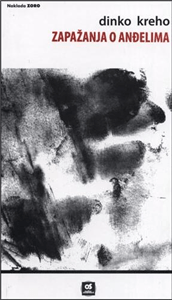
graduated in comparative literature and the literatures of Bosnia and Herzegovina at the University of Sarajevo, Bosnia and Herzegovina. He published the poetry collections Ravno sa pokretne trake (Fresh From the Conveyor Belt, 2006) and Zapažanja o anđelima (Observations on Angels, 2009) and, together with Dario Bevanda, the feature length radio drama Zvižduk u noći (A Whistle in the Night, 2013), written as a pilot episode for the radio crime series Bezdrov. Kreho’s non-fiction collection Bio sam mladi pisac i drugi eseji o književnom polju (I Was an Emerging Writer and Other Essays on the Literary Field) is forthcoming in spring 2019. He is a regular contributor to the websites Booksa and Proletter as well as to the weekly Novosti. He is based in Zagreb. Croatia.

The Interview

When and why did you start writing poetry?

I  actually made my first attempt at poetry at the tender age of 6, during the Yugoslav wars (back then I was living in the middle of the warzone). I wrote something along the lines of: “May the word ‘war’ turn into the word ‘brother’ and may all people love each other”. In Serbo-Croatian the word for “war” is “rat”, while “brother” is “brat”, so it was a convenient rhyme. Obviously, I have no idea what I was thinking. But I took a while to start getting rid of this affinity for pathos when writing poetry — more than two decades!

Who introduced you to poetry?

My parents introduced me to reading at a very early age, and obviously this included lots of children’s poetry and rhymes. But I first became aware that poetry was a ‘thing’ of this own — separate from, for example, music and songs — in my teens.

How did you become aware of this separation?

It must have had something to do with puberty and this frantic search for the means to express myself. We obviously “studied” some poetry in school, but it did not do much to pique my interest. On the other hand, my parents were both French professors, so we always had lots of cannonical French authors lying around. I remember reading Rimbaud and thinking: if he could write like this at 15 or 16, why can’t I? Even for a middle class teenager, I was pretentious.

How aware are and were you of the dominating presence of older poets traditional and contemporary?

If you are refering to the weight of the literary tradition(s), at first not much. I was never quite sure what ‘my’ tradition should be; generally speaking, I had a very fragmentary experience of culture. In the last few years, I started realizing how strong some constraints can be, especially in poetry. But I am still not sure as to how much of it is willing subjugation, and how much is due to objective processes.

What is your daily writing routine?

I try to do most of the writing in the morning. As I currently do not have a 9-to-5 job it should theoretically be possible to arrange. However, in my experience, writing poetry is different than writing both fiction and non-fiction: it is much harder to rationally ‘organize’ and fit into a timeslot.

What motivates you to write?

I have been fascinated by language for as long as I can remember, and I have always felt the need to do things with it. That’s probably the simplest way to put it. I do not necessarily feel that I have something special to say as much as I feel I have special ways to say some things. Also, I am quite confident in my writing, whatever the form and genre — which is not the case with most activities I engage in.

What is your work ethic?

I try to stay responsible (towards myself and what I am writing, towards the intended audience, etc.), but at the same time I try to not take myself too seriously.

How do the writers you read when you were young influence you today?

I like to re-visit my influences from time to time. I discover something new each time — be it something disappointing, exciting or just plain weird. Furthermore, the mechanics of influence are bizarre: I keep finding out that I am not that much influenced by writers and texts I believed I was influenced by, and vice versa. Also, when I try to assess my influences and the context of my own writing from a writer’s perspective and from a critic’s perspective the image is often completely different (which I believe is inevitable).

Whom of today’s writers do you admire the most and why?

I admire Tristan Garcia, a French author globally famous as a philosopher, but whose novels, almost unknown (outside of France), almost eclipse his philosophical work with their brilliance. Manga author Naoki Urusawa, with his incredible series 20th Century Boys, Monster and Billy Bat, has recently hugely influenced my own stories and novellas. Another French author I love, and whose work is often difficult to classify between essay, poetry and fiction, is Nathalie Quintane. As with many writers n my generation, recently deceased Slovenian poet Tomaž Šalamun has changed the way I see poetry, and even writing in general. His compatriot Taja Kramberger has written incredible meta-critical pieces on the dynamics of the literary field — she has been a huge influence on my non-fiction. Croatian authors Luka Bekavac and Olja Savićević Ivančević write very exciting, and, within the context of this language, unique novels. China Mieville is a global writing star I can always read, everything he writes. Playwright Dario Bevanda (disclaimer: he is also my best friend) should become an international sensation. Of course, as I am typing this I am soaking in anxiety because of all the names I have inevitably left out!

Why has Tomaz Saluman changed the way you see poetry?

I think it’s a question of timing. In the early 2000s, when I first started exploring contemporary poetry from my region (ex-Yugoslavia), there was a monopoly of neo-realism, more precisely of a certain realist reductivism. Poetry was often expected to explicitly address the present moment, articulate explicit political stances, etc. Šalamun showed me how one can forego this sort of imperatives and pressures and write very ‘contemporarily’ none the less.

I promised myself I would not be adding too many names I had forgotten to include afterwards, but there is one I must mention: Tanja Marković. She is a terrific author from Belgrade, who has recently shaken up the entirety of the cultural scene with her Facebook writing wherein she combines performance, drama, political intervention and fiction.

Why do you write, as opposed to doing anything else?

I think I have been conditioned to write in my childhood. I started reading very early, and as soon as it happened my parents started encouraging me to do things with words myself. I think the two years I spent in the Bosnian war as a kid (1992-94) were also crucial: we spent a lot of time in shelters and basements, had no electricity to watch TV or play videogames, so reading/writing was often a default pastime.

What would you say to someone who asked you “How do you become a writer?”

I am not sure I would be qualified to answer that sort of question. I think of myself much more as of someone who writes, as opposed to “writer”, as a symbolic status. Even in a mundane sense: I do not even make all of my living from writing!

Naturally, I could and I am always willing to give more concrete advice about writing. And it often comes down to bullet points such as: read a lot; read diverse; create a writing habit; do not take yourself too seriously; be patient with words; etc.

Final question: Tell me about writing projects your are involved in at the moment.

As I am typing this, a non-fiction collection called Bio sam mladi pisac i drugi eseji o književnom polju (I Was an Emerging Writer and Other Essays on the Literary Field) is due to be out in a few weeks; it is going to be my first solo book in almost ten years. I also have a poetry collection titled Simptomi (Symptoms) in the works. But personally, I plan on making 2019 my short story year. The idea is to participate in different short story contests (they are quite numerous in my language) and attempt to challenge the poetics and politics that usually get awarded at such competitions. Eventually I plan on collecting the stories into a book.

Poems by and Interview with Egyptian writer Amirah Al Wassif, To Be a Brilliant Woman In the Third World

Fascinating

Jamie Dedes's avatarJamie Dedes' THE POET BY DAY Webzine

“…you have to stitch and cherish and nourish and never have the chance to flourish!” Amirah Al Wassif


Amira’s exquisite poetry and prose have the lilt of Arabic and although I know many American editors would be tempted to edit into more standard straightforward English, I am loath to do so. This is perhaps because from childhood my ear is used to listening to English lyrically spoken by family and friends for whom Arabic was a first language. It is my pleasure to bring this young intuitive talent and her unique perspective to you here today. Enjoy! / J.D.


To Be A Brilliant Woman in the third world!

to be a brilliant woman in the third world
you have not to be!
so, if you want the basic tips
kindly listen to me
put your mind in a box
be ready to say every moment “agree”
announce your eternity…

View original post 1,028 more words

On Fiction Wombwell Rainbow Interviews: Shane Joseph

On Fiction Wombwell Rainbow Interviews

I am honoured and privileged that the following writers local, national and international have agreed to be interviewed by me. I gave the writers two options: an emailed list of questions or a more fluid interview via messenger.

The usual ground is covered about motivation, daily routines and work ethic, but some surprises too. Some of these poets you may know, others may be new to you. I hope you enjoy the experience as much as I do.

MilltownCover

Shane Joseph

is a graduate of the Humber School for Writers in Toronto, Canada. He began writing as a teenager living in Sri Lanka and has never stopped. Redemption in Paradise, his first novel, was published in 2004 and his first short story collection, Fringe Dwellers, in 2008. His novel, After the Flood, a dystopian epic set in the aftermath of global warming, was released in November 2009 and won the Canadian Christian Writers award for best Futuristic/Fantasy novel in 2010. His latest release is In the Shadow of the Conquistador, a novel set in Peru and Canada. Shane’s latest collection of short stories, Crossing Limbo, was published in 2017. His short stories and articles have appeared in several Canadian anthologies and in literary journals around the world. His blog at is widely syndicated.

His career stints include: stage and radio actor, pop musician, encyclopedia salesman, lathe machine operator, airline executive, travel agency manager, vice president of a global financial services company, software services salesperson, publishing editor, project manager and management consultant.

www.shanejoseph.com

The Interview

  1. What inspired you to write fiction?

I was always inspired by the parables of Jesus. So much of the world and its complexity was conveyed in a simple story. It was so much easier to digest and retain than something prescriptive from a non-fiction book. When I read Hemingway’s The Old Man and the Sea, I realized that parables could be extended into the modern day, and when Philip Roth said, “Nothing need hide itself in fiction,” I realized that the fiction canvas was unlimited and that we would be only limited by our imagination and our fear. So I chose fiction.

  1. Who introduced you to fiction?

My drama instructor, James Goonewardene, was also a novelist, and I was introduced to his books and his life when I was 17. It was a heady and transformative influence at the time. Despite that early start, I had to lay my creative pen aside (yes, it was still a pen back in those days) at the age of 24, to build a business career, start a family, emigrate from a third world country (twice), and do all those things that men are expected to in their prime. Fiction always lurked like a guilty shadow during those years, and eighteen years ago, I finally stopped running from myself, bit the bullet, and committed to writing again. James was right when he said that writing is a calling, and we ignore that calling at our peril.

  1. How aware were you of the dominating presence of older writers?

Very aware, and I welcomed their influence. Every wave or age of literature has had its masters, and it’s good to study their work to learn the craft, although one does not want to end up cloning their styles or being held hostage by them. I was influenced by Ernest Hemingway, Graham Greene and John Steinbeck. Then later by Fitzgerald, Roth, Updike and Maugham. I had to separate their reality from mine: they were 20th century writers who had made their mark early in their lives when print was still king and writing was an aristocracy; I was a 21st century writer starting (again) in my late forties, trying to make it in a digital age where content was expected free and writing had become a democracy. Setting the right expectations can release any artificial constraints on one’s creativity.

  1. What is your daily writing routine?

I still have a part-time day job that pays the bills, so I write on only about 2-3 days a week. Usually, I write in the morning for about an hour or two. I try to cover about 1000 words per sit down at my laptop. I find after that creative spurt I am writing mostly junk afterwards.

  1. What motivates you to write?

There is an inner compulsion to express, to make sense of the world, to leave a trail of bread crumbs for someone else to follow. I am the eldest in my family, and I was always looking after the younger siblings, so this desire to leave lessons behind is hard-coded. I don’t force myself to write. After completing a larger work like a novel, my well of inspiration usually runs dry and I have to sit it out, confident that the reservoir will fill again, and it does. The world is too full of stimuli to miss out on the next act of creation. Since I started writing again, I have published 8 books, written 5 more unpublished works, and am working on a new novel. In addition, I have written over 200 essays/articles and nearly 600 book reviews. The constraints of rejection, time, and health act as powerful motivators as well, to keep creating while the ability is still there.

  1. What is your work ethic?

I believe a work must entertain, educate and enlighten. It must leave the fictive world it portrays a better place in the end. It must provide hope. It should not contribute to the tsunami of useless literature that clogs the cyber waves today. I believe that luck is the product of hard work. And I believe that we need to create our own opportunities, however small they may be.

  1. How do the writers you read when you were young influence you today?

I have revisited my three teenage heroes Hemingway, Greene and Steinbeck many a-time in the recent past and I find that they still grip me. They led bold lives, venturing into trouble spots around the world, uncovering unpleasant truths (even about themselves) that lesser writers would have baulked at, stretching the novel and short story forms during their time to what they have become today. These writers may come across as pedestrian today because many have emulated their styles to make them the new standards, but I marvel at how alone and marginalized they may have felt at the time as they stuck to their guns convinced that someday, someone was going to believe in them.

  1. Who of today’s writers do you admire the most and why?

There are too many to mention but let me single out a few: Michael Chabon, Joyce Carol Oates, Orhan Parmuk and Mario Vargas Llosa. Well, first of all, because they tell rollicking good stories in great settings, especially Parmuk and Llosa who situate their books in international locales. They handle character complexity very well. All their books make me think long after I have put them down. Vargas Llosa is an experimental writer who often weaves two or more scenes in alternating lines of dialogue that render a split-screen, cinematic effect to his novels. Oates, being a creative writing instructor, runs a gamut of styles that we can all learn from. Parmuk writes under the shadow of censure in Turkey, and yet, has won the Nobel Prize for Literature. And Chabon’s renditions of comic book heroes and Jews transplanted to Alaska are story-telling at their best. All of them are bold writers tackling the tough issues of today, even if we may not agree with their viewpoints.

  1. Why do you write?

I think I have already touched on this in some way or other in the earlier questions. But let me add, that as I head into the final third phase of my life, it is now a time to record all that I have learned before. Although writing is not a physically demanding activity, it is a mentally, emotionally, and spiritually demanding one, and one that can only be undertaken when sufficient maturity has been acquired. Writing also demands stamina. I am writing now while I still have that stamina.

  1. What would you say to someone who asked you “How do you become a writer?”

I would first ask, “Are you sure?” This is a cross once borne, and one should give the prospect great consideration before accepting the yoke. It is not unlike any other vocation, for it will change your life, your lifestyle, and your income (most likely lower it, due to the forgone opportunity cost of earning a higher income elsewhere). I would also ask, “How do you handle rejection?”, “How do you handle ‘hurry up and wait’ syndrome, waiting for publishers to respond?” “How do you handle locking yourself away in a room on a sunny day?” and “How do you handle ‘9-day wonder’ syndrome when your book is forgotten within the year of it being published and your publisher doesn’t return your calls?”

If the answer is still, “Yes, I want to become a writer,” then I would say that learning the craft through a writing course and practicing constantly by writing daily is the necessary preparation for today’s writer. Olympic athletes train for years before they gain entry to the big arena, and writers also need to train for years before they can join the competitive literary market that exists today. Ray Bradbury wrote one short story a week for ten years before his “The Lake” hit the jackpot – I hope that conveys that there are no shortcuts to this business.

  1. Tell me about the writing projects you have on at the moment.

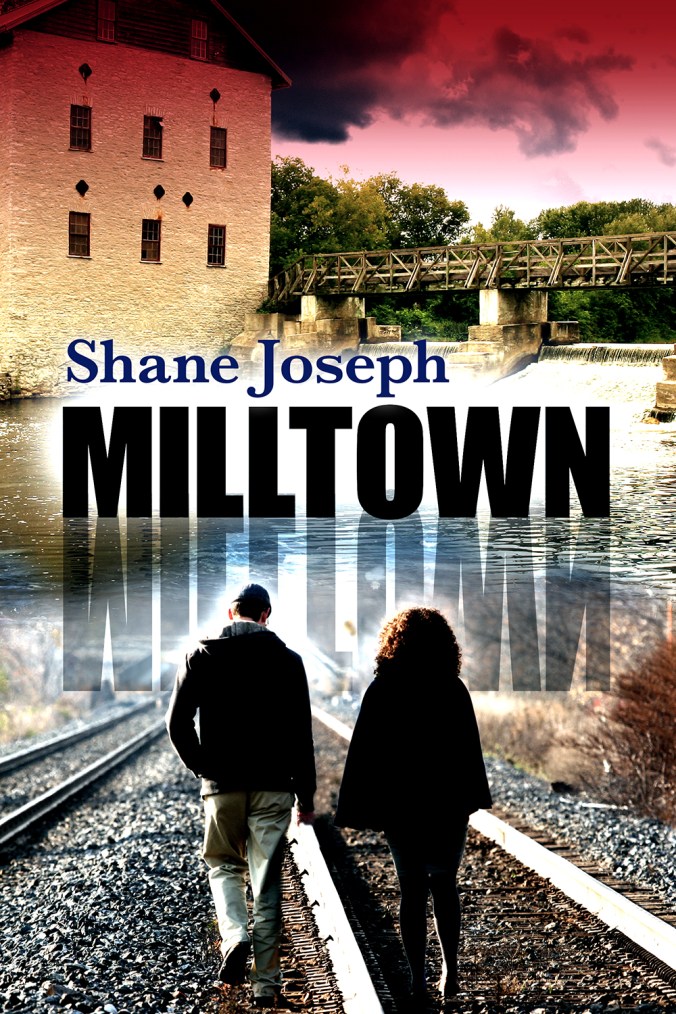
I am releasing my next novel, Milltown, in April 2019, one I wrote about ten years ago and put on hold as I wasn’t sure what reaction I would get ( ten years ago, I wasn’t in the class of my bold, teenage writer-heroes, you see!). In addition, I have written a historical trilogy set during the French Revolution, another novel set in Canada in recent history, and a new collection of short stories – all of these are awaiting publication, but I am in the “hurry up and wait” syndrome phase with them. Maybe, not all of them will be published during my lifetime!

The above backlog notwithstanding, I am working on a new novel, experimental to some degree because it has an unreliable narrator, a first for me. I’d like to see where it takes me. In addition, I write regular articles and book reviews for journals, magazines and e-zines.


Wombwell Rainbow Interviews: Veronica Aaronson

Wombwell Rainbow Interviews

I am honoured and privileged that the following writers local, national and international have agreed to be interviewed by me. I gave the writers two options: an emailed list of questions or a more fluid interview via messenger.

The usual ground is covered about motivation, daily routines and work ethic, but some surprises too. Some of these poets you may know, others may be new to you. I hope you enjoy the experience as much as I do.

Birds cover

Veronica Aaronson

Veronica was featured at the Torbay Poetry Festival. Her first collection was published by Indigo Dreams in November 2018: Nothing About the Birds Is Ordinary This Morning

http://www.indigodreams.co.uk/veronica-aaronson/4594449130

She is the co-founder and one of the organisers of Teignmouth Poetry Festival and Poetry Teignmouth. She runs an Open Mic quarterly in Teignmouth and produces an anthology from the event each year. She has read at different venues around the South West including Taunton, Torquay, Exeter, Totnes and Teignmouth over the last four years, shortly after I started writing poetry. I am a member of the Poetry Society and Moor Poets.

The Interview

  1. What inspired you to write poetry?

To begin with I wanted to leave a sense of who I was for my grandchildren, but after about eighteen months I had the realisation that the truth doesn’t make the best poetry. What I couldn’t know before I started, is that once you start writing regularly it just keeps coming whether you want it to or not.

  1. Who introduced you to poetry?

Miss Lane, a teacher I had at primary school introduced me to the music of poetry in Eliot’s cat poems and a friend called Peter Scott re-introduced me poetry at university. That was when I became aware of the power of the content. He was reading English Lit. so I followed his poetry reading list and as he wrote poetry too, I went to readings with him.

  1. How aware were you of the dominating presence of older poets?

Thanks to Peter very aware, not all of them appealed though. The ones that caught my attention were Sylvia Plath, Ted Hughes, William Carlos Williams, Seamus Heaney, Walt Whitman and the Liverpool poets.

  1. What is your daily writing routine?

I don’t have a daily routine although I usually write or do a bit or editing each day. Mainly I like to write before I get out of bed, or sometimes I get up in the night – poems often start coming in the gap between sleep and waking.

  1. What motivates you to write?

Poetry just comes, all I do is write it down. I guess it’s stuff my unconscious mind wants to dump for whatever reason. It’s often about incidents I hardly remember,

or sometimes when I’m being present in nature, it’s as if the beauty is too much to handle without writing it down, sharing it.

  1. What is your work ethic?

It’s pretty good once I’ve set time aside to write.

  1. How do the writers you read when you were young influence you today?

I think this must happen at an unconscious level after all we are just an amalgam of our experiences. I tend to be more influenced by poems I come across now that really move me.

  1. Who of today’s writers do you admire the most and why?

I tend to have favourite poems by lots of different poets including Fiona Benson, Pascale Petit, John Burnside, Penny Shuttle, Kayo Chingonyi. It’s always the poems that speak to my body and not my head.

  1. Why do you write, as opposed to doing anything else?

I assume you mean anything else creative. I used to paint a bit, but I really like the rigour of writing.

  1. What would you say to someone who asked you “How do you become a writer?”

Begin by reading the kind of material you want to write, then begin writing, edit it and edit it until you’re happy, then stick it away for a few months, then reappraise.

Repeat over and over.

  1. Tell me about the writing projects you have on at the moment.

I’ve just finished writing a collection called “In the Wrong Nest” about being adopted in the 1950s. It’s written in the voice of a character called Emily and is divided into three parts: Chick, Fledgling and Adult Bird. It’s based partly on my own experience and partly on research. I was a psychotherapist in one of my previous lives.

Wombwell Rainbow Interviews: Dah


Wombwell Rainbow Interviews

I am honoured and privileged that the following writers local, national and international have agreed to be interviewed by me. I gave the writers two options: an emailed list of questions or a more fluid interview via messenger.

The usual ground is covered about motivation, daily routines and work ethic, but some surprises too. Some of these poets you may know, others may be new to you. I hope you enjoy the experience as much as I do.

Dah,

Born April 7th 1950, in Herkimer, New York and raised in Ilion, New York, along the energizing Mohawk River, Dah has been a resident of Berkeley, California since 1980.Besides being a prolific writer, Dah is an award-winning photographer, and a yoga practitioner since 1969. He is a certified teacher in two yogic disciplines, Shivananda  and Yoga Of The Heart. From these two schools he developed his own style, Chakra Four Yoga, which he’s been teaching to children in public and private schools since 2005. Dah stopped teaching adults in 2013, only to focus on the magical realm of teaching kids to meditate, to stretch, and to stay in harmony with the natural world.

When Dah is not writing or teaching he stays close to nature and has a great passion for coastal camping along the Pacific shores and backcountry camping along lakes and rivers, as well as cycling, canoeing, and daily long walks in the redwood hills of Berkeley. He also spends many hours in his self-designed and self-built garden meditating or floating into a trance state of deep relaxation, dreams, and visions.

Much of Dah’s poetry exhibits indelible images of nature and,  at times, his poetry can be beautifully melancholic due to the gloomy emotionally and spiritually depleted realms  of humanity, politics, and religion.

Dah says: I don’t always want my readers to feel comfortable in that uncomfortable poetry can create realizations that enable an expansion of one’s imagination and experiences.

Email: dahlusion@yahoo.com
Twitter @dahlusion

Tumblr: dahlusion

Facebook: Art Of Dahlusion

Google: dahlusion or Dah Helmer

The Interview

WR: Dah, thank you for taking the time out of your schedule for this interview.

DAH: The pleasure is mine Paul, and thank you for inviting me.


WR: So, what inspired you to write poetry?


DAH: For me, Paul, it’s more of who than what. The inspiration comes from nearly all of the 20th Century European and Russian poets, along with
the Dada and Surrealist writers, which also includes Rimbaud and Whitman.
Then, in the 1960’s, Bob Dylan, John Lennon, and Jim Morrison’s poetry/lyrics
came around and the complex word-play in their writing has had a powerful
affect over my creativity. It was as if a spell had been cast.


WR: Who introduced you to poetry?


DAH: I began focusing on poetry in my early teens due to my ninth grade English teacher.
She would begin class by reading poems from Neruda, Whitman, Poe, and others.

         Something in me clicked with their poetic language and especially with Neruda’s

earthy simplicity and Whitman’s sweeping imagery.


WR: How aware were you of the dominating presence of older poets?


DAH: I believe that the awareness is always there, whether conscious of it or not. It’s understood that, as a young poet, older poets have
always had a stimulating affect over my thoughts as a creative thinker.
It’s the creative achievements of these older poets along with their ability
to string words together into stunning similes and metaphors that, as a
fledgling writer, lured my imagination and my interest.


WR: What is your daily writing routine?


DAH: I would like to say that I have a writing routine, but I don’t have one. I’ve never considered a writing process. I write when I have something to say. I don’t force words onto paper, nor do I force myself to write. There are those who are convinced that if they don’t write so many words per day then they are failing as a writer, and I find this type of thinking stifling with a side of emotional torcher. I’m completely relaxed about writing and about being a writer. Also, I travel a bit, which creates natural stimulation for my imagination. I write in pencil in cheap composition notebooks which I carry with me all of the time. There’s nothing special in my working technique, no glorified writer’s sanctuary.


WR: What motivates you to write?


DAH: My subconscious tells me when I must write. I never consciously think about it. Many times while walking or driving I have dropped to the sidewalk or pulled my truck over to get a first-draft line or two out of my head and onto paper. Again, there is no specific process or rules for my writing. There’re no deliberate set ups, no special pen, or no particular writing space, or any writers retreats. The only time that I retreat to write is when I open my composition notebook, or when I open a blank WORD doc. Any time that I am writing I have retreated, that is, into my imagination.

Also, I’m a member of the poetry critique group, The Lounge, which is a place where a few of us writers watch out for one another by critiquing and editing each others work. It’s an online group that I created in 2013. I keep The Lounge at ten members or less. It’s a comfortable, egoless space to be a writer.


WR: What is your work ethic?


DAH:. To be a good writer one must be an honest writer, a writer of integrity, even if you are making it up you have to be honest with yourself about why you are writing this or why you are saying this.


WR: When you were young, how have the writers you read influenced you?


DAH: In everyway possible, artists influence artists. Ones development as an artist and ones many transformations as a growing artist are connected, in one way or another, to what one reads or observes from other artists. There’s no denying the influence and/or inspiration by those before us. On many different levels we, knowingly
or not, establish an emotional relationship with those who have influenced us.


WR: Who of today’s writers do you admire the most and why?


DAH: I read many literary journals and magazines and to be honest there’s not much from contemporary poets or fiction writers that excites me. Currently, there’s an overwhelming deluge of sentimental writers, those who persistently write about their families, or childhoods, or about the dying process of a mother or father, that doesn’t draw me in.

I am a hard reader to please. It’s rare for me to be astounded, or to be left speechless by today’s writers. I am not stating that these are inferior writers I am simply saying that what they’re writing about doesn’t appeal to me. On the other hand, being that W.S. Merwin is still alive, then, yes, I admire much of his earlier works. There’s something visionary in his thinking, something deeply creative in his wordplay, something essential and fresh in his creative language. There is also an up and coming fiction writer, Michael Grotsky, who may be releasing his first collection of short fiction at the end of this year. I’ve read many of his stories, and his imagination is of a higher-level accomplishment. His stories are bold with unique characters, places and dialog. Grotsky’s fiction never fails to take me on a spirited adventure to places that I have not been, or to show me something that I’ve not seen, or to tell me things that I have not heard.


WR: Why do you write, as opposed to doing something else?


DAH: I’m an artist, and creative writing is simply one of my many expressions.

Fine art photography has been another of my expressions for about four decades.

I also paint, draw, play guitar etc …


WR: What would you say to someone who is asking you: “How do you become a writer?”


DAH: To become a writer, one must write. There’s no other way to be a writer.


WR: Tell me about the writing projects you have going on at the moment.


DAH: My seventh book of poetry, Something Else’s Thoughts, was released by Transcendent Zero Press in July 2018. My sixth book, The Opening,
was released a few months earlier by CTU Publishing in March 2018.
Currently, my eighth book, Full Life In The Day Of A Poet: selected poems,
is in production with Cyberwit Press. The 100-plus poems in this collection
are culled from my first four books. The release of “Full Life … “ should be
March 2019. Also, I’m continually submitting my poems to journals and
magazines, which amounts to about fifty to seventy of my poems published
each year. Over the past few years I have had hundreds of poems published
in scores of literary zines, in both academic and non-academic periodicals.
In addition to all of these writing projects, I’m sorting through my literally
thousands of photographs for my first photographic book. If I stay focused
I may even see it to a finished piece of work with about fifty-to-hundred images.

WR: Dah, thank you for this insight into your world as an artist.

DAH: Thank you, Paul, for having me here.

Dah’s Books: In Chronological Order

• In Forbidden Language

with an introduction by Eve Costello

Publisher: Stillpoint Books, 2010

http://www.amazon.com/In-Forbidden-Language-Dah/dp/0982874707

———————————————————————————————————–

• The Second Coming

with a Foreword by R.H. Peat

Publisher: Stillpoint Books, 2012

http://www.amazon.com/Second-Coming-Dah/dp/0982874715

——————————————————————————————————

• If You Have One Moment (Stillpoint Books, 2015)

Publisher: Stillpoint Books

http://www.amazon.com/If-You-Have-One-Moment/dp/0982874731

—————————————————————————————————————

• The Translator

With a Foreword by Elina Petrova

Publisher: Transcendent Zero Press, 2015

http://www.amazon.com/Translator-Dah-Helmer/dp/0692415254/ref=sr_1_1?s=books&ie=UTF8&qid=1437074680&sr=1-1&keywords=the+translator+%2F+dah

———————————————————————————————————————————

• Say This In A Whisper (Red Wolf Editions, 2017) free ebook download

With an Introduction by Irene Toh

Publisher: Red Wolf Editions, 2017

https://redwolfeditions.wordpress.com/2017/10/01/say-this-in-a-whisper-by-dah/

–––––––––––––––––––––––––––––––––––––––––––––––––––––––––––

• The Opening

With a Foreword by Brenda-Lee Ranta

Publisher: CTU Publishing Group, 2018

http://www.ctupublishinggroup.com/dah.html

https://www.amazon.com/dp/1945791519/sr=1-1/qid=1521314590/ref=olp_product_details?_encoding=UTF8&me=&qid=1521314590&sr=1-1

• Something Else’s Thoughts

With an Introduction by Michael Grotsky

Publisher: Transcendent Zero Press, 2018

https://www.amazon.com/dp/1946460052/ref=sr_1_2?ie=UTF8&qid=1532729143&sr=8-2&keywords=something+else%27s+thoughts

———————————————————————————————————————————–

Wombwell Rainbow Interviews: Scott Wozniak

F WORD WARNING 

Wombwell Rainbow Interviews

I am honoured and privileged that the following writers local, national and international have agreed to be interviewed by me. I gave the writers two options: an emailed list of questions or a more fluid interview via messenger.

The usual ground is covered about motivation, daily routines and work ethic, but some surprises too. Some of these poets you may know, others may be new to you. I hope you enjoy the experience as much as I do.

Screen Shot 2018-08-30 at 8.50.50 PM

Scott Wozniak

is a poet/chaos enthusiast living in Oregon. His works are widely published both online and in print. He is the author of three books, Crumbling Utopian Pipedream (Moran Press), Killing Our Saints (Svensk Apache Press), and Ash on Your Face like Warpaint (Analog Submission Press). His fourth book, Shooting Gallery Vultures, a graphic book of poetry collaborated on with artist Andrew Nutini is due for release this spring through Moran Press.

Here is a link to his author page at Neutral Spaces Scott Wozniak | Neutral Spaces

The Interview

  1. When and why did you start writing poetry?

Poetry just came out of me as a natural coping mechanism. It was by no means a conscious thing. Years ago, I took up the habit of writing and poetry just seemed to be the form it took when being released.

2. Who introduced you to poetry?

I can honestly say no one ever really introduced me to poetry. In my youth I found myself being drawn to the lyrics in music. As a result, I think that imbedded in me a love for words. Due to that attraction, I just started soaking up and exploring poetry on my own.

3. How aware are and were you of the dominating presence of older poets traditional and contemporary?

Very aware! Most of what I found in those early years were what would be considered classical poets, Wordsworth, Longfellow, Whitman, etc… which led to T.S. Eliot, Dylan Thomas, Frost, William Carlos Williams, which led me to The Beats, which led to the Nuyorican Poets, to the Meat Poets, to poets coming from the Café Babar scene, and so on. It took me many years of following the chain to find more contemporary poets. When I did discover there was a slew of poets working in the form today, that weren’t “academic poets” or writing flowery rainbow feel-good poetry, it was a revelation. For a long time, I didn’t even realize contemporary poetry (I could enjoy) was a thing. Look in most bookstores today and you’ll only find older poetry/poets. It takes some serious digging and knowing where to look to find newer works published outside the usual crap
.

4. What is your daily writing routine?

I wish I could say I have a daily writing routine. I get it down when it needs to get put down, when the desire becomes too much to handle.

5. What motivates you to write?

There’s just this strange pull inside of me that only gets relief once I put something down on paper, a pent-up feeling of angst or tension that only writing relieves. Couple that with life experiences and interactions with people that had a deep effect on me, people whose stories and existence is generally ignored, and my feeling that they deserve to be recognized, well, roll all that together and I guess it creates the perfect storm.

6. What is your work ethic?

My work ethic is shit, I get distracted by the million directions life can pull us. But when I’m focused on a project, I will see it through, eventually.

7. How do the writers you read when you were young influence you today?

I think all their output, technique, and guidance that I tried to absorb and learn from is still there, influence wise, one way or another, maybe even sub-consciously. But I hope it’s not too obvious who I’ve been directly influenced by. I like to think I’m building off a type of poetic heritage and taking it in new directions. But I also know that’s a crock of shit and that, at this point in the game, the best I can really hope for is to contribute to the lineage by adding something to it that doesn’t suck.

8. Whom of today’s writers do you admire the most and why?

Man, there are so many good writers out there today, just carving their way through the indie lit scene, not giving a fuck, and doing it for the love of the art. Almost everyone I respect most, works a job, has other life obligations and still makes time to create. If I were to make a list of names, I would undoubtedly forget someone. So I’m gonna cop out and say this, I have huge respect for everyone out there with the gall to strive for creating new work and having the audacity to get it out into the world.

9. Why do you write, as opposed to doing anything else?

Like I said before, it’s just kind of what came to be. I’m not so sure there was much choice in the matter.

10. What would you say to someone who asked you “How do you become a writer?”

I would tell them to just fucking write. You don’t “become” a writer. You either write or you don’t.

Tell me about the writing projects you have on at the moment.

My next collection, Shooting Gallery Vultures, is a collaboration with artist/friend Andrew Nutini and should be released sometime this spring through Moran Press. It’s a crazy, beast of a book that is best described as a graphic book of poetry, like a graphic novel but for poetry. Andrew did amazing work bringing my poems to life through his visual creations. I can’t wait for people to see it.
I’m also going to be doing a split chapbook with John D. Robinson at some point, it will be published through his Holy & Intoxicated Publications. I’m really excited for that, as well. I love John’s work and am honored he asked me to share space with him on the page.

Wombwell Rainbow Interviews: Astra Papachristodoulou

Wombwell Rainbow Interviews

I am honoured and privileged that the following writers local, national and international have agreed to be interviewed by me. I gave the writers two options: an emailed list of questions or a more fluid interview via messenger.

The usual ground is covered about motivation, daily routines and work ethic, but some surprises too. Some of these poets you may know, others may be new to you. I hope you enjoy the experience as much as I do.

Songs

Astra Papachristodoulou

is a graduate from the MA Poetic Practice at Royal Holloway with focus in experimental poetry and the neo-futurist tradition. She has given individual and collaborative performances at events in Slovenia, Greece and the UK, including the European Poetry Festival, Free Verse Poetry Book Fair and IGNOR Festival. Her work is collected by the National Poetry Library, and has appeared in magazines such as The Tangerine and 3:am Magazine, and anthologies including No, Robot, No! (Sidekick Books, 2018) and Wretched Strangers (Boiler House Press, 2018). She tweets at @heyastranaut.

www.astranaut.co.uk

www.haverthorn.co.uk/store/p16/astropolis.html

http://sidekickbooks.com/booklab/books/no-robot-no/

The Interview

1. When and why did you start writing poetry?

Like most poets I know, I started writing from a young age – for me it happened around 13. As a child, I was fascinated with theatre and most days after school found me writing one-act plays and reading theatre classics by Chekhov, Ibsen and Fo – to name a few. I started writing poetry much later in life in my early twenties at a point where I was struggling with depression and writing was the only way out. My first poems were terribly emotional and I’m glad to have moved away from that since then, towards conceptual and experimental writing.

2. Who introduced you to poetry?

My father, Lakis, found comfort in painting and writing poetry during difficult times, so unconsciously, you could say, that he may be the one who introduced me to poetry. I see poetry in the simple things, and I think that we are all exposed to poetry from the minute we are born. We just need to preserve our inner-child’s curiosity as adults. Poets are curious beings.

3. How aware are and were you of the dominating presence of older poets traditional and contemporary?

Not aware at all – it’s not something that I’ve thought about before in that sense. The network of experimental poets in London right now is a mixed bag in terms of age. There are just as many older and experienced figures, as there are younger emerging poets. You see collaborations between older and younger poets in recurring events such the European Poetry Festival, and it’s a wonderful thing really.

4. What is your daily writing routine?

Discipline has always helped me produce work consistently. I aim to write/edit a poem every night before bed, although recently my current job has disrupted that pattern slightly. I am a late bird and my brain lights up from midnight onwards. It’s funny how that happens – I’ve met many fellow poets and artists who are most alert late at night.

5. How do the writers you read when you were young influence you today?

I’m still young but you could say that since my MA in Poetic Practice at Royal Holloway a few years back, my taste in poetry has totally changed and I don’t think that any of the writers that influenced me back then interest me now.

Actually, scrap that – does Bowie count as a writer? If so, he’s probably a consistent source of inspiration since childhood. I read somewhere this: “if innovation was a person, he or she would look like David Bowie”. Probably the reason why he influenced me then, and influences me today.

6. Whom of today’s writers do you admire the most and why?

I think that you have just opened Pandora’s box – the list is endless! I really admire Robert Hampson and Stephen Mooney whose work always pushes the boundaries. I admire Steven J Fowler for his relentless passion for collaboration. I always look out for new poetry from Sarah Cave, Nancy Campbell, Kirsten Irving, Matthew Haigh, Muanis Sinanović and Julia Lewis because they’re pretty awesome. The list could go on and on and on…

6.1 Why are Sarah Cave, Nancy Campbell, Kirsten Irving, Matthew Haigh, Muanis Sinanović and Julia Lewis awesome?

Sarah Cave, Nancy Campbell and Julia Lewis are excellent ecopoets – this is a strand of poetry that really interests me. Sarah Cave’s book ‘like fragile clay’ has several poems that showcase her incredible rhythm and precision: “in a painted / wooden post-box / dirt and mould / dirt and mould, / thorns, / thorns and snail shells / imprints / transfers”. Nancy Campbell is a very innovative poet – she’s also a printmaker and an environmentalist. She recently painted a poem onto towpaths in hydroponic ink (this kind of ink only shows up when it’s raining) – you can’t predict what she’s going to do next!

I came across Kirsten Irving’s work through Sidekick Books – she’s a co-editor there alongside Jon Stone. As an editor, Kirsten is known for producing visual poems with an interactive twist (love it!), and as a writer, she retains that playfulness. It was through Sidekick Books that I was introduced to Matthew Haigh whose interests in futurism & visual poetry are close to my own. Lastly, Muanis Sinanović, a poet and translator, is the cherry on top of the cake – a very honest voice, always keen to try new things.

I should say that I know most of these poets personally and they’re all wonderful people. I admire good poets but appreciate them even more when they’re open and interesting in real life.

6.2. What is futurism?

Futurism is an avant-garde movement that was launched in Italy by F.T. Marinetti back in 1909. What set futurism apart from other movements at the time was Marinetti’s objective to project it, from its inception, not only as an artistic movement, but also as a social and political force. The movement explored, amongst other things, the transformations in human experience brought about by the machine – this is something that fascinates me.

A few months back I was commissioned by Sidekick Books to develop my neo-futurist manifesto, which refashions the tools of futurism to orient itself toward the future, as we understand it today. You can read the manifesto in the Sidekick ‘No, Robot, No!’ poetry anthology.

7. Why do you write, as opposed to doing anything else?

Writing poetry has now become one of my functions and I couldn’t live without it – cheesy, I know! I think of language 24/7 and my mind never rests to think of much else. I write because I enjoy writing, I write because it’s my job to do write, I write to have a voice.

8. What would you say to someone who asked you “How do you become a writer?”

It’s tricky to give someone advice on how to become a writer because everyone’s path in writing is totally different. But your question makes me think of this: can one become a poet, or are we born poets? To be a poet, one has to be creative and curious – these are things that have to be part of your nature, in my opinion. Nowadays, a poet has to be persistent and be able to promote themselves on social media and beyond.

9. Tell me about the writing projects you have on at the moment.

At the moment I’m working on a book with Guillemot Press, which is scheduled to be released around September 2019. I’m also working on a few collaborations with Oliver Fox, Sarah Dawson, Michal Piotrowski and Lina Buividavičiūtė for the European Poetry Festival and other Camarades. This week you will find me performing at the Avivson Gallery on Wednesday 20th February (7.30pm) as part of SJ Fowler’s exhibition Poethetic Pathogens, and the opening night of the Museum of Futures’ Phoetry exhibition on Thursday 21st February (7.30pm).