Wombwell Rainbow Interviews: Elancharan Gunasekaran

Wombwell Rainbow Interviews

I am honoured and privileged that the following writers local, national and international have agreed to be interviewed by me. I gave the writers two options: an emailed list of questions or a more fluid interview via messenger.

The usual ground is covered about motivation, daily routines and work ethic, but some surprises too. Some of these poets you may know, others may be new to you. I hope you enjoy the experience as much as I do.
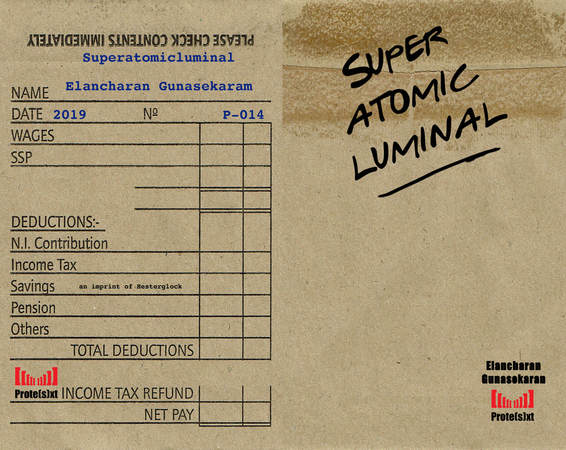
Superatomicluminal_cover


Elancharan Gunasekaran

is a multidisciplinary artist and poet. He resides in Singapore with his family and cat, Leo. He has a strange love for all things poetical and Sci-Fi. A winner of the Montblanc X Esquire Six-word Story prize 2017. He is the creator of House Haiku, an experimental music series combining poetry and house music elements. Andromeda’s Alien, his first album is now represented by Red Claw Records (Germany).

His latest publications are Superatomicluminal (Hesterglock Press, UK), Gods of The Gonzo (Analog Submission Press,UK), Sleeping with Wildflowers (Alien Buddha Press, Arizona/New York), The Cosmonaut Manifesto (UndergroundBooks, New York), Monochromatique (Queer Ink, India), Deviant Flames and Dark Revolver (Roman Books, UK/India). His poetry has been published worldwide, on various international print and online platforms. His books and performances have been featured at the New York City Poetry Festival, Rantai Arts Festival (Kuala Lumpur), Singapore International Festival of the Arts, Singapore Writers Festival, Poetry Festival Singapore, All In! Young Writers Festival Singapore and was a guest performer at the Travel Poetry Slam (Singapore).

He writes on Twitter: @elancharang and medium.com/@elancharang . He is also editor of proletaria.org, an online journal devoted to one-line poems and statements inspired by politics, philosophy and phenomena.

The Interview

When and why did you start writing poetry?

I started writing poetry in 2011, after serving two years of mandatory National Service. Singaporean males, 18 years of age and above are conscripted into the army, police force or civil defence (rescue divisions). After serving my time in the police force, i came out lost, aimless and without direction. While most of my peers went on to pursue their university education and other “normal” activities, I drowned myself in books and odd jobs. I did not want to be known as a salaryman all my life. I wanted to make a name for myself. I found myself reading poetry and experimental works that most people would shy from. I was inspired. I was inspired by socio-political issues, the environment, the human psyche, culture and customs. I wanted to explore the expanded universe that was beyond human understanding, the occult. I wanted to put my thoughts to paper, and so i did.

The books I read opened up my mind. I’ve been a bookworm all my life, but this was altogether something else. I was curious. I was a hungry creative. I felt the need to express and experiment. I started exploring the literary scene in Singapore and found that writing and poetry was a very niche area, it still is. There was a lack of local content, and globally we were not known to many. Within a few months I started to write, working on my first collection- Supernatural Haiku, while submitting to literary journals. It’s been eight years now, my writing has taken me places, even to countries where i’ve never stepped foot in. I’ve met all kinds of people at both ends of the spectrum- often sincere souls and sometimes, deviant characters who want nothing more than to exploit you for ill gains.

Poetry and writing, has given me purpose in life. Maybe, even made a wiser and stronger person.

1.1. What poetry and experimental works did you read and why?

I started off with haiku collections, and within haiku collections there were plenty of modern and experimental stuff. An example would be Zombie Haiku and Vampire Haiku by Ryan Mecum. People around the world were breaking traditional literary forms to create something new and that really piqued my interest. I went on to read full-length collections by more established poets, poet laureates and even award winning writers when I started to write to journals and seek publication with overseas presses. Poets such as Carol Ann Duffy, Angela Carter, Bukowski, Leonard Cohen, Adrian Henri, Ron Whitehead and many more. I also enjoy classics and poetry written by Anon, Sappho, Cavafy and Basho. And finally contemporary poets such as Divya Victor, Alexandra Teague, Hazel Smith, Michael Farrell, Robert Gal, Kerouac, Ginsberg and Kazuko Shiraishi.

On reading experimental works, I began with manifestos of the Dadaist, Futurist and Surrealist movements. There are plenty of versions and translations of these works on online resources. Experimental works often take on the form of chapbooks, pamphlets, zines and online publications. These are not commonly found in mainstream bookstores or publishers. Some publishers working in the area of the experimental are- Hesterglock, Analog Submission, UndergroundBooks, Alien Buddha, Iron Lung and Onslaught. These presses are devoted to the underground scene, the alternative and path less taken by mainstream poets. These publications are often cross-disciplinary, taking the form of writing with art, writing with photography and vice versa. There is no one poet or publication that i would like to mention here, this is best experienced individually.

As to why I read experimental works- diversity of thoughts. There is originality in experimental. A radical or laid-back perspective to a view or issue. Boundaries erased, taboos broken, such is the nature of experimental literature.

2. How aware are and were you of the dominating presence of older poets traditional and contemporary?

I was and still very aware of the reality that these older poets have come, conquered and left behind a legacy. And I respect that. The ones still living, are blessed to watch their legacy grow. But there are the few who persistently insist that rules should be followed, things should be done in a specific way, traditions and customs should be upheld. Yes, I respect those views. But to them I also say that their thought trains no longer run on the same tracks as the ones thirty or fifty years back.

The rise of the Internet and social media platforms has given a new lease of life to older and even ancient poets. They’ve been digitally resurrected. Bukowski is considered the poet-god of booze and heterosexual desires to social media poets. Plath and Woolf died a long time back, but feminist genes are more woke than ever in this current age. More than ever, people are reading Rumi, investigating stone slabs of Gilgamesh, preaching the words of Buddha and performing the epics of Valmiki. Revived? Yes. Revered? Yes. Dominating? I don’t think so.

Times have changed. People are changing. Art is evolving. Writing has and will continue to evolve with or without you. I look up to the older poets for inspiration. I admire them for their perseverance and courage. Though i wouldn’t call their presence dominating, it’s like a lingering feeling, it is there and it is not. More like a hungry ghost following you around, of not having enjoyed the luxuries of life, envious of the living, lamenting about what more they could’ve accomplished if only they had the time.

3. What is your daily writing routine?

My writing routine is rather normal. Nothing out of the ordinary. Consistency here is the key. I write whenever inspiration strikes. I take down notes and themes on my smartphone. I tweet haiku daily. I have a day job, when time permits or during breaks i try to write and read either a physical book, an ebook or online article.

When I am back home in the evenings or later on during the night, i work on my collections. I usually work on two or more projects at one time. That way, my mind is constantly creating and pushing myself to go beyond what i’ve written. I look out for competitions and open calls both local and international. I do my best to keep abreast of the literary world by seeking new publishers or publications.

Most importantly, I try to fit in a 45 minute or an hour walk/run in my daily schedule. Exercise helps me to relax and not be overwhelmed by my writing or work activities. I get to clear my head during a walk or gently ease my writers block when faced with one. And it is also during my walks or runs that I am inspired by the things happening around me. Writing is not only creating from imagination but to relate one’s senses to his or her surroundings. The emotions felt. The interactions observed. The tastes defined. The scents perceived. Take a walk. You’ll understand what I mean.

4. What motivates you to write?

I am motivated by local or global socio-political issues, culture and taboos. I start to write a piece- fiction or non-fiction, based on something i’ve read, seen or experienced personally. Sometimes it is based on a narrative told by a stranger or acquaintance.

As an Indian, Tamil- speaking minority, in a multiracial country (Singapore) vastly populated by the Chinese majority, there is much inequality, discrimination and oppression faced by my people and other minority races. I believe that poetry and the arts can connect people. Art brings people together regardless of race, language or religion. Poetry speaks to people on a deeper level, there is something soulful about it. Poetry, is my voice.

I am motivated to write by the primal nature of poetry; its ability to be gentle and nurturing when needed, full of rage and wrath in the blink of an eye. The need to send a message to the world regarding an issue or the need to tell a story in poetry, this motivates me to write. As wordsmiths, poets and artists we feel the urge to express our thoughts through words or some art form.

Also, praise, recognition and rejection is in some way motivating. The people behind the words, family friends, strangers who have become well-wishers. Rejection, spurs me on to write, motivates me to write better. Recognising that my work has made someone’s day, that is above all the most beautiful thing. Inspiring someone, raising the fallen from the ashes, changing the psychological landscape of the masses. The possibilities are limitless with the arts and poetry.

5. What is your work ethic?

Work ethics differ when it comes to fiction and non-fiction writing. I’ll explain more of that in a bit. Above all, I believe in equality, the freedom to respect individuals and their spaces, cultures and beliefs.

In non-fiction writing, I firmly believe in integrity. That research is the basis of all non-fiction pieces. The facts and numbers have to make sense, they have to speak for themselves. That truth of the experience is conveyed to the readers. It is almost a form of journalism but with a twist of creativity. Gonzo yet factual. Words bridge reality and the readers.

In fiction, i assume different writing personas, characters in thought. Attitude is the key. it can take the form of negative or positive attitudes. I try to stick to a persona or attitude when writing fiction, demure in some pieces, dominating in others. Some pieces require multiple personas and to stick with them throughout the work. Discipline here, plays a critical role. Maintaining the voice of the work is of utmost importance.

6. How do the writers you read when you were young influence you today?

I read authors such as Terry Pratchett, Enid Blyton, R.L. Stine and Stephen King at a young age. I had a deep interest in works and stories that were heavily influenced by Greek, Norse, Hindu and Japanese mythology. In my younger days, I lived for fantasy, horror and science fiction works. These were highly imaginative, the stories often introduced readers to new worlds, diverse characters and strange situations that would include otherworldly politics, fantasy cultures and conflicts on a galactic scale.

As a writer today, in this age, my fictional poetry and works are still influenced by fantasy, horror and science fiction themes. The mythological works that i read during my younger days included elements of poetry, either in the form of an epic or short stanzas. Unknowingly, I was drawn to poems and books that had elements of the themes described above. In my writing, I produce strange verse, forms and experiment with science-fantasy subjects. My reading list has now evolved to include authors such, Neil Gaiman, Frank Herbert, Brian Herbert, Kevin J. Anderson, Jeff VanderMeer, Peter V. Brett and many more.

7. Whom of today’s writers do you admire the most and why?

I’m a huge fan of Frank and Brian Herbert for their Dune series. Even though Frank Herbert is dead, Brian is carrying on his father’s legacy. The worlds they have created are massively beyond that of any other author i’ve ever read. It’s almost as if Frank had a prophetic vision and direction for the human race.

Countless films, scripts, books, art, think tanks and minds have been inspired by Dune. The political chaos and psycho-social dilemma that we are in right now has already taken place in Dune 40-50 years back. Space travel, we once thought was fantasy has become real, commercialised as we speak. New galaxies found, new planets found, another home for future generations. I admire these two for their detail, technicality in writing and storytelling ability.

Two other authors that I admire would be Neil Gaiman and Jeff VanderMeer. Neil’s fantasy is lyrical, amusing and cynical at times. Did you know he writes poetry? Some of his works include poems and that’s amazing! Jeff’s works are hybrid masterpieces that combine science fiction with horror and/or fantasy. He writes his books in a manner so seamless that you will be left wondering about the themes behind his works. These two are legends in their own fields. I admire them for taking the step away from the mainstream and telling the stories that are often or rarely not old.

In poetry, I admire Simon Armitage. This man, has a way with words like no other. He plays with words, dissects them down to the atom and puts them back together. Poetry is his language. Poetry is his soul. He lives and breathes poetry. He often writes on themes related to war and conflict. He wants to tell the world a different side of the conflict or problem. What more can I say about him? He’s a hero in his own right. His poems speak to me and are re-readable time after time. I admire him for saying what others fear.

8. Why do you write, as opposed to doing anything else?

Art is magic. Do you believe in magic, have you seen it? Do you believe in miracles, the divine? Do you believe in wonders, have you felt it? Writing is that. Magic. Words are magic. Passed down from the ancients, the mad gods. What else would I need? Writing satiates my soul. Writing speaks to the collective consciousness that is the human race on a subconscious level.

Writing comes naturally to me unlike other art forms. Also, other art forms require intensive spending on education, equipment and paraphernalia. In writing, the pen, paper and your imagination is all that is required. It’s easy on your mind and our wallets. Do you have something to tell the world? Write it down. A story, a poem? Write. Do you need to relax and relieve your stress? Write it down. Today we write on tablets, cellphones whenever and wherever inspiration strikes us.

I’ve dabbled in fine art, photography, the performing arts. I understand and respect the artistic process, the magic of art as an artist. But it is not the same as writing. There is something more, something primal about writing. Unexplainable. Raw. At the end of the day, i still come home to writing. Writing is my soul’s voice. I write because I need to. I work the magic that is writing and there is nothing else I would rather do.

9. What would you say to someone who asked you “How do you become a writer?”

You just do. You can’t really tell. It happens without warning, sometimes for a reason. If you’re really lucky, the spirit of a dead writer or dead poet takes over your body and BOOM! You’re a writer! If you’ve experienced any of the following you might be destined to be a writer: Desperation, love, failure, desolation, revolution, war, suffering, boredom, joblessness, mental illness and imaginary friends. The writer becomes you.

10. Tell me about a writing project(s) you’re involved in at the moment.

I am currently working on a collection of conceptual poetry. I have a conceptual fiction work- Superatomicluminal, in the pipeline that will be published soon, this year, by Hesterglock Press. As of recent, I’ve been heavily involved in experimental works, mostly conceptual stuff. The conceptual craze just hit me and i’m mind blown by all the experimental stuff out there and those waiting to be discovered. In my head, I’ve decided to dedicate this year and maybe the next to exploring and building up a body of conceptual work.

I’ve also started an online journal, proletaria.org, dedicated and devoted to the art of one-line poems and philosophical statements. These often come in the form of a monostich or monoku (a single-line haiku). The poems and statements are inspired by politics, philosophy and phenomena. One line or one sentence works in the experimental field are welcomed as well. It’s been more than a month and submissions are coming in fast from all over the world. I’ve published close to 10 poets so far, and that’s an amazing start for a journal with such a niche area.
 

Wombwell Rainbow Interviews: Sylvia Beverly, “Ladi Di”

Wombwell Rainbow Interviews

I am honoured and privileged that the following writers local, national and international have agreed to be interviewed by me. I gave the writers two options: an emailed list of questions or a more fluid interview via messenger.

The usual ground is covered about motivation, daily routines and work ethic, but some surprises too. Some of these poets you may know, others may be new to you. I hope you enjoy the experience as much as I do.

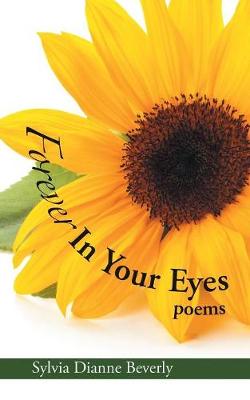
Forever In Your Eyez

Ms. Sylvia Dianne Beverly, “Ladi Di”

is a native of Washington, D.C,  founder/director of  “Girls with Hearts,” (youth poetry group),  poet, and author of Forever In Your Eyes (A potpourri of poems of love, appreciations and tributes, dedicated to Dr. Maya Angelou, Foreword by Dr. Franklin A. Sonn.  She attended the University of the District of Columbia, majoring in English. Ms. Beverly receives much joy from writing poetry, songs and short stories. She studied under the internationally acknowledged writer and poet, Gil Scott-Heron.

More recently, Ms. Beverly has a new DVD “Poetry Tyme in 2009” and a new CD “Welcome To Love”, dedicated to President Barak Obama.  She is an exceptionally proud student of “Do The Write Thing” publishing workshop, under direction of Kwame Alexander. In addition to original poetry, she frequently shares Dr. Maya Angelou’s poetry. Two of the main poems she recites are “Still I Rise”, and “Phenomenal Woman” along with others.

She has presented poetry around the Metropolitan Area, in several states and at the Lewisham Theater in Brixton, London, England. While touring London one of her poems “Love’s Been Here All The Time” was published in an anthology, “Whose Equality.” Also, Ms/ Beverly’s poetry was featured in “Artistic Expressions,” an exhibit of poetry, art and artefacts held in the Washington area, Dialogue, Motherland News, “Tuesdays” anthology,  “Echoes from the Caribbean”, Creative Circle and “Family Pictures”, Capital Bookfest 2007.

In addition to writing poetry, Ms. Beverly enjoys and has been blessed performing before many gracious audiences; National Zoological Park, Smithsonian, ( Easter Mondays the past 12 years), National Museum of History, Smithsonian, National Museum of African Art, Smithsonian, Hishorn Museum, Smithsonian, Lincoln Theater, MedLink Nursing Center, Marwood Senior Apartments, Woodside Village, Public Libraries, Public Schools, churches throughout the Metropolitan area, Evening Exchange, WHUT-TV, News Channel 8, Color Me Poetry, Bowie State University, Comcast Cable TV 76, PG County, WOL, XM Satellite, Joe’s Place, WHUR-FM and WPFW Radio. She also has appeared at such places as Starbucks (Chinatown), DC Sanctuary, Dar Es Salaam Bookstore, Euphoria Ackee Tree Restaurant and Lounge, Kaffa House, Joe’s Movement Emporium, Iverson Mall, Market 5 Gallery, Karibu Books, RePrint Books, Capital Book Festival, and Ellington’s on Eighth, just to name a few.

Ms. Beverly’s most memorable performances have been opening for J. California Cooper, University of the District of Columbia, opening for Nikki Giovanni, Harrison Museum, Roanoke, Virginia and a special presentation for former Ambassador Franklin Sonn, South African Embassy for the United States of America.

Most of her poetry includes love, appreciation and inspiration. Ms. Beverly is a member of “Collective Voices”. During National Poetry Month 2005, she was recipient for her group “Collective Voices” of one of the first “NUSPA 2005” (National Underground Spoken Word Poetry Awards) trophies recognizing the Annual MLK Poetry Extravaganza as the best poetry event on the East Coast. Also, closing out National Poetry Month 2005, she was invited to participate in the “Pantene Total You Tour,” at D.C., empowering women. Along with “Collective Voices”, she performed poetry as part of “In the Spirit” for the Smithsonian, Anacostiaand Center for African American History and Culture, Summer 1999. After critiquing Dr. Martin Luther King’s, “I Have A Dream,” she decided to write her own dream, which helps provide the positive family environment we so desperately need today. This poem is entitled “Let This Dream Come True” and has been presented in the District of Columbia and Prince George and Metropolitan Boys and Girls’ Clubs. County Public Schools Museum Convention Center

Keeping in mind the African proverb, it takes a village to raise a child”, Ms. Beverly started a youth poetry group called “Girls with Hearts”, 1995 to present.  Since her retirement (September 2004) from 37 years federal government service, (26 years at the FCC), MS. Beverly directs Poetry Workshops at Senior Apartments. She was honored to read for D.C. Poet Laureate Dolores Kendrick in her “Poets in Progress” program, Folgers’s Shakespeare Library, December 2003, January 2005 and January 2006.

Celebrating National Poetry Month, Ms. Beverly hosted 9th Annual Poetry Festival at Iverson Mall. Ms. Beverly recently appeared at a wide variety of venues in the Metropolitan region, including the new documentary presented by Soul of the City, “City Unmasked”, along with her #One Fan, her mother, Dorothy Beverly, also on the air of waves of both WHUR 96.3FM, Heaven 1580AM and WPFW 89.3FM.

She currently is featured at www.authorsbookshop.com and www.facebook.com .  Ms. Beverly will be appearing at a wide variety of venues in the Nation’s capital and beyond. She is currently working on her new cookbook with love poems and plans to publish other books of poems, children’s books and fiction. Writing, especially poetry, is her passion.

The Interview

  1. When and why did you start writing poetry?

I started writing poetry in Elementary School.  I wrote a poem as a homework assignment, my teacher enjoyed so much, she ask that I deliver it for our Graduation speech.  I memorized and presented the poem “One Fond Farewell”.

  1. Who introduced you to poetry?

I was introduced to poetry by my parents.  They were both poets in thier own right.  My Mother loved Shakesphere and my Dad loved Paul Laurence Dunbar and Lanston Huges.  in the morning Dad woke us reciting Dunbar’s poetry “In the Morning”.  My favorite was when Dad sat me on his knee and recited “Little Brown Baby”.  “A Child’s Garden of Verses” by Robert Lewis Stevenson was my first full book of poems, Mommy and I read together and the last book we read together in 2013, the year she passed on to Glory.  My first poem I memorized and still recite is from this book, “The Swing”, by Stevenson.

  1. How aware are and were you of the dominating presence of older poets traditional and contemporary?

I never felt the pressure of elder poets.  I was always encouraged and uplifted by elderr poets and now I am the elder.

  1. What is your daily writing routine?

I dont have a daily writing routine.  I write often, whenever time and mind suits me.  Anytime, any place.  Poetry is my passion.

  1.  What motivates your “passion”?

Happy times, sad times, congratulatory times, celebrations, particular themes and workshops.  Just having the desire to write and it flows, then I put a poetic twist to it.  I am the passionate love poet.

6. How do the writers you read when you were young influence you today?

The late Dr Maya Angelou’s poetry influences my writing by the honest convictions and jubilant celebration of being true to ones self.  Also The late Gil Scott Heron (who I was blessed to study under) influence my daily walk of staying active, having unique experiences in order to always have something to write about.

7.  Whom of today’s writers do you admire the most and why?

I love Eloise Greenfield because her poetry is sweet, kind, fun and informative.  I also love New York Times Best Seller Author Kwame Alexander because he consistently writes books that make children want to read and have fun while reading.  I’ve been inspired by my writing partner and special sister friend Diane Wilbon Parks who has a natural metaphoric flow to her poetry.   Poet/Author/Motivational Speaker  Lamont Carey is another poet I enjoy whether reading or listening to him perform his poetry.  He is an entertainer.  I have another young poet who I love, Nikki Holland who has a loving sensational sexy tone in her poetry.  There are many others that I enjoy and look forward to their upcoming books.

8.  What would you say to someone who asked you “How do you become a writer?”

I would say “Think it, Believe it, Achieve it.”  If you have the desire and the theme, get a book and a nice writing tool and start writing.

9.  Tell me about the writing projects you have on at the moment.

First of all, I’m writing “Appetizer to My Heart” Recipes and Love Poems.  I am compiling and organizing my poems for “The Color of New”  book of poems by my group “Collective Voices”.  Writing Outlined Agenda for Writers on the Greenline”, writers workshop I will facillitate on March 9th.  I am setting up the Black History Program for Senior Group at Harmony Hall Regional Center in Ft Washington, sponsored by Maryland Parks and Planning with the Senior Poetry Club I facilitate, on Tuesday, February 26th.  Also on February 26, 2019 I will read my Poetry that is part of the “Poetry Poster Project”, a Presentation and Reception.  I am producing, hosting and presenting a Tribute to Aretha Franklin at the Creative Suitland Art Center in Prince Georges County Maryland, on March 30th, celebrating Womens History Month with my latest group “Dazzling Poetesses”.  Celebrating Womens History Month I will entertain the residents at the Council House with a dramatic presentation and poetry. (date to be announce).  God Bless you, Everyone.

Wombwell Rainbow Interviews: John Huey

Wombwell Rainbow Interviews

I am honoured and privileged that the following writers local, national and international have agreed to be interviewed by me. I gave the writers two options: an emailed list of questions or a more fluid interview via messenger.

The usual ground is covered about motivation, daily routines and work ethic, but some surprises too. Some of these poets you may know, others may be new to you. I hope you enjoy the experience as much as I do.

John Huey’s

student work of the 60’s-70’s was influenced by teachers in Vermont such as John Irving at Windham College and William Meredith at Bread Loaf.
After many years he returned to writing poetry in 2011. He has had poems presented in ‘Poetry Quarterly’ and in the ‘Temptation’ anthology published in London by Lost Tower Publications. Work has also appeared in ‘Leannan Magazine’, ‘Sein und Werden’, at ‘In Between Hangovers’, ‘Bourgeon’, ‘The Lost River Review’, ‘Red Wolf Journal’, ‘Perfume River Poetry Review’, ‘What Rough Beast’, ‘Poydras Review’, ‘Flatbush Review’ and ‘Memoir Mixtapes’. In 2018 he appeared in two further Anthologies, ‘Unbelief’, published by Local Gems Press, and ‘Addiction/Recovery Anthology’, published by Madness Muse Press. His full-length book, ‘The Moscow Poetry File’, was published by Finishing Line Press in November 2017. Full information and Amazon links can be found at www.john-huey.com .

The Interview

1. When and why did you start writing poetry?

I started writing poetry in late 1964 or there about as a very young American High School student in Suburban Washington, DC, who had, quite fortunately, received some great guidance form an inspired teacher and his wife who pointed me in the direction of Ginsburg and Ferlinghetti who, though not available in the school library or formal course of study, I did find in a local chain bookstore and devoured immediately. Whitman, of course, was more readily available, and he was also an early major  influence. Bob Dylan also had a great deal to do with this awakening in another realm and history has shown that I was right in picking him out as a primary and early source of inspiration.

As a kid who “didn’t quit fit” I noticed, that despite a stable home and family environment in 1950’s – early 1960’s “White Bread America”,  that something was “off” and missing in that long gone world and I started to wonder why.

As I had already noticed poets who had come before questioning their place in society I felt that writing something on my own might help with my own questions. To both my delight and relief it did and sorting things out on the page through poetry quickly became a regular, then daily, habit of mind.

2. So would you say it was the inspired teacher and his wife who introduced you to poetry?

It was in the air. The teachers lit the flame but I would have picked it up within a year of that one way or the other. There was only one other real poet kid in my High School and I met him in 1965 and he was into all the beats that you could find in our environment there. Right place, right time.

3. How aware are and were you of the dominating presence of older poets traditional and contemporary?

Context is everything, a bit later, in college, I came under the influence of visionaries such as Hart Crane who, for a while, totally dominated my writing as the beats and Bob Dylan had done a bit earlier on. The British kicked in with Blake (psychedelic  visions thereof) and a college professor friend introduced me to Donne and the other 17th Century influences like Herbert. The Earl of Rochester fascinated me for other reasons but somehow I did manage to stand my own ground with, for better or worse, my own voice though the 19th century romantics such as Keats had their way with me as did Coleridge (more drug influences included there)..

This is a difficult question of course and there are dozens of important influences on me such as Edward Thomas, Dylan Thomas, Yeats, Auden, Plath and later, lesser known voices such as Weldon Keys who played a major role. While still alive, Berryman was looming at the time as was Lowell in their obsessions and brilliant downward spirals.

Every worthwhile poet is, to some degree, responsive to the sum-total of his or her influences but stands up for their own vision in the end.

4. What is your daily writing routine?

It varies greatly and I wish I had the discipline of some my great old poet friends like Gary Lemons (‘Snake’ series of books that are a must read) who can write every morning.

Much of what I like best takes place past midnight and is written, not without irony, on this handheld device with rough cuts emailed to myself to work on later.

For major projects like my recently completed 60’s-early 70’s book I have have a full vision and a deadline in mind and write to that.

I was stuck on the final section of this book, called ‘The Sunset Fires’, and exiled myself for a week to Putney, VT where a large chunk of the book takes place to “workshop” the final ten poems in a week. That tactic worked in that case but most of the time I write late at night only when so moved and revise in the mornings on the big screen.

5. What motivates you to write?

Another variable open ended question!

Initially, as a young person, it was a quest for identity combined with a desire to communicate in a unique and visionary way. All high mountaintops and idealization mixed with the ever present emotional upheaval of the young.

By the late 70’s I had burned through this vein and when some personally acquired bad habits, along with an unwise marriage, really kicked in I had an all purpose reason to stop and that’s exactly what I did.

The “bad habits” continued into the 80’s where, after leaving the idealizations surrounding a  yet to be fully kindled academic career behind, I somehow figured out how to make money in a totally unrelated career that eventually took me to every corner of the earth.

After taking my last drink in early 1987 I embarked on a second marriage and a family and was just too crazy busy to think of anything else. At least that’s what I told myself at the time when I saw my friends still writing oand publishing.

By 2004 the second marriage was effectively over and an opportunity presented itself to take my then thriving consulting business to Russia where I became a distributor of security screening equipment.

In early 2006 I met, in Moscow, the woman who is my current wife and the intensity and excitement of our life in Russia together became something that literally few people in the West could believe much less understand.

After the inevitable end of my Russian businessi in 2009 we came back to the US where I knew, in my bones, that the Russia “adventure” needed to be chronicled somehow. Though I didn’t fully extract myself from that place until 2013 in 2011 I began writing what became ‘The Moscow Poetry File’ which was my attempt to somehow transfer some of that undefinable and amazing experience into verse. I think I at least partially succeeded on that score.

After the Moscow book I completed two further collections that are still seeking publishers while being fortunate enough to appear in three anthologies as well as numerous magazines both on line and in print.

These books proved to be “event driven” as well and I find that the observable world provides more than enough incentive and stimulus to be both the subject and motivator for poetry.

I’m looking for the essence of both the times and the situations that unfold at this later stage of life and time itself, at age 70, gives me more than enough motivation to “get it down” while and where I can.

5.1. What does “event-driven” and “observable world” mean to you?

In addition to how I address this indirectly in my introduction to ‘The Sunset Fires’ (PDF attached) I am, at root, a determined lifelong atheist and dialectical materialist who only believes what is perceived by the senses in the observable universe. What moves people is both internal and external but all of human history and motivation can be explained by physical/chemical/biological properties as they interact with human populations over time. My favorite Englishman, by many a mile, is Charles Darwin, and I view the world through the lenses developed by Darwin and his fellow geniuses’ of Science and Nature.

But “where is the mystery” you might say? To me there is more than enough “mystery” to go around…. For example, “Where the hell did Trump come from and why is he the embodiment of pure human evil?”, “Why do some people recover from alcoholism and addiction and others die horribly and alone? “, “Why do some find love and lifelong happiness while others, just as capable, end up bereft?”, “Why does randomness determine so many final outcomes in life and are there any external reasons for these effects?”…The list goes on and on, is endless, and would provide countless subjects for Poetry over countless lifetimes.

6. What is your work ethic?

My “work ethic” goes back to the days of my late mother who, along with many other old time, Protestant American verities, instilled in us the proposition that “when you start something you finish it” which, these days, leads to very few incomplete fragments in the work I attempt now.

The exception to this is when I’m outside my wheelhouse as when I try to write fiction where an idea for a long incomplete novel has been kicking around in fragments for nearly a decade.

Poems however, when started, are always completed as are books.

I wasted enough time when I was on my “hiatus” from writing between 1978 and 2011 to waste any time now.

7. How do the writers you read when you were young influence you today?

All of the  writers who influenced me in my youth still resonate of course but there are several who are still a never ending presence.

Ginsburg, despite the overdone hippie trappings and embellishments, still remains central in his revolution of style and strength of spirit that propelled him forward as the indisputably essential beat poet. His shadow is long and his diction and unrelenting cadence still occupy the background in everything I write.

As a lifelong resident of Washington, DC the ghost of Walt Whitman, in his Civil War years, has been present in the city and in my writing as a beacon of goodness in the midst of the death and dismemberment  of the hospitals he visited daily during those times. A visionary artist can live a visionary life and while I have never been able to achieve such goodness that great, generous spirit shows me the way to a better way always despite the small chance of fully achieving anything approaching that.

Hart Crane was another gay man who suffered terribly when alive without Whitman’s vast resources of compassion and self love.

Through the alcoholic suffering Crane always showed great courage as a writer and his transcendent lyrical beauty is something  I have always reached for but have never, of course, been able to fully grasp.

The writers I most admire are better than I can ever hope to be and triumph over history and adversity to get to the palace of the “gods” with the only form of immortality available to us. The transmission of exactly where they wanted to be over time and the truth of the message, sometimes at the peril of the messenger, is all that any poet, as he or she ages, could aspire to.

There are many others other than these three of course but it is these voices I hear most clearly down to these days.

8. Whom of today’s writers do you admire the most and why?

There are people I really respect writing now like John Robinson and Charles Wright but most of what I see in the major journals passes me right by. I’m either too old to “get it” or not “tuned in” to most of what’s out there these days. I guess you will never find me in the audience at a “poetry slam”… Enough said on that. Dylan said, when I was young, “Don’t criticize what you can’t understand.” I really should leave it there before I start a riot or burn someone else’s house down.

My good friends who I know personally and who I have watched develop are a whole other matter and I get a world of good from the work of Gregory Luce who I have known for over 20 years and Gary Lemons who I have known for 50. These poets really encouraged and nurtured me when I returned to writing and their ability to hang in there for the “long haul” is really inspiring as are their books.

A great regret was the premature death, in 2006, of my wonderful friend from my college days in Vermont, and fine poet, Gregory Jerozal. He was never properly published in book form during his life and I’m on a mission, with his wife’s permission, to try to pull a proper book together from his many existing journal publications and old manuscripts I have. I’m being remiss for not completing this project and I hope I’m done before life is finished with me. He was a really fine poet and I miss him greatly. He would be a shining light if alive today.

8.1. Why do you admire these writers?

The writers I admire say what they mean and mean what they say without fashionably correct subjects and points of emphasis. A poet who gets to the heart of the matter and gets the reader to feel that it’s true, with a strong voice, and not written in a poetry workshop somewhere, is a poet I want to read. Allot of what I see out there is in a pale thin voice and the poets I admire most are the opposite of that.

9. What would you say to someone who asked you “How do you become a writer?”

I don’t think that you “become” a writer at all. It’s something you are. When I was 15 I was a writer and have no recollection of how that happened. It’s just something I had to do after having read some things that moved me. Artists in that sense are born, not made. at least that’s the way I look at it. The idea of writers “schools” has always amused me though I was, myself, greatly encouraged by my undergraduate creative writing teacher, John Irving, who, in terms of poetry, was more of a friend, coach and cheerleader than teacher. Likewise, when I went to Bread Loaf the one on one sessions I had with the fine poet William Meredith were also more of the same coaching and encouragement I had experienced with John. Those fine writers didn’t teach me, they inspired.

I was a writer even in those many years that I wasn’t involved at all and I know that because of the fact that things I have written since my “return” in 2011 have a tenor and a voice that I know was in gestation while I was dormant.

Back in the 90’s one of my friends I met in Secular AA was the late Washington DC cultural luminary and black arts movement poet Gaston Neal. I spent a great deal of time with him the year before his death in 1999 and he looked at me one day and told me “You are a poet, always have been and always will be and I know you will write again.” 12 years later I did.

10. Tell me about the writing projects you have on at the moment.

In addition to trying to get two further volumes of poetry published and continuing to write individual poems to send around to the journals I have had, as I mentioned earlier in response to one of the questions, a long delayed novel in the works that may prove too daunting to complete any time in the near term. The project in question takes place in a timeline from the late 60’s to the early 90’s and involves hippie thieves based in Vermont, the scene around a long defunct artists bar on Lower Broadway in Manhattan called St Adrian’s, a Washington Post journalist and some unique and disturbing circumstances involving parties known and now departed as well as a purely fictional cast of characters who propel the narrative forward despite their early and premature demise.

I’m not at all happy defining my own limitations but I may have met them here. I’m spending a week with an old poet friend in Vermont this coming May to get close to some primary sources with a person who was there

“When” who may be able to help me in moving this difficult (for me) manuscript off the proverbial dime at last.  We shall see.

Wombwell Rainbow Interviews: Adrienne Silcock

Wombwell Rainbow Interviews

I am honoured and privileged that the following writers local, national and international have agreed to be interviewed by me. I gave the writers two options: an emailed list of questions or a more fluid interview via messenger.

The usual ground is covered about motivation, daily routines and work ethic, but some surprises too. Some of these poets you may know, others may be new to you. I hope you enjoy the experience as much as I do.

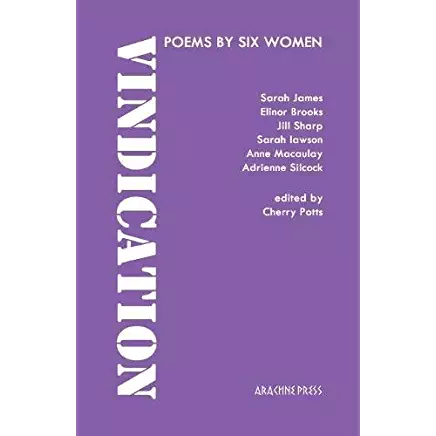
vindication

Adrienne Silcock’s

poetry has appeared in various magazines and anthologies, performing her poetry widely. In 2014 she published her first pamphlet Taking Responsibility for the Moon with Mudfog Press. Her first novel Vermin was published by Flambard in 2000. Her second novel Controlling Aphrodite was shortlisted for the Virginia Prize 2009. Her third novel The Kiss is published on kindle. She has previously produced two poetic sequences, Flight Path and The Fibonacci Sequence. She is a featured poet in 2018 collection by six women poets Vindication (Arachne Press). She has worked in mental health and community education, including teaching creative writing.

Links:

http://www.adriennesilcock.co.uk/

https://arachnepress.com/books/poetry/vindication-poems-from-six-women-poets/

https://www.amazon.co.uk/Vermin-Adrienne-Silcock/dp/1873226411

http://www.mudfog.co.uk/portfolio-item/taking-responsbility-for-the-moon/

https://www.amazon.co.uk/The-Kiss-ebook/dp/B008T4TEQU

The Interview

  1. What inspired you to write poetry?

Something in my DNA, I think! I’ve been writing almost as long as I can remember. I wanted to express myself as a teenager and I loved words. My brother inspired me to write my first full poem when I was stuck on a homework exercise. It was about a river. I discovered I liked the process.

  1. Who introduced you to poetry?

Teachers. Especially a funny little man (one of only two male teachers in an all-girls’ school) who was new and took some of the literature lessons when I was sixteen…I discovered a passion for the expressed word – Owen, Chaucer, Shakespeare, Auden, Eliot… Prior to that I’d been an avid novel-reader.

  1. How aware were you of the dominating presence of older poets?

I think I had a prejudicial yawn against pre-twentieth century poets…I wanted avant-garde, post-modern, crazy, rebellious voices…So, yes, I was aware of them, but I think I should have kept a more open mind before casting them to the wind. Unfortunately I associated Coleridge with dreary rows of wooden desks with ink wells and few windows (early grammar school). You can only grow your mind if you keep it open.

  1. What is your daily writing routine?

Ha! At one stage (luxury!) I was writing between 9 to 1pm most days of the week, then lunch and walking. But of course, like many people, I had to earn a living. So I fit my writing in on those special days available to me, and the rest of the time I do whatever I can to earn a crust.

  1. What motivates you to write?

My favourite question…because this is the spring barrel of what makes me tick! I have to write. Like breathing. It reminds me of who I am and of my humanity. I love the process. There is nothing more satisfying or peaceful than having passed a couple of hours in a creative zone. It is satisfying to stir around in all that dross inside yourself and arrange it into words, ideas and a poem or story in a way that you didn’t even know was there! Also, it’s a way of processing all that anger about the inequalities and wrongs in the world around us, with a hope that a poem might just touch someone else to want to do something positive about it. But maybe that’s too much to wish for…

  1. What is your work ethic?

To write about the world, but not to libel anyone. To tell the truth, but in creative ways. Never to write about real people without their knowledge (so, actually, never…) though that’s not to say I don’t write in composites. To write about the world in a literary way, so it’s Art and to be enjoyed as Art. Never to let my writing get in the way of caring about the people I love around me, i.e. if someone needs me, I’m there for them.

  1. How do the writers you read when you were young influence you today?

They influence me all the time, and I still go back to them. Wilfred Owen for speaking out against the horror of war, Eliot for challenging how poetry and ideas are expressed, Auden for his dogged philosophy. And many others, I absorbed via osmosis and I carry them in my heart.

  1. Who of today’s writers do you admire the most and why?

Difficult because there are so many. Alice Oswald and the late Mary Oliver. Graham Mort. Billy Collins has to be one of my favourites because of his casual style. I love the American poets from that point of view. The informality. The way something can be expressed in a personal, accessible way and yet refer to something in the classics, and have those layers. They’re warm and they touch you. So important in a poem, I think. And yet they turn things on their head.

  1. Why do you write, as opposed to doing anything else?

It gives me “Me time”. It’s almost a meditation, but you are creating something and you’re giving vent, even to something soft and non-aggressive like love. It’s a time to enjoy, to feel at peace, to remind yourself you’re human. It’s quality time. But I think it has to be done in balance with the rest of your life. People are important to me as well.

  1. What would you say to someone who asked you “How do you become a writer?”

That is so tricky! Because, when does someone become a writer? Many of us are writers at heart. For many of us the writing process is vital to who we are. I was born a writer. But I have not made a living out of writing. I haven’t paid the mortgage by it. I have published and still publish, but if someone wants to become a professional writer who wants to be able to pay for the beans on toast by it, I would say that you have to be prepared to do all those business things that creative people very often prefer to steer away from – social media, networking, pitching, developing a writing platform, readings, etc , etc. All those things which draw you away from that valuable writing time. On top, I think you have to be prepared to do those periphery jobs, too, which actually are very enjoyable in their own right, i.e. writing workshops, teaching, mentoring, copywriting, editing, proofreading (if you can get it – it’s competitive), apply for residencies, join NAWE. And keep your fingers crossed! Also, you need dedication and persistence – it ain’t going to happen overnight, No, Sir!

  1. Tell me about the writing projects you have on at the moment.

Well, I’m trying to bring herbs into the twenty-first century by writing poems about them! So it’s a pretty bonkers project. I love the way good writers layer centuries of history in with modern concepts, and this is what I’m trying to do with herbs. They have been used as cures, as salves, in folklore and in myth for as long as civilisation has existed, and yet they are almost forgotten, except for the odd bit of basil on the marguerita. So I’m writing a series of poems which combines today with old concepts of cure. I’d like to find a wacky illustrator to provide some herbal illustrations, rather in the mode of William Blake Songs of Innocence and Experience!!

Otherwise, I’m writing a few poems imbued which gentle woodland philosophy…who knows which forest path that will go along? Oh, and possibly a novel in the offing…

Looking forward to the March broadcast of my hour long interview with Mark Antony Rossi of Strength To Be Human. I talk about my interview series and my writing.

https://strengthtobehuman.podbean.com/p/contrib-bio-links/

TWO POEMS BY AND AN INTERVIEW WITH ANJUM WASIM DAR, PAKISTANI WRITER, ARTIST AND EDUCATOR

Fascinating

Jamie Dedes's avatarJamie Dedes' THE POET BY DAY Webzine

the poet by day, makes me a poet by night
how sweet is the sensation how smooth the flight
in  holy silence, words flow on, with delight
as the hours pass by, dawn breaks into light 
Anjum Wasim Dar


Over my life
I have drifted,
along, with the flow-

I came to know
I have to go, be slow
To move step by step
shed tears drop by drop,

Over my heart I found,
nothing was my own
It all had to be gifted,
to known and unknown,

Over my heart I saw,
as inside I bled
outside all was black ,

as the invisible was red,
love’s return, hard to find,
to complete a good age

we ourselves must be
loving caring and kind.

Spirit of Two Spheres

O My Spirit
someone has seen you
In sound and silence,
felt you in celestial
sphere,
O spirit where dost thy…

View original post 3,221 more words

Submissions: Great practical advice from Mark Antony Rossi on his Strength To Be Human series of podcasts.

Episode 13: Waking the Lion: Inside Writing — Submissions  https://lnns.co/RXB_Dal5woI via @ListenNotes

Wombwell Rainbow Interviews: Julia Webb

Wombwell Rainbow Interviews

I am honoured and privileged that the following writers local, national and international have agreed to be interviewed by me. I gave the writers two options: an emailed list of questions or a more fluid interview via messenger.

The usual ground is covered about motivation, daily routines and work ethic, but some surprises too. Some of these poets you may know, others may be new to you. I hope you enjoy the experience as much as I do.

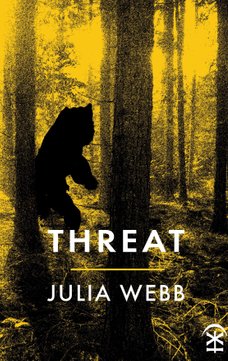
Threat Cover WEB

Julia Webb

graduated from UEA’s poetry MA in 2010. She lives in Norwich where she works for Gatehouse Press, is a poetry editor for Lighthouse and teaches creative writing. Her first collection, Bird Sisters, was published by Nine Arches Press in 2016.  Her second collection, Threat, will be published by Nine Arches in May 2019. Her poem ‘We is in the bank” won the 2018 Battered Moons poetry competition. To find out more: http://juliawebb.org/ She blogs at: http://visual-poetics.blogspot.co.uk/ and tweets: @Julwe1

Read more about her new collection: http://ninearchespress.com/publications/poetry-collections/threat.html

The Interview 

Thank you so much for asking me to complete your questionnaire – it is always good to be made to think about what I do and why .

  1. When and why did you begin to write poetry?

I began writing poetry in my teens – back then I wrote it for myself and it was (as you would expect) full of angst. I kept writing poetry on and off over the years – although for a while I concentrated on short stories – before coming to it more seriously when I was 40. I had started a degree in Creative Writing at Norwich School of Art and Design (now Norwich University of the Arts) thinking I would focus on prose but rediscovered my love for poetry – it’s conciseness, its ability to distil the essence of an idea and, more than anything its playfulness and the exciting things it can do with language.

  1. Who introduced you to poetry?

I had some poetry books as a child – mostly bought for me by my mum – The Oxford Book of Children’s Verse, The Golden Treasury of Poetry (edited by Louis Untermeyer) and Hilda Boswell’s Treasury of Poetry and her Treasury of Nursery Rhymes. I also had two books of poems by A.A. Milne and a lovely copy of The Quangle Wangle’s Hat by Edward Lear. All of these were books that I read and re-read countless times. I don’t remember much poetry at school – in fact I only remember studying Cargoes by John Masefield.

On the creative writing degree the poets George Szirtes, Andrea Holland and Helen Ivory were the tutors that re-awakened my love for both reading and writing poems.

  1. How aware were and are you of the dominating presence of older poets?

I am guessing by that you mean poets of the past. The books I read as a child were mostly full of older poems – in fact it was not until I left home and started looking for poetry on my own that I discovered that there were interesting contemporary poets. The male female balance in those books I read as a child was definitely mostly male heavy and I was delighted as an adult to discover so many great (and often overlooked) female writers. I still read older poetry now but tend to read more contemporary work. I think it is important to read and be aware of both. If you study art history you need to learn what came before the modern art movements to be able to understand how they came about – it is the same with poetry.

  1. What is your daily writing routine?

I don’t have a set routine. In fact I believe it is more important to set a reading routine than a writing one. Without reading poetry I don’t write much. I tend to write in flurries. There are times when I can’t stop writing and others (like now), which are a bit slower. For me writing is the easy bit – it is the typing up and editing that I have a resistance to.

  1. What motivates you to write?

I am driven to write – something sparks an idea and I am compelled to write it down – the spark could be a book, a poem, an article, something I have watched or a place I have visited.

I am interested in what makes us human (and therefore fallible) and how we relate to and act upon each other and the world around us – the nitty-gritty and the minutiae of the everyday. I am more interested in the grimy and dysfunctional side of life than the glitz.

I am also excited by the potential of language to challenge and excite us and to make us see the world in new ways. I love wordplay and breaking the rules – for example using verbs as nouns or messing up the punctuation.

Actually what I should have said earlier is reading that reading motivates me – reading other poets and reading widely is a huge motivator.

  1. What is your work ethic?

Keep writing. Stay true to the essence of the poem. If you are not scared of what the world will think then you are probably playing it too safe.

  1. How do the writers you read when you were young influence you today?

Alfred Noyes and Alfred Lord Tennyson taught me about sustained rhythms, I also love them for their tragedy, their romanticism and their ability to spin a tale. Lear, Beloc and nursery rhymes taught me to be fantastical – that things don’t always have to make sense. Milne I love for the pathos of the everyday, his humour and his ability to find a moment of joy amidst unhappiness (e.g. King John’s Christmas). Yeats and Thomas taught me to appreciate the beauty of language.

  1. Whom of today’s writers do you admire the most and why?

Gosh there are so many – where to begin?

I read very widely and am a huge fan of contemporary American poetry – some favourite Americans are C.D. Wright, Ross Gay, Claudia Rankine, Matthew Dickman, Michael Dickman, Lynn Emanuel, Joy Harjo, Dara Wier, Melissa Studdard, Rosemarie Waldrop, Natalie Diaz.

I love poetry that has a surreal twist – where people transform in some way or where the poet explores family or relationships between people in lots of different or unusual ways – people who do this really well are: Toon Tellegen, Anne Carson, Pascale Petit, Moniza Alvi, Helen Ivory, Hilda Sheehan, Stephen Daniels and Sarah Law.

Other poets whose work I love are: Carrie Etter, Andrew McMillan, Liz Berry, Alice Oswald, Denise Riley, Kei Miller, Jacqueline Saphra, Wayne Holloway Smith, Ágnes Lehóczky, Rebecca Tamas, Heidi Williamson, Esther Morgan, Angus Sinclair, Laura Elliott. These are all poets whose work excites and/or offers me new ways to view the world. There are lots of upcoming new poets whose work I admire too – too may to mention here.

  1. Why do you write?

Because I need to, to fulfil my creative needs and to help me make sense of the world.

  1. What would you say to someone who asked you “How do you become a writer?”

I would start by reading – read lots, read widely, read journals and books, read modern stuff as well as older works. Write a lot too – but don’t be in a rush to put everything you commit to paper out into the world. A famous poet once told me that it takes ten years to become a mediocre poet! When you have established a writing practice consider going on some workshops with writers you admire. I still go to workshops – you never stop learning, it gives you new ideas, insights, ways of working – it keeps things fresh.

  1. Tell me about the writing projects you have on at the moment.

I have a new poetry collection Threat coming out with Nine Arches Press in May this year and I will hopefully be doing some readings from that later in the year.

Currently I am working on a sequence of poems about my mother and mothers in general and another sequence about writing that features a character called The Bishop. I have also recently finished a pamphlet length sequence of experimental sonnets called Enteric, I am not sure what I am going to do with that yet.

I’M NOT DONE YET … AND OTHER RESPONSES TO THE LAST WEDNESDAY WRITING PROMPT

Very pleased to have four poems featured in the response to last Wednesday’s prompt in the company of great writing. Thankyou, Jamie.

Jamie Dedes's avatarJamie Dedes' THE POET BY DAY Webzine

“When I was young and miserable and pretty
And poor, I’d wish
What all girls wish: to have a husband,
A house and children. Now that I’m old, my wish
Is womanish:
That the boy putting groceries in my car

See me. ”
Randall Jarrell, Selected Poems


What a generous and engaging response to the last Wednesday Writing Prompt, I Am Beautiful Now, February 6, 2019. I guess we all have something to say about aging: poignant, wry, wise, well considered. You’ll find a lot to munch on here today.

Thanks to Julie Standig (and a warm welcome), Paul Brookes, Irma Do, Jen Goldie, Sonja Benskin Mesher, Marta Pombo Sallés (welcome back), Mike Stone, and Anjum Wasim Dar.  Well done, poets, and thank you!

Enjoy this stellar collection and do join us tomorrow for the next Wednesday Writing Prompt.


I’m Not Done Yet

I lost my ovaries a week…

View original post 3,738 more words