Wombwell Rainbow Interviews: Lydia Unsworth

Wombwell Rainbow Interviews

I am honoured and privileged that the following writers local, national and international have agreed to be interviewed by me. I gave the writers two options: an emailed list of questions or a more fluid interview via messenger.

The usual ground is covered about motivation, daily routines and work ethic, but some surprises too. Some of these poets you may know, others may be new to you. I hope you enjoy the experience as much as I do.
Lydia Unsworth

is the author of two collections of poetry: Certain Manoeuvres (Knives Forks & Spoons, 2018) and Nostalgia for Bodies (Winner, 2018 Erbacce Poetry Prize). She has two pamphlets forthcoming in 2019 from above / ground press and Ghost City Press. Recent work can be found in AmbitLitroTears in the FenceBansheeInk Sweat and Tears, and others. Manchester / Amsterdam. Twitter@lydiowanie

The Interview

1. When and why did you start writing poetry?

I think I was always trying to. I would spend time anagramming, writing ‘lyrics’ to songs, reading, copying down sentences I liked, playing any kind of board game with words in it, watching improv comedy. Since I was a young adult, I was always more interested in the book at sentence level than the narrative as a whole. I liked novels full of tangents, and I was (still am) a big fan of underlining parts. I suppose I just didn’t know what poetry was properly, beyond the very traditional, or what it could be until much later. I think I was writing poetry on my art degree, although even at such a late stage, I still didn’t really know it was poetry. I knew I liked poetic language, poetic prose, form as concept, but actual Poetry, I think I still thought of that as quite an old, dead thing. I wasn’t around other writers in my real life, and the writers I was reading (prose writers or visual artists), when they did reference poetry, likely only confirmed that ‘old, dead’ belief. When I was 14 or so I found The Desiderata as the epigram in a series of Dean Koontz novels: I liked that. I printed it out and put it on my wall. Learnt the word ‘perennial’ from that piece.

2. Who introduced you to poetry?

I drifted towards it via visual art. Though I was writing throughout my art degree in sorts, but it was probably another ten years before I realised that the writing was the crux of the matter and before I found a path in to actually reading poetry proper. My prose reading habits were getting poemier and poemier. Years passed. Then I moved to Poland and wrote to someone whose blog I found funny (Socrates Adams) and he sent me his novel-in-progress in increments. It was the first time I’d had dialogue with another writer and I started writing again there, in my chilly attic bedroom, properly, long after the visual distractions had fallen away. I was writing poetic-prose or experimental prose or something: I had a few pieces published and a novel shortlisted, then it fell away again, and again. It was always there, but I was always waiting until later, trying to accumulate knowledge (not realising how much of that knowledge was ephemeral and slips away completely unless you do something with it in the moment – which is one thing I love about writing poetry now, just slapping the fleeting, contorted-to-fit, down on a page). Anyway, after some more years passed, and I was writing on and off (by now some actual poems, although I still wasn’t reading any), I was given a sum of money that allowed me to do a Masters degree in Creative Writing, and I knew I was at risk of losing much more time unless someone ‘in the know’ actually verified me, so I did it, and they (Scott Thurston) did, and what I wrote at the end of that year became my first published collection of prose poetry. It was a ten-year voyage from the land of art to poetry on a small lump of driftwood with an intermittent internet connection and a changeable breeze.

2.1. What do you mean by “My prose reading habits were getting poemier and poemier”?

I was reading for the language, not the plot.

2.2. Why did the language become more important?

I think it always was, it just takes a while for a chain of reading to lead you to certain places. I was always looking for sentences I liked. And I guess the more I read, the more I grew tired of some of the rest: the same shapes of novels, certain cliches, techniques, wrapping-up of narratives, representations of women, predictable metaphors. It takes more to be surprised, I suppose. Or a different way of viewing something to find what is, or can be, surprising about it.

3. How aware are and were you of the dominating presence of older writers traditional and contemporary?

I think I’m more aware of the what-seems-like-class of a lot of writers than the age. I don’t mind people being older per se, they might have worked for it.

4. What is your daily writing routine?

As much as possible in any possible sliver of a gap! I often pinch lines overheard from my environment as a starting clay, or some image from something I’m reading, whether that be a book or simply a strangely worded sign, so I try and store all these fragments until I have a fifteen-minute or more gap, and then I write. I do my longer bouts of refining and building and editing in the evenings at least a few times a week, preferably when everyone else is asleep.

5. What motivates you to write?

A desire to communicate everything that is interior and, by the very nature of its interiority, alone. It’s a reaching toward. And it’s the same thing that motivates my reading: knowing the strangenesses and possibilities of ‘the other’. That, and the ability to sculpt a piece of language-music from the environment you find yourself in, whether that be internally /externally /in real time /via memory.

6. How do the writers you read when you were young influence you today?

They altered my outlook on life and have given me the foundations for my ongoing philosophy. It’s unshakable really. I think of Kafka and Beckett in particular, and I do still look for that melodrama and highfalutin despair everywhere in art, and when I find it, that very specific kind of comedy, then I do feel so terribly comforted. I’m reading The Milkman by Anna Burns in between questions here, and she’s also doing it in a way – it’s very funny, but serious-funny, bleak-funny. Like Catch 22 or Stewart Lee, just make the joke (or, following the same rule, take the emotion) and keep making it. I like that. The joy of repetition.

And I guess the writers you read at a certain age sort of raise you. So it’s good to stay fond of them. Helps you understand yourself.

7. Who of today’s writers do you admire the most and why?

Anyone writing in a void, without a support system, or in scraps of stolen time, who manages to tread water long enough to burst through the surface. Anyone who doesn’t give up.

8. What would you say to someone who asked you “How do you become a writer?”

Write. Write without thinking. Write until your body hurts. Change position. Do it again. Keep writing until you end up some place that surprises you. Edit.

9. Tell me about the writing projects you have on at the moment.

I’m working on a full collection, which seems to be spilling over into two collections. I have a pamphlet I’m trying to make ready, based on a bunch of poems I wrote as part of the Tupelo Press 30/30 project back in June. And I am nearly finished preparing another pamphlet (‘I Have Not Led a Serious Life’) that will be coming out with above / ground press later in the year. I’m mainly trying to keep momentum up around work and child-raising and physical exercise; it’s easy enough to write a poem, but harder to see which ones belong where without spreading out a hundred pieces of paper on the floor of a large empty room. I am grateful for my writing friends and our ad-hoc collaborative editing relays.

Thank you for these questions, Paul. It’s been a pleasure!

Art And Poetry Wombwell Rainbow Interviews: Mary Frances

Wombwell Rainbow Interview

I am honoured and privileged that the following writers local, national and international have agreed to be interviewed by me. I gave the writers two options: an emailed list of questions or a more fluid interview via messenger.

The usual ground is covered about motivation, daily routines and work ethic, but some surprises too. Some of these poets you may know, others may be new to you. I hope you enjoy the experience as much as I do.

Frances

Mary Frances

In the last year Mary’s words and images have been published by Metambesen, Luvina Rivista Literaria, Burning House Press, and Lone Women in Flashes of Wilderness. She has new work coming soon from Penteract Press.

The Interview

1. Who/what introduced you to art and poetry?

On my first day at school, I stole a book. I had become enchanted by words – ‘birds of paradise’ and  ‘ukelele’ – and by images of huge colourful flowers and a full moon glittering on water. As I remember, it wasn’t that I wanted to possess the book exactly, more that I just couldn’t let go of it, I couldn’t stop looking.

We didn’t have many books at home but we visited the library every week and I learned to read very early. My father had the complete works of Shakespeare. As far as I know, he had never seen a live production but he knew many of the plays intimately through reading. I was attracted by this beautiful book, its marbled edges and narrow columns of print. He read some parts aloud to me. I was very young. I was encouraged to look at books regardless of whether or not I understood the words and l realise now that this was a very great gift. My mother’s book was Palgrave’s Golden Treasury, the Binyon edition. She knew many of the poems by heart from rote learning in school and can still recite them now at 90. Some of those treasury poems – The Lady of Shallot, Kubla Khan, Rime of the Ancient Mariner – shaped my imagination for life. As a teenager, I remember the thrill of discovering Sylvia Plath, the Mersey Sound poets, and, one day on detention in the school library, Elizabeth Jennings – it was her early work which led me to writing. My grandmother’s book was Andersen’s fairy tales. She gave it to me when her eyes failed. I still read it.

I think I was taken to the national gallery as a child but I remember it from that time only as a dark place of war horses and suffering saints. My introduction to art came when I was perhaps 8 or 9 wandering alone into the gallery of a museum and finding Whistler’s nocturnes. I still remember the feeling of being inside these paintings – I knew these waters, this light. I don’t know how much time passed before the attendant gently tapped my shoulder and told me that the gallery was closing. When I went back a few weeks later the Whistlers were gone, replaced by sports photographs, and the attendant explained about travelling exhibitions while I stood there and cried. I still get that stunned everything-else-has-disappeared feeling sometimes in exhibitions – it is a falling in love.

2. How aware were you of the dominating presence of older poets/artists?

I have always been aware of them, but not as a weight if that’s what you mean. Growing up we read comics and discovered pop music. Through older family members we knew Victorian melodrama and music hall songs. Classic books were just a different kind of language and other kinds of story – they were enjoyed without reverence. The same with artists. But it’s not my day job, I had no need to break free of anything.

3. What is your daily routine for creative work?

I don’t have a routine but I make something most days. Or rather, most nights – I have my best ideas late in the day and I don’t sleep easily.

4. What motivates you to write, to make art?

Walking, the feel of language, wide-open eyes.

5. What is your work ethic?

I tend to get lost in it, endless variations and re-workings, not too bothered about how much of it will ever be seen or read.

I used to have a website for my art and cut-ups but I took it down a few years ago. It felt like a showroom and I wasn’t comfortable with it. Now I just leave things lying around on twitter which feels less like a display case and more like inviting people to rummage through whatever is on the table. I like the transience – so many people pinning fine things to the lamppost every day and then it’s blown away overnight and so we start again. Absence of weight keeps me moving. I’m happy to start over, not look back.

The commonality in all my work is that I enjoy finding, remixing, and reframing things that are already there. Meanings tighten very quickly and cut-up and found work disrupts that. Everything can be otherwise, and much is hidden or ignored. I’m looking for other ways of seeing and altered perspectives. I’m also interested in dreams.

6. How do the writers/artists you found when you were young influence you today?

I wouldn’t be able to say much about direct influence, but I’m very aware of those writers I’ve carried with me in the most worn books and marked pages, the ones who got into my bloodstream, Virginia Woolf and Angela Carter.

I think my art work has been influenced by illustration and hand-drawn animation. I often have the sense that I’m creating stage sets. I barely knew the characters in those old films of childhood – my focus was on the backdrops, their real-not-real-ness.

7. Who of today’s writers/artists do you admire most and why?

I enjoy many poets, far too many to list, but If I had to choose just one it would be John Burnside. I am incredibly moved by his work, by his capturing the essence of small-huge things. I feel I know those places, that weather, those absences.

I read and re-read a lot. I try to find new and different voices and keep an eye on small presses and online magazines. I don’t like the idea of poetry or any writing as comfort, I am looking to be unsettled. I blame the fairy tales. John Trefry’s two novels, ‘Plats’ and ‘Apparitions of the Living’, have changed the way I read, and what I choose to read – that’s a rare extraordinary thing. I love those books, and I am still afraid of them.

I see as much contemporary art as I can, and whether or not I like the work I find it interesting, both in itself and as a mirror of the times. I think about and begin to understand many other things as I look at art. People cluster and fidget behind me with their frustrated i-phones, and attendants still comment sometimes on how long I’ve been there – I’m not a great person to go to galleries with. I could probably list favourite exhibitions more easily than favourite artists. Some collections haunt me for years: Jo Whaley’s ‘Theater of Insects’, Tracey Moffat’s ‘Laudanum’, Peter Greenaway’s ‘Luper’, Cathy Wilkes’ show at Tate Liverpool. But I would travel a long way to see new work by Anselm Kiefer or Sarah Sze. They notice everything, use everything, weave multiple webs of connection – one so heavily, necessarily, weighted, the other so delicately balanced, luminous, seeming light as air.

It will be no surprise to anyone that I also spend a lot of time looking at walls. And gallery floors.

8. Why do you write or make art, as opposed to doing anything else?

Oh, I do a lot of other things and I’m glad for that. There are other kinds of necessity. So many more things than we might have imagined can become acts of love.

9. What would you say to someone who asked you how to become a writer or artist?

If the question is whether art and writing are worthwhile things to spend time on, then I would give every encouragement. In terms of a career or recognition, I wouldn’t know anything about that.

I would just add that thoughtful readers are, in my view, writers, that keen appreciators of art are indeed artists, and that risk-taking editors, dedicated librarians, and imaginative curators are the very best.

10. Tell me about the creative projects you have on at the moment

I’m working now on several projects and I don’t know yet which ones will work. I like this state of variousness with many possible directions to take. The process of messing around and changing my mind is important. I’m happy with things unfinished.

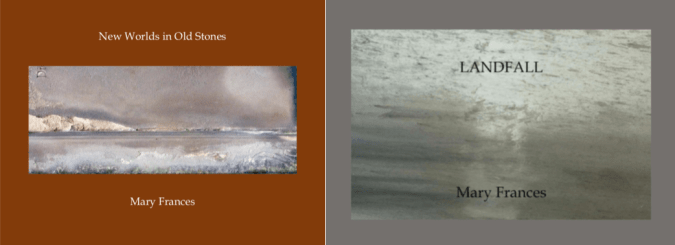
My second collection of found landscapes ‘Landfall” has just been published by Metambesen. I’m very grateful to Charlotte Mandell and Robert Kelly for their interest and care with my work and for offering it such a lovely home.
I have a new book of found seascapes and cut-up text, ‘Sea Pictures’, coming from Penteract Press in the autumn, and also a visual poetry contribution in their forthcoming ‘Reflections’ anthology. I’ve enjoyed working with Anthony Etherin and very much appreciate his ideas and support.
It’s been an interesting and curious process to think about your questions Paul. I enjoy your project, its inclusiveness and generosity – thank you for having me here.
[ Mary can be found on Twitter @maryfrancesness ]

Wombwell Rainbow Interviews: David Graham

Wombwell Rainbow Interviews

I am honoured and privileged that the following writers local, national and international have agreed to be interviewed by me. I gave the writers two options: an emailed list of questions or a more fluid interview via messenger.

The usual ground is covered about motivation, daily routines and work ethic, but some surprises too. Some of these poets you may know, others may be new to you. I hope you enjoy the experience as much as I do.

David Graham

has published three full-length collections of poetry, Magic Shows, Second Wind, and, most recently, The Honey of Earth (Terrapin Books, 2019). He’s also published four chapbooks, most recently Stutter Monk. He is also co-editor of After Confession: Poetry as Autobiography (with Kate Sontag) and Local News: Poetry About Small Towns (with Tom Montag), just published by MWPH Books. He retired in 2016 from teaching writing and literature at Ripon College, where he also hosted their Visiting Writers Series for twenty-eight years. He has served on The Poets’ Prize Committee and the Wisconsin Poet Laureate Commission and was a Resident Poet as well as faculty member at The Frost Place. Currently he is a contributing editor for Verse-Virtual, where he also contributes a monthly column, “Poetic License,” on poetry and poets. After retiring he returned to his native upstate New York with his wife, the artist Lee Shippey.


The Interview

1. What inspired you to write poetry?

There are many honest answers to such a question, I think, and depending on my mood, I might stress this or that factor more heavily. Tomorrow’s answer might differ. But as far as I can recall, I began to write seriously at about age sixteen, knowing nothing about the art of poetry except that it seemed a good way to express the inexpressible flood of emotions that a boy at that age feels. Before long I learned that it was also a way to impress young women. At the same time, I was listening to music seriously for the first time, and my adolescence happened to coincide with a great era in popular music. So lyricists like Bob Dylan, Paul Simon, Joni Mitchell, Leonard Cohen, and many others were among my first deep poetic influences. Yet it’s equally true that long before that I absorbed a great deal of poetry in church every Sunday—in the form of the glorious King James version of the Bible and the Episcopal Book of Common Prayer. Hearing that wonderful Elizabethan language read aloud surely inspired me, even if I wasn’t aware of it at the time. Likewise, my mother used to read aloud to me when I was a boy—her love of A.A. Milne’s poetry in particular was infectious and certainly must be added to the mix.

2. Who introduced you to poetry?

Aside from my mother’s love of Milne, I did have the usual public-school exposure to traditional poetry, and for the most part I didn’t much care for it. I was a bookish teen, though, and eventually discovered a number of poets who weren’t being taught in my classes, poets such as Richard Brautigan, Diane Wakoski, E.E. Cummings, Denise Levertov, and others. I should mention here one of my high school English teachers, Ed Brennan, who by being open to the poetic powers of musical lyrics, was an important early permission-giver. Then in college I was lucky enough to encounter some very gifted teachers, including Sydney Lea.

3. How aware were you of the dominating presence of older poets?

Depends on how old I was. In college and graduate school I gradually became aware of what we now call PoBiz, the making and maintaining of reputations, the “anxiety of influence,” in Harold Bloom’s phrase, damaging labels like “major” and “minor,” and so forth. The older I get the more I realize that worrying about such things is pointless. Honor your elders, do your work, seek out community in the poetry world, and let matters of reputation be decided by others, as they always are in the end.

4. What is your daily writing routine?

I have written poetry daily for many years, and haven’t missed a day since 1993. When younger I liked to claim the quiet hours around midnight as my best time; as I aged I could no longer stay awake and alert enough to write after the day’s other chores were done. So I switched to a morning routine, which seems to work best for me. Ideally I write as soon as possible upon waking. But on those days when other obligations prevent that, I fit it in wherever I can. I work on poetry, generally, when I am freshest. Later in the day I often work on prose.

5. What motivates you to write?

I can’t improve on something I once heard Shelby Stephenson say when asked this question: “Why, to defeat sin and death, of course!”

6. What is your work ethic?

Richard Hugo’s wonderful book The Triggering Town contains an anecdote that pretty much says it all. When I was teaching creative writing I quoted it to every class I taught. The story goes that the golfing legend Jack Nicklaus once made an amazing shot, and an onlooker commented, “That was a lucky shot.” Supposedly Nicklaus replied, “Yes, it was. But I notice the more I practice, the luckier I get.” Or, as Louis Pasteur explained his success, “Luck favors the prepared mind.” There is such a thing as luck, magic, inspiration, or whatever you wish to call it. You can’t explain it or call it forth at will. But it does tend to arrive more often when you work at it.

7. How do the writers you read when you were young influence you today?

I imagine they’re in there somewhere, always, even if I’m not consciously aware. Of the poets I’m aware of as continuing influences on my work, I would single out Walt Whitman, Robert Bly, James Wright, Philip Levine, William Matthews, and Richard Hugo as particularly important early influences. There are also many I admire and wish I could be more heavily influenced by, but who remain impossible for me, anyway, to imitate. One example would be Emily Dickinson.

8. Who of today’s writers do you admire the most and why?

That’s an impossible question, of course. There are hundreds I admire fiercely.

9. Why do you write, as opposed to doing anything else?

Whether by habit or for some other, ineffable reason, writing has long since become necessary for me. You could call it an addiction, in that it makes me feel good to do it, and bad if too much time passes between doses.

10. What would you say to someone who asked you “How do you become a writer?”

My answer is the usual one: you become a writer mostly by writing a lot at the same time as you are reading a lot. They strike me as two sides of the same coin. If you’re lucky you will also find good teachers, mentors, and a peer group to offer critical suggestions and moral support. Such things can aid enormously, but they cannot help you if you’re not writing and reading enough.

11. Tell me about the writing projects you have on at the moment.

I’ve just published two books—The Honey of Earth is a new collection of poems from Terrapin Books; and Local News: Poetry About Small Towns is an anthology of contemporary poetry that I co-edited with Tom Montag (MWPH Books). At the moment I’m mostly engaged in promoting those. So I have no large projects underway currently, but soon I’ll begin thinking about my next collection of poems. In the meantime, I write a monthly column about poetry and poets for the online journal, Verse-Virtual called “Poetic License.” For three years now I’ve been reflecting each month on what a lifetime of reading, teaching, and writing poetry has taught me. I invite you to take a look: http://www.verse-virtual.com

Wombwell Rainbow Interviews: David Groulx

Wombwell Rainbow Interviews

I am honoured and privileged that the following writers local, national and international have agreed to be interviewed by me. I gave the writers two options: an emailed list of questions or a more fluid interview via messenger.

The usual ground is covered about motivation, daily routines and work ethic, but some surprises too. Some of these poets you may know, others may be new to you. I hope you enjoy the experience as much as I do.


David Groulx

was raised in Northern Ontario. He is proud of his Aboriginal roots – Ojibwe Indian and French Canadian. After receiving his BA from Lakehead University, where he won the Munro Poetry Prize, David studied creative writing at the En’owkin Centre in Penticton, B.C., where he won the Simon J Lucas Jr. Memorial Award for poetry. He has also studied at the University of Victoria Creative Writing Program. David has had eleven poetry books published – Night in the Exude(Tyro Publications: Sault Ste Marie, 1997); The Long Dance (Kegedonce Press, Neyaashiinigmiing, 2000);  Under God’s Pale Bones (Kegedonce Press, Neyaashiinigmiing, 2010); A Difficult Beauty (Wolsak & Wynn: Hamilton, ON 2011); Rising With A Distant Dawn (BookLand Press: Toronto, ON 2011); Imagine Mercy (BookLand Press: Toronto, ON 2013); These Threads Become A Thinner Light (Theytus Books, Penticton, BC 2014); and In The Silhouette Of Your Silences (N.O.N Publishing, Vancouver, BC 2014). Wabigoon River Poems (Kegedonce Press, Neyaashiinigmiing, 2015), The Windigo Chronicles (Bookland Press, 2016), From Turtle Island To Gaza (AU press, 2019)

David won the 3rd annual Poetry NOW Battle of the Bards in 2011, and was a featured reader at the IFOA in Toronto & Barrie (2011), as well as Ottawa Writer’s Festival (2012). David has appeared on The Aboriginal Peoples Television Network and was the Writer-In-Residence for Open Book Toronto for November 2012.David’s poetry has been translated into Spanish & German. Rising With A Distant Dawn was translated into French; under the title, Le lever à l’aube lointaine, 2013.Red River Review nominated David’s poems for Pushcart Prizes in 2012, and David’s poetry has appeared in over a 160 publications in 16 countries. He lives in Ottawa, Canada.

The Interview

  1. When and why did you start writing poetry?

Expression is the first word that comes to kind, I believe that it is as important as air, food or water. Life is nothing until it evinced by the word.

  1. Who introduced you to poetry?

There didn’t seem to be much poetry around when I was a kid. We had lots of books because my parents believed reading was important. I suppose the poetry I heard was in the way people spoke. My mother has an aboriginal accent, my father a heavy French accent. And then there were lots of immigrants, Portuguese, Italians, Polish and all these people spoke English differently. Like all kids brought up in a colony I was introduced to the English Romantics and a few Canadian poets. There was nothing to speak to me as a Half-breed living in Canada so I decided to create my own.

  1. How aware are and were you of the dominating presence of older poets traditional and contemporary?

I really don’t know how aware I was of the presence of older poets. I only knew that there were voices that went unheard in a dominant society. It said that this was poetry and this isn’t. I could not fit in, I could not be a part of no matter how hard I tried. I turned to poets from Africa, the middle east. Anywhere in the third world.

  1. What is your daily writing routine?

I don’t have a ‘daily’ writing routine, because I work a regular job. During the week I try to write some notes down to use later. I do all of my writing on the weekends. Which is getting up before dawn, a pot of coffee, a pack of smokes, a computer and a small pot-bellied dog snoring somewhere behind me. I guess writing is something I’m always doing; either taking notes, writing, thinking about writing or reading.

  1. What motivates you to write?

It is who I am, it is what I am. Without it my life would be meaningless to me. at some desolate times in my life, I believe it has even kept me alive.

  1. What is your work ethic?

I go to a mindless job every day to keep the wolves from the door, I write because some day that knocking at the door may be opportunity. I see it like this, if you are not writing, you are not a writer. I sometimes think that if I am ever satisfied with my writing I’ll quit, which means I’ll be doing this until the day I die, whish I hope is a long time from now. I think death is a good motivation for almost anything.

  1. How do the writers you read when you were young influence you today?

I remember reading America & other poems by Jeff Bien and Tiffany Midge’s Outlaws, Renegades and Saints : Diary of a Mixed-Up Halfbreed and thinking to myself I want to write like this. For most of the poetry I’ve heard or read I remember thing I don’t want to sound like that. It has always been a exploration of my own voice. I did one year at the University of Victoria’ creative writing program and I quit because what I heard was mostly upper white middle class stuff; writing about their trips overseas. It was uninteresting and boring. I think life will influence my poetry more than other people’s poems about it.

  1. Whom of today’s writers do you admire the most and why?

I’ve been reading Aim Cesare lately. He speaks of the colonizer and the colonized, this type of relationship is what governs our society, especially y here in Canada. It is something about his expression of that relationship.

  1. Why do you write, as opposed to doing anything else?

I can’t sing a note.

  1. What would you say to someone who asked you “How do you become a writer?”

If someone asked me how do you become a writer, I would tell them. ‘ You first must have a deep love of disappointment’ and then you write.

  1. Tell me about the writing projects you have on at the moment.

A long time ago I spent some time in jail. When I was young I’ve always had an involvement with law enforcement, seems I couldn’t keep my hands to myself. It’s called In the Days I was Known to My Brother as Papillon. Most of the manuscript has been sitting around the house for a couple of years now and now I’ve decided to finish it, its something I’m doing for myself, if it gets published or not, I haven’t decided yet.

Wombwell Rainbow Interviews: Blake Wallin

Wombwell Rainbow Interviews

I am honoured and privileged that the following writers local, national and international have agreed to be interviewed by me. I gave the writers two options: an emailed list of questions or a more fluid interview via messenger.

The usual ground is covered about motivation, daily routines and work ethic, but some surprises too. Some of these poets you may know, others may be new to you. I hope you enjoy the experience as much as I do.

Blake Wallin

is the author of the two full-length poetry collections No Sign on the Island (Bottlecap Press) and Occipital Love (Ghost City Press), as well as the chapbook Otherwise Jesus (Ghost City) and the microchap The Lucidity of Giving Up (Ghost City’s 2016 Microchap Series), several plays, and a novel. Last summer, he attended the 2018 Kennedy Center Playwriting Intensive (led by Gary Garrison) and a 2018 Virginia Quarterly Review Summer Workshop taught by Mary Szybist. Much of his work (poetry and fiction) can also be found on Maudlin House.
No Sign on the Island, by Blake Wallin
https://ghostcitypress.com/books/occipital-love
https://ghostcitypress.com/chapbooks/otherwise-jesus
https://ghostcitypress.com/2016-summer-microchap-series/the-lucidity-of-giving-up
https://maudlinhouse.net/author/blake-wallin/

The Interview

1. What inspired you to write poetry?

The need for a different form, a form that would contain the emotional revelations I was  going through while still staying true to the journey my writing was taking me on constantly.

I’d written fiction in high school, and in college experimented briefly with playwriting (both of which I have recently resuscitated in my writing life), but poetry was and will always be my first true writing love, the one that enabled me to say what I needed to say at a time when to not say those things would have been detrimental to my health and wellbeing.

2. Who introduced you to poetry?

Like almost everybody in America (even the poets) I was introduced to poetry before I knew what it was or could do. I had enthusiastic teachers in high school who taught poetry but I either couldn’t listen or they portrayed its effect wrongly. Either way, the person who really introduced me to poetry was a professor at Wheaton College, the late Brett Foster, a Christian poet concerned with beauty but not at the expense of being real or actual. While I’m not a Christian, I am still concerned with Christianity, and while I don’t ascribe to the theory of beauty Christianity sometimes entails, I am still very much concerned with the possibility of beauty.

3. How aware were you of the dominating presence of older poets?

None whatsoever. If I had been overly concerned with the dominating presence of older poets, I’m almost positive I would not be writing now, or would be writing to a lesser degree. I was just over in my own world, trying to heal from the real-life non-poetry world by reading Rimbaud and Ashbery. In a poetry world so dependent on mentorship and favouritism, it seems wrong to ask that question, but, even though I have benefited from older poets’ throughout my brief poetry career, it’s a necessary question in that it should 100% not matter what older poets have to tell you at first. That’s for later.

4. What is your daily writing routine?

I don’t have a routine. It sounds bad, but I’m writing in three different genres (poetry,fiction, and playwriting), so I just constantly write and switch genres when one begins to bore the shit out of me. Honestly part of the reason I’m so spread out genre-wise is to avoid writer’s block haha.

5. What motivates you to write?

Some weird mixture of boredom and necessity.

6. What is your work ethic?

Somehow both severe and lackadaisical.

7. How do the writers you read when you were young influence you today?

I read a bunch but have a handful of writers I return to most often: J.R.R. Tolkien, Arthur Rimbaud, Roberto Bolaño, John Ashbery, Annie Baker, Martin McDonagh, Chaim Potok.
These are the authors I hold close to my chest, and I’m fine with being able to count them on two hands – how else would I be able to hold them close to my chest?

8. Who of today’s writers do you admire the most and why?

I’m going to assume you mean one writer; otherwise the list would be impossibly long.

Hmmm. For fiction, Colm Toibin. Looking at his career, you could accuse him of finding a niche, but it would be so far from the truth as to be laughable. He’s an established writer and novelist who reinvents his form and style with each book while still being praised as an inventive and consistent prose stylist. Also, he’s very nice (I met him at a book signing a few years back), and has a charitable streak a mile wide and a mile deep. This means he has an edge on many of the writers whose writing I severely admire but whose politics or actions I despise (i.e. Michel Houellebecq or Jonathan Franzen). For poetry, probably Anne Carson.

9. Why do you write, as opposed to doing anything else?

I feel like it’s almost wrong to not do something other than writing in addition to writing.

People have this romantic association with writing that hasn’t existed forever; the job vs. writing dichotomy bores me. Not because it’s untenable in the modern world and economy, etc. – it’s more that it’s untenable for me personally. I would get so fucking restless it wouldn’t be worth it: it would be like living in an abandoned abbey as a monk that doesn’t believe in god. What would the point be then? Just to worship,the act of worship itself? It doesn’t make sense to me.

Which is not to say writing is a hobby for me; it’s more a personal mandate some part of my intuition has given me that I guess I could choose to ignore but only at the expense of my wellbeing. I could choose to play tennis instead, but my mind would start mapping a story out of it, and I’d botch the match, which would be no fun.

10. What would you say to someone who asked you “How do you become a writer?”

I wouldn’t say anything, I would just hand them a pen and paper (or ask them to get out their phone) and ask them to write out that question, answer it themselves, read me the result, and then I would just nod and say that writing is doing that over and over consistently. Either that or I just wouldn’t answer them and walk away; it would depend on their tone when asking the question.

11. Tell me about the writing projects you have on at the moment.

My third and fourth full-length poetry collections, my fourth play in a four-play cycle, and my second novel (in a planned four-novel cycle). The new poetry collections are so far indebted to a kind of anti-lyric poetry pioneered by some Ahsahta poets (including C. Violet Eaton) and Wayne Johns. The plays are kind of a magical realist riff on Angels in America, using portals and the American South to explore the concept of being closeted and how the past affects the future and vice versa. The novels are (except for the first) all set in a post-apocalyptic future that involves talking animals (evolved animals after Mars crashes into Earth and the humans colonize the Mars portion), and will eventually feature androids as well (and just plain old humans as well).

On Writing Wombwell Rainbow Interviews: Suzanne Craig-Whytock

Wombwell Rainbow Interviews

I am honoured and privileged that the following writers local, national and international have agreed to be interviewed by me. I gave the writers two options: an emailed list of questions or a more fluid interview via messenger.

The usual ground is covered about motivation, daily routines and work ethic, but some surprises too. Some of these poets you may know, others may be new to you. I hope you enjoy the experience as much as I do.


Suzanne Craig-Whytock

is a writer from Ontario, Canada. Her first two novels, Smile and The Dome are published by Bookland Press (www.booklandpress.com). Her short fiction has appeared in Slippage Lit and is upcoming in XRAY Literary Magazine. She also writes poetry, and funny/weird things on her website mydangblog (http://educationalmentorship.com).

The Interview

1. What inspired you to write?

I’ve been writing in a variety of genres for as long as I can remember. I wrote my first poem at the age of eight and wrote poetry and short stories all through my teen years and twenties. When I was teaching, I ran my school’s Creative Writing Club, and that’s where I wrote the character piece that became the first chapter in my first novel. I’ve been writing Young Adult novels for the last 10 years; my first novel Smile was published in 2017, and my new novel The Dome will be out this coming October. I’ve had a couple of short stories published in the last little while, which is very nice, although I’ve had way more rejection notices than I’ve had acceptances! I also have a blog where I post humorous essays—people who are familiar with my blog are usually surprised at how dark some of my other writing is! Lately, I’ve gone back to poetry, and I’ve submitted a few pieces here and there, so we’ll see what happens.

2. Who introduced you to poetry?

I don’t remember a lot about poetry until grade 12. For some reason, my English teacher decided to have us study T.S. Eliot, and the second I read “The Love Song of J. Alfred Prufrock”, I was hooked. I think that was the moment I decided to pursue an English degree and become an English teacher myself. I was lucky enough to be able to introduce Eliot to my own senior International Baccalaureate students, and the first time I read Prufrock to them out loud, I teared up at the end. So I’d have to say it was T.S. Eliot who really introduced me to poetry.

3. How aware were you of the dominating presence of older poets?

Very. I did my English degree over 35 years ago, and the majority of the courses I took focused on poets before the middle of the 20th century. My particular favourites were the Imagists, although I adored Tennyson and Dickinson. In terms of modern poets, Lorna Crozier, a Canadian writer, is probably my favourite, and I love Pablo Neruda.

4. What is your daily writing routine?

I don’t have a ‘daily routine’ since I currently work full-time. I find it hard to squeeze in solid writing time—I’m the kind of writer who needs several free hours in order to focus. I set aside two hours every Saturday morning to write something for my blog, which I post on Sunday morning. Other than that, I usually wait until I have some vacation time, then hammer out several chapters. For my second novel, I had every other Friday off work, so that was my writing day, and I would make notes and capture ideas until I was able to sit down on Friday morning and just write. Unfortunately, I don’t have those days anymore, so I’ll be doing some serious “power-writing” on my August vacation!

5. What motivates you to write?

The sheer joy of doing it. I’ve always loved writing—I sometimes wake up at 3 in the morning with an idea and put it down before I forget it. The creative process is very important to my mental well-being, and when I’m not writing, I’m painting or restoring furniture or doing something ‘craft-y’.

6. What is your work ethic?

I’m a bit of a perfectionist, so I really enjoy the editing process. I do a lot of editing in my daily job as well, so it’s become kind of second nature to me to keep going back to my own work until I’m happy with it. But as we all know, you can revisit a piece a hundred times and still see something you want to change, so at a certain point, I have to just let it be.

7. How do the writers you read when you were young influence you today?

I read a lot of absurdist literature when I was younger and loved absurd comedy like Monty Python; I think that gets channelled through my humorous writing. As a poet, I’m still influenced by the Imagists and most of my poetry is short and impactful, at least I hope it is. In terms of my novels, the first one is a ‘coming of age’ story that developed out of a love of things like Judy Blume, Beverly Cleary, and other writers I read when I was young who focused on characters with issues that had to be solved. However, my second novel takes place in a futuristic dystopian Toronto landscape, and it’s more heavily plot-oriented, more influenced by fantasy novels I read as a teenager as well as current issues like climate change. When I was in university, I studied Magic Realism, which had a huge influence on my writing—most of my short stories have that quality to them.

8. Who of today’s writers do you admire the most and why?

David Mitchell is one of my favourite authors, along with Neil Gaiman. For short stories, I adore Stephen King, and Annie Proulx’s first short story collection Heartsongs is something I go back to again and again. Basically, I love writers with strange imaginations like mine! For Young Adult fiction, I really admire Pierce Brown—his Red Rising series is incredible.

9. Why do you write, as opposed to doing anything else?

Because I love to do it, and a lot of what I write is for other people; for example, I write my blog to make other people laugh. I always say that if I can tap into other people’s emotions and put a smile on someone’s face or make them cry (in a good way, of course!), then I’ve done my job. But in terms of “as opposed to doing anything else”, I think that writing is the creative outlet I need sometimes. Other times it’s doing something else.

10. What would you say to someone who asked you “How do you become a writer?”

You become a writer by writing. Becoming a good writer—that’s a different matter. I think to be a good writer, you need to read a lot in order to understand the nuances of language. But you also need to be a good self-editor so that what you’re putting out is ‘audience-ready’. As I said, I do a lot of editing in my current work, but I’ve edited for other writers as well as for textbooks and on-line courses, so I know how people feel when it seems the writer hasn’t put much energy into making things clear and understandable. Also, I’m a very visual person (I also have a degree in Film Studies), and I tend to play out scenes in my head over and over, experimenting with the dialogue, facial expressions, plot and setting details first before I put anything down on paper, so I think you need to be able to describe things in a way that engages other people and makes them see and feel it too.

11. Tell me about the writing projects you have on at the moment.

I’m currently working on my third novel The Seventh Devil— here’s the epigraph:

There’s the devil you know and the devil you don’t,
The devil you’ll meet and the devil you won’t,
A devil that’s tall and a devil that’s small,
And a devil that’s human after all.

It’s about a young woman named Verity Darkwood and her mentor Gareth, who travel across Canada in an old pickup truck and camper van, exorcising ghosts and demons for people who’ve answered their ad in The Echo: An On-line Journal for Lovers of the Macabre, Editor Horace Greeley III. All the while Verity continues the search for her younger sister, who disappeared when Verity was 16, but her biggest challenge is avoiding the mysterious Seventh Devil. I have the whole plot sketched out but I’m only 4 chapters in at this point, and waiting until I’m on vacation to write the next set. My latest novel The Dome will be released on October 15th, although it’s available for pre-order right now at all the major outlets like Amazon and Indigo—I’m looking forward to the book launch and the subsequent promotional work that follows. I’ve been writing poems here and there so I’m working on putting them together in more of a collection. And of course, there’s mydangblog—I’m always working on that!

Wombwell Rainbow Interviews: J DG

Wombwell Rainbow Interviews

I am honoured and privileged that the following writers local, national and international have agreed to be interviewed by me. I gave the writers two options: an emailed list of questions or a more fluid interview via messenger.

The usual ground is covered about motivation, daily routines and work ethic, but some surprises too. Some of these poets you may know, others may be new to you. I hope you enjoy the experience as much as I do.

J DG

Justene Dion-Glowa is a bi, emerging poet from Canada. Her work has been featured in Burning House Press and Fevers of the Mind Poetry & Art Digest. She is a contributor to the The Poetry Question and curates a quarterly literary magazine with her indie publishing house 3 Moon Independent Publishing. Her first poetry chapbook and memoir are forthcoming.

jdgwrites.wixsite.com/home

3moonpublishing.wixsite.com/home

Twitter: @gee_justy or @3moonpublishing

Instagram: @jdgwrites or @3moonpublishing

The Interview

1. What inspired you  to write poetry?

I think initially, when I was much younger, poetry was a way to address serious issues in a playful way. Now that I am older, I feel that I may have replaced the playfulness with cynicism. But I think putting out cynical work can help make day-to-day life more livable. These are dark times, and putting the darkness on paper can make it easier to see the light.

2. Who introduced you to poetry?

I can’t pinpoint a specific person. I was just a voracious reader, and fell in love with darker poetry like that of Edgar Allan Poe first. Once I realized that poetry didn’t have to be all sunshine and rainbows, I think I sought out more classic poems.

3. How aware were you of the dominating presence of older poets?

Very. I still read that type of work today. While I’m sure it’s not obvious, it’s the work of Poe and T.S. Eliot and even Shakespeare’s sonnets that really inspired me to keep writing poetry. There was something universal in what they were saying, but it was also so clear they were recalling some specific situation. There was a beauty in that level of communication that appealed to me, and still does.

4. What is your daily writing routine?

I can’t say I have a steady routine. My life is too hectic for that right now. I just make writing a priority. Some days I plan to write and I don’t at all. Some days I don’t plan to write and I end up with a ton of material. Making it a priority works for me. I always carry around notebooks too, just in case I’m on the go and inspiration hits. I also try to immerse myself in it. I write reviews of poetry, I constantly submit to literary magazines; I just make this the focal point in my life.

5. What motivates you to write?

I think it’s the knowledge that no one experience in your life is truly your own, and yet you’re 100% unique in how that experience shapes you. The human experience, I suppose.

6. What is your work ethic?

I have a “throw them to the wolves” ethic, in that if I don’t let it completely take over my life, it isn’t going to happen. I am deeply passionate and unless I am committed fully to something, I cannot continue to do it.

7. How do the writers you read when you were young influence you today?

I think the thing that influenced my beyond what any author could was the firm belief of every person in my life that I was not “too young” to understand or read anything. I was always assumed to be able to read whatever I wanted, no matter the subject or complexity, and that lead to me reading incredible books at a young age. That influences me today because when I think about my writing, I know I can do it and that others will value it. It’s just got to find it’s audience.8. Who of today’s writers do you admire the most and why?

I honestly love YA authors right now. The material coming out of that scene is fearless, incredible, and representational. But I love how many literary magazines are out there right now. I get to read so much incredible work because of people volunteering to curate it for the public. That’s a beautiful thing.

9. Why do you write, as opposed to doing anything else?

Writing is an exercise in processing to me. I do not process my reality the way others do, although, I can’t say definitively why. I liken it to a full plate. My body is so full of unprocessed experiences and trauma, it doesn’t seem to matter how much I take off that plate, there is always another helping coming. When my plate is empty, I guess I will stop.

10. What would you say to someone who asked you “How do you become a writer?”

You have to practice. And then you have to be willing to detach yourself from your own work because you need to edit it with an eye that’s not your own. Prose and poetry can be deeply personal, but it is so important to be relentless in pursuing the real voice and message of a piece.

11. Tell me about the writing projects you have on at the moment.

I am currently working on a personal memoir called “Chuck”. I have nearly completed my first chapbook of poetry, which is entitled “Trailer Park Shakes”.  I write reviews for The Poetry Question and I curate a literary magazine called 3 Moon Magazine and Independent Publishing. We offer small-batch independent publishing as well as editing, transcription and audio book recording services.

On Fiction Wombwell Rainbow Interviews: Gill Thompson

Wombwell Rainbow Interviews

I am honoured and privileged that the following writers local, national and international have agreed to be interviewed by me. I gave the writers two options: an emailed list of questions or a more fluid interview via messenger.

The usual ground is covered about motivation, daily routines and work ethic, but some surprises too. Some of these poets you may know, others may be new to you. I hope you enjoy the experience as much as I do.

Oceans Between Us final image

Gill Thompson

My name is Gill Thompson. I have an M.A in Creative Writing from the University of Chichester, gaining a distinction for the extract from The Oceans Between Us which I submitted for my dissertation. The first three chapters of the novel were long listed for the Mslexia novel award 2015. The Oceans Between Us was published by Headline on 21st March.

I have written many short stories including The Christmas Wish List which was published in Yours and The Six Ages of Woman which won the Flash Fiction prize at the University of Winchester’s Writing Festival. I was runner up in the Thresholds’ International Short Story competition for my essay on Katherine Mansfield. I am a regular contributor of articles on literary and linguistic topics to emag, and I have also had an article published in Running magazine.
I have a B.A (Hons) in English Language and Literature and I have taught this subject at A level for many years.
I live with my family in West Sussex, UK.

Website: http://www.wordkindling.co.uk
Twitter: @wordkindling
Facebook: wordkindling

The Interview

1. What inspired you to write fiction?

I am an avid reader, often devouring two or three novels a week. I love to be able to escape into different fictional worlds and have always wanted to create a similar experience for others. Writing a novel has probably been a fifty-year-old ambition. As a child I was forever starting to write novels about the Tudors. If I had persisted I might have given Philippa Gregory a run for her money! My ambition to write continued into adulthood but life kept getting in the way – study, work, family… Then my father died and with the small legacy he left me I enrolled on a Creative Writing M.A at the University of Chichester. It was the best thing I ever did. My father had always believed in me as a writer and I am so grateful he enabled me to fulfil my ambition – although sad he never lived to know I would finally be published. My debut novel, ‘The Oceans Between Us’ came out this March.

2. Who introduced you to reading fiction?

I don’t really know. As a child I was always read bedtime stories so I suppose that started things off. Later on I joined a local library and spent most of my school holidays borrowing books and helping the librarians. I feel very sorry that libraries are in decline. They are such a wonderful resource for so many people. I doubt if I would have become a writer without my early library-fostered experience of being a reader.

3. How aware were you of the dominating presence of older writers?

That’s an interesting question! If by ‘older writers’ you mean ‘of advanced age’ I find that very reassuring. I am nearing retirement age myself so it’s immensely comforting to know that people like Judith Kerr were writing into their nineties. If, however, you mean the legacy of writers from the past, I suppose very. My day job is as an English Literature teacher to ‘A’ Level students. I am vey conscious of the literary canon and the influence it has. If it wasn’t for people like Samuel Richardson, Daniel Defoe, Henry Fielding and Jane Austen we might never have had novels at all. It’s often said that fundamental human nature doesn’t change, and even Shakespeare can give me ideas for my own characterisation. Mind you, teaching so many brilliant texts can be daunting. I’m conscious other authors have done things so much better than I can, but it doesn’t stop me striving for excellence. One day I might get there!

4. What is your daily writing routine?

I wish I had one! As I said in my previous answer, I am a teacher by day (although thankfully part-time now). I also have two lively granddaughters I look after two days a week so that doesn’t leave much time to write. When I have a deadline to meet I tend to start early in the morning. I’ve often woken up at the crack of dawn with ideas of what I want to write about that day, so it’s a question of sitting down and giving some sort of narrative shape to those early thoughts. One of the many problems with historical fiction, the genre I’ve found myself writing, is the amount of research that is needed, so I often have to stop to check facts or read up on something. With a fair wind following I can write 2,000 – 3,000 words a day. I usually run out of steam by mid afternoon, so I tend to do something more practical for a while like cooking or gardening before returning in the early evening to read through and edit what I’ve written.

5. What motivates you to write?

Initially it was the desire to tell a story. My first novel was about a child migrant to Australia, a story I’d stumbled upon when I first heard Gordon Brown apologise to ex child migrants back in 2010. These children, some as young as four, had been lured to a land ten thousand miles away, ostensibly to lead a better life, but in reality to satisfy racial governmental agendas. Many were lied to, told they were orphans when their parents were still alive; many were consigned to years of misery and abuse; few were ever to see their parents again. The account horrified me, and after many years of research and correspondence with ex child migrants, I started to base a novel around this event. The compulsion to tell what had happened, albeit through a fictional narrative, drove me onwards. It’s gratifying that many of the reviews for ‘The Oceans Between Us’ comment that the reader was unaware of this practice, and grateful for being enlightened. I felt the child migrant story was a story that had to be told, and I’m very grateful for being allowed to tell it.

Since the book was first taken up though, I have to say what drives me now is fear! As a teacher, I’m a stickler for deadlines, but I’m always anxious I won’t finish things in time. When I was just writing for myself I had all the time in the world, but I’m now very conscious I need to meet publishing schedules. It’s all quite stressful.

6. What is your work ethic?

See above! Very strong. I’ve waited so long for this opportunity that I certainly don’t intend to squander it, so I work hard to keep on target and produce the best work I can.

7. How do the writers you read when you were young influence you today?

I didn’t really set out to write historical fiction, but looking back I did read a lot in that genre. Jean Plaidy and Georgette Heyer were favourites. I always wanted to write something that moved people, and perhaps even changed the way they viewed historical events. I remember being very affected by ‘To Kill a Mockingbird’ by Harper Lee and I loved the Brontes. Although very different writers I thought they all had something powerful to say about human experience and behaviour.

8. Who of today’s writers do you admire the most and why?

I loved Kate Atkinson for what she does with structure and form. Some of the new wave of Irish writers, like Eimear McBride and Anna Burns, are brilliant pioneers of stylistic change. I have a bit of a love/hate relationship with Ian McEwan, but when he’s on top form – such as in ‘Enduring Love’ and ‘The Child in Time’ I think he is excellent.

9. Why do you write?

To create a legacy …to make my family proud…. to exercise a talent I believe I’ve been given…to move…to inform… because I (mainly) enjoy it.

10. What would you say to someone who asked you “How do you become a writer?”

I think you need to be a reader first. That’s your training ground and the way to perfect your skill. It’s helpful to read like a writer – ‘unpicking’ books to see what authors have done with structure, style and form. I also think it’s helpful to do a course. My Masters in Creative Writing put me in touch with some wonderful teachers and fellow students. They really helped me progress in my writing. Joining a workshop group is a good way to test out your writing in a safe environment, and discuss the process with others. Finally, there are competitions. The entrance fees are often inexpensive and it’s a great way to pit your work against others. For a bit more money you can often buy into a critique which can be very useful. And if you win a prize it’s a wonderful encouragement to continue and a validation of your writing.

11. Tell me about the writing projects you have on at the moment.

I’ve just sent back the proof pages of ‘The Child on Platform One,’ my second novel, which comes out next March. It was written to quite a tight deadline so I have decided to give myself the summer off. I’ll do some gentle reading over the next few weeks to see if I can get an idea for book three, then in the autumn, hopefully with some inspiration, I’ll start writing again.