Wombwell Rainbow Interviews: Laura Cok

Wombwell Rainbow Interviews

I am honoured and privileged that the following writers local, national and international have agreed to be interviewed by me. I gave the writers two options: an emailed list of questions or a more fluid interview via messenger.

The usual ground is covered about motivation, daily routines and work ethic, but some surprises too. Some of these poets you may know, others may be new to you. I hope you enjoy the experience as much as I do.

DoubterCover[43685]

Laura Cok

Originally from northern California, Laura spent time in Grand Rapids, Michigan and Waterloo, Ontario before settling in Toronto, where she now lives. She holds an MA in English Literature from the University of Toronto, where she won the E.J. Pratt Poetry Medal and the University of Toronto  Magazine alumni poetry contest. She has been previously published widely across Canada and works in corporate communications. Her first book, Doubter’s Hymnal, was published by Mansfield Press in summer 2019.

Doubter’s Hymnal

Her own website: https://www.lauracok.com/

The Interview

1. What inspired you to write poetry?

I’ve been keeping journals since I learned how to write, and writing has always been the way I made sense of the world. Some things are harder to make sense of, and that becomes poetry.

Plus, I got a lot of adult approval when I first started, and I’m an oldest child. So I stuck with it.

2. Who introduced you to poetry?

Shel Silverstein is the first poetry I remember reading, or having read to me. I started trying to write my own when I was around eight, and it was not at all Silversteinian, so there must have been other elementary-age influences/teachers that I don’t remember. Soon enough I started stealing my dad’s anthologies — lots of Byron, Keats, etc. — and bookmarking heavily, and being introduced to more serious poets in middle school and onward. I can still recite Frost’s Nothing Gold Can Stay from memory, which I did for extra credit in seventh grade. I had a strong memory for poetry and was trying to absorb it, as literally as I could.

3. How aware were you of the dominating presence of older poets?

They don’t feel particularly dominating to me. I think the biggest shift in my perception has been from “well, I’m a high school writer, I’m pretty good at this for my age,” to measuring myself (a full-fledged adult) against published writers. Attempting to consider myself their peer. And now that I’m 30 and have a book out myself, surely the imposter syndrome will fade any day now…

4. What is your daily writing routine?

I wish I had one! I work 9-5, so writing is squeezed in around the margins. I am not an early morning writer so it’s often a matter of whether I have the wherewithal to stare at a screen in my downtime after having stared at a screen for eight hours for work. Weekends are better for this. For poetry, I do what I would never advise anyone else to do, which is “wait for inspiration” until I get fed up with the lack of it and write something terrible in a coffee shop. For prose I am much better at the butt-in-chair school. 500 words here, 500 words there. They all add up to something eventually, even if that something is only practice.

5. What motivates you to write?

It’s cheaper than therapy.

6. What is your work ethic?

I always think it’s poor, but here I am still plugging away when plenty of more talented writers have stopped. When the Love of the Work isn’t quite enough on a given day, spite will do the trick quite nicely. I’ll show my mean middle school English teacher!

7. How do the writers you read when you were young influence you today?

Oh, tremendously. I write a lot of formal poetry, by which I mean sestinas and modernized sonnets and the like, or I incorporate formal elements, and I think that’s because the poetry I really loved when I was younger was all formal. Edna St. Millay’s sonnets! Elizabeth Bishop’s sestinas!

8. Who of today’s writers do you admire the most and why?

I loved Kayla Czaga’s latest book; I think she has such a smart, funny way with poetry that never gets overly precious, but neither is it banal. That’s a hard needle to thread. I’m reading Paola Ferrante’s debut now and it’s incredible, full of fury and power (and I’m not just saying that because we’re published by the same press!).

9. Why do you write, as opposed to doing anything else?

I’m bad at drawing. More seriously, writing feels the most like what I’m supposed to do. Like it’s the real work of my life.

10. What would you say to someone who asked you “How do you become a writer?”

Read widely, fill up notebooks, keep a journal. In this current moment we’re all writers more than any other point in history — Twitter, Facebook statuses, instant messaging of whatever kind — which is incredibly exciting, especially for linguists (read Gretchen McCulloch’s Because Internet for a fascinating exploration of this). So the question, if posed, is maybe more “How do you become A Writer.” I have only just started to get comfortable with calling myself one! If you write, you’re a writer. If you like to take long walks in the woods and tell anyone who will listen about the amazing novel idea you have, but you never actually put the words down, you might be an interesting and contemplative person, but not a writer. That’s fine! There’s just no shortcut.

10 Tell me about the writing projects you have on at the moment.

While my book was in post-manuscript, pre-publication process, it was very hard for me to draft any new poems, so I’m just starting to get back into that now. In the meantime I switched my attention to prose, and I have half a first draft of a novel, which means my great new idea for a completely different novel is right on schedule.

Wombwell Rainbow Interviews: Richard James Allen

Wombwell Rainbow Interviews

I am honoured and privileged that the following writers local, national and international have agreed to be interviewed by me. I gave the writers two options: an emailed list of questions or a more fluid interview via messenger.

The usual ground is covered about motivation, daily routines and work ethic, but some surprises too. Some of these poets you may know, others may be new to you. I hope you enjoy the experience as much as I do.

bgtFX4dg.jpeg

Richard James Allen

is an Australian born poet whose writing has appeared widely in journals, anthologies, and online over many years. Creator of #RichardReads (https://soundcloud.com/user-387793087) an online compendium of Global Poetry, Read Aloud, he has written ten books of poetry and edited a national anthologyof writing for performance.  Richard is also well known for his multi-award-winning career as a filmmaker and choreographer with The Physical TV Company (https://www.physicaltv.com.au) and as a performer in a range of media and contexts.

The Interview

1) When and why did you start writing poetry?

I came from a very literary family so there were always books around me and an abiding love of literature. An ancestor was the ‘Allen’ who set up the publishers Allen and Unwin. My grandfather took his copy of The Complete Works of Shakespeare with him to the trenches in the First World War. My mother and uncle were journalists. My father wrote short stories and later novels. My brothers did their PhDs on Marcel Proust and James Joyce and used to put on Samuel Beckett plays in the lounge room.

I started writing diaries at the age of 10, I can’t say why. Perhaps to try to fix some moments in what I was coming to understand as the fluid flow of experience. Perhaps it was a response to the dislocation of returning to Australia, where I was born in Kempsey, NSW, after a childhood spent with my family as expats in Vietnam and Japan. Gradually, I got less and less interested in recording specific events and more and more interested in recording colours, impressions, and feelings into dynamic literary forms that encapsulated a vortex of different experiences and these became my first poems. Looking back now, I see that it was only through writing that I was able fully to access the nuances of these experiences and my relationship to them. By the age of 14, I knew I wanted to be a poet.

2) How aware are and were you of the dominating presence of older poets traditional and contemporary?

I grew up during Australia’s ‘Poetry Wars’, so I was very much aware of the dominating presence on the landscape of, and the combative narratives that had been set up by, the earlier generations of traditional and contemporary poets. I am not really one for conflict, I can see both sides of most situations, so I never wanted to align myself with one group or another. Instead, I tried to have genuine relationships with each individual poet and to understand and appreciate their work for itself. Sometimes I thought this might have been to my detriment, politically, but I am glad I stuck to my ‘pacifist guns’.

At one point I was called ‘the heir to John Tranter’ but Les Murray also put me in his major anthologies. Perhaps through all this (and so many other influences) my work became a synthesis of traditional and contemporary impulses.

In 1999, when I was Artistic Director of the Poets Union, Inc., I created the inaugural Australian Poetry Festival. My idea was to bring these warring voices all together in a shared space, to create a poetic ‘roundtable’ of sorts. While not all the old warriors agreed to sit down together, I did feel that this initiative may have made a small contribution, as this spirit was carried on when Martin Langford took over the festivals after I left, and I don’t feel we have had those ‘wars’ with the same virulence since that time.

3) What is your daily writing routine?

I wish I could give you a simple answer to this. My father, Robert Allen, who, as I said, wrote short stories and novels, used to tell me about Georges Simenon’s legendary writing discipline and unbreakable schedule in creating novels in 11 days. And I was interested and surprised to learn that the poet Les Murray used to sit down every day with a blank sheet of paper. The best principle I have is to try to be creative first, before mundane realities and responsibilities swamp your imagination. How that actually works in practice, in negotiation with the multiple challenges and opportunities that each day of each week presents, ends up being different every day, so I don’t think I will go into details. But I will say that a saving grace is that you can ‘reset the clock’, reset your sense that of ‘first’ state of awakening quickness, through various activities of clearing away mental and physical tensions and distractions. That’s the best I can offer at the moment – to try each day to put creativity first in your life. It is truly the best part and actually makes everything else more joyful or at least more bearable.

4) What motivates your writing?

Writing is how I process the world. Writing is how I take deep breaths. It isn’t exactly voluntary. But it is necessary.

Whether these are the deep breaths of the fish coming up for air, or the smoker sneaking into a back alley, or the mountain climber who has finally reached a summit, I don’t know.

I also like the idea that something I discover and share may be of value to others, as so much writing has been to me.

5) What is your work ethic?

It is hard for me not to work. The question is to make sure I am focusing productively on the right things. As I said above, I try to put creativity first before the administration of an arts career or the jobs one has to take just to stay alive.

People often ask me how I can work in a number of art forms and my answer is ‘the bounce around theory’. There is only so much one can do at any given time in one area, so much pure focus, and then it is better to stop, not to force things. But going to another area sparks different questions, energies, creative skills and the opportunities to explore them. And having worked productively in this way in that second area, one can go on to a third area, or return refreshed and ready to work again in the first area, etc.

Life is finite and I try not to waste too much time, though I am as capable as anyone of disappearing into a long form TV series, so I have to be strategic about when I do that!

6) How do the writers you read when you were young influence you today?

I always find the ‘influence’ question tricky, because one reads, sees, listens to so much work over so many years it is hard to pinpoint actual influences. That said, I think there is a sense in which the writers you read when you are young do stay with you, or come back to you, or you find yourself coming back to them, even after many years.

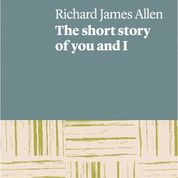
The short story of you and I (UWAP, 2019) (https://uwap.uwa.edu.au/collections/richard-james-allen/products/the-short-story-of-you-and-i?variant=18298644889657) includes nods in the direction of some of these for me: Shakespeare and Dickens and Conrad in ‘Schlafwagen und Wunderkammer’, Pound and Joyce in ‘Spending a Pound in the Metro for Joyce’, Mallarmé and Baudelaire and Verlaine and Rimbaud in ‘Melancholy’, Eliot and Isherwood and Paramahansa Yogananda in ‘Nearer than knowing’, Dante in ‘Lessons from The Divine Comedy’, Proust in ‘Longtemps’, Slessor and Yeats in ‘The Singing Whirlpool in the Guest Room’, and Patanjali in ‘Why we sit’. When I look at this list, I see many who are missing, including Akhmatova and Paz and Różewicz, whom I have expressed my admiration for by reading on #RichardReads, an online compendium celebrating great poems, from a diverse range of authors across time, location and genre, read aloud: https://soundcloud.com/user-387793087

7) What would you say to someone who asked you “How do you become a writer?”

I would say that, from my experience, you don’t become a writer, you are either born one or not. But you can, and probably have to, go on a journey to discover and realise what kind of writer you are meant to be. And that’s where a wide exposure to the work, careers and lives of other writers in all forms and genres is most likely essential; and creative writing classes, workshops and mentorships can be helpful; along with, if you can, finding a community of like minds willing to support each other on their various trajectories. Further, if you don’t already have it, you will need to develop deep inner resources of patience and resilience, leavened by ever-renewing curiosity and a certain amount of fearlessness; the ability to work alone for long periods of time and then occasionally present your work, with at least some flair, in public; the ability to take on board feedback without losing touch with what you are trying to say; the ability to be self-critical without being self-doubting; the ability to find and maintain sources of income that are often unrelated to your essential work, but which you can hopefully learn from; the ability to survive on a lower income and standard of living than many of your friends, while often having nothing to show from your endeavours for many years; and ‘Titiksha’, a Vedic concept my Yoga teacher, Sharon Gannon, once translated as ‘stick-to-it-ness’. And, of course, joy, don’t forget joy – as there is nothing so wonderful as being creative!

8) Tell me about writing projects you are involved in at the moment.

Like any other writer, I am on my own journey of discovery to find out and realise what is next for me.

That includes, at the moment, in the back of my mind, as I write individual poems, finding a unique tone, shape and the appropriate content for the reading experience of my next poetry book; also solving various challenges of adaptation of poetry to other media; and finding my way through a number of hurdles and obstacles to completing screenplays for films that I want to direct.

Questions – Copyright © 2019 Paul Brookes.
Answers – Copyright © 2019 Richard James Allen..

Wombwell Rainbow Interviews: John Challis

Wombwell Rainbow Interviews

I am honoured and privileged that the following writers local, national and international have agreed to be interviewed by me. I gave the writers two options: an emailed list of questions or a more fluid interview via messenger.
The usual ground is covered about motivation, daily routines and work ethic, but some surprises too. Some of these poets you may know, others may be new to you. I hope you enjoy the experience as much as I do.

Cover-of-The-Black-Cab-by-John-Challis--1000x1415

John Challis

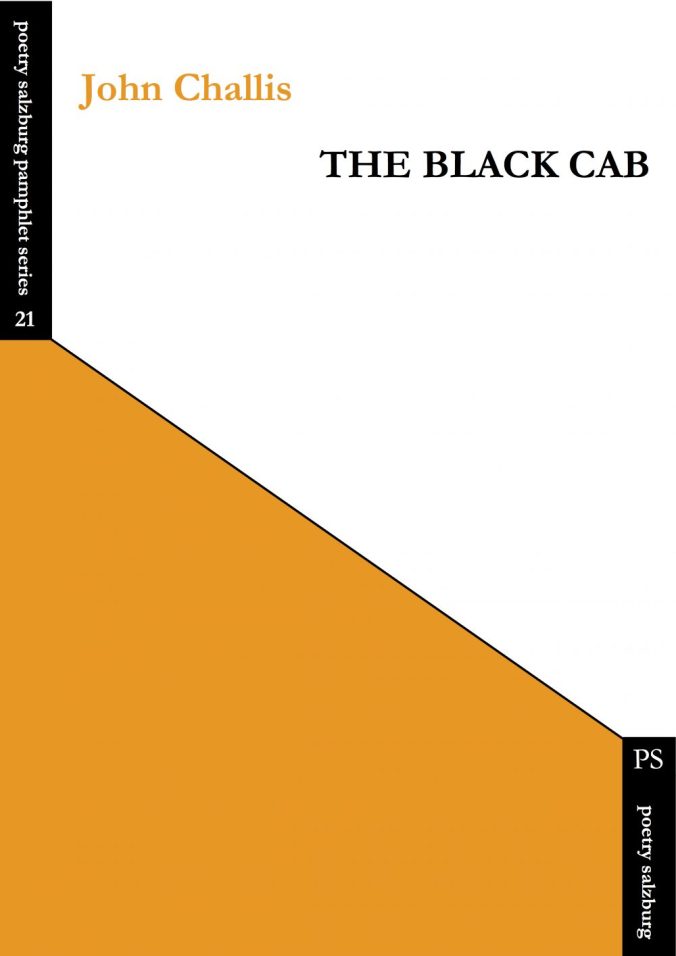
was born in London in 1984. He holds a PhD in Creative Writing from Newcastle University and is a recipient of a Pushcart Prize. In 2012 New Writing North awarded him a Northern Promise Award. His poems have appeared on BBC Radio 4, as well as in journals and anthologies including The North, Magma, Poetry London, The Rialto, Stand and Land of Three Rivers (Bloodaxe). The Black Cab (Poetry Salzburg, 2017) is his first pamphlet of poems and was chosen as a 2019 Read Regional title by New Writing North. He lives in the North East and works as a Research Associate at Newcastle University. http://www.johndchallis.co.uk/

The Interview

  1. When and why did you start writing poetry?

If I’m going to be honest, I started writing what I thought were songs during my mid-teens inspired by the likes of Dylan and the Doors, but poetry really grabbed me when I was 18. I had appreciated war poetry at school (Sassoon, Tennyson, Owen), but it was a chance encounter while browsing the library shelves with Dante’s Inferno that got my imagination really fired up. I wasn’t all that good at playing the guitar so I gave up songs for poems and gradually came to realize that there was far more I could do with the form. Then a creative writing teacher lent me Michael Donaghy’s Conjure, and I got hooked.

2. What was it about Dante’s Inferno that really fired you up?

At first I was captivated by how Dante had imagined his terrifying world in such excruciating detail. The way in which sins were enacted upon the sinner across the many levels of hell seemed a powerful and moral idea. I felt the reach of Inferno far and wide, notably in David Fincher’s neo-noir Se7en, which I’d just studied at sixth form college, but also further: in video games, detective shows, comics. In some ways, Inferno is the perfect dystopia. The way in which Dante assigned figures from history (politicians, conquerors, biblical figures and philosophers) to certain levels seemed to beg for endless comparison to the present. I was also intrigued by how Inferno provided a map to hell as an illustration, as though it was a theme park or a shopping centre. It made something so abstract very concrete.

3. How aware are and were you of the dominating presence of older poets traditional and contemporary?

It’s difficult to write in a vacuum. Whether the presence of older, more traditional poets dominate my writing life, it’s difficult to say. Guiding lights are both old and young. In particular, there’s a whole raft of American poets (James Wright, Larry Levis, James Dickey, Louise Gluck), all of whom might be classified as ‘contemporary’ poets writing during the second half of the 20th Century, that I’ve enjoyed reading and have learnt something from over the last few years. But then there are younger poets (Emily Hasler, Wayne Holloway-Smith, Ocean Vuong, Hannah Sullivan) who I’ve really enjoyed reading as well. In some ways, everything is influential. When I started to write more seriously I looked to Philip Larkin, Paul Farley, Sean O’Brien, and still do.

4. What is your daily writing routine?

Since having a daughter last year, regular writing has gone out the window. When I was younger, I tried to cultivate a space and a routine, but now it happens anywhere and usually when there isn’t time. If I can, I like to write fast, in between my daughter’s naps or on the metro on the way to work. I like to spend time editing and often play around with form and syntax before settling on one configuration. Though too much fiddling can sometimes strip a poem of its mystery. Generally, I’m more productive and less self-critical first thing in the morning.

5. What motivates your writing?

Many things: to remember and experience; to re-experience and re-examine; to think aloud on paper; to imagine something other than experience; to create connections between seemingly oblique things, subjects and phenomena; to connect with others; to respond to encounters with language in great poems, novels and non-fiction books; the inexplicable need to do all of the above at the same time by writing.

6. How do the writers you read when you were young influence you today?

Inferno taught me to consider what’s hidden below the surface, to drill deeper, figuratively speaking. Heaney said somewhere that the role of writing poetry was to unearth revelations about the self to the self. Given the time-intensive labour poetry seems to demand, it’s not hard to imagine images and ideas from texts I encountered earlier seeping in and emerging. If anything, I think that the sound and meter of favourite poems tends to crop up here and there and echo through my lines. I heard a recording of Michael Donaghy reading ‘Black Ice and Rain’ when I was starting out and his delivery of that poem had an enormous affect on me. Novels by J.G. Ballard and Haruki Murakami, which I obsessively read in my early twenties, have also had some kind of influence, perhaps in terms of subject. And film too, in particular neo-noirish classics like Big Trouble in Little China and The Terminator, and the strange otherworldly, edgy and pessimistic worlds they created.

7. Who of today’s writers do you most admire, and why?

Too many to mention, though one poet in particular whose success hasn’t translated into a huge volume of critical engagement is Sean O’Brien, whose collected work seems to me to show an incredible consistency, in terms of theme, subject and form across a 30+ year period. In particular, I love the way his poetry actively imagines events, moments, situations, that are all endowed with a kind of murky, subterranean sense. In his work time is traversed, history opened and spread out across the present. His work is metaphysical and elegiac, comic and resolute. If you’d like to read more, I have an essay on O’Brien’s engagement with the dead in his work over at Wild Court: http://wildcourt.co.uk/features/permanent-afternoons-underworld-poetry-sean-obrien/

8. What would you say to someone who asked you “How do you become a writer?”

I think writing is something you grow into over time through the act of writing. The more you do it, the more you come to realize it’s essential to your well-being and also to your thinking. I tend to think aloud on paper. It wasn’t always this way, but the more I wrote the more I began to realize that I thought differently on the page. It’s hard to describe what this difference is, except to say that there’s something about that marriage between physicality and cognitive thought that often produces surprising results. You become a writer by writing. Why do you write though? Because.

9. Tell me about writing projects you’re involved in at the moment.

At the moment I’m trying to finish a first collection of poems. I seem to have done this many times. The more finished the collection seems, as soon as there’s a contents page and a title, the more unfinished it becomes. But I think I’m beginning to get somewhere. Many of the poems carry themes over from The Black Cab – London, history, markets, work, class – but others look at parenthood, its affects on memory and a sense of one’s own time, which there is never enough of, as well as the idea of having place or purpose in all that time. I’m interested in fluidity, how a poem can seem present and continuous as it breaks into and dramatizes the past, and this perhaps is what drives my efforts. Elsewhere, I’ve been working with prisoners to produce a book of their work, which has been an exciting and touching experience.

Wombwell Rainbow Interviews: Ty Williams

Wombwell Rainbow Interviews

I am honoured and privileged that the following writers local, national and international have agreed to be interviewed by me. I gave the writers two options: an emailed list of questions or a more fluid interview via messenger.
The usual ground is covered about motivation, daily routines and work ethic, but some surprises too. Some of these poets you may know, others may be new to you. I hope you enjoy the experience as much as I do.

TYFront_Edit

Ty Williams

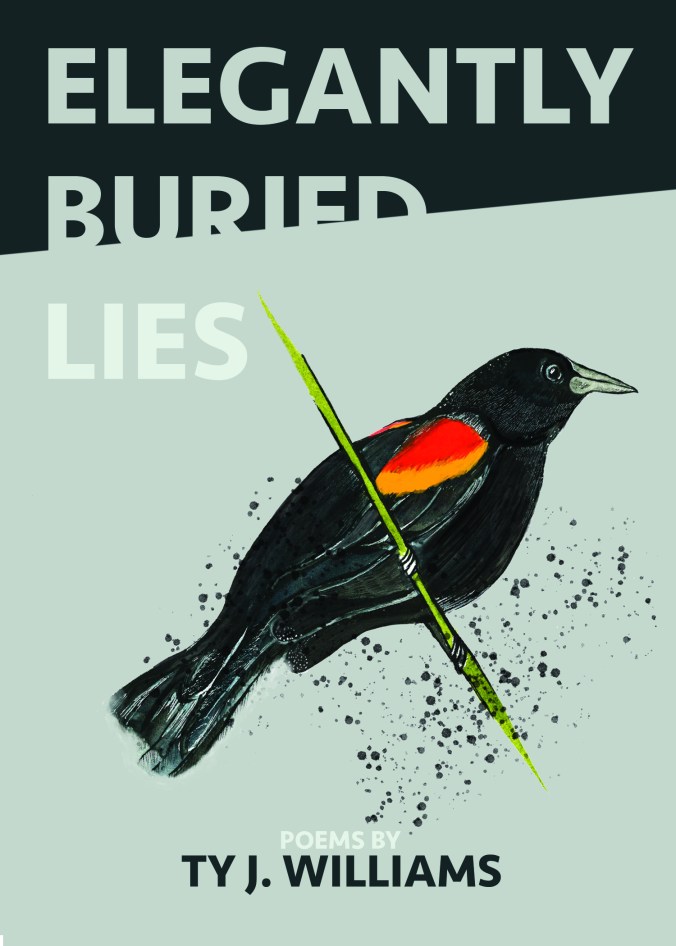
is an English Education student at The Ohio State University after 20 years in the corporate world. He balances far too many hobbies with writing, school, his three sons and being a taste-tester for his wife, a chef. Ty’s writing can be seen at Black Bough Poetry, Neologism Poetry, Columbus Alive, Fourth & Sycamore.

Email: tywilliamswrites@gmail.com
Twitter: @tywrites1
Instagram: @tjwwrites
Web: https://thelittleknownhistoryofbrooding.wordpress.com

The Interview

1. When and why did you start writing poetry?

I started writing when I was about 16. I copied styles of poems I liked and they were all pretty terrible. When I was in my mid-20s, I was frequenting open-mics, featuring here and there, and publishing nonfiction. I have only started publishing poetry in the last year. I’ll be 50 this June.

2. Who introduced you to poetry?

You know, I was an awful student. I was terribly unmotivated in school and consequently, I was on punishment quite often. So, I sat in my room and read. I always loved language and enjoyed reading. My 10th and 11th grade English teachers are who really encouraged my reading, introduced me to different kinds of poetry and encouraged my writing, even though it was bloody awful at the time. In 11th grade, I was invited to represent my school at the Young Authors’ Conference and that’s where I first heard published poets read their own work, not famous dead people in well-published anthologies. From that point, I was hooked.

2.1 Who hooked you at the Young Authors’ Conference, and why?

There was an English professor and poet (now retired) from Ohio University named Peter Desy. His work was very melancholy, which appealed to a brooding teen, but also very honest and not trying to BE poetry. It just WAS without being contrived. One particular poem he read blew me away: “My Father’s Picture on the Cover of a Buffalo Bison’s Hockey Program for 1934”. You can find it on the internet. I had a rocky relationship with my father, but always longed for approval and affection, like any normal child, and hearing this poem just completely knocked the wind out of my lungs. (I also am a big ice hockey fan) It was gut-wrenching and beautiful. I’ve been trying to write a poem like it for decades.

3. How aware are and were you of the dominating presence of older poets traditional and contemporary?

I’ve always been very aware of the presence of traditional and contemporary poets, though I readily follow more contemporary writers. I have and do constantly read poetry, partly out of enjoyment of the art and partly to learn how other poets execute their craft. I’ve never been in a bubble where wasn’t aware of contemporary writers in some form.

4. What is your daily writing routine?

My days are so hectic, I wish I had a daily writing routine! I am a student, I care for my 2 year old during the day, work with kids at the local library in the afternoon and evening, then study for school at night after everyone is in bed. All of that dominates my routine, and sadly, writing happens when it happens. I wish I had a more inspiring tale of how I balance all of those responsibilities and still discipline myself to write or revise a poem every day!

5. What motivates you to write?

Mostly fear and sadness. My wife keeps asking me why I don’t write poems for her. I try to explain that my poetry doesn’t come from a happy place. It’s me wrestling with my fear of death or working through childhood trauma or abusive relationships. I can’t seem to write sunny, complimentary, romantic poetry. So, I guess my writing comes from a desperate need of therapy.

6.  How do the writers you read when you were young influence you today?

I read different writers now. When I was young, I read Whitman, Frost, Kerouac and due to an obsession with The Smiths, Keats ,Yeats and Wilde. These days, I read a lot of anthologies and lit mags, and I read a of local (Ohio) writers. I like to keep up on new writers, and to see what is attractive to publishers and readers. Ohio has some fantastic poets, as well, so I immerse myself in their work. I still read that Peter Desy poem often, though. It’s one of my landmarks of poetry that moves me.

6.1. How did The Smiths, Keats, Yeats and Wilde influence your early poetry?

Well, I haven’t read Keats, Yeats in ages. I don’t think I have much, if any, of my writing from that time, so I’m not sure how much of a direct influence they had on my work. I did try a bit too hard to be an intellectual, and that’s where the Morrissey influence came in. Soon after, I related much more to Joe Strummer and Chuck D. My influences and my work have changed quite a bit over the decades.

8. Whom of today’s writers do you admire the most and why?

Ohio has an incredible wealth of talented and accomplished poets- many in my hometown of Columbus. Recently, I have been reading the greats from my state and city: Bianca Lynn Spriggs, Scott Woods, Ruth Awad, Maggie Smith (American writer, not Dame Maggie Smith), Rachel McKibbens, Jim Dwyer, and Hanif Abdurraqib. There are many  others, too, but these folks are accomplished poets who live in my area. A couple of them, I know personally. I enjoy hearing these artists create and write about their experiences and stories of living here in Ohio. This used to be a place everyone was trying to escape, but now people stay here and sometimes even seek Ohio out as a place to settle and make art. I relish that and I savor the work that these folks have put into the world.

9. What would you say to someone who asked you “How do you become a writer?”

The complicated answer is, “What kind of writer do you want to be? Do you want to be published often? Do you want to be paid for writing? Do you want to be able to earn a living from writing?”

The short answer is, a writer is simply a person who writes, whether that’s in a journal next to your bed, or in The Paris Review. So, the first step is to simply write. Write everything that comes into your head. Save all of your writing, whether it’s brilliant or rubbish. Your opinion of that same writing will change from day to day. Now, if you are interested in improving your writing, go to workshops. Go to open mics. Get on apps, like Meetup, to see when there are writing circles and workshops in your area. Talk to published writers and ask them all the questions they can handle. Don’t forget to READ. Read as much as you can. Read work that is similar to what you want to do. See what passes for “good’ or “great” writing in literary journals, in anthologies, in your chosen genre at your local bookstore. Write all of your ideas down. Go back to your “failures” and rework them. If you are at a loss as to what to write at any given time, there are websites and Twitter accounts that have nothing but writing prompts. Practice your craft as often as you can. Read, read, read, write, write, write.

10. Tell me about the writing projects you have on at the moment.

I am currently putting together my first honest-to-goodness chapbook. I have done the cut-paste copy-shop versions in the past, but I’m self-publishing a bound, proper chapbook this time around. I have a feature coming up in September, here in Columbus, that I’m really excited about.-my first major feature since the 90s. I’m working on a goal of 100 literary submissions in 2019. I’m at about 35, so I’m behind a bit, but plenty of time to catch up. 2019 has been a year of several small victories with my writing, so, I’m determined to keep it moving, keep writing, keep learning, keep workshopping, keep publishing.

On Fiction Wombwell Rainbow Interviews: Jean Lant

Wombwell Rainbow Interviews

I am honoured and privileged that the following writers local, national and international have agreed to be interviewed by me. I gave the writers two options: an emailed list of questions or a more fluid interview via messenger.

The usual ground is covered about motivation, daily routines and work ethic, but some surprises too. Some of these poets you may know, others may be new to you. I hope you enjoy the experience as much as I do.

Jean Lant 1

Jean Lant

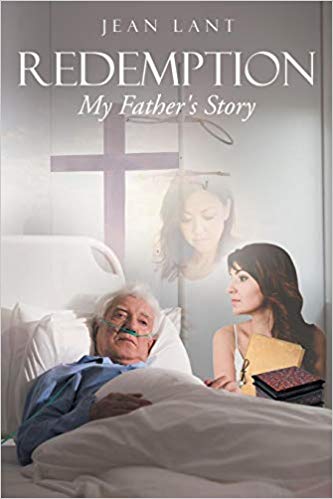
is a retired married woman who currently lives in Texas. In addition, she was born and raised in Milwaukee, WI and spent twelve years living in Las Vegas, NV. Jean has various work experiences as a crew member, secretary, a law office manager, a travel agent and co-owner of a handyman business. Her book, “Redemption: My Father’s Story”: is a gripping account of a man’s yearning for healing by revealing his corrupt past to his daughter.

Redemption by Jean Lant

The Interview

1. When and why did you start writing fiction?

I have always wanted to write books. I wrote fluff stories and movie reviews for CNI NEWSPAPERS which was a company that published weekly suburban newspapers In Milwaukee Wisconsin, In the mid eighties while I was the receptionist. However In 1970 my dad wrote a manuscript about Dismass the good thief who died on the cross with Jesus. My dad passed away in 1986 and my mom gave me the manuscript. When I retired 2 years ago I found the courage and time to take his story and write a book that includes his manuscript idea while an additional story surrounds his and the life of Samuel mirrors the life of Dismass. Here is the link to my website youtu.be/IAQBf69NjZo

2. Did your Dad introduce you to fiction?

What a wonderful question. Both of my parents read books often. My dad convinced me I was able to write great stories. He and I worked on several school projects that always seemed to include writing. So he introduced me to writing fiction.

2.1. How did your dad convince you?

My dad was a wonderful charismatic man and he would tell me I had plenty of talent to write great stories. He would add that in addition it’s another thing to be successful. That he would tell me is all about desire and hard work.

3. How aware are and were you of the dominating presence of older poets traditional and contemporary?

I really never paid attention to that. Now that I’m 68 I’m starting to feel old.

4. What is your daily writing routine?

Because I’m retired I don’t have a regimented writing routine. I do check and respond to different writing groups I belong to. When I sit down to do a project I tend to work between 6 – 8 hours a day till it’s done. The story seems to take over and I just hit keyboard symbols till I am finished. I start each day with coffee and at 4pm it’s time to share a glass of wine with my husband and discuss where the story took me during the day.

5. What motivates you to write?

I love true life events and taking them to another dimension. Almost like taking a photo and putting that photo on canvas and painting it with words of excitement, mystery, emotion and lots of beautiful colors

6. How do the writers you read when you were young influence you today?

When I read I go to the world that the author created for me. I love that feeling of being whisked away and just before I get returned to the real world I have been taught how to make my life better. One of my favorite childhood books was the Wizard of OZ. That message of being grateful for what you have seems to be always in the back of my brain. I want to take people to a world I created and teach them they are fantastic and loved always.

6.1. Interesting that Oz should inspire you yet it is an imaginary world, whereas you write of real life events?

I know That’s true. However my mind  works like nobody else’s.. Now Redemption My father’s is weird mix of true events. Dismass, the good thief was indeed a true life person yet I created a fictional person to mirror his life.  So I don’t really seem to understand where fact becomes fiction.  I am an unconventional thinker.  Sometimes I wonder if I just want everyone to life in a world of fun and happiness so I mix real and fantasy.

7. Whom of today’s writers do you admire the most and why?

Wow that’s a tough question. I think I’m so fickle that I don’t have just one. I run a book club in my neighborhood and everyone picks a different book so that we read many different authors. Since I have published my first novel I read books with very different eyes. So unfortunately I don’t have a good answer to that question..so I’m sorry to be undecided.

8. What would you say to someone who asked you “How do you become a writer?”

I believe we’re all writers. It’s a question of you taking the time and a leap of faith to tell people your story. I go back to my parents teaching me that desire and hard work equal success. If you believe you can do it, I promise you that the forces of nature will show you the way.

9. Tell me about the writing projects you have on at the moment.

Currently I’m writing the second book in my 3 book series. “Cook’s book”. A very years ago my husband and I worked for a travel agency. We did 50 plus trips and always hosted the agency guests. We loved that job. So I have taken real life events and am creating a story around those events. We didn’t realize how much we got taken and how the agency went back on what they promised to pay us. Once I have finished Cook’s Books I will be writing my 3rd book in the series “But first let’s have coffee”. In addition I’m traveling to Seattle, Twin Falls Idaho, Salt Lake City, St. George Utah and ending up in Las Vegas. In each of those cities I am doing a book signing event. It’s such a fun journey to be taking at this time in my life. Age is a state of mind and if you don’t mind neither do I. Thank you so much for doing this interview. I hope you enjoyed it as much as I did. Good luck to you in all of your life adventures. Remember to always enjoy the journey.

Four poems by Z D Dicks

Stellar stuff

reubenwoolley's avatarI am not a silent poet

Diogenes
..
In the centre of the city     at the cross
is a man     Diogenes     suited and booted
he rifles     through a bomb proof bin
..
He pulls out an arm     with a half squashed
sandwich     a bite mark at corner     and waves it
at a thick     lipsticked woman     on stilt heels
and twists crust     points it like judges finger

Men don’t think about sex     every ten
seconds     they think where’s my socks
where’s my lunch     and I’m late for work

An office lady     staring at him     scrunches the paint
on her face     leaving mud banks     at corners
of eyes     she veers away     from the soggy
lettuce     and floppy bread     tumbling like a clown

Do you mind     I’m on my lunch break
hold my calls!

Diogenes smears mayonnaise…

View original post 804 more words

Wombwell Rainbow Interviews: Tianna G Hansen

Wombwell Rainbow Interviews

I am honoured and privileged that the following writers local, national and international have agreed to be interviewed by me. I gave the writers two options: an emailed list of questions or a more fluid interview via messenger.

The usual ground is covered about motivation, daily routines and work ethic, but some surprises too. Some of these poets you may know, others may be new to you. I hope you enjoy the experience as much as I do.

Tianna
Tianna G. Hansen

has been writing her whole life and discovered an affinity for all genres but poetry will always be her first love. She lives in Pennsylvania with her husband and her cat Stella. Tianna is the founder/EIC of Rhythm & Bones Press (rhythmnbone.com) and her published work can be found at creativetianna.com. Follow her: Twitter @tiannag92 / IG @tgghansen24 / FB @tiannaghansen.

The Interview<

1. What inspired you to write poetry?

I don’t think I can pinpoint one thing over another that inspired me to write poetry. It seemed to come naturally to me. I’ve spent my whole life writing, composing poems and stories on paper and in my head. Poetry was always a solace for me, somewhere I felt at home and like I could rest easy. Somewhere I could release all these bottled emotions and find peace. My mother is a poet and always said she transferred her muse to me in the womb. I’ve always felt things very deeply and tried to put those feelings into words – thus, poetry seemed to find me, something that grew into a necessity over time. A catharsis, a release. I remember sitting in the backseat of the car as a kid at night, following the moon with my eyes, which in turn seemed to follow me, never disappearing, hanging there like a shining orb I couldn’t take my eyes off of. I was smitten. That moment seems to describe my relationship with poetry well, too. Finding beauty in every moment and crafting it into something tangible with words.

2. Who introduced you to poetry?

I guess you could say my mother-muse introduced me to poetry, but truth is, I can’t quite remember. I always admired Emily Dickinson and Sylvia Plath’s poetry. I remember handing in a personal poetry book (an assignment in high school) and receiving it back from my teacher with the words “YOU ARE A POET” written on it and underlined. I think that moment right there was my affirmation that I can write this, more than just read it. I will also always remember visiting a relative one summer and finding what seemed to be an ancient book of Henry Wadsworth Longfellow poems. I was so drawn to his words, I started copying down entire stanzas and then entire poems. I didn’t part with the book for a week and when it was time to go home, the relative gifted me the book. I still have it with my other old books collection.

3. How aware were you of the dominating presence of older poets?

The poets who have always been at the forefront of my consciousness when writing or thinking about writing are Plath, Dickinson, Robert Frost, Edgar Allan Poe, Longfellow, and countless others. I think as a contemporary writer it’s good to be aware of who came before but also not to allow this to dominate you in your own creations – make a name for yourself and a style all your own. I was always told: write what you want to read, what hasn’t been created before. I continue to be amazed by the contemporary poets of today. I’m surrounded by an infinite number of talented writers, and it rejuvenates me to see the creative spirit living on.

4. What is your daily writing routine?

I haven’t fallen into a strict writing pattern or routine yet, although it is something I crave. I find myself writing whenever I have a spare moment, even (guiltily) composing poems in the car on my commute, at my desk during my day job, while trying to sleep, watching the moon in the sky at night, and any other number of odd places. I think it frustrates my husband quite often because I am always partly inside my head writing poetry. I often like to take the day-to-day mundane and craft it into lyrical poetic lines. I’m fascinated by mythology, lore and legend, and love the opportunity to dive into some research and write based on this. I’m always writing poetry whenever I feel strongly about something – love, loss, grief, joy. My emotions fuel my writing passion and so I write whenever I am moved to. I write without restraint or any set routine whatsoever.

5. What motivates you to write?

I kind of touched on this above but whenever I am feeling an emotion very strongly I feel compelled to write. My emotions spur composition. Not writing is harder and worse than writing for me. I write because I can’t stand not writing. I write because I need to. I’m inspired by so many things daily: the curl of the wind in the trees, the tilt of the sun or the moon in the sky, anything that ignites a passion inside me. When it comes to my creative nonfiction, I’m motivated to tell my story, of my past and what I have endured and survived in hopes of helping someone else navigate the pathways of trauma, abuse, and mental illness. For my fiction, I like to craft a world like an escape, for myself as the writer and for my readers. No matter what I write, I leave pieces of myself in every line like a treasure map of my soul.

6. What is your work ethic?

As a Capricorn Sun & Moon I am an insane workaholic, I rarely allow myself to rest. I’m ambitious and like to do as much as I can; which can often be a fault as well. I work hard and throw my all into everything I do. Especially when I’m passionate, I will work tirelessly, like on my small press/lit mag Rhythm & Bones (link: https://www.rhythmnbone.com). I like to champion anything I set my mind to doing with R&B although there are times it can be exhausting. I’m the same way when it comes to my own writing projects: tireless, motivated, passionate, fearless.

7. How do the writers you read when you were young influence you today?

I read so many books when I was young but those that truly stuck with me are the poets I mentioned earlier, among many others, and all the fantasy writers I would consume. I was always drawn to medieval historical fiction. My first novel is fantasy and I loved escaping into that world. As I’ve grown, my writing has evolved to be more personal and confessional but I will always have roots in fantasy. I hope to one day mix the two, and that’s what my current WIP novel somewhat does. It isn’t fantasy-based per-say but it is based on some of my own experiences while maintaining a hard fictional quality. It gave me enough of a separation to develop the characters and I hope to see that novel published someday. It combines my experiences of abuse with my passion for prison reform, along with a nice hidden mix of mythology.

8. Who of today’s writers do you admire the most and why?

I admire so many of today’s writers but have a fondness for my writing group, The Legend City Collective. The writers there are all so supportive and talented and have stuck by my side through a lot. I learn new things from them every day. I also admire all of the authors I’ve published at Rhythm & Bones Press (link: https://www.rhythmnbone.com/books). The talent they bring to the page as well as turning their own traumas into art is a big motivator and inspiration for me.

9. Why do you write, as opposed to doing anything else?

Writing is my first true love. I found writing at a time in my life that was full of upheaval. When my parents divorced in second grade and I discovered none of my friends at the time were going through anything similar, I felt alone. I channeled my feelings into creating, and it stuck with me ever since. My family knows I’ve been writing my whole life; it is more than a best friend, it is my constant lover who I know will never leave. Writing is my soul mate. My security. I’ve found writing is a constant, writing is powerful and meaningful and fulfills me in ways that anything else couldn’t. I wrote my first novel before I entered high school (it’s still sitting in a drawer somewhere to my mother’s dismay). I started writing poetry around that time, or earlier. I composed stories when I was very young and my little sister would be the first reader, scurry away with pages and pages of handwritten tales. I feel, although this might sound corny, writing was always my destiny.

10. What would you say to someone who asked you “How do you become a writer?”

You’re a writer the moment you pick up a pen or start typing. You’re a writer once you compose a line of poetry or a sentence. Once you string words together.

11. Tell me about the writing projects you have on at the moment.

I’m in a constant revision spiral for my novel mentioned above, Chasing Cassandra. I wrote the first draft at the end of my MFA program and have since been revising and tweaking. I’m also working on a few poetry manuscripts and hoping to have a full-length poetry collection eventually. It’s always a little difficult for me to compile poems together but I love the challenge of linking strong themes together and always discover something pleasantly unexpected. I’m still basking in the glow of having my debut poetry collection Undone, Still Whole (link: https://www.creativetianna.com/undone-still-whole) released with APEP Publications, which chronicles my journey through trauma to come out on the other side of healing, channeling the feminine divine to garner strength and power on this pathway. I’ve also released a poetic opera A Victorian Dollhousing Ceremony with two other poets, a beautiful collaboration which challenged me to enter the mind of a character, The Firebird, while taking from my own life. Right now, I have an erotica poetry collection ongoing, a confessional poetry collection, and one about entering recovery (both from trauma/abuse and addiction). I would love to also get back to work on a novella I had plans for a while back, and eventually begin writing my next novel. The writing projects seem endless, but that’s an exciting place to be.

Wombwell Rainbow Interviews: Stu Buck

Wombwell Rainbow Interviews

I am honoured and privileged that the following writers local, national and international have agreed to be interviewed by me. I gave the writers two options: an emailed list of questions or a more fluid interview via messenger.

The usual ground is covered about motivation, daily routines and work ethic, but some surprises too. Some of these poets you may know, others may be new to you. I hope you enjoy the experience as much as I do.

Stuart Buck
is a poet and artist living in North Wales.  When he is not writing or reading poetry, he likes to cook, juggle and listen to music. He suffers terribly from tsundoku – the art of buying copious amounts of books that he will never read.

The Interview

1. What inspired you to write poetry?

I started writing poetry after a particularly troubling time in my life. I was working as a chef and had what the doctor called a ‘not insignificant nervous breakdown’ so had to stop working. Until that point I can honestly say, other than at school, I had never read or been interested in poetry at all. But I had a lot of spare time after I finished work and decided to write haiku as I had heard from somewhere or other that the practise was very calming. I guess that’s where the addiction started.

2. Who introduced you to poetry?

Myself I suppose. The first poet I properly fell for was Basho and his wonderful haiku. So much can be said in just three lines. For me, that is mastery of the craft. From there I picked up some of Kerouac’s books of poetry, then fell in to the Beats – Ginsberg, Burroughs etc. Nothing too in depth, I was just dabbling.

3. How aware were you of the dominating presence of older poets?

Massively aware since that was what I was reading. It is only once you scratch the surface that you realise that the majority of the quality work that is produced is coming from the younger poets. At school you only ever learn about the old white guys, maybe a bit of Maya Angelou. But poetry is so much more isn’t it?

4. What is your daily writing routine?

Honestly, I don’t have one. I can go days and weeks without writing. But then I get this feeling in my throat and my stomach and it’s telling me I need to write. That I need to create something. So I do. I have a huge, fantastic imagination and a lot of my poems are vignettes, little scenes that I have dreamt up and stories that I feel need to be told. I open Word Online, write it down and that’s it. I NEVER edit my work (unless it is a commission) so once something is out its out. I tend to post most of my work on Twitter and don’t submit much to places anymore. I used to but I realised I was looking for validation from people through submitting work. I think even if your work is good the acceptance rate is pretty low, so it can be disheartening for a lot of writers. But in reality, you are trying to get 5000 poems down to 50 and people are going to miss the cut.

5. What motivates you to write?

Because I have to. That’s the short answer. I have an awful lot inside me and if you have a lot of things turning around your mind and don’t have anywhere to put them, they can pickle and turn bad. That’s why poetry is so important.

I also love it when someone connects with my words. It’s like a neural-link. I think any poet who says they aren’t interested in validation is lying. We crave acceptance and love, especially from fellow writers. I am not going to sit here and tell you otherwise. I’m like a sponge. A good comment can see me through a bad day. And that’s why I write.

6. What is your work ethic?

Poor! I read a lot of poetry but I write very little compared to a few years back. I was churning out one or two pieces a day back then whereas now it’s one or two a month. But I feel like the quality is there with my work now. Or at least, its somewhere near where I would like it to be. I have struck a decent balance I think although I do procrastinate like an absolute champion.

7. How do the writers you read when you were young influence you today?

They don’t! Because the only thing I ever read when I was young was the Doctor Who novels and as far as I know they haven’t influenced me at all. I am not a massively academic person and I only really fell for poetry/literature in general in the last few years. I got a good degree and qualifications etc but they were not to do with english/the classics/poetry. Sometimes when I sit in on a conversation and people are being overtly academic I get a bit bored to be honest. I am all about passion and grit, not what some dead guy wrote about orchards.

8. Who of today’s writers do you admire the most and why?

Andrew McMillan is my favourite living poet. He deals with some really stark issues but writes beautifully and his poetry never fails to engage with me. But I read endless poetry now and so much of it is of a good quality. I don’t think poetry has ever been in a stronger position in terms of standards. That’s a lot to do with the internet I think which has allowed writers who would otherwise not stand a chance of being read to get their work out there.

9. Why do you write, as opposed to doing anything else?

I think words are the perfect medium. You can paint with words, sculpt with words, make music with words. I want people to understand what is going on in my head and while a painting or a song could tell them half of the story, words can tell the whole sordid tale.

10. What would you say to someone who asked you “How do you become a writer?”

Write something! Honestly, I don’t subscribe to this ‘everyone is a poet’ aesthetic. It’s hard work to create something that is good enough to be classed as poetry. But if you start writing things then you are a writer. Then I would say read. You CANNOT possibly create good art if you don’t indulge in the art that surrounds you.

11. Tell me about the writing projects you have on at the moment.

I have just finished recording a poetry podcast called ‘Bedtime Stories for the End of the World’ where I was asked to update a piece of ancient folklore and adapt it to the modern world.

My second book ‘Become Something Frail’ has just been reprinted as we sold out so that is wonderful. I am working on a third book but I also create visual art so some of my time is spent designing book covers etc for other people.

I sound busy but don’t worry I mainly spend my days on Twitter @stuartmbuck or playing pointless games.


Wombwell Rainbow Interviews: Gerry Stewart

Wombwell Rainbow Interviews

I am honoured and privileged that the following writers local, national and international have agreed to be interviewed by me. I gave the writers two options: an emailed list of questions or a more fluid interview via messenger.
The usual ground is covered about motivation, daily routines and work ethic, but some surprises too. Some of these poets you may know, others may be new to you. I hope you enjoy the experience as much as I do.

Gerry Maxwell

Gerry Stewart

is a poet, creative writing tutor and editor based in Finland. In Scotland she was Editor of Grimalkin Press from 2005-2011 which published books connected with the creative writing and local history groups she worked with. She was part of the Composition Artist Collective from 2004-2006 with poet Nalini Paul and artist Frances Robertson which ran writing and art workshops and produced a collection Leaf Fall: Seeing by Touch of their work. She was Writer in Residence for North Ayr in 2001-2 and Assistant Editor at Chapman Publishing from 1997-2001.

She has recently won Hedgehog Press’ ‘Neglected or Selected Collection Competition’ and will hopefully publishing the collection with them in 2020. Her first poetry collection Post-Holiday Blues was published by Flambard Press, UK in 2008. In 2005 she received a Scottish Arts Council New Writer’s Bursary for her unpublished novel Talking Italian in my Sleep which has been long-listed for Linen Press’s First Chapter Competition in 2015 and Cinnamon Press’s Debut Novel Competition in 2017.

Her poetry has been widely published in the UK, Europe and United States since 1997, including Black Mountain Review, Cencrastus, Crannog, From Glasgow to Saturn, Hanging Loose, Hidden City Anthology, Iota, Island, Orbis, Poetry Quarterly, Poetry Salzburg Review, Pushing Out the Boat, Scrittura, Skylight 47, Southlight, The London Magazine and zvonainari.hr.

Born in the US, she has lived in Europe for over 25 years in Norway, Greece, Scotland and now Finland. Her writing blog can be found at http:/thistlewren.blogspot.fi/ and she is @grimalkingerry on Twitter.

The Interview

1. What inspired you  to write poetry?

I was always writing something as a child; complicated family epics, little poems, diaries. In 7th grade we had a Writer-in-Residence visit my class, encouraging us to write poems. I wrote several that were accepted in the little booklet he produced, featuring work from children from all over town. He made a point of singling me out in class to praise my work and to say I was a real poet. I was teased by the kids in class afterwards, but it really was an eye-opening moment for me, that I was good at something and that it was possible to do something with that skill. Writing started out as a hobby, but being a poet was always connected in my mind with encouraging others as a creative writing teacher, though I never seriously considered it as a job until much later.

2. Who introduced you to poetry?

Probably my mother, she was always telling stories about history and our genealogy. She also liked physical, onomatopoetic poems, chanting ‘The Song of Hiawatha’ by Longfellow and ‘Boots’ by Kipling at my brother and I when we were young. It drove us nuts, but it must have sunk in.

3. How aware were you of the dominating presence of older poets?

I really wasn’t until I started working at a small publishing company in Edinburgh that was very involved with the Scottish writing scene, especially the older poets like Norman MacCaig, Edwin Morgan, Sorley MacLean and Tom Leonard. I loved working there and learning about their writing and lives, seeing them at events. My editor also introduced me to women writers like Liz Lochhead, Janet Paisley and Magi Gibson who have all brought such a new spirit into Scottish writing.

When I tried to get published, I didn’t feel excluded or belittled by all these ‘names’ around me as I got to see all their hard work from another side; writers getting rejections, struggling to meet deadlines, facing financial and personal difficulties.

Overall, working in publishing taught me that it’s all just opinions and making an effort. One editor’s opinion doesn’t have to make or break you. Just keep writing and pushing on until you find someone who sees your potential. That doesn’t mean you don’t continue to strive, to grow and learn as a writer. I soaked up as much as I could in the background and I hope it has benefited my writing.

4. What is your daily writing routine?

I try to write daily. I’ve recently taken online writing courses that offer a daily prompt to get you started and it really has changed how I write. I use one of their prompts or make up one of my own and write for about a half hour, just free-form. If a poem starts to develop, I’ll play with it for a bit and then leave it to work on editing older poems. I’m always tinkering with poems or my collections. Or I do admin, there’s always poems to submit to magazines or research to do.

5. What motivates you to write?

I’ve always had the overwhelming desire to write even if it’s just in my journals which I’ve been keeping for over 35 years. I used to be a great letter writer, I now blog as a way of sharing. I have this build-up of stories I want to tell, moments I want to capture and remember, to relive them again. My poetry comes from that place.

6. What is your work ethic?

It’s good now, but for the past decade I’ve been raising four kids, so they took up my entire focus for a while. Now I just put my bum to my seat, fingers to my keyboard or pen to paper and just do it. I keep writing new poems, submitting to magazines and applying for various opportunities in the hope that I’ll succeed. And over the past few years, I have seen small rewards. Because I live in Finland and do not write in Finnish, I am limited with what I can achieve here, so I feel I need to work harder to find an audience and outlets for my work. I get frustrated at times, but I just keep working at it.

7. How do the writers you read when you were young influence you today?

After I got out of the romantic teenage phase, I read a lot of Elisabeth Bishop, Richard Hugo, Anna Akhmatova and other writers I discovered in university. I’ve recently found a few of those poetry collections so I’m dipping into them, revisiting times when I read and wrote, not to be published, but just because I loved the sound of words. I’m trying to get back to that more, while still being more aware of what I want that language to do.

8. Who of today’s writers do you admire the most and why?

I love Anne Michael’s precise use of language and I’m painfully jealous of my friend Jen Hadfield’s ability to dive into a place, its history and language and find the joy of it. When she writes, she plays with the shape of language, its physicality. You can feel what she does with words in your mouth, your gut. I’d love to be able to do that more.

9. Why do you write, as opposed to doing anything else?

I am tone-deaf, I have no artistic skills, I’m too impatient to craft. I read a lot, constantly before kids, so it just seemed a natural progression.

10. What would you say to someone who asked you “How do you become a writer?”

Read, submerge yourself in the beauty of language, written and spoken. And then write. Every day if possible. Good or bad put the words down. Say what you want to say, need to say. Share them, burn them or forget them, but rejoice in the fact that you’ve written them. Read and write. Rinse and repeat. Then find a good writers’ group to connect with and share your work.

11. Tell me about the writing projects you have on at the moment.

I have two collections I’m seeking a publisher for, so I’m mainly just trying to increase my visibility. I’ve just won Hedgehog Press’s ‘Neglected or Selected Competition’ so hopefully they will publish a small version of one of the collections next year. I hope to organise some readings after publication in Finland and the UK.