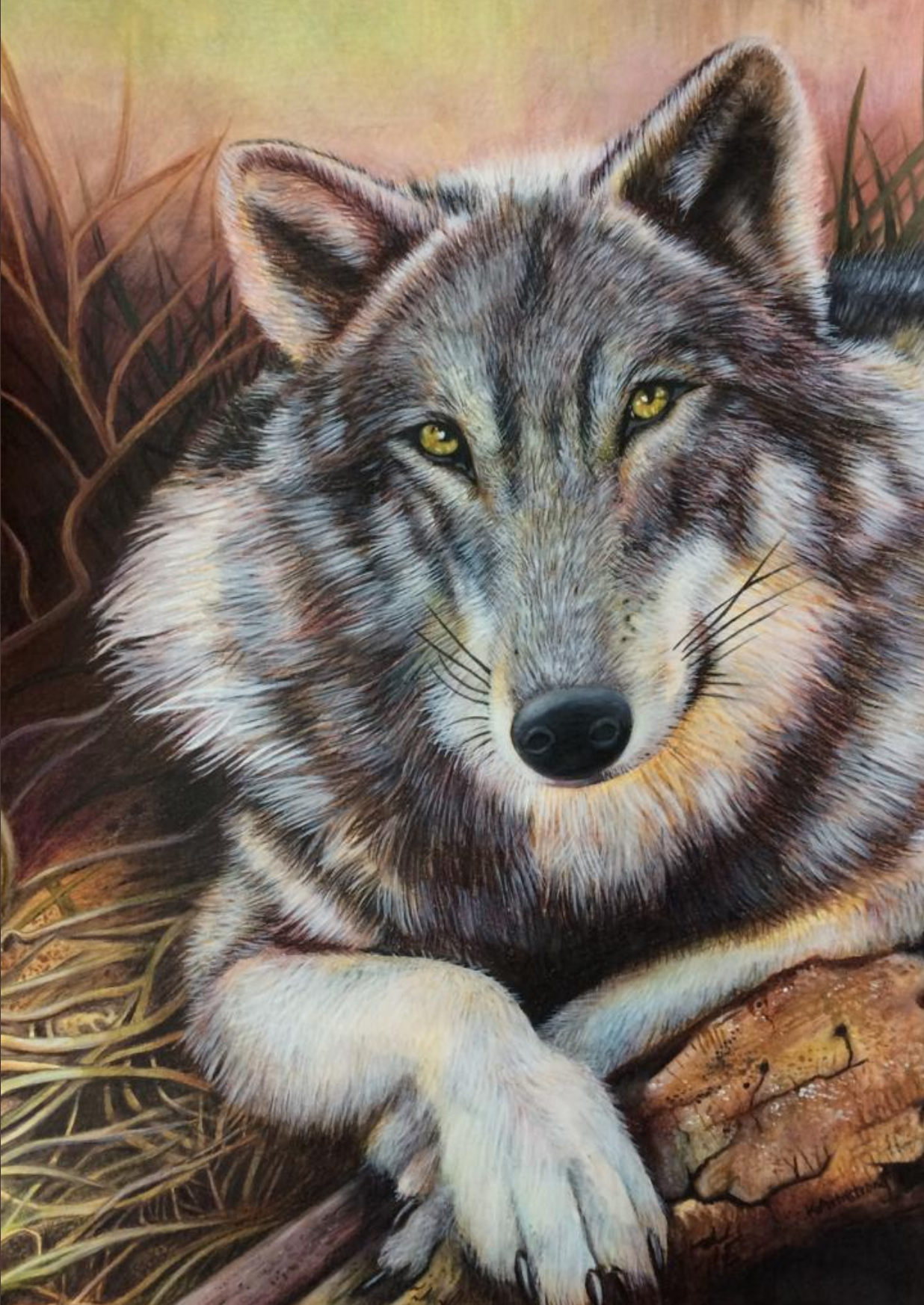
#WorldWolfDay, #InternationalWolfDay Anybody written poetry unpublished/published, made artworks or have photos of wolves? I will feature all contributions in today’s blog post.

World. Wolf Day

wolf 3wolf 2

wolf 1

All wolf artwork by Kirstin Armstrong

She-Wolf

She arrives in dreams
The white she-wolf
Nipping and yipping
Around the Soul
Until it’s fully awake
Conscious of the surrounding Wildwood

One eye shines with sky-wisdom
The other, by now ferocious ruby red
Colour of mega-fires
Shade of blood for all the fallen animal-kin

Her howl echoes with pain
Grief
Rage
A billion souls burnt

Call that reverberate to the bone
Dream-sound break the hush
Stir archetypes awake

Nature are poisoned
Hurt
Ravaged
Out of balance
A continent burning

The wild howl will break sleep
Until the fallen are remembered

©RedCat

the wolf bites

the wolf bites the moon
wisp clouds mask red nakedness
shadows on my mind

-Simon Salento January 16, 2020 


On Being Pursued By A Wolf

Their nattering had gone on long enough.  The wolf crooked its enormous head suddenly, and they ducked down lower behind the boulder. 

 They quietly listened for its next move; but heard nothing.  Stinson turned and eyed up the pathway, but Littlewood gripped him by the arm, shaking his head dismissively.

The silence was broken by growls like an engine rehearsing; the wolf had started to advance, slowly, with methodic composure.  Littlewood peeked up to see where the beast was and when he saw it had clocked the boulder they were hiding behind, he let go of Stinson’s arm, and whispered, ‘Run.’

They upped quick and made for the pathway, and the motion blasted up a geyser of dust which half-screened their escape, an inadvertent covering manoeuvre; however it was a narrow passage they had come through, and in the scramble to get there, they forgot that both of them couldn’t fit through the entry at the same time; so Stinson, in the last second, halted and said to Littlewood, ‘After you.’  There was no time for competitive politeness, so the Captain hurried on first, and Stinson slipped through after him. 

The wolf howled aloud when its eyes caught the obscured figures of fleeing men, but it was so hyperbolic a howl – a public display it wasn’t used to giving anymore – that it brought on a fit of coughing, and it had to take a moment to gather itself before beginning the chase; this gave Littlewood and Stinson some time to make tracks.  And plenty of tracks they made.  If that pathway had been starving for footsteps before, it was now enjoying a banquet as the absconders thundered along its surface. 

 Stinson had never run so hard in his life.  He had never been athletic.  His teachers at primary school thought him highly batty when he declined to join the cross country team saying he had all of St. Alphonsus’s Theologia Moralis to finish reading.  And he did finish it…eventually.  That was a form of long distance running, he had forever told himself, though it hardly set him up for this undertaking.  If only St. Alphonsus had included a tenth volume: On Being Pursued By A Wolf.  For Stinson was short of breath fairly fast and he had nothing but all that faith and learning to support him.  He thought he would be fitter.  He was young, apparently healthy, had lived a pure life; but a delicate life unquestionably.  Had he squandered purity returns on this trip?  He’d wager yes if he was so debauched as to place a bet.

Littlewood, on the other hand, had been more than willing to sign on with the cross country team and won medal after medal throughout adolescence, so he was now making headway.  He kept looking back at the angel-faced one and shouting, ‘Faster!’  But Father Stinson couldn’t go any faster. 

A maelstrom of wolf-noise resounded as they ran.  But it came from above, not behind, for the wolf had opted to pursue them in the hills overhead.  They could hear it making great leaps and landings on the rocks.  Growls and scrapes.  Thuds and rasps.  And the occasional wheeze.

Littlewood made it out of the hills first.  The heads of those ridiculous sunflowers were a sight to behold when he got there, sticking out of a recently-come fog like bright and perky periscopes, mustard stares on their endless father in the sky – like wee ones watching their old man leave for work – as it slinked away again into the cloud.  Littlewood checked on Stinson who was still chugging along in the passage behind him like a man three times beyond that age.  Then he looked to the hills for the wolf.  But saw no sign.  All he could see and hear were signs of bankruptcy in the panting young priest.  Maybe the creature had chosen to go back to its cave because it was tired and ill and wanted to sleep.  Or maybe it had fallen and broken its neck.  Chance would be a fine thing, but there had been a notable lack of fine things over the course of this journey.  Apart from Katrine.  Yes, she was a fine thing alright, he knew that well.  Granted, he had tried to suppress the feelings he had towards her for a while, but it was in situations like this the fine things always sprang to mind, bold and transparent.  Right when they looked to be lost. 

He turned to see if he could make out the others in the distance.  They must have that grave dug by now. 

But it was hard to see anything.  They had come rather a long way and the haze had grown thicker and what light there was had dimmed to some extent.

When Stinson finally reached him, all haggard and weak, he said, in a ruptured voice; ‘Why…have…we…stopped?’

-Sean McNulty (Extract from his novel, Excavatum)

Lament Of The Wolf

Watching the ripples splaying into an unending circle, made by the landing of the Grebe, until the wavelet gently reaches the shore dying on the lush ground, already sopping up the blood of my mate and young, I pray for forgiveness.  The sunlight reflects the surrounding beauty of the wilderness.

We came stealthy in the night, carrying the babes, soothing, hushing, communicating the danger that pursued us.  These woods are our home given by the Great Spirit for our use, for our welfare, to live in harmony.  My family circle has spiraled, through many eons, to arrive upon this day of sorrow.

The great thunder of the massive birds that spit forth death found us as we flattened ourselves to near invisibility, forgetting these demons can see through the dark while gleefully meting out death.  My mate riddled with holes as she tried unsuccessfully to cover the babes beneath her. I, her mantle as the end of my blood slithers off my muzzle, pooling at the feet of the hunter.

“This is the last of the wolf pack men.  Good night’s killing.”

As my spirit rises, joining my ancestors, I call the Great Spirit to forgive our killers, allowing them to understand His love for all creatures.

-Paula Shene

Bios And Links

-Kirstin Armstrong

is an artist and teacher from near Glasgow. is an artist and writer based near Glasgow in Scotland. Inspired by Scottish landscapes, myths and legends, and a whole variety of wildlife, her artwork has been exhibited nationally, including RSW and the Paisley Art Institute. She enjoys working with watercolour, gouache and mixed media.  Her writing and short stories have been commended for their rich historical detail and vivid imagination. https://www.kirstinarmstrong.com/

-RedCat

has contributed to The Anthropocene Hymnal – Songs of a self-defining era. A poetic response to the joint crises of climate change and biodiversity loss. (An Experiments in Fiction Publication, 2021)
Through The Looking Glass: Reflecting on Madness and Chaos Within (Indie Blu(e) Publishing, 2021), and The Poet’s Symphony (Raw Earth Ink, 2020)

Her poetry spans love, life, folklore, mythology, environment, depression and surviving abuse and trauma. This fiery redhead makes her home in Stockholm, Sweden.

redcat.wordpress.com
www.facebook.com/RedCatWrites

Cajun Mutt Press Reviews: Hesitancies by Sanjeev Sethi

James D. Casey IV's avatarCajun Mutt Press

Intelligent Water

★★★★★

Sanjeev Sethi’s poetry has the ebb and flow of intelligent water. ‘Hesitancies’ is a river of words that will take you on a journey to the far corners of the poet’s mind. Sanjeev packs enormous emotion into small spaces within this collection, some poems being only 5 lines long, and he is a true wordsmith. This book is a beautiful representation of the craft. Seamlessly shifting between the subjects of childhood, family, life experiences, and simple observations written from a philosophical point of view. This is an incredible collection of poetry, highly recommended.

Hesitancies by Sanjeev Sethi

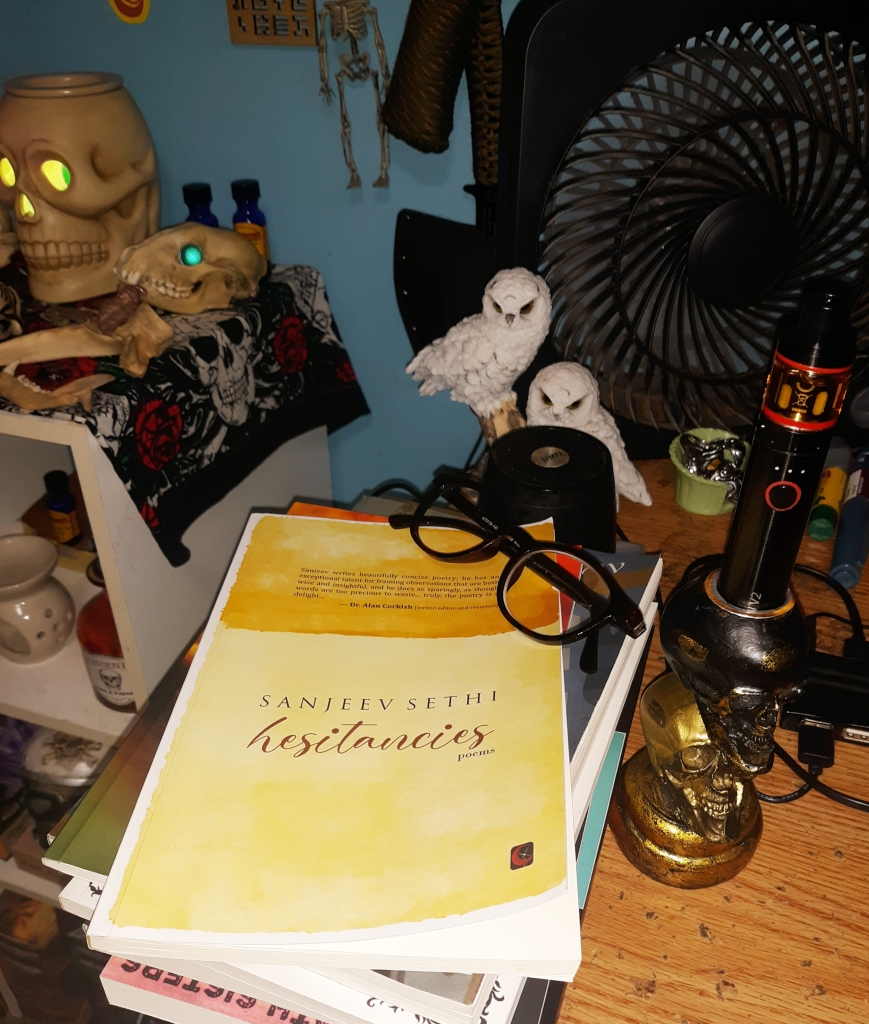
Hesitancies on the desk at C.M.P. Headquarters

Sanjeev Sethi

Sanjeev Sethi has authored five books of poetry. Hesitancies by CLASSIX, an imprint of Hawakal, in July 2021 is his latest. A month before it, he released Bleb from Hybriddreich in Scotland.  He is published in over thirty countries. He…

View original post 31 more words

Your Right to Express Yourself Versus My Right to Feel Safe

wendycatpratt's avatarWendy Pratt

Photo by Kat Jayne on Pexels.com

Firstly, a trigger warning: the content of this blog post includes quotes from something that I received in the inbox of the magazine that I edit, and whilst I have done my best to not be too graphic, I don’t want to shy away from the nature of this message. It’s important that this sort of thing is brought to light, in my opinion. If you feel you may be triggered by mention of murder, rape and murder rape fantasies from the male point of view, you might want to prepare yourselves. No one can ever know the trauma that others have suffered, or what is going on behind their outward appearance.

There’s a lot of rubbish spoken about how trigger warnings create overly safe environments around creative subjects; not allowing readers to experience the emotional impact of the creative work, but for me…

View original post 1,652 more words

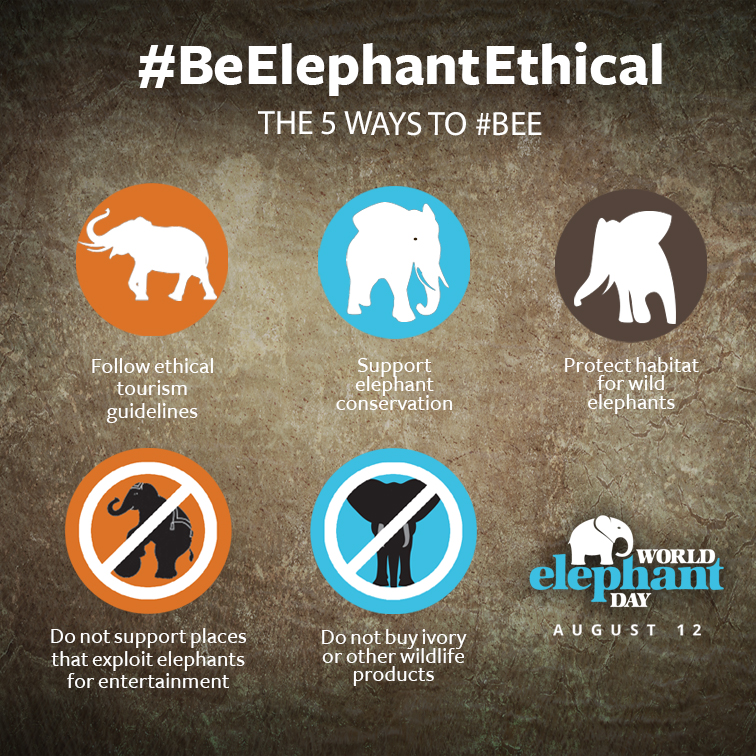
#WorldElephantDay Anybody written poetry that features elephants? Artworks and photos welcome, too. I will feature all submissions on my blog today. According to the World Elephant Society. “It is a day to honor elephants, to spread awareness about the critical threats they are facing, and to support positive solutions that will help ensure their survival.”

World Elephant Day

Elephant Ethical poster

is observed every year on 12 August. The day is observed to raise awareness, and bring attention towards the plight of elephants

World Elephant Day is an international initiative co-founded by the Elephant Reintroduction Foundation and Patricia Sims, the Founding President of World Elephant Society. On this day, they encourage individuals and organizations around the world to work towards elephant conservation.

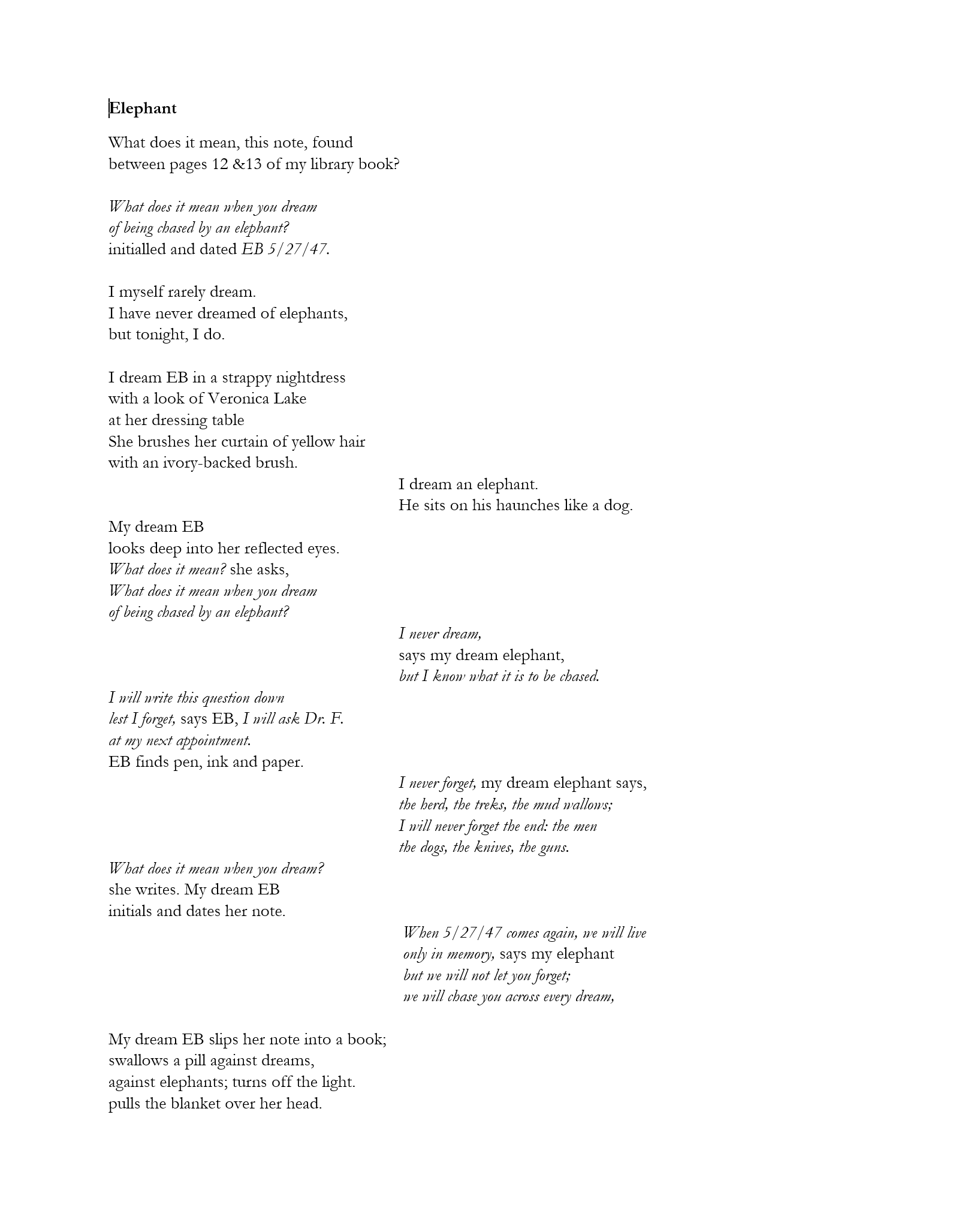
elephant note stephanie bowgett

elephant stephanie bowgett

-Stephanie Bowgett


Lessons from Elephants

much to learn
from pachyderms

who listen, not knowing,
but hearing, understand

and despite giant size,
display proportionate grace

with seemingly
infinite memory,

make pilgrimages
to show compassion

ignoring time’s sand,
journeying to distant lands
-st

40 elephant Alex

-Alex Guenther

The Room of Cards

Welcome to the Room of Cards –
my favourite room. I’ll show you round.
See all the faces, looking out,
not smiling. No, we’re not sure why.
Maybe a teeth thing? Teeth were
threatening?

All plastic? Yes. Yes, I know –
such wealth. Imagine how it must have been.
All found by plastic miners, and brought here
for their historical significance.

They are significant. And beautiful.

This case puts them into context:
a bag. Yes, plastic, hasn’t lasted well.
Inside, a smaller bag, a purse –
all plastic. Lots of cards, but only
this one with a face on it. A plastic pen.
A plastic wrapper, contents unidentified.

I know. They must have bathed in plastic,
frittered it, squandered it.
Unimaginable wealth…

Anyhow: this is my favourite. See?
A little girl. We don’t get many children here,
but there she is. The word is “zoo” –
who knows what that means? Yes!
Well done. A place for animals.

Think what she must have seen.
An elephant. A lion, perhaps.
Giraffe. And now we look at her,
across the centuries.

It makes me tingle, just to think of it.

-Sarah Connor

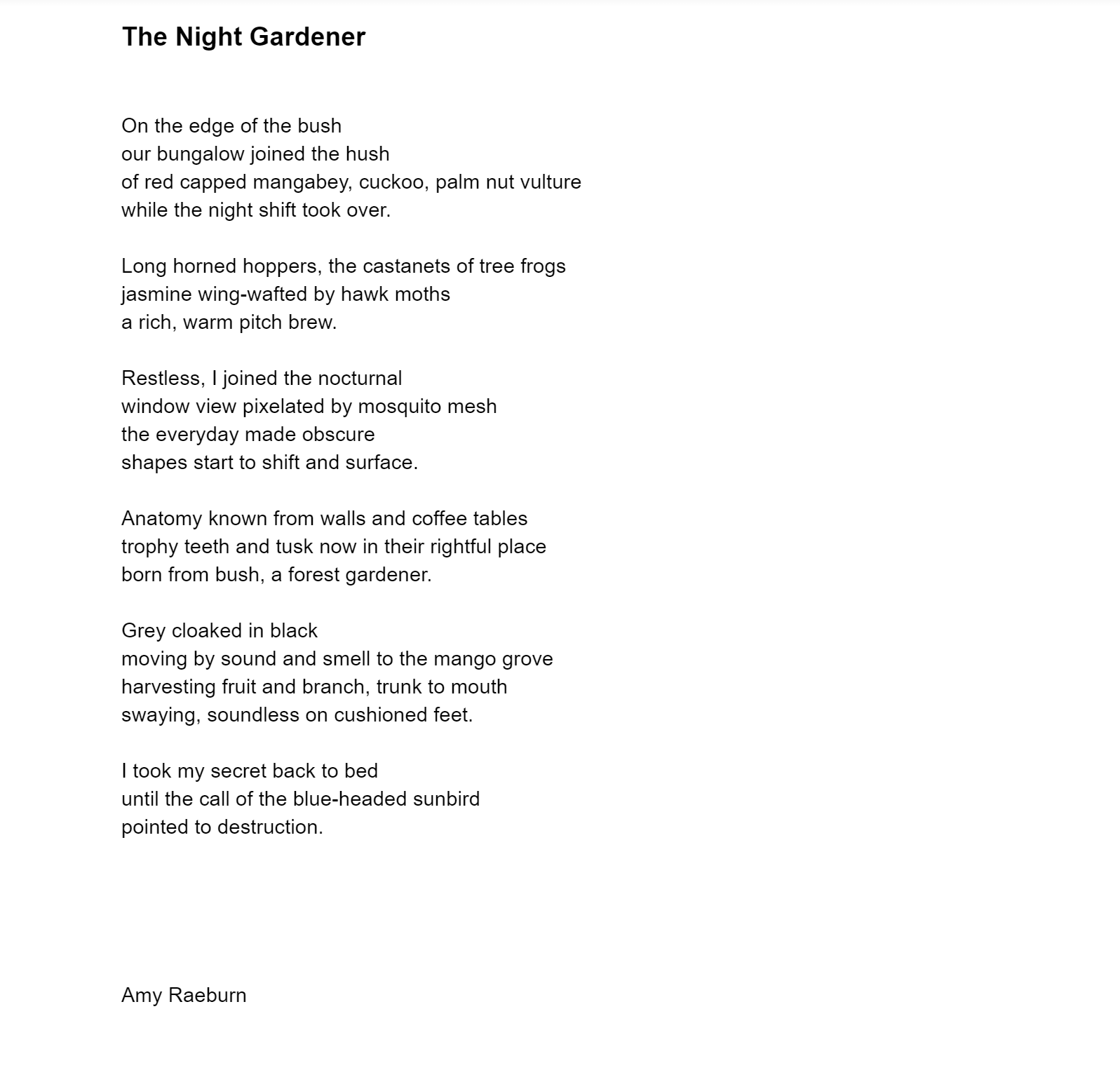
The Night Gardener by Amy


The Elephantquake

Elephantquake bossed a vast forest.
no rain, all lakes, tanks, ponds,
water holes arid. It thirsts
It searched for water.

It knows of a hidden lake
always full and goes there
to save itself. After five nights
it revelled and splashed in the lake.

Daily it marched upon moonhares,
maimed and wounded them,
on its route to the lake.

One day moonhares met
to save themselves
from the elephantquake
Some said “Abandon this place.”

Others “It’s our ancient home.
Let’s find an alternative.
Let’s see if we can scare off
rampage of elephantquake.”

Some of them said, “We know
of a trick that works
with elephantquake.
we need a sharp person.

A moonhare has a message
for elephantquake. It says
“I come from Moon who doesn’t
want you supping lake as bound

there you kills and maim hundreds
of hares. Lake is forbidden.
Return to your forest home.
“But where’s this Moon, your home? asks

elephantquake “In this lake.
It consoles the survivors
of your rampage.” “Then, let me see him,”
requests the elephantquake.

“Come alone with me, I will
show you.” Moonhare takes it one
night to shows Moon’s silvery
reflection in the lake, says

“Here it is, my home, the Moon.
Lost in meditation.
Move quietly, salute it.
Don’t disturb it and bring wrath.”

Elephantquake sees it as real,
salutes it, leaves quietly,
returns to its forest home.
Hares heave sigh in relief.

-Paul Brookes

Bios And Links

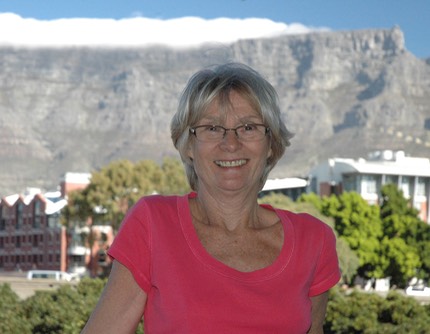
-Amy Raeburn

is originally from north-east Scotland and studied English at the University of Aberdeen. Amy’s poetry has appeared in publications including Cencrastus, Three Drops from a Cauldron, The Poetry Shed, Re-side and Southlight. Amy works and lives in Cheshire in the UK and is a member of the Blaze Poetry Society Stanza in Mid-Cheshire.

-Stephanie Bowgett

is one of the founder members of The Albert Poets in Huddersfield. They have been organising monthly readings and a variety of workshops for twenty six years till temporarily halted by COVID. Her most recent book, “A Poor Kind of Memory” was published by Calder Valley Poetry  https://caldervalleypoetry.com

I’ll Splinter by Tom Branfoot (Infernal Editions)

tearsinthefence's avatarTears in the Fence

My grandparents’ house is called ‘Tod Cot’. I had never really thought about it much – a random arrangement of sounds and syllables, it simply was. But the first poem in Tom Branfoot’s debut pamphlet,I’ll Splinter, gave me pause. The title of the poem, ‘Cotlight’, is a lovely word which, I learnt, refers to the light shining through windows after dark, from ‘cot’, a rural dwelling, now ‘cottage’. Tod is an old country term for fox, and now the two pieces of the puzzle fit together – Tod Cot, fox cottage, den, holt, home, the words unfurling themselves before me.I’ll Splinterencourages this kind of reframing of the everyday, as Branfoot’s sharp eye picks out the poetic in the pebbledash and tarmac of the in-between places.

‘Cotlight’ is a fitting introduction to I’ll Splinter – it is an invitation, an invocation, a calling. ‘go there’, the poem…

View original post 917 more words

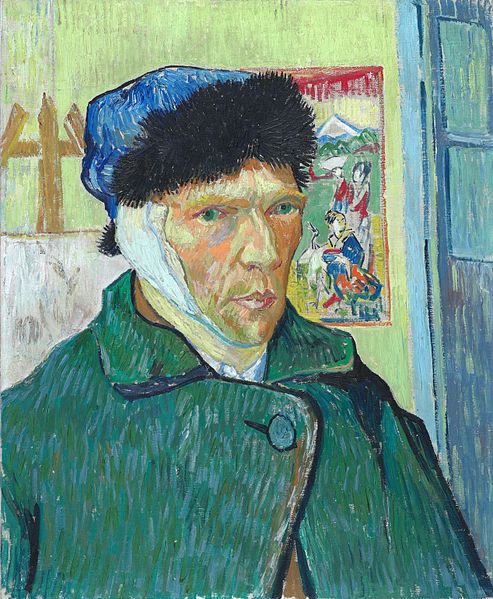
Denise Bundred:Self-Portrait with Bandaged Ear

The High Window Review's avatarThe High Window

Denise  Bundred was a consultant paediatric cardiologist and has an MA in Creative Writing. She is a Fellow of the Royal College of Physicians. Her pamphlet, Litany of a Cardiologist, was published by Against the Grain Press in 2020. She won the Hippocrates Prize in 2016 and come second in 2019. Her Poems poems have appeared Hippocrates Prize Anthologies, The Book of Love and Loss and These are the Hands.Her poems have also appeared in Envoi, Under the Radar, Poetry Shed, Prole Poetry, London Grip and Magma.

denise

*****

Denise Bundred: Four Poems on Van Gogh

Bandage

SELF-PORTRAIT WITH BANDAGED EAR
Dr Felix Rey, Arles. January 1889

His ear was cleanly severed, apart from a remnant of the lobe —
a strange razor-cut for self-harm if it was as he said.
He fought with Gauguin; that much I knew.

I cleaned and stitched as well as I could.
Inexperience counted…

View original post 1,074 more words

I Don’t Want To Go To The Taj Mahal by Charlie Hill (Repeater Books)

tearsinthefence's avatarTears in the Fence

I Don’t Want to Go to the Taj Mahalis comprised of a series of ninety-five vignettes, mostly single page length, the shortest being two lines long. An epigram by Samuel Beckett is appropriate for the content: ‘It’s all a muddle in my head, graves and nuptials and the different varieties of motion.’ The reader is treated to snapshots views of the author’s family, his schooldays, his days in the youth club or drinking in the bikers’ club. Music and records provide a backcloth to lost chances, lost loves, and there is a whole string of early jobs in a fish shop, the Co Op, a packaging firm, Samuel the jeweller and Harrison Drape, the factory for curtain accessories where he drove a forklift truck ‘because it was the best of a shit job’ but nearly lost life and limb when it toppled off a ramp as he reversed it…

View original post 464 more words

#ClimateChange2021 What is your poetic/artwork reaction to the latest climate change report? I will feature all responses.

Climate Change

ipcc report 2021 cover

Abecedary

‘E’ is for…  ‘extinction’. It used to be for ‘Elephant’ but poachers killed them all off in their ironclad greed for ivory. It was said elephants never forgot, but now none remain left to remember. And mankind knows exactly where the elephants’ graveyards are to be found. Wherever we dumped mounds of their tuskless carcasses.

‘P’ is- was, for ‘Penguin’. Until their population melted away with the polar ice cap that sailed off into the sunset, leaving them sunk without trace.

‘T’ was for ‘Tiger’, harvested for the supposed medicinal powers of its organs. Mankind still got sicker and sicker all the same. Both in body and mind.

‘D’ was for ‘Dolphin’. For all humans’ supposed rapport with our favourite marine mammalian cousins, we couldn’t invent tuna nets that didn’t snag dolphins too. We used to regard them as therapeutic when we swam with them in their briny realm. But all the while we were toxifying their habitat, so that their fish diet perished and they starved to death in Davy Jones’ empty food locker.

‘S’ was for ‘Seal’, the ones often depicted balancing a ball on their snouts. Delightfully entertaining us as kids in circuses, yet no playful rump persisted in us as adults. Since we culled their infant pups with bludgeons, cudgels and clubs. Wiped from the face of the earth, with nothing more than red blood smears on white snow.

This had the knock-on effect of thinning out the food supply for their natural predators the Killer ‘W’ that used to stand for ‘Whales’. Their existence was further compromised by global warming’s effects and noise pollution of desperate oil exploration both. Subverting their sonar direction so that they kept beaching themselves. Expiring faster than they could be harpooned for their wealth of blubbery products, both practical and exclusive, beloved of us landlubbers.

‘Z’ was for ‘Zebra’, now permanently residing in the unhappy hunting grounds, stripped of their prized stripes. But also through the system of man-made dams which caused the soil of their homelands to dry up and took their natural predator Leo the Lion along with them into oblivion. Pride comes before a fall it is said and we committed regicide in the kingdom of the savannas.

‘M’ was for ‘Monkey’, our closest living relative and one which we systematically extirpated, through our epidemic fears of a species short hop for disease transmission. Our paranoia knew no limit since we pressed the same relentless logic to take wing, as we emptied the skies of avian life for good measure.

‘F’ was for ‘Fox’, quick and brown at the heart of learning to write our alphabet. Well they were boundlessly trespassing our cities bold as brass, so the outcome was inevitable really. And that was even after the English had legislated to prevent hunting them with dogs. The rampant poison employed for the task was far more efficient. And environmentally devastating.

‘C’ was for ‘Cow’, which along with pigs and sheep previously had formed our staple domestic stable of meat. But when we fed parts of the trinity to each other, turning these ruminants into carnivores, they became soft in the head, couldn’t stand on their own four feet. So subsequently we, the ultimate omnivore, had to pass them up on the menu.

‘B’ the letter that actually sounded the name of its creature, well it now only stands for ‘bafflement’ or ‘befuddled’, since they were the first fauna to foreshadow the fatal trend. We didn’t even notice their disappearance until there was no more honey to be had for love nor money. The last time life was ever sweet.

The decline in human numbers caused by the diminution of our food supply and the impoverishment of the planet, both paled by comparison to the true devolution our species suffered. The degrading of our minds. For as these animals were expunged from life, what pictures could we fill our primary reading books with which to inculcate our children the building blocks of language? Cockroaches, hyenas, sharks and vultures, the perennial survivors of the animal kingdom, those best adapted to feast on the misery of the weaker beasts, are inappropriate for an infant’s reading primer. It would yield them nightmarish associations, which while maybe more fitting to our current disposition, mothers deemed it better just to let learning slide in its entirety. Muteness was the sole maternal birthright to pass on.

So gradually our children’s imaginations began to shrink and wither on the vine. They had no images to append to their words, to try and colour their thoughts in order to express themselves to others. Their alphabets broke down, unable even to construct words for them. Our language became as extinct as the animals which used to denizen its vibrant embrace. I am the last speaker to record all this. I composed all this centuries ago as I hung on to the vestige of my mind’s creative ability and foretold what would follow in my wake. Now I too have become extinct, both in body and heritage, since not one of the meagre generations which succeed me possesses any ability to read and understand these words.

-Marc Nash (from his 3rd collection of flash fiction “Long Stories Short”)

Bios And Links

-Marc Nash

has had 5 collections of flash fiction and 6 novels published. “Three Dreams In The Key Of G” was shortlisted for the 2018 “Not The Booker Prize” and his latest novel “Stories We Tell Our Children” was published last month. He lives and works in London, in the freedom of expression realm.