Uncategorized
Weighing of the Heart by Degna Stone (Blueprint Poetry Press)

This pamphlet on Stone’s husband’s battle with Subacute Bacterial Endocarditis (SBE) – ‘a bacterial infection that produces growths on the endocardium (the cells lining the inside of the heart) […] and, if untreated, can become fatal within six weeks to a year’ – is a stark, honest account of marriage when a spouse has a life-threatening illness.
These poems are written with a sparing style. Stone allows the narrative arc to unspool through the domestic, with the speaker in the bathtub in ‘Unwinding’ or watching her husband’s illness take hold in ‘Pallor’. As Mr Stone’s serious illness becomes more apparent, the language of detachment seems to take over. This is evidence in the titles of several of the poems: ‘Mrs Stone Calculates the Odds’, ‘Mrs Stone Waits for News’. There is often a sense of dissociation in these poems, as if the speaker is existing in ‘survival mode’…
View original post 680 more words
Poetry Month – ‘reading’
Poetry Month – ‘Love’s Poem’
Dezső Kosztolányi: Happy, Heartbroken Song

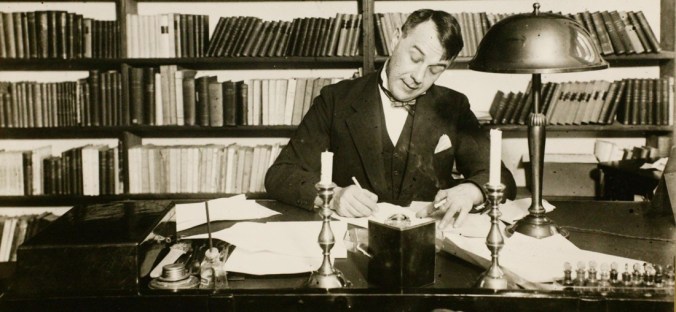 Dezső Kosztolányi (March 29, 1885 – November 3, 1936) was a Hungarian writer, journalist, and translator. He wrote in all literary genres, from poetry to essays to theatre plays. Building his own style, he used French symbolism, impressionism, expressionism and psychological realism. He is considered the father of futurism in Hungarian literature. Kosztolányi also produced literary translations in Hungarian, such as Shakespeare’s Romeo and Juliet, The Winter’s Tale, Lewis Carroll’s Alice in Wonderland, Thornton Wilder’s The Bridge of San Luis Rey, Lord Alfred Douglas’ memoirs on Oscar Wilde and Rudyard Kipling’s “If—”.
NB: By clicking on the date you can read the supplement of Hungarian poetry which was publishened in The High Window inJune 17, 2019 [Ed.]
*****
Dezső Kosztolányi: Four Poems translated by Edit Gallia
Look here, my son, I’m giving you everything,
take it, it’s yours forever, keep it…
View original post 1,003 more words
Wombwell Rainbow Interviews: Katie Griffiths
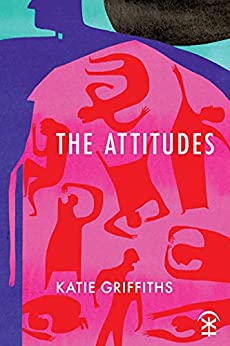
-Katie Griffiths
National Poetry Competition and Live Canon prize-winning poet, a singer-songwriter originally from Northern Ireland, then Canada, now based in Surrey. Themes of faith, mortality, ageing and wisdom. Deeply personal collection about the body, eating disorders and grief.
The Interview
1. When and why did you start writing poetry?
I first started writing poetry in earnest when a brilliant teacher walked into an adult education class. His name was Mark Smith, a Bloodaxe poet (The Fabulous Relatives) and the class he taught was a lightbulb moment. Even though I’d studied French and German literature at university, including of course poetry, the methods of approaching it seemed more a superficial hovering outside the work and regurgitation of time-worn critiques. Suddenly, with Mark Smith, poetry and its dazzling possibilities were cracked wide open. The engine was visible. I began to see poetry from the inside out, and became an active participant rather than a passive observer.
2. Who introduced you to poetry?
I suppose that would have to be my parents, with nursery rhymes and children’s books with infectious rhythmic cadence. Such a childhood imprint was for me, like for many others, crucial.
3. How aware are and were you of the dominating presence of older poets traditional and contemporary?
I went to school in Canada and, during high school, any poets we may have been reading were fully overshadowed by Leonard Cohen’s songs, played to us endlessly by an inspirational English teacher who would get us to read and study them as printed poems. In adulthood I’ve needed to plug gaps in my reading and catch up with the heavyweights. Someone only has to mention e.g. Walt Whitman to send me into a panic. (Note to self: read more Walt Whitman.)
4. What is your daily writing routine?
Ha! Erratic. I’m best in the morning, so if I can at least get drafts done before the chatter and noise of the outside world arises, then I am good. Redrafting and editing can be fitted in at other times.
5. What subjects motivate you to write?
How the self negotiates its way through hard fact and hope. Where the so-called ‘real’ world collides with anything that can be labelled as vaguely mystical, sacred, illusory, paranormal. Where salvation is sought – is it outer space (c.f. Jeff Bezos) or ‘inner’ space and consciousness (c.f. Carolyn Myss, David Lorimer). History and current politics also intrigue me: what levels of awareness or social conscience are demonstrated by our politicians? Why or why not? What makes a Ghandi as opposed to a Trump?
6. What is your work ethic?
Accepting that the phrase ‘work ethic’ means an attitude of hard work, it’s perhaps a slightly different question if you are asking what particular ethics I bring into my work. At this stage in my life I am very conscious of the desire to ‘give something back’. This means, more than ever, to find opportunities to work in collaboration. It was a great pleasure last year (before Covid struck) to be poet-in-residence at a healing sanctuary in Surrey. I’ve also loved opportunities of marrying music I’ve written to the work of others to, hopefully, enhance or enlarge it, with e.g. Rishi Dastidar https://www.youtube.com/watch?v=SiFIRKteyBI
and in Helen Dewbery’s film of the poem ‘Moonbather’
https://www.youtube.com/watch?v=Qjf0zgJp92g
7. How do the writers you read when you were young influence your work today?
My first reaction was to say, very little! However, the inflections you encounter as a child go very deep. It would be more honest to say that I’m much more influenced by writers I’ve read in adulthood, for example Sylvia Plath, rather than in my youth. And I’m hugely influenced and pulled by what I am currently reading.
8. Whom of today’s writers do you admire the most and why?
It’s very hard to single people out. I think the fairest way to answer this would be to mention those poets whose work I return to because I feel I have so much to learn from them. My copies of their collections are covered with pencil marks as I endeavour to work out how do they do that? At the precise moment of writing, my go-tos for this purpose would be Ilya Kaminsky, Ocean Vuong, Kim Hye-Sung, Geraldine Clarkson. But they change. I’ve also in the same way dipped heavily for endless inspiration into the poetry of Alice Oswald, Pascale Petit, Rachael Allen, Wayne Holloway-Smith, Kathryn Maris. There are writers I admire because they have something huge to say and their poems gather significance and importance across the arc of a collection: Dom Bury, Moniza Alvi, Malika Booker, Alice Hiller, Rishi Dastidar, Jericho Brown. Writers whose work is on my bedside table right this minute that I am loving are: Victoria Kennefick, Mark Fiddes, Julie Irigary, Sarah Westcott.
9. Why do you write, as opposed to doing anything else?
I have a friend who absolutely does not understand anyone’s need to write. Why sit at a desk, she would say, rather than using that time to acquire more life experience? In fact, the ‘need’ to write poses difficulties as well as bringing joys. On a day where I have penned nothing, I go to bed with a niggle of dissatisfaction. If the fallow period extends to several days or, heaven forfend, weeks, then I feel separated from a vital part of myself. Writing helps to catch a jumble of thoughts and feelings, and hold them up to scrutiny. The vast majority of these scribbles will not become full-blown poems – or full-blown anything – but are vital stepping stones to a potential discovery.
10. What would you say to someone who asked you “How do you become a writer?”
Take up a pen and notebook. Show up at the page, as Julia Cameron of The Artist’s Way would say. By all means, attend classes and workshops to understand and be inspired by the possibilities of your art, and to form support networks. I’ve benefited hugely from being part of three poetry groups: Malika’s Poetry Kitchen, Red Door Poets and my original local group, Octavo. But I feel strongly that you need to avoid meme-writing or churning out poems too hastily to please a perceived collective. Become a writer by trusting that your own experience has something of value. That is all you can offer – and it is everything.
11. Tell me about the writing projects you have on at the moment.
I am working on a memoir about my Irish grandmother’s violin, which was found in an attic after 65 years, and which is now in my possession. The memoir is not just a quest to solve some of the mysteries about the violin but a search for my grandmother herself, whom I never knew.
As a member of the band A Woman in Goggles, and of another (as yet unnamed) band with four female singers, I write songs. Work on my poetry collection The Attitudes took precedence last year, but I’m hoping now to sit down again at the piano. Incidentally, it’s challenging to put my own poems to music, as they are ‘wordy’ and a bit of a mouthful to sing. What seems to work is to write in parallel – for example, the title song for my pamphlet My Shrink is Pregnant (Live Canon) which has recently been put up on You Tube
https://www.youtube.com/watch?v=qvvWeflWLx0 is not a poem lifted from the book. Rather it’s an overall impression.
Wombwell Rainbow Interviews: Diane Rossi

Diane Rossi
Writer of stories, poetry, monologues, articles and wedding ceremonies. Writing is my compulsion and people are my passion. Buy Diane Rossi a Coffee. ko-fi.com/dianerossi14930 – Ko-fi ❤️ Where creators get donations from fans, with a ‘Buy Me a Coffee’ Page.
Interview
1. When and why did you start writing poetry?
My earliest memory of writing poetry was as a teenager. I would vent frustrations and make observations about relationships and experiences in poetry and diary form. It was self indulgent rubbish and I didn’t keep any of it! It was definitely a form of therapy and way of making sense of adolescent confusion. It was also part of what I would refer to as ‘seeking for the truth.’
2. Who introduced you to poetry?
I was fortunate to have had inspirational English Literature teachers at school. English was my favourite subject and one I excelled in. I loved hearing poetry read aloud and enjoyed opportunities to read in class.
3. How aware are and were you of the dominating presence of older poets traditional and contemporary?
I don’t think consciously aware. When I write poetry or prose I don’t have other poets in mind. My earliest memories were of the Romantic and Metaphysical poets. The themes must have influenced me as an intense young adult though!
4. What is your daily writing routine?
I haven’t led a life which has allowed me to stick to a strict writing schedule for years. I prefer to write when there are relatively few distractions. I find it more difficult to concentrate when there is background noise but if there’s no choice I am able to. Some days I write for several hours almost without a break and others barely at all. I envy writers who adhere to a strict routine and produce a set number of words per day.
5. What subjects motivate you to write?
I enjoy exploring human relationships and what makes people behave the way they do. There is no greater satisfaction than someone telling you that something you wrote moved them or made them see things in a different way.
Spirituality and relationships interest me. Other people’s love stories initially motivated me to write romantic/spiritual verse and prose. I began writing for couples choosing to marry in Italy back in 2005. Naturally the main theme is romantic love but also familial.
I am in awe of Nature and fond of celestial imagery: stars and the moon. The Romantic and Metaphysical poets must have played some part in shaping my thematic interests but also living in Tuscany it is impossible to ignore the influence of Renaissance writers.
Writing creatively about my experiences in Italy and growing up in Sheffield are subjects which interest me at the moment. I’ve explored my feelings about love, family and relationships in poetry, monologues and short stories/flash fiction. Several pieces have recently been featured on BBC Radio Sheffield’s Upload Show presented by Ellie Colton.
6. What is your work ethic?
Travelling throughout Italy and other parts of Europe to conduct ceremonies and writing them has and still does consume most of my time. However Lockdown meant that I could concentrate more on writing for myself and explore more personal thoughts.
I am a spontaneous writer mostly and when something really speaks to me I am compelled to write immediately. It’s important to me that what I write resonates with others. Form tends to take on a life of its own rather than being planned out methodically in advance.
7. How do the writers you read when you were young influence your work today?
When I was younger (teens and twenties) I was drawn to the passion and imagination of the Bronte sisters. So much of the psychology of their writing is connected to the landscape they knew so well and their frustrations as women trying to make their mark in a world which wouldn’t allow them.
I try to write honestly and with emotion but maintain restraint. I think also many Victorian writers influenced my interest in the undercurrents of emotion and their effects on those who repress them.
8. Whom of today’s writers do you admire the most and why?
I have read every novel by David Nichols. I love his humour and insight into the complexities of falling in love, trying to be a good parent and just how hard it is to be oneself and fit in.
I am also a great admirer of Twitter’s ‘Poet Laureate’ Brian Bilston for similar reasons. He is one of the wittiest poets around. He too makes me laugh out loud but there is also much sensitivity and social conscience in his poetry, which I really admire.
When it comes to dialogue and script writing Sally Wainwright is in a class of her own. She possesses a rare talent for showing how and why people make the choices they do. She wrote a fabulous drama about the Bronte Sisters called ‘To Walk Invisible’ which as a Bronte fan was a revelation to me and made me love them and her even more!
9. Why do you write, as opposed to doing anything else?
I cannot imagine doing anything that didn’t involve creative writing. I write because it’s all I’ve ever wanted to do. It might sound pretentious to call it a compulsion but that’s how I feel.
I very much want to connect with others on a deeper level and play some small part in bringing people together. If I can write something that resonates on an emotional level or touches someone else then I will have achieved something positive.
I like to observe people and try to understand their motivations and choices. Empathy is very important to me. I don’t think there is enough of that right now. Writing for me is an attempt to put myself in someone else’s predicament and imagine how that influenced their lives.
10. What would you say to someone who asked you ‘How do you become a writer?’
I have no idea other than just write. If you write then by definition you are a writer!
11. Tell me about writing projects you have on at the moment?
At the moment I am writing a series of monologues inspired by the lives of family members and ancestors. My connection to South Yorkshire stretches back many generations and I’m currently trying to flesh out the details of those who came before me and whose DNA I have inherited. This is part of understanding where I come from and who I am. Family research is a slow and frustrating process. Travelling to Sheffield is not an option right now so I have to rely on phone calls and family tree research. I much prefer being physically in a place in order to write about it.
Poetry Month – ‘The Saffron Picker’
#Lefthandersday Anybody written poetry about being left handed? I will feature it on today’s blog.

One Arm Tied
I was born with
Fingers outstretched
Leading with my left;
Mother sighed
At elbows clashing
Told me right was best;
At table, she
Would lace my arm
With string
Behind my back
I learned the chopsticks
Handicapped
To make up what I lacked
I learned to wait
To hunger
Never overcome
With greed:
It’s harder, though,
With one arm tied
To reach
For what you need.
-Shani Cadwallender (She says of this poem: “This poem is about a friend of mine, whose aunt went through this experience when learning to use chopsticks.”
Bios And Links
-Shani Cadwallender
salutes magpies, keeps left, drinks pints, contains multitudes, and is comfortable writing about herself in the third person. Born in a house full of cats and raised in a town full of seagulls, she now lives in a city full of foxes, where she spends the day teaching about words in a high school, and the evening learning about them at Birkbeck College. She can be found hanging around the cemetery, eyes skywards. Among her compulsions are petting the dogs of strangers and writing poems, of which A Crow’s Diet, published by Dreich press, is her first improper collection.

