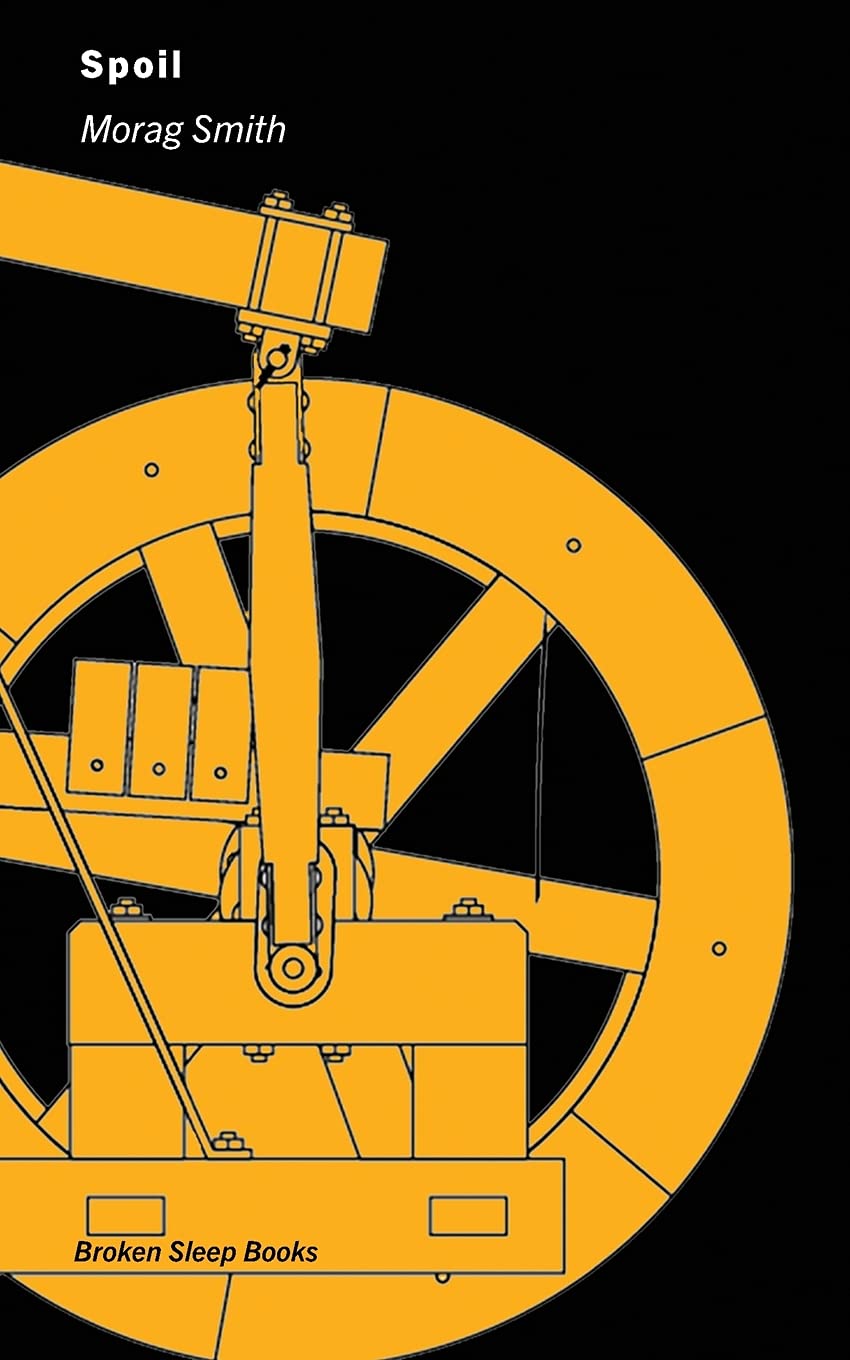
Wombwell Rainbow Ongoing Book Interview: “Spoil” by Morag Smith. Question 4.

this  is the link

https://www.brokensleepbooks.com/product-page/morag-smith-spoil?fbclid=IwAR0aMNZOoIKgql0pIKtSrsE1Y50rfuERQ7IT1s_HsEeMXtikCapNBzv5ero

-Morag Smith

is a Cornish poet, painter, writer, and performer. She graduated in 2020 with a first in Creative Writing from Falmouth University, winning a prize for her dissertation. In 2018 she won the Cornwall Contemporary Poetry Festival, Shorelines competition. Her pamphlet, Spoil, was published by Broken Sleep Books in October 2021. Her poetry is published in various literary journals including International Times, as well as the eco-anthology, Warming! As a New Traveller she brought her children up close to nature, in trucks, caravans, and houses. She writes about her experiences, about our ravaged landscape, and bears witness to the poverty of British people. At the moment she is publishing a book of poetry about plastic pollution in our oceans, a collaboration with artist Jasmine Davies, and the Clean Ocean Sailing charity.

The Interview

Q.4: How important is form in your poetry?

I write without punctuation so form is essential to me as a way of giving the reader the rhythm of the poem. I am also a visual artist, for me, how the poetry looks on the page is important. I use line break, stanzas, space, and shape, to drive and guide a person through the poem.

*******

More answers to follow
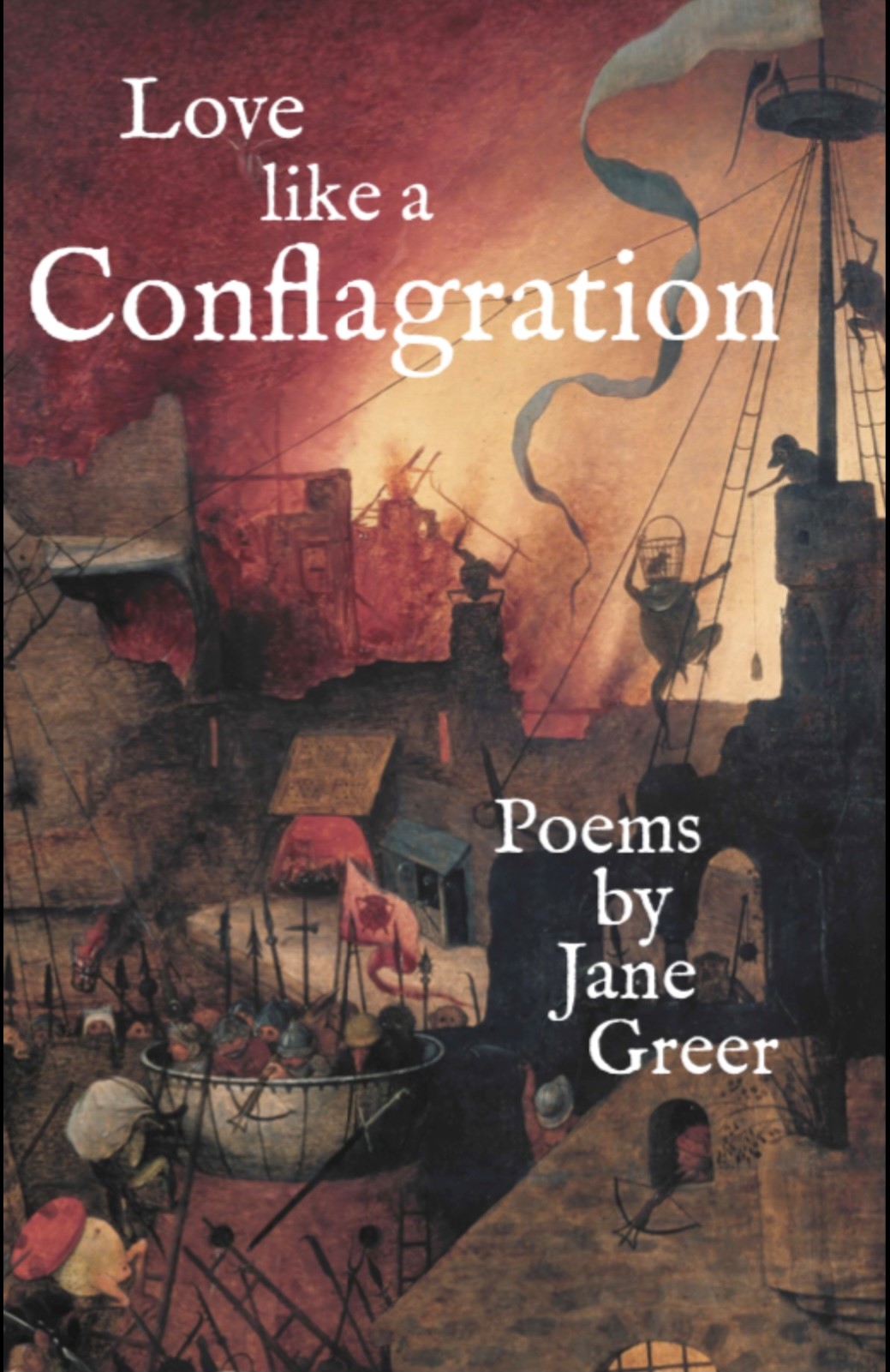
Wombwell Rainbow Ongoing Book Interviews: “Love Like A Conflagration” by Jane Greer. Question 4.

love like a conflagration by jane greer

-Jane Greer

published and edited Plains Poetry Journal in the 80s and 90s. Harry Duncan’s Cummington Press published her first poetry collection, Bathsheba on the Third Day, in 1986. Lambing Press published her second collection, Love like a Conflagration, in 2020 and will publish her third in 2022. Greer lives in North Dakota. 

Lambing Press:

Amazon:

The Interview:

Q: 4: Australian poet, Les Murray, who was also Catholic, saw nature as the embodiment of God’s presence on earth. How do you see nature through your faith?

God is supremely loving, good, creative, and generous. Nature—from galaxies to subatomic particles and everything in between—is God’s creation. Nature is a proof of God, revealing him but not fully representing him (just as my poem is proof of my existence and reveals me but doesn’t fully represent me). There is broad, deep, universal order in nature, and everything is related. Only a Creator could make that happen. 

*******

More answers tomorrow.

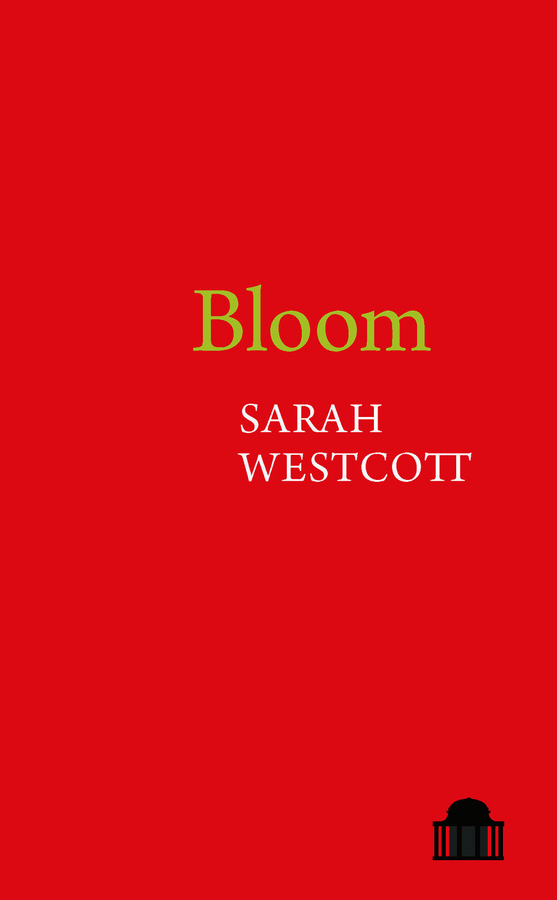
Wombwell Rainbow Ongoing Book Interview: “Bloom” by Sarah Westcott. Question 5.

Bloom

-Sarah Westcott

grew up in north Devon and lives on the edge of London. Her first pamphlet, Inklings, was a Poetry Book Society pamphlet choice and Slant Light (Pavilion Poetry, 2016), was highly commended in the Forward Prize. Her second collection, Bloom, also with Pavilion Poetry, was published this year. Sarah was a news journalist for twenty years and now works as a freelance tutor and writer. Work has appeared on beermats, billboards and buses, baked into sourdough bread and installed in a nature reserve, triggered by footsteps.

Q:5: What do you find it easiest to write in, first, second or third person, and why?

This completely varies with the poem. My initial freewrites are often in the first person but what a slippery creature the self is!

How can I represent ‘I’? Perhaps it can never be a whole — always a fragment, a snapshot, a metaphor. I like the directness of tone in the second person address, the intimacy of it especially in epistolary form. Sometimes I like to write through the natural world to access a first person perspective –  to sidle quietly up to it before it startles and runs away. The use of third person for me tends to tip me towards prose or short fiction. I am not sure why. Something to do with the immediacy of accessing the raw material, I think.

*******

The best place to buy a signed copy is to contact her directly (send a DM on twitter) or email Sarah.westcott@tiscali.co.uk

*******

More answers tomorrow.

Wombwell Rainbow Ongoing Book Interview: “Bloom” by Sarah Westcott. Question 4.

Bloom

-Sarah Westcott

grew up in north Devon and lives on the edge of London. Her first pamphlet, Inklings, was a Poetry Book Society pamphlet choice and Slant Light (Pavilion Poetry, 2016), was highly commended in the Forward Prize. Her second collection, Bloom, also with Pavilion Poetry, was published this year. Sarah was a news journalist for twenty years and now works as a freelance tutor and writer. Work has appeared on beermats, billboards and buses, baked into sourdough bread and installed in a nature reserve, triggered by footsteps.

Q:4. How important is form in your poetry ?

It depends on the poem – I listen to it and feel it. Each poem finds its final form, or the form shows itself, through editing and reading aloud.  Formal form is something I would like to become more confident with. I teach it but I don’t necessarily feel any sense of managing it very well it when I write myself – I imagine it must be a little like riding a horse, reining it in and getting it gallop at different points. I feel I need muscles and experience that I don’t have yet. So when I write in strict form the poems can feel unrealised. I need more practice. I admire Hannah Lowe and Jacqui Saphra’s formal fluidity and deftness. It is like they can pick up an instrument and play it.

I like thinking of the space around the poem as a kind of living humming forcefield or a kind of skin which we pierce with text. This gives the space around the poem more reverence and helps shape the lines and line endings, the shape and where the breath falls.  

*******

The best place to buy a signed copy is to contact her directly (send a DM on twitter) or email Sarah.westcott@tiscali.co.uk

*******

More answers tomorrow.

Wombwell Rainbow Ongoing Book Interviews: “Love Like A Conflagration” by Jane Greer. Question 3.

love like a conflagration by jane greer

-Jane Greer

published and edited Plains Poetry Journal in the 80s and 90s. Harry Duncan’s Cummington Press published her first poetry collection, Bathsheba on the Third Day, in 1986. Lambing Press published her second collection, Love like a Conflagration, in 2020 and will publish her third in 2022. Greer lives in North Dakota. 

Lambing Press:

Amazon:

The Interview:

Q: 3: How does your religion inspire your poetry?

My Catholic faith encompasses everything I believe about reality. My perception is Catholic (at least I try to keep it Catholic) as I consider God, nature, humans, sin, suffering, redemption, sacrament, time, death, and love. My poetry comes from my perception of reality; that perception is drawn from my faith. And I think this must be true for every artist. 

*******

More answers tomorrow.

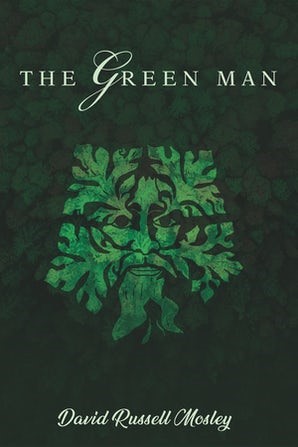
Wombwell Ongoing Book Interviews: “The Green Man” by Dr. David Russell Mosley. Question 3:

the green man by David Russell Mosley

-Dr. David Russell Mosley

is a poet and theologian living in Washington state. When he’s not teaching or writing, David enjoys getting lost in the woods, drinking a nice scotch, and smoking a pipe. His debut book of poetry, The Green Man, is out now with Resource Publications.

Q: 3. How important is religion in your poetry?

Religion is essential in my poetry. This may seem obvious given I have a sequence of poems about the days of creation and several others on the saints, but it’s more than that. All of my poems flow out of my understanding of reality, which is informed by my Catholic faith. This isn’t to say that one must be religious in general or Catholic in particular to enjoy my poems. By no means. But, it is the framework out of which I do everything I do, not least the writing of poetry. My faith tells me, as Hopkins once wrote, that “The world is charged with the grandeur of God.” If this is the case, then every nook and cranny of creation shimmers with the divine. This is something I try to bring out in my poetry.

******

Links:

Publisher: https://wipfandstock.com/9781666703672/the-green-man/

Amazon US: https://www.amazon.com/Green-Man-David-Russell-Mosley/dp/1666703672/ref=sr_1_1?keywords=9781666703672&qid=1636732209&qsid=145-6241124-6410460&sr=8-1&sres=1666703672&srpt=ABIS_BOOK

Amazon UK: https://www.amazon.co.uk/Green-Man-David-Russell-Mosley/dp/1666703672/ref=tmm_pap_swatch_0?_encoding=UTF8&qid=1636732240&sr=8-1

*******

more from David tomorrow.

Reviews for Winter 2021

The High Window Review's avatarThe High Window

reviewer

*****

POETRY

Sean Hewitt: Tongues of FireFleur Adcock:The Mermaid’s PurseStephanie Norgate: The ConversationParwanna Fayyaz: 40 NamesGregory Woods: Records of an Incitement to SilenceCarola Luther : On the Way to Jerusalem FarmAnna Saunders: FeverfewRichard SkinnerInvisible Sun  • Lynne Wycherley:Brooksong & Shadows  Maggie Butt: everlovePolina Cosgrave: My Name is John Short: Those Ghosts 

CHAPBOOKS

Neil Elder: Like This  • Colin Pink: Wreck of the Jeanne GougyMandy Pannett: The Daedalus Files Robin Thomas: Cafferty’s Truck

ANTHOLOGY

When the Virus Came Calling: Covid-19 Strikes America edited by Thelma T. Reyna

MEMOIR

Michael McCarthy: Like A Tree Cut Back

FICTION

Walter Owen: The Cross of Carl

TRANSLATION

Anne Carson:

View original post 22,732 more words

The High Window, Winter 2021: Final Instalment

The High Window Review's avatarThe High Window

reviewer

*****

Here is the finalinstalment of the Winter 2021 issue of The High Window. The following new material can be accessed via the top menu:

1. A selection of homegrown and international Poetry from 37 poets.
2. Poetry by Tess Taylor, the Featured American Poet.
3. A Translation Supplement edited by Tim Ades and devoted to French poetry
4. An Essay by Omar Sabbagh on Sudeep Sen’s Anthropocene, including a selection of xxSudeep’s poetry.
5. A comprehensive Reviews section.
6. A valedictory feature from Stella Wulf, who has been The High Window’s Resident Artist in 2021.

There is also a radio broadcast in the Editor’s Spot featuring poetry from Sicilian Elephants, his latest collection from Two Rivers Press.

Enjoy!

David

View original post

Wombwell Rainbow Ongoing Book Interview: “Spoil” by Morag Smith. Question 3.

this  is the link

https://www.brokensleepbooks.com/product-page/morag-smith-spoil?fbclid=IwAR0aMNZOoIKgql0pIKtSrsE1Y50rfuERQ7IT1s_HsEeMXtikCapNBzv5ero

-Morag Smith

is a Cornish poet, painter, writer, and performer. She graduated in 2020 with a first in Creative Writing from Falmouth University, winning a prize for her dissertation. In 2018 she won the Cornwall Contemporary Poetry Festival, Shorelines competition. Her pamphlet, Spoil, was published by Broken Sleep Books in October 2021. Her poetry is published in various literary journals including International Times, as well as the eco-anthology, Warming! As a New Traveller she brought her children up close to nature, in trucks, caravans, and houses. She writes about her experiences, about our ravaged landscape, and bears witness to the poverty of British people. At the moment she is publishing a book of poetry about plastic pollution in our oceans, a collaboration with artist Jasmine Davies, and the Clean Ocean Sailing charity.

The Interview

Q.3: Why is history/herstory important in your poetry

Whatever a poem articulates has its own history/herstory, the reader, in turn, brings to the reading their own experiences. Every event is viewed through the lens of our conditioning. Till we can understand it it colours everything. Poetry unpicks and interprets, helps us look at the past more realistically, more honestly, momentarily putting us inside the story.

*******

More answers to follow

French Poetry 3

The High Window Review's avatarThe High Window

paris picture french supp

*****

The editor is grateful to Timothy Adès and all the translators who have worked with him for the commitment they have shown in producing the splendid array of work contained in the translation feature. [Ed]

*****

Editing this Supplement has been an absolute delight. Free of the economic constraints of print, so odious to editors and even more to contributors, I have been able to accept everything and exclude nothing. And with little prompting, I’ve been regaled, deluged with exciting material.

This Supplement is arranged in two parts: before and after 1900. First, something from the remote past of Arabia: English verse from French prose. Then to the nineteenth century, which still dominates our reception of French poetry, with so many great poets – among them Hugo, who in his time outweighed them all. And he noticed children: not many great poets do. Rilke leads us into the…

View original post 13,332 more words