Wombwell Rainbow Interviews: Kate Noakes

Wombwell Rainbow Interviews

I am honoured and privileged that the following writers local, national and international have agreed to be interviewed by me. I gave the writers two options: an emailed list of questions or a more fluid interview via messenger.
The usual ground is covered about motivation, daily routines and work ethic, but some surprises too. Some of these poets you may know, others may be new to you. I hope you enjoy the experience as much as I do.
516AttCHZvL._AC_US500_QL65_

Kate Noakes

Kate Noakes’ most recent collection is Paris, Stage Left (Eyewear, 2017). The Filthy Quiet is forthcoming from Parthian in spring 2019. She is an elected member of the Welsh Academy of Letters and her website (www.boomslangpoetry.blogspot.com) is archived by the National Library of Wales. She lives in London, where she acts as a trustee to the literature advocacy charity Spread the Word.

The Interview

1. What inspired you to write poetry?

As a question of origins, that’s a tricky one to answer. I suspect it was an overwhelming need to say something about something important, at least to me, and in a form that turned out to be economical and a poem rather than an essay. And this has continued to happen on a frequent basis over the last twenty five or so years, or that’s what I try to do, more or less successfully.

2. Who introduced you to poetry?

Dylan Thomas. Sure, there were plenty of other dead white men on the syllabus in school – I had the benefit of a rather good, if dated, poetic education there. But Dylan is absorbed from birth if you are Welsh, and he taught me about the possibilities of the English language, it’s playfulness and invention.

3. How aware were you of the dominating presence of older poets?

As a youngster – very. I don’t think I knew there were any actual, living breathing poets until I was quite grown up. Thankfully they don’t dominate today, even if everything is flipped around and it seems you are no-one writing anything interesting unless you are very young. I am offended by the present ageism in poetry – young this prize, new poets (meaning young) that prize. I have many friends, who, like me, did not start writing seriously for publication until they were much older. But we are considered old farts and know nothing about life, or good writing, or performance.

4. What is your daily writing routine?

Walk the dog then straight into the studio. Two poems before lunch. No, seriously I don’t have a poetry writing routine. The Muse, lord bless her, can’t be scheduled like that. Some mornings I wake up with an idea, which I might think about for weeks, months or years before it finds it’s right expression and form. Other days, I might have a line, not necessarily the first one. At other times a phrase might just pop into my head. I can’t explain it. It just depends on what I’m thinking about. Anyone who tells you whole poems just arrive is probably lying. Reading other people is the best way of getting going on one’s own work, I find. It puts you in the zone.

5. What motivates you to write?

A certain degree of arrogance that I have something worth saying and that other people might enjoy reading or hearing it. Plus the confidence of studied craft. In other words that I can write well.

6. What is your work ethic?

I’d like to say hard. I certainly work hard when I am actually writing – best words, check facts, do research etc. But writing poetry is not a constant daily activity for me, although journaling and note making is. I’m a definite believer in the write something every day school of being though, even if I frequently break the rules.

7. How do the writers you read when you were young influence you today?

Apart from Dylan, hardly at all, other than by the very fact that they wrote, and showed that it was possible.

8. Who of today’s writers do you admire the most and why?

The list of poets I admire is long– but here’s a few I am grateful for:

Seamus Heaney for precision of language, and finding meaning in sometimes unpromising material,

Gillian Clarke for showing how any aspect of life can be one’s subject, and for sitting on my shoulder still, telling me when I’m doing well and when not (she was my MPhil tutor, lucky me),

Carol Ann Duffy for telling me that all a poem needs is one really good image, and for writing ‘brilliant!’ on one of my early poems,

Philip Gross for dealing with complex emotional subject matter,

Jane Draycott for capturing the Thames on the page,

Robin Robertson for myth and mystery in subject and language,

Pascale Petit for her excellent blend of the personal and the natural world,

I could go on and on, but that’ll do for today.

9. Why do you write?

Cliché warning – because if I didn’t I wouldn’t be me. If I go too long without writing I start to feel that there is something distinctly wrong with my life. It’s more than a vague ennui, much more existentially threatening than that.

10. What would you say to someone who asked you “How do you become a writer?”

READ, READ, READ and then READ some more. Anyone who wants to be a poet these days needs a very good knowledge of the canon and contemporary poetry. You have to know from where and in what milieu you are writing. Then write, edit, study craft, get feedback etc. repeat, and don’t be too quick to think it’s ready for submission. And grow a very thick skin because rejection is going to be frequent. Don’t take it personally: it’s the work, not you.

11. Tell me about the writing projects you have on at the moment.

I have just put my next book to bed, as it were. Meaning, it has gone to the printers and will be out in spring 2019. It’s called The Filthy Quiet and is being published by the lovely Parthian. So I’ve been doing all the non writing things like proof reading, finding art work, getting blurbs, and having a new author photo taken. Now I’m organising the launch and asking for readings for next year.

I’ve also been working on the manuscript for the book after that. I’ve sorted out two to three years’ worth of poems into ones that I think are pretty decent and form some kind of cohesive whole. I have sent it to a couple of publishers over the summer and am awaiting their responses. Fingers crossed, but we are talking about publication in 2021 at the earliest, realistically. Yes, it takes that long.

Poems come and go as usual, spurred on by the need to take something to my fortnightly workshop group – a good discipline, which I recommend. I am also writing a commissioned non fiction book, a first for me. I am enjoying the research, but I’m going to keep the rest of the details under my hat for now.
Wombwell Rainbow Interviews: Daniel J. Flore III

Wombwell Rainbow Interviews

I am honoured and privileged that the following writers local, national and international have agreed to be interviewed by me. I gave the writers two options: an emailed list of questions or a more fluid interview via messenger.
The usual ground is covered about motivation, daily routines and work ethic, but some surprises too. Some of these poets you may know, others may be new to you. I hope you enjoy the experience as much as I do.
42730887_10213358563743022_721988924490121216_n

Daniel J. Flore III

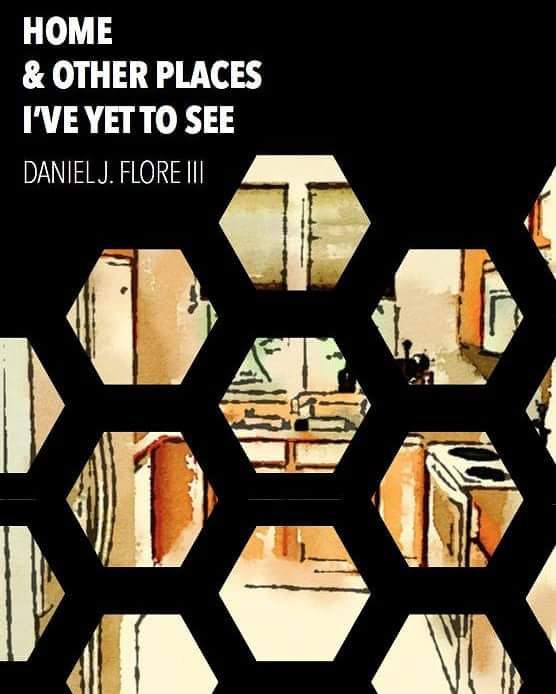
Daniel J. Flore III is the author of 3 collections of poetry- Lapping Water, Humbled Wise Men Christmas Haikus, and Home and other places I’ve yet to see. All three are from GenZ Publishing and available on Amazon.

The Interview

1. What were the circumstances under which you began to write poetry?

I started writing poetry in lieu of paying attention during Geometry and English class in high school.

2. Who introduced you to poetry?

My very first introduction to poetry was learning about Edgar Allan Poe in grade school.

3. How aware were you of the dominating presence of older poets?

I’ve encountered a lot of egos in poetry which was intimidating at first but I did have some mentors who helped me a great deal and were genuinely good people too.

4. What is your daily writing routine?

Some days I do a full to do list of everything in my writing I’d like to get done, other days I find that too constricting and I just see what happens and what I come up with.

5. What motivates you to write?

Emotions, anything I find interesting or different.

6. What is your work ethic?

I’m a workaholic actually. Poetry is hard work and can be exhausting.I try hard to get a good poem or a good recitation. So my work ethic is pretty strong.

7. How do the writers you read when you were young influence you today?

They are huge. They’re my heroes. People like Salinger, Hemingway, Kerouac. Their work stays with me and continues to inspire me.

8. Who of today’s writers do you admire the most and why?

Jeff Weddle, Jenn Zedd, Tom Riordan, Paul Brookes, KW Peery, Mary Deweese, to name a few. These are people that keep me interested. It’s so easy in contemporary poetry to just tune out from boredom. At least for me it is. But these poets and some others continue to impress me and keep me awed.

9. Why do you write?

To create the best poetry I can.

10. What would you say to someone who asked you “How do you become a writer?”

Write something really original down,  as soon as you do that you don’t need to become a writer, you are one.

11. Tell me about the writing projects you have on at the moment.
My latest poetry collection, Home And Other Places I’ve Yet To See, was just released by  GenZ Publishing. I have been recording a lot of poems and a couple more collections (Pink Marigold Rays, 2019) and (The Meaning of a Sigh, poems of the U.S.A. 2020) are  forthcoming  from GenZ Publishing. I will be hitting the bookstores again soon too,  to do some readings.

Wombwell Rainbow Interviews: Matt Duggan

Wombwell Rainbow Interviews

I am honoured and privileged that the following poets, local, national and international have agreed to be interviewed by me. I gave the writers two options: an emailed list of questions or a more fluid interview via messenger.
The usual ground is covered about motivation, daily routines and work ethic, but some surprises too. Some of these poets you may know, others may be new to you. I hope you enjoy the experience as much as I do.

Matt Duggan

Matt was born in 1971 and lives in Bristol in the U.K. with his partner Kelly his poems have appeared in many journals across the world such as Osiris Poetry Journal, Ink, Sweat, and Tears, The Blue Nib, Into the Void, The Journal, The Dawntreader, Midnight Lane Boutique, Anti—Heroin Chic Journal, The High Window, A Restricted View from Under the Hedge, Ghost City Review, Laldy Literary Journal, L’ Ephemere Review, Carillion, Lakeview International Literary Journal, Levure Litteraire, erbacce journal, The Stray Branch, Prole, Black Light Engine Room, Militant Thistles, Matt won the Erbacce Prize for Poetry in 2015 with his first full collection of poems Dystopia 38.10 and became one of five core members at Erbacce-Press. In 2017 Matt won the Into the Void Poetry Prize with his poem Elegy for Magdalene, and read his work across the east – coast of the U.S.A. with readings at the prestigious Cambridge Public Library Poetry Series in Boston, a guest poet appearance at The Parkside Lounge and Sip This in New York, and also read at his first U.S. book launch in Philadelphia. Matt has two new chapbooks available One Million Tiny Cuts (Clare Song Birds Publishing House) and A Season in Another World (Thirty West Publishing House) plus a small limited edition booklet The Feeding ( Rum Do Press) Venice and London. He has also read his work at Poetry on the Lake Festival in Orta, Italy, the Poetry Café in London, in Paxos in Greece, and at various venues across the U.K. he runs and hosts his own poetry events and was highly commended in the Road to Clevedon Pier Poetry Anthology Competition, his second full collection Woodworm (Hedgehog Poetry Press) is due in Spring 2019.

The Interview

1. What were the circumstances under which you began to write poetry?

I started writing poetry and prose when I was a young boy, the first poem I wrote won the best poem in my class at the age of twelve, I also remembered the time that we’d have to read a play in class and I’d end up reading four or five of the main characters from the play. I suppose the first real poems were written for the affections of young girls, from then it just progressed, almost like an obsession that I had to keep writing. I then started becoming political and writing about Thatcherism  and neo-politics and I never really wanted to be put myself into a category as a political poet that solely writes about protest and politics, but I think today and what surrounds us it’s necessary.

2. Who introduced you to poetry?

Who introduced me, well, that would be a good teacher at my local school called Mr Ford who used different ways to teach us about poetry, I became fascinated with the world of poetry and poets and he would tell us stories about Dylan Thomas, Thomas Chatterton, Verlaine, and many others, he brought the poems and the poet’s life into his teachings and had most classes absolutely transfixed, I just wish I could go back and thank him.
It was around this time that I started writing a lot of material and sending them out to journals, of which 80% were rejected, but I do remember getting my first hand written acceptance in 94 / 96 from a lovely editor by the name of Jenne Conne who edited a magazine called ‘Connections’ based in London.  I still have that very letter which I do look at from time to time, she inspired me to continue writing and I just wish I could of thanked her.

3. How aware were you of the dominating presence of older poets?

Very aware, over the years I devoured large collections of  Ted Hughes, Shelley, Auden, Keats, Homer, Coleridge, Ashberry, Ginsberg, but I never really involved myself in the local scene at that time it was much later when I felt that I gained enough confidence to read in front of an audience, and sometimes, I do wish I took the plunge earlier.

4. What is your daily writing routine?

I don’t really have one but I have stuck to a few rules that I can’t break. I only write with a pencil and notepad and I never use any mobile devices apart from writing up the final drafts of poems onto a computer. I always write from the hours 3am to 6am and have around five notepads full of lines, themes, and half written poems that I work through when I have the time.

5. What motivates you to write?

Lots of reasons what motivates me from highlighting certain aspects of life that people generally don’t know about, such as media, history, politics, right wing propaganda, for me it’s about telling the truth about experience to the more day to day mundane. I also write to overcome feelings, and to face truths.  I try to operate on an open canvas and I suppose most things that I encounter on a daily basis can motivate me in some way to write, it could be a snippet from a conversation, a scene in a street, or a more imaginative image to conjure with, for me, poetry is everywhere.

6. What is your work ethic?

I have a very strong work ethic that I need to be constantly busy from reading submissions, reading competition entries, doing interviews for the erbacce journal, organising events to support and promote other poets in my hometown of Bristol, and my own writing which I’m concentrating more on these days. I do try to immerse myself in too much work which feeds me even more, it’s a little like getting rejections from journals I seem to feed on this, and hit back with something that they will in the end accept, I enjoy this a bit too much at times to be honest.

7. How do the writers you read when you were young influence you today?

The writers that I read when I was growing up were writing about social inequality, rise of fascism, corporate takeovers, so I suppose it never really never went away and in that way they have influenced me to keep at it, to keep telling the truth, to challenge and to be honest with yourself , so I would say they have had a huge influence on my progress into the poetry world, there were also several writers who just didn’t do it for me and I remember reading all the Liverpool poets as I’d always liked Brian Patten work it just spoke to me as an adolescent, yet others in that same group did nothing for me then, and they still don’t.

8. Who of today’s writers do you admire the most and why?

This is a hard one as I read a lot of collections and it can change from month to month, but I would say Tony Harrison especially for his poem V and A Cold Coming I remember watching V on Channel 4 which had such a huge effect on me as a young boy, this was someone who was saying what I was thinking, and it was on T.V. plus a favourite of mine of his is The Gaze of the Gorgon I still pick up that collection and can never put it down,  I suppose because of the truth behind the poems, poetry for me is about telling the truth and being honest, a poem should make you think and should make you re – read the poem. The last Harrison book I picked up was Laureate’s Block and the title poem is simply sublime, I’d advise anyone thinking of entering into the poetry world to read this collection, other writers I admire are Andre Naffis- Sahely his debut collection The Promised Land for its themes on travel, displacement and disposable cities, his control of a poem is a delight to read as is Maria Castra Dominguez collection A Face in the Crowd, which is such a magical and beautiful experience. I’d also say Thomas McColl, Penny Rimbaud’s collection America, and How! (1973-2012) which I read while travelling across the U.S. recently I loved the poems and the bio which states ‘ He did not study at Oxford, he does not have a dog, a wife, a flat in North London or a house in Buckinghamshire. He has been a writer throughout his life.’ Brilliant! Also Simon Darragh,  and I’ve also just started re-reading John Tottenham’s The Inertia Variations it’s the best collection of poems written on the themes of sloth, inertia, and laziness, you’ll ever likely to find.

9. Why do you write?

I can’t remember a time when I didn’t write I suppose there are many reasons why I write sometimes it’s just for a little fun with silly puns and quirky poems of which I’ll never read out or would add to any collection, also, when I feel emotionally charged about a certain theme or subject it almost takes over my life, mind, and body, and becomes like an addiction until its finally finished, and then I get grumpy and very moody when I’m not writing.

10. What would you say to someone who asked you “How do you become a writer?”

Firstly I’d advise them to live life and maybe travel the world, live on a mountain, swim with dolphins, take notes, live with different cultures and experience as much of life as possible before putting pen to paper and especially read as many poetry collections as possible before finding a voice and then submit, submit, submit, and don’t be put off by bullies and editors who think that they know best, always be firm and believe in what you write and don’t take any shit from anyone.

11. Tell me about the writing projects you have on at the moment.

I’ve just finished two articles about my recent readings in the U.S.A which will be published in A Restricted View from Under the Hedge, and The Journal. I had two new chapbooks published  this year One Million Tiny Cuts

http://www.claresongbirdspub.com/shop/poetry/

and A Season in Another World

http://www.thirtywestph.com/shop/aseasoninanotherworld

also  involved with the upcoming 70th NHS anthology for erbacce-press.
I’m also working on two new commissions with publishers, and  editing the final draft of ‘Brexit and Bandages’ journal, also, my second full collection of poems Woodworm (Hedgehog Poetry Press) which I’m so excited about will be published in Spring 2019. And I’ve also been asked to judge a new poetry competition called Songs of Lenin and McCarthy, based on protest poems in the form of songs by Lennon and McCartney.

Wombwell Rainbow Interviews: Jennie Farley 

Wombwell Rainbow Interviews

I am honoured and privileged that the following writers local, national and international have agreed to be interviewed by me. I gave the writers two options: an emailed list of questions or a more fluid interview via messenger.
The usual ground is covered about motivation, daily routines and work ethic, but some surprises too. Some of these poets you may know, others may be new to you. I hope you enjoy the experience as much as I do.

4634818251_272x426

Jennie Farley

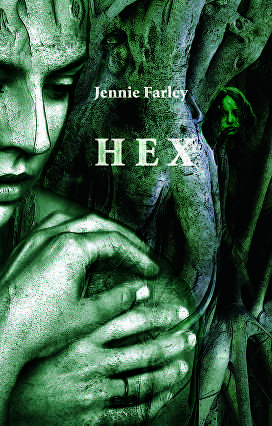
Jennie Farley is a published poet, workshop leader and teacher. Her poetry has featured in many magazines including Under the Radar, New Welsh Review, The Interpreter’s House, Prole, Artemis, Lunar Poetry, and online journals Amaryllis, Atrium. Ink Sweat & Tears, Three Drops from a Cauldron, Riggwelter, Clear Poetry, The Blue Pages … She has performed her work at Cheltenham Literature Festival, Cheltenham Poetry Festival, Swindon Poetry Festival, Cheltenham Everyman Theatre, Berkeley Square Poetry Review (Bristol) and local venues. She founded and runs NewBohemians@CharltonKings an ‘iconic arts club’ providing music, performance, poetry and workshops, and has held workshops at Cheltenham Literature Festival, University of Gloucestershire, Cheltenham Everyman Theatre and schools. Her full collection My Grandmother Skating was published by Indigo Dreams Publishing 2016) followed by Hex (IDP 2018)

The Interview

1.  What inspired you  to write poetry?

Aged about six I made little booklets of poems and drawings of bunnies and pretty flowers tied up with coloured ribbon inspired by the Flower Fairy Alphabet and Margaret Tarrant picture postcards. Aged 12 I wrote a gory pastiche of Edmund Spenser’s Faerie Queen. In my late teens I was inspired by the angst of Sylvia Plath, until I discovered the wonderful surrealism of Selima Hill.

2.   Who introduced you to poetry?

As a young journalist I interviewed  the writer Alan Garner​ of  the award-winning​ The Owl Service who encouraged me to write poetry, introducing me to the poetry of R.S. Thomas, The Mabinogian,  Robert Graves ​The White Goddess, the Golden Bough …

3.   How aware were you of the dominating presence of older poets?

I was aware especially of Emily Dickinson’s original and intriguing work which I have since studied, of Seamus Heaney, Ted Hughes, Philip Larkin, W.H. Auden, Elizabeth Bishop, Sylvia Plath, Selima Hill … and various poets in translation.

4.   What is your daily writing routine?

Checking and replying to emails, checking my list of imminent writing jobs i.e. events to organise, flyers to send out, feedback requested on colleagues’ poems …  I wait for my poems to come to me! I keep a notebook with me at all times to jot down ideas which often come from the strangest places, on the bus, overheard snippets of conversation, during a  country walk … I work on the poems as and when, treading carefully at first, and when I’m sure I’ve something worth keeping transferring notes to computer where I carefully edit which usually takes ages – until I feel I have ‘got it right’. Sometimes I send poems as drafts to a trusted poetry friend for comments .

5.   What motivates you to write?

I like getting my thoughts down so that I can see what I am trying to say. I was not overly ambitious until my poetry friend suggested I sent my poems out to magazines etc. Getting one or two poems published encouraged me to work towards a collection which I duly sent to a publisher, and to my absolute delight was accepted  (​My Grandmother Skating, Indigo Dreams Publishing 2016) followed by​ Hex (IDP 2018).

6.   What is your work ethic?

I don’t want to seem precious about this, but I feel I should spend time working at something I enjoy and for which I have a certain talent. Also, I enjoy teaching creative writing, passing on my enthusiasm for poetry and often learning from my students – especially the refreshing ideas of children.

7.   How do the writers you read when you were young influence you today?

When young I was an avid reader of anything I could find in our rather restricted library, but as a writer-to-be I was certainly influenced by Grimm’s wonderfully dark and magical tales. Also the narrative quality of the Brontes, especially ​Wuthering Heights,
​ and the excitement of R.L. Stevenson’s ​Treasure Island and ​Kidnapped
​ (I loved to imagine myself chasing over the heather with Alan Breck!) Oh, and the creative imagination of Kenneth Grahame’s ​The Wind in the Willows.

8.   Who of today’s writers do you admire the most and why?

The late Angela Carter, especially ​The Bloody Chamber for its vivid Gothic depravity and feminist twist, poets – Caroline Bird’s explosive, surreal poetry full of surprises, Michael Symmons Roberts, especially ​Drysalter for moving, metaphysical poems that read like psalms, John Burnside, especially ​Black Cat Bone for strange, unnerving, almost mythical poems telling of longing and loneliness …

9.   Why do you write?

I have no true answer to this! I find it difficult and stressful but the wonderful satisfaction of having brought a poem to fruition is worth it.  Also it’s the fun of exploring an idea through from the first few words.

10.    What would you say to someone who asked you “How do you become a writer?”

I would say, Keep practising, read, read, read, and always keep a Writer’s Notebook.

11.   Tell me about the writing projects you have on at the moment.

I can’t bear not to have some project on the go (even if it doesn’t work out). At the moment I am working toward a pamphlet of 25 poems ​The Gymslip Girls about my days at boarding school which seemed to me completely ​surreal!
​ Also a collaboration with a printmaker friend ​The Fossil House inspired by my old Cotswold Stone cottage with its sea urchin fossils embedded in the walls, her prints and my responses in poetry. And of course any new poems which may pop up in my head!

Wombwell Rainbow Interviews: Mike Farren

Wombwell Rainbow Interviews

I am honoured and privileged that the following writers local, national and international have agreed to be interviewed by me. I gave the writers two options: an emailed list of questions or a more fluid interview via messenger.
The usual ground is covered about motivation, daily routines and work ethic, but some surprises too. Some of these poets you may know, others may be new to you. I hope you enjoy the experience as much as I do.

42640655_1432007186943989_2021621624255545344_n

Mike Farren

Mike Farren is an editor in academic publishing from Shipley, Bradford. His poems have appeared or are forthcoming in journals and anthologies, including The Interpreter’s House, The High Window, Strix, Riggwelter and Valley Press’s Anthology of Yorkshire Poetry. His debut pamphlet, ‘Pierrot and his Mother’ was published by Templar Poetry in 2017 and in 2018 he was one of the ‘canto’ winners for Poem of the North. He is a member of Beehive Poets and Wharfedale Poets, publishes under the Ings Poetry imprint and co-hosts the Rhubarb open mic in Shipley.

Website: http://­www.mikefarren.co.uk/

Twitter: @mikefarren

MikeFarren
mikefarren.co.uk

The Interview

  1. When and why did you start to write poetry?

I have written poetry for almost as long as I can remember but I can date when I ‘really’ started writing to two specific things in 2014. The first was that I visited a friend in London for the weekend and went to see Dennis Severs’ house (https://­www.dennissevershouse­.co.uk/) in the East End. When I came home, I had to write about this and was so pleased with the result that I wanted to carry on writing.

Dennis Severs’ House – 18 Folgate Street
dennissevershouse.co.uk

The second thing was that I went to my first ever workshop, at the Ilkley Literature Festival, with Kim Moore. Apparently, what I wrote made Kim cry. I thought that if I could produce that effect (on such an excellent poet) with an early attempt, I really wanted to keep going!

1.1. Looking at your link they try to convey the Eighteenth Century as an immersive experience for all five senses.

That’s right. There was a real sense that the 18th century was tugging at you and doing strange things with time. I wanted to convey that feeling.

1.2 “Strange things with time?”

time assuming “a granular form”. It was as if the house had stopped time from flowing and you could begin to notice it as dust or grit trapped in corners or spiders’ webs.

Click to access ­18_folgate_street.pdf

1.3 Very visceral..Do you try to appeal.to all five senses when you write?

That’s an interesting question. I think that I’m always aware of them. I’m probably most concerned with the emotional effect but I realise that the way to get to the emotions is through the senses.
2. Who introduced you to poetry?

My father had no particular notion of poetry but he loved words and wordplay, so I think he pre-disposed me to it. My slightly older next-door neighbour introduced me to music in which the lyrics were significant – Bob Dylan, Joni Mitchell, Jagger/Richards (at their best)… From there on, it was more formal thing of studying English at school and reading texts by Donne and Marvell, Keats, Eliot and in particular, Yeats.
However, until the change I mentioned in 2014, I had only been vaguely aware of modern – let alone contemporary – poetry, so it was finally encountering some practising, mostly younger, poets – Kim Moore, Helen Mort – and starting to go to Beehive Poets in Bradford that introduced me to the contemporary scene.

3. Is Yeats a domineering influence?

I don’t think I write at all like him – at least, not these days. I have probably also reined back on the self-mythologising and I don’t have a cause that’s the equivalent of Irish independence for him. However, I probably aspire to his mixture of the emotional and the intellectual and his ability to move between the everyday and the mythic.

In that case, yes, though Irish mythology is a resource for him elsewhere. It’s difficult to use specifically classical references without seeming too exclusive. I rarely do so, but I like to try to get the notion that the inner world or the humdrum world are connected to something more universal.

4. What is your daily writing routine?

I wish I had one! I like to have a notebook by my bed because I think I get most ideas (not always good ones!) when I’m just about to sleep or just waking up.
When I am able to find time actually to write, I usually set aside an hour or so and try to get down a draft based on some of those ideas. This can be rough – often just prose. Sometimes, though, I notice that there’s a thread of rhyme or that phrases are coming out with a consistent rhythm and I take this to point towards the form the poem wants to take.
Apart from the notebook, I usually work straight to computer. Drafting is fairly incremental – I tend to read things out and see how they sound, then change odd words or line breaks to make them sound better. I only occasionally re-start from scratch – when a poem clearly isn’t working but the idea won’t leave me alone.
I do want to develop a more rigorous, regular routine, but I’m afraid that’s a work in progress at the moment.

5. Is a stray phrase your motivation to write, or do other things move you to do so?

It certainly can be a stray phrase. I also write a lot about what might seem like insignificant memories but are actually moments that can bear the weight of other things that are in the background – relationships, emotional states or even impressions of political moods.
As I have become involved in groups and have attempted to get my work into more journals and anthologies, I have also had more occasion to write on defined topics. I can begin with a topic that seems to mean little to me but, through research and spending time considering the subject, come up with something that I might be reasonably satisfied with.

6. What is your work ethic?

For poetry, it’s probably different from everything else. In the day jobs I have done and continue to do, it has always been important to put in the hours, concentrate on the task in hand, prioritise, give due regard to deadlines etc. Some of this has also been true when I have attempted to write prose. With poetry, you can only get so far – but no further – by applying those principles. Having time to write is important but forcing things when you have that time can be counter-productive, leading to frustration and self-doubt (above even the levels that are normal for a poet). Once you’re onto something, I think you do, though, need to be immersed in it – the ideas, but also the rhythm, sound and shape of the thing.

7. How do the writers you read when you were young influence you today?

The things that I loved about writers I read when I was young were probably story, musicality and communication. I tried for a time to write fiction and realised I just wasn’t good at handling big story arcs, so with poetry I like to try to imply a story – to give the reader the means to extrapolate from the little I actually have space to say in a poem. Musicality is a work in progress: I rarely use established forms like iambic pentameter these days, but there’s the Ezra Pound thing: “compose in the sequence of the musical phrase, not in sequence of a metronome”. This is so subjective that it’s hard to know if you’re succeeding, but I always have it in mind. As for communication, I have always liked writers who seem genuinely to want to communicate with the reader, even if it means crediting that reader with the ability to fill in the gaps and make connections beyond the obvious.

8. Who of today’s writers do you admire the most and why?

I just did an interview (me as interviewer) with a poet friend where we discussed the impossibility of giving an answer to that question that you wouldn’t be almost instantly embarrassed by! One of my sources of embarrassment is that I probably have quite a parochial perspective. The one poet who goes against that is probably Sharon Olds. Stag’s Leap was one of the books I was reading around the time of my 2014 ‘conversion’. I think she has a kind of magisterial quality that makes you aware you’re in the presence of someone who really knows what they’re doing with poetry.
Another significant book from that time was Michael Symmons Roberts’ Drysalter. I think I loved the sense of being able to achieve such a massive variety within such a tight constraint (150 poems of 15 lines each).
Established poets I admire are Sean O’Brien for the kind of imagination that can work from the small detail to the big political currents of our times; and Don Paterson, for sheer craftsmanship. There’s also Carol Ann Duffy and Simon Armitage for their ability to communicate.
A generation down from that, the poets I admire are mostly female – Helen Mort for technique, Liz Berry for the distinctiveness of her voice and Kim Moore and Clare Shaw for their courage and visionary qualities – but there’s also Kei Miller, for his ability to straddle written and spoken spheres,
The poet I have enjoyed most over the last few years, though, has probably been Michael Donaghy. Having been dead for 14 years, I’m not sure if he counts as one of “today’s writers” but as far as I’m concerned, he had everything.

9. What would you say to someone who asked you “How do you become a writer?”

Read! Do it actively. Identify the writers who speak to something in you and try to work out how they achieve it. Also do it passively. Get the rhythms of good poetry (or prose) into your muscle memory. And write. My description of my approach above might sound a little undisciplined but I have to admit that I didn’t start getting better as a writer until I started practising.

9.1 Poetry as a craft.

Very much so. We’re kind of back to Yeats and his “Irish poets, learn your trade / Sing whatever is well-made”.

10. I agree.
Finally tell me about the writing projects you have on at the moment.

I have recently finished putting together a collection. The core of it is a sequence of poems that are mostly far from obviously political in themselves but that I hope will be able to build a cumulative political sense. I am looking for a publisher at the moment.
Secondly, I have written a sequence for music, on the subject of the moon. I am working with composer Keely Hodgson, who previously worked with poet Laura Potts on her North and Mourning sequence. The idea is that we will put on some performances with a soprano and a piano trio.
I have a vague idea of trying to curate a sequence of poems – translations or poems written in response – from different writers to coincide with the 200th anniversary of Baudelaire’s birth in 2021. This is still fairly embryonic.
Finally, I have done some small-scale publishing of my own, putting together anthologies and collections for friends. I am currently looking to take this further, in collaboration with a few other people from the West Yorkshire poetry scene. We hope to launch this within the next month or so.


Wombwell Rainbow Interviews: Tom Sastry

Wombwell Rainbow Interviews

I am honoured and privileged that the following writers local, national and international have agreed to be interviewed by me. I gave the writers two options: an emailed list of questions or a more fluid interview via messenger.
The usual ground is covered about motivation, daily routines and work ethic, but some surprises too. Some of these poets you may know, others may be new to you. I hope you enjoy the experience as much as I do.

410-xRaN-sL._AC_US500_QL65_


Tom Sastry

Tom Sastry was chosen by Carol Ann Duffy as one of the 2016 Laureate’s Choice poets and his resulting pamphlet Complicity was a Poetry School Book of the Year and a Poetry Book Society pamphlet choice. He also has a growing reputation as a spoken word performer having supported Danez Smith and Hera Lindsay Bird on their recent UK tours. Tom is currently editing an anthology of poems about the future for Emma Press with Suzannah Evans.

The Interview

1. When did you start writing poetry?

I wrote poetry when I was very young. The evidence may be in my mother’s attic as I have never managed to destroy it. I stopped for twenty years. In between I wrote a lot of songs which I could never perform properly owing to my atrocious guitar playing. When I noticed poets appearing at open mics, I copied them. That was in 2012.

2. Who introduced you to poetry?

I don’t know. Poetry is quite famous even if most poets aren’t. I suppose I picked up on its existence somehow. I don’t have a Hollywood fable involving an inspirational teacher, I’m afraid.

3. What inspired you to wrote poetry when you were very young?

I don’t know that I was inspired. It was a thing I did like other things and I think that is a very healthy way to look at writing poetry. As a teenager I was seduced by the idea of being a poet which is the opposite of being inspired to write. For that reason my poems were dreadful and for that reason I stopped writing for 20 years.

4. What is your daily writing routine?

I very much hope to have one, one day! I write in scraps of time I can salvage from other things.

That isn’t quite true because I am always putting words together in my head with a view to writing poems and I think that counts as writing time. I think the trick is to go around filling your pockets with things that grab your attention. The rest is typing. But I get a lot of my best ideas while typing. I wish I had more time to type.

5. What motivates you to write?

Writing as I see it is the opposite of functioning. When you are being functional you are focused on the task at hand, the thing that needs saying, keeping everyone happy; and you are acting on these intentions in a predictable way because you want predictable results.

When you are writing you are doing the opposite: you are making yourself sensitive to thoughts and phenomena which are unacceptable or confusing or impolite or irrelevant. I have spent my life in a furious secret rebellion against functioning, which I hate.

For most of my life I didn’t think about it as writing – I thought I was just losing concentration; and when I did the thing I called writing I was just functioning in a different way – trying to produce things which fitted other people’s idea of a poem. But that changed in 2012 when I started writing poetry again after a long break. Since then it has become very clear that I write to escape the amount of functioning I have to do. I don’t have to motivate myself to do it.

6. How do the writers you read or heard when you were young influence you today?

I don’t know. I don’t really have that kind of reading/writing epiphany story. There isn’t anyone who I read thirty years ago who remains a touchstone for me. I am sure that everything has an influence though.

7. Who of today’s writers do you admire the most and why?

Strangely, that is a very hard question to answer. I find it very difficult to speak publicly about other people’s work for the same reason that I would hate to be given a microphone and asked to praise someone’s clothes. I am terrified of doing it in a way that isn’t respectful or gracious or comes across as false and I am scared of leaving someone out. It’s not because I don’t want to be generous with praise – I love lots of poetry and I can be quite vocal about it when I choose my moment to speak about it. I know how lovely it is when people say nice things about you and I really appreciate it when others do that for me. But more than reading in public or accepting criticism I find praising on cue the most anxiety-inducing part of being a poet.

I wanted to say that because I have never heard anyone else say it and I wonder if other poets feel the same way!

In lieu of a proper answer to your question, I will say is that current bedside pile is extraordinary. At the moment the writers am reading or re-reading Matthew Dickman, Danez Smith, Kim Moore and Jacqueline Saphra and in each case I am bowled over. So at this moment, they are my favourite writers.

8. What would you say to someone who asked you “How do you become a writer?”

If you ask, you are probably already writing. Read and – just as important – see and hear as much poetry as you can.

Make it a social experience so that your need for human contact and your hunger for poetry overlap.

Always try to do what you don’t do. If you write but don’t read in public, read in public if you possibly can. If you perform but don’t publish, seek the views of people who have never seen you perform on your written work.

If there is a particular idea or fashion in poetry which exasperates you, understand it.

If there is someone you like despite not wanting to figure out what they are showing you.

If you write quickly, revise your next piece twenty times; if you are a perfectionist write something quickly and share it. In fact, don’t be a perfectionist because a defensive striving not to write badly will kill your writing; but do work as hard as you can without falling down that rabbit hole. Understand your own strengths as a write but don’t be scared to change your method.

Write down your rules about what poetry should be and burn them. They are your worst enemies. It’s not that your ideas are wrong – it’s that becoming attached to your own personal theory of poetry limits you as a writer. Most of what you do is training for the moment the real poems come. Make sure you are ready for anything.


Wombwell Rainbow Interviews: Ken Evans

Wombwell Rainbow Interviews

I am honoured and privileged that the following writers local, national and international have agreed to be interviewed by me. I gave the writers two options: an emailed list of questions or a more fluid interview via messenger.
The usual ground is covered about motivation, daily routines and work ethic, but some surprises too. Some of these poets you may know, others may be new to you. I hope you enjoy the experience as much as I do.
51s18ug5e8L._AC_US500_QL65_

Ken Evans

Ken Evans won this year’s Kent & Sussex Poetry Competition, and The Battered Moons Competition in 2016.
Last year, he was included in an anthology of Best New British & Irish Poets, edited by Luke Kennard. Kennard referred to his featured poem as ‘a hypnotic exercise in imagination and compassion.’ Evans’ first pamphlet, The Opposite of Defeat, featured work from his shortlisted collection in The Poetry School’s / Nine Arches Press ‘Primers’ Competition, which also shortlisted in Bare Fiction’s debut competition. True Forensics is his first poetry collection.

The Interview

1. What inspired you to write poetry?

A favourite poet, Louise Gluck said, ‘Writing is a kind of revenge against circumstance: bad luck, loss, pain. If you make something out of it, then you’ve no longer been bested by these events.’ I like this. Writers’ trying to order a world that continuously confounds all of us (though sometimes it does so in a good way, of course.)

2. Who introduced you to poetry?

Foyle’s on Charing Cross Road. I opened at random ‘The Children of Albion – Poetry of the Underground’, an anthology of post-Ginsberg, UK poets. It was 1974, the Vietnam War was still being lost, and of course, all before the Internet. These angry, declamatory words hit powerfully. Like a lot of teenagers need to feel, I felt I’d found a way of looking at the world that was ‘mine.’ And when I later discovered one of the contributors, Adrian Mitchell, had been to the same school as me, it also suddenly seemed a world that was attainable. Poetry was possible for someone like me. What the book didn’t tell me was it might take 40 years!

3. How aware were you of the dominating presence of older poets?

‘Crow’, ‘Ariel’, Dylan Thomas, is where poetry ended at school, but an enlightened English teacher also gave us Thom Gunn, which I loved. William Blake and the Romantics were very popular, this being the 70s, and I love Brian Patten, but I think I was as influenced by singer-songwriters of the time as much as poets’ – Dylan, of course, Joni Mitchell, Lou Reed, Neil Young, Neil Diamond, Don McLean, Paul Simon, Cat Stevens, and Yorkshire’s very own Roy Harper.

4. What is your daily writing routine?

Less a routine, more one to stick to: to try and write something every day. Even if just a line, or a tweak to a title (I’m a bit rubbish with poem titles.) Routine breeds practise which improves your work, even when it doesn’t seem like it. Even when what you write seems tosh the next day.

5. What motivates you to write?

I heard Simon Armitage say in a YouTube interview he thought poetry was, by nature, ‘oppositional.’ It takes the world, skews it, creases it along new lines, looks on ‘the ‘slant.’ I like my eyes and ears being opened to a different take. I’m not saying I manage this in my own poems, but it’s something I look for in others’ and try to work towards. I

6. What is your work ethic?

As Armitage also said, I think, (his free, Oxford Professorship of Poetry lecture podcasts are worth a listen) – poetry takes attention! It’s hard, you have to concentrate. Probably why it’s such a minority-sport, as almost everything else in the world seems to infantilise us, make us passive recipients, indulge us. Poetry forces engagement. This means you’re almost never switched off – looking, hearing, observing – it’s a tough task-master. Most of the good, or successful, poets I ever meet are very hard-working – writing, work-shopping, performing, organising, translating, reviewing, teaching! This idea of the shamanistic versifier, waiting for thunderbolts of divine inspiration, was probably made up the same time as that Thomas Chatterton painting – the poet dying of a laudanum overdose in his garret.

7. How do the writers you read when you were young influence you today?

I still love nature poetry, instilled by the Romantics, probably, but also Gerard Manley Hopkins and Edward Thomas. Louis MacNeice, his long, narrative poem ‘Autumn Journal’ written in 1939 with the shadow of war over it, seems so ‘now’ to me. Heaney is always returnable to with extra value, and Derek Mahon.

8. Who of today’s writers do you admire the most and why?

North American poetry seems so free, experimental, with raggedy lines and rangey, loose-limbed expression, compared to a lot of UK poetry. Forgive my stereotyping, but it walks with bow-legs and a swagger like a cowboy after three weeks on horseback, thirsting for strong whisky. I love the daring of Karen Solie, Anne Carson, Louise Gluck, Brenda Shaughnessy. The lyrical tone and content in Henri Cole, Carl Phillips, Jack Gilbert, and most recently the alternate Lakota Sioux history of Layli Long Soldier and the hypnotic Kaveh Akbar.  For making the hard flow easy, Billy Collins.

For UK nature poetry, Gillian Clarke, Alice Oswald are ‘musts’. For hints of the spiritual and mystic, Gillian Allnutt and Pauline Stainer.  For unflinching, forensic honesty, Denise Riley and Rebecca Goss. For his darkness, Robin Robertson. For poetry generally, John Glenday and Maurice Riordan; my best youngish poets of the moment, Claire Askew and Fiona Benson. Wendy Cope’s new volume is wry and wise and witty about love and relationships and she’s a brilliant technician. Leontia Flynn, Mary O’Malley and Maura Dooley are just a few on the tip of the conveyor-belt of Irish brilliance that goes on and on.

9. Why do you write?

Poetry is a mood-enhancer everyone can access. At least, till they ban or tax it like the others’. It’s also the most democratic. Artists or musicians’ may demur, but even they need some ‘kit’, or materials. For poetry, you only need the stub of an HB pencil – and paper. In fact, you can beg, steal, or recycle paper, so with a crayon or pencil, you’re away. Thanks to our fantastic public libraries, which we should maintain at all costs, you don’t even need a word-processor, but can book time on theirs. But a re-furbed, pre-used WP is also within most people’s reach nowadays.

If writing is revenge, maybe it’s also damage-limitation. Trying to make sense of the inexplicable. I don’t really believe it’s true catharsis though. Focusing on any given subject for too long may even make the thing worse, or at least keep it on a permanent ‘loop’ in your mind.

10. What would you say to someone who asked you “How do you become a writer?”

Everyone says read, and read some more, which is great. You don’t even have to spend a lot – repeat visits to free websites such as the Poetry Foundation, Poetry Archive and Poets.org. are great resources. But also be persistent and resilient – Jo Bell talks about rejection being part of the acceptance process, which I think’s really positive. They’re organic continuations of the same thing. Rejection makes us better (or at least, a little tougher or more self-critical.) Easier to say once you’ve had some minor successes maybe, but everyone I know tends to be rejected far more than accepted, especially early on. Even Sylvia Plath was!

11. Tell me about the writing projects you have on at the moment.

My debut collection, ‘True Forensics’, is being published by Eyewear, for a London          launch at the LRB bookshop on October 24th.
https://www.amazon.co.uk/Vigilance-Ken-Evans/dp/1912477106/ref=sr_1_1?ie=UTF

so I’m a bit ‘post-collection’ right now. I’m still liking what I read, even after it having been    under the microscope so long, which I take as a good sign – we’ll see!
I’m mainly trying to get some gigs going to help promote ‘True Forensics’.

But I’m continuing to write individual poems, and revising some that I like but for various reasons, thematic or mood-wise, they didn’t make the final ‘cut’ for the Eyewear book, and maybe looking to enter these in a pamphlet competition by the turn of the year – poetry’s a ‘slow-burn’ I find, it won’t stand a rush, so we’ll see.


Wombwell Rainbow Interviews: Merryn Williams

Wombwell Rainbow Interviews

I am honoured and privileged that the following writers local, national and international have agreed to be interviewed by me. I gave the writers two options: an emailed list of questions or a more fluid interview via messenger.
The usual ground is covered about motivation, daily routines and work ethic, but some surprises too. Some of these poets you may know, others may be new to you. I hope you enjoy the experience as much as I do.

frompixlr

Merryn Williams

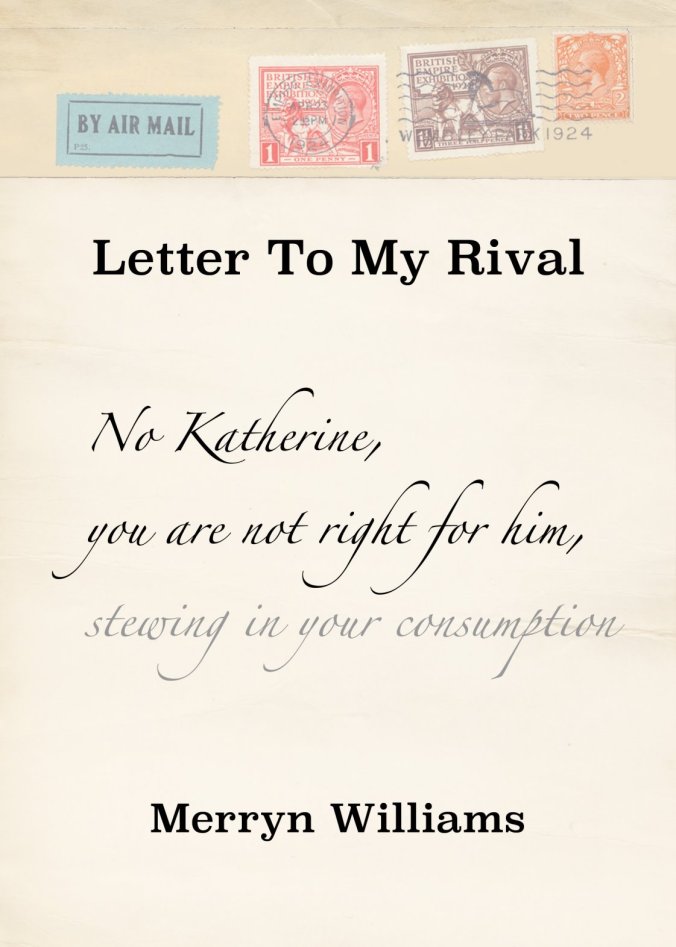
studied English at Murray Edwards College and worked for a while at the Open University.  She wrote a thesis on the novels of Thomas Hardy and various other works about the Victorians, but became more interested in poetry later on.  She is literary adviser to the Wilfred Owen Association and has a great interest in the poets of the First World War.  She has published four collections of poetry and edited several anthologies, including ‘In the Spirit of Wilfred Owen’, ‘The Georgians 1901-30’ and ‘Poems for Jeremy Corbyn’.  She has also translated the poetry of Federico Garcia Lorca (Bloodaxe).  She lives in Oxford with her husband John Hemp.

The Interview
1. What inspired you to write poetry?

When I was a child there was no television in the house but there were plenty of books.  I looked into several which were really for adults and clearly remember a fat blue volume called Poems of Blake which I discovered at the age of five or six; the poems seemed much simpler than they really were.  I was fascinated, and often bewildered, by his Songs of Innocence and Experience and still value poems which unite simplicity and mystery.  Emily Bronte is another writer who can do this.

2. Who introduced you to poetry?

I suppose I introduced myself!  At primary school we were offered nursery rhymes, hymns, and some Georgian poems whose vivid imagery I loved – ‘London Snow’, ‘Silver’, and ‘The Ice Cart’, all by poets of a certain vintage. ‘Home Thoughts from Abroad’ is another which made quite an impression.

3. How aware were you of the dominating presence of older poets?

I still own The Penguin Book of English Verse, edited by John Hayward, which I carried in a blazer pocket and read in spare moments at grammar school (I was an unusual child!).  I loved and constantly re-read the older English poets, but my interest fell off sharply after Wilfred Owen’s time.

4. What is your daily writing routine?

I write in the mornings, as early as possible.  If it’s a poem, that takes precedence over all other jobs.

5. What motivates you to write?

‘In the beginning was the word’.  It has to be a cluster of words, or perhaps a line and a half, and the poem develops or fails to develop from there.  It’s not easy, anyway not for me, to write a half-decent poem to order.  Inspiration has to come spontaneously, and a poet can be inspired by some quite unexpected story or event.

6. What is your work ethic?

I believe it’s important to go on working as long as you have strength, not to waste precious time.

7. How do the writers you read when you were young influence you today?

I suppose these writers gave me a strong preference for rhyme, which is what most of my poems do.

8. Who of today’s writers do you admire the most and why?

A wonderful constellation of poets born around the time of the First World War – Norman MacCaig, Norman Nicholson, R.S. Thomas, Larkin, Scannell, and above all, Charles Causley.  Ruth Bidgood is the only one of that age group who is still alive; she’s 96 now and I am proud to call her my friend.  I discovered her Not Without Homage one rainy day in an ancient Welsh cottage and it started me writing poetry again after a gap of years.  She writes about the ‘green desert’ of mid-Wales and its vanished people; I also love that landscape and am fascinated by the history of hidden lives.  Tony Harrison is another poet I greatly admire for his technical mastery and his understanding of politics.   There are many more good women poets now than there used to be and I’m impressed by Sheenagh Pugh and Alison Brackenbury.

9. Why do you write?

There is an inner compulsion, I suppose, to comment on aspects of the world and make sense of them.  Apparently you have to practise for 10,000 hours to be really good at anything and I’ve practised for longer than that!  I am a shy person who wouldn’t have been good at a job that involved prolonged contact with people.  In the 2017 election, I wanted to help but baulked at knocking on doors, so, reckoning that my only skills were verbal, I did a great deal of blogging under a pseudonym.

10. What would you say to someone who asked you “How do you become a writer?”

Read the best writers, don’t imitate them but practise, keep practising!

11. Tell me about the writing projects you have on at the moment.

I’m preparing a Selected Poems to be published by Shoestring in 2019.  Also a play about Wilfred Owen and a German poet, Gerrit Engelke, who were both killed in the last months of 1918, and ought to have met, but did not.  My YA novel Zone 7, which is about a future England under a military dictatorship, will hopefully be published next year.

Website: m.williams.webeden.co.uke

Wombwell Rainbow Interviews: Anne Walsh Donnelly

Wombwell Rainbow Interviews

I am honoured and privileged that the following writers local, national and international have agreed to be interviewed by me. I gave the writers two options: an emailed list of questions or a more fluid interview via messenger.
The usual ground is covered about motivation, daily routines and work ethic, but some surprises too. Some of these poets you may know, others may be new to you. I hope you enjoy the experience as much as I do.51T9+i9HrxL._AC_SX348_SY500_QL65_

Anne Walsh Donnelly

Anne Walsh Donnelly lives in Mayo in the west of Ireland. Her poetry has been published in various literary outlets such as Hennessey New Writing in The Irish Times (July 2018), Crannog, Boyne Berries, Cold Coffee Stand, Star 52, Ariel Chart, Inside the Bell Jar and The Blue Nib. Both her poems and short stories have been widely anthologised in books such as Please hear what I’m not saying, Gem Street: Beyond the Axis and Henshaw 2.
Two of her short plays were staged in the Claremorris Fringe Festival of Drama.
Her work has been shortlisted in several competitions including the OTE New Writer of the Year Award, Fish International Short Story Prize and the RTE Radio One Frances Mac Manus competition.
One of her poems was highly commended in the OTE New Writer of the Year Award (2017).

Anne won the Blue Nib Winter 2017/Spring 2018 Chapbook poetry completion.  A selection of her poems, are published in The Blue Nib Chapbook 2. You can buy it here:

https://thebluenib.com/product/the-blue-nib-chapbook-2/

The Interview

1. What inspired you to write poetry?

I was forty-five when I started writing. My daughter was the catalyst. When she was eight, she used to write poems for people to give them on their birthdays and other important events. Isn’t it a lovely idea, to gift someone a poem?  So I wrote a poem for someone who had been very supportive whilst I was going through my martial separation.  When I gave it to the person, she smiled and said “You have to continue to write.” That was all the encouragement I needed. I started to write poetry, short stories, plays, and memoir. The words just tumbled out onto the page. Once I started I couldn’t stop. Luckily I’ve inherited my father’s ability and love of telling a good story.

2. Who introduced you to poetry?

My mother, in the form of nursery rhymes and as I got older, she often recited other poems to my brothers and me. My favourite poem as a child was Wordsworth’s Daffodils. “I wandered lonely as a cloud….” For some reason those words resonated with me.  In secondary school I found studying poetry difficult. It was the analysis of them and reading them for exam purposes that nearly destroyed poetry for me. Though for some reason I always loved the Patrick Kavanagh poems that were on the curriculum.
Funnily I used to hate when teachers in primary school would give us the task of writing our own poem. I was convinced that I could not write. I think it was to do with the fact that I thought all poems had to rhyme and I was useless at rhyme. It took me a long time to realise that I could actually write a decent poem. Forty plus years.

3. How aware were you of the dominating presence of older poets?

As I said Patrick Kavanagh was a favourite poet of mine and his poems have always stuck with me since my teenage years. I’ve only realised recently how he has influenced some of my own writing. Someone recently called me “Patrica Kavanagh” after reading one of my poems. I think it’s the rural element that sometimes creeps into my poems and my use of the vernacular in some of my poems.

4. What is your daily writing routine?

I write every day, not always on paper, but in my head. Being a working lone parent of two teenagers means that getting to actually sit down every day and write or type words onto a page doesn’t happen. But I am always thinking of writing, opening myself up to ideas that might float my way. It might be something I see, an overheard conversation or the words of a song might trigger an idea. I mainly use my phone to note these ideas. I expand on later. At weekends I make time to actually sit down and write. My favourite writing space is Sunday mornings. The house is quiet and thankfully the kids sleep till lunchtime so I get up early and spend a few hours writing.

5. What motivates you to write?

I don’t need motivation, it’s a compulsion. Just as I have to breathe, I have to write. If I don’t get at least one poem a week written, I get cranky. To not write, doesn’t feel right for me. Sometimes I wonder how I survived forty-five years on this planet without writing creatively. Writing sustains me and had enriched my life so much.

6. What is your work ethic?

I am highly driven regardless of what I set my mind to. This is also the case with writing. As my mother would say, anything worth doing is worth doing well and that’s my philosophy too. However the last few years have taught me to create a more balanced life and not get lost in one task to the exclusion of all others. Mothering, working, relationships, exercise, meditation and writing all get their fair share of my attention. In terms of my professional life and doing the job that pays the bills, it doesn’t consume my life the way it did in the past. It’s a means to an end. My life outside of work takes priority now. I always reserve some of my energy for writing. It might not put food on the table, but it feeds my soul, which is probably the most important thing we need to nourish.

7. How do the writers you read when you were young influence you today?

As I mentioned Patrick Kavanagh certainly has influenced my writing though I wasn’t aware of how much it did, until recently, when I read his poem “The Great Hunger.”

8. Who of today’s writers do you admire the most  and why?

There are way too many to mention.

9. Why do you write?

I write to live and to make sense of this crazy world we inhabit.

10. What would you say to someone who asked you “How do you become a writer?”

I wrote a poem on this very topic! It’s called “Guide to becoming a writer” and it was recently published online in The Irish Times. You can read it here.

https://www.irishtimes.com/culture/books/hennessy-new-irish-writing-july-s-winning-poems-1.3568189

It’s based on my own experience of how I became a writer or should I say, discovered that I was a writer. It contains all the essential ingredients that you need to become a writer. Reading, loving and losing, spending time alone, being adventurous, brave and honest and getting support from others. In my experience it’s the shite that life throws at you, that will make you a better writer. Most importantly of all as my therapist once said to me when I was in the throes of depression…Just Do It.  Oh, and find people who believe in you.  When they tell you how awesome you are, believe them, because every one of us is awesome, in our own way.

11. Tell me about the writing projects you have on at the moment.

I’m currently working towards my first collection of poetry. It’s still in the early stages. I also have ideas for a novel, short stories and personal essays that I am still developing. My problem is that I have so many projects I want to work on and little time
Anne Walsh Donnelly
September 2018