Poetry inspired by Picasso from Jackie Chou “The Path”

davidlonan1's avatarFevers of the Mind

inspired by Pablo Picasso's poem "A Lonely Road is That I Walked"The Path

I walk a lonely road,
because I know no other way.

I have broken the bridge,
which stretches across the lake 
to the laughing crowd.

I walk a lonely road,
because my lover
has let go of my hand,
and taken a detour 
to follow the trail of glass.

And I know of no street,
that glistens in the sunlight,
only this black asphalt path,
on which my shadow grows.

Bio: Jackie Chou is a poet whose work is inspired by her inner world and the urban landscape where she grew up.  Her work has appeared in Alien Buddha Zine, Cajun Mutt Press, Spillwords, Highland Park Poetry, and Fevers of the Mind Poetry Digest.  Besides writing, she loves to watch Jeopardy and thriller movies.

View original post

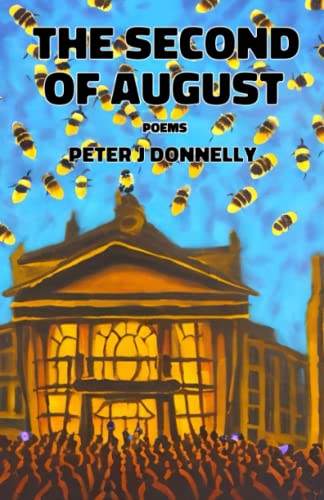
Wombwell Rainbow Book Interviews: “The Second of August” By Peter Donnelly

Peter J Donnelly lives in York where he works as a hospital secretary. He has a MA in Creative Writing and a degree in English Literature from the University of Wales Lampeter. Thanks are due to the Dreich magazine, Writer’s Egg, Southlight and South Bank, where some of these poems have previously appeared. His poetry has also been published in other magazines and anthologies including One Hand Clapping, Black Nore Review, Ink, Sweat and Tears, Obsessed with Pipework, High Window and The Beach Hut. The 22 won second prize in the Ripon Poetry Festival competition in 2021 and The Second of August was a joint runner up in the Buzzwords open poetry competition in 2020.

The Interview

Q: 1. How did you decide on the order of the poems in the book?

I felt that the poem that gives the collection its title should be near the beginning but not the first poem in the book. I’ve got to be honest and say that it and the one that is the first were both successful in competitions,  one winning second prize and the other a joint runner up.  I tried to make them flow, keeping something of a trail between the subjects of the poems,  though some have nothing to do with the one that came before. There  is a small group of poems about the Bronte sisters and their characters quite close together, and couplets of poems about butterflies, moths and birds.  I tried to even them out as well,  rather than for example have all the ones about butterflies together.

Q;2. How important is a sense of place in your poetry?

Very important.  I have been greatly influenced by my native North Yorkshire which is a very scenic area, as well as other parts of Great Britain that I have visited, most notably Wales and the South West of England.  My home city of York gets a mention in a few of the poems and is the subject of one of them. Place is also an important factor in the poems I write about people,  animals, literature and music amongst other things.

Q:3: How important is form in your poetry?

Not greatly important,  though there has to be something that makes a poem more than just chopped up prose. Some of the poems in the chapbook are rhymed, which is not a form I use very often now.  I experimented with it quite a bit when I got back into writing a few years ago after quite a long period of not writing,  but I have moved away from it. Where I do use rhyme I usually don’t use iambic pentameter,  so the rhyming may not be immediately obvious.  I maintain that verse is not necessarily poetry.   Most of my first drafts are not split into verses. Once I think I have a complete poem I experiment with splitting it up. Sometimes I end up with couplets, sometimes three line verses, sometimes four or more, and often it remains free verse. Very occasionally I have verses of unequal length but not very often.  I usually begin a verse with the beginning of a sentence,  but not always.

Q;4. What role does music play in your poetry?

It has influenced many of my poems, not least the one that gives this collection its name. Though I tried to learn instruments as a child I can no longer read music nor do I know a lot about it,  many of its technical terms mean nothing to me.  I very rarely have it playing in the background whilst I am writing poetry,  though I do regularly have Radio 3 playing whilst I am doing other things.  It is a station I would struggle to live without,  and gets a few mentions,  directly and indirectly,  in my writing.  I certainly have an appreciation of many forms of music, and concerts in cathedrals and churches, as well as opera, ballet and performances of symphonies I have attended been the influence behind quite a lot of my poetry.  It is often the place where I heard the music performed, or the people I attended with, that have made the piece significant to me and inspired me to write a poem about it.

Q;5. Nature seems important in your poetry, thinking especially of Peppered Moth and Painted Lady?

It is. Butterflies and moths in particular are of great interest to me, as are plants, especially orchids.  I have largely been influenced in this by my late great aunt who was also very fond of these things. She too has influenced much of my writing.  I have also written poems about birds and other aspects of nature. I love walking in the countryside and visiting gardens. Other poets have of course written about these things, and have inspired me. The Welsh poet Gillian Clarke,  whom I met at university played a great part in my development as a poet, as did my former teacher,  the poet Carole Bromley.

Q:5.2. What is it about butterflies, months and orchids that fascinates you?

Their physical beauty, the colours and shapes of their wings and petals. I like dull coloured moths just as much as multicoloured butterflies.  I am intrigued by the ability of something so small and delicate to disguise itself in order to survive, the theme of ‘Peppered Moth’. With orchids I am intrigued by their ability to surprise, often flowering more than I imagine they will, developing stems off stems and occasionally baby orchids as well.

Q;5.3. Moving on to the other influences. How did Gillian Clarke and Carole Bromley influence your work?

Carole Bromley taught me English at secondary school and again at A level. I knew I wanted to write but I thought I wanted to write stories.  She encouraged my love of reading.  By the time she taught me in the sixth form she was beginning to write poetry herself,  and getting us to write it too. I  was reluctant as I didn’t think I could do it, and she told me I needed to read more of it. She was right of course.  I met Gillian Clarke at university,  she didn’t teach me but ran a workshop in the evenings.  I was quite glad when she announced to the group that she was a poet. What I was writing at the time,  certainly in terms of attempts at poems, I think now was rather rubbish,  but by the end of my first year at university we workshopped one of my pieces and she told the group that ‘Peter has really come to poetry school’ meaning as a compliment that my writing had improved.  I met other established and developing poets there, including Stevie Krayer,  Kathy Miles and Anne Grimes. I am always reading a poetry book as well as a novel,  and these five poets I re-read once a year. I have had to be careful that my own work doesn’t too closely resemble theirs,  but I think I can confidently now say that I have developed my own style,  and found my own voice.

Q;6. How important is narrative, telling a story in your poetry?

I would say most of my poems do tell a story,  usually a true one. Those written from the point of view of a plant or animal perhaps less so. Most of my poetry is not fictional but occasionally I will assume the voice of a character in a novel I have read, often a minor character,  giving their point of view,  often not heard in the novel.  This is the case with ‘Mrs Fairfax’, written in the voice of a character in ‘Jane Eyre’. Many of my poems take the form of letters,  often to people who are no longer with us, and they do contain narrative.

Q:8. Why does the month of f August figure so prominently in the poems?

I hadn’t realised how many times it was mentioned, except in the title piece,  and then only in the title itself of that poem. It is one of my favourite times of year, often associated with holidays and hot weather,  which is perhaps why it is mentioned in so many of my poems.

Q:9. It is very rare to find a poem in this collection that doesn’t have numbers in it? Is this deliberate?

This was not deliberate. I am not numerate at all. I have attempted a GCSE maths exam three times and each time failed, never managing to get a higher grade than a D. But I suppose maths is a bit like music,  I can’t do it but I have an appreciation of it, and understand its importance. More unconsciously than music,  it creeps its way into my writing.

Q:10.  Your final poem Wensleydale Faith imagines a creator. How important is faith in your writing?

I once had a very strong faith,  now I am not so sure, but I cannot completely abandon what I once believed. Maybe it will come back to me one day. It is quite rare for me to mention it in my writing,  at least nowadays.

Q:11. Once they have read “Second of August, what do you hope the reader will leave with?

Without wanting to sound too self-praising,  I hope they will be left looking forward to reading my next collection,  of which I can promise there will be one, and hopefully many more after that. Not everyone who reads it will feel that way of course, but I hope that even those who didn’t think my debut chapbook was that good will be interested to read more of my work, before deciding they don’t like my poems at all.

Peter’s book can be purchased here:

https://www.amazon.com/dp/B0BV4JF13Y

and here is a video of him reading from it:

https://m.youtube.com/watch?v=hG9AfPWWCVc&feature=share

Sarah Connor – Guest Feature

Patricia M Osborne's avatarPatricia M Osborne

Patricia’s Pen is delighted to welcome poet, Sarah Connor as she celebrates the launch of her pamphlet The CrowGods published bySidhe Press. Without further ado, it’s over to Sarah.

The Crow Gods

Sarah Connor

When I was planning how to arrange the poems in my chapbook, The Crow Gods, my editor – Annick Meyer from Sidhe Press – pointed out that the vast majority of them were markedly seasonal. I hadn’t really thought about that before, but once she’d said it, it made absolute sense. We played around with a few options, but in the end, that’s how we arranged them, as a seasonal cycle, pinned in place by the Celtic cross-quarter festivals – Imbolc, Beltane, Lammas, and Samhain. These are points in the year that have significance for me, that, yes, make sense as markers in the annual cycle. I don’t actively celebrate…

View original post 828 more words

The High Window: Summer 2023

The High Window Review's avatarThe High Window

the high window logo current

*****

Here is a checklist of all the new material published in the Summer 2023 issue of The High Window.  Everything can be accessed via the top menu:

1. A selection of homegrown and international Poetry from 36 poets.

2. Poetry by Susan Kelly-DeWitt, the Featured American Poet.

3. A selection of Translations  from Swedish curated by Robert Gard.

4.  An Essay  on grieving by Lindsey Shaw-Miller.

5. Reviews of Poetry and Translations

6. Poetry by  Dónall Dempsey, the Featured UK Poet

7. A poetry and art feature from Anthony Howell, who is The High Window’s Resident Artist for 2023.

There are also details of the editor’s recently published Collected Poems in the Editor’s Spot.

Finally, a reminder that the High Window Press has also recently published a new edition of Rilke’s Book of Hours in a version by Robert Saxton.

Enjoy!

View original post 1 more word

Anthony Howell: As if it were a Bow

The High Window Review's avatarThe High Window

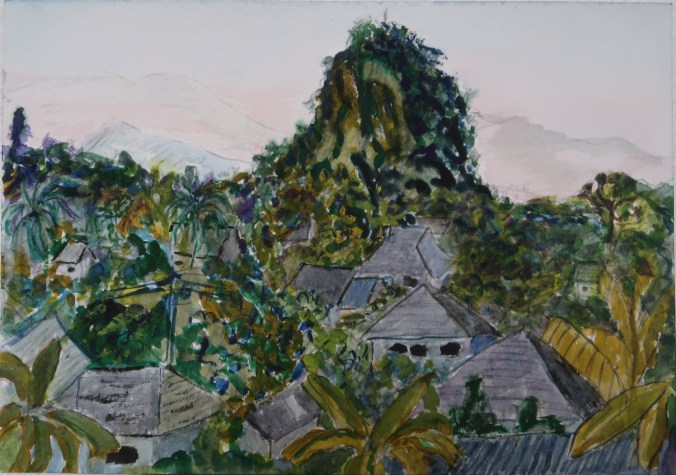
thailand header pic

*****

Anthony Howell is, in Peter Reading’s words, “an eclectic original”, a poet, artist and novelist whose first collection of poems Inside the Castle was brought out in 1969. In the tradition of Robert Browning and Andre Gide, he often explores ‘immoralism’ in his writings via personae. From Inside, published by the High Window Press in 2017 contains poems relating to prisons and poems of political satire. A former member of the Royal Ballet, his novel In the Company of Others was published by Marion Boyars in 1986. Today, he dances the tango. His most recent book of poetry is Invention of Reality, published by the High Window in 2022.

*****

As if it were a Bow: Poems and Pictures from Thailand

The following  poems were written in Thailand in the early months of 2023. Their author is excited to find himself in South East Asia – beyond the pale…

View original post 1,256 more words

Dónall Dempsey: The Fox, The Whale and The Wardrobe

The High Window Review's avatarThe High Window

Donall Dempsey

*****

The Fox, the Whale and the Wardrobe

In Dónall Dempsey’s most recent collection, The Fox, the Whale and the Wardrobe, published on 1st March 2023, he continues to explore themes of time and memory in poems that are playful, emotive, absurd, surreal, funny and moving. Mining the rich resources of his Irish childhood, he introduces us to an uncle whose tales to nine-year-old Dónall cause an aunt to scold the adult for ‘filling the boy’s head with nonsense’, and with a little girl who constantly surprises and delights us with her discovery of meanings in life we have all but forgotten. The sorrow of loss is here, too: long-term personal grief since his beloved sister died when he was still a child, as well as the more recent deaths of his parents and younger brother, and the memories, happy and sad, of people he has met at the…

View original post 864 more words

Swedish Poetry

The High Window Review's avatarThe High Window

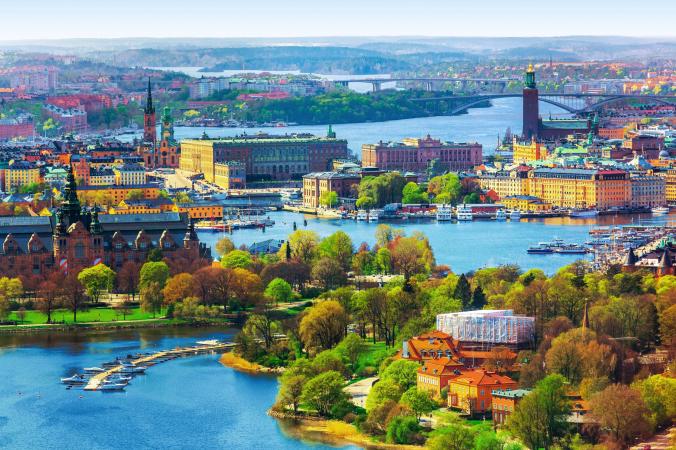
stocholm

******

I would like to give my heartfelt thanks to Rober Gard for his conscientious labours in single-handedly translating every poem included in this Swedish poetry supplement, all the more so as I have been trying for several years now to find translators from any of the Scandinavian languages. Robert has also supplied a pdf of all the originals, which you will find here: Dikter på Svenska

*******

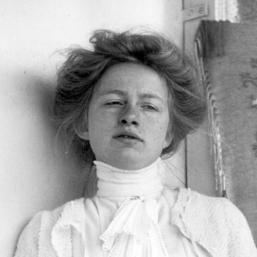
Edith Södergran: Eight Poems

Edith Södergran

VIERGE MODERNE

I am no woman. I am neuter.
I am a child, a page and a bold decision,
I am a laughing ray of scarlet sun …
I am a net for all voracious fish,
I am a vessel for all women’s honour,
I am a step toward chance and ruin,
I am a leap into freedom and the self …
I am blood’s whispering in man’s ear,
I am a fever of the soul, the flesh’s…

View original post 6,037 more words

POETRY SUMMER 2023

The High Window Review's avatarThe High Window

summer 2023

*****

Alive by Rodney Wood

i.m. Carla Scarano D’Antonio, 1962-2023

*****

Ruth AylettElizabeth BarrettPeter DonnellyClive DonovanNeil FulwoodRebecca GethinMike GreenacreDavid Hackbridge-JohnsonJefferson HoldridgeRonan HyacintheCharlotte InnesAnnie KissackLeonard LambertSydney LeaLouise LongsonBeth McDonoughJanet MacFadyenLinda McKennaChristine McNeillRay MaloneMark MansfieldSally MichaelsonHelen OverellNorman ParkerJay PasserAlan ProwleTonnie RichmondCarla Scarano D’AntonioJohn ScarboroughHarriet ShillitoFiona SinclairSusan Castillo StreetRobin ThomasSue Wallace-ShaddadRory WatermanJohn Newton Webb

*****

*****

Ruth Aylett: Three Poems

NIGHTINGALE

Singing out there alone in the dark,
how can you carry all that weight,
walled in with words, freighted
with philosophising?

Your…

View original post 15,313 more words

American Poet: Susan Kelly-DeWitt

The High Window Review's avatarThe High Window

SKD_edited copy

*****
Susan Kelly-DeWitt is a former Wallace Stegner Fellow and the author of Gatherer’s Alphabet (Gunpowder Press, CA Poets Prize, 2022), Gravitational Tug (Main Street Rag, 2020), Spider Season (Cold River Press, 2016), The Fortunate Islands (Marick Press, 2008) and a number of previous small press collections. Her work has also appeared in many anthologies, and in print and online journals at home and abroad. She is currently a member of the National Book Critics Circle, the Northern California Book Reviewers Association and a contributing editor for Poetry Flash. For more information, please visit www.susankelly-dewitt.com.

*****

Introduction by Susan Kelly-DeWitt

The previously unpublished poems here were written over many years—one of them almost thirty years ago and one just a few months ago.

I have always tried to include poems that address history–personal, political, social–in some way. I don’t think this has changed. The natural world and the…

View original post 1,251 more words

Lindsey Shaw-Miller: Grievous Gifts

The High Window Review's avatarThe High Window

1. Opening image

*****

GRIEVOUS GIFTS

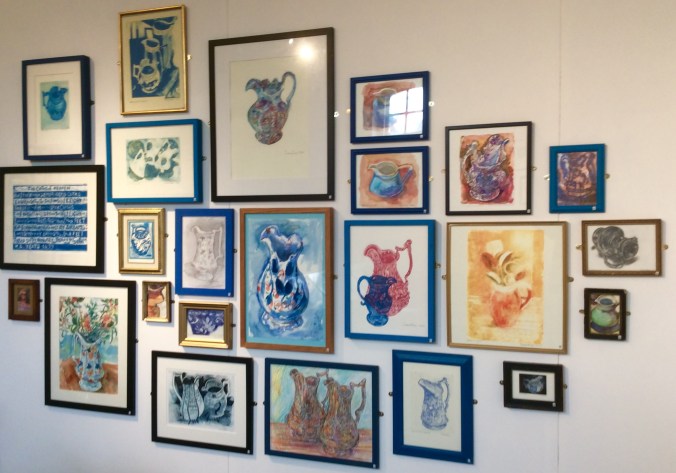
Consolation and creativity in Gwenllian’s Jugs, a collection of 77 images by Stuart Evans

There is a long history of art produced in response to grief. Setting aside, in this essay, the tumuli, pyramids, stelae, ship burials that have served as monuments to the dead, I’m interested in artists dealing with grief by making something. This essay isn’t about grief itself, nor about art as a kind of outpouring. What interests me here is art as an exercise, a process of working through containment, a form of closure.

The archetypal poetic example, Tennyson’s In Memoriam (1850), certainly long enough to be an outpouring, is actually 131 complete, small, classical poems, the larger grief broken down into many episodes, tightly controlled by the quatrain form and a strict rhyming scheme. The actual subject, Tennyson’s dead friend Arthur Hallam, is quite absent, concealed within the struggle between the tightness…

View original post 1,810 more words