Book Reviews by Spriha Kant: “Othernesses” by Paul Brookes

Thankyou Spriha for this sparkling review, and to David for publishing it.

davidlonan1's avatarFevers of the Mind

Review of Paul Brookes’s book “Othernesses” by Spriha Kant

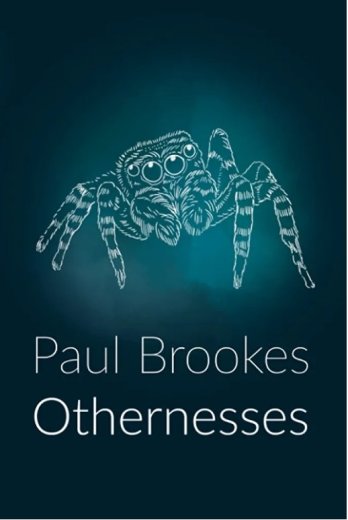
“‘Othernesses’ is the beautifully unique work knitted by poet ‘Paul Brookes’ and this knitting pattern has an impactful impression.” This statement is justified by the facts and citations in the following stanzas.

The poet has wonderfully used personification in some poetries. Quoting a few words from one such poetry “The Rockpool” below:

“One minute I am scorched by sharp sunlight, next I’m cold enough to ripple shivers.” “In the wane I’ll have my own way, again. Every to and fro never the same.” Certain stanzas and/or words in some poetries recite the different aspects of life such as philosophy, experiences, etc, some recite through the garnish/garnishes of personifications and/or metaphors whereas some point out in a direct manner. Quoting such few words and stanzas below: “I am a dying sea, a dried up thing.” “Our specularities slide over surfaces, change…

View original post 822 more words

Poetry Showcase: Damon Hubbs

davidlonan1's avatarFevers of the Mind

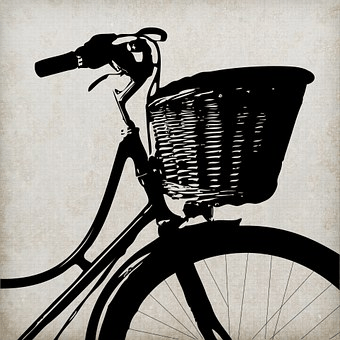
photo from pixabay

Boys on Bikes

the summer 
of the boys on bikes

we trade 
toy diaries with locks 
& miniature keys

for soft-
skinned ones 
bound in leather

the charm 
of difference
we hide in new places

like a game of Clue
for the boys on bikes 

afterwards, an outbreak 
of bark beetles
cause nightmares 

on Elm street
we were 
never as pretty 
as we once thought

& lied 
to our diaries 

about the summer 
of the boys on bikes  


Sinkhole daddy said the sinkhole will take everything one day but he’s too busy chasing mermaids at Weeki Wachee to do anything about it the money daddy made wrestling gators at roadside stands could buy something solid but he bet it on Jai alai, lost, lost again & again & again, hatched a hairbrainer with his buddy Lou, Little Louie they call him to pinch a Gold of Kinabalu…

View original post 368 more words

Special Launch Feature – Paul Brookes

Thankyou, Tricia for this opportunity to talk about where the idea came from.

Patricia M Osborne's avatarPatricia M Osborne

Please join me in congratulating poet, Paul Brookes, on the launch of his latest poetry collection, Otherness. Without further ado it’s over to Paul to tell you all about it.

Otherness

Paul Brookes

Otherness is dedicated to David Morley and the late Les Murray. It all sprang from a comment David Morley made when I interviewed him for my blog Wombwell Rainbow Book Interviews HERE

For me, the poet Les Murray is a talismanic figure, and his Translations from the Natural World is my Wonderbook. Les Murray ingeniously imitates and translates the perceptions and voices of molluscs, sunflowers, spermaceti, cuttlefish, cell DNA, elephants, cats, cows on a killing day, ravens, echidnas, lyrebirds and – most memorably – a poem written in the syntax of bat’s ultrasound using ancient Welsh metre. The rich, inventive language of this slim volume still knocks me out. The voicing is precise, instinctive, and…

View original post 235 more words

Four Poems – Susan Haldane

rfredekenter's avatarIceFloe Press

Whimper


Fleeing north just ahead of the storm,
aim to reach home before the front
hits: the radio is all apocalypse
and we choose to burn
or freeze in our own beds; mud
in our mouths, or wind. We know
how we have conjured this. Yet
here we are again, driving
and driving, our headlights flash
against mileposts and markers
the only illumination in the country
where light is already extinguished.
Lead us not into temptation. Deliver us
for we cannot resist the Siren
highways – how they beckon
from the maps; how they fly
through the Shield; how they sing
to the tires. Asphalt, concrete,
gravel – each a different tune,
our low, sweet dirge.

The Coyote on the Killarney Road


He steps out of thistles
and bracken up onto the asphalt,
stands in the road til you stop,
walks around to the driver’s
door, looks you in the…

View original post 265 more words

#TheWombwellRainbow #Poeticformschallenge last week was a #Tripadi. Enjoy examples by Tim Fellows, Lesley Curwen, Robert Frede Kenter, Jenny Brav and Jane Dougherty and read how they felt when writing one.

Wishing for better times

I see the dark behind the light,
the glint of silver in the night,
the moon and stars when all the world is grey.

I see the hollow in the tree
the fallen flower, silent bee,
and wish the night would blossom into day.

Within the confines of the glade
the spread of oaks the gentle shade
I hear the sea storm’s voice, the lash of spray,

the salt that clings and turns to rust,
the rotten timbers beached, the dust
of aeons in the foam, a star astray.

And reaching out to catch a beam
of sunlight, pearl light, golden stream
I wish this spectral calm, this peace would stay.

Frozen

These days of sun and nights of frost
revolve until time’s meaning’s lost
in oscillating fears and floral joys.

These morning fogs that freeze the grass,
that coat the pools in sunless glass,
the birds still sing, dance wing-tip tail to toe.

Pearl silver colours of the night
linger shadowed in the half-light,
and sink to snowdrop bells pale-chiming chill.

How did it go?

The form of the tripadi is deceptively simple, tercets in lines of 8 8 and 10 syllables, end rhyme on L1 and L2. The third line breaks the rhythm of the first couplet and has no rhyme. I read on one site that the strength of this third line is in its difference, drawing attention by other means, like internal rhyming, alliteration and its message. Also, that each stanza should read like a single thought, which means no run-ons.
I admit that this form didn’t much appeal to me. The examples given on various sites are clunky, syllable-counting but with no rhythm. I never understand why we count syllables but not beats, especially in rhyming poetry. The first couplet was easy enough, but the difficulty came with the third line, and how to give it a sense of purpose rather than having it sound like an afterthought.
In my first attempt, I added a variant, an end rhyme to link the third lines of each stanza. The second poem sticks to the rules.

Jane Dougherty

My heart is bursting at the seams,
flying high and wide in my dreams,
begs to be unchained from the links of fear

How did it go?

This was my first time writing a Tripadi. I had written a Tanka the day before (also my first attempt at that form), on a heart-opening experience I’d had that week. The tanka was awkward, with periods in the middle of lines to keep with the syllable count. When I got the Tripadi count, I saw that the structure matched what I was trying to do much better. The first line up to the period was 8 syllables, and from there everything flowed. I loved the rhyme in the second line, and the longer unrhyming third. Thank you for introducing me to this structure!’

Jenny Brav

Presentee

Lines of cars stop-start in sequence;
traffic lights an inconvenience.
The sun peers out to watch us start our day.

Mustn’t be late in the office,
start on time, tap keys in chorus;
be seen to be at work’s the only way.
Never mind how good your work is,
we sit here in this sterile circus
where tigers swapped with sheep all earn their pay.
Forget about your work-life balance!
Don’t you dare encourage talent!
Distrust the colourful, reward the grey.
Watch the office clock tick over
Could it really go much slower?
At five o’clock we pack our things away.
In the car we feel like crying
Every day’s a bit more dying
As we inch home the evening light decays.

How did it go?

I used your “This Day” prompt number 351 to generate the theme. I liked the rhythm of this form and I added a rhyme for the third lines across the stanzas to make it even more lyric-like. It’s 3 years to the day since I last commuted. I do not miss it.

Tim Fellows

‘Haar’

A shoal of trees swims through the mist
above lost shores of crystalled schist
in shreds and spume of ocean flown by ghosts.

The shoal is vanished, swallowed whole
by billowed white, rococoed scrolls
of icy vapour binding the land’s eyes.

The waves reach high, the sky is dead.
One colour left, opaque as lead
until the gale blows fog and souls away.

How did it go?

I liked this form. Tercets are appealing anyway, but the slightly longer third line demands a conclusion to each verse. And I found myself using internal rhymes as well as the end rhymes for the first two lines.
I don’t know why but these forms seem to be encouraging me to make less contemporary, more mannered, archaic poems. I think I must positively resist that!

Lesley Curwen

Momentary Perception

The butterfly orange, an orchid
One inside the window, one out
Drawn to the sun, to the sun, to the sun

Parallels

The route of fever in the voice
The cup, the tree branch. In Venice
Lost in photos of the drying canals.

Veins of a Statue

What I cut; my arms looked after
My sleeve slipping up to stature
The statue of your gaze, surface of Mars

How did it go?

Was looking to find some cogent images and achieve the syllable count 8/8/8 plus the end rhyme. First poem emerged from my meditation on an orchid that was leaning to the sun. The rest of it followed easily from there. I love this form – for me – it’s a way to explore deeply personal edgy tableaus of self, other, positionality, each poem like a breath inhale/exhalation. I would love to try to create a longer Tripadi, perhaps one single poem made of 3 stanzas – a tripod – an exquisite corpse, a more fully considered 3-part-triptych.

Robert Frede Kenter

Bios and Links

Robert Frede Kenter

is a writer, visual artist, editor, and publisher of Ice Floe Press. Work recently in Storms Journal #2, Streetcake, Anthropocene, Anti-Heroin Chic, Acropolis. Visual poems forthcoming in a new anthology from Steel Incisors (2023).

Lesley Curwen

is a broadcaster, poet and sailor living within sight of Plymouth Sound. Her poems have been published by Nine Pens, Arachne Press, Broken Sleep and GreenInk, and later this yea

Jane Dougherty

lives and works in southwest France. A Pushcart Prize nominee, her poems and stories have been published in magazines and journals including Ogham Stone, the Ekphrastic Review, Black Bough Poetry, ink sweat and tears, Gleam, Nightingale & Sparrow, Green Ink and Brilliant Flash Fiction. She blogs at https://janedougherty.wordpress.com/ Her poetry chapbooks, thicker than water and birds and other feathers were published in October and November 2020.

Tm Fellows

is a writer from Chesterfield in Derbyshire whose ideas are heavily influenced by his background in the local coalfields, where industry and nature lived side by side. His first pamphlet “Heritage” was published in 2019. His poetic influences range from Blake to Owen, Causley to Cooper-Clarke and more recently the idea of imagistic poetry and the work of Spanish poet Miguel Hernandez.

The High Window: Spring 2023

The High Window Review's avatarThe High Window

Logo revised

*****

Because I seem to have a lot on at the moment I am trying to clear the decks where I can. I am, therefore, publishing the new High Window in one go rather than in two instalments. However, as it is coming out a few weeks early I hope readers will have enough time to absorb what is again a bumper issue. I have adopted a nedw policy for reviews whereby they have been published in a steady trickle since the winter isssue, with a final crop appearing now. However, if you missed some of them them, there is a linked index to all the reviews which have appeared since December. [Ed.]

*****

Here is a checklist of all the new material published in the Spring 2023 issue of The High Window. Everything can be accessed via the top menu:

1. A selection of homegrown and international Poetry

View original post 113 more words

American Poet: R. Bremner

The High Window Review's avatarThe High Window

bremner

*****

R. Bremner has written of incense, peppermints, and the color of time since the 1970s, in such venues as The High Window, International Poetry Review, Poets Online, Jerry Jazz Musician, Paterson Literary Review and 1979’s Passaic Review (alongside Allen Ginsberg). Ron has published eight books of poetry, including Hungry Words (Alien Buddha Press), and thirteen eBooks. He has thrice won honors in the Allen Ginsberg awards. He features in many spots, including New York’s Bowery Poetry Club.Ron lives with his beautiful sociologist wife, son, and dog Ariel in wonderful Northeast New Jersey.

*****

Introduction

‘Although I wrote my first poem at the seashore when twelve years old, I wrote exclusively (very bad) fiction until my mid-twenties, when an apocalypse of poetry struck, aided by poverty and failed relationships. As a taxicab driver, many opportunities and occasions for poems were happening all around, so fast that I could hardly keep…

View original post 1,158 more words

Featured Poet Spring 2020: Allen Prowle

The High Window Review's avatarThe High Window

allen cropped

*****

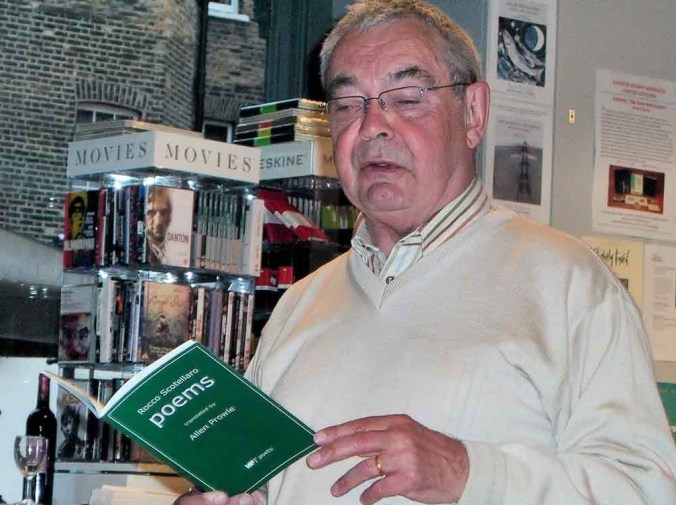
Allen Prowle was born in Aberdare in 1940. Education took him to England where he has lived ever since, without losing his ‘Cymreictod’. He began writing poetry at Sheffield University where he graduated in French. His poems have appeared in many journals, his first collection, Landmarks was published in 1973. His Europeanism explains his interest in translation; he has translated French Italian and Spanish poems, for Magma, MPT and The High Window. In 2009, MPT published his translations of Rocco Scotellaro in its first-ever single author collection. He was awarded the Stephen Spender prize for translations of Attilio Bertolucci.

*****

Allen Prowle: Eight Poems

OCTOBER 21st

The purple beech has had its say for another year,
scattering its nuts upon the lawn among the Chinese rowan’s
pink pearl berries for the birds to feed on.
We’ve been here now for over thirty years and heard,
beyond the hedge…

View original post 1,641 more words

Reviews: Spring 2023

The High Window Review's avatarThe High Window

reviewer

*****

Thomas Lynch: Bone Rosary: New and Selected Poems • Aidan Andrew Dun: Vale Royal • Tony Flynn: The Heart Itself • John McKeown: Ill Nature • Alwyn Marriage: Possibly a Pomegranate •Ness Owen: Moon Jellyfish Can Barely Swim • Disbelief: 100 Russian Anti-War Poems edited by Julia NemirovskayaThe Drunken Boat: Selected Writings by Arthur RimbaudNachoem M. Wijnberg, translated from the Dutch translated by David ColmerA Companion to Contemporary British and Irish Poetry, 1960-2015 edited by Wolfgang Görtschacher and David Malcolm Jacques Darras:John Scotus Eriugena at Laon & Other Poems • John Koethe: Beyond Belief

Further recent reviews published since the previous edition

Tara Bergin:  Savage Tales • D A Prince: The Bigger Picture  •  Jules Whiting: Folding Time • Maeve McKenna: A Dedication to Drowning •

View original post 12,629 more words