Wombwell Rainbow Interviews: Matthew M. C. Smith

Wombwell Rainbow Interviews

I am honoured and privileged that the following writers local, national and international have agreed to be interviewed by me. I gave the writers two options: an emailed list of questions or a more fluid interview via messenger.

The usual ground is covered about motivation, daily routines and work ethic, but some surprises too. Some of these poets you may know, others may be new to you. I hope you enjoy the experience as much as I do.
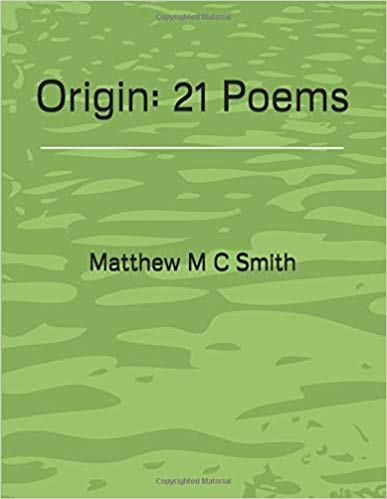
Origin 21 poems

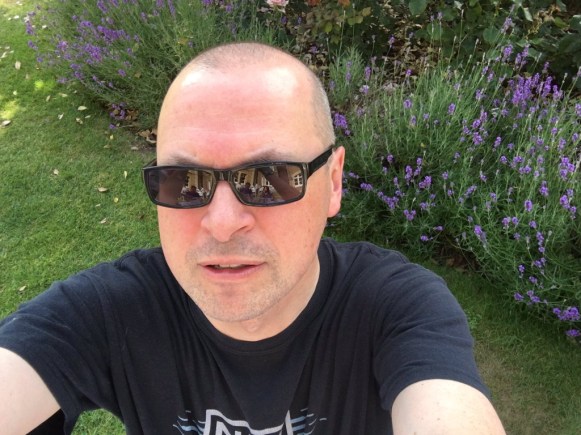
Matthew M. C. Smith

is a Welsh poet from Swansea. He is published in Icefloe Press, Anti-Heroin Chic, Seventh Quarry, Wellington Street Review and Back Story. He is the editor of Black Bough poetry. Twitter: @MatthewMCSmith @BlackBoughpoems FB: MattMCSmith ‘BlackBoughpoetry’
Origin: 21 Poems’ is on Amazon KDP and is £7.00

1. When and why did you start writing?

I started writing quite intensely as a teenager in my attic bedroom. I had views over the Swansea valley (I miss the sunsets) and the hills around my community. I used to look up at Drummau Mountain, where there are farms, woodland and traces of Neolithic culture. I’ve written about this in a piece called ‘Teithio / Journeys’, for Icefloe Press. And at the edge of the city, there were some starry nights beyond the glow. I listened to The Doors on repeat and went through notebook after notebook writing aphoristic poems. I’m sure a lot of poets start with Jim Morrison – ‘ghosts crowd the young child’s fragile eggshell mind’.

Then there was a gap. I wrote bits and pieces in my 20s and 30s, but I had a lot of other things I was into, including academic writing while I did a PhD, a lot of fad hobbies after this and then work commitments and parenthood became all-consuming (but ultimately rewarding, of course). After almost 25 years, I had a couple of drawerfuls of poems, gathering dust.

2. What else were you influenced by in your early reading?

As I mention, The Doors and Jim Morrison were key influences on my writing and some of their lyrics from ‘The End’, ‘Celebration of the Lizard’ and ‘Moonlight Drive’ are chillingly elemental. This led to reading Dylan Thomas, Emily Dickinson, Arthur Rimbaud, the Symbolists, T.S. Eliot and R.S. Thomas. Later, a lot of post-war American and Welsh poets.

I remember reading ‘The Force that through the Green Fuse’ at the age of 15 and being struck by the pulsing rhythms and the vivid choice of words. How Dylan Thomas directly translated nature into language was striking and ingenious. I love some of Emily Dickinson’s work. Much of her work is the product of an isolated imagination, estranged from too many influences.

My first poet is R.S. Thomas – bleak, harsh, existential poetry. I love ‘Counterpoint’ and ‘No Truce with the Furies’. T.S. Eliot’s aphoristic, fragmented modernist poetry reminds me to look outside the self and I love the polyphony in his writing. Wallace Stevens has real style and wit and although I can’t write like him and don’t aspire to, I’d love to have written ‘Sunday Morning’. All the American poets I studied at Swansea Uni like the imagists, Gary Snyder, Ginsberg, Levertov, Rich – they’re poets I go back to.

I wrestle with my favourite. Sometimes the solemn, haunting ghost of Alun Lewis drifts into my mind and the austere, uncompromising voice of R.S. Thomas fades. Then Alun Lewis gets barged out of the way by the beery, brilliant, bardic, Dylan Thomas.

3. When did you first publish your poetry?

Everyone approaching 40 needs a mid-life crisis. At the age of 39, I came up with a bucket list, of which writing a poetry book was one. In my 20s and 30s, I lost interest in writing and had very little idea about literary presses, or submitting. I decided to spend a year collating a poetry collection and wanted a quick and easy self-publishing experience before my 40th birthday. I worked hard for 12 months, burning the midnight oil and went with Amazon KDP, self-publishing ‘Origin: 21 Poems’. This was a real catalyst to learn the craft, send other work off, go to open mic evenings, locally, and start a Twitter profile. It’s been a whirlwind experience in the past year 18 months as I’ve gone from being a guy at a desk with no clue and no real links with any poets, to now being involved in the poetry community locally and globally. It’s been nice to see good sales of my self-published book and a second edition of the collection, which is refined and tweaked. I was grateful to have the fresh and expert eyes of Kyla Houbolt, Ankh Spice and Laura Wainwright look over it.

4. You dedicated ‘Origin: 21 Poems’ to your father and two of your teachers, a friend, as well as your family.

Yes, my father died of cancer in 2012. I spent the last ten nights of his life in a fold-down bed next to him in a hospice. I have written about this in the poem ‘Dying King’, which is published with Anti-Heroin Chic. Like so many people, I find poetry a way to commemorate him and let his essence live on, despite being grief-stricken. I’ve written a lot of poems about him and I hope many would relate to the sense of loss and the attempt to make something of him – his soul – live on in words.

I also dedicated the book to Huw Pudner – an inspirational teacher at primary school. He helped me deal with having a stutter and gave his pupils an enriched education. He attends open mics now and likes my book, thankfully. He features in my Icefloe Press piece, which is about a school trip he led across Drummau mountain, where he opened up the local countryside to us despite the perils of aggressive farmers and dogs. Then there was Prof. M. Wynn Thomas of Swansea University; an expert on Welsh Writing, American poetry and Walt Whitman. An absolute guru and character. I did a PhD with him on Robert Graves and Wales, finishing in 2006. What a mind. No-one who meets Wynn forgets him.
I must mention my best friend, Michael. Although we only see each other a few times a year, due to distance, he always asks me how my poetry is and had enthusiasm for it when we were teenagers. He’s a talented writer himself and an Assistant Professor of Psychology. I’m proud of what he’s achieved since school. He’s reminded me many times over the years that I should write and I’m grateful for that.

My family always inspire me and I have written various poems about them although I’m quite private so I tend to avoid discussing them in any detail.

5. You mentioned stuttering. Does this still affect you and do you enjoy reading your work in public?

My father stammered and my maternal grandfather stammered. I had no chance. I started when I was 6 years old. The stammer and I waged a long war against each other and it’s been interesting. I’m fine most of the time and do poetry readings and tough jobs to challenge myself. In a strange way, I quite like the remnants of the stammer now. Like an old friend you can’t quite shake off but can ignore most of the time. Reading on the circuit is exciting but everyone gets a bit nervous. It makes me pause more and I’ve had a lot of compliments about how I read so performance has given me an exaggerated sense that I can do almost anything! I’ve kind of buried the stammer now but I think it gave me an interest in sound and language. I’ll write about it one day and exorcise a few more demons! Most people would have no idea I’ve had a speech problem.

6. How would you describe your poetry?

Hard question. I write about people, nature, transcendence, the power of myth, layers of time and cosmology. I love mysticism and attempting to use language to physically and mentally affect people. I’m also interested in shamanism and different ideas about the power of the imagination. Patrick Jones said my writing is like Seamus Heaney and Gillian Clarke. Prof. Daniel G Williams said Dylan Thomas, David Jones and Vernon Watkins. I’m taking those comparisons any day.

7. What are you working on?

I’m working on my second collection and have poems out to submission. Last year, I was writing cosmological poems but I’ve gone back into the earthly past now. I’m writing deep time poems inspired by Robert Macfarlane’s ‘Underland’ and doing my own research into ancient and neolithic cultures. I’ve done a bit of exploration of Gower, places around Wales and the West Country and this finds its way into my writing. I have irons in several fires, to use an irritating but apt metaphor, and am editing Black Bough poetry, my micropoetry journal, again soon. I’m looking forward to working with Jack Bedell, Ankh Spice and Laura Wainwright, as well as a mystery artist.

I’m also mentoring/ assisting several poets. Last year, I offered assistance with several poets in editing chapbooks – this was fun and a great learning experience.

8. What will you be working on in future?

My second and third collections, which have distinct themes. I have a lot of poems to choose from and need to put in a lot of shifts to edit, refine and collate. This will involve a lot of work but I’m hoping to complete my second one this year. I also want to experiment more with prose poetry as I’ve really enjoyed and been tested by this type of writing but I get a sense of freedom from it outside some of the constraints of poetry. I’d like to guest edit another writing publication as there are so many cool journals out there and continue to work with a range of artists and writers. I’m looking to record some of my work.

I should enter competitions more and increase my submissions. But it’s important to pace yourself and get your work out when it really has been worked over.

9. Black Bough is a really successful venture. What motivated you to start an online poetry publication?

On Twitter, I noticed a lot of poets complaining about rejections and frustrated about long waits to hear anything. I also noticed that it was hard to read people’s work without having to spend a lot of money on journals all the time so I started a free publication anyone can access and submit to. I’ve since learned that there are a lot of journals out there that are free. I had no concept of how popular it would be and the quality of work that would come in. I have worked with amazing people in the past year and getting Robert Macfarlane’s blessing to do an ‘Underland’-inspired poetry edition is as good as it gets.
There have been six editions of Black Bough and I have great memories of all the people I have worked with. In 2020, I’m looking forward to nominations of poets for ‘Best of the Net’ and the Pushcart Prize and I hope I can do this for at least a few years then I may go on to something else. I’m a restless person.

Thanks for this opportunity, Paul.

The Soft Fall of Midnight

I know the soft fall of midnight:
the film of dew on dark buds’ lips

a scent of lavender pressed underfoot
the celestial stream in the shallow brook

the pulsing throb of turning carp
in slick pool below willows’ dark

the fox’s tread and backward stare
the owl’s descent in the thicket’s air

hear the hush of shrouded hills
a quickening wind in star-filled fields

a curve of dawn in eastern light
drink the bitter wine of night

(first published in Other Terrain: Dec, 2019)

Dying King

I am with you. I am always with you.

You pulse with the click of the drive.
The dying king.

I press your paper-thin
shroud of skin, as thumbs curl

over balsa bones, ridges royal.
My eyes probe famine’s faultlines,

scan this lucent husk,
your twilight mask.

Under your arm,
now thin, translucent, I once slept,

sheltered from terrors in the night.
Now, I keep watch.

How did it come
to this?

Morphine dulls your silent ward. It keeps you
from fires in the fields,

from the sibilant hiss of the underworld,
the gaping maw of night.

We are skin, my dark
follows your dark.

*

Above tides, I feel winds of unconquerable spirit.
I stand at the edge, choking with loss.

(first published by Anti-Heroin Chic: ‘Grief issue’, Nov. 2019)

LABYRINTH – A Hybrid Suite by Justene Dion-Glowa

robertfredekenter's avatarIceFloe Press


Justene Dion-Glowa is a bi, Métis poet and voice actor from Canada. She writes reviews for The Poetry Question and is EiC of 3 Moon Magazine. Her work has been featured in Burning House Press, Fevers of the Mind, Animal Heart Press and more. She tweets at @gee_justy and her work can be found at https://neutralspaces.co/justenedg

View original post

.the visit.

Sonja Benskin Mesher's avatarsonja benskin mesher

there is no one about down the back road

just two squirrels.

i wander up the slope to the studio

to see if she is in.

**

she had issued one invitation only.  a quaint
old fashioned idea,       that we may be friends

please come ,take a drink,              talk with me

maybe                                               walk with me

let us get to know each other                   gently

do not over stay the welcome   50 minutes will suffice

breaking cups    spilling tea will abuse the hospitality

please come. i have the kettle on.    this is not the time

for hostility

**

she knows this is a corpse road, an old           …

View original post 155 more words

.roy rogers.

Sonja Benskin Mesher's avatarsonja benskin mesher

it was hard to get through not

because of the seven minutes

i can talk a long time especially

with a coffee and donut. you ask

him

he said the work may have triggers

whatever it choked me here and there

is a sequel written and it moves

on as things do

thank you for listening that is a

kindness

i had hope my voice was improved

since the medication, i got a cold

last month and my nose is back all

over the place

the medicine works

though leaves the passages

dry

triggers sets me thinking of cowboys

we don’t have those here either

View original post

Wombwell Rainbow Interviews: Ellie Rees

Wombwell Rainbow Interviews

I am honoured and privileged that the following writers local, national and international have agreed to be interviewed by me. I gave the writers two options: an emailed list of questions or a more fluid interview via messenger.

The usual ground is covered about motivation, daily routines and work ethic, but some surprises too. Some of these poets you may know, others may be new to you. I hope you enjoy the experience as much as I do.

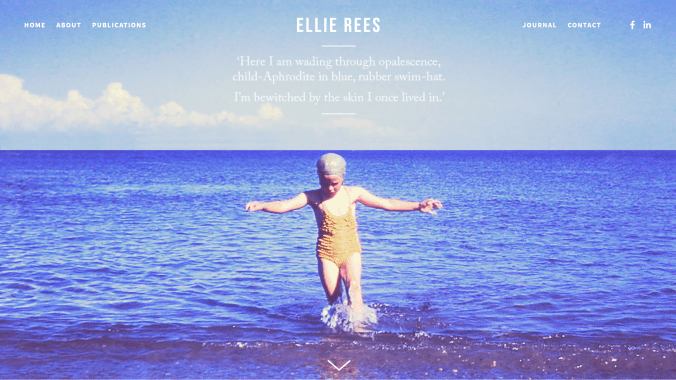
Ellie Rees

Ellie Rees

is an internationally-minded, award-winning writer who writes across many genres including poetry, creative non-fiction and memoir. Her work is widely published in various journals including: New Welsh Review, Poetry Wales, Cabinet of Heed, Roundyhouse and The Lonely Crowd. She has a PhD in Creative Writing from Swansea University. Ellie is currently working towards the publication of a full collection of poetry.

For further information please see elliereeswriter.com

The Interview

Before we start you need to know that I am old (don’t quite know how this happened but I guess the only alternative is to die young and romantically like Keats, and it’s too late for that now.) So, I never intended to become a poet. I thought I was going to be an actress; I loved the stage and was good too… performed in the Liverpool Playhouse in 1968. But I had to earn a living so became a teacher – a bit like being an actress really as you have to hold an audience and convince them that – let’s say Emily Dickinson – is the best thing since sliced bread. I loved it, every minute of it, (and was good too) but then decided that no self-respecting teenager wants to be taught by someone old enough to be their grandmother. I retired in 2009.

After months of boredom I decided to go back to school, as a student this time, and signed up to do an MA in Creative Writing at Swansea University. While I had to try my hand at all genres, it was then that I realised it was poetry that really challenged me. I was lucky to be supervised by the gifted poet and teacher, Nigel Jenkins and it was he who inspired me to write poetry, in answer to your first question.

1. What inspired you to write poetry?

Two other things: My teaching for the International Baccalaureate started to focus more and more on the poetry part of the syllabus. The students thought poetry was too ‘difficult’ and I relished the challenge of convincing them otherwise.

Also, I had kept a journal all my life, though it was written in prose. I thought I was capturing the moment, in words not film. I was determined to preserve the experience of my life. I’ve still got them.

2. Who introduced you to poetry?

It must have been the English teachers when I was a schoolgirl.

3. How aware were you of the dominating presence of older poets?

This has been a real problem! I had spent decades teaching the ‘older poets’ and they haunted me – still do! Robert Frost is a persistent ghost and I don’t even like his poetry very much. Time and time again I would come back to a draft that I had been particularly pleased with and there he was! His tone of voice, his very subject matter, the lilt of his lines:

‘Two roads diverged in a wood, and I –
I took the road less travelled by…’

Watch out – that pause, then the dash, then the repetition of the ‘I’ echoing the ‘sigh’ in a previous line will implant itself in your brain if you’re not careful!

4. What is your daily writing routine?

I haven’t got one. I write when the spirit moves me and when there is a lull in the domestic routine. My younger son who is disabled still lives with me and I also have a dog and a husband to look after and take for walks. I guess that I write most days for about 2 to 3 hours in the morning or the afternoon.

5.    What motivates you to write?

Winter. The months of dark and gloom induce an introspective frame of mind that is conducive to the writing of poetry. In the summer I’m distracted by the outdoors though I realise now that it is then that I am registering and storing the experiences that will become poems later in the year. Also, those serendipitous occurrences – like seeing fat snowflakes falling from a totally blue sky in July and then realising that a dove has just been taken by a sparrow hawk above the kitchen window.

6. How do the writers you read when you were young influence you today?

Subliminally. I still love them but am trying to escape.

7. Who of today’s writers do you admire the most and why?

I don’t think I have caught up with ‘today’s’ writers yet. They intimidate me a little. How about Alice Oswald and Louise Glück? Oh, and Tony Harrison though he’s more ‘yesterday’ than today. And of course, Jane Fraser, and her collection of short stories, ‘The South Westerlies’. A thoroughly enjoyable read and an exciting new voice in Welsh fiction.

8. Why do you write, as opposed to doing anything else?

I’ve already done the ‘anything’ else’.

9. What would you say to someone who asked you “How do you become a writer?”

‘Are you sure you really want to? Perhaps you already are. Practice, practice.”

10. Tell me about the writing projects you have on at the moment.

My big project was to complete my PhD in Creative Writing. I graduated in 2018.

My project since then has been to get the poems, which ‘deep map’ a small strip of the  coastline in the Vale of Glamorgan, published as a collection. This is a work still in progress…  Recently I have been working on new poems and an attempt to get a pamphlet published.

Two Selections from (dis/remembered) by James Knight

robertfredekenter's avatarIceFloe Press

(dis/re)membered 2 – flesh space

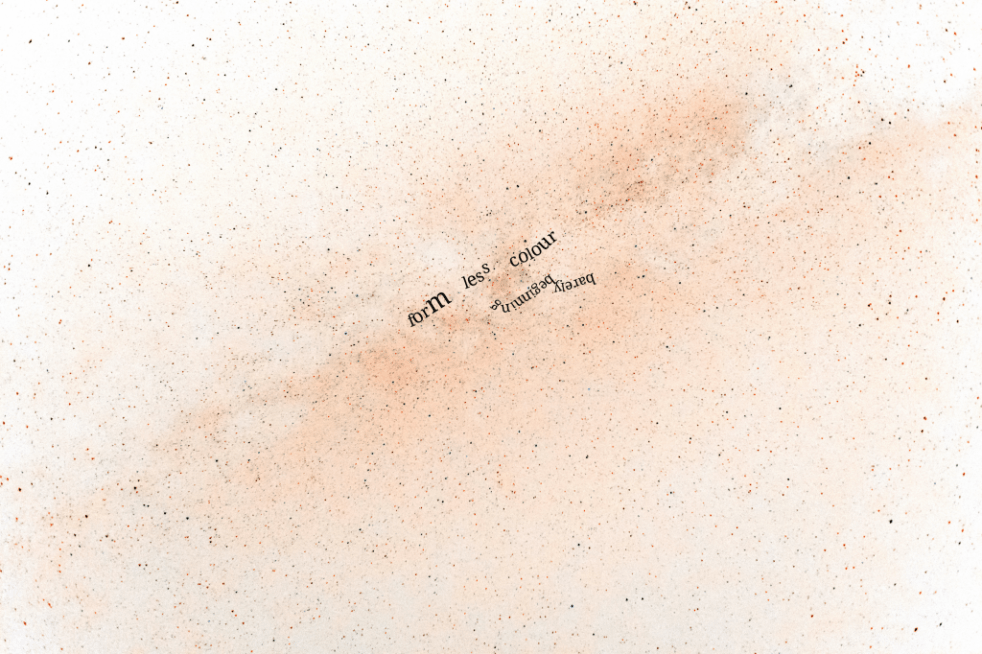
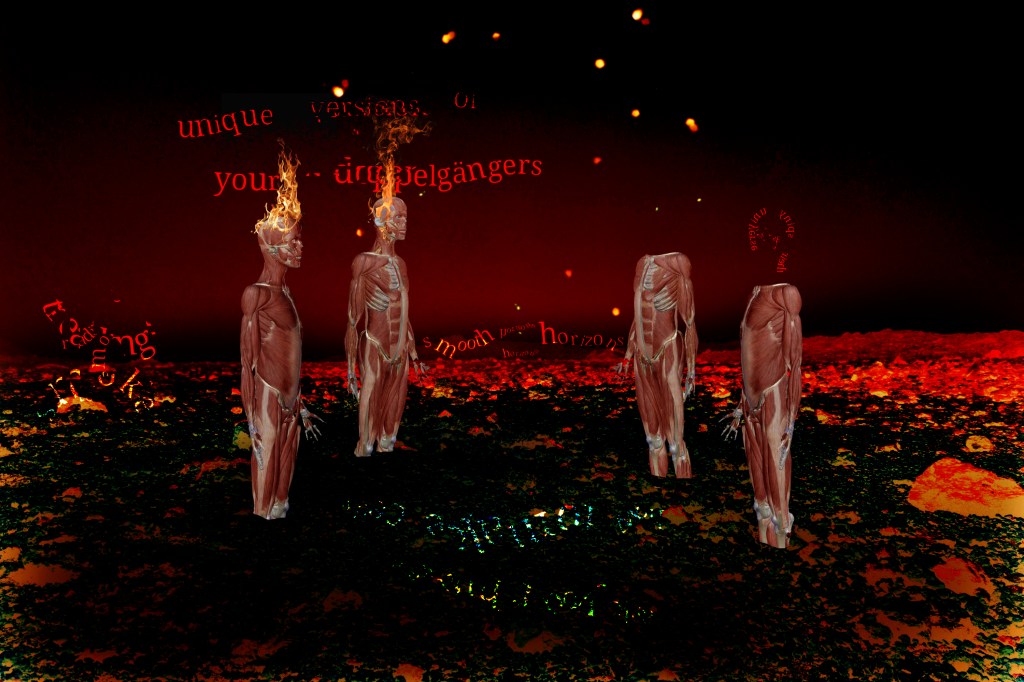
Before the conception of form, time is a smear of blood.

(dis/re)membered 9 – their spiny universe

Mirrors show hot monsters that kill us in our sleep.


James Knight @badbadpoet is an experimental poet and digital artist. His books include Void Voices (Hesterglock Press) and Self Portrait by Night (Sampson Low). His visual poems have been published in several places, including the Penteract Press anthology Reflections and Temporary Spaces (Pamenar Press). Chimera, a book of visual poems, is due from Penteract Press in July 2020.
Website: thebirdking.com

Banner (excerpt from (dis/remembered 9) by James Knight

View original post

Wombwell Rainbow Interviews: Corin B. Arenas

Wombwell Rainbow Interviews

I am honoured and privileged that the following writers local, national and international have agreed to be interviewed by me. I gave the writers two options: an emailed list of questions or a more fluid interview via messenger.

The usual ground is covered about motivation, daily routines and work ethic, but some surprises too. Some of these poets you may know, others may be new to you. I hope you enjoy the experience as much as I do.

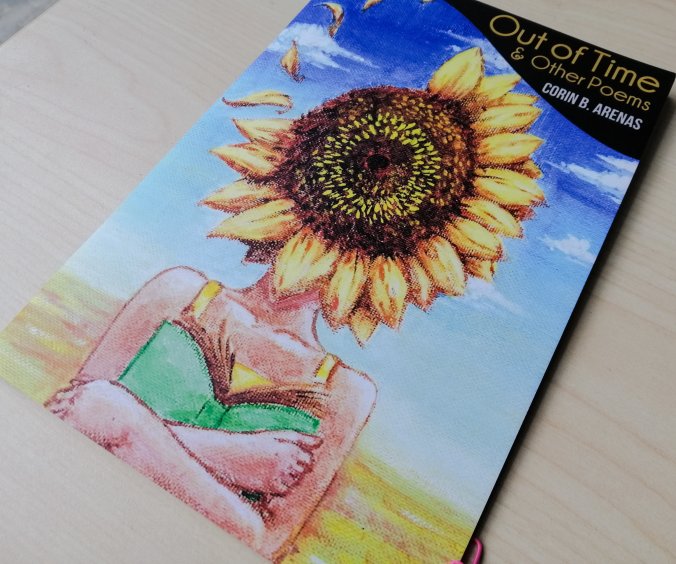
Corin B Arenas Out of Time

Corin B. Arenas

is an audiophile and ghostwriter based in the Philippines. Her poems have been published in The Achieve ofThe Mastery: Volume II Filipino Verse and Poetry from mid ‘90s-2016 (2018), Tremble: The University of Canberra Vice-Chancellor’s Poetry Prize Anthology (2016), The Silliman Journal (2013), and The Philippines Graphic Magazine (2010). She released her last chapbook “Out of Time in December 2019.

Corin studied in Miriam College and earned a Bachelor’s degree in Communication Arts. She attended the 18th IYAS National Writers Workshop in 2018, and the 52nd Silliman University National Writers Workshop in 2013 as a fellow for poetry. She completed an MA in Creative Writing from the University of the Philippines, Diliman.

Mute Ode” on YouTube

1. What inspired you to write poetry?

Many things can inspire me to write poetry. These could be anything from a haunting memory, rock music, paintings, and places, all the way to my daily commutes, love (or lack thereof), or my cat. My impulse to write is driven by my desire to write poems that make me (and hopefully, my reader) feel alive. Lots of things can deaden our sense of humanity these days. Poems are a reminder of the best (and worst) aspects of our selves.

2. Who introduced you to poetry?

Like many people, my first introduction to poetry was in school. However, I don’t think I really learned enough about poetry until I stepped into college. I believe most of us start with the notion that poetry always needs to rhyme and have meter. While learning these formal aspects is a good start (I would argue very essential), the early years of my education hardly taught me anything about the value of poetry.

Basically, back then, reading old poetry seemed like a tedious chore to me. I used to ask myself, why should I read things that sound deep but do not make sense (at least at first)? I did not find it enjoyable. In hindsight, it did not help that I wasn’t such an enthusiastic reader. As embarrassing it is to admit, reading used to bore me. I was more interested in visual art.

I only began to appreciate contemporary free verse poetry in college. A literature professor introduced our class to poems by Mary Oliver, Lisel Mueller, Eric Gamalinda, Robert Hass, and Mark Strand. Since then, I remember constantly seeking to read good poetry.
I guess you could say reading poems made me more receptive to the nuances of the world. It helped me navigate through emotions and ideas that I found too complex to grasp or articulate. It made me pay attention and give things a closer look, withholding judgment. The more I read good poetry, the more I learn about myself (there are many things people would rather not confront directly) and the world beyond me. Inevitably, these experiences encouraged me to study poetry-writing.

3. How aware are you of the dominating presence of older poets?

I think being new (in any field) makes anyone feel like an outsider. And when you are new, this dominating presence affects how we feel about that field.
Some older poets may exude such dominating presence without even trying. Meanwhile, there are others who really go the extra mile to make their presence felt. In any case, I think the more important question is how this dominating presence can help or impede younger writers and the entire writing community. Ideally, I personally think their presence should inspire the production of good literature.

4. What is your daily writing routine?

To be honest, I do not write poetry daily. I only have several ideas throughout the week that carry the potential to become poems. That said, I am far from prolific.

However, I would like to say work keeps me from completely neglecting writing as a discipline. I write for a living—the daily grind challenges me to confront all sorts of ideas on the page. It’s a world apart from writing literary pieces, but I don’t treat this process any different. We just have different objectives for what we write. Writing is writing, whether it’s a health article, magazine feature, poem, or novel. We must do the work to bring any piece to life.

5. What motivates you to write?

Keeping my inner life alive is a good motivator. Writing poetry allows me to process my thoughts and have satisfying realizations. It’s my way of trying to disconnect from the noise of the modern world.
Writing allows me to escape, have a safe inner space, and let’s me come back a bit more grounded. I believe this offers a kind of therapy from issues I cannot look at directly in the real world.

Through writing, I try to find a poetic voice that captures how I deal with deeply personal concerns, such as loneliness and grief, impermanence, and not having enough time. I am also motivated when I have a deep urgency to communicate an idea that I find almost impossible to explain. I think of it as a tool to keep entropy at bay. I try to write when I feel the need to process things that move or disturb me.

6. What is your work ethic?

I try to do the best I can with the time I have. That said, I usually take a long time to write a poem. Some pieces take years, and I understand I cannot force them to end. I think the writing process bids us to constantly negotiate our formal choices and how language reinforces or obscures meaning. There are times a poem is immediately clear to me. But most of the time, the writing process itself helps me figure out what it is I am giving voice to on the page. I only really write what I know. But I do so with the hope that I will learn more things beyond myself.

I have a lot of work on the drawing board. I try to hold off submitting poems that are not yet close to what I envision. Having a definitive deadline helps, of course. Otherwise, I know I suffer from over-editing, or even the complete opposite of trying to improve. There are no shortcuts.

I draw inspiration from other writers’ creative journey. And like many writers, I’ve fallen into the trap of comparing myself with others. However, at the end of the day, I know I have to be satisfied with my own work. For the most part, I learned that no amount of affirmation from other writers can help me if 1) I do not do proper work, 2) and if I cannot stand by my work.

7. How do the writers you read when you were young influence you today?

I think most of the writers I read when I was younger (Mary Oliver, Louise Glück, etc.) influenced me to become introspective and to cultivate a world of my own. They taught me to examine my thoughts and take time to ponder emotions and ideas. At the beginning, I think I was merely copying their style or how they wrote. But eventually, I learned to navigate through my own ideas and to develop my own voice without feeling the need to sound like older poets.

8. Who of today’s writers do you admire the most and why?

One of the poets I admire is teacher and activist Carolyn Forché. I think I am drawn to her work because they possess a sense of urgency. I also appreciate the fact that she takes years, even decades, to publish a new book. It makes me think she prioritizes living over writing, while actually trying to publish good literature. Another poet I admire is Ilya Kaminsky. Like Forché, he does not rush to publish a new book. When I read his work, I immediately sense his poems speak to the people of the time. I tend to admire writers who produce lived poems.

9. Why do you write, as opposed to doing anything else?

I write because it is a solitary activity. I take pleasure in my solitude and I like the idea of autonomy. It is an art form that does not need collaboration. Writing only requires your mind, a pen and paper, or your computer. It is inexpensive to create unlike a film or a painting. But as with all art, it is time-consuming.

However, reading to inform your craft can be an expensive habit. If you feel the need to keep on buying books, you should start securing a stable day job. But I bypass this by borrowing books from the library or from friends. There are also ways to obtain book PDFs online which are not as costly.
Finally, I realized I am not as good with visual art. But I guess I can still try.

10. What would you say to someone who asked you “how do you become a writer?
I guess I’ll just say read good books and keep on writing. It’s going to take time, so enjoy the ride. If it really matters, nothing will deter you. Just don’t forget to live.

11. Tell me about the writing projects you have at the moment.

I released my last chapbook titled “Out of Time” in December 2019. I plan to make it part of a full length poetry collection in the future. My projects explore themes of time, displacement, love, and grief.
Some of my poems come in narrative meditations which are set in post-war Philippines and the present time. I do not know when I can finish this collection, but having this project motivates me to keep going.

.two squirrels.

Sonja Benskin Mesher's avatarsonja benskin mesher

no one about

the whole way down the back road.

two squirrels so i talk to them, and the tiny

dunnock bird


he said they are  brown

down

in the dirt and this is so


they often are as  are we

all


good place to be in earth

to plant and grow while


small birds look for food

**

the story continues

**


now you know that the bird has died

and her wish was to preserve it somehow


that was yesterday


she had balanced it on a cotton reel, you know the old wooden ones with red thread.

this balancing thing

started years ago

in childhood, a game. later life a habit, a meditation.

she watched others, the artists balancing stones

copied , then balanced all sorts, soaps. boxes, anything really.

perhaps it is a control thing she supposed as she balanced…

View original post 478 more words

“Word Skin” and other poems by Órla Fay

Excellent words

Chris Murray's avatarPoethead by Chris Murray

The Fish

after Elizabeth Bishop

Fragile as a rainbow,
silvery, iridescent she cannot be caught.
Some say she is the mother of the salmon run
and some say she goes with them
only to remember,
afraid that one day she could forget
the stream of consciousness she came from.
 
It’s not enough to say that she got lost
or that she found herself lost
and yet she did find herself when she was lost,
out in the wilderness of the vast ocean
panicked and spluttering in the shock of its depth
(this the same woman who had walked along the pier
daring the engorged waves to sweep her away.
My God, I had thought remembering the vision
of The French Lieutenant’s Woman)
 
Stunned by the wideness of the world
she stayed in it for years, alabaster in the moonlight,
perfectly still in the starlight,
unnoticed with briny…

View original post 727 more words

Wombwell Rainbow Interviews: Phoebe Wagner

Wombwell Rainbow Interviews

I am honoured and privileged that the following writers local, national and international have agreed to be interviewed by me. I gave the writers two options: an emailed list of questions or a more fluid interview via messenger.

The usual ground is covered about motivation, daily routines and work ethic, but some surprises too. Some of these poets you may know, others may be new to you. I hope you enjoy the experience as much as I do.

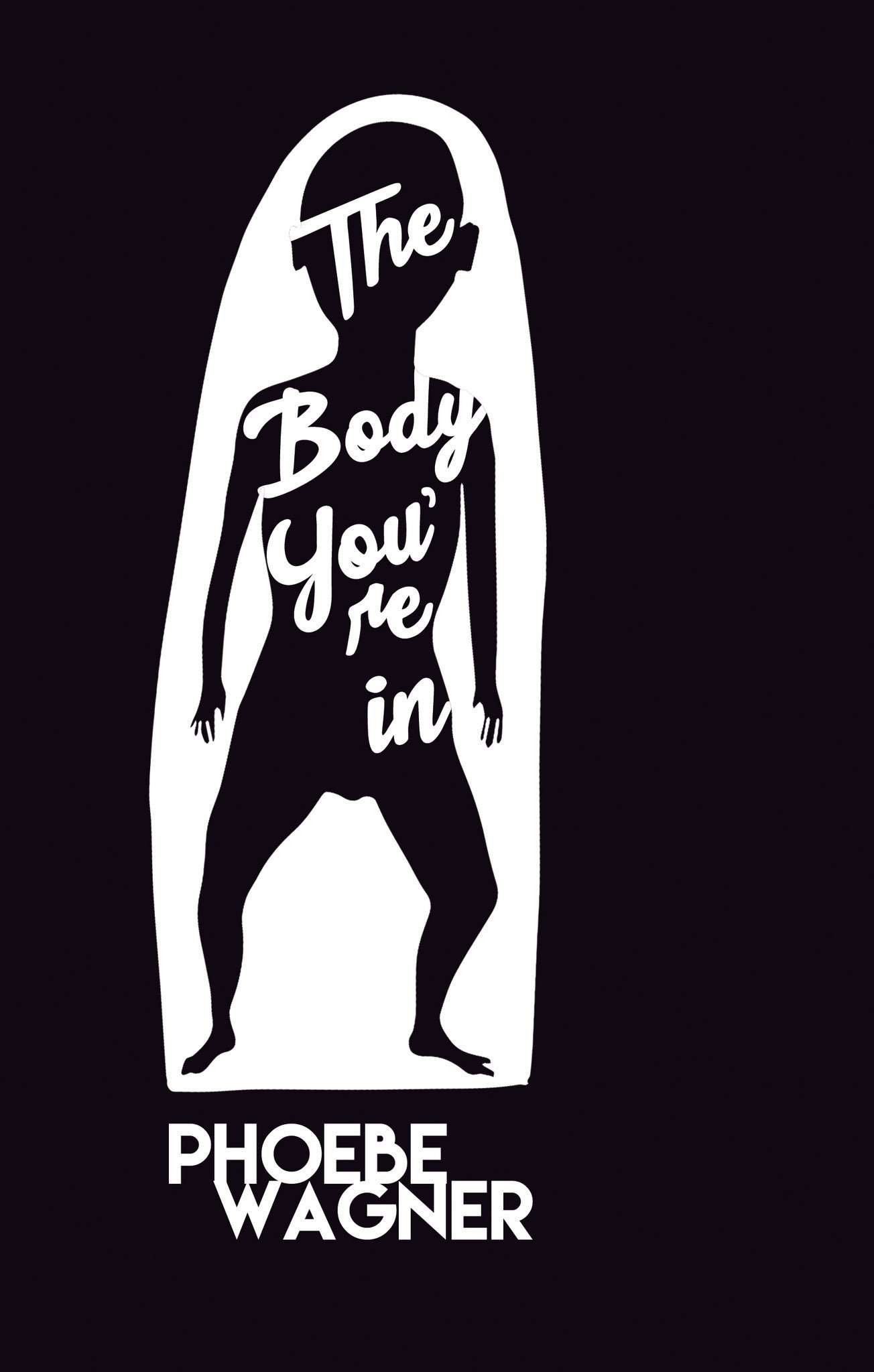
The Body You're In Phoebe Wagner

Phoebe Wagner

is a poet and theatre-maker from London. She studied at Rose Bruford College on the European Theatre Arts course. She is part of Barbican Young Poets and Living House Theatre. Her debut pamphlet ‘The Body You’re In’ is out now with Bad Betty Press. Her work explores the fierceness of vulnerability and the politics in the personal.

Links:

www.phoebewagner.com

twitter.com/phoebewagnerr

The Interview

1. What inspired you to write poetry?

The first thing was that being a poet allowed me to notice things and explore them in this world where it didn’t have to all be linear or make sense. There was a power and ownership of my own voice that by writing it down I felt I was taking. I think that feeling of power also came from the process of performing – that these words were for the audience to take what they need from. I was going to poetry nights like BoxedIn and Chill Pill in London and came away emotional and feeling like I was finding community.

2. Who introduced you to poetry?

I was lucky enough to be in a workshop run by Deanna Rodger at college on performance poetry. I remember putting my name down thinking ‘What is that?’. She got us to explore the space and then from that put words on outlines of our bodies and then choose one of those words to write about. Before I read the GSCE AQA English anthology and felt like I didn’t understand it and therefore the whole of poetry. Deanna proved me wrong: in poetry I could feel what was around me and pull it apart and work it out in my writing.

I wrote my first poem about my Abuela (Spanish for Grandma) who was forgetting everything. I just remember the feeling of coming home to my Mum and having written that poem – it was like a focus and a cleansing and an excitement all at once. More than anything I think it was I knew I would write poems from then on. I would spend hours on Youtube watching Youtube videos of spoken word poets in the US and UK like Alyssia Harris from The Strivers Row, Kate Tempest, Raymond Antrobus, Dean Atta, Sean Mahoney and so many more. It allowed me to open a new part of my brain and my emotional capacity sat in front of those poets online and at gigs. I still well up hearing people perform and saying their own words on stage. There’s a power in that act of trying to articulate something that feels invisible. But then I always feel like I’m being re-introduced to poetry with every poet I encounter.

3. How aware were you of the dominating presence of older poets?

‘Thinking about it, starting out, I didn’t think many people in the world had decided to be poets.The GSCE AQA Anthology almost didn’t inspire me at all. It was when I started going to gigs that I saw the older poets that were gigging and realised they were paving the way. Poets like Selena Godden and Mr G who were part of the canon that I feel now has been hidden. The poets that were bringing poetry out of the elitist spaces into bars and clubs. The poets that were in the AQA Anthology were the old dead white people that had set the rules that the current poetry community were breaking. ‘

4. What is your daily writing routine?

As I work part time as a teaching assistant at a Special Educational Needs school I don’t get to write everyday because the work can be very emotionally and physically exhausting. You are still a writer even when you’re not writing because you need time to find more ink. I think it is important to have a practice or things to help you get started writing and to edit but to herald the time frame of ‘daily’ as a target to hit hasn’t always worked for me. It’s made me feel anxious where I don’t need to be. It plays into that capitalist idea that more things is better. Even when we discuss our favourite poets we won’t necessarily agree, so to even pinpoint what ‘better’ is not solid, but fluid.

I have done things like NaPoWriMo which has worked for me and may write multiple days in a row but this is not the marker of my artistry. I think what I focus on in my practice is to find ways to access what I am surrounded by and what is inside of me. I like to utilise the city spaces, I will write on the bus or tube to and from work and free write rather than try and craft something perfect on the first write. I will use forms of texts I write or talk to myself into my voice notes and use that to create a poem. Or call that thing you’re not

sure of its poetryness a poem. I think that is powerful, when you can say that is a poem. That is poetic and I don’t have to explain. I think writing doesn’t always happen when pen is hitting the paper and I work to redefine what writing is.

I like to use my body to find poems too – I find moving unlocks something in my brain that stops me from being an editor. Having come from a physical theatre training and loving practices like contact improvisation and yoga and done lots of dance as a kid, there’s a language of the body that works together with words that is part of poetics. Just watch a poet read or perform and there body is there making you feel something before they even open their mouth.

5. What motivates you to write?

People. Images. Memories. Feelings. Mainly people. All the same things as the others who write. It’s never from the same space and I think the search for the reason you wrote something is what motivates me to keep writing. That I will never fully figure it out but it will feel less messy even in its chaos.

6. What is your work ethic?

Still trying to work that out.

7. How do the writers you read when you were young influence you today?

I’m not sure, but I know they leave feelings and they are my roots. They’ve nourished me but I’m not sure which branch it has helped grow.

I read the Harry Potter books when I was 4 up until I was 10, every night. I think those books had a huge impact on how I see the world but I can’t pinpoint how.

8. Who of today’s writers do you admire the most and why?

There are so many that make art and have inspired me I will be here for years but I can go by what I just finished reading. ‘Motherhood’ by Sheila Heti is structured by the flipping of coins to answer as yes and no to her questions and this becomes a structure and a conversation she has that leads her through the book. It explores how women grapple with the notion of having children, what it meant for our mothers, what it can mean for us and it questions why we live. Really philosophical but some passages had me crying and laughing and folding down pages and underlining.

9. Why do you write, as opposed to doing anything else?

Because it can happen anywhere at anytime and it is magical to turn the invisible or subjective into an object or an experience.

10.What would you say to someone who asked you “How do you become a writer?”

Write. Have you written words before? Have you said things before? Then you are one!  You do you. Do it how you want. Don’t do what people tell you to, just listen to them and see what sticks. Get frustrated at not knowing what to do or what you’re doing or how to do it. That is productive. Talk to people, tell them what you don’t understand and they might know something or say something that you’ll remember when you’re frustrated. Go for a walk. Look at the ceiling or the sky or the people or smell your kitchen. What do you see? HOW DO YOU FEEL?  Stop making sense. Ask questions about what you’re reading to other people.

Ask someone to read what you’ve written and tell you what questions they want to ask it. Find other writers and learn how they start writing.

11. Tell me about the writing projects you have on at the moment.

In the process of trying to do a show somewhere, something devised and about fast fashion. It’s really early days.

I’m a Barbican Young Poet so am working on something for the anthology and showcase that will come our next year. Just generally applying for things but I am so proud of my pamphlet and am in wonder and how it’s living out there in the world.

12. What inspired you to write “The Body You’re In”?

I applied to Bad Betty Press’ anthology ’The Dizziness of Freedom’ in 2018 (an incredible anthology you must read. now.) and they approached me to say that I didn’t get into the anthology but asked if I wanted to publish a pamphlet. I then began looking over the work I was writing at the time and chose the work that was moving me. When I’m putting together a body of work I think that’s the inspiration I start with, looking at what I wanted to deepen. A lot of those poems looked at womanhood and identity. I was inspired throughout the process by people from working in an SEN school, to going on holiday with my Mum, getting therapy, a show I saw at the Edinburgh fringe, the problematic things people said about being bi, things people I barely knew said on Facebook, panic, feeling emotionally prodded and crammed into my own body sometimes. The poets that helped my edit ’The Body You’re In’ inspired me: Jake and Amy that run Bad Betty had a way of looking at my work where they pointed at what they believed in and that pushed me to follow my gut which I think guides more connected writing. Gabriel Akamo, a poet I really admire, helped me look at the poems I had from a distance, we thought about what I thought each poem was in a word. He inspired me by encouraging me to step back and look at my poems as broad strokes. Also reading inspired me. Some of my favourite writing at the time was ‘Odes’ by Sharon Olds, ‘Playtime’ by Andrew McMillan, ‘If They Come For Us’ by Fatimah Asghar, ‘Don’t Call Us Dead’ by Danez Smith, ’The Argonauts’ by Maggie Nelson, ’The Perseverance’ by Raymond Antrobus and ‘In These Days of Prohibition’ by Caroline Bird. Also the other authors being published through Bad Betty Press: Gboyega Odubanjo’s ‘While I Yet Live’ and Antonia Jade King’s ’She Too Is A Sailor’.

13. Why were “ ‘Odes’ by Sharon Olds, ‘Playtime’ by Andrew McMillan, ‘If They Come For Us’ by Fatimah Asghar, ‘Don’t Call Us Dead’ by Danez Smith, ’The Argonauts’ by Maggie Nelson, ’The Perseverance’ by Raymond Antrobus and ‘In These Days of Prohibition’ by Caroline Bird. Also the other authors being published through Bad Betty Press: Gboyega Odubanjo’s ‘While I Yet Live’ and Antonia Jade King’s ’She Too Is A Sailor’ “ some of your favourite writing at the time?

I think all of these books mainly because I was looking at form and all these books were really playful and radiated from their forms. Their writing felt harrowing and relevant and honest which kept me remembering and going back to poems. I think because I was also exploring gender and sexuality a lot in my writing these books became a fuel for my writing and helped me delve deeper. I think Gboyega and Antonia’s books were also an inspiration for showing me what publishing through Bad Betty can do. They were so brave and honest and their writing felt so razor sharp I couldn’t stop going back to their writing and thinking they have done this so now what can I do?

14. Why is it important to be playful with form?

When you play with form you push where it is and allow it to develop into something else. Also, taking form seriously can bog down what your intention is with a poem. Sometimes when I’ve been really set in where a poem is at at that moment it has stopped me from finding the play in it. There is always things to poke at. Being playful with something allows you to remove your ego. When you’re being precious with the rules you’ve set out when writing a poem – the words you’ve chosen, the lineation, the rhythm, it can sometimes lose its life. I think trying to really carefully listen to what the poem wants to do allows the playfulness to come. This might be a be a bit vague and I’m kind of sure and unsure about what I’ve said here.