. a bird .

Sonja Benskin Mesher's avatarsonja benskin mesher

hope you got out into the fields
saw the wild things grow

i met with a friend yesterday
mentioned you briefly over

there on tug hill. said that
we chat about fuel, the animals

that you are a veteran
he suggested that if

you are our generation
that woulld be vietnam

and how beautiful it is
now despite all that

damage

we should look after things
better. i wrote a thing a while

back. it filled my head with
pictures. a guy from the U.S.
recorded it and folks said

good things
no bashing at all

asked me to read it
and it broke me every time

i think i shall continue
the story somehow

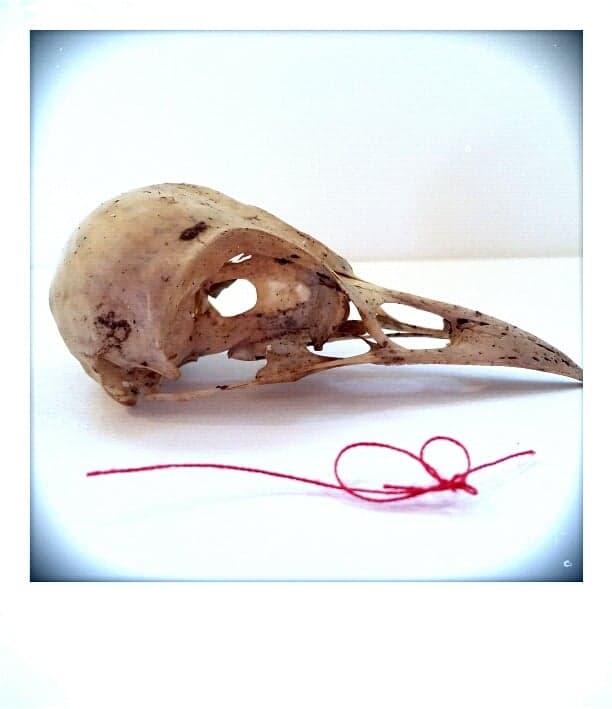
it is about a bird

36899275_10156618985421177_6273411760057745408_n

View original post

The Topology of My Face – James Nulick

robertfredekenter's avatarIceFloe Press

I was born with a wide, indigenous nose. I had it lopped off, thinned out, whitened, when I was twenty-one. My biological mother, a Mexican-American woman who was twenty-six when she gave me up for adoption in 1970, had the same wide nose, the same nose her father had. At the time I had my nose removed and reseated, Europeanized, I had not yet met my mother. That would come a year later.

***

I met my biological mother for the first time when I was twenty-two, and marveled at how alike we looked. Almond eyes, thin build, and a wide, meaty, ski jump nose combining Mexico and Germany, as if all the hope of Norteño were a concentrated bulb on my face. My biological father, whom I also met for the first time when I was twenty-two, is responsible for the ski slope turn of my nose. Combined with…

View original post 1,979 more words

Wombwell Rainbow Interviews: Bel Schenk

Wombwell Rainbow Interviews

I am honoured and privileged that the following writers local, national and international have agreed to be interviewed by me. I gave the writers two options: an emailed list of questions or a more fluid interview via messenger.

The usual ground is covered about motivation, daily routines and work ethic, but some surprises too. Some of these poets you may know, others may be new to you. I hope you enjoy the experience as much as I do.
Bel Schenk

Bel Schenk

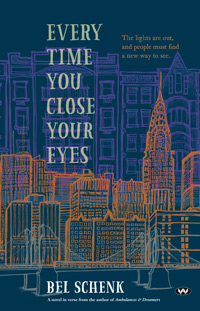
has published three books of poetry – Every Time You Close Your Eyes (Wakefield Press, 2014), Ambulances & Dreamers (Wakefield Press, 2008), and Urban Squeeze (Ginninderra Press, 2003), and has had fiction and poetry published in various journals both in Australia and overseas. She lives in Melbourne with her partner Rachel and daughter Lola and works at Welcoming Australia, a non profit organisation that cultivates a culture of welcome and belonging.

The Interview

  1. What inspired you to write poetry?

A little bit of everything I suppose. When I was young it was rainbows and lollipops. Later it was secret crushes (almost always disguised) and adolescent heartbreak.

  1. Who introduced you to poetry?

My year five teacher Mrs Jenkins who was one of those inspiring older ladies who had a genuine love for words. She also taught the recorder, which I never took much to, so it was definitely all about the words for me. She published my poem in the school magazine – it was about drinking hot chocolate by the fire in winter. I remember her enthusiasm well and I believe that I needed validation at that time (and probably still do).

  1. How aware were you of the dominating presence of older poets?

When I first started reading my work in Adelaide I was terrified of those older, published poets who exuded confidence. Some wonderful young writers and I started a poetry group – this was in the early 2000s and we performed all around the place, but I still had this thought that we were young and hadn’t really made a mark in the publishing world and for me back then that seemed to be the mark of success. It’s only when I look back critically that I can see how good we were and how having fun and being nervous can bring such an energy to a performance and how performance can be the thing that captures it. Not all poems need to be published in a traditional print format.

  1. What is your daily writing routine?

I don’t really have one at the moment – snippets of time when I’m not at other day job and my daughter is at school. I admire the people who make themselves write, but sadly I’ve never been one of them. My books came out in 2003, 2008 and 2014 – it takes me about 5 years to finish a collection of poems.

  1. What motivates you to write?

I think the answer has changed over the years – when I first started to write seriously, I think I was motivated by the rush of success which is not an easy thing to admit. I mean, it should have been about the urge to get the words on paper and that came through more and more as I experienced life. I recall running home so I wouldn’t lose a line of a poem, or an idea of structure. I’m writing prose now, so that’s a different motivation – firstly I wanted to see if I could do it (I don’t know the answer) and secondly, I wanted to make a point about male entitlement particularly through football.

  1. What is your work ethic?

Loose. Look, it’s not ideal. Writing is still very much a privilege that I do when I have spare time or inspiration.

  1. How do the writers you read when you were young influence you today?

At Uni I was the kid with the beret with a poetry collection in my bag – Anne Carson, Sylvia Plath, Ted Hughes (the clichés). Mostly Adrienne Rich. She taught me to be true to my feelings which is just about the most corny thing I’ve ever said.

  1. Who of today’s writers do you admire the most and why?

In prose I admire the way Ian McEwan writes detail. I’ve read Saturday three times and could read it tomorrow if I made the time. It’s set over one day, but the way he details feelings and back story was a revelation for me. I would die proud if I wrote a character half as good as Elizabeth Strout’s Olive Kitteridge. Possibly not surprising that I am drawn to poetic writers of prose.

  1. Why do you write, as opposed to doing anything else?

I truly enjoy the process most of the time. The editing is harder – knowing what to cut and what to expand and why.

  1. What would you say to someone who asked you “How do you become a writer?”

Write, write and write some more. experiment with different styles. I used to be the Artistic Director of Express Media and you could tell the people who wanted to be writers without actually writing. When you’re ready, share widely, whether that’s at open mic events, through socials, or by sending out to journals and don’t be put off by the inevitable rejection. But you can only become a writer if you write.

  1. Tell me about the writing projects you have on at the moment.

Just one which is the prose I mentioned before. It’s been in many ways, an enjoyable journey and refreshing to get into a certain level of detail which I can’t get to in poetry. I haven’t written a poem in a few years. It will be interesting to see how my technique has changed when I get back into it.

12. Your images are very cinematic and very noir cinema. How has cinema influenced your poetry?

In Every Time You Close Your Eyes I approached each poem as a scene and because it’s a narrative verse novel, those individual scenes made up the central story. Apart from the obvious movies – Superman and Summer of Sam, (both movies that influenced the non-fiction characters in the story – Superman and David Berkowitz, aka Son of Sam) I was influenced by Magnolia, particularly the narrator’s voice in the opening monologue. During the writing of all of my books I saw a heck of a lot of movies, something that I don’t do a lot of now because simply there are not as many that I want to see. It’s interesting that you mention noir cinema – now that I think of it, I wanted that menacing aspect to the story and I hope the mood creates a feeling of noir.  There’s not much colour, especially in Part 1, so I see it in black and white.

13. Why did you decide on a verse novel, rather than a prose?

I was fascinated by the verse novel as a form and the opportunities it gave  for experimentation. I’m sure that level of experimentation could be done through prose but I felt more comfortable and confident to write poetry.


Four Poems, a Prose Poem and Two Images by Joanna Lilley

Excellent post.

robertfredekenter's avatarIceFloe Press

Flowers of Nunavut

On broad, bare river rocks, a tourist bends to tug plush purple saxifrage from its shallow roots. Huge above its tiny leaves, the first flower of tundra holds a soft dry pea, an aftertaste of sweet extinction. Sometimes the leaf tips carry crystals as desert flowers do. Down by the shattered sea, a woman sells necklaces of three dark, gleaming fox claws threaded on a cord. Upstairs at the museum, in a black and white photograph, a girl holds an arctic fox around the waist, her tolerant pet. Inside a cabinet, two soapstone bears play the same accordion. Outside, the tourist stands to listen to the broken ice on Koojesse Inlet. She turns three-sixty: she still can’t believe there aren’t any trees. She steps over pipes to return to the hotel. At home, pipes are underground, cars roll smoothly over sanitary apparatus deeply plumbed. At home, she…

View original post 665 more words

Wombwell Rainbow Interviews: Hannah VanderHart

Wombwell Rainbow Interviews

I am honoured and privileged that the following writers local, national and international have agreed to be interviewed by me. I gave the writers two options: an emailed list of questions or a more fluid interview via messenger.
The usual ground is covered about motivation, daily routines and work ethic, but some surprises too. Some of these poets you may know, others may be new to you. I hope you enjoy the experience as much as I do.

hannahs+cover+for+website

Hannah VanderHart

lives and teaches in Durham, NC. She has poetry and reviews published and forthcoming in Kenyon Review, The American Poetry Review, The Adroit Journal, Rhino Poetry, Poetry Northwest and elsewhere. Her first full-length collection, What Pecan Light, is forthcoming from Bull City Press summer this year, and she is the Reviews Editor at EcoTheo Review. More at: hannahvanderhart.com

The Interview

1. What inspired you to write poetry?

What inspired me to write—to really write: hungrily, every day, 7-10 poems a week—was taking a modernist poetry course in college (Eliot, Marianne Moore, Pound, H.D.), and hearing something very close to my own language in that poetry. I’d read a lot of older work (Emily Dickinson) up until this point, and didn’t realize there was poetry much closer to my spoken language and my time.

2. Who introduced you to poetry?

The library, used book sales, and then college courses. I was home schooled by a mother with a microbiology degree, and though she was (and is) very fond of books, poetry was not a focus of my schooling or curriculum. It was an “other” to her.

3. How aware were you of the dominating presence of older poets?

“Dominating” is not a word or a metaphor I would use. But I like “presence”! And it seems to matter what you modify “presence” with—maybe “supporting” would do. I remember uncovering joy in poetry very early—Carl Sandburg and e e cummings were some of the first poets whose (often) gentle and playful use of language caught my ear in high school. Emily Dickinson and Christina Rossetti even earlier. In college, Denise Levertov and the anthology “Upholding Mystery” were huge influences in opening the world of poetry up to me—but I hasten to add that there was never anxiety in these influences.

4. What is your daily writing routine?

Whenever I can? Haha! I’m currently teaching high school and caring for two smallish children. There are many interruptions, and much to be done, and some days I feel like a caretaking service. Lately, I’ve written poetry during Saturday morning soccer practices, after my children go to bed, or even during a family movie on my phone. I have to sneak it in, and yes, I dream of a writing residence in the future.

5. What motivates you to write?

Ada Limon, in her recent episode on Commonplace Podcast, noted that the difference between life and your writing is that one is your life and one you need to live. That difference seems astoundingly essential. I have always kept a journal, probably since I was ten. But I either journal or I write poetry, never both—they come from the same place, for me.

6. What is your work ethic?

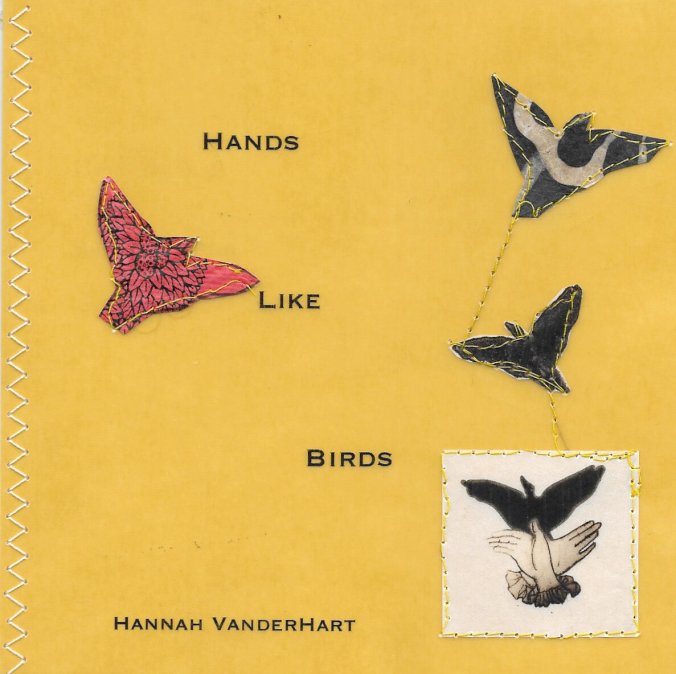
Protestant, Taurean. But I can laze with the best of them! I love to run and lift weights (and my children); I like to move. I am highly motivated by projects, and have an intense focus when it comes to research. My recent chapbook, Hands like Birds, I wrote over a long weekend.

7. How do the writers you read when you were young influence you today?

The simplest answer is: through being ethical, responsive people, attuned to themselves and their world. I think that’s the aspiration of all writers—or, at least, the ones I love. I think the other reply is that the earliest writers I connected with wrote about their real world—they are keen observers, their poetry present, brimming with objects and places. They also do not forget themselves.

8. Who of today’s writers do you admire the most and why?

Oh, an easy question! I’m joking. Molly Spencer, Jessica Stark, Shara Lessley, Carolina Ebeid, Jenny George, Gabrielle Calvocoressi, Leah Silvieus, Kasey Jueds, Connie Voisine, Tyree Daye, to name only a few. Incredibly brilliant, sharp as cut-glass minds, each one of them. The most beautiful attention you’ve ever seen. A warmth and generosity to the world and others.

9. Why do you write, as opposed to doing anything else?

Because I love to read! I love the page. I love that a very small grouping of them can knock you backward, hold you up, carry you through your day or hour. It’s also community and connection of minds—I hear C.D. Wright, one of my deep favorites, in these words as I write them. Independence is a fantasy, and we only exist with and through others.

10. What would you say to someone who asked you “How do you become a writer?”

Part of the answer is certainly that I grew up in a home with parents that loved books, read books aloud to us, filled our house with books, and encouraged my journaling. But key, too, were the teachers and writers who took my work seriously, who told me: “You can do this!” Or: “Your work has something special in it.” You never forget those permissions and blessings on your writing. We should all give such affirmations.

11. Tell me about the writing projects you have on at the moment.

My main project right now is assembling/carving/sifting my second full-length collection, Larks. I feel as though if I had two weeks to go to a cabin in the mountains and be with this work, I could finish it. Currently, this manuscript has to live off an hour of time here and there in the evenings (“petunias live on what gets spilt,” wrote Les Murray). I’m also currently learning to cull my darlings, through the example of incredible poets around me, who show that every single poem does not need to be in a manuscript. Bless editors everywhere. Should I add what the collections about? My sisters, birds (real, mythic), harm and memory. It’s a very personal collection, even more than What Pecan Light (Bull City Press, 2020), which is about my family and one of our many American Souths. My new chapbook, Hands Like Birds (Ethel Zine Press, 2019), is actually twelve poems from Larks, based on the visual art of the seventeenth-century painter Artemisia Gentileschi. This chapbook has to do with making art as women, with baths and interruptions, and with violence to women.

 

through the ache of time, a poem . . . and your next Wednesday Writing Prompt

Powerful prompt

Jamie Dedes's avatarJamie Dedes' THE POET BY DAY Webzine

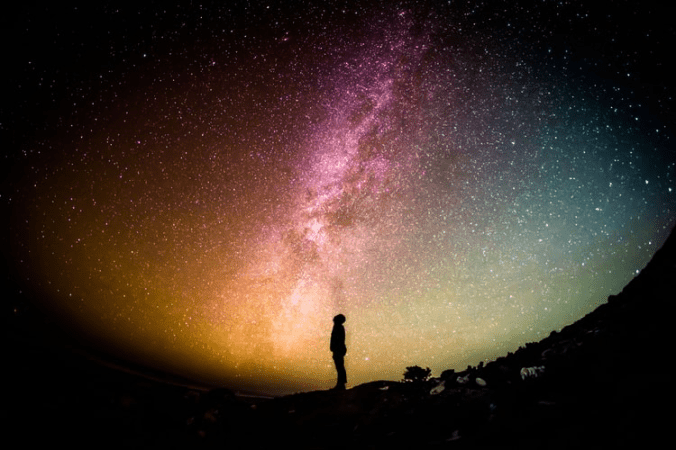
Courtesy of Greg Rakozy, Unsplash

“To love. To be loved. To never forget your own insignificance. To never get used to the unspeakable violence and the vulgar disparity of life around you. To seek joy in the saddest places. To pursue beauty to its lair. To never simplify what is complicated or complicate what is simple. To respect strength, never power. Above all, to watch. To try and understand. To never look away. And never, never to forget.” Arundhati Roy, The Cost of Living


see it moving – Life!
moving through the ache of time
seeking that place
where identity isn’t worn on a sleeve,
where individuals challenge the tribe,
where beauty frees itself from convention,
where the chains of fear dissolve

© 2020, Jamie Dedes

WEDNESDAY WRITING PROMPT

What do you think Life seeks to express through us?  Tell us in your own poem/s and …

  • please submit your poem/s by…

View original post 313 more words

Rural Writing

Exhilarating!

wendycatpratt's avatarWendy Pratt

photography of mountains under cloudy sky Photo by Simon Matzinger on Pexels.com

I’ve just got back from an exhilarating dog walk through the tail end of Storm Ciara, or maybe the head end of Storm Dennis, who knows. The lane follows the curve of a stream, which feeds into the river Hertford a few fields over, but you can see that it’s been manipulated at some point, the stream, to meet the requirements of drainage and farm land. In rough weather, when it’s rained a lot, the original river rises in the field, next to it, which once upon a time was a village park and cricket pitch. The old stream is slowed down to puddles of standing water, trying to speak its mother tongue, as if the compulsion to flow the way it has flowed for thousands of years is still strong. Whenever I see it, can see the track of it, the rises of…

View original post 1,570 more words

Three Poems by Kent Alexander w/Images by Robert Frede Kenter

Essential reading

robertfredekenter's avatarIceFloe Press

Vero Beach

He stood in the door – crowding its frame
His six children all over the faded yellow chair
as if they were ants indulging in candy
“Welcome to the land of the oppressed,” he said
his eyes twinkling like fireplace embers
“Maria, get your uncle something cold to drink,
Michael pull your pants up and go put on some shorts.”
He stepped aside, skin brown as a berry
“Black man,” he said as he clasped me in a familiar hug
“What the I want, my brudda?”

I had driven some three hours across the state
through desolate orange groves where the scent
of citrus was as pungent as sin. Through bracken-like
trees and small towns with names like Yahooville
A highway to promise and the American dream
sponsored by Chevrolet, Nissan, Dodge and Hyundai
A sun-drenched day as large lazy ravens circle above

Back in Vero Beach, squeals…

View original post 1,029 more words

Djinn Patrol on the Purple Line by Deepa Anappara. Book review

Enlightening

strangealliances's avatarStrange Alliances

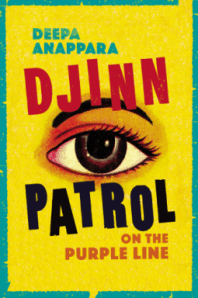
Book cover with painted eye on a bright yellow background

Jai is addicted to reality cop shows and is itching to put all the theory he’s learned into action. When local children begin to go missing Jai, along with his best friends the very bright Pari and loyal Faiz, launches himself into some serious detective work. But having to work with distraught parents, an insouciant police force, getting at the truth is not going to be easy and fraught with danger.

This interesting novel blends childish perception with worldly wisdom, as well as adventure with the very real peril in India of child abduction.

Through the eyes of enthusiastic and determined Jai, the reader is able to experience the slums of Dehli through all its sights, sounds, smells and tastes.

Djinn Patrol on the Purple Line is an immersive experience, both joyful, heart-warming, heart-breaking and terrifying.

If there was ever an effective way to make the rest of the world…

View original post 140 more words