Poetry Month – Two new poems
Eat Here, Get Gas & Worms by Steve Spence (The Red Ceilings Press)

Steve Spence, based in Plymouth where he co-organises the Language Club, studied at theUniversity of Plymouth and has publishedA Curious Shipwreckfrom Shearsman in 2010. He also writes a good many reviews and is a regular contributor toTears in the Fence.
This chapbook, of 41 poems, is organised in a standard format of 4 quatrains and a closing couplet, unrhymed. Most of the pieces have short 3-word titles. No named protagonists, but a ‘he’ and ‘she’ are given to comment fairly often. Patrick Holden has called Spence a ‘connoisseur of noise pollution’.
Before all else, Spence isn’t sticking to a specific narrative, so, no, nobody eats here, gets gas or worms, and the artwork is a spare abstract of red, black and blue that could almost be a Rorschach blot.
Spence on a certain level is involved in a game with the reader, this can read a bit…
View original post 518 more words
Poetry Month – ‘Stroke’
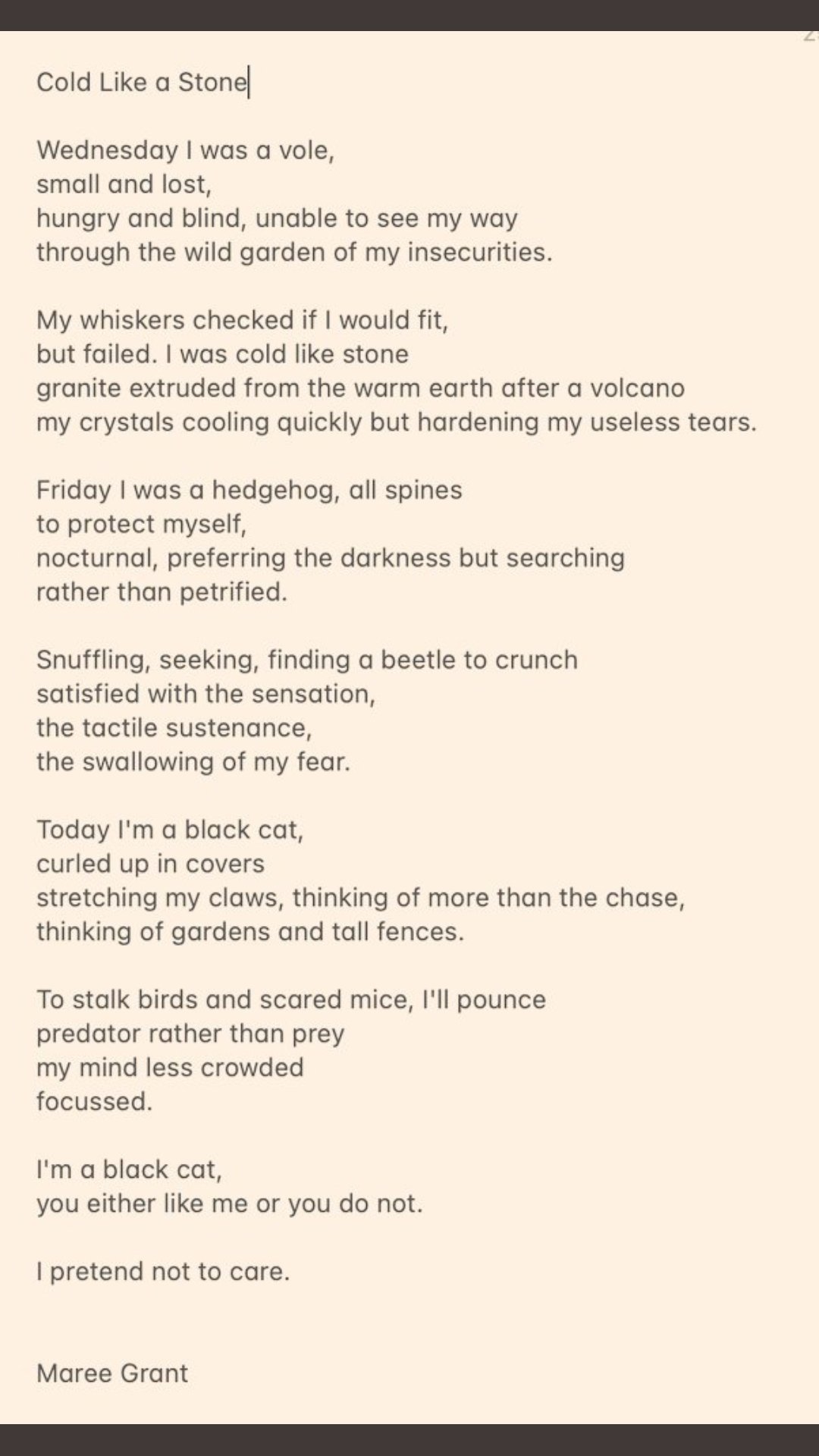
#BlackCatAppreciationDay Anybody unpublished/published poetry about black cats. Photos and artworks welcome too. I will feature all in my blog today.
Black Cat Appreciation Day

-John Hawkhead (from Presence 47 and the ‘Write Like Issa’ (David G Lanoue) Anthology)
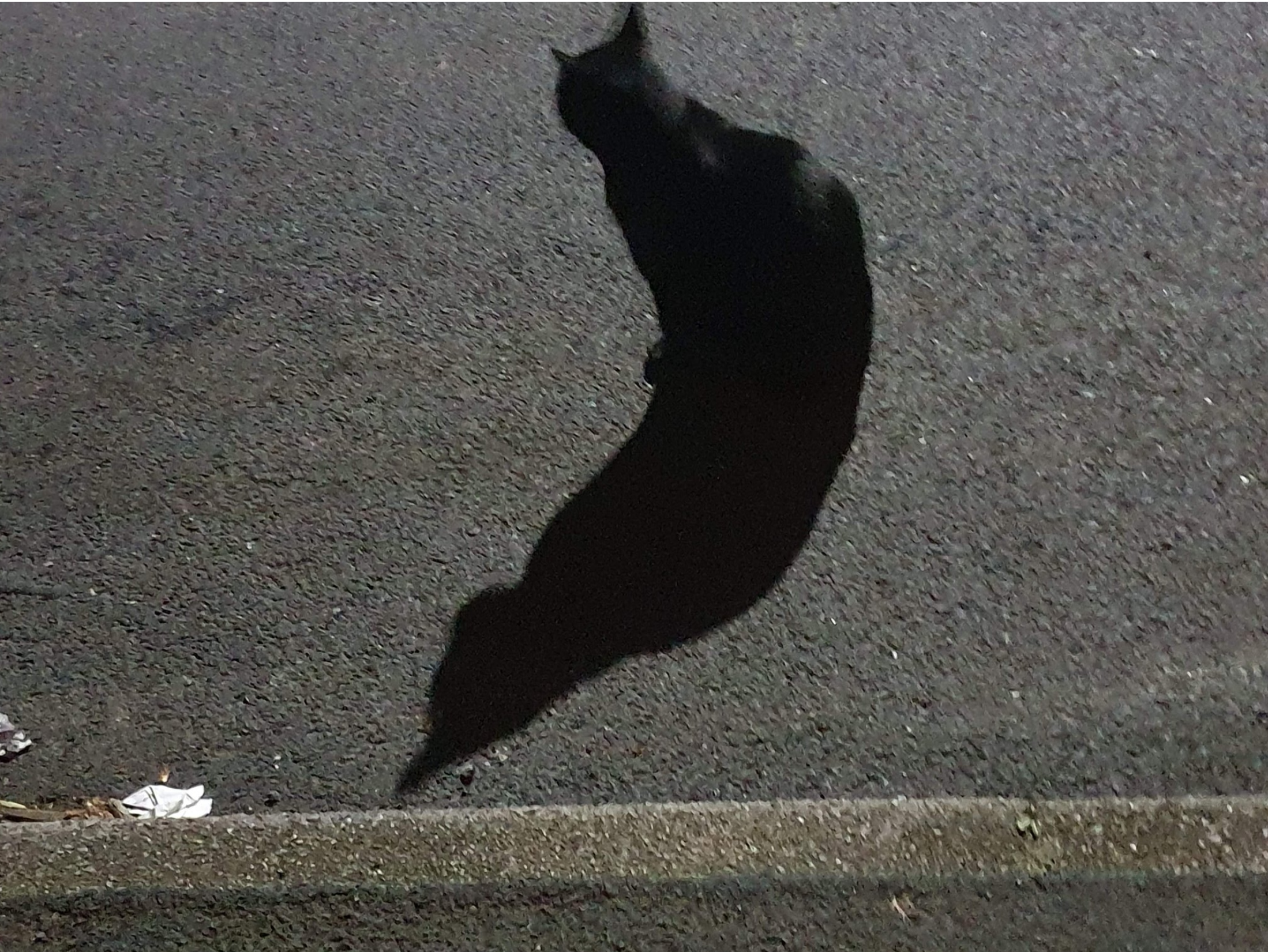
-Jet by spangle mcqueen


Poetry Month – Three bee poems
Weighing of the Heart by Degna Stone (Blueprint Poetry Press)
This pamphlet on Stone’s husband’s battle with Subacute Bacterial Endocarditis (SBE) – ‘a bacterial infection that produces growths on the endocardium (the cells lining the inside of the heart) […] and, if untreated, can become fatal within six weeks to a year’ – is a stark, honest account of marriage when a spouse has a life-threatening illness.
These poems are written with a sparing style. Stone allows the narrative arc to unspool through the domestic, with the speaker in the bathtub in ‘Unwinding’ or watching her husband’s illness take hold in ‘Pallor’. As Mr Stone’s serious illness becomes more apparent, the language of detachment seems to take over. This is evidence in the titles of several of the poems: ‘Mrs Stone Calculates the Odds’, ‘Mrs Stone Waits for News’. There is often a sense of dissociation in these poems, as if the speaker is existing in ‘survival mode’…
View original post 680 more words
Poetry Month – ‘reading’
Poetry Month – ‘Love’s Poem’
Dezső Kosztolányi: Happy, Heartbroken Song

 Dezső Kosztolányi (March 29, 1885 – November 3, 1936) was a Hungarian writer, journalist, and translator. He wrote in all literary genres, from poetry to essays to theatre plays. Building his own style, he used French symbolism, impressionism, expressionism and psychological realism. He is considered the father of futurism in Hungarian literature. Kosztolányi also produced literary translations in Hungarian, such as Shakespeare’s Romeo and Juliet, The Winter’s Tale, Lewis Carroll’s Alice in Wonderland, Thornton Wilder’s The Bridge of San Luis Rey, Lord Alfred Douglas’ memoirs on Oscar Wilde and Rudyard Kipling’s “If—”.
NB: By clicking on the date you can read the supplement of Hungarian poetry which was publishened in The High Window inJune 17, 2019 [Ed.]
*****
Dezső Kosztolányi: Four Poems translated by Edit Gallia
Look here, my son, I’m giving you everything,
take it, it’s yours forever, keep it…
View original post 1,003 more words
 The Wombwell Rainbow