Postcards To Ma by Martin Stannard (Leafe Press)

tearsinthefence's avatarTears in the Fence

You have to take a deep breath before you dive into this pamphlet, which is actually a single twelve page long poem. Not only because of its length, but because you will need as much oxygen in your brain to cope with digressions, lists, and the unreliable, perhaps even irrational, narrator.

Stannard is adept at keeping a straight face, however weird his poetry gets, and for taking language on long, surreal walks. He’s also good at using repetition and near-repetition, to help structure his work. In this long poem, which starts with the narrator noting that he ‘Sent a picture postcard to Ma “Arrived Safe”‘, this involves variations of the theme of how people see him and similes for how he sleeps,irregular reoccurrences of phrases such as ‘Special Offer!!!’ and a kind of chorus to break up the flow:

Crack of dawn Swam in
ocean Frolicked on sand Sent postcards…

View original post 616 more words

The High Window Reviews

The High Window Review's avatarThe High Window

reviewer

*****

Tara Bergin:  Savage Tales • D A Prince: The Bigger Picture  •  Jules Whiting: Folding Time • Maeve McKenna: A Dedication to Drowning • Michael Daniels:  Ravenser Odd • R.A. White: A Frame Less Perfect

*****

Tara Bergin’s Savage Tales reviewed by Pam Thompson

berginSavage Tales by Tara Bergin. £15.99. Carcanet. ISBN: 9781800172319

Tara Bergin was born and brought up in Dublin, near to where Samuel Beckett was brought up. She currently lives in Yorkshire, is an academic at Newcastle University. Her PhD research centred on Ted Hughes’s translations of Hungarian poet, János Pilinszky.

Beckettian dark humour and seeming absurdity colours earlier collections, This is Yarrow (2013) and The Tragic Death of Eleanor Marx (2017), and spill over into this Savage Tales. Bergin’s sources are eclectic and numerous, her first two collections containing extensive notes on the poems. There is a…

View original post 5,698 more words

Extinctions by Philip Terry (Red Ceilings Press)

tearsinthefence's avatarTears in the Fence

I love Philip Terry’s poetry which is always inventive in a variety of ways. This short collection from the wonderfully miniature Red Ceilings Press is a peach, basing itself on ‘the chicago,’ a form developed via the Oulipo some time ago. The basic idea is that each short poem is made up of five lines and the final line, a homophonic ‘translation’ of a place name, person, animal etc. generatesthe content of the previous lines and may be guessed by the reader. In each case, here at least, the final line appears at the end in a numbered key (50 lines) so you can choose to refer forward if you wish. It’s a game in effect and combines the idea of the Old English riddle with the more experimental methods developed by the Oulipo. One very positive effect of taking part is that the method generates creativity and ‘a zest…

View original post 266 more words

Poetry from Doryn Herbst “Huskies”

davidlonan1's avatarFevers of the Mind

Huskies

Double fur to pull them through
a snow desert. That snow in their eyes,
pools of moonstone and gold
arrowed against the cold.

Muscled team-players, a playful team,
best of friends, your best friend.
Six Siberians howling.

These loyal workers know how to pull.
They gather speed over drifts packing
down close, their weight harnessed
to glide in unison over ice-cold air, slide
over frigid rivers, leap past trees
like starch-white spectres

to carry your weight
to your destination. 


Bio for Doryn Herbst

Doryn Herbst, a former water industry scientist in Wales, now lives in Germany and is a deputy local councillor. Her writing considers the natural world but also themes which address social issues.

Doryn has poetry in Fahmidan Journal, CERASUS Magazine,Fenland Poetry Journal, celestite poetry, Poems from the Heron Clan and more.

She is a reviewer at Consilience science poetry.

View original post

Surface Tension by Derek Beaulieu (Coach House Books)

tearsinthefence's avatarTears in the Fence

I have several DerekBeaulieubooks on my poetry shelves; his work fascinates and intrigues me, but I still don’t feel I know how to read them (or perhaps the term is process them). Concrete poetry is an established genre and I am happy to putBeaulieu into that lineage, I’m also happy with poetry that uses the visual as a guiding or organizing principle, and poetry that doesn’t prioritise content or narrative or epiphany.

Yet, Beaulieu’s poems are beyond that. Often constructed from Letraset rub-down lettering, they are visual patterns and constructs, sometimes in sequences, sometimes seemingly treated even more (or made differently):“Calcite Gours 1-19”, published and given away by rob mclennan back in 2004, and my introduction to Beaulieu’s work, contains a ‘suite of poems’ which are circular-ish explosions of ink, reminiscent of star clusters. They are as seductive and engaging as the night sky, too.

That book is…

View original post 714 more words

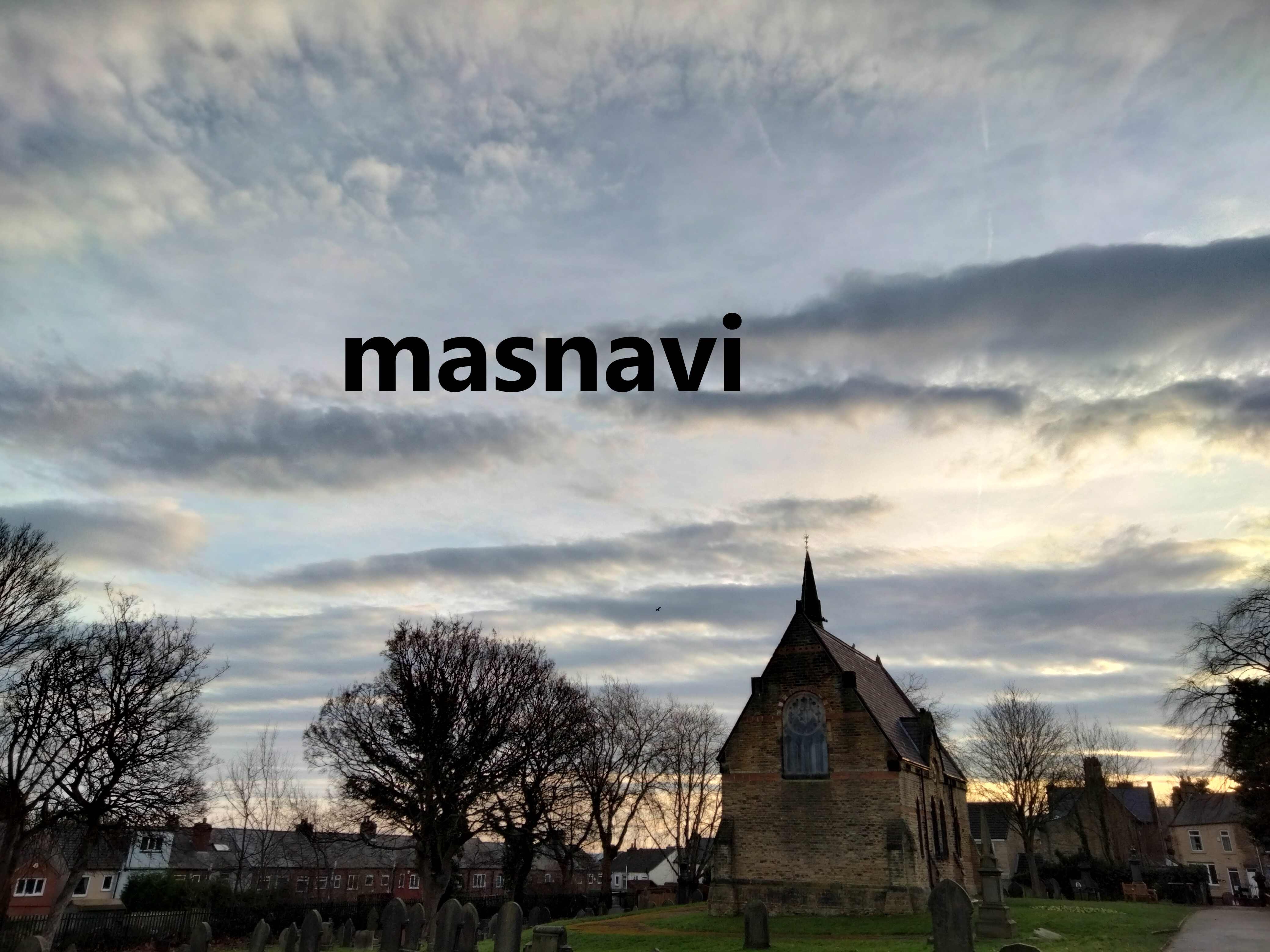
#TheWombwellRainbow #PoeticFormsChallenge. It is weekly. Week Twenty form is a #masnavi (or mathnawi. I will post the challenge to create a first draft of a poetic form by the following late Sunday. Please email your first draft to me, including an updated short, third person bio and a short prose piece about the challenges you faced and how you overcame them. Except when I’m working at the supermarket I am always ready to help those that get stuck. I will blog my progress throughout the week. Hopefully it may help the stumped. Also below please find links to helpful websites.

the masnavi or mathnawi,

The guidelines:

Couplet (or two-line) form…
…but with the qualifier that each “line” is actually a “half-line” and that they rhyme horizontally
Each line is 10 or 11 syllables long (I believe it’s supposed to be consistent within the poem, so pick a number and stick with it)
Rhyme scheme is aa/bb/cc/dd and so on
No line length restrictions
I

Many examples of masnavi are very long poems. One of the more popular examples is Rumi’s Masnavi-ye-Ma’navi, which is a long spiritual or mystical poem.

Thankyou to the Writers Digest for this information.

Helpful Links

https://en.wikipedia.org/wiki/Mathnawi

https://www.writersdigest.com/write-better-poetry/masnavi-or-mathnawi-poetic-forms

Masnavi Poem Type

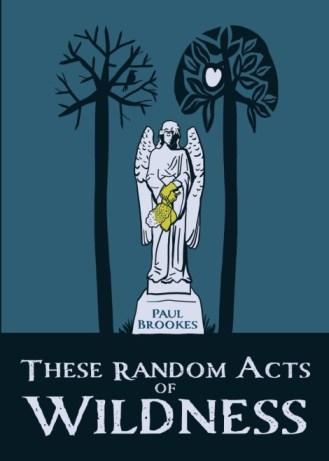
Book Reviews by Spriha Kant: “These Random Acts of Wildness” by Paul Brookes

Thankyou to Spriha for this pre-publication review of “These Random Acts Of Wildness”

davidlonan1's avatarFevers of the Mind

Review of Paul Brookes’s book “These Random Acts of Wildness” by “Spriha Kant”

This book consists of a collection of poetries. The poet in some poetries makes his readers travel in, around, and out of the different portions of the home including lawns, backyards, kitchen, etc., in some of which he shows glimpses of the chores and concludes the bitter truth of the world and/or one of the fundamental truths of existence that whatever is created is meant to be destroyed the one or the other day. Quoting the following few words and stanzas from a few such poetries: “His toy won't cut grass but safely glides over its length, so he stamps and bawls when his world don't conform to his straight lines, because it's bent. My wife says “Better” to our short shorn lawn. We all want the wild to be uniform.” “Organic time tamed, all about decay…

View original post 1,120 more words

Endechas

Jane Dougherty's avatarJane Dougherty Writes

Paul Brookes chose the endecha for last week’s poetry form. The endecha (usually plural endechas) is a poem of Medieval Spanish Jewish origin, a lament intended to be sung. The stanzas are quatrains, of 7 7 7 and 11 syllables, rhyme scheme xaxa where x is unrhymed. It can be a full rhyme but is more usually consonance. I wrote one of each, a full rhyme endecha, and one using consonance instead. Since the poem is intended to be sung, it matters that the lines follow a rhythm which led me to write a third endecha where I tried to place the stresses so that the final eleven syllable line breaks naturally after seven syllables, leaving the final four syllables as a sort of plaintive echo. Given the origins of the poem, this seems like a reasonable interpretation.

Those who are gone

I can hear you in the wind
in…

View original post 198 more words

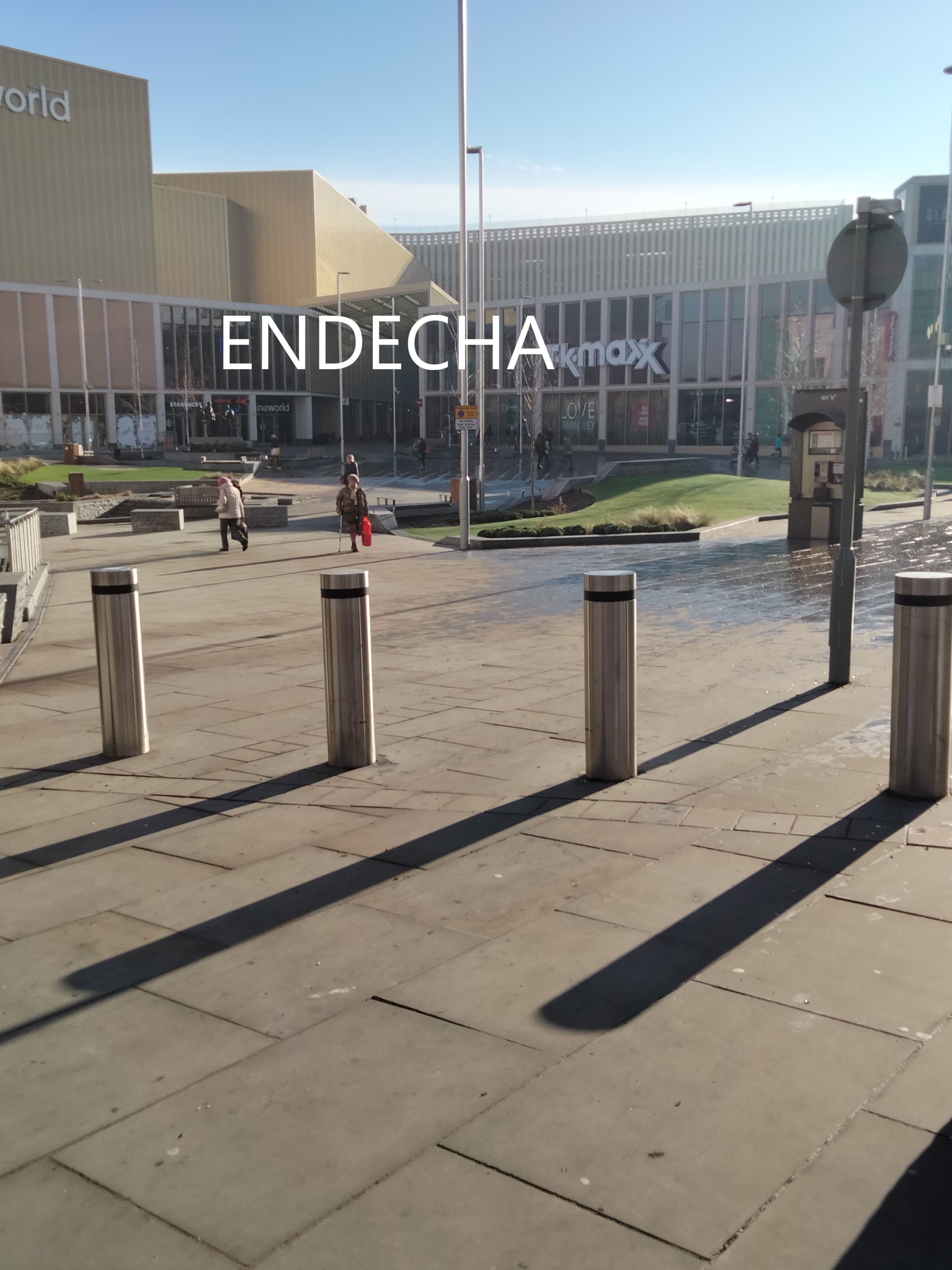
#TheWombwellRainbow #Poeticformschallenge last week was an #Endecha. Enjoy examples by Tim Fellows, Jane Dougherty, Robert Frede Kenter,Lesley Curwen and Aaron Bn, and read how they felt when writing one.

Night hours

In the heart of rolling dark
recall the comfort of hands,
the pulse in another’s neck,
the flagrance of sea breeze salting dusty land.

How Did It Go?

I found this short form quite difficult. The last line, being longer, is therefore freighted with meaning, and involved many rewrites. I think this form requires skills of brevity and punch I have not developed.

Lesley Curwen

Those who are gone

I can hear you in the wind
in the way the fox-bells chime,
the keening of survivors
the harrowing, dearth and the sorrowing time.

You were all around me once,
in the warm breath of the spring,
In the flight of birds, too high
to see their bright plumage, hear their voices sing.

You were young and old, lovely,
rainbows, storm-light in your eyes,
you sang the words, I listened,
to the ever-changing torrent, always wise.

Now there’s snow in the meadow,
no bird-sound, but all around,
the touch of dead hands wringing,
lips that murmur in the dark of holy ground.

Years turning

When will I see you again?
In the greening of the year
or at its turning? When snow
lies cold, unforgiving, and I wait, yearning?

For the years will keep turning,
russet red then green again,
and the road remains empty,
though my wishes throng the trees, leaf-stars aging.

To have wings

Black these cold and lightless days,
dirt-grey the clouds, sun rayless,
white the frost that furs the dead
leaf litter, that lies deer-scraped,
brown and rotting.

I wish a bird would lend me
the magic of feathered dance
night or day uncaring, I’d
toss these sorrows in the sea,
watch them drowning.

How did it go?

I got a bit carried away with this one, because I enjoyed the form. The endecha (usually plural endechas) is a poem of Medieval Spanish Jewish origin, a lament intended to be sung. The stanzas are quatrains, of 7 7 7 and 11 syllables, rhyme scheme xaxa where x is unrhymed. It can be a full rhyme but is more usually consonance. I wrote one of each, a full rhyme endecha, and one using consonance instead. Since the poem is intended to be sung, it matters that the lines follow a rhythm which led me to write a fourth endecha with the stresses placed so that the final eleven syllable line can break naturally after seven syllables, leaving the final four syllables as a sort of plaintive echo. Given the origins of the poem, this seems like a reasonable interpretation.

Jane Dougherty

Sunset through a window
You place your soul on a shelf
Tired and fraught you sit
On the floor is an empty shadow of yourself

How Did It Go?

This was my first time attempting to write an endecha poem and it was rather difficult but fun to try. While the rhyming pattern was similar to today’s poetry, I don’t believe my verse could be sung like a traditional endecha. Hopefully I captured a moment of lament.

Aaron
@VikingRaven78

Righteous
after Miguel Hernandez – “Adiós, hermanos, camaradas y amigos.
Despedidme del sol y de los trigos”

Final breaths rattle; chains tie
more skin than flesh, you have lost
your battle as war rages
far away, where others also bear the cost.
As you scrawl your final words
on prison walls, death trains roll.
In fascist plays, roles are cast,
innocents despatched, and Europe pays the toll.

Goodbye, brothers, comrades, friends:
my own fate is surely sealed;
I tried, I failed, now it’s time
to let me take my leave of sun and fields.
Breath has gone, cold lungs at rest;
eastward iron wheels still spin.
Leaders play their games of chess
but with fortitude, a righteous heart will win.

How Did It Go?

As this is a Spanish form, and a lament, I used the Spanish poet Miguel Hernandez as inspiration. He died of neglected tuberculosis in a Spanish jail in 1942, effectively murdered by Franco’s fascist regime. Elsewhere the Nazis were rounding up and murdering Jews (and others) and this also tied in to Holocaust Memorial Day. The form itself was surprisingly straightforward, albeit a little unbalanced.

Tim Fellows

Lament in the Time of Rain

Without hope, we struggle to
animate courage, waken
the heart’s grey beat in our chests,
everything we thought we knew had been taken

You stood at the door, in tears,
all was forgotten in mirrors,
memories spun through a loom,
tolling bells, life ending in complex powders

You were so young, so young, so
vibrant in Brussel’s Stomach
the grey wheel of rain falling
your restaurant plate filled with prawns and geddock

Stand forgotten, young, taken,
forgotten in time, so young,
the heart’s grey rain, uncertain,
inclement shadows pluck instruments, unstrung

How Did It Go?

Spent time (no pun intended) getting this poem to insinuate a café music; as soon as I read that it was a Spanish lament, the 15th century Endecha, (3 lines of 7 syllables, 4 line a/b/c/b rhyme stanza, line 4, 11 syllables) my goal / hope was to write something not too maudlin, and also linked armed stanzas, extended. It took time – successfully or not — to pull out tropes over-used, and move towards a diagonal, oblong precis on the loss of some variant of an urban high-life, of wine, song, stimulants, and old-school meter taxis, chased down in the rain. (After completing my work on this piece, I discovered, on further reading, the Endecha was a song form associated mostly with Sephardic Jews prior to and after their expulsion from Spain, at century’s end, which being my long-ago ancestor’s heritage, makes even more sense, an aha moment.)

Robert Frede Kenter

Bios and Links

Robert Frede Kenter

is a writer and visual artist. A Pushcart Nominee, published widely & internationally, based now in Canada, publisher of http://www.icefloepress.net. Tweets: @frede_kenter, IG:@r.f.k.vispocityshuffle

Lesley Curwen

is a broadcaster, poet and sailor living within sight of Plymouth Sound. Her poems have been published by Nine Pens, Arachne Press, Broken Sleep and GreenInk, and later this yea

Jane Dougherty

lives and works in southwest France. A Pushcart Prize nominee, her poems and stories have been published in magazines and journals including Ogham Stone, the Ekphrastic Review, Black Bough Poetry, ink sweat and tears, Gleam, Nightingale & Sparrow, Green Ink and Brilliant Flash Fiction. She blogs at https://janedougherty.wordpress.com/ Her poetry chapbooks, thicker than water and birds and other feathers were published in October and November 2020.

Tm Fellows

is a writer from Chesterfield in Derbyshire whose ideas are heavily influenced by his background in the local coalfields, where industry and nature lived side by side. His first pamphlet “Heritage” was published in 2019. His poetic influences range from Blake to Owen, Causley to Cooper-Clarke and more recently the idea of imagistic poetry and the work of Spanish poet Miguel Hernandez.

2/2 #BigGardenBirdwatch 27-29 January. Over these days please join Peter Donnelly, Andrew Darlington and I to celebrate our Garden Birds and count. I will feature your draft or published/unpublished poetry/short prose/artworks about your garden birds. Please include a short third person bio.

FROM INFINITY THEY COME

a pigeon sits in the field,
I think it might be hurt,
I crouch down to get real close,
talking to it as it watched me
with lazy half-asleep eyes,
it does not fly away,
eventually I stand and step back,
it waddles a few paces, it was fine,
nothing wrong with it,
maybe it was just tired?
but it lets me get up so very close,
that for a moment we are attuned
on a deep psychic level, bird
to birdbrain psycho-chemistry,
so that my mind has wings,
so my mind takes flight,
feather-brain, beak for nose,
I peek out through its lazy half-asleep
eyes and see my own ludicrous self,
know for sure it’s me that’s frayed,
it’s me that’s damaged
I should have known it all along…

By Andrew Darlington

Peacocks

It’s just their eyes
that look like those
of their namesake,
and not the eyes
of butterfly or bird,
but the ringed spots
on the wings of each,
or rather the feathers
of the fowl. They don’t halloo,
rarely stand still or close up.
It’s not them we think of
when we hear the word,
really only for the male bird,
like we think of a pair of compasses
as a compass, meaning
the geometrical kind,
forgetting the other exists.
One large, one small,
one mostly red, the other blue.
They are as similar as
a Jerusalem artichoke to an artichoke,
peppercorns to capsicums
or a pear to an avocado pear.

Heron at Fishergreen

Is it the same bird, he wonders
as he stands on the bridge as still
as I do in Priest Lane ford. The same man
who was there when I came here before,
though this time he wears
a turquoise fleece not a black
winter coat. Will he know it is me
I ask myself, when I disappoint him
as I did last time, as he takes his phone,
searches for the camera. I’ll turn
my head, fly away not towards him
as he gets it in focus. If he zooms in I’ll be
a blur, a silhouette in reverse, a cartoon.
I will haunt this place for him like a ghost.

Curlew

In Wales they used to fear my call
like the sight of a magpie
or the sound of an afternoon cock crow.

I can’t imagine why they call me gylfinir
there, for it sounds nothing like
the noise I make, cur-lee.

Now they dread the thought
of my demise, rejoice
at my return to the Yorkshire Dales.

Some think my name means running,
which I never do at all. My beak
catches worms as chopsticks do noodles,

or a pair of tweezers pulls out
an unwanted hair, which when closed
it could be said to resemble. Curved.

Seagulls

They’re supposed to come
to the country in winter
not to the city in summer,
yet I am woken at 4 am
by their screeching.

It’s as if they know
they are in the wrong place,
lost, can’t find their way home,
like the ghost of Catherine Earnshaw
pleading ‘Let me in’.

Their wings are lit up by sunlight
in blue sky in the evenings
of early July, like goldfish
as they fly past my window
which I watch like a tank.

All four poems above my Peter Donnelly

Bios and Links

Peter J Donnelly

lives in York where he works as a hospital secretary.  He has a degree in English Literature and a MA in Creative Writing from the University of Wales Lampeter.  His poetry has been published in various magazines and anthologies including Dreich, High Window,  Southlight,  Black Nore Review,  Obsessed with Pipework,  One Hand Clapping and Ink,  Sweat and Tears.  He won second prize in the Ripon Poetry Festival competition in 2021 and was a joint runner up in the Buzzwords open poetry competition in 2020.