Wombwell Rainbow Interviews: Bart Solarczyk

Wombwell Rainbow Interviews

I am honoured and privileged that the following poets, local, national and international have agreed to be interviewed by me. I gave the writers two options: an emailed list of questions or a more fluid interview via messenger.
The usual ground is covered about motivation, daily routines and work ethic, but some surprises too. Some of these poets you may know, others may be new to you. I hope you enjoy the experience as much as I do.


Bart Solarczyk

Bart Solarczyk lives in Pittsburgh, Pennsylvania with his wife, daughter, dog & cat. Over the past 35 years his poems have appeared in various magazines, anthologies & chapbooks. His most recent chapbook, Right Direction, was published in 2016 by Modest Proposal Chapbooks (an imprint of Lilliput Review.) His full length book of poems, Tilted World, is upcoming soon from Low Ghost Press.

The Interview

When and why did you start writing poetry?

I started in grade school, probably around 4th grade, as a writing assignment. I remember I wrote a poem about my little brother, about his destructive tendencies, comparing him to a bomb. My mother loved the poem & kept it for years.

Around 7th grade I started writing for my own pleasure. I had a friend, Chipper, who shared my interest. We wrote together in a composition tablet. Our individual poems as well as collaborations.

Who introduced you to poetry?

We always had books at home. My mother read to us & wanted us to read. Some of the books had poems. I went to Catholic school & the nuns & lay teachers introduced me to Poe, Whitman, Dickinson, others. They were part of our curriculum.

What books did your mother read to you?

In high school I was more interested in song lyrics & found poetry there. Dylan, Neil Young, Ian Anderson, the Beatles particularly Lennon. More artists later like Townes Van Zandt.

What did you find interesting in the songs?

My mother bought a lot of Golden Treasury books. Stories for kids, some strange like Cry Baby Calf & others just traditional stories.

I found the stories & images conjured in the songs interesting. Some were obscure, like Neil Young’s Cowgirl In The Sand. So many of Dylan’s songs read like poems & related stories in a variety of ways, some more direct than others.

Poetry as storytelling. Was Chipper’s poetry similar to your own?

Yes & the way the story gets told. Sometimes a straightforward narrative & sometimes obscured a bit in images, word collages, abstract, maybe like an impressionist painting.

So experimenting with ways of telling.

Yeah I guess Chipper & I had similar styles. Everything rhymed & we both had a sense of humor, sometimes cruel, often absurd.

Did you use any particular poems, songs stories as templates when writing your own?

Exactly! There are many ways to say something.

I tried to imitate certain artists I’m sure, even if I wasn’t always aware I was doing it. But you have to break free eventually to form your own voice.

How did you break free?

I don’t think you can completely shed your influences but imitation equals bad writing. Look how many bad Bukowski imitators are out there.

What is your daily writing routine?

I broke free by reading more & writing more & not thinking about it too much. It took shape naturally & one day it was there.

I don’t have a daily writing routine. I can go weeks without writing. Then something happens, something strikes me & I write it down. I write longhand in notebooks & try not to stop to edit until I feel like it’s finished for the moment. Then I go back to trim & pare it into a presentable poem.

How do the writers you read when you were young influence you today?

I guess that depends on what passes as young. Going back to the days I talked about earlier, I still appreciate Poe, Whitman, Dickinson, Longfellow. I think I learned the importance of rhythm in a poem from them, even though my poems are usually brief & unrhymed. Poets I read in my 20s & 30s will always have some value to me.

Why do you write?

It feels like something I have to do to stay balanced. I enjoy the process. It somehow helps me make sense of the world. I think it releases buried feelings & emotions. And there’s a joy when I nail one right on the head, an epiphany, satori, truth shaped in my words.

What would you say to someone who asked you “How do you become a writer?”

I’d pass along Buk’s advice: “Go to a small room & write.” But I’d add the importance of reading, certainly poetry but fiction, essays, articles, whatever. And don’t do it for any other reason than to write. Don’t try to make it a means to some other end. Not fame, not wealth, not to get laid. Well maybe to get laid if you meet the right person.

And finally Bart, Tell me about the writing projects you have on at the moment.

I’ve been busy with my manuscript for a new book, hopefully coming out before year’s end. I’ve had 9 chapbooks published but this will be my first full length book. 62 poems being published by Low Ghost Press, a respected small punisher here in Pittsburgh. This past Saturday one of the editors, Scott Silsbe, & I reviewed & approved the final draft. The title is Tilted World. I’ve also been writing some new poems & doing some readings. I have one next Thursday at White Whale Books


Wombwell Rainbow Interviews: Eva Wong Nava

Wombwell Rainbow Interviews

I am honoured and privileged that the following writers, local, national and international have agreed to be interviewed by me. I gave the writers two options: an emailed list of questions or a more fluid interview via messenger.
The usual ground is covered about motivation, daily routines and work ethic, but some surprises too. Some of these poets you may know, others may be new to you. I hope you enjoy the experience as much as I do.

OPEN FA cover_Book edition 170118 copy[100004]

Eva Wong Nava

Eva Wong Nava is an Art Historian, Educator and Writer. She founded CarpeArte Journal where she publishes her fiction and ramblings of the art sort while leaving room for others to do the same. She lives between two worlds, literally and physically, and is based in a small city-state not far from the equator. When not doing anything else, she reads copiously and writes voraciously, always wishing there were more hours in the day to do more with the written word. Her Flash Fiction is published in various places and she is the author of a children’s book which encourages young readers to be more compassionate to people on the Autism Spectrum.

The Interview

What inspired you  to write flash fiction?

I’ve been writing short stories for a long time. These stories aren’t very long, say, between 1,000 to 3,000 words. Later, I discovered that this type of short story has a name of its own — Flash Fiction. It’s known by other names, like postcard fiction, micro-fiction (although this is normally 100 – 300 words long) and/ or sudden fiction. I prefer Flash Fiction.

I love the tightness of Flash because in as little as 100 words, the writer has told a story with a beginning, middle and end. It’s great practice for honing the craft of writing. It makes the writer choose words with care for impact and precision.

I write to help me express the thoughts that meander in my head from overheard conversations, from watching people, from looking at art, from reading personal stories, from listening to the radio, from a piece of music, from someone behaving badly, from a child crying desperately, from a man weeping at the bus stop, from a woman throwing her head back as she chortles in amusement.

I write to find catharsis.

What is your daily writing routine?

I tend to write early  in the morning, sleepy-eyed, gummy-mouthed, and longing for coffee which I make once I type in my first thought of the day. This is usually something I’d been dreaming about that I feel is finding its way to becoming a story. After the first sip of caffeine, the foggy shadows of sleep dissipate. The smudged layers of thoughts surface as I type away until hunger calls. I look at the clock on the computer and 6 hours have passed.

What motivates you to write?

I write so that stories never die. Stories are immortal, good and bad ones. I write to keep myself sane. It’s something I’ve always done in between the twilight years of being an infant-child-adult and the spacy long-drawn days of being a wife-mother.

What is your work ethic?

To always stay true to the craft of textual storytelling.

How do the writers you read when you were young influence you today?

I love how language gets thrown about, how words are juxtaposed with poetry and how the imagination takes readers to places where they don’t want to return. The writers who’ve influenced me are many as their words remained ingrained in my unconscious. I love the Latin American writers for their magic-realism, a genre, which I love but find hard to write in. I think it takes miracles to see so much magic in pain and tragedy. I love the Russian writers for their long drawn-out storytelling; they are craftsmen for investing their novels with that many characters. I love foreign language books translated into English: they tell me that textual storytelling–the craft of writing a good story–is the same all over the world.

Who of today’s writers do you admire the most and why?

There are many writers I admire. I love Murakami, Ishiguro, Kundera, Rushdie, Roth, Marquez, Tan Twan Eng. Not forgetting Amy Tan, Zoe Heller, Carol Joyce Oates, Tara Westover, Celeste Ng, Allende. These are excellent writers, I feel, who understand the structure of stories, the techniques that are needed to tell good yarns that keep the readers beholden. They write about contemporary issues (as all writers do from Jane Austen to Charles Dickens) that highlight the human condition so vividly and scatologically. Their stories are bittersweet, dark and funny; they are memorable.

Why do you write?

For sanity, literally and figuratively.

What would you say to someone who asked you “How do you become a writer?”

Passion for the written word.

Tell me about the writing projects you have on at the moment.

I’m putting together a collection of Flash inspired by art for publication. I founded an online platform–CarpeArte Journal– where I’m managing editor. I publish my own pieces and other people’s short stories, poems and reviews. These pieces have all been inspired by visual art. I ask that writers submit their work inspired by art, however, to include those whose works haven’t been, I’ll find a piece of artwork which I feel segues into their written pieces. There have been pieces where the writer submitted without an accompanying image; I let the story or poem linger in my dreamspace until an artwork emerges. The journal is gaining some traction in the Flash writing world and I’ve been privileged to read and publish some outstanding stories and poems. I’m seeking submissions for 2019, by the way, if anyone is interested.

Connecting art and text is very dear to my heart as an art historian. Editing the Journal means that I get to be in touch with some excellent writers, as well as, engage with art through their work. What delights me is that I get to write about art.

While thinking about  and penning Flash, I also write children’s books. It’s a genre that I love as it allows me to connect with my inner child. My debut children’s novel helps middle-graders to be more compassionate to individuals on the Autism Spectrum. At the moment, I’m working on my next children’s book–a picture book that will help young readers understand a condition known as Selective Mutism.

Wombwell Rainbow Interviews: Bob Beagrie

Wombwell Rainbow Interviews

I am honoured and privileged that the following poets, local, national and international have agreed to be interviewed by me. I gave the writers two options: an emailed list of questions or a more fluid interview via messenger.
The usual ground is covered about motivation, daily routines and work ethic, but some surprises too. Some of these poets you may know, others may be new to you. I hope you enjoy the experience as much as I do.

51PjObUrgUL._AC_US500_QL65_

Bob Beagrie

According to Amazon ” is a poet, playwright and senior lecturer in creative writing at Teesside University. He has performed at numerous festivals and venues nationally and internationally. As well as collaborating with musicians he has also worked closely with visual artists on public artworks and with theatre company Three Over Eden. He is co director of Ek Zuban Press, a independent publishing house which produces Kenaz magazine, and bi-lingual poetry editions drawn from international exchange projects.”

The Interview

1. What were the circumstances under which you began to write poetry?

I wrote lots of stories as a teenager but was never exposed to poetry, due to very poor opportunities at school, until I started a degree in Creative Arts (specialising in Creative Writing)  at the age of 22, when I was shown poetry by e e cummings and The Beats and it completely altered my preconceptions of what poetry could be, I also saw poetry being performed there and again that changed the way I saw it, realising that it is naturally linked to the oral tradition.

2. Who introduced you to poetry?

I also got involved in the local  Teesside wide Literature Festival called Writearound and saw that there was a healthy literary scene across the sub-region and many were writing poems and organising sharing events. I was taken by the grass roots drive of these events and their democratic nature, it was back in the early 90s and I saw Tony Harrison read, Brendan Kennelly, Carol Ann Duffy among others, which again was a great influence.

3. How aware were you of the dominating presence of older poets?

It was a gradual realisation but my degree was very focussed on cross disciplinary theory and practice so I was equally influenced by visual arts, dance, drama and music and the tradition of collaboration which has been a major element in my career and creative practice ever since.

4. What is your daily writing routine?

I don’t really have one. I write obsessively in focussed intense periods and at other times quite sporadically. As a freelancer I work on lots of literature projects and also teach at Teesside University, my time tables are extremely flexible and constantly changing from month to month so my writing has to fit around my other work commitments.

5. What motivates you to write?

To make sense of the world, to process what is going on inside me, to work out where I stand on issues, to make connections between seemingly disparate phenomenon, to capture life as it slips silently out of mind, to relieve the sense of stress that builds up if I don’t write

6. What is your work ethic?

The Literature Development projects I work on, often with disadvantaged and marginalised groups of people has always been as an important aspect of my creativity as my own writing, I see my role as a writer as more than something confined to my own written output, and my work ethic is more strongly rooted in the uses of creative writing and poetry as a vehicle for personal and collective change, providing routes and opportunities for peripheral voices to be heard, recognised and acknowledged and for those voices themselves to find their own sense of value.

7. How do the writers you read when you were young influence you today?

I read a lot of myth, fantasy and sci-fi when I was young, and I think my work does still retain an element of multiple worlds, even when I am describing very realist situations there is often a sense of ontological instability under the surface, which may have been an influence from my reading when I was young.

8. Who of today’s writers do you admire the most and why?

If we are talking poets, still alive, I admire Paul Durcan for his flare, oddness and wit, Margaret Atwood’s poems for their penetrating imagery, the Finnish poets Riina Katajavuori for her ability to leap into the abstract and take the reader with her and Kalle Niinikangas for his straight approach to hard edged social documentary, Michael Rosen for his penetrating satire and charm, Joelle Taylor for her energy and unflinching gaze at culturally embedded misogyny and abuse, but there are poets within the North East scene that I also admire, Jane Burn for the wildness of her visions and unsettling voices, Andy Willoughby for the clear development of the Beat ethos within his work, both of whom I have written in collaboration with.

9. Why do you write?

I think I answered this to some degree in question 5, but it might be worth saying that if I don’t write for a few days I begin to twitch and fret with a strange sense of restless unease and the practice of writing is definitely an important aspect of my mental wellbeing.

10. What would you say to someone who asked you “How do you become a writer?”

I tell my students to write, write and write, and to read veraciously, to read closely and to experiment with various styles and techniques you can identify within the work of other authors and poets, not to rush their own output but to soak up as much as possible through combined reading and experimentation within their own work, but also to use their writing to drill into their own experiences and examine the societal codes that construct your inherited point of view.

11. Tell me about the writing projects you have on at the moment.

The main project I am working on is Civil Insolencies which is due for publication from Smokestack Books late next year. It is an exploration and reflection on the events leading up to, during and in the aftermath of The Battle of Guisborough on 16th January 1643, the wider social and political forces and the parallels between The World Turn’d Upside Down and the troubled times and divided nation we are currently experiencing. I have been commissioned by Durham Book Festival to develop parts of the manuscript into a live show in collaboration with a group of musicians which I am hoping to take on a national tour during 2019.

“Wombwell Rainbow Interviews” remit expanded.

I now welcome the participation of flash fiction writers, as well as poets in this project. Please message me privately via WordPress. Twitter or FB.

Look forward to hearing from you.

Wombwell Rainbow Interviews: Suzannah Evans

Wombwell Rainbow Interviews

I am honoured and privileged that the following poets, local, national and international have agreed to be interviewed by me. I gave the writers two options: an emailed list of questions or a more fluid interview via messenger.
The usual ground is covered about motivation, daily routines and work ethic, but some surprises too. Some of these poets you may know, others may be new to you. I hope you enjoy the experience as much as I do.
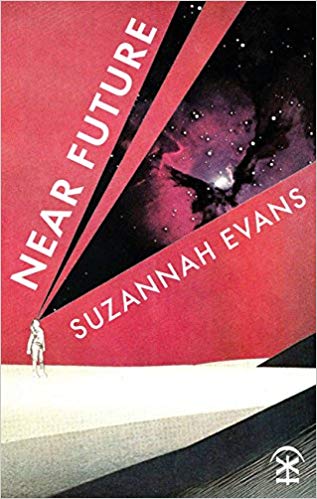
51g9rc0TRQL._SX315_BO1,204,203,200_

Suzannah Evans

Amazon says “Suzannah Evans lives in Sheffield and her pamphlet Confusion Species was a winner in the 2012 Poetry Business book and pamphlet competition, judged by Carol Ann Duffy. She has had poems published in The Rialto, The North, Magma and Poetry Review and her poem Helpline has been Poem of the Week on the Guardian website. She has been a Hawthornden fellow and was one of the 2015 Aldeburgh Eight. Suzannah works as a teacher of creative writing and a poetry editor. As a teenager she had an obsessive fear of the apocalypse which has informed and inspired many of her poems, and she still doesnt know whether its best to plan responsibly for the future or party like its 1999.”

The Interview

1. What inspired you  to write poetry?

I studied Keats’ Odes at A- level. After a lesson studying Ode on Melancholy I told my teacher that I felt depressed by the ideas in the poem. He had a really good answer for that, which was: ‘that means the poem made you feel something’.  So that was it for me then really. I realised that poetry could contain the whole of human experience and that I’d probably never be done with it.

2. Who introduced you to poetry?

My Grandmother used to read The Odyssey to me and my sister when we were quite young. That sounds a bit pretentious but the stories in that book are brilliant – monsters, witches, people turning into pigs etc. She did leave out the sex and violence though, she was a sensible Granny.

3. How aware were you of the dominating presence of older poets?

My school was quite supportive of creative writing and took us on a trip to Ty Newydd in north Wales where the tutors were real writers (including poets) and they seemed like fairly normal people. Like teachers really. I think I thought you had to be dead to be a properly famous poet though.

As I’ve taken poetry more seriously in adult life, I have found older poets to be really supportive and encouraging, not just of me but of poetry in general and new writers in particular. So a ‘dominating presence’ doesn’t really feel like the right term to me.

4. What is your daily writing routine?

It depends what phase I’m in. At the moment I’ve been focusing on editing a book so anything new I do write has been shoved out of the way in draft form ready for when I have time to work on it properly.

When I am getting a lot of writing done I will try to sit down to write a couple of times a week, usually in the morning. I think daily might be too much for me. I’d worry about running out of ideas, and my ideas turn into poems quite slowly – sometimes it can take six months or so. But when I do have an idea I am so obsessed with it that I can’t really do much else. And there’s reading as well. I spend more time reading than writing. I think it’s very important to do that.

5. What motivates you to write?

Obsession. I get completely obsessed with certain concepts and ideas until I’ve written about them. That and the fear of never writing anything again.
6. How do the writers you read when you were young influence you today?

Well, youth is relative. At university I discovered the poetry of Roy Fisher and suddenly felt like the landscapes and places that interested me, the everyday urban landscape, could become a subject for poetry and that was revelatory. His humour stays with me as well. I still think about those Keats odes and their rich sensory impact as a benchmark of what poetry can do. The bristling violence of Ted Hughes’ language is a reminder of the power of choosing the right words. That’s all men isn’t it? I expect we can blame the literary canon for that however.

7. Who of today’s writers do you admire the most and why?

I admire a huge number of contemporary poets. This year I have read incredible poems by: Danez Smith, Liz Berry, Amy Key, Jacqueline Saphra, Richard Price, Caroline Bird, Andrew McMillan. Those poets are all doing different things, so it’s hard to generalise about them. I like poetry that shows its heart but does it cleverly, perhaps that’s something that these poets have in common. I want a poem that will do something to my heart and my head at the same time.

9. What would you say to someone who asked you “How do you become a writer?”

Read more. Get obsessed with your art form. Get obsessed with your subject. Writing will follow.

If you mean the profession of ‘writer’ then that is harder to advise people on, because writing itself does not a living make, unless you’re very lucky. Look at what other skills you have alongside your creativity, because you’re going to need those. Are you good with people? Good with deadlines? Have a hawk-like eye for proofreading? You could run workshops. You could look for work as an editor. Are you happy to do writing alongside an unrelated part time job? For many people the answer is yes and it does not in any way de-value their work as a writer, or their passion for writing.

11. Tell me about the writing projects you have on at the moment.

I have a book about to be published in November:  https://ninearchespress.com/publications/poetry-collections/near%20future.html .

Near Future is a dystopian, apocalyptic book that I hope is as funny as it is dark. If you want to read poems about fatbergs, robot co-workers and starlings on antidepressants then this might be for you.


Wombwell Rainbow Interviews: Jordan Trethewey

Wombwell Rainbow Interviews

I am honoured and privileged that the following poets, local, national and international have agreed to be interviewed by me. I gave the writers two options: an emailed list of questions or a more fluid interview via messenger.
The usual ground is covered about motivation, daily routines and work ethic, but some surprises too. Some of these poets you may know, others may be new to you. I hope you enjoy the experience as much as I do.

37373940_1031663263678254_844845562049069056_n


One of Jordan’s collaborations with Dutch artist Marcel Herms

Jordan Trethewey

Jordan Trethewey is a writer and editor living in Fredericton, NB, Canada.
He is also a husband, father (to two kids, a black cat, and a Sheltie), beer-league softball player, and remote sensing analyst (by day).
https://jordantretheweywriter.wordpress.com/

The Interview

What were the circumstances under which you began to write poetry?

JORDAN: I believe it was while struggling through my Bachelor`s degree. I was involved with the drama group on campus, and was trying to develop my voice through dialogue and stage plays. Poetry came onto my radar when I dove deep into the song lyrics of one of my favourite bands, The Tragically Hip.  Gord Downie (lead vocalist) was unafraid to write about the unique aspects of his experience, country and region. That, and I fell in love with my future wife.

Who introduced you to poetry?

JORDAN: My mother, through nursery rhymes and children’s songs.

How aware were you of the dominating presence of older poets?

JORDAN: The Dead White Guy Canon is still out there, but I don`t let it intimidate me. I refer to the greats occasionally, but refuse to feel like what I have to say is inferior.

What is your daily writing routine?

JORDAN: I try to scratch out something every day. If not, I am usually puzzling out phrases in my head while I walk my Sheltie Porter, or when performing monotonous tasks at work.

What motivates you to write?

JORDAN: Death. The fear of being forgotten.

What is your work ethic?

JORDAN: In most aspects of my life I have had to shut down my perfectionist tendencies in order to survive my anxiety disorder. My writing is a different story, however. I write a first draft, usually in a notebook. At the end of the day I transcribe it, producing a heavily-edited second draft. Then I usually seek out a few trusted readers, and make appropriate changes coming out of those interactions.

How do the writers you read when you were young influence you today?

JORDAN: I grew up on a healthy diet of Green Eggs & Ham. Then I developed an admiration of Shel Silverstein. Both Seuss and Silverstein were metrical geniuses. And Silverstein’s off-kilter and darker world view aligned with my own. Their work is a subconscious template in my mind.

I also read a ton of Hardy Boys and The Three Investigators mysteries. Those along with Anything and everything by Mr. Stephen King definitely influenced my instincts for world-building.

Who of today’s writers do you admire the most and why?

JORDAN: I admire the poets I’ve met through some online forums and on Facebook over the past few years. People like: Ryan Quinn Flanagan, Rob Plath, Jenn Zed, Dan Flore III, Trish Saunders, Maria Mazzenga, Maggie Flanagan-Wilkie,  Tom Riordan, RC James, and Paul Brookes, of course. Their tenacity, commitment to the craft, and prolific productivity is inspiring.

Why do you write?

JORDAN: So I can leave a piece of me behind for my family and friends when I finally kick it.

What would you say to someone who asked you “How do you become a writer?”

JORDAN: Don’t second-guess yourself, or dismiss an idea before you write it down. I still refer to a quote by Mark Twain (which I wrote with a jumbo Sharpie on a small canvas, and hung above my desk), “Show up.”

Tell me about the writing projects you have on at the moment.

JORDAN: I am currently working with Dutch visual artist extraordinaire, Marcel Herms, on two collaborative poetry/art book projects.

I continue to work with UK artist par-excellence, Jenn Zed, on a speculative poetry/art saga called, SyncWorld.

As well, I am glacially picking away at an historical novel set during WWI in New Brunswick and France, while writing more poetry as a means of procrastination.


His wonderful.website at:

.
https://jordantretheweywriter.wordpress.com/

Wombwell Rainbow Interviews: Weasel Patterson

F WORD WARNING

Wombwell Rainbow Interviews

I am honoured and privileged that the following poets, local, national and international have agreed to be interviewed by me. I gave the writers two options: an emailed list of questions or a more fluid interview via messenger.
The usual ground is covered about motivation, daily routines and work ethic, but some surprises too. Some of these poets you may know, others may be new to you. I hope you enjoy the experience as much as I do.
wedontmakeitoutalive

Weasel Patterson

Weasel is a degenerate author and The Dude of Weasel Press. He released his latest book, “We Don’t Make It Out Alive” in May of 2018, and has also released a collection of short stories called “Jazz at the End of the Night.” Weasel was a Juried Poet for the 2016 Houston poetry Fest, and has also appeared in an indie documentary, “Something Out of Nothing (S.O.O.N.)” directed by Mitchell Dudley. You can find him on Facebook and Twitter.
http://www.poetweasel.com
http://www.twitter.com/systmaticweasel
http://www.facebook.com/poetweasel

Weasel
Author of Jazz at the End of the Night
The Dude of Weasel Press
Red Ferret Press, & Sinister Stoat
http://www.poetweasel.com

The Interview

1. What inspired you  to write poetry?

I started writing poetry around high school. You know, the usual whiny emo bullshit. I wasn’t much of a reader when I was younger, I read Poe, and most of the other classics for classes but that was about it. What really got me going was music. I used to study the lyrics of Queensryche’s Operation Mindcrime, Dio’s Holy Diver, Judas Priest’s Painkiller, and Alice Cooper’s Brutal Planet, among dozens of other bands. I started writing because of them. I always wanted to write a poem as awesome as the shit I listened to. When I got into college, I found the Beats. Kerouac, Ginsberg, and Burroughs and I fell down that hole real quick. Then slam poetry shortly after. I wanted to push myself to write as damn good as these poets, taking inspiration from shit that happened to me in my life. Still learning. Still growing. Still fuckin’ up, but it’s good writing.

2. Who introduced you to poetry?

Answer: There wasn’t a single individual in my life that showed me any poetry, honestly. But I suppose my creating writing professor nudged me towards poetry a bit more when I was in college.

3. How aware were you of the dominating presence of older poets?

Answer: Most of the poets I met and still talk with are older poets. I was always aware of that, I think. Most of the writers groups, poetry open mics, etc were filled with older poets, and it was cool. Now that I’m nearly 30 though, I’m an older poet (at least so I’m told).

4. What is your daily writing routine?

Answer: Shit. I wish I had a daily routine. When I do write, it’s in the morning, on the weekends. I read a variety of books, between indie poets, then switch it to something like Wakefield and Mojgani, and then an anthology or two I got on the shelf. Reading is always essential to writing. You learn styles, techniques, rhythm, just by looking and reading poetry so it’s one of the most essential parts of my writing process. I check my emails, then light up cause I can’t write without nicotine in my system, otherwise the keyboard makes me agitated. Then I start out with a word or a line and go from there. Sometimes I need to take it to pen and paper, but i always end up back at the PC.

5. What motivates you to write?

Answer: My writing comes from my own experiences. Lovers I’ve had and have, people who’ve given me problems for being gay, suicidal tendencies, etc. I write more narrative work, conversations between me and wait staff at restaurants, assholes in gas stations, things that are real. That you can hold onto.

6. What is your work ethic?

Answer: I bounce back and forth between depression and complete workaholic. If I’m in the latter, I’m working on Weasel Press stuff, Thurston Howl Publication business, and writing a fuckton. If it’s the former, i’m knocked the fuck out. There’s not a smooth process to it. It’s just something I gotta work out.

7. How do the writers you read when you were young influence you today?

Answer: I still read some of the writers I read when I was younger. I’ve gotten rid of maybe 80% of my book collection due to space/money problems, but I still have some old books lying around. Whenever I hit a rough spot, man, I go back to them. Like a back to basics.

8. Who of today’s writers do you admire the most and why?

Answer:  Chris Wise for his tenacity, and the ability to stand his own ground. He takes no bullshit and his work shows it.
Damian Rucci, dude’s an inspiration. When he’s got an idea or something he wants to do. He fuckin’ rolls with it.
Mary Margaret Carlisle, my mentor in a way. She’ll take your work, shred the paper right in front of you and make you rewrite it again from memory. It’ll piss you off but you’ll be better for it. Her work always amazes me when I read it.
Emily Ramser has this way of writing that I can’t explain. It’s damn good, unafraid.
Brian Kehinde, if you’ve never read one of this poems you need to. The way he blends erotica, anger, disdain, and love in a whole book is amazing.

9. Why do you write?

Answer: I couldn’t imagine doing anything else. I’m not patient enough to be an artist, and words are a whole other drug.

10. What would you say to someone who asked you “How do you become a writer?”

Answer: I tell them, I became a writer because people are assholes.

11. Tell me about the writing projects you have on at the moment.

Answer:  I just put out a book, “We Don’t Make It Out Alive,” $10 on amazon, but if you email me I’ll send it to you for $6 via paypal. it’s a small chapbook of poetry, has some kickass art by Joseph Chou. email: thedude@weaselpress.com if you want a copy.
Aside from that, I’m writing a novella called Honey & Fire, sort of a anthropomorphic lit book. Still figuring out where it’s gonna go.
Hoping to have a new book of poetry out in 2019 as well, already kickin’ out new poems for it. You can check out some new poems at my twitter: http://www.twitter.com/systmaticweasel

Wombwell Rainbow Interviews: Lesley Quayle

Wombwell Rainbow Interviews

I am honoured and privileged that the following poets, local, national and international have agreed to be interviewed by me. I gave the writers two options: an emailed list of questions or a more fluid interview via messenger.
The usual ground is covered about motivation, daily routines and work ethic, but some surprises too. Some of these poets you may know, others may be new to you. I hope you enjoy the experience as much as I do.

BlackBicycle4Front[94832]

Lesley Quayle

Lesley Quayle was born in Fife and spent much of her childhood in Glasgow. She lived for thirty years in Yorkshire, with her veterinary surgeon husband and four children on a small farm where she bred Herdwick sheep and trained Border Collies. A co-editor of Leeds based poetry magazine, Aireings, for 10 years, she and her husband also ran a folk/blues club in Horsforth. She was a winner of the BBC Wildlife Magazine Poet of the Year award and the Trewithen Prize for rural poetry and she has been placed first in the Split the Lark and Envoi poetry competitions.  Her poetry, flash fiction and short stories have appeared in many magazines and journals and she has read at the West Yorkshire Playhouse and on BBC Radio 4’s Poetry Please. She has a chapbook, Songs for Lesser Gods (erbacce) and a collection, Sessions (Indigo Dreams) plus her most recent pamphlet from 4Word – Black Bicycle.

The Interview

1. What inspired you to write poetry?

Almost from the moment I learned to read, I wanted to write. It’s pretty much a compulsion and I can’t imagine not writing, particularly poetry. I have always been inspired by the natural world and indeed the first major poetry award I ever won was the BBC Wildlife Magazine Poet of the Year, with a poem about the sad demise of my ancient Herdwick ram. My poems are more often than not trailing mud in their wake and have bits of grass and leaves and the odd feather dangling from their hair.

2. Who introduced you to poetry?

My mother.  She was an avid reader and a poetry lover who not only read to us as small children, but recited favourite poems and encouraged us to read poetry. Burns and Dylan Thomas featured large in her repertoire and, for some reason, she could recite almost the whole of Francis Thompson’s The Hound of Heaven. Later, encouraged by an English teacher at my horribly staid girls’ grammar school, I ventured away from the school curriculum (Blake, Byron, Keats, Shelley, Browning etc) and discovered the Liverpool Poets. The same English teacher took a group of us to see Brian Patten and Roger McGough and, being an acquaintance of Patten, he introduced us to him, explaining that I wanted to be a poet. ‘Well be one then. Don’t let anyone tell you you can’t.’ said Patten with a smile – which was all the encouragement I needed. Life got in the way for a while, including children, but I eventually went to university in my thirties and studied Literature – only to be a little disappointed that the curriculum was still dominated by the same poets I’d studied for A Level. However, I was, via my lecturer, Cal Clothier – a well-known (sadly deceased)Yorkshire poet – introduced to the work of Hughes, Plath, Tony Harrison, Rabindranath Tagore, Anne Sexton, Ian McMillan, Anna Adams, among others, and to a group called the Pennine Poets, of which I was honoured to become a member, much later. Now, I read everything I can, although I still have a huge soft spot for all the above mentioned.

3. How aware were you of the dominating presence of older poets?

When I first joined Pennine Poets and Aireings, a Leeds based magazine I later co-edited with Linda Marshall for 9 years, I was the youngest person in the group. So, from that point of view, I was in awe of their achievements and experience. In the wider world, I was only aware of poets that I admired and writing of a standard I dreamed of attaining, by scouring bookshops and libraries. Access to other poets, of any age, was very limited due to geography and family/work/life commitments. No internet at that time, only snail-mail, and I often felt isolated from any wider poetry community that there might have been.  Now, I’m an ‘older’ poet and, oddly, I’m very aware of the dominating presence of the younger ones – probably due to social media. It’s no bad thing and I’m not complaining as I’m blown away by the standard of so much of their work and the energy needed to be a part of the current ‘scene.’

4. What is your daily writing routine?

I don’t have one. As anyone who knows me well will attest – routine and I don’t see eye to eye. I spent so much of my life shoe-horning writing into any small gap in the day not taken up by my children, the farm, my elderly parents and my husband’s job, that I have never developed the knack of routine. This means that I am an inveterate scribbler and last-minuter. Empty my bag and you will find scraps of paper, receipts and backs of envelopes scrawled with poetry and ideas for poems, along with the usual ten year old lipsticks, hairy Polo, tissues, broken penknife and bar of chocolate – just in case of a hypo!

5. What motivates you to write?

The more rushed I am, the more the poems come knocking urgently. Almost anything  can motivate me from an overheard conversation, a single word, an emotional response, a view, being outside, nature, hard work, pain and injustice.

6. What is your work ethic?

Poetry hasn’t ever felt like work to me. When you’ve been up all night in the lambing shed or hauling bales or chasing sheep in the snow, or trying to organise four children to get up, get dressed, get out and go to school (or do anything!) shopping, cooking, cleaning, driving – poetry is a blissful respite. It’s not a part of my work ethic, I guess, because I don’t consider it work.

7. How do the writers you read when you were young influence you today?

Truthfully, they probably don’t influence me these days. My reading and writing habits have moved in many directions since I first discovered them, but they underpin my literary footings so I hold them dear and return to them again and again.

8. Who of today’s writers do you admire the most and why?

Helen Mort is someone I admire enormously. Her work seems so effortlessly accomplished and never a word out of place. I love her poetry. I was delighted to be part of her Leads to Leeds project, which paired poets to write and respond to individual poems about the city. Her innovation and encouragement were in no small part responsible for the fascinating and diverse poetry that emerged from the venture. I’m also a huge fan of Liz Berry, Ian Duhig, Caroline Bird, Roddy Lumsden, Paul Henry. These are just a few who immediately spring to mind – there is a huge pool of modern poetry to be admired.

9. Why do you write?

The simple answer is because I have to. It’s a compulsion and a passion.

10. What would you say to someone who asked you “How do you become a writer?”

By writing. There’s no mystique. Just as Brian Patten once said to my 15 year old self, if you want to be a writer – be one.

11. Tell me about the writing
projects you have on at the moment.

Earlier this year, I embarked upon the 4Word Poetry Press venture with Stella Wulf. Stella and I first met on 52 – the online ‘write a poem a week’ group, devised by Jo Bell. The whole 4Word project arose as a result of a Facebook thread and our first three pamphlets were launched in May of this year. We have just launched a fourth (Girl Golem by Rachael Clyne) and are currently working on our fifth, by Mary Norton Gilonne, to be released on December 1st. And there are three others in the pipeline. (See 4Word.org for details) Exciting times.
On a personal note, I am working on a series of pieces about what I feel it’s like to be an older woman, or rather what it’s like to realise you’re not young anymore! And there are also poems which just happen upon me or trip me up in my day to day musings. I’m still submitting poems to various magazine, online and print and, to my joy, still getting accepted. And there is my novel, languishing in a file and still needing to have a final, hard, editing thrash. It’s a procrastination project – terrible when cleaning the fridge can seem more pressing, even attractive, than getting to grips with the dread task of editing.

Wombwell Rainbow Interviews: Ian McMillan

Wombwell Rainbow Interviews

I am honoured and privileged that the following poets, local, national and international have agreed to be interviewed by me. I gave the writers two options: an emailed list of questions or a more fluid interview via messenger.
The usual ground is covered about motivation, daily routines and work ethic, but some surprises too. Some of these poets you may know, others may be new to you. I hope you enjoy the experience as much as I do.

untitled (4)

Ian McMillan

Ian McMillan was born in 1956 in Darfield, a village near Barnsley, where he still lives. He always wanted to be a writer but all the books he got out of the library were written by people who lived in Surrey, not the Yorkshire Coalfield. He attended North Staffordshire Polytechnic, was a drummer in Barnsley’s first folk-rock band and worked in a tennis ball factory before finally becoming a writer. He’s been poet in residence at Barnsley Football Club, Northern Spirit Trains and Humberside Police. He’s written comedy for radio and plays for the stage. He currently presents The Verb, Radio 3’s Cabaret of The Word, and has also worked extensively for Radios 1,2,4 and Five Live as well as for Yorkshire Television and BBC2’s Newsnight Review. He’s worked in schools, theatres, arts centres, fields and front rooms.

The Interview

1. What were the circumstances under which you began to write poetry?

I started at school because I was lucky to be born into an era when the West Riding Local Education authority believed in the innate and perfectible creativity of children!

3. Who introduced you to poetry?

That would be my marvellous teachers like Mrs Hudson, Mrs Robinson, Mr Moody…

5. How aware were you of the dominating presence of older poets?

As I got older I was in the shadow of big figures like Dylan Thomas, Ted Hughes and RS Thomas.

7. What is your daily writing routine?

I get up very early and write after I’ve done my exercises and my early stroll. Mornings are best for me and in the afternoon I start to fade away, but I do try to write every day otherwise I might forget how to do it!

9. What motivates you to write?

Trying to shape language to my will, and often failing!

11. What is your work ethic?

I’ve been self employed for thirty-odd years so I’ve always believed you’re only as good as your last gig, so I try to work as hard as I can.

13. How do the writers you read when you were young influence you today?

They still pop up, I’m sure, Dylan Thomas especially.

15. Who of today’s writers do you admire the most and why?

I go back to the late Roy Fisher a lot, and I’m currently enjoying the work of Louise Gluck
I like poets who can make me think hard and also send me into meditative mode so that the words swim around in my head while I’m thinking about something else.

9. Why do you write?

I can’t think of anything else I could do!

10. What would you say to someone who asked you “How do you become a writer?”

Read a lot and read as a writer rather than as a reader; work out how the writer has dome what they do. And then just start writing!

11. Tell me about the writing projects you have on at the moment.

I’m working on lyrics for a new album with my mate Luke Carver Goss; it’s always a dance around rhythm and rhyme and syllables and stresses.


Wombwell Rainbow Interviews: Daginne Aignend

Wombwell Rainbow Interviews

I am honoured and privileged that the following poets, local, national and international have agreed to be interviewed by me. I gave the writers two options: an emailed list of questions or a more fluid interview via messenger.
The usual ground is covered about motivation, daily routines and work ethic, but some surprises too. Some of these poets you may know, others may be new to you. I hope you enjoy the experience as much as I do.

41aRkDpCzuL._SX331_BO1,204,203,200_

Daginne appears in this anthology

Daginne Aignend

According to Creative Talents Unleashed “Daginne Aignende is a pseudonym for the Dutch poetess Inge Wesdijk. She started to write English poetry four years ago and posted some of her poems on her Facebook page and on her website. She likes hardrock music, photography and fantasy books. Daginne is a vegetarian and spends a lot of time with her animals.”

She’s the Poetry Editor of Whispers.

The Interview

1. What were the circumstances under which you began to write poetry?

A teenager who noticed the changes in her life, became aware of the world around her, fell in love for the first time. A lot of questions and uncertainties, slowly growing into the responsibilities of adulthood.

2. Who introduced you to poetry?

Poetry found me but if you mean who introduced me to the world of published (online) poetry then Ken Allan Dronsfield and Michael Lee Johnson really helped me.

3. How aware were you of the dominating presence of older poets?

To be honest, I wasn’t impressed. At first, I just wanted some publications of my work, call it recognition, and since I have achieved that I just write for fun. I think older established poets and new temporary poets can easily exist together in poetry world.

4. What is your daily writing routine?

I don’t have a writing routine when I feel like writing I start a poem or story.

5. What motivates you to write?

A feeling, an article in a magazine,  the scent of a flower, a singing bird. In short: impressions.

6. What is your work ethic?

I don’t write about the adoration of brutality, violence, abuse and gross sex. Erotica can be ok when written in a subtle way. Personally, I don’t write about erotica, somehow I think it’s too private.

7. How do the writers you read when you were young influence you today?

I don’t think I’m influenced by one of them. I just write how I write.

8. Who of today’s writers do you admire the most and why?

I’m not the admiring type, I like poetry or I don’t. Of course, it’s a matter of personal taste.

9. Why do you write?

It’s an urge, I have to.

10. What would you say to someone who asked you “How do you become a writer?”

That question isn’t easy to answer. You need the skills to trust your feelings, meanings in words on the paper but I think that is logical. Perhaps for some writers, writing groups can help to get inspired and for some self-confidence. Most of all, believe in yourself and don’t get discouraged when your submissions are rejected.

11. Tell me about the writing projects you have on at the moment.

At the moment I have no plans at all due to health problems. In the future, I might like to do  some collaborations with other poets perhaps in combination with my art photography