Wombwell Rainbow Interviews: Carol Robson

Wombwell Rainbow Interviews

I am honoured and privileged that the following writers local, national and international have agreed to be interviewed by me. I gave the writers two options: an emailed list of questions or a more fluid interview via messenger.
The usual ground is covered about motivation, daily routines and work ethic, but some surprises too. Some of these poets you may know, others may be new to you. I hope you enjoy the experience as much as I do.

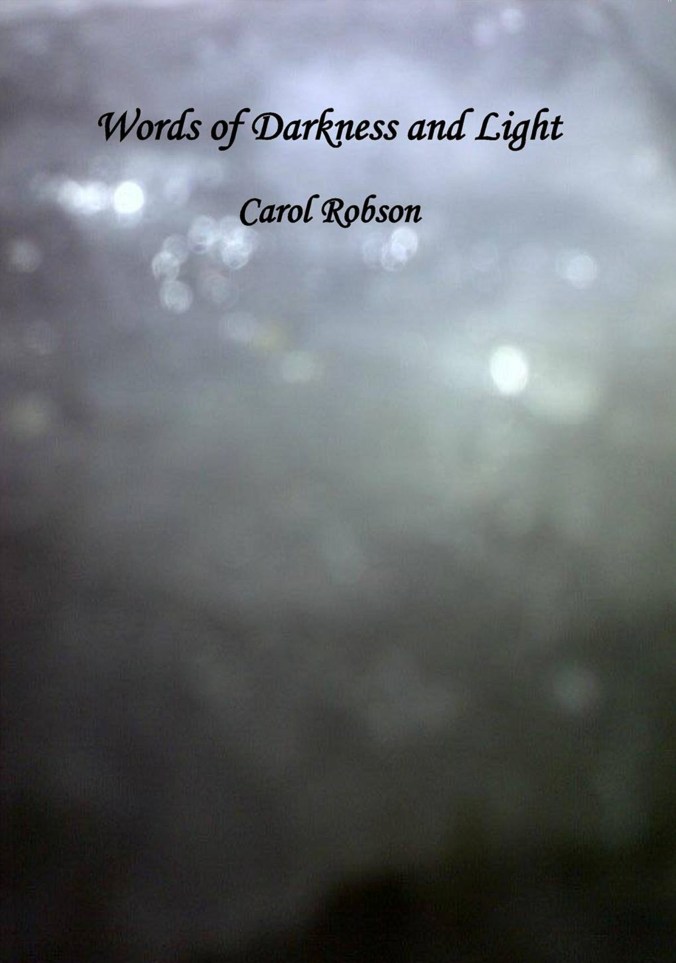
book cover

Carol Robson

Carol has been performing at Spoken Word events since 2010, she also gradually started dabbling with comedy as well, which she now includes as part of her Spoken Word/Comedy show and was delighted to be able to perform at the 2015 UK Women in Comedy Festival in Manchester.
Carol has also performed in venues, Festivals/Fringe events from Brighton to Edinburgh such as Ilkley, Buxton, Manchester, York, London, Newcastle and Edinburgh.
In 2014 her solo Edinburgh Fringe show received a 4star review from BroadwayBaby.
In 2015 she was part of a performance around intergenerational words called ‘The Open Sky’ first performed at Peckham Liberal Club before a performance in the Van Gogh Museum in Amsterdam.
In 2016 Carol performed her new show ‘Just Saying How It Is’ at the Great Yorkshire Fringe in York and Camden Fringe. Her eclectic material is taken from everyday real live, which can be serious or she uses humour, ie: ‘Just Saying How It Is’ and labels herself as the Paranoid Party Poet.
In 2018 Carol performed at the Cheltenham Poetry Festival.
Carol was honoured to be invited to perform some of her poetry at the Harms Of Hate event funded by the Home Office and held at the Magna Science Park in Rotherham on Sept 27th 2018, she wrote the poem ‘No Labels’ especially for this event.

The Interview

1. What inspired you to write poetry?

I didn’t go to University until I was 52 as a very mature student and I found I had to write lots of assignments. I did find it hard at first then started to enjoy it although I found it easier to talk my thoughts/words to an audience, I guess that is why I love being a spoken word/poet performer. Leaving University I started to feel as though I wanted to write stories but drifted into poetry after showing 2 poems to a Sheffield poet who told me to write more

2. Who introduced you to poetry?

So many to mention, but if put on the spot it was when I went to a reading at Sheffield University bookstore and listening to Sally Goldsmith because I was so interested in real life stories, people lives and she advise to go to poetry writing workshops which I did.

3. How aware were you of the dominating presence of older poets?

Being an older poet I was more aware of much younger poets and to be honest learnt so much from them as I did some poets same age or older than myself, to be honest I found some of the poets same age or older a bit stuffy and totally not in touch with what I wanted to write about,.

4. What is your daily writing routine?

I really don’t have a daily routine, I am a very spontaneous person and I must start writing my poetry, make notes or rough drafts as soon as it comes in my head, I even have a notepad on my bedside cabinet.

5. What motivates you to write?

So many issues of this world, simply my heart and mind. Seriously I write about anything but at the forefront I write poems on issues around Mental Health, Domestic Violence, Gender, Social Comment, Human Rights,  Yorkshire, LGBT and real life issues and sometimes political, I also love to inject humour where and when appropriate.

6. What is your work ethic?

The reliability of any sources that I use for inspiration also my integrity and a sense of responsibility and respect when something  from marginalised groups of people inspires me to write a poem.

7. How do the writers you read when you were young influence you today?  To be honest I was a terrible reader in my younger life but as a child I did love Black Beauty by Anna Sewell and the Grimm’s Fairy Tales. So I guess it was more in later life that I have  grown to admire writers.

8. Who of today’s writers do you admire the most and why?

I do really love a good Autobiography/Biography but these writers I really loved because I went back and read their books again, Michael Ondaatje, Hanif Kureishi, Kathryn Harrison, V G Lee, Spike Milligan. I have so many poetry collections from fellow poets and I love them all and these are still my main source of reading material today, so I won’t name anyone in particular.

9. Why do you write?

Several years ago I did an open mic in Sheffield, lots of students there and after my slot one student told me they loved my poetry but I must be 20-30 years older than the other open micers and why am still doing it; ‘I simply replied ‘because I fucking can’ Writing has become part of me, I write more to perform and my inspiration was to write a my one woman show to take to Edinburgh Fringe which I did in 2014 and received a 4star review from BroadwayBaby. Also my collection Words of Darkness and Light was published in 2014.

10. What would you say to someone who asked you “How do you become a writer?”

Learn as much as you can about being a writer, research for me is a key factor, also attending writing workshops and go to listen to other writers giving talks. It has to be in your heart, be prepared to be disappointed but don’t let it break you.

11. Tell me about the writing projects you have on at the moment.

I am still putting some poems together some old, some new for my second collection, the title could be around the performance  that I do of ‘Just Saying How it Is’ at the moment this is just a pamphlet size piece of work.

Website: Just Saying How It Is, carolrobson.com
Twitter: @CarolRobsonPoet

Wombwell Rainbow Interviews: Jana Begovic

Wombwell Rainbow Interviews

I am honoured and privileged that the following writers local, national and international have agreed to be interviewed by me. I gave the writers two options: an emailed list of questions or a more fluid interview via messenger.
The usual ground is covered about motivation, daily routines and work ethic, but some surprises too. Some of these poets you may know, others may be new to you. I hope you enjoy the experience as much as I do.

51KK0vgYSpL._AC_SX348_SY500_QL65_

Jana Begovic

As far back as she can remember Jana has been fascinated by storytelling and intoxicated with the written word. As a young child, she began spinning tales, talking to an imaginary friend and devouring fairy tales. As a teenager, she wrote maudlin love poetry, and as a young mother a collection of fables. Her love of reading and writing propelled her toward studies of languages and literature resulting in B.A. degrees in English and German Languages and Literature, an M.A. Degree in Literary Studies, as well as a B.Ed. Degree in English and Dramatic Arts. She works for the Government of Canada in the field of military language training and testing and her work, as a subject matter expert, has taken her all over the world. She was born in Sarajevo, Bosnia and Herzegovina, but has lived in Canada since 1991.
Among her publications are an academic article published by Cambridge Scholars, UK, the novel “Poisonous Whispers” published by Roane Publishing, N.Y., poetry, short fiction, articles, art reviews and blog posts published by literary journals and other publications. Currently, she is working on her second novel, and finalizing a collection of children’s stories. In addition, she acts as a guest editor for the literary journal Ariel Chart.
She lives in Ottawa, Ontario with her husband.

The Interview

1. What inspired you to write poetry?

A lifelong fascination with the written word, and a desire to express myself through different literary forms, including that of poetry. I began to write poetry in my teenage years, the period of my life when poems proved to be the best creative outlet for my maudlin and melancholic moods, as well as my budding longings for Romantic love.

2. Who introduced you to poetry?

It was an elementary school teacher who encouraged me not only to read different genres, but also to attempt to write poetry after I revealed to her how spellbound I was by Edgar Allan Poe’s poems.

3. How aware were you of the dominating presence of older poets?

As an avid reader, I was always aware of the presence of the poets belonging to different eras, or those of an older generation. As someone who studied English and German literature, the poets belonging to the different historical periods were sources of reading delight and inspiration. Among them were Byron, Keats, Novalis and Goethe.

4. What is your daily writing routine?

I wish I had a daily writing routine, that is, I wish I wrote much more than I do. Writing is currently a hobby and a passion for which I have to make time in my busy schedule. For my author page, for example, I write micro fiction every few days. At times, I work on my second novel daily, and at other times, I let the storyline simmer and ferment in my sub-conscious for weeks or even months until I am ready to continue. Inspiration sometimes strikes suddenly and a poem is born in a few minutes while I am sitting in an airport, or I do not write a word for a few days. My writing routine, in other words is highly unpredictable and I clearly lack writing discipline. But then again, I do have a full-time job, and I travel extensively on business, as well enjoy a family life, social gatherings etc.….lots of excuses.

5. What motivates you to write?

A voice within me that clamours to be heard, a creative spark that turns into a flame that cannot be ignored, life events which I try to alchemize through the art of writing, and an urge for creative expression. I am also motivated by the stories friends and acquaintances tell me, and I weave them into my writing.

6. What is your work ethic?

To write what I feel, to express who I am, to be true to myself, to develop a singular and recognizable style.

7. How do the writers you read when you were young influence you today?

When I was young, I read classical literature and especially enjoyed English literature. When I was even younger, as a child, I loved fairy-tales and fantasy. For that reason, as a writer I am mostly drawn to speculative literary fiction, a hybrid between literary fiction and fantasy. That could be ascribed to the influences of the books and authors I read when I was young.

8. Who of today’s writers do you admire the most and why?

Julian Barnes, Haruki Murakami, Kazuo Ishiguro, Margaret Atwood are some of the writers I admire because of their literary depth, and their power to ignite my own thoughts. I crave books that teach me something knew, that give me reading pleasure and that have undeniable literary merit toward which I can also strive.

9. Why do you write?

To achieve inner renewal, to transmute reality, to appease a haunted hunger for creative expression within myself, and perhaps to create something that temporarily feels like an antidote to mortality.

10. What would you say to someone who asked you “How do you become a writer?”

The same way you become a painter, or a chef, or a musician. You listen to the whispers of your soul, and your respond to the impulses that propel you to any kind of creative expression. Avid readers usually turn into writers. Sometimes, a great sorrow or a great joy suddenly turn people into writers because overwhelming emotions often demand to be processed through some kind of art form. A strong desire to become a writer coupled with a writing talent is usually the first step. Nowadays, with the advent of self-publishing, anyone can become a writer with sufficient persistence and passion.

11. Tell me about the writing projects you have on at the moment.

I am in the final stages of finishing my second novel, I plan to finalize a collection of children’s stories that needs some more editing; I am also working on co-authoring an academic article and have a few poems and a short story in a draft form. I am also a guest editor for the literary journal Ariel Chart, so along with a full-time job as a language specialist for the Canadian government and other commitments, my days are quite busy.

Jana can be reached via her Facebook author page: https://www.facebook.com/J.Damselfly/notifications/

Her debut novel poisonous Whispers can be found at:

Wombwell Rainbow Interviews: Brett Evans

Wombwell Rainbow Interviews

I am honoured and privileged that the following poets, local, national and international have agreed to be interviewed by me. I gave the writers two options: an emailed list of questions or a more fluid interview via messenger.
The usual ground is covered about motivation, daily routines and work ethic, but some surprises too. Some of these poets you may know, others may be new to you. I hope you enjoy the experience as much as I do.

51jhlE-Qq-L._SX317_BO1,204,203,200_

Brett Evans

Brett Evans lives, writes, and drinks in his native north Wales. His favourite companion is centenarian, curmudgeon Jack Russell, Remi. Brett is co-editor of poetry and prose journal Prole, his debut poetry pamphlet The Devil s Tattoo was published by Indigo Dreams in 2015.

The Interview

1. What were the circumstances under which you began to write poetry?

Hi Paul, first of all thank you for inviting me to do this interview.
To answer that first question, I’m not really sure. I’d always written lines that didn’t go all the way to the right hand margin but by no means was it poetry – I didn’t know a sonnet from a sestina back then. I think it was after returning to Shakespeare (when taught at school it was tedium at its most dense) and Wilde I began to look into poetic form and meter.

2. Who introduced you to poetry?

Well, when I was a child my aunt was always buying me books as presents, a lot of them based on the epic poems but child friendly illustrated editions so I didn’t know it was based on a poem when reading Sir Gawain and the Green Knight or something. I remember in primary school watching a TV adaptation of Homer’s Odyssey – in my mind it was animated but it may have just been a series of illustrated stills being narrated over. Again I had no idea this was based on poetry.
But one clear memory is of being in the Pen-y-Bont pub in my hometown of Abergele back in the early 90s and heroic drinker and fine, sweet man Geoff Bunn was in (something of a local legend was Geoff) and he was pissed, and I was pissed and he was at the bar reciting words that although made no sense to me in my inebriated state (and they may not have done sober) they drew me in, something resonated (and again they may not have done sober). I asked Geoff what the hell he was on about. Shakespeare, he told me. Henry V. Well, perhaps not the very next day but certainly within a week I had tracked down the complete works of the man and a dvd of Henry V. The words, thankfully, still hit home when I was sober. Geoff could also do whole Goon shows and all the voices. A much missed man. I don’t think he knew how much he altered the course of my life that night. And I do hope I told him.

3. How aware were you of the dominating presence of older poets?

Hmm I think as a teen I thought that’s all there were: dead poets with legacies – Keats, Byron, Whitman (other than possibly Pam Ayers! Ah no, my brother did have a John Cooper Clarke LP and a book of Max Boyce poems). Further investigation proved otherwise of course. I don’t think my being aware of them influenced much, some I admire whilst others I don’t, all down to taste. There will always be dominating presences (and they can be to the good) and there will always be dominating and damning elites. Not being Stevie Ray Vaughan didn’t prevent my picking up a guitar. If such presences can influence one to write (or do whatever) whether via emulation or revolution, all good.

4. What is your daily writing routine?

I don’t have one. Simple. I co-edit a literary journal of short stories and poetry, Prole http://www.prolebooks.co.uk/ and that takes up an awful lot of my time. We like to respond to submissions quickly but also to fully consider them, not sit on work for months.  I would love to have the luxury of a writing routine and perhaps if I sorted out my own messy mind I could fit one in but truth is if I have an idea it can come out just like that or it can mature in my head or in draft form for months.

5. What motivates you to write?

Well if it were money I wouldn’t be writing poetry. I don’t know. Is ‘for the sheer enjoyment of it’ too simplistic an answer? Sometimes there’s nothing wrong with keeping things simple.

6. What is your work ethic?

Christ, I don’t think I was instilled with a work ethic even when I held regular jobs. Get it done and get to the pub was always my view. When asked ‘How do you know when a poem is finished?’ Sean O’Brien (a poet I admire very much) said ‘When there’s nothing left to take out’ and I try to apply that ethic when redrafting poems. I do tend to see a lot written today that makes me think ‘Is this just the first fucking draft?’ rambling, over-written, I’m sure it’s just a question of taste in style but to my eye such poems read messily.

7. How do the writers you read when you were young influence you today?

Hmm well I don’t think the Elric novels of Michael Moorcock influence my poetry in anyway though I would like to sit down and read them again after all these years! Nor the Mr Men.

8. Who of today’s writers do you admire the most and why?

I’ve mentioned Sean O’Brien above whose work and tone was a huge influence (as was the man himself on a residential course I did back in 2008 or 2009). I admire the US poet Quincy R Lehr for his acerbic wit and way with formal verse – and for not shying from stating that Don Share doesn’t half publish some shite. The recently deceased Irish poet Macdara Woods I admired greatly. I think it an exciting time for small presses, this year I’ve bought more poetry books than ever and there’s been some great work by names that will not appear to be as celebrated as Ocean Vuong – heaven help us.

9. Why do you write?

Because jogging makes me spill my martini.

10. What would you say to someone who asked you “How do you become a writer?”

I would likely say they were asking the wrong person. However, if they persisted I would say read and read wide: poetry, novels, plays, history, biographies, anything but The Daily Mail. And read critically. Write. And know a lot of what you write won’t be much good but enjoy it for the process. Edit, and when you edit be honest, be harsh, be a bastard. And enjoy the process. If you decide to write poetry, read ‘about’ poetry, and same goes if you decide to write a novel or a screenplay, read about the craft.

11. Tell me about the writing projects you have on at the moment.

Well, I don’t want to disclose too much information but let us say I have an idea for a lot of poems that interact with one another, several threads – historical and personal. I’ve an awful lot of reading to get through to finish my research but I’ve about half a dozen of the poems down. It may work, it may not but I know it will keep me busy for quite some time.

Wombwell Rainbow Interviews: Grant Guy

Wombwell Rainbow Interviews

I am honoured and privileged that the following writers local, national and international have agreed to be interviewed by me. I gave the writers two options: an emailed list of questions or a more fluid interview via messenger.
The usual ground is covered about motivation, daily routines and work ethic, but some surprises too. Some of these poets you may know, others may be new to you. I hope you enjoy the experience as much as I do.

Grant Guy

Grant Guy is a Canadian poet, writer and playwright. He has over one hundred poems and short stories published internationally. He has five books published: Open Fragments, On the Bright Side of Down, Blues for a Mustang, The Life and Lies of Calamity Jane and Bus Stop Bus Stop. He was the 2004 recipient of the MAC’s 2004 Award of Distinction and the 2017 recipient of the WAC Making A Difference Award.

The Interview

1. What inspired you to write poetry?

I have only taken up poetry recently as my prime activity. In the past it was a sidebar, an avocation. Before that I was as a playwright, director, designer and puppeteer. While I have written poetry in previous years, published now and then, theatre dominated. I identified myself as a theatremaker. But it was through my work in theatre that brought me to poetry and prose. It was at ADHERE + DENY I began to think of myself as a playwright. I wrote, collaged and adapted the several scripts for the company. Prior to
A+D I wrote scripts for The Popular Theatre Alliance of Manitoba, Video Pool and the Manitoba Association of Playwrights, The Winnipeg Fringe Festival, and elsewhere, but I did not refer to myself as a playwright. I began to enjoy writing more than all other aspects of theatrical creation. Poetry and short stories soon followed. Theatre is now a sidebar.

So it was not so much as to what was the inspiration as it was a progression.

However, still saying all that, my earliest interest in poetry began in my junior high school days. Until then, writing was an alien concept for me as a Canadian. In schools we were taught the poetry of English and American poets. However, it was the discovery of Bliss Carmen that changed all that for me. A Canadian that wrote poetry?  Wow! That led to A. M. Klein, Frank Scott, Stephen Leacock and, of course, Leonard Cohen. My writing ambition suffered a set back in my high school years when I was expelled from school because of a story I wrote for my English class. The piece was a kind of derivative merger of Dylan Thomas and Richard Farina. The high school thought I was a drug fiend. Wounded I never looked as writing as an option until the 1980s. In the 1980s I discovered Milton Acorn, Pat Lowther and Tom Wayman. In the 1980s my first poem was published. The 1980s not only my renewed interest in poetry but also gave me the confidence to write for theatre.

2. Who introduced you to poetry?

It was not so much who introduced me to theatre. It was what. In grade 5 or 6 my class went on a field trip to see a Van Gogh exhibit. It was at the exhibition I decided I wanted to be an artist. I went to the library and borrowed what I could find on Van Gogh, including his letters to his brother. His writing had a greater impact on me. But the lack of Canadian content in our education system way back when was still a determent. It was the hippie years when I decided that being an artist was possible. Cohen burst onto the scene. With him a literary history I was blind to, writers like Layton, Birney and others. But it was through circumstances and friendship, and wanting to shortcut my education, I found theatre design to be the immediate recourse to the arts. I have a good sense of space and volume, but because I am a text based person theatre was my earliest path.

3. How aware were you of the dominating presence of older poets?

I have many friends who are visual artists. In the visual artists one is more inclined to kill their fathers, something suggested by Mark Rothko. But I was a theatre artist. Theatre has a boatload of historical baggage. I never wanted to kill my fathers. Or bulldoze the past. For me my elders and history are material for work. That does not suggest I ignored the their humanity or the humanity of the work. I saw my elders as people and as abstraction. Theatre introduced me to Brecht and Mayakovsky, They in turn led me to Levertov, Ferlinghetti, Vallejo, Whitman and Lorca. They jockey back and forth in prominence but remain vital in my process and work. The influence may not be obvious but sometimes when someone can do things I cannot I have admiration for them. The initial poetic influences have been joined by other older poets and more contemporary poets. I would say Adrian Mitchell, the British poet, is a primary influence for me currently: to take poetry sincerely but less seriously. Bukowski is an influence for the same reason.

4. What is your daily writing routine?

It varies on the project. For my poetry I am open to inspiration. I take a pen and notebook with me everywhere. I write down observations, thoughts and phrases as they pop up in my life. Later I will transpose those ideas into poems, but no regimented time is set up. No getting up at 5 a. m. or something like that. An idea for a short story will pop up in a similar way as the inspiration for a poem. But I will set up time in the evenings to work on the short story. Short stories are painful for me. For playwriting, when working on a new script, I will establish a regimented work time. Playwriting is like going to the office. I also find visiting a coffee bar a good place to write. I try to visit one everyday. The hustle and bustle is energetic. I am a bit of a flâneur.

5. What motivates you to write?

An obsession I cannot shake. Currently it is a theatre piece on the “Beat Generation”. Otherwise, I keep myself open and alert to the world around me. My roots are in theatre. Theatre is a story telling format of the human drama. I remain committed to our human drama, but it is not the epic drama that interests me but in the snippets of human drama. I am keenly alert to the absurdities of our human drama. Earlier on I got entangled in metaphors and symbolism. I realized that is not me. I am the narrative and the comic turn, the vaudevillian turn. Many poets thrive on the metaphor and I admire them. I cannot honestly do it any more for myself.

Others things that motivate me might be a lyric from a song. I am working on a piece about funerals, how we need to assure our immortality by stamping our names on hospital research centres or on sports arenas. The spark came from a song by Lucinda Williams warning us about expensive funerals.

Another inspiration is travelling. I am like the grasshopper in Aesop’s fable. As soon as I have a bit of money in my pocket I am off. In travel you meet people you will never see again. I meet people who are completely different from me. People share their personal narratives more easily if they know they will never see you again. I call train travel a rolling confessional. Travel is a big inspiration for the snippets of our human drama.

Yes, mostly it is life.

6. What is your work ethic?

I have a horrible work ethic. Often I would rather flâneur or anything to get down to work, but once I get started it is hard to stop. I have been known to go for days with little sleep while working on a play.

7. How do the writers you read when you were young influence you today?

While I respect and admire writers I read when I was young their influence has weakened over time such as Dylan Thomas, with maybe the exception of Brecht. It is the poets I discovered in my thirties that have impacted me more and to a degree they still do today. Tom Wayman’s narrative style I found to be refreshing. I still come back to him. Al Purdy I discovered in the 1970s and still admire him today. Someone I dismissed when I was young was Charles Bukowski. Today his unadorned poetics are very significant on me. I mentioned Adrian Mitchell earlier. I was first introduced to him as a playwright. He wrote the English translation of Peter Weiss’s Marat/Sade. It was in the 1990s when I read him as a poet. He wrote, “People don’t care about poetry because poetry doesn’t care about people.” He wrote the way he talked, like Bukowski, and I was assured by that. He gave me confidence to write how I talk.

Saying all that I came across in the 1970s and 80s poets like Levertov, Merton and Lowther. Still read them and admire them.

A poet I discovered in my hippie years was Kenneth Patchen. I do not, cannot and will not write like Patchen, he sustains me.

8. Who of today’s writers do you admire the most and why?

Hard question. In Winnipeg there is the poet Dennis Cooley. He has the eye and curiosity of a child. I admire this in him. In spite of my Groucho Marxism, I tend to be a bit of a skeptic. Also in Winnipeg is the poet Duncan Mercredi. In his poetry there is an anger and rage, but also hope. Another Winnipeg poet is Ariel Gordon. She has a great sense of humor. The same goes for the Pennsylvania poet Barry Gross. I like the work of the poet Jennifer Still. There exists delicate stitching together of text and form. Careful and beautiful. I am more like a sledgehammer. She is another example of a poet who can do something I cannot. I like the poet Red Shuttleworth. I write often Western poetry (not cowboy poetry). Shuttleworth, not solely a Western poet, has written excellent Western poems.

9.  Why do you write?

A chemical disorder? Back in the 1990s I was talking to the theatremaker Ping Chong. We were discussing how we both wanted to write that Broadway hit and make a lot of money, but as soon as we put pen to paper things go dinky. Ping said, “Grant, it’s called a chemical disorder.”

I cannot do anything else well but make art. It is in me and it comes out.

10. What would you say to someone who asked you “How do you become a writer?”

Here I do not have any useful advice. You must have it in you. Don’t let anyone tell you whether you have it in you of not. Only you know, and you have to be your most critical councilor. If it is in you you will do it. If it is in you you will not let the rejection slips get you down (and you will get rejection slips even when you have had over a hundred poems published). And it may take time to be published. I have a friend who had seven novels and four screenplays behind him before he had his first novel published. Use the rejections as motivation for editing. If you become easily discouraged and defeated by the early rejections maybe that is the sign you do not have what it takes. Art is work.

Also, maybe poetry is not your best option. That does not mean you are not a good writer. Maybe your form is the short story, maybe it is travelogues (I like very much subjective travel histories) or journalism. Look at Mailer. His best work, in my opinion, is his essay writing.

Be your harshest critic. And do not be afraid of editing.

11. Tell me about the writing projects you have on at the moment.

The big writing project at the moment is my theatre piece on the Beats. I am fascinated in the admiration they have mustered, even today. Primarily, at the beginning of the project I was interested in how the four Beat writers became a Generation. Gary Snyder commented three or four people “a generation do not make”. I was interested in how the four prime Beat writers ended being clichés. I contend they believed their own press releases. I was interested in how subsequent writers like di Prima, Kyger, Snyder in time ascended over them. The German poet Heine was referred to as an unfrocked Romantic. Like Byron, who I also consider unfrocked, was able to transcend over his Romantic colleagues because he was because he precisely unfrocked. I am interested in the participation of the women “Beat” era.

Another project I am working on is about Billy the Kid. I am not rehashing old ground on the outlaw but exploring aspects of his narrative never discussed.

I have written Western short stories and poems. I was fascinated by the genre and the history of the Old West in Canada and the United States: how we as a people subdued the West shaped us as people today – our relationship with the land and the indigenous peoples, our psyche, and how our conservative and radical politics in North American merged out of the old West (Eastern Canada and the United States owes a debt to Europe while the West is more libertarian or anarchist). Feminism in North America got its strength from the women of the Old West.

And the Old West is made up of characters and myth. Myth is plastic. We shape it anyway we want. And we did it with the Old West. But in my writing I am avoiding the old interpretations. I am trying to deconstruct and subvert the history and narratives of the Old west as the spaghetti Westerns and Sam Peckinpah did.

Other than that I am constantly writing about the discovered snippets of our human drama.

Wombwell Rainbow Interviews: Angela Topping 

Wombwell Rainbow Interviews

I am honoured and privileged that the following writers local, national and international have agreed to be interviewed by me. I gave the writers two options: an emailed list of questions or a more fluid interview via messenger.
The usual ground is covered about motivation, daily routines and work ethic, but some surprises too. Some of these poets you may know, others may be new to you. I hope you enjoy the experience as much as I do.

1dee1c_5ee5aae77b07459eaac4d09795ce0106-mv2

Angela Topping

Angela Topping is the author of eight full collections of poetry and four chapbooks, including one from Rack Press. Her work has been broadcast on Poetry Please and set for A level. She has won several single poem prizes and commendations. Poems have appeared in The Poetry Review, The Dark Horse, The North, Stand, The Interpreter’s House, Prole and many others. She has contributed to over 80 anthologies, works as a freelance poet, and also writes critical books for Greenwich Exchange. A former English teacher, she now lectures for Sovereign Education, leads workshops and gives readings all over the country. In 2013, she was a Writer in Residence at Gladstone’s Library. She has appeared at a range of festivals including StAnza (the Scottish International poetry festival, with The Lightfoot Letters exhibition), Cheltenham Poetry Festival, Birmingham Literature Festival (with the #MeToo anthology edited by Deborah Alma), and several local festivals including Northwich Lit Fest and Sefton Arts Fest.
She blogs at
https://angelatopping.wordpress.com/blog/

The Interview

1. What inspired you  to write poetry?

It’s something I’ve always done. Before I could even write, I’d make up rhymes in my head. When I was about 11, a poem came to me unasked and I wrote it down. The buzz I got was tremendous and I got hooked. Everything I experience could be a potential poem. That’s the way I think.

2. Who introduced you to poetry?

My older sister used to read poetry to me when I was very small, and then at Primary School, we were often given a poetry anthology to choose a poem to learn by heart. I suppose it was a way of keeping us quiet, but I used to learn more than one. I found it very easy to remember them.  This led to years of delving in our excellent public library in Widnes to satiate my hunger for poetry. When I was about 16, and already reading a lot of poetry (my favourite at the time was T. S. Eliot), my sister moved to Windermere and helping her clear out cupboards in the new house, I found a copy of The Mersey Sound. It blew my mind and showed me there were different ways to write poetry. So my sister has a lot to answer for.

3. How aware were you of the dominating presence of older poets?

Very much aware and I never found them dominating. They were there to enjoy and to learn from. I found poets including Robert Graves, Elizabeth Jennings, Stevie Smith, Rupert Brooke, Wilfred Owen and Edward Thomas in the library and devoured them at home, copying out in a ring binder the poems I could not bear to live without. (I still have these pages) When I was 19, I had a poem published in Arts Alive Merseyside, and immediately felt unworthy, so I set myself a ten-year apprenticeship. By this time, I had met the Liverpool poet Matt Simpson. He was enormously encouraging – said I ‘had something’, and that my talent was ‘delicate’, not in the way an invalid was, I hope, but more my subtlety and subject matter. I reached for poets like Seamus Heaney and Norman MacCaig, and whoever else I could find in the shops. I bought a poet’s manual (the one by Frances Stillman) and worked my way through all the forms.  When I was 26 and pregnant, I went on my first Arvon course. One of the tutors was Liz Lochhead. I showed her my scared little poems, and she raved about them, told me I was a ‘born poet’ and must get my work published. I felt as though I was being given permission. So after the Arvon course and the birth of my daughter, I started sending out poems again, and when I had one accepted, I wrote to Matt again. Our friendship grew, despite those few years where we’d lost touch. He was an unofficial mentor to me, unpaid, but the harshest critic, which I really wanted and needed, and eventually, he treated me as an equal, and I gave critique back to him, which he was grateful for. Through him I met poets like U. A. Fanthorpe, Anne Stevenson and George Szirtes, who are just a little older than me. I never found them anything but gracious and encouraging. It is today’s younger poets who can be rather dominating, if anything, and dismissive at times of people like me. I’ve been a published poet now for over 40 years, playing the long game. But I blocked someone on Facebook last year when I saw them commenting about something I had said – ‘who cares what an old, white, straight woman has to say’. Not all young poets are like this, of course, but there has been a shift in power somehow. When I was a young poet, we respected the older ones, looked up to them and learned from them. Good poetry has nothing to do with the age, gender etc of the writer.

4. What is your daily writing routine?

Honestly? I don’t rise early, I mess about on the computer for a couple of hours, doing things like this or chatting on Facebook, replying to emails etc. I try to write poems or work on whatever book or lecture I am supposed to be writing, and take breaks in my craft room, or my writing shed. I always have a few commissions I am working on. But if a poem starts whispering in my ear, and insisting on being written, I drop everything and tend to its needs. I write initially by hand, in black ink, in a notebook, and not everything survives to the next stage of being typed up. Then it’s edit, edit, edit, and either send out and accepted/rejected, or languishes in a folder for years, when it might unexpectedly find its niche in the world. Matt Simpson always used to say that when a poet is just staring out of a window, they are working. So I go for walks, or do some gardening or baking, or making, and find poems come to me when I am doing something like that, because my body is busy but my mind free. I will also read other people’s poetry to get into the zone, or find watercolour painting and making books get me into a new poem.

5. What motivates you to write?

I can’t not write. I’ve tried, and I am never wholly myself in fallow periods, never wholly alive. I must obey the poem’s imperative, or it is like a persistent ghost that begs to be laid to rest.

6. What is your work ethic?

I’m a hard worker, but I can also take a long time to get round to things I somehow don’t want to do. I worked very hard to get all my poems in shape, and to put my books together, and to travel around reading from them to promote them. I see myself as being quite lazy, because I have too many things I want to do and not enough energy to see them all through, but people are always telling me I astound them because I do so much. I have no idea who is right. But I know I am awfully good at wasting time. I was a very hard-working teacher so sometimes it’s nice to feel I can have a lazy day, and maybe just read or write poetry, and enjoy being alive.

7. How do the writers you read when you were young influence you today?

I learned from them but found my own voice and I don’t think I am under anyone’s influence, but I treasure the lessons I learned from them. From John Clare (my favourite poet ever) and Norman MacCaig: the power of looking and observing; from Matt Simpson: the power of using words from both dialect and standard English, Anglo-Saxon and Latinate, and saying what I really mean; from Thomas Hardy: compression and use of form; from Emily Dickinson: wringing essence from the world and being nobody; from Robert Frost: the power of simplicity and rhyme; from John Donne: cheek and humour and argument. And where would any of us be without Elizabeth Bishop? My head is full of all the poems I have read all my life, and that richness helps me write.

8. Who of today’s writers do you admire the most
and why?

It’s very hard to evaluate poets who are still alive and writing, but I will give it a go.
Anne Stevenson- I admire her great wit and her uncompromising pursuit of mastery.
Carol Ann Duffy – she’s my age and we have both been writing a long time. I don’t enjoy her more recent work as much, but I love her boldness, her wit and her ability to write in the voice of others so brilliantly, in all her books up to and including The World’s Wife. I’ll be interested to see if she’s liberated again after the millstone of the Laureateship is left behind.
David Morley – because he continues to develop his poems, he is always true to himself and is a great nature poet. We share a passion for the work of John Clare -and he is unfailingly generous.
Jen Hadfield – I love the way she is so inventive in her language, and so close to place.
Liz Berry – when I read her first book, I had to keep putting it down to recover from its beauty. It moved me.
John Agard – for his wit and charm, and he’s a brilliant performer.
Brian Patten – he’s underrated, I love his charm and wit but also his surrealism.
There’s a ton more, my shelves are crammed, but these are today’s top of the head ones.

9. Why do you write?

To stay alive, to get that buzz, to fulfil my dreams. Because I am. When I was 15, I dedicated my life to poetry because Robert Graves said you had to, to be a poet, as opposed to someone who writes poems. You have to live it. Matt Simpson, the last time I ever saw him, in hospital suspecting his number was up, introduced me to his favourite nurse, saying ‘this is my friend Angela, she is a poet too’. He had always taught me that poet was a praise word and you had to be given it. He was giving me that gift as his last bequest. That is why I have to go on with it. There won’t be a day when there is nothing left for poets to say, because the world is changing round us all the time. And the language itself is changing too. I serve poetry, not my own ego. Poetry, for me, is a service. I want to contribute my part to the great chain of words. I am addicted to poetry.

10. What would you say to someone who asked you “How do you become a writer?”

Read. And write what you can. Don’t let anyone tell you you can’t. Don’t accept the word of anyone who tells you to stop, nor the word of anyone who gives nothing but praise. I used to teach Adult Ed. creative writing classes, and I would always say at the first one: ‘I can’t teach you to write. You can only learn by doing. But I can walk with you, and show you techniques, and we can talk about what makes poems work.’ I was repeatedly told at school and university careers’ services that I couldn’t be a writer. Luckily I didn’t listen and stuck to my goals. There is no shame in having a day job alongside it. So simply, you become a writer by writing. It’s easier than ever these days, because of computers and the internet.

11. Tell me about the writing projects you have on at the moment.

I am a third of the way through of writing a reader’s companion to Atwood’s The Handmaid’s Tale, which will be published by Greenwich Exchange when I am finished. That’s part of what I do as a Literature specialist.
I am almost finished putting together a chapbook for Three Drops Press, called Grimm Rules. It is poems based on fairy tales, which I have always loved.  I prefer the darker stories, more Angela Carter than Walt Disney.
My last full collection came out with Red Squirrel Press in 2016, and it’s already been reprinted once. So I am still promoting that and giving readings, while thinking about what my next one, my ninth, is going to look like. I always write organically, not to a theme, so it’s fascinating to see what my obsessions are. I usually have a structure to each collection though, a shaping vision for it.
I’ve been asked back to Gladstone’s Library, where I was a writer in residence five years ago, to give a reading of mental health poems at their Hearth festival in November, so I am preparing for that now, selecting poems and reworking those as yet unpublished.
There is always something to keep me busy, which gives me a sense of purpose.

Angela Topping
September 2018


Wombwell Rainbow Interviews: Chani Zwibel

Wombwell Rainbow Interviews

I am honoured and privileged that the following writers local, national and international have agreed to be interviewed by me. I gave the writers two options: an emailed list of questions or a more fluid interview via messenger.
The usual ground is covered about motivation, daily routines and work ethic, but some surprises too. Some of these poets you may know, others may be new to you. I hope you enjoy the experience as much as I do.

51g9GME+CKL._AC_SX348_SY500_QL65_

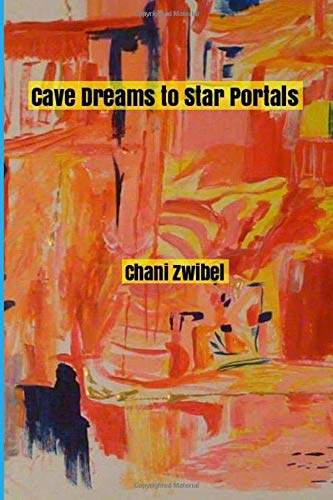
Chani Zwibel

Chani Zwibel is the author of Cave Dreams to Star Portals, published by Alien Buddha Press. She is an associate editor with Madness Muse Press. She is a graduate of Agnes Scott College, who was born and raised in Pittsburgh, Pennsylvania, but now dwells in Marietta, Georgia, with her husband and their dog. She enjoys writing poetry after nature walks and daydreaming.

and a link to my book:

https://www.amazon.com/Cave-Dreams-Portals-Chani-Zwibel/dp/1724353128/ref=sr_1_1?s=books&ie=UTF8&qid=1538061241&sr=1-1&keywords=Chani+Zwibel+Cave+Dreams+to+Star+Portals

The Interview
1. What inspired you  to write poetry?

I’ve always told stories, since I could talk, and when I learned to write, I wrote them. Poetry came to me one day when I was outside . I grew up in rural Pennsylvania and it was a windy day, but not so bad that I had to go inside. The wind was blowing through the tree branches, making them dance. We had these huge willow trees in the yard and it reminded me of women with long hair swaying. I was in fifth grade. I wrote a poem about the wind. Nature still strongly inspires me.

2. Who introduced you to poetry?

Does Dr. Seuss count as poetry? If so, then my parents and grandparents. Everyone read to me and encouraged me to read. My babysitter always read me Shel Silverstein.  I don’t think we touched on poetry much until fifth grade in school, which may have been why I wrote the wind one in that form. My cousin introduced me to Charles Bukowski when I was 13, and that opened a door. Everything I’d read until then had been Robert Frost and Emily Dickinson. Also around that time we studied Langston Hughes in school. His words were a revelation, also. All good poetry is like that. It opens something in the heart, some unknown corner in the mind. Poetry can be beautiful images and poetry can be horrible scenes, and everything from here to there.

3. How aware were you of the dominating presence of older poets?

I think poets are mostly solitary hunters and don’t really run into each other unless accidentally crossing another’s territory searching for food. Literally any conversation with “established” or “successful” older poets in formal or informal settings has sent the message: “don’t do this, you won’t make any money, you will go insane…..but if you REALLY WANT TO and you just CAN’T LIVE WITHOUT IT, then, ok…chase your dreams kid. Good.Luck.”

4. What is your daily writing routine?

It’s very eclectic. I keep a notebook stashed in every possible place: the desk, the bedside table drawer, the purse. If I’m “sitting down to write”, it’s usually morning, after the coffee, when I’m alone in the house.

5. What motivates you to write?

Because when I write, I don’t feel like checking the clock, or wondering what’s coming next. I am fully immersed in the moment and feel completely in tune with the universe. I know it sounds cheesy, but it’s true. Also, if I don’t do it, I’ll feel miserable.

6. What is your work ethic?

I might procrastinate for days, but I’ll get it done. Once I get down to business, I’m in the zone. When I’m on a project, and I’m in that space of work, I don’t ever dare stop the flow.

7. How do the writers you read when you were young influence you today?

All that Dr. Seuss and Shel Silverstein put a dictionary of rhymes in my brain I can’t erase, along with a sensibility for the abstract, the weird. Sometimes I hearken back to the Frost and the Dickinson for their form. I’m always dancing between the Romantics and the Modernists. Formal, beautiful, structural work vs abstract, bizarre, guttural resonances.

8. Who of today’s writers do you admire the most and why?

Warsan Shire and Claudia Rankine are amazing. Read them, and you’ll know why.

9. Why do you write?

I’ve never wanted to do anything else. I can’t see myself doing anything else. My identity and purpose for living are bound up in writing. It’s who I am, and can’t be untangled from my spirit, mind, and body.

10. What would you say to someone who asked you “How do you become a writer?”

Keep your passion for it alive. Stay curious.  Learn the technical aspects of your craft, because you can only break the rules once you know them. Know that not everyone is going to appreciate your voice, but remember someone will. Don’t.ever.give.up.

11. Tell me about the writing projects you have on at the moment.

I’ve recently had my first chapbook, Cave Dreams to Star Portals published by Alien Buddha Press. Hopefully next year I can follow that up. I’m working on a set of narrative poems about my childhood and adolescence in Pennsylvania, also.

I’m an associate editor with Madness Muse Press, and we are always accepting work for our blog, as well as our anthologies. You can find more information at https://madnessmusepress.com/

I’m also working with two friends,  putting together a project for art and writing called Narwhal, which focuses on environmental issues and living on a planet in crisis. For more information on that project, I can be reached at Chani Zwibel on facebook, or by email at clzwibel@gmail.com.

Wombwell Rainbow Interviews: Paul Iwanyckyj

Wombwell Rainbow Interviews

I am honoured and privileged that the following poets, local, national and international have agreed to be interviewed by me. I gave the writers two options: an emailed list of questions or a more fluid interview via messenger.
The usual ground is covered about motivation, daily routines and work ethic, but some surprises too. Some of these poets you may know, others may be new to you. I hope you enjoy the experience as much as I do.

cracked mirror


Paul Iwanyckyj

Paul Iwanyckyj is a poet, musician and songwriter based in Doncaster, South Yorkshire. He has on-going involvement with Doncaster Folk Festival, Roots Music Club, Doncaster Ukrainian Centre and other cultural performance activities, including Well-Spoken and Read-to-Write.

Recent examples of his work, written and visual have been displayed at exhibitions in Doncaster, Stratford, Barnsley and Halifax.

The Interview

1. What inspired you to write poetry?

I’ve always written verse i.e. since school days, and being a natural hoarder they are probably in an attic box even now. I can clearly remember writing a set of my own words to a Christmas carol in primary school and could sing you the first two priceless lines even now, if you were unfortunate enough to ask.

As my first love was music I always saw such nascent gems as destined for songs, though looking back some clearly were never going to be that and so were more fledgling poems, although I never saw them as such. Odd now looking back.

The real change, believe it or not, has happened since I took early retirement. Local writer and songsmith Ray Hearne, and poet/artist Brian Lewis started a couple of arts-initiatives for the “older artist” based on the simple philosophy that why should all emerging artists be from the younger generations.? Surely with people living longer, retiring early and thus with more time and energy to devote to following their passions, who knows what they might be capable of?

As a result, I have seen many unassuming and lovely people blossom from that 18 month co-operative period, and made some good friends into the bargain.

What it taught me personally is that I am freer and more creative when concentrating purely on the shape, feel and emotion of words without any need to consider how they might fit to a melody etc., and is in fact where my strengths lie. Surprising it took so long really – but perhaps that’s what demanding jobs, family life etc. do for you. In fact, I’m sure when I joined these groups I felt that it was a way to help improve my song-writing. (It may yet)

I still attend a monthly group that Ray hosts in Doncaster, and occasionally work with Brian and his team, known these days as the Northern Fringe.

2. Who introduced you to poetry?

I’d have to say my mum, but mainly indirectly, in that she took me to join Doncaster Junior Library whilst at primary school, she herself being an avid reader, and a member of both the Bronte and Tennyson societies. She also wrote and had at least one play broadcast on BBC Radio 4, but she was never preachy or pushy about writing at all.

Next came English Lit O ’level, and the Longman’s set book “Poetry 1900 -1965” edited by George MacBeth. A cracking collection that I still have and use, that includes most of the greats of that period as you might imagine.

We were focussed for O’ level on Yeats, Muir, Auden, MacNeice, Stevie Smith, RS Thomas, Larkin, Plath, Donald Davie and Peter Porter (I know because they still carry the pencil asterixis).  But I never saw it as something I would take up seriously at the time

The man who has introduced me to poets and poetry in real depth (including re-visiting many of the above) is Ian Parks. A superb poet in his own right, and a natural teacher, with a profound and enthusiastic knowledge of the subject. I make every effort to attend his weekly class and cannot recommend it highly enough.

3. How aware were you of the dominating presence of older poets?

I wasn’t really until the last two years studying with Ian, except perhaps for Shakespeare, but even then, much more as a playwright. But I’ve always been aware of the names of the usual suspects e.g. Milton, Coleridge, Shelley, Tennyson etc. but never felt “domination”.

It’s funny how certain things stick though. I clearly remember Robert Frost from school and particularly “Stopping by Woods on a Snowy Evening” – one of the few poems I could recite from memory at the time. Also “Birches”, in fact it so struck a chord with a group of us as school boys that, sad to relate, we became swingers of birches for a couple of giddy days. I would have sworn he was English though.

I could also say I have always been aware of Taras Schevchenko, the famous Ukrainian poet and folk hero. His heavily moustached and brooding presence being ever present at home and any Ukrainian venue we have attended (my late father was a Ukrainian refugee who came here after WW2)

4. What is your daily writing routine?

I don’t have one as such due to so many other factors, but I always try and find time to write at some point in any given week; though ideas, thoughts and phrases are ever-present.

Sometimes I manage daily snippets. I do have a great tool to achieve this, “Evernote”, that works on my phone, iPAD, PC or browser. Whichever I choose to use it appears “immediately” on all the other devices, so I can pick up wherever I am. Failing that a scrap of paper will always suffice as an interim measure.

5. What motivates you to write?

Anything. Today it was raking windfalls below our fruit trees. Yesterday it was thinking about my mum and dad’s smoking habits. On holiday it was contemplating the sea. I also gain motivation from reading and hearing other poets, admiring their take on a subject, or just a certain phrase will set off a train of thought, or triggers my own memory of a similar event that gets me itching to get it down. Tonight, I plan to catch Helen Mort in Barnsley, always interesting.

Sometimes its attending Ian’s class or a workshop session somewhere. I am someone who seems to thrive on being given a task and a deadline, well most of the time. Occasionally it fails to inspire, but often that will be because the brief is too prescriptive and thus limits creativity, but they are the exception fortunately. I do get satisfaction from taking an exercise and coming out with a finished product that is a poem, not simply a completed exercise,

6. What is your work ethic?

I feel I have always worked hard, and still do. Unfortunately, it’s not always poetry related, but when I am writing I take it very seriously. I do rail at convention at times, if for instance I feel that in trying to write to a “traditional” pattern or style or using rhyme is distorting what I trying to say. Thus, although you will find sonnets, sestinas and rhyme in my work they will tend to be in the minority. But who knows? – that may change.
7. How do the writers you read when you were young influence you today?

I am not sure they do so much now. When I first started I think I wrote with some quite old-fashioned phrasing at times because that was what my ear had been brought up with especially as a regular churchgoer in my younger days. But most of my influences now are from my studies of the last two to three years, and though many of those are featured in my O’ level poetry book, they have now been studied with my adult eyes, ears and sensibilities.

8. Who of today’s writers do you admire the most and why?

Oh, now you are asking, as I was only recently studying Seamus Heaney and Ian Hamilton as relatively modern writers, both of whom I enjoy greatly, but who are sadly no longer with us.

As regards those extant, for one I’d have to say Ian Parks as I have come to know his style well as you might imagine. He is both a compelling writer of romantic lyrical poetry, but equally at home giving his voice in support of the oppressed, both now and in our turbulent past.

I do enjoy a slew of female poets for some reason (mainly because they are good I suppose) e.g. Helen Mort, Wendy Cope, Carol Ann-Duffy – who I had the pleasure of seeing last year at the Edinburgh Fringe, and was much more engaging and humorous than I had pre-supposed.

I also get great pleasure from people who can write well and with great humour – a very underrated art-form and skill, (as are great comedians) e.g. Cooper-Clarke and especially the great Les Barker. On the more serious side Tony Harrison, forever cocking-a-snook at the established view, and of course a Yorkshireman, and although we lost him last year Derek Walcott, such an individual and warm poetic voice. Maybe a not very original choice, the dark dryly humorous and another Yorkshireman, Simon Armitage.

9. Why do you write?

Maybe this helps, its something I wrote in response to a similar question in a quick exercise.

Why Do We Do It?

For me it’s a voice in my head saying “Do it”;
a nag in the heart that says “Just do it”;
or landing fully-formed saying,
“I’m here, now what are YOU going to do?”
Creative compulsions that eat away
then gush forth to flood the mind.

Quiet times arrive when other matters occupy,
then, triggered by the innocuous, an idea forms,
it must be captured, before, like some rare butterfly
it disappears over the horizon, possibly forever.

Or, for no other rationale than “I must do this”;
deriving satisfaction simply for the act itself
delivering something new into the world
then – it simply works for me
– now, what about you?

Active Arts – 8 min exercise – 9th Dec 2015

10. What would you say to someone who asked you “How do you become a writer?”

Not sure how qualified I am to answer that but here’s a few common-sense suggestions:

– keep writing, keep reading.
– write whatever you feel compelled to write, not what you think others want;
– join a group or two, live ones, and on-line, you will always learn from them;
– if you do join, give wholeheartedly to them don’t sit back, the more you give the more you’ll get in return. But leave room for others as well, and be generous and respectful;
– don’t be afraid of criticism, everyone gets it, and again you will learn something;
– ask questions of and take advice from people you respect;
– and keep writing, keep reading.

11. Tell me about the writing projects you have on at the moment.

– The big one for me is the launch of my first pamphlet of poetry “Through A Cracked Mirror “ from Glass Head Press. September 29th.

– I am also experimenting with longer format poems, which appears to be going pretty well.

– Beyond that, simply finding time to try-out some of the pages of ideas for poems that I have in “Evernote” and seeing which ones fly and which ones soar.
………………… Thanks for asking, and cheers to an interesting project.


Wombwell Rainbow Interviews: Adam Levon Brown

Wombwell Rainbow Interviews

I am honoured and privileged that the following writers local, national and international have agreed to be interviewed by me. I gave the writers two options: an emailed list of questions or a more fluid interview via messenger.
The usual ground is covered about motivation, daily routines and work ethic, but some surprises too. Some of these poets you may know, others may be new to you. I hope you enjoy the experience as much as I do.

51u91536SrL._AC_SX348_SY500_QL65_

Adam Levon Brown

Adam Levon Brown is an internationally published author, poet, amateur photographer, and cat lover who identifies as Queer and is neurodivergent. He is Founder, Owner, and editor in chief of Madness Muse Press. He has had poetry published hundreds of times in several languages, along with 2 full collections and 3 chapbooks. Anti-imperialist, peacenik with a love for books, when not tripping on his own musings, he enjoys reading fiction. He also participates as an assistant editor at Caravel Literary Arts Journal and is Founder, Owner, Editor-In-Chief of Madness Muse Press LLC
He has been published with publications such as Burningword Literary Journal, Firefly Magazine, and FIVE:2:ONE

He has three collections of poetry;

Musings of a Madman (Creative Talents Unleashed, 2015)
Cadence of Cupid (Creative Talents Unleashed, 2016)
Death is not our Holy Word (Alien Buddha Press)

He has two chapbooks;

“Loco”motion of Life (Alien Buddha Press, 2017)

“Embedded Memories of a Shooting Star ( Transcendent Zero Press, 2017)

He also has a title forthcoming from Moran Press (Chasing Sanity at 7:30 PM)

The Interview

1. What inspired you  to write poetry?

First of all, Let me say, thank you so much to Paul Brookes for this opportunity to be interviewed. It’s an honor and privilege to share my words with others, and to be interviewed about something I enjoy doing.

The first time I heard about poetry was from an ex-girlfriend I met online in 2004.
I looked at her poetry and thought, wow, this is something I may be able to do someday.
I put it off my mind for awhile. 1 year later, and I got the itch to start looking up poetry online to find deeper meaning. I found Edgar Allen Poe, Lord Byron, and the darker side of the poetic genres. I was instantly attached due to my fascination with the occult in my teen years. I began writing my first poems, which were long, full of rhyme, and very dark. It was my first experience with catharsis, as my home life was full of mental illness and substance abuse. I began writing small poems from there and putting them on Myspace for my friends to read.

2. Who introduced you to poetry?

I’d have to say my ex-girlfriend. I won’t name her here, as she is still part of my muse, and I keep my muse secretive.

3. How aware were you of the dominating presence of older poets?

At the time, I had no idea of other poets, nor was part of an online community until 2014.
I just did most of my writing as catharsis. I’d always been in love with reading, especially darker material, as I found it relateable.

4. What is your daily writing routine?

I usually wake up and write a poem in the morning if my Muse is speaking, if not, I just continue my day and don’t think about it much. If I don’t get one in the morning, I usually put one together at night. Though, I’m almost always stringing words and thinking of ways to phrase idioms in different ways.

5. What motivates you to write?

I need Poetry for catharsis. Some people watch football or watch comedy central to unwind after long days. I put my time into writing poems to release deep thought and feelings which go unheard of in daily life. There’s also some vanity involved, as I am a dreamer, and want to share myself with my friends, family, and whoevere else cares to listen. It’s also a type of journaling for me, to document my thoughts and feelings.

6. What is your work ethic?

If I write a poem, and I really like it, think it’s good; I’ll usually start thinking, new chapbook. I’ve been focusing on getting chapbooks published for a good 2 years now and have 4 published so far.

7. How do the writers you read when you were young influence you today?

Edgar Allan Poe and Lord Byron influence me to this day. Being  mentally ill, I am inspired by the mad ramblings of these poets and their poetry about living with a disease I share with them in common.

8. Who of today’s writers do you admire the most

Lately, I’ve been inspired by the stage poets. Andrea Gibson, Neil Hilborn, Dante Collins etc.
Though I find much inspiration from my facebook poetry friends, including Robert Wilson, Scott Thomas Outlar, and Nanette Wakefield.

8.1.
and why?

I don’t have many friends outside of Facebook. It’s good to stay connected, and the poets I describe all struggle with some form of pain. I relate to it, and it’s good to be on the same wavelength/share common interests, and inspire each other throughout poetic endeavors in this deluge known as life.

9. Why do you write?

I write mainly for catharsis, and for the silly dream that someday my work may get noticed by agents and/or big publishers. I also write because it’s fun, and have a love for words.

10. What would you say to someone who asked you “How do you become a writer?”

I would say, think about the things in your life that are bothering you most. Find some time from daily life and start writing about them in any way, shape, or form. Just let it out, and if bold enough, share it. I’ve often found through sharing our personal stories, that I am definitely not alone, and there are many people out there who will relate to your story and support you. It’s a way of breaking away from isolation and believe it or not, can inspire people to begin writing too.

11. Tell me about the writing projects you have on at the moment.

As of now, I have a chapbook coming out later this year, titled, “Chasing Sanity at 7:30 PM”
which deals with love, loss, and the fragility of life. This book is being released by Moran Press.

I also just finished a personal book detailing my life as it is now. It’s about mental illness/health, overcoming barriers, and finding my way in this thing called life.

It has been accepted by one publisher, but I’m waiting to see the results of other publishers who may also be interested.

Wombwell Rainbow Interviews:  Carol Fenwick who publishes as Geraldine Ward

Wombwell Rainbow Interviews

I am honoured and privileged that the following writers local, national and international have agreed to be interviewed by me. I gave the writers two options: an emailed list of questions or a more fluid interview via messenger.
The usual ground is covered about motivation, daily routines and work ethic, but some surprises too. Some of these poets you may know, others may be new to you. I hope you enjoy the experience as much as I do.
41g9FIkA-DL._AC_US500_QL65_

Carol Fenwick who publishes as Geraldine Ward

Geraldine Ward is a mother, poet and author from Kent. She has had work published in magazines including The Blue Nib, Writers Café Magazine and I am not a silent poet. She is currently learning to play ukulele. You will find more of her writing on http://www.geraldineward.wo­rdpress.com Her twitter account is @GWardAuthor and facebook page is http://www.facebook.com/­geraldine.ward.uk

Geraldine Ward
geraldineward.wordpress.com

The Interview

What inspired you to write poetry?

When I was a teenager I went through a difficult time with being bullied. It came to a head when I was eighteen and suddenly though I had only really written stories as a child and a teenager lots of poetry came out. I have barely stopped writing it since.

I have always enjoyed reading and writing too which is a big motivator and passion.

What do you enjoy about reading and writing?

I enjoy getting into imaginary worlds. I have been told I have a really good imagination. Though the more I have developed as a reader and writer I have increasingly made social and realistic observations which adds visceralness. This was helped when I studied my MA in Creative Writing at Teesside in 2009 where I learnt much more about going beyond the abstract to the concrete.

And I love playing with language and the sound and music of words.

It’s a long time ago so it’s hard to recall but I remember being introduced to Rosemary Sutcliff and the Eagle of the Ninth I really loved the historical fiction.

Is history an important theme in your poetry?

Sometimes but I cover a wide range of subjects and feelings in my poetry. Humour, serious, history, what’s happening now. I recently visited The Lakes on holiday so history came in when I visited where John Ruskin had his memorial stone and Dove Cottage where Wordsworth lived and I wrote a couple of poems about it.

History was a big passion growing up. I also am interested in current affairs although no expert I like to touch on current affairs at times and make points about anything I feel is unjust.

How aware are you of the dominating presence of older poets, historical and contemporary?

I have a lot of respect for poets who have come before me whether older, historical or contemporary. I enjoy the work of the romantic poets for example as much as I like and read today’s famous and not yet famous writers. Some of my favourite poets are Sylvia Plath, Frank O Hara and William Wordsworth. But I also enjoy today’s writers too. Like the comedy poems of Pam Ayres, have a collection by Kate Fox which is similarly humorous and I regularly purchase books off friends who are poets such as Deborah Alma, Sarah L Dixon, Gill Lambert and just today Jess Mookherjee to name a few.

What is your daily writing routine?

I find I can only write after I have got everything I need doing done in the house. So once housework is out of the way and odds and ends then I am able to write. If I try doing it any other way I come a cropper.

What motivates you to write?

The need to express a feeling of otherness and anguish in a way as a way of dealing with the world. Also I believe that I have a valid voice that needs to be heard and a skill that I should not hide.

What is your work ethic?

I think it’s important to work hard, when you don’t you get unstuck if you do too much that’s not good either. I have been guilty of both sins. A good balance which is where I am now between work and pleasure I think is important.

How do the writers you read when you were young influence you today?

I think they inspired a lot of imagination in me. Roald Dahl and Enid Blyton were big favourites of mine as a child. They made me want to read and write more and allowed me to be dreamy and enabled me to be influenced positively in terms of creating imaginative language.

They also encouraged me to believe what was possible if you put your mind and skills and imagination together with everything else, senses viscerality, etc that you can come up with magic.

Magic on paper that is!

Who of today’s writers do you admire the most and why?

Phillip Pullman probably. He doesn’t have the same level of success that JK Rowling has had but he is a brilliant fantasy writer for children and adults. I would argue in some ways better but that is my personal taste.

And I love his rich use of language.

Rich use of language?

Yes I like the way he writes.

How does he make his language rich?

Oh my goodness, I like his descriptions. His fantasy texts are more detailed and richer than I think his adult texts of what I have read which are more immediate.

Why do you write?

Mainly because I enjoy it, for myself and to share with others.

What would you say to someone who asked you “How do you become a writer?”

I would say read a lot, write a lot and live and enjoy your experiences of life.

Tell me about the writing projects you have on at the moment.

I have been writing a poetry book called Bouncing Back with a Bang which has just recently come out on Amazon. It is due to have a blog tour in November run by Anne Cater and reviewed by other bloggers. I regularly read poetry at open mics as well as sing in folk clubs, play ukulele and piano. I will be performing a slot of writing and music at a local garden party in Kent on Saturday. Other than that I fairly regularly submit poetry to journals and magazines. I have a young adult novel I have been working on for a while but have put on the back burner as working on a research proposal for a PHD so I am very busy.

I write under a pseudonym Geraldine Ward.

Wombwell Rainbow Interviews: Helen Laycock

Wombwell Rainbow Interviews

I am honoured and privileged that the following writers local, national and international have agreed to be interviewed by me. I gave the writers two options: an emailed list of questions or a more fluid interview via messenger.
The usual ground is covered about motivation, daily routines and work ethic, but some surprises too. Some of these poets you may know, others may be new to you. I hope you enjoy the experience as much as I do.

Book covers[104363]

Helen Laycock

Most recently, Helen Laycock’s poetry has appeared in Popshot, The Caterpillar, Full Moon and Foxglove (Three Drops Press) and Poems for Grenfell (Onslaught). Her poems appear in several further anthologies, and, since winning the David St. John Writing Award for Novice Poetry in 2006, her work has been acknowledged in many competitions. She was one of the lead writers in June for Visual Verse.
Helen also writes flash fiction and has been featured in The Best of CafeLit 3, 4, 5 & 6.
Her short stories have been successful in writing competitions, publication including An Earthless Melting Pot (Quinn), and her first attempt at play-writing secured her a shortlisting in Pint-Sized Plays.
Helen has compiled three short story collections for adults and has written eight children’s books for 8-12-year-olds.
These books can be found on her Amazon Author Page

https://www.amazon.co.uk/Helen-Laycock/e/B006PGFVL6
Humorous poetry has been published on Spilling Cocoa Over Martin Amis. Two collections of funny verse are available, one each for children and adults.

She has two websites where you can find out more about the range of writing:
Helen Laycock | Fiction in a Flash
https://helenlaycock.wixsite.com/fiction-in-a-flash

Helen Laycock | Children’s Author https://helenlaycock.wixsite.com/helen-laycock

Other links:
Facebook https://m.facebook.com/helenlaycockauthor/
Blog: Catching Cotton Clouds
https://catchingcottonclouds.wordpress.com/

Twitter: @helen_laycock https://mobile.twitter.com/helen_laycock

___________________________________________________________________

The Interview

1. As with most poets, I suppose primary school was where ‘it’ first happened. Creative writing sessions were few and far between and mainly involved writing stories; more rarely poetry was suggested. Understandable really, as we didn’t ever read it! At that time, my sole approach to poetry was to write four to six stanzas of rhyme, a formula which I’d probably learned from nursery rhymes or my Rupert annual. It was something I dashed off without too much thought at all, trite sentiments or simple tales peppered with many a forced rhyme. Poetry was never taught as a discipline, but now I understand how complex writing poetry can be, that makes sense.

2. At secondary school, I had a fabulous English teacher in my first year, Mr Gronow. He actually got us to listen to the sounds that poetry makes and to understand how rhythm, silence and space each contribute to the overall effect. He took me out of my comfort zone when he asked me to leave out what he called ‘redundant’ words, i.e. monotonous every day words which, when used in a poem tend to muffle and veil any wonderful images which exist alongside them. I also learned that poetry didn’t HAVE to rhyme. What a revelation!

I began to write for pleasure, not because a teacher had instructed it. I wrote a lot of poetry for my mum. I suppose it was a kind of love poetry to let her know how treasured she was.

By the time I was in sixth form, I had made many contributions to the school magazine, and had won lots of in-school competitions. My A level English teacher picked up on my writing and asked me to put it all together in a folder. Something in it must have stirred something in her as, unbeknown to me, she took it to an English lecturer who she knew and asked him to look at it. When she handed it back, there was a handwritten report inside from her friend. When I read it, I almost burst with pride. It was loaded with praise and mentioned ‘incredible talent’. That was the first moment I realised that maybe I could do something special.

I also took an A level in French. Practical criticism of French poetry was on the syllabus, which I adored. My French teacher was fabulous at drawing our attention to metaphor and meaning.

3. I had no idea as a young teen that poets could be youthful, modern, or even living… I assumed that they were all dead and had had dusty lives scribbling archaic messages with quills. I went on to study English at university, and then the world of poetry really opened out. Yes, we studied many dead poets, but I realised that they did have something to say, and could say it in a wonderful way. I thoroughly enjoyed Blake’s Songs of Innocence and Experience, for example, as commentary on society. I was introduced to Sylvia Plath and realised how creativity is also an outlet for angst and emotion.

Although it is something which poets probably don’t much like having done to their work, my absolute passion was analysing poetry, taking it to pieces to see why it worked, and in retrospect, I think that this process was invaluable to my growing understanding of technique.
4. I don’t just write poetry. My repertoire includes flash fiction, short stories, plays and children’s novels. I also blog intermittently and have just finished a writing job where I produced creative texts for an educational revision guide. My routine varies, depending on what I have turned my attention to.

Every month I try to produce something for a wonderful website called Visual Verse where the challenge is to produce 50 – 500 words within an hour. It can be poetry or flash, and the inspiration is an image. I would say that most of my work on this website has been poetry. To have such a time limitation is a challenge, but I also think it has sharpened my skills. If I was writing a poem for a competition or publication, I would take a lot longer, coming back to it over a series of days, reading it aloud, highlighting a line or a word which doesn’t quite work. I like to have the online thesaurus at hand as well as a website called RhymeZone (I haven’t dispensed entirely with rhyme. An internal rhyme can work a treat!).

Stories usually take a few days to perfect, too, but I seem to be able to produce flash ‘in a flash’!

I work best during the mornings, and generally keep going until my brain goes blank. If I’m writing a novel, it perpetually occupies my headspace. I sometimes write all day and carry on well into the early hours.

I talk about my writing-related news on my Facebook Author Page.

5. If I have an idea, I HAVE to write, even though at the time I might have no idea what I will do with it. Otherwise, I write for the challenge of publication, or as a competition entry, or for audience. Ultimately, any writer (I imagine) would like their words to be enjoyed, to create an impact in another person, to stir emotion, to raise a chuckle, to bring out a tear…

6. I am a perfectionist. I edit, edit, edit. I would hate for anything to go out into the world which wasn’t my best. I always try to produce the highest quality of writing that I can.

7. I was an avid Enid Blyton fan as a child. I devoured everything she wrote. The idea that unaccompanied children could have adventures and solve mysteries has certainly coloured my own writing for children.

8. I admire writers like Donna Tartt, whose writing is impeccable and intelligent, and Linwood Barclay, who reels in the reader from the first line and doesn’t let them go until the final climax, Rachel Joyce, for recognising and portraying what is deeply inside people and James Heriot, who always made me laugh. I enjoy the poetry of Simon Armitage amongst many, many others.

9. I write because I have something to say. I love the construction of poetry, building it with the finest materials I can find. I enjoy telling a complete tale in flash of 100 words. I delight in the creation and interaction of characters in a short story and to be allowed to create and populate an entire fictional world in a book where anything can happen is an utter privilege. I write because it is self-indulgent and exciting.

10. To become a writer, you have to:
a) learn the craft of using the best words;
b) open your mind to unique ideas.
This doesn’t always happen simultaneously, and you may well need to work on one aspect more than the other. Practise making writing seamless; the reader should be pulled in to the extent that they are unaware of the print on the page. Dialogue should be authentic. Listen to how people speak. Note characteristics that make people individual. Be an observer.
Obviously, a great grasp of grammar is important, and a wide vocabulary, both of which will improve the more you read. As with any creative skill, the more you practise, the better you will become. Feedback is very important, too. It tells you if you’ve got it right.

11. I feel as though I am pulling back on the elastic of a catapult right now. As soon as I let go, several projects will be launched into the world: a new humorous children’s book is ready to go and three short story collections are almost completed. I also have lots (and lots) of Post-It notes stuck all around my computer with many other reminders of things I want to do…