Wombwell Rainbow Interviews: Becky Nuttall

Wombwell Rainbow Interviews

I am honoured and privileged that the following writers local, national and international have agreed to be interviewed by me. I gave the writers two options: an emailed list of questions or a more fluid interview via messenger.
The usual ground is covered about motivation, daily routines and work ethic, but some surprises too. Some of these poets you may know, others may be new to you. I hope you enjoy the experience as much as I do.
wp_ss_20181024_0001

Becky Nuttall

Becky draws inspiration from a childhood immersed in art; her father was writer and artist Peter Draper who in turn was close friends with Hubert (Nibs) Dalwood. Peter was also a founder member of the Devon Guild of Craftsmen. Alongside this creative home life are influences from a lifelong love of Dadaism, Surrealism, Kurt Schwitters and the effect of being a Protestant girl from an unconventional background in a convent school. Becky art and poetry work is intertextual; deconstructing and reconstructing the relationship between her family’s art, and the influences of religious violence, guilt, piety, art history, feminism, popular culture, conformity on adolescence
She performs her poetry and runs Stanza Extravaganza with Robert Garnham in Torquay Devon
Becky has been published and her childhood poetry is in the forthcoming Play Anthology edited by Simon Williams and Susan Taylor. She was Highly Commended in the Open Torbay Poetry Festival 2017.
She has won awards for her art and has been selected as a Torbay Geo artist
Becky is a lifelong Atheist and Humanist
http://www.beckynuttall.com
https://www.facebook.com/becky.artist/
https://www.facebook.com/stanzaextravaganza/

The Interview

1. When and why did you start writing?

I started writing poetry when I was about eight years old. However, I thought as a poet before I could write it. I was born with a poet and artist’s bones but school was where I first realised I was a poet. I was taught in the traditional way in the sixties; by rote and learning the works of famous men. We were told to write in the style of one of Christina Rossetti’s poems. This female poet was given some status in the school, a convent, because she wrote “In the Bleak Midwinter”. I wrote a poem title “The Rain”. I achieved some hard worn praise for it, I stood out as my family were artists not stockbrokers. That made me think I had a talent. I have an ear and eye for language, meter and tone. It’s in the genes

2. Who introduced you to poetry?

My parents and their friends. My father was a professional writer. Most of their friends were writers and artists when I was a child, including Peter Nichols and the sculptor Hubert Dalwood. You just absorb it

3. How aware are you of the dominating presence of older poets traditional and contemporary?

As any writer will say, you have to read good poetry to able to write good poetry. I remember writing as a teenager, and although not bad, it shows the absence of growth that comes with research and the understanding of what and why other poets write. I was taught very traditional Victorian lyric verse in school but my father read contemporary poets. I asked for Crow by Ted Hughes for my 13th birthday. I searched out female poets, like I sought out female artists. I was mentored in art school by a poet who introduced me to poets beyond the western canon. My children will tell me about current poets or writer’s I should read.

4. What is your daily writing routine?

I work full time and try to restrict writing to out of work hours. However, I have copious scrapes of paper in my work bag and I use my phone to quickly jot down ideas or edit a poem. I will work in my studio, in between painting, by doing the first draft long hand, write that on the computer, print it, scribble over that and then write the rest on the computer. I’ve no idea why this works and I think it’s just a ritual that makes me feel comfortable, that mix of pen and cut and paste. I miss not seeing that constant editing in written draft form but time is precious. I research and write something everyday. I’ve trained myself to switch off before bed though. My father wrote at home so I grew up thinking writing is a profession.

5. What motivates you to write?

It’s more a burning drive and passion. I perform my poetry so there is a motivation to produce regular new work. The support of other poets and artists is my greatest motivation. I believe in W H Auden’s words about owing it to us to get on with what you’re good at. Don’t waste it. If I can help to give any poet/artist confidence, like I’ve been given, I will.

6. What is your work ethic?

Poetry is such a niche area that I’d be mad to write and think I’ll be discovered or famous or make any money from it. I was motivated by that ethic when I was young because my father was successful and made his living from writing. Once I gave up that idea I became more professional about writing, networking and getting poetry more recognised locally. Because I have always written, the work ethic is always the reward of connecting with other humans poetically.

7.  How do the writers you read when you were young influence you today?

My parent’s house was full of art, books and music. I had Hilaire Belloc and Edward Lear and a lot of traditional children’s books, my grandmother gave me books with feisty female heroes. Our reading wasn’t censored so I went straight to adult books when I was about 11-12 years old. Early reading would’ve been Jane Eyre, Wuthering Heights, The Great Gatsby, John Updike, Hemingway, Vonnegut. As trends and themes change over time it’s interesting how I use those writers, like Hemingway, to learn more about the author’s life and influence, for bad and good, rather than the work.

8.  Who of today’s writers do you admire the most and why?

When I was young I loved Paul Simon’s lyrics and David Bowie was a master of edgy lyrics. I love rock music as much as I love poetry. I listen to music when I write, not for the words, but for the tone and key change. It influences the rhythm of my work. I admire the writer I’m reading I guess, my mind’s too open now to say I have certain influences

9. Why do you write?

Because my father did, and my grandfather. I’m a writer like I’m a human

10. What would you say to someone who asked you “How do you become a writer?”

I’m the last person to ask to answer this question. I have an aversion to being taught, you won’t find me in a workshop. At a certain point in your life you have to stop asking how and just do it. Sometimes I’ll allow myself to be judged but I won’t allow someone else to teach me, for me it’s part of my integrity as a writer. Reading other writers is all the teaching I need.

11.  Tell me about the writing projects you have on at the moment.

I am working on poetry that looks at the influences on me as an adolescent and how we become creative people

Becky Nuttall 21st October 2018

Wombwell Rainbow Interviews: Mike Zone

F WORD WARNING

Wombwell Rainbow Interviews

I am honoured and privileged that the following writers local, national and international have agreed to be interviewed by me. I gave the writers two options: an emailed list of questions or a more fluid interview via messenger.
The usual ground is covered about motivation, daily routines and work ethic, but some surprises too. Some of these poets you may know, others may be new to you. I hope you enjoy the experience as much as I do.

27331904_1835632163116377_2782501839981244953_n

Mike Zone

Mike Zone is the author of Void Beneath the Skin, Better than the Movie: 4 Screenplays and Fellow Passengers: Public Transit Poetry, Meditations and Musings. A contributing poet to Mad Swirl and contributing writer to the graphic novel series American Anti-hero by Alien Buddha Press. His poetry and stories have appeared in: Horror Sleaze Trash, The Daily Dope Fiend, Outlaw Poetry, The Rye Whiskey Review, Synchronized Chaos and Triadæ Magazine.

links to my books.

https://www.amazon.com/Mike-Zone/e/B079GHYC1C/ref=sr_ntt_srch_lnk_1?qid=1540400318&sr=8-1

https://www.amazon.com/American-Antihero-First-Red-Focks/dp/1717172717/ref=sr_1_1?s=books&ie=UTF8&qid=1540400437&sr=1-1&keywords=american+anti-hero+first+canon&dpID=51eWntQXrpL&preST=_SY291_BO1,204,203,200_QL40_&dpSrc=srch

http://www.lulu.com/shop/various-artists/tales-from-the-alien-buddha-3/paperback/product-23839126.html?fbclid=IwAR1-CO3PrdB_q53vgTQHSiTmX98-DYEBuPxK67qbKHtIQQyqXpePDVQ21q8

The Interview

1. What inspired you  to write poetry?

Isolation, frustration, a yearning to express myself without fistacuffs seeing as how it was damn near impossible to halt the multitude of situations and emotions I was feeling all at once at alarming sporadic rates at the worst of times. It’s either that or go somewhere I should not be and get stabbed. Jim Morrison was also a major inspiration when I was younger and thought myself an aspiring film-maker, I was attracted  by the music of The Doors of course the lyricism of Morrison and picked up  ​The American Night which showcased his short script “The Hitchhiker” , somehow I stumbled beyond that and the songs and became enthralled. 2. Who introduced you to poetry? To be honest, I was bullied by the same kid since first grade all the way through high school, when he started writing poetry, I had to get on the action in order to out do him in some manner. It’s something I dabbled in slightly before that for class assignment, then became a reckless teenage passion ridden with an agenda of rage that bordered on obsession.

3. How aware were you of the dominating presence of older poets?

I wasn’t really aware of the dominating presence of the older poets but once I got out of school and dropped out of college for a while I stumbled across more of Jack Kerouac’s work and went ga-ga over The Beats, looking at their influences and eventually came to find my own path.

4. What is your daily writing routine?

I try to write something everyday. Whether an entry in my journal or a random phrase or image. I tend to work ten to fourteen hour days, it gets hard sometimes but when I look at something fully composed there’s a sense of relief like “I can go do this” and I’m proud of it until something else is completed and then everything that came before is just shit.

5. What motivates you to write?

Discontent with the current mode of social engineering. My own shortcomings, I love science and comic books and that has played a big role in the imagery I’ve used in the past. Really anything I feel the need to draw attention to that accentuates the link between the micro and macro aspect to any situation.

6. What is your work ethic?

It used to be sporadic, going through spurts of nearly nonstop writing to hardly anything, things are steadier as I’ve learned to reconcile the biggest mistake in my life, which was working hard and being practical. Let’s be honest, if I hadn’t done that and stayed working in bars, travelling, screwing off more and paying attention more to my writing than anything I’d have been better off but a long time ago like a lot of people in Gen X, someone sold me a dream…

7. How do the writers you read when you were young influence you today?

It used to be sheer admiration followed by a rueful envy and now, it’s like…that’s some good shit. I still think Bukowski , Whitman and Rumi are topnotch and sometimes to my chagrin I like to callback to Morrison for helping start it all.

8. Who of today’s writers do you admire the most  and why?

As of late, I’ve been corresponding with so many, I feel I may be leaving someone out but here it goes: Frank Reardon, Ryan Quinn Flanagan, Ben John Smith, Amber Decker and James Casey IV…damn I know I’ve left people out…except for Scott Thomas Outlar.

9. Why do you write?

I write because I am a trite silly bastard. I’m not a pseudo intellectual prick. I’m just some fucked up thing that wants to survive and it’s a coping mechanism for me.

10. What would you say to someone who asked you “How do you become a writer?”

Stay out of the court system and don’t listen to anyone that tries to sell you on that work hard and be practical bullshit.

11. Tell me about the writing projects you have on at the moment.

I’m currently writing a poem about Incredible Hulk living in the apartment below Donkey Kong…really,  I’m currently a contributing writer with Red Focks on Alien Buddha’s illustrated novel series ​American Anti-hero
​ , just finished a short story called ​Aqua-Shoes
​ and currently composing an entry to my ​Mona in Amerika
​ and Man in the Yellow Hat (​Fugitive
​ ) cycle of poems that I’d like to turn into a novel at some point.  I still dream about screenwriting too. There’s a stream of consciousness scene a day experiment. I’ve been toying around with…too many demons in my brain and so little time with Donkey Kong living above me.

Wombwell Rainbow Interviews: Ahmad Al-khatat

Wombwell Rainbow Interviews

I am honoured and privileged that the following writers local, national and international have agreed to be interviewed by me. I gave the writers two options: an emailed list of questions or a more fluid interview via messenger.
The usual ground is covered about motivation, daily routines and work ethic, but some surprises too. Some of these poets you may know, others may be new to you. I hope you enjoy the experience as much as I do.

51CATObeXOL._AC_US500_QL65_

Ahmad Al-khatat

Ahmad Al-Khatat, was born in Baghdad, Iraq on May 8th. He has been published in several press publications and anthologies all over the world and has poems translated in several languages. He has published two poetry books “The Bleeding Heart Poet” and “Love On The War’s Frontline” which are available on Amazon. Most of his new and old poems are also available on his official page Bleeding Heart Poet on Facebook:

https://m.facebook.com/Bleedingheartpoet?fc=f&showPageSuggestions&_rdr


The Interview

1. What inspired you to write poetry?

Mainly, my homeland due to 2003 war we had, and women and nature since they both have a similar kind of beauty.

2. Who introduced you to poetry?

I used to write free verses, since I was 10 years old. Until the time my father noticed the first poem
that I wrote and he encouraged me to edit it by myself. And so I did it with my mother help. Then they both surprised me when they published in a known newspaper back in 2000.

3. How aware were you of the dominating presence of older poets?

Since the beginning of my real journey in poetry writing, in which I always say they are here because they are waiting on youth poets to keep the river of poetry flooding. With its tales and inspiring and love.

4. What is your daily writing routine?

I write almost at any time I have, but mostly I do my writing in the late night, I believe it is the only time I hear myself talking to me, away from the city noise and street lights. It does hurt to hear what my soul have to say from what I have or have had done against my will or faith.

5. What motivates you to write?

When I see unethical action towards me, or toward an innocent person at work or on the street. When I say unethical I mean racism, hate, and fighting mindlessly. As well as love when I see a beautiful woman walking with a unique style, or even a sweet perfume. But all of those motives come from the support of my fiancée Noemi Stafford. Who she is gifted reader and lovely editor and the whole world to me.

6. What is your work ethic?

I always try to flip over the newspapers or social media, and look for stories in which it touches me deeply down, and I write about it. Sad or happy poems are stories of other people who talk to me about their lives, and so mine as well. In which, most of my writing are connected to people heart. As well as, I try to avoid to use vulgar words, since poetry is a language to all the ages.
7. How do the writers you read when you were young influence you today?

Well, because of their writing I am still writing because I believe they have wrote what they have had witnessed, and as a mini writer myself I should write about what will the future will take today writing as history. Also most of the writers I have had read, they use the easy reading and understanding poetry, in which I decided that I will do the same as they did, in which I am grateful to have some of my poems are being taught in a school in Africa. Where they read and understand my poems and write their own by being inspiring from my poems.
8. Who of today’s writers do you admire the most and why?

I honestly do not admire any writers today, I do love and respect them all, and would gladly read their own writings.

9. Why do you write?

To tell the next generation, why our world is being damaged by whom, and understand the real meaning of orphan, widow, wounded solider, refugee, immigrant, grief, and depression. Since all of those words are only available in novels and not heard in real life, in the right way.

10. What would you say to someone who asked you “How do you become a writer?”

Read, read, and read, anything that you will inspire you to the world of writing. And do not let anyone stop you from writing.

11. Tell me about the writing projects you have on at the moment.

Well I will be soon publishing my third poetry book “Gas Chamber”. This book will be about grief, death thoughts, and depression poems.  And next year, I will start on my fourth and fifth poetry books.


Delighted to have two poems featured in great company by The Poet By Day. Thankyou Jamie. “leave it, give it up” … poems in response to the last Wednesday Writing Prompt

via “leave it, give it up” … poems in response to the last Wednesday Writing Prompt

Sad to hear of the death of this intriguing experimental poet

http://m.dudleyhoffmanmortuary.com/obituaries/events?obituaryId=3386699&fbclid=IwAR0-YaZ-PhxzZM6raSXPRfaKxt78q8r7_Vjf-w2az_q-U1LHa3ZKkZOpuTk

Wombwell Rainbow Interviews: Morgan Nikola-Wren

Wombwell Rainbow Interviews

I am honoured and privileged that the following writers local, national and international have agreed to be interviewed by me. I gave the writers two options: an emailed list of questions or a more fluid interview via messenger.
The usual ground is covered about motivation, daily routines and work ethic, but some surprises too. Some of these poets you may know, others may be new to you. I hope you enjoy the experience as much as I do.

4168lB6sBOL._AC_US500_QL65_

Morgan Nikola-Wren

According to Amazon “Morgan Nikola-Wren began writing poetry for various literary periodicals in 2013. She is a winner of the Pangaea Worldwide Poetry Slam, 2016, and has published two books of poetry. Her debut book, Magic with Skin On, received a Goodreads Choice nomination for Best Poetry Book of 2017. Morgan is perpetually searching for new favorite words, more black clothing, and the perfect design for her next tattoo. She ran off with her husband’s circus for a while, but eventually settled back in Los Angeles, where she works as a children’s librarian. Find her on Facebook at facebook.com/morgannikolawren, follow @morgannikolawren on Instagram, or visit morgannikolawren.com.”

The Interview

  1. When and why did you start writing poetry?

Oh gosh. That one’s tricky. I first started writing poetry when I was a teenager, as almost everyone does. But my interest in it was on-again, off-again and, to be frank, the writing was terribly lazy. I didn’t REALLY start taking the craft seriously until after college. I was in/getting out of an abusive relationship, and felt there was nowhere to process what I was going through. So, I took my pen to paper. Consistently, since that was a safe and readily available outlet in the middle of all the chaos. I soon found that the more poetry I wrote, the more I became interested in actually making it good. So I started researching. I read poetry by classical and contemporary poets. I played Button Poetry’s youtube channel in the background while I worked. Now that I look back on it, I think my inability to voice what I was going through/what I needed to the person who was hurting me made me almost obsessive about saying what I needed to and saying it well. Wow, I really didn’t put that together until just now.

2. Who introduced you to poetry?

Hahaha. Honestly? My sister (ten years my senior) had a book of poetry by Jewel, and I went into her room and read it one day while she was at work. I also was one of those weird kids who listened to Loreena McKennitt all the time and was thrilled to find out that a lot of her songs were actually classic poems put to music.

3. How aware are you of the dominating presence of older poets traditional and contemporary?

Very. At first, I found it intimidating–like I hadn’t lived long enough to say anything worthwhile. But the more I delved into my story, the more I realized that what I had to say was truly unique and vital. And that’s true of all our stories, regardless of age. Mind you, this internal struggle was ten years ago. (I’m an emerging poet, but I’m not exactly young.) Nowadays, it’s actually funny–I see the opposite happening: a lot of older people are feeling the poetry scene is being dominated by younger generations–at least in the popular fields–which I find regrettable as well. The more we all think our stories, as well as others’ are worthwhile, the more we’re bound to connect with one another. And the world could use more empathy, now more than ever.

4. What is your daily writing routine?

The goal is to spend at least an hour a day writing. It’s been a bit tricky, since I’m working a ton of overtime this month, but pretty much any other time of the year, I swing by my favorite coffee house on my way home from work and turn off the world long enough to get at least a few good ideas out of me. If I’m on a particularly crunched schedule or dealing with writers block, I’ll sometimes tell myself I have only ten minutes to write. (It’s amazing, all the things you realize you need to say once you’re told you have only ten minutes to say anything. Haha)

5. What motivates you to write?

What motivates me to write poetry specifically is probably tied to why I read it. While I love language and the way the words wrap themselves around your tongue, I ultimately read poetry to know I am not alone. I love that you can read something from hundreds of years ago, written by someone who lived in a completely different place in the world than you and know that at the time they wrote this, they felt exactly the way you did. Likewise, I write poetry to let others know they are not alone. I think the more we recognize that so many people know exactly how we feel, the more likely we are to exercise empathy regarding the things that make us different. And it also goes a long way to make others feel a little less lonely.

6. What is your work ethic?

Tell the truth, especially if it scares you. Then edit. Tirelessly. You need to show your voice and your talent the respect they deserve by making your work as good as you can.

7. How do the writers you read when you were young influence you today?

Greatly. Every writer that we read, poet or otherwise, sticks with us in some way. I think it’s no coincidence that I was a kid who read a bunch of fantasy and I am told often nowadays that my poetry feels like magical realism. It’s the lense through which I see the world.
8. Who of today’s writers do you admire the most and why?

Alysia Harris! The woman has perfectly married rawness and technique. She’s truly remarkable.

9. Why do you write?

As to why I write: simply put, there are stories in me that have to get out by any means necessary, and the easiest thing on them and me is to let them claw their way through my fingers and into paper and ink.

10. What would you say to someone who asked you “How do you become a writer?”

Write every day. Read anything you can get your hands on. Always ask how you can make it better.

11. Tell me about the writing projects you have on at the moment.

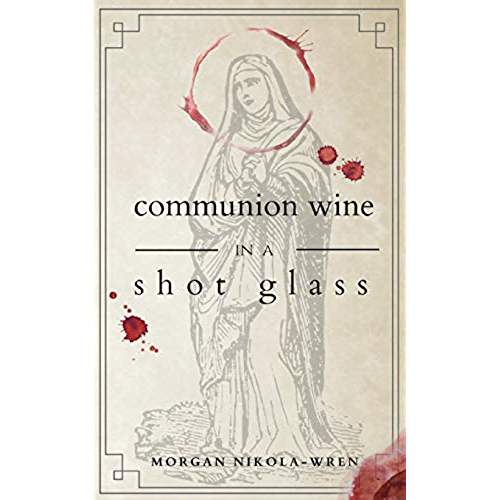
Oh, wow! Well, I actually just released my latest book, “Communion Wine in a Shot Glass,” so I am still doing some stuff with that. I’ve got two poetry books in the works (and one novel, but that’s another story.) One of the poetry books will be a chapbook called “Manifest.” I don’t want to give too much away, but it’s going to have a really visual aesthetic to go with the words and I’m crazy excited about the theme. My next full length poetry book is called “The Only Thing that’s Changed is All of Me.” It goes back to my original format that I used with my first book, “Magic with Skin On,” so it’s equal parts poetry and prose, but the thing that makes this one different is it will be told in alternating viewpoints of the two main characters (one in poetry and one prose). It’s gonna be a wild ride and I am so thrilled to share it with everyone.


Wombwell Rainbow Interviews: Rodney Wood

Wombwell Rainbow Interviews

I am honoured and privileged that the following writers local, national and international have agreed to be interviewed by me. I gave the writers two options: an emailed list of questions or a more fluid interview via messenger.
The usual ground is covered about motivation, daily routines and work ethic, but some surprises too. Some of these poets you may know, others may be new to you. I hope you enjoy the experience as much as I do.

007[124331]

Rodney Wood

Rodney Wood is retired and lives in Farnborough. He published his first pamphlet, Dante Called You Beatrice (Red Ceiling Press), last year; a pocket-sized pamphlet dealing with a love that compels him to write poetry. He has been widely published in magazines (Riggwelter, London Grip, Magma, The Ofipress etc). He jointly runs an open mic at The Lightbox in Woking.

The Interview

1. What inspired you  to write poetry?

I was never interested in poetry at school. It was only when I did The Open University in my late 20s that I discovered poetry. We were looking at  Wilfred Owen and the line “Gas, gas quick boys” struck me because I couldn’t work out how to say it properly and that inspired me to take my first steps. There was an open mic at the end of that week and I read some really bad sub-surrealist type poems and afterwards an old lady came up and said thank you very much for your poems.  I won’t forget her.

2. Who introduced you to poetry?

Again it was at an Open University summer school. Bill Billings,  poet lorryeate of Milton Keynes and ex-SAS soldier, was my tutor for the week and at the first meeting he turned up in the car park and said can someone hold the fort for a few minutes while I go back to my room and get some papers. So I read some poems which seemed to amuse everyone, actually they probably just felt sorry for me. After that Bill took me under his wing and told me to “just write”.

3. How aware were you of the dominating presence of older poets?

I took the decision early on that I would find out what people were currently writing elsewhere in the world and leave  Chaucer, Keats, Wordsworth and all that tribe till later. I counted myself lucky for the Macmillan Guide to Twentieth Century World Literature and that I could borrow books for free from the Poetry Library in London.

4. What is your daily writing routine?

I spend two mornings a week writing poems. that means retreating to my playroom, as my granddaughter’s put it, turning on my computer, doing admin, reading some poetry blogs, revising and maybe writing something fresh.

5. What motivates you to write?

I’ve been writing so long now it’s very difficult to stop. I have drafted a novel  but it just seemed too long and drifted back to poetry.  I was talking a few years ago to a watercolourist who used to do landscapes until he saw that computers could produce them better than he could so he started painting abstracts and I thought the perhaps I should change my style and do something new.

6. What is your work ethic?

Sometimes I feel overwhelmed by the amount on social media, by the number of books I have on my shelf that remain unread and the workshops, reading and open mics I should go to but I do as much as I can because it’s fun and the people I’ve met through poetry have been wonderful. Do what you enjoy, live because you never know where poems are going to come from. For example I once wrote a poem about a heavy metal gig, found a magazine and audience that loved it.

7. How do the writers you read when you were young influence you today?

I loved the directness and simplicity of Tadeusz Rozewicz, Hazim Hikmet and Raymond Carver as well as the dazzling and often opaque wordplay of Cesar Vallejo and Robert Bly. But then what’s influenced me is everything I’ve read and heard.

8. Who of today’s writers do you admire the most and why?

Anyone who can write has my admiration. Anyone who stands up in front of a microphone has my admiration. Me, spending 30 years writing badly I discovered my mojo.

9. Why do you write?

To answer the question what does it mean to be human? For the pleasure of being in the company of words. To find out what I think. To surprise myself. To convince myself I’m not suffering from imposter syndrome.

10. What would you say to someone who asked you “How do you become a writer?”

A writer writes. Begin.

11. Tell me about the writing projects you have on at the moment.

I had this idea that people we’re the same throughout time.  So I picked on the period of the Black Death and compared that to the current news. I’ve managed about 40 poems so far and I’m wondering if they’re any good and if should I stop writing them.

Wombwell Rainbow Interviews: Ian Seed

Wombwell Rainbow Interviews

I am honoured and privileged that the following writers local, national and international have agreed to be interviewed by me. I gave the writers two options: an emailed list of questions or a more fluid interview via messenger.
The usual ground is covered about motivation, daily routines and work ethic, but some surprises too. Some of these poets you may know, others may be new to you. I hope you enjoy the experience as much as I do.

61BVmLAyqVL._AC_US500_QL65_

Ian Seed

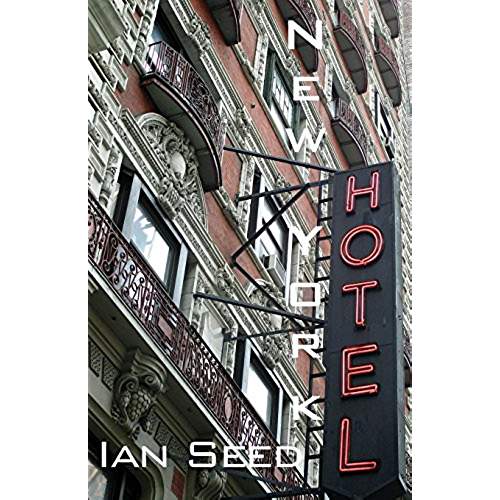
Ian Seed’s collections of prose poems include New York Hotel (2018), Identity Papers (2016) and Makers of Empty Dreams (2014), all from Shearsman. Poems from Identity Papers and Makers of Empty Dreams were featured by the BBC on their Radio 3 Programme The Verb, hosted by Ian McMillan. The Thief of Talant (2016), the first translation into English of Pierre Reverdy’s Le Voleur de Talan, is published by Wakefield. He has published a number of short stories, including Italian Lessons (LikeThisPress, 2017) and Amore Mio (Flax, 2011). A chapbook, Distances (2018), from the Red Ceilings Press, is Seed’s most recent publication. His work appears in a number of anthologies including The Best Small Fictions 2017 (Braddock Avenue Books), The Forward Book of Poetry 2017 (Faber & Faber), and The Best British Poetry 2014 (Salt). He is a contributor to the critical anthology, British Prose Poetry: The Poems Without Lines, edited by Jane Monson (Palgrave Macmillan, 2018). He lectures in the Department of English at the University of Chester.

The Interview

1. When and why did you start to write poetry, Ian?

I enjoyed reading and writing, though not necessarily poetry, from the age of six. At the age of nine, I wrote a kind of autobiography made up of short prose pieces.

The first poet I read that made me want to write was Edward Thomas, whose Selected Poems was a set A-level text. What attracted me at the age of seventeen was the way in which the poems were so personal and honest about his relationships. He was not afraid to explore bitterness and regret. Think of ‘And You, Helen’, or ‘P.H.T’, written for his father.
I’d had no idea that poetry could express emotions like this. Much of Thomas’s brilliance, of course, lies in his close and particular observations of nature, but within these observations, there is also a deep sense of the mystery beyond what we can see, hear and smell around us. ‘The Unknown Bird’ is a good example of this. His influence on me has remained in subtle ways to this day, though I am of course a completely different sort of writer.

Reading Edward Thomas made me seek out more poetry, for example in a book which belonged to my stepfather, The Faber Book of Modern Verse, edited by Michael Roberts, in the Penguin Modern Poets series, and in Michael Horovitz’s Penguin anthology, Children of Albion: Poetry of the Underground in Britain. I was fortunate in that although we were sometimes ‘close to the breadline’, as my mother put it, there were always books in the house. I became fascinated by different twentieth-century movements in poetry, such as Imagism, Surrealism and the more recent Beats. I loved Eliot’s early poetry, and I listened to Bob Dylan on a monograph record player next to my bed. For some reason, I was especially drawn to figures who were off the beaten track, such as Philip O’Connor, whose work I had discovered in a Penguin anthology of 1930s poetry, or William Wantling, whose work was included in Penguin Modern Poets 12, or Kenneth Patchen, whose Love and War Poems my mother owned. I wrote lots of mainly free verse poetry myself, most of it pretty awful, in a whole range of styles depending on who I was reading at the time. One of my better efforts, perhaps, was ‘Café Adventures’, which I wrote in December 1974, when I was eighteen, after reading the surrealist poems of Philip Lamantia in Penguin Modern Poets 13, and which many years later I couldn’t resist slipping in among more recent poems in my 2012 collection, Sleeping with the Ice-Cream Vendor (Knives, Forks and Spoons Press):

Café Adventures

on Saturdays we sneak
like diamonds into our

inevitable ship in a lost storm
our lung in a grey sea:

dead dragons of contentment
hanging in deep lamps

starved-white corpses wrapped
in leather wombs

stag on smoky pillar
with loser’s eyes

journey down a
quaking tunnel

maids in red like
Swiss mountains through a
massive window

My mother, who sometimes wrote herself, was my first editor. She explained the importance of reading poems out loud, and of cutting out words which were not needed.
When I told my ‘A’-level English teacher that I was writing poetry, he was not particularly interested, but he suggested I talk to David Herbert, another English teacher in the school, who happened to be my form tutor, and who, unknown to me, had published a couple of booklets with the then reputable Outposts imprint, under the editorship of Howard Sergeant. I picked out half a dozen of what I thought were my best poems to show him. Thinking about it now, I realise how fortunate I was that David Herbert (along with my mother) was so encouraging. David Herbert’s face reminded me of William Blake’s – there was something in it which was visionary yet very practical, and full of generosity of spirit. He read my poems, told me what he liked and didn’t like, and said he would be happy to see some more when I was ready. So, every two or three weeks, I would hand him a few more poems, some of them revised from drafts he’d seen before. After a few months, he surprised me with a stack of poetry magazines, and even more when he advised me to browse through them and pick one of the smaller ones to send six poems to. He warned me not to worry about rejections.

2. What is your writing routine?

And with a jolt, Paul, you bring me back to the present. But before I fully return, I must briefly conclude my story from the past because it informs the way I work now. In my late teens and early twenties, writing poetry came fairly easily. Granted, much of it was pretty bad, but I did have poems accepted in such magazines of the time as Iron, Kudos, Outposts, The Little Word Machine, and Smoke (which I believe is still going strong today). I self-published two pamphlets, one of which was featured on BBC Radio Leicester, and had two published by Kawabata, a small press run by Colin Webb out of Cornwall.

After that, I hardly wrote at all until my mid-forties. The Italian writer Natalia Ginzburg has said that up until the age of around twenty-five, writers can rely on a kind of innate lyricism. After that, if we are to write at all, we have to make writing an integral part of our everyday lives. This is precisely what I didn’t do, although I never stopped wanting to write.

In 2003, I dropped out of a well-paid job to take an MA in Creative Writing at Lancaster University. One of the benefits of doing the MA was having to write even when I didn’t feel like it. Since then I have written almost on a daily basis. I work full time and also have family commitments, so this certainly does not mean I can spend hours and hours writing. Often I have to write in snatches, for example for ten minutes first thing in the morning, or twenty minutes on the train, or fifteen minutes in my office at the University of Chester. It also does not mean that I write a complete poem or short prose piece each day. Rather, it is more a question of simply jotting down images, thoughts, memories, phrases, or brief storylines – whatever comes into my head or through my hand onto the page without me really thinking about it. Then, two or three times a week, I will sit down for a longer period at my computer – say a couple of hours, if I’m lucky – and go through my jottings. Usually, but not always, something emerges and forms the draft of a poem, or short prose piece, or as a part of something longer, for me to work on – sometimes over a period of weeks or months. If nothing emerges, then I do something else with words instead, such as translating poetry from French or Italian, or cutting up texts and making a collage poem.  Writing now, or simply playing around with words, is always a pleasure. If I really have to go a day or two without it, I become unbearable.

3. How aware are you of the dominating presence of older poets traditional and contemporary?

There has always been an ‘Establishment’ of one kind or another. Power structures in poetry shift and reflect those in society. The radical voices of one era become the establishment of the next. T. S. Eliot is an obvious example of this. I have already mentioned the original Penguin Modern Poets series, and Michael Horovitz’s Penguin anthology, Children of Albion: Poetry of the Underground in Britain. When I was in my late teens back in the 1970s, anthologies like these seemed to me to present an exciting alternative to the dominating presence of the traditional and contemporary canon, even if I had my reservations about the quality of some of the poetry. However, the fact is that these anthologies were themselves dominated by white male poets. We are all prisoners of our time, as Doris Lessing once said. So I think it is important to look beyond what is presented to us through the prism of anthologies and prizes, and also beyond poetry written in English (one reason why I write reviews of poetry translated from other languages for PN Review). Important figures continue to remain excluded. I find it incomprehensible, for example, that the work of Kenneth Patchen, a major poet, continues to be remain largely unknown.

Nevertheless, there is much to celebrate now in all the diversity of work that is being published, and in all the more experimental work that is available through publishers such as Shearsman and Knives, Forks and Spoons Press. Thankfully, also, much work from the past that was forgotten is being brought to light. I have recently been discovering the superb poetry of Hazel Hall (1886-1924), represented in the anthology Modernist Women Poets (Counterpoint Press, 2015).
Much younger poets are now the judges of major poetry competitions. Andrew McMillan was a judge on the National Poetry Competition last year, I believe, and Kim Moore is a judge this year. And ‘older poets’, too, can be emerging voices rather than ‘dominating’ ones. I am an older poet, but my voice has really only begun to emerge in the last few years (even if I began writing a long time ago), mainly because of my prose poems.  Other older poets have been publishing brilliant work for decades, but do not dominate the scene in any way – the name Martin Stannard comes to mind here.
Having said all that, while I believe that it is essential to be aware, as far as we can, of the literary (and by implication, the social and political) context in which we work, in the end, for me as an individual poet, the most important thing is simply to write, and to write with – dare I say it? – a voice which is in some sense true to me, as an individual, and is not simply a representation of some group or other.

4. What is your work ethic?

‘Work ethic’ sounds a bit grim. I prefer to think as Kenneth Koch did of ‘the pleasures of reading and writing poetry’, and making my own days with them.

5. How do the writers you read when you were young influence you today?

I will count ‘young’ as being up to thirty. John Ashbery has said somewhere that we are never smitten in quite the same way as we are by certain writers in our youth. I think that is true, though I continue to find writers now who excite me: most recently – in the last few days – the poetry of Tania Hershman. (See Terms and Conditions, Nine Arches Press.)
But, anyway, back to my youth… Many writers got into my bloodstream and remained. They continue to inform my work in one way or another to this day, but that is not to say that I consciously think of them when I write. Quite an eclectic mix, I realise, and this may seem like name-dropping, but it isn’t meant to. Here are a few of them, in the order they come to me now: George Herbert and William Blake; Dante Alighieri and Guido Cavalcanti; Dylan Thomas, Kenneth Patchen, Nicholas Moore, Philip O’Connor, Philip Lamantia and Mark Strand; Theodore Roethke and Sylvia Plath; Rosemary Tonks (I loved her poem ‘The Sofas, Fogs, and Cinemas’, which I discovered in a 70s anthology I can’t remember the name of now); Knut Hamsun, Franz Kafka, Albert Camus and Eugene Ionesco; Friedrich Nietzsche; Samuel Beckett and Ralph Ellison; T.S. Eliot and Ezra Pound; the Imagists and the Surrealists, generally; Pierre Reverdy and Max Jacob; Jean Rhys and Anna Kavan – everyone should read Kavan’s Ice; Giuseppe Ungaretti; Cesare Pavese, Natalia Ginzberg and Beppe Fenoglio (on whom I wrote my PhD thesis in 2012); Charles Bukowski, William Wantling and Alan Jackson; and poets who were published only by the small presses, and whose work is almost forgotten now, but whom I still return to, such as Cory Harding and Mark Hyatt. I only properly discovered the New York poets and New York-influenced British poets, especially Mark Ford and Jeremy Over, when I came back to writing after my two decades in the wilderness (not quite the wilderness – I was living and working in Italy, France and later Poland, and learning to read in other languages besides English, one of my greatest pleasures).

6. Who of today’s writers do you admire the most and why?

I tend now to be most drawn to writers who are doing something interesting with language, such as breaking it up and putting it back together in unexpected ways, who startle with imagery and with fantastic yet somehow believable narrative, who are perhaps exploring the boundaries between poetry and prose. These are on the whole people who publish with independent presses. They include, in no particular order: Will Eaves, Luke Kennard, Alan Baker, Emily Berry, Hilda Sheehan, Linda Black, Lucy Hamilton (whose book Stalker offered possibilities for my own work), Lydia Unsworth, Simon Collings, Patricia Farrell, Tom Jenks, and Em Strang.

I admire some of the newer ‘confessional’ poets (a term I use loosely, and which is not meant to detract in any way from their skills as poets), such as Kim Moore and Andrew McMillan.

I have enjoyed the first two volumes of the Outline trilogy by novelist Rachel Cusk, especially the way she tells stories within stories in a way often reminiscent of Kafka.

I love the playfulness of poets such as Mark Ford, Jeremy Over, Martin Stannard, Ian McMillan and more recently the German poet, Ron Winkler. Who could resist his 2016 Shearsman volume, Fragmented Waters, translated so brilliantly from the German by Jake Schneider?

so these cows, right, were parading
around like absurd typewriters.
for that matter they weren’t cows at all.
more like black-and-white moments caught in pixels.
and no typewriter could muck up
a meadow. whatever. what mattered
was the blink-of-an-eye-ness of a thing.
together with airy psyche, right […]
here
the meadow and there the contorted messages
of their horns. eyes
like uninhabited planets. cows, right,
as agreed upon, cows –
at the end of their biography.
(‘x-referential field portrait’, Fragmented Waters, p. 82)

For more writers of today I admire, see Shadowtrain, the online magazine I edited from 2006 to 2015, archived by the British Library here:

http://www.webarchive.org.uk/wayback/archive/20150920220014/http://www.shadowtrain.com/

7. How do you become a writer?

You are already a writer if you write. So write, read, live. Make writing a part of your life.

8. Tell me about the writing projects you have on at the moment.

I usually work best when I have a few things going on at the same time. At the moment: a further book of interconnected narrative short prose pieces, which follows on from my Shearsman trilogy, New York Hotel, Identity Papers, and Makers of Empty Dreams; a book of poetry based on collage techniques; translations from the French of Max Jacob and the Italian of Gëzim Hajdari; a series of personal essays, the first of which, ‘Discovery and Rediscovery: A Personal Reflection on Writing the Prose Poem’ has just been published in The Fortnightly Review; and a slow moving travelogue, which is part memoir, part fiction (this may merge eventually with the essays).

Wombwell Rainbow Interviews: Philip Gross

Wombwell Rainbow Interviews

I am honoured and privileged that the following writers local, national and international have agreed to be interviewed by me. I gave the writers two options: an emailed list of questions or a more fluid interview via messenger.
The usual ground is covered about motivation, daily routines and work ethic, but some surprises too. Some of these poets you may know, others may be new to you. I hope you enjoy the experience as much as I do.

Philip Gross

has published some twenty collections of poetry, most recently A Bright Acoustic (Bloodaxe, 2017). The Water Table won the T.S.Eliot Prize 2009, and Love Songs of Carbon the Roland Mathias Award (Wales Book of The Year) 2016. He is a keen collaborator, e.g. with artist Valerie Coffin Price on A Fold In The River (Seren, 2015), with Australian poet-artist Jenny Pollak on Shadowplay (Flarestack, 2018) and with scientists from the National Museum of Wales on a science-based poetry collection for young people, Dark Sky Park (Otter-Barry Books, 2018). A Part of the Main – a collaboration between Philip Gross and Lesley Saunders on themes of migration, exile, loss of love or home or language – comes from Mulfran, shortly.   http://www.philipgross.co.uk

The Interview

1. When did you start writing poetry?

Rather surreptitiously, concealing it not so much from other people as myself… I was 13 or 14, a writer of stories from the age of 9 or 10, and I was following the natural kind of self-apprenticeship where you read. read, fill yourself up with it, then have to write your own story in that style or genre. Trying on the clothes of writers you admire, to see if they fit. In my case (this was the early 1960s) I was reading spy stories, gravitating up the literary scale from Ian Fleming through John Le Carre on to Graham Greene. In mid-Greene-pastiche I found myself writing about a diplomat who was a spy and, yes, a poet. ‘Found myself’ is right, because I had a go at writing a poem of his… and I never came back to the novel. But the poetry went on.

2. Who introduced you to poetry?

I’d say my father… except that it was a private thing for him. A wartime refugee from Estonia, still mastering the English language, he kept a commonplace book, copying poems by hand when he found one that touched him. It was private, but not secret; the Estonian way is to keep the things that matter to you in a safe place, and close to your heart. Now and then, though, he would share one, but mainly it was the sight of his handwriting – like reading made visible, a glimpse of him becoming the poems – and knowing what that gradually more dog-eared notebook meant to him.

3. How aware were you of the dominating presence of older poets traditional and contemporary?

‘Dominating’? That’s not how I felt it. I was stumbling into a new landscape, and they were the landmarks visible. I wasn’t particularly guided to them, or put in awe of them, by school, but there was a fairly well stocked library, where I found The Waste Land for myself. It’s a very of-the-current-moment attitude that says we should read writers who look and sound like, and are the same age as, ourselves. That’s what I was trying to get away from!  I was adolescent, with no strong sense of a self to express yet. I wanted to encounter whatever was out there, in the wide world, and be part of it.

4. How do the writers you read when you were young influence you today?

Like inhabitants of a town that was once home, which I’m glad I left – still grateful to them, but I can see them more objectively. That goes through phases, too ; when as a young adult I started to know more about TS Eliot – that cold-fish haughtiness, his later mournful piety, some of his social attitudes – I hastily shed my admiration; a bit later again, I could see some of the vulnerability it came from, and grew less inclined to judge people of another era until I could imagine who I would have been had I lived then and breathed that air.  Writers who seemed more of my own moment, in the 60s, are more likely to have dated. Penguin’s Liverpool Scene anthology went everywhere with me for a while, as did Children of Albion, that monument to the late 60s ‘underground’, but left no trace on my writing. Lasting influences tended to come later, and to ripen slowly, too. I’m not inclined to trust the ways the poetry world’s attention shifts, and reputations with it, but I do take magazines; I am alert for quality work emerging online. I read the contemporary in the expectation that a few of the seeds that plant themselves in me will ripen slowly – that years hence I’ll notice that work which was a closed door to me for years has suddenly swung open, and I’ll think Yes-s-s…. That’s how it’s happened so far.  I trust it.  That’s why I don’t often write reviews: my instinct is, as Chinese leader Zhou Enlai said about the French Revolution (apocrypha alert; this story may be less true than it ought to be): ‘It’s too soon to say.’

5.What is your daily writing routine?

Routine? Oh, I wish. Or no, be honest: maybe I don’t, or I could do it now, presumably, having kicked free of the university teaching that’s shaped much of the last twenty years. Small notebooks travel with me everywhere, and some of the best times to catch forming possibilities is on the train, in transit, in the spaces between something else. True, I have the luxury of knowing that there will be time to pick the threads up later, usually. I might even be reproducing quite deliberately the pressure of a busy day-job life, because I need the friction. Poems are tough weeds; they like the cracks in pavements, maybe better than a well-dug-over bed.

6. What is your work ethic?

People have tended to tell me that I get things done – twenty-odd books of poetry have come from somewhere – though it’s sometimes hard to spot it on the surface. I still feel the need to explain to my wife, who is a fiercely disciplined and steady worker, that my restlessness, getting up and doing odd jobs, making coffee, staring out of windows, are part of the job. I don’t need to explain it to her, actually. I may need to explain it to myself. Having said which, I like commissions. A provocation or a limitation often brings out good and unexpected things that I wouldn’t have found on my own. Collaboration , which I love, works the same way. It gives an actual, answerable form to the sense that something is sitting in front of you with a question or a provocation, saying ‘Well?’  When that process gathers momentum, as it did quite recently with A Part of the Main, a poem-conversation between Lesley Saunders and myself stung into being by the world events of 2016, the back and forth can be daily, by exchange of e-mails almost. And sometimes a sequence of my own can have the same effect; each section is like a question or one facet of a complex situation, out of balance on its own, that demands a response. (I suspect that all creative work is in some sense collaboration – sometimes with the dead, the absent or imaginary. But that’s another story.) I’m not a musician, but I can see how a composer might need to work through all the variations, all the contradictions, maybe with a tool like the sonata form, before the thing feels ‘done’.

7. What motivates you to write?

Basically, it’s how I think. Or rather, it’s the place where thinking and feeling come together – physical senses and appetite, and curiosity, some knowledge, some freedom to make leaps of free association… It’s where I come together, whatever that ‘I’ is – and that’s a mystery I find intriguing too. It’s also where it feels most likely that something will take on a life of its own and grow in its own way, irrespective of what I intend. I’m not talking only about physically writing, but all the times I’m thinking in a writing posture, as it were. I might be walking, or listening to music, or in my Quaker meeting, or just on a train. What they share is a balance of inwardness and openness, quietness and yet connection, that feels rare, becoming rarer, in this world.

7.1 So balance is what motivates you to write?
Yes… but by ‘balance’ I don’t mean compromise, not a bland and blurry neutral state. Think of Keats’ ‘negative capability’… which he means in a positive way: the ability to hold apparent opposites together in dynamic tension. That’s true in good collaborations, and maybe good relationships too: you don’t become the same. Where’s the fun in sameness? Where’s the energy? I like the quaint old term (for the earliest computers) ‘difference engine’. I suspect that’s what creative thinking is.

8.You keep mentioning collaboration. Is that an important principle to you?

Clearly, yes. Way back in the mid 1980s, I wrote a letter to the Poetry Society newsletter inviting people to join in a chain-linking of poems responding to the nuclear anxiety of the time. I was touched and spurred on by the range of responses that came. That sequence, A Game of Consequences, never reached book form, partly because the old Cold War came to an unexpected end. ‘Damn,’ thought a tiny part of me. ‘What a waste of good poetry!’ Only a tiny part of me, I should add. The whole sequence did appear, years later, in Envoi magazine (issue 111) but had other consequences for me. It put me in contact with poet Sylvia Kantaris, and what ensued almost by accident, on what seemed like a whim, was the book-length collaboration The Air Mines of Mistila (Bloodaxe 1988, a PBS Choice). That was my first experience of the speed and energy that can breed in the air between two people, till the thing seems to be writing itself, owed by neither of you; it just bursts with its own life, and your small poetic egos are left running to catch up.
In hindsight, the Game of Consequences was also what first put me in touch with Lesley Saunders – also a gifted collaborator e.g. with Jane Draycott on Christina The Astonishing (Two Rivers, 1998) – with whom thirty years later I’d fall equally unexpectedly into a collaboration that is about to be published by Mulfran, A Part of the Main.  In between there have been close collaborations with visual artists, most notably and continuingly Valerie Coffin Price – on A Fold In The River (Seren, 2015) and other projects still under way now.

9. Tell me about the other writing projects you have on at the moment.

In spite of what I’ve been saying, I don’t generally think in ‘projects’. Mostly I trust the force of gravity – the internal kind, that draws the particles of poems that I’m writing anyway, unthinkingly, into the orbit of some concern or apprehension I might not have a name for yet. All of my collections in the last ten years have looked consciously themed, but they weren’t. The elements fall into the force field; they relate to each other – attract or repel. Some things I write don’t coalesce but stay in the offing – outliers, I might discover years on, of another concern yet to come. The sequences at the heart of my most recent Bloodaxe collection, A Bright Acoustic (2017), existed for some while as notebook jottings that I scarcely recognised as poems… till I noticed that they had begun to do that thing of talking to each other. Then I started listening in.
Collaborations are a little different – with a palpable agreement, at least to experiment, there at the start. There’s a very engaging, and long overdue, exchange which is partly cross-translation going on between myself and Welsh-language poet Cyril Jones. (Valerie Coffin Price’s visual work is there too, as a kind of medium in which we meet.) I’ve lived in South Wales for nearly fifteen years now, in bilingual public space, absorbing random amounts of Welsh while not consciously learning it. Cyril is the first writer-friend who’s opened a door for me – who’s trusted me, in fact — to come in and see the inner workings of Welsh poetry, alongside him. For both of us, there’s the eternal question of what can or cannot be translated from the tight organic forms of poetry. The consequences can be unexpected, which is always a sign of life and possibility. The writing I’ve been doing in response has been finding itself back in Cornwall, where I was born, or on Dartmoor, near where I grew up, rather than in Wales.

10. What would you say to someone who asked you “How do you become a writer?”

I’d say (rather annoyingly) ‘It depends what you mean by being a writer.’ More of that a bit later.
Practically, there’s a world of difference between writing forms. If you want to become a playwright, you’ve got to involve yourself with live theatre, or the film world, or whatever your medium is. If you’re a writer of creative nonfiction, you are consumed with research – if a travel writer, you travel. Writing novels, at least in my experience, involves whole rafts of time, the freedom to go to bed with the book in your mind and wake up to it next morning — not to break the working trance. Few of the things I’ve been saying about my poetry life would apply.
That doesn’t mean that poetry is dilettante business. It just has the chance to be lighter on its feet. You still have to engage with the field, the medium, or you are working in a vacuum, with little to go on but yourself, and for most of us that’s pretty predictable stuff. Poets have the two edged advantage of knowing in advance this will not be your main day job, that pays the bills. There may be a few exceptions, but most of those involve another job, as a performer or a public personality, alongside actual writing.
One course is to work in a field that relates to the writing. I have done this directly, as a teacher and enabler of creative writing. Other writers would caution against this, fearing that the writing-teaching, however satisfying, however thought-provoking, might leach away the creative energy you ought to be saving for your own work. They would say Do anything, however menial or dull… but keep it distinct. Getting that balance right for you is something you have to discern for yourself.
Back to the question of ‘what is the question?’ The one I’ve been answering is ‘How do I become a working writer?’ I’ve been assuming this means something broader than ‘someone who lives entirely by their writing’ – rather, ‘someone who puts their writing at the centre of their life; other work and choices all relate to it’. In all of them, poetry not excepted, some measure of self promotion is going to be part of the job. Novelists and anyone in more commercial fields learns that half of the job is ruled by publicity – and paradoxically, the more successful you are, the more it demands, so you need to become very skilled at boundaries and protecting space and time to write. Nowadays poetry publishers considering a first collection have been known to ask for evidence of the writer’s social media profile – their ability to do part of the job of marketing for themself. Poets tend either to cringe at the thought of this… or love it just a bit too much. Beware.
On another level, the answer to ‘how do I become…’ is blunter; if you need to become, you aren’t, and unless some life event compels you to it, probably won’t be. That might be lucky. A lot of people write. Some write very well indeed, when they choose, in an otherwise healthy, balanced and financially successful life. Writers, on the other hand, are lumbered with it; writing is integral to how they think, feel and negotiate their place in life. It may be an unfortunate quirk, a mind-mutation, even a pathology. And yet, cultures seem to need someone to do it (even when they think and say they don’t). For better or for worse, it could be you.

Wombwell Rainbow Interviews: Sam Meekings

Wombwell Rainbow Interviews

I am honoured and privileged that the following writers local, national and international have agreed to be interviewed by me. I gave the writers two options: an emailed list of questions or a more fluid interview via messenger.
The usual ground is covered about motivation, daily routines and work ethic, but some surprises too. Some of these poets you may know, others may be new to you. I hope you enjoy the experience as much as I do.

cover_Meekings
Sam Meekings

is a British poet and novelist. He is the author of Under Fishbone Clouds and The Book of Crows. has spent the last ten years travelling and working in China and the Middle East. He currently balances his time between writing, teaching, raising two children as a single father, and drinking copious amounts of tea. His website is http://www.sammeekings.com and he tweets via @SMeekings

The Interview

1. What inspired you to write poetry?

As a child, the nonsense rhymes of Edward Lear and Lewis Carroll  got stuck in my brain. There was something about them that was hard to shake, and I’d repeat lines again and again and again. It was only a short step to wondering: could I have a go myself? What really inspired me was the idea that language is pliable, and that you can play and experiment with it like you might with a chemistry set, to see what kind of strange and weird creations you might concoct.

2. Who introduced you to poetry?

My mum. I can remember a battered anthology of poems for children lying round the house when I was a child, filled with weird and surreal illustrations. Later at school, I had a couple of English teachers who were passionate about poetry, and nudged me towards different forms and styles.

3. How aware were you of the dominating presence of older poets?

I wasn’t really aware at all. I remember getting to go on a writing trip at a primary school, and listening to a talk given by Ted Hughes. To my young mind he seemed like a mountain of a man, craggy and worn but also full of some strange elemental power. It was only later that I realised who he was and how important he was. I’ve never really found older poets too dominating, and I’ve tended to pay more attention to those that help out younger poets, writers like Roddy Lumsden, who has done so much to support and encourage up-and-coming poets.

4. What is your daily writing routine?

I’m a single parent, so much of my writing gets done in strange hours: either before the kids wake up, or in the sleepy hinterland between their bedtime and mine. So while I jot down ideas throughout the day whenever they might come to me, through necessity I’ve developed a pattern of writing at night, when I can get a cup of tea and some quiet and sit by myself in silence for a while.

5. What motivates you to write?

That niggling feeling that there’s something more to say. Writing for me is a way of feeling fully alice.

6. What is your work ethic?

I force myself to do a little every day, no matter what. Even if I feel like I’m writing something truly terrible, I keep going and tell myself that they’ll be plenty of time to delete, rewrite, revise, and improve in the future.
7. How do the writers you read when you were young influence you today?

I’m still influenced by Lewis Carroll, especially the playfulness and strangeness of making words and images do something new. Ted Hughes I also often return to, the rawness of much of his writing about nature in particular.

8. Who of today’s writers do you admire the most
and why?

Alice Oswald is probably the poet I admire most. Her subjects always come alive in a strange new way, and each of her books goes in a new and different direction. That variety and freshness is really impressive. I also really admire her ethics and the fact that as a public writer she’s not afraid to take principled stands, even when it might cost her awards.

9. Why do you write?

Because I have to. Because I get twitchy and difficult if I don’t. Because it helps me challenge myself and interrogate my thoughts. And because I hope other people might share some of those thoughts.

10. What would you say to someone who asked you “How do you become a writer?”

I would say that you write and write and write. I think I’m still becoming a writer, and I’m not sure many people ever really feel that ‘Now I’m a real writer’. That’s important to remember: its always an act of becoming. You never stop. Also, I think what is really vital is joining, finding or creating a group or community of writers. That community will hopefully keep you going, and contacts are always useful. Go to as many readings and open mics as you can. Read poetry magazines, blogs, journals, so that you find ones that fit with your work when you’re ready to submit. And of course read and read and read current work.

11. Tell me about the writing projects you have on at the moment.

I’ve got a book coming out on 24th October called ‘The Afterlives of Dr Gachet’ about the subject of one of Van Gogh’s last paintings. I’m currently drafting a collection called ‘The Vanishing Light’ about endings, as well as working on a memoir I’m working on about my younger brother’s sudden and unexpected death.