Wombwell Rainbow Interviews: Rebecca Gethin

 Wombwell Rainbow Interviews 

I am honoured and privileged that the following writers local, national and international have agreed to be interviewed by me. I gave the writers two options: an emailed list of questions or a more fluid interview via messenger.
The usual ground is covered about motivation, daily routines and work ethic, but some surprises too. Some of these poets you may know, others may be new to you. I hope you enjoy the experience as much as I do.
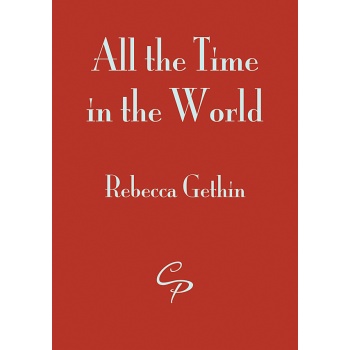
All The Time In The World by Rebecca Gethin

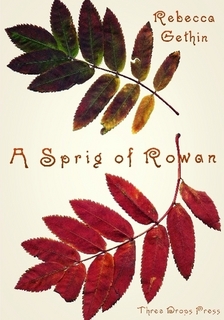
A Sprig of Rowan

Rebecca Gethin

Rebecca Gethin’s first novel, Liar Dice, which was published in 2011. Her frst poetry collection, River is the Plural of Rain, was published by Oversteps Books in 2009. Her second novel was What the Horses Heard and her second poetry collection, A Handful of Water. She has worked as a creative writing tutor in a prison and currently works as a freelance creative writing tutor and writer.

The Interview 

1. What inspired you to write poetry?
 
I wrote stories night and day as a child and when anyone asked me what I was going to be when I grew up, I’d answer “a writer”.  They always laughed.  I then forgot about it in the race to make a living, bring up children, weather life.   Later, I remembered my original aim and found I still wanted to write a novel but, for some reason, started writing poetry and this somehow served as an apprenticeship for the two novels I wrote. I think I won’t write another novel now as I prefer writing poetry. It carries less expectation of success and it’s a friendlier, less isolating world.  Also I can bin a day’s work more easily: binning 40k words is not so easy!   
 
2. Who introduced you to poetry?
 
We read quite a bit at primary school and my early years were full of Stevenson, Masefield, Walter de la Mare. I remember the rhythms and rhymes even now though I don’t always remember the words.  Nobody at home read any at all.
 
3. How aware were you of the dominating presence of older poets?
 
Very and felt very intimidated!   I loved Yeats and Keats but funnily enough when I went to university to study English I could never write essays about either.  But these inspired me to try and try again:  Seamus Heaney, Ted Hughes, Sylvia Plath, George Mackay Brown, Edward Thomas.  I loved a not-so-well- known Donegal poet called Francis Harvey.    
 
4. What is your daily writing routine?
 
I spend each morning writing at my desk if I can. Then in the afternoon I think about it. I may go back and adjust a comma or some words later or re-write the whole thing. 
If I don’t spend the morning fiddling with writing I need to catch up somewhere in the day so I might do that or else it’s just one of those days that gets away.  An accumulation of such days may make me feel  slightly unwell but I am aware that sometimes I am absorbing experience that I will use later and that’s ok.
I use a camera a lot to capture memories, images, experiences.   This is how I try to operate …I don’t wait for inspiration. I write or edit or organise.   I  find the best poems and the most enjoyable to write are the ones where I don’t know  where it’s going and my brain suddenly furnishes me with the direction….  as if the poem is writing itself.  Of course, I think a poet can also know where a poem is going and it might still be perfectly ok ( crafted and neat) but the ones that surprise the writer will probably surprise the reader!   Of course you will lose the surprise to yourself while you edit it or fiddle about with it…. but even fiddling and editing can also bring out the surprise.  Editing to me can be as creative as the initial write. 
 I was the same when I wrote my novels: I had no idea what was coming on the next page and wrote the two books sentence by sentence.  I edited a lot later on and enjoyed this but I had  no plans or maps for the plot to start with. 
 
5. What motivates you to write?
 
Lots of things give me what I call ‘a poem feeling ‘. 
Reading others. Making notes on what I see or hear.  Observing whatever and whenever I can.  Making small discoveries.
 My two monthly poetry groups, reading and supporting their work while their critiquing of my own is immensely supportive to me. 
 
6. What is your work ethic?

Work ethic?  Not sure I have such a thing.  Ethic seems a big word!   I am not writing for a living or to deadlines except my own.  My family comes first and, in the spring, my garden is next.  I love being outside and, on a sunny day, at any  time of the year I would rather be outside than at my desk so there can be a conflict within me!  I am Aries and am used to this. So although I do need to spend time writing then I don’t necessarily work that hard at it unless something is pressing me.  
I am learning to cope with the downs of my self-confidence and not let it get me down when it comes over me.  Just something we all have to live with.

7. How do the writers you read when you were young influence you today?
 
In my teens I read some of the Penguin Modern Poets books and Peter Redgrove is the one that stands out in my mind.  Again it’s the rhythm and flow of his work that is what interested me, the entrancing, visionary quality.  I also read Ezra Pound and a lot of TS Eliot.  At that time I was lucky to go to a reading by Jorge Luis Borges in London which was amazing although I couldn’t make out much. I also went to one by Kathleen Raine. For some reason I was introduced to her and she kindly enquired what I was going to do, as you do. When I proudly told her I was going to university to study English she said “Poor you” which was disappointing. But she was right because, after my degree, I never read a printed word for pleasure for nearly eight years!  I wrote too many essays and had to stuff masses of writers into my head.  At university, however, I heard Yevgeny Yevtushenko read in Russian and I was blown away.
 
8. Who of today’s writers do you admire the most and why?
 
This changes all the time!   But these writers don’t change: Alice Oswald for her visionary perceptions on nature, her surprising voice and turns of phrase.
Tony Hoagland for his compassion and rage and his discursive style, the way he melds two things together to make a greater whole. 
Norman MacCaig for his astonishing imagery.
Penelope Shuttle for her making the ordinary so very extraordinary.
Susan Richardson for her distinctive voices and her great knowledge of nature.
Les Murray for his voices and for being astonishing.
George Szirtes for being so apparently effortless and so adroit. 
Michael Longley for making my heart beat faster. I could go on and on….


9. Why do you write?

Because I am besieged by sense impressions I don’t want to lose.
Because it has become part of who I am and I feel ratty and almost ill if I don’t.
Because I want to record things that may vanish otherwise.
Because I want to resurrect things that are being lost.  10. What would you say to someone who asked you “How do you become a writer?”I’d say give yourself permission to write and above all let yourself write rubbish. Set yourself a target time and write for that length every day even if only 15 mins until it becomes engrained in you, a habit.
Put it away and come back to it a week (or a month or a year) later and see what bits you are surprised by.  Write them out again and see what connections you can make or what you now think is finished. If it surprises you now,  it will surprise others.  Keep going even if life gets on top of you!  


11. Tell me about the writing projects you have on at the moment.

I am about to go on a writing residency in a remote seaside cottage in SW Cornwall in Dec. This is a wee bit daunting to be honest.
I am putting together a pamphlet called Vanishings (working title) on endangered creatures but this has a way to go.  I have time though because Palewell Press is going to publish it at the end of 2019. (I could happily have studied Ecology.) 
And I have another up my sleeve on excavated stories because I love archaeology and finding things out , working title is Signs of Life.   (I should probably have studied History. )
I was reading at Aldeburgh Poetry Festival on climate change and want to work on this.

 
 Thank you Paul Brookes for making me think about these questions.

Wombwell Rainbow Interviews: Bina Sakar

Wombwell Rainbow Interviews

I am honoured and privileged that the following writers local, national and international have agreed to be interviewed by me. I gave the writers two options: an emailed list of questions or a more fluid interview via messenger.
The usual ground is covered about motivation, daily routines and work ethic, but some surprises too. Some of these poets you may know, others may be new to you. I hope you enjoy the experience as much as I do.


Bina Sakar

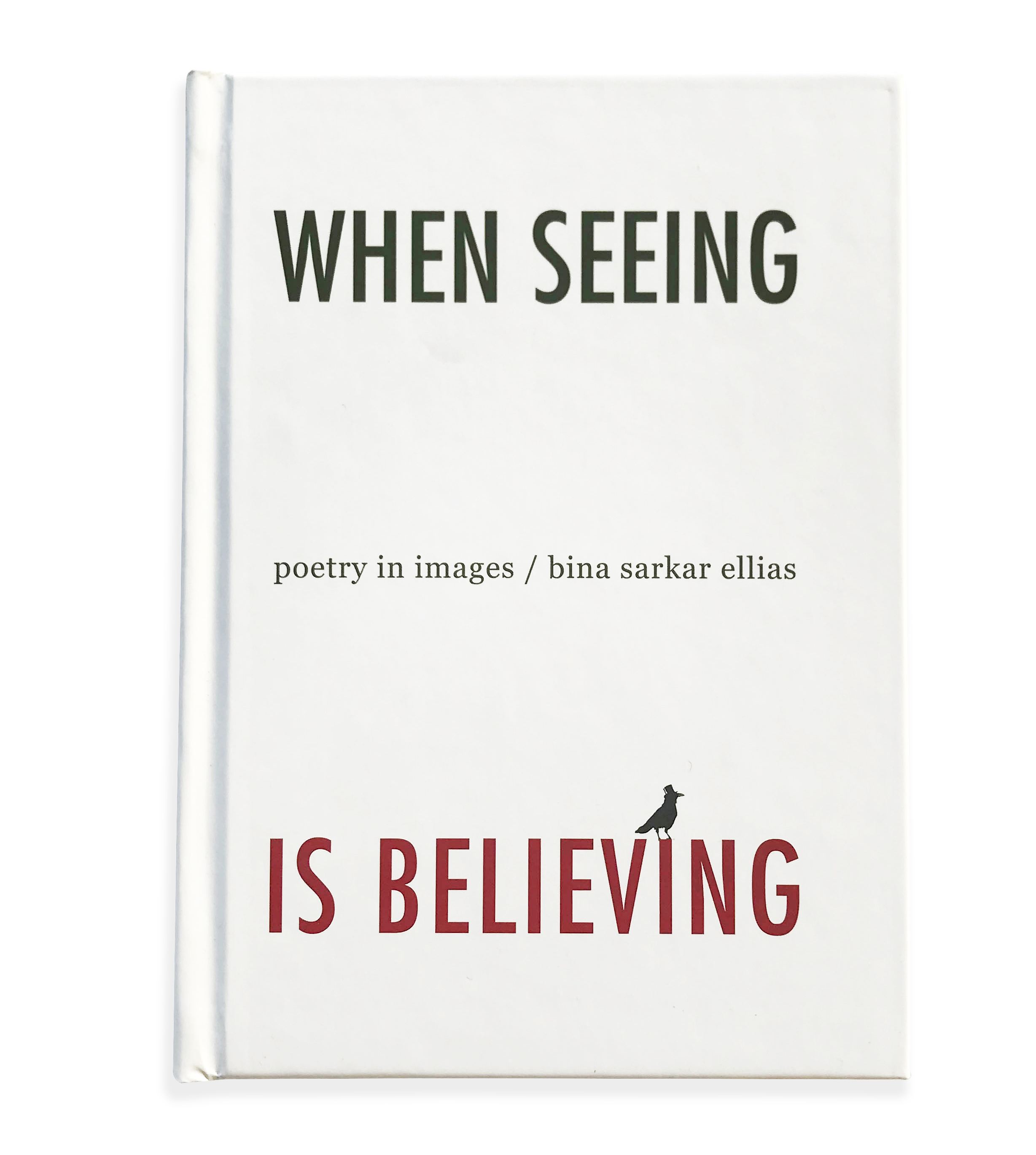
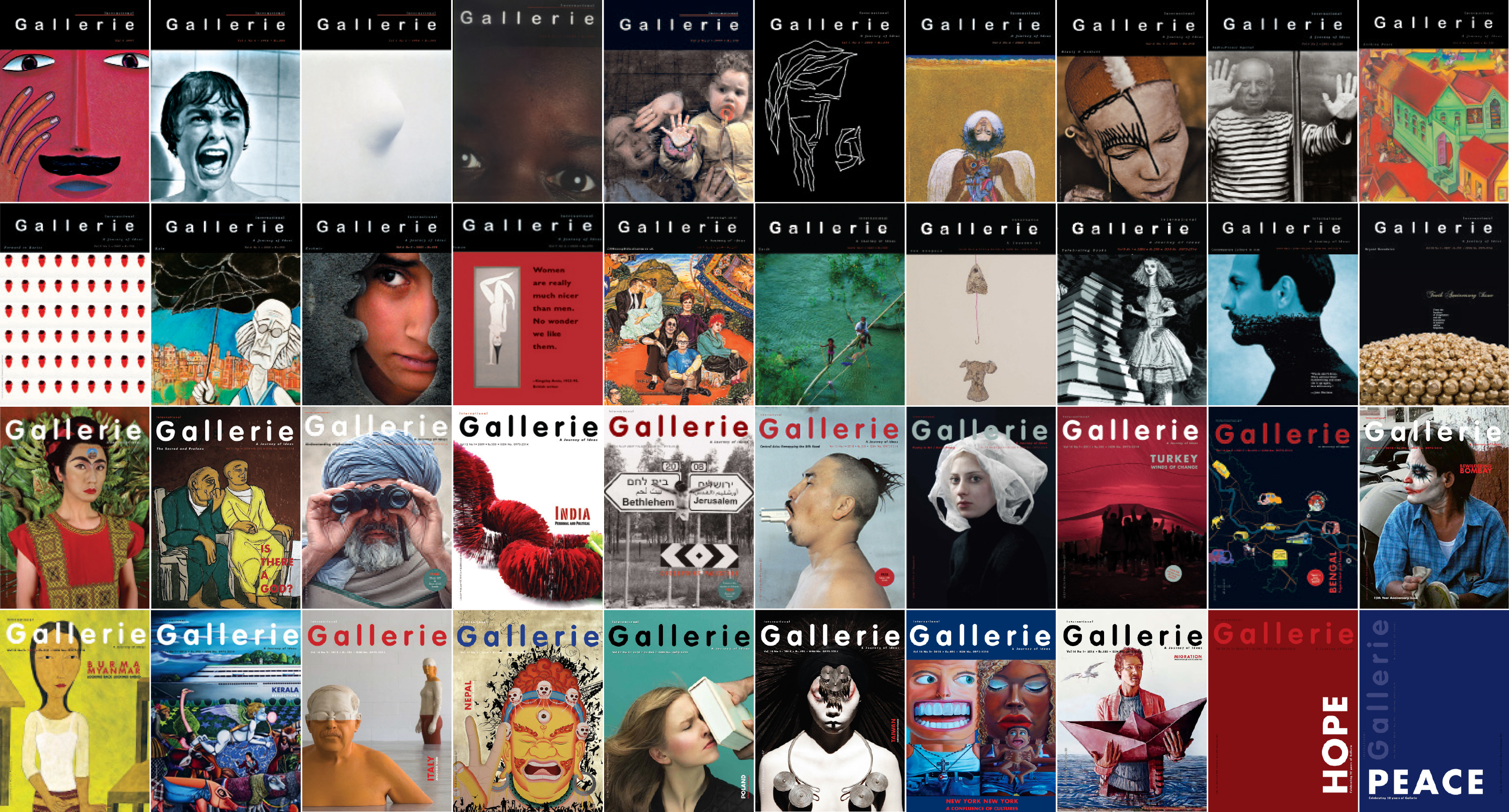
Bina Sarkar Ellias wears multiple hats, as a poet, fiction writer, curator, graphic designer,  editor and publisher. She recently curated the Migration Project for the Pune Biennale 2017, integrating works of artists, poets, filmmakers and photographers. She is founder, editor  and publisher of International Gallerie, an award-winning arts and ideas publication since 21 years.  Gallerie encourages critical understanding and appreciation of cultural diversity through the arts. Her book of poems “FUSE” has been taught at Towson University, Maryland, USA and selected poems have been translated into Urdu, Chinese, Arabic and French. Her forthcoming book “WHEN SEEING IS BELIEVING” has just been launched. She has given talks at various global venues and has received a Fellowship from the Asia Leadership Fellow Program 2007,  Japan, towards the project Unity in Diversity, the Times Group Yami Women Achievers’ Award, 2008, India, and the FICCI/FLO Award, 2013, India, for excellence in her work.
OTHER DETAILS
She has edited, Fifty Years of Contemporary Indian Art, 1997, for the Mohile Parikh Centre for Visual Arts, Mumbai, 1997. She has designed artist Jehangir Sabavala’s catalogue for  the 2002 show in Mumbai, Delhi and New  York, artist Rekha Rodwittiya’s catalogue, 2003, and recently her book in 2007, for shows in New York, Crossing Generations: diverge, the fortieth anniversary catalogue for Gallery Chemould, Mumbai, 2004, and a book on  artist Tyeb Mehta, Svaraj  by Ramchandra Gandhi. She has designed, edited and published an art  book, Chinthala Jagdish: Unmasked, 2004,  and The Curious World of Chinthala Jagdish, 2008; a book of poems, Rain, for Indian poet Sudeep Sen, 2005, Ayesha Taleyarkhan’s book of photographs, Bombay Mumbai, 2005, American photographer, edited and designed Leena Kejriwal’s book of photography, Calcutta: Repossessing the City, Waswo X. Waswo’s book, India Poems: The Photographs, and his recent catalogue, A Studio in Rajasthan, 2008, and artist Surendran Nair’s book, Itinerant Mythologies, 2008.

The Interview

1. What inspired you to write poetry?

Imagination; the magic of words in poetry and story books, lured me into scribbling my thoughts on random scraps of paper when I was perhaps nine or ten. And from teenage on, the novels of Gorky and Dostoevsky, the genius of Shakespeare, the philosophies of thinkers like Marx and Russell, and later Orwell, Thoreau, James Joyce , Sartre and Kafka, Camus, and Edward Said.  But the limerick and sonnet, the haiku and tangka, the ghazal, the acrostic and elegy, all have their inimitable characteristics that continue to delight.

2. Who introduced you to poetry?

As a child at school, books of poetry with simple rhymes enchanted me and later, poets like Tagore, Kipling, Wordsworth, Keats, Byron, Shelley, Tennyson and Whitman. It soon evolved to the irreplaceable Ginsberg, Kerouac, Sylvia Plath, Wisława Szymborska, Ramanujan, Walcott, and others.

3. How aware were you of the dominating presence of older poets?

I’ve been in admiration and appreciation of them since a long time. The deftness of thought, language and cadence lingered in all the quiet moments one had in-between preoccupations. The older poets have a distinct vocabulary but contemporary poets are marching forward with their own charged style, in hundreds. Perhaps today, one is more aware of the numbers because of the net and social media.
4. What is your daily writing routine?

One becomes a slave of routine as there are multiple practices I am immersed in. That of editor-designer-publisher of the bi-annual arts and ideas journal International Gallerie; a fiction writer and art curator interspersed with travels that entice me to varied regions, people and cultures. However, my poetry writings emerge mostly in the punctuations of these activities; in transit at airports, during a tea break, between destinations, often in the middle of the night…

5. What motivates you to write?

Life. People I encounter, places I visit, socio-political issues, nature; everything that speaks to me.

6. What is your work ethic?

Work is Worship… beneath its didactic surface, this proverb really connotes energy for me. Work is my life, work is love and passion, work for me, means a constant delight in learning, sharing the learning, disseminating unity in diversity, condemning wars, violence and injustice, speaking peace through the voice of words. Work is an instrument of healing.

7. How do the writers you read when you were young influence you today?

Many of the writers still resonate; like Shakespeare’s universally enduring characters, Orwell’s 1984 which is an all-time classic, increasingly relevant today.

8. Why do you write?

Writing is a compulsion. It happens without announcing itself.

9. What would you say to someone who asked you “How do you become a writer?”

I would say you do not “become” a writer. A writer has words flowing in his or her veins. The words get honed and chiselled through experience, and love for words.

10. Tell me about the writing projects you have on at the moment.

I have just launched “When Seeing Is Believing”, a book of poems that respond to the beauty and power of art and images. My poems are an ongoing process. As new poems emerge they will find themselves in books. A book of short stories is also unfolding. As is a novel and my ongoing preoccupation with “International Gallerie”, the global arts and ideas print journal that I’ve been editing and publishing since 21 years. Every project is unlimited joy! Do visit: http://www.gallerie.net

Wombwell Rainbow Interviews:  Julian Stannard 

Wombwell Rainbow Interviews

I am honoured and privileged that the following writers local, national and international have agreed to be interviewed by me. I gave the writers two options: an emailed list of questions or a more fluid interview via messenger.
The usual ground is covered about motivation, daily routines and work ethic, but some surprises too. Some of these poets you may know, others may be new to you. I hope you enjoy the experience as much as I do.

Julian Stannard

is a poet and a university teacher. He obtained his PhD. from UEA and is now a Reader in English and Creative writing at the University of Winchester, where for five years he was the programme leader for the MA in Creative and Critical writing. He writes critical studies – his most recent book was about the work of Basil Bunting   (http://writersandtheirwork.co.uk/index.php/author/authors-s-u/201-stannard-julian) – as well as reviews, essays, and poetry. His most recent collection is What were you thinking? (http://www.cbeditions.com/stannard.html)(CB Editions, 2016). His work appears variously in TLS, Poetry, Manhattan Review, Poetry Review, Poetry London, Spectator, Guardian, Telegraph, The Honest Ulsterman, The Forward Book of Poetry (2017) and Nuova Corrente (Italy). An essay on the poetry of Leonard Cohen appears in Spirituality and Desire in Leonard Cohen’s Songs and Poems (Cambridge Scholars, 2017.) He is at present writing a study of British and American poetry entitled Anglo-American Conversations in Poetry: 1910-2015 (Peter Lang).
He has read at various literary festivals, including the Aldeburgh Poetry Festival, as well as literary venues in the UK, mainland Europe and the USA – including London, Amsterdam, Utrecht, Paris, Rome, Prague, Genoa, Munich, New York and Boston. He teaches for the Poetry School (London) and is often invited to organise and lead workshops in a freelance capacity. He is both a Hawthornden and Bogliasco Fellow and has been a visiting Erasmus scholar at Charles University Prague and the University of Warsaw. Presently he is an External Examiner for the MA in Creative Writing at Birmingham City University and has been nominated for both Forward and Pushcart Prizes for his poetry. From 1984 to 2005 he lived for long periods in Italy, where he taught English and American Literature at the University of Genoa. He has written poetry about that mysterious port city and is now working on a bilingual publication of his Genoese poems for Il Canneto Publishers ( Genoa).

http://www.julianstannard.com/about/

The Interview

1. What inspired you  to write poetry?

As a young kid I was sent to a boarding school near Sheffield. I had been living in Malaysia  up until that moment  so boarding school  felt like an unexpected  and unwanted incarceration; it could be  nightmarish at times, and it was always  extremely cold! Reading –  as is so often the case, I think,   was  a way of coping generally  and English  was more or less the only thing I was  reasonably good at .
At ‘A level’  we studied  the poetry of Gerard Manley Hopkins  who, it turned out, had actually taught at the school in the  19th century,  and  we also studied The Waste Land  which seemed to resonate across the years. Something in my head said   ‘Holy shit, I think I like this!’

2. Who introduced you to poetry?

Our A level English Lit teacher was an irascible drunken left-wing Scotsman who was nevertheless on occasion  quite brilliant. He didn’t discourage drinking; in fact, he probably saw it as part of our wider education (an extra-curriculum activity), so we would trek across the damp hills looking for accommodating Public Houses.  In the 1970s no one seemed to bother that much about the legal dimension.  A barmaid would say ‘I suppose you’re going to say you’re eighteen?’ and we would say ‘Yes’ in the deepest voices  we could muster.  The beer flowed and in  our state of  inebriation  we would sometimes   talk about  poetry, and  even begin  to write it, in  our heads at least.  At the ages of sixteen, seventeen, eighteen, drinking and writing poetry  and  smoking hash were somehow inter-related and it felt better than most of the other things you were expected to do.
The English teacher had a record of Eliot reading The Waste Land which, as it most  likely seemed the easiest option, he   would  play quite often, invariably nodding off before  we got to What the Thunder Said. We knew much of it off by heart.
At University, in 1983,  I met Fleur Adcock , who came to give a reading and I realised in an instant that  poetry could be conversational,  colloquial and utterly contemporary. For me this was a real breakthrough!

3. How aware were you of the dominating presence of older poets?

In those days it  was still mostly all about older poets, but less so after meeting Fleur.  At University I read  a lot of medieval poets, including Chaucer, who were in turn  indebted to classical poets.   Later when I moved to Italy in the 1980s I learnt that every school child  could cite something  from Dante’s Divine Comedy. And I learnt that Liguria and Genoa, the city  which for a decade or so  became my home , had a rich literary history.   Which included the presence of Byron, Shelley, Dickens, Lawrence, Charles Tomlinson,  Hemingway, WB Yeats, Ezra Pound, Max Beerbohm, Basil Bunting , Camillo Sbarbaro, Eugenio Montale, Giorgio Caproni, Dino Campana.
This year, much to my delight,  the Italian publishers Canneto has published my book Sottoripa (2018), which is  a bilingual  publication of my poems about Genoa, translated by Massimo Bacigalupo.
http://www.cannetoeditore.it/libri/arte-e-grafica/sottoripa-poesie-genovesi-di-julian-stannard/
In 2013 the title poem had been  made into a short film by Guglielmo Trupia  which was nominated  at the Rain Dance Film Festival

But it was also in that period –  the 1980s – I got hold of a copy of Michael Hofmann’s Acrimony  –  an outstanding  collection by such a youthful poet  – Again  it  was a case of reading old and new voices  – and then finding  one’s own voice.

4. What is your daily writing routine?

I begin new poems with a mixture of hope and fear and excitement.  Because  I spend a lot of time teaching in  a university which also means  marking, and all that other bureaucratic stuff and then, when possible,  enjoying some recovery time,  I don’t always have a consistent writing routine but I take the opportunities when they arise  – on the train maybe, or weekends or during holiday  time. I spend a lot of time working on drafts or reading new poetry. I like listening to music, especially Thelonious Monk, Miles Davis,  Charlie Parker et al. This helps me write or re-write or just relax.
When  my younger son was living  with me I would  listen to  a lot of  Rap – whether I wanted to or not – and when it comes to   the Notorious B.I.G , I have acquired a coating of  expertise!
And  sometimes I send poems to friends to see what they think.

5. What motivates you to write?

A response of a kind.  The general weirdness of stuff I think – overheard conversations, things I‘ve read, billboards, train announcements (endless!), anger, desolation, joy, memories. I think we’re living in particularly challenging times; the political climate is worrying, more food banks, more homelessness, more poverty, fear of losing one’s job. The wider international situation too.  I have always been a loyal supporter of the Labour Party so that in itself brings  highs  and lows, rather like watching  your football team play brilliantly for much of the game yet somehow  throw it away  right at the end. Brexit fills me with immense sadness.
6. What is your work ethic?
Teaching  often  consumes swathes of my life, it’s  draining , but because I also teach creative writing  I can, from time to time, get inspired by student  work which is wonderful too. It’s a delight to come across real talent and help nurture it.  I like to read  a lot of contemporary poetry and new fiction  generally. I am asked to review quite frequently which is a discipline in itself, a kind of homework, and a way of keeping up to date. Travelling often produces new poetry. Notwithstanding work pressures I manage to write a fair amount; and if a poem demands  to be written I  usually find the time to answer those demands! It’s a lot more enjoyable than writing some anodyne document or funding bid.
7. How do the writers you read when you were young influence you today?
Their influence never really goes away, even if you spend a lot of time with newer or different  voices. I think  those ‘early’ poets helped fashion a way of thinking  about poetry  – and it’s  always a great pleasure to return to their  writing, whether it be those earlier generation such as the modernists  –  Eliot ,Pound, William Carlos Williams, DH Lawrence  – or  poets such as Frank O’Hara or Robert Creeley,  and/ or Lowell, Berryman  and co. Not to mention those older contemporary poets, especially if they are still producing new work: poets such as Fleur Adcock, Christopher  Reid, Hugo Williams, Maurice Riordan , Selima Hill, Michael Hofmann-  to name a few.

8. Who of today’s writers do you admire the most and why?

There are so many! There’ s a kind of resurgence in the world of  poetry I feel. I could roll out  a list off the top of my head but I am surely  leaving people  out; but the list would surely include Caroline Bird, George Szirtes, Kathryn Maris, Andrew Macmillan, Declan Ryan, Emily Berry, Tim Cumming,  André Naffis-Sahely,  Claudia Rankine, Sharon  Olds, Annie Freud, Ishion Hutchinson, Luke Kennard, Richard Skinner,  and some pieces  from  Bobby Parker  and Ocean Vuong too. I would also want  to acknowledge the dark genius  of Frederick Seidel, the intimations of mortality still coming from the pen of Clive James. And I take my hat off to my former student and colleague Antosh Wojcik who’s making   quite a name for himself as a performance poet.
And why? Variously and varyingly  there is so much  energy  here, a lot of drive, and risk- taking,  and moments of candour (Lowell said ‘ why not say what happened’?)  and plenty of ludic mischief  too and experiment  with form;  in effect some lively conversations between poetry and prose, including  prose poetry, and other media too, including social media.  Some of the poets above work across genres: variously novelists, translators, essayists,  reviewers,  editors, teachers, events’ organisers  and  publishers . Difficult not to mention Charles Boyle, ex-poet, and now writer of prose under various names and the founder of CB Editions. The blogging of Katy Evans-Bush  –  fine poet – has been  significant and the gregarious Bethany Pope, poet and novelist, is now writing more or less daily reports from China.   I look forward to reading her next book.

9. Why do you write?

After forty years or so of doing it  –  oh  my God ! – it’s become a habit, a way of thinking and even a way of  living. Sometimes reportage, sometimes invention, I guess it’s a way of dealing  with some deep, not always unpleasant,  itch  – which in turn probably answers to  all  sorts of Freudian-like  neuroses…
Writing, at times, is totally satisfying and, in a practical sense, quite easy to do. I don’t need a studio or a theatre or complicated props.  Just the page itself, I guess, which  is a kind of stage.
10. What would you say to someone who asked you “How do you become a writer?”
I’d say Read, read and read yet more  and try thing out. Experiment, take risks, be thick-skinned,  and try and get  plenty of sleep!

11. Tell me about the writing projects you have on at the moment.

My last  English collection came out in 2016 –  What were  you thinking? (CB Editions http://www.cbeditions.com/stannard.html) ;
so  I’m grappling  with the creation of a new MS – several pieces of which  have been published in  magazines. Any new collection  has , at least for me , a rather  aleatory dynamic –  feeling  my way forwards, as it  were, letting  poems butt their way in, or conversely slide away …
I’m also writing a book called Transatlantic Conversations – which is about the relationships, harmonious or otherwise,  between British and American  poetry; this is for the publisher Peter Lang.
As well as the above ,I’m  also working with  the novelist and artist Roma Tearne on a collaborative  project  called  Heat Wave  – It’s s a sort of dialogue between  poems of mine and Roma’s  fantastic  paintings . Not an ekphrastic venture I hasten to add. More a dark night of the soul with some gleeful moments too! A kind of synaesthetic fugue….
It’s coming out next year thanks to Green Bottle Press. We’re planning  several readings /events so watch this space!

Wombwell Rainbow Interviews: Brian Docherty

Wombwell Rainbow Interviews

I am honoured and privileged that the following writers local, national and international have agreed to be interviewed by me. I gave the writers two options: an emailed list of questions or a more fluid interview via messenger.
The usual ground is covered about motivation, daily routines and work ethic, but some surprises too. Some of these poets you may know, others may be new to you. I hope you enjoy the experience as much as I do.

Brian Docherty

was born in Glasgow, lived in north london for 40 years, and is now part of a growing community of writers, artists and musicians in East Sussex. He was educated at Middlesex Polytechnic, the University of Essex, London University of Education, and St. Mary’s University College. He had a variety of jobs including Civil Servant, hospital storeman, warehouseman, lecturer and creative writing tutor. He has published 6 books, most recently In my Dreams, Again, (Penniless Press, 2017) and Only in St. Leonards : A Year on the Marina (Special sorts Press, 2017).

The Interview

1. What inspired you  to write poetry?

A usual reason; unrequited love, back in the summer of 1976. Those poems were very  bad and I burnt wodges of them. After a while I went to my local library, Hornsey Library in north London where I was living them (I’m from Glasgow originally) and started reading through the poetry shelves. I was dismayed by Philip Larkin and other English poets of the day, and turned my back on them, and discovered William Carlos Williams, Wallace Stevens, Gary Snyder, and other American poets. So I carried on writing, and in 1978, joined Dinah Livingstone’s Camden Voices group, where I stayed for 6 years and learned a huge amount from Dinah and from other group members.

2. Who introduced you to poetry?

I read some poetry at school for ‘O’ Level, but my serious introduction came at Camden Voices and other writing and workshop groups. I also found the Arts Council Poetry Library, then based at No. 9 Long Acre, and just read everything, as well as visiting Compendium Bookshop in Camden ?high St.

3. How aware were you of the dominating presence of older poets?

‘Dominating’ isn’t the right word; I didn’t do ‘A’Levels, and did my first degree as a mature student from 1981-84, but I was strongly aware of the ‘tradition’ early on, and the American Modernists, from Ezra Pound on, to the  Black Mountain poets, New York poets (Frank O’Hara especially) and Beat Generation and San Francisco Renaissance poets. As for English, Scottish or Irish poets, Auden, Ken Smith, Heaney, Mahon, Ian Crichton Smith, and so many more. And Yes, I know this random handful are all male. Marianne Moore, Elizabeth Bishop, Lorine Niedecker, Denise Levertov, are only a few of the older women poets who remain important to me.

4. What is your daily writing routine?

I’m not a novelist or journalist, so ‘routine’ doesn’t really apply; drafting a short lyric poem isn’t work. I draft fast and revise & rewrite slowly, usually putting my holograph drafts aside for a little while, then introducing them to the laptop. My daily writing often involves more thinking & reflecting on a draft than actual writing. In the last 3 years I have been prolific, partly because I am now officially an Old Age Pensioner, and partly because my beloved wife Rosemary died unexpectedly in January 2016. That changed everything, including my writing. As of this writing, I am 34 poems into a memorial sequence for Rosemary. Fortunately, these are not the only poems I am writing now.

5. What motivates you to write?

What motivates anyone to do anything? I am a writer, that’s what I do; I carry on writing, workshopping poems, and doing readings, because poetry is my vocation; it is not a job, a business, or a career. I’ve been doing this for 40 years now, and have no intention of stopping, especially now, when my new writing is different to the poems I wrote in north London; it is locally specific, often to the bemusement of audiences in America, when I read in say, San Francisco or Austin Texas. I am lucky, down on the Sussex coast, to be part of a growing community of writers, artists & musicians, and to take part in Writing groups such as Shorelink Writers, Words for Wellbeing, and workshops such as Hastings Stanza Group, and to do readings and events in Hastings, Eastbourne and Brighton, as well as further afield.

6. What is your work ethic?

To do the best I can on any given day, and do whatever task is in front of me as well as i can.

7. How do the writers you read when you were young influence you today?

‘Young’ is relative. I never read poetry as a child or teenager outside of school, but I read everything i could get my hands on, mainly novels & history. It all factors in, but  William Carlos Williams , Gary Snyder & W. H. Auden are influences I have assimilated so thoroughly that they and others inform everything I write.

8. Who of today’s writers do you admire the most and why?

If you mean poetry, that’s hard to say. Recent contemporaries I admire include Ken Smith, Carol Ann Duffy, Michael Donaghy, Mimi Khalvati,  and so many more; and a special shout out to my friend Alice Denny, who is the most extraordinary writer & performer.

9. Why do you write?

See 5 above; because I still can, because I must, because I believe I have something to say that a few people might be interested in reading or hearing. My recent work seems to be appreciated by audiences, so I will carry on as long as possible.

10. What would you say to someone who asked you “How do you become a writer?”

It’s no different to becoming a painter or a musician; because you want to, you start, and after a while, with any luck, you will be encouraged & mentored like I was by Dinah Livingstone. I love the story of cellist Jacqueline Du Pre, who heard someone playing the cello on the radio on when she was 4 years old, and said “That’s the noise I want to make.” You start by wanting to make a noise or a mark, and you try it out & just keep going. Fortunately, being a writer doesn’t need expensive equipment or training, just the desire to do it, and the stubbornness to keep going. As W.B.Yeats said, ‘Irish poets learn your trade / practice what is well made’. Or as Miles Davis said. ‘Play what you don’t know’. If there are any rules, learn them,  break them, ignore them, pay your dues.
If this all sounds very pragmatic, that’s me; if Kate Tempest is a good role model for you, that’s great, but she started out somewhere, and learned from other poets around her, as well as whatever she read. Join a local writers group, find a good workshop, show up at readings or slam events, and do those open mics or floor spot events.

11. Tell me about the writing projects you have on at the moment.

As mentioned in 4 above, I am part way through a sequence of memorial poems for my late wife, Rosemary: In Remembrance. I have no idea how many more there will be or when it will feel finished, so that will be either a pamphlet or a full collection, maybe next year. But I have written a lot of other poems recently, so there will be another book
at some point. I don’t think too far ahead, I write, keep what works, discard the failures or repetitions, and workshop then & road test them in readings. If there is a typical grass roots poet, that’s me; I don’t get commissioned to do ‘projects’ , so I write for myself and anyone who reads or hears me. But there is a strong element of intertextuality in my recent work that I am always aware of, so writing new work that looks & sounds interesting to me and whoever my audience might be, is my current & ongoing ‘project’.

Wombwell Rainbow Interviews: Jeannine Hall Gailey

Wombwell Rainbow Interviews

I am honoured and privileged that the following writers local, national and international have agreed to be interviewed by me. I gave the writers two options: an emailed list of questions or a more fluid interview via messenger.
The usual ground is covered about motivation, daily routines and work ethic, but some surprises too. Some of these fiction writers you may know, others may be new to you. I hope you enjoy the experience as much as I do.

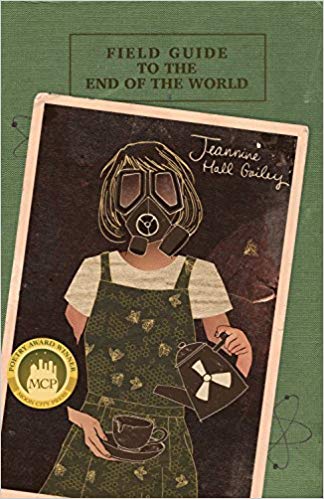
51s0-bVsegL._SX322_BO1,204,203,200_

Jeannine Hall Gailey

served as second poetlaureate of Redmond, Washington. She’s the author of four previous books of poetry: Becomingthe Villainess, She Returns to the Floating World,Unexplained Fevers, and The Robot Scientist’sDaughter

The Interview

1. What inspired you  to write poetry?

I’ve been writing poetry since about the fifth grade. I started memorizing poetry before I started writing it – I learned from my mom’s college textbook (she was in college at that time) and found the magic in writers like T.S. Eliot, Louis Simpson, and E.E. Cummings. Reading poetry has always been fun for me, and I want people who read my poems to have fun, too.

2. Who introduced you to poetry?

As the previous answer indicated, my mom definitely encouraged me to read the same poetry she was reading for her college classes, and my fifth grade teacher also encouraged me to read Carl Sandburg and Emily Dickinson.

3. How aware were you of the dominating presence of older poets?

I think I was surprised when I started reading poets that were still alive, like Dorianne Laux, Lucille Clifton, and Rita Dove – it made me aware of more female poets and poets of color that I had seen when I was a kid. Discovering Plath – who I found very funny – was a discovery – and here’s another surprising thing – one of the best things that happened to my writing was taking a post-modern theory class in my twenties. It sounds boring, but it opened my eyes to a variety of ways to read and see poetry – and a new way to write poetry.

4. What is your daily writing routine?

I tend to write late at night – between midnight and 3 AM. I’m very much a night owl. I tend to get inspired on the fly, so I carry around a notebook to doctor’s offices, running errands, even the grocery store, to make sure I can jot down inspiring lines and work on them later. I keep revising poems even after they’re published – even, sometimes, after they’re published in books.

5. What motivates you to write?

A love of poetry? A desire to put something out in the world from my own quirky point of view.

6. What is your work ethic?

I’ve been writing 1-2 poems a week pretty steadily for many years. My MS has slowed down my reading and reviewing; it makes reading more difficult, and copyediting harder – but actually composing poetry seems about the same.

7. How do the writers you read when you were young influence you today?

I think that the idea that poetry can be funny and the idea that persona can be a way to retell stories in a new and surprising way both came from what I read when I was younger.

8. Who of today’s writers do you admire the most and why?

Some of my favorite writers are writers that write very differently than me. I love Margaret Atwood – she’s the queen of the unlikable and unreliable female narrator, in both poetry and prose. I like Matthea Harvey’s charm and unlimited imagination and playfulness with language. I love Dana Levin’s thoughtful philosophies that always come through in her poetry. Rita Dove is not only a great persona poet, she made me think about form in a different way. I love Ilya Kaminsky’s passion and Jericho Brown’s emotional deftness.

9. Why do you write?

I wanted to hear more voices like mine. I wanted to hear from the women on the other side of the story. I wanted to create women characters in poetry that might have been ignored or overlooked, or perhaps miscast as villainesses. I wanted to have some fun with poetry, but also, say something that might not have been said before in that exact same way.

10. What would you say to someone who asked you “How do you become a writer?”

I started writing almost every day when I was ten. I started submitting my work when I was nineteen, and I expected to collect a shoebox full of rejections on the way to getting published. (Yes, when we had paper rejections, we sometimes taped them to the wall, or kept them in photo albums or shoeboxes.) I expected to learn more as I got older, to read a lot, that I would become a better writer as I got older and read more and studied more – I always thought “being a writer” was a process. I still think so!

11. Tell me about the writing projects you have on at the moment.

I am shopping around my sixth poetry book, “Flare,” about the year and a half time when I was first diagnosed with terminal cancer, then six months later, multiple sclerosis. I’m also halfway in to a new manuscript that contains witchery, politics, and apocalypses.

Wombwell Rainbow Interviews: Clarissa Aykroyd

Wombwell Rainbow Interviews

I am honoured and privileged that the following writers local, national and international have agreed to be interviewed by me. I gave the writers two options: an emailed list of questions or a more fluid interview via messenger.
The usual ground is covered about motivation, daily routines and work ethic, but some surprises too. Some of these poets you may know, others may be new to you. I hope you enjoy the experience as much as I do.

Screenshot_20181111-002826

Clarissa Aykroyd

grew up in Victoria, Canada and now lives in London, England. Her work has appeared in publications including The Interpreter’s House, The Island Review, Lighthouse, The Missing Slate and Strange Horizons, among others. She has twice been nominated for a Pushcart Prize and is the author of a blog on poetry and poets, The Stone and the Star.

Blog: https://thestoneandthestar.blogspot.com/

Facebook page: https://www.facebook.com/stoneandthestar/

Twitter: @stoneandthestar

Clarissa performs her poetry at iamb.com

https://www.iambapoet.com/clarissa-aykroyd

The Interviews

1. What inspired you to write poetry?

I first remember writing poems as school assignments, even if only occasionally, from a very young age. I started writing stories when I was five or six years old, but I saw myself as a novelist or a short story writer for a long time. Around 13-14 years old I started writing a lot of poetry – I remember one summer when I seemed to be writing poetry every day. I’d say I’ve been writing poetry fairly seriously, if somewhat intermittently, for over 20 years. I suppose the inspiration came from reading, and from travelling, since before I can remember.

2. Who introduced you to poetry?

I grew up in Victoria, Canada in a houseful of books, surrounded by other readers, and my family constantly paid visits to the excellent local libraries. But we weren’t a very poetry-reading family – it was really about novels and short stories for all of us. At home I would have read some Robert Louis Stevenson and Edward Lear, and the poetry of the Bible, and bits of poetry in school, but I was a bit too serious of a child to appreciate the funny poetry aimed at young readers. I listened to and played a lot of music (classical, rock and pop). In some ways music occupied the place of poetry for me when I was younger – both in terms of rhythm and musicality, and through lyrics, too.

In junior high and high school I studied some poetry which became important to me, but sometimes I stumbled across poems that we weren’t even studying, in anthologies, and they made a strong impression or changed my perspective – for instance, Seamus Heaney’s ‘The Tollund Man’ or Ted Hughes’ ‘Thistles’. I had a few excellent English teachers in school, and also some wonderful professors when I was doing my BA in English at the University of Victoria. A class which was unexpectedly amazing and significant for me was Modern Canadian Poetry with Doug Beardsley. I had a requirement to do a Canadian literature class and was very unenthused about the whole idea. I decided reluctantly to do Modern Canadian Poetry because it was a summer course and I’d get it out of the way quickly. I ended up loving that class and it got rid of my preconceptions. I read poets like Phyllis Webb, Al Purdy (a grand master of Canadian literature, who came into to speak to us, delighting and intimidating us all) and especially PK Page, whose poetry influenced me more than I can say (and I was also fortunate enough to attend one of her readings and meet her – both she and Al Purdy are gone now.)

3. How aware were you of the dominating presence of older poets?

Very much: for instance, one of the first poems I was entranced by (and memorised) was ‘Kubla Khan’ by Samuel Taylor Coleridge. The first poet I really fell in love with was when I was 13-14 and it was WB Yeats. When you are that age, artistic encounters can be extraordinarily intense (a great many of mine were) and I certainly recall that reading Yeats was a widening of my world. In university, TS Eliot and others became very important to me. I remember powerful encounters with poems by Derek Walcott and Randall Jarrell. At that time I also discovered Paul Celan (not through my studies, but through the U2 song ‘A Sort of Homecoming’) and he’s now more important to me than I can possibly express. In my early 20s I also started going to readings by poets who were still around, unlike those early inspirations, and who had been writing for decades and were well established. I suppose I’ve felt inadequate as a writer (actually, more in terms of getting published than as far as the quality of my writing) but I usually only viewed the older poets and the dead poets as an inspiration and as part of my own ancestry as a writer. I knew I could never be them, but they almost always helped me rather than hindered me.

4. What is your daily writing routine?

I do not have a daily writing routine, sad to say. To be fair, I never really have (except on non-poetry writing assignments, which over 20 years have ranged from books for younger readers on refugees, Jonathan Swift, and poet/novelist Julia Alvarez, to a recent essay comparing Sherlock Holmes and John le Carré’s master spy George Smiley). I work full time as a publisher, life is busy, and I waste too much time. On the other hand, I typically write…something…every week, even if it’s not an original poem. It could be my blog on poetry, or a translation, or a review, or a bit of copy for work, or something else. I’ve also realised that even when I’m not writing, I’m generally writing – by which I mean that I tend to be thinking about or developing some work mentally, whether consciously or more unconsciously.

5. What motivates you to write?

It’s part of my identity. An important part, though far from being the whole. Otherwise, I suppose I’m motivated by my travels, by my environment – “place” is a big thing in my work – by stray thoughts and stray observations, and by other artists’ work.

6. What is your work ethic?

This question makes me feel that I should have a daily writing routine. But essentially, I think writers should write what they want and write it well. I’m not fond of rules and aphorisms when applied to poetry (“don’t use abstractions”, “all poetry is political”, etc.) Don’t write what others tell you that you should be writing. Write whatever you want as long it’s the best you can do and as long as it’s not vile or hateful.

7. How do the writers you read when you were young influence you today?

Immensely. I started reading Sir Arthur Conan Doyle’s Sherlock Holmes stories when I was seven years old. I wrote some Holmes-inspired poetry when I was a teenager, and a few years ago I started writing poems about Holmes again and have written about 20 since then. That’s a more obvious example, but I carry books and poems with me (mentally and emotionally) wherever I go, especially those I encountered between the ages of 7 and 20, approximately. And they can be either poets or prose writers. I know that Tolkien, Richard Adam’s Watership Down, and John le Carré, to name a few, influenced my poetry.

8. Who of today’s writers do you admire the most
and why?

The list is long, so you’ll have to view this as a wildly incomplete sampling (and I’m just sticking to poets for this one). I’ve noticed that the contemporary poets I love usually express equal enthusiasm for their peers and for the works of the past – I seldom care for the work of poets who lean very heavily or exclusively on one side or the other. Some of my favourites: Alice Oswald, Carolyn Forché, Louise Glück, Ilya Kaminsky, Ishion Hutchinson, Terrance Hayes, Derek Mahon, Sean O’Brien, Sasha Dugdale, Katharine Kilalea, Al-Saddiq Al-Raddi, Adam Zagajewski, Nikola Madzirov, Dan O’Brien, Tracy K Smith.

9. Why do you write?

I can’t imagine not writing – even though I don’t always write consistently, I cannot imagine giving it up entirely. I’ve been doing it for too long and it’s the only thing I’m really good at. And it’s very satisfying to know I’ve written something good, and also lovely when it moves others.

10. What would you say to someone who asked you “How do you become a writer?”

Read and write. Read more than you write. If you want to write poetry, don’t just read poetry and definitely don’t just read prose. Read both the living and the dead. Don’t only read your friends or peers. Read internationally, including work in translation. Write a lot, but don’t feel that you have to write every day. Write work that you would enjoy reading. Don’t write what others tell you to write, unless it’s also what you want to write.

11. Tell me about the writing projects you have on at the moment.

I wish I could say I really have one. My blog is ongoing, although I don’t write in it as much as I used to – but it’s been going for seven years now, so I think I’m doing ok. I have a few ideas which I need to start turning into reality, but they’re not ready to share.

Wombwell Rainbow Interviews: Susan Jane Sims

Wombwell Rainbow Interviews

I am honoured and privileged that the following writers local, national and international have agreed to be interviewed by me. I gave the writers two options: an emailed list of questions or a more fluid interview via messenger.
The usual ground is covered about motivation, daily routines and work ethic, but some surprises too. Some of these poets you may know, others may be new to you. I hope you enjoy the experience as much as I do.

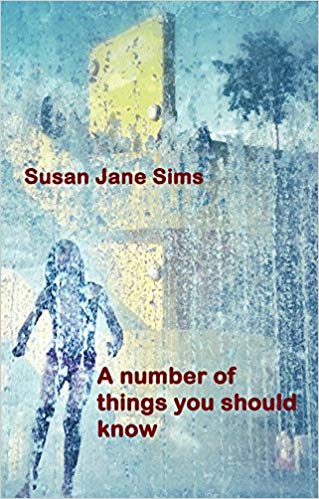
51G6qiweLqL._SX317_BO1,204,203,200_

Susan Jane Sims

has been widely published in magazines and anthologies and is a Hawthornden Fellow. She loves reading her poetry to an audience and has appeared in London, Bath, Bristol, Bradford on Avon, Exeter and Penzance. Her collections are Irene’s Daughter( Poetry Space 2010) and A number of things you should know ( IDP 2015). Her new collection Splitting Sunlight will be published by Dempsey and Windle in 2019. She lives with husband Chris and runs Poetry Space, a small publishing company from their new home in Beaminster, Dorset. They will be opening a cafe next year and plan to host poetry events.

The Interview

  1. When and why did you start to write poetry?

I loved poetry at school. I had a lovely teacher, Miss Thomas who encouraged me to collect poems I liked to make an anthology and she was very encouraging when I started writing my own. The first one I remember being a success was called Black Sunday and it was about the miners strike in the early seventies. I was thirteen.

1.1 What poets did you anthologise?

Back then I chose Walter De la Mare, Rudyard Kipling, Auden, Robert Louis Stephenson, Wole Soyinka, Emily Bronte and I also remember finding this poem called The Twins. It was anonymous but I was fascinated with it. Much, much later I gave birth to identical twins myself.

1.2 What was it about their poetry that appealed to you at the time?

I liked the language of their poetry. For example “Slowly, silently, now the moon, walked the night in her silver shoon” from Silver by Walter De La Mare.
I am not sure I understood what a shoon was but the words were beautiful.

And this from Emily Bronte. Slightly dark.

The night is darkening round me,
The wild winds coldly blow;
But a tyrant spell has bound me,
And I cannot, cannot go.

The words intrigued me. Made me shiver. Somehow poetry felt like something I could connect to.

1.3 Did you try to write in the beginning like this?

Yes indeed. Imitation is the way we all begin I think. I wrote rhyming poetry to begin with. Later I realised it did not have to rhyme. Now I rarely rhyme. And as a publisher I cringe when poets submit badly rhyming poetry because they have not read any poets more recent than Tennyson!!

2. How aware were you of the dominating presence of older poets traditional and contemporary?

At that time, not very aware. Most poets I was introduced to in school were white Male. With the exception of Wole Soyinka. A friend later introduced me to a wider poetry scene, in particular poets like Emily Dickinson who write about death and grief and the war poet, Edward Thomas.

3. What is your daily writing routine?

I try to get some writing time in each day but not always at the same time. I had the privilege of going to Hawthornden for four weeks in January and while I was there I wrote every morning and went for a walk in the afternoon. That would be my ideal routine.

But there were no distractions there. Everything was done for me. Meals, laundry, even my bed made.

4. What motivates you to write?

The desire to record, to bear witness to my own experience and that of others. The desire to connect with others. My most recent collection that I am looking for a publisher for, bears witness to my late son Mark’s 23 months living with stage 4 malignant melanoma ( skin cancer). In it, I address the science as well as the personal narrative.

For me it was quite therapeutic, a way to make sense of something totally senseless. Mark was just 28 when he died.

4.1 How did poetry help you make sense of it all?

Lots of different ways. Just the act of writing made me confront what was happening head on. The research I did helped me understand the science. Creating the poems and editing them helped me make something ‘beautiful’ out of what could have just felt like a nightmare.

5. Can you see the influence of poets you read when you were younger in your present work?

There is often both light and dark in my poems. I think both Emily Bronte and Emily Dickinson are both influential here. Later though I did my dissertation on Christina Rossetti. I was taken with her because in her poems she is very economical with language. It’s like the words barely touch the page. When I read her, I wanted to be able to write like that. It’s always my aim now, to write economically, to cut any excess words.

6. Who of today’s writers do you admire the most and why?
My favourites vary as I discover new writers but one ongoing favourite is the American poet, Gregory Orr. His work is often autobiographical and he confronts traumatic events with considerable bravery and lack of sentimentality. I admire that. Another poet I love is again, American but living in the UK and I have met her personally, Carrie Etter. I really admired her collection ‘Imagined Sons’. It is very original and challenging. It gave me real insight into what it may be like to give a child up for adoption and miss their growing up.

7. What would you say to someone who asked you “How do you become a writer?”

I would say, get yourself a notebook and start writing. Don’t think too much. Just write. Be prepared to put the time in. Don’t expect immediate success. Athletes get told they need to put 10,000 hours in to start getting results. I think the same goes for writing. And a big part of a writer’s training should be reading. If you want to be a poet you need to read poetry and lots of it, traditional and contemporary. It is all part of learning your craft. It is also valuable to go to readings and workshops. You can learn from others. It gives you ideas. Also learn to edit your own work with a critical eye. This is so important when you start submitting your work. It needs to be the best it can be to be in with a chance of publication.

8. And finally, Sue, tell me more about the writing projects you have on at the moment.

I am currently pursuing the idea of a collection exploring the experience of a woman having counselling after experiencing domestic abuse. I want to tell her story and also that of her counsellor. So quite a heavy subject. I am drawing on my own experience as a counsellor. I am also dabbling with the idea of a memoir. I have written some short autobiographical prose pieces that could form part of a memoir. I read one piece in Bath at an afternoon performance with a group I belong to: Bath Writers and Artists Group. Until six weeks ago I was living mid way between Bristol and Bath. We have moved to Beaminster in Dorset but I want to keep attending the group in Bath as it is a great space to share work and collaborate with others.

Wombwell Rainbow Interviews: Nick Owen

Wombwell Rainbow Interviews

I am honoured and privileged that the following writers local, national and international have agreed to be interviewed by me. I gave the writers two options: an emailed list of questions or a more fluid interview via messenger.
The usual ground is covered about motivation, daily routines and work ethic, but some surprises too. Some of these poets you may know, others may be new to you. I hope you enjoy the experience as much as I do.

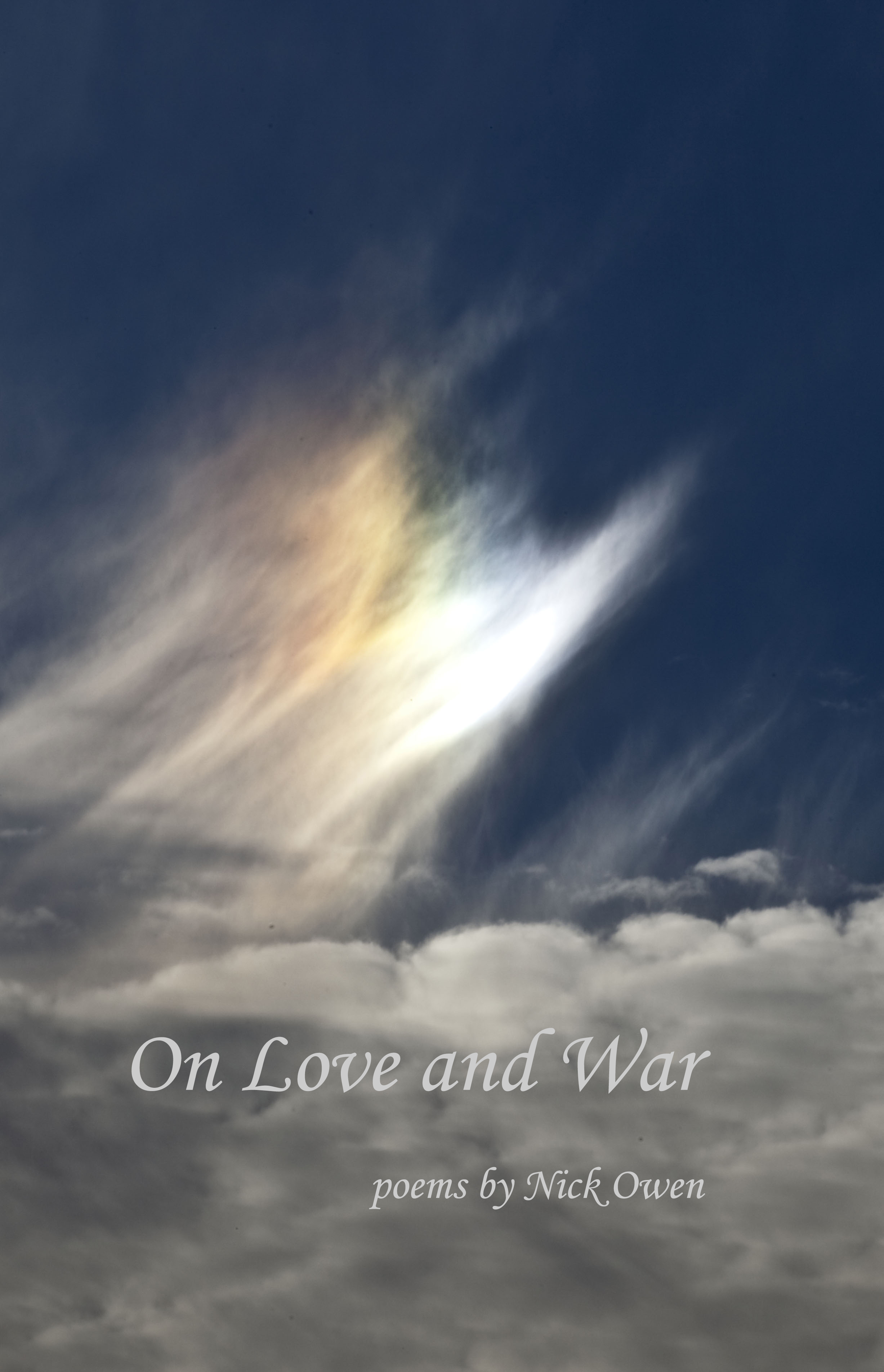
on love and war

Nick Owen

I retired from full time teaching and therapy in 2000. Since then I have focused on the development of mindfulness, including my arts, play writing, poetry and photography.

I have had a play published by the Arts Council and was showcased in the Oxfordshire Millennium Magazine “Oxford Inspires”.

I am committed to participatory arts activity, working as a Mindfulness teacher, group leader, coach and educator with people of all ages, who want to lead more artistic creative fulfilled lives.

There is also a political dimension to my work. My scathing anti-war trilogy called “Falluja in Charlbury” was performed at Methodist Central Hall for “The People’s Assembly”, when protesters gathered there to oppose Blair’s criminal adventure in Iraq in 2003. I feel a deep sense of compassion for human suffering.

My book of twenty first century Fairy Tales, written in verse, “Telling It Like It Is,” explores with infectious humour how children of today still live out the patterns of classical folk story. Children are often inspired to write their own stories. The poems also work well for emotionally disturbed adolescents, or visiting foreign students learning English.

I am also passionate about the Oxfordshire Wychwood landscape, a main focus of my poems and photography. I take groups on mindfulness walks in the countryside helping create beautiful poetry and pictures.

Over the last three years I have helped over 600 people become involved in this “poem-picture” arts genre.

I see the forest as an Eden, where Adam and Eve may be found and even photographed naked among the trees.
My wife, Gill, died in June 2009. My book, “A Journey Through Grief,” describes my grieving process in prose, poetry and pictures.

Brief list of credits:

A play published by the UK Arts council and performed in Brighton

Digital Art and Photography published in an American Art Magazine T.H.E

Featured in “Universe D’artistes,” a French based on-line fine art nude magazine

Featured in “Oxford Inspires” Celebrating Oxfordshire magazine for “Poetry and Pictures”

Published poet, with a book of fairy tales in verse, “Telling It Like It Is”, and a contributor to many anthologies both UK and Internationally. My work is increasingly taught in schools across the south of England.

Poem_Picture Artist of the Year 2006

Prize winner, landscape art competition, “Outside In,” Nuffield NHS Trust and OVADA

Retired director of “The Oxford School of Psychotherapy and Counselling”

Retired Director of Wombtwin.com

Website: deepermindfulness.com    coming soon


Nick Owen
website    https://www.linkedin.com/pub/nick-owen/39/59/b42


Nick Owen
about.me/NickOwen22 Kingsfield Crescent
Witney
OX28 2JB
07962532478

The Interview

 1. When and why did you start to write poetry?

… Age7

1.1 Why?

For fun

Limericks

2. Who introduced you to poetry?

Popeye on tv and my infant school teacher

3. How aware are you of the dominating presence of older poets traditional and contemporary?

Sometimes I think LC has written all the love songs.

3.1 LC?

Leonard Cohen

4. What is your daily writing routine?

none

5. What motivates you to write?

inspiration something that moves me deeply

5.1 What usually moves you deeply?

love war nature

5.2 What is it about love war nature that moves you?

These are the things that disturb my normal states. I have intense feelings which seek a way of expression. Poetry is the best way to express these feelings. War brings anger and pain love brings joy and sorrow nature brings ecstasy

6. How do the writers you read when you were young influence you today?

They are deep in there. Call me old fashioned I dont care. I love rhythm and metre

7. Who of today’s writers do you admire the most and why?

Alice Oswald is astonishinh. I heard her read for an hour from her own work in the dark. Spine chilling. She is the heir to Hughes

8. What would you say to someone who asked you “How do you become a writer?”

Not answered

9. And finally, Nick, tell me about the writing projects you have on at the moment.

I have a little book of poetry on love and war coming along and courses on my new website deepermindfulness. Com coming soon

Wombwell Rainbow Interviews: Sheila Jacob

Wombwell Rainbow Interviews

I am honoured and privileged that the following writers local, national and international have agreed to be interviewed by me. I gave the writers two options: an emailed list of questions or a more fluid interview via messenger.
The usual ground is covered about motivation, daily routines and work ethic, but some surprises too. Some of these poets you may know, others may be new to you. I hope you enjoy the experience as much as I do.

20181112_104054

Sheila Jacob

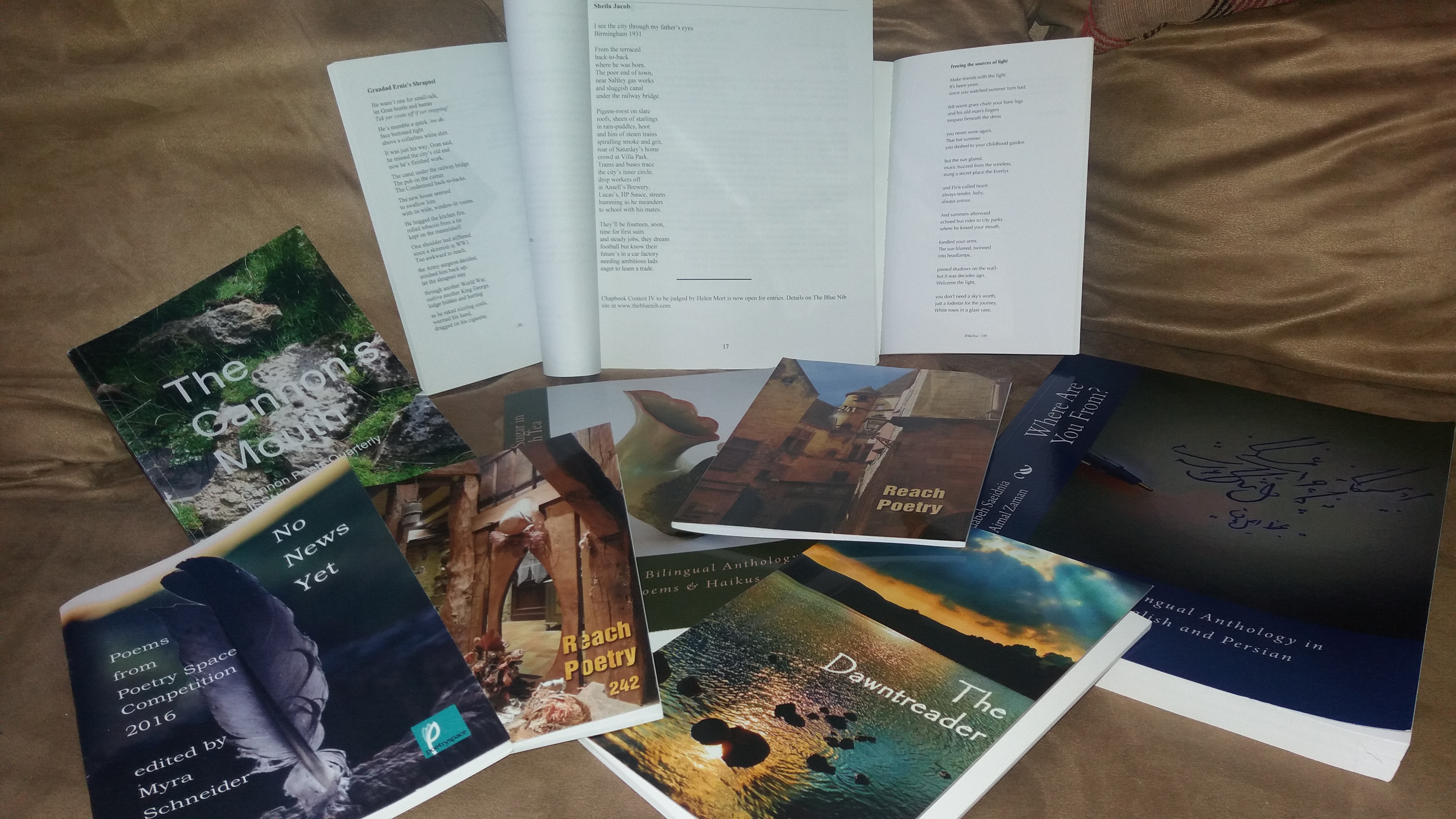
was born and raised in Birmingham, has lived in South Wales for ten years and now lives in North East Wales with her husband. She has three children and five grandchildren. She resumed writing poetry in 2013 after a long absence and since then has had work published in various U.K.magazines and webzines including Sarasvati, The Dawntreader, Reach Poetry, Clear Poetry, The Poet by Day, Atrium, Bonnie’s Crew and The Cannon’s Mouth.

The Interview
1. What inspired you to write poetry?

I’d say world events and in particular, the Vietnam War. I was born in 1950 and belonged to a generation-and a group of school friends – that was very politically aware. I guess this tied in with the music we listened to e.g. Bob Dylan and Joan Baez. I remember being deeply distressed by T.V. footage I saw of napalm bombing and of the U.S. troops. Young lads, for the most part, trying to make sense of war in a geographically alien and hostile environment. I remember writing a poem about Laos when I was 16 from the point of view of a soldier there.

2. Who introduced you to poetry?

A wonderful, elderly teacher called Miss Lloyd when I entered the Sixth Form at school and began coursework for A level English. She introduced us to T.S.Eliot, John Donne, George Herbert and Gerard Manley Hopkins, amongst others. She was also a great admirer of Ted Hughes. I was overawed by The Wasteland and the haunting beauty of Four Quartets. It was like seeing the world for the first time. I then began reading anything that appealed to me. I loved-and still love–the Russian poets Anna Ahkmatova, Marins Tsvetaeva, Bella Ahkmadulina and especially Yevgeny Yevtushenko who was frequently a thorn in the Soviet government’s side in the late 1960’s.His poem Babi Yar is a masterpiece.
A fellow student introduced me to the poetry of R.S.Thomas when I was at University in Aberystwyth. I was disturbed by his Welsh nationalism but loved his poetry.
On another level, I grew up surrounded by books. Both my parents were working class Brummies who had to leave school at fourteen but they loved to read and my Dad excelled at what was called Composition at school. He was great encourager. After I passed my 11-plus he took me to a department store called The Midland Educational and bought me a Conway Stewart fountain pen. We then went to a furniture shop and he bought me a writing bureau which I still have, it had a slight flaw in the woodwork so was reduced in price. I was devastated by his death at the age of 48, when I was almost 15.
Mum came from a slightly better-off family and before she was married, bought a wooden cabinet she filled with books. Shakespeare’s plays, all the Bronte classics (her favourites), Charles Dickens, Louisa M. Alcott, Harriet Beecher Stowe, Hans Christian Anderson. And poetry! Palgrave’s Golden Treasury, Tennyson, Keats, Shelley, Walter De La Mare. I was a precocious reader and there was no restriction on which books I could look at. I doubt if I understood much of the more complex works but I loved the cadences and rhythms and the layout of words on the page.

3. How aware were you of the dominating presence of older poets?

I didn’t give it a moment’s thought. I don’t mean this flippantly, it just didn’t impact on me at the time.

4. What is your daily writing routine?

I like to write for an hour or more in the morning after (or during!) breakfast, maybe again in the afternoon. A lot depends on what I’m writing and also, of course, what’s going on in the “real world” outside my head! I try to write everyday even if it’s just a few words.My husband is retired and writes fantasy fiction so we try not to bury ourselves in our laptops!

5. What motivates you to write & 9.Why do you write?

I can’t separate these two questions, Paul. I write to sort things out in my mind. I need to articulate experiences I’ve been through, even if it’s a painful process. I believe in the value of shared experience and giving a voice to those who lived the past, who have died but are never gone. What I really love is when I start writing and the poem takes me in a totally different direction from the one I planned. I get a buzzing in my ears and I realise there is a genuine power and mystery to words: to the creative process, if you like.
There are times, of course, when the well dries up and I doubt if I’ll ever write another poem!

6. What is your work ethic?

What an intriguing question! I’ve never considered it before. I suppose it would be to write to the best of my ability and not compromise on deeply-held beliefs and values for the sake of having a poem published.

7. How do the writers you read when you were young influence you today?

I couldn’t say how they influence what I write but I still read them, and appreciate them more as I grow older. I always read T.S.Eliot at Christmas and Easter. George Herbert, Gerard Manley Hopkins and R.S.Thomas are my go-to poets when I need a spiritual uplift. I read the Russian poets to recapture my sense of wonder.

8.   Who of today’s writers do you admire the most and why?

There are so many, where do I start?!
Gillian Clarke, mainly, who is still writing and tutoring at the age of 81. She has a lyrical, incisive and inquiring voice rooted in her Welsh upbringing which was complex because she wasn’t taught to speak Welsh at home though it was the first language of both her parents. When she was growing up, English was the language of privilege and achievement. She is passionate about her Welsh heritage, the language and the many ancient myths of Wales which she incorporates into her writing.
In my opinion she is one of the finest women poets to write about domestic affairs.Keeping house and garden (in her case, “fields” would be more accurate!) bearing and rearing children, nurturing grandchildren and rearing and keeping livestock. She shows that the ordinary is actually extra-ordinary and sacramental.
I also admire Carol Ann Duffy, Eavan Boland, Mary Oliver, Myra Schneider.Menna Elfyn, Kim Moore, Alison Brackenbury, Angela Topping, Wendy Pratt, Katrina Naomi, Pascale Petit, Clare Shaw and Liz Berry… Simon Armitage, John Foggin, Jonathan Edwards, and Owen Shears.
I know I’ve omitted many names, impossible to list them all. I also love the poetry of the late Helen Dunmore. An untimely death.
10. What would you say to someone who asked you “How do you become a writer?”

My initial reaction would be to say “I’m still working on it!”

Write, read, read, read, edit, get in touch with other poets even if it’s only online, learn from others but believe in your own voice.

11. Tell me about the writing projects you have on at the moment.

I’m hovering in between projects at the moment. I’ve recently completed a 20-poem themed
Collection about my Dad, Through My Father’s Eyes (expertly mentored by Wendy Pratt) which I’m looking to publish with someone, somehow. I’d rather not self-publish but I’ll probably have to.
Since September I’ve taken part in two wonderful courses run by Wendy Pratt in a closed Facebook group: The Wild Within and Seasons Of Mists, both of which explored our relationship with the natural world. I’m having withdrawal symptoms!
I’m halfway through an online Poetry School Course about Postmemory and Historical Trauma. This deals with the poetry of trauma, and why poetry is such a prevalent response to genocide, acts of terrorism etc.
When this finishes I’d like to turn my attention to the strong,  hardworking unsung Brummie women of my family who kept house and home intact through two World Wars. I have a few drafts in a folder and I hope to make poems out of them.


Wombwell Rainbow Interviews: Rachael Clyne

Wombwell Rainbow Interviews

I am honoured and privileged that the following writers local, national and international have agreed to be interviewed by me. I gave the writers two options: an emailed list of questions or a more fluid interview via messenger.
The usual ground is covered about motivation, daily routines and work ethic, but some surprises too. Some of these poets you may know, others may be new to you. I hope you enjoy the experience as much as I do.

golem cover

Rachael Clyne,

lives in Glastonbury. Her collection, Singing at the Bone Tree, concerns our relationship with nature, (published by Indigo Dreams). Recent anthology: #MeToo. Journals incl: Tears in the Fence, The Rialto, Under the Radar, Shearsman, Lighthouse, The Interpreters House. Her new pamphlet, Girl Golem, about family, migrant heritage and sense of being ’other’, is published by 4Word Press.

The Interview

1. What inspired you to write poetry?

I grew up with Christopher Robin. As a child I went to elocution lessons, to obliterate my flat northern vowels and because I was clearly a little, show-off performer (I later became a professional actor). I spent several years reciting: Hilaire Belloc, Gerard Manley Hopkins & Edwin Muir. I remember relishing the word sounds. My Mother loved poetry, so there were classic collections at home, that I could read. I started writing when I was reading Eliot, Donne, Herbert, Dylan Thomas, Wilfred Owen and such at school. I wrote to express teenage angst and a longing to escape. Angst kept me going for a decade or so, until my sister became ill with cancer, dying in 1985. I was then commissioned to write a book for cancer patients and began to take my writing more seriously.

2. Who introduced you to poetry?

As mentioned, my mother loved poetry, then elocution classes & school, particularly A levels. In the eighties a friend introduced me to Angels of Fire, a poet performance group. We’d sit a write in a café near Tottenham Court Rd. I performed with them a couple of times. It was the perfect combination of being an actor & poet. I still love doing collaborative readings with a touch of theatre.

3. How aware were you of the dominating presence of older poets?

I’m pretty old myself now, so it was normal to read Victorian & Georgian War poets, back then. Then, there was ee cummings and William Carlos Williams. Then, there were the Liverpool Poets – my generation, who had accents & wrote in common language. I grew up just outside Liverpool and was a teenager in the 60s.

4. What is your daily writing routine?

Bed & more bed! I used to avoid writing, by going to my desk, turning on my computer to check emails, telling myself I’d do it after, but time always ran out. Thankfully now I work less, I’ve reversed it. I can spend whole mornings in bed reading poetry, writing, going online. Jo Bell’s 52 got me writing daily, which she encouraged.

5. What motivates you to write?

Hmm it’s changed. I don’t have so much to say these days and rely more on prompts, workshops and hearing certain poets.

6. What is your work ethic?

I’m not sure what you mean by this. I try to keep myself challenged to improve and get feedback. I read, go to events and keep connected to the poetry community, which I love. Ethic to me, also means being supportive of other poets, writing about issues that matter to me, such as #MeToo anthology, eco issues.

7. How do the writers you read when you were young, influence you today?

I’m not sure if they do. Living itself imbues us with outlook, values and all sorts of subliminal stuff. I don’t go back and read them. I’m an Aries and tend to keep moving on. There are so many amazing poets today, I just trust that those of the past have gotten into my woodwork and added to its patina.

8. Who of today’s writers do you admire the most and why?

I tend to respond to poets who are direct, with fresh imagery, who write with passion, and who connect me to my heart. I’m not good with very cerebral poetry. There’s something about poets who’ve experienced dark times and have courageously kept their humanity. They’re way-showers and help us too. Poets like: Jo Bell, Kim Moore, Kai Miller, Ocean Vuong. I also love poets who are witty, surreal and playful like Kathryn Maris, Hilda Sheehan and lately I enjoyed seeing the American writer D.A. Powell.

9. Why do you write?

I’ve always been creative in different forms, with a desire to communicate. In fact, it overwhelmed & confused me, when I was young. I had periods of doing art, and times of writing, in between acting jobs. The ‘in between time’ was far greater than working time. I no longer do art, but have a much more fraught relationship with it, than with writing. I’ve a massive resistance block with art, plus cost of materials, need for storage space. Writing, and poetry in particular, is so portable. You can pick up & put down a poem. It can last for years of tweaking, editing. I still have a rollercoaster relationship with self-belief in my writing, as do most poets. One moment you’re in love with your latest poem, the next, it’s dog-chewed doggerel. I’ve written 2 self-help books since being commissioned to write a book for cancer patients & families, back in the 80s. I love the idea that someone can benefit from my writing. I have a regular column of articles in the local journal. I’m a psychotherapist so it’s an outlet for my insights about human experience.

10. What would you say to someone who asked you “How do you become a writer?”

Oh gosh, there’s so much on this topic. Firstly, a desire/need to write that will not be put-off by the many obstacles. Just write, even if it’s a private journal, get used to putting your thoughts down. Observe things closely. If you want to get published, join a writing group, do a course. This means being prepared for feedback and re-editing work you hold dear. It’s confidence building to have support from other writers, not just friends who adore everything you do. Learn to take rejection and keep going. Reading is paramount, find writing/writers you admire; let them inspire you and identify where you might fit into the broad church of writing. Like many naïve poets, I thought reading others might interfere with my ‘voice’. I was so embarrassed when I realised my arrogance. So, beware of grandiosity and leaping ahead of yourself. It’s pointless sending your unseen manuscript to Faber when you’ve never been published. Having said that, try to avoid comparing yourself with your peers, it’s a deadly pursuit that spawns envy and wrecks confidence. You’ll never be a Carol Ann Duffy, that part’s taken. There are so many talented poets out there. Aim to be the best you can be, challenge yourself. Be genuine and write from who you are.

11. Tell me about the writing projects you have on at the moment.

I’m still enthusiastically launching my new pamphlet, Girl Golem, which was published by 4Word in September and doing readings. It’s the culmination of several years’ writing, on my childhood & family heritage. My parents were child migrants from Ukrainian Russia in 1912 & 1914. The sense of ‘otherness & foreignness’ is a major theme, one that pervaded my childhood and youth. Being Jewish was one factor (as was not being an orthodox Jew), being left-handed, creative, spiritual, and lesbian were other obstacles I battled with. It took me till nearly 50 to feel at home in myself. Despite my current post-publishing doldrums, I hope to expand Girl Golem into a collection that explores wider themes of identity, in relationships, with nature, society and of course ageing. I will be 70 next year and it feels like a big deal. I may be entering my last decade and I want to make the most of it, while I can.