Wombwell Rainbow Interviews: Kevin Ridgeway

Wombwell Rainbow Interviews

I am honoured and privileged that the following writers local, national and international have agreed to be interviewed by me. I gave the writers two options: an emailed list of questions or a more fluid interview via messenger.

The usual ground is covered about motivation, daily routines and work ethic, but some surprises too. Some of these poets you may know, others may be new to you. I hope you enjoy the experience as much as I do.

Kevin Ridgeway

lives and writes in Long Beach, CA. He is the author of six previous chapbooks, including ‘All the Rage’ (Electric Windmill), On the Burning Shore (Arroyo Seco) and Contents Under Pressure (Crisis Chronicles). He is co-author of the book, A Ludicrous Split (alongside poems by Gabriel Ricard, Alien Buddha Press). Recent work has appeared in Slipstream, Chiron Review, Nerve Cowboy, Up the River, Plainsongs, San Pedro River Review, The American Journal of Poetry, Main Street Rag, Lummox, Big Hammer, Cultural Weekly, Spillway, Hobo Camp Review and So it Goes: The Literary Journal of the Kurt Vonnegut Memorial Library, among others.

https://www.analogsubmission.com/product/smile-until-you-re-alive-enough-to-be-dead-by-kevin-ridgeway

The Interview

1. What inspired you to write poetry?

Girls and rock and roll music.

2. Who introduced you to poetry?

My older brother who studied Shakespeare and other classic poetics in his youth–he left them behind when he went to college and I found a teacher and an inspiration in those books. I also used to think “Red Wheelbarrow” by William Carlos Williams was a piece of shit and that I could do better. I was wrong, but here I am twenty years later releasing the poems I write these days out into the loud and scary world we live in, where poets are bullied on school campuses and at coffee houses everywhere. And are now grown ups in an assault of words.

3 How aware were you of the dominating presence of older poets?

I live in Long Beach, CA, and my poetry elders here are people like Dr. Gerald Locklin, Fred Voss and Joan Jobe Smith–they let themselves be known and heard. I’m fortunate to see these people read their work in person–it’s an inspiring environment to be in.

4. What is your daily writing routine?

I get up at 5 every morning to write until 8 each morning. I work on new poems, revisions, correspondences and the management of my submissions out to magazines and journals. And the end of the day–730 pm to midnight–reading and writing until sleep.

5. What motivates you to write?

My monkey brains and the poems of other poets.

6. What is your work ethic?

The harder you work at your craft and the more often that you work at it, the more likely you are to grow and thrive creatively and within the parameters of one’s chosen genre of literary craft. I am known as a prolific writer and I take great pride in that because I work hard to make my words at least work, let alone sing off the page. I consider important to keep practicing for that great gem of a poem or master work few are lucky to ever realize in a revision that’s published, read and remembered by readers. Poems like Red Wheelbarrow

7. How do the writers you read when you were young influence you today?

They are in my head, always. I absorbed them and they are like angels and demons doing a punishing dance on my shoulders.

8. Who of today’s writers do you admire the most and why?

Tony Gloeggler is the best poet around these days, for me as a reader. He writes excellent and gorgeous narrative poetry that has such great realism and brush stroke accurate attention to detail. He writes about his youth in the 60s and 70s in ways that enthrall, surprise and beat the hell out of me. Even his line breaks are the very best–I geek out on line breaks. I dig Dr. Gerald Locklin, Fred Voss, Joan Jobe Smith, Clint Margrave, Bunkong Tuon, Ted Jonathan, Alan Catlin, John Dorsey, Daniel Crocker, Rebecca Schumejda, Wendy Rainey, Curtis Hayes, Bill Gainer, William Taylor,Jr., Steve Henn, Francesca Bell and Alexis Rhone Fancher, to name just a few.

9. Why do you write, as opposed to doing anything else?

Writing is easier than painting, which I am terrible at even attempting. My doodles are good. I’m better off typing or with a pen in my hand. Not much else.

10. What would you say to someone who asked you “How do you become a writer?”

You don’t. You’re born one. Even if it lies dormant in you, you are born one. I was born to be a writer.

11. Tell me about the writing projects you have on at the moment.

Right now the hot thing on my street corner is the forthcoming publication of my debut full length book of poetry “Too Young to Know” from the great Stubborn Mule Press. It involves poems about my origins, some of my struggles and lots and lots of death thrown in for good measure. It adheres to Frank Zappa’s theory of conceptual continuity, which is important to me. I look forward to promoting it.

I have published nine chapbooks over the years. A Ludicrous Split (2018, a split with Gabriel Ricard, Alien Buddha Press) and Smile Until You’re Alive Enough to Be Dead (2018, Analog Submission Press, UK) are my two latest and greatest.

Wombwell Rainbow Interviews: Karlo Sevilla

Wombwell Rainbow Interviews

I am honoured and privileged that the following writers local, national and international have agreed to be interviewed by me. I gave the writers two options: an emailed list of questions or a more fluid interview via messenger.

The usual ground is covered about motivation, daily routines and work ethic, but some surprises too. Some of these poets you may know, others may be new to you. I hope you enjoy the experience as much as I do.

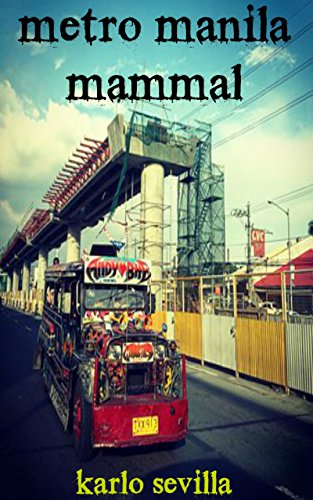
metro manila mammal

Karlo Sevilla

writes from Quezon City, Philippines and is the author of two poetry collections: “Metro Manila Mammal” (Soma Publishing, 2018) and “You” (Origami Poems Project, 2017). He has more than a hundred poems published in various literary magazines and platforms worldwide, including Philippines Graphic, Eclectica, Radius, The Ramingo’s Porch, The Broken Cassette, Poets Reading the News, Rue Scribe, and elsewhere. His literary work has earned accolades among publications and award-giving bodies in his home country and abroad. He currently studies for the Sertipika sa Panitikan at Malikhaing Pagsulat sa Filipino (Certificate in Literature and Creative Writing in Filipino) program of the Center for Creative Writing of the Polytechnic University of the Philippines, and is a member of Rat’s Ass Review’s online poetry workshop.

Book: https://www.amazon.com/Metro-Manila-Mammal-Karlo-Sevilla-ebook/dp/B07CRN1FTK

Twitter: https://twitter.com/KarloSevilla

Blog: http://karlosevillaofquezoncity.blogspot.com/2016/10/s-list-of-published-poems-all-with-links.html

Facebook: https://www.facebook.com/karlo.sevilla

The Interview

1. What inspired you to write poetry?

Three of my English teachers throughout high school, who each expressed appreciation for some of my poems. And poetry books, particularly Joe Pintauro’s “Kites at Empty Airports,“ which copy I bought one grey and lonely afternoon in the late 80s or early 90s, also way back in high school.

2. Who introduced you to poetry?

I am certain my mother’s lullabies and my first nursery books introduced me to poetry – the end-rhyme kind.

3. How aware were you of the dominating presence of older poets?

They’re always in my conscious and subconscious state of mind when I write, and their lives and words always inform, inspire and challenge.

4. What is your daily writing routine?

I have ADHD, which may be the reason that I don’t exactly have a daily writing routine. Let’s just say that most days of the week, I either complete writing a poem or come up with lines in my head that I eventually write down to use in one.

5. What motivates you to write?

Among other motivations and reasons, it’s the poetry community, as I constantly yearn to prove that I rightfully belong here. That I work on an art form and share the fruits of my labour with a worldwide community which members do the same. And in solidarity, I should be a proud and responsible member of this community.

6. What is your work ethic?

Read and write passionately as often as possible. And I really try to do these on a daily basis – with varying degrees of success.

7. How do the writers you read when you were young influence you today?

I’m not inclined to pinpoint what aspects of my poetry are influenced by the writers I read in my younger years. Perhaps if I study more on literary theory I can be more confident and articulate, and put an “academic” label on any influence on my poems, or their parts, by any particular poet. Suffice to say that I’m certain the following poets whose works I’ve read and admired in my late teens to early 20s continue to influence my writing style: Joe Pintauro, Dylan Thomas and Pablo Neruda (among others).

8. Who of today’s writers do you admire the most and why?

For now, let me mention three young Filipino poets: Kristine Ong Muslim of the enchantingly disturbing prose-like poetry, Anne Carly Abad whose poems I find bittersweet and accessible, and Henrie Diosa Jimenez who makes a personal playground of words and is an utter delight to read.

9. Why do you write?

Mortality: I think I have some beautiful things to share via the written word and I’m compelled to write as much as I can until death or incapacitating disability – whichever comes first – “kindly stops for me.”

10. What would you say to someone who asked you “How do you become a writer?”

My parents and teachers instilled in me the love of reading, then the latter encouraged me to write, and I took it from there. (For those who claim that they were never encouraged to read but want to write, then let me help with this old advice: read and write.)

11. Tell me about the writing projects you have on at the moment.

I plan to finish the longest poem I’ve ever written before this year ends. And, I’m trying to get a short collection published via any reputable poetry chapbook contest. If it doesn’t win any, then I’ll go the traditional route of approaching a prospective publisher.

Wombwell Rainbow Interviews: Iván Argüelles

Wombwell Rainbow Interviews

I am honoured and privileged that the following writers local, national and international have agreed to be interviewed by me. I gave the writers two options: an emailed list of questions or a more fluid interview via messenger.

The usual ground is covered about motivation, daily routines and work ethic, but some surprises too. Some of these poets you may know, others may be new to you. I hope you enjoy the experience as much as I do.

cien sonetos

Iván Argüelles

is an innovative Mexican-American poet. Born in 1939 in Minnesota, he was raised variously in Mexico City, Los Angeles and Rochester Minnesota. He is the author of many books and chapbooks. Notable among his works are: “That” Goddess, Madonna Septet, Comedy , Divine , The , FIAT LUX, Orphic Cantos, and the just published Cien Sonetos. 

Long associated with the “West Coast Surrealists” he also branched out into writing extended works, including epic poetry. He received the 1989 William Carlos Williams Award from the Poetry Society of America for his book Looking for Mary Lou. In 2013 he received a Lifetime Achievement Award from the Before Columbus Foundation. A retired librarian he has resided in Berkeley since 1978.

For more see the Wikipedia article on him. (https://en.wikipedia.org/wiki/Ivan_Arg%C3%BCelles)

The Interview

  1. When and why did you begin to write poetry?

I began writing poetry in high school (ca. 1953/54). My father was a Mexican painter who had educated both me and my identical twin, Joe, to become painters, haven given us lessons in drawing and painting from an early age. However by the time I reached adolescence I recognized that if I continued in this artistic orientation my brother and I could come into competitive conflict, which I wanted to avoid. So I made a conscious decision to choose a different path, that of a poet. I had read a bit of poetry, and was quite taken by the Middle English lyric Sumer is icumen in  Lhude sing cucu. I had also taken my first of four years of Latin, and had already been introduced to Vergil (Arma virumque cano ….). I began reading poetry seriously during my high school years, focusing on the moderns, such as Eliot, Pound and Cummings, though my favorite author was James Joyce, whose work Finnegans Wake I considered poetry as well. In the eleventh grade a poem of mine was published in a national high school poetry anthology.

2. Who introduced you to poetry?

I don’t recall in particular that anyone introduced me to poetry. I sort of discovered it by myself, as I was an omnivorous reader and frequented the local public library a lot. One book in particular that I discovered stands out: Modern poetry, American and British, edited by Kimon Friar and John Malcolm Brinnin. I devoured this book and in particular was fascinated with the emphasis on experimentalism, as the anthology included passages from Finnegans Wake, and from Djuna Barnes’ Nightwood. I will say though that my Latin teacher, a crusty but kind Prussian named Ms Naomi Ramer, certainly presented for me the great Latin and Greek poetry in such a way that I became a classics “scholar” for the rest of my life. She encouraged me in my studies, to the extent that when I went to college, I finally decided on Classics as my major. No teacher had a greater influence on me than Ms Ramer.

3. How aware were and are you of the dominating presence of older poets?

When I first really got into writing poetry the dominating poets (for me) were Eliot, Pound and Cummings of an older generation, and Allen Ginsberg and the Beats of the generation just before mine. I have never really felt the presence of “dominating older poets”, and especially today when I myself am an older poet. When I think of “older” poets I consider Homer, Virgil and Dante as dominating my sphere.

4. What is your daily writing routine?

I am a morning person, a very early morning person. I feel most creative after I have just gotten up, and most frequently write a poem before 7 AM. Sometimes a 2nd poem will occur to me later in the morning, rarely in the afternoon. The poems come to me and out of me pretty fast, and I do little or no revision.

5. What motivates you to write?

The mystery, the enigma of life! What is birth, mind, ego, personality, and more specifically what is death? What are memory and time? Am I myself? and what if anything is the Universe, its origins? There is no adequate explanation for anything, and history and metaphysics do nothing to elucidate the enigma. By writing poetry, by endeavoring to write almost daily as I do, I address these questions and try to put a lyric bent on them. Sometimes a cue from another poet or poem will fire me up, as if riffing in a jazz sense from that particular inspiration. Finally it must be the Muse, that enormous archaic voluptuous and destructive woman, who frequently pushes me over the edge.

6. What is your work ethic?

I do not understand this question, nor what work ethic has to do with writing poetry.

Poetry is written in solitary confinement.

7. How do the writers you read when you were young influence you today?

Some in particular, namely Pound and Joyce continue to influence me for their sheer brilliance and inventiveness. I have re-read these two authors several times over in my life. Others like the Beats have taken a back row. Poets I discovered when I first started writing seriously, such as Vallejo, Lorca or Frank O’Hara continue to have a stylistic influence on my writing. I continue to read and re-read the great classical authors I mentioned above, as well as the troubadours whom I first discovered in high school. I draw on them as mythical sources and lyric inspiration.

8. Who of today’s writers do you admire the most and why?

This is a tough one to answer, since I don’t read a lot of contemporary poetry. A poet I have recently discovered, and were he alive would certainly be contemporary, is the Mexican Mario Santiago Papasquiaro, whose work is authentically wild, experimental and an amazing mix of Vallejo and Ginsberg. Born in 1953 he died tragically in 1998. Though not strictly speaking a poet, the beautiful literary works of the Italian Roberto Calasso are among my favorites. His erudition spans many levels of civilizations and cultures, and focuses principally on the relationship of myth to literature and consciousness. Two works of his stand out: The Marriage of Cadmus and Harmony, beautiful interpretations of Greek mythology, and Ka, similar investigations into Indian mythologies and religion. Both of these works are breath-taking in their bringing together the relationships between literature and consciousness. He writes in an arresting and often vigorously lyrical if not poetical style. Two poets, both close associates of mine and contemporaries for sure, John M. Bennett and Jack Foley, I consider as poets of often astonishing experimentalism. Foley, a kind of descendant of the Joyce of Finnegans Wake, exemplifies a stress in the oral tradition of poetry and his “choruses” are inimitable powerful and startlingly lyrical in their presentation. Bennett’s work is quite different, a visual poetry in the vein of so-called “concrete” poetry, his work can seem irritatingly inarticulate but at its best is beautiful and visually often quite stunning.

9. Why do you write?

I think I pretty much answered this when you asked “What motivates you to write?”

It’s in my DNA, it’s what I have to do. At this point having lived a few days shy of 80 years, I don’t know how to do anything else.

10. What would you say to someone who asked you “How do you become a writer”?

You don’t become a writer. You either have it in you to write, by sheer intuition, or you don’t. You certainly cannot become a writer by taking writing workshops or getting an MFA. Becoming a member of the academy with a degree should not give you status as a writer, though nowadays it does. In the past great poets and writers rarely had any association with colleges and universities. They were out there on their own, as it were, experimenting eking out a living and usually supporting themselves by doing anything but writing. The only advice I could give is to read, and read a lot of poetry, understand that there is a tradition, and that there are many poetries mostly in the past and from many different places that have to be discovered and studied and enjoyed. Learn some languages other than your own and read and feel some of these poetries in the original. Then you will realize how inadequate translations can be.

11. Tell me about the writing projects you have on at the moment.

Nothing in particular. I usually write daily 1 or 2 poems. For the past several months I have been writing “long” poems, or poem sequences, rather than single efforts. I have always had a preference for the epic (some of my best published work have been “epic” poems), and consider the series of “long” poems I have been writing as sort of mini-epics. My most recent published work is a sequence of 100 sonnets. Don’t know what else to say.


Stoked that my poem “My Black Spot” is featured in The Ekphrastic Review, in stunning company

Stoked that my poem “My Black Spot” is featured in The Ekphrastic Review, ekphrastic.net/the-ekphrastic…

Wombwell Rainbow Interviews: Nathanael O’Reilly

Wombwell Rainbow Interviews

I am honoured and privileged that the following writers local, national and international have agreed to be interviewed by me. I gave the writers two options: an emailed list of questions or a more fluid interview via messenger.

The usual ground is covered about motivation, daily routines and work ethic, but some surprises too. Some of these poets you may know, others may be new to you. I hope you enjoy the experience as much as I do.

41hqzqd1pxl._ac_us436_fmwebp_ql65_

Nathanael O’Reilly

was born and raised in Australia. He has travelled on five continents and spent extended periods in England, Ireland, Germany, Ukraine and the United States, where he currently resides. His poems have appeared in journals and anthologies in twelve countries, including Antipodes, A New Ulster, Australian Love Poems, Cordite, FourW, Glasgow Review of Books, Headstuff, LiNQ, Mascara, Postcolonial Text, Snorkel, Tincture, Transnational Literature, Verity La and The Newcastle Poetry Prize Anthology 2017. He is the author of Preparations for Departure (UWAP Poetry, 2017), named one of the “2017 Books of the Year” in Australian Book Review; Distance (Picaro Press, 2014; Ginninderra Press, 2015); and the chapbooks Cult (Ginninderra Press, 2016), Suburban Exile (Picaro Press, 2011) and Symptoms of Homesickness (Picaro Press, 2010). O’Reilly received an Emerging Writers Grant from the Literature Board of the Australia Council for the Arts in 2010. He was the writer-in-residence at Booranga Writers’ Centre in May 2017 and has given invited readings in Australia, Canada, England, Hungary, Ireland, and the United States.

UWAP author page: https://uwap.uwa.edu.au/collections/nathanael-o-reilly
UWAP Preparations for Departure page: https://uwap.uwa.edu.au/collections/nathanael-o-reilly/products/preparations-for-departure
Amazon author page: https://www.amazon.com/Nathanael-OReilly/e/B005NKPAA2/ref=sr_ntt_srch_lnk_1?qid=1547822599&sr=1-1
Ginninderra Press author page: https://www.ginninderrapress.com.au/store.php?catalog/search/Nathanael+O%27Reilly/name/1
Twitter: @nathanael_o

The Interview

1. When and why did you begin to write poetry?

I wrote my first poem in my early teens in response to a crush on a girl not being reciprocated. She had a crush on me first, but I was too embarrassed and naïve to know how to respond, then by the time I had a crush on her, she had moved on (understandably). I wrote a poem using the central metaphor of an empty can kicked down the road, and it was pretty terrible, but it got me started. I imagine many other poets get started in similar ways and for similar reasons. I started writing poetry seriously and frequently after reading poetry in my English classes at high school.

2. Who introduced you to poetry?

My father was a high school English teacher, and my mother is an avid reader, so I grew up in a house full of books. The shelves always contained poetry, but I don’t remember reading a lot of poetry before my teens. I must have read some of the Hardy, Yeats, Keats and Shakespeare on the family bookshelves, and I grew up in a devout Christian household, so I read the poetry in the Bible, and was particularly impressed with the psalms of David. However, it was my high school literature teacher, Rob Robson, affectionately known as Robbo, who gave me my serious introduction to poetry via Seamus Heaney, Emily Dickinson, Sylvia Plath, Ted Hughes, Robert Lowell, Les Murray, John Keats and W.B. Yeats. I was struck especially by the work of Keats and Heaney, and around that time my Irish grandfather gave me a copy of Yeats’ Selected Poems, so Keats, Yeats and Heaney became my first great influences and their work inspired me to take the study and composition of poetry seriously – they are still my three favourite poets, my holy trinity.

3. How aware were and are you of the dominating presence of older poets?

By older poets, I presume you also mean those who are long dead. During my first few years writing poetry, I worried a lot about being too influenced by my favourite poets, all of them much older than myself, and many of them long dead. I worried that I might unconsciously imitate their style and subject matter, and whether or not I could ever produce a truly original poem. And then in my early twenties I read Harold Bloom’s The Anxiety of Influence, which made it clear to me that my experiences were nothing new and probably every poet experiences the same anxieties and doubts, especially during their early years of writing. I no longer worry about the presence/influence of older/dead poets, or whether I can develop my own voice. Over time I developed my own voice and found my own turf. If I think about your question a bit more literally, in terms of older, living poets much more successful than myself, I’d have to say that it is great to have the example and work of poets like Eavan Boland, Carol Ann Duffy, Jackie Kay, Li-young Lee, Paul Muldoon, Chris Wallace-Crabbe, John Kinsella and Paul Kane to be inspired by and learn from. On the negative side, it can be frustrating to see certain older poets continually winning the prizes, being published in the prominent journals, receiving the big fellowships, etc. One of my poet friends tells a joke about entering a certain annual competition in Australia and feeling that there was actually a chance of winning or being shortlisted for once because the poet who usually wins everything was judging and therefore unable to enter! So, sometimes it can feel like the older poets take up a bit too much space because the competition can be so tough; however, that same competition inspires one to constantly improve, and I’m thankful that we have the work of all of the poets who have come before us.
4. What is your daily writing routine?

I don’t have a daily writing routine. I’m a full-time academic, teaching literature and creative writing, as well as a husband and father, and an avid runner, so I have precious little free time, especially during the academic year. I write whenever I can, which means that I get most of my writing done on weekends or during breaks between semesters. Sometimes I am able to write a little while my students are writing or revising, and I write whenever or wherever I can, whether it’s in class, at home, or on a plane, train, bus, ferry or beach. When I get an idea, I write it down as soon as I possibly can, using whatever I have available, which is usually a Moleskine notebook or my iPhone. When I have more time, I compose first drafts in a notebook or on my laptop, and then I use the laptop for revision and editing. At home I have a study with a desk in front of a window overlooking a lake, so that is my favourite place to write and revise in solitude.

5. What motivates you to write?

I think the most fundamental and honest answer is that I write in an attempt to cheat death. Most writers hope to create work that will survive after their death and perhaps continue to be read. It’s the reason Keats writes in “Sleep and Poetry,” “O for ten years, that I may overwhelm / Myself in poesy …” Keats knew his time was short and wanted to read and write as much poetry as he possibly could in the time he had left. I also possess a strong desire to create and be productive. It’s hard for me to be content if I am not producing new work and achieving my goals, which often focus on writing and publication. I love the feeling of transforming a blank page into a page full of words – one has brought something into the world that didn’t previously exist. There’s a kind of magic in any kind of artistic production. Once the poem, song, painting or sculpture is created, it can potentially exist forever. The final motivation would be to share my work with an audience, whether in print or at a reading. I really enjoy receiving feedback at readings, and it’s always a thrill to see one’s work published in a journal or anthology, or in book form. I hope that almost every poem I write will eventually be shared with an audience.

6. What is your work ethic?

I have been justifiably accused of being a workaholic. I work hard and I get obsessed with projects and tasks. Once I get started, I don’t like to stop. I don’t like being interrupted and it’s hard for me to put something aside when I’m in the zone, but obviously I have responsibilities at home and in my workplace, so I often have to put my creative work on hold. I really enjoy the extended periods that I have (especially between semesters) to work on my writing projects. I was the writer-in-residence at the Booranga Writers’ Centre in Australia in May, 2017 – it was absolutely wonderful to devote day after day to writing and reading and to have whole days without interruption and other demands on my time. I certainly hope to participate in other residencies in the future as they allow me to be tremendously focused and productive.

7. How do the writers you read when you were young influence you today?

When I was in my teens and early twenties, my favourite writers were Keats, Yeats, Heaney and Hardy, and they are still incredibly important to me. I constantly return to their work, both for pleasure and as part of my teaching, and I find inspiration with regard to subject matter, style and technique. For example, I love Heaney’s use of enjambment and often use it in my own poetry, and I consider myself a poet of place, which is largely due to the influence and example of Heaney and Hardy. I love to write about places that are important to me, and because I have lived in six countries I have a lot of former hometowns and specific houses, buildings, streets, beaches, farms, rivers, hills and landscapes that I often think about and long to revisit. Sometimes I return to those places in my mind, and sometimes I return physically – both kinds of journey often produce new poems.

8. Who of today’s writers do you admire the most and why?

I couldn’t choose just a single poet. The living poets I most admire include Michelle Cahill, Paul Muldoon, Eavan Boland, Paul Kane, Les Murray, Carol Ann Duffy, Jackie Kay and Alex Lemon. I admire the ability they all have to write brilliant poems that convey the universal through the specific.

9. What would you say to someone who asked you “How do you become a writer?”

As I tell my students, you have to read, read, read and then read some more. We learn how to write by reading and studying the works of others, learning about form, genre, style, subject matter and specific techniques such as alliteration, enjambment, internal rhyme, simile, metaphor, voice, tense, anaphora, assonance, etc. And then we write, write, write and write some more. Every serious writer knows that it takes years and years of practice to become a decent writer, let alone a great one. I tell my students that I had to write 500 crap poems before I could write a good one. Young writers are often impatient and in a rush to get published, and many of them don’t understand that writing requires a really long apprenticeship and it is a hard-earned skill that involves a lot of craft, practice, failure and rejection. Having the desire to write is just the first step. I started writing poetry in my early teens, but didn’t start getting published in national and international journals and anthologies until my early thirties.

11. Tell me about the writing projects you have on at the moment.

I recently completed my third full-length poetry collection, tentatively titled (Un)belonging, which contains ninety poems set in ten countries and deals with themes including exile, diaspora, belonging, homesickness, alienation, travel, fatherhood, friendship, aging, illness, suburban life, mortality, religion, music, visual art and nature. I’m waiting for a decision regarding publication, so am not yet ready to move on to a new book-length project. I continue to write new poems whenever I can, so many of them will become part of another new manuscript eventually, and hopefully will be published in journals and anthologies first.


Wombwell Rainbow Interviews: Jake Berry

Wombwell Rainbow Interviews

I am honoured and privileged that the following writers local, national and international have agreed to be interviewed by me. I gave the writers two options: an emailed list of questions or a more fluid interview via messenger.
The usual ground is covered about motivation, daily routines and work ethic, but some surprises too. Some of these poets you may know, others may be new to you. I hope you enjoy the experience as much as I do.

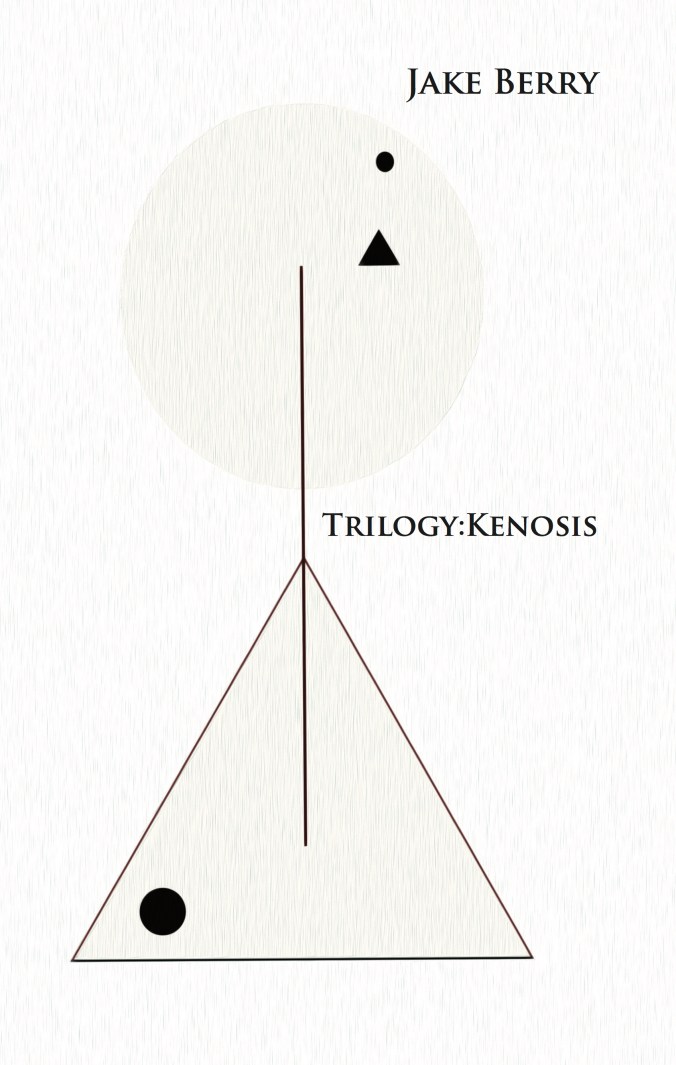
final cover

Jake Berry

is a poet, musician and visual artist. The author of Brambu Drezi, Species of Abandoned Light, Drafts of the Sorcery, Genesis Suicide and numerous other books. He has been an active member of the global arts and literary community for more than 30 years. His poems, fiction, essays, reviews and other writings have been published widely in both print and electronic mediums. In 2010, Lavender Ink released a collaborative book, Cyclones in High Northern Latitudes, with poet Jeffrey Side and drawings by Rich Curtis; and Outside Voices: An Email Correspondence (with Jeffrey Side) was released by Otoliths also in that year. Phaneagrams, a collection of short poems, was published by Luna Bisonte in 2017. He regularly records and performs his compositions solo and with the groups Bare Knuckles, The Ascension Brothers and The Strindbergs. Mystery Songs, his tenth solo album, was released in 2016. Ongoing projects include books four and five of Brambu Drezi, a new book of collaborative poems with Jeffrey Side, and a wide range of musical projects.

The Interview

1. What inspired you to write poetry?
It was so long ago that I’m not sure I can say. I could feel the arts calling, but I didn’t know where to go or if I would be any good at any of them. At age 14 in school several of us started writing verses as a joke. I felt like I had the knack for it so I tried writing something serious. Everyone that read it responded positively. It was just adolescent drivel, but I felt I had connected to something important.

2. Who introduced you to poetry?

Probably my mother. She used to read poetry to my brothers and myself as we went to sleep. When I was nine I discovered Edgar Allan Poe by way of a school assignment. I was hooked.

3. How aware were you of the dominating presence of older poets?

That depends on what age. At first all I knew about was what was in our literature books and what I could find in the very small library and in the one poetry collection we had at home. By the time I started publishing I had a sense of what was out there, but I hadn’t read most of it. Most of the work that appeared in the major poetry publications seemed to be lacking compared to my favorites like Rimbaud, Whitman, Dickinson, Blake, T.S. Eliot, Gertrude Stein, et al. But I quickly met several older poets through the mail that were amazing. People like Jack Foley, Ivan Argüelles, Larry Eigner.

4. What is your daily writing routine?

I have a time set aside every day to work. You can’t make poetry happen, but you
have to be available for it. When I’m not writing I’m catching up on emails, working on musical projects or revising.

5. What motivates you to write?

Breathing. I’m sorry if that sounds cliché, arrogant or pretentious, but it’s true.

Poetry is a way of being in the world. You live it all the time. Sometimes you’re in tune and all is well. Sometimes you’re out of tune and you have to wait, make adjustments, and find the right harmonics again.

6. What is your work ethic?

Every day except for when we go out with friends visit or those rare occasions when I’m out of town.

7. How do the writers you read when you were young influence you today?

They are still very much present, but they are so deeply integrated that I don’t think about it. I still read most of them and I’m always finding new favorites.

8. Who of today’s writers do you admire the most and why?

There are so many. I’ve mentioned Jack Foley. We were published on an audio tape together in 1985. For a long time I had been wondering where the successors to the modernists were. I loved the Beats and the Surrealists that were current at the time, but most of them didn’t seem like a natural continuation of modernism which I still feel was the last movement that really shook the ground of poetry. When I heard Jack and his wife Adelle reading I felt like I was hearing what modernism had become. Later, thanks in part to Jack, I discovered Robert Duncan, Denise Levertov, Charles Olson and many others. Ivan Argüelles has been doing incredible work with lyrical intuitive streams for decades. Hank Lazer has been filing notebooks with fascinating visual poems and meditations. I still love every thing that Michael McClure writes. More recently I’ve read large amounts of Adonis, whose poetry I think is as good as anything ever written. A friend recently introduced me to Mary Oliver. I’d never heard of her despite the fact that she’s one of the most popular poets in the world. Once I started reading her I fell in love with her approach and what can be discovered through her work. Shelia Murphy is one of the finest living poets known to me. I’m currently in the process of reading Wendell Berry at length for the first time. The list is endless.

9. Why do you write, as opposed to doing anything else?

Because it makes me feel connected to something vast, something far beyond the
individual self. Everyone has a way of making that connection. For me, it’s in the creative moment.

10. What would you say to someone who asked you “How do you become a writer?”

It depends on the person and why they are asking the question. Generally, I would say you have to do the obvious, start writing. It doesn’t matter what it is or if it is any good. You have to start the process. You have to put the desire into practice.

11. Tell me about the writing projects you have on at the moment.

Two books came out at the end of last year: Trilogy: Kenosis and Nerve Figures.
I am in the process of recording audio and video versions of material from those books to help promote them. I am also writing and recording a series of songs with my
brother, Jeff, under the name Six Mile. I also continue to work on the lifelong
project Brambu Drezi and write various short poems.

Wombwell Rainbow Interviews: Dustin Pearson

Wombwell Rainbow Interviews

I am honoured and privileged that the following writers local, national and international have agreed to be interviewed by me. I gave the writers two options: an emailed list of questions or a more fluid interview via messenger.

The usual ground is covered about motivation, daily routines and work ethic, but some surprises too. Some of these fiction writers you may know, others may be new to you. I hope you enjoy the experience as much as I do.

Dustin Pearson

is the author of Millennial Roost (C&R Press, 2018) and A Family Is a House (C&R Press, 2019). He is a McKnight Doctoral Fellow in Creative Writing at Florida State University. The recipient of fellowships from Cave Canem and the Virginia G. Piper Center for Creative Writing, Pearson has served as the editor of Hayden’s Ferry Review and a Director of the Clemson Literary Festival. He won the Academy of American Poets Katharine C. Turner Prize and holds an MFA from Arizona State University. His work appears in Blackbird, Vinyl Poetry, Bennington Review, TriQuarterly, and elsewhere.

Here are some links:

http://www.triquarterly.org/issues/issue-155/paternity?fbclid=IwAR12BJ0KEDxfhKiHmmDgsa41g1GvX6z9AJmmARmigxob9JaApTe9gsSk7DQ

https://www.crpress.org/shop/millennial-roost/

https://www.crpress.org/shop/a-family-is-a-house/

https://sites.lsa.umich.edu/mqr/2018/09/the-epistolary-ambivalence-on-balance-in-dustin-pearsons-millennial-roost/

http://haydensferryreview.com/haydensferryreview/millennialroost

https://www.youtube.com/watch?v=fBcA-oRiu-k

dustinkpearson.com

The Interview

  1. When and why did you begin to write poetry?

It was the fall semester of 2010. It wasn’t my intention to write poetry. I was convinced I was going to pursue fiction writing for my creative writing minor at Clemson University, but I couldn’t register for the advanced fiction workshop because it was full. I remember someone telling me that regardless of the genre of the prerequisite course I took, I could still complete the minor with an advanced workshop in poetry or fiction, but I still wasn’t enthused until I saw a presentation by the teacher of the advanced poetry workshop—in addition to her writing in both genres, I was mesmerized by her writing. Even then, though, I knew I had a challenge on my hands.

  1. Who introduced you to poetry?

I’d say I wasn’t truly forced to take the study of poetry seriously until I took Dr. Manganelli’s Critical Writing About Literature course. I didn’t take the writing of poetry seriously until I took Dr. Weise’s poetry workshop, and that was after being nudged by Dr. Manganelli to take the poetry workshop with Dr. Weise in the first place.

  1. How aware were and are you of the dominating presence of older poets?

I wasn’t at all aware that there was such a thing as a contemporary poet back when I first started my undergraduate career. I knew Maya Angelou, Nikki Giovanni, and Gwendolyn Brooks as important names and figures attached to fights for social justice, but I probably couldn’t even have had a coherent two-minute conversation about poets or poetry world’s dynamics, and what an injustice that kind of thing was.

These days I’m at a point where I often get to meet and learn from “older poets.” I’m not sure that I see their presence as dominating, but I do have a kind of reverence for them and take comfort that their presence is esteemed and recognized.

  1. What is your daily writing routine?

I don’t have a routine so much as a very powerful brain and an even wilder imagination. The poems I write swirl in my head and come into higher resolution over time and so in that way I imagine I’m always writing.

  1. What motivates you to write?

The desire to bend the reality of the world into one I can understand multi dimensionally.

  1. What is your work ethic?

The thing that runs me down the most, makes me exceedingly anxious and ambitious, makes me age prematurely, and the thing that would make me sad that I had if life moved at a pace that truly encouraged something other than work.

  1. How do the writers you read when you were young influence you today?

I’m not exactly sure. I imagine that the writers I read and enjoyed when I was young helped to nurture my imagination and larger thinking back then, and I feel that I’ve retained a large part of my younger self, so perhaps they contributed to the survival of the writing spirit I rely on today.

  1. Who of today’s writers do you admire the most and why?

I admire all of the writers who are, in some way, still writing toward a better, more accessible, and more community-based world, who are, against all of the psychological and material stresses, not giving up. I haven’t been able to eradicate from my mind that today’s writers are writing up against the end of the world. There’s a hope there that will always be admirable.

  1. Why do you write?

Because there’s so much more to be said about everything, because I can’t let anything go, and because I’m still alive and hoping the writing might bring me into contact with some version of my ideals.

  1. What would you say to someone who asked you “How do you become a writer?”

People are already reading you. Every day they’re getting it right, getting it wrong, getting it somewhere in between, so you’re already a writer. If you want people to recognize you as that, all you need to do is put a version of that acknowledgment “on paper” and post it somewhere people will see it.

  1. Tell me about the writing projects you have on at the moment.

I’m writing about friendship and two brothers working their way through Hell without each other. Both projects are beautiful.

On Fiction Wombwell Rainbow Interviews: Shane Jesse Christmass

On Fiction Wombwell Rainbow Interviews

I am honoured and privileged that the following writers local, national and international have agreed to be interviewed by me. I gave the writers two options: an emailed list of questions or a more fluid interview via messenger.
The usual ground is covered about motivation, daily routines and work ethic, but some surprises too. Some of these fiction writers you may know, others may be new to you. I hope you enjoy the experience as much as I do.

Shane Jesse Christmass

is the author of the novels, Belfie Hell (Inside The Castle, 2018), Yeezus In Furs (Dostoyevsky Wannabe, 2018), Napalm Recipe: Volume One (Dostoyevsky Wannabe, 2017), Police Force As A Corrupt Breeze (Dostoyevsky Wannabe, 2016) and Acid Shottas (The Ledatape Organisation, 2014).

He was a member of the band Mattress Grave, and is currently a member in Snake Milker.

An archive of his writing/artwork/music can be found at www.shanejessechristmass.tumblr.com

Instagram: @sjxsjc

Twitter: @sjxsjc

The Interview

1. What inspired you to write fiction?

Not sure if there is one thing, or actually anything, that inspired me. I am always dubious on whether or not inspiration is an actual substance that is required to stimulate someone in order to create. I wanted to write novels, so I wrote novels. The urge pushed the outcome.  I know I didn’t talk much as a child, and one of the things I liked doing was reading a lot. I feel that I perhaps hallucinated, maybe fantasised intensely is the better choice of word, but was terribly miserable, and was probably left alone a lot, and therefore just simmered in my imagination by myself. I wasn’t particularly gifted in anything, except reading a lot, and that is especially not a great skill, I just made time for it, because I was terrible at other academic quests, or sports endeavours. I think there are benefits to speaking in an incoherent manner.  Writing is just a small human sacrifice in a suburban supermarket. Inspiration is just the cataleptic attack.

2.  Who introduced you to fiction?

Well you kind of have to don’t you. You have to learn how to read and write, so therefore you have to read all these little dinky stories and books. I don’t have fond memories of these sort of things. I don’t really like thinking about these things. I just spent a lot of time at the library. I nagged people in my family to take me to the library a lot, until I was old enough to go by myself. And when I was there I asked the librarians lots of questions. They pointed to the books for the answers. My father was this sort of person who was very detached, but did amazing things like purchase the complete works of Shakespeare, or the Romantic poets, in these Encyclopaedia Britannica type of leather bound books, something you probably bought from a salesman, or from a catalogue. They were on the shelf. I remember asking him once who all these books were for. He advised me they were for ‘us’ – meaning me and my siblings. I commenced pawing through them. By no means am I saying people should go read Shakespeare to be a writer. He’s definitely not my taste. I got it done early in life. I couldn’t imagine reading him now. That would be so boring. I just read him because it was in my house. I also read pretty much anything. I read my mother’s ‘Cosmopolitan’ magazine for example. I probably enjoyed that more than Shakespeare.

3. How aware were you of the dominating presence of older writers?

Massively. You don’t want to do something that someone did originally and more uniquely – that would just be very disappointing. But – you do also wish to do something in the experimental tradition, perhaps extend something further, or add upon something that came previous. I’ve had odd moments where people have commented that my writing is like a certain author that I have never heard of, or I have checked out an author that is new to me, say Saint-John Perse, and I can see massive similarities, but ones that are just magical coincidences. Someone once told me that my writing reminded them of Thomas Pynchon, a writer I wasn’t terribly familiar with, and who to this day I have never read. I mean why would I go read a writer that people say is similar to myself, or that I am similar to. One of the reasons I write the way I do is because I couldn’t find the fiction that I wanted to read.

4. What is your daily writing routine?

You know that shot in ‘The Omen’ where Lee Remick is pushed over the balcony balustrade and falls – and the fall causes her to miscarry? I once saw a documentary where the director, Richard Donner, explained how they set up and executed that particular scene and then how they shot it. Go watch it, it’s an amazing piece of filmmaking, but watching the documentary, I can only now watch that scene and think know about how they did it. The wonder that I had of initially not knowing how they did it has evaporated. Telling people my daily writing routine might be equivalent to watching that documentary.

5. What motivates you to write?

Because no one believed I could do it. And as mentioned in the opening question, it was always just something I wanted to do, I didn’t have much faith in my ability to do anything else, but this seemed somewhat natural, and I certainly felt less anxious doing it than other tasks. Fretted-about signs always show up in the skull housing, you can keep them inside, or you can plaster them onto a page and publish. I chose to plaster and publish.

6. What is your work ethic?

Cold hands, in a cool climate, need to tap some words out each day. And that’s the key, every day, something has to contribute to the writing of something. What that something is will be particular for each writer. Just don’t die wondering that you never put your crystalline vision into effect. Don’t get to the end, and as a luminous patient … suddenly think: I could’ve done more, I should’ve written more. One of the things that use to upset me, especially when I was young, was this equivalency, and this is particular in my family where my parents came from working class stock when they were children, and then moved themselves into a lowly middle class position, was that reading books or writing was equivalent to being lazy. My work ethic is inspired to prove that that equivalency is false, and that perhaps the benefits of doing something like that are not entirely immediate. Does sitting in an armchair and looking out a window thinking, or ruminating on a thought, lack substance or profit? No … it’s ghostly work. As Evelyn Underhill wrote, some natures have a special sense, an attempt to reach a transcendental consciousness, the contemplation allows us to reach it. My point is that a writer’s work ethic shouldn’t just be to write all the time. Contemplating, how you’re going to write something, why you’re going to write something, should have a worth ethic to it, in that it should be just as rigorous and productive as the actual writing, but it is no less valuable.

7. How do the writers you read when you were young influence you today?

Yeah good question.  Guess if I was going to make a list of my top ten favourite writers, or some list that is defined similarly like that, favourite writers or some such, most of the writers on that list would probably be favourites from when I was younger. The only book that might go onto that list, that I only just came around to, would be Gary Indiana’s Horse Crazy. I guess how they influence me today is a bit tricky to answer. I don’t put those books into any list, or hold them close, because of any exact influence on my writing, or an influence on the topics I write about. To a greater degree, most of the books, or these favourite authors, are the ones that I felt gave me permission to make early attempts at this writing business. Certain books made me realise I could do this. It gets back to your question regarding the dominating influence of older writers. I read less fiction these days, and what fiction I do read these days is more for entertainment purposes, meaning when I was younger I would read novels, but would take notes, mental or otherwise, regarding how the novel was written, all the mechanical and technical elements on what makes up a novel. So the reading of novels then was more from an educational aspect, whereas the type of books that influence my current writing, whether indirectly or directly, would be non-fiction work, and that’s not from a position of incorporating direct facts from non-fiction texts, but more to provide a feeling, or tone to inflect into my own work. I just read that famous work by Robert A. Monroe about out-of-body experiences. This in no way means that there will be a plot, or a character directly, in my next manuscript that has these experiences, it’s more just to provide some nebulous science fiction, or scientific, tone.
P.B Shelley is a volatile substance that did cast a slow expiration over me for a while though. Around when I was 14 years of age, and then for a long time afterward, but still, currently, very much presently, and probably forever actually. His words were some type of nauseous gateway to perfection. A natural faultlessness for me to read. There was a proportionate unity, and a particular shape to his work. Everything I had read prior to then reading Shelley just seemed like teabag stains in comparison, limp flints. A sudden jet of ceaseless elation.

8. Who of today’s writers do you admire the most and why?

Oh where can I start! Lots of people. Isabel Waidner. Rachel de Moravia. Candice Wuehle. Nadia de Vries. Darcie Wilder. Why? It seems very unlikely that writing could make a physical change to a person’s anatomy, but perhaps these writer’s may assist in a human’s evolution. Are we just vegetable matter? The future will have visual differences from what we currently see. Why can’t we have writers, like these, that act as handbooks, guides, to assist us when we encounter those visual differences? You can either be a body, or a bystander amongst the rubble, or you could read those writers. The interior of their books is like a telepathic reading, lurking emulsions of forward-looking designs and approaches. It’s good shit.

9. Why do you write?

The most common question to ask an author, but the most difficult for authors to respond to. Maybe there is no reason, except I just happen to write, it’s what I always wanted to do, and it’s what I always did. Do you know about the clinamen? The clinamen has numerous definitions, but I’m interested in how it was defined within pataphysics. Originally the Roman poet, and philosopher Lucretius, defined the clinamen as being an unpredictable swerve of atoms. Alfred Jarry, the writer who penned the main tenets of pataphysics, came to understand the clinamen as a slight change that can cause a greater, or the greatest meaning. For example: changing one letter in a word to make a new word, and that new word obviously caries a completely new meaning. I’m interest in the clinamen, but not a slight change, a delirious upheaval. A repetition of images, tweaks of images causing dislocation and jump-cut in narrative, the death of certain images only for images to reappear later, interchangeable images causing interchangeable narratives. I write, to perhaps take pleasure, or to promote the instability of meaning, and through that instability, reach new meanings through new forms, instructions or procedures. I want to create stories that start at any point in the manuscript, as this aligns with the spasmodic and aleatory experience of modern time, a somnambulist drift between tenses, a relentless overload of information. Shifts of attention to something irrelevant or disconnected – the clinamen. That’s how I feel today, my reasons will probably change completely tomorrow.

10. What would you say to someone who asked you “How do you become a writer?”

I know I shouldn’t answer a question with a question, but I might ask – ‘What sort of writer do you want to be?” I have a certain sphere as a writer, a speciality, but certain specialities might just be another name for limitation. Unfortunately there’s no glib answer to that question that suffices, except what they probably already know. I’ve seen so many interviews with writers, and I’m talking really famous and rich writers, who when they get asked this question always answer – read more. Yeah, no shit, thanks for nothing. Isn’t that the most asinine and dainty response you ever heard? I’d probably advise not to get distracted by the idea of being a writer, don’t get distracted by all these accoutrements of a writing life. Don’t get distract by finding some perfect, decorated writing space, or finding some enlightened pencil. But one thing I would say is, everything is a story, everything that happens can be a story. And everything you can possibly conjure up in your imagination, is a story.

11. Tell me about the writing projects you have on at the moment.

I’m nearing the end of a large piece of work that is, at the moment, unwieldy and a bit broad in its scope. I originally started out with the idea that I was going to write a memoir, not based on my life, definitely not based on my life, but a memoir based on the movements of two childhood male friends. These two friends, over the years, become on-again, off-again sexual partners with each other, but with an absence of love or any affection.  One of the male friends, is very loosely based on Herb Mullin. And definitely not based on the life of Herb Mullin at all, but an idea that Herb Mullin had. He thought that a small killing would prevent a major catastrophe to occur. He believed, at the start of his killing spree, that his killings could stop a massive earthquake from occurring in the San Francisco area. Actually he believed that all the deaths caused by the Vietnam War, up to that point, were enough to forestall this earthquake, but as the war in Vietnam was winding down, he’d need to advance the killings himself. Anyway – I was intending to write a massive cadaverous tragedy that plays out with these two male friends, based on this livid idea that an individual waging a war on society, that unfortunately involves bloodshed, could stop a massive war from commencing, or that could finish a massive war between two nations. Oh and it’s a love story. I’m really enjoying writing it and it is fucking nuts. If anyway wants to read it, by all means hit me up.

Wombwell Rainbow Interviews: Susan Castillo

Wombwell Rainbow Interviews

I am honoured and privileged that the following writers local, national and international have agreed to be interviewed by me. I gave the writers two options: an emailed list of questions or a more fluid interview via messenger.

The usual ground is covered about motivation, daily routines and work ethic, but some surprises too. Some of these poets you may know, others may be new to you. I hope you enjoy the experience as much as I do.

41gre4pvbol._ac_us436_fmwebp_ql65_

Susan Castillo

Susan Castillo Street is Harriet Beecher Stowe Professor Emerita, King’s College London. She has published two collections of poems, The Candlewoman’s Trade (Diehard Press, 2003), Abiding Chemistry, (Aldrich Press, 2015), and a pamphlet, Constellations (Three Drops Press, 2016). Her poetry has appeared in Southern Quarterly, Prole, The High Window, Ink Sweat & Tears, Messages in a Bottle, The Missing Slate, Clear Poetry, Three Drops from a Cauldron, Foliate Oak, The Yellow Chair Review, Poetry Shed, The Lake, Picaroon, Atrium, The Fat Damsel, The Writers’ Cafe and other journals and anthologies.

The Interview

1. When and why did you begin to write poetry?

In my teenage years, I wrote poetry with which I could be blackmailed today! Ghastly neo-Romantic poems in dactylic tetrameter.

2. Who introduced you to poetry?

I was taught to read by my mother when I was around 2 years old. I loved nursery rhymes and nonsense verse because of its musicality.

3. How aware were and are you of the dominating presence of older poets?

At the moment, I’m aware of the presence of extraordinarily talented younger poets, prose writers and editors. Names that come to mind are Angela Readman, Kate Garrett, Jane Burn, Holly Magill, Sarah Doyle, Kim Moore, Sarah Miles and Mary Norton Gilonne among many others.

4. What is your daily writing routine?

For poetry: I write when a poem starts scratching at my brain. Usually a first draft, and then several edits. For me, less is more, and I pare my poems down relentlessly. For my novel Casket Girls, I set myself a target of 1,000 words a day.

5. What motivates you to write?

That would be like asking, ‘Why do you breathe?’ Writing has saved my life, both literally and metaphorically, on more than one occasion.

6. How do the writers you read when you were young influence you today?

I love Southern Gothic writers like George Washington Cable, Carson McCullers, Eudora Welty and Flannery O’Connor, for the vividness with which they depict the humour, beauty and absolute insanity of the American South. They capture so well the voices of my childhood.

7. Who of today’s writers do you admire the most and why?

Where do I start! I love the elegance of Edith Wharton’s writing, and the pared-down prose of Ernest Hemingway’s short fiction. In poetry, the amazing Natasha Tretheway, because of the courage and skill with which she evokes issues arising from the complexities of race, gender, and the South’s complicated history.

8. What would you say to someone who asked you “How do you become a writer?”

Edith Wharton defined a writer as someone on whom nothing is lost. I think one becomes a writer by being completely present, by living intensely in the moment, and capturing these lived perceptions as richly as one can. I think children should be encouraged to daydream, to cultivate their imagination, and to learn to love to listen to and tell stories around the kitchen table.

9. Tell me about the writing projects you have on at the moment.

My novel Casket Girls is coming out this year with Paper Swans Press. It’s a historical novel set in 18th-century about a group of impecunious young women of good character who are sent to New Orleans as prospective brides for the French colonists under the protection of the Ursuline nuns, who were also committed to educating enslaved women, Native Americans, and prostitutes. I am beginning to assemble a body of poems on diverse subjects which I hope will be the basis for a fourth collection. I’ve also been writing a group of poems based on family photographs and daguerreotypes and the stories they tell.