I am honoured and privileged that the following writers local, national and international have agreed to be interviewed by me. I gave the writers two options: an emailed list of questions or a more fluid interview via messenger.
The usual ground is covered about motivation, daily routines and work ethic, but some surprises too. Some of these poets you may know, others may be new to you. I hope you enjoy the experience as much as I do.
How Clark sees the writing process
Clark Allison
Born 1961 Glasgow. Attended Glasgow University 80-81. Resident in California 83-92. Studied further at Antioch University, Los Angeles. Took up library studies at Robert Gordon University, Aberdeen 93-98. In continuing education in Aberdeen 2000s. Moved to West Lothian 2015. Publications include two pamphlets ‘Temporal Shift/Daubs’ (Trombone Pr 98) as Carl Engerson, ‘Unspoken’ (Smallminded Books 17). Reviews and poems in Shearsman, Robert Sheppard’s Pages blog, Tears in the Fence, Stride particularly. More limited work experience, though trained in librarianship. Continuing regardless with periodic reading/studying and a varying amount of writing.
I might prefer a term like ‘persuaded’ or ‘conduced’, since I didn’t have to write. However, I put a lot of it down to social adjustment, and how one chooses to think or behave. The short version would have to cite the anthology ‘Poetry 1900-75’ (Longman 80) ed George MacBeth, which was read and studied in high school, including such poets as Eliot, Yeats and Edwin Muir (no MacDiarmid incidentally).
Having become acquainted with poetry especially in high school, but also essay writing generally, I took it upon myself to continue with a significant amount of reading and writing after I left high school. I wanted to, and did read more by Eliot, including a biography of his early years by Lyndall Gordon. I thought Prufrock and The Wasteland set the bar for short form poems, real set pieces, other instances being Olson’s ‘Kingfishers’ or Apollinaire’s ‘Zone’, though this type of poem is actually quite rare, and maybe even ill advised! And yet equally I’m altogether out of the kind of class consciousness Eliot presented or inhabited, my parents were not well to do, it was a sense for me of being inspired by the writing.
I did write poems after high school. These were decidedly not modelled on Eliot, nor really on anybody else particularly. I’d say my earlier poems were much more influenced by what I might term phenomenology or psychoanalytic association, since I was, equally, very interested in psychology, not at high school, but at university. I thought poems might engage, express and reveal what happened to be going on in my mind, but these were uses of language, too. I was getting a kind of ‘subjective’ orientation from psychology and an ‘objective’ one from Eliot, but I really wasn’t writing poems of that kind. I took up more of his critical ideas fairly seriously, the ‘objective correlative’ and the ‘dissociation of sensibility’, notably. My awareness of behaviourist social conditioning psychology (Pavlov, Skinner etc) had quite an effect, the stimulus-response school.
So, one could either write for an audience, wherein I just didn’t have one. Or one could write as an inquiry into self awareness via language, which is what I found myself doing.
2. Who introduced you to poetry?
Well, this goes back to the first question, that was high school English classes and mainly the MacBeth anthology. We studied Shakespeare too, ‘Lord of the Flies’, Grassic Gibbon. Memorable teaching sessions included whether The Beatles ‘She’s Leaving Home’ counted as poetry; and whether John Cage’s ‘4’33” counted as music or art of any description. I think I was early on struck by the seeming inconsequentiality of writing much. But what I called my writing exercises and reading material continued on, even after I left Scotland in 1983 for the US (until 1992). I really wasn’t sharing my writing much at this time. I found one small magazine called ‘Outposts’ that looked promising and John Calder’s ‘New Writing’ series, but I never took to sending them anything, ie where would that get me anyway?
3.How aware were you of the dominating presence of older poets?
Well, part of this was that I didn’t encounter any poets in person. On the other hand we did have a lecturer in film studies who had published a new book, John Caughie ‘Theories of Authorship’, and he was very engaging and down to earth, while warning us that some of the film/social studies theory was difficult.
The key poets for me, Eliot and Yeats, were long gone. In terms of successors to them, I wasn’t really coming up with a lot. I went off to the States and found that they were much more interested in Pound and Olson rather than Eliot, too Anglophile, likely. In Los Angeles, where I lived, I did encounter Holly Prado’s writing group in person. She’s a fine poet I think, married to Harry Northup an actor and fellow poet, published by Bill Mohr’s Momentum press, and I think I gained a lot from her seminars. She was unintimidating. One felt mostly an invitation to try to comprehend the process, which for her certainly included classical myth like Orphism and Thoth (kind of the Egyptian Hermes) and a kind of sensibility question where one would be taking off from certain themes, eg Robert Bly and masculinity. Holly Prado has a wonderful essentialist work called ‘Word Rituals’ (Boxcar 2). Meanwhile I was if anything more interested in the journals Temblor (ed Leland Hickman) and Sulfur (ed Clayton Eshleman), to whom I submitted but was not published. Hickman encouraged me to send work on, even though as it turned out he didn’t use it, and there was a short correspondence. Paul Vangelisti who had been in Temblor was also running seminars, but I felt it beyond me, and not altogether reasonable, to attend both.
I also submitted work to Barrett Watten at ‘Poetics Journal’ (co-ed Lyn Hejinian) and James Sherry at Roof publishers, which they did not use, but were considerate and respectful in responding. I continued writing exercises on my own account, feeling it, as I said, possibly revelatory or therapeutic, part of the process of getting through things. Reading Kerouac and Burroughs helped a little too. But I had little cognisance of any eventual reader.
4. What is your daily writing routine?
I effectively don’t have one. I try to set aside time for writing, and try to write down anything halfway important that pops into my head. My appetite for writing exercises has reduced, whereas I might formerly write 3 pages a week, now it might be less than one even. I guess I try to establish where it fits in in terms of psychological need. I don’t set a quota.
5. What motivates you to write?
I guess this is back to the psychology. I’d maintain there is a revelatory aspect to writing, ie going through the act of doing writing changes something and it can be personally enlightening and perhaps socially too if you share your work. It might be a bit like thinking and feeling out loud. Write it down! even if for personal reference.
6. What is your work ethic?
I studied continuing education philosophy. Ethics is exceedingly complicated. More than anything I’m a bit of a Darwinian, ie the survival and preservation of the self and of those others in the collective you happen to identify with. Compared say with crop failure and starvation writing poetry can seem like very small beer. On the other hand writing creativity can be inculcated in the education process. Writing surely has an ethics if we seem to mostly be disagreeing just what that is. Art for art’s sake has an argument behind it, but does not seem to me fully defensible, but then neither is Soviet style social realism..
7. How do the writers you read when you were young influence you today?
Here I could perhaps mention that there were a few writers very relevant for me early on, and they still are. All that has happened is that some of my more youthful enthusiasms have worn out to an extent, so that I’ve diverted attention more latterly to such poets as Charles Bernstein, DuPlessis, Silliman and Nathaniel Tarn. I think that High Modernism is on the wane, and we’re diverting more attention back to the Romantic poets like Blake, Coleridge, Wordsworth, Shelley etc. Ah, did ‘Ancient Mariner’ in high school, but I don’t think it’s at all Coleridge’s best; I look more to the ‘Biographia Literaria’. I think accepting the claims of new writers is a cause for some perplexity; they have to persuade and convince, always that problem of the primacy of first acquaintance.
8. Who of today’s writers do you admire the most and why?
This overflows from the last one. One could get quite caught up in a long list. Trying to keep it short. Among contemporaries, usually older, I would include people like Bernstein, who’s a bit of a spokesman for the Language school, Silliman, Bruce Andrews, DuPlessis, Hejinian, in Britain more ‘innovative’ poets like Robert Sheppard, Maggie O’Sullivan, who actually I struggle with, Ken Edwards, Denise Riley, Peter Riley (no relation as he keeps saying), Prynne, Wilkinson, Drew Milne, Andrew Duncan, Alan Halsey, Geraldine Monk, Rupert Loydell, Martin Stannard, Charlie Baylis, Allen Fisher, Rod Mengham, David Rushmer, Kenneth Goldsmith (the Conceptual school), another struggler for me Vahni Capildeo, also poets in translation, but there it tends to thin out, Raul Zurita etc or Zizek’s latest pronouncements on theory and crit.
What I admire most is a sympathy with the innovative and progressive, and addressing writing to the realities that confront us today. However, I don’t think we have to be loud or confrontational, a lot of what’s effective comes out of the words themselves.
9. Why do you write, as opposed to doing anything else?
Well, everything in a sense surely comes down to communication and behaviour, of which communication is a part. Communication can take numerous forms, and indeed many writers now are trying to experiment with other artforms besides, like installations or video etc. I just regard writing essentially as part and parcel of communicating., and that includes the likes of social theory, in which I’m also very interested (eg structuralism, Frankfurt School, narratology etc).
10. What would you say to someone who asked you “How do you become a writer?”
Here I think early education is very important, preschool and primary school included, literacy. Where you have a certain fluency with words it becomes a possibility. But it ties in with motivation. What do you want to do, or achieve? What are your better skills? What is the best use of your time?
11. Tell me about the writing projects you have on at the moment.
Here it becomes a bit indeterminate. I’ve just had a few book reviews posted or due to appear online, of writing by Wilkinson, Richard Gwyn and Vicente Huidobro. There may be some more poems, but I have to say the muse is not entirely with me at present. I seem to have gotten into a pattern of writing responsively to other things I’ve read. I like Terry Eagleton’s phrase, ‘hope without optimism’.
I am honoured and privileged that the following writers local, national and international have agreed to be interviewed by me. I gave the writers two options: an emailed list of questions or a more fluid interview via messenger.
The usual ground is covered about motivation, daily routines and work ethic, but some surprises too. Some of these poets you may know, others may be new to you. I hope you enjoy the experience as much as I do.
Rupert Loydell
is Senior Lecturer in the School of Writing and Journalism at Falmouth University, a writer, editor and abstract artist. He has many books of poetry in print, including Dear Mary (Shearsman, 2017) and The Return of the Man Who Has Everything (Shearsman 2015); has edited anthologies such as Yesterday’s Music Today (co-edited with Mike Ferguson, Knives Forks and Spoons Press 2014), Smartarse (The Knives Forks and Spoons Press, 2011) , From Hepworth’s Garden Out (Shearsman, 2010) and Troubles Swapped for Something Fresh: manifestos and unmanifestos (Salt, 2010). He has contributed creative and academic writing to Punk& Post-Punk (which he is on the editorial board of),Journal of Writing and Creative Practice, Musicology Research, New Writing, Axon, Text, English,Revenant, The Quint: an interdisciplinary journal from the north, and Journal of Visual Art Practice; and co-authored a chapter in Brian Eno. Oblique Music (Bloomsbury, 2017) and in Critical Essays onTwin Peaks: The Return (Palgrave Macmillan, 2019).
Stride magazine is now online at: http://stridemagazine.blogspot.com/
Details of Loydell’s Shearsman books are at: https://www.shearsman.com/british-poetry-books-H-L [scroll down]
Details of Loydell’s Salt books are at: https://www.saltpublishing.com/collections/author-rupert-loydell
Details of Loydell’s solo and collaborative books from KFS are at: https://www.knivesforksandspoonspress.co.uk/all-books
The Interview
1. When and why did you start writing poetry?
I attempted to write poetry at school, although my English teacher thought all poetry should be formal and did not encourage my early work. Like many others, I started to write dreadful teenage poetry to emote about girlfriends (real and imaginary) and the pains of adolescence. When I started an Art Foundation course at 17, Brian Louis Pearce – a poet friend of my father, was the librarian at the college and encouraged me to attend the college poetry group. He also introduced me to small presses, poetry magazines and various poetry reading events. Living in London I was very lucky to be able to see many authors reading, including Ted Hughes performing Crow, Tom Pickard with Robert Creeley, and Peter Redgrove, as well as many more obscure authors. In the mid to late 1980s there was still a culture of alternative bookshops that stocked small press zines and pamphlets.
2. How aware are and were you of the dominating presence of older poets traditional and contemporary?
I don’t think I was very much. I had to study Shakespeare at school, but as a playwright, and I was lucky enough to go to a school that was sensible enough to take us to see performances rather than just rely on the text. So, I saw Macbeth in four different productions over two years. I think we studied Keats at some point, and probably the WW1 poets. I didn’t take much notice.
My father, who had become a teacher after being an engineer, loved T.S. Eliot, and I had to study ‘The Waste Land’ but also loved it, mostly as declamation and a London poem. I guess the formative poets for me were Ted Hughes, T.S. Eliot, Robert Creeley and Brian Patten. Adrian Mitchell, too. Only later did I pick up on Eliot as a Modernist, Creeley as a Black Mountain poet, and Patten as one of The Liverpool Poets, which Adrian Mitchell was an accessory to, although more political and anarchic.
Tradition simply seems to me to be another word for history, and history has tended to be somebody in power’s version of things, trying to establish some sort of canon. I’m not that keen on those kind of ideas, but I do read contemporary (20th and 21st Century) poetry widely, although as I get older I try and spend more time with poetry of interest. I’m not very interested in end-of-line rhyming verse, or poems that tell stories, heading towards some kind of epiphany or answer.
3. What is your daily writing routine?
I’m not sure I have one. I often grab some time in the morning to read and edit, I sometimes take paper drafts to work to work on, I have notebooks in all my coat and jacket pockets, I sometimes type new texts up at work and email them home to myself. A lot of my poetry is assembled from other texts, including my own, or written back to images and ideas. I tend to write some poems in my head before committing to the page, others are forced out of the textual material around me to get a first draft I can work on. Most poems stay in my writing folder for several months, being re-read and edited most days, before I decide they are finished. There is usually enough time to get notes and phrases down, and other times to shape and edit properly in my study.
4. What motivates your writing?
I am interested in the amount of information we are swamped by now, and how memory, time and our attitude sieves and juxtaposes that. I also write about (or from) fine art and place. I think language is wonderful and enjoy playing with it: it’s how we understand the world and is a fantastic elastic, pliable and elusive medium to work with.
5. How do the writers you read when you were young influence you today?
An interesting question. ‘The Waste Land’ certainly provides a model for collage and juxtaposition, though I dislike the author’s assumption that we’d be learned enough to know Sanskrit and Mandarin and various European languages. Robert Creeley was a master of minimalism, and transcribing thought processes as they happen, alongside the imagistic. Peter Redgrove, who I was fortunate enough to publish several books by through Stride, opened my eyes to radical use of the senses and the mystical; I’d probably put Ted Hughes’ Crow sequence alongside Redgrove’s work, although it adds mythical and magical elements. Brian Patten showed me the romantic and idealistic; Adrian Mitchell the political lyric and satire. I don’t know if any of them except Creeley have had a lasting and ongoing influence, but formative influences are fine! Sometimes one needs to revisit the familiar past – I’ve actually had a volume of Patten’s selected love poems beside the bed for a couple of weeks, as I picked it up cheap in a secondhand bookshop recently. There are other works such as Ken Smith’s original version of Fox Running, Gavin Selerie’s Azimuth, and Julian Beck’s poetry and theatre journals that I still return to.
I think the music I listen to (and sometimes review or write about), as well as the visual arts, creative non-fiction, postmodern theology, cultural theory and art criticism, along with a number of contemporary poets all influence me far more than those writers from the/my past.
6. Who of today’s writers do you admire the most and why?
Wow, how much time do you have? Allen Fisher, Robert Sheppard, Rachel DuPlessis, for their sustained sequences and linguistic explorations. Charles Wright (who Stride published in the UK and Europe) and David Miller for their obsessions with doubt and faith. Luke Kennard and Dean Young for their wit and absurdism. Cole Swensen for her discreet themed projects. Other books by many other authors, including Mark Strand, Sheila Murphy, Ann Lauterbach, Tony Lopez, John Wilkinson, Alan Halsey, Brenda Coultas, Barrett Watten, Jorie Graham. Influences from deceased poets such as Robert Lax, John Berryman, Charles Olson, Robert Duncan, Ted Berrigan, William Everson, Thomas Merton, Karen Solie, Kenneth Patchen, John Taggart, Yannis Ritsos, Montale.
I like the fiction and creative non-fiction of Teju Cole, Iain Sinclair, Olga Tokarczuk, Dubravka Ugresic, Gabriel Josipovici, Giles Gordon, Rodrigo Fresán, Joan Didion, J.G. Ballard, Charles Williams, Guy Davenport, Alan Garner, Russell Hoban and many others; I have big bookshelves. The third book in Agustín Fernández Mallo’s Nocilla trilogy has just arrived – I am so looking forward to reading that.
I think I should stress that I admire the work, not so much the authors. I know they’re entwined, but it’s the work that counts.
Fiction and music and non-fiction has as much influence on my poetry as poetry itself. In fact I find it much harder these days to get excited about books of poems than non-fiction.
7. Why do you write, as opposed to doing anything else?
What a strange question. I do lots of other things, just as any other writer does. I have a day job as a university lecturer, I am an editor for various journals and magazines, I am an abstract artist who has solo and group exhibitions, and in the past I have performed and recorded with various bands. I’m also a father, a friend, a canoeist, a sailor, a car driver, a letter writer, an avid reader and listener, and a hundred other things.
As I said above, I write because I am interested in how we (society) and I (just me) deal with the changing world around us, which we understand through language. Language is how we think and construct our world. I like what happens on the pages of text I construct, and other people seem to do so too.
8. What makes non fiction more exciting than poetry?
Mostly that it’s not full of people emoting and whining about themselves. If am more polite, I think that the forms of Creative Non-Fiction are really being pushed at the moment, combining prose poetry, fiction, biography, mapping, psychology, photography, geography and other subjects. I’d recommend David Shield’s book Reality Hunger, a kind of collaged poetics of non-fiction as a pivotal document. What’s interesting is that experiment and innovation in creative non-fiction are happening in the mainstream, whereas fewer and fewer poetry publishers are publishing innovative poetry. More than ever, the most interesting poetry is happening live, online, in limited edition pamphlets and artist’s books. One has to look harder than ever, I think. Maybe I’m just turning into a grumpy old man.
9. What would you say to someone who asked you “How do you become a writer?”
I would say start writing, but also start reading and find out how and why poetry has changed in the last century. Read work that confuses, puzzles and surprises you. Work out why you dislike or like some work. Think about how poetry might be renewed or adapted for the 21st century: it clearly makes no sense to write 16th century sonnets about courtly romance today, though that doesn’t mean the sonnet can’t be [ab]used as a poetic form. Think, also, about what you are doing that is different. I always tell my students that it is almost impossible to write new teenage love poems; also that most people have been through that experience. We don’t need any more poems on certain subjects, and we don’t need any poems that work by empathy, that we respond to by emoting and saying ‘I feel that too’.
On a practical level there will come a point for an aspiring writer where the work meets an audience, be that a writing group, a magazine editor (and maybe the readers) or a seminar group at university. That changes everything. The realization that poetry, indeed all writing, goes out alone into the world, open to misunderstanding, dislike and being ignored, is a shocking moment. The more you understand how language works, what poetry can and does do, how the publishing industry and the alternatives work, the better you are prepared.
10. Tell me about the writing projects you have on at the moment.
I have just submitted a new book to Shearsman, which is the third and final part of a loose trilogy about Renaissance paintings, Italy and the annunciation. It includes a section written by Sarah Cave, who I worked with on the second part, Impossible Songs. I’m starting to think about a follow up to The Return of the Man Who Has Everything, which includes more of a loose grouping of my occasional poems, often collaged in response to what is going on around me
I’m working with several authors and artists, including Maria Stadnicka, on poetry and prose poetry about death and how the dead ‘live on’. Not in any spiritual or ghostly sense, but how we remember them, the objects and traces they leave behind. Daniel Y Harris and I have more collaborative books to take to print, and I am working on several interviews with writers and musicians for academic journals. My university colleague the novelist Amy Lilwall and I have almost completed a second short prose work which we are looking to publish in an academic journal, and Kingsley Marshall, the Head of Film at Falmouth University and I are working on a new book chapter and a new conference presentation about Twin Peaks: The Return. We’re also wondering about continuing our collaborative writing about the music of Brian Eno.
I will also be continuing to write book and music reviews for International Times and I have been invited to write a critical book about Brian Eno’s albums, which I am not sure I have the time for at the moment. But you never know…
I am honoured and privileged that the following writers local, national and international have agreed to be interviewed by me. I gave the writers two options: an emailed list of questions or a more fluid interview via messenger.
The usual ground is covered about motivation, daily routines and work ethic, but some surprises too. Some of these poets you may know, others may be new to you. I hope you enjoy the experience as much as I do
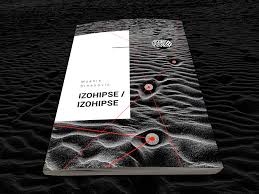
Muanis Sinanović
(1989) is a Slovenian poet, writer and an essayist of Bosniak descent. He has published three books of poetry and an experimental novella. His first book was awarded as a best first book in Slovenia at the 2012 Slovenian Book Fair. His writings have appeared in numerous regional magazines as well as in a Greek and Czech anthologies of young Slovenian poetry. He has read in different cities across Europe and has been a host at the Sarajevo writer’s residency in 2016 and a European Poetry Festival (London) in 2018. Occasionally he translates and is also involved in literary, film, music and theatre criticism. He’s also an editor of IDIOT literary magazine. Currently he is working on flash fiction, his next poetry book, a book of essays about immigrant experience in Slovenia, an avant-garde music-poetry collaboration with Andrej Tomažin, and experiments with literary performance.
The Interview
When and why did you start writing poetry?
Aside from writing some lines about kebab for a bad joke in a high school earlier, I started writing first poems at the age of 17 on a web forum. It was a hard period in my life, struggling on a personal level in many ways. My father had died recently. I caused a lot of troubles at school and spent a lot of time reading and posting random stuff on the Internet. I was reading a lot of modernist literature back then. There was a section on a web forum for literature. I just tried writing. And it seemed to me that I have found a field of free play, noninhibited imagination and a possibility to free myself from the pressure of meaning, from a seemingly inescapable flow of everyday conventions. Then I continued. A guy who worked at a bookstore discovered me, he is now my old friend, his name is Jernej Terseglav. At one point he invited me to a reading at his working place in the capital city of Ljubljana. Four people turned out and it was my first contact with the poetry world.
2. How aware are and were you of the dominating presence of older poets traditional and contemporary?
Very aware. In Slovenia, where poets are considered to be fathers of the nation, you can’t avoid it. Despite the fact that poets are not nearly as influential today as they were in the past, some of them still gain almost mythical status in literary community. Some of them succeed in one way and don’t want to listen to anyone else. I wrote harsh polemics against them. But I don’t do it anymore. I’ve found out that if you’re talking to someone who doesn’t listen, at some point you will cease to listen and repeat their mistakes. On the other hand, from almost all of the poets I’ve admired and turned to them, all of them gave me a positive feedback and helped me to overcome the myth of a great poet.
3. What is your daily writing routine?
I don’t think I have one. I work on ideas almost all the time in my mind. And when they crystalize, I put them down. It wouldn’t be possible if I would write the novels, of course. But with poems, flash fiction and essays I just wait for some kind of inner energy and lucidity to be at a peak level and then I put it down with deep focus and attention. Usually I do it in the evening. I read, watch things and play videogames, do sports a lot in between. I go to theatre, organize events and so on, so my schedule is not fixed at all and is depended on daily circumstances. But there is one constant – I like to go to sleep very late and wake up quite late too. Living in a nonstressful small town or in a small capital allows me that. Sometimes having long walks at night help me to develop ideas. Then I just feel an urge to run home and write.
4. What motivates you to write?
A wish to give sublime a form and communicate it with some other people. Before there was sometimes a need to prove something with writing but not anymore.
4.1. What does “sublime a form” mean to you?
To shape a feeling of sublime which appears at different occasions in our lives, to give it some form, to be able to share little personal revelations with other people.
4.2 How would you describe “sublime”?
I would say that sublime is something that is bigger than us or our daily lives and we are in the awe in front of it.
I’m religious but it doesn’t need to be of explicitly religious nature, it can be found, for example, in the power of history, nature, scientific achievements or even in a language. Sci-fi fiction is, for example, very concerned with the sublime. There are lot of authors interested in everyday life and ordinary things. I’m mainly on the other side, I’m interested in what’s beyond ordinary. But separation is not complete, sublime and ordinary live along each other.
4.3. Why does “ sublime” evoke awe?
Because it is unexpected, it is not something we are prepatwenties. Srečko Kosovel, a tragic poetry hero, was bringing constructivism into poetry, and there was a great amount of experimental poets among leading people of the Communist party which was idealistic and organized great partisan resistance in the world war. Oskar Davičo was one among them, a great poet. In the sixties and seventies new vanguardes emerged, for example Slovenian group OHO, Šalamun became world famous but there were other very special guys too, like Iztok Geister for exemple..
4.4. Why was Iztok Geister very special?
He revolutionized understanding of art in Slovenia with his introduction of concrete poetry and other vanguard techniques, he was a driven artist at a very young age and helped greatly with organizing the underground scene. Later, he turned to more conventional poetry, to ecology and to study of birds.
5. Who of today’s writers do you admire the most and why?
A Slovenian poet Miklavž Komelj is influential for me. London based Steven J. Fowler and Astra Papachristodolou have introduced me to a lot of inspiring young writers and encouraged me – with their own work too – to think about role of literature in our times and to experiment some more. I love Patrick Modiano. Alenka Jovanovski has published a powerful book recently. Augusto Monterosso has been dead for 15 years now but his writings inspired me to write flash fiction and experiment with shorter forms and he was a late discovery for me. There are a lot of friends, fellow writers doing new things at the moment and it would be hard to mention them all, I would certainly leave someone out and it would be unfair.
6.. Why do you write, as opposed to doing anything else?
Mainly because I find myself being better at writing than doing anything else and I find it more fun than anything else.
I find it meaningful also, but there are other vocations that are meaningful too, maybe even more – doctors, teachers for example.
7. What would you say to someone who asked you “How do you become a writer?”
Be playful. Don’t be discouraged quickly. Take words with a grain of salt, they are not holy but respect them at the same time.
Think about who your ideal reader is and consider her in your writing.
8. Tell me about the writing projects you have on at the moment.
My next poetry book is predicted to be published next year, all the poems are already written actually. I’m starting a poetry-music project with my friend, the words will probably be mostly English. I’m writing a book of essays on places I inhabit, people I know and experiences of immigrants. Slowly short short stories are being written and I will probably publish a collection of them in next few years.
I am honoured and privileged that the following writers local, national and international have agreed to be interviewed by me. I gave the writers two options: an emailed list of questions or a more fluid interview via messenger.
The usual ground is covered about motivation, daily routines and work ethic, but some surprises too. Some of these poets you may know, others may be new to you. I hope you enjoy the experience as much as I do
Marisa Crane
Marisa Crane is a lesbian writer whose work has appeared or is forthcoming in Jellyfish Review, Hobart, Pithead Chapel, Pidgeonholes, Riggwelter Press, Pigeon Pages, Cotton Xenomorph, and elsewhere. She is the co-founder of Collective Unrest, a political resistance magazine. She currently lives in San Diego with her wife.
I started writing poetry around sixth grade. I used writing as a means to whine about everything going on in my life. Real angsty shit. All of the poems rhymed, too, if you can imagine the absolute horror. Occasionally I even tried to rap them. It was a dark time. But then I won the first poetry contest I ever entered (and haven’t won one since). It was a contest at school. My winning poem was published in the yearbook and I rose to instant fame, and by instant fame, I mean no one noticed and the world continued to spin madly on.
2. Who introduced you to poetry?
I can’t remember anyone introducing me to poetry. My parents had science / medical backgrounds and as much as my mom loves to read, she almost exclusively reads fiction. I think it was just one of those things I fell into because it felt good and right.
2.1 Why did it feel good and right?
I think because it allowed me to process my emotions, fears, insecurities, anxieties, uncertainties etc. in a way that made sense to me. I could revisit old poems in order to conjure up old feelings and ghosts. I could also tear pages out and put those memories to sleep if I wanted. Poetry is magic, a form of time-travel.
3. What is your daily writing routine?
Right now I’m unemployed so my schedule was very different until about a month ago. When I was working, I would wake up around 6 AM and make coffee, do a little creative meditation, then write for about two hours. Generally I’d be working on fiction, whether it was stories or my novella. Then at work if i wasn’t too busy I’d be able to get some writing done on my breaks as well. Now that I’m not working, I wake up a little later, between 7 and 8, and have a slower morning, drink coffee, talk with my wife, beg her to play hooky, which she declines. Once she goes to work, I go to a coffee shop and work on whatever my current project is. This past month I’ve been writing for about 4-6 hours a day.
4. What motivates you to write?
I always feel like this is a tough question to answer, because almost everything sounds cliché to me. I suppose, at the core of it all, my feelings and experiences motivate me to write. Writing helps me process what I’ve been through. It often helps me to forgive myself for my past that I cannot change. I also allows me to express my fears in a healthy, channeled way. For example, I never wanted children until I met my wife, who very much wants to have kids, always has. I’m both excited and terrified of having children. A specific fear associated with this prospect is that my wife will die during childbirth or shortly thereafter, leaving me to raise our child alone. I know that it’s not likely, but it’s something I obsess over. I feel ill-equipped to raise a child. Most days I worry that I’ll break our baby. Anyway, I recently wrote a story about this very thing: having to raise my child after my wife dies during childbirth. The fear hasn’t dissipated since I wrote it, but it’s certainly dulled a bit, which is all I can ask. It’s a pretty damn good story too.
5. Who of today’s writers do you admire and why?
I admire the hell out of Kelly Link. I think that she is a rare genius who can tell a story and captivate a reader in an unprecedented way. She’s not afraid to play and her confidence shows. She could make me believe just about anything. Rivka Galchen is a new favorite of mine as well. She is imaginative, fearless, and unapologetic. Her work takes on a dream-like, surreal quality that stuns me. She also has a sneaky way of surprising the reader on a sentence level. Every time I think a character is going to do, say, or feel a certain thing, I am wrong, and I’m never happier to be wrong than when I’m reading Rivka. Also, Celeste Ng is a force to be reckoned with. I recently read “Little Fires Everywhere” and I swear I barely took a breath the entire time. She is a magician when it comes to creating dynamic and memorable characters. And lastly, Rachel Khong, who has the unique ability to write sentences that are at once heartbreaking and hilarious. Her work packs a huge punch in not so many words. Her turns of phrase sit with me for days.
6. Why write, as opposed to doing anything else?
I fear this response is going to sound really over-played, but the simple answer is that I can’t keep from writing. It’s not something that I ever have to force myself to do. It’s my natural way of processing and understanding life. Everything that isn’t writing feels like second best.
7. What would you say to someone who asked you “How do you become a writer?”
I think I would start by saying that you’ve got to sit down and write something. Or you can stand if you’re so inclined. Or do jumping jacks between words. Burpees, lunges, flame-throwing, etc. No matter how you want to do it, you’ve got to get words down. If you enjoy writing and you in fact DO write, then you’re a writer. I think if it’s something that remains inside your head then you aren’t a writer yet. But otherwise I can’t stand all of the debates surrounding whether someone is a writer or not. In fact, I find them elitist. It’s not a secret club with a special knock. Write the words down and you can confidently call yourself a writer. Try the word on sometime. Say, “I am a writer” in the mirror three times while spinning in circles.
8. Tell me about writing projects you’re involved in at the moment.
I’m currently working on a novel but for the first time in the history of my writing, I haven’t told anyone about it, including my wife. For some reason I feel very superstitious and I want to keep it to myself until it’s done. I’m about halfway there. I have a completed novella called “A Shooting Star Isn’t a Star at All” that I’ve submitted to several contests and presses. It was born out of a private, ongoing workshop with author Elizabeth Crane. The content is based on my experiences as a behavioral health worker for disturbed youth in the Philadelphia school district. It’s written from several different perspectives, including inanimate objects like a baby blankie and bullets in a loaded gun. That’s all I’ll say on that for now. I’m also shopping around a short story collection called “Human Pulp,” which explores the consequences of inaction through off-kilter and quirky voices. Lastly, I’m working on revising and submitting a poetry chapbook called “Our Debatable Bodies,” which documents my experiences as a lesbian and a woman. Another short story collection seems to be on the horizon as well. I can’t shake the idea of writing a series of stream-of-consciousness close third person stories about children / adolescents who experience discrimination / trauma / abuse and the implications of said experiences.
I am honoured and privileged that the following writers local, national and international have agreed to be interviewed by me. I gave the writers two options: an emailed list of questions or a more fluid interview via messenger.
The usual ground is covered about motivation, daily routines and work ethic, but some surprises too. Some of these poets you may know, others may be new to you. I hope you enjoy the experience as much as I do.
Nancy Patrice Davenport is a native of the San Francisco Bay Area and lives in Oakland, California. A single mother, Nancy has been writing for about ten years.
Her poems are widely published in various journals and anthologies, and have been translated into many languages. Nancy’s JUNE 2 RETROGRADE MINDFULNESS poem was nominated for the 2016 Best of Net.
Nancy’s first chapbook, LA BRIZNA, was published in 2014 by Bookgirl Press. She has work published by Country Valley Press. A full-length book of poems, SMOKING IN MOM’S GARAGE, was published in 2018 by Red Alice Press.
The Interview
When and why did you start writing poetry?
I was inspired to write poetry when my son began high school and I found myself retired due to epilepsy. I was searching for meaning in my life, and when a friend suggested I write a poem about the recent death of my mother, I found myself inspired. Once I was inspired, I took a file of my poems, and wrote to a poet that became my first mentor, Charlie Mehrhoff, and asked him if he would help teach me.
Who introduced you to poetry?
I am the youngest of four, and wanted to learn to read before I began school, so my mom taught me the basics. This created an intense interest in the written word. As I child I was picked on, the library was my escape. I equated books with invisibility and peace. For me, novels were new worlds to explore in. Once I discovered poetry, I found emotions universal to my own, I dug how feelings and intimations were expressed through word and white space.
How aware are and were you of the dominating presence of older poets traditional and contemporary?
I wouldn’t call older poets a dominating presence so much as an inspirational presence.
What is your daily writing routine?
When everything is working right, and my brain is Zen, I like to try to write every day, allow the poems to flow. One day a week is for submitting. One day is for editing. One day is for research. One day is for other. But if my brain isn’t working, I don’t force it, because the poems come out sounding forced, and inorganic.
What motivates you to write?
I am motivated to write by life, by what happens to me in life, but misfortune, and fortune. When I have trouble finding inspiration, I create in other art forms. I dislike having idle hands.
What is your work ethic?
My work ethic is humility, honesty, and simplicity. I also like gratitude and some sense of universalism.
How do the writers you read when you were young influence you today?
When I was younger my two favorite poets were Whitman and Cummings. I was influenced by both their use of space and tabs for emphasis/meaning. My thought was, if they could write this way, I could too, possibly.
Who of today’s writers do you admire the most and why?
Who are the poets I admire most today? This is a difficult question, as there are so many different poets I admire, for so many different reasons. But I admire Bill Gainer a great deal. He is not only a wonderful poet, but a very good editor. Charlie Mehrhoff is another fine poet, and editor. He was the one who advised me to get rid of extra “the, and, I, me, you … etc.” — this helped me tighten up my work. I also have admiration for my first editor, Scott Watson. He is an amazing translator, poet and editor, and he pulled me out of obscurity for my first chapbook. But on another poetic level, I admire poet John Martone for his compact poems that say so very much in so few words; he does what I wish I could do. I also admire the multi-dimensional work of poet Donna Snyder. I think Kushal Podder is a brilliant poet, subtle, with amazing imagery.
Here in the Bay Area I enjoy the work of Kim Shuck, MK Chavez, Natasha Dennerstein, Alexandra Naughton, William Taylor, Jr., Joel Landmine, G. Macias Gusman, and Paul Corman-Roberts. As I said, there are so many poets that I admire. This paragraph could fill an entire page. I am a fan of Arizona poet Jefferson Carter, for many reasons. I not only like his poetry, but I like his attitude.
I am also a fan of Cathyann Cusiamo, Molly Fisk, James Lee Jobe, and more recently, Mike Griffith, Fred Whitehead, Mike James, Seth Berg, Kevin Ridgeway, Curtis Hayes … there are people that post work on Facebook that I admire as well. As I said, the list of these names is endless.
Why do you write, as opposed to doing anything else?
I write because, aside from being a mother, I have discovered that this is my meaning in life, my sense of spirituality, how I am able to free myself from demons. Once I started to write, I didn’t know how – or feel able to – stop. I always wanted to be a writer in some kind of capacity. When I was younger I wanted to write novels. But the novels have come out as poetry.
What would you say to who asked you “How do you become a writer?”
If somebody asked me how to become a writer, I would go about it much the same way I did. I would find a good teacher, someone with experience, and ask for help. Before I referred this person to poets, I would refer them to books: Elements of Style, (Struck and White), The Poet’s Craft (Kreuzer), The Poet’s Glossary, (Hirsch), The Making of a Poem (Spender) and A Poet’s Craft, by Annie Finch. Once these books were acquired and studied, I would begin to refer to poets, depending on the interest of the person. But I would ask this person to think hard. It’s not easy to become anything, think one is born to be a writer, not certain if one can force this, otherwise, the writing itself is forced.
Tell me about the writing projects you have on at the moment.
Writing projects of the moment include a new chapbook in the works, about to go into a third round of editing. I’m also collaborating with a couple of poets with respect to some poems about mental health. The usual submissions. One last project is another full-length collection.
I am honoured and privileged that the following writers local, national and international have agreed to be interviewed by me. I gave the writers two options: an emailed list of questions or a more fluid interview via messenger.
The usual ground is covered about motivation, daily routines and work ethic, but some surprises too. Some of these poets you may know, others may be new to you. I hope you enjoy the experience as much as I do.
Jeffrey Side
has had poetry published in various magazines such as Poetry Salzburg Review, and on poetry web sites such as Underground Window, A Little Poetry, Poethia, Nthposition, Eratio, Pirene’s Fountain, Fieralingue, Moria, Ancient Heart, Blazevox, Lily, Big Bridge, Jacket, Textimagepoem, Apochryphaltext, 9th St. Laboratories, P. F. S. Post, Great Works, Hutt, The Dande Review, Poetry Bay and Dusie.
He has reviewed poetry for Jacket, Eyewear, The Colorado Review, New Hope International, Stride, Acumen and Shearsman. From 1996 to 2000 he was the deputy editor of The Argotist magazine.
His publications include, Carrier of the Seed, Distorted Reflections, Slimvol, Collected Poetry Reviews 2004-2013, Cyclones in High Northern Latitudes (with Jake Berry) and Outside Voices: An Email Correspondence (with Jake Berry).
I started writing poetry in 1990, after being introduced to Bob Dylan’s songs by someone. I was taken by Dylan’s use of words and rhyme, and his ability to make his songs personally significant and relatable to experiences in my life with an uncanny accuracy. I thought this was a wonderful gift to have, and wished that I had it. But not having any ability to write songs, I thought I’d try writing poetry instead.
Who introduced you to poetry?
Apart from the person who introduced me to Bob Dylan’s songs, there was no one else. After hearing Dylan’s songs, I began to read (and read about) poetry on my own initiative. This led me to want to study it formally at university, which I later did.
How aware were and are you of the dominating presence of older poets?
When I started writing poetry in 1990, I was only aware of two older poets who had a dominating presence. The first was Seamus Heaney, whose presence and influence was widespread in British mainstream poetry. The second was John Ashbery, whose presence and influence was widespread in American avantgarde poetry.
What is your daily writing routine?
I don’t have one. I tend to operate on impulse and spontaneity when it comes to writing poems. I do, though, jot down phrases that come to me every so often, and file them away for possible later use when writing a poem.
What motivates you to write?
I think what motivates me, is a hope to connect with people. To write poems that hopefully people will find personally significant and relatable to experiences in their lives, as Bob Dylan’s songs are for me.
What is your work ethic?
I don’t really have one. I just write whenever the mood takes me.
How do the writers you read when you were young influence you today?
There have been many poetry influences on me since I started writing poetry. Primary influences are: Bob Dylan, T. S. Eliot and William Blake. Secondary influences are: Leonard Cohen, Allen Ginsberg and Jack Kerouac. It’s difficult for me to specify how these writers influenced me; apart from saying that without their influence my poetry would have been different—if that makes any sense.
Who of today’s writers do you admire the most and why?
I admire Bob Dylan the most, if only because out of all the celebrated poets around today, none have enriched my imagination and emotions as much as he has. I know that sounds like an unschooled response but I have to be honest.
Why do you write?
As in a previous answer, to hopefully connect with people, so they can hopefully find personal significance and relatability to experiences in their lives through my poems, as I do through Bob Dylan’s songs.
What would you say to someone who asked you “How do you become a writer?”
I’d tell them to read some books on how to be a writer, and to go to a creative writing workshop. It is probably easier to be a writer now than at any other time in history, what with the enormous information resource that is the Internet, and a myriad of online writers’ forums, blogs and publishing outlets etc.
Tell me about the writing projects you have on at the moment.
I’m currently working on a collaborative project with Jake Berry, that involves writing aphorisms with the use of a dice. Apart from that, I’m not writing. I tend to be occupied most times with publishing poetry ebooks for other poets, and adding new content to The Argotist Online.
I am honoured and privileged that the following writers local, national and international have agreed to be interviewed by me. I gave the writers two options: an emailed list of questions or a more fluid interview via messenger.
The usual ground is covered about motivation, daily routines and work ethic, but some surprises too. Some of these poets you may know, others may be new to you. I hope you enjoy the experience as much as I do.
Rosenstock’s father George was a doctor and writer from Schleswig-Holstein, Germany, who served as a German army doctor in World War II. His mother was a nurse from County Galway. Gabriel was the third of six children and the first born in Ireland. He was educated locally in Kilfinane, then in Mount Sackville, Co Dublin; exhibiting an early interest in anarchism he was expelled from Gormanston College, Co. Meath and exiled to Rockwell College, Co. Tipperary; then on to University College Cork.
Rosenstock worked for some time on the television series Anois is Arís on RTÉ, then on the weekly newspaper Anois. Until his retirement he worked with An Gúm, the publications branch of Foras na Gaeilge, the North-South body which promotes the Irish language.
Although he has worked in prose, drama and translation, Rosenstock is primarily known as a poet. He has written or translated over 180 books.
He appears in the anthology Best European Fiction 2012, edited by Aleksandar Hemon, with a preface by Nicole Krauss (Dalkey Archive Press).[2] He gave the keynote address to Haiku Canada in 2015.
His being named as Lineage Holder of Celtic Buddhism inspired the latest title in a rich output of haiku collections: Antlered Stag of Dawn (Onslaught Press, Oxford, 2015), haiku in Irish and English with translations into Japanese and Scots Lallans.
He also writes for children, in prose and verse. Haiku Más É Do Thoil É! (An Gúm) won the Children’s Books Judges’ Special Prize in 2015.
I think the Muse came a-courting a long, long time ago, in an age before Gutenberg, an age before papyrus, when the poet was what he always is – though the role is suppressed today – a shaman.
She keeps coming – trying to possess me fully – but she knows I’m elusive, elusive as she is. We are both Spirit, pretending to be flesh, to be real. It’s a divine play, a sport, a leela as they say in India. I also write and translate for children – mainly in Irish, or Gaelic, and this is also leelai, pure and simple!
Ireland and India have so much in common. The writings of Myles Dillon and Michael Dames are good starting points for anyone interested in exploring that connection.
Ireland herself takes her name from a tripartite goddess and I dedicated a year to her in a bilingual book inspired by the devotional poetry of India, bhakti:
I mentioned the poet-shaman. There are very few courses in Creative Writing today that teach you how to be a shaman: it can’t be taught! So they teach form iinstead, how to write a sonnet or a villanelle – five tercets and a quatrain, is it? Enjambment anybody? Poets daringly continue a phrase after a line break and expect applause.
Irish poets learn your trade, sing whatever is well made. Yeats (whom I love) has a lot to answer for. Learn your trade! Poets today are tradeswomen and tradesmen for the most part. All form, no spirit, no melody that breaks the heart.
No heart. So, the great challenge today, in my book, is to reconnect with Spirit. Otherwise, forget it.
The only way to write is to write – and read, of course. Trust the inner ear – not what the manuals tell you – trust the heart, trust language. It’s not a lifeless tool in your hands, you silly tradesman. It’s alive, it’s divine. May your poetry be a sacrifice to her!
Having said all that, I occasionally teach haiku. The way I teach haiku is simply to present the works of the grandmasters of haiku, hoping that their spirit will ”catch’ and inflame the acolyte. Many believe that Basho was the grandmaster of haibun – prose speckled with haiku – and that the greatest of the haiku masters was Buson. I cobbled together new versions of Buson, in Irish and English, a volume which also contains versions in Scots by John McDonald:
We need more multilingual books of poetry, tanka and haiku. We need to free ourselves from the dying clutches of the Anglosphere and listen to real poetry in languages which still cherish the divine music of the spheres: one can hear that sacred music in the voice of Scots-Gaelic poet Sorley MacLean, even when he reads his masterpiece Hallaig in English translation:
Haiku Enlightenment and Haiku, the Gentle Art of Disappearing are two introductions to haiku and I hope that their titles reflect the spiritual basis of haiku, something which many haikuists ignore at their peril, I regret to say; for young readers (say, 8-12 years) there’s a book called Fluttering their Way into My Head:
True haiku – Zen-haiku – is egoless and spontaneous and allows for ambiguity – the reader must make sense of it by drawing on her own experiences, dreams, memories and so on – and yet it’s happening in the Now (if there’s such a thing as the Now).. I’m fully aware of promoting a book such as Fluttering their Way into My Head and speaking at the same time about ego-lessness! But, you see, I don’t identify with ‘my’ books as ‘mine’. They are about as ‘mine’ as is the moon over Tagoto.
Q. 2.Ted Hughes would be glad you extol the shamanic. Who introduced you to the shamanic in poetry?
Does one need an introduction? I hold shamanism to be a vital part of my literary and cultural heritage.
I can identify with the world of Carmina Gadelica whilst the world of Philp Larkin is alien to me.
Interesting that you should mention Hughes. I advise aspiring poets to wean themselves from the dominance of English-language literature, especially when it expresses itself in WASPish terms. I know many American poets, some of whom I’ve met at literary festivals, others with whom I have a friendly e-mail acquaintance. Many of them seem straitjacketed by the White Anglo-Saxon Protestant way of walking, talking, eating, drinking, dressing – and writing! I translated a volume of poems, Cuerpo en llamas, by the late Chicano poet Francisco X. Alarcon into Irish and invited him to Ireland for the launch. He turned out to be a shaman-poet. The genuine article. We recorded the book on a cassette (built-in obsolescence?) and the opening invocation was in Nahuatl, the language of the Aztecs, the language of his grandmother. I had come across Aztec poetry before, via anthologies by the likes of Jerome Rothenberg, but didn’t realize until then that Nahuatl was a living language.
During his brief stay in Ireland, Francisco gave me an Aztec name, Xolotl. I wrote a long poem of that title – in a kind of shamanic frenzy – and put it away, out of sight. Years later I looked at it again and it’s the longest poem in my selected poems translated from the Irish, The Flea Market in Valparaiso. Here’s a link to the book and a review:
I’ll let the review speak for itself. Expounding further on the role of the shaman poet is best left to others. But, I’ll say this much, Paul: artificial intelligence or AI has ‘advanced’ to such an extent that robots are now writing poetry – it would almost make you join the Luddites or inspire you to form your local branch of Anarcho-Primitivists!. I think we should be reading more of John Zerzan and Paul Cudenec to fully realize what kind of world we are creating for our grandchildren. Everybody says we can’t go back, we can’t stop the march of progress. Rubbish! Of course we can go back; I don’t like military metaphors but surely a wise general knows when to retreat?
Do we want poetry written by robots? Maybe it’s just science imitating life – so much poetry, especially in English, is artificial anyway. Futurologists talk of various possible disasters down the line – caused by our relentless ‘advancement’ such as shortage of energy supplies, of food and water, melting icecaps and so on and so forth. Overfishing will result in a shortage of fish. Nobody speaks of a shortage of poetry – it wouldn’t be disastrous enough, seemingly, nor would it bother mankind very much if we speeded up the death of languages, currently estimated at one language disappearing every fortnight. It’s the survival of the fittest, isn’t it?! Is it? Is that who we are, what we are?
So what if Irish dies, if Scottish Gaelic or Nahuatl dies, if Welsh dies, if Manx dies – again! If Beauty dies, so what? Who dreamed that beauty passes like a dream? Well, some of us are not willing to accept such a fatalistic scenario. The World Poetry Movement, for one, has sounded the alarm. Poets are not ‘joiners’ by nature but when the future of civilization is at stake, perhaps it’s time for all poets to become focused. Jack Hirschman, poet and social activist, describes the vision of the World Poetry Movement thus:
‘an end to war world-wide, and the creation of a world government that shares and distributes the wealth of the world generously and sensitively in the process of creating an equality that is nothing but the word Love in the eyes of everyone because it also recognizes E V E RY human being as a brother or sister. With no need of any wall separating an ‘I’ from a ‘You’, a ‘He’ from a ‘She’ …
This is a wise vision. Quixotic? Utopian? So what. We need to rekindle hope, we as citizens, we as poets.
I was fortunate enough in this my 69th year on earth, fortunate indeed to have a near-death experience. After recovering from multi-organ failure, I became conscious of the love that poured in streams at my bedside from my wife Eithne, my daughters Heilean, Saffron and Eabha, my son Tristan and conscious, as well, of the wave of reciprocated love that streamed from me to them. I was conscious, too, of the love and concern that came from friends, relations and fellow scribes.
Hirschman, above, is speaking of Love, the ultimate reality. Left-wing theorists should speak more often to us of love; it would help their cause. The author of The Wretched of the Earth tells us that his criticism of the colonizer is inspired by love, not hate.
For a long while I could not read or write. Then I asked one of my daughters would she kindly order me a copy of Palgrave’s Treasury: you see, English-language poetry was my first love, before I ‘discovered’ Irish and its potential,just as the author of Decolonising the Mind decided that African literature need not be in the language of the colonizer, French, English or Portuguese. His own outlawed language, Gikuyu, was best suited to express what he wanted to reveal. I also asked my daughter to bring me anything by my favourite author, Isaac Bashevis Singer? So, Mr Rosenstock, are you Jewish then? I used to think that my empathy for Singer’s work meant exactly that, but no, I’m not Jewish. It is the ancient art of storytelling, brought to perfection in his short stories, that makes me alive not to Jewishness as such but to humanity, in all its guises. And what of my attraction to Irish culture and to Indian philosophies, particularly Advaita and bhakti? Well, I once heard Ganesh playing Napoleon Crossing the Rhine on the uilleann pipes:
I jest. But I did have an out-of-body experience listening to piper Eoin Duignan in a pub in Dingle. Look, I don’t feel particularly Indian, German, Irish or Jewish – live Irish music and the ancient sounds of the Irish language can lift one and link one deeply to the universal spirit, the rich complexity that is the world of the senses, too; a deepening of a sense of place; a feeling for history. English carries imperial baggage with it. The scales fell from my eyes once I understood that through Irish, the literary medium of my choice, I could see and experience the world differently. Lucky Poet is a memoir by Scottish poet Hugh Mac Diarmid. It touches on some of these issues.
A year or so ago I came across an editorial in Poetry Ireland Review that mentioned at least half a dozen English poets.(I couldn’t figure out why. Was this a special edition of the review dedicated to new voices in English poetry? No.) We are still ‘looking across the pond’, i.e. to England. There is ample evidence, if you look for it, that many Anglophone Irish writers are suffering from a kind of literary Stockholm syndrome, that phenomenon described in 1973 as an extraordinary love and regard of the captured for the captor.
As an Anarchist, as an Advaitist and as an Irish-language poet, I value freedom and independence. It is the life blood of art. It may set you on a collision course against the Establishment but unless you are a Daoist poet content with herb-picking on a mountain, such a collision seems inevitable.
Q. 3. What is your daily writing routine?
I write or translate from about 10.a.m until 8pm. I suppose, ‘poet-shaman-translator’ is an accurate enough label to describe my activity. I don’t distinguish between so-called original writing, such as poetry, and translation (which I prefer to call ‘transcreation’). I see the practice of these arts as coming from the same pool of universal creative intelligence. John Minford, Emeritus Professor of Chinese, Australian National University, said something that caught my attention in Words Without Borders (Dec 7, 2018):
‘Hermits of ancient days practiced Taoist yodeling, a form of music that emulated the music of the spheres. Translation itself, the transformation of ideas and words, whereby self and the other merge into one, can be a form of Taoist practice . . .’
So, others may have ‘a daily writing routine’ as you call it I have something resembling a Taoist or Zen-Buddhist practice… maybe ‘practice’ is enough; it’s a more honest description than defining it as Taoist or Zen. It would be slightly ridiculous to call me a Taoist or anything else. I’ve admitted to being both an Anarchist and an Advaitist but really, all labels are rubbish. To paraphrase the essence of the Tao in The Taoist Way, a beautiful lecture by Alan Watts, ‘The Tao that can be labelled is not the Tao.
I translate a vast array of material for a multicultural blog: http://roghaghabriel.blogspot.ie/
I’m something of a technical dodo and must thank Aonghus O hAlmhain, blogmeister, for his work and patience. In recent years, my ‘practice’ has focused quite a lot on ekphrastic tanka and photo-haiku. The Culturium is a blog which is devoted to the arts as ‘practice’ in the meditative sense of the word: https://www.theculturium.com/?s=gabriel+rosenstock
I have unsubscribed to various sites recently but two that remain are The Culturium and Poetry Chaikhana.
A poet-friend, Cathal O Searcaigh, who writes mainly in Irish, gave me a volume of poems by a shaman-Taoist poet of the late Tan’g Dynasty, Li He.
I began to write Taoist-flavoured poems in Irish and English, Conversations with Li He. When I get out of hospital (I’ve been hospitalized since September 2018) I’d love to continue with this project. I see a fellow-shaman in O Searcaigh and have translated him into English quite often over the years, most recently in a book called Out of the Wilderness: https://www.amazon.com/Out-Wilderness-Cathal-Searcaigh/dp/0995622523
It is not easy – in fact it is impossible – to convey the shamanic power of MacLean and O Searcaigh in English:
He is a lovely, lively conversationalist, as you can hear above.
He and MacLean recite their poetry as though conscious of the fact that poetry was originally chant, the ecstatic chant – the trance – of the shaman.
Alan Titley, in a discussion following the interview, joined by Frank Sewell and Art Hughes, speaks of Cathal’s work as an ‘act of reclamation’. Poetry lost its heart when it ditched chant, when the poet could no longer perform the role of shaman. Can we reclaim poetry?
In the discussion, academic Art Hughes also talks about the disaster of the ‘printed page.’ Frank Sewell finds ‘strange echoes of home’ in Cathal’s references to the East. And Hughes talks about synthesis and the vision of Unity known to mystic of all traditions. It’s what Jack Hirschman alluded to previously when we touched on the World Poetry Movement. Is Jack a mystic?! We’re all closeted mystics if you ask me . . .
Q. 4. How do the writers you read when you were young influence you today?
What’s young?! I was in my late teens when I read Speaking of Shiva, an anthology of bhakti verse edited by AK Ramanujan. I haven’t properly revisited the titles that ravished my youth. That bhakti anthology opened my heart to the Universe.
I longed to write something in the bhakti or neo-bhakti style and when the conditions were right, it turned out to be a volume in English, Uttering Her Name, addressed to a Muse-Goddess directly: my first faltering attempts at using e-mail. English was the only language we had in common. She was a poet from Venezuela whom I met at a Kurt Schwitters festival in Germany. She was on her way to have darshan of Mother Meera. I didn’t formerly ask her, ‘Excuse me, I wonder would you kindly play the role of Muse-Goddess as I have some urgent bhakti poems to compose.’ I just went ahead and wrote them, 200 in all, eventually whittled down to half that size. It took a long time to find a publisher:
I don’t think Uttering Her Name would have come about without the influence of the Ramanujan anthology.
Was it he who said that he inhabited that no-man’s-land which is the hyphen in ‘Anglo-Indian!’? He wrote a very poignant poem about revisiting his home and calling out ‘Mother’ but, of course, she wasn’t there. I would have liked to have known him. Very much. He was a distinguished folklorist, among other things and also wrote in Kannada, one of India’s important literary languages.
I was fortunate to hear songs in Irish as a child – not at home, mind you – and the best of them are unforgettable. One could call the best of our songs folk poetry of the highest order, superior in texture and melody to much of the poetry of our time:
Muireann Nic Amhlaoibh’s voice in the opening track is very expressive, very tender and yet there’s a glorious defiance as an undercurrent to the song that says, ‘Try out your ethnic cleansing on us, again and again, your genocidal madness; we are a people of poetry and song, imperishable song.’
The second track is in Scottish Gaelic. The songs of Gaeldom are a link to a people’s struggle, songs of love (‘profane’ and divine), exile, loneliness, companionship, laments and lullabies, songs that sing the thirst for freedom. The words are music in themselves – when sung, they wrench the heart.
Q. 5. Who of today’s writers do you admire the most and why?
The most intimate form of reading is that which one does as a poet-translator. I have translated or transcreated many poets from India and all of them speak very highly of K. Satchidanandan from Kerala. He is closely involved in many festivals and last year, in Calicut, the theme was ‘No Democracy without Dissent’
My love for Cathal O Searcaigh and his poetry is well known. All three are outside of the Anglosphere, if such a thing is possible. Apart from those three, the site Words without Borders can be interesting. I’m grateful to English as a global language which introduces literature in translation to us all. I like ‘aboriginal’ poetry – the more aboriginal the better.The late Michael Davitt, with whom I co-founded the journal INNTI, has a line which says, ‘Ma bheireann carbhat orm, tachtfaidh se me’ – ‘if a cravat (or tie) catches hold of me, it will choke me.’ This is Irish aboriginalism alive and kicking! It says NO to the WASP and again NO. No thanks.
Q. 6. What would you say to someone who asked you “How do you become a writer?”
Write
Q. 7. Tell me about any writing projects you’re involved in at the moment.
Current writing projects: some writers are superstitious about current projects, as though they can only breathe a sigh of relief when the book is actually printed and published. Others like to trumpet their work in progress or publish extracts here and there.
Insanely prolific as I am, I usually have a number of irons in the fire. Do you know the origin of the phrase? It alludes to a blacksmith working on several pieces of iron at the same time. I remember being in a blacksmith’s forge as a child. A magical place. Lots of superstitions associated with iron, nails, horseshoes and so on. In Tibet they speak of ‘sky iron’ and I wrote a poem once inspired by that lore when I discovered that certain Tibetan singing bowls contain material from this ‘sky iron’:
I posted the poem on a few YouTube sites that featured singing bowls. Scroll down a bit and you’ll find it, in Irish and English. That’s a rather roundabout way of saying I’m not going to reveal current projects. To be frank, I have a number of completed projects and I’d much prefer to see them published before embarking on fresh material, such as a volume of bilingual poems, in Irish and English, already mentioned, poems addressed to the Daoist poet-shaman Li He.
I am honoured and privileged that the following writers local, national and international have agreed to be interviewed by me. I gave the writers two options: an emailed list of questions or a more fluid interview via messenger.
The usual ground is covered about motivation, daily routines and work ethic, but some surprises too. Some of these poets you may know, others may be new to you. I hope you enjoy the experience as much as I do.
Vatsala Radhakeesoon
was born in the exotic island, Mauritius on 17 October 1977.
She started writing poems at the age of 14. In 1995, when she was 18, her poem Loneliness was published in the most prestigious and widely read local newspaper L’Express. She is the author of the poetry books When Solitude Speaks (Ministry of Arts and Culture Mauritius, 2013), Depth of the River (Scarlet Leaf publishing House, Canada, 2017) , Hope (President’s Funds for Creative Writing, Mauritius, 2018), L’aurore de la Sagesse (Scarlet Leaf Publishing House, Canada, 2018) ,Smile Little Butterfly (Alien Budha Press, USA, 2018) , Guitar of Love (Real Vision Inc Publishing, UK, 2018). Vatsala has also co-authored Journey to Victory and Freedom ( Alien Buddha Press, USA, 2019) – a spiritual/philosophical book with Indian author
Sundeep Verma .
Vatsala Radhakeesoon is one of the representatives of Immagine and Poesia, an Italy based literary movement uniting artists and poets’ works. She has been selected as one of the poets for Guido Gozzano Poetry contest, 2016, 2017, and 2018. Vatsala currently lives at Rose-Hill, Mauritius and is a freelance literary translator, interviewer and reviewer.
Thank you Paul Brookes for interviewing me for Wombwell Rainbow!
I started writing poetry at the age of 14 in 1992, inspired by the songs of my favourite French Canadian singer Roch Voisine. As a teenager, I was shy/ timid. So poetry was a means to express my views, dreams and fears that I couldn’t say aloud to anyone.
2. Who introduced you to poetry?
I was introduced to poetry at the age of six by my late mother who was a Hindi teacher. She mostly taught me Hindi poems. Then she also helped me to learn a poem by heart for the prize giving ceremony at school when I was in Grade 1 (1st year of primary school in Mauritius). I recited the poem on stage for the first time. This has remained as a unique childhood memory.
3. How aware were and are you of the dominating presence of older poets?
Honestly, I have been fully aware of the presence of older and great poets. I always have much respect for them. However, I consider poetry as my mission guided by God. So I keep my own voice and go on writing. I believe all poets have a place in society. The older poets have never been an intimidating source for me or I have never tried to imitate them. I never try to compete with any poet. I run my own race.
4. What is your daily writing routine?
I write during anytime of the day when I feel inspired and when I’m free. I love writing with a relaxed mind.
5. What motivates you to write?
I have always deeply felt in my heart and soul some strong energy sustaining life and everything around me. I think in this way I feel God/the Divine. So, my real motivator for my poetry-writing is God. I feel it is Him who gives me the strength to keep writing and he has blessed me with that mission.
6. What is your work ethic?
To be honest, frank, humble and a justice- fighter and not being afraid to say “No” or stand alone. Whatever happens, always face the truth and keep truth as a principle. Lies lead to nowhere.
7. How do the writers you read when you were young influence you today?
William Blake has influenced me to maintain a simple language in my poetry. From T.S Eliot and Victor Hugo, I’ve learnt to bring depth to poetry. From Charlotte Bronte and Carol Ann Duffy, I’ve learnt to be daring and frank.
8. Who of today’s writers do you admire the most and why?
Among novelists I mostly admire Mitch Albom for his simplicity of language and depth in the content of his works. Albom’s books always teach us life’s lessons or remind us to remain humane. Among poets, I admire Scott Thomas Outlar for always being truthful to his works and simply saying things as he feels it from his soul , nothing less or more , never masked.
9. Why do you write?
To let my deeper thoughts surface to my outer world. To let go of all pain, stress and keep calm. Writing for me is also a means to stay connected to God –just as focused during a prayer or during meditation. Writing is like a cerebral exercise (exercise for the mind).
10. What would you say to someone who asked you “How do you become a writer?”
Try to develop love for reading books and appreciating the artistic world. All arts are interconnected. Develop constructive criticism while reading. Write down your own views about anything that you feel like. Briefly, Love Words!
11. Tell me about the writing projects you have on at the moment.
I’m mostly at a stage of my life where I wish to write more spiritual books, be it in prose or poetry. I don’t have any exact title for my upcoming work though but I know it will be in this line.