“a genesis with a Dada twist” and other poetic responses to the last Wednesday Writing Prompt
Uncategorized
Wombwell Rainbow Interviews: Elisabeth Horan
Wombwell Rainbow Interviews
I am honoured and privileged that the following writers local, national and international have agreed to be interviewed by me. I gave the writers two options: an emailed list of questions or a more fluid interview via messenger.
The usual ground is covered about motivation, daily routines and work ethic, but some surprises too. Some of these poets you may know, others may be new to you. I hope you enjoy the experience as much as I do.


Elisabeth Horan
is an imperfect creature from Vermont advocating for animals, children and those suffering alone and in pain – especially those ostracized by disability and mental illness. She is Editor at Animal Heart Press and has several chaps and collections coming out this year. She is a poetry mentor and momma to Peter and Thomas. She recently earned her MFA from Lindenwood University and received a 2018 Best of the Net Nomination from Midnight Lane Boutique and a 2018 Pushcart Nomination from Cease Cows. She has books forthcoming with Fly on the Wall Poetry Press, Twist in Time Press, Rhythm & Bones Press and Hedgehog Poetry.
When not being poet, she works as a secretary and loves riding horses & dancing the salsa—
ehoranpoet.com / @ehoranpoe
The Interview
1. When and why did you start writing poetry?
I started writing poetry in 2016 while I was getting my masters in English online as a 40 year old grad student with two babies at home. i was really depressed and incredibly sleep deprived. i dont know why i tried to do that masters.. i was wanting a break from how hard my life felt at the time. and I also had it in my head that i didnt want to be a secretary forever. i wanted my kids to be proud of me when they grew up so I took a class in poetry near the end of the MA. and i found that I loved it. I had tried to write a little as a college student but didnt think I was any good and i didnt keep going then. i went right into an mfa after that.
1.1 Why Poetry?
Poetry matches how my head works
Rhythmically musical
Patterns and repetition
The pain in my head.. the sadness and rumination
Is like a poem. So when I found poetry… I finally knew how to tell the stories of my mind.
2. Who introduced you to poetry?
https://chirb.it/kpEnvJ #audio via @chirbit
3. How aware are and were you of the dominating presence of older poets traditional and contemporary?
(1) https://chirb.it/k6H8Ak #audio via @chirbit
(2) https://chirb.it/NdPGA8 #audio via @chirbit
4. What is your daily writing routine?
(1) https://chirb.it/HBANKF #audio via @chirbit
(2) https://chirb.it/D4PNIg #audio via @chirbit
5. What motivates you to write?
(1) https://chirb.it/LqMGvG #audio via @chirbit
(2) https://chirb.it/xCef3O #audio via @chirbit
(3) https://chirb.it/wO6Kvf #audio via @chirbit
6. Whom of today’s writers do you admire the most and why?
(1) https://chirb.it/LyIJM9 #audio via @chirbit
(2) https://chirb.it/ansCAa #audio via @chirbit
(3) https://chirb.it/9k5rgE #audio via @chirbit
(4) https://chirb.it/nAwy2d #audio via @chirbit
7. What would you say to someone who asked you “How do you become a writer?”
(1) https://chirb.it/FO7rsP #audio via @chirbit
(2) https://chirb.it/PBAHJL #audio via @chirbit
(3) https://chirb.it/00A7vF #audio via @chirbit
8. Tell me about the writing projects you have on at the moment.
(1) https://chirb.it/3z251n #audio via @chirbit
(2) https://chirb.it/sxhFzx #audio via @chirbit
Wombwell Rainbow Interviews: Grainne Tobin
Wombwell Rainbow Interviews
I am honoured and privileged that the following writers local, national and international have agreed to be interviewed by me. I gave the writers two options: an emailed list of questions or a more fluid interview via messenger.
The usual ground is covered about motivation, daily routines and work ethic, but some surprises too. Some of these poets you may know, others may be new to you. I hope you enjoy the experience as much as I do.

Gráinne Tobin
grew up in Armagh and lives in Newcastle, Co Down where she used to teach in Shimna Integrated College. She is involved in the Of Mouth reading series in the Linen Hall Library in Belfast. Her books are Banjaxed, The Nervous Flyer’s Companion (Summer Palace Press) and The Uses of Silk (Arlen House). She has contributed to the anthologies Word of Mouth (Blackstaff Press) When the Neva Rushes Backwards (Lagan Press) On the Grass When I Arrive (Liberties Press) Washing Windows (Arlen House) Something About Home (Geographies Publications) Metamorphic (Recent Work Press) and Female Lines (New Island).
The Interview
1. When and why did you begin to write poetry?
I sort of had several beginnings.
I wrote the first poem when I was nine, and mostly what I remember about it was that I approached it as a technical problem. Children often do this. I assumed poems had to rhyme and I knew there was something else but I didn’t know how it was done. I asked my mother ‘How do you write a poem?’ and she very sensibly said the minimum: ‘Some people give every line the same number of beats and some give them the same number of syllables’. It wasn’t to do with self-expression but experimenting with the form and the sound effects. I meant it as an ordinary how-to question like ‘How do you make toast?’ She was so easygoing about it, even though she knew plenty about poetry and could have been tempted into the trap – she was a teacher – of going too deep, too soon. No big fuss.
In my teens I had read more poetry, knew it was special for me and knew I needed to say complicated things to myself, so wrote poems in free verse when I was meant to be doing homework. And hid them, of course. When I was fifteen, a friend told me about her ‘seduction’ (we’d now say child sexual abuse) by her mother’s lodger, and the secret baby she had been forced to give up for adoption: I was overwhelmed by the need to make a poem to contain the unbearable contradictions in her story and in my own response to it.
There was never a time when I didn’t want to write, and it was almost always poetry, not fiction. At university I gave up, swamped by a degree in English Literature and the shame of not being Yeats and the lads, but began again eventually and took it on properly later, when I was pregnant with my first child, and went on writing the odd wee thing, but kept it a bit private.
I began to accept my writing as necessary to me, and to work seriously on it, in my early thirties, when I became part of the Word of Mouth Poetry Collective, a women poets’ tough, warm self-help group that met for criticism and support every month for 25 years, in the Linen Hall Library in Belfast. (The Linen Hall now has the group’s papers in its literary archive.)
My husband Andy Carden cleared the way for a breakthrough when our children were 4 and 7: he took them on a canoe-camping trip to Scotland in order to leave me three clear weeks off-duty to write. I went to stay with a friend in Northamptonshire who was out at work all day. I wrote a longish poem in quite regular quatrains. It had been building in me for a couple of years. Again, it was set off by the contradictions in an experience, this time tutoring a community centre’s creative writing class in adult education during the Troubles.
If you read Tillie Olsen’s book Silences you’ll see why it sometimes takes so long to begin claiming your own writing.
2. Who introduced you to poetry?
My parents. And like many another atheist, the church.
My father used to put me to bed with a story and night prayers (it was a 1950s Irish Catholic family) in our top-floor flat in Abbey Street in Armagh where we lived until I was five. We had some excitement with the Lord’s Prayer said by my father in Irish, which to me sounded fantastic, very rhythmic and weird, and there was a terrific final ritual before actually getting into the bed, where I’d stand on the crushed velvet bedside mat someone had given as a present, which had a picture of a tiger on it, and we’d both chant ‘Tyger tyger burning bright/In the forests of the night/ What immortal hand or eye/ Dare frame thy fearful symmetry?’ which was like a rugby haka or an incantation. I didn’t know what else it was until I grew up.
My mother and father were both teachers and readers, who themselves came from families which unselfconsciously enjoyed wordplay and conversation in the Irish way. I was the first of their seven children, so for a while I must have had them at my mercy for chat and nursery rhymes and stories.
As for the church… The sounds and images of the liturgy and Bible readings do stick to you and I was in my teens before Mass stopped being in Latin, so I lived within the wordy mysteries. My missal had a parallel text, which in both Latin and English read like poetry, and was a kind of magic. The beginning of the book of Genesis gave me gooseflesh. (‘The word was with God and the Word was God.’) The Family Rosary was a feature of our home life in the evenings in one phase of my childhood, and that too works as a sort of chant.
In a cupboard at home, I found an old primary-school poetry book from 1928, belonging to my maternal grandmother, with poems like Hiawatha and Goblin Market and Dover Beach: I read this repeatedly for years by myself. At primary school, I had little association between school and poetry. It was a private pleasure. The poems we came across were off-putting and the worst bit was choral speaking when the teacher told us to use our ‘best Sunday voices’ which meant putting on false RP English accents, to recite what I still regard as oul’ blether from Wordsworth about that ‘hoost’ of golden daffodils.
Things improved in my convent grammar school because we had interesting class anthologies such as The Puffin Book of Verse for Young People, which at the back had a dizzying extract from Whitman’s Song of Myself, which I used to read on the sly. In my teens I must have been at least as odd as many people are at that age – I was in the habit of sneaking off into fields alone, to read aloud privately from whatever poetry I could find, usually textbooks like The Albemarle Book of Verse, which was a bit avant-garde for a school book. It had daring poems about modern war, and Louis McNeice’s Prayer before Birth. That was a great favourite when I was about 15 and I recited it with huge conviction in a verse-speaking competition in Portadown. The adjudicator gave me low marks saying that at 15 I should not be choosing to present poems I could not possibly understand, which left me silenced, and outraged.
Encouragement with poetry at school depended on which teacher you got. I had a particularly dreadful elderly nun once, who knew little about the A level poems she was meant to teach us, and censored anything she thought improper. I was desperate to hide my own poems from her and so rejected an offer to join a poetry-writing group formed by a nice teacher in the parallel Catholic boys’ school, because I wrongly believed that this nun would also attend it. This group included Paul Muldoon.
When I was 17 the new Arts Council of Northern Ireland funded a touring show called Room to Rhyme, which had Seamus Heaney, Michael Longley and the musician David Hammond doing poems and songs. This was electrifying. I think as a sixth former I may have been at this reading as part of a small school group but without nuns accompanying us, always a joy… Heaney’s poem Elegy for a Stillborn Child has remained with me all my life. It may have freed me to write my poem about that forced adoption. The stillborn child had been ‘a cartographer/charting my friend from husband to father’ and the stillbirth had left his friend’s wife ’Light as an empty creel.’ It was a woman-friendly poem, a version of my own friend’s story about the lost baby, and I think it was stored away for later in my mind. I’ve since come to acknowledge that for me, ideas about reproduction and fertility do hang around in the same messy mental attic space inhabited by poetry.
I don’t usually think of these things, so your questions are forcing me to see connections. I’ve had a lot of help, not just being introduced to the existence of poetry but also its lore and practice. Back in 1980, I skived off a worthy few sessions considering exam syllabuses at a conference of the National Association for the Teaching of English to join the poetry workshop led by Rony Robinson from Sheffield instead. It felt like running away to join the circus: it opened the way for everything else. A few years later, the Word of Mouth Poetry Collective began and its dozen or so expert and demanding members spent 25 years introducing me to ever more issues in poetry, encouraging me to ‘fail again, fail better’ as Samuel Beckett famously recommended. Later, the Arts Council of Northern Ireland gave me a Single Individual Artist Award, which sponsored me for some mentoring from Penelope Shuttle, which enabled me to stand back and look at my work from a different angle. Keeping the momentum going, persisting after you’ve got stuck at a standstill, is as important as starting.
3. How aware were and are you of the dominating presence of older poets?
When I was young, crushingly aware – and not just older poets, but male, and usually dead! Now I don’t feel dominated by even older poets (I’m 67 myself) or better poets, or even dead ones, because I am too grateful for what they give us, and I see them as pushing in the same direction as all of us, towards the understanding of life which can happen in poems. A biblical image recurs in my mind: we are all labourers in the same vineyard. Also, art is not all about levels of achievement. It’s something many people have to do, just to stay sane, whether what we produce is any good or not.
In my teens, I owned a couple of poetry books from Penguin, the Mersey Poets and Alvarez’s The New Poetry- requested birthday presents. I very much admired some of these poems, but they didn’t look like anything I could emulate. Urban, male and super-cool. At 17, when I went to my university entrance interview in Canterbury, I bought Brian Patten’s Notes to the Hurrying Man. It was the first time I became aware that such poems could be written. I felt liberated by the tone and language and subjects of those poems, Young Girl Raped at a Suburban Party for instance.
The poetry in my Eng Lit degree course was enticing but very male-heavy and all English degrees then were about criticism, not creation. I felt all the poems had been written already, and better than I could ever do it. In the University of Kent at Canterbury circa 1970 the poetry society seemed full of very clever, confident men, although I realise now they were as young as I was and not much more than boys. They saw themselves as the inheritors of Charles Olsen and Robert Creeley et al. There was an imaginary boys’ club for them to join. I didn’t know much then about contemporary modern poetry, especially poetry by women, and had no sense of foremothers. This was just before the Women’s Liberation Movement started and although I’d always known myself to be a feminist I really did struggle to get free of the culture of the time: it meant a lot then that there was nobody whose poetry life I could imagine as like my own. Wordsworth? Yeats? Hardly. Michael Longley and Seamus Heaney were only ten years older than I was, but even then they seemed venerable, awe-inspiring and godlike. Inspiring, but not in my world exactly. I was in England at the start of the Troubles but was separated from life at home and the poetry of those times appeared to be happening in Boyworld.
Gender exclusion wasn’t something I could protest about then, because I hardly acknowledged it; I’d never agreed with the idea that women were not men’s equals and I didn’t look easily cowed, being gabby and opinionated ( I’ve had complaints) but this background level of humiliation was contaminating the very air I breathed. For a long time I was not writing, having internalised the prevalent misogyny and turned it into a sort of personal shame. It seemed you would need a big ego to pursue writing for publication. It’s a false belief.
The Word of Mouth Poetry Collective in Belfast was an antidote to this unjustified but persistent sense of not quite being entitled to make poems or seek publication. We were working against the unexamined societal belief that approval from women did not quite count, whereas approval from men was the real thing. In the 1980s and 90s it felt as if there was little respect for women’s poetry in Ireland, and Word of Mouth was often mistaken for a community group rather than a literary one. This attitude has changed, but only recently I was told by a woman who had taken part in a heavy-duty writing workshop that when she joined it and saw that participants were female, she had worried that it would be ‘full of housewives’ and not serious about poetry. We are the people we warn ourselves against.
I was cured of the shame by Joan and Kate Newmann, who set up Summer Palace Press and were also members of Word of Mouth. They approached me about publishing my first collection. I don’t think I would have had the brass neck to submit it, unsolicited, to publishers. The dominating presence of the imaginary older, male, legitimate poets took a while to fade, but I am very grateful that Joan and Kate had faith in my work when I wouldn’t have felt able to claim it against opposition.
4. What is your daily writing routine?
I usually feel terrible, thinking I have done nothing and written nothing and have nothing to show for my time. This turns out not to be true when I look in notebooks and find all the drafts waiting to be typed up and finished. It’s an occupational hazard and many experienced writers of poetry admit to something similar. I really admire the very productive types like Simon Armitage who wrote his Seeing Stars book in the rest breaks from plugging away at his version of Sir Gawain and the Green Knight.
It’s only now, after much experimentation, that I have got to the point of finding a workable routine which allows me some fixed writing time. On days when I’m at home I have a minimum of two hours, 11am to 1pm, which my beloved and I are referring to as Ringfenced Time, on the analogy of protected, ringfenced budgets for particular purposes in the public services where we both worked. I mix metaphors in thinking of it as an air-pocket of time. I do not want to call it writing time or poetry time in case I paralyse myself and jinx the whole thing, as I have done before. Having a routine involves having to trick my own dottier guilty tendencies into leaving me alone. Even mentioning the hope of doing some writing tends to make me sabotage myself and get into a tizzy in case I can’t write, or it’s not good enough, or taking this time means I am taking it from something or someone else. Ring-fencing 11am to 1pm means I have guaranteed time to be near my laptop, notebooks and poetry books. It feels invigorating even on days when I’m just reading poetry, or doing late revisions of poems, or poetry admin, like preparing to take part in a project such as Poetry Jukebox https://twitter.com/poetryjukebox. (Writing the answers to your Wombwell Rainbow questions counts as half-way to admin). At other times in the day I might go back to the work if I have the chance and inclination, but these two ringfenced hours mean guaranteed, uninterruptible poetry-thinking time.
After two hours of intense creative work I am often at the end of my useful writing energy anyway, because this kind of concentration can be like a trance state. I need breaks. I use the Pomodoro Technique, with an actual plastic tomato timer, to make myself move so my joints don’t stiffen from locking into position for too long. And I get very cold! I think it is because these bouts of hard thinking make me sit still as a hunting cat. I know a writer who sits in his sleeping bag, typing. I have extra woollies for writing, and occasionally a rug, like a Victorian invalid.
I envy those writers who have a daily routine starting ‘I get up at six and write seven drafts before breakfast’. Novelists seem to do much better with the daily routine – or that’s my excuse anyway. Lyric poetry means kindling a fresh fire in the grate every time. Although I’ve been writing for many years, most of these years have been very busy with teaching and family responsibilities, and even after packing in the day job I found I had to learn to claim my time as my own. There’s also laziness, of course, as poetry is like swimming in that I’m always entranced once I’m in, but the bit where I stop doing other things and set off with a swimsuit and shampoo and a towel seems off-putting. Even Yeats said, ‘All things can tempt me from this craft of verse.’
Since 2005 I have started every day by writing a journal in bed, because a bereavement counsellor insisted that this was essential for my continued emotional health. She was right, and it feeds my poetry because it allows me a daily moment to be selfishly but harmlessly introspective, to download the psychic detritus, and stay a bit saner. It also keeps me in the habit of writing.
5. What motivates you to write?
The unending weirdness of the world.
6. What is your work ethic?
Guilty, overconscientious. I tend naturally to be inefficient but if I agreed to produce something, I would feel very bad if I over-ran the deadline. Workshops and readings are a serious obligation and I prepare properly for them. I am distractable, so have to set up systems not to forget to do things. You do have to trick the Muse into visiting. She’s skittish with business talk and needs to stay playful. There is always a tension between duty and instinct.
I retired from my teaching job a few years ago so people who are not writers keep asking me how I am enjoying ‘doing poetry full-time’. It’s alarming as it sets off my mad guilt reflex: if I have retained one thing from my Catholic childhood it’s the tendency to a bad conscience, the sense of never having done enough. I write slowly. I edit to the twentieth draft. I’ve been on writing retreats when people have asked whether I ‘got a lot of writing done’ and the answer is always no. I can put in many hours for a single-page poem, and there have to be gaps in the work as well, so I can think about other things before coming back to take a different angle on it. I was delighted when I managed a whole finished poem in an intense week of full-time writing. I often need to look sideways, to sneak up on the poem while whistling and gazing in the other direction.
7. How do the writers you read when you were young influence you today?
I think the influences from poetry read before the age of twenty are so embedded they aren’t distinct. My head is full of quotations and rhythms from poems, but I don’t use much rhyme, for instance, though the poems I read as a child always did. The frisson from something like Browning’s Pippa Passes remains as a breeze behind poems of mine like Counting Children, I think.
8. Who of today’s writers do you admire the most and why?
This is the hardest of all your questions because there are so many current poets whose work I enjoy, and some whose work I am convinced is of good quality, but whose sub-genre of poetry is just not my cup of tea. I think a reader’s or listener’s response to poems is more a matter of preference than a competition for scorecard points. It’s like musical taste: if you are a traditional pub-session fiddle player you might respect experimental music without turning to it for pleasure.
I subscribe to the Poetry Book Society which means having work by someone fantastic like Raymond Antrobus or Andrew McMillan arriving through the letterbox, when I might not have come across them before. Scotland has loads of stars, such as Kathleen Jamie whose books are just dazzling. I’ll mention a few obvious Irish favourites off the top of my head, though that makes it a rather white-faced list. Sinead Morrissey and Leontia Flynn and Colette Bryce come immediately to mind. Very different poets, all from a generation after mine in Northern Ireland, all with that lift-off quality where a poem quietly takes you up and somehow puts you down somewhere else by the end. From the other side of the border, Eilean Ni Chuilleanain, who’s just finished her stint as Ireland Chair of Poetry, writes terrific, properly levitated but grounded poetry. Vona Groarke can’t write a boring stanza. Her verbs alone are worth the detour. And of course, there is Eavan Boland, whose poems are strong and beautiful, and who has used her prestige to open up poetry for all women writers in Ireland, with or without academic credentials. Frank Ormsby from Belfast is writing better than ever now after a lifetime of publishing poetry, and seems to be doing a late-career Matisse, simplifying, playing, freeing his work from formality. And then there’s Ruth Carr, Moyra Donaldson, Damian Smyth, Paul Maddern, Jean Bleakney, Maureen Boyle, Matt Kirkham, Olive Broderick, Maria McManus, all within a 35-mile radius of where I live. The younger poets attached to the Lifeboat and the Tangerine magazines in Belfast are terrific too. This place is heaving with good poetry!
9. Why do you write?
In Heaney’s words from Personal Helicon: ‘to see myself, to set the darkness echoing’.
10. What would you say to someone who asked you “How do you become a writer?”
This is usually a beginner’s question, so I will answer bearing that in mind.
First, become a reader. And then, just start writing. These days you don’t have to get permission from any gatekeeper. You can put your work online and reach readers or listeners that way. You can be an outsider-art poet.
However, if you want serious feedback from experienced readers and tutors who know a lot about skill in writing, look for a creative writing course that suits and supports you. You can join a writing group, or study writing in weekly sessions in adult education, or do it as an undergraduate or postgraduate degree. When I started writing, these courses did not exist. (An academic/poet once discovered I had never done a degree in creative writing and exclaimed, in amazement, ‘So you’re completely self-taught!’)
However, if you want serious feedback from experienced readers and tutors who know a lot about skill in writing, look for a creative writing course that suits and supports you.
The spoken word poetry scene is generally younger and noisier than page poetry, and can be a great way to get into knowing what you enjoy. Many poetry readings are free of charge and you can poke around, trying them out to find what you admire and would like to emulate. Even if you don’t like some of the poems, it can be encouraging to realise you could do as well or better. It can give you confidence in your own taste and judgement. Literary festivals can be a chance to hear poets read their work. The Cork International Poetry Festival focuses entirely on poetry. The John Hewitt Summer School in Armagh in the last week of July invites excellent poets and encourages anyone on a low income to apply for bursaries.
As soon as you can, begin sending out poems to magazines and competitions. The websites from the The Saison Poetry Library in London and Poetry Ireland in Dublin both list opportunities to submit work. Most poems sent are not accepted, so expect this to happen and don’t be put off. There is only so much space in a magazine. Keep sending out poems. What one editor doesn’t want, another might.
Read a lot, and look for ways you’d like to write, techniques that give you as a reader the experience you’re looking for. The anxiety of influence is a genuine concern, but you just have to live with it and reading is an apprenticeship. Being original is a dodgy post-Romantic notion; nobody is really outside all tradition, and every writer, even the most experimental, learns from reading. It makes me shudder when I hear someone say ‘I don’t read poetry but write it’. You wouldn’t start playing the fiddle without having heard anyone else play it! (It may help to think of your poetry as like music, possibly progressing from bedroom singing, to practising the guitar, to garage band level, then to gigs in pubs, a tour, a recording contract. Or nowadays, YouTube.)
Becoming a writer isn’t really a thing, in my opinion. Michael Longley was reported to have said that saying you’re a poet is like saying you’re a saint, which of course would paralyse your writing if you took it seriously. It’s about what you do rather than what you are. Maybe being a writer as a job can be a thing, but it’s not a job from which most writers can make a living. You do need to earn somehow, unless you have a patron or inherited wealth. (Hollow laughter. This is one reason working-class writers have such a hard time.) I spent my working life as a teacher, which I loved, and which supported my family, but which tended to drain the same tank of energy and creativity I drew on for my poetry. Nearly everyone who writes has to earn money to eat and pay the bills in other ways than by writing. Some work in universities teaching other people to write. (Marking assignments isn’t being a writer, though.) Some deliberately choose work that doesn’t drain their writing tank; the poet Jean Bleakney’s day job was in a Belfast garden centre. Kevin Barry, who is a wonderful fiction writer, spent six months living in a small caravan, reading rings round himself to learn how to write well enough for publication, devising his own crash course in fiction and writing his first novel, which he says was dreadful.
11. Tell me about the writing projects you have on at the moment.
My third poetry collection came out six months ago and since then I’ve been recovering, getting my head straight, looking after the writing muscles, trying to be patient with myself while I accumulate poems for a fourth collection. I’ve been part of several poetry projects, such as Poetry Jukebox http://www.irishnews.com/…/13/news/ireland-s-first-poetry-jukebox-launched-in-belfast-1161120 and that’s always exhilarating, so I hope to do more collaborations. I am planning to get a grip on the online evidence of my work and accept a friend’s offer of help with putting together a Facebook author page and a modest website. I don’t actively seek workshop gigs because the paperwork takes too much writing time, but I usually accept them when I can, so there may be some this year. And I want to send out some bids for readings in festivals, along with two poet friends.
Wombwell Rainbow Interviews: Kathy Pimlott
Wombwell Rainbow Interviews
I am honoured and privileged that the following writers local, national and international have agreed to be interviewed by me. I gave the writers two options: an emailed list of questions or a more fluid interview via messenger.
The usual ground is covered about motivation, daily routines and work ethic, but some surprises too. Some of these poets you may know, others may be new to you. I hope you enjoy the experience as much as I do.
Kathy Pimlott
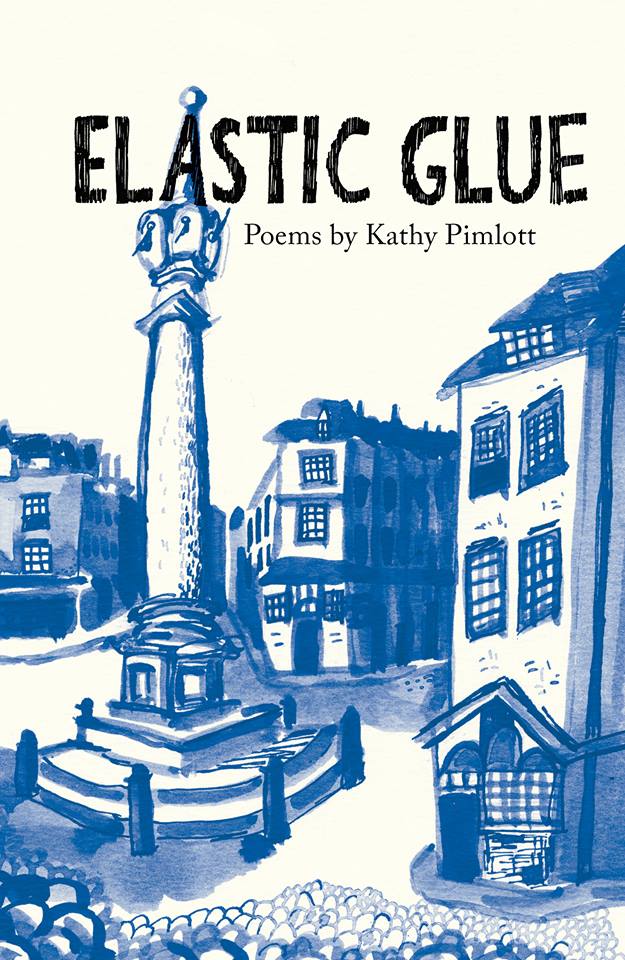
Says on her website ” My second pamphlet with the Emma Press, Elastic Glue, was published in February 2019. This follows Goose Fair Night which was published in March 2016, reprinted in 2017. I’ve been published in magazines including Magma, Mslexia, Brittle Star, The North,Poem, Under the Radar, Morning Star, Fenland Reed and South Bank Poetry and in anthologies, including Second Place Rosette (ed. Richard O’Brien and Emma Wright); Vaster then Empires (ed. Joy Howard); One For the Road (ed. Helen Mort); Urban Myths and Legends (ed. Rachel Piercey and Emma Wright) and Best Friends Forever (ed. Amy Key). On-line, I’m on The Stare’s Nest . And Other Poems and Proletarian Poet.
You can read interviews with me on Pam Johnson’s blog site Words Unlimited, in Nottingham’s ace independent newspaper Left Lion and on the TCS Network site (on being a late-starter poet).
I am currently a member of poetry workshop groups led by Mimi Khalvati and Richard Price.
I was born and raised in Nottingham but have spent my adult life in London, the last 35 or so years in the Seven Dials corner of Covent Garden, home of the broadsheet and the ballad. I’ve been a social worker and community activist, worked on a political and financial risk journal, in arts television and artist development. I currently earn my living as the administrator of a charitable trust which undertakes community-led public realm projects. I have grandchildren. I make a lot of jam.”
The Interview
1. What inspired you to write poetry?
I grew up surrounded by chatty people and playful language: intricately and wittily rhyming songs from the music halls and big screen musicals; mysterious family dialect words, aphorisms and catchphrases; children’s books, nursery rhymes, linguistic challenges from my auto-didactic salesman father – sell me this pencil, six words that mean big. Language was a playground. I was obsessed with Greek and Roman mythology and so got a feel for the meaning and power of metaphor quite early on. And then, oddly, around 10 years old, I saw a tv documentary about Jackie Kennedy which featured, and extravagantly praised, some poems she’d written as a child and I thought, I can do better than that.
2. Who introduced you to poetry?
I can’t pinpoint one person, it was just always there. Some of the first poetry I came across was probably the Rupert Bear cartoon in the Daily Express which featured a narrative in both prose and in verse. At junior school we would learn by heart and illustrate well-known children’s poems – Eleanor Farjeon, Percy Ilott, John Masefield are some I still remember almost 60 years on. At home we had an LP of the actor Robert Donat reading, which included Wordsworth, Shakespeare and Kipling among others. By the time I went to my academic secondary school and did Eng. Lit, I’d decided – unilaterally it should be said – that I was ‘good at poetry’ so was very happy to soak up the usual canon as well as making my own forays into the contemporary poetry of the technicolour, class-busting 1960s.
3. How aware were you of the dominating presence of older poets?
Almost all the poets I willingly studied were dead men. But as well as the taught canon, in my case, from Chaucer through to the Georgians and Eliot, The Mersey Sound was a huge presence. And musicians and songwriters like Dylan and Leonard Cohen, who were not old then, talked about poets, opening the door to contemporary American and, to some extent, to European poetry. I think I was more aware of the dominating presence of MALE poets. I found it harder to uncover contemporary women poets in the 1960s. Perhaps I should say here that I dropped out of poetry writing and reading for many years and only really re-entered when I was in my fifties. I am an older poet. Nowadays I would say that I sometimes feel disheartened by the dominance of young poets but mostly I don’t have any sense of being in competition with anyone. I just write what I write as well as I can, learning from whoever I can – old, young, dead or alive – and hope that someone will enjoy reading it.
4. What is your daily writing routine?
I don’t write daily as I have a job and family commitments (and a lot of telly and social media to keep an eye on). In theory I set aside a couple of mornings a week for poetry – that might be writing from scratch and /or editing or it might be poetry ‘admin’, like submissions or homework tasks or reading. If I’m writing new work or editing, I can usually keep at it for four hours or so at a stretch, interspersed with putting on another load of washing or a quick hoover round – dedicated writing time is an excellent spur to doing housework. I write new work in bursts – starting by hand and then moving to the screen once I’ve built up momentum, a certain hard-to-define weight. I keep a poetry diary where I write, last thing at night, about readings I’ve been to, the two poetry workshopping groups I’m part of, what I’ve been reading, what acceptances or rejections I’ve had and my notional plans – this sometimes turns into proto first drafts as does my sporadic non-poetry diary in which I moan about life, work and people. And I aim to read some poetry every day, leaving books and magazines lying around to ambush and encourage me.
5. What motivates you to write?
I think it keeps me sane, keeps me afloat. I think without it I would be in danger of vanishing. I want to make my children and grandchildren proud of me as a person in my own right/write. I want to document my own disappearing world.
6. What is your work ethic?
Very poor indeed. I work for money to pay the rent etc. I don’t see poetry as work, though often it’s very hard. I like to have a lot of fallow brain time. I think it’s important – as is being bored. I need to noodle.
7. How do the writers you read when you were young influence you today?
I have a great weakness, which I caught from that John Keats, for sonically sexy, luxurious poetry. I have to rein myself in. I admire the joyfully deft, witty rhyming and rhythms of the great songwriters – Cole Porter takes a lot of beating. I love the sardonic restraint containing despair and fear of Jane Austen. The Mersey poets gave me – young, provincial, working class – permission.
8. Who of today’s writers do you admire the most and why?
There are so many contemporary collections and individual poems, feted and obscure, that I love and admire but the writers that I admire most are those who contribute to poetry beyond their own (admirable) poems. I’m thinking of poets like Josephine Corcoran and her And Other Poems website – sadly just closed, but archived; Kate Clanchy and her phenomenal work with young refugees and migrants, resulting in Poems from a School; and Jacqueline Saphra who stirs our consciences to march and raise funds. But top of my list is Mimi Khalvati who is simply the best teacher there is – rigorous, passionate and steeped in poetry, only interested in ensuring that a poem is the best poem it can be. Working with her is exhilarating.
9. Why do you write, as opposed to doing anything else?
I do lots of other things. I make large quantities of jam. I manage public realm projects. I have family from 90 to seven as well as long-standing vital friendships to be maintained – all creative activities. I don’t paint or make music or shot-put because I have no native talent for these disciplines. I do have some facility and confidence with language, enough, inherently, to encourage me to look to get better at it through practise and study. And I love the doing of it. The psychologist Csíkszentmihályi, writing about his theory of ‘Flow’ expresses it like this “being completely involved in an activity for its own sake. The ego falls away. Time flies. Every action, movement, and thought follows inevitably from the previous one, like playing jazz. Your whole being is involved, and you’re using your skills to the utmost.” Of course, it’s not like that even a quarter of the time, but when it is like that, it’s unbeatable.
10. What would you say to someone who asked you “How do you become a writer?”
I don’t think you should concern yourself with becoming ‘a writer’. Just pick up that pen or turn on the laptop and confront the empty space. To become better at it, you have to keep doing it, read, read and read, share your work with generous, like-minded people who are also reading and writing, keep an open mind, be rigorous with yourself and accept that a lot of what you write might not be worth keeping but is worth writing through to get to the good bit.
Tell me about the writing projects you have on at the moment.
My second pamphlet, Elastic Glue, came out in February from The Emma Press. The poems are drawn from two specific places – the much commodified Seven Dials and Covent Garden, where I live, and an allotment site. They are ‘about’ change over time, what’s lost and what remains, quite angry but, I hope, leavened by humour. The poems I’m writing now are more personal, about ageing and experience. I will probably try for a collection this year, but I do like a pamphlet – so manageable both as a writer and as a reader, and usually a quicker process.
Wombwell Rainbow Interviews: Moyra Donaldson
Wombwell Rainbow Interviews
I am honoured and privileged that the following writers local, national and international have agreed to be interviewed by me. I gave the writers two options: an emailed list of questions or a more fluid interview via messenger.
The usual ground is covered about motivation, daily routines and work ethic, but some surprises too. Some of these poets you may know, others may be new to you. I hope you enjoy the experience as much as I do.


Moyra Donaldson
is a poet and creative writing facilitator from Co Down. She has published eight collections of poetry including a Selected Poems and most recently, Carnivorous, from Doire Press. Her awards include the Women’s National Poetry Competition, The Allingham Award, Cuirt New Writing Award, North West Words Poetry Award and the Belfast Year of the Writer Award. She has received four awards from ACNI, including the ACES award in its inaugural year.
Also widely published in magazines, journals and anthologies in both Europe, Australia and the USA. Her poems have featured on BBC Radio and television and on American national radio and television and she has read at festivals in Europe, Canada and America.
Other projects include a collaboration with photographic artist Victoria J Dean resulting in an exhibition and the publication Abridged 0 -36 Dis-Ease, and a collaboration with Wexford artist Paddy Lennon, Blood Horses, culminating in a limited edition publication of artworks and poems.
http://moyradonaldson.blogspot.com/
The Interview
1. What inspired you to write poetry?/Who introduced you to poetry?
I was introduced to poetry in the same way that I think most of us are, by the nursery rhymes my mother sang and recited to me as a child. Then, from an early age I was sent to verse speaking classes. This gave me a great appreciation for the sound and rhythm of poetry. I loved learning poems off by heart and being able to speak them aloud. My teacher was Miss Drummond, a formidable but splendid woman, graduate of the Guildhall School of Music and Drama. I learnt so much from her and kept up her classes into my late teens. So I grew up with a love of poetry, the music of it as well as how it speaks to the heart. It was my love for poetry that inspired me to try to write poems, I wanted to be able to speak to people in the way that poets spoke to me.
2. How aware were you of the dominating presence of older writers?
I grew up at a time when most of the poetry that was taught in school had been written by male poets and as I got older I became aware of a lack of female voices. When I went to university the canon seemed to be almost entirely male. This really knocked my confidence and had the effect of making me feel my voice was in some way invalid. At that time, women in NI didn’t have much of a voice in any aspect of society – and poetry was no different. I struggled to find any contemporary Irish female writers. I have spoken about this before, the influence of absences, and have found that it has been a common experience for women. Thankfully times are changing and female voices are increasingly present. In Ireland, Fired; The Woman’s Cannon movement has done much recently to address the idea that no women were writing and being published; they were – it was just that they were being ignored. So for me, when I began writing, the dominating presence was male.
3. What is your daily writing routine?
When I was younger and working full time in a job that had no connection to writing, and also raising children and coping with all the other things that life brings along, I would do most of my writing late at night when the house was quiet. There was no routine as such, I just grabbed bits of time when they became available. I also found the support of the Arts Council of Northern Ireland absolutely invaluable. Through Support for the Individual Artist awards, I was able to ‘buy’ time off work and have stretches of a few months where I could concentrate on writing. Now that I’m retired, in theory I have lots more time, but in fact I have no more of a routine than I ever had! I write when I have something to write about, either when an idea compels me, or I have a commission or deadline of some kind.
4. What motivates you to write?
I have always wanted to write. Even when I was at primary school I wrote stories and poems. I suppose I sensed, even then, the power of words and stories. I loved reading and I wanted to be part of that world, to speak to others, entertain them and weave my own magic. That urge has stayed with me. Even though my experience at university silenced me for a while, the desire was still there and I couldn’t not return to it. If I examine my motivation now, it’s more complex. Sometimes I feel as if I do it simply because it is who I am.
5. What is your work ethic?
I don’t know if I have a work ethic! Whilst thinking about this question I looked up the meaning of ‘work ethic’ and found it is defined as – the principle that hard work is intrinsically virtuous or worthy of reward. I suppose over the years I have just kept on writing and producing work, and that persistence is something that I am proud of, but I don’t know that it is intrinsically virtuous or worthy of reward. I do think that you have to be able to stick at things in order to improve, in order to have a chance of being any good at whatever it is that you are trying to do. All of my life I have been involved with horses and around people who compete in eventing and show jumping. I am in awe of the dedication and sheer hard slog that it takes to excel at this sport (and I’m sure all sports are the same). It’s not enough to be talented, you have to put in the hours as well.
6. How do the writers you read when you were young influence you today?
When I get a little jaded I find myself returning to the poets and poetry that I loved as I was growing up. I still can remember some of the poetry I learnt by heart and it is the musicality, rhythm and sensuousness of the language that I love. The sound of the poem, as much as the meaning. I am still influenced by that. Ballads, sonnets, the lusciousness of the language of the Romantics, the wit and intelligence of the Metaphysical poets – these are the roots of my love of poetry.
7. Who of today’s writers do you admire the most and why?
The poets I admire the most are those who write with heart as well as intellect. Poets where it is possible to sense in their work a deep engagement with what it means to be human. Just recently I’ve been re-reading Jane Hirshfield and Naomi Shihab Nye. I was blown away by Ocean Vuong’s first collection. I love Mark Doty’s work too. I find myself reading a lot of American poets. There are so many local poets that I also deeply admire, Damian Smyth, Jean Bleakney, Paul Maddern, Maria McManus, Ruth Carr – the list could go on and on – we have so many wonderful writers in NI.
8. Why do you write as opposed to doing anything else?
Sometimes I think I write because I can’t sing! Also, I don’t feel defined by my writing. I do lots of other things too, and sometimes I like to do nothing at all. I think that leads to a healthier relationship with the job of being a poet.
9. What would you say to someone who asked you ‘How do you become a writer’?
On one level, this is a very simple question. You become a writer by writing. All the usual instructions apply – read a lot, practice your craft, develop your skills and voice. On another level, I feel it is a lot more complex. If you want to be actually recognised as a writer, a lot of other things come into play – a willingness and ability to promote yourself; fashion; privilege; fashion; determination; the zeitgeist. So many variables, including a slice of luck.
10. Tell me about the writing projects you have on at the moment
My new collection, Carnivorous, has just been published by Doire Press. It was recently launched at the Belfast Book Festival and I have been lucky enough to have quite a few readings lined up for the book.
Last year my big project was Blood Horses, a collaboration with Wexford artist Paddy Lennon. I had been writing poems about horses, centred on the stories of three Arab stallions, the Byerley Turk, the Darley Arabian and the Godolphin Barb. These three stallions, imported to England in the eighteenth century, were the founding fathers of the Thoroughbred horse, and in fact every Thoroughbred alive today can have its lineage traced back to one of these stallions. When I was working on these poems, I came across Paddy’s wonderful, atmospheric paintings of horses. I got in touch with him and the outcome was an exhibition and limited edition book containing both paintings and poems. This is a rolling project which we are taking to a number of venues, including racecourses.
I am also currently working on a commission from Big Telly Theatre Company. I have worked with them before and love their innovative approach to theatre, so it’s very exciting to have this commission from them.
I find that after a new book is completed, there tends to be a bit of a fallow period, but I am just starting to get a few ideas popping into my head for poems, so I’m looking forward to having time to develop those.
Wombwell Rainbow Interviews: Clay Thistleton
Wombwell Rainbow Interviews
I am honoured and privileged that the following writers local, national and international have agreed to be interviewed by me. I gave the writers two options: an emailed list of questions or a more fluid interview via messenger.
The usual ground is covered about motivation, daily routines and work ethic, but some surprises too. Some of these poets you may know, others may be new to you. I hope you enjoy the experience as much as I do.

Clay Thistleton
has taught creative writing and literary studies in universities, community colleges and not-for-profit organisations for almost two decades. He is the author of Noisesome Ghosts (Blart Books, 2018): a collection of found poetry that investigates the phenomenon of ghosts and poltergeists that have the ability to speak or write. His current project, ‘Never Mind the Saucers’ (Stranger Press, forthcoming), examines documented instances of alien-human sexual contact. Along with his son Dylan, Clay lives in New South Wales, Australia with a fluctuating number of feral cats.
https://claythistleton.wixsite.com/claythistleton
The Interview
1. When and why did you start writing poetry?
I started writing poetry at age fifteen (in 1986). In that year I had first read Sylvia Plath, William Shakespeare and Dylan Thomas. I wish I could say that I wrote primarily because of their inspiration, and in many ways I did, but I really started writing poetry “for one endeavour” – as John Keating, Robin Williams’ character, puts it in Dead Poets Society (1989) – and that was “to woo women”. I have to say, however, that poetry’s facility to function in this respect is singularly disappointing.
2. Who introduced you to poetry?
I will always credit my mother for instilling in me a love of literature. Her particular influence in terms of poetry came about with her sharing of the poems of the Childcraft Poems and Rhymes anthology (1973) with me: it remained a favourite book throughout my early childhood. I was thus very pleased when my first full-length collection of poems, Noisesome Ghosts (2018), was published and my mother was able to hold a physical copy of it in her hands. Her remark that “the quality of the paper is really quite high” was not unsurprising.
3. How aware are and were you of the dominating presence of older poets traditional and contemporary?
As someone who has been fortunate to teach literary studies and creative writing for a substantial period, I am very aware of the presence of the European poetic tradition stretching back to Homer. I regard this tradition – for good or ill – as a dominant but not as a dominating force. It is, for me working as a found poet, very much source material. After all, as T.S. Eliot cheekily writes, do not “immature poets imitate [but] mature poets steal”? (1921, p. 114).
Writing as an Australian, however, I am also very aware of the presence of a sixty-thousand-year-old tradition of Indigenous songlines that weaves its way through this land and its peoples. This is a dominating presence. Only a few feet from where I am writing now a stone axe was uncovered when the house in which I live was under construction: I know that the old people were here, I know that I live on sacred land. While it is culturally appropriate for me not to know the songlines of the particular country on which I live, I have – and others can – study the songlines of others in texts that have been properly prepared through negotiated access with the song’s owners: the collection The Honey-Ant Men’s Love Song and Other Aboriginal Song Poems (1990) is just one example.
While it is only a very small part of my own collection, I am proud to reproduce therein the very first recorded words spoken by the Aboriginal people of the east coast of Australia to Europeans (2018, p. 452). On the twenty-eighth of April, 1770 at Botany Bay, New South Wales as Lieutenant James Cook,and the crew of the barque Endeavour were about to make landfall, the people of the Gweagal clan stood their ground in front of them and repeatedly called out the phrase, “Warra warra wai! Warra warra wai!” (Parkinson, 1773). In the Dharawal language of Botany Bay in which the Gweagal people spoke, the words warra warra wai mean “go away”.
4. What is your daily writing routine?
Procrastinate-procrastinate-procrastinate-wash-rinse-repeat-procrastinate-procrastinate-procrastinate-wash-rinse-repeat. At the end of the day I might say to myself, “Gee, I better get some work done tomorrow”; although I really don’t know what the “Gee” has to do with it except for it being half the title of a good poem by W.H. Auden (1979).
5. What motivates you to write?
The settling of old scores, the filling of the existential void, the gap in the literature, the speaking of the vaguely relevant to the partially disinterested, the surprising rabbit hole, the Vug under the rug (Seuss, 1974), the resurrection of the dead, the Canberra Theatre Trust Act (1965), the lack of anything good on television, the Trump administration, Edvard Munch’s The Scream, the fact that – as Toni Morrison (2013) notes – if you want to read a certain book and “it hasn’t been written yet, then you must write it” yourself.
6. How do the writers you read when you were young influence you today?
They’re yardsticks aren’t they – the writers that you read when you’re young – but I guess the trick is that you should not let oneself be brow beaten by those yardsticks.
I recall my son asking me once why I love books so much. My reply, that books are like old friends that one can return to again and again and each time they will have something slightly different to say to you seems to get at the heart of this question.
I teach with John Barth’s “Lost in the Funhouse” (1969) (a short story that I first encountered at age nineteen) and as such I often re-read it. It’s a bildungsroman (a story of development) and self-consciously so: there are at least three differently-aged narrative voices (one of them a teacher of fiction writing) and as I age I encounter different nuances in this story about writing stories: so much so that I often say to my students that if I ever were to be inconveniently hit by a bus they could still learn everything that is to be learnt about fiction writing simply by reading Barth’s story several times: but over an extended period of some years.
Given that I am supposed to be a poet, I guess by now that I should have found a poem that teaches everything about writing poetry but I haven’t. And I am sure that the majority of my readers would agree this statement.
7. Whom of today’s writers do you admire the most and why?
The President of the United States, Donald J. Trump, is clearly and unambiguously the most powerful communicator writing in the English language alive today. His voluminous contributions to fiction in the genres of fantasy and magic realism are continually astounding. He is faster than a legal bullet (e.g., Mueller, 2019), more powerful than one of his own circumlocutions and able to leap logic at a single bound. He daily creates golden alternate realities around him just by Tweet and the flourish of executive pen: and millions of people – of course, why wouldn’t they? – live with him in them and are showered by his bounty.
It is also pleasing to see that Mr Trump’s contribution to poetry – long neglected – is finally being properly recognised (Sears, 2017). Just recently I was delighted to hear the president free-associating extempore in a very Beat poetry way on the “the oranges … the oranges of the [Mueller] investigation” (qtd. in Holmes, 2019). His is such a unique lyricism: for as he so modestly states he does have “the best words” (qtd. in Guest, 2015); covfefe, of course – such a useful coinage – is one of them.
History is going to be very kind to Donald Trump. After all, his minions are going to write it. For those interested in an early but still insightful appreciation of the president’s modus operandi consult George Orwell’s Nineteen Eighty-Four (1949).
8. What would you say to someone who asked you “How do you become a writer?”
If you want to become a writer so desperately that you ask another writer – especially an obscure Australian experimental one – for advice on how to actually become a writer then I would suggest that you are:
(a) already well on your way to becoming a writer
(b) unquestionably a masochist
(c) both of the above.
Seriously, there are so many resources available these days that it’s an embarrassment of riches. Get yourself a copy of Julia Cameron’s The Artists Way (1992) to start or re-start the writing process, enrol in a creative writing course (if you live on the far south coast of New South Wales you can come to one of mine [Thistleton, 2019]) and if you still don’t know where to start, take the adorable advice of a much-admired former colleague of mine and sort of “vomit on the page for a bit … and then like … just clean it up”. This advice may seem frivolous but following it has earned my friend a PhD and an ascent to the highest levels of our discipline in major Australian and international universities. In her honour I aim to vomit on the page at least once every day. Sometimes Syrup of Ipecac or other emetics are necessary, but really all one has to do is to watch the television news to feel suitably bilious.
9. Tell me about the writing projects you have on at the moment.
I am heavily involved in the shameless self-promotion of my 2018 collection Noisesome Ghosts and am about half-way through my current project ‘Never Mind the Saucers’ (forthcoming from the UK publishing house Stranger Press): a second collection of found poetry but one that examines documented instances of alien-human sexual contact.
I am also in the exploratory phase of writing another suite of creative writing courses: this time to be delivered online. I very much miss teaching, yet I guess from their current level of interest that I couldn’t find you a single student who shares my enthusiasm for this sentiment. Perhaps they just collectively need a good, strong dose of Ipecac.
Clay Thistleton’s Noisesome Ghosts is available from Blart Books
Acknowledgement
I would like to thank Paul Brookes for his unstinting support of the work of our fellow writers through his unmissable Wombwell Rainbow Interviews. I am honoured to appear within these pages.
Works Cited
Auden, W.H. (1979). “Miss Gee”. Selected Poems. new edn., ed., Edward Mendelson, pp. 55-58. New York: Vintage Books.
Barth. John. (1969). “Lost in the Funhouse”. Lost in the Funhouse: Fiction for Print, Tape, Live Voice. pp. 69-95. New York: Bantam.
Cameron, Julia. (1992). The Artist’s Way: A Spiritual Path to Higher Creativity. New York: Jeremy P. Tarcher / Perigee.
Dixon, R.M.W. and Martin Duwell. (eds). (1990). The Honey-Ant Men’s Love Song and Other Aboriginal Song Poems. St. Lucia, Qld.: University of Queensland Press.
Editors of the Field Enterprises Educational Corporation. (1973). Poems and Rhymes. vol. 1 of the Childcraft How and Why Library. Chicago: Field Enterprises Educational Corporation.
Eliot, T.S. (1921). “Phillip Massinger”. The Sacred Wood: Essays on Poetry and Criticism. pp. 112-130. New York: Alfred A. Knopf.
Government of the Commonwealth of Australia. (1965). Canberra Theatre Trust Ordinance 1965. Canberra: A.J. Arthur, Commonwealth Government Printer.
Guest, Steve. (2015). “Trump: ‘I Know Words, I Have the Best Words’ – Obama is Stupid”. The Daily Caller. <https://dailycaller.com/2015/12/30/trump-i-know-words-i-have-the-best-words-obama-is-stupid-video/>.
Holmes, Jack. (2019). “President Trump Just Repeatedly Demanded to Know ‘the Oranges of the Investigation’”. Esquire. <https://www.esquire.com/news-politics/a27021746/trump-oranges-of-the-investigation-origin-father-germany/>.
Morrison, Toni. (2013). “Toni Morrison on Twitter: ‘If there’s a book you want to read, but it hasn’t been written yet, then you must write it.’” <https://twitter.com/tonimorrrison/status/395708227888771072>.
Mueller, Robert S. III. (2019). Report On The Investigation Into Russian Interference In The 2016 Presidential Election. 2 vols. Washington, DC: United States Department of Justice.
Orwell, George. (1949). Nineteen Eighty-Four. London: Secker & Warburg.
Parkinson, Sydney. (1773). A Journal of a Voyage to the South Seas, in His Majesty’s Ship, The Endeavour. ed., Stanfield Parkinson. London: Richardson, Urquhart & Company.
Sears, Robert. (2017). The Beautiful Poetry of Donald Trump. Edinburgh: Canongate Books.
Seuss, Dr. (1974). There’s a Wocket in my Pocket. New York: Random House.
Thistleton, Clay. (2018). Noisesome Ghosts. London: Blart Books.
Thistleton, Clay. (2019). “Clay Thistleton | University of New England – Australia – Academia.edu”. <https://une-au.academia.edu/ClayThistleton/Teaching-Documents>.
Weir, Peter. (director). (1989). Dead Poets Society. Touchstone Pictures in association with Silver Screen Partners IV.
Wombwell Rainbow Interviews: Charley Barnes
Wombwell Rainbow Interviews
I am honoured and privileged that the following writers local, national and international have agreed to be interviewed by me. I gave the writers two options: an emailed list of questions or a more fluid interview via messenger.
The usual ground is covered about motivation, daily routines and work ethic, but some surprises too. Some of these poets you may know, others may be new to you. I hope you enjoy the experience as much as I do.
Charley Barnes
is a Worcestershire-based writer, poet and lecturer. She currently splits her time between lecturing at Newman University, Birmingham, and at the University of Worcester. Occasionally, she manages to write some poetry.
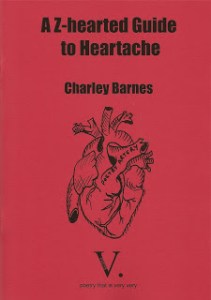
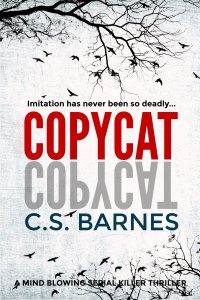
Charley’s debut pamphlet, A Z-hearted Guide to Heartache, was published by V. Press in July 2018 and the pamphlet deals with all manner of topics including love, food, and disability. Following this, Charley’s debut novel, Intention, was published by Bloodhound Books in January 2019. Her second novel Copycat and second pamphlet are forthcoming.
Recently she was awarded the Poet Laureateship for Worcestershire.
Website details:
Website: http://www.charleybarneswriter.com
Twitter: @charleyblogs
Instagram: @charleyblogs
Facebook: search for ‘Charley Barnes – Writer’
The Interview
1. What inspired you to write poetry?
It sounds very cliché but writing poetry has always helped me to work out how I think and feel about things. I find that when I start writing, I dig out things that I’ve been holding on to, and I shape them into something, and being able to do that felt and still feels like a real gift to me.
The second strand of that answer, subsequently, is that I like being able to make other people feel – which I suppose is what inspired me to start writing poetry that wasn’t about things that I’d experienced, but rather look at things that other people had.
2. Who introduced you to poetry?
My primary school teachers must have done but I can’t remember much beyond the compulsory William Shakespeare studies! I suppose the person who really kick-started everything was an Undergraduate lecturer of mine, who was leading a class on poetry. She wanted to show us all a different side of things. She came into the lecture hall one week and put on a YouTube clip of Byron Vincent performing poetry, and I fell in love. From then on, I wanted to write and I definitely some day wanted to perform.
3. How aware were you of the dominating presence of older poets?
I think anyone who is introduced to poetry through school is always uncomfortably aware of the presence of older poets, because that’s largely the poetry syllabus that’s available. Things might have changed, of course, but when I was studying poetry at A-level the most alive and kicking poet who we studied was Carol Ann Duffy (who I love, incidentally, but she didn’t exactly move me to get on a stage).
When I went to university things changed, slightly, as I’ve already mentioned above. But even then, that was one module across three years of studying! The older poets were inescapable and now, when I teach my own Undergraduates, I can still hear some of the same old school names being thrown about between them.
4. What is your daily writing routine?
I’m not convinced I really have one. When I’m writing something with an end-game – for example, a pamphlet or a new novel – then I’ll write compulsively. Generally speaking I try to do something every morning, because at least then I know I’ve achieved something writerly for the day. If I’m working on a project then I have this same morning-work mentally, but my work usually continues well into the evening (which isn’t a great routine to fall into but I’m sort of wedged in it now).
I was writing a new novel at the end of last year and I really wanted a set routine, but when it came to it I’d do my ‘I want to write this much today’ word count first thing, and then I had to, just had to, add more in the evening – which saw me writing until silly hours.
Maybe after this interview I can sit myself down and have a serious conversation about daily routines!
5. What motivates you to write?
Honestly, I’m a horrible person when I don’t – and that’s a large part of what keeps me writing, even when I don’t have anything to say. Fortunately for me, I often have something to say for myself (as my mother will vouch for). I tend to get my claws stuck in something and then I’m away. My first pamphlet, A Z-hearted Guide to Heartache, gave me space to touch on lots of things, so in bitesize chunks I was able to deal with: broken homes, disabilities, relationships, both good and bad. The subjects might seem broad, but I suppose, in having something personal to say about them, I felt spurred on to write the poems.
My second pamphlet, which is coming later this year, was very much motivated by personal issues again but ones that I know apply to many, many people. It’s called Body Talk and it discusses ‘food problems’ that people develop, that I have had brushes with myself (since dieting, and going in the opposite direction to comfort eating), and airing that kind of thing – having the freedom, even, to air that kind of thing – was a great motivator when writing.
6. What is your work ethic?
Intense – too intense, I think some would say. In an earlier answer I commented that I write compulsively when I’m working on a project; I suppose, across the board, I try to give everything ‘All’ all the time. It’ll backfire on me sooner or later and I’ll need a rest, but hopefully that time will be when I’ve got a few best-sellers out there and I can afford some downtime (a girl can dream).
7. How do the writers you read when you were young influence you today?
I think, as I’ve said above, I was introduced to a lot of the older poets and my formal education in poetry consistently relied on them, so they haven’t influenced me in a conventional way. The poets I read when I was in school influence me but in a ‘aim to be more accessible to everyone’ kind of way. It’s the poets who I read now – Neil Hilborn, Andrea Gibson (for performance) and the likes of Andrew McMillan and Alex Reed – who really have an influence on me, more so than anything I read as a child or teenager.
8. Who of today’s writers do you admire the most and why?
Oops – I’ve sort of started to answer this above. For stage performance, I could go on forever: Neil Hilborn always makes me write something; Andrea Gibson was one of the first performance poets who I fell for entirely because their style is cutting but beautiful and it always leaves me feeling something; Rudy Francisco has a wonderful spoken delivery and he’s such a personable poet, he could be delivering each piece just to you – the same applies to Birmingham’s own Casey Bailey. He has such a careful and controlled delivery, and I truly admire that in performance work.
On the page, I still love poets who make me exhale heavily when I’ve read their work – Alex Reed, Kate Daniels, Nafeesa Hamid – but I also love poets who are playing around with form, structure and even their content, so writers like Andrew McMillan, who I’ve mentioned, and Jenna Clake.
9. Why do you write?
Because I need to. Even if I was doing any other job in the world – something that doesn’t encourage creativity, let’s say, which my current jobs do – then I truly believe that I would still need to write. I think people often say that they write because they have something to say, which I suppose is a fair and reasonable answer, and I in-part agree with it sometimes. But sometimes I write because I don’t have anything in the world to say at all, and writing helps me to work that out as well.
I suppose the short and jovial answer to that would have been: Because I can’t afford a therapist.
10. What would you say to someone who asked you “How do you become a writer?”
I have no idea! I’m three published books in and I’m still not brave enough to call myself a writer. But I suppose if one of my students were to sit me down and ask, I would tell them to write – all the time. I’ve previously told students to treat writing like a muscle, that you exercise and build on until eventually it can hold more weight – or rather, churn out a better first draft – than it did to begin with. Reading is also an important part of it. Sooner or later, as a budding writer, you stop reading books like you’re a reader and you start reading them like you’re a writer: I like this, or I wouldn’t have done that, and that really works! So I suppose my answer is write a lot and read a lot – read things you know you’re going to hate even, just so you know what you don’t want to be doing.
Oh, you also need two readers in your life: one who doesn’t read at all and one who reads compulsively, because both of these people will give you the best feedback you could ask for, especially in your early I’ve-got-a-brilliant-idea drafts.
11. Tell me about the writing projects you have on at the moment.
Right now, I’m actually working on my second novel – that’s my main focus for the next month or so. I’m in the messy crossing things out stage but I’m making it a better book for it (I hope, at least). I’m also quietly planning a collaborative pamphlet with another poet friend too, so when the novel is out of the way I’ll be diving into that entirely. My brain is whirring away on ideas for another novel already but I have a one book at a time policy when it comes to writing, so I’m afraid that will have to wait a little while longer too – but it’s ready and waiting, so stay tuned.
Wombwell Rainbow Interviews: John M. Bennett
Wombwell Rainbow Interviews
I am honoured and privileged that the following writers local, national and international have agreed to be interviewed by me. I gave the writers two options: an emailed list of questions or a more fluid interview via messenger.
The usual ground is covered about motivation, daily routines and work ethic, but some surprises too. Some of these poets you may know, others may be new to you. I hope you enjoy the experience as much as I do.
John M. Bennett
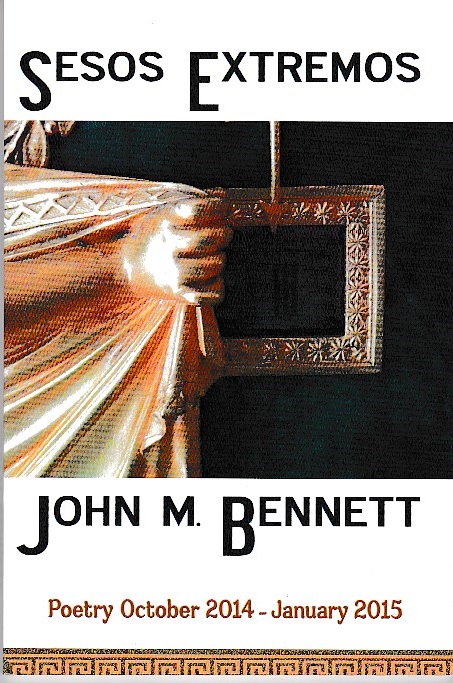
has published over 400 books and chapbooks of poetry and other materials. Among the most recent are rOlling COMBers (Potes & Poets Press); MAILER LEAVES HAM (Pantograph Press); LOOSE WATCH (Invisible Press); CHAC PROSTIBULARIO (with Ivan Arguelles; Pavement Saw Press); THE PEEL (Anabasis Press); GLUE (xPress(ed)); LAP GUN CUT (with F. A. Nettelbeck; Luna Bisonte Prods); INSTRUCTION BOOK (Luna Bisonte Prods); la M al (Blue Lion Books); CANTAR DEL HUFF (Luna Bisonte Prods); SOUND DIRT (with Jim Leftwich; Luna Bisonte Prods); BACKWORDS (Blue Lion Books); NOS (Redfox Press); D RAIN B LOOM (with Scott Helmes; xPress(ed)); CHANGDENTS (Offerta Speciale); L ENTES (Blue Lion Books); NOS (Redfoxpress); SPITTING DDREAMS (Blue Lion Books); ONDA (with Tom Cassidy; Luna Bisonte Prods); 30 DIALOGOS SONOROS (with Martín Gubbins; Luna Bisonte Prods); BANGING THE STONE (WITH Jim Leftwich; Luna Bisonte Prods); FASTER NIH (Luna Bisonte Prods); RREVES (Editions du Silence); NEOLIPIC (Argotist); LAS CABEZAS MAYAS/MAYA HEADS (Luna Bisonte Prods); BALAM MALAB (Logan Elm Press); LA VISTA GANCHA (Luna Bisonte Prods); THE SOCK SACK/UNFINISHED FICTIONS/MORE INSERTS (with Richard Kostelanetz; Luna Bisonte Prods); T ICK TICK TIC K (Chalked Editions and White Sky Books); THIS IS VISUAL POETRY (This is Visual Poetry); EL HUMO LETRADO: POESÍA EN ESPAÑOL (Chalk Editions; 2nd ed. White Sky Books); ZABOD (Tonerworks); TEXTIS GLOBBOLALICUS (3 vols.; mOnocle-Lash Anti-Press); NITLATOA (Luna Bisonte Prods); OHIO GRIMES AND MISTED MEANIES (with Ben Bennett, Bob Marsh, Jack Wright; Edgetone Records); SUMO MI TOSIS (White Sky Books); CORRESPONDENCE 1979-1983 (with Davi Det Hompson; Luna Bisonte Prods); THE GNAT’S WINDOW (Luna Bisonte Prods); DRILLING FOR SUIT MYSTERY (with Matthew T. Stolte; Luna Bisonte Prods); OBJECT OBJET (with Nicolas Carras; Luna Bisonte Prods); CARAARAC & EL TÍTULO INVISIBLE (Luna Bisonte Prods); LIBER X (Luna Bisonte Prods); CUITLACOCHTLI (Xexoxial Editions); BLOCK (Luna Bisonte Prods); THE STICKY SUIT WHIRS (Luna Bisonte Prods); PICO MOJADO (with Byron Smith; Luna Bisonte Prods); SOLE DADAS & PRIME SWAY (Luna Bisonte Prods); OLVIDOS (Luna Bisonte Prods); SACARON NAVAJAS (Redfoxpress); AREÑAL (with Luis Bravo; Yaugurú); LA CHAIR DU CENOTE (Fidel Anthelme X); THE LUNCH THE GRAVEL (X-Ray Book Co.); BRAVÍSIMA RESEÑA (with Diana Magallón; Luna Bisonte Prods); TURNS IN A CLOUD (White Sky Books); YES IT IS (with Sheila E. Murphy; Luna Bisonte Prods); DE LA MEMORIA EL PEZ (with Lola López-Cózar; Luna Bisonte Prods); AMINIMA (with Richard Kostelanetz, Archae Editions); MIRRORS MÁSCARAS (Luna Bisonte Prods); VERTICAL SLEEP (Luna Bisonte Prods); SELECT POEMS (Poetry Hotel Press/Luna Bisonte Prods); THE WORLD OF BURNING (Luna Bisonte Prods), THE SWEATING LAKE (Luna Bisonte Prods), OLAS CURSIS (Luna Bisonte Prods), and SESOS EXTREMOS Luna Bisonte Prods). He has published, exhibited and performed his word art worldwide in thousands of publications and venues. He was editor and publisher of LOST AND FOUND TIMES (1975-2005), and was Founding Curator of the Avant Writing Collection at The Ohio State University Libraries. Richard Kostelanetz has called him “the seminal American poet of my generation”. His work, publications, and papers are collected in several major institutions, including Washington University (St. Louis), SUNY Buffalo, The Ohio State University, The Museum of Modern Art, and other major libraries. His PhD (UCLA 1970) is in Latin American Literature.
John M. Bennett
LUNA BISONTE PRODS, 137 Leland Ave., Columbus, OH 43214 USA
Phone: 614-846-4126, bennett.23@osu.edu, bennettjohnm@gmail.com
http://library.osu.edu/sites/rarebooks/avantwriting/
http://www.lulu.com/spotlight/lunabisonteprods
http://johnmbennettpoetry.blogspot.com/
The Interview
1. When and why did you begin to write poetry?
As a small child writing little notes before I knew how to write; it was a visual kind of writing. I had no idea it was “poetry”.
2. Who introduced you to poetry?
I have no idea. Maybe I invented it myself. It wasn’t until I was about 11 or 12 that I even knew there was such a thing as “poetry”.
3. How aware were and are you of the dominating presence of older poets?
Vaguely aware, but didn’t pay them no never mind. Now I am an older poet and dominate myself, most of the time. There are other poets, of all ages and times, who I enjoy reading and who are a joy to me.
4. What is your daily writing routine?
It changes every day; that is the routine.
5. What motivates you to write?
I have no idea. I HAVE to do it.
6. What is your work ethic?
Huh?
7. How do the writers you read when you were young influence you today?
I have no idea. Their voices mumble around in pieces in my sur-consciousness.
8. Who of today’s writers do you admire the most and why?
Too many to name here. In addition, the list would change every day.
9. What would you say to someone who asked you “How do you become a writer?”
Get lost.
10. Tell me about the writing projects you have on at the moment.
Too many to list; plus I don’t like to talk about what I’m doing until I’ve done it.
Wombwell Rainbow Interviews: David Clarke
Wombwell Rainbow Interviews
I am honoured and privileged that the following writers local, national and international have agreed to be interviewed by me. I gave the writers two options: an emailed list of questions or a more fluid interview via messenger.
The usual ground is covered about motivation, daily routines and work ethic, but some surprises too. Some of these poets you may know, others may be new to you. I hope you enjoy the experience as much as I do.


David Clarke
won the Michael Marks Award in 2013 for his pamphlet, Gaud (Flarestack), and was longlisted for the Polari First Book Prize for his collection Arc (Nine Arches Press, 2015). A further pamphlet, Scare Stories (V Press, 2017) was named a Poetry School book of the year. His second collection, The Europeans, was published in March 2019 by Nine Arches Press.
The Interview
1. What inspired you to write poetry?
Reading poetry! I chanced on a number of writers when I was in my teens, more or less by accident, and reading them made me want to write. They were people like Sylvia Plath, Thom Gunn, Philip Larkin, John Betjeman, R.S. Thomas – basically, the kind of poets that used to fill the shelves in provincial libraries in the 1980s. Having said that, after writing in my teens and early twenties, I then stopped writing at all until my late 30s. It took me that long to work out that I really did want to be a poet.
2. Who introduced you to poetry?
I think I basically did it myself. Poetry wasn’t taught much in school and nobody I knew read it. I do remember a cool young English teacher running a poetry writing group for a little while, but I’m afraid I never had a mentor.
3. How aware were you of the dominating presence of older poets?
Writing starts with imitation and we imitate the poets we love. In fact, I’m persuaded by Jan Wagner’s thesis (in his 2017 Poetry Society lecture) that imitation may be the source of original creativity. To paraphrase him badly, originality is failed imitation.
4. What is your daily writing routine?
I have a day job that is already very demanding, so my daily routine revolves around that. Writing gets done in short bursts of two or three hours at weekends or on train journeys.
5. What motivates you to write?
Pleasure.
6. What is your work ethic?
As I said, I have another job that takes up a lot of my time. I find I need to focus my work ethic there and let poetry be something I do because I want to, not because I have to. If I intended to make a career of writing, that would have to change.
7. How do the writers you read when you were young influence you today?
The people I admired then and still admire are the ones whose work has an unflinching quality to it. This is not to say they are heartless, but they have an honesty that refuses to look away from things that are uncomfortable. The German poet Gottfried Benn was someone I read in my early 20s and he remains an influence in that respect.
8. Who of today’s writers do you admire the most and why?
That changes all the time. At the moment, I’d say Sean O’Brien.
9. Why do you write?
Poetry is one of my ways to respond to the world, whether as a reader or a writer. Arguably, poetry is the last response the world needs now, and it would be far better to use my time doing something to help change the way things are. But I suppose that’s where vanity comes into it.
10. What would you say to someone who asked you “How do you become a writer?”
Read widely, share your work and learn to get the best from criticism, assuming you can find people generous enough to offer it. I’ve seen so many writers with the potential to create great poetry scuppered by their own inability to engage with constructive criticism.
11. Tell me about the writing projects you have on at the moment.
My new poetry collection, The Europeans, was published Nine Arches Press in March 2019. It’s the result of two years of thinking and writing about what it means to be English and a European in the wake of the EU referendum campaign.
 The Wombwell Rainbow