Wombwell Rainbow Interviews: Liz Brownlee

Wombwell Rainbow Interviews

I am honoured and privileged that the following writers local, national and international have agreed to be interviewed by me. I gave the writers two options: an emailed list of questions or a more fluid interview via messenger.

The usual ground is covered about motivation, daily routines and work ethic, but some surprises too. Some of these poets you may know, others may be new to you. I hope you enjoy the experience as much as I do.

Liz Brownlee

is a National Poetry Day Ambassador, a School Patron of Reading, and does readings and workshops in schools, performs at literary festivals and libraries etc., and organises poetry events.

Her other books are Reaching the Stars, Poems about Extraordinary Women and Girls, , Macmillan, The Same inside, Poems About Empathy and Friendship, , Macmillan, Apes to Zebras, An A-Z of Animal Shape Poems, Bloomsbury, and Be the Change, Macmillan.

poetliz@mac.com

Wombwell Rainbow Interviews

1. What inspired you to write poetry?

I’d been writing stories for my local primary school, and a friend suggested I should go on a writing course. I can’t drive, and when some time later she said she had to go on a creative writing course and would I like to go with her, I accepted. Then, when someone else we got to know there turned out to live near enough to give me a lift, she dropped out. Her creative writing enthusiasm was really a ruse to get me there (I have some very good friends).

The (luckily) excellent tutor said the first thing I wrote showed I was a poet. Subsequent writing did seem to confirm this, and I enjoyed it. I wrote my first children’s poem there about my son, who stuffed his pockets full of all sorts of things, which ended up in the washing machine.

Then the second friend asked me if I’d like to accompany her to Bath Uni for a course and gave me the list of courses to choose from. One was for children’s poets, run by children’s poet Mike Johnson, serendipitously on the same day and at the same time as the course she was doing. He sent off some of my course poems with his to poet anthologists and I was published (thanks, Mike!). In fact, that first poem I wrote was my second to be published. When my first poem was published, my mum gave me a box from her attic – it was called ‘Lizzy’s kiddy drawings and poems.’ I’d forgotten all about my earlier efforts!

2. Who introduced you to poetry?

Poetry was everywhere when we were little. There were always children’s pages in all the newspapers, with puzzles, cartoons, crosswords and poems. My first poetry book was called Jolly Jingles, read to my brother and I often by my mum and dad, and I still have it. Children’s annuals always contained poetry – Treasure Annual introduced me to Edward Lear’s The Pobble Who Had No Toes, who drank lavender water tinged with pink, and who lost all his toes swimming in the Bristol Channel – very glamorous and slightly unsettling to a child who was born in Bristol. R L Stevenson’s From a Railway Carriage was wonderful to charge around quoting – who could not fall in love with the rhythm of Faster than fairies, faster than witches/Bridges and houses, hedges and ditches! AND – my favourite poem read in childhood, Overheard on a Saltmarsh by Harold Munro, which still sends shivers up and down my arms.

At Grammar School, we had a wonderful English teacher (who is still alive), who read us delights to tingle spines and make us breathless, such as The Listeners by Walter De la Mare, and Tarantella by Hillaire Belloc. Other poets were introduced by the O and A Level curriculum.

3. What is your daily writing routine?

I get up. Have breakfast. Do some Tweeting and any blog work that needs done, and round about 11 when I have finally woken up after a coffee I start researching, or writing, depending what stage I’m at. It takes a while to get into the writing. Lots of false starts. Lots of deleting and starting again in a different form or style or pace or angle. If I’m deeply into a project of writing I will start that straight away and carry on, my husband comes home around 7, and I’m still at it, and I often continue through the evening, because once I have got going, I find it hard to stop. The final poem may not be the final poem. Sometimes it takes a few weeks or months of tweaking. Sometimes you just know that is it.

4. What motivates you to write?

Enjoyment.

5. What is your work ethic?

Write the truth.

6. How do the writers you read when you were young influence you today?

I loved animals and read a lot of animal books, Gerald Durrell, James Herriot, and lots of non-fiction facts about animals. I write a lot of animal poetry. But I also read a LOT of fiction, very eclectically, favourites being Aldous Huxley, Isaac Asimov, all Brontës, Jane Austen, John Wyndham, Franz Kafka, Heinrich Böll, J R Tolkein, Stephen King, Harper Lee, Madeleine L’Engle, Ursula Le Guin, Enid Blyton, J Meade Faulkner, Marjorie Rawlings (never read the Yearling again, too sad!), E Nesbitt, Alan Garner, C S Lewis … my parents did not censor anything. I made no distinction between adult or children’s books and read them both, and have done ever since. I think everything you read influences you and feeds into the rhythms in your mind that you can source to create.

7. Which writers do you admire the most and why?

I don’t admire anyone the most. How can you? People are so different, writers are so different, you read them all for different experiences. I can tell you my favourite books – To Kill a Mockingbird, Harper Lee (we read this at school, and my teacher let me keep my copy as she could see I was having hard time handing it back!), Welcome to the Monkey House, Kurt Vonnegut Jr, The Miracle Life of Edgar Mint, Brady Udall, Cancer Ward, Alexandr Solzhenitsyn, Time Must Have a Stop, Aldous Huxley, Jane Eyre, Charlotte Bronte, The Chrysalids, John Wyndham, Helen Dunmore and Bill Bryson always, and anything by Paul Auster, Tim Winton and Raymond Chandler, those spare prose styles I find delicious, I Robot, Isaac Asimov, oh, I can’t write them all – anything that makes me laugh.

Poets? Let’s just say I try and read everything I can get my hands on. Particular favourites, Ted Hughes, Stevie Smith, Leonard Cohen, Pablo Neruda. Children’s poets? I read them ALL. Lots are my friends. I have my favourites but I’m not saying.

9. Why do you write, as opposed to doing anything else?

I write because I was led to it as you can see from the answer above, but also, I am not allowed to drive, due to my habit of becoming unconscious fairly often. Which of course makes having a job fairly tricky. I have, since my writing career started, become much better, as I now have an assistance dog who lets me know when my blood sugar is falling, which it does frequently, quickly and without warning. I also have a blood glucose sensor implanted as well. This has revolutionised my life. I write poetry because my brain flits and poetry fits.

10. What would you say to someone who asked you “How do you become a writer?”

Read a lot. Write a lot. Go to a writing class. Never expect to finish learning how to write.

11. Tell me about the writing projects you have on at the moment.

My newest book, just out, is Be the Change, Poems to Help You Save the World. I was noticing and reading that children are worried about the continuous feed of worrying information about the climate crisis. They are powerless, and that makes them feel more scared. The poems in the book, which I’ve written with Matt Goodfellow and Roger Stevens, address most of the 17 UN sustainability goals, and each poem has little tips at the end, which give a child small ways of helping the climate themselves. Having something constructive to do helps with anxiety. And I believe that if we all pull together, we can save the world. Here is the last poem in the book:

Snow

Swirling slowly
in lilting flight,
as cold as stars,
the soundless white

of drifting feathers
spreading wings,
to sing the songs
that snowflakes sing,

of how small gifts
of peace and light
can change the world
in just one night.

>© Liz Brownlee

I’ve also just handed in a book of shape poems about people who have shaped the world – this is an anthology and my first project as an editor. I thoroughly enjoyed this process!

I’m busy writing for another few books, but it’s too soon to mention those – but it is true that I am never happier than when ‘ping’ I suddenly ‘get’ how to shape the words I want into a poem, or how to shape the words I’ve already written into a shape poem, or when I’m shaping poems into a book.

12. Do you do anything other than write children’s poetry?

I used to draw a lot. If I’m not writing I have strong urges to do something else creative – draw, sew, make something! But if I’m not writing, and even when I am writing, I run several websites and Twitter accounts. I have my own blog which I add to fairly often (http://www,lizbrownleepoet.com), and Poetry Roundabout (http://www.poetryroundabout.com), a website on which I post anything and everything to do with children’s poetry. It includes an A-Z of current children’s poets, a series of famous children’s poets and their favourite children’s poetry books at the minute, and I also post reviews, information for poets and people who love poetry, poetry news and competitions etc. I believe supporting children’s poets and poetry helps us all. Then there’s my Twitter – https://twitter.com/Lizpoet
I also post the blogs on the Children’s Poetry Summit blog (https://childrenspoetrysummit.com/) and run that Twitter account, https://twitter.com/kidspoetsummit
And last but not least, I walk my assistance dog, Lola.

Wombwell Rainbow Interviews: Neal Zetter

Wombwell Rainbow Interviews

I am honoured and privileged that the following writers local, national and international have agreed to be interviewed by me. I gave the writers two options: an emailed list of questions or a more fluid interview via messenger.

The usual ground is covered about motivation, daily routines and work ethic, but some surprises too. Some of these poets you may know, others may be new to you. I hope you enjoy the experience as much as I do.

Neal Zetter

Neal is an award-winning comedy performance poet, children’s author, and entertainer with a 25-year background in communication management and mentoring. He uses his interactive rhythmic, rhyming poetry to to develop literacy, confidence, creativity and communications skills in 3-103 yr olds, making words and language accessible for the least engaged whilst streeeeeeetching the most able.

Workshops & Performing

Most days Neal is found performing or running fun poetry writing or performance workshops in schools and libraries with children, teens, adults or families. He has worked in all 33 London Boroughs and many, many other UK cities. More challenging poetry projects have involved workshops for people with brain injury, mental health, drug and alcohol problems, offenders, those with learning difficulties, homeless, other special needs including not having English as a first language.

Neal also produces adult comedy performance poetry and has nearly 30 years of experience appearing at e.g. West End comedy clubs, the Royal Festival Hall, various festivals, in the centre circle of a League 2 football pitch (!) and even a funeral (!!). He ran his own spoken word-based comedy club (Word Down Walthamstow) 2009-13. Neal has compiled and hosted/compered shows with the likes of John Cooper Clarke, Attila the Stockbroker, Michael Rosen and shared bills with Harry Hill, Phil Jupitus, Mark Lamaar, Omid Djalili and more.

Books

Neal children’s comedy poetry books, all published by Troika, include:

For 6-13 year olds:

  • Gorilla Ballerina (A Book of Bonkers Animal Poems) – a collection of wacky poems about weird animals
  • Invasion of the Supervillains (Raps and Rhymes to Worry the Galaxy) – evil companion book to ‘Superheroes’ (below)
  • Yuck & Yum (A Feast of Funny Food Poems), with poetry pal Joshua Seigal
  • Here Comes the Superheroes (Raps and Rhymes to Save the Galaxy) – in the Reading Agency’s top 15 children’s poetry books
  • It’s Not Fine to Sit on a Porcupine – in BookTrust’s top 20 children’s poetry books
  • Bees in My Bananas – a Wishing Shelf Award winner

For 2-6 year olds:

  • SSSSNAP! Mister Shark
  • Odd Socks!

Due Sept 2020 and Sept 2021 for 6-13 year olds

  • When the Bell Goes (A Rapping Rhyming Trip through Childhood) – a semi-autobiographical poetry collection on the theme of childhood covering growing up, school and family life
  • Scared? (Poems from the Darker Side) – a collection of funny, and maybe a few more serious ones, about many aspects of fear

The Interview

1. When and why did you start writing poetry?

I wrote my first poem when I was six – a limerick which now appears in the intro to my first book, Bees in My Bananas. I always enjoyed making people laugh and have had an inbuilt sense of rhythm and rhyming for as long as I can remember. So I began writing poetry as naturally as some people learn a new language – there was no grand plan but I have never stopped writing poems since I was a tender year 2 student. And the poem?

There was an old lady from Hull
And she bumped into a bull
The bull said ‘Ow!”
Bashed into a cow
And the cow crashed into the wall!

Not a classic but Love Me Do was hardly the best Beatles song, just a fab start!

2. Who introduced you to poetry?

My Dad used to read to me in bed at night before I was able too. I especially liked the poems he read, the main two that stuck in my head were the classic Cat in the Hat by Dr Seuss and The Train to Timbuctoo from Margaret Wise Brown (Google it – it’s a great single-poem book as is the aforementioned ‘Cat’). Both were beautifully rhythmic with strong rhyming and contained many new and exciting fun words, some made up and some that made no sense to me at all – but that’s the joy of poetry and reading!

3. How aware are and were you of the dominating presence of older poets traditional and contemporary?

Great question! Let me answer it in parts. When I I was  a primary school child I wasn’t really aware of poets apart from Dr Seuss as mentioned in my earlier reply. I knew poems, but not so aware who wrote them.

In secondary school I studied Eng Lit to A Level and regularly had rows with my teacher over my frustration at studying Wordsworth, Coleridge, Gerard Manly Hopkins, Keats etc. I absolutely see they were fine poets but they didn’t speak to ME a teenager in 1970s London into punk rock, footy and left-wing politics. I needed to hear poems about those topics and the other things in my life. Of course she never agreed with me 😎.

(So, as I was musically inept, despite my love of it, I started to write song lyrics and worked with tune writers to construct songs In a (completely naff) local band (but we thought we were superstars). Bernie Taupin was my role model but I loved the Stones’ land Clash lyrics and Webber/Rice musicals.)

In my very late teens and beyond I started to write poems prolifically but I still could not name any poets of renown. My home-produced books (6) sold in less than three figures and that wasn’t enough as I needed to share my work, after all every poet is a communicator. I saw adverts in Time Out magazine for performance poetry clubs and comedy clubs in the West End and that’s where it all REALLY began for me. It was a scene and for the first time I got to meet and mix with other poets and learn how to produce the right kind of poems to entertain and engage an audience, as well as make them laugh. So, no longer in a vacuum, I compered for and performed with the likes of John Cooper Clarke (the Godfather of performance poetry!), Attila the Stockbroker, Porky the Poet (AKA Phil Jupitus) etc.

Nearly all the poets I’d met or read since my school days were older and, in 1989 when my performance career really started, I was very aware of their presence and influence – I looked up to them. Now I guess, 60 next week, I try to affect younger poets and those starting out in the same way: advising, encouraging and mentoring. And that’s something I really enjoy doing.

Maybe in 50 yrs time or less, my poetry will be as irrelevant to people then as the poets I studied at A Level were to me. And there will be nothing wrong with that. I get it!

3.1. What is the right kind of poem to engage and entertain?

One with a repetitive rhythm, strong rhyme and a chorus/repeated word/line. This works well with my children’s poetry (in class and on assemblies) and adult poetry (in clubs, at arts events etc). We call them ‘call and response’ poems in the trade or often I refer to them as ‘interactive’ and I should add the poems must be about a topic people can relate to in a voice and with words that speak to them.

4. What is your daily writing routine?

I don’t have one. I try to write at different times of the day, on different days of the week and in as many different places as possible. Doing that means there are no times I feel I am unable to write and that must be a good thing. I guess indie cafes are my favourite places but, as I don’t drive and travel by public transport, I do loads of writing on trains, tubes and buses. Other regular haunts are the British Library, Foyle’s Bookshop in Charing X Road and home of course

5. What motivates you to write?

I am very self-motivated when it comes to writing. I always feel I have something to say about things that other people will find interesting too. I am never stuck for ideas, have never experienced writers’ block and keep a long list of topics for future poems. I have written my next three books due out the next three Septembers am already planning more. And the ideas themselves come from keeping my ears and eyes constantly open and writing about what’s around me and my experiences e.g. people I meet, places I go to, things I hear on the news etc

6. How do the writers you read when you were young influence you today?

My influences are threefold:

The aforementioned Dr Seuss and Mary Wise Brown books inspired my rhythmic, rhyming and comedy poems. Other poets like Edward Lear and Spike Milligan did the same.

I have always had a love of music too as I explained so, as I used to write song lyrics it’s not surprising that my poems, as well as being very rhythmic and containing strong rhymes also have choruses and a strong use of repetition.

Finally, since before I could even read, I have had a love of superhero comics, especially Marvel. I used to look at the pictures when my brother collected them and when old enough to read myself I started avidly buying and collecting them myself and have never really stopped. In fact I bought this month’s new Marvel Avengers comic today. These streeeeetched my imagination, developed my vocab and taught me a lot about what was going on in the world around me e.g. politics, Vietnam Nam War, life/death, relationships, history, space and science etc. And of course this love of comics also inspired both my Superheroes and Supervillains poetry books. Keen comic fans will immediately spot some of the styles and influences from the 1960/70 Marvel and DC comics in particular. Without any doubt at all, if I never read these comics I would not have become a poet and author.

7. Whom of today’s writers do you admire the most and why?

As I read mainly Biggs, auto-biogs, social history, popular science and other non-fiction my book choices are theme-led rather than author-led so I have not got too many favourites. However I especially like Bill Bryson, Mark Kermode, Jon Ronson and Malcolm Gladwell as they all have a fantastic writing style and a passion for their subject. The last four books I read are Van Gogh’s Ear, The Radium Girls, Chernobyl and A History of the World in 21 Women with many Marvel comics squeezed in between.

The poets I especially admire are the ones that have been on the scene for many years like Michael Rosen, Brian Moses, John Cooper Clarke and Benjamin Zephaniah – you have to take your hat off to them for the quality and quantity of their output. I hope I achieve at least equal longevity as I certainly want to continue what I do until I leave this planet.

8. Why do you write, as opposed to doing anything else?

I write because I must. A poet is what I am not what I do. So, while I might be able to lose interest In other hobbies, jobs and pastimes, I can never give up being a poet.

9. What would you say to someone who asked you “How do you become a writer?”

Read, write, read, write, read, write adI infinitum. Like anything you wish to do well, the more you practise and immerse yourself in it the better you will get.
And write from the heart about what you love, like, dislike and hate – about what you feel and what matters to you – and you will produce your best work.

9.1. Why write children’s books?

I write poetry for children, teens and adults but, to date, have only produced children’s books. This is because I make my living performing and running workshops in schools virtually every day so the book buyers are there in front of me. Most days end with a book sale with children I have worked with wanting a memento of the day, signed and dedicated. Given the above my writing is certainly weighted to the younger market especially as, sadly, not many teens or adults want to buy poetry books, even if they enjoy listening to poems for their age group.

10. Tell me about the writing projects you have on at the moment.

In my biog you will see details of the next two books I have due in Sept 2020 and 2021, both written. I am working on my 2022 poetry book now (the title is a secret!) and am looking at both an anthology of mixed poems and an EY/KS1 book for the near future.

Wombwell Rainbow Interviews: Anne Tannam

Wombwell Rainbow Interviews

I am honoured and privileged that the following writers local, national and international have agreed to be interviewed by me. I gave the writers two options: an emailed list of questions or a more fluid interview via messenger.
The usual ground is covered about motivation, daily routines and work ethic, but some surprises too. Some of these poets you may know, others may be new to you. I hope you enjoy the experience as much as I do.

Anne Tannam

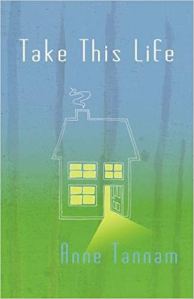
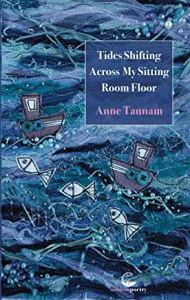
is a Dublin poet with two collections- Take This Life (Wordonthestreet 2011) and Tides Shifting Across My Sitting Room Floor (Salmon Poetry 2017). Her third collection is forthcoming with Salmon Poetry in summer 2020. Anne’s work has been widely published in literary magazines, journals and anthologies and has been featured in The Irish Times, RTE, UCD’s Irish Poetry Reading Archives and The Poetry Jukebox.
A spoken word artist, Anne has performed at festivals and events around Ireland and abroad including Electric Picnic, Lingo, The Craw Festival in Berlin and the International Poetry Festival in Kosovo. Anne co-founded the weekly Dublin Writers’ Forum in 2011, which provides a welcoming and inclusive space for writers of all genres, styles and levels of experience. Anne also offers practical and effective support for writers through her business Creative Coaching www.creativecoaching.ie.

https://www.salmonpoetry.com/details.php?ID=426&a=304


The Interview

1. What inspired you to write poetry?

Though I enjoyed poetry in school and really enjoyed it in college (despite the fact that at the time we had very little opportunity to study female poets as the canon was so heavily weighed in the other gender direction), I never dreamt I could actually write the stuff myself! Song lyrics had a big influence on me too, as I was raised on a diet of music from an older brother. I think it was my best friend who inspired me to write, when she gifted me the anthology ‘Poem For The Day’ edited by Nicholas Albe. From that moment I began to daily read poetry so that when eventually I plucked up in the courage to write when I turned forty, poetry was the natural choice for me.

2. Who introduced you to poetry?

I remember one professor in college who really opened me up to what poetry could achieve in such a short amount of time and space. I’d always sensed there was a magic to it, but he allowed me to see behind the curtain.

3. How aware were you of the dominating presence of older poets?

I came from a background of readers but absolutely no writers. The idea that I could actually myself, that it was within my power to take up a pen, or click on the keyboard and create a poem, was beyond the powers of my imagination. At the time, I wasn’t aware there were wonderful Irish female poets like Eavan Boland and Paula Meehan blazing the trail for me.

4. What is your daily writing routine?

I’m writing now for thirteen years and my routine has changed many times over those years. Like nearly all poets I also work to pay the rent so writing has always been a part-time activity. In my first year of writing I religiously wrote for an hour every day first thing in the morning, but now I write for half an hour a few times a week and try and give over Sunday morning to it. I also co-run a weekly writers’ forum on a Thursday evening so the writing gets to go dancing on a weekday night!

5. What motivates you to write?

The joy of playing with language and articulating what I need to say. There is nothing like the feeling of capturing complex emotional experiences in a few short lines. When the work is shared with others I’m hugely encouraged and motivated when people tell me that a particular poem names their emotional truth, and that they feel somehow heard too. It’s the universality of the emotional truth behind our very personal experiences that poetry captures so beautifully.

6. What is your work ethic?

Some weeks I’m very industrious and others not so but looking at it over a longer period of time I can say that I always turn-up in some form or other to the writing, and I’ve been faithful to my craft since I began. I’m always learning more about myself as a writer and learning from other poets who are masters of their craft.

7. How do the writers you read when you were young influence you today?

The poet that influenced me the most growing up was Patrick Kavanagh and his work still resonates with me, but there are so many amazing modern poets now clamouring for my attention, that I don’t pay too much attention any more to the poets I grew up with, apart from regarding them fondly when I come across them again.

8. Who of today’s writers do you admire the most and why?

That’s too hard a question to answer! I read across a wide range of genres, though of course poetry is always in the mix. I’ll cheat by sharing the last three writers I’ve read and why I admire them.

Helen Tookey ‘City of Departure’ (Poetry) – such a confident and accomplished writer and how easily she moves from a complex idea, to how that idea plays out in our ordinary lives.

Kevin Barry – ‘Night Boat to Tangier’ (Novel) – his incredible mastery of language which he uses like a keg a dynamite.

Lucy Sweeney Byrne – ‘Paris Syndrome’ (Short Stories) – a debut collection that I wish I could have read when I was young. Brilliantly written, it unflinchingly describes what it means to navigate the world when you’re not tied down with notions of ‘nice’.

9. Why do you write, as opposed to doing anything else?

Because I can’t draw! Seriously, I so admire artists who can express what it means to be human through visual art. I write because I discovered late in life that I could. I write because when the words are flowing, I feel aligned and there is no other feeling in the world like it.

10. What would you say to someone who asked you “How do you become a writer?”

It’s a cliché, but I’d simply say you become a writer by writing. Ignore the voice in your head that is holding you back and write.  Find your own voice by writing your way to where it’s been hiding. Write regularly and read all the time.

11. Tell me about the writing projects you have on at the moment.

I’m currently working on the second draft of my third collection ’26 Letters of a New Alphabet’ which will be coming out next summer.  I’m also working on a ten-month community project in Dublin called ‘Cabbage Quarter Conversations’ where I’ll be pulling together a series of poems which will be based on the fantastic stories I’m hearing from residents.

Wombwell Rainbow Interviews: Judith Brice

Wombwell Rainbow Interviews

I am honoured and privileged that the following writers local, national and international have agreed to be interviewed by me. I gave the writers two options: an emailed list of questions or a more fluid interview via messenger.

The usual ground is covered about motivation, daily routines and work ethic, but some surprises too. Some of these poets you may know, others may be new to you. I hope you enjoy the experience as much as I do.

Judith Brice

is a retired psychiatrist who has written poetry for over thirty years. She graduated from Harvard Medical School in 1971. Much of her inspiration in her writing derives from her work with her patients, her own experiences with illness, her love for nature, and her strong feelings about the political world. Her work has been published in the Pittsburgh Post-Gazette, the City Paper (of Pittsburgh), the Paterson Literary Review, Poesia, and The Lyric, among others. One of her poems is housed in the permanent archives of the Farmington Hills, MI Holocaust Memorial Center. Brice’s poems have also been anthologized in several successive years of Voices from the Attic, of Bear River Review, and in Before There Was Nowhere To Stand, a poetry collection focusing on the Arab-Israeli conflict. Her two most recent publications are Renditions In A Palette, and Overhead From Longing.

The Interview

1. When and why did you start writing poetry?

Of Bones, Boredom, and Butterflies
206 in all! I couldn’t learn them,
those bones in the body—
my nerves wrought, tangled
eyes awry, mind in summersaults:
mnemonics to memorize, to remember.
Learn
the cranium, its size, shape,
its foramina, the arteries.
Swot,
the sacrum, its nerves, their actions.
On Old Olympus Towering Top, A Finn
And German Viewed A Hop…
This, the mnemonic for the Cranial Nerves,
in full triumphant order from I to XII:  beginning with
Olfactory nerve, proceeding then to Optic— its escorts, the
Oculomotor, Trochlear, Abducens, and Facial nerves,
followed finally by Glossopharyngeal,
then Vagus nerves, (each with their vagaries)
until lastly the Accessory and Hypoglossal
to complete the dozen!
For a second I’d made it!
S-two, three, four keeps your rectum off the floor…
My rectum, your rectum, whose rectum?
Without ‘em, do you wreck ‘em,
these sacred, sacral nerves of the back?
Memory for facts failed
during those indecorous, infinite, hours.
Anatomy and workings of mind, my interest—
but to be a doctor, I had to bear
such tedium of body, limbs, and organs—
the shattering solipsism of study, its boredom.
Bone names blurred to Latin then back,
as my dense library head stooped low,
felt its eyes wandering, cross over scraggly notes.
Desperate, I was, for the tiniest pause
from books askew in stuffy stalls.
So much reading, so much studying, so little learned
that one day my stubborn
feet began to shuffle,
saunter the fall leaves— the path to home,
a promised reprieve of tidied room,
my quiet desk, its smooth surface.
Out of my bag, I fetched Gray’s Anatomy, a pen,
red pencil and clean note pad. The book
opened fast to “The Bones of the Hand.”
Truth had finally faced down my fate:
being a doctor— that mastery— only came
with meticulous torsions of mind.
My fingers grabbed the pen, wrote a word, two,
then my very first poetic line:
The venerable grief requests your company…
And so it was, that one sonnet later, two poems
in quick pursuit, followed by a full career taking care
of patients, slowly betrayed that beneath
a rough chrysalis of medical training
and a lonely fall day
were butterflies of poems waiting to fly.

2. Who introduced you to poetry?

My Sixth-grade teacher, Mr. Sheldon, read poems to us in the ten-minute break before lunch to “quiet us” in the transition from our previous activity. I loved it! Poetry mystified me, captivated me, the words, their blending jumble, their meaning. It was only when years later in school I read Sound and Sense, that I knew how truly enticed I was by how words bumped into each other, blended together, clashed, then rhymed together, sang stories together. I write of this in my poem, On the Grace of Poetry’s Arrival.

On the Grace of Poetry’s Arrival
That solstice night,
new words floated down,
like scintillant crystals,
delicate and magic petals of snow—
their cold to sizzle the ground
with sylvan sounds of enthralling warmth—
as each word-flake blended, fused to one
a single blanket to embrace us all
with a tenderness of heart—
winter’s shawl of song.
And in a second, from our moonlit sky,
crisp and curious letters
diamonds of stars
pierced the dark—a frisson
of frozen sparks to jolt the air,
to announce one quick skirring
of ideas—their skein of thoughts—
as clouds opened, transformed
my mind, sang loud of Neruda,
his loves, their chirrs, his beckoning.
Before that winter evening
I never knew the purity of poems
or stark whiteness of snow—
could never guess their deep,
their gentle kindness.

3. How aware are and were you of the dominating presence of older poets traditional and contemporary?

I am always, with each word I write, aware of previous writers—their use of rhyme, meter, metaphor. Their skill in slipping from one subject to another yet holding fast to an image, a metaphor, a meaning. Such skill I love!

4-6 What is your daily writing routine? What motivates you to write? What is your work ethic?

I have no daily routine. Living with a chronic illness has denuded my life of “daily”, so I write when I can. I have no work ethic. I cheat time around its edges and sneak in my writing when I feel good. Writing is a gem I treasure.

I collect words, prompts, and lines from other poets and writers, from newspaper articles, from random thoughts and situations. And then when I am moved by something, I start writing. In fact, as I see how long it took me to write these answers, I realize that unconsciously I took these questions as prompts, and then just had to write the three enclosed poems in response, had to, there was no other way!

7. How do the writers you read when you were young influence you today?

I think back to many of the writers I read when I was younger, and sometimes will enclose a line of theirs, an odd word, the use of that word, into a poem. I have included lines or words from Emily Dickinson, E.E.Cummings, Robert Frost, for example and more modern writers as well such as W.S. Merwin, and Barbara Crooker

8. Whom of today’s writers do you admire the most and why?

My favorite poet is Barbara Crooker. I love her wonderful use of nature, her images, her ability to use words creatively and understandably and to slide easily from one metaphor to another, all the while creating one incredible packet of meaning and sound at the end of a poem. Amazing to me! I also love W.S. Merwin for his sparse use of words within a line, his ever-so meaningful use of lines within a poem often completely without punctuation. Maria Maziotti Gillan is another poet I admire tremendously for her down-home writing, which takes you right into a scene and evokes feeling within a poem in a deep and unique way.

9. Why do you write, as opposed to doing anything else?

I write because I have to write. I write because I love to write. I write because I love to express my feelings with these gems that people call words.

10. What would you say to someone who asked you “How do you become a writer?”

I would say, “read my first poem about Bones and Boredom”. I would say, read my third poem, “Ars Poetica: An Invitation”.

Ars Poetica: An Invitation
Grab your pen.
Check the hemlock branch
beyond the window ledge,
the squirrels chasing shades—
chasing seconds
after weeks of rain—
as they scamper through
the birch, its leaves,
laced close beside the fence.
Watch— you’ll catch the gentle
weave of light,
rays bending smooth,
to refract through
bark and branch, the needles,
their harlequin neighbor fronds.
Then, after scud of storm
has blown, has blustered by—
its rainbow, its dew drops
will be yours
to rescue in your hands,
savor safe in your grasp,
as you sit beside me,
settle your mind, and lift
your delicate wrist,
your fragile pen,
to write.

Read my second poem about Poetry Arriving—all written to the prompts of these questions, and then sit down, pen in hand, and write about what you are thinking about, really thinking about. You will be on your way.

Many thanks to the welcome force of nature that is G. Jamie Dedes for featuring me in her The Poet By Day interviews, also includes a link to a video of my half hour performance “Bibliomancy”.

Featuring Yorkshire Poet, Paul Brookes: Interview, Poetry Reading, and Writing in Yorkshire Dialect

Wombwell Rainbow Interviews: Brian Moses

Wombwell Rainbow Interviews

I am honoured and privileged that the following writers local, national and international have agreed to be interviewed by me. I gave the writers two options: an emailed list of questions or a more fluid interview via messenger.

The usual ground is covered about motivation, daily routines and work ethic, but some surprises too. Some of these poets you may know, others may be new to you. I hope you enjoy the experience as much as I do.

Brian Moses

has been a professional children’s poet since 1988.. To date he has over 200 books published including volumes of his own poetry such as Lost Magic: The Very Best of Brian Moses (Macmillan) and I Thought I Heard a Tree Sneeze (Troika), anthologies such as The Secret Lives of Teachers and Aliens Stole My Underpants (both Macmillan) and picture books such as Beetle in the Bathroom (Troika) and Trouble at the Dinosaur Cafe ( Puffin). Over 1 million copies of Brian’s poetry books have now been sold by Macmillan. Brian also runs writing workshops and performs his own poetry and percussion shows.   To date he has given over 3000 performances in schools, libraries, theatres and at festivals throughout the UK and abroad. He is also founder & co-director of a national scheme for able writers administered by his booking agency Authors Abroad. CBBC commissioned him to write a poem for the Queen’s 80th birthday and he was invited by Prince Charles to speak at his Cambridge University teachers’ day in 2007. His latest books include Spaced Out – an anthology of space poems (edited with James Carter and published by Bloomsbury) and two picture books Walking With My Iguana and Dragon’s Wood, both published by Troika.

websites: www.brianmoses.co.uk

https://childrens.poetryarchive.org/explore/?key=Brian+Moses

Blog:      brian-moses.blogspot.com

Twitter: @moses_brian.9181@twitpic.com

The Interview

1. What inspired you  to write poetry?

I was drawn to poetry through my enjoyment of the lyrics of rock music, particularly singer/songwriters like Bob Dylan, Joni Mitchell and the Beatles. The poetry I was offered in school made little impression on me at the time and it wasn’t until I picked up a book of poems by Liverpool Poets – Adrian Henri, Roger McGough & Brian Patten, that I realised that poetry could be fun, that it could speak to me in  a language that I understood and that it had relevance to my life as a teenager.

2. Who introduced you to poetry?

Think I’ve answered this in the above.

3. How aware were you of the dominating presence of older poets?

Very much aware. I read and read poetry by others once I started writing it myself and  it was what spurred me on. I wrote terribly bad imitations of other poets to start with and then suddenly began to find my own voice.

4. What is your daily writing routine?

If I’m at home, I often start ‘writing’ when I’m on an early morning walk with my dog. I live in the country and we are out in the fields and the woods. She pursues her agenda with rabbits and pheasants while I chase words round and attempt to capture them on a voice recorder.
Coming home I then transfer anything that might be useful to notebook or computer.

Mornings are best for writing but I sometimes do some more between 5 and 7 in the evening.

However, as a poet, I can write anywhere and everywhere – hotel rooms, trains, planes etc.

5. What motivates you to write?

I’ve been a professional poet for 32 years now and am motivated to write for performances. I need to keep them fresh and add new material when I can.
When you earn a living from poetry, money (or lack of it) is also a great motivator!

6. What is your work ethic?

I think I have a really positive work ethic – Over 200 books published and over 3000 performances of my poetry in the last 30 years are testament to that.

7. How do the writers you read when you were young influence you today?

They did when I first started to write myself, but not so much now.

8. Who of today’s writers do you admire the most and why?

There are many writers – for fiction it’s Carl Hiaasen who writes the most wonderful eco-thrillers which are amusing at the same time. I’ve always admired the poet Roger McGough for his wordplay in both his adult and children’s poetry. There are also a bunch of younger children’s poets who are making their mark on the scene and who’s work I admire.

9. Why do you write, as opposed to doing anything else?

Everyone needs to do something creative.  I began by trying to write songs and play the guitar. Quite soon I realised that I hadn’t got the motivation to practise enough and I gave up the guitar but kept on writing words which turned into poetry.

10. What would you say to someone who asked you “How do you become a writer?”

I would tell them not to underestimate how challenging it is, particularly if you want to make a living from your writing. There are so many distractions when you work from home and you need to set yourself targets. I still fail miserably at times but somehow ideas still come along and poems are written.

11. Tell me about the writing projects you have on at the moment.

At the moment I’m writing a series of 8 picture books for very young children. My wife is my co-author on this project. I’m also two-thirds of the way through my second novel for children (first one ‘Python’ was published a couple of years ago) and I’m putting together a new poetry collection. I also started up a blog for teachers 7 years ago and need to keep that up to date each week brian-moses.blogspot.com (http://brian-moses.blogspot.com/) If you’re a teacher, it may save you some planning time!

Wombwell Rainbow Interview: Sascha Aurora Akhtar

Wombwell Rainbow Interview

I am honoured and privileged that the following writers local, national and international have agreed to be interviewed by me. I gave the writers two options: an emailed list of questions or a more fluid interview via messenger.

The usual ground is covered about motivation, daily routines and work ethic, but some surprises too. Some of these poets you may know, others may be new to you. I hope you enjoy the experience as much as I do.

Sascha Aurora Akhtar

feels deeply connected to her ancestral roots in Lancashire, South Yorkshire and Pakistan. Born into a literary family, with writers of both fiction and poetry
represented, Sascha has been naturally drawn towards many kinds of writing.
Her first poetry collection was The Grimoire of Grimalkin (Salt, 2007), followed by 199 Japanese Names for Japanese Trees (Shearsman, 2016), the first of it’s kind a deck of Poetry cards with fine art Only Dying Sparkles (ZimZalla 2018), The Whimsy Of Dank Ju-Ju (Emma Press 2019) & #LoveLikeBlood (Knives, Spoons & Forks 2019).

Her fiction has appeared in BlazeVox, Tears In The Fence, The Learned Pig, Anti-Heroin Chic, and Storgy. Sascha has performed internationally at festivals such as the Poetry International Festival in Rotterdam, Avantgarde Festival in Hamburg, and Southbank Centre’s Meltdown festival in London, curated by Yoko Ono.

The Interview

1. What inspired you to write poetry?

I realize now, looking back that poetry was all around me in my home growing up. Books, people reciting it in conversation, writing it & I put pen to paper from age 7 onwards. The poetry itself though, I know see was a natural extension of myself & always came from a place of sorrow, anxiety, ill-treatment, depression, PMDD, so it was a source of great healing. Also, I have always read fiction voraciously. Fiction inspires my poetry, still. Later, I was greatly inspired by great lyricists & music, that remains true.

2. Who introduced you to poetry?

My family. I would say the very first poem I was exposed to was The Walrus & The Carpenter which every member of my family could recite from memory.

3. How aware were you of the dominating presence of older poets?

I wasn’t. I’m still not. I find no presence dominating. I believe all writers need to honour those who have paved the way for us. In this regard, I have huge reverence for many such as Sonia Sanchez, Geraldine Monk, Bernadette Mayer & many, many others.

4. What is your daily writing routine?

This involves many things in a non-linear sequence; writing in one of my many notebooks as a poem arrives. Completing or beginning new things on the computer. For example this week I wrote three short stories – I had no idea that would happen, but it needed to.

5. What motivates you to write?

My thoughts, sudden flashes, other writings of any kind, paintings, a piece of dialogue from a film, the response of others to my work & the fact that I cannot stop writing.

6. What is your work ethic?

If there’s writing to be done, I will do it, no matter what. I am a solo parent & that has given me a gift; the realization that time is very, very precious & it IS possible to write what you need if you focus – no matter how long you have. It could be 10 minutes. I don’t have the luxury of days yawning ahead of me with uninterrupted writing time, or retreats I can imagine myself going to. The work just has to be done. And that’s all there is to it.

7. How do the writers you read when you were young influence you today?

In my own personal experience, everything I loved when I was little or was loved by those closest to me ( my grandfather, mother, grandmother) has shaped me in ways I can’t even explain. As I mentioned, Alice In Wonderland was, is and will always be a huge influence on me. My mother had a copy for me before I was born and kept it for years. She gave it to me when I was 7 or 8.

8. Who of today’s writers do you admire the most and why?

I’ll be honest, I am a voracious reader, and I feel by naming writers I will leave out others. Especially since, I fall deeply in love with sequences of words in moments.

Out of the more recent fiction I’ve read I will say Jessie Burton is great. Susanna Clarke is sort of my literary hero. I adore David Mitchell, it must be said & am enamoured of the work of Lev Grossman and Deborah Harkness.

In poetry if you want to talk of poets I admire because of the power of their words & also what they have managed to achieve I would say Anthony Joseph is my biggest inspiration & also friend. I feel a kinship with poet Frances Kruk. Marianne Morris. Nia Davies. Emily Critchley. I admire Geraldine Monk. Kimberley Campanello, Rhys Trimble, Mamta Sagar, K. Satchidanandan. Many, many American poets some whom I’m not even sure are publishing anymore!  I mean here’s a strange thing. There was a poet named Andy Morgan in my M.F.A programme in the U.S. And there was one, just one poem he wrote that I couldn’t fully explain why I loved, but I asked him if I could keep a copy. That same poem has stayed with me for 15 years! I have days when one line from that one poem just plays in my head. He is a complete introvert. It is almost impossible to find his work. He has a lyrical quality that is powerful & quiet.

9. Why do you write, as opposed to doing anything else?

Because I have always done it. I have always come back to it, even when I was a young filmmaker & art photographer. Because it nourishes me. It heals me & above all, it is my way to connect with the world in a way I cannot because of my own psychospiritual make-up – sensory issues, social anxiety, general anxiety.

10. What would you say to someone who asked you “How do you become a writer?”

You can write, fill notebooks, diaries, pages & pages. Show others. Go to readings. Read everything & when you can answer that question yourself – you will ‘be’ a ‘writer’.

11. Tell me about the writing projects you have on at the moment.

My fourth collection of poetry is a 36 page pamphlet:  The Whimsy Of Dank Ju-Ju (https://theemmapress.com/shop/the-whimsy-of-dank-ju-ju/) was published in September 2019 by Emma Press (Birmingham). The title refers to my life-long interest in anything and everything to do with magic, ideas of magic, magical thinking et al. I taught a workshop about the relationship between poetry and magic at the Poetry School and will be teaching a 2 day one in the Summer of 2020. I believe poetry is a magical practice, and as poets embracing whimsy is the key.

My fifth collection is 76 pages I believe and literally, just was announced yesterday.  It is called #LoveLikeBlood (https://www.knivesforksandspoonspress.co.uk/product-page/love-like-blood-by-sascha-a-akhtar) and has been published by Knives, Forks And Spoons Press.  It incorporates language that I feel has emerged as we have developed digital consciousnesses through Social Media. It embraces rupture, fracture. It has anger in it & truth-telling. It has many references to songs, often with epigraphs from the songs as taking off points. The cover image is from my art photography portfolio when I shot exclusively on slide film, often cross-processing the film to get very particular tones & colours. The book is like that too. It has a specific tone.

Other writing projects include one more poetry collection forthcoming this year. ( I know it is ridiculous). A book of translations forthcoming in April 2020 on Oxford University Press, India. Two short story collections, and two novels. The fiction pipeline is longer term!

Thanks so much for this!

Wombwell Rainbow Interviews: Tolu Oloruntoba

Wombwell Rainbow Interviews

I am honoured and privileged that the following writers local, national and international have agreed to be interviewed by me. I gave the writers two options: an emailed list of questions or a more fluid interview via messenger.

The usual ground is covered about motivation, daily routines and work ethic, but some surprises too. Some of these poets you may know, others may be new to you. I hope you enjoy the experience as much as I do.

Tolu

Tolu Oloruntoba

is the author of the Anstruther Press chapbook Manubrium, and a full length collection forthcoming from Palimpsest Press. He has lived in Nigeria and the United States, and practiced medicine before his current work in project management. His poetry has appeared or is forthcoming in Pleiades, Columbia Journal Online, Obsidian, This Magazine, and the Canadian Medical Association Journal, and has been nominated for the Pushcart Prize.  He lives in Metro Vancouver.

Website link: http://tolu.ca/

His debut chapbook is Manubrium ( http://www.anstrutherpress.com/new-products/manubrium-by-tolu-oloruntoba ),

The Interview

1. When and why did you start writing poetry?

I started writing verse when I was 16, in my penultimate year of high school. Calling those early attempts “poetry” would be too generous because I began by modifying vinyl sleeve lyrics (Lionel Richie and the like) that I had hoped would impress a classmate of mine. When these proved inadequate for expressing the sentiments I envisioned, I tried to be more original by constructing verses of my own. My classmate remained unimpressed, but that ability to write things in verse stayed with me, and I found that I quite enjoyed it. I had never thought poetry was something I could do but at some point, I realized that this writing could be called that. Between that excitement, and the catharsis I didn’t know I needed, I started to write a lot between age 16 and 18. It was all written in notebooks, with new versions modified from the last, containing non-standard editorial annotations I still use when I write longhand, and it likely all atrocious to begin with, but I was on my way.

2. Who introduced you to poetry?

My Literature-in-English teacher, Mrs. Ukpokolo. I really enjoyed our in-class explorations of what poems meant, and what made them work.

3. How aware are and were you of the dominating presence of older poets traditional and contemporary?

From when I began to read literature, I was aware of the work of poets who were older older (in that they had emerged in about 2 generations before my birth), but who are still more contemporary than ancient. Some of these giants are still alive, including J.P. Clark, Wole Soyinka, and Femi Osofisan. I grew up in Nigeria, so my initial context, beyond Shakespeare, was mostly provided by these writers, and others who had been active around the independence struggles of many African countries. These included poets like Léopold Sédar Senghor, Gabriel Okara, Kwesi Brew, Okot p’Bitek, Birago Diop, Kofi Awonoor, Christopher Okigbo, and R.E.G. Armattoe, who had contributed much to the poetic ethos of newer African countries. One would rightly call their influence dominating, but new and vigorous germ lines are emerging from Africa and its diaspora.

3.1. What are these “new and vigorous germ lines” that are emerging?

One that comes to mind is the African Poetry Book Fund which, with their Brunel International African Poetry Prize and New-Generation African Poets chapbook series, introduced me to new voices like Warsan Shire, Safia Elhillo, Ladan Osman, Romeo Oriogun, Clifton Gachagua, and Nick Makoha. I also think of talented writers like Razaq Malik Gbolahan, Tiwaladeoluwa Adekunle, Ama Asantewa Diaka, Olukemi Lawani, and more poets than I can remember now. I see a lot of vibrant experimentation, the boldness to break free of handed-down conventions and tap into a peculiar vision of the truth, honest and evocative poetry, and an innovative embrace of new media emerging in several forms.

4. What is your daily writing routine?

I have “writing months,” when I write between 2-5 poems per week, most of them in snippets in my note app on the train, etcetera (since I work full time). I consolidate and type these out when I get home, after my daughter is asleep. Most other months (about half the year, sadly) I write about one poem in two weeks, in a very drawn out process. In those drier periods, I don’t have much of a “daily writing routine.” I know I should exert more discipline to make my output more consistent. Or do my project management emails at work count? 🙂

5. What motivates you to write?

That’s a good question, because the answer varies from day to day. My major motivations are the knowledge that it is something I am able to do; that it potentially has more permanence than my physical existence on this world; that I can connect, like others have with me, with those others who may have been waiting for just that thought, or challenge, or confirmation; and being on the trail of an idea that keeps me following poem after poem, investigating what I mean (usually when I am in a state of flow while completing a manuscript).

5.1. What do you mean by “investigating what I mean”?

I sometimes begin with thought fragments that, on face value, don’t seem to mean much. I have however come to recognize these fragments as outputs of my unconscious mind. From the computational power of the mind, notions, anxieties, observations, follies and wishes tend to coalesce into a pool you can draw from, if you’re patient. So I stay on the trail of thoughts and concerns that sometimes become obsessions, sometimes with surprising results. I know they say writing is not therapy, for example, but some of the insights I have achieved through and after writing some poems have brought me unimaginable peace. Through my poems I ask and answer questions, sometimes beyond what I consider the limits of my commandable intellect.

5.2. Please can you give an example of an idea that “coalesced” into a poem for you?

An example is a poem I wrote, called “Grove” (https://entropymag.org/new-poetry-from-tolu-oloruntoba/). I wrote it while I lived in a condo beside a busy road, that had a telephone pole close to my bedroom window that kept emitting a sound I could only describe as a dialtone. Although I had blackout curtains that also shut out some of the sound, the anxiety-indicing buzz was never far away. The sound of traffic, and that dialtone, even in an absolutely darkened room, gave me this:

In black light

the forest is an eyewhite fishbone grave,
we are bleached and all-pupil in its dark
and the curtains of the world do not hush
the dialtone traffic.

It somehow captured the other persistent drone in my head, which is what I was really writing about.

How do the writers you read when you were young influence you today?

They showed me the necessity of magic: things must mean more than they do.

I think of two poems of the same title by J.P. Clark (https://www.thebookbanque.com/literary/abiku-jpclark) and Wole Soyinka (https://zodml.org/blog/abiku-wole-soyinka#.XaOD3C-ZNQI), “Abiku.” These two treatments of mythos of early childhood deaths in southwestern Nigeria (possibly due to Sickle Cell Disease or other serious conditions) showed me, early, the possibility of viewing one thing in multiple vital ways.

Mabel Segun’s exegeses of Yoruba mythology and cosmology in fiction, D.O. Fagunwa’s tales of the fantastic, Kola Onadipe’s vibrant new worlds, and the magical realism of Ben Okri’s The Famished Road were early foundations of my view of what literature can and should do. A lot of my early efforts were actually split between fantasy and poetry, with poetry getting the upper hand, but with fantasy and idealism being underlying imperatives of my work.

6. Who of today’s writers do you admire the most and why?

It is difficult to pick just one, but it I had to, it would be the oracular, magisterial Yusef Komunyakaa. His poetry was, and remains, a call to action for me.

If I had to add more, I would add Kamau Brathwaite, for his grasp of the pulse and voice of the black Atlantic; Dionne Brand, for continually solving difficult theorems of language and meaning; and Pascale Petit, for the tenacity and inventiveness with which she remakes trauma into a vivid menagerie.”

6.1. Why “a call to action”?

The response to sublimity, beyond a sort of worshipful regard, is to approach it. We try to approximate (or if lucky, reinvent) that vision.

Take Komunyakaa’s ownership of the Epic of Gilgamesh in “Gilgamesh’s Humbaba was a distant drum.” It is not an “after” poem, it is a new thing.

Or the transporting imagery of “Fog Galleon.” The stronger the evocation, the stronger the response. I can practically see the fog in that poem, and I am there in the taxi beside the speaker. In response to the planetary scope of Komunyakaa’s poems, I ask myself what my own mythography, what my own archaeology is. His example (like that of the other poets that inspire me) is a call for me to do my own work, with the new vision I’ve been given.”

7. What would you say to someone who asked you “How do you become a writer?”

The answer, at this point, is probably cliché, but still true:
1. Read, copiously, for enjoyment and curiosity. It will develop your taste in writing, broaden your knowledge of what writing can do for (or to) a reader, what kinds of things have been tried, and what kinds of things you like (or don’t like) to read.
2. Have something to say (obviously)
3. Whenever you must communicate in writing, try to do it in the most inventive, yet honest, way you can
4. Your initial efforts will likely fall short of how you actually wanted to say what you wanted to say
5. Keep trying
6. Keep reading widely and studiously and keep refining your method as you develop your aesthetic / voice
7. Put some of your writing out into the world. Feedback, rejection, or obscurity, if they don’t destroy you, are another key ingredient, and reservoir of grit
8. Did I mention “keep trying”?

8. Tell me about the writing projects you have on at the moment.

I am about 10 poems into my fourth poetry collection, but I’m still trying to feel my way around. I don’t know what shape the  book will take yet, but I’m sure it will come to me over the next few months. I’ve also been translating a collection of Yoruba poems, written a hundred years ago, into English.

Wombwell Rainbow Interviews: Kayleigh Campbell

Wombwell Rainbow Interviews

Kayleigh is a Creative Writing PhD Researcher at The University of Huddersfield and is an Editorial Assistant for Stand Magazine. She has been published in print and online, including Black Bough Poetry, Eye Flash Poetry and Riggwelter Press. She was commended in the Geoff Stevens Prize. Her debut pamphlet, Keepsake, is available through Maytree Press.

https://www.kayleighcampbell.co.uk/

Twitter – @kayyyleighc

Keepsake

The Interview

1. What inspired you  to write poetry?

Typically I wrote prose growing up; I can’t recall actually writing poetry. But, one of my favourite childhood books is A Nest Full of Stars which is poems by James Berry. I love the cover art, I love the language, I love the structure of the poems. I remember not understanding them all, as I wasn’t used to poetry. Cut to second year of undergraduate when my creative writing lecturer Michael Stewart asked us to write some poetry. I immediately loved writing it and felt like it was the right genre for me. The majority of my creative writing class preferred prose, but I loved poetry. Then in third year I took Steve Ely’s (who is now my PhD supervisor) module on poetry and produced a small sequence of poems for my final project. I found that poetry worked best with my thoughts and feelings; I liked the freedom of it.

2. Who introduced you to poetry?

I bought A Nest Full of Stars from one of the book fairs in primary school, my first taste of poetry! But, Michael brought my attention properly to it and working with Steve really cemented my love for it. Since then, I’ve just immersed myself in the poetry world.

3. How aware were you of the dominating presence of older poets?

When I first started writing it, I guess I was in the university sphere and focused on my writing and the poets we studied – which were all part of the older generation but I didn’t think about it in depth. Now I’m a more established writer and part of the poetry/literary world, I’m very aware of the presence of older poets. This was made particularly apparent through my work with Stand Magazine. Many of the subscribers and contributors are of the older generation, as are the editors. Stand is a longstanding, reputable magazine and somewhat traditional, which explains the ties to the older generation.

4. What is your daily writing routine?

I suppose it would be incorrect to say I have a proper routine as such but, I guess I have fashioned one that works around my daughter Eliza’s routine. Throughout the day, If I have any ideas I will make a note of them and then when Eliza goes to sleep on an evening, I will sit and turn them into poems. This might not happen everyday of course, but I’m usually tinkering away on something. I like to write Haikus, so I try to write on of those at least weekly. When Eliza is in nursery and I have my own time, I have more dedicated period of writing. I typically do this at university or in some trendy cafe!

5. What motivates you to write?

It’s the feeling of working towards something creative and achieving something; I enjoy seeing a collection of poems emerge and then come together. During this time of PhD studies and early motherhood, writing poetry is important to me.

6. What is your work ethic?

I believe that it is not so black and white that if you work hard you will get what you want, but hard work and commitment is important. I’m organised with my studies and my writing, I work hard and keep going.

7. How do the writers you read when you were young influence you today?

They inspire me to write things worth reading. I remember reading The Handmaid’s Tale in Sixth Form and thought it was amazing, just captivating and stayed with me after I’d finished. I enjoy Margaret Atwood’s poetry too; Atwood has inspired me to take risks with my writing.

8. Who of today’s writers do you admire the most and why?

I very much enjoy Charlotte Wetton’s work; her voice is amazing and I like the way she describes scenes and feelings. Other poets I like are Rebecca Tamas, Liz Berry, Julie Irigaray & Greg Gilbert. In terms of fiction my go to writer is Ian McEwan – I think his writing is clever and absolutely absorbing.

9. Why do you write, as opposed to doing anything else?

I think a lot of people have hobbies and things they are just ‘good’ at, my partner Joe for instance loves Pokemon! For me, it’s writing. It just gets me and I get it. I find it therapeutic; a creative way of writing a journal perhaps.

10. What would you say to someone who asked you “How do you become a writer?”

I would say that you don’t necessarily have to ‘become’ a writer, more that you just are! I would just advise them to write, write and write. Find the genre that suits them the most and work at it. That’s not to say you have to limit yourself to one genre forever, it’s just part of the process of becoming the best writer you can be. Also, have confidence in yourself. One thing I have learnt is that you just have to involve and promote yourself.

11. Tell me about the writing projects you have on at the moment.

Well, my pamphlet Keepsake is taking centre stage currently! Keepsake is my debut pamphlet published by Maytree Press who have been lovely to work with. I have recently done a book signing at Huddersfield Waterstones and I’m reading at a Poetry Showcase, sponsored by the The International Centre for Contemporary Poetry, at The University of Huddersfield. Which brings me on to a big part of my life – my PhD. I’m on my way to finishing first year and recently passed my progression viva. The project is still under wraps at the moment – though it will involve monstrous women. And finally, I will be featuring in Butcher’s Dog Issue 12, so will be attending the launch of that!

12. Your collection is infused with “baby”, as in young people “cradling” and the hint of nursery rhymes “and they swam, and they swam.”

Yes, that’s one of the main themes, that’s a nice observation about the nursery rhyme!

13. Your poetry is very visceral.

Compared to my academic work, it’s very confessional and personal!

14. Would you say the narrator was you?

I would say most of the poems has me as the narrator, but some are more open to interpretation. One is narrated by a child (my daughter).

15. What appeals to you about confessional poetry?

I like the authenticity and poignancy of it. It’s about me, so writing it comes very naturally and it’s a very enjoyable process crafting the poems. It’s also therapeutic and reflective. I think readers like honesty, and to be surprised.

16.

not including the ones that lingered under her skin.

(From  He Touched Me Here)

At times the collection moves from horror images to suggestions of the sacred,

and the holy water came

(From Birthday)

Yes, interesting observation. I suppose it’s representing the trauma and dark times through the more horror orientated poems, whilst the suggestions of the sacred represent the transition towards healing. I’m not religious; I suppose the scared imagery is my own interpretation of those things.

17. Why do you think people should read your collection?

That’s a good question. I think other people’s lives fascinate us, and I think it’s good to hear the stories of others. Though this personal, confessional poetry I hope other mothers – or fathers – may read my collection and find comfort that their feelings are not in isolation. People hopefully will see the highs and lows of life; the anxious times, the happier times. They will see that you can heal after trauma. And they can read some contemporary, visceral poetry!


Wombwell Rainbow Interviews: Lannie Stabile

Wombwell Rainbow Interviews

I am honoured and privileged that the following writers local, national and international have agreed to be interviewed by me. I gave the writers two options: an emailed list of questions or a more fluid interview via messenger.

The usual ground is covered about motivation, daily routines and work ethic, but some surprises too. Some of these poets you may know, others may be new to you. I hope you enjoy the experience as much as I do.

Lannie

Lannie Stabile

(she/her), a queer Detroiter, often says while some write like a turtleneck sweater, she writes like a Hawaiian shirt. A finalist for the 2019/2020 Glass Chapbook Series and semifinalist for the Button Poetry 2018 Chapbook Contest, she is usually working on new chapbook ideas, or, when desperate, on her neglected YA novel. Works are published/forthcoming in Entropy, Pidgeonholes, Glass Poetry, 8 Poems, Okay Donkey, Honey & Lime, and more. Lannie currently holds the position of Managing Editor at Barren Magazine and is a member of the MMPR Collective. She was thrice nominated for Best of the Net 2019.

The Interview

1. When and why did you start writing poetry?

I started writing (fiction) in 3rd grade, but I didn’t try my hand at poetry until 6th. A student teacher had us all write poems on whatever topic, and I chose a lion. It was called “Long Live the King.” I didn’t think it was anything special, but everyone seemed impressed. So, I thought, “Huh, maybe there’s something to this.” From there, I wrote such number one hits as “Russian Spy” and “1-800-DOG-BITE.” As they say, a legend was born.

2. Who introduced you to poetry?

Somewhere along the way, I stumbled upon Shel Silverstein, and his was the first poetry I ever read. Shout out to “Hector the Collector.” But when I was 11 or 12, our teacher had us read and interpret “Ode to La Tortilla” by Gary Soto. I can still remember the dripping butter.

3. How aware are and were you of the dominating presence of older poets traditional and contemporary?

I wasn’t aware in the least. At the time, I was writing simply to write. The politics of the genre didn’t actually come into play until about a year ago, when I started submitting. I saw the same names over and over being published, and I wanted to be one of them. But then it dawned on me to ask why I was seeing the same names over and over again. Nepotism? Talent? Influence and reach? A combination? Breaking it down is too much hassle, to be honest. Ultimately, I’ve decided it’s a numbers game. Just keep writing and submitting. I mostly pay attention to “established” writers to read them or to learn from them. I don’t have the energy to feel inferior.

4. What is your daily writing routine?

It’s more like a daily reading routine. At any given time, I’m balancing 2-3 (maybe more) books. To write well, you must read well. I don’t force myself to write. I mean, sometimes I do, if I’ve committed to a 30/30, weekly prompt, or some other challenge. But, typically, I only write when inspiration strikes, and that’s more likely to happen if I’m immersed in others’ creativity. Curiously, I tend to read more fiction than poetry.

4.1. What inspiration does fiction give , that poetry doesn’t?

What comes to mind is when writers create unique characters, with complexities and idiosyncrasies. A girl obsessed with a Red Sox pitcher, a boy with a lightning scar, a teenager with a collection of Air Jordans. I love the minutiae. Because poetry tends to be snapshots of emotion, we don’t often get to develop the characters.

5. What motivates you to write?

Emotions. Misheard lyrics. Misread phrases. Writing challenges with poet friends. Knowing this is the one thing in my goddamn life that I am unequivocally and irrevocably in love with.

6. How do the writers you read when you were young influence you today?

When I was a kid, I read everything I could get my hands on: V.C. Andrews, Stephen King, Pat Conroy, Michael Crichton, and a lot of trashy romances. I would say most of it was “age-inappropriate,” if I believed in that sort of thing. So, basically, I was always reading above my level, subconsciously striving to grow. That definitely comes out in my writing. The way I play with new forms, experiment with new topics, challenge myself to be vulnerable. Mellencamp would be happy to know I’m young and improving.

7. Who of today’s writers do you admire the most and why?

Poetry: Sabrina Benaim, Dorianne Laux, and Chen Chen really strike a chord. They write about the human condition the way I wish I could. It’s unapologetic, vulnerable, raw, and somehow still kind of fun. Fiction: Sarah Waters, James, Baldwin (can he count as today?), and Tim O’Brien. Really, when I think about it, they have the same qualities as the poets I admire. They can take every day trauma and explain it beautifully. I also love Tomi Adeyemi, author of Children of Blood and Bone, but for a different reason. Her characters are well-developed and unforgettable. In fact, the princess, Amari, is one of my all-time favorite characters.

8. What would you say to someone who asked you “How do you become a writer?”

That’s an easy one. Write.

9. Tell me about the writing projects you have on at the moment.

I’m always working on something. To date, I have completed two chapbooks and two micro-chaps. In fact, one of the micro-chaps was recently picked up by Wild Pressed Books, so I’m really looking forward to its publication. But ideas are, at this very moment, floating around my head, and I plan on finishing another chapbook by the end of the year. I also have one-third of a YA novel written that I carefully avoid writing, but I imagine one day I’ll finish it.