Second Glance at ‘Deaf School’ | Matthew Clegg

Brian Lewis's avatarLongbarrow Blog

A year ago, I was sitting in the audience of a poetry reading at the Ted Hughes Poetry Festival (Mexborough). The gifted poet Raymond Antrobus had just described ‘Deaf School’ by Ted Hughes as ‘an assault on the deaf community’. I listened carefully for an explanation, but I don’t recall Antrobus offering one that day. In the interval I wanted to talk to someone about this episode, but it didn’t feel right, and an opening didn’t occur. I was disappointed: discussion might have been interesting. I later discovered that Antrobus had published a redacted version of ‘Deaf School’ in his collection The Perseverance. This version has power as an act of raw deconstruction, but the poem that follows it (‘After Reading ‘Deaf School’ by the Mississippi River’) is a considerably more nuanced and imaginative riposte to Hughes. In a review of The Perseverance, Martyn Crucefix states that he…

View original post 1,381 more words

Local Distribution | Brian Lewis

Brian Lewis's avatarLongbarrow Blog

if the weight in my bag has increased
then books are migrating

‘Lines That Echo’, Rachel Smith

At the corner of Bank Street and Scargill Croft the wheeled luggage stops moving. It takes a moment for the arm to grasp this, stretching and jerking. I scan the pavement for obstructions. It is difficult, I cannot bend, I find nothing. The pavement is clean and flat. I tilt forward, the luggage tilts forward, the wheels drag, then turn, I let go, straightening, the trolley slumps back into its bulk. Three strides, stop, repeat. I see the cobbles and the long drop and some bits of Crown Court at the end of the drop and I stop again and look back at where I started, 100 feet to the east.

Always, it is slow, going from door to door. I think back to when I started, the paper round on weekdays and…

View original post 2,337 more words

Meridian: The First Cut | Nancy Gaffield

Brian Lewis's avatarLongbarrow Blog

February 2016

In her long poem Drift, Caroline Bergvall says, “Eventually one comes to a point where being lost can signal a starting point.” She refers to this process as “to north oneself”. This statement is an accurate description of my own long poem, Meridian. I am following the Greenwich Meridian line along public footpaths and bridleways from Peacehaven to the Humber in order to investigate the way that landscapes are disturbed and reordered by history and memory. Meridian is a long poem about time, walking and lines: lines, both real and imaginary, in all their forms. It is also a walking practice, walking in the Wordsworthian sense of “a mode not of travelling, but of being”—a process that implicates both mind and body on equal terms. I want the shape of the poem to be determined by the rhythm of walking—the measure of the step to shore up the…

View original post 1,499 more words

‘Walking, observing, listening’: an interview with Nancy Gaffield and The Drift

Brian Lewis's avatarLongbarrow Blog

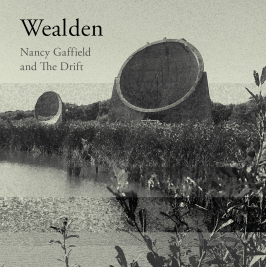
Earlier this month, Longbarrow Press published Wealden, a collaboration between poet Nancy Gaffield and The Drift (musicians Darren PilcherRob Pursey and Amelia Fletcher), inspired by the marshes, woodlands and shingle of southern Kent. This interview (conducted by Longbarrow Press editor Brian Lewis) took place in November 2020.

BRIANWealden is the first release from The Drift, and it also marks a new collaboration (with Nancy Gaffield).  How did you become aware of each other’s work, and how did the collaboration come about?

ROB:  Amelia, Darren and I had been making music together for a while as The Drift.  It was an ongoing experiment, but it was always focussed on the local landscape for inspiration — metaphorically, and literally.  Our experiences of the empty spaces of the marshes, the dense woodland and the deserted beaches were in our minds as we played.  We thought…

View original post 2,432 more words

The Craft Muscle | Fay Musselwhite

Brian Lewis's avatarLongbarrow Blog

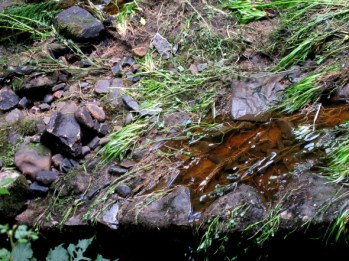
Rivelin Valley, Sheffield (photo by Mary Musselwhite)

It’s occurred to me lately how many years I’ve been honing and flexing the parts of my mind I write poetry with, and how transferable the craft skills I learned as a child and in early adulthood have proved to be. With this in mind, talking to someone who runs for fun has revealed shared strategies for sustained focus.

I’ve always read, and written a bit, but my childhood creative apprenticeship was in sewing, knitting, crochet, macramé, embroidery, patchwork, any kind of textile alchemy. By the time I was nineteen, I understood the rudiments of several processes, and felt at times like a stream of whirling ideas about colour, texture, line; with an urgency to try making the things I could see and sense in my mind.

Materials were begged, found or bought cheap: friends brought me interesting cast-offs, and charity shops were…

View original post 2,191 more words

In Praise of the Ordinary | Karl Hurst

Brian Lewis's avatarLongbarrow Blog

Disrupting the Lexicon Location Myth

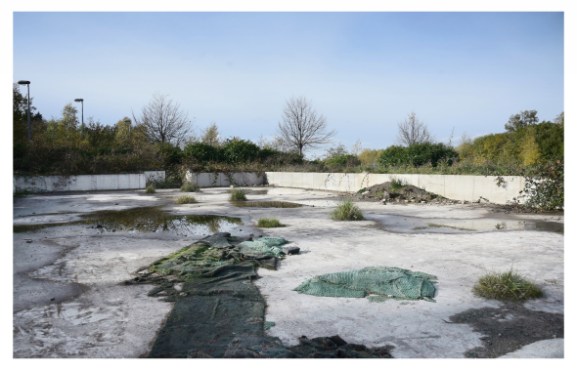
image 1

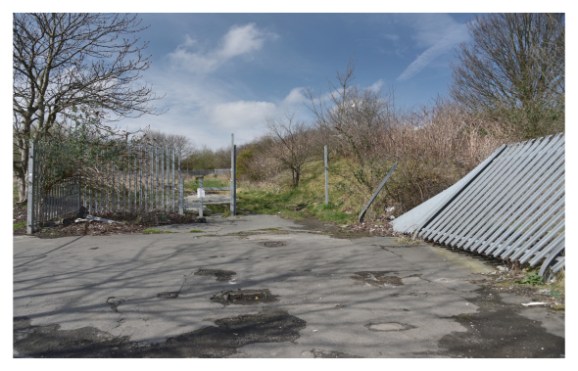
I recently received a rejection slip from a respected publisher that has resonated much more deeply than I had envisaged. The knockback didn’t bother me so much as the reasoning behind it. The body of work was a series of photographs then titled Recovered Landscapes: Reclamation of the South Yorkshire Coalfields. The publishers basically said that there is no or little commercial interest in these landscapes, that they are invalid, obsolete, without a criterion that fits the current publishing climate. Friends suggested that I drop the specific locational moniker and resubmit them as a more generalised way of treating landscape. But to do this would risk losing the essential value of what I was trying to achieve – namely, that something deep within the regional psyche was being lost through the treatment of post-industrial sites and the value system that surrounds them.

image 2

Having work…

View original post 1,374 more words

In Domicile: Against the Fallacy of Exoticism | Karl Hurst

Brian Lewis's avatarLongbarrow Blog

Karl Hurst, from the series In Domicile (2020)

Many people would consider that they know the English landscape like the back of their hand, and that it remains, at its crux, unwavering. Many believe they hold its constituent parts as a truism, its wayside flowers, its arable crops, its domesticity. Yet, as I hope to show in this short essay, this surety is often predicated on ideas of conquest, elitism, and a disregard of history.

The dandelion is no less exotic than the rhododendron, yet the latter is treated with reverence, the former disdain. The line between feral and cultivated is often a blurred one, co-dependent on time or cultural norms. Nowhere is this seen more clearly than with the rise of botanical culture in Victorian England. The need to dissect, name, classify, and manage species is often at the heart of our understanding of nature. Yet what are considered…

View original post 1,587 more words

Reach, at year’s end 2020 | Mark Goodwin & Nikki Clayton

Brian Lewis's avatarLongbarrow Blog

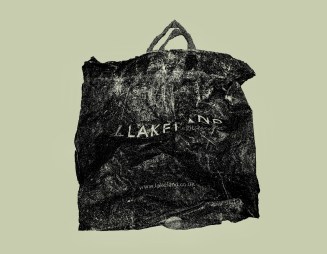
To fully experience all the dark details (& certain tiny spots of light), please view by clicking on a photo and then selecting ‘View full size’ (which can be found at the bottom of the pane in the lower right-hand corner of the window.)


pulled from
a bag a

way
in

tended
tangles to

speck


where heaven’s
ways meet

with earth’s

fibres &
light

grip


shelter’s thin
line of

hearth force a
sheen

smeared

over buried
past

pressed

under
ever

appro
aching

glass
y vast


light’s

tiny monuments
reach


in
tention

is un
pack

ing entang
lement’s

fibre-cares

sed
speck


travel’s
bubble of

sear
ch

star
ed

at by
to

wering’s

star
t


above a
feast of

shades
in a

branched reaching

that silent
tink

of a
last ex

tinct bird

perched


through a
head or

by

to right
or left

( or west or
east )

the face

of…

View original post 32 more words

First challenge of the New Year. #NationalSlavery and #HumanTrafficking Month artwork and poetry challenge. Have you made an artwork about either or both of these subjects? Have you written, unpublished/published about them. Please DM me, or tell me that you wish to submit and I will DM you. Alternatively, send a message via my WordPress.

From Her Own Mouth

When I was caught and put in chains,
they etched these wounds across my skin.
Whip-deep, the edges snake
from shackled neck to hobbled feet.

Then I was forced with all the rest,
a mass of human flesh bound tight
inside a narrow hold, the ship
dark as a mouth except it roiled

as I forgot my name, the land I held inside
tipped overboard, lost to the waves.
Weeks passed till land was reached.
I did not know the air, cold as these men

whose strength lay in the use of whips.
They walked me to a block,
as other men in their wide hats called out,
the price they said my flesh was worth.

It taught me this – I was not I but that –
a thing with breath they moved into a cart.
Then onto an estate where we, the mass,
looked up at master in his white house.

Just beyond, a forest of dark ghosts
was home to vermin and slave quarters.
An overseer crept across a path
to touch my breasts till they held shame.

My sex was sport to him as I lay down,
each child I bore sold off. Their cries return.
When I work in the fields, a soughing sound
comes back to me– I am. I am. I am.

-Jenny Mitchell

Slavery By Tim Fellows

-Tim Fellows (“Slavery” was published in 2019 by Glass Head Press. It is available from the author for a £5 charity donation – email timothyjfellows@gmail.com for details.)

Floating Coffins
(On the Rohingya Refugee Crisis)

I.

Because there are more atheists in heaven, a religious mob drove
both sinners and saints to the mercy of the sea. Stateless, they drifted
on land allegedly not their own. Landless, they drift on disputed
waters everyone claims to own. (If they can fly, not necessarily
on airplanes, they would, and risk getting shot down for not identifying
themselves properly upon entering an Air Defense Identification Zone.
Stateless, so no passports in their hands or pockets while wings flap
and bleed from their backs.)

Boats, floating detention centers of mothers cramped and cradling their babies
whom they can’t rock to sleep for lack of elbow room.

Boats, wooden vessels as unremarkable as their passengers are unsuspecting
of being deliveries of live meat to expecting brothels.

II.

And even among their own, dreamers not of mansions and luxury cars but of
meals three times a day were sweet-talked to a ride, sweet-talked for a ride,
sweet-talked and taken for a boat ride — by their very own.

Boats, among which Mohammad Tayub rode and immediately realized
the shattering of his dreams till his parents eked out the ransom.

Boats, pachinko balls filled with the dead and dying bouncing from one unwelcoming
island to another unwilling to add more suffering to its shores.

III.

(Centuries ago, in other parts, unwilling passengers
thought of the sea as land: blue and quivering but solid enough
to carry their feet. So they jumped overboard for their last sprint —
downward.)

-Karlo Sevilla ( this work previously appeared here )

From an imagined world where

Slavery

is good for you. All folk
should be chained,

Manacled to a mortgage,
to work, to an employer

a partner. Freedom denies
your human rights. Slavery

Teaches you the meaning of life.
Demands you act properly.

Constrains you to common sense,
sets out a wild world of imagination

creativity and invention. Freedom
is too wishy washy. Lock

and load your chains. Don’t let
loose and free your mind. Freedom

Is heavy, restricts, denies movement
of blood, bone and brain.

Become a slave and see our world
With new eyes, fresh perspectives.

-Paul Brookes

Bio And Links

-Jenny Mitchell

is winner of the Aryamati Prize, the Segora Prize, a Bread and Roses Poetry Award, the Fosseway Prize; and joint winner of the Geoff Stevens Memorial Prize 2019. Her poems have been published widely, and a debut collection, Her Lost Language (Indigo Dreams Publishing) is one of 44 Poetry Books for 2019 (Poetry Wales); and a Jhalak Prize #bookwelove.

A forthcoming collection, Map of a Plantation (IDP), will be published in April 2021.

Twitter: @jennymitchellgo

-Tim Fellows

is a poet and writer from Chesterfield. His poetry and politics are strongly influenced by his family and his upbringing in the Derbyshire coalfields.

-Karlo Sevilla,
from Quezon City, Philippines, is the author of the full-length poetry collection, “Metro Manila Mammal” (Soma Publishing, 2018), and the chapbook, “You” (Origami Poems Project, 2017). Recognized among the Best of Kitaab 2018 and twice nominated for the Best of the Net, his poems appear or are forthcoming in Philippines Graphic, Small Orange, DIAGRAM, Black Bough Poetry, Ariel Chart, The Wombwell Rainbow, Matter, Fevers of the Mind, Splintered Disorder Press, Months To Years, 3 Moon Magazine, and elsewhere. He is also one of the contributors to “Pandemic: A Community Poem,” Muse-Pie Press’s nominated poem for the 2020 Pushcart Prize.

Happy New Year (posted early as I recognise some of you live in different timezones) to all artworkers and writers who know me, and those whom I would love to know more about. Here is a rough list of some of the challenges coming up this year. Some of the challenges I like to be more spontaneous. Hope this helps you to plan to join some of them. You will be more than welcome to do so. If you are interested in taking part in any of these as an artworker or writer please DM me, or send a message via my WordPress site. Unpublished/published work more than welcome.

morning Light

Photo by Paul Brookes

JANUARY

1-30 January #NationalSlavery and #HumanTrafficking Awareness Month

14 January

Poetry At Work Day – #PoetryAtWorkDay

18 January

Blue Monday – #BlueMonday

20 January

International Day of Acceptance – #DayOfAcceptance

22 January

Celebration of Life Day – #CelebrationOfLifeDay

26 January

National Spouse Day –  #NationalSpouseDay

30 January – 6 February

National Storytelling Week – #nationalstorytellingweek

FEBRUARY

Black History Month

1-7 February: Children’s Mental Health Week

1-7 February: Tinnitus Awareness Week

1-7 February: Sexual Abuse & Sexual Violence Awareness Week

4 February: World Cancer Day

4 February: Time to Talk Day

8 February: International Epilepsy Day

22 February: World Encephalitis Day

MARCH

1-31 March Women’s History Month

1-31 March Ekphrastic Writing Challenge Month

1-31 March: Ovarian Cancer Awareness Month

1-31 March: Brain Tumour Awareness Month

2-7 March: Eating Disorders Awareness Week

3 March: World Hearing Day

8 March: International Women’s Day

11 March: World Kidney Day

16 March: Young Carers Day

21 March: World Down Syndrome Day

APRIL

1-30 April National Poetry Month

1-30 April: Stress Awareness Month

2 April: World Autism Awareness Day

7 April: World Health Day

19-25 April: MS Awareness Week

MAY

17 May: National Children’s Day

18-23 May: Mental Health Awareness Week

20 May: World Bee Day

28 May: Menstrual Hygiene Day

JUNE

1-7 June: Garden Wildlife Week

5 June: World Environment Day

8 June: World Oceans Day

21 June: Global Motor Neurone Disease Awareness Day

21-27 June: Learning Disability Week

JULY

1-31 July: Plastic Free July

28 July: World Nature Conservation Day

AUGUST

8 August: International Cat Day

12 August: International Youth Day

SEPTEMBER

1-30 September: Childhood Cancer Awareness Month

5 September: International Day of the Charity

7 September: Youth Mental Health Day

10 September: World Suicide Prevention Day

13 September: World Sepsis Day

OCTOBER

4 October: World Animal Day

9 October: World Hospice & Palliative Care Day

10 October: World Homeless Day

10 October: World Mental Health Day

11-17 October: National Adoption Week

NOVEMBER

1-29 November: Mouth Cancer Action Month 

14 November: World Diabetes Day

DECEMBER

2 December: The International Day for the Abolition of Slavery

5 December: International Volunteer Day

2-7 December: National Grief Awareness Week

10 December: International Animal Rights Day

10 December: Human Rights Day