Third Day – Seabirds And Seals
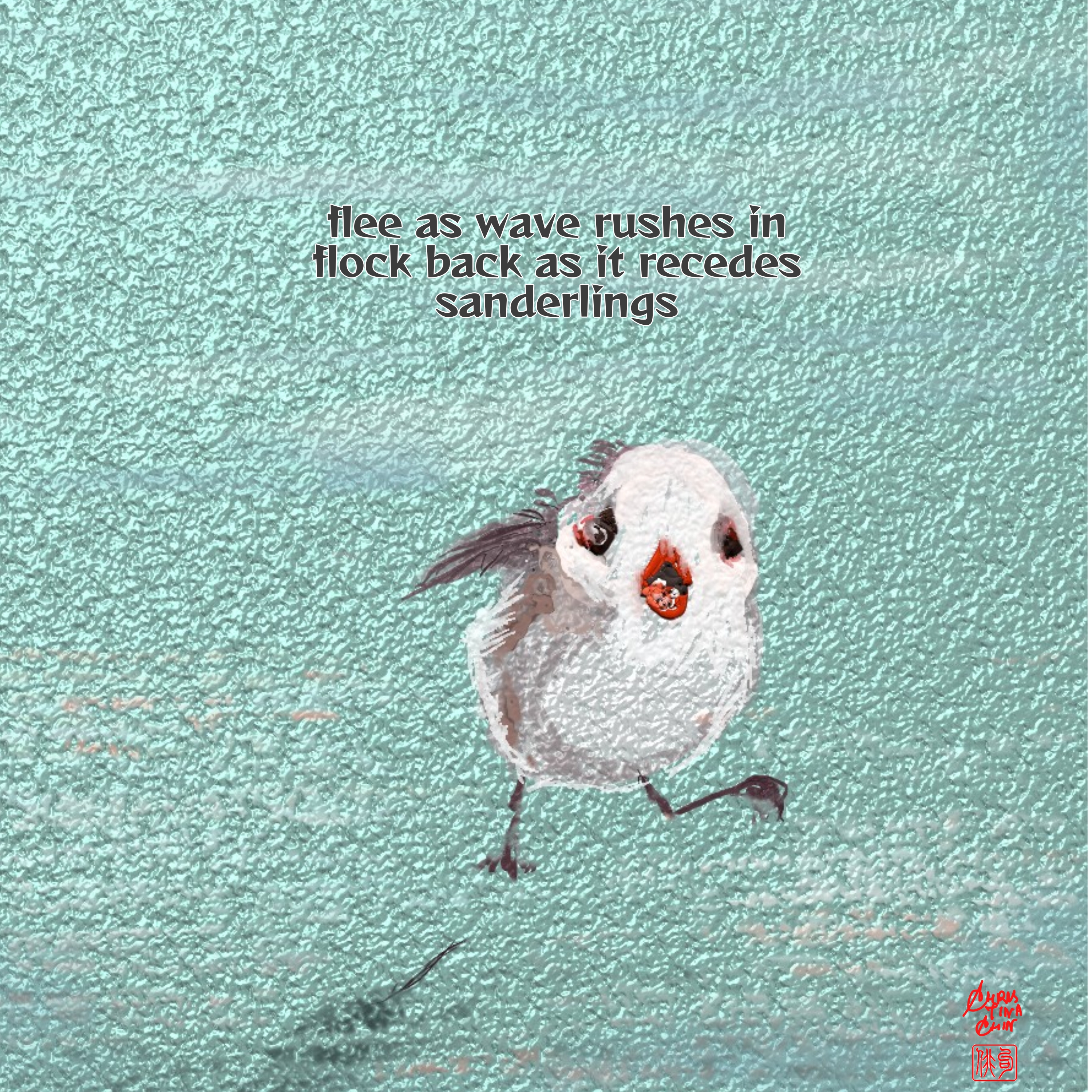
-Christina Chin
Leopard Seals
Strange music
strained through moaning ice
drifts over textured white
from the saw-edged
fliptop jaws of
cold killers,
penguin eaters,
who sing
to find love.
-Charlotte Oliver
Seagull Sequence
Wrong Turn
Seagulls flock
in snow coats
above the jewelled lake,
a wrong turn
inland
away from the sea.
High amongst clouds,
formations dance
without sound
flip up and down,
stop, turn around, split,
aim for invasion.
White wings fall
like tissue paper
on rippled waves.
Invasion from Brighton
Gallant geese evacuate,
driven out by snowy invaders,
seagulls squawk to claim their victory.
Mottled mallard and widgeon
scatter to sheltered bays,
concealed from flocks of snow-white birds
that hover above the storm-kissed lake.
Red-beaked moorhens veiled from view,
bide their time for militant gulls to rocket away
and evacuees return.
Water Harmony
Triumphant geese
return to fold,
wings spread,
joyful gabble.
Yellow croci spring
up in green,
pink camellias cluster
the circle of sun-washed water.
Coots and moorhens
boasting red and white beaks
chug along
creating ripples.
Mallard and widgeon
emerge from hiding,
a pure white
feathered duck in tow.
Published in Sarasvati Magazine 2017
Ingenue Magazine Issue 27 2019/20
Taxus Baccata – The Hedgehog Poetry Press 2020
– Patricia M Osborne
CORMORANT
Solitary,
on a perch of dark rock
eyes upon the sea.
I watched you poised likewise
Sea Raven, onyx-backed sculpture.
My Jurassic reflection
across the slow-swirling bay.
Only you, spear-faced talisman,
Had power to dive or fly.
Three realms at your spreading feet.
Crunch of pebbles at the end
of my scrambling descent-
clumsy in just one dimension,
and I looked again.
Just a mercury skin ripple
Beneath where you’d been.
-Polly Oliver
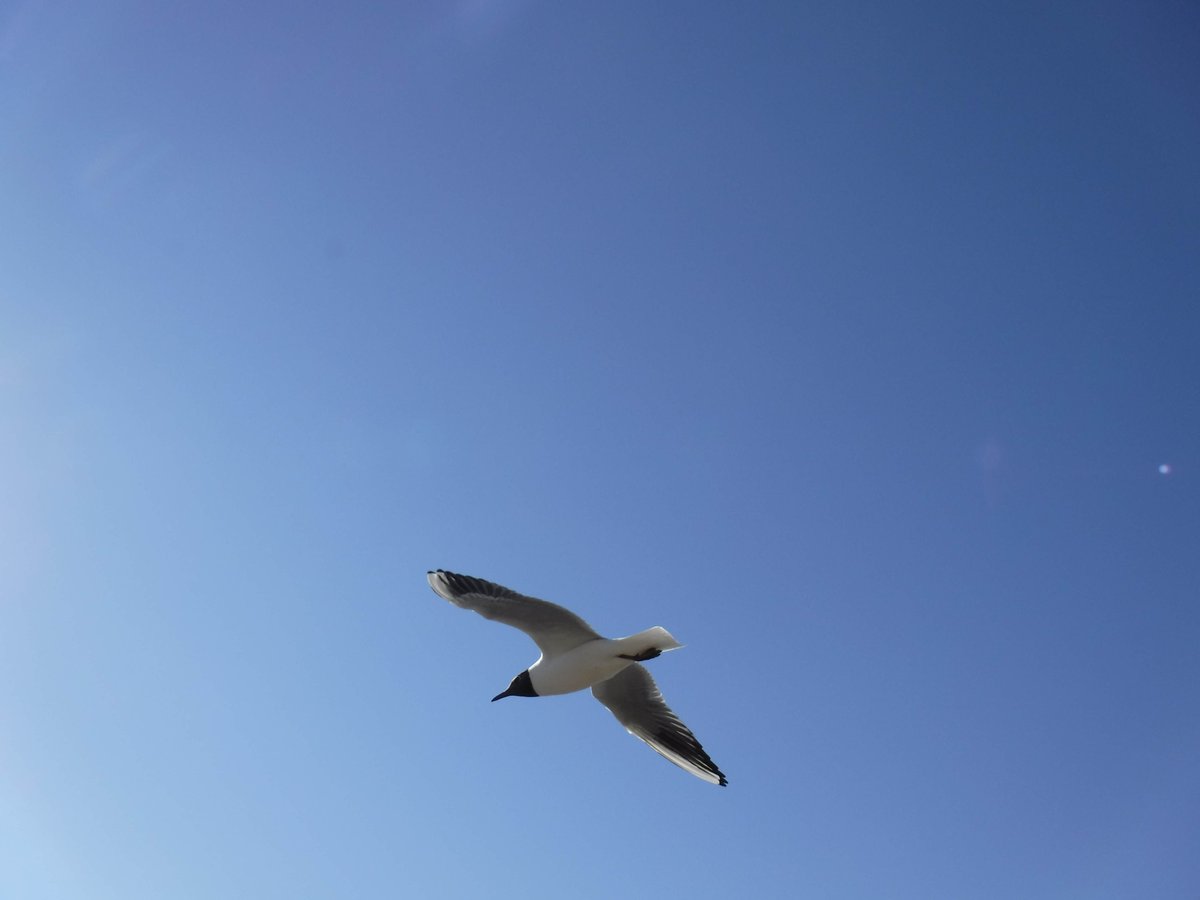
-Cath Barton “Black Headed Gull”
AIR RIDER
There is a certain way the sun strikes the sleek snow of a gull’s breast
turning in a flighty February sky that’s rippled with Northern sea shades
of ice blue, white-cap clouds, uncertain grey;
That, though miles inland, brings a cold flush
to a stagnant pool of being. Muddied with emotion
churned by rounds of murky interaction.
Change it says, is easy. Dip your wing-tip to the past,
Turn, beak to the wind – and ride it alone with exhilaration.
-Polly Oliver
PETREL
A sheen, spread for miles
across pristine marine,
Like a Starling’s back
sent from source,
An oil pipe
burning
in Iraq.
Saint Peter walks on water,
To spend a life upon wing
The Storm, by-named
just does this
miraculous
thing.
These birds cannot walk
they affect a kind of
shuffle. Support
themselves on Tarsi –
Greek island ? No
Foot-bones.
The name means ‘home lover’
like pigeons fired from traps
they return to nest
on the same cliffs.
Call to a chick,
an odd sound
like puppy’s
whine.
“What’s for tea mum ?”
Shrimps, squid, sand eels, sushi.
I’ve brought your favourite-
purple sail jellyfish.
Cousin to the Albatross
a wild-wind-wanderer;
Shearwater-brother
he’s a Manxman.
The Galápagos has a dark-rump,
The Réunion’s endangered.
The Snow’s pure white.
The Petrel is the world’s smallest seabird,
-John Wolf 26th July 2021
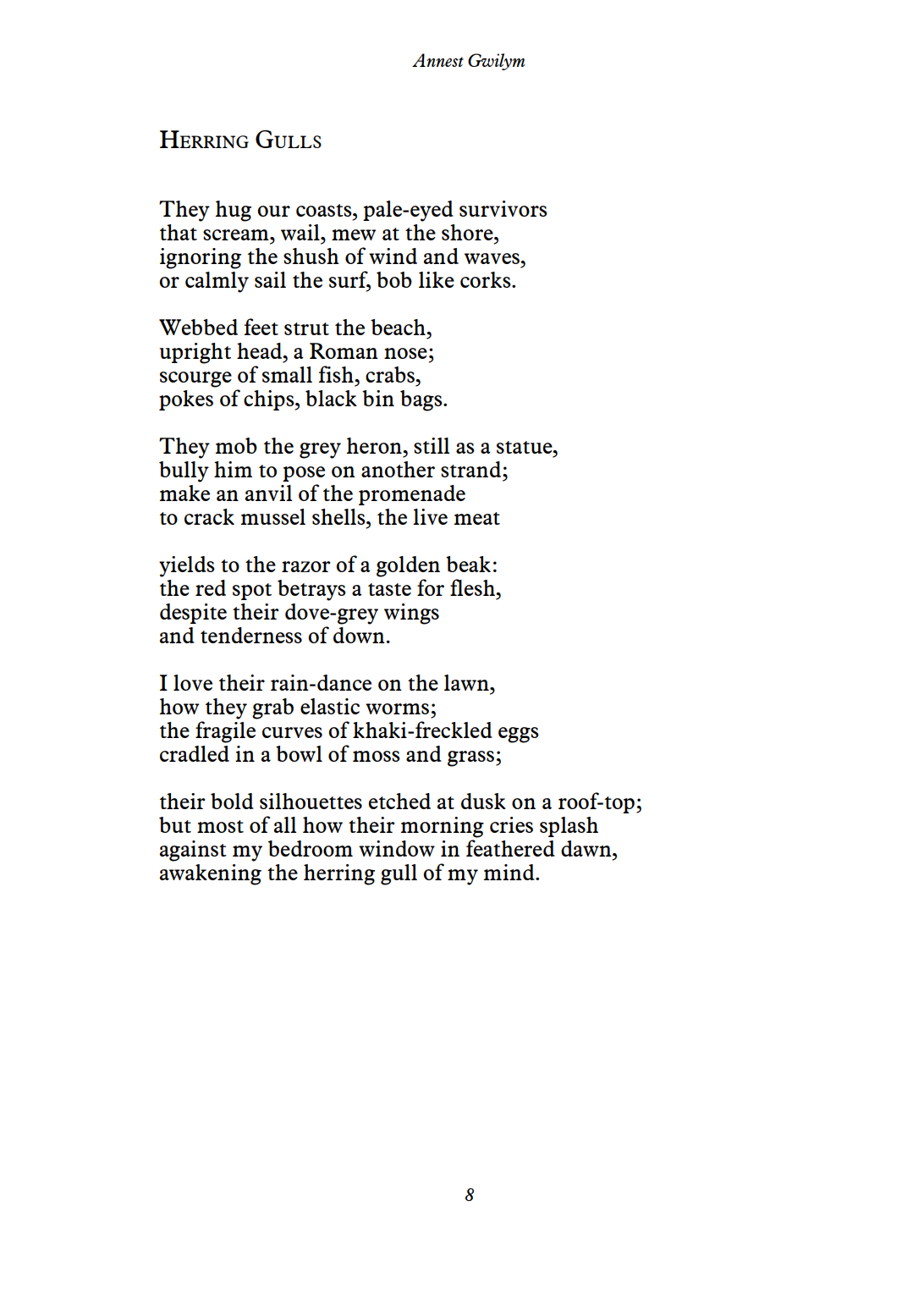
-Annest Gwilym (From her collection “What The Owl Taught Me”)
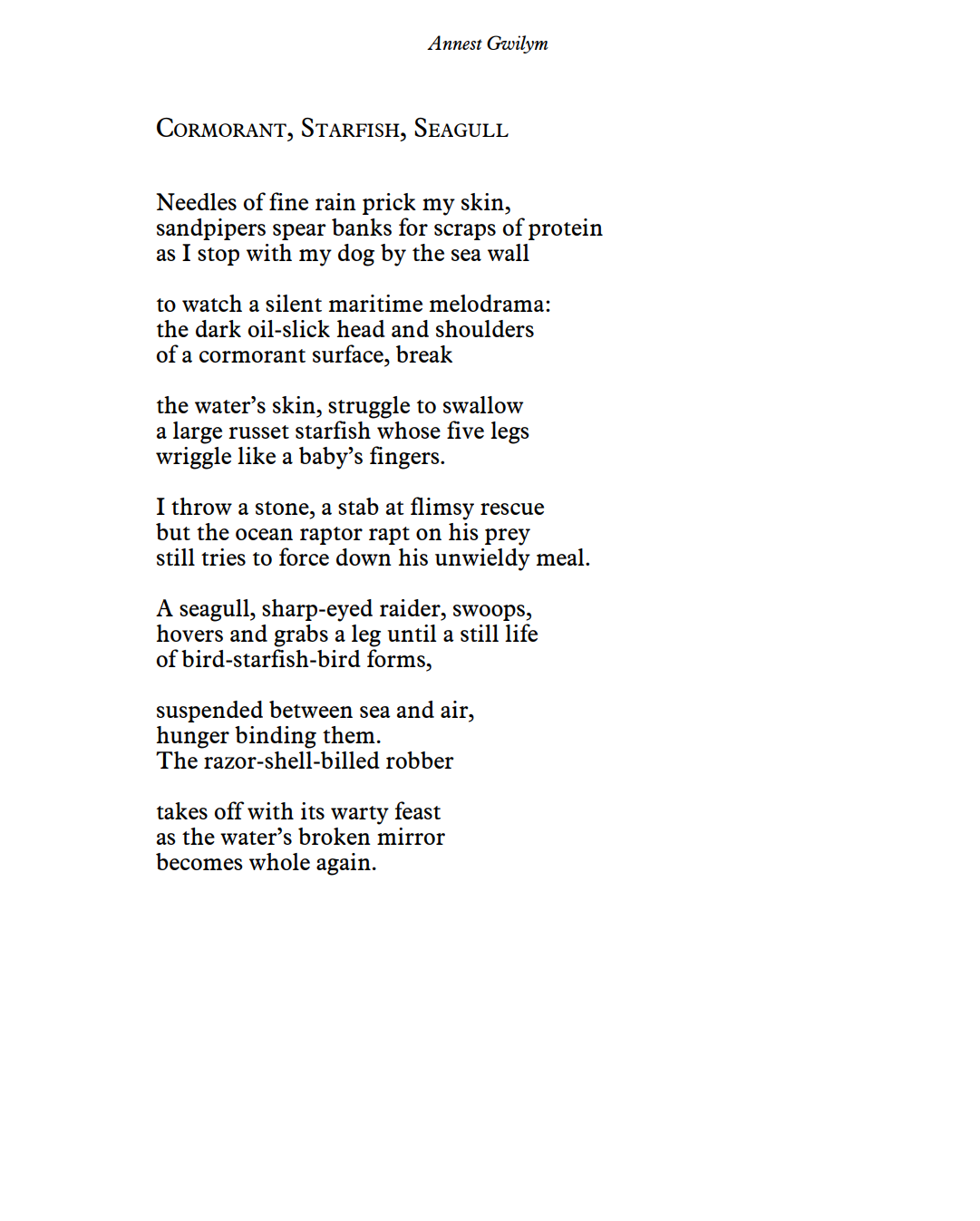
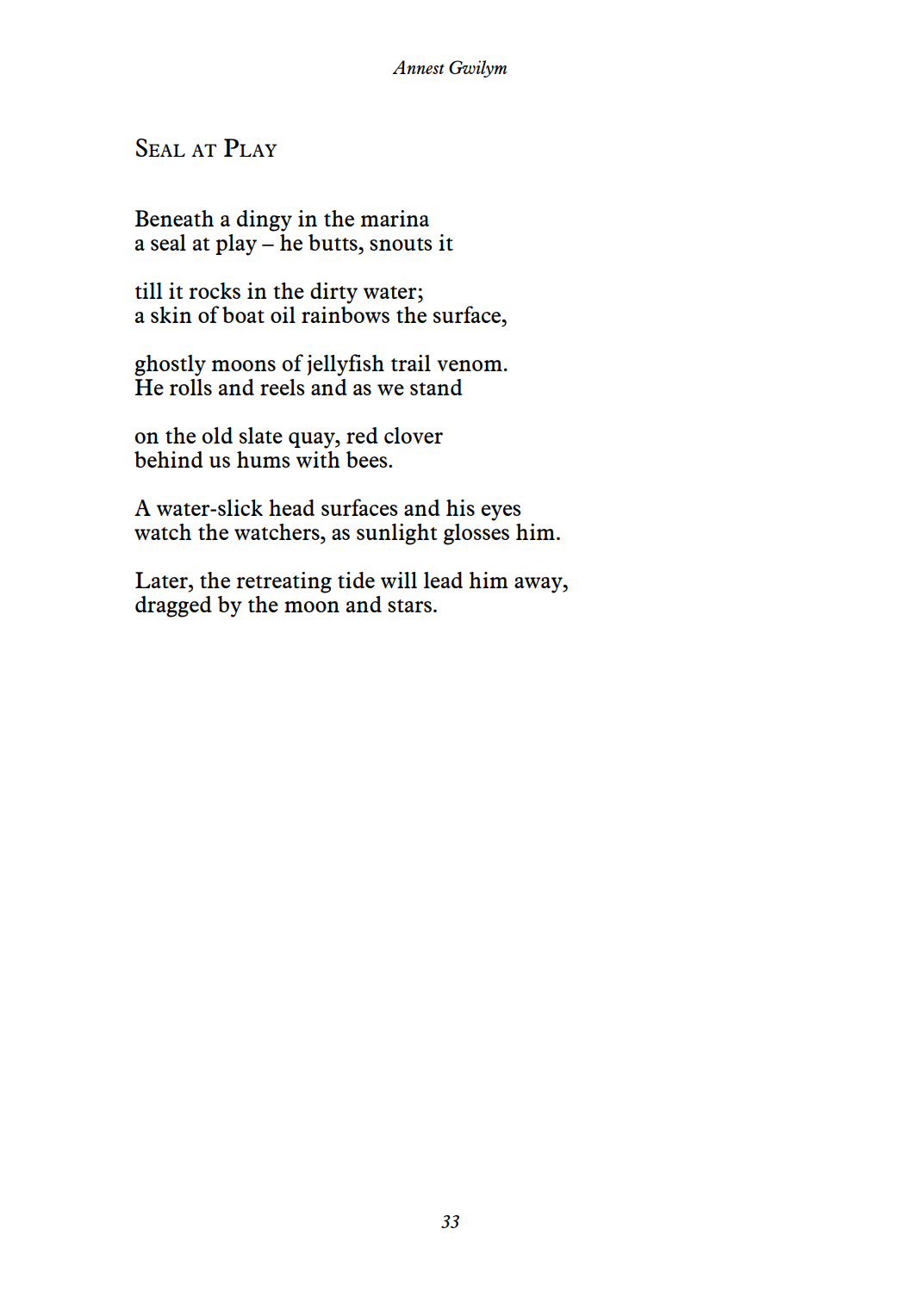
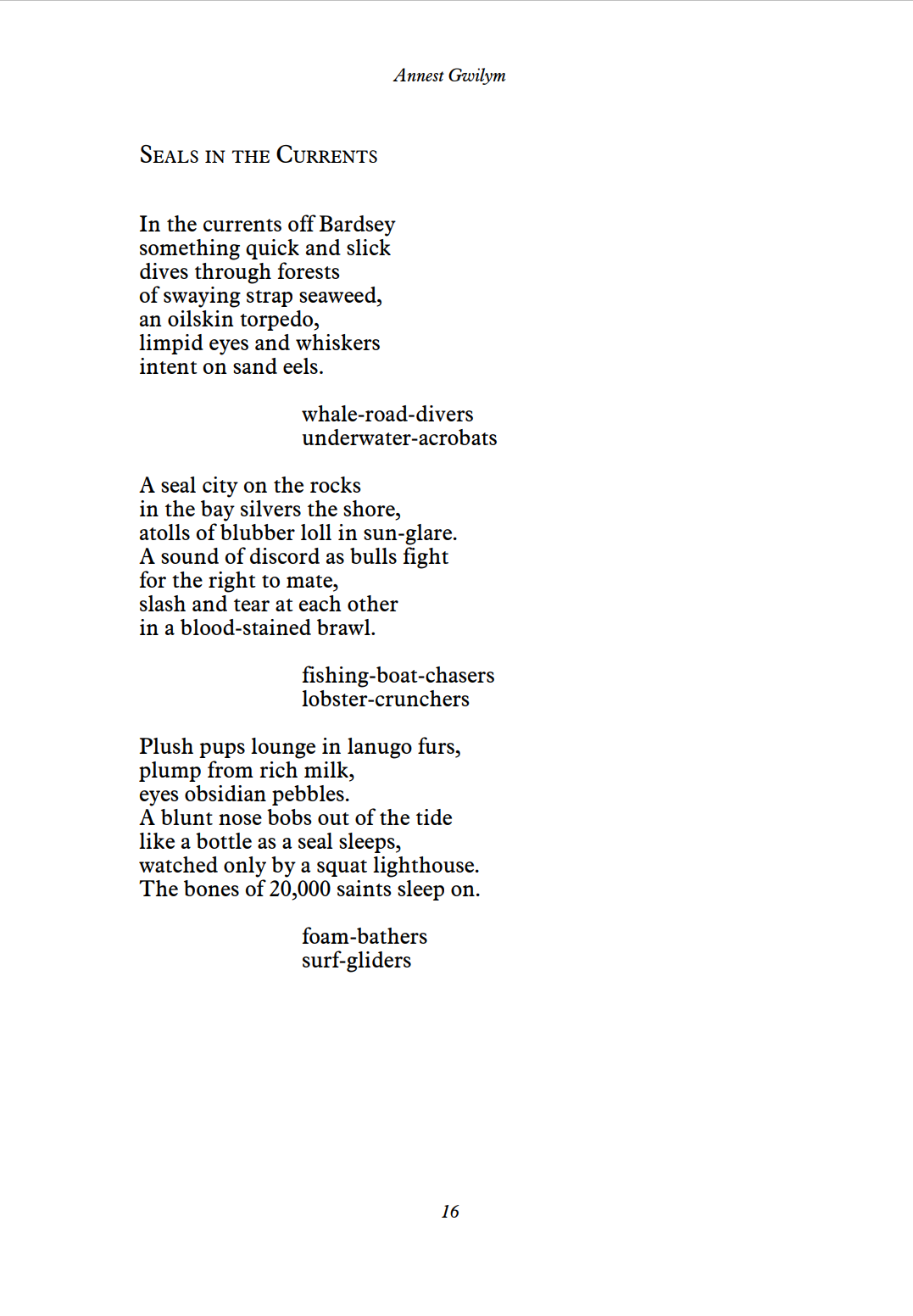
-All in Annest Gwilym’s wonderful collection “What The Owl Taught Me”
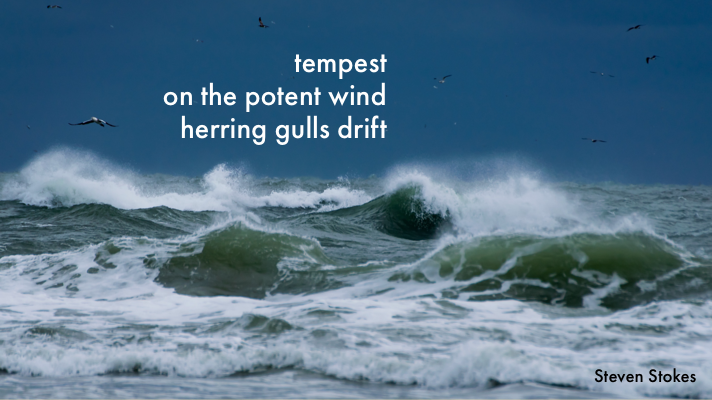
SEAGULL IMMIGRANTS
A seagull hangs from a lamp standard.
How it got there is hard to deduce.
Just what balance of circumstance
Left it twirling in a polythene noose?
Revenge killing for a stolen chip?
Would someone pre-meditate slaughter
And go to all that time and expense
Just “pour encourager les autres?”
A calamitous coincidence
Would seem too far-fetched for this gibbet;
Which leaves us with only one answer –
It’s a Damien Hirst exhibit.
This put me in mind of the day when
I thought death dealt me a drive-by glance
As I tucked into a ham roll on
The Terrace, Market Jew Street, Penzance.
All I could see for a second was
A new world that was pristine-clean white
As sun-dappled feathers embraced me…
Was this the so-called ‘tunnel of light’?
Fluttering wings…an angel perhaps,
Pulled at my hands with religious zeal.
Me, too heavy for heaven maybe,
Should have plumped for that weight-watcher’s meal
My life came back with a caveat;
That the beak-shaped breach in my torn roll
Told me – you must cover up your croust
When eating al fresco in Cornwall.
Some say the problem’s quite out of hand;
In fact it’s decidedly nasty.
In St Ives you take out insurance
When buying a medium steak pasty.
Once the dust (and ham roll) had settled,
I attached to that seagull no blame.
In seeking to provide for her child;
Wouldn’t we all of us do the same?
Then I pick up my morning paper –
A tabloid that works by detrition.
The ‘hard-working tax-payers’ bible,
Made whole by its sins of omission.
The first thing I see is the headline –
“Worst winter ever…white-walkers due!”
“Diabetes is out of control”
And there’s a Canderel shortage too.
First Rumanians, Bulgarians…
Now giant hornets are ‘swarming’ here.
Day after day of these headlines that
Are served up to instil me with fear.
One week they tell me to take statins –
Then the next to avoid like the plague
They’re making me scared of ev’rything
Except myself and William Hague.
It comes with me into the bathroom
And I read it while sat on the loo.
I’m a martyr to constipation…
For a while stuck on page number two.
Later I stare through the window at
A lone seagull chick hunched in the rain.
Her hard-working mother is tireless
As she feeds her again and again.
I suppose I’ve been lucky in life.
Free school milk and free education,
Full employment and with not much done
My house is worth a small fortune.
National care ‘from cradle to grave’.
My homeland has not had to face war.
All in all, I’ve had quite a good life;
Then I pick up my paper once more.
And sneer as the ‘beautiful people’
Parade in what passes for fashion.
So many problems despite their wealth.
I’ve already lost all compassion.
Told of the scams of the ‘so-called’ poor.
More fiddling than Stephane Grapelli.
Arrogant, wryly, living the life.
I’ve seen some of them on the telly.
That seagull chick is looking distressed.
Imagine if mum never returns.
I’ll surely ring the RSPB
And notify them of my concerns.
I recalled that instance in Penzance
And my brush with death’s dominion;
Seagull and I together broke bread
In an act of social communion.
But my paper seems to imply that
It’s time for a big conversation
Whether seagulls’ ASBO behaviour
Makes them worthy of preservation.
Our prime minister has suggested
That it is time to take these birds out.
A gull once stole ham from his sandwich.
It left the pesto dressing no doubt.
It seems they’ve formed themselves into gangs
Just like a scene from Hitchcock’s The Birds.
The article overpowered me…
I succumbed to a blitzkrieg of words.
Marauders’, ‘menace’, ‘rats of the sky’.
So, the language began to take hold.
‘Evil’, ‘destructive’, ‘malignant’…’foul’…
As overwrought adjectives unfold.
These dive-bombing gulls spray faeces
Like some kind of incontinent Stuka;
And Tippi Hedren gives helpful tips –
One of which involves a bazooka!
Deterrents mooted like ‘flock off’ paint
Or specially-bred ‘super falcons’;
Although it seems the line was drawn
At skilled marksmen brought in from The Balkans.
I glared at the gull out the window
As she spewed the food into her chick.
Been down into town for her handouts;
Her ‘something for nothing’ makes me sick.
Didn’t they used to feed from the sea?
It was better when they stayed out there…
Coming here taking our pigeons’ jobs
And now just scrounging on our welfare.
These gulls can live up to forty years…
They’re so fit they’ll outlive our obese.
Will it extend to other bird types?
Imagine being harassed by geese.
A pox on these damnable seagulls,
Lame ducks, sick parrots and ill eagles.
A quote from the Society page
‘A shame we can’t hunt them with beagles.’
Despite all we give they’re not grateful.
Each one I see seems to be scowling
Hang ‘em high from every lamp-post…
If only to focus their fouling.
All passion spent I need to sit down
With tea and a caramel wafer
Calmed myself for the tenth time today…
Maybe it’s time I changed my paper?
Here’s the link to the YouTube video
https://youtu.be/M8VyVZU5n9A
-gray lightfoot
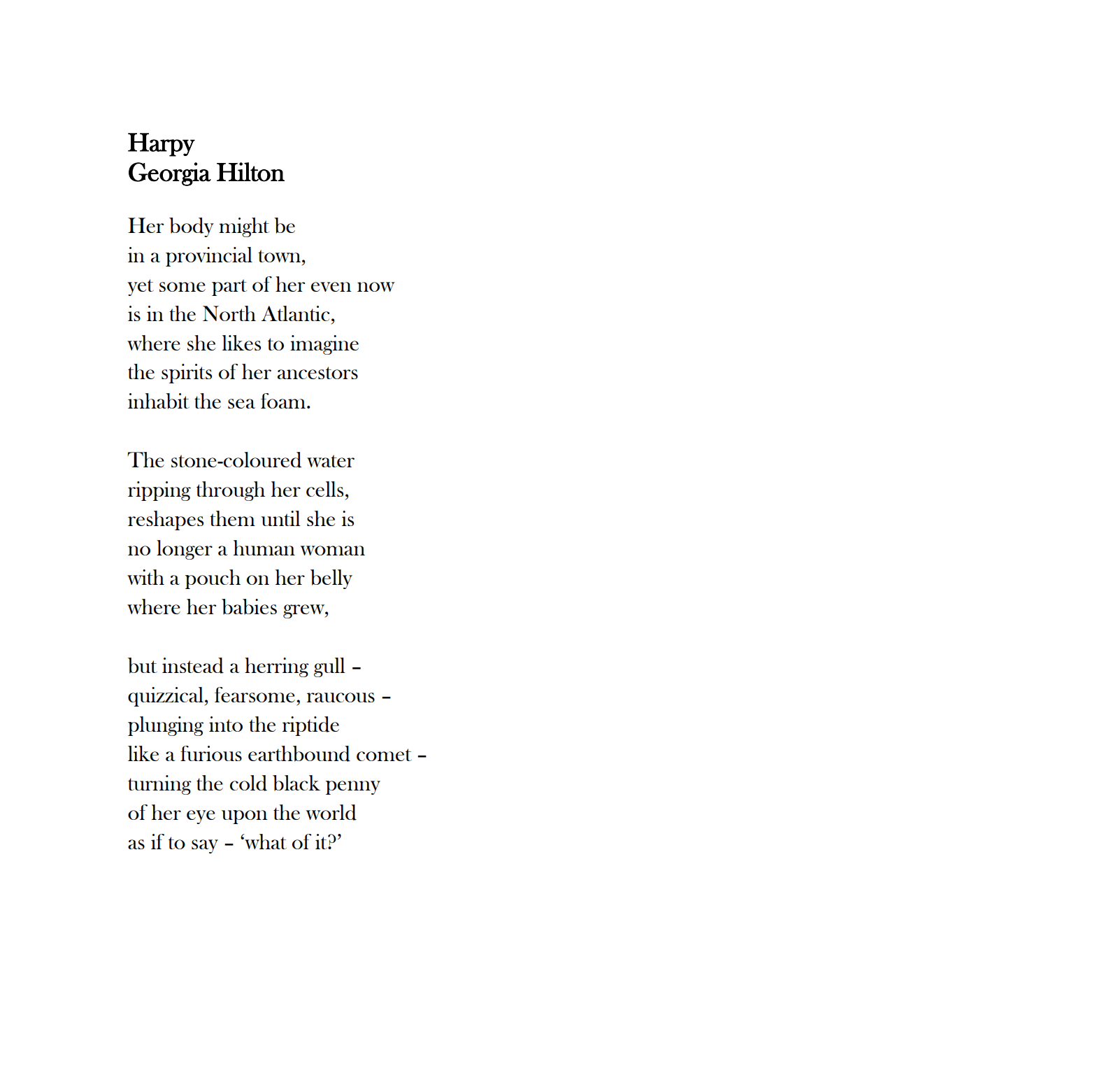
-Georgia Hilton
Gull
You coldly regard me
From your shit-smeared post.
Head bobbing, feathers ruffling, webbed feet pattering.
Yellow beak cracks open like a shell,
Gapes wide, splits head in two
And you scream your indignation to the sky
And the wind snatches it and hurls it
Against dizzying cliffs.
-Lisa Falshaw
The Marine Sonnets:
Herring Gull
The Sideways walker in my beak I drop
from Up to crack it open. My flockmates
and me enjoy the meat. I ask you to stop,
know me by my actions, my voice, translate
my language to yours, must note position
of my head, wings and tail, to my perch.
They’re stronger, bigger, spread wings expression
saying this is mine, I won’t share, go search
for your own. Wet Leaf fall we feed on soft squirm
appear out of soil, we trample ground
to make them rise. Her submissive begs stop
me attacking, upright I mew a sound.
Synchronise head tossings, I sick up rest
undigested meal for her. We choose nest.
Bios And Links
-Polly Oliver
is a broadcast journalist, freelance engagement consultant and writer in South Wales.
She writes poems for enjoyment – and when they land in her head.
Her writing has appeared in various editions published by Back Bough Poetry, as well as the Wombwell Rainbow, The Tide Rises, Falls and has featured as Spillwords Author of the Month.
Pushcart nominated.
–
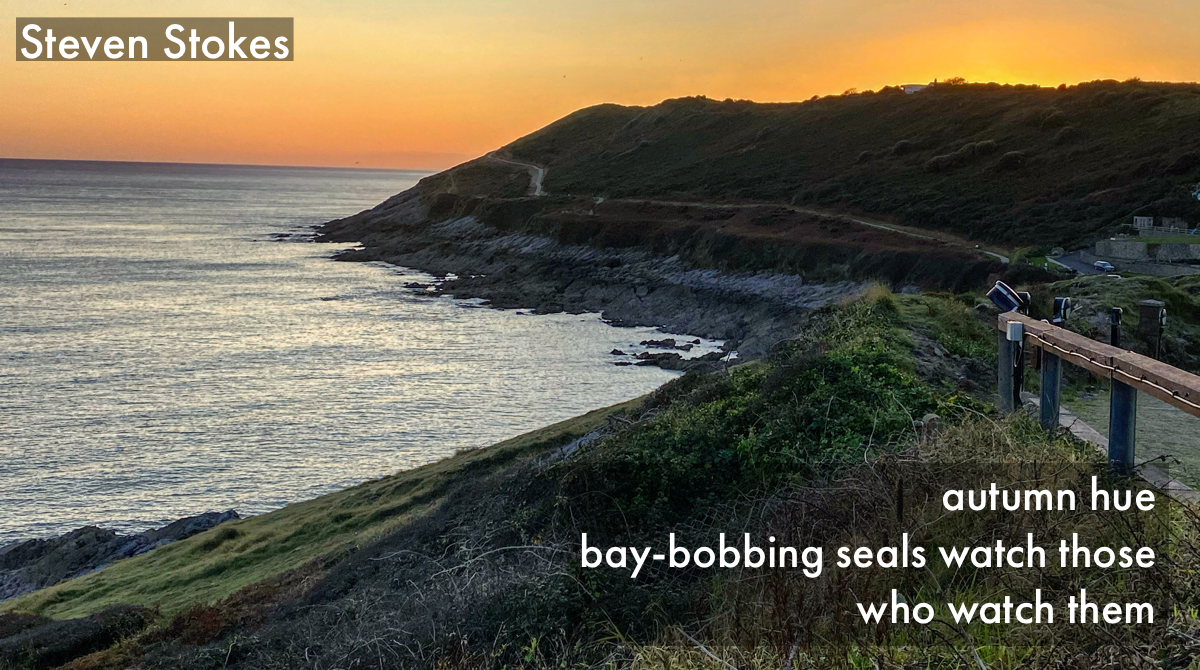
Steven Stokes
is a South Wales-based haikuist who began writing and sharing his poetry in 2020. Steven publishes his work via stevenlstokes.wordpress.com and three of his poems were included in the recent Dylan Thomas-inspired anthology ‘How Time has Ticked a Heaven Around the Stars’
-Cath Barton
is the author of two novellas: The Plankton Collector (2018, New Welsh Review) and Inthe Sweep of the Bay (2020, Louise Walters Books). The latter is set in Morecambe, where she took
this photo when she re-visited it recently. https://cathbarton.com/ @CathBarton1
-Charlotte Oliver
is a writer who lives in Scarborough, Yorkshire. She was the commissioned poet for BBC Radio York’s Make a Difference campaign and her work has appeared in wide range of newspapers, magazines and poetry journals. She runs poetry workshops in schools and she has poems upcoming in a number of publications, including Green Teeth’s Yorkshire Anthology, Black Bough’s Winter edition and Ice Floe’s Pandemic Love Anthology.
She tweets at @charlotteolivr