Celebrate Wombwell Rainbow Interviews with me over 26 Days. Today is Letter R. One letter a day displaying all the links to those interviews. We dig into those surnames. Discover their inspirations, how they write, how did they begin. Would you love to have your name featured here? Contact me.

Radhakeeson, Vatsala https://thewombwellrainbow.com/2019/01/23/wombwell-rainbow-interviews-vatsala-radhakeesoon/

Ravenwood, Sage https://thewombwellrainbow.com/2019/08/19/wombwell-rainbow-interviews-sage-ravenwood/

Rawlinson, kerry https://thewombwellrainbow.com/2020/01/06/wombwell-rainbow-interviews-kerry-Rawlinson/

Ray, Ben https://thewombwellrainbow.com/2019/01/29/wombwell-rainbow-interviews-ben-ray/

Raynard, Peter https://thewombwellrainbow.com/2018/09/24/wombwell-rainbow-interviews-peter-raynard/

Reeve, Camilla https://thewombwellrainbow.com/2018/12/05/wombwell-rainbow-interviews-camilla-reeve/

Reeves, Amanda https://thewombwellrainbow.com/2019/08/28/wombwell-rainbow-interviews-amanda-reeves/

Richards, Victoria https://thewombwellrainbow.com/2019/05/03/wombwell-rainbow-interviews-victoria-Richards/

Ridgeway, Kevin https://thewombwellrainbow.com/2019/01/21/wombwell-rainbow-interviews-kevin-ridgeway/

Riley, Peter https://thewombwellrainbow.com/2019/09/25/wombwell-rainbow-interviews-peter-riley/

Riley, Wayne https://thewombwellrainbow.com/2019/01/05/wombwell-rainbow-interviews-wayne-riley/

Rio, Isabel del https://thewombwellrainbow.com/2019/06/24/wombwell-rainbow-interviews-isabel-del-rio/

Rivers, Bethany https://thewombwellrainbow.com/2018/09/24/wombwell-rainbow-interviews-bethany-rivers/

Robbins,John Patrick https://thewombwellrainbow.com/2018/10/06/wombwell-rainbow-interviews-john-patrick-robbins/

Robinson, John D. https://thewombwellrainbow.com/2018/11/04/wombwell-rainbow-interviews-john-d-robinson/

Roe, David https://thewombwellrainbow.com/2019/04/28/wombwell-rainbow-interviews-david-roe/

Rojas, Andres https://thewombwellrainbow.com/2019/08/06/wombwell-rainbow-interviews-andres-rojas/

Rose, Evrah https://thewombwellrainbow.com/2019/08/03/wombwell-rainbow-interviews-evrah-rose/

Rosenstock, Gabriel https://thewombwellrainbow.com/2019/01/24/wombwell-rainbow-interviews-gabriel-Rosenstock/

Ross, Debra Sasak https://thewombwellrainbow.com/2018/09/16/wombwell-rainbow-interviews-debra-sasak-ross/

Roskos, Dave https://thewombwellrainbow.com/2018/09/13/wombwell-rainbow-interviews-dave-roskos/

Rossi, Mark Anthony  https://thewombwellrainbow.com/2018/09/19/wombwell-rainbow-interviews-mark-anthony-rossi/

Royall, Margaret https://thewombwellrainbow.com/2020/06/06/wombwell-rainbow-interviews-margaret-royall/

Ruggieri, Helen https://thewombwellrainbow.com/2019/06/21/wombwell-rainbow-interviews-helen-ruggieri/

Russamano, David https://thewombwellrainbow.com/2019/08/28/wombwell-rainbow-interviews-david-russamano/

Russell, Ryan https://thewombwellrainbow.com/2019/08/23/wombwell-rainbow-interviews-ryan-russell/

Wombwell Rainbow Interviews: Peter Clive

-Peter Clive

lives on the southside of Glasgow, Scotland with his wife and their three children. He is a scientist who has worked in the renewable energy sector for nearly two decades. As well as poetry, he enjoys composing music for the piano and spending time in the Isle of Lewis and St Andrews with family. His first poetry collection, “the end of the age of fire,” about climate change, was published to coincide with COP26 and is currently available. “stowaway” is his second collection.

Links to collections

stowaway: https://www.lulu.com/en/us/shop/peter-clive/stowaway/paperback/product-qm8qjd.html 

the end of the age of fire: https://www.lulu.com/en/us/shop/peter-clive/the-end-of-the-age-of-fire/paperback/product-vnr4kd.html

The Interview

1. When and why did you start writing poetry?

I started writing when I was a teenager, however I was aware of my limited experience at the time and chose to focus more on music as a creative outlet. I play and compose for the piano and have played keyboards and bass in various bands. I’d say my piano composition was what I was most invested in until I returned to poetry in my late 30s and early 40s. I’d have to admit that there was a practical reason at first: it is easier to write poetry when you have a young family than it is to write music, as you are generally not disturbing anyone or keeping them awake. However, I quickly came to appreciate writing poetry as a means for introspection and personal growth.

2. Who introduced you to poetry?

I’ve always been aware of poetry since I can remember. My gran wrote poetry in large hardbound foolscap notebooks, which was often humorous observations on individuals or life in general, and she would entertain my sisters and I with it as children. She was a great animal lover and so animals and birds often provided subjects for her writing. There were more serious poems that she wrote during periods of insomnia and depression which we discovered later. She had a very keen sense of social justice and so some poems expressed a strong sense of righteous indignation.

3. How aware are and were you of the dominating presence of older poets traditional and contemporary?

There was always a certain sense of reverence in my family about Robert Burns and Omar Khayyam when I was growing up. I can still recite sections of the Ruba’iyat from memory from hearing my father launch into it when I was a child. Coleridge and Shelley were present too: I recall my mother reading me the Rime of the Ancient Mariner when I was 4 or 5, and my father very dramatically reciting Ozymandias. There was also Palgrave’s Golden Treasury. In addition, we were exposed as children to British imperial poetry to stir our patriotic zeal, the likes of The Charge of the Light Brigade and Casabianca and so on, in a way that seems utterly alien and incomprehensible now, thankfully. At the same time the poets of the Scottish Renaissance, the mid-20th century literary revival, were read. My father was particularly fond of William Soutar, whereas I probably gravitated more towards Norman MacCaig. A lyric sense was probably derived from folk song. My mother sang professionally with her sisters, and Scottish and Irish folk music was a constant presence.

4. What is your daily writing routine?

I find there isn’t a routine. I have periods during which I seem to be quite productive, producing more than one poem a day, and other fallow periods where I just don’t seem to have a conducive mindset or the necessary energy. At the same time, I do think it is often important to let things develop slowly at the back of your mind over a long period of time, especially the longer poems. These can take shape over a matter of weeks as a result of long periods of reflection on the subject on trains and buses, or while walking to work. There is a gestational process for some subjects. Other poems emerge almost fully formed immediately and are ready after a day’s revision and polishing.

5. What subjects motivate you to write?

I have noticed certain themes I return to. I produced a collection called “the end of the age of fire” that was concerned with climate change. But beyond that what it was concerned with was taking a very longitudinal view of the human situation, looking at our presence in the broadest possible context, the sum total of our impact as a species over the entire duration of its presence on Earth, and what that means, what it tells us about ourselves.

This is consistent with other pre-occupations I have, such as the metaphysical reflections about the universe and our place in it which I will cover in the forthcoming collection “Moonsong”. Poetry allows us to discuss the world from a place where ethics and aesthetics, physics and metaphysics, are all one and the same thing, deriving from a perspective, a viewpoint, that one has when one stands apart from quotidian urgencies into that other time and space created by poetry. I think that unity, and trying to find a voice for it, to express the inexpressible experience of it, is a powerful motivation for me. All creative endeavour should aim to achieve the impossible. A poet is concerned with finding the miraculous in the meaningless. This is the fundamental act of creation we seek to emulate.

6. What is your work ethic?

I cannot claim to have much of a work ethic. I wish I did. I find myself either responding to ideas on an impulsive basis or poring over the material I have produced as a result late at night.

7. How do the writers you read when you were young influence your work today?

I am not sure I can really attribute an influence to the writers I admire. An appreciation, but not necessarily and influence, as that would suggest it is within my power to absorb and express that influence. The achievements of the poets I admire seem impossible to me. For example, I recall discovering Paul Celan for the first time when I was young. I was completely blown away. It’s difficult to describe the effect. At the same time there is no way I could or would ever attempt to emulate anything about his work. I would not insult the impossible by suggesting it could be repeated. Similarly, I remember when I first read Rabindranath Tagore’s Gitanjali, which just seemed utterly miraculous. At the same time, I don’t think you could find two things more different than the work of Celan and Tagore.

I like to think the main influence on my poetry is still music, which has been my main creative outlet for most of my life. I think of poems, especially longer pieces, in symphonic terms, composed from ideas rather than melodies and harmonies, to engage the reader and progress them through states of mind. This inevitably places some distance between me and a reader who is looking for something else, the spoken word staples of emotional honesty and relatable content. I see myself as more of a page poet rather than a stage poet. I’m trying to achieve a different kind of impact.

8. Whom of today’s writers do you admire the most and why?

This is such a difficult question, as there are so many! Off the top of my head I would say David Ross Linklater, Jane Lovell, Mary Ford Neal, Morag Anderson, all people who made me think “wow, this is the real deal” when I first encountered their work, Louise Glück (I remember picking up Averno for the first time and simply being unable to put it down, it was so compelling), Andrea Gibson (I recall reading her for the first time in a bar in Boulder, Colorado, being moved to tears by The Madness Vase, and getting thrown out for ruining people’s enjoyment of the ice hockey game). I admire directness and concision, I admire work that penetrates to the essence of something and reveals it deftly.

9. Why do you write, as opposed to doing anything else?

It certainly is a compulsion. On the one hand there is the feeling that some things need to be said, but that raises the question of why I should be the one to say them, and whether I contaminate them with my ego by doing so. Therefore, there is also a sense in which writing is a search for beauty that exists independently of the self. I have said previously that beauty is the experience of seeing what the world is like when you’re not in it, the attenuated terror and relief, the cliff edge from which one surveys the breath-taking landscape, the duality of annihilation and transformation. There is a destructive as well as a creative urge, which is inevitable when we as humans attempt to emulate the divine. There is a sense of picking at a scab, of exposing something festering to the light of day. Therefore, many of my poems are quite angry and indignant, but when we consider the evils we have brought into the world and continue to tolerate, I think that is reasonable.

10. What would you say to someone who asked you “How do you become a writer?”

I would say “write”. Begin. Writing is a personal journey, and to become a writer, all one needs to do is take the first step, and to remain a writer, all you have to do is to continue. You don’t even know what needs within yourself you are satisfying when you start. You will develop a deeper awareness of this as you go. Don’t try to answer any questions, don’t prematurely place any burden of expectation on yourself, just start. The rest comes later.

11. Tell me about the writing projects you have on at the moment.

I’ve got a bit of a pipeline of poetry collections in various stages of preparation. Each collection has a degree of thematic coherence, tries to address a particular set of issues or experiences, and has been assembled from work I have accumulated over the years. I think the next two collections I will produce will be “Moonsong,” which reflects on more esoteric, mystical, metaphysical questions, and “Crossing the Minch,” which is more rooted in time and place, being concerned mainly with poetry associated with the Isle of Lewis, where my mother is from, and where I have spent my summers since childhood. I think these may even come out at the same time, sort of like a double album. After than I am considering a collection of poems that include mythological and contemporary themes in which the main protagonist is female, called “19 women”. I also have some reflections on love called “love remains” in preparation, and some more personal poems I might gather into a collection called “feral”.

Celebrate Wombwell Rainbow Interviews with me over 26 Days. Today is Letter Q. One letter a day displaying all the links to those interviews. We dig into those surnames. Discover their inspirations, how they write, how did they begin. Would you love to have your name featured here? Contact me.

Sessions by Lesley Quayle

Quayle, Lesley https://thewombwellrainbow.com/2018/09/21/wombwell-rainbow-interviews-lesley-quayle/

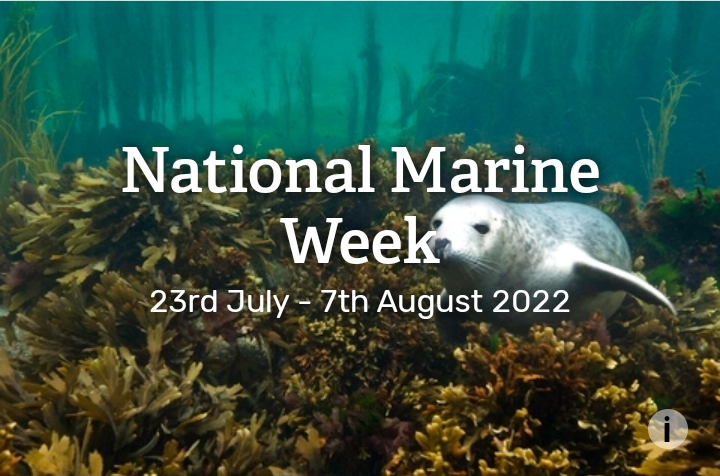
Celebrate #NationalMarineWeek 23rd July 7th to August 2022. Day Five of Fourteen Due To Tides. Join Larissa Reid, and I. Send me your own unpublished/published poetry/artworks/short prose about/mentioning the marine. I am looking to feature your poems/artworks about the shore, shoreline, its inhabitants, the waves, flotsam, jetsam and so on. Please contact me with your work, plus a short third person bio. Let’s celebrate the shore!

Screenshot_2022-07-14-21-07-55-17_40deb401b9ffe8e1df2f1cc5ba480b12

Footprints
For Martin, and Hugh Miller, geologist, 1802-1856

This is where my God resides
Safely embedded in deep time
Surrounded on three sides by tides;
I make my own footprints in age-old sand.
The jellyfish languish on the strand-line;
Perfectly rounded stained-glass windows
Into multicellular souls.
A darkness of basalt cradles crystals
Along shores where eternity crumbles
And remakes itself anew;
Where time is a saviour and I snatch a glimpse
Of past, present and future.
Here, under a vaulted sky,
I will close my eyes, focus in
On sea sounds and the peewits’ cry
And I will say hello and again goodbye
To those I have lost;
Whisper my regrets to those I have wronged;
And dare to hope for those I hold dear.
For this is where my God resides;
Here, beneath slanting rocks
And alongside beckoning tides.

Published in my first poetry pamphlet, In February, 2019

-Larissa Reid

Bios And Links

Larissa Reid

A freelance science writer by trade, Larissa has written poetry and prose regularly since 2016. Notable publications include Northwords Now, Silk & Smoke, Green Ink Poetry, Fenacular, Black Bough Poetry Anthologies, and the Beyond the Swelkie Anthology. She had a poem shortlisted for the Janet Coats Memorial Prize 2020. Larissa is intrigued by visible and invisible boundary lines in landscapes – geological faultlines, myth and reality, edge-lines of land and sea. Based on Scotland’s east coast, she balances her writing life with bringing up her daughters. Larissa is a founder member of the Edinburgh-based writing group, Twisted::Colon.

That Which I Touch Has No Name by Jennifer K Dick (Black Spring Press Group)

tearsinthefence's avatarTears in the Fence

The dialogic process of Jennifer Dick’s poems occurs in a multilingual context in which English, French and Italian interweave. The demolition of meaning and of naming provides space for a provisional reconstruction of language that evolves in sounds, alliteration and chains of words. They evoke each other in a multifaceted, polyphonic rhythm that envisages infinite possibilities. A Saussurian signifier and signified are proposed in a different perspective in which Derrida’s concept of the loss of the centre seems to be more relevant. Traditional forms are reviewed and opposed, giving way to multiple voices and different perceptions. These diverse interpretations are ‘off-the-centre’, as Derrida claims, as there is no centre, or any transcendental or universal entity to which we can refer or appeal. This concept of displacement opens the individual up to the construction of alternative views.

Dick’s poetry is a poetical journey that delves into philosophical and linguistic topics without…

View original post 459 more words

Estill Pollock: London in those Times

The High Window Review's avatarThe High Window

london image 2

*****

Estill Pollock‘s first pamphlet selection of poems, Metaphysical Graffiti, was published in England. This was followed by a principal collection, Constructing the Human (Poetry Salzburg), which was later developed into the book cycle, Blackwater Quartet. Between 2005-11, in collaboration with Cinnamon Press in Wales, he published a second major book cycle, Relic Environments Trilogy. His latest collection, Entropy is published by Broadstone Books (2021) in the United States. A native of Kentucky, he has lived in England for forty years.

*****

LONDON IN THOSE TIMES

London in those times
Of Empire, the waterlines
Of sailing fleets weighed
Low with slaves and spice, the world
Packed piecemeal into the holds

*

A greasy light cuts
The chill, but will not repair
The damp, his window
Above the muleskinner’s yard
Shut tight against steel on bone

*

A rough-coated dog
Noses along the gutter
For chop scraps…

View original post 1,132 more words

Celebrate #NationalMarineWeek 23rd July 7th to August 2022. Day Four of Fourteen Due To Tides. Join Larissa Reid, and I. Send me your own unpublished/published poetry/artworks/short prose about/mentioning the marine. I am looking to feature your poems/artworks about the shore, shoreline, its inhabitants, the waves, flotsam, jetsam and so on. Please contact me with your work, plus a short third person bio. Let’s celebrate the shore!

Faultline

Outlines of waves preserved from the last tide
Etched out in microplastic.
Echoes of energy spent
Sucked in and out on the backwash;
Our past, present and future
Held shattered in the palm of a hand.
At our feet, rounded rocks mirror wave-swirls
Rolled by rivers, smoothed by relentless tides
Separated by millennia yet heaped together here;
One foot on the Devonian, another on the Triassic,
I’m standing on the Anthropocene,
On time, metamorphosed.
You smile, bored,
Having heard it all before;
And the cracks forming between us
Split just that little bit further.

-Larissa Reid

Bios And Links

-Larissa Reid

A freelance science writer by trade, Larissa has written poetry and prose regularly since 2016. Notable publications include Northwords Now, Silk & Smoke, Green Ink Poetry, Fenacular, Black Bough Poetry Anthologies, and the Beyond the Swelkie Anthology. She had a poem shortlisted for the Janet Coats Memorial Prize 2020. Larissa is intrigued by visible and invisible boundary lines in landscapes geological faultlines, myth and reality, edge-lines of land and sea. Based on Scotland’s east coast, she balances her writing life with bringing up her daughters. Larissa is a founder member of the Edinburgh-based writing group, Twisted::Colon.

Celebrate Wombwell Rainbow Interviews with me over 26 Days. Today is Letter P. One letter a day displaying all the links to those interviews. We dig into those surnames. Discover their inspirations, how they write, how did they begin. Would you love to have your name featured here? Contact me.

51qmlvacscl

Pangelov, Bozhidar  https://thewombwellrainbow.com/2018/09/16/wombwell-rainbow-interviews-bozhidar-panelov/

Papachristodoulou, Astra https://thewombwellrainbow.com/2019/02/18/wombwell-rainbow-interviews-astra-papachristodoulou/

Parkinson-Cameron, Bee https://thewombwellrainbow.com/2019/04/21/wombwell-rainbow-interviews-bee-parkinson-cameron/

Parks, Ian https://thewombwellrainbow.com/2018/09/19/wombwell-rainbow-interviews-ian-parks/

Parry, Alan https://thewombwellrainbow.com/2019/06/22/wombwell-rainbow-interviews-alan-parry/

Patel, Abdul-Ahad https://thewombwellrainbow.com/2019/02/04/wombwell-rainbow-interviews-abdul-ahad-patel/

Patterson, Weasel https://thewombwellrainbow.com/2018/09/21/wombwell-rainbow-interviews-weasel-patterson/

Pearson, Dustin https://thewombwellrainbow.com/2019/01/18/wombwell-rainbow-interviews-dustin-pearson/

Peery, Kevin W. https://thewombwellrainbow.com/2018/09/14/wombwell-rainbow-interviews-kevin-w-peery/

Pelesky, Holly https://thewombwellrainbow.com/2019/07/23/wombwell-rainbow-interviews-holly-pelesky/

Pettinger, Michael https://thewombwellrainbow.com/2019/08/03/wombwell-rainbow-interviews-michael-pettinger/

Pickering, Dustin https://thewombwellrainbow.com/2019/01/22/wombwell-rainbow-interviews-dustin-pickering/

Pimlott, Kathy https://thewombwellrainbow.com/2019/06/11/wombwell-rainbow-interviews-kathy-pimlott/

Pirie, Pearl https://thewombwellrainbow.com/2019/07/14/wombwell-rainbow-interviews-pearl-pirie/

Pitt, Dave https://thewombwellrainbow.com/2019/02/01/wombwell-rainbow-interviews-dave-pitt/

Pitt-Kethley, Fiona https://thewombwellrainbow.com/2018/09/11/wombwell-rainbow-interviews-fiona-pitt-kethley/

Poddar, Kushal https://thewombwellrainbow.com/2019/05/23/wombwell-rainbow-interviews-kushal-poddar/

Pollard, Clare https://thewombwellrainbow.com/2019/10/07/wombwell-rainbow-interviews-clare-pollard/

Pollard, David https://thewombwellrainbow.com/2018/11/08/wombwell-rainbow-interviews-david-pollard/

Pooles, Anton https://thewombwellrainbow.com/2019/09/13/wombwell-rainbow-interviews-anton-pooles/

Potter, Gerry https://thewombwellrainbow.com/2018/12/28/wombwell-rainbow-interviews-gerry-potter/

Potts, Cherry https://thewombwellrainbow.com/2019/02/01/wombwell-rainbow-interviews-cherry-potts/

Potts, Laura https://thewombwellrainbow.com/2018/12/16/wombwell-rainbow-interviews-laura-potts/

Powers, Jeanette https://thewombwellrainbow.com/2019/02/10/wombwell-rainbow-interviews-jeanette-powers/

Pratt, Wendy https://thewombwellrainbow.com/2018/12/20/wombwell-rainbow-interviews-wendy-pratt/

Prew, Gillian https://thewombwellrainbow.com/2018/11/05/wombwell-rainbow-interviews-gillian-prew/

Priest, Kerry https://thewombwellrainbow.com/2018/11/21/wombwell-rainbow-interviews-kerry-priest/

Prihoda, Michael https://thewombwellrainbow.com/2019/02/24/wombwell-rainbow-interviews-michael-prihoda/

Purshouse, Emma https://thewombwellrainbow.com/2019/01/07/wombwell-rainbow-interviews-emma-purshouse/

Wombwell Rainbow Interviews: Catherine Ann Cullen

selected poems catherine Ann Cullen

-Dr. Catherine Ann Cullen was inaugural Poet in Residence at Poetry Ireland 2019 to 2021. She is an award-winning poet, children’s author and songwriter, and recipient of Arts Council and Irish Writers Centre bursaries and the prestigious Kavanagh Fellowship. Her poetry collections include The Other Now (Dedalus 2016). Beehive publishes her seventh book, The Song of Brigid’s Cloak, in October 2022.

The Interview

Wombwell Rainbow Interviews

  1. What inspired you to write poetry?

It must have been the state of being a restless child with a head full of nursery rhymes and songs, as I was writing poems, or rhymes at least, from about the age of five. I’ve always been interested in legends and storytelling, in family lore and local history, and in ballads, street rhymes and games, and all of those interests came together early to make poetry a way of navigating the world for me.

2. Who introduced you to poetry?

The credit has to go to my Dad, although I was lucky that both of my parents knew a lot of poetry by heart. My Dad would quote Shakespeare, Milton, Keats, Shelley, Tennyson, Wordsworth and Burns as well as Irish poets from Raifteirí to Pearse, Gogarty, McDonagh, Kavanagh and many others. He also enrolled myself and my five siblings in the library as soon as he could, and borrowed anthologies of poems for me most fortnights. We had a lot of songbooks at home because my father played guitar and was interested in songs, and I read these songsters as if they were children’s books. I was always very involved in the ballads and the stories that they told, and I didn’t really differentiate in my mind between songs and poetry.

3. How aware were you of the dominating presence of older poets?

When I was a child, I was more aware of dead poets than of older, living poets. I became more conscious of living poets in my teenage years. While I was aware that there were certain poets, such as Heaney and Mahon, whose work seemed to be known to everyone, it wasn’t a cause of concern to me. I read poetry voraciously, from the Beat poets to the Metaphysicals to the shabby poets who sold their self-published books on the streets of Dublin.  I remember getting a ticket for the adult section of my local library for the first time at the age of 12 and making a beeline for the poetry shelves. I took out every collection and anthology in turn. I shamelessly imitated the styles of poets I liked. So, while I was aware of older poets and the ‘canon’, I suppose, they didn’t get in the way of my appreciating everyone else.

4. What is your daily writing routine?

I usually write around other commitments and work, so I fit writing in either early in the morning or late in the evening. I also often write in bursts, so I have a quiet period and then a few months full of poems. Covid has taken a chunk out of my regular writing time as, since the first lockdown, I have visited my mother most evenings to keep her company. I don’t regret that, it is a choice I have made willingly, and I consider myself extremely lucky to still have a parent alive and lively. But I hope the lost writing time will affect the quantity rather than the quality of my writing. I have definitely written less over Covid, and given each poem or song more time than usual.

5. What motivates you to write?

Deadlines are the most effective motivator, but I’m also driven to capture particular moments or images that stay with me, to tell stories of my own life and family, or to respond to the stimuli of human rights issues, politics, art, nature and ideas.  I often wait for a few weeks to let an idea percolate in my mind and allow all of its aspects to emerge before I put pen to paper. It’s almost as if I am staging the poem and I visualise the movement of it, the scenes of it, and allow them to crystallise in my mind before I commit it to paper.

6. What is your work ethic?

I’m not sure I have one. Although people close to me know that I work hard most of the time, I find the phrase ‘work ethic’ a bit distasteful. To me, it conjures up a class of people which has exploited others and is likely to use labels like “workshy”, “lazy”, “scroungers” or “welfare cheats” while living off the work of others. Hearing the phrase “work ethic” makes me want to while away my hours drinking Campari sodas in a hammock. 

7. How do the writers you read when you were young influence you today?

My teenage years spent reading Dylan Thomas, Donne, Keats, Milton, Plath, Bishop, Yeats and many others have somehow made me internalise the sonnet form. When I need to write something in a hurry, my default form is the sonnet, which “makes one little room an everywhere” as Donne said of love. I fall back on form in general when in doubt, though I write a lot of free verse. Even with free verse, if I see a shape emerging, I will go with it – five lines and two, five lines and two, or some kind of mirroring, rhythm, shape in the placing of lines. The idea of ‘shaping’ my thoughts into something with a distinct form is still very appealing to me.

8. Who of today’s writers do you admire the most and why?

I love Eiléan Ní Chuilleanáin’s work and have done since I was a student of hers back in the 1980s in Trinity College Dublin. It is perfection: textured, intellectual and emotional, and reaches far beyond Ireland and Irish concerns, although it can reflect them too. Eavan Boland was recently enough with us for me to count her among today’s writers. Again, she has a voice that transcends Ireland while being part of it – a cool, precise and unfaltering voice. I’m sticking just to Irish writers here because otherwise there are just too many to name. Nuala Ní Dhomhnaill, Paula Meehan, Sinéad Morrissey, Martina Evans, Ailbhe Darcy, Aifric Mac Aodha – there are so many women whose work I admire and never tire of reading. And there are men too, of course – Theo Dorgan, Ciaran Carson, Dermot Bolger, Stephen Sexton… an endless list.  I’m also very influenced by songwriters and singers, from Bob Dylan to Joni Mitchel, John Prine, Christy Moore, Andy Irvine, Taylor Swift, Mick Hanly, Frank Harte, Niamh Parsons, Karan Casey…    

9. Why do you write, as opposed to doing anything else?

My first instinct is to answer, ‘because I can’t draw’. But I write to make sense of the world for myself, to take hold of beautiful or difficult moments and to face them, to shape them into something I can countenance.

10. What would you say to someone who asked you “How do you become a writer?”

I would say, write, read, love, listen, and pay attention. Keep at it. Submit your work. Join a group of writers if you can, especially if you are interested in reading other people’s work and giving good, encouraging and helpful feedback on it in exchange for their feedback on your work. In almost any group – certainly in any I have been part of  – there will be people whose feedback you instinctively trust more than others, people who are genuinely interested in making your work better and don’t have any other agenda. Listen to and carefully consider what they say. You don’t have to take every piece of advice, but some advice is invaluable.

11. Tell me about the writing projects you have on at the moment:

I have a children’s book coming out in October with Beehive Books, based on a song I wrote on one of the legends of (Saint) Brigid. It’s a joy to be working with a wonderful illustrator, Katya Swan, and my editor Síne Quinn, and to see the book developing. It’s a different experience to producing a book of poetry, which is a much more solitary occupation, although it does involve an editor too. I also have an anthology of children’s poetry with one other author which is, like many books in these Covid times, in a long queue for publication – but will eventually appear! I have a broadsheet of poems written during my Poetry Ireland residency on the history of the Poetry Ireland building at 11 Parnell Square, which is awaiting final design tweaks. I’ve been slowly reworking my fourth poetry collection – and I’m also writing my first non-fiction book. (although I’d argue poetry is really non-fiction.) I’m sworn to secrecy about the non-fiction one, but it will be announced in the autumn. Throw in various academic papers, mostly on ballads and street poetry, and a few song projects, and I probably have enough to be going on with on the writing front.

12. What is it about poetry rather than prose that appeals to you?

Brevity, to be honest, is a big factor in the appeal. I like the condensed aspect of poetry, the fact that it can be almost like a novel in its impact, in 14 lines or 40. I like the fact that I can give a poem my full attention and that it repays that, I find it hard to sustain my attention over longer forms.

13. What role does nature play in your writing?

I don’t think of myself as a ‘nature’ poet in particular, although of course it does worm its way into my work on occasion, and certainly through the pandemic there has been some reflecting on the solace provided by the garden and the park, for example. I think I write more about humans and their stories than about our natural surroundings in general.

14. How do you know when a poem you are writing is finished?

Paul Valéry said a work of art is never finished, only abandoned. There are certainly some poems that I am not completely happy with, but they have gone out into the world in their imperfection due to a deadline, or a sense of impatience, or the knowledge that I have done all I can to improve them. Other poems quickly make a perfect circle, or seem to complete themselves without much effort, and I’m always surprised that these are the poems that people seem to particularly enjoy and admire, as if the ease in which they were born gives them an appealing air.

15. After reading your poetry what do you hope the reader will leave with?

I’d be delighted if they left with any reaction at all, but especially with a sense of being able to identify with or empathise with the poem in some way. And, if the reader is a poet, I would be honoured if they saw anything to admire in the way I shaped the poem and my choice of words.