Toddaid

Jane Dougherty's avatarJane Dougherty Writes

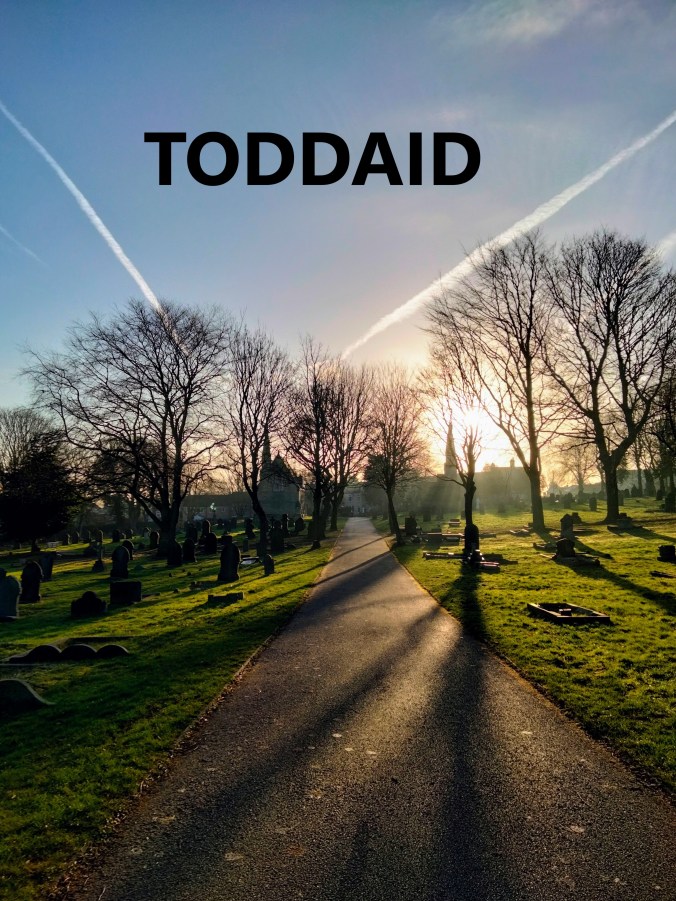
Last week’s form chosen by Paul Brookes was the Toddaid, another Welsh form. I found a Welsh site (in English translation) for the instructions. This is what I understood. Structure is couplets, L1 10 syllables, L2 9 syllables. Main rhyme, which can be assonance or consonance, is mid L1 end L2, and there’s an echo rhyme end of L1 and mid L2. Like all Welsh forms it should be song-like.

I really enjoyed writing these poems, particularly that slanting rhyme scheme that breaks the lines and binds them together at the same time. Like all poetry forms in translation, we tend to calculate in English syllables which isn’t the same as the original meter, making it hard, I find, to keep to an even rhythm. It was well worth the effort though.

The first poem is my tentative first attempt, expecting it was going to be difficult. The second poem…

View original post 239 more words

Chen Xianfa: Five Poems Translated by Martyn Crucefix and Nancy Feng Liang

The High Window Review's avatarThe High Window

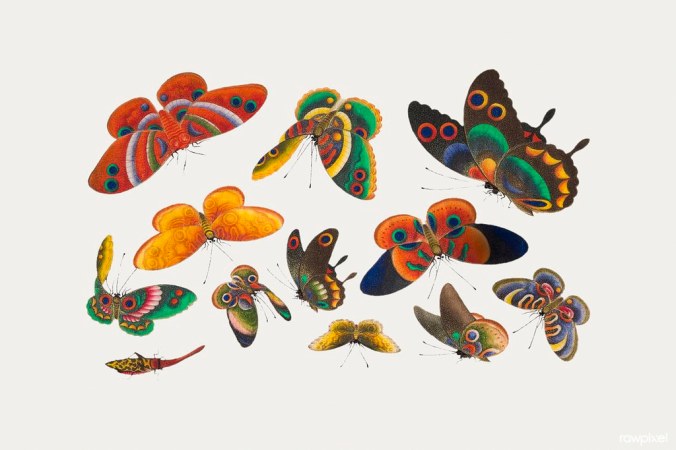
butterflies cxhinese

*****

Chen Xianfa is a poet, essayist and journalist born in Anhui Province, China, where he still lives. He has published four books of poems: Death in the Spring (1994), Past Life (2005), Engraving the Tombstone (2011) and Poems in Nines (2018) which was awarded the Lu Xun Literature Prize. A Selected Poems appeared in 2019. He has published two collections of essays, Heichiba Notes (2014 and 2021). Other awards include China’s Top Ten Influential Poets (1998-2008), the Hainan Biennial Poetry Prize (2011), Yuan Kejia Poetry Prize (2013), Tian Wen Poetry Prize (2015) and the Chenzi’ang Poetry Prize (2016).

*****

Chen Xianfa: Five Poems translated by Martyn Crucefix and Nancy Feng Liang

chen cropped

A WORLD OF BUTTERFLIES

Suddenly, we will lose
all kinds of ways,
every intonation,
struck dumb in the face of things moving quickly towards us.

Speechless, I stand beside a rock,
and displayed on the rock, a butterfly…

View original post 934 more words

Tears in the Fence 77 is out!

tearsinthefence's avatarTears in the Fence

Tears in the Fence 77 is now available athttp://tearsinthefence.com/pay-it-forwardand features poetry, prose poetry, translations, creative non-fiction and fiction by Lucy Ingrams, Jane Wheeler, Eliza O’Toole,Steve Spence, Peter Larkin, David Miller, Beth Davyson, Benjamin Larner, Louise Buchler, Isobel Williams, Glenn Hubbard, Hanne Bramness translated by Anna Reckin, Daniela Esposito, Simon Collings, Poonam Jain, Giles Goodland, Michael Farrell, Richard Foreman, Cole Swenson, Lesley Burt, Jeremy Hilton, Greg Bright, Alexandra Corrin-Tachibana,John Freeman, Caroline Maldonado, Rosemarie Corlett, Robert Hamberger, Alicia Byrne Keane ,Olivia Tuck, Penny Hope, Mary Leader, Christine Knight, Ann Pelletier-Topping, Jennie E. Owen, Natalie Crick, Sian Astor-Lewis, Laura Mullen, Gwen Sayers, Kevin Higgins and Graham Mort.

The critical section consists of the Editorial by David Caddy,Letters to the Editor by Andrew Duncan, Tim Allen, Jeremy Hilton and David Pollard, Peter Larkin on Rewilding the Expressive: a Poetic Strategy, Andrew Duncan on Peter Finch, David Pollard on Patricia McCarthy, Simon Collings…

View original post 90 more words

NEW PROMPT Inspired by an idea invented by @drsunilsharma Become a #ReciprocalReader.Two of you choose to analyse two poems written by one another. I will feature your analyses of each others poetry. Who’s up to the challenge?

#TheWombwellRainbow #Poeticformschallenge last week was a #Toddaid. Enjoy examples by Lesley Curwen, Tim Fellows, Jane Dougherty and Robert Frede Kenter and read how they felt when writing one.

Split

We stroll together on a winter’s day
with no hint that anything has changed.
Where the icy footpath splits apart our
drifting souls and hearts become estranged.

How Did It Go?

This format is a little tricky but fun. I tried not to effectively use the rhymes as pseudo line-ends. I might try this on a longer form. I didn’t really have any new ideas for the content so I went down a well trodden path.

Tim Fellows

At the end of time

At the end of time and all things, there will
be, through the storm, a thrush still, that sings,

and the song in his throat, earth-fade’s lament
for the stars all spent, the dark sun’s birth.

Waiting

Standing here, the place that was ours, we said,
the light green then red, waiting for hours,

though I know there’s no point, still kid myself
the crowd on this empty street will part,

a pushing seaward of time, and you’ll stride
back, then, when every stretched lie was true.

How did it go?

I found a Welsh site (in English translation) that explained this form. This is what I understood. Structure is couplets, L1 10 syllables, L2 9 syllables. Main rhyme, which can be assonance or consonance, is mid L1 end L2, and there’s an echo rhyme end of L1 and mid L2. Like all Welsh forms it should be song-like.
I really enjoyed writing these poems, particularly that slanting rhyme scheme that breaks the lines and binds them together at the same time. Like all poetry forms in translation, we tend to calculate in English syllables which isn’t the same as the original meter, making it hard, I find, to keep to an even rhythm. It was well worth the effort though.
The first poem is my tentative first attempt, expecting it was going to be difficult. The second poem is more loosely ‘adapted’, keeping the line structure but mixing assonance and consonance and abandoning the lyrical aspect. I have posted the stages in-between in the Toddaid post on my blog.

Jane Dougherty

Parched

I had no fuss to write, to think. The earth
pulled dearth to pink-grey femur. Dust
the graves with leaves, dry this Christmas, patterned.
We are shattered without drink, the glass.

A Night in Brooklyn

If a dream had any consequence, yours
Insinuated pouring violets.
Rain, rain — tap on window ledges — till soaked,
Newspapers, and words — inviolate.

Three

We ran through laneways, shortly out of breath.
Who leapt, — Us — so entertained, entwined –
Young school friends –divine — out of uniforms —
button, adored button, confining.

Behind the schoolhouse, kissing, precocious.
Oh, ferocious, were the coded rules.
In school, with runes in the late afternoon,
You and I, and Spoons — night spinning cool.

How Did It Go?

Toddaid, a 19th century Welsh verse form. The challenge was creating end rhymes that corresponded with internal rhymes, couplets into quatrains, plus end rhymes in lines 2 and 4. It took time to keep each component in the air and find words to correspond and maintain a mood. I created three, I enjoyed this form, though its finnicky. It helped me to explore – perhaps simply – odd figures, active rhythms, with some form of edgy dreamy imagery. Captured tableaus, still and in motion, fixed frameworks of an after-echo.

Robert Frede Kenter

Heaven and earth

Beyond seeing they go into the dark
Beyond touch their faces are cold
Beyond gravity their molecules stream
Beyond galaxies their souls are rolled.

Around the fireplace we have hung their smiles
Around five, expect them at the door
Around the house we hold the things they held
A round life, whose sweetness fills our core.

How Did It Go?

I found this form quite difficult, especially balancing the rhyme with the number of syllables. Many rewrites, especially for the last line. I didn’t make it any easier for myself by using repetition of the first words in each line.  I think it makes for song-like poems, rather old fashioned but quite pleasing.

Bio and Links

Robert Frede Kenter

is a writer, editor & visual artist, publisher of Ice Floe Press http://www.icefloepress.net. Work in journals, online & in print, some published books, participant in numerous art exhibitions, public readings and occasional performance work. Tweets: @frede_kenter.

“Created Responses To This Day” Kushal Poddar responds to day 379 of my This Day images. I would love to feature your responses too.

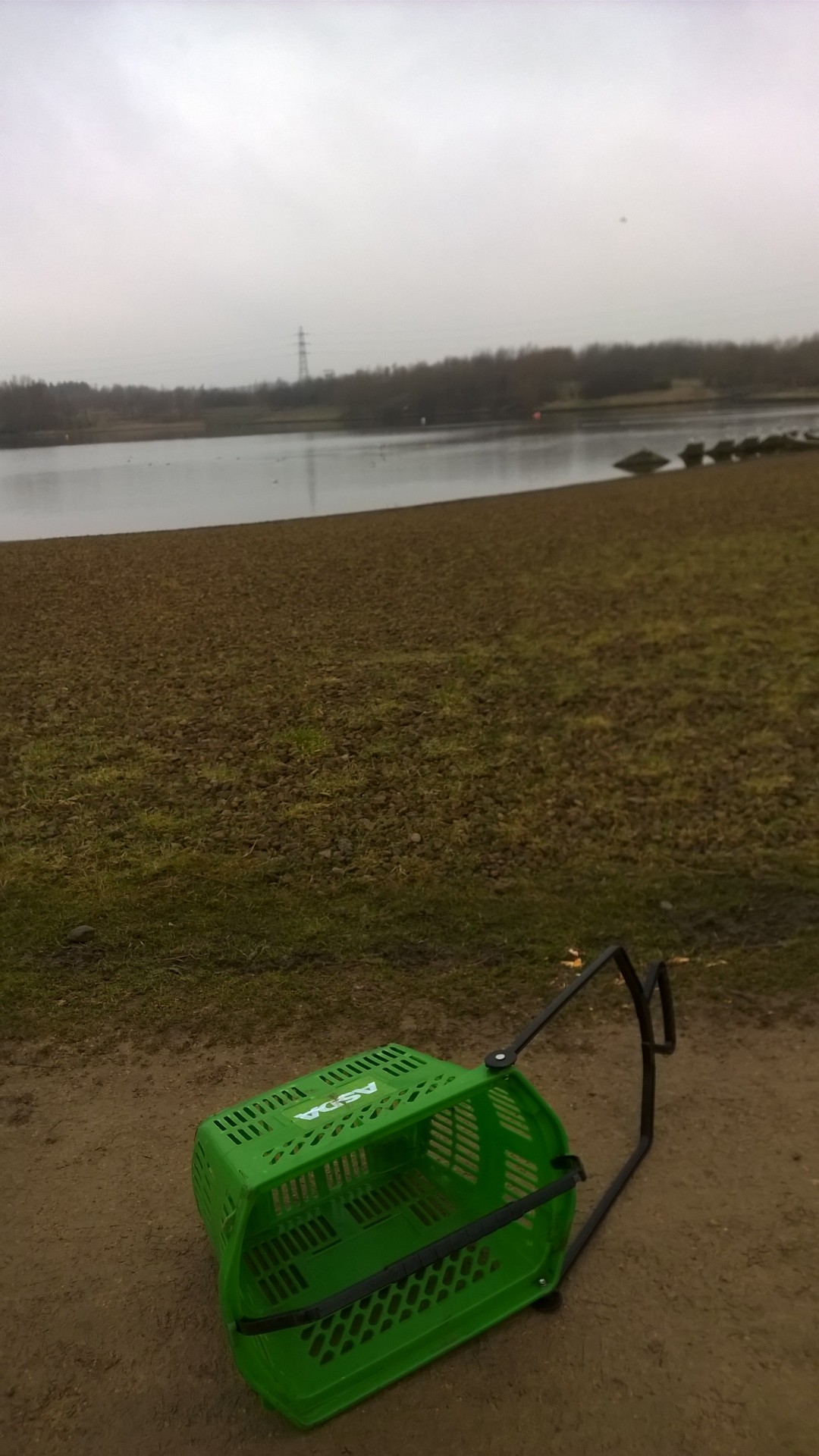
X Marks

You will be surprised how far a missing Asda cart can go before the cart-runner
startles to find out his grip tight
around the fate of it and loosens his fingers.
Water deterges the footprints on the lake’s skin.
An officer lets you know that the distance between
the abandoned cart and the beginning of the body of water
is called forgiveness.

Between a Drowning Man (Salt, 2023)

martyn crucefix's avatarMartyn Crucefix

Forthcoming from Salt Publishing in Autumn 2023.

Martyn Crucefix’s new collection of poems trace the forensic unfolding of two landscapes – contemporary Britain post-2016 and the countryside of the Marche in central, eastern Italy. Both places are vividly evoked – the coffee shops, traffic tailbacks, shopping malls, tourist-dotted hillsides and valleys of modern Britain appear in stark contrast to the hilltop villages, church spires, deep gorges, natural history and Classical ruins of Italy. Both landscapes come to represent psychic journeys: closer to home there is division everywhere – depicted in both tragic and comic detail – that only a metaphorical death of the self seems able to counteract. Closer to the Mediterranean, the geographical and personal, or romantic, divisions are also shown ultimately to offer possibilities of transcendence.

The poems of the longer sequence, ‘Works and Days’, are startlingly free-wheeling, allusive – brilliantly deploying source materials and inspiration from Hesiod’s…

View original post 317 more words

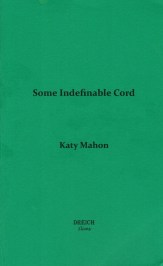
Review of ‘Some Indefinable Cord’ by Katy Mahon

Nigel Kent's avatarNigel Kent - Poet and Reviewer

I’m convinced that when we look back upon the current decade we will come to realise that it has been a golden age for poetry when a succession of impressively talented new poets were discovered by the editors of small poetry presses. Add to that list the name, Katy Mahon, a poet from Northern Ireland, who made her debut in 2022 with a pamphlet, Some Indescribable Cord (Dreich). You only have to read the first poem in this small collection to be impressed.

As the word, ‘cord’, in the title suggests this is a collection about connection: how we are connected to others and to the past. A number of poems explore this theme in terms of the complex nature of relationships. Mask explores how a potentially warm, satisfying connection can be frustrated by someone who seeks to hide his/her true self behind a facade of perfection (a mask of…

View original post 1,002 more words

Ghost Methods by Siofra McSherry (Broken Sleep Books)

tearsinthefence's avatarTears in the Fence

The ghost in the title of this slim pamphlet (37 pages including prelims and a foreword) is the shade of poet Sean Bonney, who was a friend and colleague of McSherry. Many of these poems write back to or are haunted by Bonney, and the best poem, or sequence of poems, in the book is ‘A Series of Posthumous Discourses with Sean Bonney’, which does exactly what it says.

Bonney’s first pamphlet was a scrappy rebellious free verse affair, wrapped in a bright pink cover, entitledMarijuana in the Breadbin. After some further pamphlets from fugitive small presses Salt offered upPitch Blade Control, and although the alt.publishing continued,Letters Against the Firmament, a surprising choicefrom Enitharmon Press, established Bonney as a revolutionary, considered and angry writer. This was reinforced by the online publication of a Selected Writing (All This Burning, Ill Will Editions) and…

View original post 423 more words

Tim Ades: Six Poems by Heinrich Heine.

The High Window Review's avatarThe High Window

heine

*****

Heinrich Heine (13 December 1797 – 17 February 1856) was a German poet, writer and literary critic. The eldest of four children, he was born into a Jewish family and, during his childhood, was called ‘Harry’ until after his conversion to Lutheranism in 1825. Heine’s father, Samson Heine (1764–1828), was a textile merchant. His mother Peira (known as ‘Betty’), née van Geldern (1771–1859), was the daughter of a physician.

He is best known outside Germany for his early lyric poetry, which was set to music in the form of lieder (art songs) by composers such as Robert Schumann and Franz Schubert. Heine’s later verse and prose are distinguished by their satirical wit and irony. He is considered a member of the Young Germany movement. His radical political views led to many of his works being banned by German authorities — which, however, only added to his fame. He spent…

View original post 1,482 more words