bees in our garden, more every day
gathering pollen, crisscross their way
they haven’t time to linger in the sun
for time is honey they hurry along
or briefly cling in the breeze and sway
they only pause to brush with care
specks of gold dust from their fur
sometimes they will dance a jig
sketching a course mid air
to remember where our garden is
all worker bees must choose
a resting place some nuzzle
on a flower no longer left in haste
to spend their final moments
in a perfumed last embrace.
when Winter has me in its thrall
if I close my eyes to the cold bare soil
it’s you I hear contentedly humming
wild flower memories we chase
and sunshine spreads across my face
All they have is the pure impulse to eat. . . — Carol Muske-Dukes
There’s an element of impulse calling from the candy bowls, soda bottles, cookie jars, and cakes on the counter. Graze free now, and constantly. Enjoy. What can I get you, she asks again.
There. That’s the quirk I don’t get. If we’re not chewing, she’s unhappy in some place rooted in her — where? Soul? Heart? Maybe psyche and history. Where does impulse hide compulsion?
I’ll never map the landscape. It just is. A child of immigrants, deserted wife, she’s never talked about the past hurts. Now she can’t remember yesterday, leaving bowls of past forever empty.
–Lennart Lundh (First appeared in his “Poems Against Cancer”, 2018)
Hint of Some Memory Gone
I do not know what this I want you to read.
A shaft of light scurrying in a room does not care about the objects you can see because of it.
I murmur, “I desire to go home.”
Now don’t say, “This house has been your home.” It cannot be so unless I permit it to host me
in flesh now, in a memory when I leave.
-Kushal Poddar
If Only
If only I could take my pen and write you back the way you were.
I’d play with the words re-order them so they made perfect sense remove repetition and fill in the blanks.
I’d craft every line and hone every phrase plug the holes that have appeared like torn tissue in your brain.
I’d reach for rich imagery summon every metaphor add cinematic vision to recreate you on the page with all your former vibrancy.
I’d halt the slide into shadows sweep the cobwebs from those vacant eyes brighten them with laughter again.
I’d give you back all those stolen memories, capture once more your incandescent smile.
If only I could write you in indelible ink you’d be an unforgettable poem.
(First published in Graffiti, 2021)
-Val Ormrod
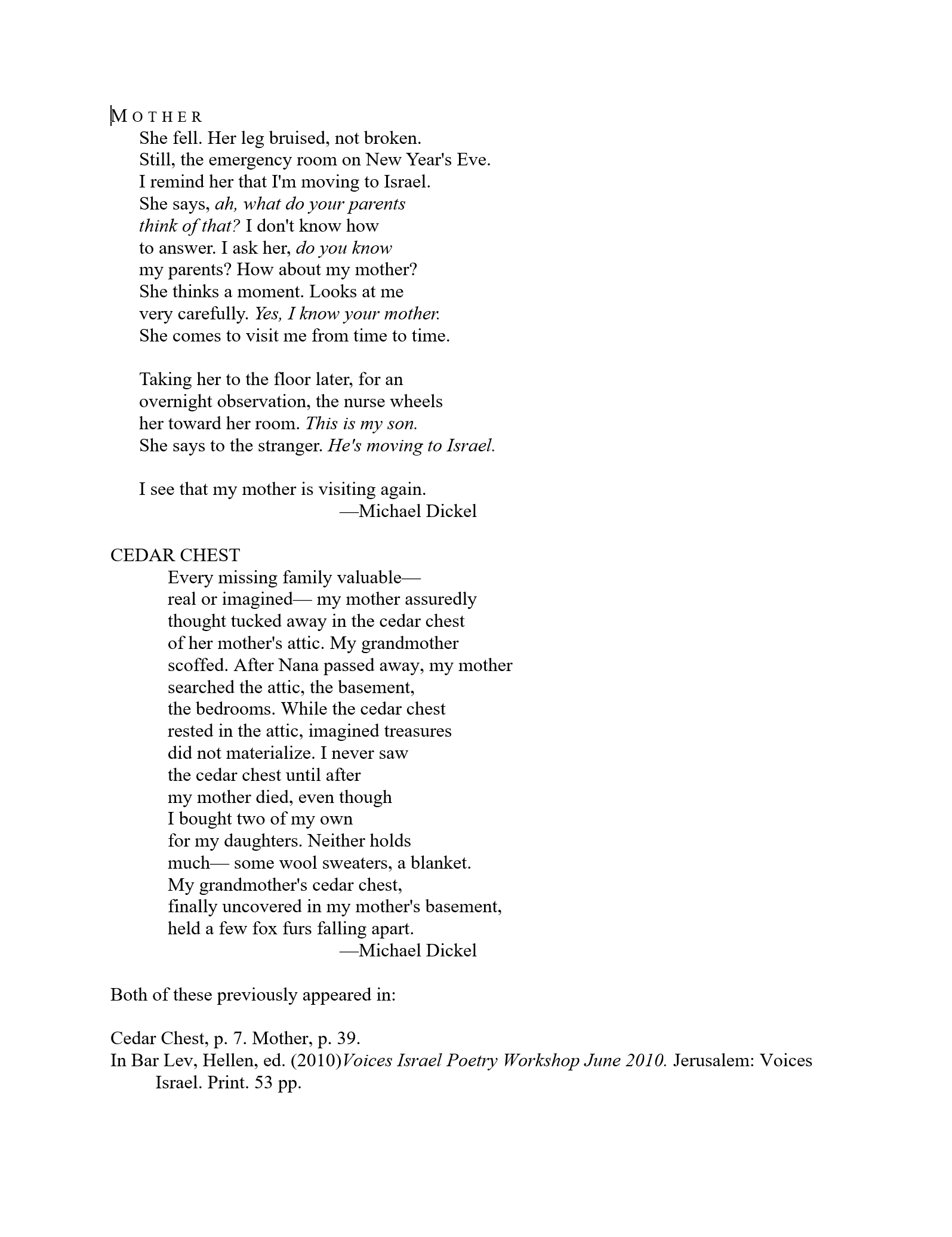
-Michael Dickel
Clocks
I already carry you with me Like you’ve gone Fitfully, fearfully. A quiet ritual Of stepping stones, gently.
I carry you with me As head dipped, aisle step Wicker, willow, reed for sleep Beauty in my arms to keep
I am carrying you with me The time slip, slow droop and drop The rubbing out the now the not …
The words are stalling. There’s mental furring, The hand that reaches out to me, searching Then there’s the circle back to me too As I look at myself in a version of you
Lines creeping, face folding A sky that is racing, air coolly quickening Seeds burst; roots thrust Into the earth With me Within me
-Lauren Thomas
The Blessing
Raanana, March 9, 2018
Just suppose instead of dying You kept on living. You get to keep your mind But it’s unconnected to any other Living man or woman’s view of reality. In your reality the dead you loved Go on living, Doing what they always did. It’s the living loved ones disappoint you With their separate realities Not including you in their trips to the beach Or family dinners Since frankly your grotesqueness scares the kids. No, the dead never disappoint. They call each day And take you out to lunch. The place you worked, Though long shut down, Still employs you And your old home where you grew up, Though long sold to someone else, Still waits for your return. But sometimes they do disappoint, Even the dead, Like last week when Mama and your sisters stopped calling you And no one living gave you their numbers So you could check that they’re ok And you thought that they were mad at you, It made you cry, You hadn’t wronged them that you knew. Some days are good And some are bad When you live with the dead and the living, But you can’t see The time you occupy Has calved like some ice floe From the world, Maybe that’s a blessing.
-Mike Stone
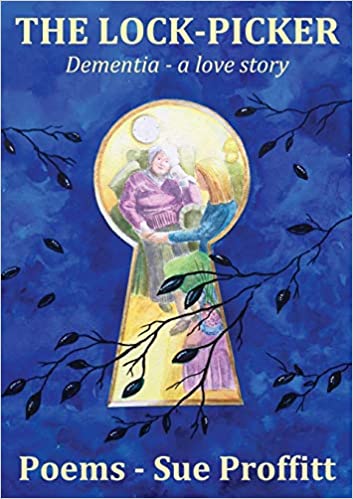
Camilla of Palewell Press writes of “The Lock Picker”:
Sue Proffitt’s remarkable second poetry collection, The Lock-Picker, is about living alongside her mother who was suffering from dementia. Her poems explore the nature of self, memory, identity and what it truly means only to exist in the present moment. There are few collections that cover this ground, and in such a way that the reader and perhaps other carers, might feel changed as a result, wiser, kinder, and as Proffitt hopes in her preface, ‘a little less alone’.
I will be featuring poems from the book the rest of the week. Here is the first:
You can order a copy for £9.99 (excluding postage) from this page. Please contact Palewell Press at enquiries@palewellpress.co.uk if you have any delivery queries.
Ropes
Summer, sun pressing against the window: a child denied attention. The fire is on, ‘The King and I’ choruses its story.
Do you remember? lobbing memories like ropes begging a catch. Yes I do!
Your smile returns you so that even now six years disappear – singing Getting to Know You
as I knead the bumps and cracks in your feet, resting in my hands like broken birds.
And I wonder who’s clinging to whom – you, grasping at the parts of yourself I throw towards you, or me, watching
your frantic eyes go under, scrabbling in the wreckage for something, anything to keep you afloat.
By every bedside in every airless room so many, half-in, half-out, flail beseeching hands
and those of us on the edge hear our voices pleading let go! let go! all the time throwing ropes.
Home
Casually, you ask me if I’ll describe for you what your old house was like. I hope my surprise doesn’t show.
It’s frightening to think that forty years of your life could suddenly just disappear down some cognitive sink-hole.
Luckily, I’ve got with me something I can show — snaps I took on my smartphone the last time I was there.
I’m pleased that my “parting shots”, only an afterthought then, have come in useful now, as I swipe through the pictures with you.
Everything looks as it should: the garden’s neat and tidy, though autumn has been through and stripped the poplars bare.
My car parked on your drive and the curtains we left up (part of the deal, plus carpets) help make the place look lived in.
No one would know that only the day before the house-clearer had been in and emptied everything out —
a lifetime’s worth of junk, stuff we didn’t want, things you’d forgotten you had, before the forgetting began.
-Stephen Claughton
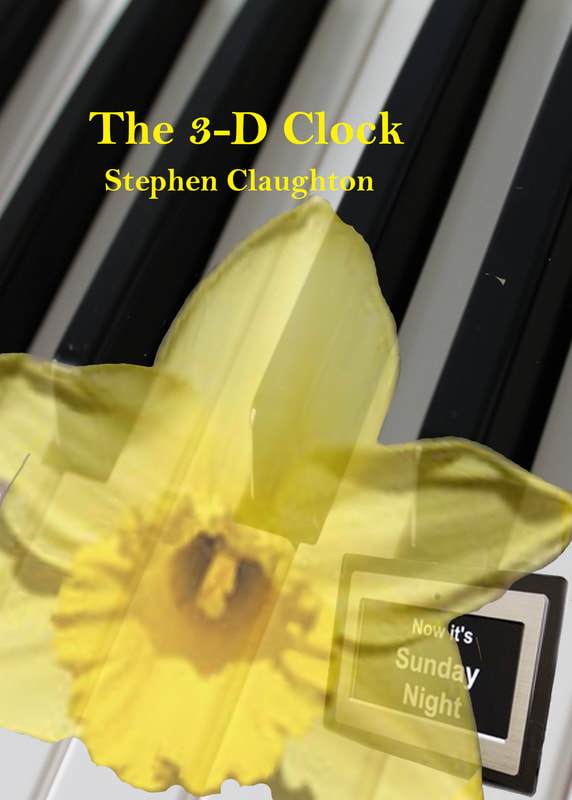
(First published in “The 3-D Clock”, Dempsey & Windle, 2020)
*
Seventh and eighth in my heroic crown sonnet sequence for #MentalHealthAwarenessWeek
7. I Find Myself
How did I find myself here, a spindrift? Not enough tea in this. It’s just water. Sugar. Can you put more sugar in it? What’s your name? Thankyou. That tastes much better.
I need the loo. Can you help me? Always somebody screams in here. You like my hat?. I need the loo. Where you going? Away? O, I know her she’s nice. Yes, love. Toilet.
She’s screaming again. I’m going to lie down on my bed, love. Will you stay with me? My clothes no longer fit. They need to buy me more, that aren’t so tight. I like pretty.
Carried coal in on his back. My father. Water’s edge or earth’s end? Which is kinder?
8. Edge or Earth’s
“Water’s edge or earth’s end? Which is kinder? What do words mean? Getting more like pictures. What are they showing me? What is this for? A pen. What do you do with it? Mixtures
of tiny lines. That’s pretty.” Because she can’t write, but enjoys the sounds I’m making these verses up for her. I read so she can listen, recording what she’s saying.
I have to report how she interacts with other people in here. Make sure she takes her medication else, she’ll fall back and her condition worsen more quickly.
Sentences she says really get to me: “Only strangers now, who say they know me.”
-Paul Brookes
Bios and Links
–Lauren Thomas
is a Welsh poet whose most recent writing is in The Crank Literary Magazine, Briefly Zine, Re-side Magazine, Abridged and Green Ink Poetry. She has poetry forthcoming in Dreich’s Summer Anywhere anthology, Songs of Love and Strength by TheMumPoemPress and was winner of Poems for Trees competition with Folklore publishing. She is an MA student in Poetry Writing with Newcastle University and The Poetry School, London.
poetry has been published by Eye Flash, Hedgehog Poetry, Graffiti, Hammond House, Gloucester Writers Network and in several anthologies. In 2019 she won the Magic Oxygen International Poetry Prize and Ware Poets Open Competition, was shortlisted for the Plough Prize, Wells Festival of Literature and nominated for the Forward Prize single poem award. Her memoir In My Father’s Memory was published in 2020.
–Stephen Claughton
was interviewed by The Wombwell Rainbow in April last year. His poems have appeared widely in magazines and he reviews regularly for London Grip. This is a poem from The 3-D Clock, a pamphlet about his late mother’s dementia, which Dempsey & Windle published in 2020. Copies are available from their website here.
-Fiona Perry
was born and brought up in the north of Ireland but has lived in England, Australia, and New Zealand. Her short fiction won first prize in the Bath Flash Fiction Award 2020 and was shortlisted for the Australian Morrison Mentoring Prize in 2014 and 2015. Her flash fiction performance won second prize in the Over the Edge Fiction Slam 2021. Her poem, “Fusion”, was longlisted in the Fish Poetry Prize 2021, and she contributed poetry to the Label Lit project for National Poetry Day (Ireland) 2019. Her poetry and fiction has been published internationally in publications such as Lighthouse, Skylight47, Spontaneity, and Other Terrain. Follow her on Twitter: @Fionaperry17
Her first collection, Alchemy, is available from Turas Press (Dublin).
-Margaret Royall
is a Laurel Prize nominated poet. She has been shortlisted for several poetry prizes and won the Hedgehog Press’ collection competition 2020. She has two poetry collections:
Fording The Stream and Where Flora Sings, a memoir in prose and verse, The Road To Cleethorpes Pier and a new pamphlet, Earth Magicke out April 2021. She has been widely published online and in print, most recently: Hedgehog Press, The Blue Nib, Impspired & forthcoming in Sarasvati and Dreich.
She performs regularly at open mic events and facilitates a women’s poetry group in Nottinghamshire.
lives and works in Berlin. In her dreams, she can swim like a manatee. Annick tweets @missyerem and has, to her utmost delight, been published by Pendemic, Detritus, @publicpoetry, RiverMouthReview, #PoetRhy, Anti-Heroin-Chic, Rejection Letters, Dreich, 192, The Failure Baler and Rainbow Poems. https://missyerem.wordpress.com. https://linktr.ee/annickyerem
-Nigel Kent
is a Pushcart Prize nominated poet (2019 and 2020) and reviewer who lives in rural Worcestershire. He is an active member of the Open University Poetry Society, managing its website and occasionally editing its workshop magazine.
He has been shortlisted for several national competitions and his poetry has appeared in a wide range of anthologies and magazines. In 2019 Hedgehog Poetry Press published his first collection, ‘Saudade’, following the success of his poetry conversations with Sarah Thomson, ‘Thinking You Home’ and ‘A Hostile Environment’. In August 2020 Hedgehog Poetry Press published his pamphlet, Psychopathogen, which was nominated for the 2020 Michael Marks Award for Poetry Pamphlets and made the Poetry Society’s Winter List.
In 2021 he was shortlisted for the Saboteur Award for Reviewer of Literature.
is a poet originally from Orkney. She was the recipient of the Scottish Book Trust’s Next Chapter Award 2020 and in 2006, she received the Calder Prize for Poetry from the University of Aberdeen. Her work has been extensively published in literary magazines, anthologies and websites including Poetry Review, Agenda, The Guardian, New Writing Scotland, The Poetry Cure (Bloodaxe) and the Scottish Poetry Library. Her work has also been broadcast on Radio 4.
Teaching was in your blood — you had red ink in your veins. Cigarette in one hand, a pen poised in the other,
you’d attack the marking pile. Tick, cross, underline, “Good work,” “Must improve,” your default mode: exasperation.
In the end, when words really did fail you and I had to help you out, you still picked me up on mine. “The man who does odd jobs?”
“A janitor,” I suggest. “Yes, yes, but the English word. You watch too much TV.” Alright, a caretaker then.
It’s just as well you can’t see that it isn’t spelt “all right”. I used to resent your corrections. These days I’m glad you still care.
You wouldn’t be you, if you weren’t the one in charge. After you went into care, it was only a matter of time
before you assumed some role, institutions being all alike. Accompanist I could believe, but “Lecturing, Mum? On what?”
In the end, when your dreamed-up tasks became too much to bear, you demanded to see the warden to hand in your notice to quit.
-Stephen Claughton
Bedtime Ritual
How long have we been married? he says, as we start the bedtime routine. We’re not married, Dad, I say. I’m not your wife. What are you then? he asks. I’m your daughter. Oh yes, daughter, that’s right, and without missing a beat, How long have we been married? Oh, a long time, I say, giving in, distracting him with a chocolate and fetching his PJs.
Out of the corner of my eye, I see him hide the chocolate under his pillow. Don’t take those, he pleads, as I attempt to scoop up his clothes, I haven’t got any more. The worry whisks him into agitation; his heart creases with the fear of loss. And so the nightly ritual unfolds. Like the king in his counting house, we are counting out his clothes, lining up the pants and socks like toy soldiers on his bed.
Reassured for now, he looks at the montage of photos. That’s my mother and my sisters, and those are my kittens, he proclaims with misplaced confidence. But, no matter, for these moments, like the rest, will skitter into black holes and dissolve into mist. As I tuck the sheets around him he reaches up to hug me. You’re my favourite dog, he says. And you mine, I say. The best.
(First published in The Bridport Prize Anthology 2014)
-Val Ormrod
The Dementia Diaries Raanana, February 25, 2018 1. Just for the record I didn’t write this, My son did. He says he’s recording Everything I say to him On the phone Since he’s so far away. He says He’s writing it like a poem Though I don’t think My life is too poetic And besides, The lines don’t rhyme. I didn’t pick the title either. He says since he’s recording everything, He gets to pick the title. Maybe he’s got dementia, I know I don’t.
2. What’s this doing here? I didn’t say Any of this stuff. I don’t need a diary, My memory’s fine.
3. Well, As long as you’re asking, I’m not doing so well today. Why? I’ll tell you why. They said they’d take me home today And I’m still here waiting. No, this isn’t my home. Who are they? They’re the people Who said they’d take me home. No, it’s not my home. My home is when I was a little girl With my parents And my sisters. What do you mean they died long ago? I talk to Mama every day And they come to pick up Daddy Every Shabbos Since they need him for a minyan. My sisters don’t call much, I guess they’re busy Doing things they want to do. Why do you keep saying They are dead and buried In the cemetery with Dad? I know that But they’re still alive Since I talk to them Everyday. Would I lie to you? Do I think you’d lie to me? No, I guess not. Maybe I’m losing my mind.
4. I can only talk For a few minutes today. Why? Because I’ve got to dress To go to work. How old do I think I am? How old do you think I am? I’m ninety-five? So what? I have to pay my bills still. What do you mean I don’t have to work? What do you mean Everything is paid for here? Very interesting, That’s the first time Anyone’s told me that. I’ll just hop a bus And go downtown. I read the syndicated news To the local rags And have lunch With the girls. It’s the cat’s meow. Got to run.
5. I don’t know why You don’t believe me That I work And this place here Is not my home. Just ask my Mama, She’ll tell you.
6. If what you say Is true, And this is all I have And all there is And what I think is true Is not, Then what use is there In living? Nobody comes to visit me Or call. Nobody takes me anywhere Or asks me if I’d like to go. My kids are far away. I don’t see anyone Except these pictures On the wall. No, I don’t know any of The other residents. The lady that kept a teddy bear in her bag? The one with the trembly voice? No, I don’t know anyone like that. Don’t know anyone. Maybe I’ll hop a plane And come to you.
-Mike Stone
Still Alive
I find my father wandering the halls, his daily search for an escape. He sees me and tears flood his eyes. “I thought you had been killed” he tells me.
“No, Dad, I am fine. I am sorry you were scared”. Tears still fall from his eyes, but now they fall in shades of relief.
“When is your brother coming?” he asks “John will be here soon, Dad”. My brother has been dead for 6 years
“Is Allan still alive” my father asks me. “Yes, Dad, you are”.
-Susan Richardson (A poem from her recent collection “Things My Mother Left Behind”)
Memory Box A memory box is a time capsule that connects an individual or group of people with the past through the items that the box contains.
A Sutton Seed Packet. Here you are pop-up book deep in cottage familiars creaking their delirious roots into blood-warm, well-tended soil. Dotted amongst them, exotic botanicals, the joyful offspring of slips pilfered from National Trust Gardens.
Thomas à Kempis’ Imitation of Christ. Winter is the time to fret and look for answers to the unanswerable in late night embers and these pages. Kept within reach on your bedside table, this book is a compass with which to navigate the dark geometry of the mind.
A crochetneedlebelongingtoyourwife. Two lives enmeshed in thousands of interlocking loops. The steadfast slipknot of her dutifulness securing an unbroken chain of family life. She lies with the peonies, icing-sugar-pink, you placed in her coffin. Loved until the end.
A wageslip. The final day of school. Your classmates are hurtling their books over the wall with abandon. You sit crying, bereft, on playground gravel. A bright twelve-year-old. Further education out of grasp. But labourer and factory worker, you will never waver from providing for your family.
A photo of Sloan Street. Greyhounds sleeping in front of the fire. Your sister brushing her hair in a wall mirror. Beyond the backdoor; the cluck and guttural groan of chickens; the promise of fruit bushes in bud. Every prayer and intercession a protective force field.
A CD of Puccini’s Gianni Schicchi. You are a teenager. O Mio Babinno Caro is playing on a neighbour’s radio. A startling new sound, it seeps through the bedroom wall and into your marrow. God is in music you would say. Puccini, Rachmaninov, Mozart. Passion, solace, elevation.
Apigeon’slife ring. Your father creates cages with old bicycle spokes, in which to keep and observe wild birds. You were always more interested in release than entrapment. A bird’s ability to find its way home, a life-long fascination. The commonplace turned miraculous.
A family bible. Your mother is dangerously ill. Your aunts are either side of you, holding a hand, teaching three-year-old you to count by climbing stairs in their house. One. Two. Three. Keep rising. Moving. Let go of their hands now.
*
Follow magnetic maps to your final destination. As you journey, lift this box high. Scoop and drop each of these totems like ballast from a hot air balloon.
You no longer have a need for them. Let them descend intact.
We are here to catch them. To carry them into the next generation.
-Fiona Perry
Home
She’s spending more time lately, Moving through those rooms in mind The visits lasting longer, Day etched shadow- slips in time Winter settles at the shoulder Half-days met with frosted leaves You will find her out there In amongst St Flora’s Trees
Walnut drift of banister, Question-creak of great oak door One that opens on repeat Into distant childhood halls In many darkened attics, In stopped-up night will hear Time sifting through the relics Of muted, archived years Captured though each slice of light
Dust specks spin in film-reel gold Her imprint strobes from room to room As elsewhere, she grows old Through fishing floats the sun will bloom Fortune teller’s globes, in nets In this faded summer room Time starved heart is to forget Soft-spent shadows lengthen, New year bursts with hopeful glow
There her memory sits in warmth Waiting for us to come home.
-Lauren Thomas
The Naming of Parts
Today we had naming of parts. Yesterday, yesterday the tide swept you away. And tomorrow we shall have to salvage. But today, today we have the naming of parts.
This is the old house, the dog and whatshisname to name a few random objects cast ashore though nobody knew which ones.
Driftwood and debris surface like hit and miss memories. You ask, “Who am I?”
A lifelong question beaches itself against time, sopping in a sea fog, sacrificed and drowned.
A voice from the abyss asks, “Where am I?” Lost at sea in the gulf between us.
The blossoms are fragile and motionless. Silence overcomes never letting anyone see. Dismemberment floats into parts.
The sea of memory drifts all about us even to the end of all our days. We cannot master the past.
Published in Parramisha: A Romani Poetry Collection.
Reprinted in Memory and Loss: Poems about Alzheimer’s and Dementia. A Canadian Anthology of Poetry
The Unresolveables
5. Frantic Grasp
By my frantic grasp to prevent their drift I try to keep all safe. I have sons. O, how wonderful! These are them, are they? Sift through the photos. They’re cute. You have to go?
Please hold my hand just a little longer. Thankyou. I won beauty contests. Youthful. I sold microwaves to throngs as youngster. Managed teams, won prizes. Being truthful.
Do you like my hat? It’s a summer one. Please stay a bit longer. Don’t like it here. No, really. I don’t. Lonely when you’ve gone. Go then. See if I care. Don’t leave me dear.
Someone visited me? Photos. My minds into forgottenness. They are reminders.
6. They Are
into forgottenness. They are reminders. Photos remember what is forgotten. Who are these people? I wake from slumber to strangers smiling back at me. Fiction.
They mean nothing to me. Why are they framed, and in my room? These clothes aren’t mine. Someone’s swapped them! Mine had sewn cotton labels, named. I’m sure they did. In here they are all cons.
Come into my room in waves, steal what can. I know what they’re about. Won’t fool me blind. What do you mean what am I doing? Man, this is my room. It isn’t? Please help me find
my room. At seas edge I can feel waves lift. How did I find myself here, a spindrift?
-Paul Brookes
Bios and Links
-Frances Roberts Reilly
is a poet and filmmaker. She began writing seriously whilst working at BBC television in London, England. After making award-winning documentaries, she earned an Honours degree in English Literature at the University of Toronto.
Frances has an international profile as a Romani writer. True to the spirit of the Romani diaspora her poems, short stories, articles have been published internationally in well regarded anthologies in Canada, U.S., U.K., Wales and Europe. Her poetry has been featured by League of Canadian Poetry’s National Poetry Month and Fresh Voices online.
Her books include Parramisha (Cinnamon Press) and The Green Man (TOPS Stanza Series). Chapters from her memoir Underground Herstories have been published in Literature for the People and the Journal of Critical Romani Studies, Central European University in Budapest. Frances was invited as guest panelist on the Gelem, Gelem — how far have we come since 1971? program as well as participating on a literary panel of Romani women writers at the World Romani Congress, 2021.
Frances has been a guest author on CBC Radio and WSRQ Radio, Sarasota. She is the Producer of radio documentary series, Watershed Writers on CKWR FM 98.5 Community Radio.
is a Welsh poet whose most recent writing is in The Crank Literary Magazine, Briefly Zine, Re-side Magazine, Abridged and Green Ink Poetry. She has poetry forthcoming in Dreich’s Summer Anywhere anthology, Songs of Love and Strength by TheMumPoemPress and was winner of Poems for Trees competition with Folklore publishing. She is an MA student in Poetry Writing with Newcastle University and The Poetry School, London.
is a Welsh poet whose most recent writing is in The Crank Literary Magazine, Briefly Zine, Re-side Magazine, Abridged and Green Ink Poetry. She has poetry forthcoming in Dreich’s Summer Anywhere anthology, Songs of Love and Strength by TheMumPoemPress and was winner of Poems for Trees competition with Folklore publishing. She is an MA student in Poetry Writing with Newcastle University and The Poetry School, London.
poetry has been published by Eye Flash, Hedgehog Poetry, Graffiti, Hammond House, Gloucester Writers Network and in several anthologies. In 2019 she won the Magic Oxygen International Poetry Prize and Ware Poets Open Competition, was shortlisted for the Plough Prize, Wells Festival of Literature and nominated for the Forward Prize single poem award. Her memoir In My Father’s Memory was published in 2020.
–Stephen Claughton
was interviewed by The Wombwell Rainbow in April last year. His poems have appeared widely in magazines and he reviews regularly for London Grip. This is a poem from The 3-D Clock, a pamphlet about his late mother’s dementia, which Dempsey & Windle published in 2020. Copies are available from their website here.
-Fiona Perry
was born and brought up in the north of Ireland but has lived in England, Australia, and New Zealand. Her short fiction won first prize in the Bath Flash Fiction Award 2020 and was shortlisted for the Australian Morrison Mentoring Prize in 2014 and 2015. Her flash fiction performance won second prize in the Over the Edge Fiction Slam 2021. Her poem, “Fusion”, was longlisted in the Fish Poetry Prize 2021, and she contributed poetry to the Label Lit project for National Poetry Day (Ireland) 2019. Her poetry and fiction has been published internationally in publications such as Lighthouse, Skylight47, Spontaneity, and Other Terrain. Follow her on Twitter: @Fionaperry17
Her first collection, Alchemy, is available from Turas Press (Dublin).
-Margaret Royall
is a Laurel Prize nominated poet. She has been shortlisted for several poetry prizes and won the Hedgehog Press’ collection competition 2020. She has two poetry collections:
Fording The Stream and Where Flora Sings, a memoir in prose and verse, The Road To Cleethorpes Pier and a new pamphlet, Earth Magicke out April 2021. She has been widely published online and in print, most recently: Hedgehog Press, The Blue Nib, Impspired & forthcoming in Sarasvati and Dreich.
She performs regularly at open mic events and facilitates a women’s poetry group in Nottinghamshire.
lives and works in Berlin. In her dreams, she can swim like a manatee. Annick tweets @missyerem and has, to her utmost delight, been published by Pendemic, Detritus, @publicpoetry, RiverMouthReview, #PoetRhy, Anti-Heroin-Chic, Rejection Letters, Dreich, 192, The Failure Baler and Rainbow Poems. https://missyerem.wordpress.com. https://linktr.ee/annickyerem
-Nigel Kent
is a Pushcart Prize nominated poet (2019 and 2020) and reviewer who lives in rural Worcestershire. He is an active member of the Open University Poetry Society, managing its website and occasionally editing its workshop magazine.
He has been shortlisted for several national competitions and his poetry has appeared in a wide range of anthologies and magazines. In 2019 Hedgehog Poetry Press published his first collection, ‘Saudade’, following the success of his poetry conversations with Sarah Thomson, ‘Thinking You Home’ and ‘A Hostile Environment’. In August 2020 Hedgehog Poetry Press published his pamphlet, Psychopathogen, which was nominated for the 2020 Michael Marks Award for Poetry Pamphlets and made the Poetry Society’s Winter List.
In 2021 he was shortlisted for the Saboteur Award for Reviewer of Literature.
is a poet originally from Orkney. She was the recipient of the Scottish Book Trust’s Next Chapter Award 2020 and in 2006, she received the Calder Prize for Poetry from the University of Aberdeen. Her work has been extensively published in literary magazines, anthologies and websites including Poetry Review, Agenda, The Guardian, New Writing Scotland, The Poetry Cure (Bloodaxe) and the Scottish Poetry Library. Her work has also been broadcast on Radio 4.
I punch in the code for the second floor, elevator slowly ascending to a locked ward. A secret space for those whose minds have pulled up roots, memory twisting and evaporating like petals floating into the clutches of an unexpected wind.
I see him. My father, paper bones rattling beneath his skin, tiny frame swallowed up by the beige cushions of a chair. I watch him, fingers entwined with those of the woman beside him.
She strokes circles into the back of his hand, her thumb soothing a patchwork of weary veins, silently, as if the room around them never existed. They stare into each other’s eyes, speaking a language filled with shapes and pathways that traverse beneath a sky only they can touch.
A clatter of plates pulls him from their connection. He sees me, watching him, a spectator on the edges of his new reality. His eyes blink the room into focus. He lifts his hand as if it holds the weight of the sun, reaches for me. Today, he knows I am his daughter.
-Susan Richardson (From her collection, Things My Mother Left Behind)
Her Columbus Raanana, June 12, 2017 There, I’ve finally said it: My Columbus. You say you’ve come a long way Just to see me And now you have to go back home To your wife and dog But I’ve come a long way too: I’ve come from my Columbus. I hopped on a bus on Carpenter Back in 1939 or 40 And came to spend a week or two With you in your Columbus At this place that’s not my home. Sometimes I don’t know whether I’m coming or going when He tries to trick me into saying There’s only one Columbus But any fool can see that Mama and Daddy’s alive and well In my Columbus And my sisters too, Why, I was just talking to them this week And at work they still depend on me To read the ticker tapes to local rags. You should have seen me During Pearl Harbor In my Columbus. His Columbus is that nursing home Where you have to ask permission And the cemetery where my beloved family’s buried. Who would want to live in your Columbus? Not me, No siree Bob!
Honestly I try to follow you wither soever thou goest But when you cross that Stygian river Into a reality that’s only big enough For you and your youthful memories, You must know you’ve left me back On distant shores.
You’re my mother, God knows I’ve tried my best to honor you, Show you the respect that came so naturally When I was a child But time’s arrow seems to’ve stopped, turned around And gone backward so that You’re the child And I’m just an old man Tired, o so tired, of the banalities of life And the tricks it plays As though every day were April Fools.
Yes Mom, your Columbus is far better Than my Columbus But what good is a reality If you’re the only one who sees it? And what good is mine If there’s no rhyme or reason?
-Mike Stone
Timepiece
The mantel clock on the kitchen shelf in my father’s house possesses a squat pendulum encased by glass. It spoons out seconds in nonchalant swings: factory efficient, all business and no small talk. A drone of a thing.
Skeins of leaf shadow flicker through the picture window, its filigree falling across Lazyboy leather. His face is a fire of shattered autumn sunlight. Memories swarm as dust motes, visible but uncatchable, or maybe they float on thin web parachutes in the stratosphere.
So we speak in mechanical movements: “I’ll miss you when you go back,” he says. “I’ll miss you too,” I say (repeat at regular intervals). All of this observed, it seems, by the mute
Grandfather clock standing butler-like over us. Before, its clamorous chimes startled everyone except my father, until he opened the door to its belly and inserted a decisive finger, halting noisy machinations. Unspooked, my children slept easy that night.
As I wheeled luggage to the front door on our last day, I noticed he had started the timepiece’s ancient heart beating again. Shooting ticks and tocks into the room like arrows.
The cronikers were reclaiming the house. Filling up old biscuit tins, the mouths of figurines, cracks between floorboards, teacups, U-bends, every cobwebby orifice with the relentless sound of their unabashed measurement.
-Fiona Perry
Thresholds
Cool white floorboards lie under hot cheek And clenched jaw. Mother’s broth chirps downstairs On the stove. A spilt vase sends the shadow of black-star Seed heads across the wall. Apple wood scent crawls up Her back. A breeze is bird-song through the old open sash
She is all feathers, framed in the doorway, where still- life Thoughts tread old paths. Her face the soft yoke of a Blue egg on Sunday, says ‘plant me a tree and the birds Will come’ Her peace is whipped milk in a cool clay mug. Trivial rituals delivered in love that bind her to us
My father stands in sterile white light, Grapefruit bitters Curling in sparkling water. Unease is somewhere in the scrape Of a chair and my mother’s voice describing her birds. As if he Is caught at the swoop of a hill, the steep dip in the pit of him. Softly he closes the gate to the silvered path of her words.
-Lauren Thomas
The Unresolveables
3. Against
against receding waves that keep pulling. Everyday is new to me. Folk tell me something new everyday. I’m mulling over I belong here, here is not hell.
I have a husband who makes the tea, there behind the counter. Folk confuse me when they say so sorry but they need to share, my husband is dead. They don’t make sense.
Show photos of me with a strange cute man. I nod sweetly. Hold hands. They’re clearly mad. Steven, my husband, bring us tea, kind and sensitive. He goes along with their sad
news. Waves pull all value I have hoarded all away from me, memories tethered.
4. All Away
All away from me, memories tethered by fragility. Lacks strength of spider’s web, or ship’s anchor rope. Stranger blethered I have two sons. One no longer with us.
Competitive. Aspired. One capricious. Dead. Blue and white rope he used. My son. Brave. Bravest he ever was. Wouldn’t let us hug him. Let me put my hands on his brave
shoulders. Then he pushed away. As if to say I’m strong enough to stand on my own. Isn’t that brave? You know he had blue and white rope round his neck. He was known
as brilliant yachtsman. Memories slipped by my frantic grasp to prevent their drift.
-Paul Brookes
Bios and Links
-Lauren Thomas
is a Welsh poet whose most recent writing is in The Crank Literary Magazine, Briefly Zine, Re-side Magazine, Abridged and Green Ink Poetry. She has poetry forthcoming in Dreich’s Summer Anywhere anthology, Songs of Love and Strength by TheMumPoemPress and was winner of Poems for Trees competition with Folklore publishing. She is an MA student in Poetry Writing with Newcastle University and The Poetry School, London.
was born and brought up in the north of Ireland but has lived in England, Australia, and New Zealand. Her short fiction won first prize in the Bath Flash Fiction Award 2020 and was shortlisted for the Australian Morrison Mentoring Prize in 2014 and 2015. Her flash fiction performance won second prize in the Over the Edge Fiction Slam 2021. Her poem, “Fusion”, was longlisted in the Fish Poetry Prize 2021, and she contributed poetry to the Label Lit project for National Poetry Day (Ireland) 2019. Her poetry and fiction has been published internationally in publications such as Lighthouse, Skylight47, Spontaneity, and Other Terrain. Follow her on Twitter: @Fionaperry17
Her first collection, Alchemy, is available from Turas Press (Dublin).
-Margaret Royall
is a Laurel Prize nominated poet. She has been shortlisted for several poetry prizes and won the Hedgehog Press’ collection competition 2020. She has two poetry collections:
Fording The Stream and Where Flora Sings, a memoir in prose and verse, The Road To Cleethorpes Pier and a new pamphlet, Earth Magicke out April 2021. She has been widely published online and in print, most recently: Hedgehog Press, The Blue Nib, Impspired & forthcoming in Sarasvati and Dreich.
She performs regularly at open mic events and facilitates a women’s poetry group in Nottinghamshire.
lives and works in Berlin. In her dreams, she can swim like a manatee. Annick tweets @missyerem and has, to her utmost delight, been published by Pendemic, Detritus, @publicpoetry, RiverMouthReview, #PoetRhy, Anti-Heroin-Chic, Rejection Letters, Dreich, 192, The Failure Baler and Rainbow Poems. https://missyerem.wordpress.com. https://linktr.ee/annickyerem
-Nigel Kent
is a Pushcart Prize nominated poet (2019 and 2020) and reviewer who lives in rural Worcestershire. He is an active member of the Open University Poetry Society, managing its website and occasionally editing its workshop magazine.
He has been shortlisted for several national competitions and his poetry has appeared in a wide range of anthologies and magazines. In 2019 Hedgehog Poetry Press published his first collection, ‘Saudade’, following the success of his poetry conversations with Sarah Thomson, ‘Thinking You Home’ and ‘A Hostile Environment’. In August 2020 Hedgehog Poetry Press published his pamphlet, Psychopathogen, which was nominated for the 2020 Michael Marks Award for Poetry Pamphlets and made the Poetry Society’s Winter List.
In 2021 he was shortlisted for the Saboteur Award for Reviewer of Literature.
is a poet originally from Orkney. She was the recipient of the Scottish Book Trust’s Next Chapter Award 2020 and in 2006, she received the Calder Prize for Poetry from the University of Aberdeen. Her work has been extensively published in literary magazines, anthologies and websites including Poetry Review, Agenda, The Guardian, New Writing Scotland, The Poetry Cure (Bloodaxe) and the Scottish Poetry Library. Her work has also been broadcast on Radio 4.
Since we last spoke there has been a lot going on. Not just for me, but for all of us.
I completed my Masters Degree at Sheffield Hallam. I got a ‘Distinction’ and won the university ‘Ictus Prize for Outstanding Work in Poetry”. Both came as a thrilling shock.
I have completed a second collection of poetry for Valley Press. The new collection is called ‘Hidden Music’ and is due out in October. It’s a suite of poems that are in conversation with certain pieces of music and song. It;s a very different from ‘Recovery Songs’ in style and content. It had to be, I did not want to appear as a one trick recovery boy poet. I’m very pleased with it, but it is for others to judge. Once its in the public domain, I no longer have ownership.
I’ve also been lucky enough to receive funding from the Arts Council England to develop a third collection. This project is provisionally titled, ‘Kid B’ and I am in the early stages of writing it. The themes that i am exploring are isolation and I think will consist of shorter poems. Who knows what they will turn out like though.
I’ve also started a Literary Periodical with two fellow graduates form the MA course. It’s called. ’Northern Gravy’. It’s great to have a role as editor. Our first edition is out in July. Here is a link to the website. It would be great to see more submissions. Northerngravy.com
In this vital pamphlet, Hannah Hodgson, who lives with a life-limiting illness, addresses disability, hospitalisation, and isolation at a time when the disabled and unwell are frequently treated as voiceless statistics.
With no romance or affectations, this pamphlet painstakingly examines what the ill want from the well. One often reiterated wish is for no self-pity; a demand of able people to not ‘hijack tragedy’ with their tears. In ‘Dear Visitors’, the speaker has ‘become a tiger’ and the ward ‘a zoo’, who asks of those who have ‘paid their entrance fees at the nurse’s station’: ‘Don’t maudle, as the captive here that’s my job.’ The speaker goes on to tell the visitors to be themselves, ‘Reveal a little / of your flesh, trust I won’t rip you apart.’ – to bring the things that the speaker loves into the sterile clinical setting – ‘Talk of the wild, talk of home’…
You got up by yourself this morning, put on your own knickers, said you fancied eggs and bacon.
You went outside – first time in two years, to breathe the dawn air and survey the world since you left it.
In a few days, you remembered your name, the dog’s, who I was, that the postman wasn’t your Dad.
You exchanged pleasantries with the woman next door, no longer suspecting her of plotting your murder.
The hairdresser turned your flat feathers into a helmet of curls, in the mirror igniting a glimmer of recognition.
We chucked the grab rails and Complan drove the zimmer to the tip, turned your pill box into earring storage.
Weeks went by, you took the car out, joined the library, had a stab at calligraphy, tried your first chai latte.
Then on Sunday we came home and there you were on hands and knees under the table, looking for something. You didn’t know what.
From Lost & Found published by Hedgehog Poetry Press 2020 Vicpickup.com / @vicpickup
-Vic Pickup
Recognition
Black and white prints cover creased hands. Eyes narrow, dazed, not seeing…
We slung satchels over knitted cardigans, slammed the door, grey pleated skirts hitched high above the knee.
We stood to attention at the bell, split from my look-a-like, a whistle insisted we march into separate classrooms.
In the sixties we explored Brighton Laines, rummaged antique stores, picked up gold leafed books, bought treasure boxes to hide shared secrets.
We sank into striped deckchairs, flipped off our tops to reveal psychedelic swimsuits- plastic sunglasses concealed our faces. We lazed by gull-grey waves, pebbles chattered at our feet.
We sniffed salt from the sea, cardboard cones on our noses, read Jackie in the sun. A transistor radio blurred Cathy’s Clown, from the Top Ten charts.
I sit by the iron framed bed, wait for a flicker of recognition.
Chubby Checker blasts from the box high on the wall
Lillie looks up, whispers my name.
‘Freddie – The Twist. you and me that day down in Brighton.’
– Patricia M Osborne (previously published in Reach Poetry (2016) )
-Annick Yerem (First published in Dreich)
Audrey’s time
We wheel her into the waning evening sun as if the sunlight would somehow restore her like some wilting plant.
She does not speak. Not now. Words run away from her, slipping her grasp like unruly children, reluctant to come home at dusk.
We fill her time, with family photos till we have earned our leave; filial duty fulfilled for yet another week.
She looks at our departure with shuttered eyes, mouth ajar, memories escaping with every feeble wheeze, whilst her tissue soft hands clench and unclench in her lap, as if anticipating some last decisive assault,
which we think guiltily can’t come too soon.
-Nigel Kent
(published in ‘Saudade’, Nigel Kent, Hedgehog Poetry Press, 2019)
First published by The Blue Nib
REQUIEM FOR A CELLIST
She rocks rhythmically in her chair, Her eyes dulled by grief, skeletal fingers clutching rosary beads. In despair she chants ‘Requiem aeternam dona eis, Domine’
The creeping evil nibbles away at her brain She clenches her fists, howls like a caged wolf, searching desperately for her beloved ‘cello.
Then, as if by magic it appears, a Stradivari, propped up by the Steinway grand, pleading to be picked up and played again, its bow sprawled across the piano lid, resin box still unopened.
A sudden draft from the open window breathes life back into the stale air. Haunting sounds unlock iconic images, transporting her to lovers’ beds, concert halls, summer gardens and back-street alleys – a heady rush of half-remembered liaisons, ecstasy and pain intertwined.
Final chords crescendo then trail away into the invading gloom of a winter twilight. One last brave ‘da capo’- then peace descends.
Her weary frame crumples in dismay, She attempts to rise from her chair, pleads one last time: ‘Requiem aeternam dona eis, Domine’
-Margaret Royall
A Message
One of the best of minds destroyed by dementia
does not howl on her knees in the street, does not masturbate
in the magnolia living-room, is not dragged off the roof-top,
naked; no, she leaves a message on her daughter’s answer-phone
saying: there’s an echo, an echo in my head.
-Olive M. Ritch
1. Sat At Tideline With (A Crown Sonnet Sequence)
Sat at tideline with all my belongings. Longings in belongings. No you can’t. Don’t. Wave waxing pulls my stuff, drags itl Slipping. It can’t have it. I won’t give in. I won’t.
Ripple recedes as it pulls away from me. Then it rises, swoops like bloody murder. Sucks at my frames, pictures of family. Don’t remember what I’ve lost. I suffer
from losing nothing. People tell me what I’ve lost. I’m none the wiser. I need my bag. They steal my bag. Then help me find it. That’s why I carry it with me. My keys they rag.
They lift up stuff, say It’s here. Discovered. My photos, my ornaments, all gathered
2. All Gathered
My photos, my ornaments, all gathered into me beside a sea that steals, hoards. I painted three cat pictures. I’m mithered, I can’t recall their names. Lose the cord.
Hoppy had only three legs. Long haired love. In life you collect things for a reason, then forget the reason. Heaven’s above. I need to write stuff down. Where’s my pen gone?
My pen is in my bag. Someone’s stolen my bag. “Let me help you look.” Says carer. In my pile of valuables, well hidden. What do I need my pen for? Waves closer.
We are steadfast and keen in preserving against receding waves that keep pulling.
is a Laurel Prize nominated poet. She has been shortlisted for several poetry prizes and won the Hedgehog Press’ collection competition 2020. She has two poetry collections:
Fording The Stream and Where Flora Sings, a memoir in prose and verse, The Road To Cleethorpes Pier and a new pamphlet, Earth Magicke out April 2021. She has been widely published online and in print, most recently: Hedgehog Press, The Blue Nib, Impspired & forthcoming in Sarasvati and Dreich.
She performs regularly at open mic events and facilitates a women’s poetry group in Nottinghamshire.
lives and works in Berlin. In her dreams, she can swim like a manatee. Annick tweets @missyerem and has, to her utmost delight, been published by Pendemic, Detritus, @publicpoetry, RiverMouthReview, #PoetRhy, Anti-Heroin-Chic, Rejection Letters, Dreich, 192, The Failure Baler and Rainbow Poems. https://missyerem.wordpress.com. https://linktr.ee/annickyerem
-Nigel Kent is a Pushcart Prize nominated poet (2019 and 2020) and reviewer who lives in rural Worcestershire. He is an active member of the Open University Poetry Society, managing its website and occasionally editing its workshop magazine. He has been shortlisted for several national competitions and his poetry has appeared in a wide range of anthologies and magazines. In 2019 Hedgehog Poetry Press published his first collection, ‘Saudade’, following the success of his poetry conversations with Sarah Thomson, ‘Thinking You Home’ and ‘A Hostile Environment’. In August 2020 Hedgehog Poetry Press published his pamphlet, Psychopathogen, which was nominated for the 2020 Michael Marks Award for Poetry Pamphlets and made the Poetry Society’s Winter List. In 2021 he was shortlisted for the Saboteur Award for Reviewer of Literature. To find out more visit his website: http://www.nigelkentpoet.wordpress.com or follow him on Twitter @kent_nj
-Olive M. Ritch
is a poet originally from Orkney. She was the recipient of the Scottish Book Trust’s Next Chapter Award 2020 and in 2006, she received the Calder Prize for Poetry from the University of Aberdeen. Her work has been extensively published in literary magazines, anthologies and websites including Poetry Review, Agenda, The Guardian, New Writing Scotland, The Poetry Cure (Bloodaxe) and the Scottish Poetry Library. Her work has also been broadcast on Radio 4.
Andrea Ross’sPloughshare’sarticle “A Feminist Look at Edward Abbey’s Conservationist Writings” details the way that Abbey sexualizes the landscape in his many writings of the American Southwest, taking a racist and misogynist approach to the wild world. Ross has a complex relationship with the natural world of the west as a former ranger and current English professor.She often works with writers of this area, people like Abbey, Jack Kerouac, and Kenneth Rexroth, so I was excited to see her take on the landscape, how she would use it in this memoir about finding her birth family while trying to find a home within the natural world. What she finds in her relationship to the land is exceptional. Ross, unlike these other writers, is able to see the natural world as a place of rest; in her long journey to find her birth parents and herself, she finds…







 The Wombwell Rainbow