I’m a gobbler of slugs, beetles, caterpillars, snails, a digger, a climber, a swimmer. dusk heralds my ‘to do’ time, spring, summer, autumn.
By Halloween I’m a fat forager for leaves in suburban gardens, wilted countryside bracken, reeds by a bittern’s hiding ground. I’m a busy builder in a hidden pocket, maybe a hedgerow, tree root, under logs, under sheds.
Locate my hibernaculum, if you can, insulated, watertight, fit for winter torpor, a refuge for my heartbeat of twenty per minute.
Do not disturb.
-Maggie Mackay
Published in ‘For the Silent’, Indigo Dreams Publishing
-Googie McCabe.
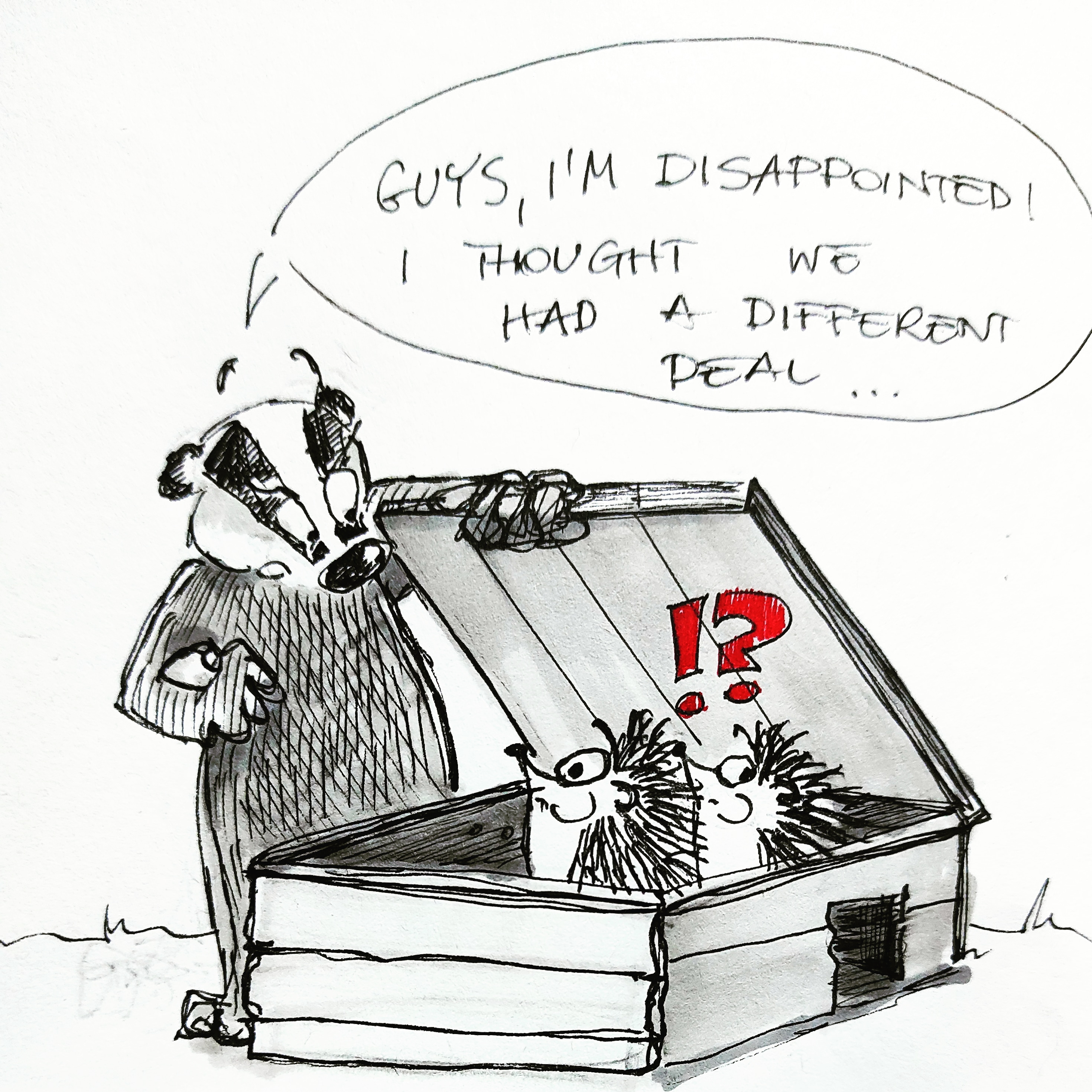
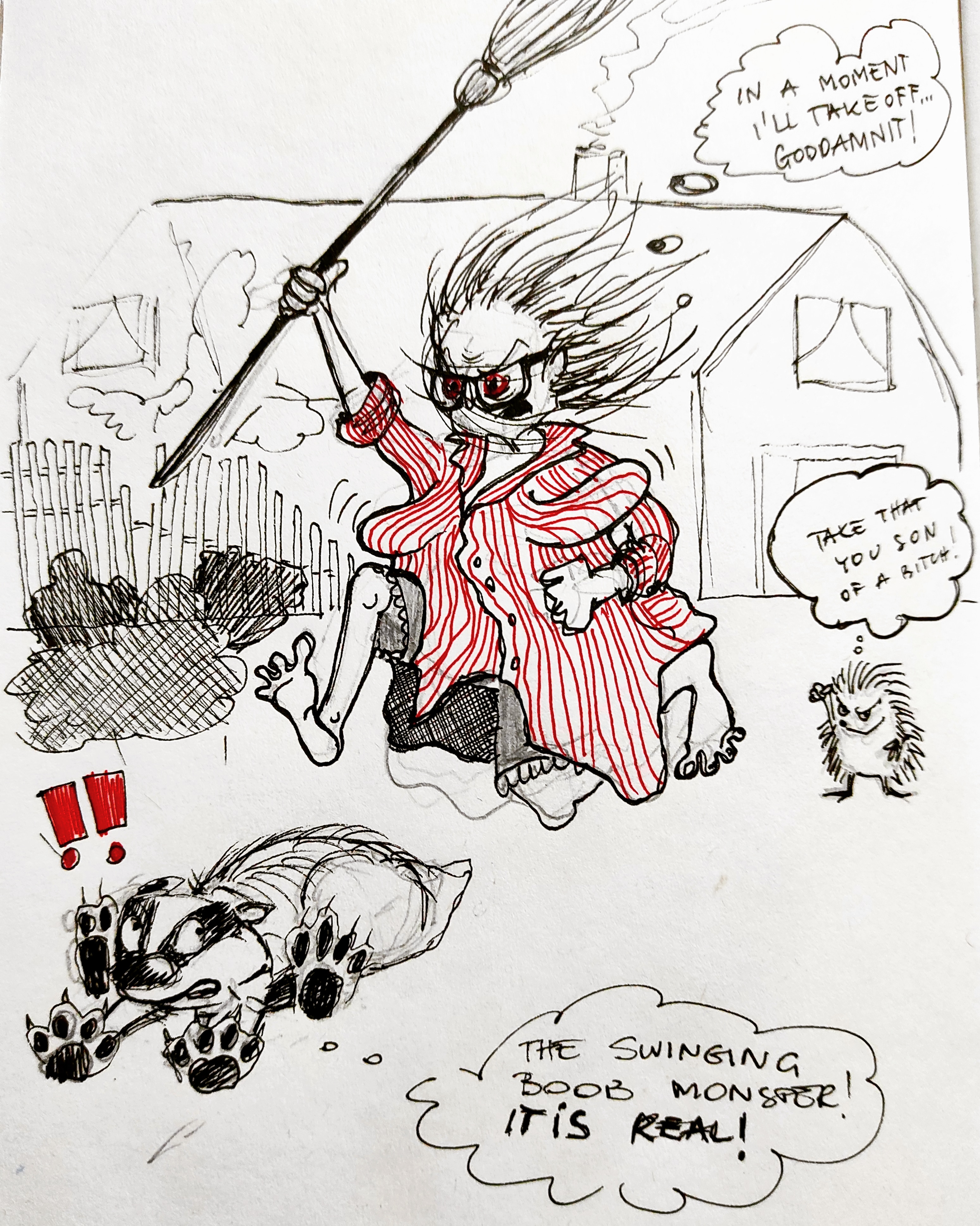
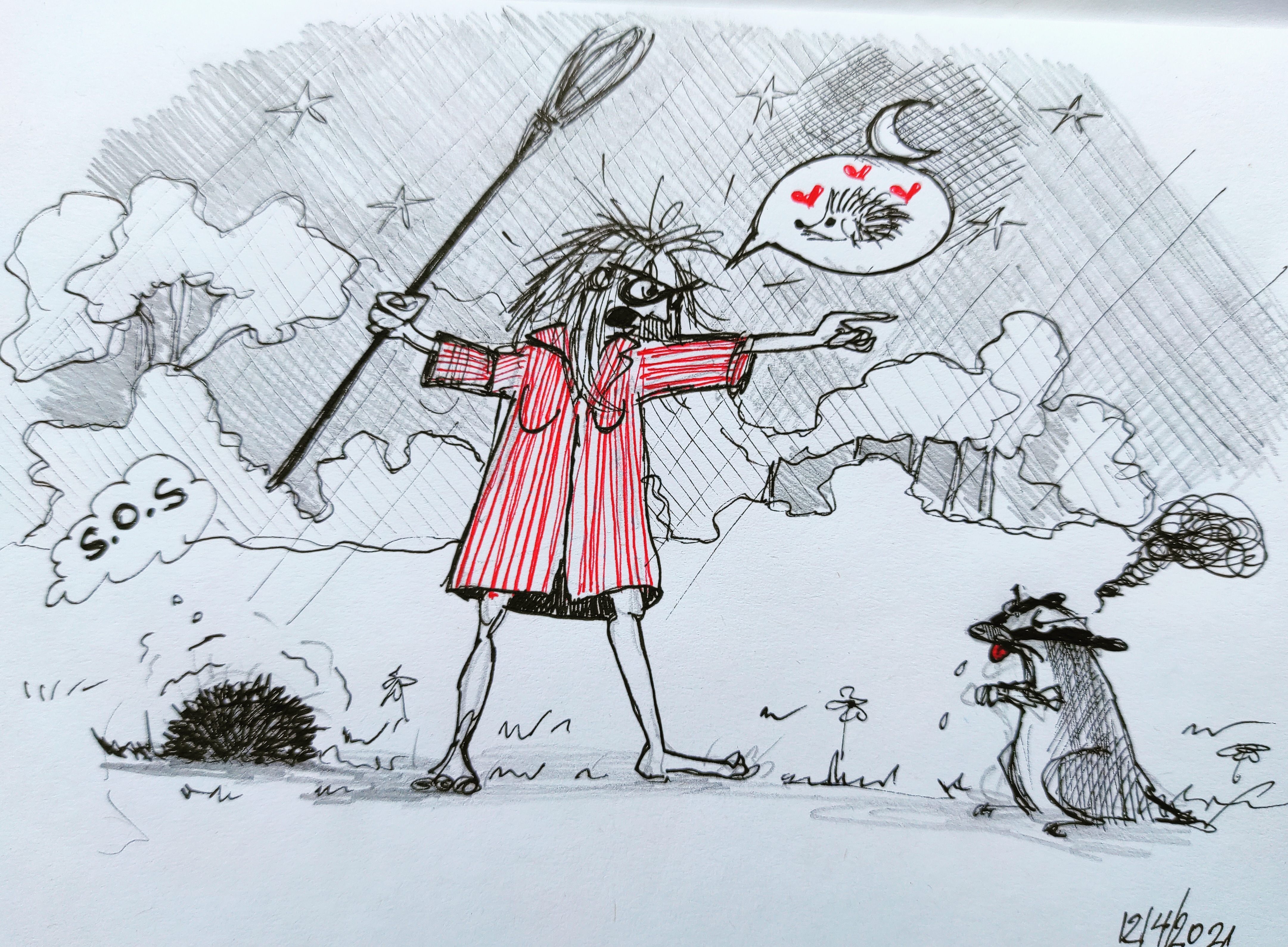
Who says “Here are some images documenting the interspecies tension between the hedgehogs and the Badgers in my garden. “
The Hedgehog
My brother came back with another’s smell, so we ate him. Mam would eat all us too, if we smelt different. Nose, ears keen tell what cream and brown shapes on our dark pursue.
That was then. Last dark I circled, circled her. She puffed, snorted loud to keep me off. Others came. I squeaked at them. Lowered my head, raised my spines, clucked, one coughed,
I butted his sides. He rolled. They all left. Afterwards I leave. Sniff long bellies, hard backs I crack their shells, squelch the soft tasty rest. Need to eat more. Not fat enough won’t last
Cold time. Found this damp dark in here. It’s why I chirp and whiffle, splat out quills and sigh.
Bios and links
-Googie McCabe
-Paul Brookes
Born in Poland in the last century, currently living in the UK, where will probably expire at some point. Self-taught ‘artist’, office worker during day; a doodler and dreamer at night. Mother of two girls – a future philosopher and a future assassin.
Amongst the poems, in prose and verse, of her latest pamphletBrightwork– a follow up to last year’s excellentMarine Objects / Some Language– Suzannah V. Evans translates a number of pieces by Francis Ponge, minimally adapting their imagery to the localised milieu of a boatyard. In ‘Rain’, for example, a poem of deft attention and delicate syllabic patterning, the manifold action of rainfall is shifted from Ponge’s Paris courtyard to ‘the boatyard’, while scalar comparisons for water droplets – ‘un grain de blé’, ‘un pois’, ‘une bille’ – are swapped for boatbuilding paraphernalia – ‘pin head’, ‘copper rove’, ‘shackle’. Another poem, ‘Puffin, the little Hillyard’, retitles Ponge’s ‘La Barque’, allowing a new perspective on a classic wooden yacht (and on Ponge’s poem).
Direct homage to Ponge is a savvy move on Evans’s part, allowing a more nuanced appreciation of the qualities of attention she’s cultivating in her…
I begged a Robin yesterday if he had seen a Rose. He cocked his head and wryly said that I should not suppose a feathered creature such as he would know where Beauty grows.
Today, I stopped a Bumble Bee for, surely, he would see, from buzzing back and forth all day, if rose-buds graced a tree. But Bumble Bee just looked aslant and would not tell me why. He only said he’d search the Earth if I would search the Sky,
THE YOUNG GARDENER MAKES HIS EXCUSES
A weed is not a flower. But once rooted both will flourish.
Given sunshine and rain in equal measure a weed may grow tall as a hollyhock.
Or creep though alleyways or over fences and walls as pretty and as modest as aubretia.
A weed may bring its kisses to pavements and ginnels cover life’s cracks with coloured stars.
And speedwell, celandine and doves-foot cranesbill creeping buttercup and blushing red clover.
Should we not admit these to be as lovely as the harebell — though nor scented like the sweet-pea or the honeysuckle?
Likewise cowslips, the cuckoo flower snakes head fritillary pink campion, valerian shimmering Queen Anne’s lace?
A weed is not a flower; a flower is not a weed.
But the bumble bee sips where he finds most sweetness and the butterfly dances after beauty.
What does it signify in love’s high summer if a whisper is is deemed secret or lie?
-Abigail Elizabeth Ottley
UNIVERSE
A bee flies through space, loaded with all it can hold. It does not wonder at the miracle of itself. Merely persists in a realm that has never heard a buzz.
This isn’t a metaphor. There are no turtles all the way down.
Just a bee, finally spotting a place, landing, pollinating a new planet.
-Jennifer A McGowan
(unpublished)
**************
NEW ENGLAND SHORE POEM
Here’s a real brainteaser: a honeybee, flying out to sea. What islands, what nectar, what ambrosia call?
Sitting on the deck facing the Sound, the whole raft of imponderables drift by every six hours. What currents run beneath the surface; why am I unmarried at 53; what are the consequences of freedom; and even, at high tide when the kids dive in and shout, what is black and white and red all over. Shadows progress to shade. The first leading edge of vapour drifts in after sunset. The wind dies. We’ll be socked in soon. With dark fallen I can’t even see the water, and all knowledge is revoked. Minutiae consume me, become ritualized: running the dustbuster after the dogs; rearranging the photographs on the fridge; polishing the leaves on the ficus; the ceremonial unloading of the dishwasher.
Nestled under the crazy quilt, I listen to the muteness outside. The soft, repeated hush of the wavelets— barely even ripples in this calm. The sudden report and roll of an acorn on the roof. Latimer booms in the distance; the occasional ground swell triggers a bell-buoy. Everything sleeps, including me. But my dreams remain alert and active: they quest for love and success, light and absolution. A bright streak in the darkness, a flash of determined gold. A honeybee at sea.
-Dr. Jennifer A. McGowan (from her chapbook Sounding)
Bees don’t have weekends no resting easy for bees each day is Monday
And a frivolity of verse:
Summer laughed a humid breeze the sight of a single rose
lifting her spirits as a blizzard of bees busied with purpose
-Kate Jenkinson
-Colin Bancroft
-M. W. Berwick from his book “Pomes Flixus” front cover below.
MOTH – a sonnet
Defined by its fatal desire for more Antennae ragged, blackened with the bright And white-hot kernel at the candle’s core, This soft-winged, heat-drunk warrior of light, Charmed and enflamed by phototaxic lust Re-gathers all its primitive life force To smash its quivering body to grey dust In its addiction-led, predestined course. And just like them, though my own wing tips burn, With junkie-like predictability To your relentless, boiling sun I turn, Flying towards destruction willingly. Ash in my hair, my mouth, my bleeding eyes, Dying to live within your fire the prize.
-Polly Oliver
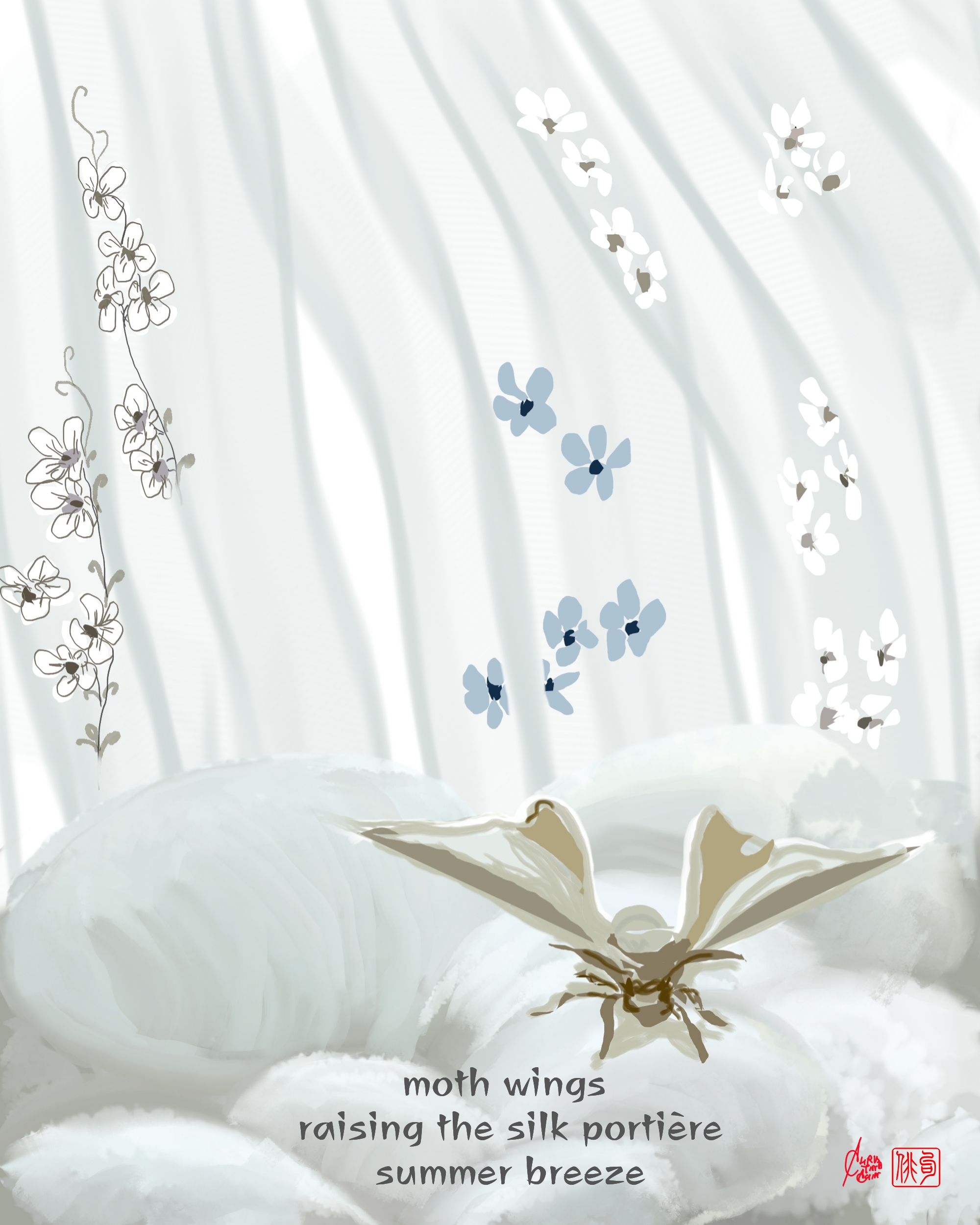
Haiga
moth wings raising the silk portière summer breeze
~Christina Chin Cantos 2021
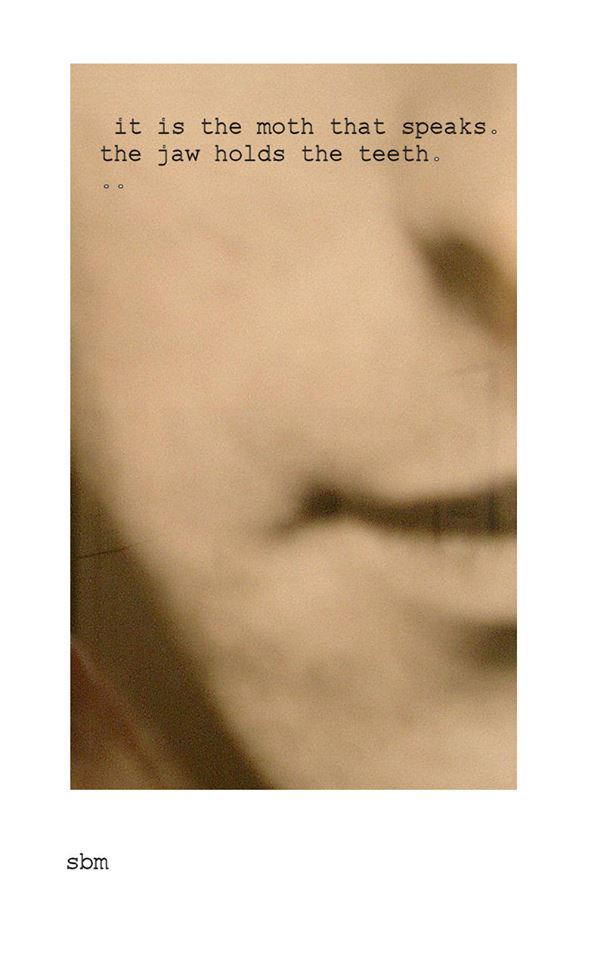
-mothth by sonja benskin mesher
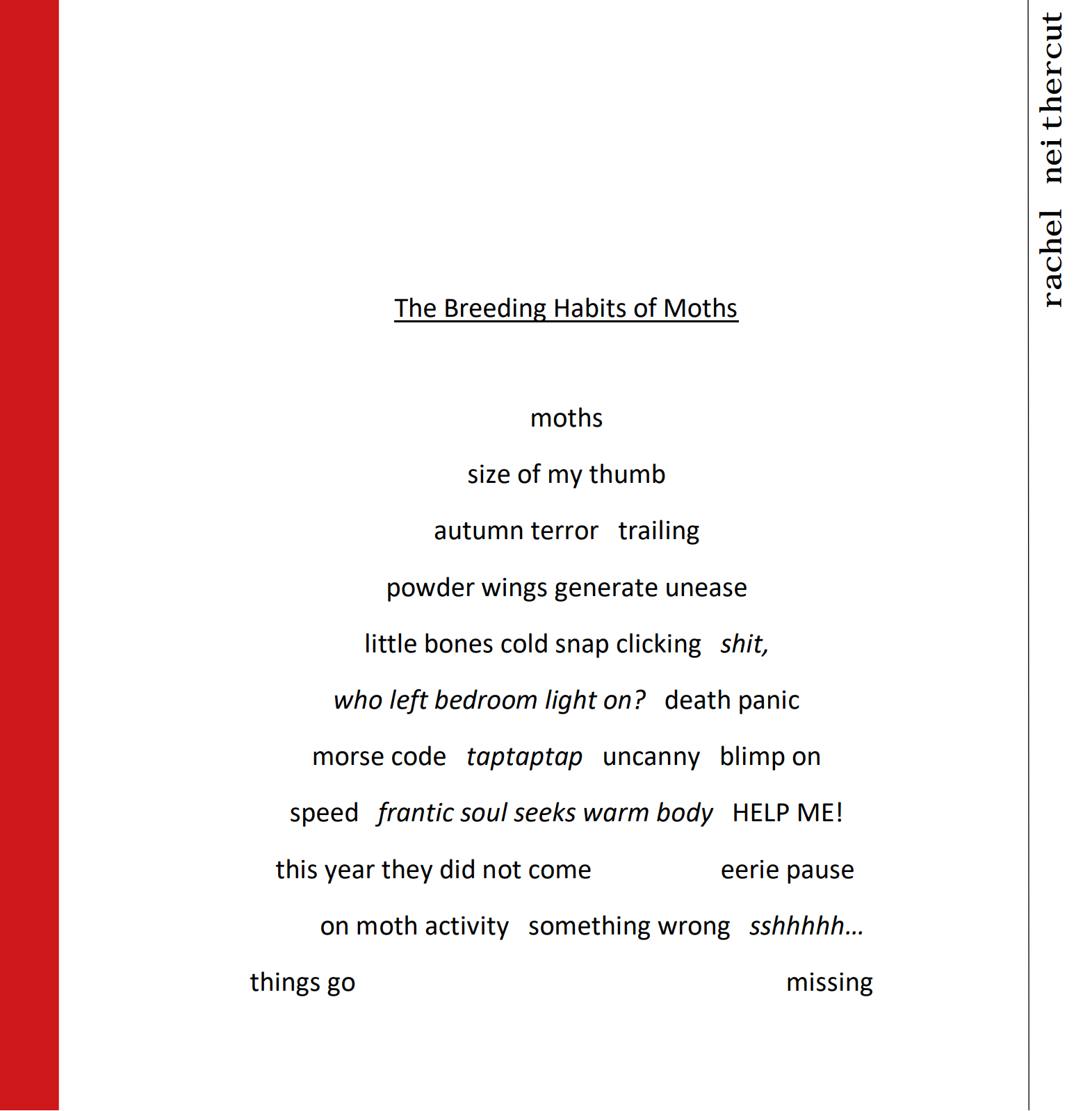
-Rachel Neithercut as it appears in StreetCake
Papyrus Fragment
A buff-brown moth hovers on temperature controlled neon, displays paper thin wings, ragged margins of ancient grass speckled with alpha, omega, nu.
It darts, bares a blaze of underwing to plain sight; this endless, fragile need to make a mark, to come to light.
Restless
A hundred moths made a lattice on blue-black window pane, some the size of wrens, others torn corners of paper: a nightly frantic race of wings. You were an erratic pulse, a low flicker against inner walls. I took you for an itch for more, the reason why I could never keep still
-Annette Skade From Thimblerig
Mothsmiths by sonja benskin mesher
Moths
In the light hours they burrow. Walls accept, cracks and
inner crevices welcome. Something borrowed from another blue,
wind-remnants, a miniature world tucked in wings, known by rote
from all in flight before them. Crepe-powder, talc, pollen.
When they succumb to open they make the house fly.
Catherine Graham (first published in Dusie)
Moths
No pain yet. White cells move as if in stocking feet, heel and toe to bone and pancreas.
Lamp-lit, she sits smoking on the Scotchgarded sofa, looks out at nothing because it’s dark.
The window is breaking the sound of waves in the quarry. The moths keep hitting the glass to get to her.
Moth! There once was a tailor of cloth Who fought with a wily old moth He gave it his all And it bounced off a wall And landed fair square in his broth
-Graham Bibby
A Turnip Moth
Under I wait till dark. Light lessens. Beak stab shakes where I am. Dark. Out from Under chew tender stem. Move back Under when heat of many Over brightens. Asunder
I dig. Push asunder. Turn and turn and turn. Under under. Legs tendril lengthen. Softness to float in the Over expand. I hear now, inside trembles at sound when
others outside call in dark to know where they are, and what meals move around the dark Soft and wet I push asunder to air. Listen in bright while softness rustles hard.
Even insects remember their young times. Pests like weeds try to survive humankind.
-Paul Brookes
Bios and Links
-Polly Oliver
is a broadcast journalist, freelance engagement consultant and writer in South Wales.
She writes poems for enjoyment – and when they land in her head.
Her writing has appeared in various editions published by Back Bough Poetry, as well as the Wombwell Rainbow, The Tide Rises, Falls and has featured as Spillwords Author of the Month.
Pushcart nominated.
-MW Bewick
is a writer and co-founder of the small indie publisher Dunlin Press. He grew up on the edge of the Lake District, lives in Wivenhoe, Essex. He is regularly published in poetry journals, also works as a journalist and sometimes lectures in creative writing. His second collection of poetry, Pomes Flixus, is available at https://dunlinpress.bigcartel.com/.
-Annette Skade
is from Manchester, and has lived for many years on the Atlantic coast of Ireland. Most of her recent poems are about the sea, and her coastal community. Her poems are published in Ireland, the U.K., the U.S. and Australia, and her collection Thimblerig was published in 2013. She has just completed a PhD on the poetry of Anne Carson.
is an award-winning novelist and poet. Her sixth poetry collection, The Celery Forest, was named a CBC Best Book of the Year and was a finalist for the Fred Cogswell Award for Excellence in Poetry. Her debut novel Quarry won an Independent Publisher Book Awards gold medal for fiction, “The Very Best!” Book Awards for Best Fiction and was a finalist for the Sarton Women’s Book Award for Contemporary Fiction and Fred Kerner Book Award. She teaches creative writing at the University of Toronto where she won an Excellence in Teaching Award. A previous winner of TIFA’s Poetry NOW, she currently leads their monthly Book Club. Æther: an out-of-body lyric appears in 2020 with Wolsak & Wynn/Buckrider Books. www.catherinegraham.com. Tweets at @catgrahampoet
-Ann Cuthbert
writes and performs, usually with the Tees Women Poets Collective. Her work has been widely published online and in print, most recently in Dreich anthologies, Amethyst Review, Green Ink Poetry and the anthology Hard Times Happen (Black Pear Press.) She was Highly Commended in the 2021 YorkMix Poems for Children competition and her poem video, Dracula’s Café, was shown on BBC Upload Festival 2021. Her poetry chapbook Watching a Heron with Davey is published by Black Light Engine Room Press.
-Dave Green
lives and works in Sheffield. For 30 years he worked in education with vulnerable and neurodiverse children before belatedly discovering that recent governments may not be prioritizing the marginalized in society. Now he trains people in positive mental health and how to recover from the pandemic. He writes poems, paints, chops logs, cycles everywhere and shops local.
Today I have great pleasure in inviting Peter A to talk about a poem from his moving Art ofInsomnia (Hedgehog Press, 2021)
My debut chapbook Art of Insomnia is personal in a way that is not very typical of my poetry to date. That said, in much of my previous and ongoing work I have tried to deliver an emotional punch where it is justified by the subject matter or theme of the poem.
Art of Insomnia comprises 22 poems written in the nine month period following the unexpected death of my wife; in it I attempt to express the impact of incomprehensible loss and signal the potential for a bearable way forward. The chapbook is divided into four sections and the poem I have selected is the second poem of the third section. Following the second section, which describes a temporary escape from familiar surroundings and people, this…
The gardener looked at the flower Thinking how pretty it would look next to her roses
The mathematician looked at the flower Noticing its unique symmetry
The Christian looked at the flower Observing God in it
The environmentalist looked at the flower Concerned for its future
The teacher looked at the flower And devised a lesson for her class
The businessman looked at the flower Calculating how much money he could sell it for
The criminal looked at the flower While plotting to steal it
The archaeologist looked at the flower Longing to dig it up to see what was in the earth beneath
The artist looked at the flower As she painted a beautiful picture of it
The romantic looked at the flower Wanting to pick it for his beloved
The poet looked at the flower And wrote this
-Neal Zetter
Mapping the garden, June
Two blackbirds seek their latest fledglings. Orange beak perches on highest viewpoint eucalyptus. His calls pierce while brown mother quarters broadbean rows, (both calm enough, no cats about) clucks as she goes. Two dunnocks flit from hedge to feeder. They’re tending a new nest, have trilled one brood to flying. Snails cluster under damp rims of plantpots I’d forgotten. Dimly overgrown until I spot spikes of purple, three common orchids –how they settled there, a mystery. A jackdaw glides in, flight feathers flittering, attacks the fat balls hanging near bride-month philadelphus, clings on, sways as suet sprays. Round the corner by the trellis, bees infiltrate mottled foxgloves, buzz overpowered by next door’s Stihl saw. Mice stay hidden, newts submerged. There are rats under the shed.
-Ann Cuthbert
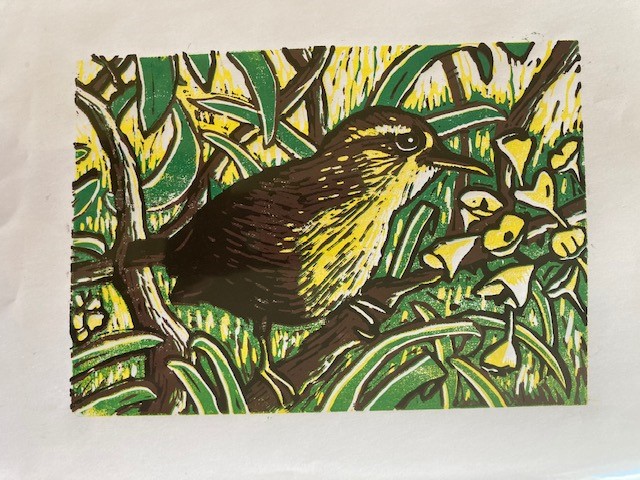
-Wren by Dave Green
On The Wildlife of My Garden
“Not ready for you.” I tell the moles in my garden. Say nay to the white ants labouring over a piping of their tortuous tunnel.
So much I can tell the grasshopper and pretend, my sanity is lost midst our lingua franca. I shake my head instead.
The growth of wild verdancy where our family’ adopted vacancy bares the summer’s teeth – uneven, sweaty, sappy, sharp shiny denture.
Here, one hedgehog pursues the mystery of the obscure millipedes. The black-naped orioles sing the ballads of unknown winged mates.
I ignore all these, map the landscape of death in the atlas of my reverie. The roadkills roam there. I drive my sighs on blind rage over the truths again, again.
-Kushal Poddar
red poinsettias leaning on my window now in the moonlight
~ Christina Chin Meguro International Haiku
Wildlife Map
Flying ants birthed out backyard concrete cracks, Abandoned wasp homes hang on thinning thread in our garage rafters. Slugs silver tracks sticky gleams glint polished chrome, lead
solder awaits coloured glass, to be carved, follow shape of these sacred slug windows lifted into place dictate colour chart of beams stride over thresholds, bright glows.
Fledglings step or are pushed over the brink, by anxious mams wanting an empty nest. Fall into soft jaws of cats as gifts, hint live and warm compliment of the highest
brought into the home for the owners screams to register a culture shock of extremes.
-Paul Brookes
Bios and Links
-Ann Cuthbert
writes and performs, usually with the Tees Women Poets Collective. Her work has been widely published online and in print, most recently in Dreich anthologies, Amethyst Review, Green Ink Poetry and the anthology Hard Times Happen (Black Pear Press.) She was Highly Commended in the 2021 YorkMix Poems for Children competition and her poem video, Dracula’s Café, was shown on BBC Upload Festival 2021. Her poetry chapbook Watching a Heron with Davey is published by Black Light Engine Room Press.
-Dave Green
lives and works in Sheffield. For 30 years he worked in education with vulnerable and neurodiverse children before belatedly discovering that recent governments may not be prioritizing the marginalized in society. Now he trains people in positive mental health and how to recover from the pandemic. He writes poems, paints, chops logs, cycles everywhere and shops local.
When dusk comes in the middle of the day The sun reduced to a pale ring of fire What were the ancient learned wise ones to say When scared superstitious people inquire
That their actions attracted the Gods ire And now they have to pay the bloody price To avoid consequences most dire The most precious they must sacrifice
Or the world will turn to cold barren ice Devoid of all the Sun’s life giving warmth No longer this Aegean paradise But eternal night as in the far north
As the sacrifice bled and died they did say Now the sun will rise again day after day
(A haiga in the inaugural issue of Bleached Butterfly Magazine)
-Wold Track by Dave Green
Bumble Bee Summer
The alder-buckthorn tree is singing with the sound of working bees;
I watch their plump black trundle flower-to-flower among the leaves.
The carder and the meadow bee squeeze up the monkshood’s deep blue sleeves
The carpenter and garden bees, the masonry, the solitary, probe the hoods of lamium.
The red-tailed and the buff-tailed bees cling to the saucer face of dark geranium.
Long hot summer, good summer, loud with the industry of bumble bees.
-Gill McEvoy
The Brooding Queen
I was a single, simple, yellow, cell, who grew a grubbing appetite for gold, an appetite they fed, fed, fed until it made me large and strange, and sealed me from my sisters while I dreamed of change.
I was a naked sleeper in a changing room, who dreamed of fur and woke enrobed. I ate, ate, ate until I burst the white walls of my prison cell and dared one flight in air before returning to my jailers and their citadel,
my sisters and our white and yellow womb.
(First published in my pamphlet, ‘Speaking parts’, Half Moon Books)
May Bee
No snow. White heat as blossom beckons: lilac fingers, rowan palms, May’s mouths now summoning my tongue.
(Unpublished)
-both by Linda Goulden
Thief
I always thought you honest, your focus on integrity. After all, didn’t Manchester choose you to symbolise their ethic of hard work? Didn’t you become an emblem of the city as a hive of activity and industry?
How strange then to watch you moving between the vivid blooms of aquilegia, like a pickpocket through a crowd of sight-seers, your hungry proboscis probing the ornate sacs of nectar without the courtesy of pollination.
-Angi Holden
-Both by Neal Zetter
Bees in Winter Ivy
At the shank of the year, when the gloaming kicks in at four o’clock, globes of fat rain plother on hairy footed bumblebees clustering, weary under shiny green, smothering a dusky-pink brick wall.
No clover, dandelion, foxglove, no drinking cup of nectar, no hope of a crowned Dionysus, but there’s one human hand, offering a sugar snack in a bottle cap, reviving ambrosia.
-Maggie Mackay
Sweet Pollen
Bigger wing beat gusts me from sweet pollen billows, I must stick to its surface amid buffet and blast. Now heavier, taken, away from scented trail back home I skid.
Track my trail through vibration pulses, map I will dance when home is reached to tell all where sweet pollen will be found, waggle tap the route after unloading my food haul.
As light fades our head sensors flop, my legs wrap around others, I rehearse my days forage, retrace my flight, my complex steps mark vibration changes that radiate.
Bright warmth lifts our heads from sleep to again, find our memory way, avoid harsh rain.
-Paul Brookes (from The Insect Sonnets)
Bios and Links
-Maggie Mackay’s
pamphlet ‘The Heart of the Run’, 2018 is published by Picaroon Poetry and her full collection ‘A West Coast Psalter’, Kelsay Books, is available now. In 2020 she was awarded a place in the Poetry Archive’s WordView permanent collection. She reviews poetry pamphlets at https://sphinxreview.co.uk (Happenstance Press) . Twitter:@Bonniedreamer
-Christina Chin
-Dave Green
lives and works in Sheffield. For 30 years he worked in education with vulnerable and neurodiverse children before belatedly discovering that recent governments may not be prioritizing the marginalized in society. Now he trains people in positive mental health and how to recover from the pandemic. He writes poems, paints, chops logs, cycles everywhere and shops local.
The day greys and yellows around us stops the birds singing. We feel the tightness of this new silence as the air cools rapidly. We know not to stare so I am holding a colander to the sun casting shadows on the ground. So many tiny solar bodies eclipsing, emerging.
A photograph to capture the day to remember we were alive we saw it.
I fear it will be too small but when you show me I am holding that eclipse in the palm of my hand.
-Soo Finch
Ring of Fire – A Sonnet
When dusk comes in the middle of the day The sun reduced to a pale ring of fire What were the ancient learned wise ones to say When scared superstitious people inquire
That their actions attracted the Gods ire And now they have to pay the bloody price To avoid consequences most dire The most precious they must sacrifice
Or the world will turn to cold barren ice Devoid of all the Sun’s life giving warmth No longer this Aegean paradise But eternal night as in the far north
As the sacrifice bled and died they did say Now the sun will rise again day after day
Earth pulls its curtain across the moon tonight, like a play ending as actors take their bows. All the world’s a stage and we, players; lives eclipsed by tragedy or comedy. Stars moan, a Greek chorus accompanying our anxiety. Candescent crimson, the moon pulses like blood behind a gauzy scrim, assuring us we’re alive, though the world shuts down around us.
Lonely moon, wrapped in earth’s shroud: death will not win out, anymore than fallen actors in Hamlet or some other play will not rise again to play their parts.
In misfortune, we take our bows, utter lines once more: words given us to speak, parts entrusted to us to play. The curtain rises and falls, the show goes on. The moon does not keep silent in the hush of mist and veil. Already, a sliver of light slashes down, shouting the Prologue.
–Gayle J. Greenlea
Ode to a Blood Moon
Shy moon, resisting your call to grandeur; this rising a rare blush from your repertoire. Red hush stills the tops of trees whose leaves camouflage your restless climb, a “bodas de sangre” arranged before the clash of stars. Unwilling Icarus, you fly, set aflame in darkness. Murderous moon, red with dread and blood, vertiginous beauty sailing high above the trees, deceiving death.
* “Bodas de Sangre” (“Blood Wedding” is the title of a play by Federico Garcia Lorca
– Gayle J. Greenlea
Eclipse
In this pale gold heat and silence of birdsong of wind in the long grass
would we ever know that a shadow effaces a tiny piece of the sun?
Chaffinch chirrups the oriole asks the same questions as always
and the redstart dips in and out of the barn feeding hungry mouths.
Here and now only these moments of pain or joy touch the deep chords sounding the conch shell of the heart. -Jane Dougherty
Coincidence
400 is the magic figure where size and distance cancel out moon fits into sun like a child’s puzzle as if we’d ever been in doubt of why we all play planetary ring o’ roses as the neighboring rock we tow cosies up to daddy sending us shivering in her shadow
dark column racing towards us silence, birds fled to the trees, knowing the fear of our forebears, last spark extinguished, blank woe
until the diamond glows brilliant again, the sun a perfect sphere and, the paraphernalia of pin-hole cards and colanders consigned to cupboards, search the calendar to find another opportunity to peer to heaven and chance upon the mathematics some intelligence designed
-Kathryn Southworth
Kathryn March 20th 2015
Bios and Links
-Priyanka Sacheti
is a writer and poet based in Bangalore, India. She grew up in the Sultanate of Oman and previously lived in the United Kingdom and United States. She has been published in many publications with a special focus on art, gender, diaspora, and identity. Her literary work has appeared in numerous literary journals such as Barren, Terse, The Cabinet of Heed, Popshot, The Lunchticket, and Jaggery Lit as well as various anthologies. She’s currently working on a poetry and short story collection. She can be found as @atlasofallthatisee on Instagram and @priyankasacheti on Twitter.
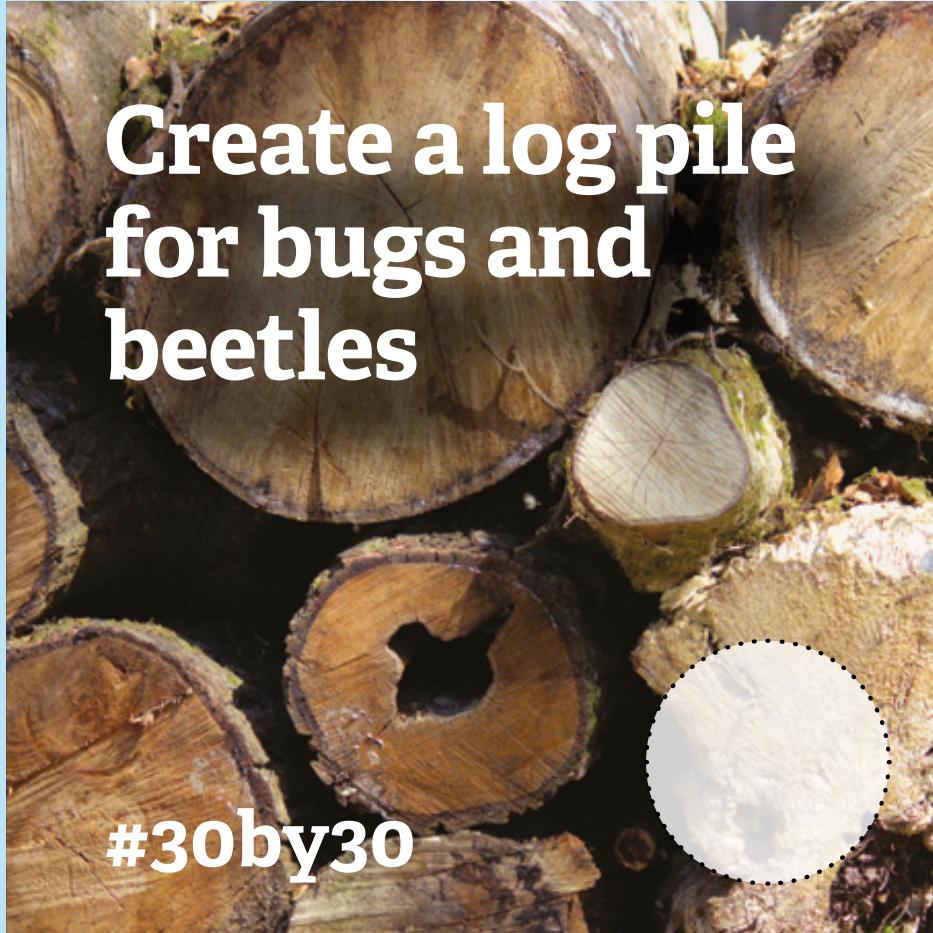
13. Record what you see in your garden or at a park
14. Set up your own moth trap with a sheet and torch
15. Help create a hedgehog highway
16. Watch a wild webcam Wildlifetrusts.org/webcam
17. Go on a bughunt
18. Visit your local park at dusk and look for bats
19. Set up camp in or outdoors
20. Watch the sunrise or sunset
A FORGOTTEN BICYCLE
It leans against the old summerhouse, rusty wheel spokes a nod to its former glory days as champion of forays into nature.
Wilted bouquets overhang the woven basket: Withered lilac still murmuring lines from summer sonnets, sweet pea symphonies with their
spectral arpeggios, rising and falling in cadences, like gusting leaves across manicured lawns, chasing away all traces of seasonal depression.
Birds sing full-throated, their daffodil chorus echoing round the orchard garden, hedgehogs wake snuffling in the musty woodpile.
At full moon new life throbs through the crippled frame, sounding the bell in time with the hooting owls, beckoning fairy folk to mount the saddle, take a ride.
They fly down in the bells of virgin snowdrops, Filling the basket with crocus and lesser celandine speeding to the woods in search of early narcissi.
What stories come to mind as they revel in magical flight through moonlit meadows and glades. Released from years of neglect, the old girl lives again.
-Margaret Royall (From her collection “When Flora Sings”
gleaning
the harvest fields
golden sunset
~ Christina Chin
Fireflies’s Light
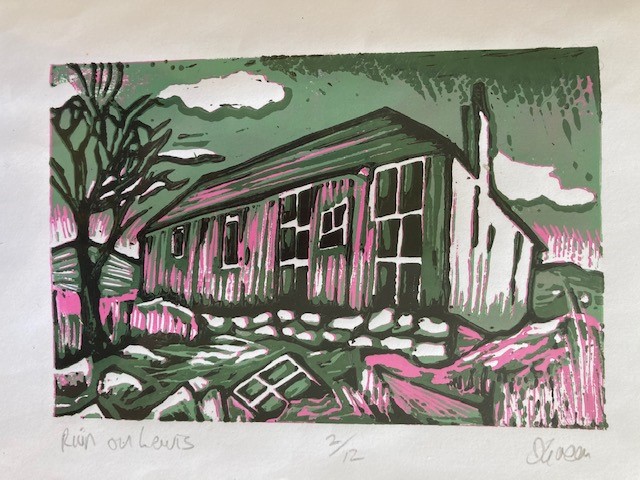
Ruin on Lewis by Dave Green
Bios and Links
-Christina Chin
-Dave Green
lives and works in Sheffield. For 30 years he worked in education with vulnerable and neurodiverse children before belatedly discovering that recent governments may not be prioritizing the marginalized in society. Now he trains people in positive mental health and how to recover from the pandemic. He writes poems, paints, chops logs, cycles everywhere and shops local.





















 The Wombwell Rainbow