#folktober Today’s day theme is “Blackthorn”, full of magic and healing, dark crone of the woods. Broadening it out, I will feature poetry/short prose/artwork about magical trees and plants.

Day Thirteen -Blackthorn

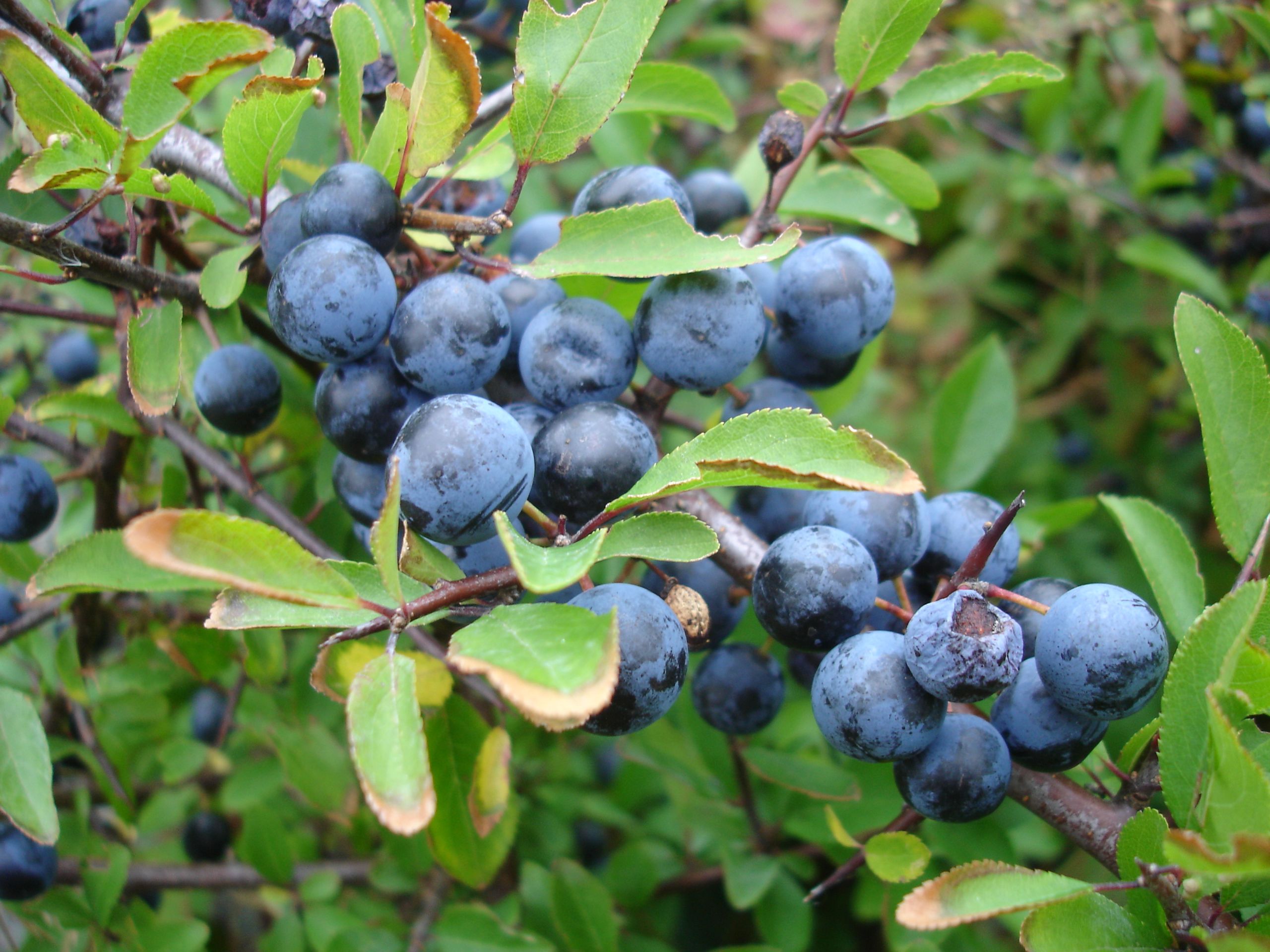
Closeup_of blackthorn aka sloe aka_prunus_spinosa_sweden

-Close up of Blackthorn aka sloe fruit from Wikipedia

Heartsease


St Euphrasia of the cheerful mind/ carried heavy stones/ from one place to another/to subdue/ temptation/ I lift heavy pots/ plant bulbs up for winter/push in violas as top layer/ Violas/ heart’s delight/ tickle-my-fancy/ come-and-cuddle-me/Cool weather thrivers/ hardy flowers with faces/frost survivors/bounce back/ stay alive/ bloom again/Three-faces-in-a-hood/ the magic number/ eases heart’s heaviness.

-Ann Cuthbert

in a blackthorn winter by kerry darbishire

-Kerry Darbishire

I, Blackthorn

My leaves in autumn yellow, winter fall
leave me a stark twisted black skeleton.
I dwell on woodland edge as thicket wall
hedgerow. Hawthorn, Elder companions.

My barkskin rough, scaly, bright orange flood
under my dark grey surface, thickets dark,
dense, thorny, sapwood light yellow, heartwood
brown. Thorns long and sharp if pricked, turn septic. Mark

musk-scented small, delicate, white flowers
oval petalled cluster into a star
shape early spring. Blossoms, thin, rounder
tooth edged white, with red-tipped threads. Globular

small blue-black or deep purplish, round lip glossed
summer berries ripen after first frost.

-Paul Brookes

Wombwell Rainbow Interviews: John Guzowlski

-John Guzlowski’s poems and personal essays about his parents’ experiences as slave laborers in Nazi Germany appear in his memoir Echoes of Tattered Tongues. He is also the author of the Hank and Marvin mysteries and a columnist for the Dziennik Zwiazkowy, the oldest Polish newspaper in America. His most recent books of poems are Mad Monk Ikkyu and True Confessions. https://en.wikipedia.org/wiki/John_Guzlowski The Interview 1. What inspired you to write poetry? A bunch of different things, over the space of about 35 years. First was a poem. “Trees” by Joyce Kilmer. I first read it in 3rd grade and fell in love with it. I memorized it and recited it and recited it and recited it. I think that idea of Kilmer saying that nothing he wrote could be as beautiful as really grabbed me. And the way he described the tree with the nest of robins in its hair. All of that lit me up. I could see it and it was so clear and so beautiful and so smart. I spent the next two years writing poems, all of them following Kilmer’s model. I loved that poem. Then there was the Beat writer Jack Kerouac, who I first read when I was like 18. Kilmer froze me into a particular kind of formed, formal poem. Kerouac freed me with his idea of “spontaneous bop prosody.” Here he was telling me not to think when I wrote, not to rhyme when I wrote, not to follow Kilmer or anybody else when I wrote. He was telling me to just listen to whatever the hell was inside of me and spill it out on the page, spin it out on the page. And I did. I started writing poems and prose poems that began in one place and ended someplace else that I would never ever have been able to predict, all shaped in language that was inventing me at the same time I was inventing it. I was Beat for about 7 years. The third inspiration? My parents. I was in grad school and one day I was sitting down at a desk grading a paper or writing a paper and I thought about my parents. I had moved away from them about 6 years earlier, left them and all their troubles, all their PTSD. They had both been in concentration camps in Nazi Germany, and I wanted to get away from all that “camp shit,” as my mom called it. And I did get away from it. I never thought about it, never let it bug me, and then one day I was sitting at a desk and I thought about my parents, and I wrote a poem about what had happened to them in the war. And then I wrote another and another another and another. And here I am 40 years later still writing about them and their war, and how all that war has affected me. 2. Who introduced you to poetry? The teacher who introduced me to “Trees” by Joyce Kilmer? I don’t remember but I do remember the poet who was the most profound influence on me and my writing. That was Paul Carroll. He was a Beat poet who taught creative writing at the University of Illinois in Chicago. He really introduced me to poetry – both as something you read and as something you live. He taught me that a poet spends his life writing. It doesn’t matter if he gets published. It just absolutely matters that he writes and writes. He also taught me that all poets were brothers and sisters, a family whose purpose here on earth was holy. As poets, we were here to show people what truth and beauty and wisdom and holiness really were. 3. How aware were you of the dominating presence of older poets? When I discovered poetry, I discovered poets, and I read poetry and loved poetry and poets. The older poets? My brothers and sisters. Whitman and Dickinson, Shakespeare and Wordsworth, TS Eliot and Pound, Robert Lowell and Sylvia Plath, Milosz and Szymborska. They were family. They were my older brothers and sisters teaching me how to play with words and make them sing. 4. What is your daily writing routine? I’m retired now and have been for 15 years so my routine is pretty much devoted to writing. I sit down at my desk around 10 in the morning after breakfast and exercise, and I write for a couple hours. After lunch, I put in another 3-4 hours. But that’s not all. As a writer, your brain is always turning, putting words here and there. When I’m not sitting at a desk, I’m looking at clouds or thinking about some image or hearing a voice that says something and asks me to take it down. It happens when I’m awake and it happens when I’m asleep. I’m always hearing things. And here’s the important thing, I always try to write them down because I know that if you let even a minute go by without writing that inspired word down, you will surely forget it. 5. What motivates you to write? One of the things that has motivated me for the last 40 years is the story of my parents. I write about them all the time. I’ve written 5 books about them. I think it’s important to have their story and the stories of other concentration camp survivors told. But that’s not my only motivation for writing about them. Writing about them keeps them with me. My dad died in 1997, my mom died in 2006. They’ve been gone a long time, but still when I write about them and when I read my poems about them at a reading, they are with me. That’s a strong motivation. Another thing that motivates me to write is that writing is a pleasure. It’s fun to see where words take me. I write a word down and often I won’t know where it’s going but I let it lead the way. Every word in a line opens me up, shows me something I wasn’t expecting. That’s fun. 6. What is your work ethic? Three words: Always be writing. 7. How do the writers you read when you were young influence you today? They are in every line, every stanza. I can show you a recent poem of mine like “Why Do We Age,” and I can point to a line that was inspired by Whitman and a word that came to me because somewhere there’s a similar word in Dickinson. And more importantly perhaps, they are in the way I see the world, see other people, see the troubles that face us and the solutions to those troubles. These writers I’ve mentioned taught me how to look at the world with curiosity and hope. 8. Who of today’s writers do you admire the most and why? I don’t think we have enough time for me to tell you all the poets that are writing today that I admire. There are hundreds. Why so many? I think part of it is the internet and social media. There’s a world of writers around me and they are writing every day and I’m seeing them every day and loving what they say. I remember back in the early 1980s. I was the editor of a poetry journal called Karamu. I had magazine exchanges with a number of other poetry journals. I would send Karamu to the editors of those journals, and every couple of days I would get a journal back. I would read the poems in the journal, and then when I was finished another journal would show up in my mailbox and I would read that. There was a steady stream of poems coming in for me to read. That stream has become a flood. I read dozen and dozens of poems every day now in online journals. Terrific poems. Outstanding poems. I really think we are in probably the greatest period of poetry in the history of this country. So many great poets, writing and publishing and sharing their work online. 9. Why do you write? It’s fun. It’s inspiring. It’s important. It’s loving. 10. What would you say to someone who asked you “How do you become a writer?” I wrote a poem about a dozen years ago answering that very question. I had been invited to speak to Mary Ann Miller’s creative writing class at Western Kentucky University. Here’s a poem I wrote to that class: Advice to Mary Ellen Miller’s Poetry Writing Class First, listen carefully to the advice of older poets, like me. Some of what they say will be the most important thing you’ll hear about poetry. Some of what they say will be useless. How can you tell the difference? You can’t right now, but you will in five or ten years. Second, find someone who believes in your poetry, a wife, a lover, a friend, and believe what they say about your poetry, the good and the bad both, and keep writing, writing all the time, writing emails, letters, notes on the backs of books, term papers about Dostoevsky and the rise of realism, write jokes about mules that speak only French and teachers that wear red ties and white wide-brimmed hats, and writing like this, you’ll find you’re writing poems, all the time, every day, everywhere you’re writing poems. Third, write a poem every day, and if you can’t write one everyday write one every other day, and if you can’t do that write one every third day, and if you can’t do that write one when the muse hits you – when two words explode in your head, appear from out of nowhere. Whatever you’re doing when that explosion hits, stop, and write down the sound of that explosion because if you wait ‘til later it’s lost–absolutely. Fourth, find a muse. I’m not kidding. Mine is a mother of two who died in the snow outside of Stalingrad, shot in the forehead by a German foot soldier from a little town in Bavaria. She comes to me when I’m busy grading papers or talking with friends and she begs me to remember her children, all the children. What will this muse do for you? Ask her, she’ll tell you. 11. Tell me about the writing projects you have on at the moment. I have too many. In the last 3 years, I’ve published 2 more books of poems and 3 novels. The two books of poems True Confessions: 1965 to Now and Mad Monk Ikkyu. The former is a series of autobiographical poems about my life from 1965 when I was a 17 year old Beat/hippie to my life now when I’m a 70 year old guy writing about what old guys write about: Aging, family, dying, the summers that seem to end too soon, the beautiful trees that are never as beautiful as the poems we write about them. The Ikkyu book is about a real-life Buddhist monk in 16th century Japan. He was known as the mad monk. He was a Buddhist with a wicked sense of humor. This book deals with a journey I imagine him taking from the ocean to a temple in the mountains. What I like about Ikkyu is that he’s silly sometimes and smart sometimes and the world can’t seem to decide which is which. I’m also working on a series of noir mystery novels featuring two Chicago detectives who are working my old neighborhood in Chicago. The first three books have been published and received terrific reviews in the New York Times and the Wall Street Journal. Right now I’m working on the fifth novel in the series. What I like about the books is that they allow me the chance to take what I’ve learned about poetry and apply it to fiction. One of the reviewers in fact mentioned that what he liked about these mysteries is the “lyrical anxiety” my writing expresses. That made me happy. Other projects? Don’t ask. I’ve got a million of them!

#folktober. Eleven. Today’s theme is “Jabberwock”, who features in a poem read by Alice Lewis Carroll’s “Through The Looking Glass, And What Alice Found There.” It is written in nonsense language. Broadening this theme, I will feature poems/artworks about invented creatures.

Day Eleven – Jabberwock

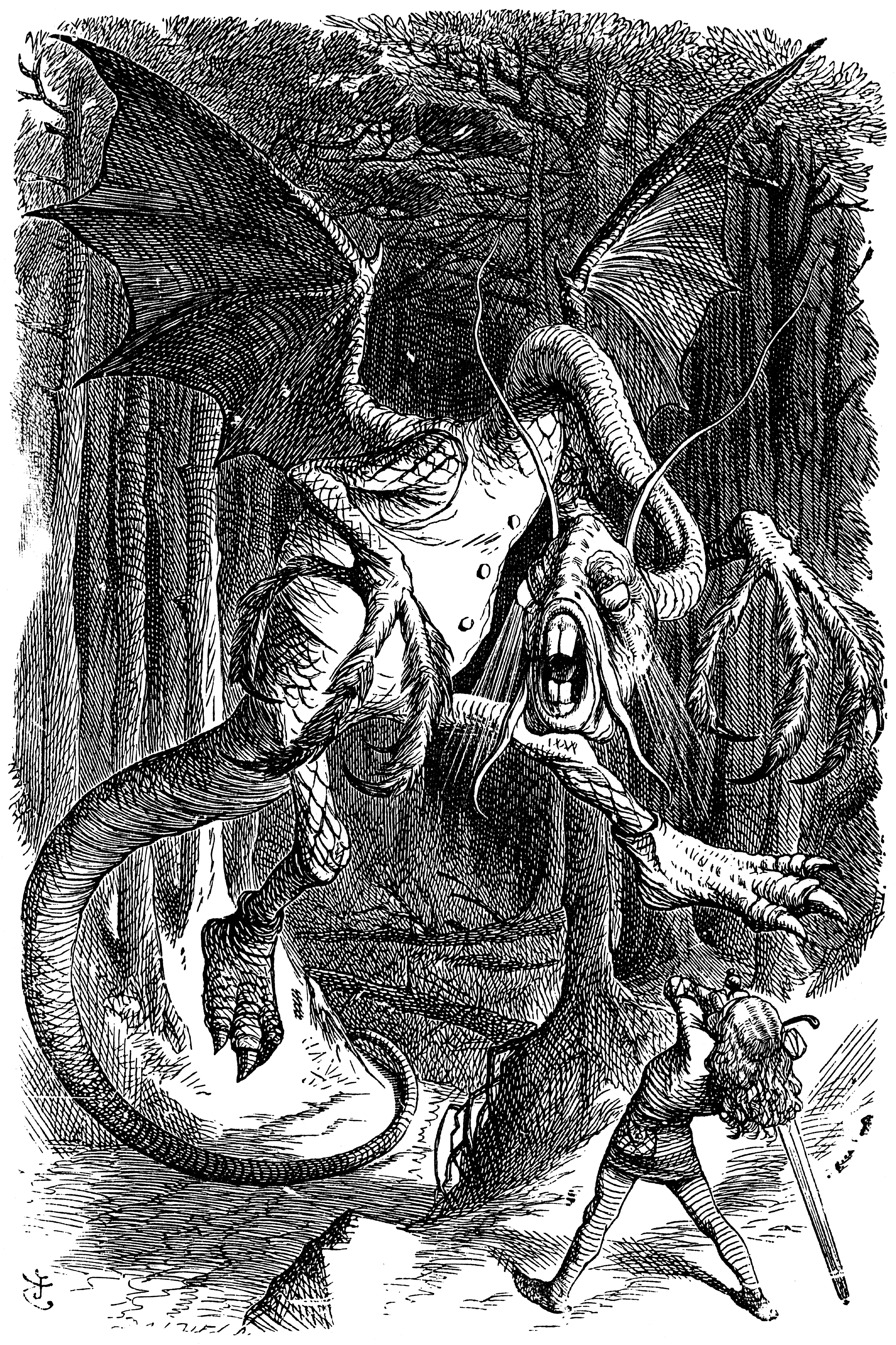
Jabberwocky

Jabberwocky by John Tenniel

The Hiddle-Diddle Hotchkin*

As twilight falls the Hotchkin zooms to earth
with punky rainbow spikes and bright red snout.
His spade paws dig down deep into the turf;
he buries dreams and later digs them out.
His eager scuffling wakes the cottage cat,
who slinks flat-bellied from her comfy bed;
on lynx-like paws she jumps straight through her flap
but Hiddle-diddle hides behind the shed.
Curled up into a ball he changes size,
becomes a huge full moon with jagged rim.
His periscope shoots out two spooky eyes –
no household pet would dare to mess with him!
He stays to guard his family through the night,
then scarpers hiddle-diddle at first light.

*Hotchkin is a Lincolnshire dialect word for hedgehog

-Margaret Royall

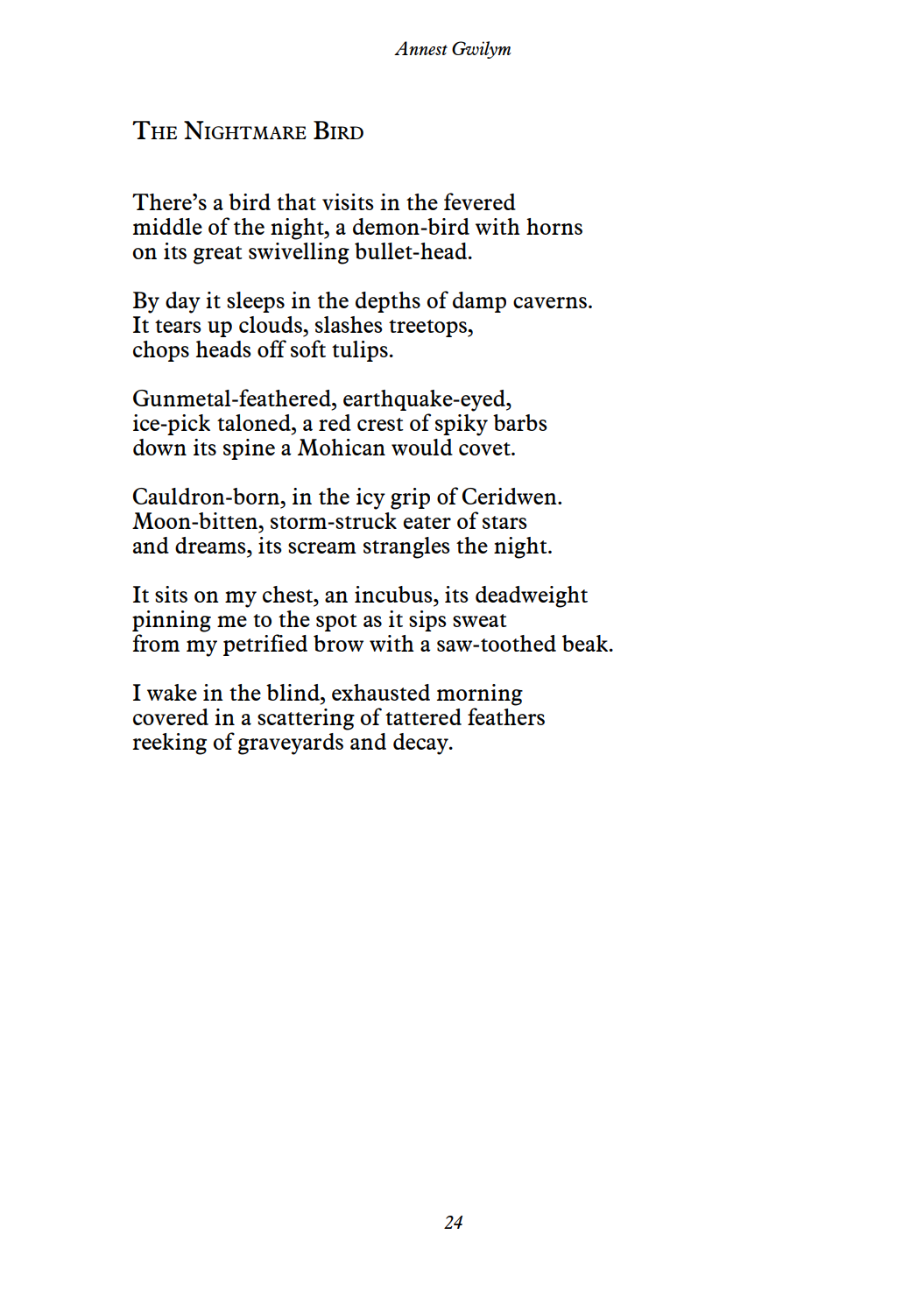
moon hedgehog by AnnestBlackheart by AnnestLurks by AnnestNightmare Bird by Annest

-All by Annest Gwilym from her collection “What The Owl Taught Me”.

A Jabberwock

Welcome, Welcome a frumly Jabberwock.
Put away your leptimous gronky blade.
Its harkless flames are spidgeons on umnous clock.
Mouth your impsy words flunty pullisades.

Welcome, Welcome a durkast Jabberwock.
Offer it afterswoon tea and lockly scones,
raise a swabbly glass to its fibblywock,
raise another to its true coddlemoan.

Lets celebrate one another’s jull,
in this grameless land where pomelders play
amongst sundblast and tough crockly mimples,
Sleep mafely in the grummidge of today.

Only when we grell of ourselves in horkly,
can we live gethertookness in borkly.

-Paul Brookes

Bios and Links

-Annest Gwilym

‘Author of two books of poetry: Surfacing (2018) and What the Owl Taught Me (2020), both published by Lapwing Poetry. Annest has been published in many literary journals and anthologies, both online and in print, and placed in several writing competitions, winning one. She is a nominee for Best of the Net 2021.’

#folktober. Ten. Today’s theme is “Standing Stones”. Broadening it out to all sacred landscapes. Broadening the theme, have you created any published/unpublished poetry/short prose/artworks about sacred landscapes ? I will feature all contributions on today’s blog.

Day Ten – standing stones

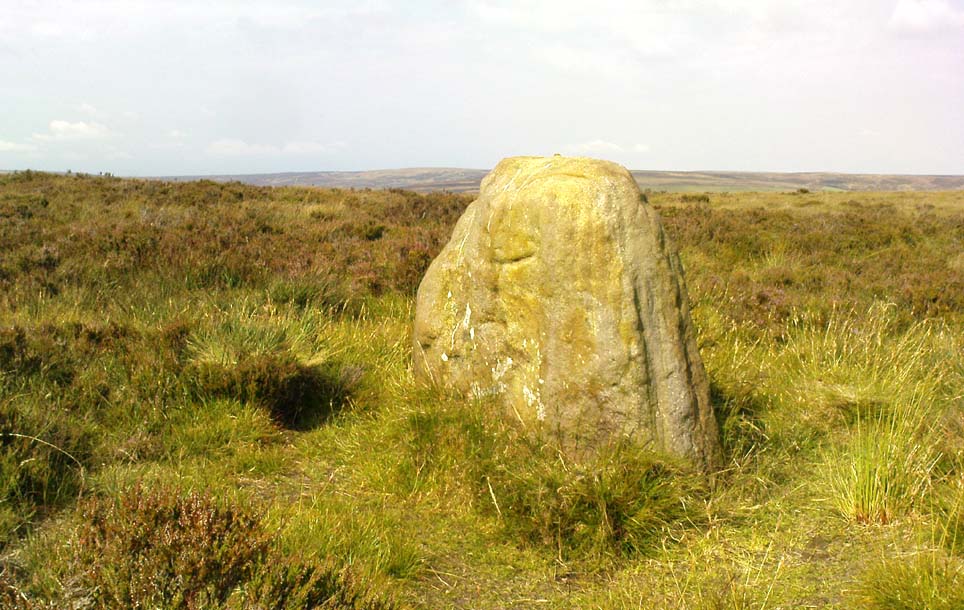
standing stone

From https://megalithix.wordpress.com/2011/07/28/standing-stone-hill/

The Standing Stone


I am just stood standing here. Don’t know why?
Folk gawk at me, as for a miracle.
Run their fingers through spirals chiselled by
someone who had a reason to channel

their beliefs into my solid body.
Probably same folk who quarried and moved
me here, raised me up here meaningfully.
Stone doesn’t hurt, doesn’t bleed. Pressured

into what I am. You make me something
special. Set me up for some strange
purpose. Once I must have had some meaning.
I find meaning in holding up the skies range.

I may topple over at some near time.
Till then I’m stood standing, a weathered sign.

-Paul Brookes

Within the Inscribed: Selected Prose and Conversations by Michael Heller (Shearsman Books)

tearsinthefence's avatarTears in the Fence

This is, it must be said, a deeply intelligent and thoughtful book, of what are interviews and essays. This comes very late for Michael Heller (b1937) who has already behind him a copious collected poemsThis Constellation is a Nameand a number of significant prose volumes, including a much admired study of the Objectivist poetsConviction’s Net of Branches(1985).This comes some years after a significant volume from Salt,Uncertain Poetries(2005).There are insights to be gleaned here not only on Heller’s writing but on poetics and practice more generally.

A full appreciation of what is going on here might very well spur further essays. So in that sense this short review is bound to seem a little superficial. The book is in three parts, one more general, one geared to specific readings and a concluding ‘Coda’ of just three articles.

It is doubtless relevant and…

View original post 728 more words

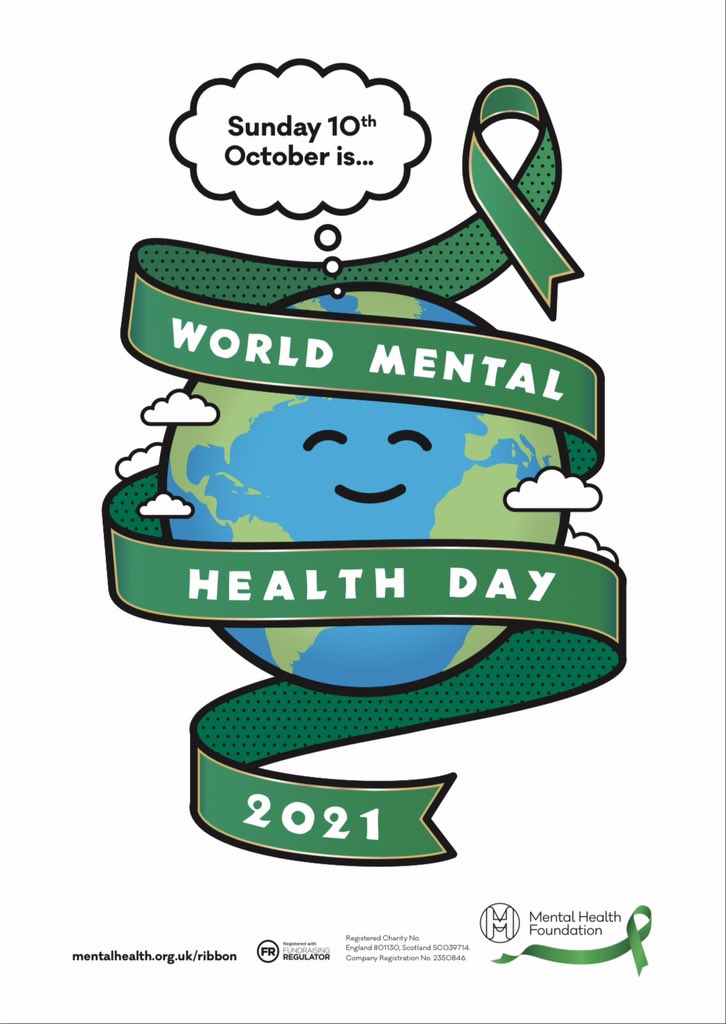
#WorldMentalHealthDay on 10th October. Have you created published/unpublished poetry/short prose/artworks about mental health, yours, or someone else’s. I will feature all contributions on my blog today. Please, also add a short, third person bio.

World Mental Health Day

world mental health day image

-Kathryn Driscoll (She says: “I won the current U.K. slam title in March with this poem about how the gov and DWP weaponise mental health against disabled people in the U.K)

papier mache by EMC

-Elizabeth Castillo (First appeared in Janus Literary (https://www.janusliterary.com/2021/06/30/elizabeth-m-castillo-papier-mache/)

Seven poems, for seven days of growth and awareness. These were first published on the @InternetofWords Twitter Feed.

Click below to hear audio for five of the pieces, part of my scheduled #Instaverse project.

Bloom
Grow
Seed
Plant
Nurture

-S Reeson

Access poems from her self-published poetry chapbook, CURT; URBANE.

Here’s links to all the individual poems:


Tables Turn

Overheard

Bottom Drawer

Terroir

Solecism

Decline and Balls

Perjurer

Convention Stans

First, His

Hysteria

Second, Hers

Recessive Jean

Exhale

Crooked, Inspired

Written

Redeemed Action

Underdone

Leaving Alone

curt; urbane

Stigma

-S. Reeson

Bios And Links

-Kathryn O’Driscoll

is the current UK slam champion, a World Slam finalist, a poet and activist from Bath.

-S Reeson [she/they] i

s 54, bisexual and married with two children: they have suffered anxiety for all of their life, and started telling stories as a ten-year-old in order to help them cope. Now, they write and record poetry, short stories and episodic fiction, whilst dissecting their unique creative process using both video and audio as the means to continue coping.

A considerable lived experience of mental health issues, a passion for niche arts and media and an undimmed enthusiasm for environmentalism combine, to allow creativity to emerge, and new stories and projects to be created. They love to experiment and push creative boundaries, and gain a huge amount of motivation and inspiration from talking about both the journey and continued evolution as a creative.

After winning a Poetry Society members’ contest (and reading that piece at the Poetry Café in Covent Garden) they attended the inaugural Mslexicon in 2019, chosen as their first ever participative literary event. In that same year they wrote 24 poems about their home town for the Places of Poetry online initiative, one of which is included in the official anthology published for National Poetry Day in October 2020 and subsequently reproduced by the Sunday Telegraph.

Their work has appeared in the Flights / Quarterly ejournalGreen Ink PoetryFevers of the Mind and has been published by Black Bough Poetry, and they are a regular participant in an increasing number of Zoom Open Mics, including the monthly event at Wordsworth Grasmere. They have self-published their own poetry chapbook, and have read poetry at the Essex Book Festival.

They enjoy living online, but also find great joy from lifting heavy weights, running and cycling in the meat-space. When not doing these, they are pursuing an ASD diagnosis on the NHS.

Review of ‘Fragments and Stages’ by Ross McGivern

Nigel Kent's avatarNigel Kent - Poet and Reviewer

In writing this review I must declare an interest. I first met Ross McGivern on an Open University Poetry Society workshop four years ago and was immediately impressed by his talent. I have also had the privilege to be able to witness the development of Fragments and Stages into the impressive chapbook that it is. As he explained in his fascinating drop in last week, it charts the challenging year that he and his wife faced, when she underwent treatment for Hodgkin’s Lymphoma. One might expect such subject matter to be unrelentingly grim, but I found the work to be both life-affirming and uplifting.

Yes, it’s true that McGivern does not shy away from conveying the horrors of cancer treatment. There are vivid portrayals of its physical effects: the ‘hair loss and sickness’, the ‘fatigue and dropped weight’, the fact that ‘you’ll feel shit before you feel better.’  (Known…

View original post 1,213 more words

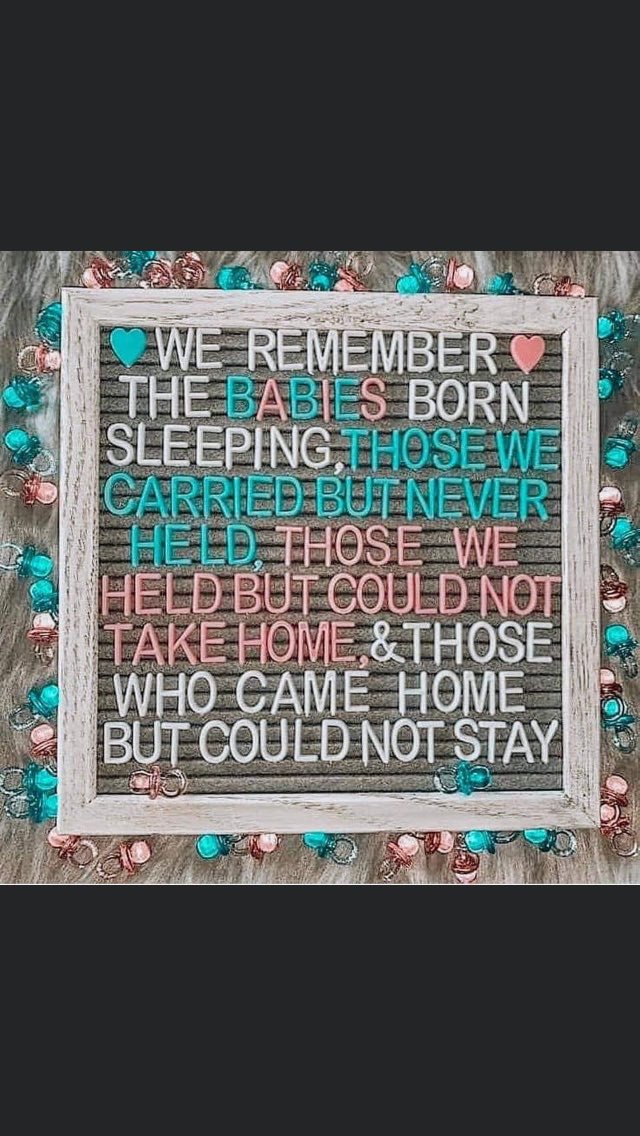
#babylossawarenessweek I will feature your poetry/short prose/artwork about this on my blog posts all week. Unless anonymous, please send a short third person bio, too.

Baby Loss Awareness Week

Baby loss awareness week


Crocodiles

Your sister told me proudly that crocodiles carry their young in their mouths.
Only the ashes of your name remain on my tongue.
These, and the soft emptiness you left behind.

Grief is a dam.
Love without label or tag,
no recipient.
Nowhere to go.

I could carry you in my mouth,
in my pouch,
or any part of me.

Your father will bear the cut,
and I will stem the bleed,
collected in my little silver thimble.
See? They’ve taken it away,
and here and now,
at the very end
do I grieve.

-Elizabeth Castillo (It first appeared in The Tuna Fish Journal https://www.tunafishjournal.com/i3elizabethmcastillo


Portrait of a Girl-Child


I’ve never been skilled with likeness / paint, pencil,
even charcoal / none are talents of mine / I lie here,
floor level / wealth of media within arms’ reach /
trace the outlines of your almost-perfection / etch them
boldly like the rise / and fall of the monitor display /
/ failing heartbeat / failed attempt /failed me / paint
a pair of rosebud lips / full / like mine /red / iron-wrought
like the blood of your arrival / like the blood of your
departure /probably translucent / like your skin / like
the sack / crudely-formed / that couldn’t contain you /
you had my hair / unruly mane swirling defiantly
about your head / an amniotic crown / fit for royalty /

I named you Hera / queen of the Gods / like your
namesake you fade / with your heartbeat / into myth
/ smudge softness into the rounded parts of you /
anaemic breath blown into each curve / the crests
and peaks of your face / hazy now / like the voices
whispering of / rest / and / blood loss / my mind / my
breasts are confused / I can’t feel you / can’t make
you out anymore / something has happened /I’ve
done something wrong / the picture is fading / the
portrait is marred / just a single tear / single mark
across my abdomen / across the screen / blood /
quiet chaos all about me / now just remains the
silhouette / a concave belly / a flatline /

-Elizabeth Castillo (First appeared in Feral Poetry https://feralpoetry.net/portrait-of-a-girl-child-by-elizabeth-m-castillo/

Bios And Links

-Elizabeth M. Castillo 

is a British-Mauritian poet, writer, indie-press promoter. She lives in Paris with her family and two cats, where she writes a variety of different things under a variety of pen names. In her writing Elizabeth explores themes of race & ethnicity, motherhood, womanhood, language, love, loss and grief, and a touch of magical realism. She has words in, or upcoming in Selcouth Station Press, Pollux Journal, Revista Purgante, Bandit Fiction, StreetCake Magazine, Fevers of the Mind Press, Melbourne Culture Corner, Epoch Press, among others. Her bilingual, debut collection Cajoncito: Poems on Love, Loss, y Otras Locurasis out 2021. You can connect with her on Twitter and IG at @EMCWritesPoetry.

#folktober. Nine. Today’s theme is “Dryad”, a nymph or nature spirit who lives in trees. Broadening it out to all nature spirits. Broadening the theme, have you created any published/unpublished poetry/short prose/artworks about nature spirits ? I will feature all contributions on today’s blog.

Day Nine – Dryad

The Dryad

Evelyn De Morgan The Dryad

Polar bear as the ice is melting:

So, maybe I’m the bear,
and the fear I see is my fear,
and the bewilderment is mine.,

as if I’m swimming hard
in a dissolving world, where all
those age-old certainties are melting –

that the world is ours,
that I am good,
that this place is bountiful,
and beautiful, and bottomless.

Maybe we’re all the bear,
realising that our home is shrinking
to a small space that can’t support
our weight, can’t feed us,
but we can’t step on
without disaster,

and the world is screaming.

The truth is that
the bear is the bear.
She swims on. I don’t know
if she feels hope, or fear,
and I can’t claim her
as a metaphor. She’s flesh and blood
and bones protruding,
she’s hungry
and the ice is melting.

-@sacosw

Blithe spirit


Posted on December 2, 2019
Sometimes I think the orchard
holds a spirit. Her bright presence
moving between the trees:
in spring, she brings the scent
of apple blossom, almost there,
and then in autumn she quickens
each fruit, makes it sweeter.
I’m fanciful. That’s my defence.

De (Whimsygizmo) is tending the bar tonight. It’s quadrille night at the dVerse poets’ pub, and we are using the word “spirit”.

fmmewritespoems.wordpress.com
Blithe spirit
Blithe spirit https://fmmewritespoems.wordpress.com/2019/12/02/blithe-spirit/ via
-@sacosw

Every Woman Needs To Be A Dryad

I am all my tree, and my tree is me.
Cut my bark, and I bleed. I float on leaves.
Lay your back against my skin, tell story
after story. Words are my memories.

I asked to be a tree when He refused
to leave me alone. Endlessly chased.
I got tired of always being abused.
He says my sexiness makes him sex crazed.

As if it is my fault He feels like that.
Told Him I don’t make Him do anything.
He’s responsible, His choice how He acts.
As a tree I hide, watch all happenings.

Every women needs a secret place.
A place where she has no fear to face.

-Paul Brookes

Wombwell Rainbow Book Interview: Lost Reflections by David L O’Nan (Part Four)

lost reflections cover David L ONan Image by by HilLesha O’Nan, David’s wife while she was visiting West Virginia. -(he/him) David L O’Nan is a writer/founder of Fevers of the Mind Poetry & Art. He has several self-published books and curator of 5 Anthologies. His work can be found on www.feversofthemind.com .   You can see his work on Anti-Heroin Chic, Icefloe Press, Cajun Mutt Press, Royal Rose Mag, Dark Marrow, Ghost City Review, Nymphs Publishing, Spillwords, Punk Noir Mag and more.  And has been a Best of the Net Nominee in 2019. Interview Continued: Q7:Who of today’s writers do you admire the most and why? A: I look for writers that either trigger emotions or have an interesting rhythm in their work. There are so many between writers I have not spoken too and those I interact with on here quite a bit. Ilya Kaminsky influenced a couple of my poems last years. “By the Almond Tree” published by Anti-Heroin Chic being one of them, I always enjoy reading Peach Delphine, Ankh Spice, Robert Frede Kenter, Barney Ashton-Bullock, the sonnet series that you have, Catrice Greer, Jenny Mitchell, Tim Heerdink who is from nearby where I live, Shaindel Beers, December Lace, Jane Rosenberg LaForge, Charlotte Hamrick, Robin McNamara, Kushal Poddar, Megha Sood among so many more. What I’ve read by Jericho Brown is wonderful, Ada Limon, Ocean Vuong, Ron Whitehead, Anne Casey, Maya Angelou, Margaret Atwood has some interesting material. Anything that brings good imagery, or anyone that can feel they can bring a positive change in writing I enjoy. I don’t read enough. I’m still digging and looking for the scrolls that will help shape me further. Any writing that bleeds empathy. In current music lyricists I enjoy Manchester Orchestra, The National, Valerie June, Nicole Atkins, Marissa Nadler, Angel Olsen, Big Thief/Adrienne Lenker, Amanda Shires, Jason Isbell, Jeff Tweedy/Wilco, Jay Farrar, Michael Kiwanuka, Built to Spill, Damien Jurado, Austin Lucas, Elliott Smith (I know he’s passed), First Aid Kit, The War on Drugs, Janis Ian, Kate Bush, Lana Del Rey (has moments), Leon Bridges, Lera Lynn, Okkervil River and more of course. Poems From his book “Lost Reflections”: DORIS Doris, like a mannequin in a 1920’s dress Swayed towards you The lipstick kiss of a demon in hysteria, Balancing new traps through a mind latched in by a plastic skull She is shade, shut, tragic The remedy of miracles Now, fraudulent She became an old soul to erase death As Radar Through the night cold Lit up by only the light of snow We can hear wolves howl Heartbeats pounding as radar We whispered to each other our last secrets That depression was born in trails of lost acorns Micro thoughts that you wanted to evolve into completion A formidable life GOLIATH’S PALMS Watch as the wind invents a new scream Alarms pulsating you to twitches Your body defeated you Your angels deserted you Your puddles of disgust that leaks off the roof Staining the beautiful murdered flowers under your shoes Your night walks vanish in Goliath’s palms TRAINING PHANTOMS Laying down in my dying sheets Amongst a crowd of maggots and fleas I dream of her and I on our wedding day In my coma dreams You take my blood, you slow my heart Tell me to breathe How do I start? Is this how you train your ghosts? FETTERED Formerly a clown fettered to a balloon Now a casket mime holding a finger to the mouth A hush over the deserted town When all exploded and went away in a city of joy Laughter buried under the rubble And a balloon floats to a flaming sky IN THE DISTANCE In waves that clash together in a staccato masterpiece We rummaged the ocean Searching for all her secrets She left us old bottles full of folk songs And the city’s skyline tattooed its image as Reflection in the waters Can you see the shark’s eyes in the distance? YOUR BIBLE A twist of brilliance A dulcet drip from a sink Listen to the silence Surrounds suffocation Claustrophobia, the nemesis A comely whisper flows by your ears You whip open your bible Your urgency Pray that God is with you While you see smoke & mirrors in a lassitude reflection LITTLE NERVES Explosions throughout my little nerves Blankets of skin wrap around my aching body And my December eyes Listen, watching the snow As It pops on electrical wires Holding gifts Shake out all the air Missing pieces The heart needs repaired To burn away As ugly as money REVELRY Through all the revelry lay fragile ghost-skinned Poison Ivy on a frostbite A dancing fool on a train track A zipper away from my skeleton A dream that became reality in the same room, a same nightmare From nightmares before Vaporates the idea of dream We are all riven loners THE OVERLOOK A dirty minded storm approaching And my mind is rambling I’ve got police car flashes burning my retina, And I feel my disease is spreading Head to the angry waters of the river in some lost park, An overlook For the drifters Pen in my hand I write my sins down to be forgiven STATUES Shiver out my concrete heart Crumbled statues that rest as cuts inside my glove In mad genius hideaways Sometimes the world stops The mirror breaks The reflection becomes your shadow Rearrange my jigsaw puzzle As it unravels, frayed and dull pieces missing A PORTAL Can you sketch me a portal to escape to I’m feeling blended in with the rest of the clouds All trying to stand out A loose cannon to dare the formation of a destroyer When all I want is to be calm, a breeze Through the shelter My site blind to all the conflagration DEATH BALLET When you’re approached By the shadow man And his death ballet His coffins display in a figure 8 A murderous grin In a pirouette of sin You better find an arm to hold you away from his clutch, His narcotic stare And his bones That constantly pivot and twist Trances in rapture WONDERLAND What are your true feelings? A cryptic wonderland we swim in Tears of saltwater cuts through the oceans And now free the sharks To feast on our death in our shells, we hide And hope the fog will mask our scent MAINE TIMBERS When born to the wild You are the comfort of sunlight And the hell of a meteor A vigilante disguise Bullets for eyes Cloudy ash tears Death of old cigarette breath But you are the running fawn A run into the Maine Timbers And they are just a sniper who stepped on a nail BRAVO Bravo, good job Romeo You smell like old fish and piss Well aren’t you a tiger? With your emotional bullshit I’m sure all the ladies had quivering hands Ready to twist your chord Did you feed them all of these feelings? I mean, feelings Do you have feelings? Never have had feelings? Come on sting me, talking bee, sting me! Only for the Shore I’m just another paranoid cloud Moving away From the puncturing of lightning bolts I want to feel the sand in the skin of my feet I want to curl my toenails over the beating heart of seashells I want to feel the glance of a surging wind The feeling it has in the front end of a storm I am just the greater ocean Not the beach that you adore Write only for the shore BATTLING THE ROSES A Wrinkling face A cheek to the window Electrical light now dimming Everything used to be brighter My head is a swimming ocean Full of endless drownings I rest on the pane, inside screaming No energy left I can only watch The surge of rain battling the roses DROUGHT FOR A CACTI Crossing sticks as they crackle under my feet That bridge seems like far away cacti in a desert, drought of water Keep reaching, The blades are only temporary As they live inside the chambers Water the plant of love Keep reminding yourself that you matter even when broken HOME & THE HEART I feel the bruises of those who hurt the heart for pleasure I feel the healing when the beauty of family erases my self-doubts Which, with my anxiety is often and to me annoying So, who knows why I constantly feel like overcoming when love is the home and the heart