Trigger WarningPEOPLE OF A SENSITIVE NATURE ARE ADVISED THAT THE FOLLOWING EXTRACTS EXPLORE FAMILY DYSFUNCTION AND ABUSE ISSUESZero Gravity
Excerpt for 15 November, 2021
Two continued
“Come on, Veronica. This is me you’re talking to.” Hilary put her hand on the other woman’s arm. “Eva won’t hear anything from me about who talked. Isn’t this man the one who’s bad for business? I know you don’t want any other girls to get hurt.”
Veronica paused, took a deep breath. “Yes, there’s a man who only started coming ‘round recently. He raped one of the girls with a champagne bottle. He bit another one’s lip clean through and she had to get stitches.” Her fur cuffs flew upwards as she gestured for emphasis. “Penelope’s got the story you’re going to want to hear. I don’t know much else, but I’ll keep an eye out like always, sista.” She squeezed Hilary’s hand, worry creasing her forehead. “I gotta get back to work. Penelope’s room is just there, number 27.” And Veronica was gone, descending the stairs with the speed and grace of the big cat whose spots she wore.
-Gayle J. Greenlea.
<strong>YOU’RE THE DEAD TO ME</strong>
<!– wp:paragraph –>
Third week – <strong>Flourishing</strong> – Day One
-Paul Brookes
Bios And Links-Gayle J. Greenlea
is an American-Australian poet and counselor for survivors of sexual and gender-related violence. Her poem, Wonderland”, received the Australian Poetry Prod Award in 2011. She shortlisted and longlisted for the Fish Poetry Prize in 2013, and debuted her first novel, Zero Gravity, at the KGB Literary Bar in Manhattan in 2016. Her work has been published in St. Julian Press, Rebelle Society, A Time to Speak, Headline Poetry and Press, The Wombwell Rainbow, Fevers of the Mind, Kalonopia and The Australian Health Review.
Fever Hammersit probably doesn’t have to be stressed is a peculiarly strong and resolute title for a collection of prose poems. The general effect of reading through this I thought was that the writing is crisp, accomplished and taut and there is an abiding tough mindedness, making few concessions, driving it along.
Sinclair presents the material in three clearly delineated presentations, red, yellow and blue, each with a charged and resonant epigraph. The first is from William Faulkner’sLight in Augustspeaking of ‘a ghost travelling half a mile ahead’. I don’t know that I can entirely marry this up with the general progression of the text, but it is pungent and affecting.
The titles of the pieces actually draw on and reflect the material of the text. The first piece is ‘Dogs on the Lawn’ and this reflects a turn of phrase in the piece itself,- ‘The dogs…
Tidying, not writing, Math Jones found a knot, began to unpick it, thinking, “what if, by untying this, I loosened the knot of worry and hurt inside, what if someone could do that?” So using his years of writing and acting experience, a love of folklore and magic, he made The Knotsman, the life and times of a C17th cunning man.
Math Jones is a south Londoner now in Oxford, a former bookseller turned actor and poet. See also Sabrina Bridge, poetry from Black Pear Press, and eaglespit, Heathen spoken word.
Q:1. How did you decide on the form of poetry that makes up The Knotsman?
I kinda didn’t. The first thought had been a novel, maybe a fantasy novel such as I’d grown up with. But so far, I’ve never felt the stamina or application to manage a novel.
Later, over a few days or weeks, I found myself writing a number of short pieces: a flash fiction, something like a ballad, a rambling patchwork piece like scraps of notes, and a love poem. And they became the core, of the plot lines, of the man, of the people around him.
And as that initial piece was made of fragments, I approached the rest of the book in the same way. Characters, situations, events, almost tangential to the central thing. They became threads in a knot themselves.
As for form, it was then a case of trying different approaches: monologues, dialogues, nursery rhymes, satires, court transcripts, formal and informal, some tied to sonnets, some inspired by Old English alliterative verse. Some straight-forward prose and storytelling. Some concrete verse even. Often, what haven’t I tried yet? Sometimes emulating an earlier piece.
I didn’t really know where it was going, but I did know when I’d written the last piece.
You’re the hip to my hop You’re my cherry on the top You’re the vision to my sight You’re the teeth to my bite I’m the Elephant to your Castle You’re the golden wrapping paper round my Christmas parcel You’re the order to my crazy confusion You’re my cryptic crossword puzzle solution You’re the Marmite to my bread and butter You’re my sanity when I’m a raving nutter You’re the planet revolving round my sun You’re the bullet in my gun (Though you’re so beautiful it’s just set on stun) You’re the T to my V The BB to my C The O to my D The GC to my SE You’re the flesh on my bones You’re my favourite ring tone on my phone I’m the penalty taker you’re the goal You’re the Dolmio sauce to my spag bol You’re the Arctic to my Monkeys Your love is my drug and I’m your love junkie You’re the memory to my………………………….amnesia You’re the diamond to my geezer You’re my together when I’m the loner You’re the Marge to my Homer You’re the Honey & Lemon Strepsil to my sore throat If I’m Joseph you’re my Technicolour Dreamcoat You’re the high voltage that helps me function You’re the Clapham to my Junction You’re the A to my Z You’re the comfort blanket to my bed When I’m the blunt instrument you’re the sharpest knife You’re the metaphor for my life.
One way or another many of us have been producing material during the last year or more which relates directly or otherwise to the situation we have been experiencing. Leaving aside Brexit and the all-embracing facts of climate change the Covid virus has been and will no doubt continue to be a source of energy for writers and artists of all kinds. It feels inevitable in fact and there have already been anthologies of poetry appearing to suggest so. Steven Waling’s new book is a mix of diary entry and personal testimony, combing observation with a collage technique which is very appealing.
ON THIS ROUTE
there’s lots of farting aboutTurning night into day
the sun wants to lie in bedgets up full bladder
rain-packed isobars rumble in from the West
so I wait five minutes at Random Stopten more
at Just Before You Alrightthen flash of hail followed
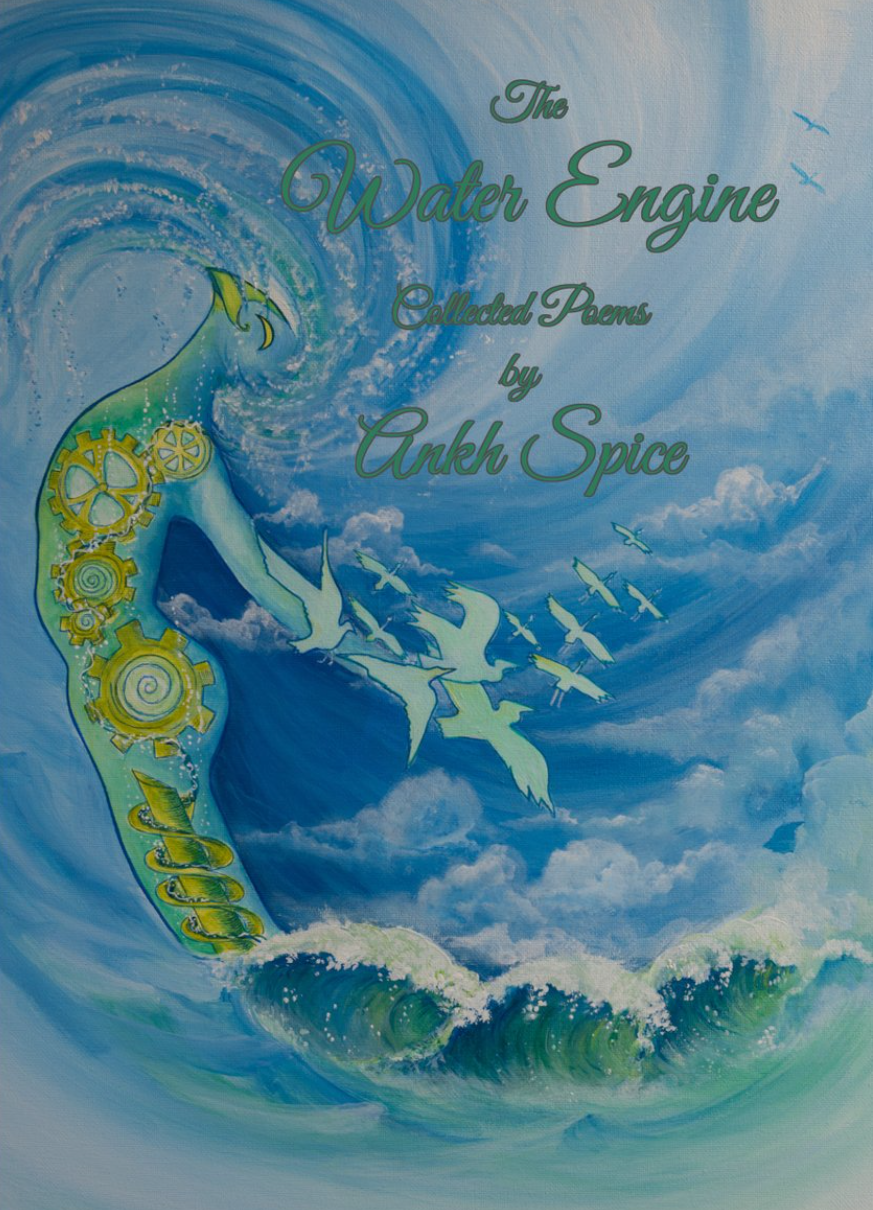
Water is all our ws, is the short answer – our where, our why, our who-what-when (and that single h that should be a w – the how). It’s that first wiggle of our building blocks, our precursor, our ur-species, then the habitat of our ancestors. Bigger than even that, it’s the first wiggle of *any* organism, of any species-in-potentia, at least in our universe. We scour for signs of it out there in the huge darkness, just as far as we can reach or even conceptualise – to reassure ourselves we’re not alone. And it’s our first wiggle as individuals, too – our first swim as consciousness lodges in these bodies. These bodies that yes, remember it in its shapes, and are also water. I think of us all as ambulant oceans, still carrying around everything I just mentioned, sloshing away inside this thin skin-barrier we’ve grown between us and the world. This way of thinking is so inextricable from my poetry, if you removed the water from it, it would cease to exist – just as surely as I would or you would. And how could I exist *where* I do – on this archipelago, this city the fallen body of a taniwha, this island the body of a fish, and never more than birdcall away from the tideline, to write as I do, by channelling from without and within – and not be overflowing? You’ll recognise all of this, feeding every line of every poem in The Water Engine – truly it isn’t about the fountain, it’s all of this – it’s us, the way we begin in water to intake from the source (all our sources). The way our being, our baffling mechanism, directs and urges those takings-in to move through our twists and turns – the water of us finding its way through our dark interior, through blockage, obstruction, silt, breakage, leaks. To the release, the rush, the great urgency of knowing our time moving upwards in this way is limited – that eventually we drift up there in the light, we dissipate, all that momentum translated to a calm float – right back to that source. And it’s in it’s way pointless, this circle, but it’s utterly beautiful and also *completely* the point – water moves because that’s what it does. And it moves *us* because on some level we all know, coast-dwellers or not, that it’s the reason we’re here. And given how brief our rush feels, to think about it being fed by all we take in, and returning to an origin that persists and re-feeds, is endlessly comforting. Thank you for asking this question, Paul – I think if I wanted anyone to take any single thing away from my poetry, or to approach my book holding any kind of map, it would be this awareness.
(sending you light from the ocean, right where I’m sitting now)
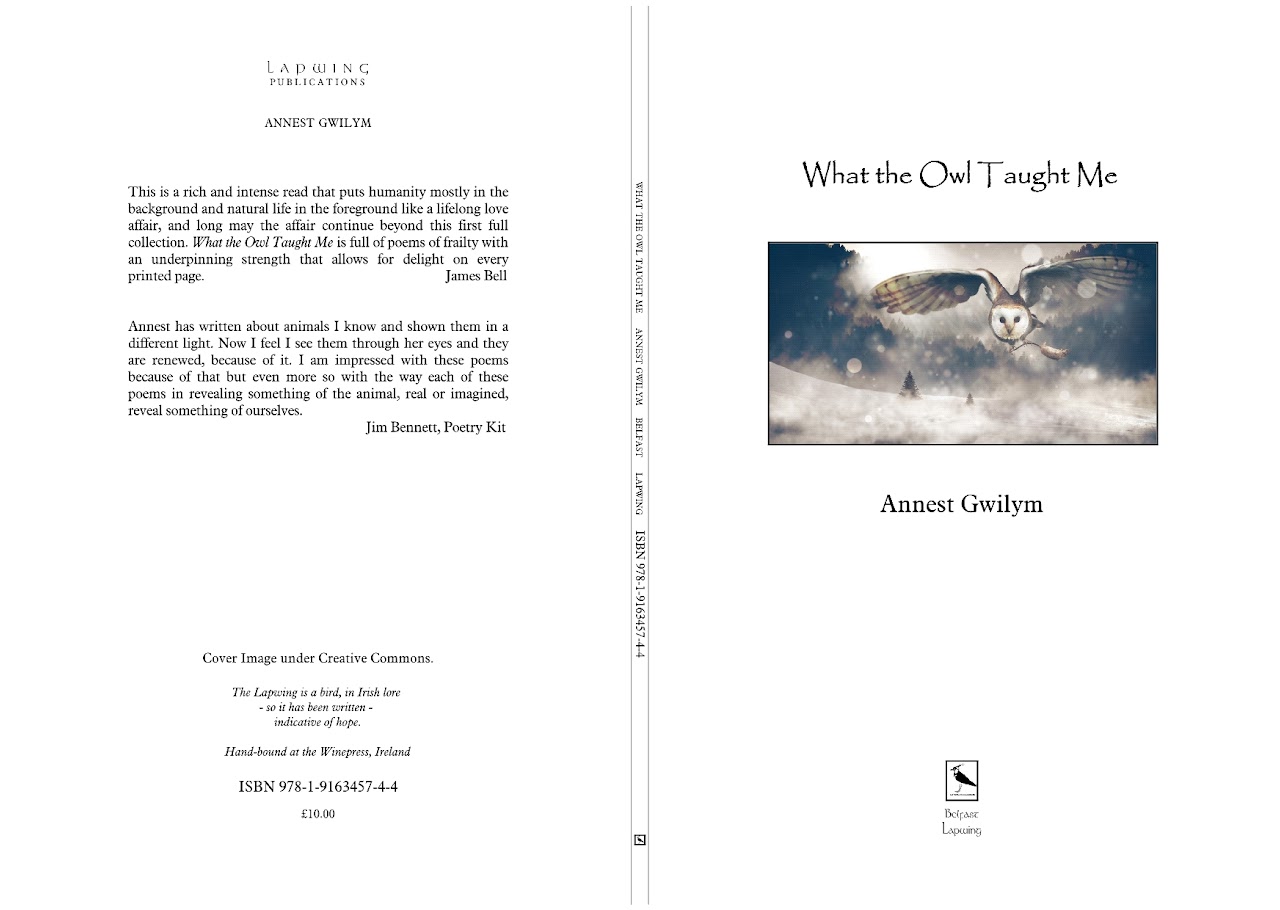
Author of two books of poetry: Surfacing (2018) and What the Owl Taught Me (2020), both published by Lapwing Poetry. Annest has been published widely in literary journals and anthologies, both online and in print, and placed in several writing competitions, winning one. She is a nominee for Best of the Net 2021.
The Interview
1. When and why did you start writing poetry?
I started writing as a teenager, mainly keeping diaries and writing poetry. My first poem to be published was at age 15, in a local magazine, one of only two chosen from my school. When I began to enjoy poetry as a teenager, I started dabbling, although these early attempts were mainly about teenage angst!
2. Who introduced you to poetry?
‘Nobody in particular – like most people it was a series of school teachers of literature. Because I am a native Welsh speaker, in an area where Welsh language and literature are taught at school, I was taught Welsh, as well as English poetry. I also went on to do a degree in English and Italian, where I also learnt about Italian poetry.’
3. How aware are and were you of the dominating presence of older poets traditional and contemporary?
‘Very aware, and sometimes intimidated, by the presence of poetry ‘giants’ past and present!’
4. How do the writers you read when you were young influence your work today?
I’ve been influenced by many, many other writers, but I try to make my writing my own and as original as possible. I am not a fan of pastiches or work ‘in the style of . . .’. I believe there are more poets than ever writing today, perhaps because of people having more free time during the pandemic and the continuing popularity of creative writing degrees and courses, so it is sometimes difficult, but still important, for each to find their own unique voice, in order to be authentic and stand out in the midst of so much ‘noise’.
Two poetic giants who have affected me most are Ted Hughes, and poet and novelist Helen Dunmore, who sadly passed away in 2017.
Ted Hughes influenced my love of nature poetry in general, and specifically that about animals, which I first became aware of when studying for my English Literature O’ Level. He is unsentimental, and captures the sense of the animal as an elemental force, mostly without his own commentary or interference. In his own words ‘I think poems as a sort of animal . . . Maybe my concern has been to capture animals particularly and not poems, but simply things which have a life of their own outside mine.’ (Poetry in the Making, 1967.)
I love the lyricism of Helen Dunmore’s poetry, the sharpness of her imagery, and original and surprising language. Her ability to turn the ordinary and everyday into beautiful poetry was a revelation to me, in that everything in life can be made poetic.
5. Who of today’s writers do you admire the most and why?
One of my current favourite poets writing today is Jane Lovell. I was knocked sideways by her collection The God of Lost Ways, published by Indigo Dreams Publishing in 2020. It is an important piece of work for our times, in that it focuses on the natural world and our relationship with it. Her language is vivid and precise, her technical ability astonishing. Her imagery is stunning, surprising, and original.
She is not afraid of the darkness inherent in nature, but ultimately this is an life-affirming piece of work. Some of my favourite lines which exemplify this sense are:
‘in your darkest moments [he] brings you blown trees with shards of pottery and coins in their roots, skeletons of fry in the carcass of a fish, seedpods in rasping spirals.’
(from the first poem, The God of Lost Ways)
and
‘There are shadows, of course, and dead things: the chewed stalks of wings, mud-trodden carcasses of ideas, lost paths through dead trees, but always the signs of birds and that backwash of blue light.’
(from Made certain by the signs of birds).’
6. What would you say to someone who asked you “How do you become a writer?”
‘My first suggestion would be to read, read, read, obsessively and extensively – the best writers, both contemporary and historical. You will pick up good habits subconsciously by doing this. Also, attend creative writing courses if you can – there are many available now, including some good, affordable online ones. And finally, write, write, write. Even if it isn’t publishable, it will help you establish your own individual voice. And finally, submit your work to literary journals.’
7. Tell me about the writing projects you have on at the moment.
I’m currently working on what will hopefully become my third book of poetry, a collection provisionally titled Before the Last Petals Fall. In it, I’ll be moving away from my comfort zones of poetry about mental health and nature to themes around the various losses experienced in life.
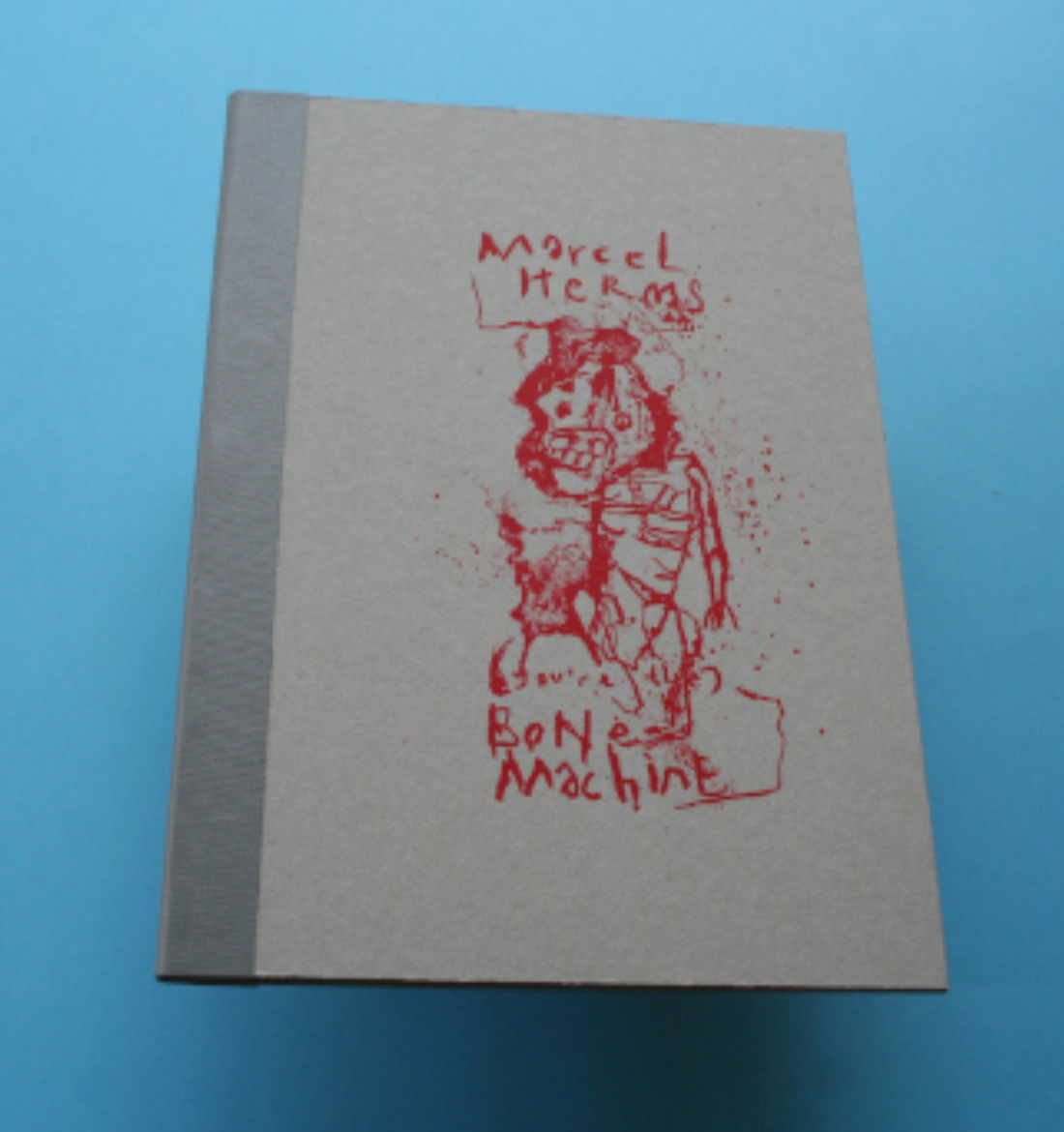
is a Dutch visual artist. He is also one of the two men behind the publishing house Petrichor. Freedom is very important in the visual work of Marcel Herms. In his paintings he can express who he really is in complete freedom. Without the social barriers of everyday life. There is a strong relationship with music. Like music, Herms’ art is about autonomy, freedom, passion, color and rhythm. You can hear the rhythm of the colors, the rhythm of the brushstrokes, the raging cry of the pencil, the subtle melody of a collage. The figures in his paintings rotate around you in shock, they are heavily abstracted, making it unclear what they are doing. Sometimes they look like people, monsters, children or animals, or something in between. Sometimes they disappear to be replaced immediately or to take on a different guise. The paintings invite the viewer to join this journey. Free-spirited. He collaborated with many different authors, poets, visual artists and audio artists from around the world and his work was published by many different publishers. http://marcelherms.nl
Q:2: How did you decide on the titles?
The book has a title (the various images do not). I got the book title from the Pixies song of the same name. A good song and an intriguing title. It is of course also a reference to the used pages from the anatomy book. And to William S. Burroughs’ Soft Machine,.
is London-born, but is now based in Oxford. He has two books published: Sabrina Bridge, a poetry collection, from Black Pear Press (2017), and The Knotsman, a collection of verse, rhyme, prose and poetic monologue, which tell of the life and times of a C17th cunning-man. Much of his verse comes out of mythology and folklore: encounters with the uncanny and unseen. Also, as words written for Pagan ritual or as praise poems for a multitude of goddesses and gods. He is a trained actor and performs his poems widely.
Several threads to that, from school assignments, to times of emotional anxiety needing expression and clarity of thought, to moments of exploration to see what’s there, to stepping into pagan ritual space and needing to find language and form in meeting the gods, to having something to hold whilst everything collapsed, to having direction and somewhere to go, to being just in the space and the moment, to have moments of enough, and perhaps to honour everything found on the way.
Knowing that words and language are only the outward signs of things, and life comes in breaths, but in order not to be alone, we take up the trappings and make use of them.
Sporadic times in my life, the pens been the outlet, in school, in teens, inside and outside of married life, till I realised just recently I’ve been writing since I could.
2. Who introduced you to poetry?
Poetry for children – Milne, Milligan, Belloc, Ayres, Strwwlpeter, Sesame Street. Then school, teachers shamed by classrooms of boys doing their best, Shakespeare, acting, mythology, legend, songs and singers
3. How aware were and are you of the dominating presence of older poets?
Not very. There were poets that played, and I liked that. I missed, I think, whatever reverence or distance was placed on them. They just happened to be there. Arguing amongst themselves, maybe. Now I know they were mostly just like me, feeling their way, not knowing really what they were doing. Perhaps happy in their circumstance, perhaps not knowing it. Though they are who they were, it’s other people made them something else.
4. What is your daily writing routine?
Wake up, breathe. Maybe, I’ll wake with a free poem coming. Write it down. Maybe it’ll hit me in the shower, or walking. Perhaps it needs a certain moment detached from the world, like often I’d be travelling. Sometimes, it’s a swell of emotion needing a fable, needing a drama, for clothes to wear. Often, now, I’m just waiting for a welling, or a breeze, and I let it move me. And sometimes it’s wanting a poem that says ‘just that’.
5. What motivates you to write?
Something that wants to be heard. A coincidence of feeling and thought and opportunity, helped by trust and a long practice. A feeling of ‘this might help’. A feeling of ‘don’t let me be alone’.
6. What is your work ethic?
I don’t know what this means. I do resist the need to prove myself a writer. Building a shelf, I might be a sawyer, a planer, a driller, a screwer, a hammerer, a leveller, but I’m building a shelf.
7. How do the writers you read when you were young influence you today?
I guess they make me comfortable with form, happy to be traditional, old-fashioned, to be playful, fanciful, to write what’s not been written before. Perhaps.
8. Who of today’s writers do you admire the most and why?
Have to ask those writers I’ve not read to forgive me. Alan Garner, for worlds besides one another. Ursula Le Guin, for the deepest things, and things over-looked. Rosemary Sutcliff, for trials into who you are. Robert Graves, for being flawed, but himself anyway. William Morris, looking for a language. George McKay Brown, I’d like to think of as kin. Yeats, for Fairy. Moments when a writer’s made me want to give up on writing, only to try again later.
9. Why do you write?
Oh, I thought that was what motivates. Suppose I could add, that writing’s just a part of it. Because before the writing’s the enquiry, the living, the wanting to have good thoughts, wisdom if possible. To practice trust in myself, and in what wants to speak to me, to have that trust me, the listening. And after, there’s the wanting to share, to find the one to hear it spoken, to put it on the air. To speak it.
10. What would you say to someone who asked you “How do you become a writer?”
Things like, “get it wrong”, maybe. Listen. Feel. It’s a cloth thrown on the air to catch its shape. Practice language – it’s a cloth, etc. Not everyone’s where you are, but you are. They’d also need to tell me what a writer is to them, and what becoming one would look like for them. Then I might have an idea where to point them.
11. Tell me about the writing projects you have on at the moment.
Um. I don’t know where they’re going… but The Knotsman could be staged, performed, recorded – that might happen. Gylfaginning, an Old Norse text, I ‘ve spun it into verse; needs revising, clarifying. The King of Death, 366 verses on a year spent in the land of the dead as its king; I might need to grow some more to be able to revise it, justify it. Then themes that recur in sporadic fashion: poems of folklore, poems of goddesses, gods, poems of Bear, poems of fairy and elf-lore, fables, narratives, landscapes, could be shaped into collections and books. Perhaps it’s being alone, perhaps it’s recent events, but mostly it’s needing a place to go.
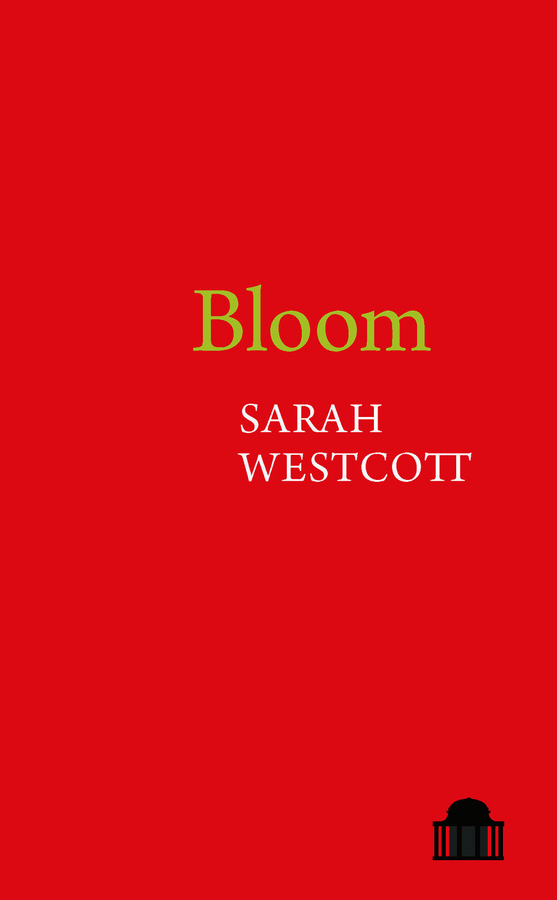
grew up in north Devon and lives on the edge of London. Her first pamphlet, Inklings, was a Poetry Book Society pamphlet choice and Slant Light (Pavilion Poetry, 2016), was highly commended in the Forward Prize. Her second collection, Bloom, also with Pavilion Poetry, was published this year. Sarah was a news journalist for twenty years and now works as a freelance tutor and writer. Work has appeared on beermats, billboards and buses, baked into sourdough bread and installed in a nature reserve, triggered by footsteps.
Q:1. How did you decide on the order of the poems in the book?
It was quite an intuitive process helped along by my editor Deryn Rees-Jones who has a talent for shaping collections. I originally sent Deryn a sheaf of poems which she ordered into a more coherent whole. The book has a kind of ebb and flow about it with what I think of as breathing spaces marked by white space and illustrations made by my mum!. The poems rise and fall into three sections really and I see them as a living thing which a reader or listener might encounter as they move through the book. I guess I do see it being read in a linear way but also, hopefully, it works dipped into randomly. The book was always going to have a middle section of ‘Spring Fragments’ which sit at the heart and are written in a loose diary form. The opening poem is quite experimental but I was happy Deryn suggested starting the book with it. There is the idea that the first poem sets the tone of a book and encompasses something of its themes so Apples was the perfect choice to start. The idea that potential readers might look at a first and last poem of a book holds some truth so it feels good to start and end on a personal note..
*******
The best place to buy a signed copy is to contact her directly (send a DM on twitter) or email Sarah.westcott@tiscali.co.uk
 Trigger Warning
PEOPLE OF A SENSITIVE NATURE ARE ADVISED THAT THE FOLLOWING EXTRACTS EXPLORE FAMILY DYSFUNCTION AND ABUSE ISSUES
Zero Gravity
Excerpt for 15 November, 2021
Two continued
“Come on, Veronica. This is me you’re talking to.” Hilary put her hand on the other woman’s arm. “Eva won’t hear anything from me about who talked. Isn’t this man the one who’s bad for business? I know you don’t want any other girls to get hurt.”
Veronica paused, took a deep breath. “Yes, there’s a man who only started coming ‘round recently. He raped one of the girls with a champagne bottle. He bit another one’s lip clean through and she had to get stitches.” Her fur cuffs flew upwards as she gestured for emphasis. “Penelope’s got the story you’re going to want to hear. I don’t know much else, but I’ll keep an eye out like always, sista.” She squeezed Hilary’s hand, worry creasing her forehead. “I gotta get back to work. Penelope’s room is just there, number 27.” And Veronica was gone, descending the stairs with the speed and grace of the big cat whose spots she wore.
-Gayle J. Greenlea.
<strong>YOU’RE THE DEAD TO ME</strong>
<!– wp:paragraph –>
Third week – <strong>Flourishing</strong> – Day One
-Paul Brookes
Bios And Links-Gayle J. Greenlea
is an American-Australian poet and counselor for survivors of sexual and gender-related violence. Her poem, Wonderland”, received the Australian Poetry Prod Award in 2011. She shortlisted and longlisted for the Fish Poetry Prize in 2013, and debuted her first novel, Zero Gravity, at the KGB Literary Bar in Manhattan in 2016. Her work has been published in St. Julian Press, Rebelle Society, A Time to Speak, Headline Poetry and Press, The Wombwell Rainbow, Fevers of the Mind, Kalonopia and The Australian Health Review.
Trigger Warning
PEOPLE OF A SENSITIVE NATURE ARE ADVISED THAT THE FOLLOWING EXTRACTS EXPLORE FAMILY DYSFUNCTION AND ABUSE ISSUES
Zero Gravity
Excerpt for 15 November, 2021
Two continued
“Come on, Veronica. This is me you’re talking to.” Hilary put her hand on the other woman’s arm. “Eva won’t hear anything from me about who talked. Isn’t this man the one who’s bad for business? I know you don’t want any other girls to get hurt.”
Veronica paused, took a deep breath. “Yes, there’s a man who only started coming ‘round recently. He raped one of the girls with a champagne bottle. He bit another one’s lip clean through and she had to get stitches.” Her fur cuffs flew upwards as she gestured for emphasis. “Penelope’s got the story you’re going to want to hear. I don’t know much else, but I’ll keep an eye out like always, sista.” She squeezed Hilary’s hand, worry creasing her forehead. “I gotta get back to work. Penelope’s room is just there, number 27.” And Veronica was gone, descending the stairs with the speed and grace of the big cat whose spots she wore.
-Gayle J. Greenlea.
<strong>YOU’RE THE DEAD TO ME</strong>
<!– wp:paragraph –>
Third week – <strong>Flourishing</strong> – Day One
-Paul Brookes
Bios And Links-Gayle J. Greenlea
is an American-Australian poet and counselor for survivors of sexual and gender-related violence. Her poem, Wonderland”, received the Australian Poetry Prod Award in 2011. She shortlisted and longlisted for the Fish Poetry Prize in 2013, and debuted her first novel, Zero Gravity, at the KGB Literary Bar in Manhattan in 2016. Her work has been published in St. Julian Press, Rebelle Society, A Time to Speak, Headline Poetry and Press, The Wombwell Rainbow, Fevers of the Mind, Kalonopia and The Australian Health Review.


 The Wombwell Rainbow