Is Steve Ely like Geoffrey Hill or Basil Bunting?

poetry owl's avatarPoetry Owl

incendium amoris

When I read a poem by Steve Ely in The London Review of Books, I was intrigued and sought out more of his work. Ely, who lives in Yorkshire, has produced three books: Oswald’s Book of Hours (2013), Englalaland, (2015) and Incendium Amoris (2017), all from Smokestack. The blurbs for these collections compare the poet’s work to Geoffrey Hill’s Mercian Hymns and Basil Bunting’s Briggflatts. I thought it would be interesting to consider how far these comparisons can be sustained.

The three most obvious characteristics that come to mind are the autobiographical element, the strong sense of place experienced through time and the fact that all three poets are men. The work of Ely and Hill is also informed by a strong commitment to Christianity, whilst Bunting, reared within Quakerism, though less obviously Christian, arguably has a religious vision. For the purposes of this essay, I shall concentrate…

View original post 2,909 more words

Writing about Nature: poets and the non-human: John Clare, William Wordsworth, Seamus Heaney, Steve Ely.

poetry owl's avatarPoetry Owl

Awareness of climate change and the growth of ecocritical theory have placed a new value on poetry which foregrounds the non-human.This may lead to the revaluation of past writings about nature or to the emergence of conscious attempts to acknowledge non-human forms or beings as themselves rather than as appendages or furnishings for the human perspective.Fundamentally, however, we, as humans, continue to impose our own views, needs and ways of understanding on the world around us, although our ways of representing that world may be changing with changes in our knowledge.

One wing of ecocriticism links the ecological battle to other struggles against oppression and for social justice as expressed in feminism, post -colonialism and LGBTQ+ theory. This alignment of the environment with other ‘victim’ categories, has led to an upgrade in the status of the poet, John Clare, who has become a favourite of ecocritics, perhaps at the expense…

View original post 5,224 more words

#NationalMarineWeek 2021 24th July – 8th August. Sixteenth Day August 8th: What Should We Do For Sealife?, Have you written unpublished/published poetry/artwork about what we should do for sealife ? Poetry and Artworks/photo challenge. When a week is sixteen days to account for the tides in Britain. Here are the second eight day themes: Aug 1st: Crabs and other crustacea, Aug 2nd: Rocky Shorelines, Aug 3rd: Mermaids And Sea Monsters, Aug 4th: Sea Shanties, And Other Sea Songs, Aug 5th: Ocean Vegetation Aug 6th: Deep Sea Aug 7th: Shorelines Aug 8th: What Should We Do For Sealife?

Day Sixteen – What We Should Do For Sealife?

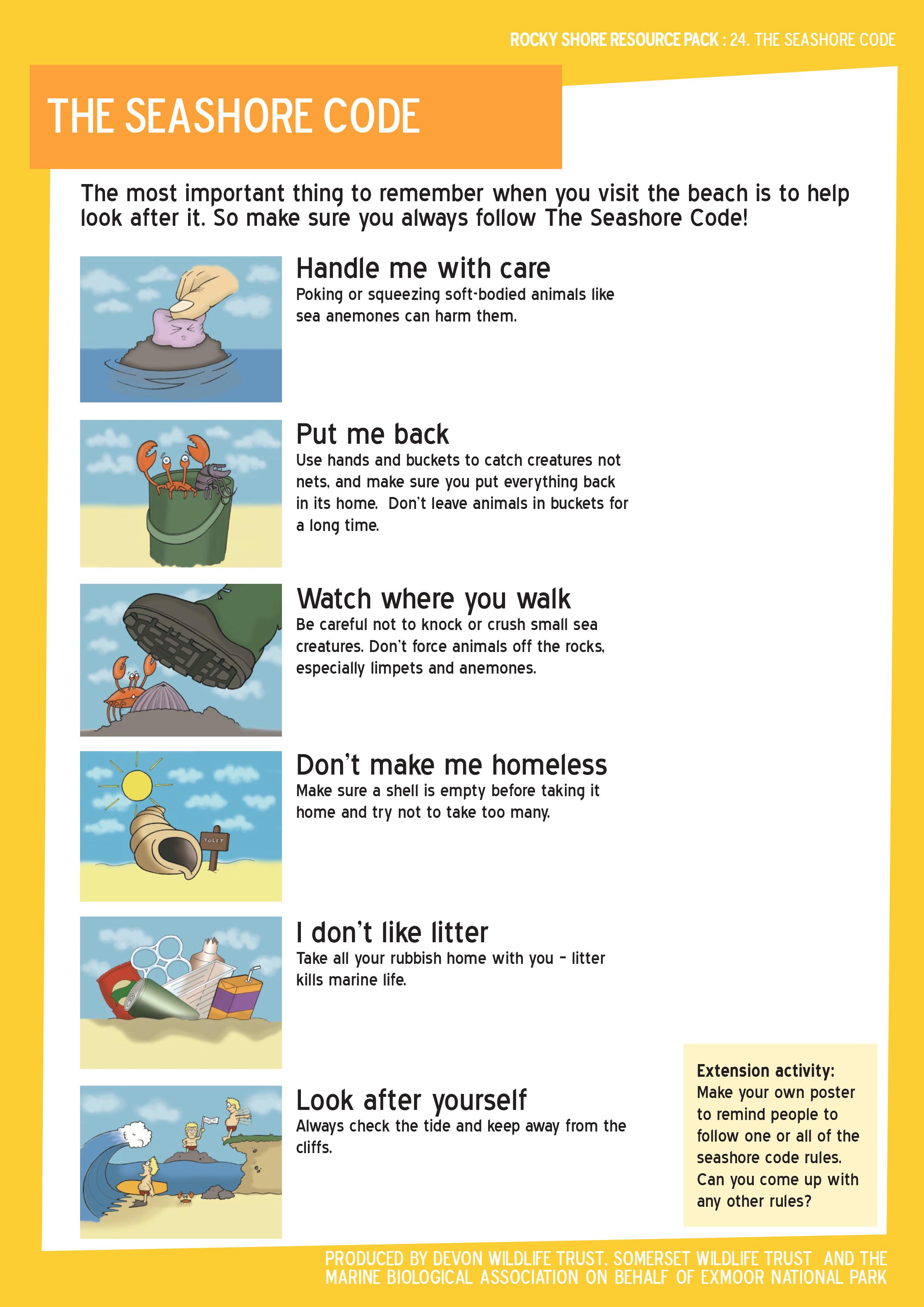
Seashore Code

WHAT SHOULD WE DO FOR SEALIFE ? 

Learn. Listen. Act.
We know the problems earth is experiencing
as a result of unsustainable living.
It takes collective will and unity,
ego-less leadership committed to evolution,
to affect a whole globe for greater good.

Greedy hearts of stone govern this fossil-fuel holocaust.
Until we stop fucking fracking,
ban slash-and-burn cash crop palm oil farming,
the earth’s deep nurturing soul will still be dying.

The ocean is snided with rubbish ;
we’re eating micro plastic. Why does it happen ?

It’s about what food we eat – and how it’s produced.
The current view : oceans are a fishery resource.
Meat and fish production takes up vast space.
Vegetarianism is a sound health choice and it relieves that strain.
Earth is a living breathing entire organism – Lovelock’s Gaia Theory.
The biggest change will need to occur inside the human brain.

The ocean could be farming nutritious kelp, if we had a taste for it.
There are bio-degradeable alternatives to packaging ;
so it’s about education and behaviour change,
harnessing innovation to solve man-made problems.

Adopting large scale renewables,
would drastically reduce fossil fuel use, with its choking oil spills.
If we electrified the grid, provided home chargers for e-cars,
we would no longer rely on it to drive the wheels our journeys.

Lobby the politician – Make positive change happen.
Health is wealth – The alternative is extinction.

Stop monoculture which exhausts both sea and land.
Stop over-fishing; let populations recover.
Value nature and conservation properly.
Protect our natural heritage with strong wildlife laws and designation.
A shark in a tank is not a wild creature at home – it’s a zoo;
Surviving is not enough. Creatures have rights too.
Take whaling, it’s a blood diamond –
where there’s conflict, there’s profit, but for who ?

Respect your children’s right to breathe clean air;
share and enjoy nature’s wild garden.
Give them chance to live in harmony ;
thrive in this blue-green Eden.

Climate change is our Armageddon.
7.8 billion human sheep inhabit this planet.
Fake news – fear and anger – corrodes unity.
While we remain divided and misinformed,
our chance of survival erodes.

What can humans do ? Cue Greta …
Lobby politicians for change.
Commit to climate action.
Stop land-filling the earth with holes.
Recycle more materials. Use less packaging.
Eat less meat, better still go veggie.
Reduce air miles – buy local and seasonal.
Purchase renewable energy. Drive an electric car.

Force our Government to invest in health and long term well-being
of natural and human environments in tandem.
Reject their bullshit economic argument about job creation;
ignore all the lies and misinformation. Switch the telly off.

This is mother earth’s planet,
not real estate owned by a megacorporation;
some waffly-verbose-manipulating politician.

Be proud of what you do and you –
This is mother earth’s planet, but England is your nation;
Your tiny slice of heaven.
What we buy and don’t buy counts,
What we demand strongly enough,

-John Wolf 8th August 2021.

.head above water with voice.

Sonja Benskin Mesher's avatarsonja benskin mesher

.head above water – a swimmer’s perspective.

Metaphorically, i have spent much of my life, keeping my head above water.

Dealing with life facts and disappointments, not forgetting the quiet times to help the work along

I lived on the coast, played by the sea

As a child, I floated gently until all became spongey. Now I swim head above water, up and down obsessively counting, hoping all will come clear..

Friends in water talk more, baring much, reflecting their clothing

I am drawn to water, my work reflective. Writing, swimming, painting, drawing.

I collect cuttings of people in water.

“a diary, a personal relationship with the landscape.

“Shoreline would be more an exploration of the concept….shorelines more related to actual examples…..how about that?

Shoreline…..an ever-changing interface……between 2 media…..2
worlds…..can be crossed in both directions, but only temporarily?……but
aren’t we only here because something had the courage to cross
permanently…..something…

View original post 32 more words

#NationalMarineWeek 2021 24th July – 8th August. Fifteenth Day August 7th: Shoreline, Have you written unpublished/published poetry/artwork about the shoreline ? Poetry and Artworks/photo challenge. When a week is sixteen days to account for the tides in Britain. Here are the second eight day themes: Aug 1st: Crabs and other crustacea, Aug 2nd: Rocky Shorelines, Aug 3rd: Mermaids And Sea Monsters, Aug 4th: Sea Shanties, And Other Sea Songs, Aug 5th: Ocean Vegetation Aug 6th: Deep Sea Aug 7th: Shorelines Aug 8th: What Should We Do For Sealife?

Fifteenth Day -Shoreline

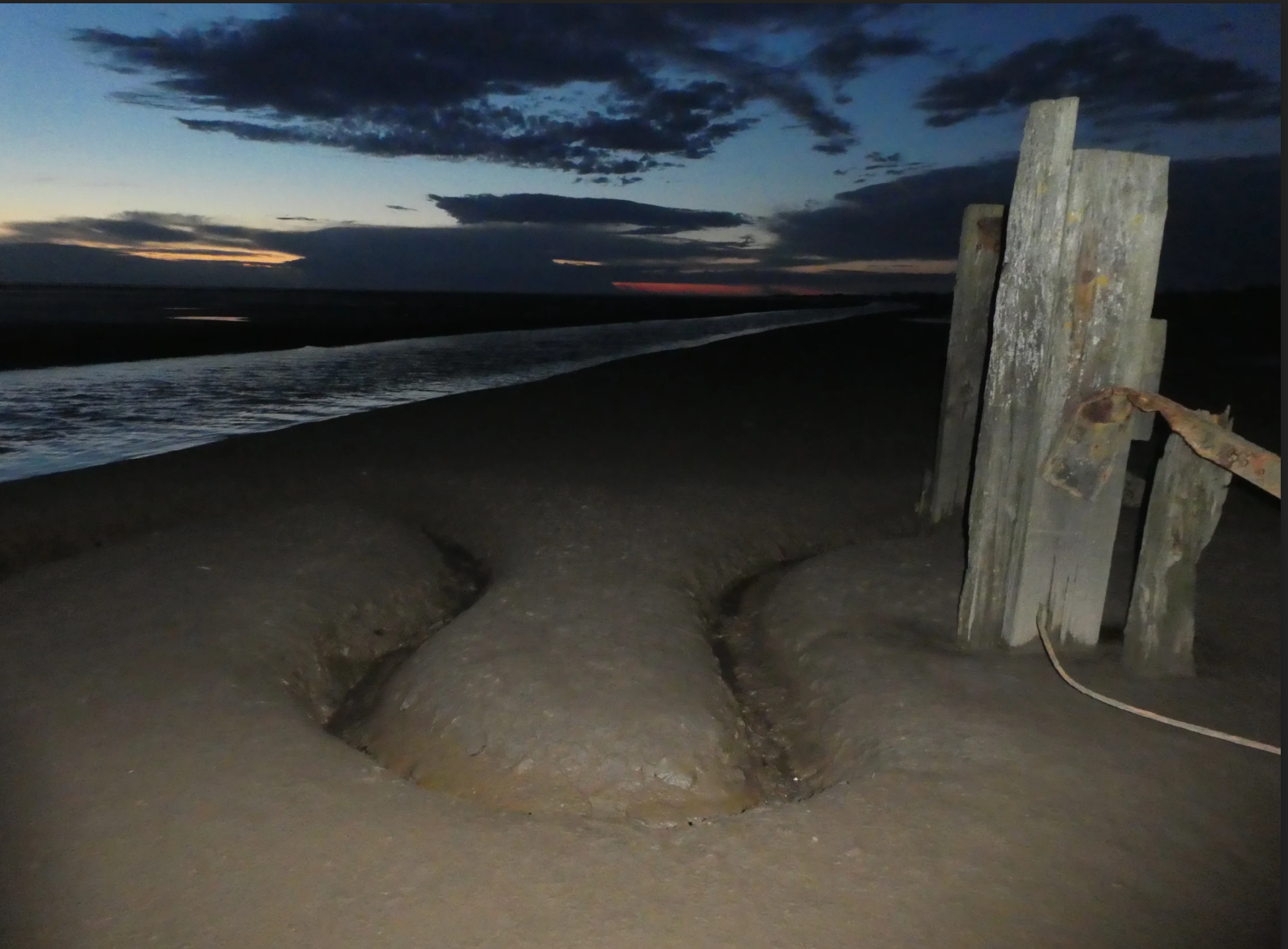
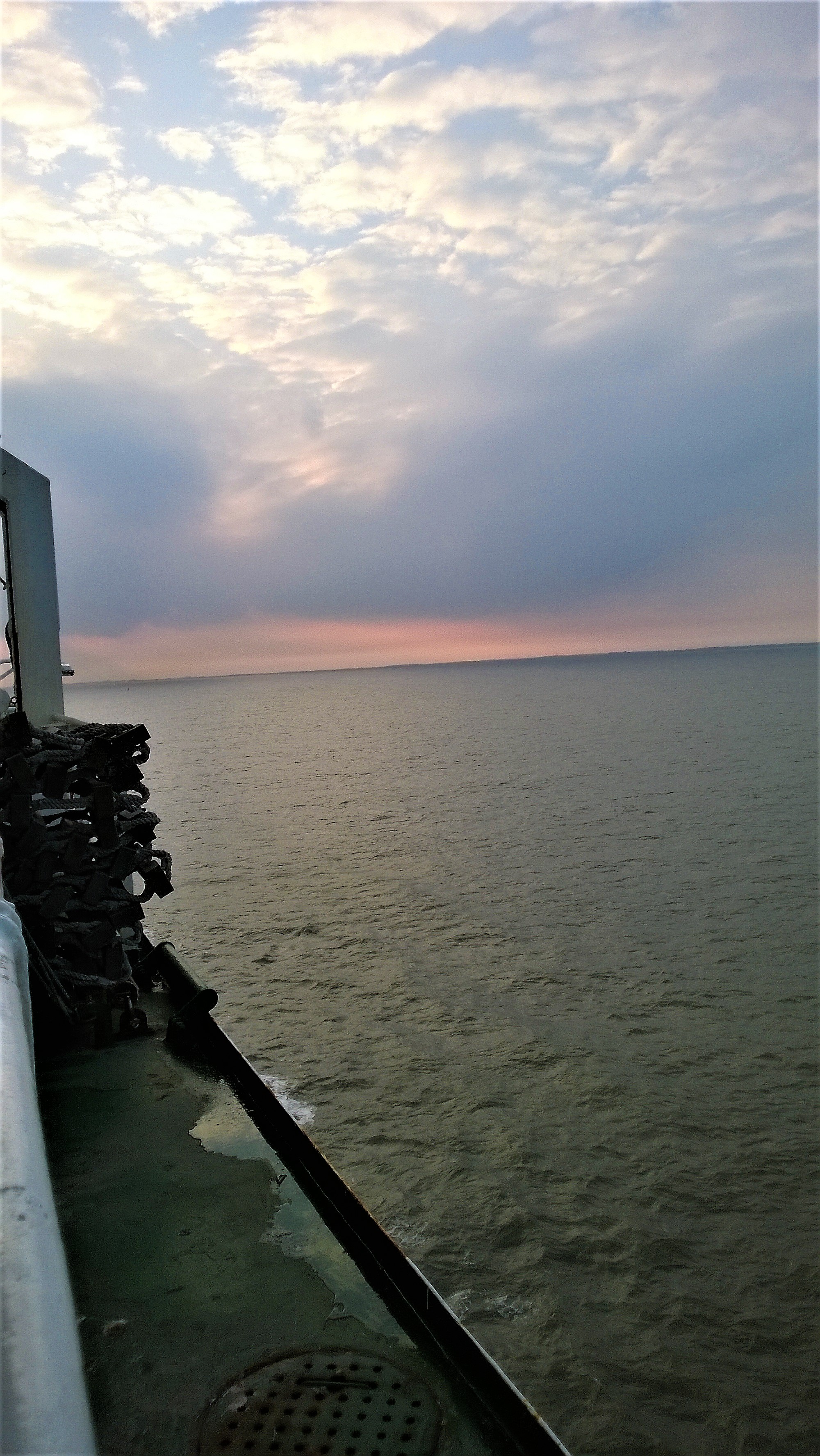
Shoreline 3shoreline by Geoff HolmesShoreline 2

P1040232P1040160

-All photos by Geoff Holmes

Beyond The Bounds by Geoff Holmes
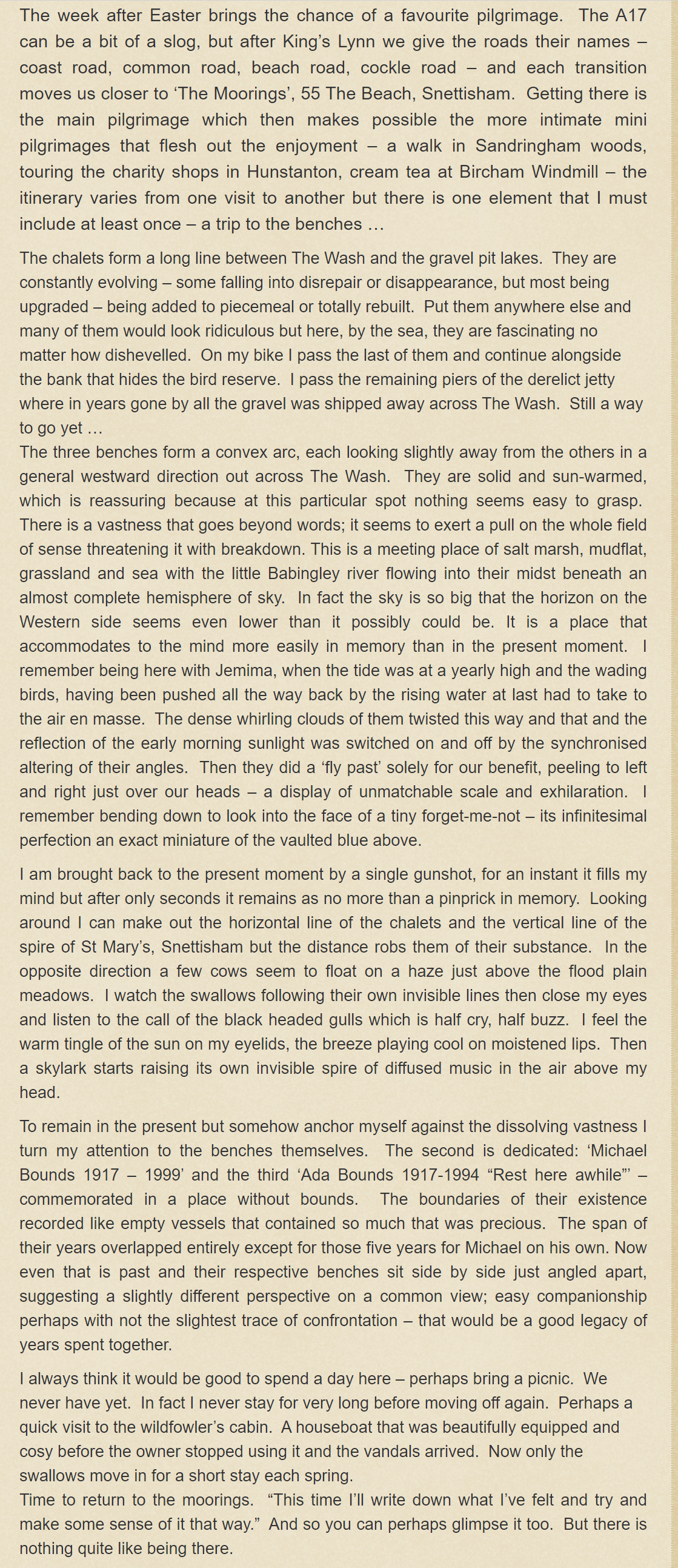
Beyond Bounds by Geoff Holmes

http://geoffsreflections.blogspot.com/search?q=beyond+the+bounds
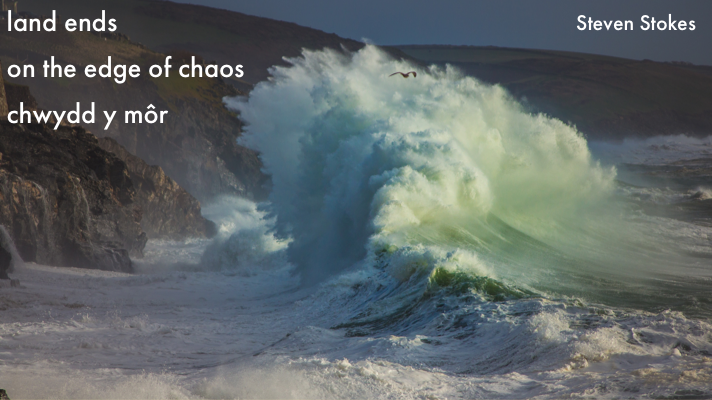
Welsh shoreline by Steven Stokes

-Steven Stokes (chwydd y môr – Welsh for ‘sea swell’)

Sea E-Scape

Relax, close your eyes and listen
to the gentle sound of salty waves
lapping against a sun kissed shore
feel the delicate sea breeze
admire the orange tinged sunset
gaze upon the far away horizon
which seems impossible to reach
and know the fear and doubt
can be overcome
in the secret and secluded sea scape
of your mind

-Diane Rossi

SHORELINES 

The only sure lines in life
are those drawn by the maker.

A tiny turtle who speed-skitters to reach the surf,
what is his life worth ?
That sharp-eyed ever-present shadow,
is hard-wired to hunger.

Each nip of a lobster claw,
every dodge of beak and maw,
life becomes slightly better prepared for.

Coping strategies for limpets to hold on.
Anchoring to sea grass with a prehensile tail.
Hiding amongst floating weeds until the coast is clear.

But when the tide dumps you onto a beach
like a refuse pile,
amongst other refugees you mingle,
Scratting amongst steamy bladder-wrack
slipping twix bits of stony shingle.

This is No Man’s Land for whale, mermaid, turtle;
because limbs so agile out there,
drag without the buoyancy of water.
Opportunists rub their hands –
a Gull’s sharp beak plucks defenceless turtlings
from beach to sky,
where it is all but certain now, these little mites,
before really living, will die.

Nature is crueller than Jimmy Saville.
Only some species survive the transition.
Ones who tolerate salt, wind, drought ;
Ones who eat other ones slow on their feet ;
Ones who manage to return to their natural habitat;
Ones who avoid being boiled alive by people;
One is a small number.

To survive a shoreline requires specialist skill,
sense to select a sure line your life will take.
Is it instinct, or luck, which determines,

-John Wolf 7th August 2021.
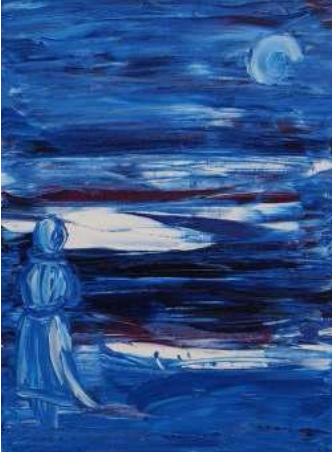
shoreline by ann mcdonald

-Ann McDonald

Costa Brava by Ryan Gibbs

-Ryan Gibbs (First published in Mediterranean Poetry)

https://soundcloud.com/sonja-benskin-mesher/head-above-water-a-swimmers-perspective?utm_source=clipboard&utm_campaign=wtshare&utm_medium=widget&utm_content=https%253A%252F%252Fsoundcloud.com%252Fsonja-benskin-mesher%252Fhead-above-water-a-swimmers-perspective

.head above water – a swimmer’s perspective.

Metaphorically, i have spent much of my life, keeping my head above water.

Dealing with life facts and disappointments, not forgetting the quiet times to help the work along

I lived on the coast, played by the sea

As a child, I floated gently until all became spongey. Now I swim head above water, up and down obsessively counting, hoping all will come clear..

Friends in water talk more, baring much, reflecting their clothing

I am drawn to water, my work reflective. Writing, swimming, painting, drawing.

I collect cuttings of people in water.

“a diary, a personal relationship with the landscape.

“Shoreline would be more an exploration of the concept….shorelines more related to actual examples…..how about that?

Shoreline…..an ever-changing interface……between 2 media…..2
worlds…..can be crossed in both directions, but only temporarily?……but
aren’t we only here because something had the courage to cross
permanently…..something emerging from the sea is such a powerful
image….turtles, ursula andress in dr. no, monsters from the deep…..and
why do we find it such an attractive place to be
xx salty”

sbm.

Sea Shanty

I’ll sing you a song of the foreshore and strand
Way down Redcar
I’ll sing you a song of the foreshore and strand
And we’re bound for the vertical pier.

Then howay, pet, howay,
Way down Redcar.
So tara to all you who bewailed the cost
For we’re bound for the vertical pier.

Sing ‘Hello there Beacon, all shiny and new,’
Oh, down Redcar.
And ‘Hello steps up to the wraparound view,’
For we’re bound for the vertical pier.

Then Howay, pet, Howay,
Way down Redcar
And tara to all you who bewailed the cost
For we’re bound for the vertical pier

And this is Redcar


You’ll love it here. There’s sand and sea. Sometimes there is sun. And sex is not unlikely.
The wind turbines off-shore add to the attraction, don’t you think? Look at them milling their arms like old lady giants at a keep-fit class.
The beach is wide – ideal for dogs and horses too. Watch out for the shit. Just on that stretch though. There’s family sand nearer to town.
You should’ve seen it when we came on club trips as kids. You couldn’t move for deck chairs, windbreaks, kiosks selling jugs of tea. And shuggy-boats and that high slide we used to climb, clutching a little mat to sit on, glide down again. These days, there’s roundabouts and trampolines.
There is a pier – maybe you haven’t noticed? It’s vertical. Looks like a helter-skelter. Some say it’s an abomination. I like it though. Do you? It catches your eye, scintillating purple in the sun. And you can climb it like a spiral staircase, come out at the top, view the town, the waves, the length of beach.
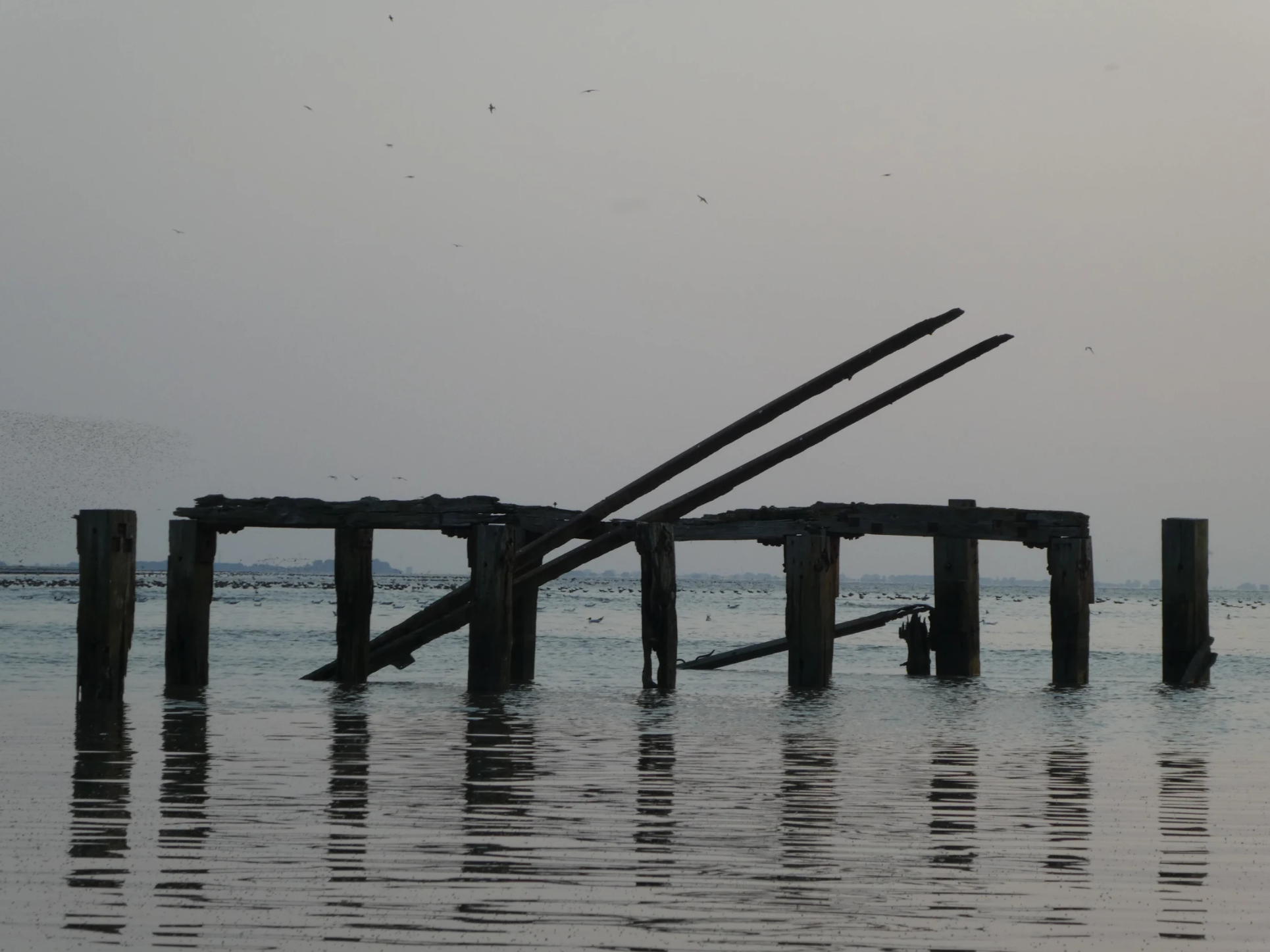
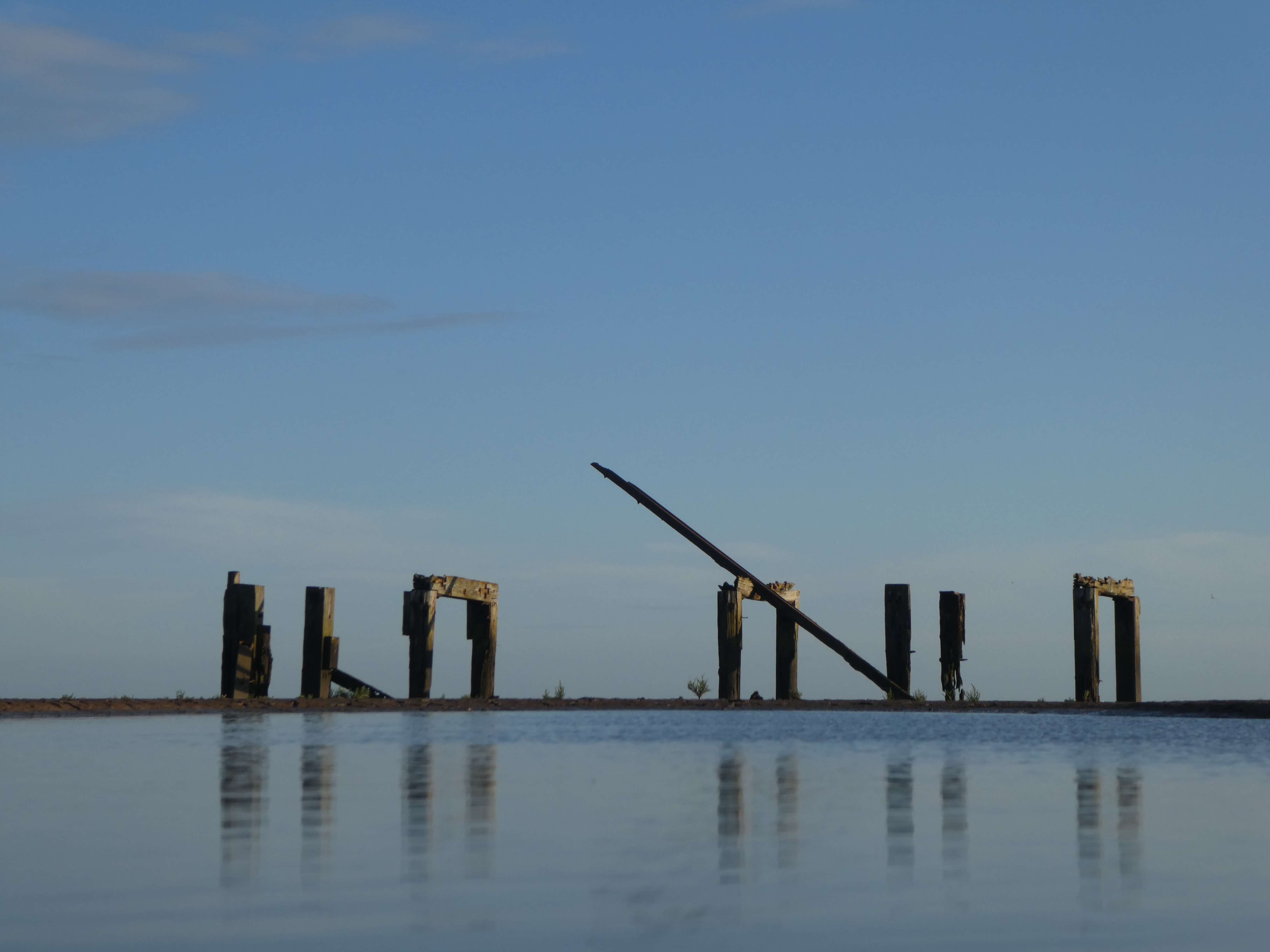
Oh look! The sand’s all gone down there, swept away by storms last month. A morass of mud now amid the remains of ancient forest – see, stumps, branches, roots, at least 7000 years old, they reckon. It’s really brought the people in. Hundreds more than usual
though it’s always popular here on Sundays, a multicultural crowd strolling along, facing that North Sea wind, buying lemon tops from Pacitto’s, eating chips in the refurbed shelters near the water-spurts.
That way? That’s South Gare. You can watch tankers head into Teesport, visit the little village of fishermen’s huts, crooked chimneys smoking.
Over there? The steel works. Closed down. They’re dismantling it.

Undercover in Redcar

We scan the beach, note
the exuberance of dogs bounding
across the sand into the waves,
peer into flotsam – sea coal, crab claws,
razor shells, the vertebrae of fish.
The sea has set them out;
displays them warily; sidles
up to check their whereabouts.

On wet shore, horseshoes sink, tracks
confused with paw marks, footprints.
At South Gare, we miss the steps,
scramble instead over the rocks, haul up
by rusting No Entry sign. A tanker
heads in to Teesport, noiseless under
the wind’s bluster, the churn of waves.
We survey through our binoculars.

Tugs close in. Dwarfed by its bulk,
they chivvy the ship their way and it goes
quietly. Round the corner, fishermen’s huts
are shuttered, hunkered down
against the searching wind. One smoking
chimney signals as we walk past.
Down the road, in the hulk of steelworks,
one light pretends that things go on as normal.

4 stanzas in the North Sea wind
1
In hulk of steelworks, one light pretends that things go on as normal
though the blast furnace is turned off, coke ovens extinguished,
a community of workers left to cool five years ago
in the North Sea wind.

2
Sea coal, crab claws, razorshells, the vertebrae of fish,
footprints, pawprints, hoofprints,
the runes of sanderling and oystercatcher
honour the North Sea wind.

3
The pier is a beacon, draws you to its verticality.
Offshore turbines, bright as local Lemon Tops,
transmute energy, wring electricity
from the North Sea Wind.

4
Turbines’ feet become mini-reefs where the benthos
spawn, forage, shelter – molluscs, bivalves, worms,
echidnoderms stirring up carbon, foundation of our world
beneath the North Sea wind.

Redcar, March


Windy Redcar beach.
Caterpillar tracks lead us to another age.
Creatures once light and fluid
lie heavy now in dark stone.

Sea water fizzles, bubbles
round smooth stones, sinks.
Lugworms extrude their sand-spaghetti heaps,
wind-strewn white feathers cling,
icing the sticky shingle.

Mussel shells crunch under heels.
Sanderlings skitter in unison
and oyster-catchers, herded by the waves,
pipe complaints.

From the sea
I am rooted in the sea.
Waves roll stone after
stone, anchor my feet.
Foam spawns round my ankles,
aeon-worn grit grips my toes,
encrusts them like barnacles –
my feet are ancient artefacts
brought up by divers.
Salt of the sea, I crawl
(too painful to stand)
up the shingle
(unable to stand)
until I reach dry land.

Sea Change

Crisped brittle-black,
I contort in salty sunlight.
Time was, I’d glide, fluid,
slime-slide. Then, I swayed
sinuous. Now, I twist on the shingle, dried.
Once, immortal water wrote my name.
Now, I’m just a scribble on the shore,
a frozen writhing, a mourning ribbon
tied to the sea’s portal.

-All poems above by Ann Cuthbert

Bios And Links

-Geoff Holmes

was born in Cambridge and grew up in Jersey and East Anglia.  He now lives in Barnsley, South Yorkshire where he tries to improve his local greenspace, the Swanee.  He is lucky also to be able to spend time quite often on The Wash at Snettisham Beach. He is father to four children and was once a vicar but now works in medical statistics and modelling.

-Ryan Gibbs

is an English professor who lives in London, Canada. His over forty published poems have appeared in journals and anthologies in Canada, the United States, the United Kingdom, Malta, and Saint Pierre and Miquelon. His children’s poetry has been included in the State of Texas Assessment of Academic Readiness.

-Steven Stokes

is a South Wales-based haikuist who began writing and sharing his poetry in 2020. Steven publishes his work via stevenlstokes.wordpress.com and three of his poems were included in the recent Dylan Thomas-inspired anthology ‘How Time has Ticked a Heaven Around the Stars’

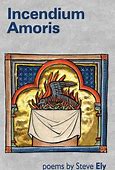
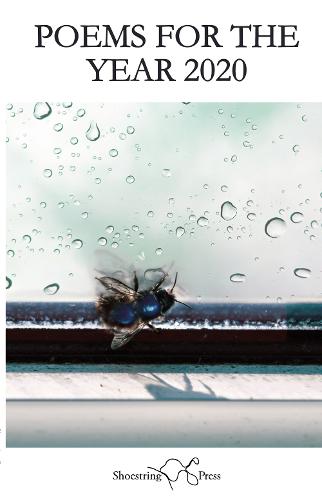
Poems for the Year 2020 Edited by Merryn Williams

The High Window Review's avatarThe High Window

Eighty poets on the pandemic.

Thousands upon thousands of poems were written in the unforgettable year 2020, when corona virus changed the world. Eighty of the best have been carefully selected for Shoestring’s new anthology. They come from all five continents and all corners of Britain, and look from several different angles at the crisis. They are not all about doom and gloom. Sickness, bereavement and isolation are all here, along with empty cities and animals roving the streets, but there are also some very funny and life-enhancing poems about how people are coping in extraordinary times, and intend to come through.

pandemic book

Poets included

Anon, Mona Arshi, Adrian Barlow, Meg Barton, Denise Bennett, Matt Black, Janine Booth, Alison Brackenbury, Melanie Branton, Carole Bromley, Simone Mansell Broome, Rip Bulkeley, Maggie Butt, Ian Caws, Gladys Mary Coles, Deborah Cox, Barbara Cumbers, Tony Curtis, Ann Drysdale, Vicki Feaver, Paul Francis, Owen Gallagher, Ann…

View original post 1,471 more words

#NationalMarineWeek 2021 24th July – 8th August. Fourteenth Day August 6th: Deep Sea, Have you written unpublished/published poetry/artwork about Deep Sea ? Poetry and Artworks/photo challenge. When a week is sixteen days to account for the tides in Britain. Here are the second eight day themes: Aug 1st: Crabs and other crustacea, Aug 2nd: Rocky Shorelines, Aug 3rd: Mermaids And Sea Monsters, Aug 4th: Sea Shanties, And Other Sea Songs, Aug 5th: Ocean Vegetation Aug 6th: Deep Sea Aug 7th: Shorelines Aug 8th: What Should We Do For Sealife?

Fourteenth Day – Deep Sea

Out To Sea

Open Sea photo by Paul Brookes

MIkely and Monkey are wavily, bobbily swimming along
In search of the ear-splitting, teeth-rasping din.
Noddily, dippily riding the splish-splashy waves,
Deep in the bubbly shadows,
Gloomily rears a sinister silhouette

Of a chain-rattley, ghost-hidey wreck

Of a surge-fluttery, sting-bristly squid

Of a claw-snappy, eye-poppy crab

Of a side-swipey, jaw-grabby shark

Of a jump-happy, play-smiley dolphin

Of a sore-weepy, shrill-screechy…… angler fish

The song is called Wavily Bobbily and was composed for Swansfield Park Primary School in Alnwick using the children’s own ideas. They imagine a disturbing noise at the bottom of the ocean, set off to investigate and come across plenty of other undersea creatures before they finally find the source of the noise. The creatures and other things that the divers find can easily be substituted by new ideas from a new class!

-Cheryl Camm

DEEP SEA 

I’m an Angler
a cunning dangler.
Follow the shiny light . . .

“She’s a fearsome gob on her !
Get this – reporter in a bathyscape,
friend of Attenborough,
down here, interviewing me !
You’re Di-curious ?
We’re Dimorphic – what do I do ?
Skinny man, sperm donor.
I’ve been called a parasite, imagine that ?
I’m basically a gonad. I’ve had worse gigs.
Big momma’s the boss.”

I’m John Wayne.
This unsuspecting swim past,
will be your last.
Boom !
Join the larder.
Bobbit.
What’s my name ?

It’s official, I’m the world’s ugliest animal.
Pour me a beer, sport.
“What ya got there skippy ?
Oh, it’s a Blobfish.”

A gelatinous mass
with a gas-filled ass
it can swim but chooses to float.
It lives at abyssal pressure
so bringing one up here tends to depress her

-John Wolf 6th August 2021

Pelagic

We are not dry land, we are open sea.
Marine snow, always falling detritus,
feed zooplankton, organisms in deep sea,
where sunlight cannot reach you will find us.

We are more different deeper you go.
Muscular bodies become flabby, strong
ossified bones become weak, eyes so
large, sensitive, small, heart too, pressured throng.

Lantern fish, a sound scattering layer,
deeper when the moon is out, if a cloud
passes over moon, it becomes shallower.
Night ascent, day return to cold, dark crowd.

Depth changes the way we live, how we are.
Shallower, more predators, under stars.

-Paul Brookes

Bios And Links

Cheryl Camm

is a composer living in Northumberland. Her songs for schools and choirs are performed around the world. Recent commissions include a celebratory song for a retiring RAF helicopter pilot, songs for composing workshops at the Hepworth Wakefield Gallery and a song celebrating and mourning the remarkable hen harriers for Hen Harrier Day 2020.