Month: February 2021
Poems Recently Published

If you were a Giraffe
If you were a giraffe,
with a drain-long, crane-strong, swing-along neck,
would you just eat leaves?
I wouldn’t.
I’d be a spy.
I’d peep over fences ten feet high,
and snoop through windows up in the sky,
and peer into aeroplanes cruising by,
spying all day with my aerial eye
to catch all the crooks and thieves.
Well, I’d do something anyway.
I wouldn’t just eat leaves.
Published in: Better Than Starbucks Magazine – print & online.
Fishes
Fishes
Tiny, shiny
Flashing, dashing, diving
Glimpses of ocean mystery
Teasers

Published in: An Animal Poem for Every Day of the Year, publisher: Nosy Crow
Butterfly
On wings flake-fragile,
petal-frail, you somehow sail,
mile after long mile.
Published in: An Animal Poem for Every Day of the Year, publisher: Nosy Crow
The Owl
As I freed a moth from my window,
I heard a screech…
View original post 151 more words
Wombwell Rainbow Book Interviews: “Full Sight Of Her” by Patrick Wright


The Interview
1. When and why did you start writing poetry?
Coming from a working-class background – as is often the case – my first introduction to the ballad form came through the bands I used to listen to and writing my own lyrics. I wanted to be in a band as a teenager and writing lyrics was part my first foray into songwriting. This included imagining how songs would be sequenced and what the album cover would look like – which are of course considerations that are similar in making a poetry collection. When I was 14, I didn’t have much access to poetry, but I do have distinct memories of my mum reciting ‘Night Mail’ by Auden and Wordsworth’s ‘Daffodils’ around the house, and I must have developed an ear for rhyme and rhythm from a young age. She’d also play classical music on the piano, which as a child gave me an appreciation of high culture while feeling excluded from it. It wasn’t until I was about 17, when I began studying Sylvia Plath at college, that my lyrics started to be understood as poems.
2. How did your study of Sylvia Plath give an understanding of your songs as poems?
Through studying Plath, and other poets, I began to see how words could be presented on the page. Like many other poets, such as Simon Armitage, my interest developed from a visual appreciation of poems as peculiar blocks of text, taking different forms. With songs, I was limited to a ballad, then I became more aware of ‘free’ verse and the possibilities of ‘playing tennis without a net’ (to paraphrase Robert Frost), as well as how sound worked. I remember early experiences of hearing Plath read her poems and I was mesmerised by the cadences and rhythms. The same occurred when listening to Dylan Thomas’s poems and Under Milk Wood.
2.1. How did you decide on the order of the poems in “Full Sight Of Her”?
Since the poems document the life I had with my partner, I decided to arrange them into a narrative covering the period 2013-2017 in roughly a chronological order. I was also inspired by the three-act dramatic structure – the story is rather tragic – so thought my 60 poems could be neatly divided into three sets of 20. There’s a photograph made by Kim which I used as a means of punctuating these acts. This is both a homage to her work as an artist and serves as a meditative moment or intermission before moving onto the next part of the story. I also wanted a final poem to work as a coda that would reference many of the preceding themes and images. It also felt it was apt for this final poem to be a more expansive prose poem and valediction
3. How aware are and were you of the dominating presence of older poets traditional and contemporary?
The initial phrase of the writing process occurred while I was studying for my MA in Creative Writing. So, I was exposed to a variety of writers on the course; though I tend to read widely and absorb influences by osmosis rather than have particular influences. I was drawn, though, to the work of Sharon Olds for a while and how she’s able to write about personal content in a way that’s also oblique or disguised. I don’t think anyone looking at my poems would see obvious parallels with her or other writers: I’d like to think I’ve arrived at my own voice, for better or worse. I have borrowed ideas or techniques, as all writers do, though these were mashed together in complex ways. I never felt I suffered the anxiety of influence; though if there’s any commonality among that poets I like, they tend to write about intensely emotional subjects, have a great deal of honesty and integrity, and have the power to move the reader.
4. What is your daily writing routine?
These days I’m rather busy, as I teach almost full-time Creative Writing and English Literature. So, finding time for writing is sporadic between October and May. Though I do keep my own personal tradition of writing 2-3 ‘winter poems’ each year. I find I need a lot of spaciousness to write in and the chance to experience reverie. That’s where most poems emerge from. They’re never forced. I need to make myself receptive to ideas coming out of the ether – like the principle of the Aeolian harp (a musical instrument that gets played by the wind). When ideas come to me, I have the discipline of writing them down in several notebooks. So, most of the time I’m just collecting things. When I can actually sit down – and often now it’s weekends – I’ll usually work back into one of many poems in progress. Especially after a phase of abandonment, I often find that within the first few seconds I’ll know how it needs to be revised or I visualise a new arrangement. Other times, I’ll draft a complete poem in one sitting, no matter how messy. It’s sometimes great to have a sketch of the whole thing. Then I’m usually happy to leave it for weeks or months. It’s part of an ongoing process of abandonment (as I think Paul Valery observed), revision, or recycling.
5. What subjects other than documenting a life motivate you to write?
I’ve always gone for the big, universal subjects – love, death, transience, faith, and so on. I see it as part of my responsibility as a writer and human being to take on these subjects – even though of course they’ve been written about for centuries. They’re never been written about from the present though or from my unique perspective – which is why I think it’s important to keep engaging with them. If we’re true to the minutiae of our own lives, they’ll always be enough originality in poems. Other than these grand and sometimes metaphysical themes, I’m interested in writing about what’s difficult or almost impossible to convey in everyday language. So, I’m interesting in exploring borderline experiences, such as trauma, depression, grief, madness, and the taboo or clandestine; things that people don’t or can’t say to each other. Another recurrent theme is the uncanny. This is apparent in my collection, where I explore liminal states and nocturnal language – thoughts between sleep and waking, for instance – or the shadowy spaces of the home.
6. How do the writers you read when you were young influence your work today?
If there’s a continuing influence then it’s subtle. I think there’s a trace of Plath at times, though only in terms of tone or threat. I still like poetry that’s rather edgy or suggests an element of danger. As I’ve said, I’m interested in things that have been hidden or kept secret, then brought to light. I’m less interested in so-called ‘confessional poetry’ now, though what I share is a fearlessness in writing about the darker realms of experience. My first introduction to the study of poetry was Norman Nicholson. Ever since that moment I’ve written the occasional poem on landscape or ecology – something I want to do more of in the future. I also loved Ted Hughes’s poems as a teenager – his collection ‘Crow’ is still a favourite – and I’ve written about nature and in the pastoral mode, though when I do, it’s usually subverted in various ways.
7. How Important is form in your poetry?
Form wasn’t too much of a consideration with my first collection. I was working with ‘free verse’, albeit with some rules. There’s also a few twisted or near sonnets, one poem that began life as a sestina, and some poems are in couplets. Fixed forms don’t interest me too much, and I dislike rhyme schemes. If I use them, they’re more as a starting point or vehicle for pushing me in directions I wouldn’t have gone otherwise. Sometimes, it’s enough to impose a constraint beforehand, so I’m writing in a more procedural sense. My second collection is far more formally-considered, and I’m currently writing rather a lot of prose poems and poems that make full use of the page.
7.1. What prompted you to go in a different direction with form in the one you are currently writing?
It began with the idea of writing an ekphrastic collection. My first degree was in Art History and I’ve always been interested in modern art. I was intrigued with the idea of how I might write poems in response to abstract paintings, and how the form of these images might determine the form of my poems. Big colour field canvases seemed to suggest poems that stretch from one margin to the other, or be presented as a full-page spread. In addition, I wanted my second collection to look distinctively different from first one. I have a restless need to innovate, and I don’t like the idea of having a static or established voice. I can easily frustrate myself with writing the same kind of poem. The best moments I find are when I’ve written a poem that doesn’t look like I’ve written it – it looks foreign – and having formal rules is an excellent tool to break my own habits and produce something unexpected.
8. Who of today’s writers do you admire the most and why?
Keeping in mind your question about form, I admire the work of Anne Carson. I’ve been reading some of her prose poems and experiments with hybrid forms. I also like how she manages to blend poetry with critical essays. She, like other poets I enjoy reading, challenge notions of what a poem is or how relates to other genres. I also like Michael Symmons Roberts’s recent collections, such as Drysalter or Mancunia, especially how he’s often looking to find traces of the transcendent in the everyday, or he’ll explore profound metaphysical questions within the tight space of a sonnet.
9. What would you say to someone who asked you “How do you become a writer?”
It’s a cliche, though I helps to start with reading other writers – and find someone who can spark your imagination, who you can be obsessed with, and who says something about your life. It’s a good idea, then, to try to figure out how they manage to write in the way they do. There’s nothing wrong with naively looking to imitate what they do for a while, for your own purposes, as a lot can be figured out that way. Fear and inhibition can be the enemy early on, so it’s important to find ways of having fun with words, being playful with language, giving yourself permission to make mistakes. Notebooks are great for that, as they can be just for you; a private space where fantasies and uncensored thoughts can find expression. No-one ever has to see what you write there, which is part of the beauty of it. Later, you might settle on a genre that suits you and keep up a regular practice. I found an MA in Creative Writing useful, as a means of developing my craft; though courses aren’t for everyone. Most importantly, though, I’d say that becoming a writer is a bit like having aspirations for becoming an actor – if anything can dissuade you from doing it, then it’s probably not for you. It can be a hobby, I know, for some; though the life of a writer – I find at least – is intensely solitary, full of rejection, non-remunerative, and emotionally precarious. There has to be, I think, a sense of calling or compulsive need to write, and the commitment to ring-fence at least a part of your life for what must be an ongoing discipline.
10. Please expand on the writing projects you have on at the moment.
I’m about two-thirds way into my second collection. This has the working title of Cold Dark Matter and forms part of my PhD in Creative Writing – supervised by Siobhan Campbell and Jane Yeh at the Open University. Whereas my first collection was more scrapbook-style and had a more conventional approach to the lyric – documenting the life I shared with my partner – the second collection is more focused on my personal experience of grief and the metaphysical questions it gives rise to. Since the content is often too difficult to face directly, I use various modes of ekphrasis – writing about grief or loss while also referencing an artwork. The poems might, more accurately, be understood as lyric poems, though they’re mediated through the lens of modern art. As I’ve suggested, this has meant the poems are formally diverse, and many are prose poems – where I’ve experimented with non-linear loops or circular motions (looking to represent trauma or intrusive thoughts, for example).
11. Once they have finished reading “Full Sight Of Her” what do you hope the reader will leave with?
Poetry and other works of art – for me at least – are about intense emotional experience. They’re about being taken to places that are uncomfortable or encourage us to connect in deeper ways. So, fundamentally, I’d like the reader to be moved – and be left more empathetic to how far love can go and what it means to suffer loss. I’ve always believed in the ability of artistic work to alchemise the worst of what life throws at us – even the most catastrophic of events. I wanted to write a book that could say ‘these two people went on a journey, they lived, they loved, they bore witness, and they stayed with each other as long as they could – almost into death. They went to the limit.’ I’d like the reader to be left with the beauty of this and an intimation of the transcendent. There’s also the hope that the reader will be left with an appreciation of Kim – in the book she’s immortalised – and that includes how she managed to be creative despite her visual impairment, and how she was successful in having a relationship of deep love, against all odds.
Fathom — Rebecca Gethin

Fathom is a wee newly-published chapbook containing some of the poems I wrote while on my residency at Cape Cornwall in the winter of 2018. Aisling Tempany at Marble Poetry has made an interesting and varied selection that compresses my experience there into something almost crystalline. (In my opinion anyway.) You can get it here […]
Fathom — Rebecca Gethin
Review of ‘The Montefiore Bride’ by Patricia M. Osborne

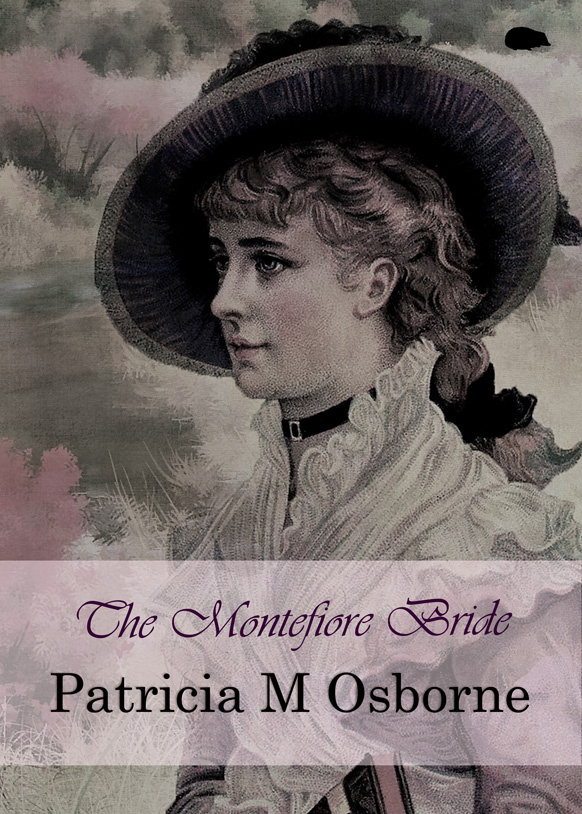
Patricia M Osborne’s latest pamphlet, The Montefiore Bride, published by Hedgehog Press, is a fictional exploration of the relationship between the real life Sir Francis Montefiore and his bride, Lady Marianne. Using a combination of poetry and prose Osborne presents us with a portfolio of texts, rather like an historian or researcher, from which we piece together an understanding of this curious marriage which lasted only a year.
The prose pieces are written from two different perspectives: initially from Mr Brown, the longest serving tenant on the Montefiore estate, and subsequently from Lady Marianne. Through Brown we understand the pleasure and excitement that the marriage brings to the community on the estate. ‘White and blue bunting shimmers in the autumn sun’ and ‘Villagers grip red flags’ in anticipation of the happy couple’s arrival. For Brown this is more than a celebration of a marriage, however, it is about continuity…
View original post 687 more words
Recent Collections of Poetry in Translation
2 poems by Charlotte Hamrick : Shelter in Place & Swaddling the Beast

Shelter in Place
A derelict cave lurks under my rib cage,
holds years of ragged breath,
smothering kudzu,
and time-laden clay, hides
the hammering of living things
near dead, the dawn of every morning
sucked up into prayers.
In a firestorm of words,
terror waited in silence,
air washed in red
like Mars, like blood,
like the shredded heart of a broken child.
Swaddling the Beast
Why do the blues creep up
my spine on the most glorious days?
Balmy spring in its best finery, riotous
color, silken breezes, benevolent sunshine –
why does it mock me, tease me, test me?
Sometimes there’s loneliness
in so much beauty, despondency
in such perfection. The whole of creation
is indifferent, has no reason to consider
my blue moods so I hold on for storm clouds,
their shades of purple and gray, their softness
of light, how they swaddle my bête noire.
Charlotte…
View original post 87 more words
#palindromeday 120221 artworks and poetry challenge. Have you made any artworks using palindromes? Have you written any unpublished/published poetry using palindromes? Please DM me, or send a message via my WordPress site
Wombwell Rainbow Interviews: Kristi Elaine Ivey


Kristi Ivey,
for the past thirty-eight years has been a reader and writer. She is an award winning poet, children’s, historical romance, and one of her favorite genre’s Science Fiction writer.
She says:
The best part of being a writer is that I can create my own worlds. Doesn’t that sound wonderful. Here is some information about me, my nickname is Kiki. Writing is something that has been encouraged by my family, it didn’t matter who it was, my close family or extended family. They would encourage with love, or paper and pencils. Cherish the people that love you and support you.
Please go to my website:
The Interview
1. When and why did you start writing poetry?
One of the first books I read was a Wrinkle in Time and the thought of creating new worlds along with new characters appealed to my young mind. It was at that moment that I realized SOMEONE actually WROTE this book. How did they do that? It wasn’t until I was twelve and going through my first bout of teen angst “the world is against me, nobody loves me” phase I wrote my first poem. My grandmother Susie was an avid reader, her favorite author was Agatha Christie, I saw how my grandmother loved the written word and I wanted to follow in her footsteps and love the written word also.
2. Who introduced you to poetry?
My grandmother Susie Lowe did. She was addicted to Agatha Christie. She would read her novels over and over. I would watch her and think what is so great about a BOOK. I had read the required amount in my classes. It wasn’t until I realized people read for PLEASURE! My grandmother gave me A Wrinkle In Time to read and I was addicted after that. I loved and respected the written word from that time onward.
The first poem I remember reading (I had to think on that one)
It was by Joyce Kilmer titled Trees
I had to memorize it for a class in elementary school. I really loved that poem, especially for me to remember it all these years later. After reading that poem I started reading poetry by different poets to see what “that stuff” was all about. I know Trees is considered simplistic but for a budding poet it was just what I needed. I was too young to understand the emotional complexities of Elizabeth Browning or the The Road not Taken by Robert Frost.
3. How aware are and were you of the dominating presence of older poets traditional and contemporary?
I hate to admit it, when I first started reading I need never looked at the name of the authors! That is sad but, in my defense I was a preteen. I truly became aware of the “creators” after grew up a little. I remember a quote by Maya Angelou.
“There is no greater agony than bearing an untold story in you.”
Isn’t that absolutely true. The classical writers like Shakespeare, Hardy, Barrett, Austin, and Bronte’ all were very skilled. We can learn a lot in their structure and over all thoughts, faults, and feelings.
Contemporary writers offer me something more. I guess it’s because we are “wired in.” Our reading list is more diverse. I remember being in a writing forum and telling them my goal is to finish my sci fi series.
One fellow came back with, “your kidding right? Women CAN’T write decent science fiction. “
I absolutely did research and found Butler, Atler, and Le Guin there are a lot more. I have set my mind to finishing my science fiction.
My poetry is my hearts release to the world. We should all write whether in a journal just for ourselves, or for the world. Great writers are not born they have to earn that title. If you live what you do put sweat, blood, and tears into it.
3.1. What did you find in “Butler, Atler, and Le Guin”?
They have a recurring theme empowerment of women. They are also called Ecofeminists. I tend to call them trailblazers. Think of Offred trying to survive sexual servitude. Then of Lauren a WOC (woman of color) who after many trials and tribulations emerged as the leader of a colony called Acorn. Last but not least Therru, a woman who is kind, strong, and determined. She is maternal and very protective. She lost her husband in the beginning of her story, then adopted a child that had been burned severely by her own father (he wanted to kill the child.)
These authors started out with poetry first. Octavia Butler stated she kept a pink notebook to write her poetry in. These trailblazers highlighted women as powerful and strong. They are just three of modern day female writers that blazed a way for women in speculative fiction.
4. What is your daily writing routine?
I truly am an odd duck. I am my nephews home school teacher from 8-2 then I rest my mind for an hour. I write through the day if he doesn’t have a huge project or test. I write better when it’s evening its quieter, and I write prolifically in the evening. I am a night owl. There are some days that are harder to get in some writing time than others but I make myself pick up the proverbial pen.
5. What subjects motivates you to write?
There are quite a few motivational things I use. Music, art (there is an artist I follow) who is a Surrealist painter I absolutely love her work. That is where I got the inspiration for Surrealist Potential. Nature provides a lot of motivation for me. I live on the side of a mountain in the Appalachian Mountains of East Tennessee. I also get inspired by listening to the podcasts by Mark Antony Rossi, Strength to be Human. If you listen to those you will definitely grow and mature as a writer.
6. How do the writers you read when you were young influence your work today?
I was and am a voracious reader, when I was young I read A Wrinkle In Time that stirred my mind toward the universe. Then I snuck into my Grammy’s secret stash of Harlequins and was transported to other countries. Countries like Great Britain, Greece, Italy. That opened up my mind to traveling when I got older. This world is so diverse, chaotic, and beautiful I learned much of that through books. My science fiction is inspired by Ursula Guinn, Margaret Atwood, H.G. Wells, Asimov, and more recently B.V. Larson, Jonathan Yanez, and Ross Buzzell I could make a full page list of science fiction authors. Poetry is of course one of my very top pleasures, have you ever read a poem that stuck with you for years? That made you ponder your place in the universe? That is the type of writer I aspire to be.
7. Who of today’s writers do you admire the most and why?
I love so many. This was very hard but here are my top ten, and why. (They are in no particular order)
1.) Jonathan Yanez: I found Jonathan by happy coincidence. He is an indie author who really caught my attention with his Gateway to the Galaxy novels. They are very engaging.
https://www.jonathan-yanez.com/
2. Mark Antony Rossi (poet, and playwright): His poetry is unique in the fact that his poetry, short stories, and plays come from life. If you would like to know more, read “Philosophy of Rent” it certainly is not all rainbows, unicorns, and candy. Sometimes we need that outlook. Below is his website.
https://www.markantonyrossi.com
3. JR Castle: She is a preview into women in sci-fi/fantasy in modern times. Her novels stand on there own.
https://m.facebook.com/authorjrcastle/
4. Ross Buzzell: He is helping those out with dyslexia, he writes novels in a format that makes reading easier for dyslexic people. You see he is dyslexic and wanted his writing to be enjoyed by everyone. I truly enjoyed his work. He is a sci-fi/fantasy author.
5. Kelley Tharp: I ANXIOUSLY await her every word. If you haven’t read her Protectorate novels please read them. I guarantee you will be on the edge of your seat.
6. JR Handley: He is the author of the Sleeping Legend series. I really enjoy his books. Like the authors on this list I wait anxiously for his book releases. I follow all of them across all social media platforms. If we enjoy an author we should follow and support them.
7. J N Chaney: I absolutely have been enthralled with his Renegade series. He brings his stories to life.
8. B.V. Larson: His books caused me too lose so much sleep its unreal. The Undying Mercenaries series and Star Force are the ones that put the dark circles under my eyes.
9. Anna Hackett: She writes sci-fi, and thriller romance. Her romance is spicy and very engaging.
10. Nathan Hystad: His Survivor series, it is unusual and very creative.
https://www.nathanhystad.com/ This list is just ten of my favorite modern authors.
8. What would you say to someone who asked you “How do you become a writer?”
You would think this would be a very easy question. Its really not, with becoming a writer, first you have to write. I would suggest Journaling keeping a small notebook with you. Carry it in your purse or in your pocket write down ideas and thoughts you get during your day. This was advice I received from an experienced author (thanks Mark). Then once you get your thoughts and ideas into coherent words now you begin your stories. Poetry for me is different, I usually get inspired then write. Poetry itself (for me) is mood or feeling based.
Then of course rewrites, editing, then submitting. You can’t rush it either.
9. Tell me about the writing projects you have on at the moment.
I am working on a book of poetry that will have published and unpublished poetry. I am working on my science fiction and in fact have submitted the first of several stand alone short stories (set in our galaxy). It is a preview into the full novels.
Kristi
Wombwell Rainbow Interviews: Johnny ‘Mogs’ Morris


Mogs
has lived in the UK Black Country all his life. Originally from Halesowen, he now lives in Stourbridge with his lovely wife Sue. His two sons, Jonathan and Adam, have left home and live locally. Mogs was educated at Halesowen C of E and then at Halesowen Grammar School. Armed with 3 ‘O’ Levels, he began work at the MEB in 1973 as a Computer Operator. In 2003 Mogs was given early retirement on account of his failing eyesight. He now spends his days writing and being dragged round shops and National Trust places. “Mogs is one of the most talented humorists and engaging performance poets in the Midlands whose understated delivery lets his poetry speak for itself. I’ve seen him many, many times and he has always connected with his audience in ways that most other poets can only dream about.” (Fergus McGonigal, Worcestershire Poet Laureate 2014-2015)
The Interview
1. When and why did you start writing poetry?
My first ’freely written’ poem (i.e. Not as part of schoolwork) was when I was about 18 back in the mid 1970’s. Not surprisingly, given the stage of my hormonal development, it was about a girl. I don’t really know why I wrote my second one but no doubt it was the usual teenage angst nonsense. I suppose it then became something I did every now and then for no particular reason. It was only in 2003, when I got early retirement because of failing eyesight, that I started writing more regularly.
2. Who introduced you to poetry?
It was forced upon me at school – and I hated it.
3. How aware are and were you of the dominating presence of older poets traditional and contemporary?
Not much at all as I have never read much poetry. I suppose it is possible that some of my more recent, light-hearted stuff, may have been influenced at a subconscious level by the likes of Pam Ayres, as she was on the tele a fair bit when I was younger.
4. What is your daily writing routine?
I don’t really have a routine as such. Most mornings I turn the PC on and just try to write something, usually poetry. If I’m lacking any new ideas I’ll try finishing one of the dozens I always have on the go. If I hit a roadblock there then I’ll try tweaking an old piece. I’ve got something like 2,000 poems which I grade from 1 to 4, depending on how good I think they are, so there is a lot of tweaking to do as there are loads in the lower categories.!
5. What motivates you to write?
I don’t really know. I suppose it’s partly to do with the joy of playing with words, a desire to leave some kind of legacy and to have something to perform in front of an audience. Also, to be brutal, it’s given me something to do since I retired.
6. What is your work ethic?
I don’t really have one. As I say, I try and write something every day, but often find myself flitting around between a number of half finished poems or tweaking old ones. If I’m working on a piece of prose or a play I’m normally slightly more concentrated.
7. How do the writers you read when you were young influence your work today?
I’m not aware of any influence by anything I read when I was young. I suppose that some of my prose could be considered a bit old fashioned, but certainly not in the Enid Blyton mould.
8. Whom of today’s writers do you admire the most and why?
Because of my eyesight problems I haven’t read a book for quite a few years. I’ve listened to some talking books but these have tended to be old classics like Jeeves and Worcester or Just William or factual things about the war.
Most poetry I am exposed to is at open mic events or writing groups I go to, so most of the poets I know are friends or acquaintances. Things I admire in these peoples poetry are the ability to make an audience laugh or cry and to be able to use words in a complex way and not leaving me thinking ‘what the hell was that about?’
9. Why do you write, as opposed to doing anything else?
I do ask myself that sometimes, especially why poetry considering that I’m not that keen on it. The clinical answer is I’m not very good at many other things and with my failing eyesight it is something I can do unsupervised. The more artistic answer is I suppose, I have a fairly active imagination and think it would be a shame not to inflict my thoughts on other people.
10. What would you say to someone who asked you “How do you become a writer?”
You write!
As far as I am aware there is no particular criteria to be met to be a writer. You don’t need a degree or a completed book of poetry or novel in your hand . All you require is something to say and a desire to say it.
11. Tell me about the writing projects you have on at the moment.
The publication of my second book of poetry aimed at children has been delayed because of Lockdown. I have all of the poems ready, I am just waiting for the illustrations to be done by some of the students at the local art college.
I am part way through a follow up to my children’s novel, but to be honest, I haven’t touched it for over a year.
I’ve been toying with the idea of trying to get a book of serious poetry published and also one of Black Country poems.
So I’ve started sorting out possible pieces for inclusion.
I am revisiting a couple of short plays I wrote a while ago to send them off to competitions. Also, a local am-dram group had shown an interest in putting one on before Lockdown.
 The Wombwell Rainbow