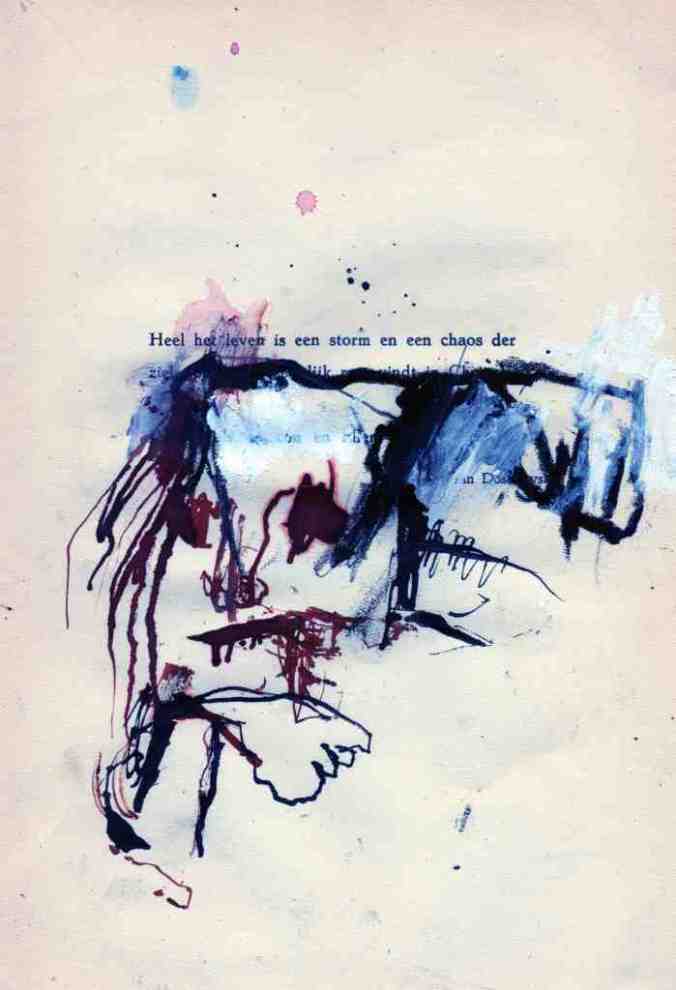
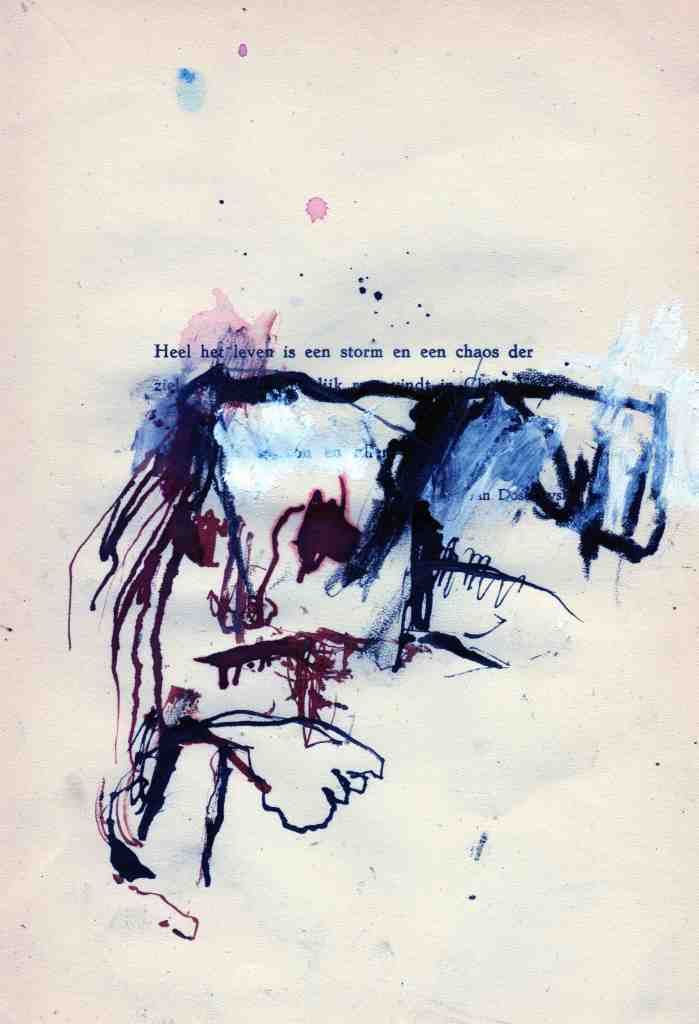
-Marcel Herms “Heel het leven is een storm en een chaos der ziel”
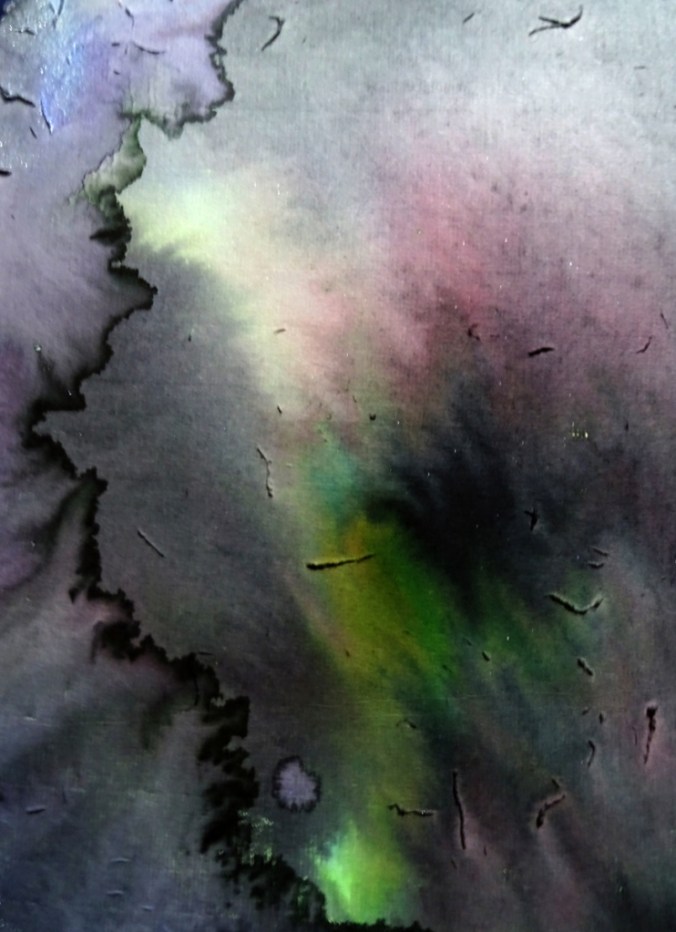
KR10
rift valley from here in outer space the ancient of times
-Jim The Poet
MH10
the language of ink is changing my impressions who are you really
-Jim The Poet
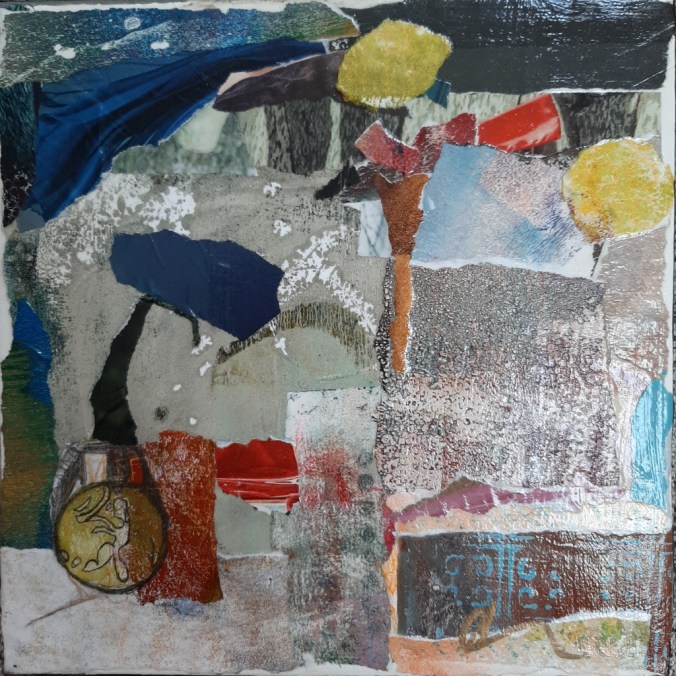
CO10
standing ovation the grandstand explodes a gold medal
-Jim The Poet
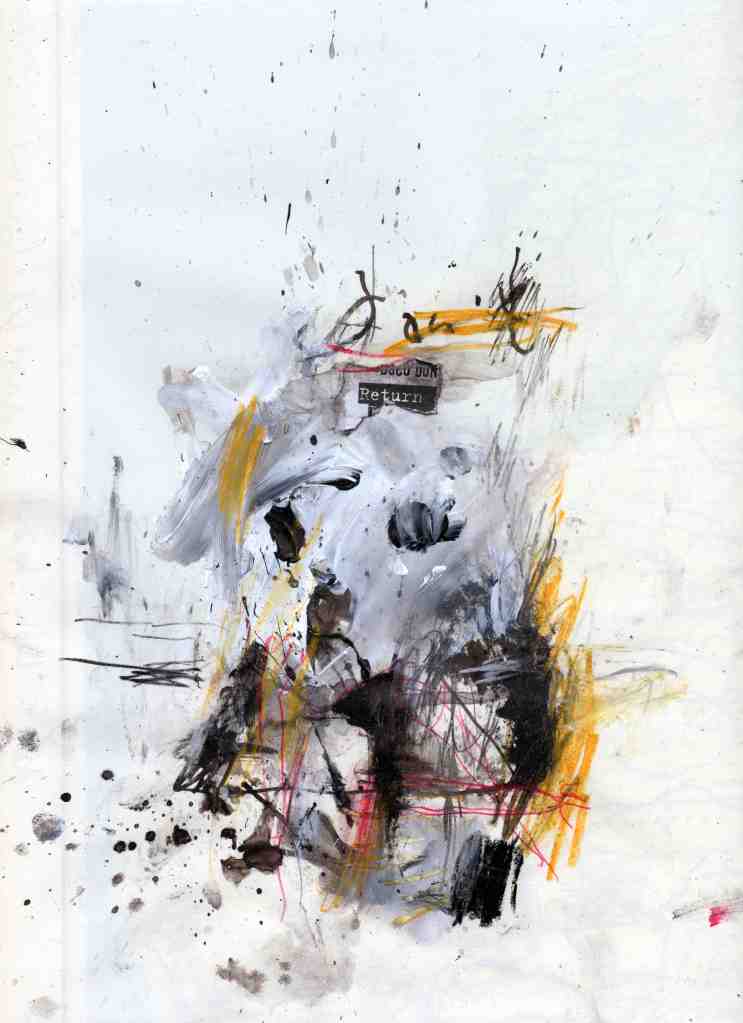
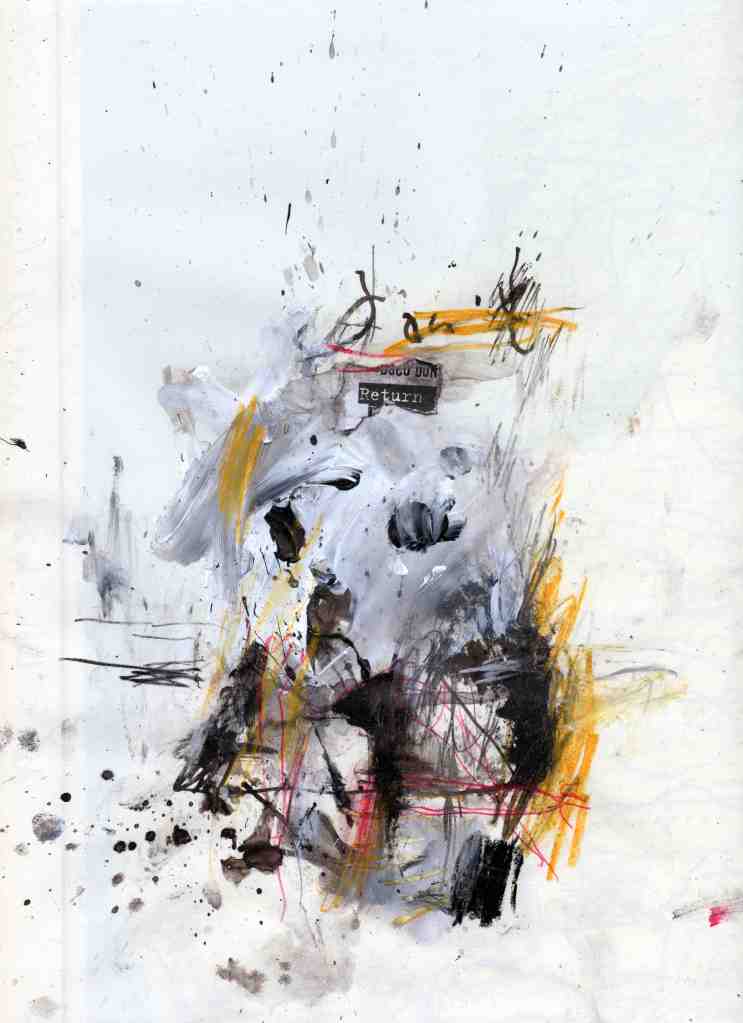
Storm and chaos of the soul (MH10)
In these times when I feel the burden of all that it means to be alive and my face becomes the face of another I turn myself inside out on the page, inks raging until the face I have become looks back at me and I am myself once more
-Hilary Otto
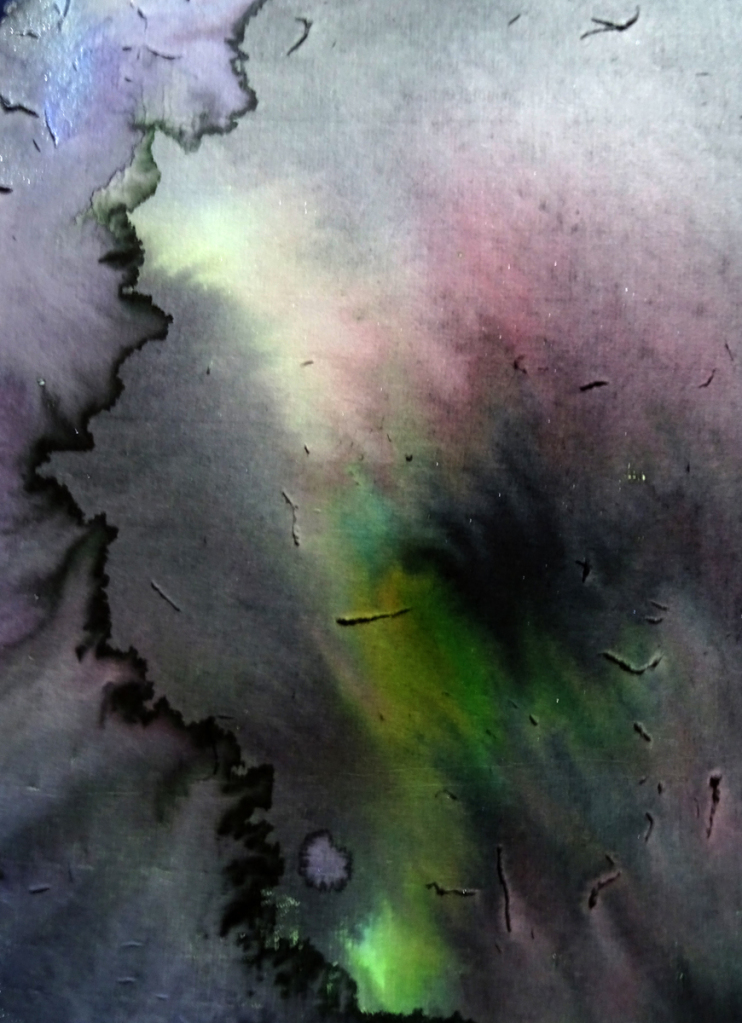
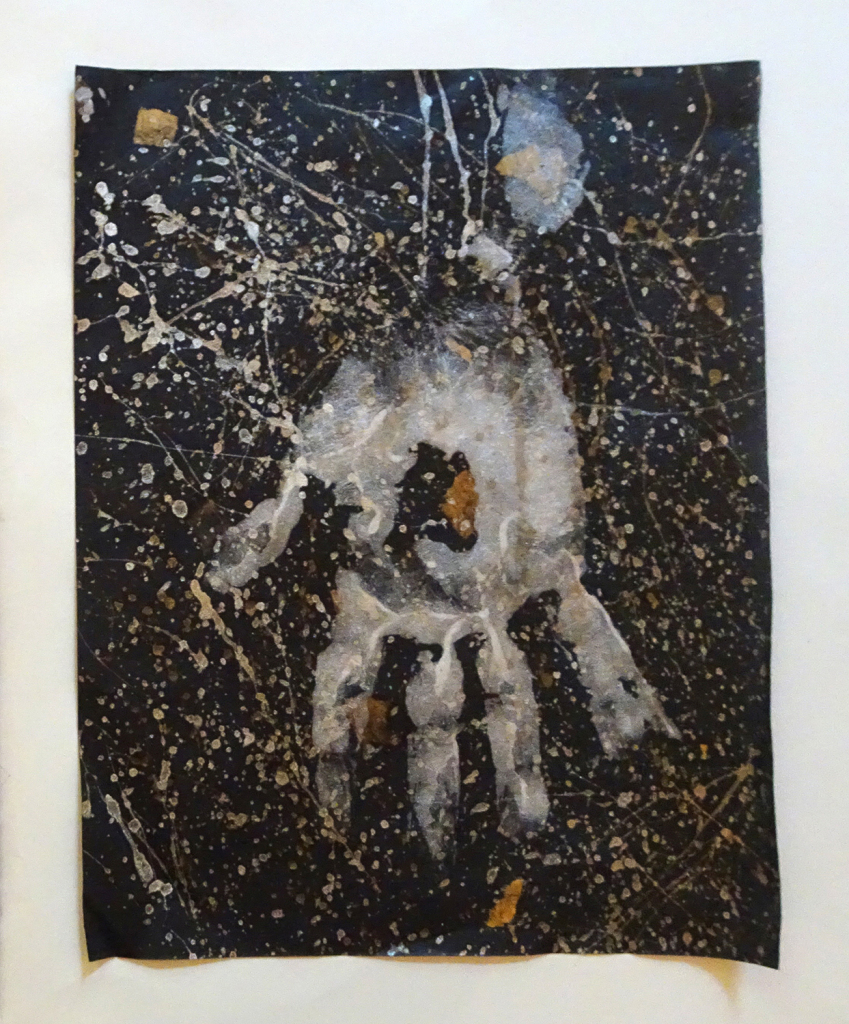
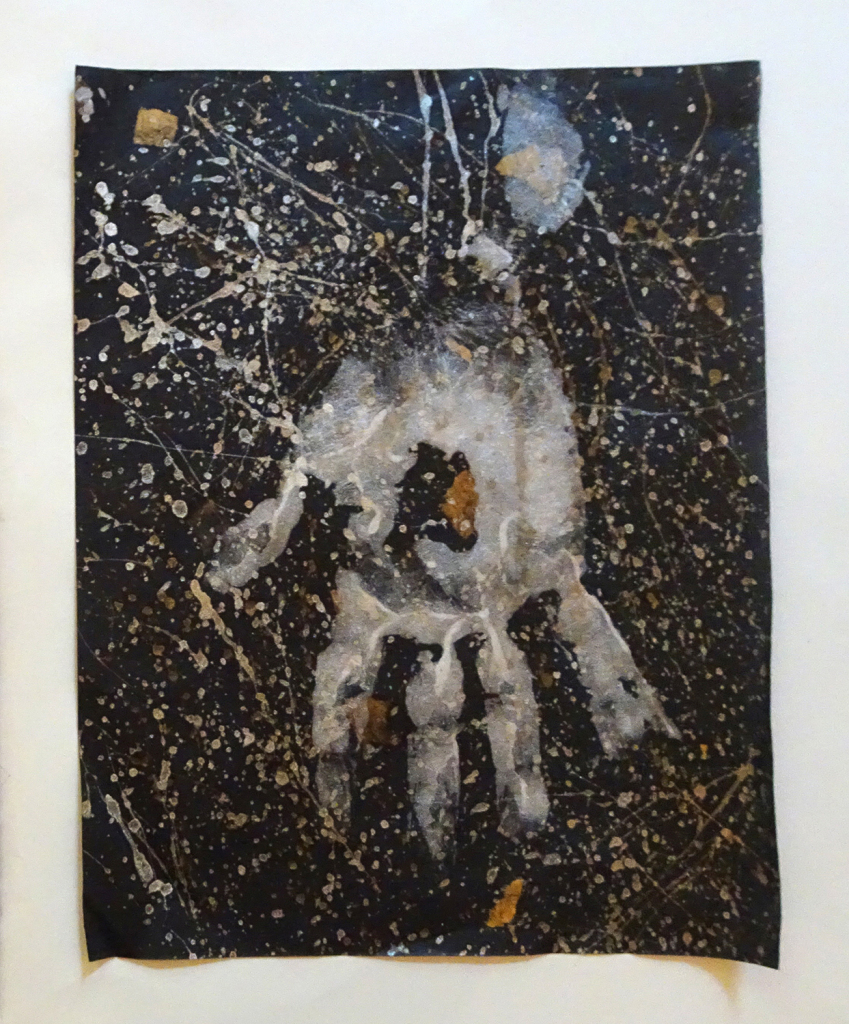
Galaxy under the microscope(AvatarKR10)
Look what happens from small beginnings. Microorganisms swim across the galaxy cloning themselves to make the future. Gases swirl in clouds of colour across this textured sky. If we zoom in far enough, we are just atoms and hot air. Zooming out, we can make ourselves disappear.
-Hilary Otto
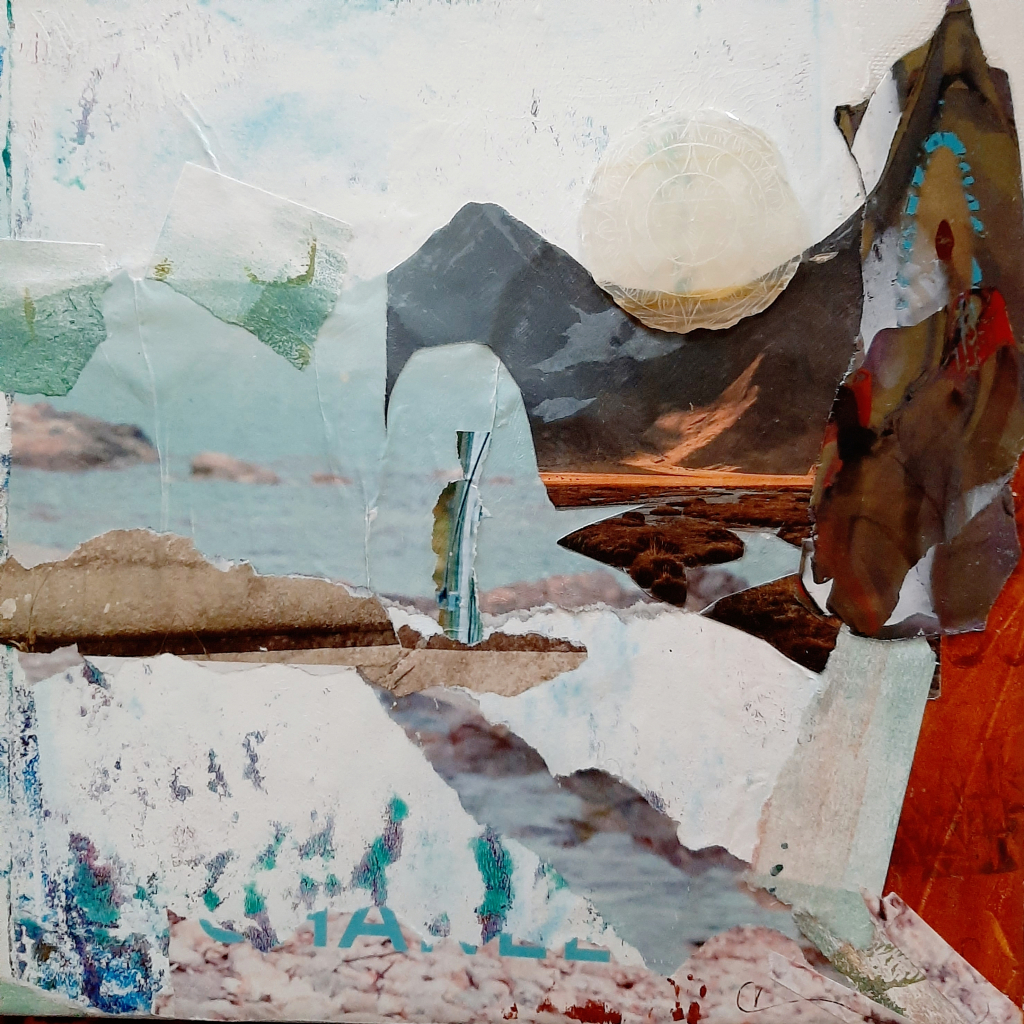
Identifit(CO10)
You’d better believe she is taking it further than a beauty filter. Adding layers one by one, she has almost covered the original. Bit by bit she hides herself; creates a new identity. Some of it will wash off or peel away, some of it will stick. It is too early to tell how this will end, we will just have to wait. We will have to trust her; she knows who she really is.
-Hilary Otto
KR10 Spill
Oil rainbow on wet pavement ruffled with rickrack cracks. Swimming sperm or drowning worms? Nebulous reflections
-Holly York
Ride, Trip, Life (MH10)
This ride will turn you round Spin you round and round
Twist this way and that way Confuse up and down until you sway
Like a reed in wind As branches twinned in whirlwind
Stormy chaos reign Soul drains as hot tears rain
The trip will demand red blood shed Til the scythe severs your thread
Heel het leven is een storm en een chaos der ziel in English – MH10
Will you put those shoes over there please. You`re such a ruddy tease.
If I fall over them I`ll give you a fistful of five. If your dad gets hold of you you`ll wish you weren`t alive.
You know how awful it was when he grabbed you under the chin when you left the cabinet door open and dropped his favourite gin.
PUT THEM UNDER THE STAIRS. No wonder your father swears.
Can`t you see where I`m pointing ? I`m pulling my hair out. Right ! Get to bed before I give you a clout.
9,Ja,2021 for the tenth of. Alan Gary Smith, inspired by Paul Brookes and the painter Marcel Herms. (and all chaotic mothers who love their kids really.)
-Alan Gary Smith
Day 4, January 10 Responding to all three images Avator, KR10 Heel het leven. . .MC10 CO10
Reborn
Ominous clouds gather— shadows obscure the light,
leaving the world a tangle of black and blue aches
And after the storm, amidst the chaos, the rebuilding begins—
we soar joyfully, reborn amongst flowers, in colors never before seen.
-Merril D Smith
DUNGEON MAP (after CO10)
through the chasm of rock-sky into the amber funnel from blue to yellow this ends in one of two ways : find the hoof-dancer in their bubble or succumb to the deeper voice and its signature growl : “GROTTO ! GROTTO !”
-Godefroy Dronsart
No Storm
and chaos of breath, breathless happen random and pattern maker brain makes faces appear out of splashed paint, placed cloth, makes blue
is an artist working in glass, metal, fibre and paint. Sometimes her work is based on photographs, but more often, she creates in the moment. She loves to play with texture and colour.
is a Dutch visual artist. He is also one of the two men behind the publishing house Petrichor. Freedom is very important in the visual work of Marcel Herms. In his paintings he can express who he really is in complete freedom. Without the social barriers of everyday life. There is a strong relationship with music. Like music, Herms’ art is about autonomy, freedom, passion, color and rhythm. You can hear the rhythm of the colors, the rhythm of the brushstrokes, the raging cry of the pencil, the subtle melody of a collage. The figures in his paintings rotate around you in shock, they are heavily abstracted, making it unclear what they are doing. Sometimes they look like people, monsters, children or animals, or something in between. Sometimes they disappear to be replaced immediately or to take on a different guise. The paintings invite the viewer to join this journey. Free-spirited.
He collaborates with many different authors, poets, visual artists and audio artists from around the world and his work is published by many different publishers.
RedCat’s love for music and dance sings clearly in The Poet’s Symphony (Raw Earth Ink, 2020). Passion for rhythms and rhymes, syllabic feets and metres. All born out of childhood and adolescence spent reading, singing, dancing and acting.
Her writing spans love, life, mythology, environment, depression and surviving trauma.
Originally from the deep woods, this fiery redhead now makes home in Stockholm, Sweden, where you might normally run into her dancing the night away in one of the city’s techno clubs.
is a historian and poet. She lives in southern New Jersey, where she is inspired by her walks along the Delaware River. She’s the author of several books on history, gender, and sexuality. Her poetry has been published in journals and anthologies, including Black Bough Poetry, Nightingale and Sparrow, Anti-Heroin Chic, and Fevers of the Mind.
-Godefroy Dronsart
is a writer, teacher, and musician currently residing near Paris. His poetry has appeared in Lunar Poetry, PostBLANK, Paris Lit Up, The Belleville Park Pages, and Twin Pies Literary among others. His first chapbook, “The Manual” (Sweat Drenched Press, 2020), explores the space between poetry, prose, and gamebooks. He has a sweet tooth for all things experimental, modernist, and strange. Follow him on Twitter and his Bandcamp for electronic explorations.
-Joy Fleming
Born in County Down, Joy has studied, mothered and worked in Scotland since 1980. Brief excursions to follow her heart, back to NI mid-1990’s and England for first round Covid-lockdown ’19, Joy is currently back living in Glasgow. Joy’s first poem was accepted as part of the C. S. Lewis themed Poetry Jukebox curation A Deeper Country in Belfast in 2019. This poem, Ricochet was published in The Poets’ Republic Issue 8 Autumn 2020. A love of reading poetry is now accompanied by sporadic writing of poetic lines which spill out as an apparent by-product of processing dark and sorrowful days.
-Holly York
lives in Atlanta, Georgia with her two large, frightening lapdogs. A PhD in French language and literature, she has retired from teaching French to university students, as well as from fierce competition in martial arts and distance running. She has produced the chapbooks Backwards Through the Rekroy Wen, Scapes, and Postcard Poetry 2020. When she isn’t hard at work writing poems in English, she might be found reading them in French to her long-suffering grandchildren, who don’t yet speak French.
-Hilary Otto
is an English poet based in Barcelona. Her work has featured in Popshot, Black Bough Poetry, AIOTB, Ink, Sweat and Tears, and The Blue Nib, among other publications. She received her first Pushcart Prize Nomination and performed at the Cheltenham Poetry Festival. She tweets at @hilaryotto
-Jim young
is an old poet living in Mumbles on The Gower. He does most of his writing from his beach hut at Rotherslade – still waiting for the blue plaque
Happy New Year to all our readers! To get 2021 off to a fabulous start, I’m delighted to invite poet, Fiona Perry, to talk about a poem from her stunning collection, Alchemy, surely one of the ‘must-read’ collections of 2020.
First, thank you so much, Nigel, for giving me this opportunity to reveal a bit more about the poem Brown Snake Awakens in the Everywhen from Alchemy (Turas Press), my first collection. I very much enjoy reading other poets’ contributions on your blog. This poem was inspired by a brief encounter with a brown snake whilst walking around Lake Monger in Western Australia. Often my poetry involves the unravelling of a memory, and occasionally animals appear in a symbolic way. Even though I had been living in Australia for a while, there was still something shocking and primeval about a snake crossing my path. The poem didn’t emerge…
in a vast universe, find blue peace in perfumed air; devour the delicious dazzle of color, the light bubbling through champagne clouds–
listen–
the sky is alive with heart-rhythms, and the sound of if and when in the bright song of stars
traveling from afar, journeying to tomorrow.
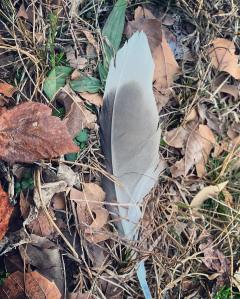
My message from the magnetic poetry Oracle. She kept giving me messages about the current political situation–and then, suddenly, this one. I saw the beautiful feather above yesterday, and this morning, I saw eagles soaring high up in the sky (too high to get a photo). They flew past the setting moon and rising sun, and such beauty in the quiet morning raised my spirits.
After the bang that breaks the silence of nonexistence, of before all-time– a closed fist opens, letting out light in a rush of song; sailing sirens, the stars attract, beckoning us and what was becomes ever-after,
never looking back,
we seek the end of darkness, beyond horizons and the silvered-humming of the moon— finding patterns in vast arrays, finding ourselves there— made of stars, caught by time–and timeless.
You read my palm like it’s a constellation love and life lines forming hunters and prey. I am transparent against the stars they see right through me to them I can’t lie about the void at my centre.
Thaw (CO9)
It was winter. There was a path with mountains cut against the sky. Snow snaked down the slope, water gleamed between the reeds. I remember a donkey, a low Inca sun. But something happened there part of the scene is missing. When are you coming back?
The centre cannot hold (MH9)
After WB Yeats as you spin, parts of you fly off, splash dark on the snow we hear a roar through the storm as your vortex approaches smashing everything that lies in its path, gaining on us fast as we stand, fixed on the sight even while we know it is our last
-Hilary Otto
CO9
CollageII
Mountains, a lake, low hanging sun, light-splashed road not taken. He stands near the water’s edge, exhales crystal breath. I stand back, gazing upward, my back to the fire, wondering. Shall I cross the path through snowy beach to join him, to find where diagonal axis of warmth resolves in pale sky?
-Holly York
FogofWar (responding to all)
Wandering the fog of war Night’s pitch, no moon or guiding star Reality faint outlines in another dimension Stumbling around, life in suspension
Got turned around in the trenches Flashbacks the walls wrenches The ground, mud mixed with blood Torrential grief, fields flood
Dove down a foxhole As dark demons walked their patrol Wax in ears, not to hear the sound Of sweet talking hellhounds
Dug a fortified position Where to craft mental munitions In the battle of mind Never look back at what’s stalking behind
Responding to all of today’s artwork. January 9, Day 3
Beckoning
After the bang that breaks the silence of nonexistence, of before all-time– a closed fist opens, letting out light in a rush of song; sailing sirens, the stars attract, beckoning us and what was becomes ever-after,
never looking back,
we seek the end of darkness, beyond horizons and the silvered-humming of the moon— finding patterns in vast arrays, finding ourselves there— made of stars, caught by time–and timeless.
-Merril D. Smith
Based on Arrayed (KR 9)
STIGMATA
Through the delicate hole in the hand held open you see absolute sky, partial and traversed by the patter of paint.
Size falters, who else will be there for the transaction of the brush, the wheat-web, and the common work of stone care ?
-Godefroy Dronsart
Don’t Look Back – MC9
I can see you looking at me. You don’t need eyes in order to see. Your conscience will get you later tonight. If you manage to sleep you’ll wake with a fright.
Face up to facts as you face up to life, you know it’s not easy when you chance upon strife. Fight off those flames that burn you inside, No one with feelings gets an easy ride.
I know what you’ll do; with a face so sad. You’ll bury it in your soul and that’s really bad. Fighting forever to keep it compressed. You’d best see the kwak. You’re totally depressed.
10,Ja,2021 for the nineth of. -Alan Gary Smith, inspired by Paul Brookes and the painter Marcel Herms.
CO9
snow on the mountain striding across the hard fields winter sunshine
-Jim The Poet
KR9
reading your palm drifting across the universe of possibilities
-Jim The Poet
MH9
oh do forgive me for i see trump imploding at the midnight hour
-Jim The Poet
Unless I
want to be salt, lose my loved ones I will not look back at the mountains, the up and down sun. the other path.
I will place my palm on this ever diminished mountain, pebble, soil, atomised history, and climb.
is an artist working in glass, metal, fibre and paint. Sometimes her work is based on photographs, but more often, she creates in the moment. She loves to play with texture and colour.
is a Dutch visual artist. He is also one of the two men behind the publishing house Petrichor. Freedom is very important in the visual work of Marcel Herms. In his paintings he can express who he really is in complete freedom. Without the social barriers of everyday life. There is a strong relationship with music. Like music, Herms’ art is about autonomy, freedom, passion, color and rhythm. You can hear the rhythm of the colors, the rhythm of the brushstrokes, the raging cry of the pencil, the subtle melody of a collage. The figures in his paintings rotate around you in shock, they are heavily abstracted, making it unclear what they are doing. Sometimes they look like people, monsters, children or animals, or something in between. Sometimes they disappear to be replaced immediately or to take on a different guise. The paintings invite the viewer to join this journey. Free-spirited.
He collaborates with many different authors, poets, visual artists and audio artists from around the world and his work is published by many different publishers.
RedCat’s love for music and dance sings clearly in The Poet’s Symphony (Raw Earth Ink, 2020). Passion for rhythms and rhymes, syllabic feets and metres. All born out of childhood and adolescence spent reading, singing, dancing and acting.
Her writing spans love, life, mythology, environment, depression and surviving trauma.
Originally from the deep woods, this fiery redhead now makes home in Stockholm, Sweden, where you might normally run into her dancing the night away in one of the city’s techno clubs.
is a historian and poet. She lives in southern New Jersey, where she is inspired by her walks along the Delaware River. She’s the author of several books on history, gender, and sexuality. Her poetry has been published in journals and anthologies, including Black Bough Poetry, Nightingale and Sparrow, Anti-Heroin Chic, and Fevers of the Mind.
-Holly York
lives in Atlanta, Georgia with her two large, frightening lapdogs. A PhD in French language and literature, she has retired from teaching French to university students, as well as from fierce competition in martial arts and distance running. She has produced the chapbooks Backwards Through the Rekroy Wen, Scapes, and Postcard Poetry 2020. When she isn’t hard at work writing poems in English, she might be found reading them in French to her long-suffering grandchildren, who don’t yet speak French.
-Godefroy Dronsart
is a writer, teacher, and musician currently residing near Paris. His poetry has appeared in Lunar Poetry, PostBLANK, Paris Lit Up, The Belleville Park Pages, and Twin Pies Literary among others. His first chapbook, “The Manual” (Sweat Drenched Press, 2020), explores the space between poetry, prose, and gamebooks. He has a sweet tooth for all things experimental, modernist, and strange. Follow him on Twitter and his Bandcamp for electronic explorations.
-Joy Fleming
Born in County Down, Joy has studied, mothered and worked in Scotland since 1980. Brief excursions to follow her heart, back to NI mid-1990’s and England for first round Covid-lockdown ’19, Joy is currently back living in Glasgow. Joy’s first poem was accepted as part of the C. S. Lewis themed Poetry Jukebox curation A Deeper Country in Belfast in 2019. This poem, Ricochet was published in The Poets’ Republic Issue 8 Autumn 2020. A love of reading poetry is now accompanied by sporadic writing of poetic lines which spill out as an apparent by-product of processing dark and sorrowful days.
-Hilary Otto
is an English poet based in Barcelona. Her work has featured in Popshot, Black Bough Poetry, AIOTB, Ink, Sweat and Tears, and The Blue Nib, among other publications. She received her first Pushcart Prize Nomination and performed at the Cheltenham Poetry Festival. She tweets at @hilaryotto
-Jim young
is an old poet living in Mumbles on The Gower. He does most of his writing from his beach hut at Rotherslade – still waiting for the blue plaque
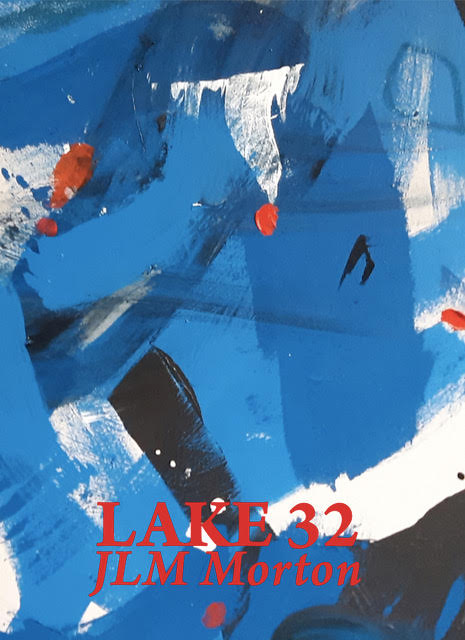
is a poet. Her debut pamphlet Lake 32 is just out with Yew Tree Press. Other recent publications include pamphlets: Water and Stroud Poets Series 2, work in Poetry Birmingham Literary Journal, Emerge Literary Journal, Streetcake, Magma, Riggwelter, Poethead, Atrium and The Lake. She’s been invited to read / forced her way in to various poetry nights and festivals including Ledbury Poetry Festival and last year the Places of Poetry project made a beautiful film of her poem ‘Stroudwater Navigation.’ Featured by The Sunday Telegraph, JOLT, on BBC Upload and BBC Gloucestershire, Juliette was Poet in Residence at Waterland, a Cotswold Water Park lake, throughout 2020 and is cofounder of The Outposted Project. She also runs Dialect, a writer development network. In 2021 she’s Poet in Residence at Stroudwater Textile Trust. Between demands from her kids for high calorie snacks and wrenching another toy from the jaws of the dog, she writes – often while cooking. For more poems, soundscapes, artwork and info see: www.jlmmorton.com
The Interview
When and why did you start writing poetry?
I have always been an avid poetry reader and have played with poetry as a writer for a few years but it wasn’t until I had my second baby that I started writing poetry on a regular basis – I had become really frustrated trying to write long form prose and never getting enough time to finish anything. I had an agent, won a couple of prizes and was finishing my first novel but never to my satisfaction. Poetry fell perfectly into the cracks of my life as a mother and once I started writing poetry seriously sometime in late 2018 it was like a tap had been turned on … I never had that feeling of flow and pure joy when writing prose – poetry has become an addiction!
2. Who introduced you to poetry?
It was probably my grandfather who was a huge lover of poetry – his favourite poet was John Donne.
3. How aware are and were you of the dominating presence of older poets traditional and contemporary?
Yes, very aware of this. I studied English Literature at university through to PhD level and poetry was a thread running through all of that – I have been immersed in the Anglo American, African and Caribbean ‘canons’ and have had a special interest in the marginalised /silenced voices of women, black and minority ethnic and post-colonial writers. As a working poet now, I am really aware of a literati establishment which is quite often metropolitan / London-centric and the challenges and difficulties of being heard if you live outside of that and are not well connected to that particular ecosystem.
4. What is your daily writing routine?
I can’t say that I have a fixed writing route as I am juggling being a parent of two young children and having a day job alongside the poetry so I tend to write whenever I can. Often that means writing in my head when I go for a walk after the school run and before I start the dayjob (I’m a freelancer and lucky to have that flexibility) and then again later in the evening once the kids are in bed. I do write most days though – it’s a compulsion as much as anything. I’ve always got loads of ideas I want to get down on the page.
5. What subjects motivate you to write?
I’m interested in ecopoetics and poetry of place, how the starting point of a concrete object or environment can lead us to unheard stories and voices. I’m also really interested in power and narratives of race and gender, what gets legitimised as ‘appropriate’ subject matter for poetry and what doesn’t. I have a long-held fascination and history of working in gender and race studies – my PhD was on women’s whiteness and the literary imagination and for my dayjob now I am a gender and inclusion consultant, often working in humanitarian scenarios. These interests often feed into my work in oblique ways and shape the ways I see the world and write about it.
6. What is your work ethic?
See 4. Above.
7. Whom of today’s writers do you admire the most and why?
There are a lot of writers I really admire – poets such as Roger Robinson, Katrina Naomi, Anthony Anaxagorou, Alice Willetts, Kim Moore all inspire me as people who live the writing life well and who are generous with their energy, time and advice to other writers. I have a lot of time for Naush Sabah and Suna Afshan who set up Poetry Birmingham Literary Journal – they’re the best kind of trouble makers: insightful, questioning, incisive, making us all squirm in our seats, and both very good poets to boot. There are also other poets like Aaron Kent and Colin Bancroft who do so much for the poetry community in terms of supporting and signposting and generally cheering everyone on in their own endeavours – I really value that kind of camaraderie. And then there are the poets that I adore and admire for their art and craft – these are the ones I read and return to time and again: Fiona Benson, Alice Oswald, Pascale Petite, Caroline Bird, Eavan Boland, Tishani Doshi, Natalie Diaz, Gillian Clarke, Kathleen Jamie, Paul Farley, Michael Simmonds Roberts, Helen Mort, Nick Laird, Robin Robertson, Lucille Clifton, Ada Limon, Jen Hadfield… I could go on… and on!
8. Why do you write, as opposed to doing anything else?
It’s a compulsion for me – I often ask myself why I do it and I don’t have a definitive answer – it shifts over time. Sometimes its about telling a story, other times it might be about exploring or clarifying something in my mind. I ask a lot of questions in my poems – literally and metaphorically. I also like making things and get a lot of satisfaction of ‘making’ a poem and finishing it.
9. What would you say to someone who asked you “How do you become a writer?”
Don’t be afraid of the page. Read more than you write. Establish a daily practice.
10. Tell me about the writing projects you have on at the moment.
My first pamphlet Lake 32 has just come out with Yew Tree Press. It’s the result of a year long residency at a lake in the Cotswold Water Park for which I wrote a poem a month. The pamphlet includes all those poems and more. In the gap between that and the next projects coming up I’ve been writing a few poems I’ve wanted to write for ages and haven’t had space to – ostensibly about mushrooms, larch trees and the Severn, but really about love and coercive control.
Coming up in 2021 and building on that pamphlet, I’ve been commissioned for a book called Living with Water (Manchester Uni Press) to walk and swim the River Churn, an ancient waterway that flows through the land where I grew up and eventually joins the Thames. I plan on doing that some time in spring and will write poetry in response to that, thinking about themes of native, invader, migrant.
I’ve also been appointed Poet in Residence for Stroudwater Textile Trust for 2021. I live in the Stroud valleys and throughout the C18th and C19th, broadcloth was a major export, fuelling the local economy, oiling the wheels of colonial expansion as a trade cloth and clothing the Redcoats that patrolled and enforced the rule of Empire. I’m fascinated by this history and will be exploring the legacy of broadcloth and globalisation past, present and future. There is still a single factory left in the valleys which makes the green cloth you’ll find on the billiard tables of Monte Carlo and the yellow coverings of tennis balls at Wimbledon.
In addition to my own work as a poet, I am involved in a couple of side projects. Last year I started The Outposted Project with my friend and artist-designer Susie Hetherington. This began in Lockdown #1 as an initiative bringing together thirty writers, artists, makers, performers and musicians from across the Five Valleys of Stroud, Gloucestershire to map our collective, creative responses to isolation using Ordnance Survey maps which we pin art to and send onwards to the next contributor. The project has since expanded to other areas of the UK involving more than sixty artists and has a call out for online contributions #virtuallyoutposted. Check us on the ‘gram for the latest: @theoutpostedproject
Last July I set up Dialect, a new inclusive platform for rural writers to develop their talent, connect with writing communities and access opportunities to share their work. Gloucestershire in particular is really under-served in terms of good quality opportunities to develop as a writer and Dialect is aiming to address that – Paper Nations kindly gave me some seed funding to get off the ground and my plan was just to support local writers but because of the pandemic and everything being online I’ve ended up working with writers from across the South West and Wales, as well as some interlopers from the East side and overseas!
Dialect speaks from the edges of things, celebrating the remote and the pastoral, the mountains and hills, the woods and the wilderness, the coasts and waterways, but also the small town and its suburbs, the retail parks, verges, dual carriageways, wastelands, lay-bys, scrapyards, agricultural spaces, derelict mills, industrial estates, motorway services, recycling centres, the spaces and voices in-between. Dialect launched quietly with an online Summer School of taster workshops. This was followed by a programme of workshops around Stroud Book Festival, regular feedback workshops and a Writer In Residence programme in partnership with Waterland which has just started. There’s a poetry course running from January – March and later in the year I’m hoping to launch a literary journal and podcast to showcase all the amazing rural writing talent if I can find the funding…
11. How did you decide on the order of the poems?
They are roughly chronological in terms of when they were written and set over the year long course of the residency
12. How important is form in your poetry? I am thinking of Hibernal Solstice, Soundscape, and Daughters.
Form is incredibly important in my work. Once I’ve had an idea for poem, finding the right form is often what comes next. What shape will the poem take? How will the music sound? What will make my lines do their work? Quite often I begin with a form – Hibernal Solstice for instance began as a poem in a sonnet series. The sonnet didn’t work for me, was too conventional to hold the idea of the poem which was about sound and music and the singing of a lake landscape – it was only later that I broke it up into it’s current form: units of sense blended together to give a sense of a journey, a soundscape.
13. What is the importance of shamanic transformation into an animal or tree in your poetry?
It’s funny, I have never before considered it as ‘shamanic’ transformation but I do use objects and animals in my work to explore ideas or reflect current concerns. That kind of anthropomorphic world view is deeply embedded in my work. The white self-help magpie in Wingspan is based on an actual white magpie living at the lake but he embodies the concerns of people who go there, often those dealing with mental health issues including anxiety and grief. The black poplar tree in Courage articulates a sense of longing and resilience, written at the start of the first lockdown in 2020.
14. “Sunday Service” and “Dip” convey wild swimming as a religious experience, a letting go of self. How do you feel about this?
I think wild swimming can be spiritual in so far as it is often a meditative experience which takes you into your body and environment and away from your conscious mind, especially in winter when the water is very cold. You can be nowhere else in that moment.
I wouldn’t call it a religious experience as that implies some kind of organised belief system – pretty much the opposite of the wild freedom of swimming outdoors
15. Noting that one of the most often used words in the collection is “wild”, what is it about wildness and untameability that fascinates you?
I think my fascination is to do with the politics of wildness – an interest in exploring wildness as set against civility and civilisation as a white patriarchal construct
16. Once they have read the book what do wish the reader to leave with?
A greater familiarity with the wonders of the Cotswold Water Park and understanding of the more local impacts of the climate emergency. I hope also that readers will have felt an emotional connection and found pleasure in reading. It’s so strange isn’t it, often we don’t start poems with a reader in mind but rather with an idea for ourselves to explore so to then try after the fact to determine what a reader might leave with feels like a stretch beyond the original intention. Of course, I hope people will connect with my work but that’s more of an afterthought than an original intention. Hope that makes sense.
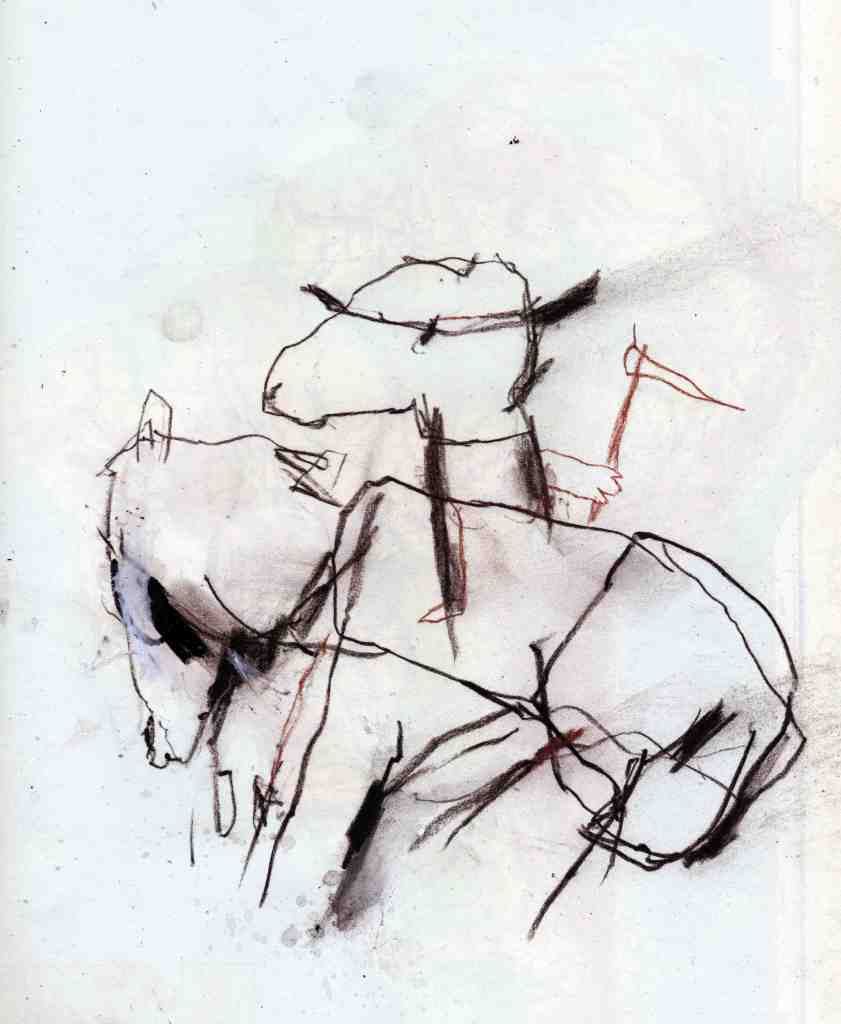
Marcel Herms – Der Tod ist ein Dandy auf einem Pferd (Death is a Dandy on a Horse)
Now, now! Dear soul! I’ve done this countless times before. I move between and between. It wouldn’t do to be forever seen. I divert with the screech of an owl. Even though, I pity souls killed by neglect and foul. I don’t recommend staying as a ghost. Even though together you would be a mighty host. Now! Peek beneath my cowl! Look into the void, and honk like a lost wildfowl. My eyes are the portals. Transporting all Bardo states mortals. Handing you off at the gates. Of the Kingdom of karmic weaving fates.
This is the second day of the January Ekphrastic Challenge. To see all artwork and read all poetry go to, THE WOMBWELL RAINBOW. My poem today is inspired by Marcel Herms – Der Tod ist ein…






 The Wombwell Rainbow