Six Poems by Jenny Mitchell

Well worth a gander

robertfredekenter's avatarIceFloe Press

Late Monarch of Sad Memory

They trouble me – the anecdotes:

Grandfather with high yellow skin –

a prince because of it,

the dark too close to slaves

masters could not civilise
by breeding up:

seduction with a whip.

He womanised,

heroically hot-blooded

till the gal dem all mosquitoes.

Swatted children violently –
the eight he gave his name.

No one dares to ask if there were outside progeny.
Man big as him, there must be.

He’s all below the waist somehow,
furthest from the heart,
although he was a constable

who fortified Jamaican hills.

Must have been so brave,
policing men as poor as him.

Hunger doesn’t follow rules

unless they’re brutalising.

It’s just the two certificates I’ve found

that bear his name
say Labourer in 1929.

The Crash must have hit hard:
eight mouths, his love of drink.
The last said as a joke

but did he stumble…

View original post 953 more words

Wombwell Rainbow Interviews: Karl Knights

Wombwell Rainbow Interviews

I am honoured and privileged that the following writers local, national and international have agreed to be interviewed by me. I gave the writers two options: an emailed list of questions or a more fluid interview via messenger.

The usual ground is covered about motivation, daily routines and work ethic, but some surprises too. Some of these poets you may know, others may be new to you. I hope you enjoy the experience as much as I do.

Karl Knights

is a freelance journalist who has appeared on The Victoria Derbyshire Show, BBC Breakfast, ITV News, CNN International and various radio shows. His prose and poetry has appeared in The Guardian, The Dark Horse, The North and Under The Radar.  He was highly commended in the Suffolk Young Poets Competition three times. He is twenty-three and lives in Suffolk.

The Interview

1. When and why did you start writing poetry/essay writing?

I imagine I’m quite unusual in that I can pin point exactly where and when poetry began for me. Poetry properly entered my life in March, 2011. I was fourteen, in Year 10. My school took a group of students to a local arts centre, and a poet called Dean Parkin (whose books I would highly recommend reading) did a workshop with us. I had written the odd thing here and there before, as a child, but it wasn’t a consistent habit. But this was the first time I’d written poetry. I wrote awful stuff, but I enjoyed it enormously. I was the only student to keep writing through the lunch break!

As for essays, they’re more recent. I had done short 800 word pieces of journalism, for the Guardian. But longer essays usually emerge when I’m trying to work something out. My most recent essay, in The Dark Horse, came about as I was trying to work out, what does it mean to write disabled poetry? Do disabled poets act differently to their able-bodied peers? Are different pressures acting upon them? How should a disabled poet conduct themselves, think about their work? And until those questions were answered, I felt I couldn’t move forward in my own poetry. So that particular essay emerged from confused, frantic notes I’d made about the disabled poets I’d come across and what kind of conditions they’d written in.

2. How aware are and were you of the dominating presence of older poets and essay writers traditional and contemporary?

I was, and am, a great information hoarder, but I was more aware of the older poets. There’s a running joke that I like my poets dead, which has a bit of truth to it, though that’s something I’m trying to fix! So certainly early-on contemporary poetry was something of a gap in my mind. All the voices I pilfered from and adored were dead poets (though still 20th century). For me, I wouldn’t say they’re a dominating presence so much as a liberating one. C.K. Williams said that some poets, like Dickinson or Whitman, are self-starting engines, who started writing something new without models. I’m not a self-starting engine at all. I thrive when I have some kind of model. Every now and again a ‘new’ poem will force it’s way through, but by and large when I have something tangible to begin from, I write more forcefully.
In terms of the influence of essay writers, I’m less sure. I used to, and still do, read very widely, and essays were always a part of my literary diet. But I’m unsure what influenced me, as my essay writing is still in its infancy. In a few years I might have more to say on what’s gone into my essays. I know that generally I favour essays and literary criticism that is unabashedly personal, stuff that steers away from academic language. I really loved Eavan Boland’s criticism for those reasons.

3. What is your daily writing routine?

I often feel like a bit of an imposter, because I don’t really have a daily writing routine. But I’m always thinking about writing, or better yet I’m reading. I think the time away from the laptop can be as essential to the process and as instructive as when you’re in the chair bashing out the words. Jane Kenyon said poetry should grow in the dark like a mushroom, and I think she was right. I’ve noticed that I can write prose on demand, and if I wanted to I could write it, day in and day out, whereas for whatever reason, poetry is more mercurial for me and emerges in great bursts, where I’ll write dozens and dozens of poems in a very short space of time, followed by a barren period. I’m mostly happy to ride the process.

4. You’ve spoken of how your essays are motivated, what causes you to write poetry?

I’m not entirely sure. Usually there’s some kind of image or line or sheer sound that won’t leave me alone, and will keep me awake until I write it down. Poetry is the most economical of the arts, and often entire universes are contained in a tiny slab of words, and I love that. Poetry is often brief but you never feel shortchanged by it’s brevity. Because it is smaller but no less strong that its artistic siblings, poetry can reach places other art forms cannot. For example in my own life, I’ve had periods where my concentration has been non-existent, so novels, plays, even short stories were out of the question. But poetry remained. Poetry is wily and can reach places and people that other literary forms cannot hope to. Writing poetry is a thrill that has never waned.

5. How do the writers you read when you were young influence your work today?

I’m not sure…it seems a question better judged by people seeing my work from the outside, rather than coming from me. I often talk with poets about who their first voice was, the first poet they found for themselves. For me it was Allen Ginsberg, and ‘The Bricklayer’s Lunch Hour’ remains a favourite poem. I was an absolute Ginsberg fanatic for several years. But I don’t think you can find a trace of Ginsberg in my work. I find myself referencing Heaney a great deal, he seems to have entered my blood without me noticing. An anthology that was important to me starting out was a book called The Poetry of Survival, edited by Daniel Weissbort. The book is made up of the voices that emerged in the post-war period in Eastern Europe, who wrote very concrete, tangible poetry. It had the authority of witnessing. It seems the thing I take most from poets is their attitude, Ginsberg said he made the private world public, and I think he’s right on the money. He wasn’t afraid to make fun of himself either, but somehow he did so without sacrificing his pathos. A more recent example would be Vassar Miller. I couldn’t write what I’m writing now without the disabled poet’s from the past having come before. Miller was punk before punk, writing metrical verse about disability, faith, femininity and sexuality in the fifties and beyond! It was a bold, in your face attitude, and I hope I’ve taken that, but who knows?

6. Who of today’s writers do you admire the most and why?

Too many authors to name! If I had to pick just one, I’d say Jillian Weise. Her first book, 2007’s The Amputee’s Guide to Sex is the reason I started writing about disability at all (alongside reading the anthology, Beauty is a Verb). Weise’s new book, Cyborg Detective, is absolutely extraordinary. With each book her power as a poet has grown, the voice grows larger and larger and it’s utterly enthralling to watch. Her alter-ego, Tipsy Tullivan (which you can see on Youtube) is a brilliant satire of the casual ableism of the literary world.

7. What would you say to someone who asked you “How do you become a writer?”

I’d say, do the work. All too often I come across people who are in love with the idea of being a writer, rather than loving the actual act of writing. The kind of person who is afraid to read because it might ruin their style. Whether unpublished or published, simply by typing or putting pen to paper, you are a writer. The other thing I’d say is read, read absolutely everything you can get your hands on. If you’re a poet don’t just read poetry. If you’re a novelist don’t read novels alone. Read about etymology and the politics of water use, read poetry and history, read comics and children’s books. Read outside of your comfort zone, always. Be unafraid to borrow from other art forms too. For example, Mount Eerie’s album, A Crow Looked at Me was important to my writing life. It’s an album about the singer-songwriter’s wife’s death, and it’s completely raw but painfully beautiful as well. The album taught me that being direct is nothing to be ashamed of, there’s enormous power and urgency in bluntness. Mainly, keep your artistic antenna open to all things. Rejection is constant as a writer, whether you’re just starting out or you’re a Nobel Prize winner, so prepare for many, many rejections (maybe do what Hemingway did and pin your rejections above your writing desk). Do the work, find the right words. Keep reading. Repeat ad infinitum.

8. Tell me about the writing projects you have on at the moment.

At the moment my main task is putting together a poetry manuscript. David Foster Wallace described assembling a manuscript as ‘like wrestling sheets of balsa wood in high wind’ and that’s about right. It’s a chaotic but invigorating process, and one I’m glad to sink my teeth into. In my spare time I am organising what poems to read for a few events in 2020, which like putting together the manuscript, forces you to see your poems with new eyes. I’ve got a few essays that are being written at the moment that will hopefully see the light of day in the New Year, but you can never be sure. We shall see!

Wombwell Rainbow Interviews: kerry rawlinson

Wombwell Rainbow Interviews

I am honoured and privileged that the following writers local, national and international have agreed to be interviewed by me. I gave the writers two options: an emailed list of questions or a more fluid interview via messenger.

The usual ground is covered about motivation, daily routines and work ethic, but some surprises too. Some of these poets you may know, others may be new to you. I hope you enjoy the experience as much as I do.

kerry rawlinson

kerry rawlinson

Decades ago, gravitated from sunny Zambian skies to solid Canadian soil. Now returned her muses an unmitigated optimist, she’s the winner of Postcards, Poems & Prose’s “drawkcaB” Contest; was a finalist in Ascent AspirationsMississippi Valley; Malahat Review Open Season and Hawai’i Review Contests; and long-listed for 2015 National Poetry Contest of the UK. Poems, some with artwork, accepted by: Midwest Quarterlyditchpoetry3Elements Review; Main Street RagUnshod QuillsWar, Literature & the ArtsCodex. amongst others. Photo-artwork publicationsQwertyWaxPoetry & Art; Adirondack ReviewAColorProject, Five on the FifthThe Peachland View front page, Nov. 14, 2014; Peachland Art Gallery Exhibition. See everything at kerryrawlinson.tumblr.com

The Interview

1. When and why did you start writing poetry?

In the womb; because I could. It was in morse code I think… Seriously though, does any scientific evidence exist as to whether one is born left-brain or right brain? I’m a changeling who disguises itself as both, never fully comfortable with one or the other.  I’ve been creative since earliest memory–and a voracious reader–so initially, stories were my thing. In Std 1, at Kalulushi township School, Zambia, for example, I had a teacher-crush on Miss Bath & wrote her long, boring love-tale about a dog. I don’t know what impressed her, its length or its mawkishness, but she kept it. I won a TV award that same year for drawing, too. But Miss Bath also wanted me to improve my “sums”, so I did–until I was first in class.

Poetry didn’t strike until the last year in Junior school. We were sent off to pick a poem on our own from the library, and read it to the class. I picked Tennyson’s “Break, Break, Break…” and when I read it, the tops of all our heads came off. I was hooked. I wrote & kept on writing, especially in my sophomore year of university (which I dropped out of), but was always too shy to publish. (My husband calls it “housewife poetry”, so thank god I never tried.) And then the hectic and all-consuming challenges of life snowballed. I found myself too overwhelmed by them to dedicate myself to Art’s calling, and set it aside. I had little spurts of creativity here & there over the years, like a steam vent, but nothing consistent. I raised a family & slogged on through a career doing work I loved–Architectural Technology–but I loathed the corporate environment. That informed the decision to retire early, in order to focus on the voices & pictures in my head, and get them out into the world by whatever means…

The last line of that pivotal poem has inhabited my life: But the tender grace of a day that is dead/ Will never come back to me.

So I’m hard at it. In my bio I characterize myself as a bloody-minded optimist, and I think that’s as true a statement about my journey as any.

1.1. What made you choose Tennyson’s “Break, Break, Break…”?

Bear in mind I was young, and the poetry books available in Johannesburg School libraries in 1966 were probably fairly dry. So the refrain “Break, Break, Break…” , its melancholic rhythmicality, the musicality of its rhyme, appealed immediately to the actress in me.  But I was also drawn to the topic of a person in deep mourning. It’s interesting now, as I look back on it so many years later, how prophetic it was for my life. Consider the words in the second stanza: “cold,” and “stones,” and “oh”. These are primal sounds of despair. Then the next two stanzas wrestle with every poet’s–and indeed every human being’s–difficulty: not being able to articulate your meaning. The second verse contrasts this inarticulation with the carefree joy of children going about their ordinary play, which must have appealed to me, being the same age. And the next two stanzas of the third verse describe the inexorable continuation of normal things, while the poet has lost the normal thing that gave his existence purpose. The refrain repeats again, like the tolling of a bell, and Tennyson offers those riveting stanzas, two of the most melancholy lines I’ve ever read:  But the tender grace of a day that is dead/ Will never come back to me. Which, I must have felt, being that miserable young girl in a boarding-school far from home who’s lost her own carefree joy, described my life.

2. When you focussed on the voices & pictures in your head, and got them out into the world by whatever means…how aware were you of the dominating presence of older poets traditional and contemporary?

I’m a work in progress, and the voices and pictures keep growing and changing…  Yes, I was aware; and no; I don’t think anyone can fully comprehend the depth and extent of any creature’s reach, ever.  It’s like the three, 2,000 year-old yews in Cumbria, UK. Scientists now know that they’re actually clones of the same tree, on the same root system. So in order to become a poet of merit, does one have to belong to the same root system, or can one be an entirely different tree?

The way one generally learns about poetry is in the school system, which is (at least in my day) woefully focussed on the older traditional poets and writers. Well, they’ve stood the test of time, have they not? Yet we have a populist revolution exploding right now, in the written word–but unless you’re immersed in it as a poet or writer yourself, it’s alI underground. In truth, it isn’t so much the older establishments which intimidate me, but the young; the bright burning bushes with so much talent and so much time ahead of them in which to allow their roots to combine with the established system. And their energy!

Malcolm Gladwell wrote that it takes a person, on average, 700 repetitions of an action or task to be able to complete it satisfactorily by rote, without faltering. If one considers that publishing three poems a year (as an example of my personal exercise towards perfection), then I’ll have to live to about 233 to get it comfortably right.

3. What is your daily writing routine?

It’s not rigid. I’m not one of those writers who say: you have to write a minimum of such-&-such every day. What’s routine for me, is that I wake at sparrow-fart, as my dad used to say, and sit outside in all weathers with a cup of tea to think and charge-up. Then I head to my “office” — which is a laptop on my lap – and settle-in for three or four hours. But oftentimes I don’t write. It’s just as important to read and that gives me inspiration, too. Then I jot notes. Or I work on my art. Wherever the muse is leading me. Often I’ll pick it up again after about 8pm and work til midnight. Sometimes, as my husband will affirm, I go all day and forget to eat.

4. What motivates you to write?

What inspires my writing is every-every-every little thing… A kid in a grocery store. A tv show. A sunrise. A bird. A speeding motorbike. A book. A tree. A poem. A politician. Work. An overheard snippet of conversation. A dandelion. A transvestite. A cup of coffee. A Tweet. A store. A list. A bathroom. A movie. Another book. A lie. A warm bagel. A cold glass of wine. Repetition. A list… etc. etc. What motivates my writing is part bloody-mindedness; part quest for the unknown.

5. How do the writers you read when you were young influence your work today?

Incredibly! I don’t think I would be on this journey, if not. They gave me a framework, and within that framework such bounty. My school taught Shakespeare, Blake, Shelly, Keats, Tennyson, Byron, Milton, Homer etc. as being the pantheon to which mere mortals like me would never be admitted… I’d say possibly the “knotty rhythms” of Gerard Manley Hopkins (as one editor commented about one of my poems) have stuck with me; certainly the cerebral leanings of T.S Eliot, Tomas Tranströmer; the bucolic simplicity of John Donne. Paul Celan and Paul Verlaine are both go-to’s for musicality;  Rimbaud & Coleridge for surreal vision; the blistering Dylan Thomas and Behan for their brilliance…  Honestly, this answer could just end up being a loooong list! I Have to say though, as much as I studied the female poets, the list is shorter: Dickinson, naturally, and Sappho, Marianne Moore, Plath. I look to them for the layers within the layers; to Sarojini Naidu for lyrical imagery; Emma Lazarus for social commentary. And god knows, I try to honour them all while moving forward, onto the modern poets, such as Seamus Heaney; Kay Ryan.

6. Whom of today’s writers do you admire the most and why?

As I’ve said, I believe we’re in a renaissance of art and writing. There are marvellous, distinctive voices emerging, and it’s difficult to pick one above the other.

Lately I’ve been re-reading Joseph Fasano’s award-winning poem, Mahler in New York, which turns its deeply personal lyricism into greater philosophical observation. I can’t wait for his next book. Ocean Vuong’s voice resonates for the disenfranchised, whether by status or gender, and his imagery’s powerful & often shocking.  Kayo Chingonyi is also deeply moving in his deft questioning of the relevance of a young immigrant in society. Our lovely Canadians amaze me: Sylvia Legris,  (cerebral, playful, with mind-blowing twists of  language), Sharon Olds (visceral questioning of the world, faith & the body’s relevance to any of it) and Anne Carson (deeply intellectual, yet original, breaking the boundaries of rhythm, tone & intonation her exploration of sublime experience) & the tender, minutely-detailed & caring prose-poetry of Eve Jacobs. I recently discovered Hilde Domin, & admire the beauty & accessibility of her language as she explores life’s Great Questions. Ilya Kaminski’s “Deaf Republic” is a masterpiece, and it blew me away. His playfulness with the sounds of words is astonishing for someone hard of hearing — or perhaps that’s why it is so? — and the irreverent, gritty humanness of his writing gets under my skin. Jane Hirschfield is up there for her informed eloquence and  spiritual clarity.

A poet I admire for qualities of lyricism, who’s also very much a poet of place & multicultural evaluation, is Derek Walcott. Colin Channer, another Jamaican poet, writes intimately and lyrically on very human themes of place and time; colonial & modern; and Simon Armitage is King of Britain, as far as that goes. I admire Billy Collins’ conversational, quirky poetry into profound observation through image and metaphor. Carol Ann Duffy also, for her conversational poetry, which uses humour to explore themes of love; Jane Hirshfield, who employs rich, spare lines and ordinary situations to explore deeper truths.

And now we see common threads emerging in this list which could in truth go to several pages! Poets who are masters of prosody, with philosophical bents, immersed in the study of humanity. Amen!

7. What would you say to someone who asked you “How do you become a writer?”

Breathe. Nothing in this world, or the last, or the next, guarantees a place anywhere. So knowing you’re an infinitesimal speck of dander, release ego. We become writers by reading. Read a lot. The second thing I’d offer is that as a writer, you need to find your own voice. I’ve red Kay Ryan from when she began her writing journey, and she’s wonderful example of tracking. Everything’s its own journey. Be free enough to realize you have a *@!$#^ long way to go! And then, have the courage to go.

8. Tell me about the writing projects you have on at the moment.

I have spent the last five years since I began this journey establishing some “street-cred” and trying to fine-tune my craft. I’m now at the point where I have to send some pigeons out to race! There are 2 full poetry collections ready to publish, (one linked to the Seasons includes my photo-art); I have a few pamphlets/ chapbooks edited and at the publishing stage; I have a Flash-fiction manuscript prepared, ready to offer. I’ve also been working on some illustrated children’s books, but these require further polishing. Later on, much later on, I very much want to curate an anthology of art, poetry, flash-fiction & non-fiction from this area of the Okanagan because our local talent is mouth-watering. Now I need two things.
1) Publishers; 2) Time. I must put everything out there, and still keep writing. Thanks to generous people like you, Paul, perhaps my pigeons will have the good fortune to fly straight into some willing, winning ears.

The Darkling Thrush by Thomas Hardy

Jamie Dedes's avatarJamie Dedes' THE POET BY DAY Webzine

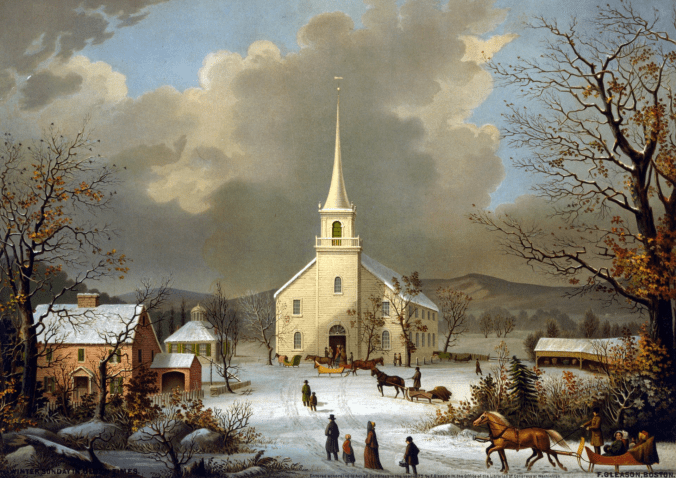
Karen Arnold has released this “Winter Day Painting” image into the public domain License: CC0 Public Domain

“Don’t think of what’s past!” said she. “I am not going to think outside of now. Why should we! Who knows what tomorrow has in store? ” Thomas Hardy, Tess of the D’Urbervilles


I leant upon a coppice gate
When Frost was spectre-gray,
And Winter’s dregs made desolate
The weakening eye of day.
The tangled bine-stems scored the sky
Like strings of broken lyres,
And all mankind that haunted nigh
Had sought their household fires.

The land’s sharp features seemed to be
The Century’s corpse outleant,
His crypt the cloudy canopy,
The wind his death-lament.
The ancient pulse of germ and birth
Was shrunken hard and dry,
And every spirit upon earth
Seemed fervourless as I.

At once a voice arose among
The bleak twigs overhead
In a full-hearted evensong
Of…

View original post 856 more words

Wombwell Rainbow Interviews: Juliette Sebock

Wombwell Rainbow Interviews

I am honoured and privileged that the following writers local, national and international have agreed to be interviewed by me. I gave the writers two options: an emailed list of questions or a more fluid interview via messenger.

The usual ground is covered about motivation, daily routines and work ethic, but some surprises too. Some of these poets you may know, others may be new to you. I hope you enjoy the experience as much as I do.

Juliette Sebock

is a Best of the Net-nominated poet and writer and the author of Mistakes Were Made, Micro: a microchapbook of micropoems, How My Cat Saved My Life and Other Poems, Three Words, and Boleyn, with work forthcoming or appearing in a wide variety of publications.

She is the founding editor of Nightingale & Sparrow, runs a lifestyle blog, For the Sake of Good Taste, and is a regular contributor with Marías at Sampaguitas, Royal Rose, Memoir Mixtapes, and The Poetry Question. When she isn’t writing (and sometimes when she is), she can be found with a cup of coffee and her cat, Fitz. Juliette can be reached on her website, juliettesebock.com, or across social media @juliettesebock.

The Interview

1. When and why did you start writing poetry?

I honestly don’t remember a time in which I wasn’t writing something—from stories in preschool to songs in middle school.  I really started writing poetry, though, in high school and into college.  It was solely a cathartic thing for me—a sort of therapeutic exercise to cope with, well, life.  I’ve always found writing, in all its forms, to be a kind of restorative act.  By the summer prior to my senior year of college, I knew I had to do something more with it, and my first chapbook was born!

2. Who introduced you to poetry?

Just like I can’t remember a time without writing, I really can’t remember a time when I wasn’t reading.  Shakespeare & Poe were early favourites (I was that weird kid who read way too much classic lit), so I was exposed to poetry in general rather early.

But, when it comes to my own poetry, I owe so much to my friend and fellow poet, Hugh Martin.  Hugh was the first person who ever really talked to me seriously about poetry, and he encouraged my writing, too.  He recommended one of the first poetry books I seriously read beyond the “greats,” and reading his work, as well, was especially inspiring.  I’d already been writing, but I never really thought much about doing anything with it, and I’m so absurdly grateful to him for igniting that spark, so to speak!

3. How aware are and were you of the dominating presence of older poets traditional and contemporary?

When I first started writing, and even submitting, I had no idea of just how massive the poetry community, both currently and through time, really is.  I’d been exposed to some of the biggest names (and even then, only a small portion of the canon), but little more.  I found Button Poetry’s videos which, while hardly unknown, showed me a glimpse of the voices that are out there.  From there, I dug up more and more small publications; along the way, I not only found more accessible opportunities, but I made connections with so many amazing poets I may never have found otherwise!

4. What is your daily writing routine?

I don’t really have one.  Between health issues and work, it really is hard to find time to write…but that’s when I really need to “make” the time, so to speak.

For me, writing’s always been a sort of compulsion–at the risk of a poetic cliché, I need to write like I need to breathe.  Most of my writing happens in a notetaking app on my phone when the urge strikes.  I hope to have the room, in a scheduling sense, to have the sort of formal writing routine that you see the big-name authors share but, for now, this works for me!

Link! https://mysmallpresswritingday.blogspot.com/2019/09/my-small-press-writing-day-juliette.html

5. What motivates you to write?

For me, writing is frankly as necessary as breathing.  There’s not really another option–if I’m not writing and haven’t for a while, everything feels off.

Publishing though, I’ve found is motivated in part by my experience in dealing with chronic illness.  A lot of what I live with tends to be confusing to doctors, and I constantly have that deeply-rooted fear that there’s something bigger going on that will be missed.  I’ve had a lot of people comment on the extent to which I submit & publish pieces, but so much of that is simply because I’m afraid I won’t always have the opportunity to do so.

6. How do the writers you read when you were young influence you today?

Allusions are probably the most blatant case of that influence; I think almost every manuscript I’ve completed has at least one reference to something by Shakespeare.  His work and Austen’s, in particular, played in a big part in my dream of living in the UK, which I was lucky enough to do for a while–an experience that’s been a huge factor in my writing as well.

6.1. Why “Austen’s, in particular”?

Shakespeare and Austen were some of the first writers I read seriously, and that’s stuck with me through the years.  In fact, I learnt a lot about language from doing so, rather in the classroom–I’m still holding a grudge against an elementary school spelling test that took off points for my spelling it “grey” as opposed to “gray!”  I’ve always loved the sort of romanticised version of Britain and books were a major portion of that.  I’ve ended up with a sort of US/UK English myself as a result which, in my mind, sort of marks a piece as my own.

7. Who of today’s writers do you admire the most and why?

One of my favourite things about indie lit is that so many writers that I admire are those I’m lucky enough to call friends, or at least acquaintances (with a few exceptions in which I’m exclusively a fan [so far])…which also means I’m bound to forget a few along the way, so I’ll apologise for that upfront.  But some of those writers include Lannie Stabile, Lynne Schmidt, Elfie, Imani Campbell, Jean-Marie Bub, Kat Giordano, Maddie Anthes, Kate Garrett, Megan Lucas, Nadia Gerassimenko, Marisa Craine, Janna C. Valente, Megan O’Keeffe, Juliette van der Molen, Kayt Christensen, Courtney LeBlanc, and so, so many more! All of these writers are so hardworking and talented and generally wonderful–it’d be hard not to admire them!

8. What would you say to someone who asked you “How do you become a writer?”

Quite simply, I’d tell them to write.  It’s the only real “requirement” to call yourself a writer!

To answer the implicit question, though, of how to become a published writer, the answer is similar–submit.  If you tell yourself that your work isn’t good enough to send to a publication, you’ll never have the chance to have someone say “Yes, we’d love to publish your piece!”  There’s so, so much rejection to be had, but if you don’t push through that, you’ll never have the joy that comes with that first acceptance (and those that come after it!).

9. Tell me about the writing projects you have on at the moment.

Right now, I’ve got two chapbooks lined up for 2020 publication and have a few more manuscripts out in the world and in progress.  I’ve pulled away from submitting much over the past few months amidst some health & other issues, so one of my plans for the next few months is to get back into the swing of things there–and I’ve still got a few pending submissions from earlier in the year!  Otherwise, we’ve got a lot of exciting things to come from Nightingale & Sparrow and I’m hoping to build my freelance writing & editing client base as well.  Overall, I’m optimistic about some great opportunities on the horizon!

My 2010s Decade (Ongoing)

2013 Started The Wombwell Rainbow to publicise my photos and the work I was doing on my family history.

Researched the family history of the Lincolnshire Laurences for five years intensely whilst in full time work. I had hoped to have completed and published it before my dad died.

Luckily, I had a couple of articles published. One of them features the history of Laurence’s Family And Commercial Temperance Hotel, including it’s newsworthy clientele: thieves, madmen. First published in Liverpool Family History Magazine.

Another article features Doctor George Laurence and his publication of a book called “Psionic Medicine”

I plan a whole book about the voyages and life of Charles Teft Laurence, Merchant Mariner. His apprenticeship, rise to second in command, transcripts of each ship’s log. Here are extracts:

https://thewombwellrainbow.com/charles-teft-laurence-merchant-mariner-liverpool-years-extract/comment-page-1/#comment-22112


Geographies 2020

Wonderful idea

robertfredekenter's avatarIceFloe Press

Beginning in January 2020:

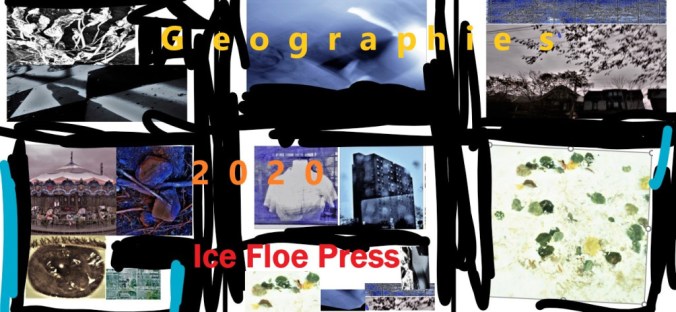
A new curated series by Robert Frede Kenter and Moira J. Saucer presents a series of invited writers and artists exploring the idea of Geographies at the end of one decade and the beginning of the next.

Geographies of self/ geographies of rupture/ geographies of the land/ geographies of the body (disabilities/scars/celebrations/ landscapes). cosmologies of the future/animal geographies/urban/rural cartographies and /or topographies/

cosmopolitan/neighborhoods and mountain ranges /interior geographies/ of silence/ geographies of malice/ geographies of love/ geographies of language / laughter/ largess and crisis / geographies beyond/outside binaries/ geographies of queerness

“Postcards from the Edge”. A digital collage by Robert Frede Kenter (c) 2019

View original post

. january 2020~ news .

Stunning artist sonja

Sonja Benskin Mesher's avatarsonja benskin mesher

:: the year moves round ::

Welsh Enterprise Award


Honoured to be  awarded Best Abstract Landscape Artist 2019.


thumbnail_16cjof8c575b0237942458a69a21feb3bfcd4


A Book about Death. The Phenomena.


The Islip Art Museum Long Island New York

~ten years~

10th Anniversary (and possibly final) Edition of ABAD Exhibition on Long Island, NY in2019. The Islip Art Museum in East Islip, NY

Work also included in Michael Rose exhibition in Japan at The New Art Museum in December 2019.

BREAKING NEWS!
THE WHOLE OF THIS 10th ANNIVERSARY EXHIBITION HAS BEEN REQUESTED BY A MUSEUM IN FRANCE AND BY THE ISLIP ART MUSEUM FOR INCLUSION IN THEIR PERMANENT COLLECTIONS.

A SET  TO THE MOMA NY TO STAND WITH THE 2009 SHOW THEY ALREADY HAVE IN THEIR PERMANENT COLLECTION.


ten years

***

OSTEN BIENNIAL OF DRAWING 2020

SKOPJE, NORTH MACEDONIA
“send as much as you can so we can plan your work in more…

View original post 42 more words