Wombwell Rainbow Interviews: Andy N.

Wombwell Rainbow Interviews

I am honoured and privileged that the following writers local, national and international have agreed to be interviewed by me. I gave the writers two options: an emailed list of questions or a more fluid interview via messenger.

The usual ground is covered about motivation, daily routines and work ethic, but some surprises too. Some of these poets you may know, others may be new to you. I hope you enjoy the experience as much as I do.

Andy N.

is a writer, performer, podcaster, creative writing workshop tutor and sometimes experimental musician from Manchester who also is currently co running Stretford’s always welcoming spoken word night ‘Speak easy’

He has been published in numerous books and magazines and has been performing in some form or the other since 2006 and regularly since 2008 and was also vocalist and keyboardist in the spoken word collective ‘A Means to an End’ (Can be found on facebook).

He is also the editor and chief of Spoken Label, a new spoken word based interview podcast label featuring podcasts with all kinds of writers and artists (https://spokenlabel.bandcamp.com/)

and is also the co creator of ‘Reading in Bed’, a literature review podcast he does with his partner. His official website is onewriterandhispc.blogspot.co.uk/ and he is always interested in under-taking performing / new projects. His email address is aen1mpo@yahoo.co.uk

List of Publications:

(http://onewriterandhispc.blogspot.co.uk/p/publications.html)

on Facebook (Official page)

https://www.facebook.com/andynstorytellerpoet/

on Bandcamp

https://andyn.bandcamp.com/

Ocean in a Bottle (ambient music)

on Facebook

https://www.facebook.com/Ocean-in-a-bottle-802773986422467/

on bandcamp

https://oceaninabottle.bandcamp.com/

Spoken Label (spoken word podcasts)

on facebook

https://www.facebook.com/groups/1640184132900821/

on bandcamp

https://spokenlabel.bandcamp.com/

Speak Easy (Stretford’s always welcoming Spoken Word Open Mic night)

https://www.facebook.com/speakeasymanchester/

Reading in Bed (Book Review Podcast with Amanda)

on facebook

https://www.facebook.com/groups/readinginbed/

on bandcamp

https://readinginbed.bandcamp.com/

Comics Unity Podcast Series (Comics related and culture podcast with Michael)

on facebook

https://www.facebook.com/groups/1366264170126341/

The Interview

1. When and why did you start writing poetry?

I actually started writing poetry when i was 10. It was terrible i seem to recall. My teacher encouraged to keep on it at it 😄. Little did she know 😄

2. Who introduced you to poetry?

Good question. It was my teacher Miss Fenton. She always thought i had a good eye for images even back then 😄.

2.1. What poetry did she introduce you to?

She introduced me into Hilaire Belloc at the time. My major inspirations Hugo Williams and Paul Celan / Wilfred Owen came during college and at degree level years ago.

2.2. How did they influence you?

In Williams case it was the human touch the sheer love of life. Cealan and owen the misery

3. How aware are and were you of the dominating presence of older poets traditional and contemporary?

Not really if I am honest until I got into my mid 20s when I went back to evening classes. I had left school with quite poor qualifications (long story) and next to no interest in writing by the time I got to 18 or 19 and although I touched on poetry while studying English A Level (where I studied Tennyson, Browning and Swinburne etc), it wasn’t until I got to university in 1999 as a mature student (I was 27) when I really began to see the dominating presence of older poets traditional and contemporary and slowly began to find my own voice.

4. What is your daily writing routine?

I actually have a day job (I wish I was a full time artist) so that covers me during the day so it usually means just the evening when I get home. I’m quite deep into the world of Podcasting at the moment which can means that does take some time up when I am at home, and I also do ambient music under the name of Ocean in a Bottle but if I am not writing everyday I am always reading and usually have either a book in my bag or a new poetry book on my kindle. Bookwise, that’s Robert Cochrane’s ‘A Memory of Keys’ and I have a pre-order of a book by a South African writer called Alta Martin which is out later in the year I think.

5. What motivates you to write?

What motivates my writing? That’s a good question really. When I first started writing right up to when I went to university, I never really had any plans with it atall,  perhaps I thought it was something more interesting to do than just watch Television. The older I got, it changed and now I love telling my own stories in poems rather than been told stories (for example on Television) if they makes sense and this has now developed further so on my laptop I have various folders on there on sequences I want to tell. Currently this includes Science Fiction poems (A mystery called Robot Noir) or poems about an imaginary couple I am writing about who visit all kinds of cities and have adventures in them. Both of them motivate me as I want to work out where they end both of these stories end up next.

6. Why do you like writing mysteries?

Just what I am writing really at the moment, Paul and is not a reflection of my first three full length poetry collections. The first book ‘Return to Kemptown’ was a compilation of what I regarded as my best material as of 2010 (I have been performing poetry on a fairly regular basis since 2007). The second and third books ‘The End of Summer’ ‘and ‘The Birth of Spring’ are seasonal books really with each book designed to represent the seasons with poems about Summer and Autumn mixed with longer narrative poems which contain the elements of those seasons also.

I do have a third seasonal book in mind ‘In the Midst of Winter’ which is looking good but I also have two other full length books on the go which are certainly more mystery based. The first one ‘Changing carriages at Birmingham New Street’ which is about my imaginary couple actually made a brief appearance in The Birth of Autumn and I enjoyed reading about them, it kind of made sense to try and write a full length collection covering their time together. Robot Noir, my Science Fiction poetry book is quite different but still carries the same emotional strengths that people like about my poetry but is getting wrote hand in hand next to it covering before, during and after a Robot uprising in Poetry which threatens the existence of mankind itself. Both books here are mysteries as they do not operate like most full length poetry collections, but tell a story like in novels but rather in poetry which pieces stand alone but also work well in a long sequence and I hope will prove emotional satisfying for readers as well as me when they are completed.

7. How do the writers/musicians you read/heard when you were young influence you today?

I had a bit of a unusual taste in music growing up in the early 80s when my father got me into folk music and country and western music, of which if I am honest I haven’t heard in years. When I got into my mid teens in the late 80s, I started listening to some discoveries of my own, some of which are very difficult to listen to nowadays. One band I love listening to even now and saw live twice back at that point were a Scottish band called The Blue Nile who have had a rare ability to convey the ordinariness of life itself which still hits me hard even now over thirty years later and has proved a influence on my writing certainly.

Reading wise, I’ve just re-read a few books by Fred Hoyle which are very pure Science Fiction indeed and I think are difficult to read now (How I read them at 11 or 12 with great ease I have no idea) and I also remember reading a lot of Harry Harrison’s work as the Stainless Steel Rat which I struggle with nowadays also because of the sexism towards women which is pretty bad in the first book or two. I think it depends really, my father got me reading the Western works by American writer Louis L’Amour in my early teens and his later books like Comstack Lode are great novels and while a little preachy are full of what I try to convey in my poems now (as much as any work by Plath and Larkin, both of which I was familiar with in my early 20s and am still now).. I let the characters tell their own stories whether in a few lines or 40 lines

8. Who of today’s writers/musicians/ do you admire the most and why?

Ooh. I am taking my time reading Ocean Vuong’s ‘Night Sky with Exit Wounds’ at the moment. I also recommend Spiderseed by David Hartley, a young writer from Stretford (near where I was born) whose debut book is twenty illustrated flash fictions, all of which has a defo Gorey feel to them. Comic wise, as I am still reading them, I love the work by Ed Brukaber (who is known on the TV front for being the show runner for Season 1 of West World and Too die to this young). Comic wise, his work with Sean Philips is always worth reading, and their current series Criminal which is a series of interlinked stories involving Criminal has magnificient character work

9. What would you say to someone who asked you “How do you become a writer?”

I started as a child as I said before and also studied writing at university, but if I am honest although I learned stuff from starting from so young and also studying it, I learnt going to a writing group certainly helped me the most as it made me listen to people who tried to give me advice.
So listen really 🙂
And also perhaps join websites likes Writeoutloud.net and blog your poems on there, as people will give you feedback on them sometimes.

10. Tell me about writing projects you’re involved in at the moment.

Current writing projects are the following:

1) The Streets were all we could see – my 4th full length poetry book which is a series of mini poems (All under 10 lines each). Book is now complete and will be out before the end of Winter.

2) Buried alive under the Wall – this is my second fantasy book, a sequel to a book released in 2018 called Enemy of the Wall. Currently on the last draft.

Other projects on the go is Europa 4, my 4th book of anti war poetry with my pal Nick Armbrister and I am thinking about what I am can do for NaPoWriMo this year which I think will be 30 poems wrote daily in April called Fragments of David.

Also will be carrying on with my constant podcasting and ambient music.

.storm.

Timely

Sonja Benskin Mesher's avatarsonja benskin mesher

so here all is noisy with wind

water in the cellar

all warnings are to stay put

while

public transport is cancelled

best to be careful they say

best to be sensible, so though

up early for work have made

a decision

and watch the curtains move

i feel that i am not good at

sensible, at being an adult

yet this time is ok

at this age a luxury

to try to be safe

dull

and boring

while worrying about the flowers

 getting beaten down

legs still in bed

View original post

Wombwell Rainbow Interviews: Laura Wainwright

Wombwell Rainbow Interviews

I am honoured and privileged that the following writers local, national and international have agreed to be interviewed by me. I gave the writers two options: an emailed list of questions or a more fluid interview via messenger.

The usual ground is covered about motivation, daily routines and work ethic, but some surprises too. Some of these poets you may know, others may be new to you. I hope you enjoy the experience as much as I do.

Laura Wainwright

Laura Wainwright

is from Newport, South Wales. She is author of New Territories in Modernism: Anglophone Welsh Writing, 1930-49 (University of Wales Press, 2018). She was shortlisted in the Bridport Prize poetry competition in 2013 and 2019, and awarded a Literature Wales Writer’s bursary for her poetry in 2020.

The Interview

1. What inspired you to write poetry?

I love how poetry represents a distillation of feeling and thought. I think of the best poetry as a kind of prism of words that each reader can hold and turn in their own unique light – finding meanings, emotions, empathy, inspiration. Poetry is the most musical form of writing and I’m drawn to this – the life in the sounds of words. Some time ago, I studied for a postgraduate qualification in counselling and came to realise how poetry, in particular, could be a conduit for exploring and understanding the self and personal experience – something that I had not fully appreciated in my purely academic study of poetry during my degree and PhD. I certainly read poetry differently now that I am a poet myself. I’m inspired by the versatility of poetry – its seemingly endless scope both in terms of style and subject matter; and its capacity to speak from and to the time in which it is written. Most of all, I’m inspired by all the wonderful poetry that has been written and is still being published every day, not only in print but also in online magazines and journals.

2. Who introduced you to poetry?

I read children’s anthologies of poetry as a child and also encountered poetry at school. My primary school was quite receptive to it and we often wrote class poems, which I enjoyed. It was not until I went to university, however, that I really became aware of poetry as a craft; and not until I began my postgraduate study that I became more interested in it. I remember distinctly sitting in a lecture given by my PhD supervisor on the poetry of Elizabeth Bishop and Marianne Moore. This was a turning point, I think.

3. How aware were you of the dominating presence of older poets?

Now, I’m very aware. I try not to think too much about all the poetry that has gone before when I’m writing as I find this can stunt my creativity and my belief in the value of what I have to say. For this reason, I feel that I’ve had to disassociate or at least distance my previous identity and mind-set as a literary critic from my poet-self. On the other hand, I think that an awareness of the history of poetry is helpful and endlessly inspiring; and this awareness can be utilised to push work in new and interesting directions. I don’t like the idea of any poet’s presence being ‘dominating’. As my critical work, focusing on Welsh writing in English in the early twentieth-century attests, I’m especially interested in poetic an artistic voices that speak from the periphery.

4. What is your daily writing routine?

I have to fit my writing around looking after my two young sons and so I don’t have a routine at all to speak of. I write when I have an idea and return to it whenever I can.

5. What motivates you to write?

I find constant inspiration from just being in the world and especially the natural world. Sometimes I’m motivated to write by some strong feeling – a feeling of empathy or solidarity, an awareness of injustice, an evocative image or memory. Many of my poems at the moment are driven by environmental concerns. And many are responses to paintings and photography. Several poems have come from vivid dreams. My main motivation is enjoyment; I love to think about and write poetry.

6. What is your work ethic?

I am easily discouraged and prone to crises of confidence in my work, so my ethic is simply to keep going.

7. How do the writers you read when you were young influence you today?

I can’t pinpoint exactly how the many writers I have read have influenced me, but I am sure they have all left their mark in some way.

8. Who of today’s writers do you admire the most and why?

I usually avoid questions like this as they feel very final and my relationship with the work of other writers is fluid, always in motion. Works that have lingered in my mind and inspired me recently include: Olivia Laing’s The Lonely City and The Trip to Echo Spring (prose); Joanna Moorhead’s biography, The Surreal Life of Leonora Carrington; Don Paterson’s ‘40 Sonnets’, Liz Berry’s ‘The Republic of Motherhood’, Robert Minhinnick’s ‘Diary of the Last Man’, John McCullough’s Reckless Paper Birds and Marianne Burton’s She Inserts the Key (poetry).

9. Why do you write, as opposed to doing anything else?

I suppose I just feel compelled to write, for all the reasons given above. And I wouldn’t make it as a visual artist or musician – my sister is much better at those things.

10. What would you say to someone who asked you “How do you become a writer?”

If you write then you are a writer.

11. Tell me about the writing projects you have on at the moment.

I have written a pamphlet of poetry that I hope may be published one day, or developed into a more expansive collection. I was thrilled to be awarded a Literature Wales Writer’s bursary this year to finish writing a full collection so this is my focus at the moment. I am also guest reader for the forthcoming issue (6) of Black Bough Poetry, themed ‘Deep Time’.

Wombwell Rainbow Interviews: Bhupender K Bhardwaj

Wombwell Rainbow Interviews

I am honoured and privileged that the following writers local, national and international have agreed to be interviewed by me. I gave the writers two options: an emailed list of questions or a more fluid interview via messenger.

The usual ground is covered about motivation, daily routines and work ethic, but some surprises too. Some of these poets you may know, others may be new to you. I hope you enjoy the experience as much as I do.

Ebullience Book Cover[68005]

Bhupender K Bhardwaj

is a poet and essayist from Mumbai, India. He cleared the Indian Civil Services Examination in 2013 and has worked as a senior bureaucrat with the Ministry of Railways, Government of India. His poems have been published by The Honest Ulsterman, Squawk Back, Mad Swirl, Indian Review, The Galway Review among others. His first poetry book ‘Ebullience and Other Poems’ published by Kelsay Books, US was released in March 2019. He has been longlisted for The Ginkgo Prize for Ecopoetry 2019 and was shortlisted for The All India Poetry Prize 2016.

The Interview

1. What inspired you to write poetry?

I came to Poetry through a variety of channels in a manner which was not deliberate. What was present throughout my childhood and what persists even today is an unconditional love of books and all things related to them. When I was nine years of age, the desire came to me to be a writer. Reading about one book a day for two months of the summer vacation courtesy my father who funded my access to a nearby library, I was able to cultivate a knack for understanding the world through the lenses of many writers embedded in multivariable disciplines. This kind of intellectual environment made a normal boy like me starry-eyed who felt that later than sooner he too would write a book.
Another equally solid inspiration came from the physical environment I was fortunate to be placed in. About the time I write of – the year 1997: we shifted from South Mumbai to a relatively calmer suburb of Thane. Now, this was tremendous. Where once I was confronted by lots of noise so characteristic of a metropolis, now placed at just twenty miles from that zone, I was dazzled by the rolling hills which framed my living room’s balcony and which were part of the adjacent national park. In simultaneity, I had started to fall in love with the poetry component of my school level English textbook. These events gave me a conception of what I retrospectively call the Poetic Weltanschauung. The first poem that drew me in and astounded me was Robert Browning’s The Pied Piper of Hamelin which was part of our primary school syllabus..

2. Who introduced you to poetry?

I can’t point out to any one person who specifically introduced me to poetry. Initially, it was the coterie of teachers, lecturers and parents but this acclimatization to poetry happened in a strictly academic sense. My broad-based introduction to poetry was self-driven and happened primarily in the libraries of the various schools and colleges I frequented in Mumbai.

3. How aware were you of the dominating presence of older poets?

When I was in my late teens and only recently had begun to write poetry, the older poets whom I admired served as lighthouses in the ocean of various poetic forms I was navigating my course through. Being largely a self-trained practitioner of poetry and being engrossed in gargantuan studies for becoming a civil servant meant I could not get benefitted from participation in literary workshops and seminars. So, I resorted to reading as much poetry as I could in an effort to find my grasp on the half a millennium old literary tradition of British poetry. I realized the fact that if I were to be a poet on the smallest scale I would need to absorb as much of this and other kinds of poetry commensurately spanning many cultures. I always found the presence of older poets as manifested from the page comforting because each one of them was communicating and transferring down to me the essence of the ages.

4. What is your daily writing routine?

Poets and novelists are diametrically opposite creatures in the sense that the   former will read substantially more material than write and vice-versa. As such, I don’t operate with a strict schedule as that would be constricting. In fact, in one sense I am always writing. This writing happens in my head. I am always attempting to write the world into words via the sensory perceptions that get registered on my consciousness.

Also, I feel blessed that any poem I undertake to compose gets done in one sitting itself. I have never maintained any notes or diary which implies I have little faith that jottings can convert themselves into meaningful wholes on the page. For many others, this latter methodology might work just fine as well.
I regard writing blocks to be valuable because they serve as periods of gestation functioning as harbingers of an upcoming spate of creativity.

5. What motivates you to write?

I feel poetry in whatever form it is encountered is a natural drug akin to dopamine and adrenaline. It makes the recipient necessarily elevated and wise even when the poem deals with environmental or human conflict. In my own case, it gives me what one in slang utters a ‘kick’! This kick is what motivates me to write always.

Also, writing poetry for me is a supreme means to understand nature and the world and our unique place in it. The laterality of perspective is the greatest gift of poetry to mankind.

6. What is your work ethic?

The work ethic I have developed over many years owes much to my having aimed to crack the civil services exam for entry into general administrative departments of the Government of India, immediately after my graduation. I count myself lucky to have cracked this competition in 2013 and be among the 0.1 pc of the total aspirants who become top bureaucrats of this vast nation and idea called India. Now, this habit of reading and absorbing thousands of pages spread across all disciplines including technology and current affairs has held me in good stead. I have transferred this skill to my dealings with poetry. The result is continual enlightenment and a library that presents spill-over effects.

7. How do the writers you read when you were young influence you today?

The writers that I read then and the writers I read now virtually remain the same except for a few illustrious additions. I regard Derek Walcott, Czeslaw Milosz and Seamus Heaney as my masters. Their works operate at full force, at what Foucault defines as the ‘limit’; their works represent the highest and grandest and most-grounded efforts to capture human experience in all its roundedness, in short infinity. The changing parameter has been my level of understanding and engagement with the texts of these masters.

8.    Who of today’s writers do you admire the most and why?

I am really enthusiastic about such writers who push the limits of language and expression and in turn push the boundaries of poetry itself. Each of their books builds on their earlier works and pushes the collective conscience further. Contemporary writers whom I admire are Richard Georges for the extraordinary ways in which he juxtaposes the natural beauty of the Caribbean with the harsh aspects of colonialism; his lines shot through with a lyrical beauty glazed with a detached spirituality, Adam Zagajewski for the reach of his poetic vision marked by metaphysical knowledge and Charles Simic for the surprising depiction of realities of everyday life by combining elements of tragedy and comedy.

9. Why do you write, as opposed to doing anything else?

I write because I am obsessed with all the aspects of writing and literature. It is the most powerful means for me to record for example the sunlight filtering through the leaves of a loved tree and then analyze in parallel if that leads to some kind of commentary on the degradation brought about by colonialism or deforestation. Poetry thus becomes an act of analysis, criticism and celebration which ultimately ends on a note of hope and exhilaration opening up newer possibilities.

10. What would you say to someone who asked you “How do you become a writer?”

By a series of funny coincidences. Initially, it was an interest in the ways the words sounded and made sense. Then, the image of the writer as being some kind of an extraordinary being appealed to me. When it came down to the actual process of writing, I immediately realized it was slippery ground. In order to become a writer, in order to write down a single poem or a single page, it was necessary to have gone through a hundred pages of authentic work. Apart from this one must develop ways of looking at our surroundings. Travelling or movement of any sort, on any scale is equally important to become a writer. It opens up newer areas of perception and experience.

11. Tell me about the writing projects you have on at the moment.

I am currently in the process of editing and a finding a publisher for my second book of poems. This collection would incorporate about fifty poems composed in the last year and a half. At the same time, I have been writing essays on poetics and poets whose works have impacted me.

Listen to wonderful poets read their stunning work on the excellent iambapoet.com. Here is a list of links to some of the poets whom I have also interviewed. Thankyou to Mark Antony Owen for allowing me to put the links to his site after the poet’s bio.

Iambapoet.com front screen

Nigel Kent

https://thewombwellrainbow.com/2020/02/01/wombwell-rainbow-interviews-nigel-kent/

Ankh Spice

https://thewombwellrainbow.com/2019/09/15/wombwell-rainbow-interviews-ankh-spice/

Mark Antony Owen

https://thewombwellrainbow.com/2019/07/18/wombwell-rainbow-interviews-mark-antony-owen/

Steve Denehan

https://thewombwellrainbow.com/2019/07/16/wombwell-rainbow-interviews-steve-denehan/

Lisa Kelly

https://thewombwellrainbow.com/2019/07/05/wombwell-rainbow-interviews-lisa-kelly/

Natalie Holborow

https://thewombwellrainbow.com/2019/05/23/wombwell-rainbow-interviews-natalie-holborow/

K Weber

https://thewombwellrainbow.com/2019/01/30/wombwell-rainbow-interviews-k-weber/

Matthew Haigh

https://thewombwellrainbow.com/2018/12/15/wombwell-rainbow-interviews-matthew-haigh/

Mark Fiddes

https://thewombwellrainbow.com/2018/11/26/wombwell-rainbow-interviews-mark-fiddes/

Clarissa Aykroyd

https://thewombwellrainbow.com/2018/11/14/wombwell-rainbow-interviews-clarissa-aykroyd/

Rishi Dastidar

https://thewombwellrainbow.com/2018/11/05/wombwell-rainbow-interviews-rishi-dastidar/

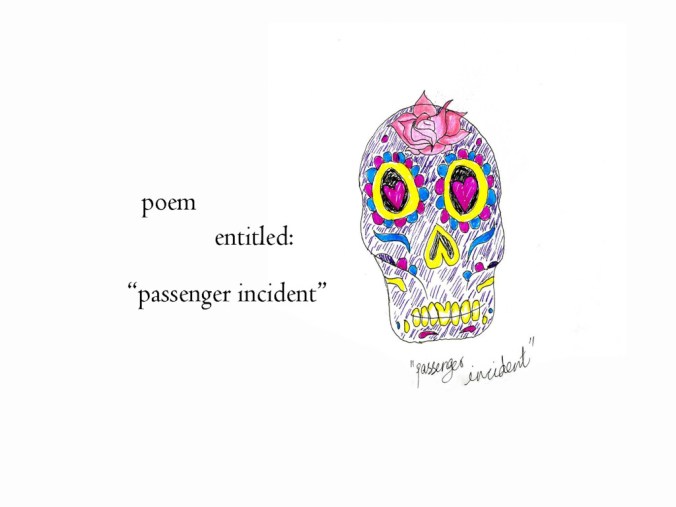
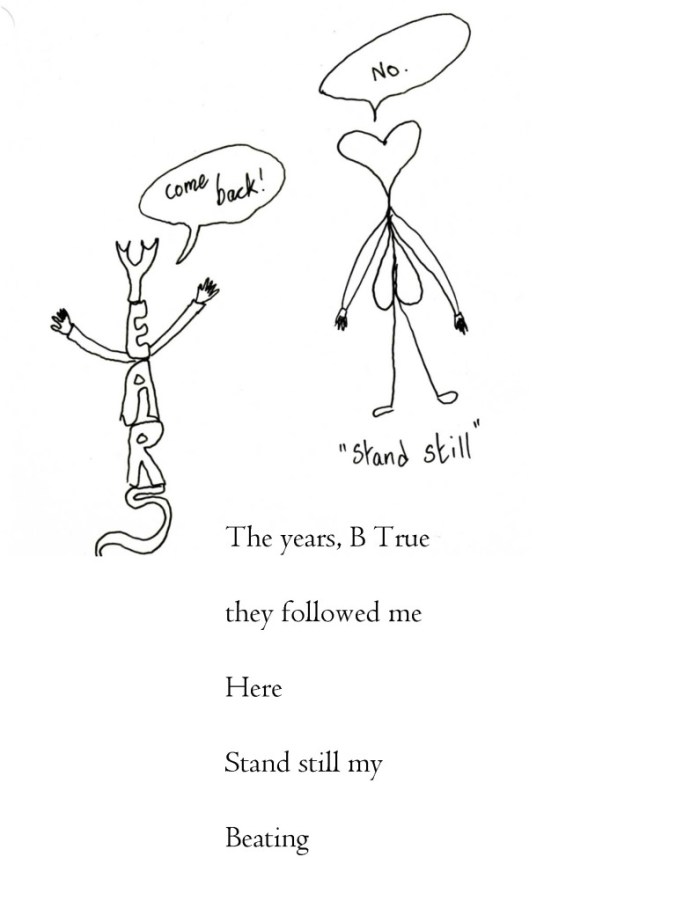
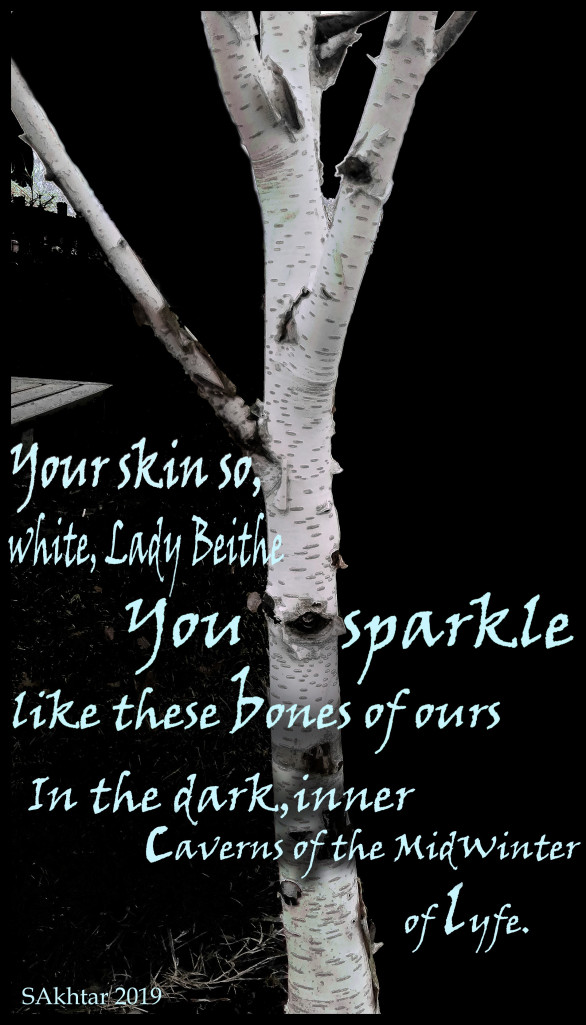
Not Been Seen As Such – Visual Poems by Sascha Aurora Akhtar

robertfredekenter's avatarIceFloe Press


Sascha Aurora Akhtar AkhtarSascha is a trans-race, multi-dimensional, sub rosa poeto/story-bot. She was patented in Pakistan. Had upgrades in pre- 9/11 U.S.A. Was released onto shelves in the U.K. Her roboto-poetics have been widely anthologised and translated into Armenian, Portuguese, Galician, Russian, Dutch and Polish. Anthologies include Cathecism: Poems for Pussy Riot (2012) and the second Out of Everywhere (Reality Street, 2015).  She has also been part of other poetry protests – Against Rape (Peony Moon, 2014), Solidarity Park Poetry – Poems for the Turkish resistance which she was the Editor and Founder of (Ed. 2013).

Her second poetry collection 199 Japanese Names for Japanese Trees (Shearsman UK, 2016), follows on from The Grimoire of Grimalkin (SALT UK, 2007), called ‘ a contemporary masterpiece,’ by the Chair of the Department of French Literature, Thought and Culture at New York University, Phillip John Usher.  Her third, Only Dying Sparkles, an Art/object deck of poems…

View original post 111 more words

.winter acrostic.

Sonja Benskin Mesher's avatarsonja benskin mesher

when the sky chills, we move

inside the house

nesting, curling in feather bedding

till darker days

end

robbing our solitary muse

View original post

.white underwear.

Sonja Benskin Mesher's avatarsonja benskin mesher

he felt uncomfortable in his tidy pink jacket

too hot for the day


he always felt uncomfortable

anxious about doing, wearing

the right thing


he pushed his glasses into a better

position; they had steamed

his shadow long in the lowering sun


though he had the beautiful invitation

had accepted, packed & travelled to his


friend’s place


he felt awakward


brown leather shoes  worn with socks

& regret; his slacks  high, neat at the


waist


he had always fretted over  appearance

what to pack, how to prepare


hours staring the mirror considering his

shape. sticky taping every hair, each dust

mote

from the fabrics

the obsession


he counted the trees, moved to the water

to hail his friend


stood dizzy poolside

his friend was only wearing white pants


he died inside

&


as ever felt uncomforable

View original post 10 more words

.december.

Sonja Benskin Mesher's avatarsonja benskin mesher

december comes with a warning

of glorious festivities

a story; family time

then

uninvited it drifts in that feeling

held with every breath

a morsel, a memory

seeping as stinking water

then

tidal flooding

unwelcomed scum

hidden with paper chains

View original post

4th February is King Frost Day. Celebrate the cold. Here is a short folktale about King Frost

Here is an English version of the tale printed by the Scottish folklorist/anthropologist, Andrew Lang:

There was once upon a time a peasant-woman who had a daughter and a step-daughter. The daughter had her own way in everything, and whatever she did was right in her mother’s eyes; but the poor step-daughter had a hard time. Let her do what she would, she was always blamed, and got small thanks for all the trouble she took; nothing was right, everything wrong; and yet, if the truth were known, the girl was worth her weight in gold–she was so unselfish and good-hearted. But her step-mother did not like her, and the poor girl’s days were spent in weeping; for it was impossible to live peacefully with the woman. The wicked shrew was determined to get rid of the girl by fair means or foul, and kept saying to her father: ‘Send her away, old man; send her away–anywhere so that my eyes sha’n’t be plagued any longer by the sight of her, or my ears tormented by the sound of her voice. Send her out into the fields, and let the cutting frost do for her.’

In vain did the poor old father weep and implore her pity; she was firm, and he dared not gainsay her. So he placed his daughter in a sledge, not even daring to give her a horse-cloth to keep herself warm with, and drove her out on to the bare, open fields, where he kissed her and left her, driving home as fast as he could, that he might not witness her miserable death.

Deserted by her father, the poor girl sat down under a fir-tree at the edge of the forest and began to weep silently. Suddenly she heard a faint sound: it was King Frost springing from tree to tree, and cracking his fingers as he went. At length he reached the fir-tree beneath which she was sitting, and with a crisp crackling sound he alighted beside her, and looked at her lovely face.

‘Well, maiden,’ he snapped out, ‘do you know who I am? I am King Frost, king of the red-noses.’

‘All hail to you, great King!’ answered the girl, in a gentle, trembling voice. ‘Have you come to take me?’

‘Are you warm, maiden?’ he replied.

‘Quite warm, King Frost,’ she answered, though she shivered as she spoke.

Then King Frost stooped down, and bent over the girl, and the crackling sound grew louder, and the air seemed to be full of knives and darts; and again he asked:

‘Maiden, are you warm? Are you warm, you beautiful girl?’

And though her breath was almost frozen on her lips, she whispered gently, ‘Quite warm, King Frost.’

Then King Frost gnashed his teeth, and cracked his fingers, and his eyes sparkled, and the crackling, crisp sound was louder than ever, and for the last time he asked her:

‘Maiden, are you still warm? Are you still warm, little love?’

And the poor girl was so stiff and numb that she could just gasp, ‘Still warm, O King!’

Now her gentle, courteous words and her uncomplaining ways touched King Frost, and he had pity on her, and he wrapped her up in furs, and covered her with blankets, and he fetched a great box, in which were beautiful jewels and a rich robe embroidered in gold and silver. And she put it on, and looked more lovely than ever, and King Frost stepped with her into his sledge, with six white horses.

In the meantime the wicked step-mother was waiting at home for news of the girl’s death, and preparing pancakes for the funeral feast. And she said to her husband: ‘Old man, you had better go out into the fields and find your daughter’s body and bury her.’ Just as the old man was leaving the house the little dog under the table began to bark, saying:

‘YOUR daughter shall live to be your delight; HER daughter shall die this very night.’

‘Hold your tongue, you foolish beast!’ scolded the woman. ‘There’s a pancake for you, but you must say:

“HER daughter shall have much silver and gold; HIS daughter is frozen quite stiff and cold.” ‘

But the doggie ate up the pancake and barked, saying:

‘His daughter shall wear a crown on her head; Her daughter shall die unwooed, unwed.’

Then the old woman tried to coax the doggie with more pancakes and to terrify it with blows, but he barked on, always repeating the same words. And suddenly the door creaked and flew open, and a great heavy chest was pushed in, and behind it came the step-daughter, radiant and beautiful, in a dress all glittering with silver and gold. For a moment the step-mother’s eyes were dazzled. Then she called to her husband: ‘Old man, yoke the horses at once into the sledge, and take my daughter to the same field and leave her on the same spot exactly; ‘and so the old man took the girl and left her beneath the same tree where he had parted from his daughter. In a few minutes King Frost came past, and, looking at the girl, he said:

‘Are you warm, maiden?’

‘What a blind old fool you must be to ask such a question!’ she answered angrily. ‘Can’t you see that my hands and feet are nearly frozen?’

Then King Frost sprang to and fro in front of her, questioning her, and getting only rude, rough words in reply, till at last he got very angry, and cracked his fingers, and gnashed his teeth, and froze her to death.

But in the hut her mother was waiting for her return, and as she grew impatient she said to her husband: ‘Get out the horses, old man, to go and fetch her home; but see that you are careful not to upset the sledge and lose the chest.’

But the doggie beneath the table began to bark, saying:

‘Your daughter is frozen quite stiff and cold, And shall never have a chest full of gold.’

‘Don’t tell such wicked lies!’ scolded the woman. ‘There’s a cake for you; now say:

 “HER daughter shall marry a mighty King.”

At that moment the door flew open, and she rushed out to meet her daughter, and as she took her frozen body in her arms she too was chilled to death.