The Passing World

Brian Lewis's avatarLongbarrow Press

‘That day, on the picket line, I had become aware of the conceptual space of ‘university’ as contested as if for the first time. What was the space we now stood outside of? What was it we were fighting for? We talked of what a university might be. What if it could be free again? What if anyone could go, regardless of prior qualifications? What if students could move freely between disciplines, study for as long or as short as they wanted? What if there were no grades, no awards? What if the purpose of learning was learning and life?’ In a new post for the Longbarrow Blog, artist and writer Emma Bolland reflects on the recent UCU strike, editing the Dostoyevsky Wannabe Cities: Sheffield anthology, and the ‘transformative spaces’ of pub and picket line. Click here to read ‘On Cities, Solidarity, Loss, and Hope’.

‘There are many reasons to…

View original post 446 more words

Womawords Literary eZine Establishes Poet Hall of Fame; Ramingo! moves to digital format and calls for submissions

Jamie Dedes's avatarJamie Dedes' THE POET BY DAY Webzine

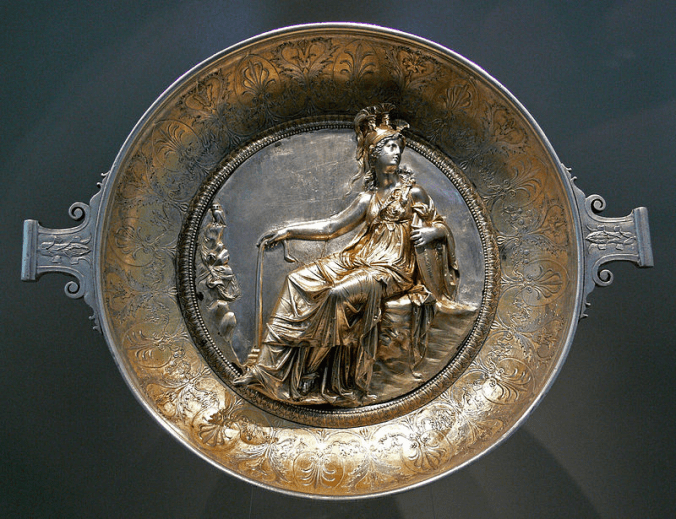
Raised-relief image of Minerva, goddess of wisdom and arts, on a Roman gilt silver bowl, first century BC / Public Domain

“Poems are like dreams: in them you put what you don’t know you know.” Adrienne Rich, Arts of the Possible: Essays and Conversations


Womawords, an international eZine based in Africa, is the creative child of multi-award winning Zimbabwean poet in exile, Mbizo Chirasha.  It was established to support women and girls through the publication of activist poetry by women.  Current projects are Womawords companion publication, Liberating Voices Journal, and the newly founded Womawords Hall of Fame.

The Womawords Hall of Fame seeks to amplify women’s voices through literary and other arts and comprises representatives from around the globe: writers, poets, editors, and mentors among others.

The recently published first 2020 issue of Liberating Voices Journal features profiles of and poems by the women in Womawords Hall of Fame.

1.Doleres Meden, Northern Europe…

View original post 520 more words

Wombwell Rainbow Interviews: Amanda Huggins

Wombwell Rainbow Interviews

I am honoured and privileged that the following writers local, national and international have agreed to be interviewed by me. I gave the writers two options: an emailed list of questions or a more fluid interview via messenger.

The usual ground is covered about motivation, daily routines and work ethic, but some surprises too. Some of these poets you may know, others may be new to you. I hope you enjoy the experience as much as I do.

Amanda Huggins

is the author of the short story collection, Separated From the Sea (Retreat West Books), which received a Special Mention at the 2019 Saboteur Awards.

She has also published a flash fiction collection, Brightly Coloured Horses (Chapeltown Books), and a poetry collection, The Collective Nouns for Birds (Maytree Press). Her short fiction, poetry and travel writing have also appeared in numerous anthologies, literary journals, newspapers and magazines.

In 2018 she was awarded third prize in the Costa Short Story Award, and she has been placed and listed in numerous other competitions, including Fish, Bridport, Bath, InkTears, the Alpine Fellowship Writing Award and the Colm Toibin International Short Story Award. Her travel writing has won several awards, notably the BGTW New Travel Writer of the Year in 2014, and she has twice been a finalist in the Bradt Guides Travel Writer of the Year Award.

Her new short story collection, Scratched Enamel Heart will be published by Retreat West Books in May.

Amanda grew up on the North Yorkshire coast, moved to London in the 1990s, and now lives in West Yorkshire and works full-time in engineering.

https://www.amazon.co.uk/gp/product/1913508005?pf_rd_p=f20e70b1-67f9-48d1-8c78-ba616030b420&pf_rd_r=JAK1D24RE377KP69RZA6 (Link to my poetry book on Amazon)

https://www.amazon.co.uk/Separated-Sea-Amanda-Huggins/dp/1999747267/ref=sr_1_1?keywords=separated+from+the+sea&qid=1583092828&s=books&sr=1-1 (Link to my short story collection on Amazon)

https://maytreepress.co.uk/shop-poetry-book/ (Link to my poetry book on Maytree Press)

https://troutiemcfishtales.blogspot.com/ (Link to my blog)

The Interview

1. What inspired you to write poetry?

I wrote a lot of poetry when I was younger, including for my ‘A’ level creative writing paper. However, when I started writing again around ten years ago I concentrated exclusively on short stories and travel writing. Then a couple of years ago I started to take a serious interest in poetry again, and I had ideas for a handful of new poems. I had no real intention of writing a collection at that stage, but gradually it began to take shape.

2. Who introduced you to poetry?

I learned to read long before I started school, and my parents encouraged me to read poetry as well as prose. The first book of poetry I was given was Now We Are Six by A A Milne. My real love for poetry started at sixth form college, and I started buying all kinds of poetry books – particularly things I hadn’t read before, such as post-war Japanese poetry. I gradually amassed quite a large poetry library and I’m still adding to it.

3. How aware were you of the dominating presence of older poets?

I was aware of their domination as a teenager, but when performance poets such as John Cooper Clarke started to appear at music festivals things began to change.

4. What is your daily writing routine?

I have a full time job in engineering, so I write for an hour or two most evenings and regularly at weekends. I also go away a couple of times a year to a holiday cottage in Northumberland where I spend at least half my time writing.

5. What motivates you to write?

I have always tried to work to deadlines as that keeps me focussed and motivated. When I started writing again I sent a travel article to a national newspaper every week until I got published! I find competition deadlines a good motivator, and my own personal goals usually have a self-imposed deadline.

6. How do the writers you read when you were young influence you today?

I’m not sure that the writers I read when I was very young still influence me today – as I used to read a lot of crime fiction and horror as a young teenager, and I don’t read or write either of those genres today. However I am still influenced by the poets I read as a teenager, and by writers such as Kazuo Ishiguro, Hemingway, Patti Smith, Steinbeck.

7. Who of today’s writers do you admire the most and why?

I read a lot of short stories, and the contemporary collections on my shelves include books by William Trevor, Tessa Hadley, Helen Simpson, Helen Dunmore, A L Kennedy, Wells Tower, Stuart Evers, Miranda July, Yoko Ogawa, K J Orr, Taeko Kono, Haruki Murakami, Richard Ford, Annie Proulx, Angela Readman, and A M Homes.

I’m also a huge admirer of Japanese novellas and short stories. Japanese literature is often poetic, quiet, unhurried, and that way of writing suits the short story form. Sparing and effective use of language, subtlety and nuance, a certain elusiveness, all demand that the stories are read slowly, and that they are re-read and savoured. These are the qualities that draw me back again and again, and the tales of yearning and loss, of not quite belonging, all resonate with the themes I explore in my own fiction. I really like Murakami’s short stories, and particularly enjoyed his recent collection, Men Without Women. Murakami is renowned for his surreal writing, yet I prefer his stories when he writes of single men and smoky bars, lonely hearts and enigmatic women. I also love the short stories and novels of Yoko Ogawa. Like Murakami, her writing is often surreal, and can be unsettling and even grotesque. She is adept at self-observation and dissecting women’s roles in Japanese society.

For fresh contemporary writing, I recommend Miranda July. Her stories are unsettling, quirky, alternately grounded and surreal, oddball, off-beat, skewed. Yet they betray vulnerability, and are both raw and poignant.

8. What would you say to someone who asked you “How do you become a writer?”

Read, read, and read some more. Practice your craft, hone your skills, then submit, submit, submit. You’ll be rejected over and over again, but persistence pays. Take constructive criticism on board – it will sting at first, but 95% of it is usually right.

9. Tell me about the writing projects you have on at the moment.

I‘m very busy with a number of projects right now, but most of them are at the editing stage. My second short story collection, Scratched Enamel Heart, comes out this May with Retreat West Books, so I’ll have the final edits for that any day. In the meanwhile I’m editing my first novella, and I’ll have some exciting news about that soon! My second novella is currently looking for a home, but I do have some irons in the fire – and I have an exciting idea for a new book! I am continuing to write poetry for competitions and to submit to journals and anthologies, but it will be a while before I think about a second collection. My poem, Songs of Leaving, will appear in the next Maytree Press anthology, Green Fields: Sorted for Poems, which is out this April.

Coping with Rejection: How Not to be Your Own Judge, Jury and Executioner

wendycatpratt's avatarWendy Pratt


I love a good stock photo. Look at this guy, he has evidently been turned down by the Arts Council for the seventh time and now has to find a way to fund the project he’s been planning for a year. Or perhaps he’s just had the manuscript he’s spent six years writing turned down by the publisher he felt it was a perfect fit for. Or maybe the poems he thought were his best, his absolute best, the best thing he’s ever written, have been turned down and returned to him with generic rejection in which they got his name wrong and called him Farty rather than Marty.

Oh, the pain.

I have now been rejected more times than I can shake a stick at, and readers, I can really shake a stick.

People will tell you that rejection is just part and parcel of being a writer…

View original post 1,095 more words

Teithio /Journeys by Matthew M.C. Smith

Matthew’s “Underland”

robertfredekenter's avatarIceFloe Press

Cefnwlad / Hinterland

He stands at dusk in tyre tracks, sump-destroying ruts; the lane between the terraced houses of Welsh stone leading to waste ground. Grass is hip-high and dandelion seeds lift off, take flight freely. He walks among the wreckage of abandoned cars.

The cool of evening envelops him. A day of scratches, scrams and stings. Bramble cuts raise staple marks on bare skin, on his ripped stained shorts, new maps of blackberry and grass in towelling. The haze of a bonfire permeates long gardens, drifting to shrouded trees; thickets of unclaimed land. Birds pipe down; rooks, crows and blackbirds settle on coiled boughs.

Evening’s pink blush engraves the sky with electric-orange. Shinning up onto the rainbow-rusted car bonnet, he turns to the sun; it bleeds out battery acid over the pulsing artery of the low west highway. From the distant hills above Nazareth chapel, the lights of villages…

View original post 2,297 more words

. march 2020 news.

sonja is outstanding

Sonja Benskin Mesher's avatarsonja benskin mesher

:: the year moves forward ::

Welsh Enterprise Award

Nominated again for 2020

Honoured to be  awarded Best Abstract Landscape Artist 2019.

thumbnail_16cjof8c575b0237942458a69a21feb3bfcd4

***540359_487025691325004_95568675_n

Y Plas, Machynlleth

.littled open secondary studio space.

come see.

message me.

shot_1582386630312

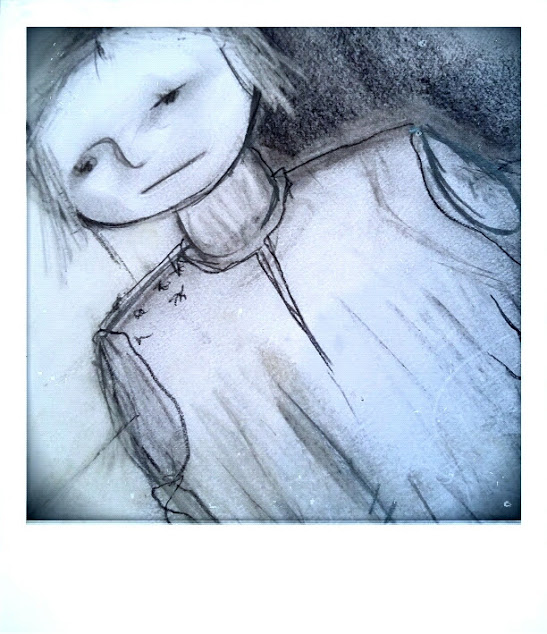
..joan of arc..

drawing

The Studio. Llanelltyd.

Visual, text , installations and international mail art work continues…

. hand made in wales.

shot_1582375391784

..small drawing..

A Book about Death. The Phenomena. The News.

~ten years~

10th Anniversary (and possibly final) Edition of ABAD Exhibition on Long Island, NY in 2019. The Islip Art Museum in East Islip, NY

Work also included in Michael Rose exhibition in Japan at The New Art Museum in December 2019.

BREAKING NEWS!
THE WHOLE OF THIS 10th ANNIVERSARY EXHIBITION HAS BEEN REQUESTED BY A MUSEUM IN FRANCE AND BY THE ISLIP ART MUSEUM FOR INCLUSION IN THEIR PERMANENT COLLECTIONS.

A SET  TO THE MOMA NY TO STAND WITH THE 2009 SHOW…

View original post 12 more words

Wombwell Rainbow Interviews: Chrissie Gittins

Wombwell Rainbow Interviews

I am honoured and privileged that the following writers local, national and international have agreed to be interviewed by me. I gave the writers two options: an emailed list of questions or a more fluid interview via messenger.

The usual ground is covered about motivation, daily routines and work ethic, but some surprises too. Some of these poets you may know, others may be new to you. I hope you enjoy the experience as much as I do.

Chrissie Gittins’

poetry collections are Armature (Arc, 2003), I’ll Dress One Night as You (Salt, 2009) and Sharp Hills (Indigo Dreams, 2019). Her pamphlets are A Path of Rice (Dagger Press, 1997), Pilot (Dagger Press, 2001) and Professor Heger’s Daughter (Paekakriki Press, 2013).

Of her five children’s poetry collections three were Choices for the Poetry Book Society Children’s Poetry Bookshelf and two were shortlisted for the CLiPPA Poetry Award. Her new and collected children’s poems Stars in Jars (Bloomsbury, 2014) is a Scottish Poetry Library Recommendation. In 2014 she was a finalist in the first Manchester Children’s Literature Prize with a portfolio of new poems. She appeared on BBC Countryfile with her fifth children’s poetry collection Adder, Bluebell, Lobster (Otter-Barry Books, 2016) which was also longlisted for the North Somerset Teachers’ Book Award.

Chrissie’s four plays broadcast on BBC R4 starred Patricia Routledge, Jan Ravens and Bernard Cribbins. Her second short story collection Between Here and Knitwear (Unthank Books) was shortlisted for the Saboteur Awards. Helen Dunmore chose it as one of her top two collections of 2015.

Chrissie has received two Arts Council Grants for the Arts and an Authors’ Foundation Award. She is represented in the British Council Writers’ Directory and is a Hawthornden Fellow. She also features on the Poetry Archive and is a National Poetry Day Ambassador.

www.chrissiegittins.co.uk

The Interview

1. What inspired you to write poetry?

My mother gave me a love of language and story. She was a great raconteur and would spin stories over school holiday dinner times from a whisp of memory. We weren’t a bookish household so I haunted my local library. My memory of poetry at primary school is reading John Keats’ ‘Meg Merrilies’. At secondary school we would be set poem-writing homework. Our wonderful English teacher – Mrs Marshall – read out to the class any poems we’d written which she liked. It was a very proud moment if she read your poem. The school magazine published poems so that was also an incentive. It’s where my first published poem appeared.

2. Who introduced you to poetry?

My English teachers at school. We would spend a whole lesson dismantling a poem then putting it back together. I began to appreciate that those small blocks of text could be packed with intensity, wonder and surprise.

3. How aware were you of the dominating presence of older poets?

The First World War poets and Gerald Manley Hopkins made an early, but not a dominating, impression. I studied English Literature as part of my degree but it was only after I’d completed a second first degree in Fine Art that I began to take writing seriously. I sought out courses with writers I admire at City Lit and with the Arvon Foundation, with tutors such as Carol Ann Duffy, Kit Wright, Alison Fell, Philip Gross and Liz Lochhead. So they were a supportive presence.

4. What is your daily writing routine?

On home-based days I work in the morning, whether it’s first drafts, editing or research. This often stretches into afternoons.

5. What motivates you to write?
A word or a phrase or an idea which won’t go away, a desire to shape my experience of the world into words.

6. What is your work ethic?

Pretty strong. I’ve been freelance for over 20 years.

7. How do the writers you read when you were young influence you today?

They can reverberate through my writing. I have a poem in my recent collection – ‘Loquats for the South Circular’ – which echoes Tony Harrison’s ‘A Kumquat for John Keats’, which in turn replies to Keats’ ‘Ode to Melancholy’. For my children’s poetry I still look to Spike Milligan, Charles Causley, Ted Hughes and Christina Rossetti.

8. Who of today’s writers do you admire the most and why?

I recently read Jane Clarke’s collection ‘When the Tree Falls’ which I liked very much and is full of compassion, delicacy, dignity and grace. I’m also very fond of Sinead Morrissey’s poems with their formal ingenuity and taut imagery. Also Paul Durcan for his robust storytelling and hilarity, Moniza Alvi for her tenderness and surrealism, and Jean Atkin for her ability to walk us vividly through historic and contemporary landscapes. As I write poetry for children as well as adults I’m also interested in poets who do the same.

9. What would you say to someone who asked you “How do you become a writer?”

I’d say read as much as you can – poetry, fiction, non-fiction, newspapers – you never know where your next idea will come from. Go to museums, see plays and films – oil your creative joints. I find notebooks useful. It takes time to find your voice and to hone your craft, be prepared for the long haul.

11. Tell me about the writing projects you have on at the moment.

I’m promoting my latest adult collection ‘Sharp Hills’, putting together a children’s poetry collection, and writing more poems and short stories.

Hate Has No Restricted Zone – A Sonnet, Video & Statement by Kristin Garth with a drawing by Cathy Daley

robertfredekenter's avatarIceFloe Press

Hate Has No Restricted Zone


Coffeeshop in which you write is across
the street from where, so many nights, five years
you unbutton a white Oxford and toss
it on a backlit stage. Five years of cheers
escaping father’s rage necessitates
you enter through a parking lot that hurts

post twenty years of pleated skirts. Law states
strip clubs cannot open where there’s a church.
Converse is not true, so these Christians rent

a building to scream at you, “Burn in hell.
Whore. Jezebel.” Epithets your parents

used for a body they abused you sell

to lock it safe inside a home your own.
Hate in this town has no restricted zone.

Statement

I had a poem brewing in my brain that dealt with geography as an aggressive state.  When I was stripping, which I did at first to escape abuse, a church rented the property across the street from…

View original post 180 more words

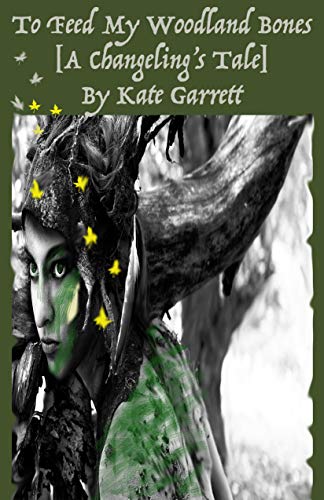
The Wombwell Rainbow Book Interviews: Kate Garrett’s “To Feed My Woodland Bones [ A Changeling’s Tale ]

Kate Garrett To Feed My Woodland Bones

Kate Garrett

is a writer, editor, mama, sometime drummer, and folklore obsessive who often haunts 465-year-old houses (as a history and heritage volunteer). Her work is widely published online and in print, and has been nominated for the Pushcart Prize, four times for Best of the Net, and longlisted for a Saboteur Award. She has also performed at events and festivals around the UK since 2011. She is the author of several pamphlets, most recently To Feed My Woodland Bones (Animal Heart Press, 2019), and her first full-length collection The saint of milk and flames was published in 2019 by Rhythm & Bones Press. Her next pamphlet, A View from the Phantasmagoria, will be published by Rhythm & Bones Press in October 2020. Born and raised in rural southern Ohio, Kate moved to England in 1999, where she still lives halfway up a hillside in Sheffield. kategarrettwrites.co.uk

Link to her 2018 interview with The Wombwell Rainbow:

https://thewombwellrainbow.com/2018/10/06/wombwell-rainbow-interviews-kate-garrett/

The Interview

1. How did you come upon the marvellous idea of portraying otherness through elfness?

The first poem I wrote in this sequence was ‘Changeling’ – it came to me years before the others, in about 2012, when I was still working on my BA in creative writing at Sheffield Hallam. I’d been thinking a lot about my childhood for various reasons, and I’d felt like a changeling for a long time by then. People have always said ‘you look like an elf/faery/pixie/etc’ to me and this idea of being switched at birth with an otherworldly creature and being rejected by the human parents really resonated with me for all sorts of reasons: surviving a troubled childhood, being autistic, being queer. In 2018 I wrote ‘An elf in awe of her human lover’ which is a love poem to my husband for accepting everything about me, all of the otherness, inside and out. Then I just ran with the idea of exploring largely unexplored parts of my life through a story of a changeling growing up and slowly becoming more human

1.1. And becoming more human you ask indirectly what makes us human?

Yes, I suppose that’s true. And I think being neurodivergent and an abuse survivor with c-ptsd makes a person think even more about what it means to be human – because people with these kinds of conditions are forever trying to make it all work with our neurological differences and/or our heightened anxieties. There are a lot of things that qualify as human, and it’s certainly not just social niceties and fitting in, but things like love, joy, grief, wonder, anger – all the experiences and emotions that make up our lives. Those are all the important bits, and the changeling discovers these things are what matter the most in her own life.

1.2. Accepting her elfness too? You seem to be saying otherness is always magical.

She’s definitely accepting of herself as she is – the elf side as well as the human side. She finds a way to successfully be both, and she’s much more content with that synthesis. And no, I don’t really think of otherness as being particularly magical, as in, a superpower or something – it’s just different. I think the world of faeries or elves would be something we don’t quite understand, and to us the legends and lore about these beings all certainly seem magical, but to them it would all be very mundane, wouldn’t it? I think it’s about the perspective on what is ‘average’ or ‘normal’ or ‘standard’ – it’s a sliding scale!

2. A stranger in a strange land that gradually becomes familiar. Motherhood is also explored delicately, as seeing children as different from their parents. Growing up as the difference between parent and child becoming more pronounced.

That’s definitely part of it. Throughout my own childhood I was often not treated as an individual, a person with my own thoughts and feelings. As a mother, I have always encouraged my kids to be themselves, think for themselves, have their own interests… it seems to be working out fine. The changeling in the poems becomes a better mother through understanding how difficult it was to be someone’s child.

3. Also hints the idea of an immigrant or refugee finding a home in a foreign land.

That’s also definitely me! I was born in Ohio but moved to the UK at 19, and have been here ever since – over 20 years now. But strangely enough that didn’t really occur to me when I was writing this book. I wish I could say it had, because that also makes sense in some ways – but the cultural change between Ohio and England felt natural and right, where all the other adjusting I’ve done in my life has been more difficult.

4. Your poems don’t rhyme.

Well, they don’t rhyme on the ends of lines (and some are prose poems that don’t have typical “lines” at all)… they do rhyme internally, however, or else they have sound patterns running through them, like half rhymes or alliteration. Sound is a very important aspect of poetry for me, I work with it very deliberately.

4.1. Like a sound sculpture?

That’s a great way of putting it – especially since my writing process usually involves carving something decent out of the initial formless splodge of ideas and words…

5. The title is “To Feed My Woodland Bones”, but you live in a city. Is this a tale of a move from woodland to an urbanised environment?

Well, I live in a city with a lot of trees, but all the same, I haven’t always lived in a city – and certainly didn’t when the events in the poem ‘An elf turns inside out for the dragon’ (where the title line is found) transpired. I grew up in a rural area, and the more pleasant memories from my childhood involve trees and woods – you couldn’t keep me away from them! The title is less about a move from one place to another, and more about a certain type of place being part of who I am (down to my bones, you could say), and that’s true wherever I am.

6. A psychological place.

Sort of. I did mean a type of physical environment – in this case specifically the woodlands, forests, trees, wherever they might be (the British ones of my adult life or the American ones of my childhood) have helped make me who I am. Other natural settings have too – bodies of water, mostly, which comes up in this book and other things I’ve written. But most of us have deep relationships with the landscapes in our lives whether we are aware of it or not, so I guess that translates as psychological, too. And what it represents would depend on the type of environment and what it means to us.

7. Repetition of lines is used to great effect especially in the really positive final poem “Pixie-led”, the line “in the bottom of the glass” as if you are writing poems as spells.

Thank you – ‘Pixie-led’ was definitely supposed to be spell-like, disorienting, and enchanting, because to be ‘pixie led’ is to lose your way on the moors (this legend originates specifically from Dartmoor in the southwest of England, I believe) and of course that’s meant to be confusion caused by faery folk. The last poem is inspired by getting engaged to my now-husband, so again the changeling is disoriented and enchanted by the human – I invert the lore a lot in this way throughout the sequence. And as for poetry as a spell, I do think as an art form it is working a practical sort of magic, whoever the poet is – we have to pull images seemingly out of the air, get the ideas and feelings across in just-so ways. Art is magic and vice versa.