Wombwell Rainbow Interviews: Kim Fahner

Wombwell Rainbow Interviews

I am honoured and privileged that the following writers local, national and international have agreed to be interviewed by me. I gave the writers two options: an emailed list of questions or a more fluid interview via messenger.
The usual ground is covered about motivation, daily routines and work ethic, but some surprises too. Some of these poets you may know, others may be new to you. I hope you enjoy the experience as much as I do.

coverthesewings[48298]-PageResBackup-1-1

Kim Fahner

lives and writes in Sudbury, Ontario, Canada. She has published five books of poetry, You Must Imagine The Cold Here (1997), braille on water (2001), The Narcoleptic Madonna (2012), Some Other Sky (2017), & These Wings (2019) .  A member of the Writers’ Union of Canada, the League of Canadian Poets, and a supporting member of the Playwrights Guild of Canada, Kim was Poet Laureate for the City of Greater Sudbury from 2016-18.

She loves trees, backyard swings, Irish music, yoga, lake swimming, ceili dances, walking by water, witty conversation, hiking, canoeing, and silent spaces out in the Northern woods.

In March 2019, Kim’s poem, “They Shall Have Homes, 1928,” was awarded an Honourable Mention in the League of Canadian Poets’ National Broadsheet Competition.

Her blog, which she calls The Republic of Poetry, www.kimfahner.wordpress.com

Her author site is found at www.kimfahner.com

The Interview

1. When and why did you start writing poetry?

I started writing poetry when I was a teenager. It was mostly bad poetry at that point, largely because I hadn’t read enough poetry to know what decent poetry was all about. I began to write poems more seriously when I took an undergraduate degree in English at Laurentian University in Sudbury, Ontario, Canada. I took a third year Modern Poetry course and the professor was Laurence Steven. He talked about the importance of being a ‘traveller’ and an ‘explorer’ rather than a ‘tourist’ when it came to journeying into the realm of poetry. In that class, I fell in love with the work of W.B. Yeats and Seamus Heaney, and they’re two of my most constant companions and influences. Soon enough, I was writing my own poems and being asked to read at university open mic nights. That was in the early 1990s.

As to why I write poetry, it has always been the way in which I see the world. Images and lines come into my head and then I need to write them down. I am constantly aware of the sensory (and sensual) details of what I experience, and I’ve been combining my poems with photographs I’ve been taking in the last few years, so this just further cements my view that having poetic tendencies is about being mindful and aware of your surroundings, emotions, and experiences. In the last few years, I can see a photo and that can quickly serve as a place to begin writing a poem, so ekphrastic poetry is one of my favourite areas to delve into creatively. All of life is fodder for some kind of poem, at some point in time.

2. Who introduced you to poetry?

My dad worked in mining when I was very young, but had a deep love of Shakespeare. Some of my earliest memories are of him reciting pieces of dialogue from Macbeth. He loved to recite all of the witches’ voices and act them out for us when my sister and I were younger. The poem he most loved, though, is a Canadian classic that was written by a poet named Robert Service. Even in the weeks leading up to his death, my dad would recite parts of “The Cremation of Sam McGee” with perfect recollection. It’s a very long poem, and it’s known by most Canadians. Service was born in England, but traveled in the Yukon and other parts of northern Canada.

The other two people who really influenced my love of W.B. Yeats’s poetry were my great-aunts, Norah and Maureen Kelly. I still remember Norah reading me “The Lake Isle of Innisfree” when I was young, and telling me stories of Ireland and family history. That led to me doing an undergraduate thesis on Yeats’s work, and a graduate thesis on Seamus Heaney’s bog poems.

My grandmother, Alice Ennis, was the person who first gave me a lined journal to write in when I was just a teenager. She knew, before I even did it seemed, that I was a writer at heart and needed a place to write poems down.

2.1 What is it about Yeats and Heaney that you enjoy and why?

I love Yeats because of how he wove old stories and legends into his work. Some of my favourite pieces are the ones of the faeries. When I did my thesis in my final undergraduate year at Laurentian University in Sudbury, I wrote about Yeats and his various motifs and patterns. His work was so complex and fascinating to me, and it always will be.

The following year, I completed my Master’s degree in English Literature at Carleton University in Ottawa. My graduate thesis work focused on Seamus Heaney’s bog poems, particularly in terms of how they reflected the political tensions that existed between the Republic of Ireland and Northern Ireland. I considered them in reference to Ben Shahn’s The Shape of Content, in terms of how artist and poet are so closely woven. This would, before I even knew it, set up my love of ekphrastic poetry years before I even began to write it myself.

Yeats was the gateway to other Irish poets like Patrick Kavanagh, Paul Muldoon, John O’Donohue, Eavan Boland, Eilean Ni Chuilleanain, and Seamus Heaney. What I love about Heaney’s work is the way he uses language so precisely. When you read his work out loud, it sings. I also love how he weaves landscape so vividly into his work, so that it comes alive in my mind’s eye.

I met him in a pub in Sligo back in the summer of 2012 while I was there writing, and I was so shocked that I came face-to-face with him that I was gobsmacked. I said hello, and he smiled and said hello back, but I felt my knees wobble and couldn’t really speak when I really ought to have told him how much his work meant to me.  He was, for me, a sort of poetic father. When he died a year later, my heart broke. His work, for me, is a poetic touchstone. I read his poems regularly and always learn how to be a better poet.

3. What is your daily writing routine?

I don’t sleep well, so after a night of sporadic fits and spurts of some kind of sleep, I get up fairly early–around 5 and sometimes earlier. I tend to go walking every morning as I live a block or two away from Ramsey Lake, which is the lake that’s in the centre of Sudbury. I spend up to about forty-five minutes walking there with my dog, and then I sit for a while and look at the lake.

I’m drawn to water, and to sky, and to birds and trees, so this is the best way for me to start my day. It washes clean the slate for me, mentally and physically. Then, I come home and begin whatever project I’m working on. Often, I’ll try to read quietly for about an hour in the morning. If I’m working on a play, I tend to just read plays so that I can get a hold of the language, structure, and cadence of how a play moves on stage. I read poetry every day, mostly because it’s how I think about, and see, the world around me.

If I’m working on an editing project for another author, I’ll set aside a morning or afternoon for that. I only work on projects like that for a couple of hours at a time, mostly because I am fastidious in editing people’s writing and want to keep my mind (and eyes!) sharp.

In terms of how my day is structured, I tend to follow my intuition. One day, I may work on poetry book reviews for a couple of literary journals here in Canada. Another day, I may spend three hours on my new novel, creating new scenes, as well as spending some time incorporating research. On other days, I’m working on structuring my next manuscript of poetry, shuffling poems into new sequences and orders, as well as writing new ones.

If I get a bit ‘stuck’ on one writing project, I shift to another. This just allows me to cleanse my writing palate a bit and take a break from being frustrated with working through something in my head. I tend to get ideas for collaborative projects when I’m out walking. I also get ideas when I’m dancing. I dance a lot throughout the year. My favourite thing to do, though, is swim in local lakes during summer. I always feel as if I’m swimming into a painting and the natural landscape plays a key role in my work as a writer. For the most part, though, being out in nature, hiking or walking through the Northern Ontario bush, is usually what gets my mind moving in terms of new writing ideas and projects.

4. What motivates you to write?

I write ekphrastic poetry, so I will often visit art galleries for inspiration. This week, I went to see a Maud Lewis exhibit at the McMichael Gallery in Kleinburg, Ontario. She was a folk artist from Nova Scotia who died the year I was born. I’ve loved her work for years. After seeing the exhibit, I wrote a blog reflection, but I know that I now need to write a poetic sequence about her work. I’ve been inspired by the work of artists like Georgia O’Keefe, Frida Kahlo, Mary Pratt, and Alex Colville. I’m curious, in particular, about how women work as visual artists, and also how they managed their lives and relationships, in terms of balancing love with creativity.

I like the word ‘inspire’ more than ‘motivate,’ to be honest. I don’t sit around waiting for an elusive muse to hover down to earth, but I do get a lot of ideas from listening to other people’s stories about their lives. Often, I’ll ‘borrow’ lines from friends. I’m often inspired by photos that friends take, and I’ve found (in the last few years) that images inspire me to write poems. I can’t just write a poem about anything off the cuff. I’ll see something, or a phrase or line will pop into my head, and I’ll sit down to write a poem. People live poetically, but I find they aren’t even really aware of it, so it’s sort of magic when I can see the poem inside a photo they’ve taken.

I don’t do it often, but I’ll sometimes gift my closest friends with poems…and that, to me, is a gift of the purest sort of energy. It can’t be contrived or forecasted. It’s magic. I hope they feel the same way when I give them the gift of a poem, but I never really know…and probably don’t need to know…if the intention behind the creation is clear and pure…and it always is.

In terms of writing blogs, I’m motivated to speak when I feel something is unjust. Something gets inside me, a sort of sparkly energy of an idea that needs to be expressed, and then I write an entry. The same sort of energy happens inside my body when I write plays. For me, plays are constantly dynamic and alive. I love the collaborative aspect of writing a play. You have a dramaturge who makes you think twice about why you are writing what you are writing, and asks you to consider how characters will behave on stage. I’ve learned a great deal about plot and dialogue from having written two plays in the last couple of years. I’m still a novice, but I love that I feel like an explorer in my own head and heart. Then, when actors read the words dramatically for a staged reading or workshop, I often find myself sitting very still and losing track of my hands in my lap because I’m in a bit of shock. To hear your written words come to life, as actors give them a real physicality, is one of the most magical things I’ve ever experienced as a writer. I’m hooked on writing plays now, even though I know I have a lot to learn in writing for this genre.

With writing novels and short stories, I’m motivated by ideas that seem to arrive in strange ways. Right now, I’m working on a novel about the Morrigan legend in Ireland. I have always been drawn to corvids (crows, ravens, and magpies in particular), but to add in the supernatural aspect of the Morrigan story makes me want to write a novel about how a woman evolves in her 40s, which is where I’m at now in my life. I don’t ever doubt my creative impulses, but I’m cautious in my day-to-day life. I’m quite private and shy with people I’m not close to, and I’m guarded, I think, but in my creative work, some wilder part of myself is given permission to emerge, whether in a phrase or line of poetry, or in the guise of a character

5. How do the writers you read when you were young influence you today?

I don’t know that they do, specifically. My parents were readers, so I always remember them reading at night. They modelled good reading for me, and when I started writing, they were puzzled, but supportive. They were working middle-class people, so my being a poet was a steep learning curve for them. Never mind trying to raise a child, but try raising an artistic and introverted child.

I read more fiction before I began to read and write poems seriously in my late teens and twenties. My first loves, in terms of fiction, were Jane Eyre by Charlotte Bronte, Great Expectations by Charles Dickens, and I read whatever was the school-assigned book list every year with a fierce passion. For a time, in my early teens, I fell in love with dragons and read through all of Anne McCaffrey’s Dragonriders of Pern series. I also loved Tolkien’s The Hobbit, and The Lord of the Rings. Along the same lines, I fell into the C.S. Lewis Narnia books. I read about faeries and Irish legends as I grew up, curious about my family history on my mum’s side. My great-aunts fuelled that interest, and they had a number of great books in their front room bookcase.

I feel that I’ve always read widely, across genres. All of that somehow mixes together to influence my style of writing, which varies according to genre. Funnily enough, though, my plays are full of poetic imagery and motifs, so poetry is always the bedrock upon which I build my stories, regardless of whether they come in stanzas, or scenes, or chapters.

 6. Who of today’s writers do you admire the most and why?

Right now, I’m reading David Chariandy’s novel, Brother, and I love how beautifully written it is, and how it’s so evocative of a particular time and place. He writes of how gun violence can change lives and families in an instant. It shatters you when you read it, and it’s an important and powerful read.

I also recently read Newfoundland based writer Joan Clark’s An Audience of Chairs back in June, a novel that is set in Cape Breton, Nova Scotia. It struck me because I had an episode of major depressive disorder about a decade ago, and I was impressed that Clark deals so realistically and compassionately with a protagonist who struggles with mental health issues.

Beyond that, I read a lot of Indigenous literature, so I love work by First Nations prose writers and poets like Richard Van Camp, Richard Wagamese, Greg Scofield, Liz Howard, Cherie Dimaline, and Robin Wall Kimmerer. Wagamese’s book, Embers: One Ojibway’s Meditations is a book I return to every week. It gives me guidance as a writer and person.

When I’m writing plays, I read a lot of plays at the same time, to keep my mind within that particular genre as I write.  My favourite Canadian playwrights are Hannah Moscovitch, Kate Hennig, Hiro Kanagawa and Jordan Tannahill. I’ve learned how to write better dialogue (in stories, novels, and plays) because I read and study their work. I’m still a fledgling playwright, but two of my plays, Sparrows Over Slag and Letters to the Man in the Moon, have had staged readings in a local theatre festival called PlaySmelter over the last two years. I’d like to see one, or both, produced for the stage, but I know that will take time and I’m uncertain of how to move forward in this particular genre.

I read widely, and I like following up on friends’ suggestions of books I might like to read. Recently, I’ve come to Robin Wall Kimmerer, Graham Greene, Joan Didion, and Kathy Page because of people recommending certain books, and I’m grateful for that expansion of my reading life.

Two writers who have been very important mentors to me are Timothy Findley and Lawrence Hill. I love their novels, and that’s why I applied to different literary retreats to work with them as writing mentors. Their books tell vivid and interesting stories, and their characters always feel so real, so human to me. I admire the way neither of them never really seemed to get caught up in the ego game of Canadian Literature. They both have created work that is beautifully crafted, and then let it speak for itself. Both were important teachers for me and helped me to improve as a writer.

In terms of current poets whose work I admire, I had the real pleasure of working with John Glenday and Jen Hadfield as mentors at Moniack Mhor, Scotland’s Creative Writing Centre, in the summer of 2016. I admire their poems a great deal, and I learned a lot from them in terms of how to make my own poetry much stronger. I also learned a great deal from Seattle-based poet, Susan Rich, at an ekphrastic poetry writing retreat at Anam Cara Writers’ and Artists’ Retreat on the Beara Peninsula, County Cork, Ireland. I also love the work of Edmonton-based poet, Alice Major. She was a great supporter of me when I became Poet Laureate of Greater Sudbury in 2016, encouraging me as someone who had been a laureate in her own city. She offered me sensible advice that helped me make it through my term as laureate relatively unscathed.

7. What would you say to someone who asked you “How do you become a writer?”

I think that, to be a “good writer,” you need to read quite a lot of books. You need to immerse yourself in books you like, as well as ones you might not like, or ones you might not know about. I often have friends (writers and non-writers) suggesting books that I should read, and I’ve come to new authors that way.

I also think that writers need to observe things carefully. Back in my late twenties, I worked with Timothy Findley through the Humber School for Writers on a collection of short stories that I was writing at the time. The best piece of advice that he gave me was that I should be out in public places and that I should take the time to listen carefully. This is, in effect, all about taking the time to eavesdrop. His suggestion was meant to help me improve my dialogue, and it did help. Now, as I write plays, I am listening never  more closely to how people speak to one another, and to the subtext that is heavily hinted at in written communication, or in body language, or even in conversation. The places where the silences live tend to be ripe, full of things to write about.

What I learned from Larry Hill, when I worked with him at the Banff Centre for Arts and Creativity in April 2016, was that I should not be afraid to mine the stories of my own life. I had been worried about that, mostly as my first novel is based on a rumoured family story that stretches back a couple of generations. I took his advice and wrote the novel. I think it’s a good story, but I know I’m biased.  I’ve been blessed to have very good mentors over my time as an emerging and established writer. I love to learn how to be a better writer, in whatever genre I’m working.

The other thing I would say is that you need to develop a writing practice. As you brush and floss each day, I think writers who feel compelled to write know that they must fashion a space within which to write. This doesn’t mean a physical space, per se, as I’ve learned this last year. Instead, it means setting your mind and intention to a task and making progress each day. I don’t believe in “writer’s block.” I believe in a daily practice, like yoga or meditation, for example.

I studied literature at university, attaining an undergraduate and a graduate degree in English literature. This allowed me to place myself within a history of writing and reading. That academic training rooted me in how to recognize the various “parts” of a writing practice. I still read as critically now, learning from the authors whose work I read.

I think, too, it helps if you’re an empath. You can imagine how people feel. You can feel how people feel. All of this helps you to write characters who are true to life and believable.

8. Tell me what inspired “These Wings”?

Most of These Wings was written in a tiny town in Southwestern Ontario called Kingsville, which sits in Essex County just outside of Windsor. I fell in love with the landscape—with Lake Erie, the hiking trails and conservation areas, Point Pelee National Park, the gorgeous Carolinian trees, and the birds (especially the barn swallows and red-winged blackbirds)—when I first went to a writing retreat on Pelee Island that featured a workshop with Margaret Atwood back in May 2016. I went back to work on my novel at the Woodbridge Farm in Kingsville in August 2016, and then rented a cottage called the Bird House Cottage on Pelee Island in August 2017. The funds from the rental of that cottage helps to support the work of the Pelee Island Bird Observatory, an organization I love.

I’ve been on leave from teaching high school English, writing my new novel, a play, and more poems. Part of my second novel is set in the Kingsville area, as well as in Creighton Mine, a mining town that once stood outside my hometown of Sudbury. I lived in Kingsville from March until December of 2018, working on my writing.

These Wings speaks to the tangible pull that I feel between two very distinct landscapes—from the raw and rugged beauty of Northeastern Ontario’s pines, lakes, and rocks, to the fertile pastoral farmland of Essex County, with its wide open skies and murmurations of birds. That sense of a sort of elastic tension between two places underpins much of These Wings. I felt, when I was writing those poems, so torn between two places. I was in love with both places at the time.

It’s also a book about what I call “surfaces and underneaths,” a book that reflects the place where I was born. Sudbury, and my family’s history, is all about mining. Its economy has diversified over the years—with an excellent university and two fine colleges, as well as a beautiful art gallery, professional theatre centre, and symphony orchestra—but underneath it all is a labyrinth of mines. Sudbury wouldn’t exist if it weren’t for the nickel and copper mines.

As a writer, I am intrigued by what we can see, and even more fascinated by what we cannot see. Sometimes you can sense things without seeing them. In my town, there are “surfaces,” and there are “underneaths,” but what holds it all together for me is the beauty of the lakes and trails. I can swim in lakes every morning in the summer months, and I can be physically active outside throughout the year.

For me, after time spent away writing in a different part of the province, eight hours to the south, These Wings is a book about exploring and journeying, both into landscapes and into self. It’s also very much about being grateful for the beauty of our wild spaces here in Canada. I’m a proponent of conservation of the environment, and I believe that is fairly obvious in the poems I write. We are here on the planet for a very short time. We need to be mindful of how we walk on the earth, and how we need to be guardians of it.

The title, These Wings, is really about how you can feel free to explore, just as a bird flies in the sky above. Metaphorically, it’s about flight and freedom, and also a great deal about the power of hope and love. We live in dark times, and I believe art (visual, literary, theatrical, musical) is what can help us to bring light to the world. Artists do this because we see things in different ways, and because we are mindful of the world around us. This is why I think it’s important to support the arts, and to value the crucial work that all artists do. We are the ripples in the pond…

8.1. The moon is a recurring image in these poems.

I am fascinated by the phases of the moon. Since I was a little girl, I have always been drawn to the sky, in the day and in the night. Still, I have always loved the night sky because of the moon and the stars. I loved astronomy, and still do, even though I never did do very well academically in science classes at high school.

I remember reading about how women used to “call down the moon,” and found that a fascinating image. When I was little, I used to stand on the dock of my family’s camp

on the edge of Lake Nipissing and throw my arms wide open to the moon and the stars, wishing that they would just settle inside my chest and heart. I felt that I could almost harness the moon’s power and beauty, to make myself feel stronger on days when I felt weak, worried, or even just “outside of everything else.”

I am drawn to the moon’s beauty. Its power intrigues me a great deal. It controls the tides; nothing seems as amazing and magical as that one fact. There is an ebb and flow in the ocean that I do so love. You can stand there, on the edge of the Atlantic, and feel the water pushing you back towards land in one moment, and then feel it pulling at your feet as the waves go back to the sea. I love that sense of being drawn in so completely and passionately, as if I am entering into the landscape in a sensual way.

This summer, my dream was to swim under a bright moon late at night in a local lake, and I did. It felt like I gathered the moon into my body and heart as I swam through the water. The moon makes me feel strong and elemental, and it makes me so grateful to be mindful enough to have it play such a role in my creative process and in my writing.

My latest play is called “Letters to the Man in the Moon,” and it’s about a young girl—Lucy—whose father dies in a mining accident. She tries to work through her grief by sending him letters. She thinks that he is perhaps somewhere above her, so she writes letters to him, and then burns them in a backyard fire pit, hoping that the ashes of the words in the letters will rise up so that he will read them. In between each scene in the play, I’ve written in little snippets of moon knowledge.

For me, the moon is a gateway to other places, including sleep and dreaming, when I’m lucky enough to be able to sleep. That the moon changes, has different phases and “faces” throughout a month, is beautiful. We, as humans, are not unlike the moon in the way that we shift and change. We have seasons, too, just as the moon has its phases.

8.2. Noticing another recurring image of “breath”, I wonder how important line endings and the phrasing of sentences are  to your work.

Yes. Breath is everything. I practice yoga regularly, so I’m mindful of how I breathe every day. When I get anxious, I come back to the rhythm of my breath and imagine it as an ocean, with waves coming in and going out. I think, too, of how spaces work within poems. Punctuation is so important. Stanzaic structure is crucial to how a poem works. I often take most of my time, when writing and revising poems, adjusting and readjusting line breaks. I’m much more aware of the meticulous and thoughtful task of crafting a poem now that I’m in my late 40s, after decades of practice. I naively thought I knew a lot about how poetry worked when I was a new, young poet back in the 1990s. Now I know I knew very little. Another twenty years of reading and thinking has helped me to evolve, and I hope strengthen, as a poet.

8.3. In writing plays a writer assumes a character who is unlike themselves, how does this manifest in your poetry?

In writing prose, and in writing dialogue for plays, I’m very much aware of how my sentences work. I read everything out loud after I write it. (My dog thinks I’m a bit off, but he’s used to it now.) I need to hear the rhythm, cadence, and music of my work to be sure it has weight. I want it to have both substance, ballast, and grace, but I also want people who may not normally read poetry to be able to understand it. I want it to move people’s hearts and minds, to show them that there are other ways of living in, and interpreting, the world. I want my words, my work, to convey what I see, think, and feel as clearly and evocatively as possible. I never know if they do, but I hope so…

I can’t stand going to poetry readings where everyone listens and nods as if they understand, when they actually might not. It seems a bit like the story of the Emperor’s New Clothes. Some types of poetry exclude people who aren’t in academic circles, or who don’t have connections to literary criticism. For me, and this has been true since I began to read and write poetry as a young girl, I believe that poems should invite people in for a cup of tea and a chat. In the Irish tradition, which I inherited from my mother’s side of the family, I grew up with a love of storytelling, and of learning to listen to people’s stories. Poorly told stories never really impressed me. A good storyteller makes you feel adept and certain in your own mind, so that means they won’t try to make you feel daft just to prove that they’re clever.

I often sing at my poetry readings, usually old Irish songs. I love them because they are narrative and poetic, and because they tell stories. So, I suppose, now that I think about your question…my poetry is likely the most auto-biographical in essence of all of my genres of writing. In other genres, like my novels and plays and short stories, I create distinct characters. There is some creation of characters in These Wings, in the sequences like the Frida poems, the WAR Flowers poems, and the Forty-Part Motet poems, because if you take the poems together, as they should be read as parts within a whole, then there is a narrative thread that carries through those suites. There are ‘personas’ in those poems, in many of the poems, I guess, and maybe having a persona allows me to give it some space to just be a poem on its own two feet.

8.4. Interesting that you speak of singing Irish songs in your performances because I notice distinct references to choral music throughout the poetry.

I have always loved to sing, and have sung solo and also in choirs. I sing every day, whether in my car or my house. I love the traditional Irish songs, the ones that tell stories. Some of the ones I most love to sing are “Red is the Rose,” “She Moved Through the Fair,” “The Fields of Athenry,” and “The Parting Glass.”

For me, poetry is music. I am not a fan of rhyming poems, but I love the subtle music of internal rhyme and echoes of phrases or images that just sort of come up over you as if they are waves. Poetry is meant to be read out loud, so how things sound in a poem is important to me. That’s why word choice, punctuation, and line breaks are key.

The Forty-Part Motet poems are based on Janet Cardiff’s sound exhibition at the National Gallery of Canada in Ottawa. It’s one of my favourite places in the entire world, and the Rideau Chapel is the most beautiful space in which to hear it. Thomas Tallis’s Spem in Alium is one of my favourite pieces of music, and I often play it when I’m writing. The layering of voices is too gorgeous for words, but still, I somehow managed to try and convey the intense experience of listening to Tallis in that space, and watching people’s reactions to how the music swirls up around you and crashes in a climax. Every time I’ve sat in that chapel space, I’ve sat for long periods of time, and each time I start to weep. It’s that powerful for me. Music—like poetry, or lake swimming, or doing yoga, or even like hiking in the bush—is one of my sacred things. It lets me be rooted in the physical, but it also lifts me up out of my body into more numinous spaces.
Stoked to receive another five star review on Kobo for my latest ebook “As Folk Over Yonder”. Thankyou Sheila Jacob.

Here is the text of the review with a link;

Memory Keys

Paul has dedicated this e-book to his “good neighbours” and neighbourliness is the “garden twine” (from The Yarn) that ties these poems together. He takes “memory keys from the behind the cellar door” (from Unhooks) and shows us a world where working folk live side by side. The reader is invited to urban South Yorkshire and a community that’s rich with a sense of belonging, both to one other and to their historical roots. In the wonderful Knackered Up we meet an elderly man “Outside bog still hung with bog roll newspaper/ he cuts up himself” “Flatcapped/in shirtsleeves he saws wood/folk leave in the entry to feed his grate” Paul vividly evokes a place and people where the past echoes around every corner. “See him dig over his borders with fork, /and see years ago through red eyes/a sharp school uniform in black.” (From Spiked, I) In I Fry Me Chips the narrator cooks his chips “in proper fresh Beef fat for better flavour, in a proper chip pan.” and attempts to come to terms with the ways of his neighbours “Yon young un” and “him next door” who “bags in grey bin, pussy cardboard boxes in blue.” “Tha allus sees summat proper fresh art thee windows.” Paul’s use of dialect is unforced and adds a special dimension to his poems. Sometimes there’s an awkward neighbourhood intimacy as in Hear Her and Bob, The Gardening Crack. “All neighbours saw/was Bob’s trousers/rapidly descending/as he bent to weed” If garden twine is the unifier of this collection, compassion, insight and generosity of spirit are the knots that hold the twine. I was particularly moved by Blanket, Mum Is A Child, Why Move, This Stolen Garden, Every Key She, and Grandad. Don’t just take my word for it; read and delight in As-Folks-Over-Yonder “where neighbours hear through walls/or in entryway/our oven fan/flaps through boisterous/kids play football/humped backed lovers at night/a gunning motorbike” (from The Spring Town Bounds)

Show less

Many thanks to Jan Williams of Wombwell Pride of Place Project for posting this video she made of me reading my poem “Unreal Wombwell” on National Poetry Day.

https://www.facebook.com/groups/2061576730811202/permalink/2107915849510623/?notif_id=1570131930276535&notif_t=tagged_with_story

Wombwell Rainbow Interviews: Birdspeed

Wombwell Rainbow Interviews

I am honoured and privileged that the following writers local, national and international have agreed to be interviewed by me. I gave the writers two options: an emailed list of questions or a more fluid interview via messenger.

The usual ground is covered about motivation, daily routines and work ethic, but some surprises too. Some of these poets you may know, others may be new to you. I hope you enjoy the experience as much as I do.

Birdspeed

Birdspeed

British born Barbadian raised artist, Birdspeed, is an artist known for her ability to captivate audiences by effortlessly weaving poetry, storytelling, satirical humour and movement. Her writing is equally as breathtaking and often a combination of social commentary and auto- biographical tales including themes on: Caribbean culture and folklore, afrofuturism, black feminism, mental health (especially in black working class communities).

Birdspeed is the Edinburgh Fringe Slam Champion 2019, the 2019 Hammer and Tongue UK National Slam Champion and a 2019 BBC Words First Finalist. Her artistry is also making waves internationally across US cities following performances in: New York, New Jersey, Philadelphia and Los Angeles. Birdspeed has also headlined at significant US venues such as: the Bowery Poetry Club (NYC) and The African American Centre (Philadelphia) and is currently the Manhattan Arts Festival Poet Laureate. Birdspeed performed her first play, The Firebird at the Salisbury Theatre Playhouse and has facilitated workshops in a variety of organisations including a men’s prison.

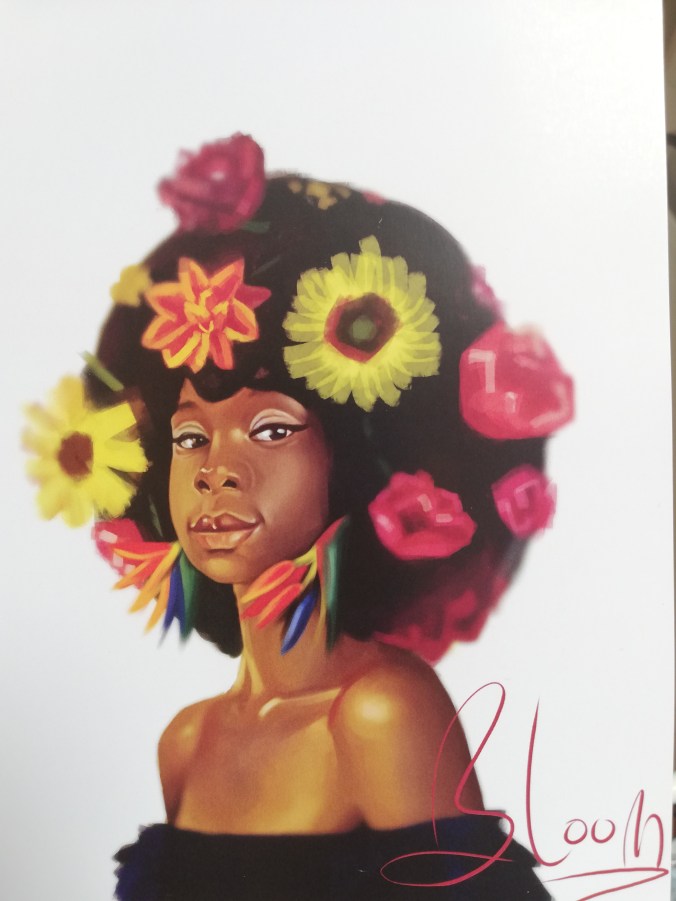
Birdspeed is published in the following anthologies: Alter Egos Anthology (Bad Betty Press, 2019), Use Words First (Own It, 2019) and Words on Windrush (Empoword, 2019).  Birdspeed has also self published her first pamphlet Bloom (2019) which is endorsed by Junior Marvin from The Original Wailers.

Stay Updated

http://www.birdspeed.org

FB / IG – birdspeedofficial

Twitter – birdspeedhero

The Interview

1. What inspired you to write poetry?

About 3 years ago I distinctly remember my spirit feeling as though it were about to jump out of my body…

As a dancer I was always been expressing myself but it had been a long time since I created an art piece where the intention of the piece was easy to understand. I actually started writing from a young age when I was 4/ 5 years old. I was writing stories and my own fairytales/ folklore. My mother told me that it was once illegal for black people to read and write, I remember feeling so sad and thinking well now I definitely have to do that. I have always been one to make a point even as a toddler. So that was what first inspired me to write. 20+ years later I had finished a solo dance session to expel some frustrated energy but I felt dissatisfaction. The dance was not enough, so I picked up a pen and started writing furiously. I wanted to be clear about the troubles I was experiencing as a black British woman in a way that would make people listen.

2. Who introduced you to poetry?

My mother and grandfather. They introduced me to the work of Kamau Braithwaite and George Lamming (of course being Barbadian). Although I was not familiar with form and I needed things repeated to me and explained constantly, I felt pride and connection. They made me happy and that was important. One of my English teachers introduced me to Thomas Hardy who is actually one of my favourite writers, even though studying male (and white male poets – mostly dead) at the time was kind of annoying I still appreciated being exposed to those who are considered to be the greats of English literature.

3. How aware were you of the dominating presence of older poets?

My grandmother once said “A great should never make you feel intimidated, they should inspire you. You should want to approach them out of love, not run in fear.” I think she was also talking about God at this point but it is relevant nonetheless. I was aware of people I consider to be “greats” but they were never “dominating” to me. They always made me feel like I could do what they do in my own way. We are all human, we all had to learn how to read and write which means we were all terrible poets at one point in time. So knowing this I become excited about older poets because it gives me hope I can be like that too.

4. What is your daily writing routine?

My daily writing routine changes every 3 months or so according to my schedule. My editing routine is far more regimented. I read the poem, say it aloud, then read it again and edit, let the poem “simmer,” repeat, then print out the poem, delete the poem (if typed out), re type the poem word for word, then I read and smile. Everyone is different and this works for me. I’m the sort of writer who falls in love with my work over and over again and it’s a wonderful feeling.

5. What motivates you to write?

Those who came before me and those who will come after me. Sometimes it is seeing a little dust settle on the inside of an engraved bracelet, sometimes it is seeing a black woman talking about the wonders of skin bleaching. I stay motivated.

6. What is your work ethic?

Serious. I am known as “one of the hardest working poets” among my contemporaries and that is not just a statement. I am currently learning to balance my lifestyle better because I have a tendency to overwork to the point of near breakdown. It comes from my West Indian upbringing. There is a saying “working like a Jamaican” and as a half Jamaican I guess I have most definitely embodied that mentality. A strong work ethic is commendable but only to the point when it doesn’t detriment your well-being.

7. How do the writers you read when you were young influence you today?

Whether it was Jean “Binta” Breeze to Toni Morrison to Benjamin Zephaniah to cultural theorist Stuart Hall (writers that first spring to mind as I have been re reading them recently) they were able to take a small moment or cultural artifact and magnify it into a gigantic structure. These writers were/are able to make you pay attention to issues that others may have looked past had the work not have been written. I see poetry as a science sometimes, I was amazed that Toni Morrison could write about a dolly or a button and this object was suddenly the most important thing in the world. This is also why I earlier mentioned Thomas Hardy, he would do that with a blade of grass!

8. Who of today’s writers do you admire the most and why?

Every month I have a new favourite writer. Right now here are the ten poets who spring to mind immediately and the qualities which drew me to them bearing in mind their writing brings a plethora of other things…I hope I can be as good.

I love: the spiritualism and humbling work of Yrsa Daley – Ward; the generosity and charismatic work from Zena Edwards, the eloquence and rhythm of Kayo Chingonyi; the power and honesty of Joelle Taylor, the intellectualism and thought – provoking work of Yasmina Nuny; the refreshing and impactful work of Vanessa Kisuule; the beauty and progressive work of Amy Acre; the boldness and bravery of Amerah Saleh; the wittiness and sophistication of Gboyega Odubanjo; the enchantments and superb storytelling from Inua Ellams.

9. What would you say to someone who asked you “How do you become a writer?”

I have no idea.  I made it up as I went along.  I started by writing, reading, exploring my craft.  I sought out others like me, I went to workshops, I asked lots of questions.  And, most importantly I listened and stayed humble. Sometimes we should spend time listening and reading. As I explained earlier after I first entered poetry I left because I wanted to learn and understand it.  I just listened. I heard what I liked what I didn’t and asked questions.  Most importantly I am still learning.  I am always a student and I think the day I stop feeling as though I can learn something is the day I have finished.

10. Tell me about the writing projects you have on at the moment.

At this very moment in time I am breathing. I have a few gigs lined up for October but I do think I have earned a minute to rest. I have just finished doing a commission for the Bascule Chamber Concerts where I wrote poems on the black Tudors referencing the River Thames which was an amazing unforgettable project curated by Iain Chambers. It took a few months because it involved research and experimenting with popular Tudor poetry form, I also had a period costume made and performed 15 concerts in 5 days. Alongside that I also released Bloom: Flowers and Festivals, a pamphlet I had been working on for a while. Fun fact: although the initial idea was to write about cultural appropriation I ended up writing about my fatherland and my relationship with different types of masculinity and how this had an impact on my sense of community. I was astonished at how that happened. Poetry does that. Also, if that wasn’t enough I spent a large chunk of the summer winning a few competitions and doing a BBC commission… Time to celebrate and reflect.

Wombwell Rainbow Interviews: Razielle Aigen

Wombwell Rainbow Interviews

I am honoured and privileged that the following writers local, national and international have agreed to be interviewed by me. I gave the writers two options: an emailed list of questions or a more fluid interview via messenger.

The usual ground is covered about motivation, daily routines and work ethic, but some surprises too. Some of these fiction writers you may know, others may be new to you. I hope you enjoy the experience as much as I do.

Raizelle

Razielle Aigen

is a Montreal-born writer and artist. Her chapbook, “Light Waves The Leaves” is forthcoming from above/ground press (2020). Her poems appear in Entropy, Deluge, Contemporary Verse 2, Bad Dog Review, Dovecote Magazine, Half a Grapefruit, Sewer Lid, Five:2:One, California Quarterly, and elsewhere. Razielle holds a B.A. in History and Contemporary Studies from Dalhousie/King’s University, and is an alumna of The Writer’s Studio at Simon Fraser University. More of Razielle’s work can be found at razielleaigen.com  and through Twitter @ohthepoetry .

The Interview

1. What inspired you  to write poetry?

To be honest, it just sort of happened…I can’t recall any definitive reflexive “a-ha!” moment where I caught myself thinking, “I am a poet” or “I will now write a poem”. Really, it jus sort of happened and continues to happen in that way that feels more like a biological function than volition. That thing that you just can’t help, like a sneeze…maybe you feel a little tickle, and then, it just happens! At best you can hope for somebody to be around afterwards to read it and say, “bless you”… even if that somebody is only you.

2. Who introduced you to poetry?

There was a lot of exposure to the Bible in my childhood home…Despite my adamant teenage tooth and nail rebellion against all attempts at religious indoctrination, despite that teenage self, my early encounters with tales rich in symbolic metaphors and imaginative language, not to mention the gamut of human drama and natural catastrophe of (literally) biblical proportion, has, in part, helped to shape some aspects of my poetic imagination.

3. How aware were you of the dominating presence of older poets?

You mean, like a Bloomian “Anxiety of Influence”-type-thing? Well, I try not to fall in to patterns of domination / deferral…I definitely respect and admire older poets, but I feel equal reverence for many of my contemporaries. My attitude towards older poets is one of gratitude, I receive their words as gifts that keep on giving…their words inspire me to write, keeping the great wheel of Poetry turning…a self-generative turbine!

4. What is your daily writing routine?

I don’t really have one! As long as a little reading and writing happens, it’s been a good writing day.

5. What motivates you to write?

The small things: Simple beauty. A moment of the uncanny. Something funny. A meaningful encounter.

6. What is your work ethic?

I hope that by writing I add a little good into world.

7. How do the writers you read when you were young influence you today?

Having read the Surrealists and Beat poets gave me an appreciation for tapping into the magical, incantatory and energetic aspects of language that act as a vehicle to transcend the mundane, which is, in some sense, perhaps one possible definition of the Poetic.

8. Who of today’s writers do you admire the most and why?

So many incredible writers today the world over! It would be hard to single anyone out without excluding so many. I think that the democratizing factor of the internet and online publishing has made it possible to be exposed to a multitude of new voices that would have otherwise been tucked under a rock of obscurity…I’m wowed every day by a new poet I would have never discovered if it weren’t for the online networks I’m tapped into.

9. Why do you write, as opposed to doing anything else?

It’s probably just my default setting. At some point I may need an upgrade…

10. What would you say to someone who asked you “How do you become a writer?”

Write!

11. Tell me about the writing projects you have on at the moment.

I’m also a visual artist…and I’m currently at work on a eco-poetic text-based installation, programmed to be showcased as part of a collaborative interdisciplinary event July 2020 in Montreal.

Wombwell Rainbow Interviews: Maria McManus

Wombwell Rainbow Interviews

I am honoured and privileged that the following writers local, national and international have agreed to be interviewed by me. I gave the writers two options: an emailed list of questions or a more fluid interview via messenger.
The usual ground is covered about motivation, daily routines and work ethic, but some surprises too. Some of these poets you may know, others may be new to you. I hope you enjoy the experience as much as I do.

Available Light

Maria McManus

was born in Enniskillen and lives in Belfast. She is the author of Available Light (Arlen House, 2018), We are Bone (2013), The Cello Suites (2009) and Reading the Dog (2006) (Lagan Press). She has collaborated extensively with others to put literature into public space. She is Artistic Director and curator of Poetry Jukebox, an on-street audio installation of contemporary poetry.

Twitter: @maria_mcmanus @poetryjukebox @LabeLLit

POETRY JUKEBOX: Belfast’s Changing the Message! @poetryjukebox
CALL FOR SUBMISSIONS- Song of Myself – Closes 23rd September 2019 EMAIL: poetryjukebox@gmail.com

https://www.irishtimes.com/culture/books/in-the-north-we-have-started-to-stop-sleeping-again-1.3442189
https://www.irishtimes.com/culture/books/curating-an-lgbt-version-of-the-poetry-jukebox-1.3730422


The Interview

1. What were the circumstances under which you began to write poetry?

In mid-September of 2001, I went with a friend to Rathlin Island for a writers’ festival organised by the Ballycastle Writers. I’d never written anything to that point; it was an experiment and a fun thing to do and we were bluffing our way; no-one would know we didn’t write.

I’d been looking for something for a while; I’d been responding to some restlessness in me that had been hovering waiting for attention for years.

In 1996, post-ceasefire and pre the 1998 Good Friday Agreement, we’d moved our small family of two daughters, then aged four and nine, out of Belfast to a village on the Co. Down coast. We were in some optimism that peace would sustain and that we could be somewhere that the girls could grow up slowly, that my (then) husband, could leave his job in community development and set up his own business, and I would take the heft of being the anchor of the family by holding a job with a regular income to support us in the transition and beyond. We got two weeks exactly, of some hedonistic sense of freedom.

Into this scenario, the news that my father from whom I had been estranged, had become terminally ill. He was to die a year later and the aftermath of these series of events was seismic. We’d sold our house. The business deal on the new property hadn’t come to fruition but we expected it would and took a chance anyway. The marriage had been under some strain and a radical solution was called for – the stakes were high, there were children involved and I desperately wanted a family life. I gave it everything I’d got.

Grief called everything into question and put everything under compression. I was still reeling, looking for anchor points in those years between 1996 and 2001. My response was to work harder and study more: it is a delusion of conditioning that these are the responses to suffering – we are lead to expect that – marriage is hard and needs work; you need to step up and take responsibility; if you work hard, you will get there… and other such guff; life decisions shaped by introjects. The result was that I basically spent five years painting myself further into a corner, over-achieving, putting myself under increasing pressure and feeling more and more angry, dissatisfied, sad, frustrated, confused, burnt out, exhausted and trapped. I didn’t like the person I had become. I look back now and think I was slow to learn, but I also understand that ‘when we don’t know, we don’t know.’ I did what I was able for.

As I was finishing a master’s degree, I promised myself that I would do something just for me when I had completed it. I needed time and space and I needed to find a place of refuge for myself and in myself; I’d go as far as to say I needed a sense of self. And to play.

When I went on the writers’ weekend to Rathlin in 2001, it was just after 9/11. The world was newly strange, and newly uncertain. The British Navy was on military manoeuvres in the Irish Sea at the far side of the island. The world order itself had been shaken to its core. These things heightened the sense in me that life itself, my own life, was urgent. I was bolting into my life. I didn’t know that then. I thought I was just gone away out of my normal life, to bluff, to play, to be off the leash a while, to be away on an island for the weekend.

Even now I find it difficult to articulate how pernicious the overlay of growing up through the Troubles was, or how difficult it was for me to make sense of my own life, and desires and to begin to know or understand the purpose of it . It strips and suppresses a sense of self to such an extent that it is toxic – we as individuals should be grateful for every small thing ( and I am), but correspondingly that one has no right nor entitlement to ‘better’ ( and we don’t necessarily), but it also chokes aspiration, and it snuffs out possibility, along the way; it becomes part of something deep and toxic that keeps us stuck and immobilised from creating a new way of being on the world. I felt I didn’t really know what was good for me, nor what it was I needed.

The writers’ weekend impacted on me profoundly – here was something meaningful, here was a connection to my sense of self, and to others, though I had no idea really how far that would go, terms of what it meant ultimately.

2. Who introduced you to poetry?

There was a ‘quickening’ in me at school, which I was mortified about and confused by. Poetry wasn’t hip, rather it was bewildering and dare I say it, perceived by me as largely pointless, and still there was a quickening. I’d count metre, wonder how a poem worked, wonder why it impacted. Poems were wild, and mysterious things, but to the adolescent me, they seemed a thin skin on my world. My world was a world of the troubles, of real poverty, of things broken beyond repair, of anxiety and fear, of life on the border, of militarisation and para-militarisation, of hunger-strikes and elections, and sectarianism and rage and death; absolute and inarguable death. I was also a girl. This was the 70’s and the 80’s. It was mad, destructive, terrifying and inescapable.

The poets we were reading at school were the usual suspects, Wilfred Owen, Wordsworth( William not Dorothy), Hardy, Tennyson, and Heaney. All of them were dead bar Heaney, and all of them were men. Nothing to see here, then…….. move along madam….’.

So, the ‘gate-way’ was school and the ‘dealers’ were Mr. Jones and Miss Reihill the English teachers , whom I regarded as largely irrelevant to my present, let alone my future. I gave up English at 15, and barely read a book for pleasure for perhaps another ten years.

My re-introduction came first with Heaney’s The Spirit Level – I actually brought my daughters on a wonderful holiday to Clare entirely on the back of reading Postscript on one of those long nights of insomnia that came in the wake of grief.

Then later, on Rathlin it was poets Joan & Kate Newmann, Heather Newcombe and Damian Gorman – I wrote my first real poems then, in 2001.

The sculptor Paddy Burns did a talk on that pivotal Rathlin weekend about art and its meaning. He said, “ I believe that art can save the world.’ That sentence changed my life. It impacted on me physically – as if I had been hit hard right in the solar plexus. Something shuddered right through me at that moment. It was bizarre and bewildering, but unmistakeable.

3. How aware were you of the dominating presence of older poets?

Not at all really. It was all mysterious and I was very detached – there was a fracture in my awareness and besides back then poetry wasn’t my world so, paradoxically my ignorance probably served me well. It has taken time to realise that what I am is a poet and to embody that. Back at the start of writing, I could jump in, naive and with no expectations of myself, no illusions of skill or lack of – I was just experimenting. I was just writing. I couldn’t get it wrong, because I had no expectation that I could get it right – so I was just doing it. I think I have only really claimed the title ‘poet’ in recent years – after I’d published four books, and after I’d stripped away all other wriggle-room about doubting or being tentative about that – I am the poet I am ,and will do what I can to be the best writer I can be now, and I will work with others to support them to see that, and be that, in themselves.

I am more conscious of the dominance of certain poets in the canon, and for example the corresponding exclusion of other voices especially those of women. I am involved with Fired! (Twitter @FiredIrishPoets & https://awomanpoetspledge.com/) because of this. Women have been marginalised within the canon of Irish literature for centuries. It exists as a fact. I don’t really have the energy for big fights about it, so I focus on a handful of things that we can do, in the here and now, to raise my own and others awareness of the work of those women and for us to be aware of each other’s work now. For example, we have devised a model for events – a poet reprises the work of an historically important but forgotten woman poet, and also reads something of their own contemporary work alongside it. In this way, we hear the old work and the new work. It functions as a type of hedge-school; a pedagogical approach to our own self-education. That model can be applied in any location and by different groups of poets. It has resulted in readings in Belfast, Dublin, Barcelona, Kerry, Cork and so on. It also made us much more aware of each other. I have made many new and important connections with other women poets through Fired!. It is important that we find ways to do things and not just get snared in a cycle of complaining – that doesn’t serve us well and dissipates the available energy. We also raise questions with festival programmers about gender equity – so the work of women also gets programmed, heard, published and supported.

4. What is your daily writing routine?

I try to do morning pages and to get a walk every day. I am a morning person, so I try to protect the early part of the day for being alone to do research, to read and write. When possible, I push admin and meetings into the later part of the day, 2.30pm or afterwards. I also have come to learn that sometimes I need to take time off, and so I do. I give in to that too and just stop and don’t even try to write. There are just times I need to replenish myself and to rest. I need to remind myself that that too, is in service of the work. Walking is in service of the work. Reading is in service of the work. Engaging with the world, the environment, doing the garden, listening to music, spending time with loved ones, is all in service of the work. Not always, but often, there is a comfort in cooking, in chopping vegetables and ingredients, in making soup, cleaning the house, that is also in service of the work. I have begun to swim again and this is great for a sense of well-being, but somehow it also seems to help organise material. Nothing is absolute, but when I am working on bigger projects, I just keep life as simple and as routine as possible.

5. What motivates you to write?

I simply can’t not. I don’t find writing easy – in fact the more writing I do, the harder it gets, but I just press on. I have developed more capacity to let things emerge, and percolate and form. I pay a lot of attention to process and just have to trust that eventually the ‘thing’, the work itself, whatever it is that is coming forward for attention, will come in its own time. This needs patience, it needs persistence, it needs presence. I read a lot and follow my curiosity and interests.

6. What is your work ethic?

At some level, I am never off – something always seems to be niggling away in the brain and needing attention. I freelance entirely – which is precarious and far too anxiety provoking. There’s a need to be sensate all the time for opportunities which emerge for projects, and there is also a corresponding need to develop a robust filter so as not to be overwhelmed and feeling so anxious that every grant, residency, or project has to be applied for …… it can be difficult to tune to the right things and to know where and when to lean in to something – what merits energy and what should be left to just pass on by. It is exceptionally difficult for me to say no to projects and requests, and I suffer in doing it, but realistically I can’t do it all.

I coordinate a project called Poetry Jukebox – it is an on-street audio installation to put poetry into public space. This takes a lot of my time and focus, but it is a good purpose for me to connect with other poets and also to innovate to connect ordinary people to poetry- to connect the unexpectant to the unexpected in ways that make life meaningful, bearable, beautiful, real and fully lived. There is learning for me here about my own journey – poetry is one of the most meaningful things in my own life. It came so, like a bolt from the blue and it changed everything when it did. It has been my lifeline – a transformational thing. It is meaning, and it is the means of connection, to others and also to my authentic self. I believe in the power of poetry to speak to the self, and to be the voice of the self. My own journey of awareness is not accidental and is not only relevant to myself – poetry is a gift waiting for others too – for people too busy, too caught up with the strife of the world to be fully paying attention to what matters for themselves, their precious life, the people who matter to them, to be engaged and connected to the context and the environment within which we live.

Connection to one’s own life, to meaning, to context, to the earth is urgent. If we are connected, love comes, awareness comes, choice comes. My art form is poetry, but I think this is the urgent work of all art forms, and I believe that art can save the world.

7. Tell me about the writing projects you have on at the moment.

At the moment I am curating a new edition of Poetry Jukebox, called Song of Myself ( after Walt Whitman) with d/deaf and disabled poets. The next edition will be on climate change and work on that is ongoing in the background – I am coordinating a project with Centre Culturel Irlandais to bring Poetry Jukebox to Paris in 2020.

I have a residency at the wonderful Armagh Public Library and I am collaborating on a project called Splendid Liberal Lofty with composer Simon Waters and artist Helen Sharp – my part in this is a public engagement project reviving the art of letter-writing to fill a void in the library when Archbishop Richard Robinson had all his correspondence burned after his death. We live in such tumultuous times as these that I want many people to write letters for the archive about the times we live in now – the climate crisis, Brexit and the border in Ireland, love letters, and everything from the confessional to the obsessional and back.

I have two commissions for a poem about the Armagh Observatory as part of a song-writing and poetry project which singer-songwriter Brigid O’Neill devised with the Ulster Architectural Heritage Society for their annual Heritage Angel Awards. The other commission is a poem about Priscilla Gotto, a Belfast woman who died in a military air-crash in WW2 – she will be commemorated this November. Finally, composer Keith Acheson and I will reprise Wretches, the libretto we wrote about the Belfast suffragettes and we will tour it to some venues in 2020. I’m busy!

Wombwell Rainbow Interviews: Angela Costi

Wombwell Rainbow Interviews

I am honoured and privileged that the following writers local, national and international have agreed to be interviewed by me. I gave the writers two options: an emailed list of questions or a more fluid interview via messenger.
The usual ground is covered about motivation, daily routines and work ethic, but some surprises too. Some of these poets you may know, others may be new to you. I hope you enjoy the experience as much as I do.

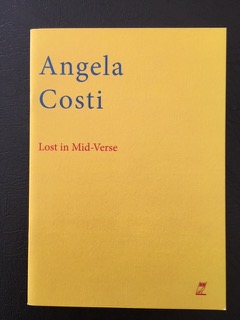
Lost in Mid-Verse AC

Angela Costi

is also known as Ayyeliki Kosti among the Cypriot-Greek diaspora. She was born in Sydney, Australia, from Cypriot-Greek parents who left because of poverty and civil unrest. Her poetic lens is drawn to urban existence, highlighting those moments of connection among routine and struggle. She has four poetry collections: Dinted Halos (Hit&Miss Publications, 2003), Prayers for the Wicked (Floodtide Audio and Text, 2005), Honey and Salt (Five Islands Press, 2007) and Lost in Mid-Verse (Owl Publishing, 2014):
http://apj.australianpoetry.org/latest-writing/dmetri-kakmi-review-owl-publishing/
http://www.owlpublishing.com.au/chapbook-series.html
Her poetry, essays and reviews have been widely published in Australia and overseas. In 2009-10, with funding from the Australia Council for the Arts, she travelled to Japan to work on an international collaboration involving her poetry and the Stringraphy Ensemble. Her essay about this collaboration, and poetic narrative, A Nest of Cinnamon, are published in Cordite, 2009 and 2013:

A Nest of Cinnamon


At Angela Costi Poetics (https://www.facebook.com/AngelaCostiPoetics/) she shares her current reflections on the process of reading, writing, editing and publishing poems.

The Interview

1. What inspired you to write poetry?

I remember sitting in a lounge-chair in the back yard. It was a sunny day. A shy breeze. On my lap was my note book. In my left hand was my pen. I began to write what I knew was a poem. It was triggered by my relationship with my Yiayia (my Cypriot Grandmother). It was endeavouring to document the oral world that I inhabited with my Yiayia and giving it that study of thought and language, which makes it a poem.

2. Who introduced you to poetry?

Paradoxically, my uneducated mother introduced me to poetry, specifically to children’s poems in the Greek language. My mother was one child of too many, brought up in a poor Cypriot household, in a time when education was a luxury. She insisted that I go to Greek language school at a very young age. There, I was taught by the Cypriot-Greek Orthodox Priest, the language of poetry found in scripture and children’s poetry books. I recall my mother’s proud tears when I recited perfectly one of her favourite poems at the annual graduation.

3. How aware were you of the dominating presence of older poets?

Studying Shakespeare throughout secondary school and later, in my early 20s, studying poetry for a year, brought to the fore how the discipline, practice and delivery of poetry is shaped by ‘older poets’. At one point during the poetry study, I couldn’t find where my poetic voice belonged in the overwhelming significance given to poetry by English poets of the 19th century. Still I continued to search for connection and resonance with established poets, and in particular, I wanted to learn about Australian poets, because that’s where I was based throughout my secondary and tertiary years. Fortunately I found the collections of Judith Wright, Oodgeroo Noonuccal (Kath Walker), Judith Rodriguez and Antigone Kefala.

4. What is your daily writing routine?

Given that I have two teenage boys and two ailing parents, I need to work full-time, which means I get up one hour earlier in the morning to write, then write for as much as I can at night, and then spend as much time as I can on the weekend. On my commute to and from work by tram, I carry my trusty companion, a note book. If there’s a seat, I get out my note book and write.

5. What motivates you to write?

Like the compulsion to eat or drink, it’s this daily need to work with words. My Yiayia worked with linen and cotton to make extraordinary embroidery, stitch by stitch… Perhaps I have inherited this tendency but my sequencing and patterns are with letters and words. She has bequeathed her need to make something creative and lasting.

6. What is your work ethic?

Both my Cypriot parents instilled in me the importance of a strong work ethic however, over recent years, I have incorporated balance and spirit into my writing practice. In 2009, I was in Japan as part of a writing project with the Japan-based Stringraphy Ensemble http://cordite.org.au/essays/reinventing-the-ancient/

Creating poetry and performing in Japan with an inspiring group of Japanese women, I saw the importance of ikigai as an approach to purpose in life. We often say, it’s the small steps that count, and adapting ikigai to my poetry practice has enabled a wiser, reflective and sustainable approach to a practice that is dependent on external acknowledgement. I’m certainly not a master practitioner, rather a novice. I endeavour to incorporate the five pillars of ikigai as best I can: pillar 1 – starting small, pillar 2 – releasing yourself, pillar 3 – harmony and sustainability, pillar 4 – the joy of little things, and pillar 5 – being in the here and now.

7. How did the writers you read when you were young influence you?

There are so many writers I could list, but there was, in my teenage years, an obsession with a play written by Robert Bolt, A Man for all Seasons. The main character was Sir Thomas More and to this very day I keep close to my heart the declaration made by Sir Thomas More when he was given the choice to live and betray his conscience or to die and be true to his soul, and he chose the latter because as he stated in the play: ‘In matters of conscience, the loyal subject is more bounden to be loyal to his conscience than to any other thing.’ That quote was underlined in my diary and held me in good stead as I found myself having to make serious choices as I progressed to adulthood, such as the choice of an arranged marriage or finding love in my own time, in my own way. The quote continues to inform my writing practice in the choice of content, for example, how I approach writing about my heritage. This poem may come from a personal perspective, but it needs to extend itself to reach the humanity in us all.

Another writer who had a pronounced influence on me as I was transitioning to adulthood is Nikos Kazantzakis, with his novel, Zorba the Greek. On a personal level, this was a challenging time for me with trying to establish independence from my traditional disciplinarian father. At the time, it felt to me that Kazantzakis had modelled the character of Zorba on my father. The novel helped me to see another perspective to Greek (Cypriot) male identity. The book also introduced me to a character, the elusive, strong-willed and objectified ‘widow’. This character sunk into my psyche so much so that I produced a poem about her titled, Zorba’s Widow.

8. Why do you write, as opposed to doing anything else?

I’m not kinaesthetic by nature. Unlike my Yiayia and mother who use their hands to make the most nourishing creations. I’m in awe of artists who create visual miracles whether it be paintings, sculptures, mixed-media, film… With pen and paper I endeavour to create word pictures.

Another way of dissecting this questions is: Has writing chosen me or have I chosen it? I think both. There is my compulsion to write rather than bake, for instance, and there is also my attention to continuing the practice despite the obstacles and difficulties of daily existence.

9. What would you say to someone who asked you “How do you become a writer?”

I don’t think it’s about ‘wanting’ to become a writer rather it’s about the actual practice itself. The sitting down and doing the grunt work, which entails researching, making notes, drafting, re-drafting, re-drafting, re-drafting… proofing and editing, and all the administrative work associated with being a writer. I also don’t think it’s about the outcome, that is, the publications, the awards, the recognition… although they are wonderful to receive, but it’s the process of writing that turns you into a writer.
10. Tell me about the writing projects you have on at the moment.

I have a book length (as distinct from chapbook) collection of poetry that I have just completed writing. It is titled, An Embroidery of Old Maps and New and is divided into parts by the use of four epigrams, which enable a focus on four areas: family, identity, womanhood and dialogue. I’m travelling through layers of cultural meaning that have been coined multicultural, cross-cultural, intercultural and intersectional existence. Three of the poems found in the book have recently been published by an Irish-based magazine, Blue Nib, issue 39, 2019:
https://thebluenib.com/article/angela-costi-3-poems/

I have also started another series of poems written in the third person and informed by those years between 16 to 25, with a particular focus on the transition from secondary school to university life. I’m exploring the excruciating experience of studying for exams, losing friends, trying to make friends, floundering in law school, the girl becoming woman… I particularly enjoy creating tightly thematic poetry collections.

Wombwell Rainbow Interviews: Peter Riley

Wombwell Rainbow Interviews

I am honoured and privileged that the following writers local, national and international have agreed to be interviewed by me. I gave the writers two options: an emailed list of questions or a more fluid interview via messenger.

The usual ground is covered about motivation, daily routines and work ethic, but some surprises too. Some of these poets you may know, others may be new to you. I hope you enjoy the experience as much as I do.

Peter

Peter Riley

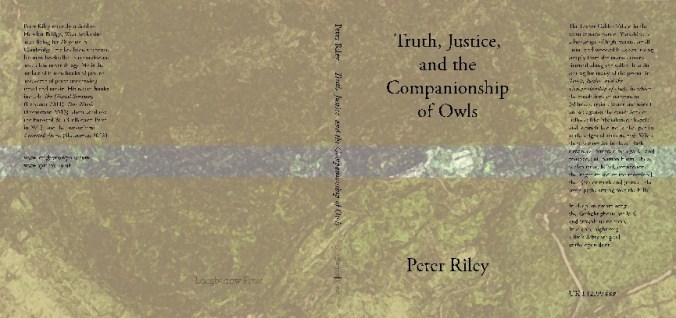
was born in Stockport in 1940 and recently moved to West Yorkshire after living for 28 years in Cambridge. In 1966 he was an editor of The English Intelligencer, the worksheet which first proposed a neo-Modernist position in British poetry. Since then he has authored a heap of books and pamphlets, which have now been gathered into a two-volume Collected Poems published by Shearsman (2018). His long poem Due North was shortlisted for the Forward best collection prize in 2016. Dawn Songs, three  essays on music, was published by Shearsman in 2017. In May 2019 Longbarrow Press publishing Truth, Justice, and the Companionship of Owls.

Website: http://www.aprileye.co.uk/

The Interview

1. What inspired you to write poetry?

It “happened”. There must have been some impulsion, perhaps the lure of music which I translated into lyrical poetry, and also tales, landscapes, figures, focused on poetry as I grew up. Later it was an ambition for success in a field which was not strictly demarcated, where an individual from nowhere had a chance. I think I always knew there wasn’t going to be anything in it in the way of wealth or prosperity. I think I dreamed briefly of being Wallace Stevens and an insurance executive, until I found that neither of them was easy.

2. Who introduced you to poetry?

At school (which was a boys only grammar school) there was a bunch of friends who cultivated modern poetry and music, haunting second-hand bookshops, sharing finds. This linked with, but was distinct from, teaching at school which reached the early 20th Century as preparation for university. And when I had to wait a year before going to Cambridge I mixed with a group of older poets who met together and talked about poetry (this was in Manchester) but I still hardly ventured to write a poem myself. I knew I probably would one day, but meanwhile I just listened. So the answer is that I was introduced to poetry by a crowd, all talking differently and disagreeing in many respects, but all focused on poetry. Some of the crowd were long dead, such as Keats.

3. What finds did you share at school?

This was the late 1950s, and since we relied on second-hand bookshops (of which there were many and usually with big poetry sections) rather than following the pundits, a lot of what we bought was British poetry of the 1940s, because that was the generation of books now reaching the second-hand market. My method was to take a book from the shelf, read two or three poems, and if I liked them, buy it. This resulted in a heterogeneous collection with a lot of poets in it writing in an unfamiliar manner, some of them difficult to understand. I became interested in this strangeness which later, at college, turned out to be little known and often strongly disapproved of by the teachers and critics. The names I particularly remember are: Nicholas Moore, W.S. Graham, Ruthven Todd, Lawrence Durrell, Vernon Watkins, Alun Lewis, H.D., Rayner Heppenstall, Kathleen Raine… Not all of these stayed with me, but I think features of that period, its particular balance of daring and carefulness, have been important to me in the long run. I also occasionally ordered new books by poets I was told were major figures – Eliot, Auden, Pound, Lawrence, Dylan Thomas, Stevens, Yeats…

4. Which older poets caught your ear in Manchester?

There was a group that met regularly at a city-centre pub to read poems and talk and drink beer, and seemed to be at the centre of the city’s poetry. They called themselves “The Peterloo Goup” though they did not have a lot in common. We don’t seem to hear much of them now, but they were enthusiastic and serious about poetry, and several of them were published by top publishers such as OUP. At least two of them were also painters in an abstract-landscape style. Some wrote very much as “proletarian” plain-speaking poets, others cultivated a sophisticated metaphorical discourse, but both were passionate about what they did. This is what I mainly took on from then, I think. It was through them that I first learned about W.S. Graham. They were very interested in him at a time when he was very little known. I just listened, and anything I dared to write I kept to myself. They included Tony Connor, Robin Skelton, Michael Snow, H.J.Massingham, John Knight, Glyn Hughes…

5. How aware are and were you of the dominating presence of older poets traditional and contemporary?

I wouldn’t say “dominating” but I think even that long ago (we’re talking 1960s now) it was getting like a rather frenetic market with people shouting their wares at you. There was no real guidance for the young poet then (there is possibly too much now). While I was a student in Cambridge I remained isolated and viewed all the noise around me with uncertainty, and still hardly dared write a poem. I think one appeared in a student magazine. But when I found myself in London the situation became more pressing. I was more alone than ever, finding my away around a great city, and I think a voice emerged from this. I felt increasingly that in poetry and otherwise the normal channels of creative career-making were sterile and I turned elsewhere. I was led as if magnetically to Donald Allen’s anthology The New American Poetry of 1960 (from Better Books, Charing Cross Road, of blessed memory) and devoured all of it, but especially Robert Duncan, Frank O’Hara, Allen Ginsberg, Charles Olson and (later) Jack Spicer. Nobody dominated, they were all too distant, it was more like being offered possible channels, but there was some kind of lift-off. What remains of it formed the first section of my Collected Poems (2018) – not a lot, and a mix of different approaches. Still no one saw it, none was published, nobody dominated. All that arrived like a storm in 1965 when the question became how to survive as one of a group of poets all fighting out versions of a new future for poetry.

5.1 Why “especially Robert Duncan, Frank O’Hara, Allen Ginsberg, Charles Olson and (later) Jack Spicer”?

They seemed particularly distinctive, I guess. And old enough to qualify as a father generation. By 1970 three of them were dead. But mainly they clearly represented new ways of writing poetry within a big range. I think there was a short and quite blissful period for me when those four were all I needed, before I got caught up in a doctrinaire group total-Americanisation doctrine. In the long run I could only tolerate particular poems by Olson Ginsberg and Duncan rather than the complete works, which got increasingly messianic and poetry itself became a side issue. The other two actually were poets first and foremost, in different ways.

It’s difficult to explain, or perhaps to understand, what I realize has been a prevalent pattern in my work as a poet, that I plunge into a whole series of allegiances and beliefs which I subscribe to wholeheartedly, but when it comes to writing poems I take a step back, or several, to regain something less ambitious or more ordinary. Around 1965-1969 when I was enjoying discovering these Americans my own writing was by comparison plain-speaking and I think only my disregard for ancestral forms and metrics owed much to them, or the English poets I got to know at that time.

So I won’t go on about how the British poetry scene mid-sixties offered only a stale bourgeois mannerist sterility. I probably thought that, but if so I was wrong, as to some extent my writing hand recognised. I may have thought such things mainly because the American stuff was bright and new and allowed entry into poetry of wider and unendorsed knowledge, or because what was really happening in UK didn’t show itself. And in fact the UK poetry scene mid-sixties also offered its own sorts of abandonment and zonked-out warbling most of which I found naive.

And as far as I’m concerned that is pretty-well the whole story. I became strongly associated with the “Cambridge school”, of which the most impressive and persuasive figure was J.H.Prynne. I eagerly entered into all the discussions and read the recommended poets and critics, and tried to behave properly, but my writing was never 100% committed, and I think only a certain informality and syntactical dramatic freedom connected –things which are now commonplace. But the “Cambridge school” was like that anyway – it was full of disagreements and contradictions and people would write now one way now another. A “school” was the last thing it was.

This association continued through my career, with periodical episodes of alienation or disregard, becoming less specific. Through it I met talented and original poets, whose discussion and correspondence was of great value, especially for testing ventures on them, especially Douglas Oliver, John James, and later, R.F.Langley. And so I went ploughing on, shifting this way and that, occasionally plunging into the group manner and then extracting myself from it and constantly seeking ways of extending the poetic script into bigger comprehensive structures and a theatre of the varieties of perception. For example the long text “Excavations” was deeply involved in disjunctive writing, more so than anything else I have done, but immediately before and after it there are substantial works emphasising connectivity and coherence of both voice and location. It was an undoubted advantage that in those days these choices were not governed by ideological principles. By the late 1970s I was living in an isolated farmhouse in the Peak District, after three years in Denmark, and the writing was involved a lot with the place, but this was mainly a means of attaching it to a linear perspective.

But I was never happy when the specific interests of the Cambridge group, as they were kept alive and developed over the years, started being understood as part of a big division, an enormous split in British poetry between “innovative” and “mainstream” with increasing bitterness and contempt on both sides. It was already getting like that in the 1970s, but it wasn’t originally so antagonistic.

I think what has always been at the heart of it, has been seeking the ways truth can be held or produced in language, finding that singularity of utterance is not enough. What is called “lyric” is the most valuable tool for these purposes, because it can enfold a multi-vocal texture, truth approached on different sides at once. The academics don’t seem to understand the word at all.

This, nor the work of most of the poets I have ever known, never fitted well with the expectations of the British poetry scene at large, especially the celebrities and the aficionados departments. Once you’re categorised as one of the other kind, it stays with you for ever, like an identity, whatever you do, and you get a very small slice of the cake. But increasingly what I did didn’t fit well either with the expectations of the critics and historians of “innovative” poetry and I have been studiously omitted from the surveys and praise-sheets of it, as I should be. This leaves me suspended in the middle of a sphere which is disturbing for those who enjoy their poetry by categorisation, which is most of them. That’s all right, it was bound to happen.

6. What is your daily writing routine?

I don’t think I ever really had one. Generally, the day draws towards its close and with luck there is a calm space which can be filled with receptive or creative activity, as suits you at the time. Occasionally I would notice it was dawn. I’ve also had periods when I only worked casually or part-time, and it was probably then that I got involved in the large-scale works or projects: “Excavations”, “Alstonefield’, ”Due North” etc.

7. What would you say to someone who asked you “How do you become a writer?”

I think I’m about the last person to put this question to. All I know about is poetry, where the conditions are constantly changing or what applies in one part of the scene doesn’t in another both geographically and intrinsically. There’s a mass of advice out there in books and magazines on how to get ahead in poetry, which inevitably carries implicit assumptions as to what kind of poetry to should write. I never did any of it. I didn’t seek to win prizes by studying the way the judges wrote. I rarely submitted, I mainly just waited to be asked. I didn’t make sure the poems I did send out were exactly the length demanded neatly typed and placed in exactly the right kind of envelope with the correct return postage, and I would never have written on a given subject for publication or competition. I didn’t have subjects, I had poems. Most of the advice I have seen has stressed moderation above all else, not to do anything in excess. I’ve seen lists of all the effects (rather than affects) you can use in writing poems but always saying never overdo it. They don’t actually say “never get passionate” but this is what it boils down to. I think that in the creative writing classes it may not be like this, or not necessarily.

Anyway, the question of how you make your name in poetry is becoming redundant, because if you’re one of the lucky ones you don’t have to: your name will be made for you. You can be adopted by poetry youth schemes set up by publishers, and be published, publicised, entered for major prizes, sent on reading tours, awarded residences, and in fact become very well known as a poet before you have anything like a body of work behind you. It’s all founded on instant youth brilliance. And that can work: some of these elected new poets are very good and by no means over-determined by the process, but to believe that this structure is a reliable guide to the best new poetry would show a naïve trust, I think, in the wisdom of the established poetry pundits, a race I have always disliked, whether they belong in the erstwhile experimental or conventional zones.

8. Who of today’s writers do you admire the most and why?

I do a lot of reviewing these days for the Fortnightly Review website, so a lot of new poetry passes before my eyes and I make discoveries every week. I think in many ways the field is wide open and I don’t like to select a few names, which would mean failing to mention others who may not be so active at present or have slipped my mind. Of my own generation and its sequel, I think I admire the poets who have resisted the temptation to fall into the categories we have incessantly been pushed towards, especially of course the Great Divide. Similarly, I suppose, thinking of young poets, those who manage to survive the demands of the “poetry scene”.

So, no names. But I could mention that I’m interested in poetry as “poetical”, meaning that it is a distinct language use, and also involves a sense of scale. This seems to be disliked at present among both young and old, probably thought of as elitist, which it isn’t. I am sick of new poems by all sorts of people which are written exactly as if they are telling you something in a bar somewhere or giving a lecture, plain addressed prose, and the only discernible poetical feature is the line endings, which make no difference. I’ve nothing against plain-speaking poetry nor poetry as therapy, but I feel a need for a richer texture or a stronger brew.

9. How has the move from Cambridge to West Yorkshire affected your poetry about place?

Cambridge was becoming something of a poetical hostile environment. Because of the heavy involvement of the University it became dominated by a militant fervour centred on political identity which dismissed everything else as reactionary. The move was like re-entering a world which valued difference and authenticity. I felt on arrival that my poetry was loaded with a poeticism or even Modernism which would make me like something from outer space, but quite to my surprise it seemed to present no problems, indeed was met with enthusiasm, and a local small press, Calder Valley Poetry, published two pamphlets by me. I find it invigorating to stand alongside creators of northern ballads and comic monologues, straight leftist poetry and reflections on immediate problems of life and emotion, in rhyming couplets or not.

The other thing is that there was a landscape on my doorstep the terms of which seemed immediately available as a vertical structure – river-valley, woods, pasture, and on the top the vast open barren moors. A rich collection of old reverberant place names and the remains of a major industry now fallen into ruin. A lot of other things too, the more mixed population, the grip of ancestry (my father was born in Halifax), the visible power of the pseudo-aristocratic landowners… I don’t know how, but writing the informal lyric, which is what I do, has here become more open to particularities, such as names of all kinds, place-names, persons, from the most local or private to the largest concepts, without creating problems. How they operate as an ensemble.

10. Tell me about writing projects you are involved in at the moment.

In poetry, nothing much doing. I suppose I have a sense that with a two-volume Collected Poems published in 2018, followed by a new book recently, some kind of summation has been reached, and perhaps the world doesn’t really need much more than the 1300 pages I’ve already delivered! What I would like to do is to re-write the history of English poetry during the last century, because I think a terrible mess has been made of it, the overview so cluttered up with all sorts of prejudices both for and against, and so much tribalism, that I don’t see how anyone can get an idea of what really went on. The great majority of what was written is not read or even heard of and we are so secure with our ”major figures”, the academic insistence on a fewness, that we ignore everything else. The 1940s has particularly suffered from massive elimination but it goes right through the century. It’s important because the foundation of what we do now lies in these zones, and I don’t think you can get any sense of the possibilities opened up, especially in the parental generation, without recognising the multiplicity of what went on. And I think there are great discoveries to be made in the darkness that lies behind the accepted history. I’m not writing a new one but I try to tackle these questions one poet at a time in my reviewing.

.


Wombwell Rainbow Interviews: Chris Banks

Wombwell Rainbow Interviews

I am honoured and privileged that the following writers local, national and international have agreed to be interviewed by me. I gave the writers two options: an emailed list of questions or a more fluid interview via messenger.
The usual ground is covered about motivation, daily routines and work ethic, but some surprises too. Some of these poets you may know, others may be new to you. I hope you enjoy the experience as much as I do.

midlife action

Chris Banks

Raised in the Ontario communities of Bancroft, Sioux Lookout and Stayner, Chris Banks took his BA at the University of Guelph, a Master’s in Creative Writing at Concordia and an education degree at Western. His first book, Bonfires, received the 2004 Jack Chalmers Award for Poetry and was also shortlisted for the Gerald Lampert Award. His most recent book MidLife Action Figure will be published in the Fall of 2019 by ECW Press. Banks lives in Waterloo. Contact him at: royal.banksy@gmail.com or go to his website http://www.chrisbankspoetry.com

The Interview

1. What inspired you to write poetry?

I was always looking for a creative outlet as a kid. I thought in images, and not in numbers, which is why I was always drawn to stories and poems. I was fifteen or sixteen when I started writing poems of my own. It was as if someone tapped me on the shoulder and said, “This is what you are supposed to do, kid”. My math teacher thought I was useless, but I ended up winning the English award at my high school.

2. Who introduced you to poetry?

I had an English teacher Mrs. Tetzner who was instrumental in bringing me to poetry. She was encouraging and kind and thoughtful and never condescending.  I wrote a lot of poetry in my last two years of high school before moving on to university.

3. How aware were you of the dominating presence of older poets?

I wasn’t actually until I went to the University of Guelph. Older poets seem to speak a different language that I wasn’t capable of speaking yet. Young poets need to learn what they can do with their language before they are going to start writing well and I needed to try to write, but there were still outlets for my early writing. I placed poems in student newspapers and journals. Older poets were so calm and self-assured and wise. Now that I’m older, I just realize so much of that writing is just hard work and stubbornness and experience.

4. What is your daily writing routine?

I try to write usually in the morning. A poem, or an image, or a title either comes to me, and I tinker with it, or not.  The main thing is to make time for your writing. I don’t believe in inspiration so much as working really hard. My developmental leaps as a writer have always come because of working hard.

5. What motivates you to write?

That has changed over the years. When I was young, it was the thought some day I might have my own book. Nowadays, after many books, I like to surprise myself. I don’t always succeed, but if I’m doing something new with language, I am quite happy.

6. What is your work ethic?

I am stubborn so I try to write a new MS every two to three years. I want to be known as someone who spends a lot of his time writing. I am most happy when I am prolific. I don’t care if I write a bad poem. I throw it away and immediately start working on another poem. Eventually, the good ones outnumber the bad ones.

7. How do the writers you read when you were young influence you today?

Gwendolyn MacEwen taught me so much about lyricism and voice. She was unique. I learned to write narrative poems by reading the poems of Al Purdy or Philip Levine. I also loved Mark Strand and Larry Levis too!

8. Who of today’s writers do you admire the most and why?

I really like Bob Hicok and Dean Young for their quick-wit, surreal associations, and how you never really know where one of their  poems is going until you reach the conclusion.

9. Why do you write, as opposed to doing anything else?

It is a vocation. It chose me. Writing poems is by far the thing which makes me most happy so I try to do it every day.

10. What would you say to someone who asked you “How do you become a writer?”

My first thought is to say write, help build a community, learn to take criticism, learn the value of failure but don’t let  it stop you from writing. These are the things which made me a better writer. .

11. Tell me about the writing projects you have on at the moment.

Well, I just launched my new book Midlife Action Figure with ECW PRess this month and so far the reviews are great! I also just finished a new MS entitled Deep Fake Serenade which I hope to see in book format in a couple of years.

Wombwell Rainbow Interviews: Jamie Hale

Wombwell Rainbow Interviews

I am honoured and privileged that the following writers local, national and international have agreed to be interviewed by me. I gave the writers two options: an emailed list of questions or a more fluid interview via messenger.

The usual ground is covered about motivation, daily routines and work ethic, but some surprises too. Some of these poets you may know, others may be new to you. I hope you enjoy the experience as much as I do.

Annotation 2019-09-18 091353

Jamie Hale

is a UK based poet, artist, writer, and activist, who has written for publications including the Guardian, Poetry Quarterly, and Unite Magazine. They were one of the awardees of the London Writers’ Awards for Poetry 2018, and have performed their work at venues including the Tate Modern and the Barbican Centre. They are also currently studying at UCL.

Jamie is currently working on curating a showcase of disabled artists titled CRIPtic, and completing their solo show NOT DYING. They developed this in a residency in the Pit Theatre at the Barbican in 2019, and are preparing to tour it in 2019. They are also writing a collection of nature poetry exploring the body, impairment, and disability through writing about the natural landscape.

Much of their work explores the day to day experiences of disability, disablism, and being queer and trans in the world, but they also take inspiration from anything from the Bible and Greek mythology to music and daily life. Whether they are writing opinion pieces on assisted suicide, or sonnets about canals, their work draws on a deep value for human existence.

Website: http://jamiehale.co.uk/

The Interview

1. What inspired you  to write poetry?

I’ve always written, and at some point I became aware that what I was writing was poetry – and then I kept doing it. I also write prose and essay but my style is heavily influenced by poetry, however I’m writing.

2. Who introduced you to poetry?

I can’t be sure – certainly Sue Hampton (https://www.suehamptonauthor.co.uk/) my primary school teacher was a powerful influence, but I’d enjoyed childrens’ books in rhyme long before that.

3. How aware were you of the dominating presence of older poets?

The older I got, the more aware of them I become. As I find an increasing amount of writing I adore, I realise the scope and presence of these older poets – both alive and dead.

4. What is your daily writing routine?

I generally try and start the day by writing. Recently I’ve fallen into the habit of doing writing-related work and considering it writing, which is a mistake. I’m trying to return to a more disciplined practice, but it’s difficult at the moment.

5. What motivates you to write?

The words inside me want to come out, so I write. It’s a sense that I have no choice but to write them, that they’ll keep rattling round my head until I find them space on the page.

6. What is your work ethic?

I’m pretty focused. I’ve got several creative projects ongoing at the moment, so I have to force myself to get on with them. Luckily I really enjoy the work I’m doing, which helps. It can be hard to put my phone down and make a start, but when I do, the hours rush by

7. How do the writers you read when you were young influence you today?

I find it hard to know – I can see the traces that more recent reading leaves, but stuff from longer ago – I’m really not sure. I love the lush writing of some of the Victorian poets, and I think it leaves traces of excess in my work. Similarly, poets like Cardenal, Neruda, Belli – their engagement with nature and the earth-as-body has really influenced the way I write about myself, my body, and nature, while AIDS poets such as Paul Monette have impacted on the brutality of some of my work, the refusal to compromise or give the reader something polished and beautiful.

8. Who of today’s writers do you admire the most and why?

Recently I’ve really enjoyed reading Ilya Kaminsky’s Deaf Republic, Jay Bernard’s Surge, Mona Arshi’s Dear Big Gods, but I’ve tended to interact with poems rather than poets, so it’s hard to say!

9. Why do you write, as opposed to doing anything else?

Because it is by writing that I prove to myself that I exist in the world, writing allows me to process and make sense of experiences I would otherwise really struggle to understand. It lets me leave a mark on the world, and contribute in some small way to changing it.

10. What would you say to someone who asked you “How do you become a writer?”

I would say ‘you write’ – and that writing makes you a writer. If you want to be a published writer specifically, then reading writing, finding work ‘like yours’ and then trying to be published in the same magazines is a sensible step, as is collecting some work together (whether chapbook, pamphlet, zine or collection) and trying to find a publisher. If you want to perform at all, then bringing your work to open mic nights is often a good idea.

11. Tell me about the writing projects you have on at the moment.

I’m finalising my solo show, which is on at the Barbican Centre in London on 11th and 12th October, and I’m trying to get my first poetry collection knocked into shape! I’d love people to come to my show, tickets can be bought from https://barbican.org.uk/whats-on/2019/event/jamie-hale-criptic-pit-party