Wombwell Rainbow Interviews: Joanne Zarrillo Cherefko

Wombwell Rainbow Interviews

I am honoured and privileged that the following writers local, national and international have agreed to be interviewed by me. I gave the writers two options: an emailed list of questions or a more fluid interview via messenger.

The usual ground is covered about motivation, daily routines and work ethic, but some surprises too. Some of these poets you may know, others may be new to you. I hope you enjoy the experience as much as I do.

A Consecration of the wind

Joanne Zarrillo Cherefko

A New Jersey native now living in Virginia, she honed her skill as a poet in college and created her most complex poetry following the death of her mother.  Her earlier poems are lyrical and expressionistic, while her more recent poetry is narrative in style.She is currently a visiting poet and poetry teacher at three high schools in her area. She loves music, photography, poetry, her Cavaliers, and the love of her life, her husband Bud.

The Interview

1. What inspired you  to write poetry?

Writing a poem or burying myself in a novel were methods of coping with the anxiety my parents’ dysfunctional marriage and arguing caused me.  I would escape the tension in the house by going outside to play or by going up to my room to externalize my emotions through writing.  With the exception of one short story I wrote at the age of 12, all of my creative written expression has taken the form of poetry.

2. Who introduced you to poetry?

My mother had a literature anthology in the house, and I read a few of the poems in the collection.  The only poem that remained in my memory long after I read it in that particular book was “Razors Pain You” by Dorothy Parker.  I am not sure if my preoccupation with death had its roots in that poem, in my sadness and anxiety about the emotional instability in our home, or in my mother’s sudden death when I was 24, but my poems tend to reflect the darker side of self-exploration and life’s journey.

3. How aware were you of the dominating presence of older poets?

I did not become aware of the dominating presence of older poets until a high school classmate of mine quoted Ezra Pound’s “In a Station at the Metro” in our literary magazine.  He had used the Imagist poem to illustrate a pen and ink drawing of his.  I don’t remember what his drawing looked like, but I was immediately fascinated by the poem, though I would not understand the meaning of “first intensity” until decades later when I incorporated the poem into my American Poetry seminar.

My full immersion in the works of older poets occurred when I majored in English Education in college.   I fell in love with the poetry of T.S. Eliot, the British Romanticists and the French Symbolists, and I studied other dominating poets of the Modernist movement, such as Stevens and Yeats.  I studied Ferlinghetti and Ginsberg, but I was not fond of the style of the beat poets.  I cannot recall when I began to read the works of Sylvia Plath, but I was drawn to her from the start.  In my American Poetry seminar, I love comparing Plath’s “Rabbit Catcher” to her husband’s poem of the same name.  My favorite poem to teach, however, is Wallace Stevens’ “The Snowman,” the discussion of which caused some students to experience an existential crisis.  When a poem is capable of engendering such a powerful philosophical and metaphysical reaction among high school seniors, it is a poem that must be taught!

4. What is your daily writing routine?

I do not write poems on a daily basis, but I do edit poems and my second manuscript on a regular basis.  When I force the writing process on myself, I am not satisfied with the result.

5. What motivates you to write?

Loss, pain, sorrow, death, reflection of past and present experiences, and the mysteries of the mind and soul motivate me to write, but last winter, I was provided with a great motivator.  After reading my more lyrical poetry, GenZ requested that I provide them with some narrative poems, so after a lengthy creative drought, I began writing again.  Since that time,  I have written over 60 poems – both narrative and lyrical, though I am trying to avoid the obfuscation that is present in some of the poems in the Art of Darkness section of my collection A Consecration of the Wind.  Several of those poems wrote themselves in the middle of nights of sporadic sleep and anxiety in the early 80s, and many of them are the remnants of dreams.

6. What is your work ethic?

My work ethic has improved greatly since I first learned that my debut collection of poems would be published.  Since that time, I have worked very diligently to produce poems that I believe will blend the lyrical and narrative types smoothly in my second collection.

7. How do the writers you read when you were young influence you today?

T.S. Eliot is my favorite poet, and I believe my style of writing blends the Modernist style with the Post-Modernist style of Plath and Bishop.  Eliot’s works have become such an intrinsic part of my poetic consciousness that when any of my words or images remind me of his poems, I sift through his Complete Poems and Plays  to make sure I have not unconsciously plagiarized him.
My poetry is usually not straight-forward or easily interpreted by most people.  Though the Modernists purposefully wrote obscure poetry, my intent is not to confuse people, but it is to bury the core truth beneath layers of meaning.  Although I liken sharing my poetry with the world to unzipping my skin and letting people see inside, I nevertheless keep my most private realities hidden.

8. Who of today’s writers do you admire the most and why?

For the most part, I enjoy reading and teaching the poetry of the early twentieth century.  I have, however, more recently enjoyed the poetry of Olu Oguibe, a Nigerian artist/poet; Claudia Emerson, Pulitzer Prize Winner; Rich Follett, the poet laureate of Strasburg, VA; Billy Collins; and Dr. Carolyn Kreiter-Foronda, former poet laureate of the Commonwealth of Virginia.

The reason that I admire the aforementioned modern poets has to do first and foremost with their facility and manipulation of the English language.  Individually, I enjoy and respect Collins’ juxtaposition of comedy and grief; Follett’s literary allusions; Oguibe’s passion and pain; Kriter-Foronda’s focus on art, and Emerson’s narrative style and vivid imagery.

9. Why do you write, as opposed to doing anything else?

I believe that I have a facility with language and that I have stories and metaphysical ideas to share with family, friends, and any poetry aficionados who are willing to invest some time and thought to understand poetry that is not simple or straightforward.

10. What would you say to someone who asked you “How do you become a writer?”

I would recommend that the aspiring writer attend a workshop or class and read as much literature as possible in the genre of choice.  I do believe, though, that the person should have an innate ability to express in writing his/her truths, whether they be full truths or partially hidden truths.

11. Tell me about the writing projects you have on at the moment.

I am presently working on my second manuscript, which I intend to submit to GenZ this fall.  The title is Fragmented Roots, and, unlike my debut collection, this book contains over forty poems that I have written in recent years.  I wrote the majority of the poems in my first book during the 70s and 80s.  The title of my second book is taken from one of the poems in the new collection, just as A Consecration of the Wind is a phrase from one of my poems in that collection.  Each time I read the Fragmented Roots manuscript, I am intrigued by threads of imagery that appear throughout older and more recent poems.


That was then, this is now

Fragmented Roots


Available on Amazon


12. Why did you decide to call it “Fragmented Roots”?

The phrase originates in my poem, “The Uncoupling.” The poem mentions “bleeding letters/And fragmented roots,” but I did not think that the word bleeding in the title would entice most readers to purchase the book. Although that poem reflects the frustration every writer feels when trying to create beautiful images and words, the concept of fragmented roots is a theme that permeates the book. The first section is titled “Demons and Divided Selves,” and the poems reflect a fragmentation of my psyche. In “Noble Fractions,” I write “Of irrational mind-splits that/Dissolve into an infinite/Sequence toward one self.” In the “Faces Past and Present” section, I vilify my father and grieve for my mother. My personality has its roots in my fragmented, dysfunctional family. In that same section, I explore relationships outside my immediate family, and, as the poems reveal, some of those relationships were also fragmented or broken. All of these relational roots and fragments form who I am today, and this theme is magnificently reflected in the book cover photo I took at Botany Bay, South Carolina.

13. Why do you quote from T.S.Eliot’s “Preludes” at the start of the book?

T. S. Eliot is my favorite poet, and his poems inspire me and influence my writing. In both of my books, lines from his poems form the epigraphs. This particular quote is from his poem, “Preludes,” which I continue to teach in my American Poetry seminar. “The notion of some infinitely gentle/Infinitely suffering thing” is one of my favorite Eliot quotes because it is beautiful and it reflects my firm belief that life is more sorrow than joy. Because of my fragmented roots (growing up in an emotionally and financially unstable home), I became that infinitely gentle/Infinitely suffering thing.” When considering the current pandemic, the political divide in the U.S., and global hostilities, I think the world as a whole is a fragile, “Infinitely suffering thing.”

14. In the first section, is there is growing unease in the poetry where outside objects appear increasingly threatening?

The first section, “Demons and Divided Selves” does reflect unease and darkness, but most of the threats come from dreams and my own thoughts. Although there are about 40 new poems in this book, this first section includes seven poems I wrote in the early 80s, a very dark period in my life when I was forlorn over my mother’s sudden death. I also was experiencing a great deal of anxiety because I was promoted to a supervisory position in the high school where I worked. I had vivid dreams that I recorded in the middle of the night, and I labeled three of those dream poems in this section. The phrase, “I am my own worst enemy” applies to my personality. Threats do not originate on the outside; they originate in my own thoughts. Any objects on the outside are merely metaphors for my own limitations, curiosity, fear, and sadness about life in general and, more specifically, frustration about living with chronic pain.

15. The marvelous poem “The Uncoupling,” if I may quote it in full, seems to me to be the crux of the book:

The Uncoupling

As I lie or lay recumbent
Having laid the word dying to rest,
I murmur apologies
To bleeding letters
And fragmented roots,
Having viewed the intimate
Coupling of words
Which I subsequently
Set asunder
With my pen.

As I mentioned in my response to your first query, I experience what every writer experiences: writer’s block, loss of confidence in my work, and continual worry about whether I have made the words sing and connect with the reader. This is one of my older poems, written in the late 70s when I thought I had found my voice, but I had not projected it beyond my spiral notebook. Beyond that simplistic explanation, there is a deeper meaning here. I was shaken by my parents “Coupling” that was “set asunder” when my father walked out on us in 1975, 17 months before my mother died suddenly of a massive heart attack. I wrote this poem when I was trying to uncouple myself from my darker side in order to stop obsessing about my mother’s death and death in general, thus the line “Having laid the word dying to rest.”

16. There are lots of images described as “curving, entwining, swirling” such as in

Thought in Flight

It smokes from the limbs,
Swirling around
The atmosphere of lungs
Into a space of high grasses
That bend before the idea

After reading this question, I did search my manuscript for words ending in “ing,” and I discovered that not only do three words in the epigraph from “Preludes” include the letters “ing,” but participles also appear frequently in the book. In this particular instance, I used the word swirling, an image I love. In my first book, the poem “Twilight” ends with the following lines:

Lint drifts from her
As light traces the pattern
In the air that swirls
Her in a raptureless cocoon.

I never read my poems aloud until I prepare for a poetry reading, but I do read them silently many times
before I am satisfied that they “sing.” In my mind, participles provide a softer landing for verbs and, more importantly, they signify movement, growth, and rebirth, as reflected in some of the words in the titles of my poems: “Becoming,” “Shifting,” “Unfolding,” “Blossoming,” “Fluttering,” “Fading,” “Awakening.”

17. Before the hope-filled ending, why you dwell on the failure of words?

I do think that sometimes creation, decreation, and destruction are intertwined. I read other poets whose styles I admire, and I think, “Why can’t I write like that?” The answer is that I have my own style, and, though it has changed slightly over the decades, I still write poems spontaneously, and the inspiration is merely a fragment of an idea. Afterwards, I question myself and wonder if I could have worded my poems differently, but I let the words flow first and then decide if they are worthy of publication or if I need to choose different words and phrases to better express my inner thoughts.

More to the point, however, there are two poems in the “Bleeding Letters and Fragmented Roots” section that describe the failure of words. I know that poets’ words do not have a significant impact in today’s world. “The Weight of Words” was influenced by my study of several historic literary periods: American Transcendentalism, British Romanticism, and the American Beat movement, all times when poetry was used as a tool in an attempt to transform individuals and influence or denigrate government. Romanticists like Wordsworth and Shelly were frustrated by the fact that their words failed to impact society in a meaningful way. In “Ode to the West Wind,” Shelly invokes the wind to: “Scatter, as from an unextinguish’d hearth/Ashes and sparks, my words among mankind!”

The other poem in this section, “Words Fail” is very personal and has to do with my siblings, both of whom have made disastrous decisions throughout their lives. My words failed to have the influence I had hoped they would, and, thus, my sister continues to stay in an emotionally abusive marriage. My brother lived a dysfunctional life, rife with depression, sorrow, and solitude for decades until he decided he was tired of living like that. I am not sure if my words helped him to choose light rather than darkness, but I am glad he is in a good place now.

I am aware of the stark contrast between the expression of the failure of words/poetry and the elation I felt at my May 16, 2019, New Jersey book launch party, as conveyed in the last poem in this section. That moment in time was very special and very rare. Once my feet landed on solid ground, though, my cynicism and insecurities kicked in again and I wrote about the failure of words and poetry. The last three poems in that section are not presented in the order in which I wrote them because I wanted to conclude on a high note.

18. What would you like your readers to carry away with them?

I hope that my readers will be able to relate to the thoughts, emotions, and struggles that are reflected in my poems. I would like them to make a connection between their personal relationships (both successful and failed) and mine. Lastly, it is my hope that readers will sense that threads of emotional and physical pain and fragmented roots are woven throughout the book. I do believe that a collection of poetry should be read through in its entirety first, so that the reader may perceive a progression of the central themes, images, and emotions. Afterwards, readers may go back to a certain poem or entire section that particularly resonates with them.
Wombwell Rainbow Interviews: Angelo Verga

Wombwell Rainbow Interviews

I am honoured and privileged that the following writers local, national and international have agreed to be interviewed by me. I gave the writers two options: an emailed list of questions or a more fluid interview via messenger.
The usual ground is covered about motivation, daily routines and work ethic, but some surprises too. Some of these poets you may know, others may be new to you. I hope you enjoy the experience as much as I do.

Angelo Verga

Angelo Verga

has appeared in over 100 poetry publications; widely anthologized and translated. His seventh book is Long & Short, including The Street in Your Head (2016). He was an owner of The Cornelia Street Café, where his programs (1997-2015) made a home for poets & audiences alike.

The Interview

1. What inspired you to write poetry?

Desire to made things, change things, learn things. I’d much rather have been a baseball player or a stage actor.

2. Who introduced you to poetry?

I found it while trying to read everything.  I’m self-taught. I had the good luck of not reading contemporary writers till I was nearly fully formed.

3. How aware were you of the dominating presence of older poets?

Of course, they are my best friends and most bitter rivals. I love Catullus and hate him. Also Chaucer, Milton, Lorca, Dante, Sappho, Emily Dickinson, Walt Whitman, Pound, Melville, Blake, Baldwin, Ernesto Cardinal, others.

4. What is your daily writing routine?

Write as early in the day as possible, walk, eat, rest, then edit before sleep, even better edit while sleeping. Try to talk to very few people, too many voices make for confusion, hesitation.

5. What motivates you to write?

I write the poems I need. And believe there’s a chance someone else will need.

6. What is your work ethic?

I spent most of my work life as a blue-collar worker, my family is working class. I bring that to writing. Put in the time and occasionally there are results.

7. How do the writers you read when you were young influence you today?

They challenge me to get better technically. I consider poetry a craft. First there’s a calling but what matters ultimately is doing the work. I want to be as memorable and as useful as my poetry heroes.

8. Who of today’s writers do you admire the most and why?

Lawrence Joseph, Veronica Golos, Suzanne Frishkorn, Dennis Nurske.
These are poets whom I know personally, and whose work is meticulously crafted;
poets who strive to change how one can see the world.
They have also avoided imitating their own earlier work,
a pitfall that swallows many writers after they have had initial success.

9. Why do you write, as opposed to doing anything else?

Can’t do anything else nearly as well.

10. What would you say to someone who asked you “How do you become a writer?”

Read. Apprentice yourself to someone (preferably someone dead) and learn how poems are made.

11. Tell me about the writing projects you have on at the moment.

A dream book. Right now it’s 25 poems. No idea where it wants to go as of yet. Might grow smaller or bigger. If you knew in advance where a poems or book was going, what would be the point of writing it? Or reading it?

Wombwell Rainbow Interviews: Ankh Spice

Wombwell Rainbow Interviews

I am honoured and privileged that the following writers local, national and international have agreed to be interviewed by me. I gave the writers two options: an emailed list of questions or a more fluid interview via messenger.
The usual ground is covered about motivation, daily routines and work ethic, but some surprises too. Some of these poets you may know, others may be new to you. I hope you enjoy the experience as much as I do.

Ankh Spice

Ankh Spice

is a poet from New Zealand / Aotearoa, who is obsessed with the sea, and the magic of the natural world and how it speaks to us, particularly to those who are damaged. He’s a survivor of various asylums, who probably learned more about poetry from the psychiatric kind than the university kind. He writes because he’s been unsuccessful hiding his lack of skin, so attempts to translate all those messy exposed nerve endings into words that other people might sometimes understand. He genuinely believes that narrative, the things we write into being, can change the world.

Ankh’s poetry has appeared in various publications, including Black Bough Poems, Burning House Press (Ice Floe Press takeover month), and Pixel Heart Magazine. He has upcoming publications in Moonchild Magazine, The Failure Baler, Rhythm & Bones ‘Defy Your Stars’ anthology (Tianna G. Hansen and Kristin Garth) and the ‘#Vss365’ anthology by Mark A. King.

He is also the editor of ‘The Silver Path’, a book of horror-fantasy-myth short stories by Caitlin Spice, and has edited innumerable short stories written by the same author (aka C.M Scandreth) for Reddit’s NoSleep and featured on the NoSleep Podcast.

You can follow him on Twitter @SeaGoatScreams, on Facebook @AnkhSpiceSeaGoatScreamsPoetry or find some of his poetry recordings on Soundcloud (SeaGoatScreamsPoetry : https://soundcloud.com/user-448322296). Links to published poems can be found on Linktree (https://linktr.ee/SeaGoatScreamsPoetry)

Ankh Spice performs his poetry at iambapoet.com

https://www.iambapoet.com/ankh-spice

The Interview

1. What inspired you to write poetry?

When I was about seven, I had a nature poem printed in the school paper. My specific memory of it is quite fractured (this is true in general, unfortunately). I do remember that it included the names of native trees (which won’t surprise anyone at all who reads my adult work). I don’t know how pivotal that was in inspiring me to keep writing poetry, but it is connected in my head with realising for the first time that there’s a difference between being good at something ‘for a child’ – and the praise we garner from people who are invested in caring about us – and being told you’re good at something in the wider world. It’s both interesting and a bit sad that I figured that out so young.

As a teenager, I wrote copiously. There was a lot going on to write about – so yes, I was *that* kid, the one who filled journal after journal with writing, and the majority was poetry. Probably because to me it was the form with the greatest freedom of expression, and it could be instilled with the rhythm and movement of an experience, not just the description.

I think in interviews it’s traditional to insert a ‘bad teen poetry’ joke at this point, but the difference with me was perhaps that I was under psychiatric care from the time I was eleven, and spent a lot of my teen years in and out of hospitals. My writing was my attempt to deal with that, and to figure out how and why the way I saw the world seemed to be so very different from what happened inside the brains around me. I’m not sure whether I’m more regretful or relieved that most of those notebooks are long-lost (I’ve discovered that several volumes were taken by a doctor writing a monograph on my treatment, but I’ve not yet been able to contact them).

2. Who introduced you to poetry?

To the heart of it, music; my mother sang to me all day long, even before I was born. She continued to do so from the second I arrived, and right through my childhood. My very earliest memories are the real magic of rhythm-and-words combined. I think that’s where the very guts of it is. She also read to me in great breadth, not just children’s stories, but myths, botanicals, poetry, anything she happened to have handy.

I’d also credit a children’s radio show in NZ which played very early on Saturday mornings. It included readings of Spike Milligan, Kipling, NZ-specific children’s writers like Margaret Mahy, and I remember it being a glowing treasure-trove of the same rhythmical-patterned language that was already food to me. A relative gave me a Margaret Mahy collection when I turned five – I still have it, and I can see how her highly poetic language infused itself into me.

To the actual formal skeleton of it; school. I remember a teacher reading us James K Baxter, who I confess didn’t excite me at all, and Denis Glover, who did. I think I was about eight when we read ‘The Magpie’, and I quardle oodle ardle wardle doodled people to distraction for weeks.

It’s probably a relief to everyone that I didn’t discover Janet Frame until I was an already-unwell 12 year old (thank you Mrs Ihimaera-Smiler at Wellington High School for seeing me so well, and for introducing me to her). Because her work dropped me into the real love affair with ‘real poetry’.

3. How aware were you of the dominating presence of older poets?

Not wholly, but perhaps because I didn’t really understand what that meant. I think I was fortunate enough to escape some of it because of growing up in small-town Aotearoa. The school curriculum was already beginning to realise that the Literature of the Conquering Empire was not all there was to it, and that perhaps kids here deserved different fare – that there were unique and important voices coming from our own soil, too. I don’t remember huge emphasis on the Keats-Yeats-Wordsworth-Longfellow model, but maybe that’s more about what I was concentrating on. As I mentioned, I remember James K Baxter being front and central to what was taught as ‘proper poetry’, but there was also enough Hone Tuwhare and Fleur Adcock – ‘older’ poets, but still alive. As a result, the discovery of other poets I came to love came a fair bit later – and they’re a big messy mix of ‘older’ and ‘not quite really’, so I didn’t really categorise them that way, the likes of W.S Merwin, G.M Hopkins, E.A Poe, Emily Dickinson, Robert Frost, Dylan Thomas.

4. What is your daily writing routine?

I write wherever and whenever I possibly can, I have no set schedule at all. I jot notes constantly as they come to me (smartphones are a huge blessing), and a lot of my process is internal rumination on those before I get to the full writing-down stage. My other love is long-distance running, which is very compatible with writing in this way – the physical flow state and the creative one are very linked for me. So I’ll jot some notes in my lunch break at work, then run in the evening and let the poem flow into life while I do. Sometimes I need to jot more notes while I warm down before they get lost, then write a bit more solidly in the evening.

Weekends there’s a bit more time to consolidate everything – but also more time for longer runs!

5. What motivates you to write?

I cheat by not being able to stop. I’m lucky, because I ‘see’ poetry everywhere, like there are words overlaid on every experience, just vibrating away waiting to be picked up and translated into something that helps everyone else see them, too. And I suppose that’s the main motivation – I want to *share*. I want all those other brains to be dropped into whatever intense moment my brain has just gifted to me. It’s astounding, and meaningful in ways that the surface of the world often is not, and I think everyone deserves to be able to split open the shell and get at the goodness underneath. I know, now, that not everyone can do this (for a long time I thought everyone did) – but I also know that poetry can bring it right to them and slide it inside their senses. Feeling that *click* when someone reads your work and you know they’re right there with you – there’s nothing on earth quite that intoxicating.

6. What is your work ethic?

Roughly summed up as ‘Find the purpose in whatever it is you are able to do’.
My work ethic, my adherence to it, suffers from never having enough time. I will commit absolutely to something and lose hours and hours on it – but then there’s an acute awareness when I emerge from that creative fog that everything else I haven’t done has suffered. True multi-tasking is a difficult animal for me – my brain scatters its attention in a million directions at once all day long, and the actual act of working on a poem focuses all of that intensely. It’s all-or-nothing.

7. How do the writers you read when you were young influence you today?

I’ve already answered some of this, I think, but should probably give honourable mention to my peculiar early odd-bedfellow obsession with Victorian children’s writing and fairytale/myths/legends. Spending early years flicking between E. Nesbit, Hatupatu and the Birdwoman, Lloyd Alexander, L.M Montgomery, big volumes of Irish/Welsh/Scottish/English fairytales, Grimm/Andersen and Maui netting the sun does interesting things to a brain that’s already pretty convinced the world is magical and can literally talk to you. The Margaret Mahy approach to life as an intense and quirky feast for the senses runs deep through my work.
Discovering other writers later on, such as Janet Frame, who felt the same way but often for the darker and stickier bits of living, kept that magic well and truly alive, and now lets me explore every facet of what it means to continue to breathe despite the innate intensity of doing that.

Less poetically, writers such as Terry Pratchett and Neil Gaiman also capture this in great spirit, and I’m a long-term aficionado of both – the multiple-readings/quirk-as-deeper-investigation is huge in both of their work. I unashamedly read children’s and YA literature constantly. Terry Pratchett’s ‘Nation’ and Gaiman’s ‘The Graveyard Book’ are two of my favourite books on earth, for both of those reasons.

In my own work, I think I owe all of them (and so many others) a debt for the gift of being able to seize a moment, capture it from many angles, strip it of familiarity and re-contextualise it – and not letting the rules of language be a restraint to that in any way.

8. Who of today’s writers do you admire most and why?

Difficult question, there’s too many. I grieved for months after Terry Pratchett’s death – I’m glad he left behind such a huge raft of work, but I’m still sad we didn’t get to see where he would go next with it. As I mentioned, Neil Gaiman constantly re-frames the world in ways that I love. For non-fiction, I’d read a treatise on toilet paper if Bill Bryson wrote it.

In a more immediate and poet-y sense, I’m discovering a massive torrent of new poets and writers on Twitter. I can’t possibly name them all without leaving people out – but I’d strongly recommend remembering the hundred-odd names in Black Bough Poems recent ‘Lux Aeterna’ edition, and checking out Starling Magazine for young New Zealand writers who are quite astounding with their talent.

For those overseas, if you haven’t read Selina Tusitala Marsh (NZ’s current poet laureate), please do.

I’m also married to a very talented writer – Caitlin Spice – and am fortunate enough to be the editor for her short stories. She’s a fountain of ideas and creativity, and goddess of the condensed-form story, world-building, and ‘satisfyingly round’ plot, and I admire her greatly.

9. Why do you write, as opposed to doing anything else?

Because it hurts not to. Because of that sense of poetry-as-ultimate-sharing, which in turn gives me the validation I need as a human being. It gives me a sense of my purpose, and the feeling that I’m leaving something in the world beyond my own boundaries. And because being in love with language is contagious, – spreading such a beautiful malady is the gratitude-price for possessing it, and becomes a gift to myself as much as anyone else.

10. What would you say to someone who asked you “How do you become a writer?”

Make a commitment to really *feel*. Be aware that truly doing that often hurts. Throw yourself open to it, stop pretending all the things you’re pretending – none of us really have it together. Then go out into the messy old world. Throw yourself neck-deep into living, then open your eyes (or whatever sense you use to engage). Then open them again.

Translate that sense of being a wide-open conduit for the smallest of experiences, savour the real guts of it, and think about how you could wrap language around that – don’t think about the ‘right’ way to express it, think about what it is at its roots and how it deserves to be painted.

11. Tell me about the writing projects you have on at the moment.

I’m pulling together my very first chapbook of poems, which is exciting and quite terrifying for an anxious poet. I’m extremely grateful to Matthew C Smith of Black Bough Poems for choosing me amongst the poets he’s currently working with as a mentor/editor. Without his encouragement, I suspect I wouldn’t be at this point yet. My little book will be overflowing with the sea, and the real life magic of exploring what seeps through from all our ‘underneaths’ – personal and all around us in nature and mythology. I don’t know its final form or where its publishing home will be yet – I’m just proud to be creating an actual collection. I’ve also just submitted a mini-chapbook of poems to a small press for consideration. I’m excited about that one, too – it’s themed around coastal environmental change from a very personal perspective.

Apart from that, I’m *always* writing new poems, and submitting as much as possible to various litmags and zines of all shapes and sizes (support small presses!).

Caitlin potentially has a new book deal coming up (something a bit different for her) so I also foresee some serious editing time on the horizon.

Wombwell Rainbow Interviews: Tony Gloeggler

Wombwell Rainbow Interviews

I am honoured and privileged that the following writers local, national and international have agreed to be interviewed by me. I gave the writers two options: an emailed list of questions or a more fluid interview via messenger.
The usual ground is covered about motivation, daily routines and work ethic, but some surprises too. Some of these poets you may know, others may be new to you. I hope you enjoy the experience as much as I do.

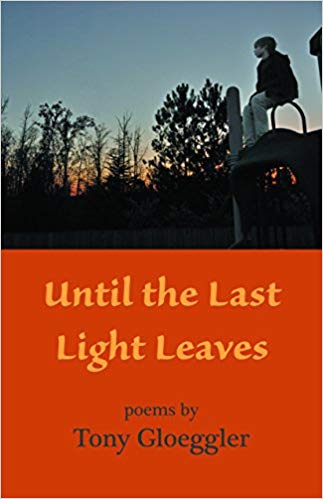
until

Tony Gloeggler

is a life-long resident of New York City and has managed group homes for the mentally challenged in Brooklyn for over 35 years. His work has appeared in Rattle, Poet Lore, New Ohio Review, Spillway, Patterson Literary Review, The NY Times & Ted Kooser’s newspaper feed. I have been nominated for 9 Pushcart Prizes without ever getting one. His full length books include One Wish Left (Pavement Saw Press 2002), The Last Lie (NYQ Books/2010) and Until The Last Light Leaves (NYQ Books 2015). My next book will be published by NYQ Books. He doesn’t have a website, but his Facebook where he often posts publications
https://www.facebook.com/tony.gloeggler

https://books.nyq.org/title/untilthelastlightleaves

The Interview

1. When and why did you start writing poetry?

Around 1970 when I was 16 or so and it truly sucked. Used it as an outlet to examine my thoughts and feelings and how it seemed like nobody was talking about most of the things I was thinking about. it helped me clarify things, see how I fit and didn’t fit in my little world.

2. Who introduced you to poetry?

Myself. I went from Dylan’s lyrics to poetry. I took a few classes in college: Contemporary poetry and Women’s Poetry.

I was first drawn to people like Anne Sexton and Adrienne Rich and Richard Hugo.

2.1 Why were you first drawn to these poets?

They seemed to be writing about themselves in an unguarded way and maybe more important, I could usually understand their poems without suffering a hernia of the brain.

Though I found Rich tougher. I also liked the way Sexton had these weird rhyme schemes that didn’t smack me in the face by being too obvious…at least that’s how I remember it.

3. How aware are and were you of the dominating presence of older poets traditional and contemporary?

I’m not sure I understand the question….I will say I never had any use or interest in the so called canon and when I was in workshops and being told to read things like the Psalms, Shakespeare’s sonnets, Pound’s Cantos, Robert Burns I was convinced it was worse than water boarding.

I do read and learn from the contemporary established, well known, recognized contemporary narrative poets like Levine, Laux, Patricia Smith regularly, Probably I am as old as the 2 women, though not dead like Levine.

3.1 Why was it worse than water boarding?

It felt like a constant struggle to understand and didn’t seem to have anything to do with my life and Robert Burns seemed like bad Hallmark cards. It just never clicked with me, made a connection with me. It never seemed worth the trouble to read and because I didn’t get any of what other people said they were getting, it made me feel dumb. And I was pretty sure I wasn’t….. Ok water boarding is probably a bit worse.

4. What is your daily writing routine?

I don’t write daily. I don’t want to make it feel like a job or obligation. If and when I get an idea that seems like it might be worth writing about, I’ll walk around with it in my head until I have a kind of strategy on how I want it to go, what direction, what I want to focus on and then I’ll sit down and try to find out if it feels right, see if it moves along and still interests me.

Then I’ll sit down for 2 or 3 hours at  a time until it feels like it’s well on its way and then I’ll keep going back to it at different intervals. If it’s going to turn into something worthwhile to me, it will stay on my mind, haunt and tease me, until I get it down to where I feel it’s finished…..So my writing is usually comes and goes in splurges. I’m not one for writing exercises and I have never been good at them in workshops. I can have periods where I don’t write. After a month or so, I start thinking shit I’m out of ideas. But so far, an idea has always showed up

eventually.

5. What motivates your writing?

Mostly that I have something to say, that I think I look at things differently than most people, that I’m good at it (I’m not good at many things) and I want to write things that feel true and right and when I do that, I feel good about myself, I get this quick surge of a sense of accomplishment.

6. How do the writers you read when you were young influence you today?

I think the biggest influences on my writing came from listening to people like Dylan, Jackson Browne and Springsteen where I wanted to and still want to move people like their songs and words moved me. What I’ve read hasn’t measured up to that.

Then in the mid-eighties I signed up for a workshop and was extremely fortunate to get William Packard as a teacher. He taught me about cutting and paying more attention to sound and rhythm. He also validated my writing and he made me feel that I wrote good poetry and I had a chance to be better. I took a number of workshops with him and just to be sure he wasn’t the only person who felt I was any good, I took other workshops and teachers/writers like Ntozake Shange, Kevin Pilkington and Patricia Smith helped me along.

7. Who of today’s writers do you admire the most and why?

Well, this could get me in trouble…I’ll leave out the well-known ones and start with the two people I’ve exchanged work with for a long time, Michael Flanagan & Ted Jonathan. If I didn’t think they were real good, I wouldn’t have wasted so much time. When I first started to try and get published, do readings around NYC there were 3 poets: Angelo Verga, Shelley Stenhouse and Doug who is now Diana Goetsch and we supported and challenged each other. All five are still writing strong shit and have had some degree of recognition…and three others who I’ve come across more recently, Rebecca Schumedja, Alexis Rhone Fancher and Tom C. Hunley. I’ve been impressed at their ability to write so many poems that resonate with me consistently.

8. What would you say to someone who asked you “How do you become a writer?”

Become a writer?….Get a real job and if writing is important to you, read and write as much as you can.

9. Tell me about the writing projects you’re involved in at the moment.

I don’t really do projects. I tend to go poem to poem, concentrate on individual poems and then when I think I have enough good ones, I’ll start looking at them and figure out how to organize the poems into a book: what subjects/threads are dominant an if it feels like it’s a strong enough collection I’ll focus on finding someone to publish it. Currently, I have a commitment from NYQ Books to publish my next book, What Kind Of Man. It’s taking longer than I hoped to come out, but I keep adding poems and I believe I’ve made it stronger.

Wombwell Rainbow Interviews: Thursday Simpson

F WORD WARNING

Wombwell Rainbow Interviews

I am honoured and privileged that the following writers local, national and international have agreed to be interviewed by me. I gave the writers two options: an emailed list of questions or a more fluid interview via messenger.

The usual ground is covered about motivation, daily routines and work ethic, but some surprises too. Some of these poets you may know, others may be new to you. I hope you enjoy the experience as much as I do.

Thursday Simpson

lives between Peoria, Illinois and Iowa City, Iowa. She is a writer, musician and cook. Her work has recently been anthologized in Nasty! Volume 2, Hexing the Patriarchy and Satan Speaks!. She believes in garlic, onions and Feline Satan. Her twitter is @JeanBava and her full publication history can be found at www.thursdaysimpson.com

The Interview

1. When and why did you start writing poetry?

When I was a kid and throughout highschool I always wanted to write. Mostly back then I would listen to Opeth’s album Damnation or Tiamat’s album Prey and try to come up with my own poetry but it never really happened. But eventually in 2008 I was enrolled in community college and playing in about 10 different bands. I wasn’t really happy playing music so I started thinking about writing again. One of the nice things about writing as opposed to film making or playing music is that there is no recording or filming process. It’s like pure expression, no strings, no tuning, no effects or cables. Sure, you need a laptop and there is always so much revision and study involved. And writing is such a more long term thing than music. A manuscript might take more than five years to go from draft number one to publication as opposed to an album getting written, recorded, mixed and released in a year or two. It’s not that one medium involves more or less work, they’re just different. And the process involved with writing really kind of seemed attractive to me back then. I could sit and read and then write on my computer and email my work to publications instead of constantly practicing and trying to get my riffs recorded on good audio and find a label’s mailing address and trying to get their attention and going on the road and all of that.

2. Who introduced you to poetry?

That’s a good question. In all honesty, I’m not sure I can say I remember a single moment where I realized, “Oh, poetry is a thing.

There are several things that do come to mind, though. Growing up in Galesburg, Illinois one hears a lot about Carl Sandburg. He was born here and a lot of things are named after him. I actually won a poetry contest in the 7th grade put on by his estate and his daughter gave me the prize at a ceremony held at his birthplace.

I think also in the 7th grade our class did a poetry unit where we read poets like Nikki Giovanni and Langston Hughes and Lewis Carroll and Edgar Allan Poe. Looking back on that now, it’s so weird. It was a Catholic school, so we were getting all of this militant right wing anti abortion politics, books like Harry Potter were banned.But we also read poets like Nikki Giovanni and learned about Oscar Romero.

Then once I was in public highschool, I think I started to hear people talk about poetry as something one did to express themselves. Or as a valid art form unto itself. Some people from my highschool used to get together both in person and online and workshop eachother’s poetry. They were who told me about Sylvia Plath and poets like that.

But it was really more professors at my community college that made it start to click for me. One guy was an eldergoth from the 80’s and also used to play music before he became a writer. He really helped me take poetry as something I wanted to do and turn it into something that I did. He taught, “America,” by Allen Ginsberg in class one day and I went out and got a copy of Howl. The title poem, Howl, really fucking blew me away. I think that’s the poem that really made me fall in love with poetry.

3. How aware are and were you of the dominating presence of older poets traditional and contemporary?

At first, very much so. That’s all we were taught in community college. The only non intro lit course was a two part Fall-Spring British Lit survey. I really didn’t like Beowulf or Canterbury Tales or the The Faerie Queene. I loved Shakespeare but didn’t really like Donne and Marvel and etc etc.

And after a month or two of the Enlightenment guys, I really fell for Wordsworth and Coleridge and Byron and the Shelley’s. I read their stuff for the better part of Spring 2010. Then a friend of mine that recently graduated from Western Illinois University asked me to help her run a local writing workshop. And while we were hanging out and planning it she showed me all of the texts they worked on at Western and let me borrow Richard Siken’s book, Crush. And after reading him I fell in love with poetry all over again.

Then once I transferred to the University of Iowa to finish my BA I chose a poetry writing course based on the instructor teaching Siken and Frank O’Hara. The Writers Workshop offers a series of creative writing courses for undergrads that anyone can take. And the instructors are all graduate students currently enrolled in the Workshop. We also studied Jeffrey McDaniel and the Dickman Twins and people like that. She also directed me to poets like Sharon Olds, James Wright, Franz Wright.

In other classes in the English literature department we read people like James Baldwin and Marilynne Robinson and Mary Swander and Raymond Carver and Jane Smiley.

During my last Semester there, Spring 2013, I started reading Maggie Nelson. She was around Iowa City for a bit in 2010 or 2011, guest lecturing and things like that, while she was publishing her book, Women, the New York School, and Other True Abstractions, through University of Iowa Press. So by 2013 everyone in Iowa City was reading Bluets. That book really changed my life. I read everything else Maggie Nelson wrote and then read every author she cited in her work, Simone Weil, Eileen Myles, Cookie Mueller.

Then after reading authors like Dodie Bellamy and Kathy Acker and Chris Kraus I started making friends that shared a love for similar writers. And then I more or less started getting plugged into communities of actual contemporary writers my own age doing the coolest fucking shit.

4. What is your daily writing routine?

It varies! I hate doing the same thing every day. But, I do prefer to write in the morning, first thing. I always hydrate first thing every morning. I’m obsessed with drinking water. Then I either make breakfast and a pot of tea or coffee or just start in on whatever project I’m working on. The longer each day goes on the more shit comes up. And I really need to focus when I write. So I like to get it out of the way first thing. Then it always isn’t in the back of my mind as I do everything else during the day.

In general I try to pattern my work ethic after my favorite athletes. Interviews with Kevin Durant or DeMarcus Cousins or Nyla Rose have taught me so much about what it takes and what it looks like to pursue greatness.

5. What motivates you to write?

I think it’s almost always been work that I admire. Sometimes it’s an interpersonal thing, a breakup or a great hookup or whatever. But almost always it’s because I’ve seen a great film or read a great book or watched a great professional wrestling match or athletic contest.

I really like raw, physically immediate work that takes real risks. That’s why I love pro wrestling so much. It’s such a physical, emotional form of storytelling. A great match from Mitsuharu Misawa in a lot of ways reminds me of a novel like The Orange Eats Creeps by Grace Krilanovich or Like Being Killed by Ellen Miller. Or more recently, Tessa Blanchard’s match with Sami Callihan. Tessa really connects with the audience with her tears and really honest cries of pain throughout that contest. That same feeling and emotion is present in Colt Cabana’s recent title defense against James Storm or in just about anything that Pentagón Jr. and his brother, Fénix do in the ring.

Same with the New Day, Kofi Kingston and Xavier Woods and Big E. I think they’re just about the most talented artists working in professional wrestling throughout this entire decade. There is so much artistic brilliance in their matches with the Uso’s or in Kofi Kingston’s main event work in 2019.

Besides wrestling, films like Night of the Living Dead by George Romero or Living Dead Girl by Jean Rollin really direct my artistic goals. Something raw, real, honest and immediate and emotionally and psychically potent. That’s what I’m always trying to chase and pursue in my own work.

6. How do the writers you read when you were young influence you today?

I think my passion for literature and video games and athletics and film have always been more or less intertwined. When I was about 5 or 6 I started watching the Universal Monster Collection on VHS and got obsessed with horror. I read all of the Goosebumps and Fear Street books from the Galesburg Public Library. I watched the Star Wars films on VHS and then read all of the Star Wars books at the public library. I watched Tales from the Cryptkeeper and Are You Afraid of the Dark and read all of the affiliated franchise novels that the library had.

I first became aware of professional wrestling after renting WWF Royal Rumble on the Sega Genesis. In 1993, 1994 and 1995 the only way to watch wrestling for me was from renting VHS tapes. So anytime I got any money I would rent as many wrestling tapes and horror films as I could afford and watch them over and over.

I didn’t have a computer or access to the Internet until 1999. So mostly every second of my free time was either spent at the library researching films and books or at rental stores reading the VHS boxes.

Crying is a really important spiritual activity for me. Victor Wooten defines crying as something we do when we aren’t able to express our emotions through language. I’ve always cried a lot, regardless of age. My favorite thing to do on my days off is to make a pot of coffee and listen to music or watch a film or listen to an audiobook and cry my fucking eyes out.

The video game Final Fantasy 7 really changed me. I played it fairly soon after it came out in 1997. I became so obsessed with the game. I cried when I played it and I cried thinking about it when I wasn’t playing it. The way it combines such lyrical music with so many incredible greens and blues in the color pallet just really connected with me. I read the strategy guide cover to cover so many times. Video game strategy guides were actually one of my favorite literary genres as a kid. I never owned too many games, but I could afford the strategy guides. So I just read them cover to cover, over and over.

So much of what I do now is born directly out of my obsessions from when I was a child. An interest in Universal Horror led to an interest in the 80’s slasher franchises, that fed into an interest in George Romero’s body of work and so on. Then once I was in college and started to learn about politics and theory and history, horror was such a perfect exploration ground. George Romero’s 1978 film Dawn of the Dead became a renewed obsession. I started thinking of 80’s slasher films as Reagan morality tales.

Coming out of the closet and living publicly as queer and trans for me was very much tied to learning about AIDS in the 1980’s. Reagan’s policies really effected my family in a lot of negative ways. Rick Perlstein wrote a really great two volume work that traces changes in right wing politics from Eisenhower through the 1976 Republican Convention. Those books were such great companions to The Letters of Mina Harker by Dodie Bellamy or I Love Dick by Chris Kraus and In One Person by John Irving. Artists like David Wojnarowicz tie so many things together. My mind has always worked in a language of synchronicity and probability and chance and myth. Things like Baseball statistics have always been incredibly meaningful to me. And the way David Wojnarowicz ties things like country music to masculine queerness really made me feel validated as a thinker for the first time in my life.

And during times when I really thought my writing was over and out, especially in late 2012 and late 2013, watching Are You Afraid of the Dark and some of John Carpenter’s films like They Live and Prince of Darkness really helped get my mind and heart together again. The same with 1931’s Frankenstein. I watched that film over and over as a child. But when I watched it during the fall of 2014 it was like seeing it for the first time. Boris Karloff’s performance is just something special. His unhinged screams during the fire at the end of the film really effected me in a profound way. You can watch that film alongside reading Chris Kraus’ novel, Summer of Hate, and learn a lot about violence in our society.

So yeah, the obsessions and concerns in my work now are very much reflected in my obsessions and concerns as a five year old.

8. Who of today’s writers do you admire the most and why?

There are so many! I think more than anyone, my favorite contemporary writers are Ariel Gore, Tiffany Scandal, Erika T. Wurth, Juliet Cook, Leza Cantoral, Christine M. Hopkins, Kristen J. Sollee, Joanna C. Valente, Nadia Gerassimenko, Juliet Escoria, Ingrid M. Calderon-Collins, Monqiue Quintana, I could go on forever.

Helen Oyeyemi is a genius. Sybil Lamb is a genius. Patrisse Khan-Cullors is a genius.

I also like Koji Suzuki’s novels. Edward Frenkel is another favorite. Karyn Crisis is writing and publishing a series on traditional Italian witchcraft that is excellent. And I do enjoy Haruki Murakami as well. Marisha Pessl is another favorite.

More than anything, I love how publishing is changing. Ebooks and audiobooks and the Internet are opening up so much to so many people. You no longer need to live in New York City or go to college to have access to a life in literature.

Technology is making literature accessible and possible for disabled persons as well. You don’t need a ton of shelving and space to store your books, you can read / listen while you cook or work or whatever. An average SD card can hold about 5 public libraries worth of books.

In general I just love where contemporary literature is right now and hopefully where it’s heading. Art seems more accessible than it’s ever been.

8.1. Why are they genius?

Helen Oyeyemi’s book, “White is For Witching”, is a novel that is as expertly written as it is affecting. I love books that aren’t fixed. Those Comp 101 tropes of, “Reliable narrator, unreliable narrator,” or, “Now class, to write well, we must first prepare an introductory paragraph with our thesis statement,”

Just turn me off.

I love it when an author jumps deep into the psychic mass of human bodies. The psychic and physical realities of humans don’t correspond at all to those 101 concepts.

And Oyeyemi’s, “White is For Witching,” to me is just about the perfect book. Everything in the narrative is always changing. Every sentence just feels so profound and impactful. It really challenges the reader to kind of move beyond the literal text and engage with the narrative more with one’s psychic senses or within one’s innermost being.

Sybil Lamb’s book, “I’ve Got a Timebomb”, is a novel that, to me, recalls Kathy Acker’s non-linear style. But Sybil’s novel specifically frames Acker’s queer, disjointed virtuosity within a transgender, W. Bush era framework.

As with Oyeyemi’s, “White is For Witching,” its rather difficult to get a sense of what’s happening, sentence to sentence. And that forces the reader to both rely on the depth of the language itself and also on their own psychic ability to sense what is happening. And as the novels continue, they each create such a powerful impact and resonance within the reader. Or at least they did with me. They changed my fucking life.

And Patrisse Khan-Cullors book, “When They Call You a Terrorist,” is one of the most profound works I’ve ever read. It’s in part memoir and part contemporary history. I think if someone was only going to read one book published in the 2010’s, “When They Call You a Terrorist,” is a book that person should choose.

I think for a lot of white people in the United States, we really ignore what’s going on around us. We don’t confront our white privilege. We don’t confront that our white privilege is sustained by institutional racism. We don’t confront that horrific violence is forced on people of color.

Throughout her book, Patrisse Khan-Cullors candidly talks about her life and the lives of those around her. And through her writing, she almost kind of gives the reader a choice. By describing the horror and violence of racism, the reader can either choose to be horrified and repent and commit to change or they can continue to block it out.

The narrative also is about the author’s journey as a queer person. She talks about the realities of being queer in highschool and being queer as an adult.

I think, “When They Call You a Terrorist,” is a book that has incredible power. If anyone doubts the ability of literature and narratives to change lives, “When They Call You a Terrorist,” can shake them from that complacency.

9. Why do you write, as opposed to doing anything else?

So, I think for me writing is the most accessible art form. You can do it alone, you don’t have to have a lot of friends or a lot of gear and money and things like that. You don’t have to go buy a guitar and learn how to tune it and replace your strings or learn about what a sine wave and a square wave are and etc etc.

You can go out and read books from your library or find ebooks and audiobooks online and dive in and start getting inspired. Also, libraries carry a ton of ebooks and audiobooks besides physical books. And if there’s something you want that they don’t have, they can almost certainly get it for you.

There’s no equivalent with guitars and drum machines and synthesizers. You kind of have to buy them or maybe at best rent them from a music store. And renting in that context costs money.

But libraries also have laptops you can rent for free and write on. You could base your entire writing career out of a public library if you couldn’t afford books, an internet connection or a computer.

You can just start reading and see what inspires you and go pursue it.

The Internet really helps one connect to other readers and writers and is such an excellent way to find and build communities.

Though, I don’t mean to act like writing is high up on the platonic list of ideal art forms. I live a fairly monastic life and I enjoy that way of living. Writing is a long term game. It takes months and more often than not years to write and draft and edit and revise and get rejected and get rejected and write and revise. It appeals to my temperaments.

And revising is as simple as reading and re-reading, deleting, re-framing, re-stating, seeking clarity and things like that. You don’t have to listen to abunch of audio on abunch of expensive equipment and twist and turn abunch of knobs and worry about re-recording a part or how something’s mixed or anything like that.

10. What would you say to someone who asked you “How do you become a writer?”

More than anything else, one becomes a writer by first reading and then writing and then going back and editing what one has written. The hardest parts about being a writer have more to do with time, money, stress management, real life shit.

When I was living in Iowa City, some of the best advice I got came from reading the memoirs of writers and artists that I admire. Especially Jeanette Winterson and David Lynch and Ann Patchett.

It’s easy to see ourselves as these nobodies and our heroes as deities. But just to share a small part of Jeanette’s story. After she was kicked out of her parents house for being gay, she used to go to the library every day and get books to read. Back then she thought it was required to read every text in alphabetical order, so she started with the first book in the A section and started working her way down the lines.

Eventually a librarian noticed her habits and told her that she can read any book she likes at anytime. That no one is required to only read books in alphabetical order.

I bring this story up because our crisis’ really hurt. When we lose a job, we feel like it’s the end of the world. When we go through a breakup we feel like it’s the end of the world.

And we feel like that because things really fucking hurt.

But one thing we don’t realize sometimes is that our heroes, the pillars of art, have gone through the same things we’ve gone through. David Lynch had to put Eraserhead on hold for more than five years because he was broke. He talks in his memoir, Catching the Big Fish, about going every day to the local Big Boy and drinking a milkshake while he thought about his ideas.

You have to imagine David Lynch not as the creator of Twin Peaks, but as a broke twenty something loser hanging out at the fast food restaurant every afternoon, starring off into space, dreaming about someday making movies.

Professional, capitalist culture teaches us that such dreams are shameful. We’re all taught to laugh and scoff or at best feel sorry for the girl heading out to LA to become an actress or the person living in their parents basement working on their first demo.

The hardest part about being a writer is learning to not give into all of that shame. A lot of people will talk a lot of shit about you. That will only ever increase in its intensity as you publish and do your thing.

Once, I sent a story to a publication and paid 3 dollars to have the editor give me personalized feedback. And this fucking guy sent me his feedback by gleefully ripping my work to shreds, sentence by sentence.

A couple of weeks later, that exact same piece helped me get accepted into a nationally recognized MFA Program with an offer including full funding.

I didn’t accept the offer because I hate college, but that’s a different story.

The point I’m trying to make is that you just have to never give up. Ever.

Read the books that interest you.

When you get an idea for a piece, write it.

And finish it.

No matter what, finish what you start. No matter how hard it is. You can always edit it later.

Then after you finish writing something, read some more books that interest you. Watch films that interest you. Pursue anything that interests you.

And read books that maybe don’t interest you. And read the books that interest the authors you really like. Read people’s bibliographies. Get the books referenced in their research and read them.

And everytime you get an idea, make a note about it. And when you have time, work on it and do the best job you can.

I think doing one’s best is great advice. Whenever you’re writing, just do the best you can. If you don’t have time to write, just make sure you write when you do have time.

Never give up and always do your best.

That’s where editing really comes in. There isn’t a writer that’s ever lived who doesn’t have to revise their work. In the moment, things seem so impossible. Our sentences always feel so bad.

But one thing you’ll notice, if you don’t give up, is that six months or so after you finish a draft, you’ll come back to it and see what you need to change.

And then six months or so after that, you’ll come back to your piece and see more things that you can improve.

Sometimes that six months only takes a few days or a few weeks. Sometimes it might take a few years. Writing can be a very mysterious process.

That’s why no matter what, you should always just do your best each time you’re sitting down to write. Do your best and let the gods sort out the rest.

If you want to go to college to study literature and writing, go for it. If you don’t want to do that, don’t.

If you like workshopping with other people, do it. If you don’t like it, your editors will let you know what you need to change and how to improve your work.

Some of my favorite writers are highschool dropouts and some of my favorite writers have multiple PhDs. The secret to writing is figuring out your own process and investing in it and devoting yourself to the work of reading and writing and editing and revising. And most importantly, the secret to writing is never giving up. Ever.

When people tell you that your work is shit, just move on. Never delete or destroy your own work. Just file it away and revise and edit it later on.

And I think it’s also important to be open to change. Both changes in your style and changes in your methods and changes in what interests and motivates you.

You might find that you start out writing poetry but want to write more fiction. Or you might start out wanting to write scathing, sexy queer non fiction but end up writing high fantasy novels.

Go with your gut.

11. Tell me about the writing projects you have on at the moment.

I’m in the process of finishing up a novel that’s tentatively called, “Like a Razor.”  It’s mostly about a young, out of work mathematician dealing with the loss of his primary partner in a polyamorous relationship. There is also a lot of professional wrestling & Satanism related esoterica and mystery involved.

I’m also working on putting together a couple poetry collections. And hopefully also a non-fiction collection dedicated more to examining spirituality and strategies for activism.

And hopefully all of these works will have a soundtrack that I’ve composed and recorded myself.

Thank you so much for this opportunity! I very much appreciate it

Wombwell Rainbow Book Interviews: Sarah Etlinger

Wombwell Rainbow Interviews

I am honoured and privileged that the following writers local, national and international have agreed to be interviewed by me. I gave the writers two options: an emailed list of questions or a more fluid interview via messenger.

The usual ground is covered about motivation, daily routines and work ethic, but some surprises too. Some of these poets you may know, others may be new to you. I hope you enjoy the experience as much as I do.

Etlinger

Sarah Etlinger

is an English professor and poet who resides in Milwaukee, WI, with her family.. A Pushcart nominee, she has been published in a variety of literary magazines. Interests other than writing include cooking, traveling, and learning to play the piano.

The Interview

1. What inspired Never One For Promises?

The inspiration for Never One for Promises came from two main threads: first, grappling with questions of faith and how it manifests itself in our experiences; and second, the complexities of romantic relationships. Some of the poems arise from my own experiences with a particularly profound, powerful, and ultimately destructive relationship, while others address the concept more generally and examine the ways in which we experience love, its limitations, and its power. I think the book really asks questions about love and its limits, both from a grounded, everyday perspective, and a more divine, ethereal one.

2. The Christian Bible specifically Old Testament relationships, such as between Noah and his wife, are grounded in the actual complex modern relationship you describe.

Yes they are. And I think that’s a really nice way of thinking about it.

3. It somehow makes the OT characters more believable and less symbols, and widens the intimate, personal picture of the modern adultery. How long had you been working on the collection?

I worked on it for a year. It’s a long story. Two years if you count just writing the poems.  But now I have another one coming out too hopefully next month that I’ve also been working on for a year. I am a professor and a wife/mom so I don’t always get regular time to write.

4. How important is the natural world to your writing? I am thinking of the pear poem, among others?

I would say it’s integral. This whole project of writing poetry began because while I was driving in rural Indiana in July 2016, and marveling at the vast cornfields, farms, etc. a poem seemed to come to me from the heavens. It’s called “Crossroads” (check it out here, final poem in the issue: https://docs.wixstatic.com/ugd/9b8cac_e40708d596ee41718b8afa65a9f1b7e4.pdf)

But in my second book and in the ms I’m working on now, nature/the natural world is central because I see in it images of the divine, the spiritual, the contrast between the everyday and the extraordinary. In “Pears,” particularly, the pears are the catalyst for the memory, the reflection, the experience; I believe this is the case in many of my other poems, too.

5. Who introduced you to poetry?

Oh, I’ve loved poetry my whole life– as a very young child, my mother used to read me Mother Goose Rhymes and we memorized them, along with greats like Shel Silverstein and Dr. Seuss. So I think I’ve always had a penchant for it. Since I learned to write, I wrote stories and poems and things. But I started taking it seriously in 6th and 7th grade and continued to write and read throughout high school. In college, I stopped after a bad experience in a creative writing class, and really didn’t write much after that. Then once graduate school happened, I’d become too busy to write anything. So it wasn’t until I got the job I have now where I was able to breathe a little and come back to poetry. The poets I read come from my friends and my own background in literature. I know a few writers, too, who recommend things to me. Poetry chose me, though, and it has always spoken to me. It has saved me more than once in my life.

I credit my return to poetry to two friends, one I met in high school and who encouraged me to write; and one to whom I no longer speak, but who played a role in encouraging me as well as introducing me to writers like Erica Meitner, W.S. Merwin (my favorite), Merton, and Charlotte Boulay, among others. Merwin in particular has been a large influence in my writing as of late.

6. How does Merwin influence your writing today?

Merwin is a virtuoso of rhythm and language, and so because of him I’ve tried to pay attention to how language sounds when it’s together there on the line. And in most of his work, he has eschewed most punctuation, so he has to let the line and the line break do the work. That, for me, was a profound (though somewhat simple) insight, and in a few of my recent poems I have minimized the punctuation to let the lines do the work. I also love the way he writes so simply about nature. As the natural world is an influence on my work, I like to think I’ve imbued some of Merwin into my lines in the way that the natural world is both everyday and spiritual, beautiful and terrifying, small and too big to comprehend.

7. What is your daily writing routine?

Well, I do not have a set routine only because I have a demanding job (I’m a professor with a heavy teaching load), and a little boy at home, so I often don’t get the luxury of a regular routine. However, now that my son will be in school soon, I hope to have a more regular writing schedule. A good piece of advice I’ve gotten from the amazing poet Joanne Diaz was to treat poetry and writing as part of my job, not as a hobby. So, even when my son was much younger and I was swamped, I would carve out a few hours on a Sunday when my husband could watch him to write. I also meet with a coach/mentor at least 2x a month, which keeps me on somewhat of a schedule.

When I do write, I tend to write in fits and starts. I’ll get periods where I’ll do as many as 3 poems in a week or couple days; then weeks when I get nothing at all. I also tend to write a lot of lines down in the interim; when I’m thinking about something or when somebody says something interesting to me, I will write down the phrase or idea. Sometimes, if I’m lucky, I can draft at least part of a poem on my phone (I’ve always got that with me so it makes it easy to write) in between other things.

As for the actual writing session, my routine varies depending on what I’m working on. If it’s writing the first draft of a poem (and I have time to finish it), I mostly sit down and type it out. Lately I have been using pen and paper because I love this notebook/journal my best friend got me from India, and I like to compose by hand sometimes, too. However, usually the pen and paper comes out only when I’m revising. If I’m revising the poem, I use notes from others or my own ideas, and try to work those in. But I find that this process has changed a lot for me over the course of the 3 years I’ve been doing this. I used to only write on my computer and revise there. Now I find I like the pen and paper, and cutting up a printed version of a poem to see how it works.

8. Who of today’s writers do you most admire, and why?

I like a lot of poets from the last 60 years or so; in particular, ee cummings, Williams, Kenneth Koch, Louise Gluck, Gwendolyn Brooks, Eavan Boland, and many others.

As I mentioned, I love Merwin, but I also love more contemporary voices like Erica Meitner, Kaveh Akhbar, Claudia Rankine,  and Kay Ryan. These writers are brave and autobiographical and technical masters. They use majestic, mythical imagery in simple language that transports readers to other worlds. Kay Ryan does things with line breaks and rhyme that I didn’t think were possible; Brooks can rhyme so naturally it almost is impossible to detect; and Eavan Boland’s blending of the everyday and the mythical is deceptively simple. I also love how Akhbar’s images are uncanny, sometimes grotesque, but so beautiful. Finally, as a Jewish writer, I appreciate Meitner’s voice and talent as well as her speaking to the Jewish American experience.

I think, though, that I admire poets who are dedicated to their craft and do not use images or phrases for the sake of using them. Many talented writers exist who do this, and it makes for strange reading, at least for me. What I admire most, I think, are poets who try to reach the truth of experience through powerful images, beautiful phrases, and/or particularly lyrical work.

9. What would you say to someone who asked you “How do you become a writer?”

I would say that you become a writer by writing. You have to keep at it. Do it as often as you can and get good feedback. Educate yourself as much as you can. But the writing is the most important thing. You’re going to have good days and bad days–lots of them–but every word written is progress. And you have to write a lot of bad stuff to get to, get at the good stuff.

I’d also say to find someone who’s a good reader of your work, who understands and respects your work for what it is, but who pushes you to see it differently and to grow.

But at the end of the day, being a writer is one who writes. If you’re writing you’re a writer.

10. Final question, Sarah: You said earlier that you use nature as “ the catalyst for the memory, the reflection, the experience; I believe this is the case in many of my other poems, too. “. Please can you expand on this in the light of  Never One For Promises and the present Ms you are working on.

Never One for Promises uses nature as a site for reflection, for understanding, for questioning. Nature is, in both books, the ultimate metaphor for existence at the same time it reminds us of our smallness within it.  For example, in the Geraniums poems, we see the speaker looking at her geraniums and remembering how she got them, or how her mother cut them back, and how they grew despite the long hibernation. She learns or is reminded of how life often works. In the second Geranium’s poem, the petals and leaves remind her of her lover’s body and how tender–or, implicitly, brutal– care is what nurtures us. In Two Fools the lovers marvel at the stars at night and their smallness in the world; through the metaphor of a cotton stem she comes to understand her lover will leave her. In Summer Aubade similar questions of our place in the world and among nature arise. And in Pears the act of slicing a pear for lunch– a simple, everyday act, yet one that is both intimate and sensual as we feed people we love, right?– becomes the fulcrum for memory and thinking about lost, unrequited love. There’s the ocean, there’s a chili pepper, the ashes from rituals, flowers…all things that come from the natural world yet are infused with the ultimate questions of existence.

In my second forthcoming book, similar threads are taken up, though the focus is much broader. We have meditations on sunrise, swimming as metaphors for missed communication, the stars and the sky, flowers, light and dark and the body with its unpredictable senses. We have a grounding yet we yearn to fly beyond it; we have the dissolution of matter and the ways our cells carry things with us. This collection is more sensual and carnal in all senses of the word, and I think it is a nice “sequel” to the previous one.

Wombwell Rainbow Interviews: Anton Pooles

Wombwell Rainbow Interviews

I am honoured and privileged that the following writers local, national and international have agreed to be interviewed by me. I gave the writers two options: an emailed list of questions or a more fluid interview via messenger.

The usual ground is covered about motivation, daily routines and work ethic, but some surprises too. Some of these poets you may know, others may be new to you. I hope you enjoy the experience as much as I doMonster+36+Half+Cover

Anton Pooles

was born in Novosibirsk, Siberia and lives in Toronto. He is a graduate of the Creative Writing Program at the University of Toronto and the author of the chapbook Monster 36 (Anstruther Press, 2019) http://www.anstrutherpress.com/new-products/monster-36-by-anton-pooles

Follow him on Twitter @antonpooles.

The Interview

1. What inspired you to write poetry?

I’m a poet by accident, I never aspired to be one. I struggled badly with reading and writing in school, and still struggle with it to this day. I have a poor working memory and often have to re-read whole pages of a book because I can’t retain any of it. So, becoming a writer never crossed my mind when I was younger. Then a high school teacher told me that I wasn’t half bad and maybe I should give it a go, so I did and the only thing that is going to stop me now is death. I do not like the term “Learning Disability,” but I am of course aware of its presence. I write in defiance of my limitations and I am constantly having to prove to myself, time and time again, that I can be better than it would otherwise allow me to be. Why Poetry? I’m honestly not sure. We’re just a good fit I think.

2. Who introduced you to poetry?

I had to discover it by myself and that started with discovering epic Arthurian poems like Sir Gawain and the Green Knight and the poems of Sir Walter Scott. It wasn’t until my mid-twenties that I started reading contemporary poetry. I had started taking writing classes at the University of Toronto and I met Catherine Graham who was one of my professors — if I hadn’t taken those classes and never met Catherine I’m not sure I would be a poet — or at least I’d be a very different one.

3. How aware were you of the dominating presence of older poets?

The poets I was aware of as a child (and there weren’t many) felt as mythical as the figures they wrote about — Walter Scott felt as real as King Arthur. That mysticism washed away a little when I got older. I realised that they were just people sitting at a desk, writing and were not so different from us.

4. What is your daily writing routine?

I wish it was daily for starters, but when I do get a full day to dedicate to writing I like to start early, before my brain turns to mush. I don’t like working in silence, so I have music playing (always instrumental), something that fits the mood I’m in. It’s important for me to lock myself away from the outside world and limit the distractions that come with it. Music helps to create a bubble where my imagination and thoughts can flow freely.

5. What motivates you to write?

Poetry is all about exploration. It’s the chance to examine things you may not quite understand — things about yourself and about the world around you. As writers we’re always looking and finding things that perhaps go unnoticed. It’s important to write for yourself, but it’s also exciting to share your discoveries.

6. What is your work ethic?

My only rule is; when the poetry demon comes knocking I always try to answer him, no matter where I am. If I don’t, he’ll continue to scratch and gnaw at me until I do. Otherwise, it varies depending on what I am working on.

7. How do the writers you read when you were young influence you today?

I grew up reading fairy tales and fantasy, and one of the reasons I had such a difficult time getting into contemporary poetry was because there appeared to be no room for fantasy. I don’t think that any more, in fact I think quite the opposite. Once I embraced that, my work improved substantially, I think. I always sprinkle a few crumbs of magic into my work.

8. Who of today’s writers do you admire the most and why?

There are many, but the two who I admire and have inspired me the most would be Anne Carson and Catherine Graham. Their work appeared magically before me at a turning point in my writing life. I’m also greatly inspired by film. Film supplies me with imagery that I can’t always get from reading.

9. Why do you write, as opposed to doing anything else?

There is a lot of uncertainty and mystery when I’m looking down at that empty page and I like that — I like not knowing where I am going to end up. Outside of travel, I haven’t found anything else that gives me that pleasure.

10. What would you say to someone who asked you “How do you become a writer?”

The only way to become a writer is to write, and write often. No one is watching you write, so go wild, and don’t be afraid of exploring new territories, that you would normally stay clear of.

11. Tell me about the writing projects you have on at the moment.

I’m working hard on completing my first full collection of poems. I’ll keep you posted.

A review of my new collection “As Folk Over Yonder” by sonja benskin mesher

As Folk Over Yonder

.as folk over yonder. paul brookes.

have said before how the forward of this book leaves me emotional before even starting on the verse. not many will write of simple kindnesses

“Time has not,

nor will not help this grief.”


i find an underlying sadness from small tales of everyday, fragile stories of vulnerability, humanity

a unique voice from a sharp intelligent ear, the words flow as ordinary, yet extraordinary in the telling

the truth told which many of us hear, it takes Paul to record them beautifully in this book

a book of triumph over the ordinary; raising his stories to a magic world with pith and accent

a black and white movie of current lives

i suggest it is read at least twice over

and kept to read some more

i have read it four times over, and the words remain fresh each time, a new nuance with each reading

a little delight in every corner

bravo Paul


Sonja Benskin Mesher RCA 

information-

www.sonja-benskin-mesher.com

/http://sonjabenskinmesher.wordpress.com/diary/