Intense Silence: The Poetry of James Reeves

The High Window Review's avatarThe High Window

Although best known today as an editor, anthologist and award-winning writer of children’s verse, James Reeves (1909-1978) was also a prolific writer of adult poetry and was hailed by among others Robert Graves, Laura Riding, and Robert Nye as being one of the finest poets alive. In a stunning new selection  of his work published by Greenich Exchange – the first since his death, and edited by John Howlett – Reeves’ poetry can be reappraised as being amongst the most consistent and varied bodies of work of the twentieth century. It masterfully combines straightforward readability with a profound and deeply philosophical way of viewing the world. At its heart lies a poet whose work encompassed satire, elegy, humour, and doubt, yet was always underscored by a profound humanity.

The editor of The High Window is grateful to John Howlett, Gareth Reeves and Greenwich Exchange for permisssion to publish poems …

View original post 1,134 more words

Not Here – There by Andrew Taylor (Shearsman Books)

tearsinthefence's avatarTears in the Fence

The poems inNot There – Hereare somewhat more relaxed and conversational in tone than Taylor’s earlier books, but are still in the vein of minimalist, compressed writing typical of his work, in which close observation of the external world is mixed with a collage of texts and discourses. For this short review I want to focus on a single poem which I think is representative of many of the poems in the book. Here’s the poem in full:

Larch

The larch has been felled

Phytophthera ramorum

let’s drive the different route 17 miles

cattle grids

empty feedbags

strung like scarecrows

Railway at times runs parallel

ballast plumb line straight

Our single track

Passing place

Signal stagnant

inactivity

signpost navigation GPS

unnamed road

follow the quietness

valley emptyit looks like a bomb’s gone off

toward the estate there is cover

thirty five years ago

we took this drivetracks remain

View original post 514 more words

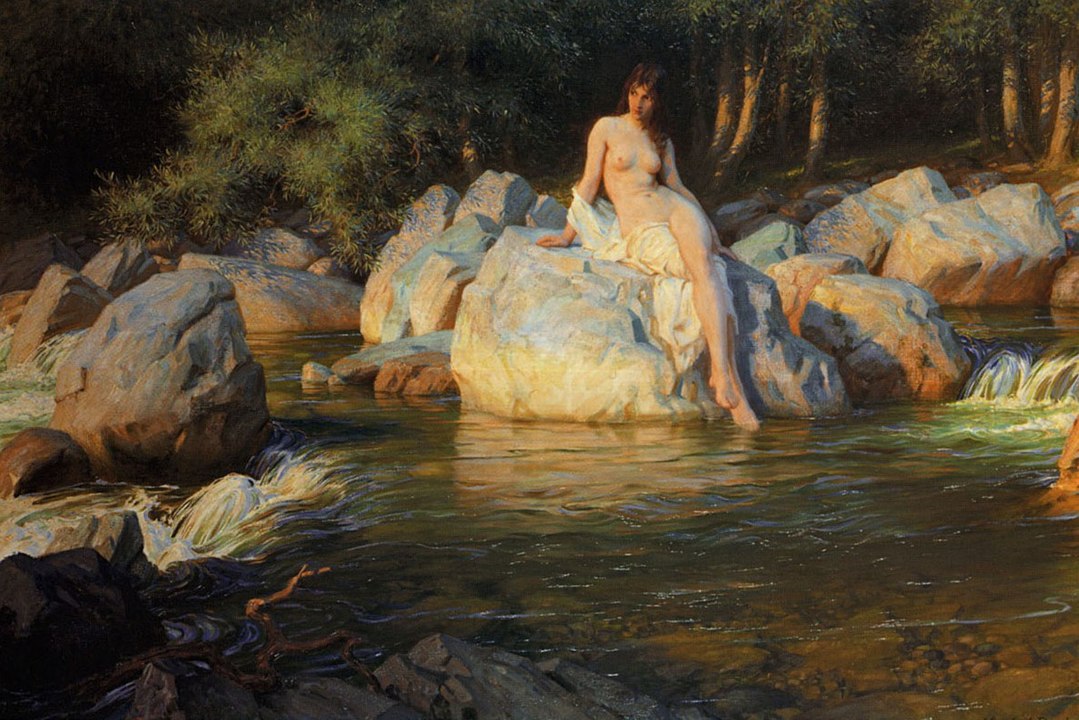
#folktober Today’s day theme is “kelpie” a beautiful shapeshifting black horse that inhabits pools and rivers and preys on humans that pass by. Broadening the theme out, I will feature your poetry/short prose/artworks about any shapeshifting being.

folktober – kelpie

The Kelpie

The Kelpie by Herbert James Draper, Public domain, via Wikimedia Commons

The warning ignored 

I told her again and again. But, would she listen to me? Then it took her, after charming her and her wee brother. Nothing much left to speak of of either of them. 

I don’t know how many times I’ve warned them both about playing down by the river. And on the Lord’s day, too! What will people say? I’ll tell you what. That my children, her especially, disobey their parents. The looks. The whispers in the village. I’ve heard them. Just before the smiles and the sneering words of sorrow. The questions that ask where two of my children have gone to, who with, and why.

How do I say to people that my previously good children were taken off on the back of a beast? Something resembling a horse, but it’s coat seemed to weld them to it. It’s mane that should be hair, yet I saw the writhing snakes, mouths agape. They appeared to be laughing at me for losing my children no doubt. For my lack of control. For screaming wildly at them to let go of the animal. I’m certain I heard it cackling on the wind. Sure of it. 

My girl tried in vain to help her brother. His hands were stuck fast. And yet, he had no fear. He was giggling. She was screaming. I tried to catch it and almost did. Almost. As it dashed into the loch headfirst with my children as passengers, I tried to grab the mane of snakes, and was bitten for my trouble. I felt it. There’s no mark on me, today. Under the water it went, deeper and deeper. That satanic beast. Taking two of my four children with it. Leaving their screams on the wind and one single yellow ribbon afloat on the water from my girl. 

My wife is grieving the children. Her anger is all for me. Not for their disobedience. But, if I had been a better man, stood less nonsense, they’d be here. She says that to all who’ll listen. Oh, to my face they say that it’s grief talking. And yet, I round corners to hear them saying the self same thing. 

Will I ever forgive myself? Should I? That sight will be with me for eternity. 

-©Ailsa Cawley 2021

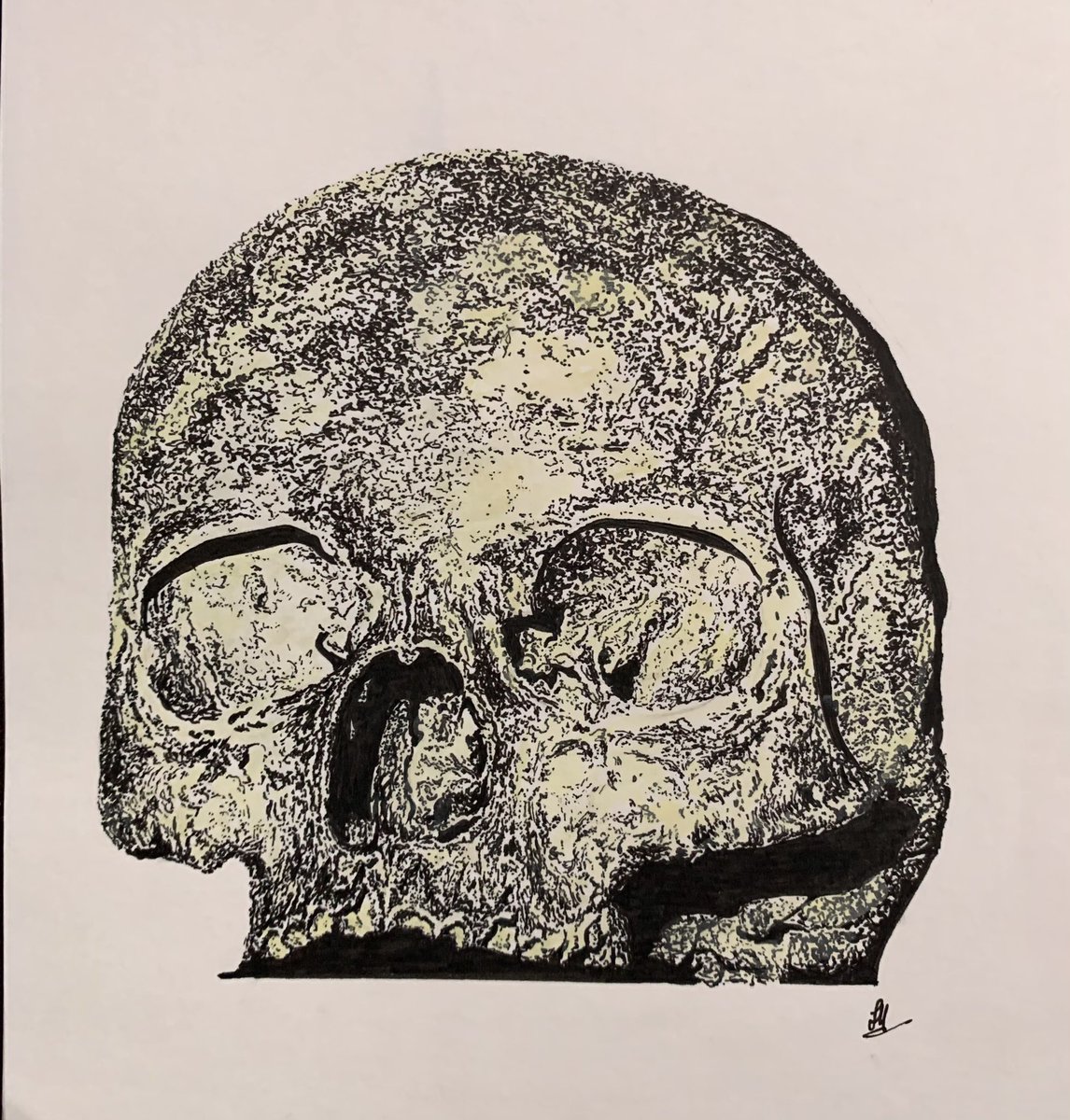
werewolf moon
the man he left behind
not what she wanted

-John Hawkhead

john hawkhead dust ti dust

dust to dust
the wind whistles a tune
that used to be his

Image and words by John Hawkhead

Bios And Links

-Ailsa Cawley

has been writing stories, poems and verses since she was a child. 
It’s not always what is considered poetry by some, as she isn’t a lover of sweet, schmaltzy rhymes! 
She is currently writing her first novel. A psychological thriller with a paranormal element, and she hopes to bring out a poetry collection one day! 
She lives on the Isle of Skye. While some of her poetry is written from personal experience, others are written from her slightly dark and twisted  imagination. 

Walking into the New Collection

wendycatpratt's avatarWendy Pratt

Yesterday I had the most amazing news. I’ve been awarded a Society of Authors Foundation Grant to help me to develop and work on my new poetry collection. I’ve been working on the collection here and there for a while. Just last week I had a look through my files to see how many poems were suitable for it and found, to my surprise, that I have between fifteen and twenty poems that fit into the concept that I’m working towards. Are they any good? hmmmm some are, some aren’t. I’ve begun to realise of late that my own writing process has changed considerably over the last couple of years. I used to write a lot of poems, I used to have fits of writing that were like purges, poems flowing out of me. These days the process is much slower, much more like waiting for something to grow and…

View original post 857 more words

Breakfast at the Origami Café by Tess Jolly (Blue Diode Press)

tearsinthefence's avatarTears in the Fence

Poems in this collection, stunning in language and shocking in theme, pivot on paradox. In the section called ‘Confetti’,for instance,in the six-part sequence ‘She’,the reader is led into the beauty of a sensory garden with flowers and nests filled with ‘soft pink fledglings.’ Instantly, the flowers are yanked out by the roots, nests are lobbied over the wall and those small fledglings are, horrifyingly, shredded into confetti and scattered. InBreakfast at the Origami Café,we are in a world half dream, half nightmare, a world of masks and vanishing through cracks, a condition of ‘now-you-see-us-now-you-don’t.’(‘Gaps’).

There is violence at the heart of the poems in this collection, a tradition of violence, the memories it brings, the damage and regrets.Breakfast at the Origami Cafécomprises four sections all with underlying shadows and pain. Part 1, which focuses on the mother figure, is…

View original post 509 more words

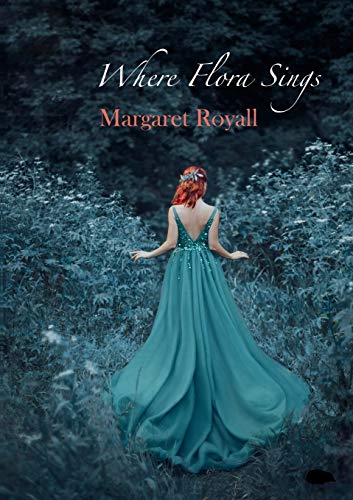
Wombwell Rainbow Book Reviews: “Where Flora Sings” by Margaret Royall

When Flora Sings

Her book is divided into two sections; Flower Power/People Power, and Roses and Thorns: A Retrospective on Life’s Triumphs and Trials.

Looking at the first section.

Each flower is examined through our relationship with it, rather than a look at the life of the flower.

 “BUTTERCUP”  begins with an event that made me smile, because I remember doing it, and it being done to me as a child. The putting of the petals of the flower under your chin to see whether you liked butter. Such a tender moment, that in the poem becomes a memory of the person that did it. Nostalgia brought up sharply into grief.

The theme of dealing with grief is suggested by an “In Memoriam” before the contents. The book is dedicated to Virginia Mustard (my dear late friend, Ginnie) who loved all flowers, especially sunflowers”.

In “WILD POPPIES”

Each one a dear friend,
remembered fondly every
day, held close in prayer,
like blood-red droplets trickling
from a wound which never heals.

Nature as an orchestra. Paganism often referred to in the form of fairies and Saturn and magic. 

In “THE HOLLY AND THE IVY”

These rites still prevail in the fabric of earth
And we still gather berries and deck out our homes,
Using these symbols to mark Christian birth,
Forgetting their origin on old pagan stones.

Christian Easter only once.

Exceedingly visceral description brings a time and place to life in “LADY WITH LAVENDER AURA”:

She hears the electric hum of bees in lupin throats,
watches fingers pluck flowers from air-raid shelter walls,
Breathes in carbolic soap from the hard-scrubbed nails
of her dad, stripped off to wash in the kitchen sink,
Drools as her mum lifts milk-topped scones from
the blackened side-oven – Mrs Beaton’s, of course.
On elbow crooks and freckled wrists she drips
the oil, cuts on her fingers stinging like vinegar.

“DRAGONFLY” the final poem describes the fleetingness of life, and joy:

banishing the inky-black maelstrom
within me, rekindling extinguished
flames of passion, long pulped to ash
in a broken heart.

Together for a nano-second
we tasted eternity.

In “Section Two: Roses and Thorns: A Retrospective on Life’s Triumphs and Trials.” most of the poems are inspired by other folks poems and music or dedicated to folk. The first poem speaks of being reborn, the last of deep sleep. The poems deepen the exploration of grief, of something lost, something regained, or never regained. Again, the orchestral metaphor, specifically in the first poem inspired by Ralph Vaughan Williams “The Lark Ascending”., and “REQUIEM FOR A CELLIST”, Then throughout the section music choral and otherwise become a metaphor for the movement of nature as in:

TWO SOULS RETURN IN SEARCH OF A LOST EDEN

In memory of Garry and Judith, forever in my heart

How still it is! Waiting measured in raindrop crotchets,

A celebration of childhood excitement in “FLASHBACK AND PROLEPSIS”, then of het grandma. All poems of recall.

The final poem in the collection is “THE POET AT NIGHT” A Celebration of the Joy of writing Poetry. sums up the whole book in this phrase:

Virtual sonnets
ripe for inscription dance across
the linen canvas of a blotting paper sky.

Tenderness , memory and celebration worked through so that it is a book of surprises. A necessary journey that may be bought here: Where Flora Sings

A Green Hallowe’en

angelatopping's avatarAngela Topping

I’ve always loved Hallowe’en. When I was a child, the children took care of it. It was all about playing out, telling spooky stories and trying to scare each other in the early evening dark after tea. I remember one year cadging a turnip from a farmer so we could make a turnip lantern. I regretted it because the thing was so hard to carve and smelled disgusting when we lit a candle in it. The flesh we’d hollowed out was given to my dad for making soup. He always hated turnip, having eaten so much of it as a child.

When my own children were small, we’d bake Hallowe’en biscuits for anyone who came to the door. There was dressing up, stories, maybe apple-bobbing. I didn’t take my children out to knock on doors, but we sometimes had a party. The most we ever bought for it was maybe…

View original post 1,578 more words

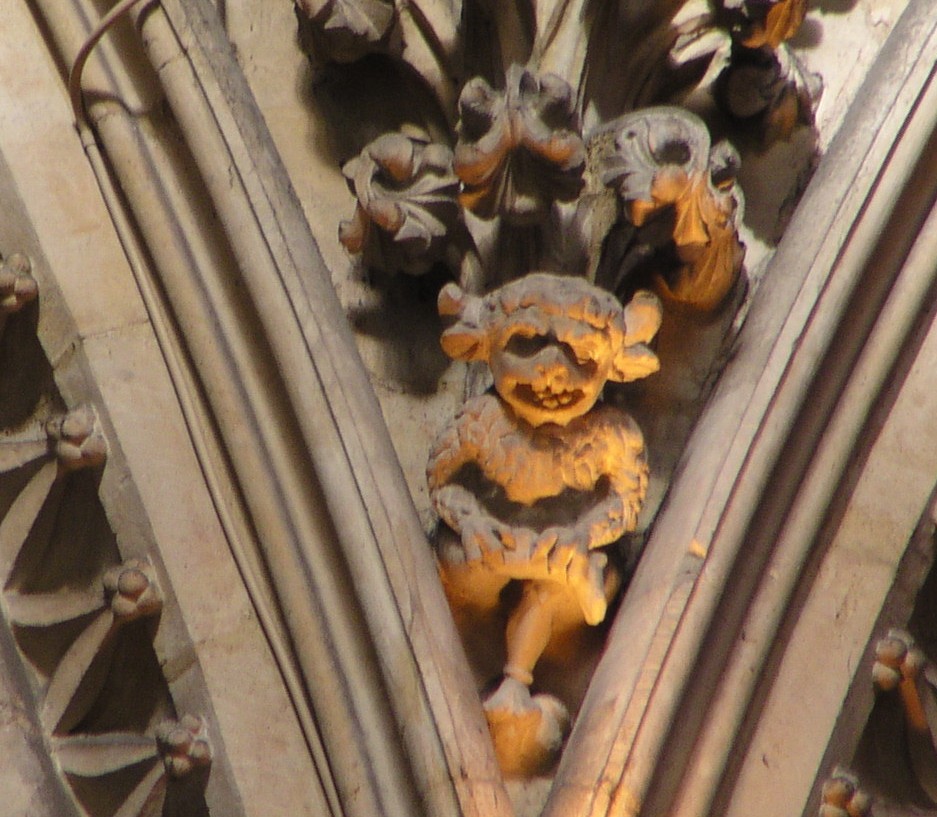
#folktober Today’s day theme is “The Lincoln Imp”, a mischievous fellow who went to far in Lincoln Cathedral so an angel turned him to stone. Broadening the theme to poetry/short prose/artworks about mischievous fellows. Please include a short third person bio, too.

folktober – Lincoln Inp

lincoln imp

A Lincoln Imp

Tell you why I’m motionless here, grinning
down at you. Satan let us out to play.
Mate and I sat on a church spire twisting
it. Chesterfield never had better days.

Next we blew through that door. Tripped up Bishop.
So serious. In the Angel Choir broke
chairs and tables till angel out a hymn book
told us to stop, so I lobbed stones at bloke

while mate scarpers to Grimsby, where angel
catches him, smacks his arse, turns him to stone
as he did to me. At least mate can waggle
his smacked arse at visitors I’m alone.

Need a bit of fun in this God given
place packed full of all praying and hymning.

-Paul Brookes

PROFILE : Samantha Terrell, Metaphysical Poet, includes video and interview

keeping afloat by samantha terrell

Keeping Afloat” is the new chapbook from internationally published poet, Samantha Terrell. Samantha provides the reader an opportunity to explore the depths of self-awareness, gain social insights, and emerge with renewed purpose and buoyancy. Inspirational! Samantha’s book is available internationally from Amazon.com.

Samantha Terrell

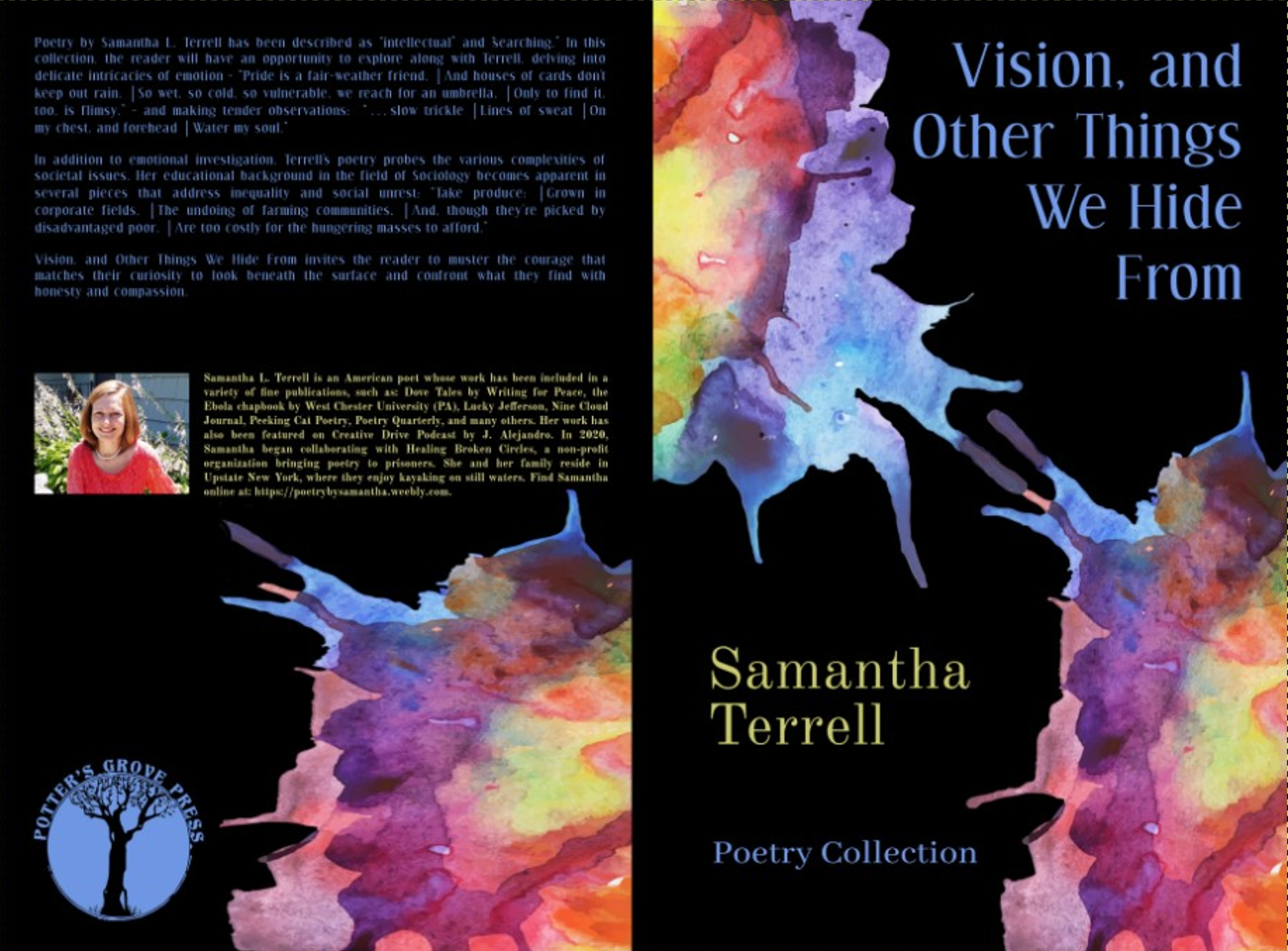
author of Vision, and Other Things We Hide From (Potter’s Grove Press), is an internationally published American poet whose work emphasizes self-awareness as a means to social awareness. Her poetry can be found in publications such as: Anti-Heroin Chic, Dissident Voice, Fevers of the Mind, In Parentheses, Misfit Magazine, Red Weather, Sledgehammer, and many others and has been featured on radio shows and podcasts from Wyoming to Glasgow, and beyond. She writes from her home in upstate New York, where she and her family enjoy kayaking on still waters.
Find her online at: SamanthaTerrell.com.

The Interview

1. How did you decide on the order of the poems in your book?

I tend to agonize quite a bit over the order of my manuscripts because I want the poems to logically flow from one to another. I’m usually working to form an over-arching story or carry the reader along a journey. It takes a lot of tinkering around until a suitable order emerges.

2. How important is form in your poetry?

When it comes to form, I don’t have any formal training in the field of poetry/literature (my college education was in the field of Sociology), so I’ve taught myself by reading and research. But I also like to get inventive with form, and I take a lot of creative liberties.

3. How does nature influence your writing?

Oh, nature! I love spending time outside, and like many poets, probably, I find it to be a great source of inspiration for writing.

4. How does nature inspire you?

I turn to nature to find peace and sort through life’s complexities. I incorporate many themes and metaphors from nature in my work. It’s a constant ever-changing source of inspiration.

5. How does writing from a first person perspective help you compose poetry?

Writing in first-person is a natural way to write, because it’s like speaking. However, I’ve heard writing in first-person can sometimes be frowned upon or overdone in poetry. But I often enjoy reading confessional or first-person poetry, so I don’t shy away from writing it myself.

6. In “Ever Upward” you quote from the psalms. How important is your religion to your poetry?

Although my own Judeo-Christian perspective shapes who I am and what I write, I intend to reach a broader audience than those within my own faith background. I’ve been fortunate to be welcomed into the international poetry community, and I appreciate people of various perspectives and backgrounds. I make efforts not to be overbearing or “preachy” in my own work. That being said, on the occasions that I have written explicitly religious pieces, I have attempted to publish them with an appropriate faith-based lit mag such as LogoSophia.

7. What do you wish the reader to take-away from Keeping Afloat once they have read it?

My hopes for a reader of Keeping Afloat are outlined right there in the title – we all need to keep each other afloat in this world! I like to say that my poetry is meant to inspire self-awareness as a means to social awareness. And, in this case, I hope a reader of Keeping Afloat will enjoy each poem – and the chapbook as a whole (along with Jane Cornwell’s beautiful artwork) – to spur them on both as an individual, and in the community of humanity.

Other Works By Samantha

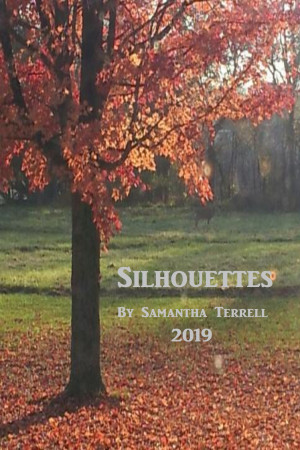
Silhouettes Samantha Terrell

Samantha Terrell

vision, samantha terrell cover

Sibyl Ruth: Eight Poems from Heine’s ‘Buch der Lieder’

The High Window Review's avatarThe High Window

heinrich heineheine sig

*****

Heinrich Heine (13 December 1797 – 17 February 1856) was a German poet, writer and literary critic. The eldest of four children, he was born into a Jewish family and, during his childhood, was called ‘Harry’ until after his conversion to Lutheranism in 1825. Heine’s father, Samson Heine (1764–1828), was a textile merchant. His mother Peira (known as ‘Betty’), née van Geldern (1771–1859), was the daughter of a physician.

He is best known outside Germany for his early lyric poetry, which was set to music in the form of lieder (art songs) by composers such as Robert Schumann and Franz Schubert. Heine’s later verse and prose are distinguished by their satirical wit and irony. He is considered a member of the Young Germany movement. His radical political views led to many of his works being banned by German authorities — which, however, only added to his fame…

View original post 1,323 more words