Frans Hal ‘s Regent of the Old Men’s Alm House HALS, Frans (b. 1580, Antwerpen, d. 1666, Haarlem)
There is an old legend that Hals, reduced to poverty in his last years and an inmate of the Alms House, took his revenge on the Regents by depicting them in unflattering fashion. In fact, although he was certainly poor, he was never in the Alms House and the bold, free and animated style of the group is also evident in his other portraits of this period. It has been convincingly argued that the unusual expression on the face of the Regent who is seated on the right is the consequence of partial facial paralysis rather than – as the legend has it – drunkenness. Such candour is characteristic of Hals who felt no need to disguise the Regent’s affliction. The standing figure, without a hat, is the servant of the Regents.These…
cardiff cut was originally published in 2000 and this reprint includes a contextual essay by Peter Finch, himself a groundbreaking poet who shifts between what we might still call ‘the mainstream’ and the ‘avant-garde,’ which locates Lloyd Robson’s entry onto the scene as being at ‘the tail end of performance poetry’s rise’. This is fair enough as far as it goes but it does tend to exclude Robson’s interest in ‘the page’ and in books, both in terms of the aesthetic aspect and also via his transference of dialect into print from the spoken variety or vice-versa as the case may be. This is a big subject and one which Finch’s own work explores but it’s not one I intend to get distracted by here.
My own initial exposure to Robson as reader was when he performed with his mentor Chris Torrance at the Art Centre in Plymouth (sometime in…
The third programme is on the use of oil paint as a means of depicting or reflecting the status of the individuals who commissioned the work of art.
-Sarah Watkinson
The Luxury of Amnesia ‘This allows the Art Establishment to project for a little longer its false rationalised image of itself’—John Berger, Ways of Seeing
John Berger completes Ways of Seeing before Thatcherism brings racism in from the cold. In Tim Walker’s 2018 photo of Duckie Thot for the Pirelli Calendar, Alice in Wonderland threatens to fill the space and break through the ceiling of the old property. John Berger notes that society and culture is obsessed with property. Speaking of old property, eg the Glasgow Gallery of Modern Art, in 2019, Alberta Whittle floats like one of Bill Traylor’s duppies haunting the space built by a tobacco merchant with plantations in the Caribbean— These hauntings should remind people. These reminders should heal people.
‘Voice has become a new means of introducing themes of memory, history and loss into Alberta Whittle’s films. Moving to the UK from Barbados meant that her understanding of history, which was related to inherited memories of her ancestors and living family, but also from history taught in school was suddenly invalid, erased and invisible in a Western environment. This discomfort with the realization that memory and history do not always intersect motivates her film practice, which aims to encourage a process of decolonization through producing counter narratives, which reveal a state of collective amnesia. Whittle has named this condition, The Luxury of Amnesia, because it describes the ability to forget colonial histories. She considers this viewpoint to emerge from a position of privilege, a luxury.’ – https://www.albertawhittle.com/a-study-in-vocal-intonation.html
Of her installation, A study in vocal intonation, Alberta says: ‘This is a place that happens to be in the centre of Glasgow but is deeply connected to the Caribbean, to different parts of Africa, to the Americas. This is an interlinked history and a reckoning with how we are all situated today.’
‘While it is important to emphasise that Henry Tate was not a slave-owner or slave-trader, it is therefore not possible to separate the Tate galleries from the history of colonial slavery from which in part they derive their existence.’ – https://www.tate.org.uk/about-us/history-tate/tate-galleries-and-slavery
is from Manchester but now living in Wiltshire. Poems in The Honest Ulsterman, IceFloe Press and The Wombwell Rainbow. Poems due to appear in Stand in 2022.
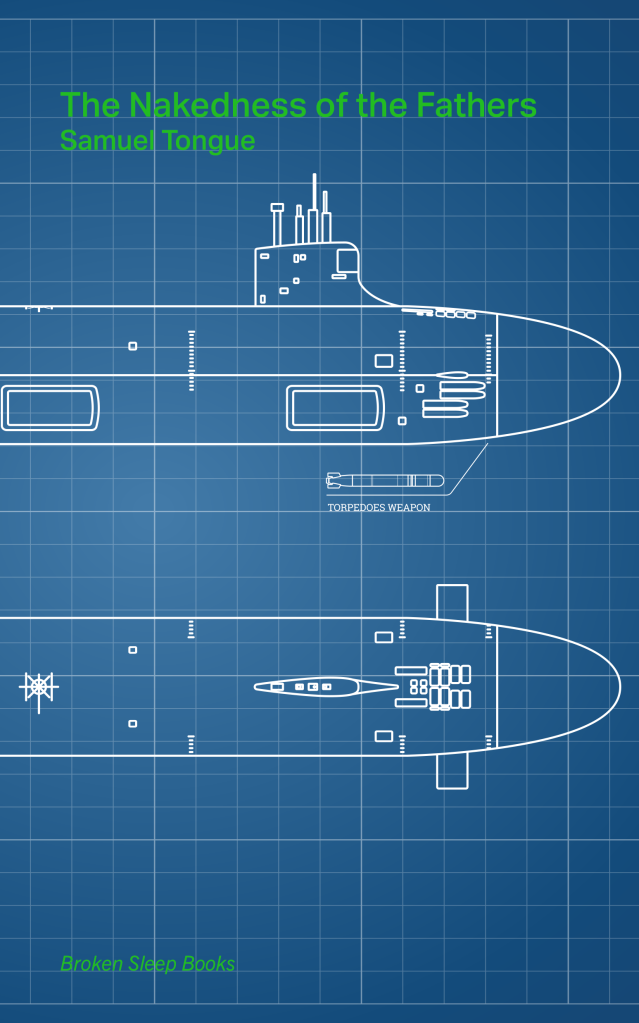
Samuel Tongue’s The Nakedness of the Fathers dexterously surveys the monster of capitalism via jaywalks, googleearth the ‘contagiousness’ of treadmills, sanitiser-slick supermarkets and the charade of prosperity. This is a landscape poetry ready and able to utilise the personal as a site of resistance, where father’s cry for ‘a mother in the dark’ and the world exists precariously, ‘a flux of ever-living fire.’ Linguistically rich and yet, where need be, capable of serrated directness, Tongue skilfully drifts through a network of forms. Impressively dialogic, at its heart, The Nakedness of the Fathers is a conversation made with others, from Derrida to Sontag. Crucially, Tongue is able to metabolise the complexities of violence whilst letting language have its say…
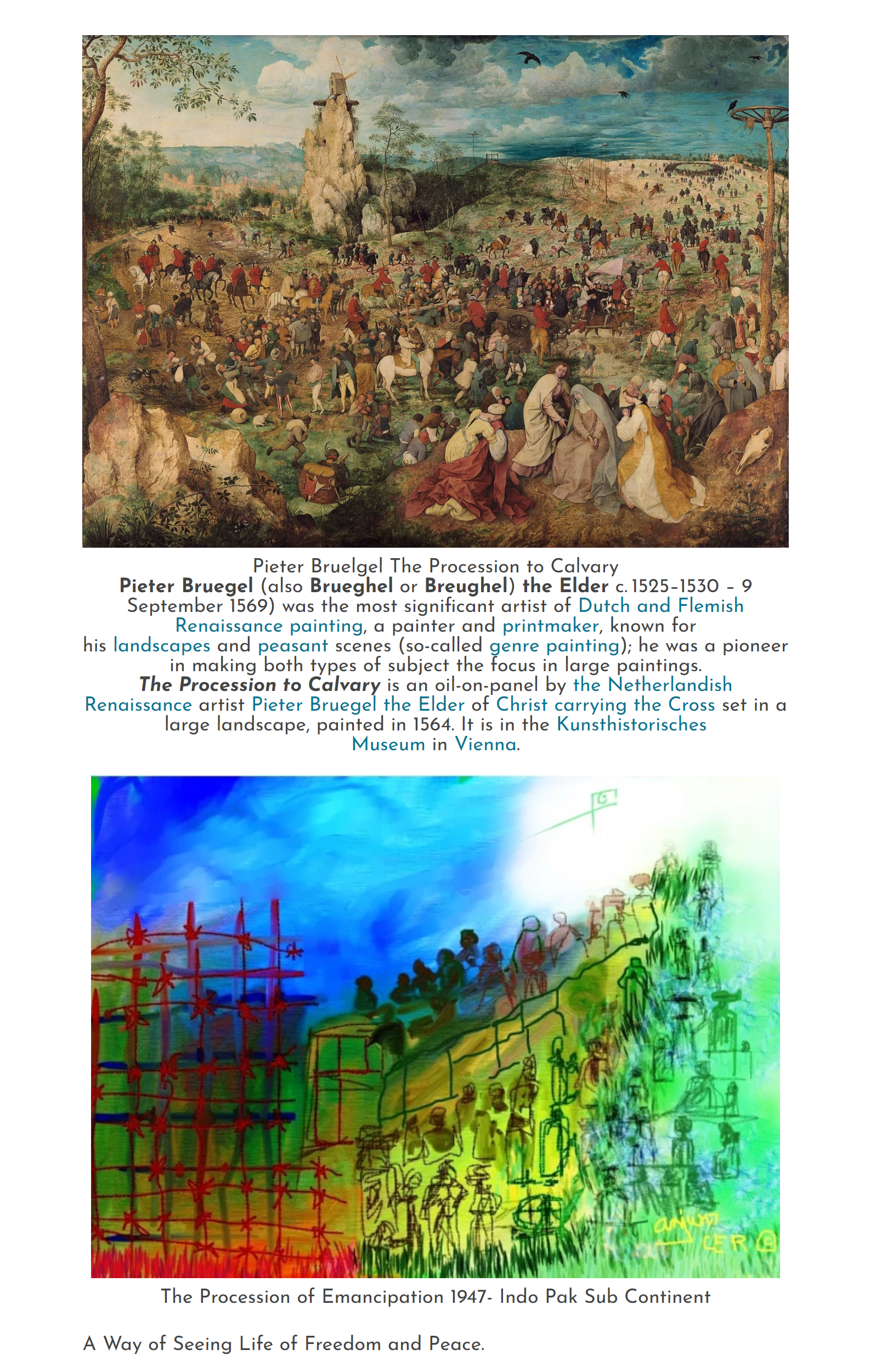
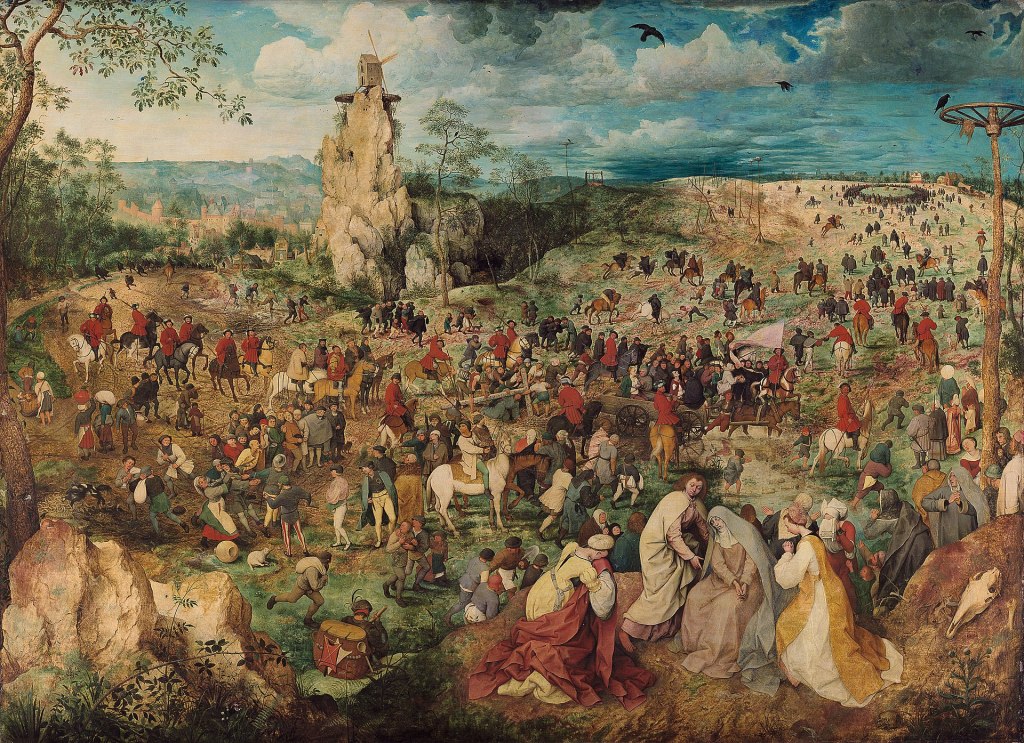
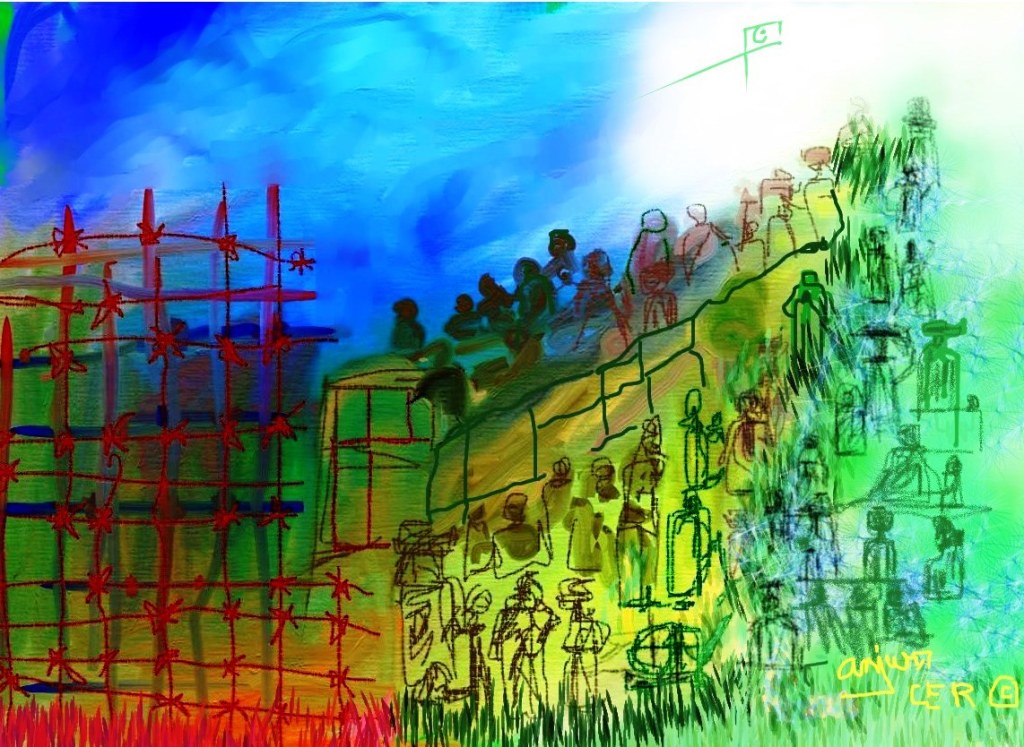
Note: “The Procession to Calvary” was looked at by Berger in the First programme. Anjum is commenting on this in reference to chapter four’s photo essay.”
Who Owns the World?
A Golden Shovel
It’s 1519, and Magellan sets out to create a maritime trade route in
advance of the expansion of completeness and the 2014
test flight of Virgin Galactica. No one named Claudia
is involved in Magellan’s exploration, but Claudia Rankine
in her 2014 book, Citizen, An American Lyric, writes
a piece that Afua Hirsch quotes in her book Brit(ish), the
one called Race, Identity and Belonging, where Afua’s world
is redrawn when she discovers her Dutch sixth great-grandfather is
a slave trader in the Castle of Elmina and all that’s wrong
with Welzing owning her sixth great-grandmother, a slave. You
feel a sense the past is in present tense and you can’t
ignore it. John Berger in Ways of Seeing shows how Holbein put
desire for tactile possessions central to The Ambassadors, 1533, the
one where two proud men stand rigidly gazing out past
the artist, the audience, and the world onto new worlds. Behind
them, navigational instruments chart Magellan’s voyage you
feel you crowd-funded. They own the world, but I feel it’s
another way round—their world owns the viewer. Holbein turned
paint into exquisite illusions of real objects and materials your
hands will never touch. His oil paint depicts flesh
that’s real, pale and desirable, putting into
the mind of the viewer the idea that the painting is its
own Holy sponsor, its own Holy coloniser, and you will never own
it even though it hangs in the National Gallery above a cupboard.
-Cy Forrest
Bios And Links
-Cy Forrest
is from Manchester but now living in Wiltshire. Poems in The Honest Ulsterman, IceFloe Press and The Wombwell Rainbow. Poems due to appear in Stand in 2022.
Paintings Referenced in chapter four of the book of the TV series.
The Venus of Urbino by Titian, 1487 / 90- 1 576 , Uffizi , Florence
Olympia by Edouard Manet, 1832- 83, Louvre, Paris
Virgin Enthroned by Cimabue , Louvre, Paris, c.1240- 1302?
Virgin, Child and Four Angels by Piero della Francesca, 1410 / 20- 92, Williamston, Clark Art Institu te
Madonna and Child by Fra Filippo Lippi, 1457/ 8- 1504
The Rest on the Flight into Egypt by Gerard David, d.1523, National Gallery of Art Washington, Mellon Collection
The Sistine Madonna by Raphael, 1 483- 1520, Uffizi, Florence
Virgin and Child by Murillo, 1617- 82, Pitti Palace, Florence
The Pretty Baa Lambs by Ford Madox Brown , 1821- 93, Birmingham City Museum
Death of St Francis y Giotto, 1266 /7- 1337, Sta Croce, Florence
detail of Triumph of by Pieter Brueghel , 1525 / 30- 69, Kunsthistorisches Museum, Vienna
Guillotined by Theodore Gericault, 1791 – 1824, National Museum, Stockholm
Three Ages of Woman by Hans Baldung Grien, 1483- 1545, Prado, Madrid
Dead Toreador by Edouard Manet,
Still Life by Pierre Chardin, 1699 – 1779 , National Gallery , London
Still Life by Francisco Goya, 1746 – 1828 , Louvre, Paris
Still Life by Jean Baptiste Oudry, 1686- 1755 , Wallace Collection, London
Still Life by Jan Fyt, Wallace Collection, London
Daphnis and Chloe by Bianchi Ferrari, Wallace Collection , London
Venus and Mars by Piero di Cosi mo, 1462- 1521 , Gemaldegalerie, Berlin – Dahlen
Pan by Luca Signore
My first blog of 2022 and I’ve already broken my promise to blog every week. Oh well. Such is life.
The first two weeks of 2022 have been spent getting into a routine, finding a way to work and work. ie finding a way to do all the money paying stuff that pays my mortgage and bills and find time to write which does not pay my mortgage and bills, but is essential to me calling myself a writer, and has the potential to help pay my mortgage and bills later down the line. Growing a career as a creative writer is very much about offsetting time, working out what is worth and not worth doing. I am behind with answering emails (apologies if you’re waiting to hear from me, it’ll be this week) I’m behind with promotion stuff, and planning stuff and…
I apologise for my insensitivity in dealings with potential contributors. I meant to give them a voice and leave all the choice of what work they wished to present to them. My messages got garbled, leaving them feeling unsafe and uncomfortable so that they withdrew their work and all other associations with me. I intended exactly the opposite. For this place to be safe and comfortable, and unthreatening. I am so sorry this has happened. I need this to be a safe place.
-Darryl Lovie
-Val Bowen
Bios And Links
Amazon Author Page







 -Darryl Lovie
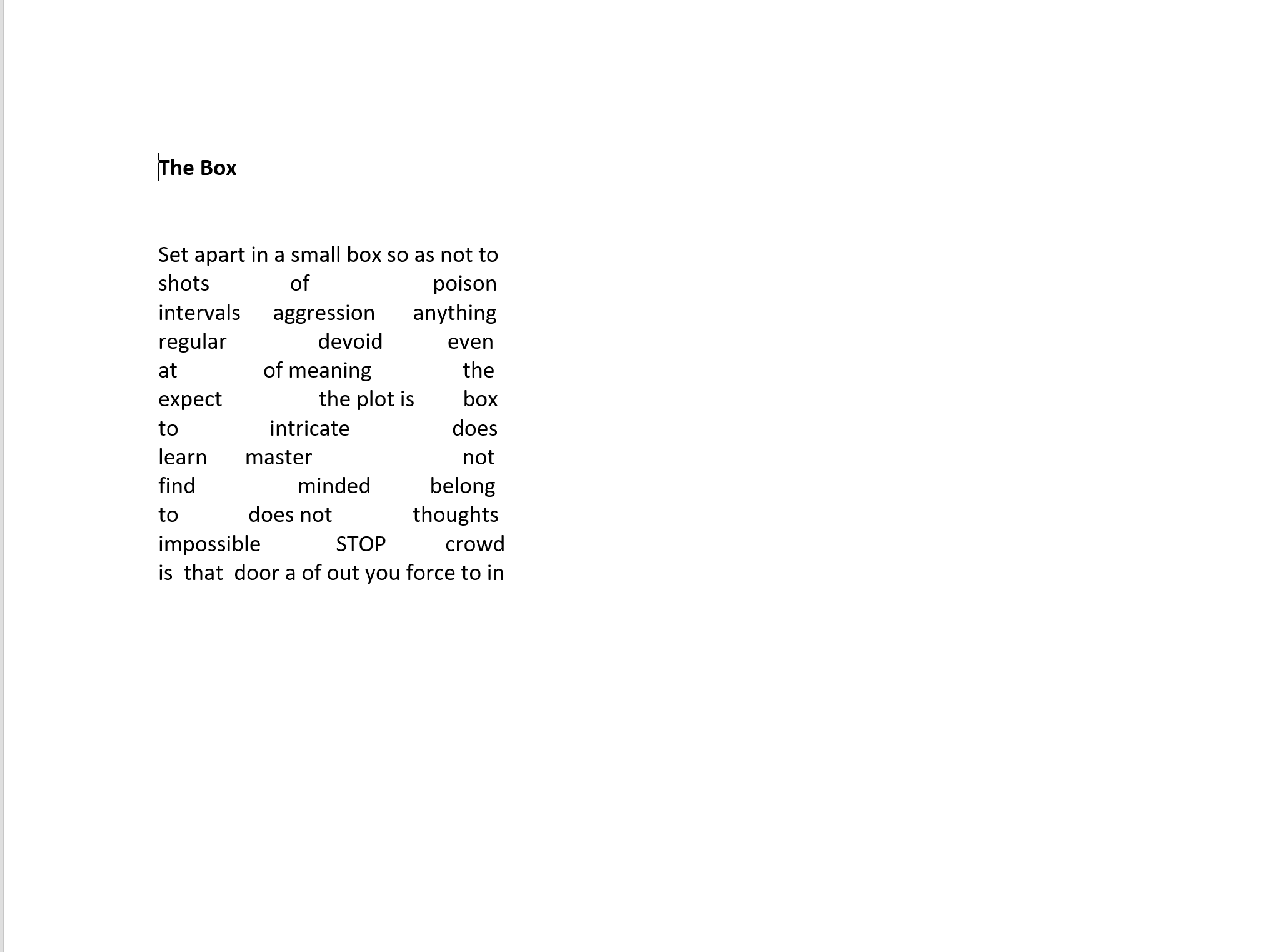 -Val Bowen
Bios And Links
-Val Bowen
Bios And Links
 Amazon Author Page


