Atoms by Clive Gresswell (erbacce press)

tearsinthefence's avatarTears in the Fence

Atomsis a free flowing pamphlet-length prose poem, a sinuous sweep through the first quarter of the 21stcentury as it lurches into and out of lockdown. I’m reminded of Carl Jung’s essay on James Joyce’sUlyssesin which he refers to the work as a cosmic tapeworm. Jung initially wants us to see this as an insult, characterising writing he saw produced as much by an autonomic nervous system as by an aesthetic intelligence. But something in Jung’s writing feels conflicted. It’s as if he almost admiresUlyssesfor its parasitic processing power. And as it turns out, he does. He says of the book:

There is life in it, and life in never exclusively evil and destructive…it wants to be an

eye of the moon, a consciousness detached from the object, in thrall neither to the

gods, nor to sensuality, and bound neither by love nor hate…

View original post 568 more words

Tears in the Fence 75 is out!

tearsinthefence's avatarTears in the Fence

Tears in the Fence 75 is now available at http://tearsinthefence.com/pay-it-forward and features poetry, prose poetry, translations, fiction, flash fiction and creative nonfiction by Mandy Pannett, Greg Bright, Penny Hope, David Sahner, Stephen Paul Wren, Alexandra Fössinger, Mark Russell, Maurice Scully, Gavin Selerie, Mandy Haggith, Lynne Cameron, Sarah Watkinson, Jeremy Hilton, Gerald Killingworth, Lesley Burt, Nic Stringer, Sam Wilson-Fletcher, Lilian Pizzichini, Paul Kareem Tayyar, Beth Davyson, Rethabile Masilo, Tracy Turley, Olivia Tuck, Elisabeth Bletsoe & Chris Torrance’s Thirteen Moon Renga, Wei Congyi Translated by Kevin Nolan, Basil King, Robert Sheppard, Lucy Ingrams, John Freeman, Mélisande Fitzsimons, Deborah Harvey, David Harmer, David Ball, Rupert M. Loydell, Jeremy Reed, Alexandra Corrin-Tachibana, Sian Thomas, Chaucer Cameron, Huw Gwynn-Jones and Simon Collings.

The critical section consists of editorial, essays, articles and critical reviews by David Caddy, Elisabeth Bletsoe Remembering Chris Torrance, Jeremy Reed on The Letters of Thom Gunn, Simon Collings’ ecocritical perspective of Rae…

View original post 76 more words

VOU: Visual Poetry Tokio 1958-1978, ed Taylor Mignon (Isobar Press)

tearsinthefence's avatarTears in the Fence

This intriguing anthology features the work of nine visual poets active in Japan in the 1960s and 1970s, artists whose work was largely ignored by the mainstream and which, as a consequence, has been little documented.

The VOU Club, from which the anthology takes its name, was founded by Kitasono Katue in 1935. His pioneering work in abstract and visual poetry influenced the younger generation of poets featured in the anthology. Kitasono maintained links with a wide range of writers, corresponding with Ezra Pound, James Laughlin, Kenneth Rexroth, and the Brazilian concrete poet Haroldo de Campos. He was also involved in Surrealism.

The poems in the anthology tend to the purely abstract, making little or no use of words and letters, even as graphic elements. Where text is used the artists generally shun Japanese characters, perhaps in reaction to a tendency of Western poets to see Japanese ideograms as exotic…

View original post 632 more words

Revolutionary Letters by Diana Di Prima (Silver Press)

tearsinthefence's avatarTears in the Fence

This new U.K. edition ofRevolutionary Lettersgathers up fifty years of Di Prima’s anarchic and insightful series of poems which she started writing back in 1968. Moving to New York City in the 1950s she embedded herself in the alternative culture of the Beatniks in Greenwich Village before embracing the Black Panther movement, drugs, feminism, counterculture politics, direct action, and what we now call small press publishing.

The book contains freeform rants, comments upon topical events, advice to friends and/or would-be revolutionaries, lists, cynicism, utopian ideologues and utopian dreams. Somewhat surprisingly, alongside the down-to-earth survival techniques she shares there is also the presence of the spiritual weaving through her work alongside questioning insight:

You cannot write a single line w/ out a cosmology

a cosmogony

laid out, before all eyes

[…]

There is no way out of the spiritual battle

the war is the war against the imagination

you…

View original post 353 more words

#DifficultTimes #PayingForIt #FuelPoverty #FoodPoverty #Payingforit .A special theme in response to our rising bills. Please join Tim Fellows and myself in marking with your writing and artworks . I will feature your published/unpublished poetry/short prose/artworks about this issue. Please include a short third person bio. This is an ongoing post

difficult Times 1IMG20220309115759~4IMG20220309115759~5

Coffee by Tim Fellows

-Tim Fellows

Starves

Our daughter starves so our grand bairns can eat.
She decides to live on energy drinks.
We take all out for dinner as a treat,
get a good meal inside her, make her think.

If she’s not there, who will be there for them?
We give what we can to make it better.
Tell her bairns need her. Who will make and mend?
Moments don’t come again. Make them matter.

When they were homeless we gave them our home.
She had a short week, hope we gave enough.
Want them to be safe, secure, not alone.
Fight their own battles, solid, wise and tough.

Must never be without food in their mouths.
She cannot let them live, decide to starve.

-Paul Brookes (Poem featured in Chesterfield Exhibition)

Bios And Links

-Tim Fellows
is a poet and writer from Chesterfield whose poetry is heavily influenced by his background in the Derbyshire coalfields – family, mining, politics, and that mix of industry and countryside that so many mining areas had.

The High Window, Spring 2022: First Instalment

The High Window Review's avatarThe High Window

Logo revisedHere is the first instalment of the Spring 2022 issue of The High Window.  The following new material can be accessed via the top menu:

1. A selection of homegrown and international Poetry from 37 poets.

2. Poetry by Lanny Ledboer, the Featured American Poet.

3.  An Essay by Hannah Parkes Smith on some of W.H. Auden’s early poetry.

4. An introductory feature from Rowena Sommerville, who will be The High Window‘s Resident Artist for 2022.

The second instalment will be published in another two weeks.

Enjoy!

David

View original post

The High Window’s Resident Artist: Rowena Sommerville

The High Window Review's avatarThe High Window

As we leave 2021 behind us, a year which many of us will be happy to forget, I am pleased to announce that the new resident artist for the next four issues will be Rowena Sommerville.  I also take the opportunity to express my thanks to Stella Wulf who assumed this role last year. Many readers expressed their admiration for her contributions  and, for me, it was a joy to work with someone so talented, personable and thoroughly professional. I wish her well in whatever new projects she is working on.

Like Stella, Rowena is not only  a talented artist but a fine poet.  I am proud that, as an editor, I was amongst the first to spot her literary gifts and to have published a set of her poems. I am grateful too for the many excellent reviews she has written for the journal. [Editor]

Rowena photo cropped

*****

Rowena Sommerville Introduces…

View original post 434 more words

Ten Things That Really Worked to Help me Set Up a Literary Magazine

wendycatpratt's avatarWendy Pratt

We (myself and Steve Nash) are currently reading submissions for issue five of Spelt Magazine, the magazine I founded just over a year ago. Spelt is a print magazine in which we seek to celebrate and validate the rural experience through poetry, creative non fiction, author interviews, columnists and writing prompts. We’ve made it through a whole year, which is a huge milestone, and we are excited about our second year, which will involve further growth, more platforms and, hopefully, some extra funding. Starting and running a magazine, especially a print magazine, is definitely a labour of love. But It is also incredibly rewarding. It’s a thrilling feeling to be part of the writing and publication journeys of other writers, and to provide a platform for people, and to create something that is so very aesthetically pleasing, it is a great source of joy for me, and something that…

View original post 2,349 more words

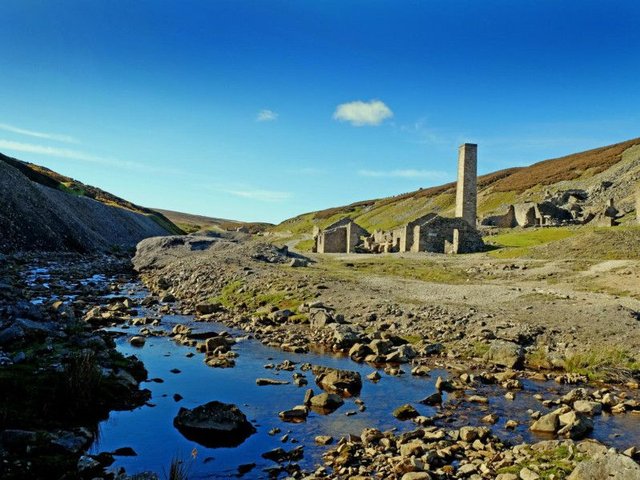
‘Nenthead Revisited: Love, Ghosts and Lead-Mining in W. H. Auden’s Eden’ by Hannah Parkes Smith.

The High Window Review's avatarThe High Window

lead mine

*****

Love requires an Object,
But this varies so much,
Almost, I imagine,
Anything will do.
When I was a child, I
Loved a pumping-engine
Thought it every bit
As beautiful as you.

W. H. Auden, ‘Heavy Date’.

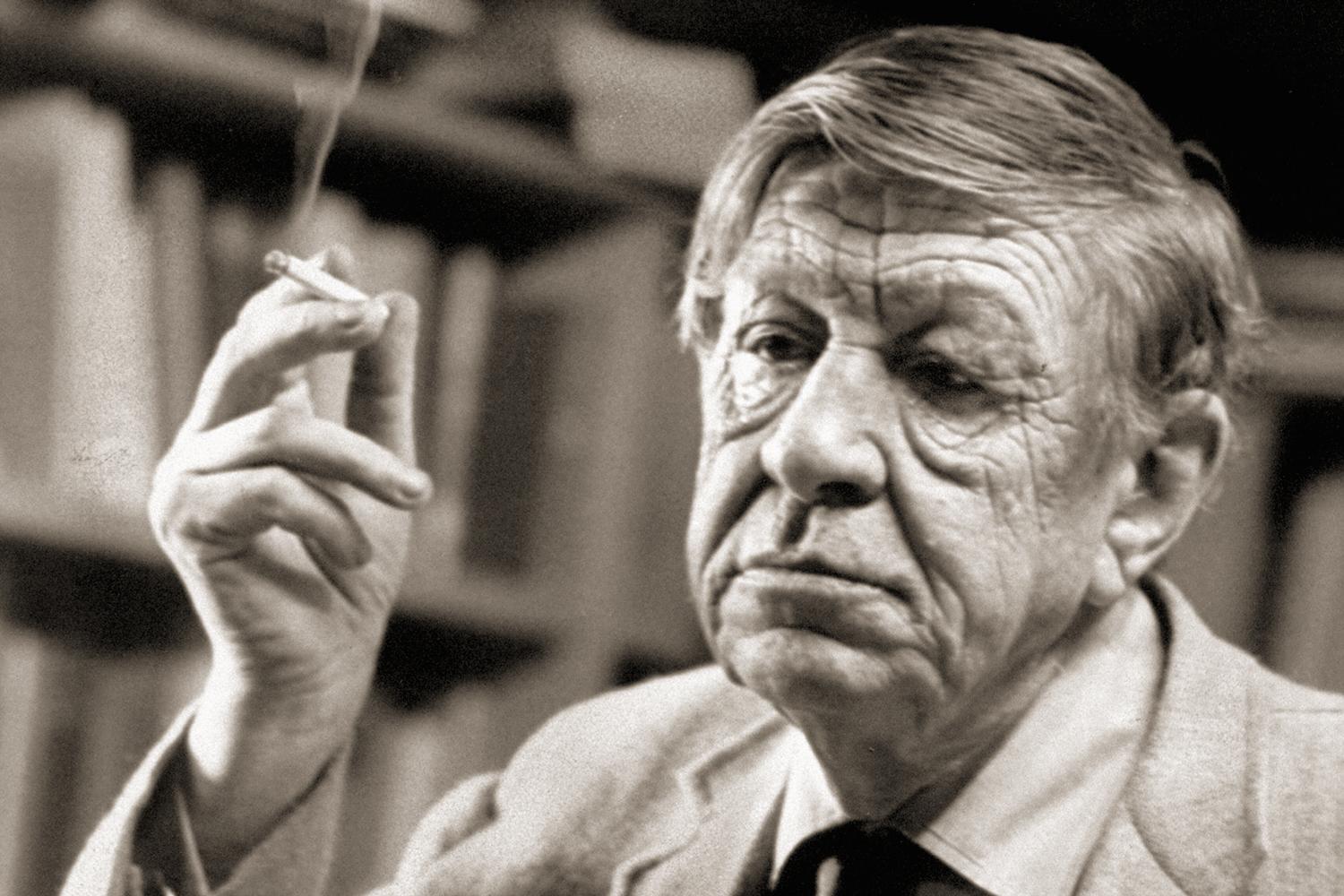
W.H. Auden is one of those poets who, against perhaps your better judgment, stick with you.

The first Auden I knew of was a peaceable old stick whose poetry compelled grown men to weep at Four Weddings and a Funeral. He was wry, a little savage, a little dark, a little battered, and quite at home on the A-Level syllabus he’d found himself on –the Auden most of us take comfort in, when we find the world too much with us.

auden old

The second Auden I dug up was little like him. The second Auden was an adventurer, like the Eardstapas before him, travelling the winding roads of the Old English landscape…

View original post 2,863 more words

Drop in by Ellie Rees

Nigel Kent's avatarNigel Kent - Poet and Reviewer

Today I welcome fellow Swansea University alumnus, Ellie Rees, to reflect upon a poem from her fabulous new collection Ticking (Hedgehog Poetry Press, 2022).

The poems contained in Ticking were written in response to separate stimuli; what linked them in my imagination as I wrote was my desire to capture the spirit of a place, an attempt at a deep mapping through the medium of verse.

The poems in Ticking deep map a beautiful but apparently empty strip of the South Wales coastline that looks across the Bristol Channel to Exmoor. The collection could be classed as Nature Writing, though the term, deep mapping is a more accurate description of the eclectic subject matter: there are ghosts, suicides and ruins as well as dung spiders, stone masons and insect apprehension. Many of the poems focus on the history and geography, archaeology and wild life of a two-mile stretch of…

View original post 1,264 more words