Here we are in the world of the 17thcentury reformers, post English civil war, of Christopher Hill’sThe World Turned Upside Down, of Leon Rosselson’s 20thcentury song of the same title, covered by Billy Bragg at a later date. Simon Jenner in a mood of democratic revival, generated by hope of a renewed radicalism in the Labour Party, has framed a series of poems based around the writings of Gerard Winstanley, leader of the Diggers whose failed attempt at setting up a democratic commune at St. George’s Hill in 1649 has inspired a multitude of radical movements ever since. These 36 poems are a mix of inspired experimentation, rich historical materials and intellectual curiosity typical of this poet’s considerable output.Winstanleyis a great read but one to be taken slowly, with relish, where careful re-reading will improve the response. There’s also plenty of emotional…
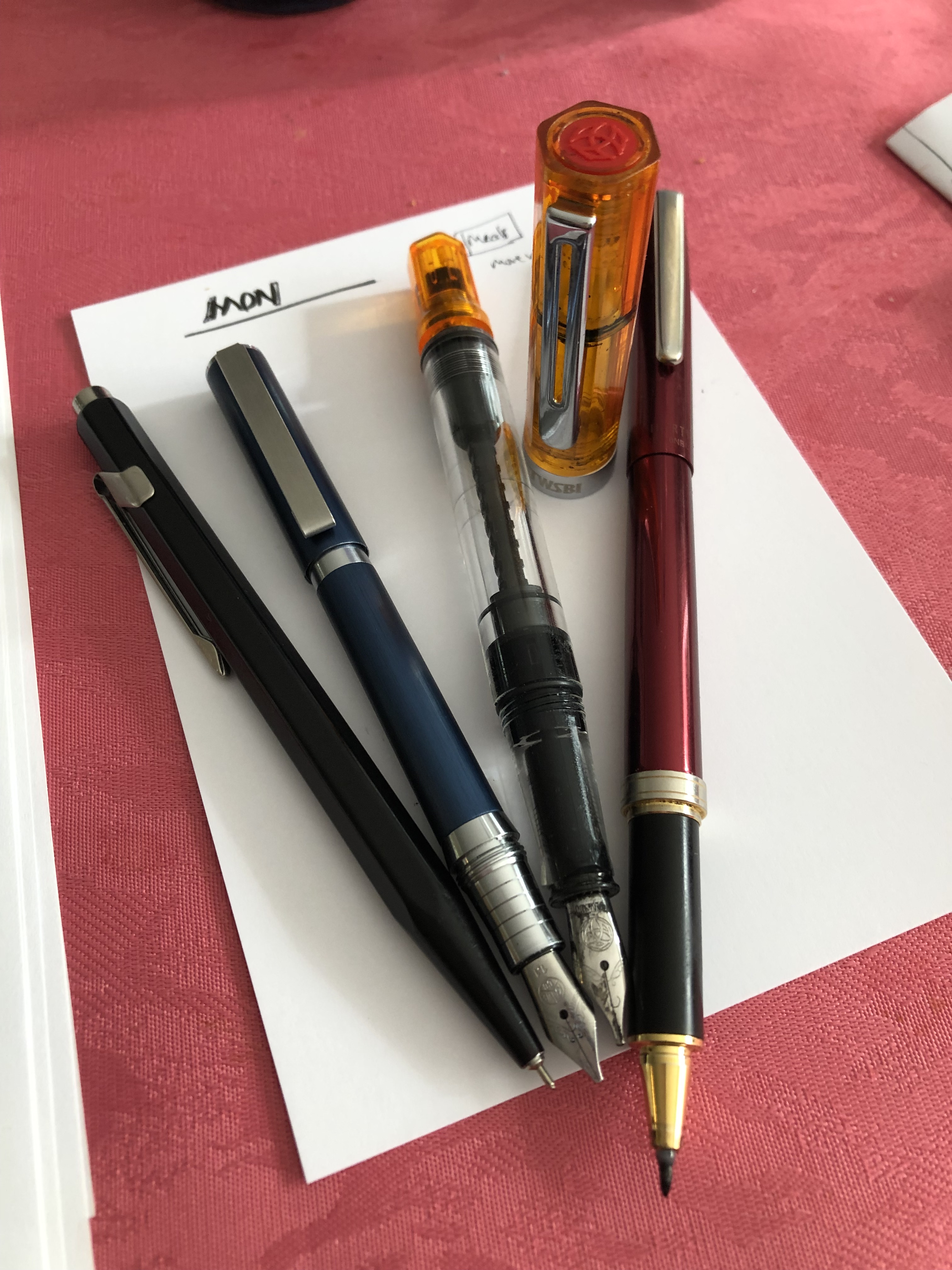
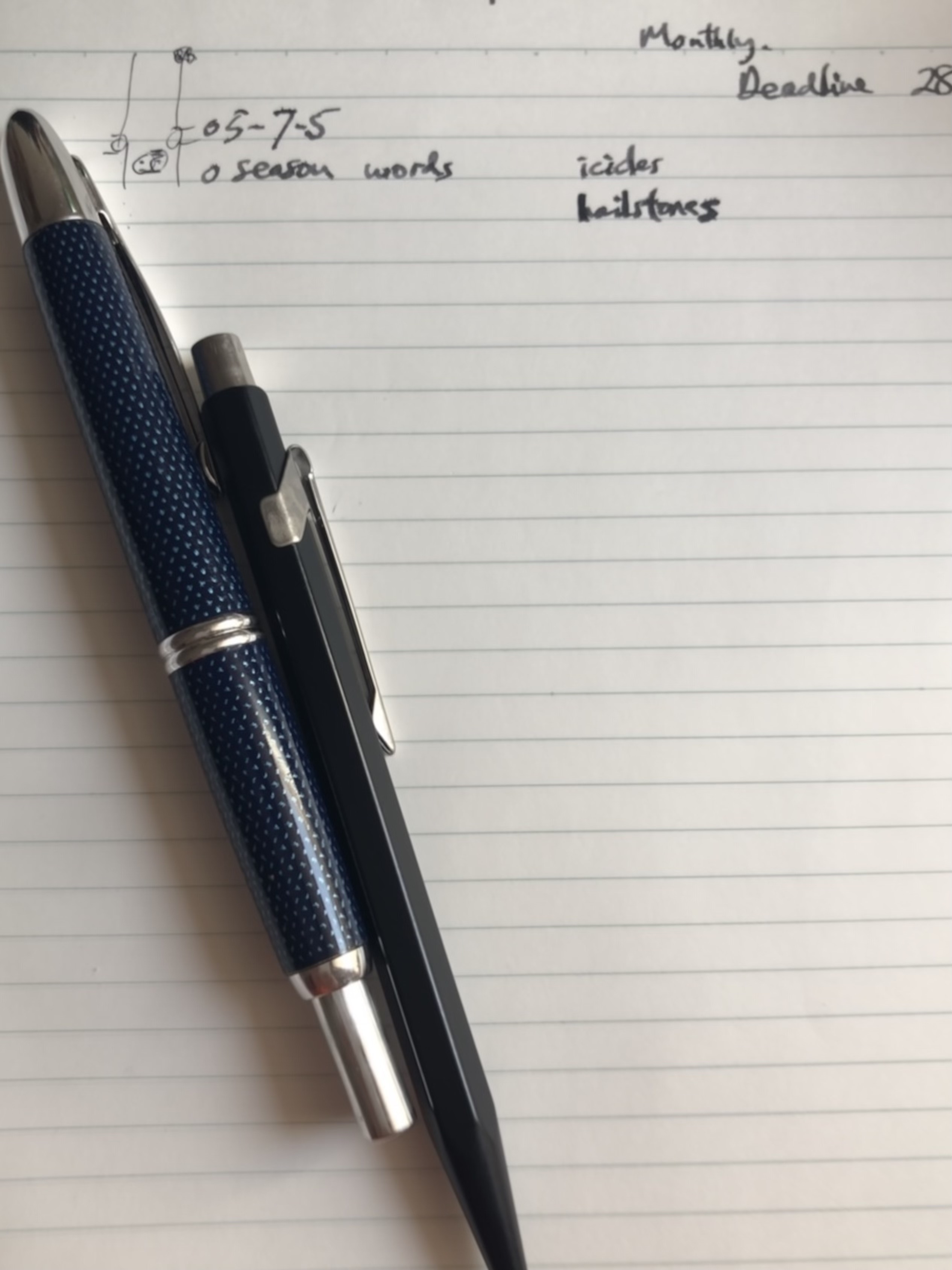
Favourite pen(s) Pilot Capless, Twsbi Eco, and Cult Pens compact with a stub 1.1mm nib. Pencil: Uni Kuru Toga sleeve, Kokuyo enpitsu sharp MS P501, 1.3mm. I write my first drafts with them and edit before typing up.
TL;DR is capless is eminently practical, reservoir will last a day at a conference, writes beautifully with the gold nib, capless makes it great for whipping out of a pocket and just writing, no cap to lose,the stub gives a lovely sharp line.
…the Eco is much cheaper and almost as good. And it has a cap. The has more flex than is usual fir a steel nib. The Lamy studio I also use a nib with same width but it makes a wider line and the Lamy nibs I find too stiff.
-images by Dave Garbutt
Pens
Some of them have stood for five years in my purple Penguin mug with a quote from Virginia Woolf that I long ago stopped drinking from.
Grandad’s black and gold Paper Mate I’ve never bothered to buy a refill for, free gifts sent in the post by Red Cross, leaving presents from temping jobs.
The blue Fountain Pentel I bought in Aberaeron, used by a poet to sign my copy of her book. It’s nearly run out but I’ll still have the ink once I’ve thrown away the pen.
Others I’m sure I’ve never used, maybe never will. They make my guests think I write more than I do
standing there like an artist’s paintbrushes, befriended by a pencil that’s hardly ever sharpened and a brass letter-opener with a handle of the Welsh flag.
-Peter Donnelly
Bios and Links
-Dave Garbutt
has been writing poems since he was 17 and has still not learned to give up. His poems have been published in The Brown Envelope Anthology, and magazines (Horizon, Writers & Readers) most recently on XRcreative and forthcoming in the Deronda review. His poem ‘ripped’ was long listed in the Rialto Nature & Place competition 2021. In August 2021 he took part in the Postcard Poetry Festival and the chap book that came from that is available at the postcard festival website. https://ppf.cascadiapoeticslab.org/2021/11/08/dave-garbutt-interview/.
He was born less than a mile from where Keats lived in N London and sometimes describes himself as ‘a failed biologist, like Keats’, in the 70’s he moved to Reading until till moving to Switzerland (in 1994), where he still lives. He has found the time since the pandemic very productive as many workshops and groups opened up to non-locals as they moved to Zoom.
Dave retired from the science and IT world in 2016 and he is active on Twitter, FaceBook, Medium.com, Flickr (he had a solo exhibition of his photographs in March 2017). He leads monthly bird walks around the Birs river in NW Switzerland. His tag is @DavGar51.
-Peter J Donnelly
lives in York where he works as a hospital secretary. He has a degree in English Literature and a MA in Creative Writing from the University of Wales Lampeter. He has been published in various magazines and anthologies including Dreich and Writer’s Egg, where some of these poems have previously appeared. Last year he won second prize in the Ripon Poetry Festival competition.
they’ve made me chairman of the board but I’m not up to it you’ll be great at the job is your room warm enough what happened to my first wife she was nice we’ve been married sixty years the Queen sent a card it’s so good to see you where is this Magnolia Court you’ve been ill I’m in London for the new job Magnolia Court I’ve only got a fiver for cabs can you lend me some you’ve got all you need a room and meals don’t want to be here it’s all right this isn’t funny hold my hand what’s going on hush my love can’t do this anymore come here I don’t want to be
-Lesley Curwen (She says: A poem about my aunt and uncle in their two wheelchairs.)
-Beth Brooke (First in a series that I will post daily throughout the week)
Requiem for a Cellist
She rocks rhythmically in her chair, Her eyes dulled by grief, skeletal fingers clutching rosary beads, chanting over and over ‘Requiem aeternam dona eis, Domine’
Dementia gnaws away at her brain She clenches her fists, howls like a caged wolf, searching desperately for her beloved ‘cello
Then as if by magic it appears, a Stradivari, propped up by the Steinway grand, pleading to be picked up and played again Its bow sprawled across the piano lid, resin box still unopened
A sudden draft from the open window breathes life back into the stale air. Haunting sounds unlock iconic images, transporting her to lovers’ beds, concert halls, summer gardens and back-street alleys, a heady rush of half-remembered liaisons, ecstasy and pain intertwined
Final chords crescendo then trail away into the invading gloom of a winter twilight One last brave ‘da capo’- then finally silence
Her weary frame crumples in dismay She attempts to rise from her chair, pleads one last time: ‘Requiem aeternam dona eis, Domine’
First published in my 2nd poetry collection, ‘Where Flora Sings’
-Margaret Royall
Bio and Links
-Beth Brooke
is a recently retired teacher and education consultant. She lives in Dorset but was born and did important parts of her growing in the Middle East. The landscapes of both these places are strong influences on her writing. She has had work published in a number of online journals and has been placed in a couple of small poetry competitions. She loves writing poems and sharing them with other people.
-Margaret Royall
is a Laurel Prize nominated poet. She has been shortlisted for several poetry prizes and won the Hedgehog Press’ collection competition 2020. She has two poetry collections:
Fording The Stream and Where Flora Sings, a memoir in prose and verse, The Road To Cleethorpes Pier and a new pamphlet, Earth Magicke out April 2021. She has been widely published online and in print, most recently: Hedgehog Press, The Blue Nib, Impspired & forthcoming in Sarasvati and Dreich.
She performs regularly at open mic events and facilitates a women’s poetry group in Nottinghamshire.
is from the Black Country. Her poetry has been published in various journals and anthologies including Eye Flash, Away With Words, Anthropocene, Finished Creatures, Dear Damsels and 100 Voices. Her work has been displayed alongside The Women’s Quilt at National Trust The Workhouse, Southwell. She was awarded the Creative Future Gold Prize for Poetry in 2019. Her debut pamphlet, Salt & Metal, is published by Fawn Press. Find her on Twitter @sallrockspoetry.
The Interviews
1. What inspired you to write poetry?
I started writing following a difficult relationship breakdown. I was devastated and struggling with the emotional turmoil. Rupi Kaur was just becoming really popular on Instagram and her short simple poems just resonated. I discovered Hollie McNish’s Nobody Told Me around the same time and I found the content and language really relatable. This led me to try to write a few poems myself – they were very raw and I had no real concept of the craft, but it helped me to feel better so I kept doing it. After that I started reading more widely and also connecting with the local poetry scene, going to readings, workshops etc. and at that point writing poetry became a regular thing.
2. Who introduced you to poetry?
I studied A Level English Literature, so that was my first real introduction to poetry. I remember mainly studying Plath, Hughes and Larkin. After college I hardly read any poetry until about 15-20 years later! I was introduced to contemporary poetry mainly through social media and getting involved in the local scene.
3. How aware were you of the dominating presence of older poets?
Not at all really. When I started reading poetry properly I was mainly reading contemporary poets. I feel like poetry is having a revival moment right now, and while the influence of older poets and the canon is always present, I don’t feel like they’re a dominating presence.
4. What is your daily writing routine?
As much as I’d like to, I don’t have one. A full time job and single-parenting two teens takes care of that! Instead I try to carve out as much writing time as I can whenever I can, although this is usually more like weekly than daily. If I have a project on the go I’ll squeeze writing and editing into any available free time.
5. What motivates you to write?
I tend to want to write if I’m moved by something; it could be an event, a story or a memory. Occasionally a poem will just start forming in my head and I have this panic to get it written down before it disappears and that is very motivating! I also love to hear other poets talk about poetry, and I sign up for as many panels and readings as I can. The passion of others always inspires me to develop my own practice.
6. What is your work ethic?
I’m a perfectionist, so I feel the need to work hard and turn in my best effort 100% of the time. I’m aware it’s not healthy and it means that when I’m getting towards the ‘finished’ stage of a poem or book I get a lot of anxiety around it, because I want it to be perfect (and nothing ever is!).
7. How do the writers you read when you were young influence you today?
I’m not sure I am influenced by writers I read when I was young. It’s the writers I’ve discovered in the last 5 years that have made the biggest impact on me and my own writing.
8. Who of today’s writers do you admire the most and why?
There are so many amazing people writing at the moment, it’s hard to narrow it down! I am always inspired by Andrew McMillan, Raymond Antrobus, Anthony Anaxagorou, and Salena Godden. It’s something about their outlook as well as their writing that inspires me; I feel like I can learn so much from them. They always speak with such honesty and passion, both on and off the page. I dearly love poets with a West Midlands or Black Country connection, especially those writing in the Black Country dialect like Emma Purshouse and Liz Berry. Casey Bailey, Roz Goddard and Roy McFarlane are also amazing poets with a local connection. I love to hear them read their work – it feels like coming home. Kim Moore and Helen Mort have been particularly inspiring in my own writing – both poets share with us such powerful insight on women, our place in our society, the male gaze, and the way we have suffered at the hands of a patriarchal system. Finally I have to mention the mighty Joelle Taylor, who is an absolute powerhouse. Just picking up one of her books makes me feel strong.
9. Why do you write?
I just love the whole process, beginning to end. From the initial idea to the scribbled draft, then the crafting of the piece, meticulously replacing one word with another until it works just right, playing with line breaks, changing the shape of the poem on the page, cutting whole stanzas, keeping one line and writing a whole new poem around it. Then the feeling of having written it, having the final form in front of you, and being able to share it with readers and for them to respond to it.
10. What would you say to someone who asked you “How do you become a writer?”
Sit down and start writing, as often as you can, and alongside that, read as much as possible. Consume writing that inspires you, and use that inspiration to build the foundation of your own practice. Sign up for workshops – there’s so much available online now. Join a writing group or sign up with a mentor to give you feedback and guidance. If you want to be published, start looking on social media for submission opportunities in magazines, etc. Find a community of other writers that you can become involved with, either locally or online. So much flows from engaging with the writing community – inspiration, opportunities and support.
11. Tell me about the writing projects you have on at the moment.
My debut pamphlet, ‘Salt & Metal’ has just been published by Fawn Press. It’s an exploration of being in an abusive relationship and the consequences of having lived through it, whilst also looking at the reclamation of the self and finding hope for the future.
You got up by yourself this morning, put on your own knickers, said you fancied eggs and bacon.
You went outside – first time in two years, to breathe the dawn air and survey the world since you left it.
In a few days, you remembered your name, the dog’s, who I was, that the postman wasn’t your Dad.
You exchanged pleasantries with the woman next door, no longer suspecting her of plotting your murder.
The hairdresser turned your flat feathers into a helmet of curls, in the mirror igniting a glimmer of recognition.
We chucked the grab rails and Complan drove the zimmer to the tip, turned your pill box into earring storage.
Weeks went by, you took the car out, joined the library, had a stab at calligraphy, tried your first chai latte.
Then on Sunday we came home and there you were on hands and knees under the table, looking for something. You didn’t know what.
From Lost & Found published by Hedgehog Poetry Press 2020 Vicpickup.com / @vicpickup
-Vic Pickup
Recognition
Black and white prints cover creased hands. Eyes narrow, dazed, not seeing…
We slung satchels over knitted cardigans, slammed the door, grey pleated skirts hitched high above the knee.
We stood to attention at the bell, split from my look-a-like, a whistle insisted we march into separate classrooms.
In the sixties we explored Brighton Laines, rummaged antique stores, picked up gold leafed books, bought treasure boxes to hide shared secrets.
We sank into striped deckchairs, flipped off our tops to reveal psychedelic swimsuits- plastic sunglasses concealed our faces. We lazed by gull-grey waves, pebbles chattered at our feet.
We sniffed salt from the sea, cardboard cones on our noses, read Jackie in the sun. A transistor radio blurred Cathy’s Clown, from the Top Ten charts.
I sit by the iron framed bed, wait for a flicker of recognition.
Chubby Checker blasts from the box high on the wall
Lillie looks up, whispers my name.
‘Freddie – The Twist. you and me that day down in Brighton.’
– Patricia M Osborne (previously published in Reach Poetry (2016) )
-Annick Yerem (First published in Dreich)
Audrey’s time
We wheel her into the waning evening sun as if the sunlight would somehow restore her like some wilting plant.
She does not speak. Not now. Words run away from her, slipping her grasp like unruly children, reluctant to come home at dusk.
We fill her time, with family photos till we have earned our leave; filial duty fulfilled for yet another week.
She looks at our departure with shuttered eyes, mouth ajar, memories escaping with every feeble wheeze, whilst her tissue soft hands clench and unclench in her lap, as if anticipating some last decisive assault,
which we think guiltily can’t come too soon.
-Nigel Kent
(published in ‘Saudade’, Nigel Kent, Hedgehog Poetry Press, 2019)
First published by The Blue Nib
REQUIEM FOR A CELLIST
She rocks rhythmically in her chair, Her eyes dulled by grief, skeletal fingers clutching rosary beads. In despair she chants ‘Requiem aeternam dona eis, Domine’
The creeping evil nibbles away at her brain She clenches her fists, howls like a caged wolf, searching desperately for her beloved ‘cello.
Then, as if by magic it appears, a Stradivari, propped up by the Steinway grand, pleading to be picked up and played again, its bow sprawled across the piano lid, resin box still unopened.
A sudden draft from the open window breathes life back into the stale air. Haunting sounds unlock iconic images, transporting her to lovers’ beds, concert halls, summer gardens and back-street alleys – a heady rush of half-remembered liaisons, ecstasy and pain intertwined.
Final chords crescendo then trail away into the invading gloom of a winter twilight. One last brave ‘da capo’- then peace descends.
Her weary frame crumples in dismay, She attempts to rise from her chair, pleads one last time: ‘Requiem aeternam dona eis, Domine’
-Margaret Royall
A Message
One of the best of minds destroyed by dementia
does not howl on her knees in the street, does not masturbate
in the magnolia living-room, is not dragged off the roof-top,
naked; no, she leaves a message on her daughter’s answer-phone
saying: there’s an echo, an echo in my head.
-Olive M. Ritch
Bios and Links
-Lesley James
started submitting to journals in 2021. She has flash fiction in The Broken Spine and CafeLit, poems in Dydd Dylan Day anthology and writing for children in The Dirigible Balloon and Parakeet Magazine. ‘Empty’ was selected by Kathryn O’Driscoll for Full House LitFest’s Mental Health feature.
-Margaret Royall
is a Laurel Prize nominated poet. She has been shortlisted for several poetry prizes and won the Hedgehog Press’ collection competition 2020. She has two poetry collections:
Fording The Stream and Where Flora Sings, a memoir in prose and verse, The Road To Cleethorpes Pier and a new pamphlet, Earth Magicke out April 2021. She has been widely published online and in print, most recently: Hedgehog Press, The Blue Nib, Impspired & forthcoming in Sarasvati and Dreich.
She performs regularly at open mic events and facilitates a women’s poetry group in Nottinghamshire.
lives and works in Berlin. In her dreams, she can swim like a manatee. Annick tweets @missyerem and has, to her utmost delight, been published by Pendemic, Detritus, @publicpoetry, RiverMouthReview, #PoetRhy, Anti-Heroin-Chic, Rejection Letters, Dreich, 192, The Failure Baler and Rainbow Poems. https://missyerem.wordpress.com. https://linktr.ee/annickyerem
-Nigel Kent is a Pushcart Prize nominated poet (2019 and 2020) and reviewer who lives in rural Worcestershire. He is an active member of the Open University Poetry Society, managing its website and occasionally editing its workshop magazine. He has been shortlisted for several national competitions and his poetry has appeared in a wide range of anthologies and magazines. In 2019 Hedgehog Poetry Press published his first collection, ‘Saudade’, following the success of his poetry conversations with Sarah Thomson, ‘Thinking You Home’ and ‘A Hostile Environment’. In August 2020 Hedgehog Poetry Press published his pamphlet, Psychopathogen, which was nominated for the 2020 Michael Marks Award for Poetry Pamphlets and made the Poetry Society’s Winter List. In 2021 he was shortlisted for the Saboteur Award for Reviewer of Literature. To find out more visit his website: http://www.nigelkentpoet.wordpress.com or follow him on Twitter @kent_nj
-Olive M. Ritch
is a poet originally from Orkney. She was the recipient of the Scottish Book Trust’s Next Chapter Award 2020 and in 2006, she received the Calder Prize for Poetry from the University of Aberdeen. Her work has been extensively published in literary magazines, anthologies and websites including Poetry Review, Agenda, The Guardian, New Writing Scotland, The Poetry Cure (Bloodaxe) and the Scottish Poetry Library. Her work has also been broadcast on Radio 4.
Tears in the Fence 74 is now available at http://tearsinthefence.com/pay-it-forward and features poetry, prose poetry, fiction, flash fiction, translations and creative non-fiction by Seán Street, Mandy Pannett, Isobel Armstrong, Jeremy Reed, Andrew Mears, Anum Sattar, Ian Davidson, Joanna Nissel, Simona Nastac, Alan Baker, Lilian Pizzichini, Lucy Ingrams, Beth Davyson, Charles Wilkinson, Scott Thurston, Gerald Killingworth, Gabriela Macon, Kate Noakes, Peter Robinson, Kay Syrad, Huw Lawrence, Lesley Burt, K. V. Skene, John Freeman, Jane Wheeler, Tamsin Hopkins, Rachel Goodman & Elvire Roberts, Andrea Moorhead, Rebecca Althaus, Rachel Goodman, Mark Goodwin, Marina Tsvetaeva translated by Belinda Cooke, Alice Tarbuck, Alexandra Corrin-Tachibana, Adrian Clarke, Nigel Jarrett, Norman Jope, Steve Spence, Maddie Forest, Claire HM, Peter Larkin and Mark Russell.
The critical section includes Richard Foreman’s Editorial, John Freeman on Shelley’s Animism and Ecology, Alice Tarbuck on Thomas A. Clark, Carla Scarano on Margaret Attwood, Jeremy Reed on Yours Presently: The Selected Letters of…
I simply love this book and could quote from it endlessly. Split into nine sections it’s playful yet serious and seriously playful at the same time. These are poems which sing and suggest, slip from idea to idea, confuse your thought processes yet delight the eye and the brain with an abundance of energy, skill and sheer brilliance. There is rhyme and assonance in abundance, all the traditional tricks of the trade yet done in such a way as not to overstate the case and even when this is the case to do it with such bravado and gusto that the reader is helplessly in thrall. Here, for example, are the first and final stanzas in the opening poem ‘Time is of the effervescence’:
was shortlisted for the Erbacce 2020 Poetry Prize. He is the author of “Shop Talk” (Penniless Press, 2019), “No Refunds” (Alien Buddha Press, 2020) and “Working Class Zero” (Dreich Publications, 2021).
Paul Tanner
is barely qualified for minimum wage. He’s been earning it, and writing about it, for too long. His star sign is Libido. Hobbies include pillage and colouring in. “
The Interview
When and why did you start writing poetry?
Maybe tomorrow. And why the hell not, eh?
2. Who introduced you to poetry?
If I could remember, I’d be doing time.
3. How aware are and were you of the dominating presence of older poets traditional and contemporary?
I try not to be.
4. What is your daily writing routine?
Hiding in the work cubicle, scrawling on bog paper, as one of the supervisors bangs on the door.
5. What subjects motivate you to write?
It’s revenge. Don’t believe the moral posers claiming they’re doing it for you, or this or that group – it’s always revenge.
6. What is your work ethic?
It isn’t.
7. How do the writers you read when you were young influence your work today?
Hemingway: Edit.
Irvine Welsh: Be honest.
Celine: Be even more honest.
Chuck Palahniuk: Have fun.
Bret Easton Ellis: Edit more. Be even more honest. Have even more fun.
Kafka: You’re not paranoid, you’re right.
Orwell: Actually, you are paranoid … but you’re still right.
Bukowski: Don’t try.
The Fantes: Keep trying.
Morrissey: Look around.
John Lydon: Look around.
Burroughs: Don’t look.
8. Whom of today’s writers do you admire the most and why?
All of us. None of us. I don’t know. Fuck it: let’s go down fighting, you crazy bastards!
9. Why do you write, as opposed to doing anything else?
I don’t know and I don’t want to know.
10. What would you say to someone who asked you “How do you become a writer?”
Write. As obnoxious as it sounds, just write. And if you can’t, or won’t, then congratulations: you’re not a writer.
11. Tell me about the writing projects you have on at the moment.
About 4,683 poems chewing through the inside of my skull, like an army of death moths trapped in a dusty old light bulb. You know, same as usual.


 two lovers in wheelchairs, knee to knee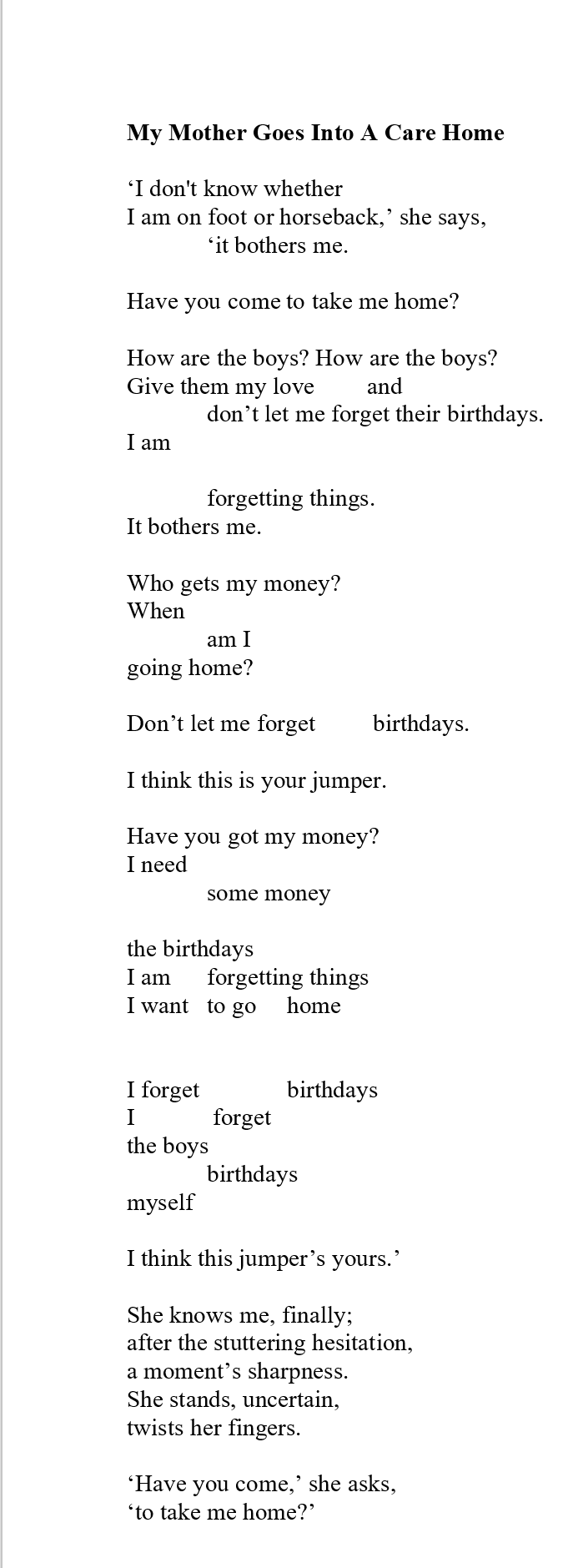


 The Wombwell Rainbow